Learning objectives of Brucellosis lectures :
Description: Learning objectives of Brucellosis lectures : Identify the brucellosis and the causative micro-organism Clarify the routs of transmission and pathogenesis Discuss the presentation of brucellosis and mention the differential diagnosis of
Related Topics
Download Presentation
"Learning objectives of Brucellosis lectures :" is the property of its rightful owner. Permission is granted to download and print the materials on this website for personal, non-commercial use only, and to display it on your personal computer provided you do not modify the materials and that you retain all copyright notices contained in the materials. By downloading content from our website, you accept the terms of this agreement.
Presentation Transcript
slide1. Learning objectives of Brucellosis lectures :
Identify the brucellosis and the causative micro-organism
Clarify the routs of transmission and pathogenesis
Discuss the presentation of brucellosis and mention the differential diagnosis of this febrile illness.
Identify the systemic complications of the disease
Explain the investigations needed to the diagnosis
Discuss the important lines of treatment
Discuss the methods of prevention of the disease<br>
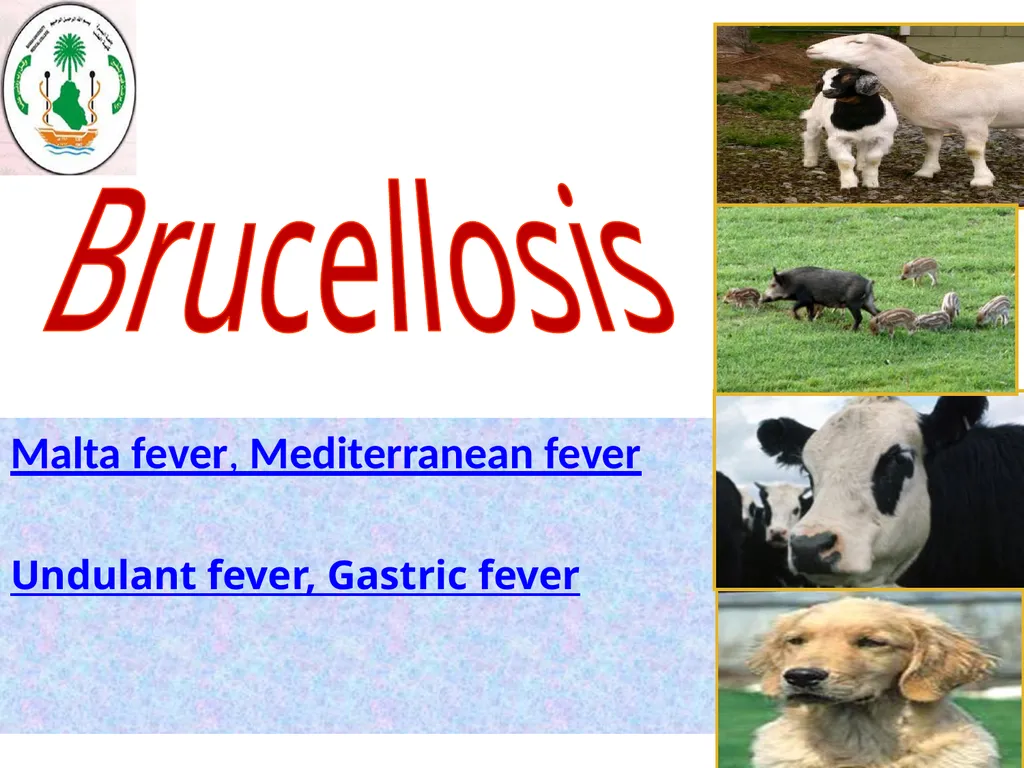
slide2. Malta fever, Mediterranean fever
Undulant fever, Gastric fever Brucellosis<br>
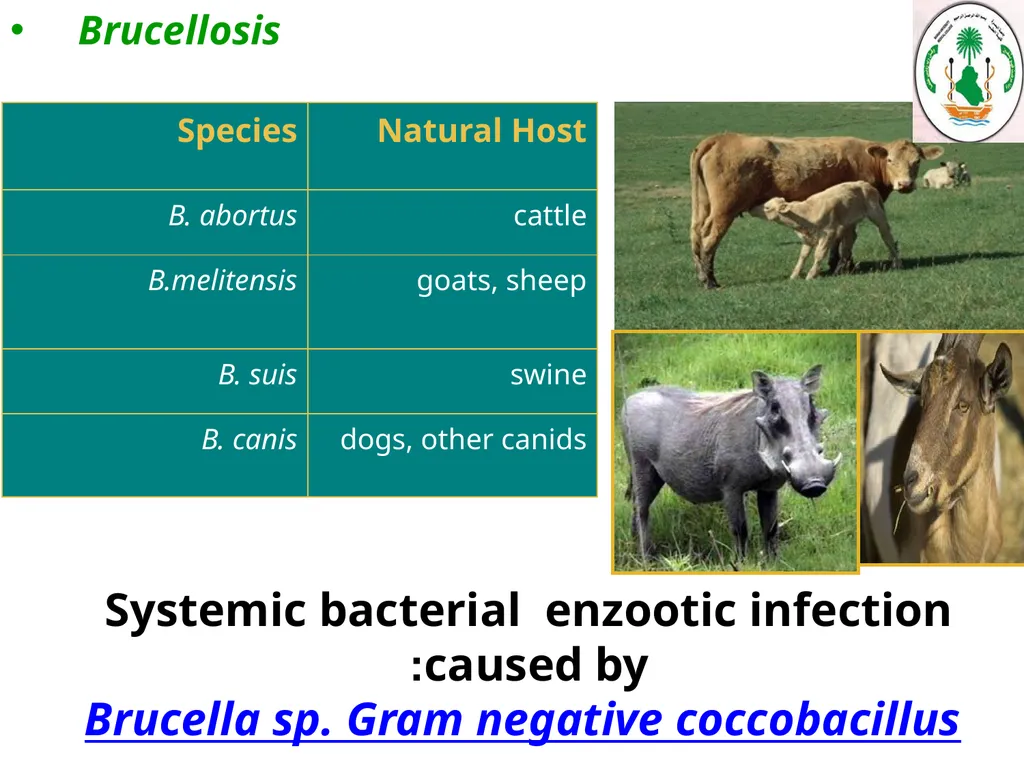
slide3. Brucellosis Systemic bacterial enzootic infection caused by:
Brucella sp. Gram negative coccobacillus<br>
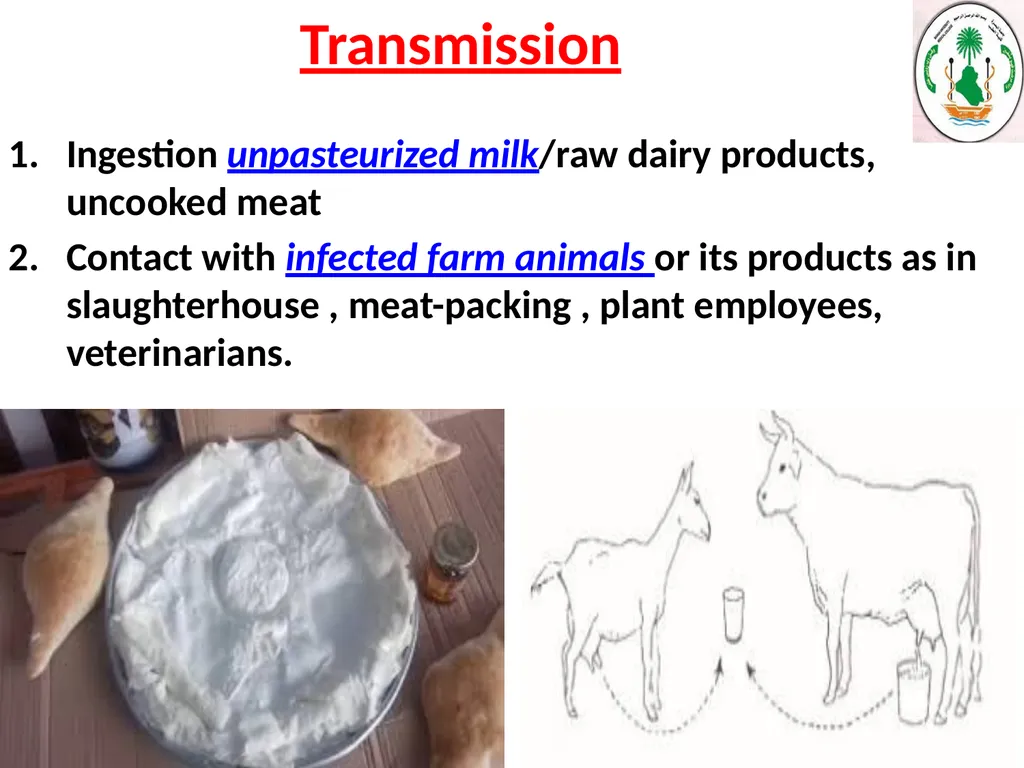
slide4. Ingestion unpasteurized milk/raw dairy products, uncooked meat
Contact with infected farm animals or its products as in slaughterhouse , meat-packing , plant employees, veterinarians. Transmission<br>
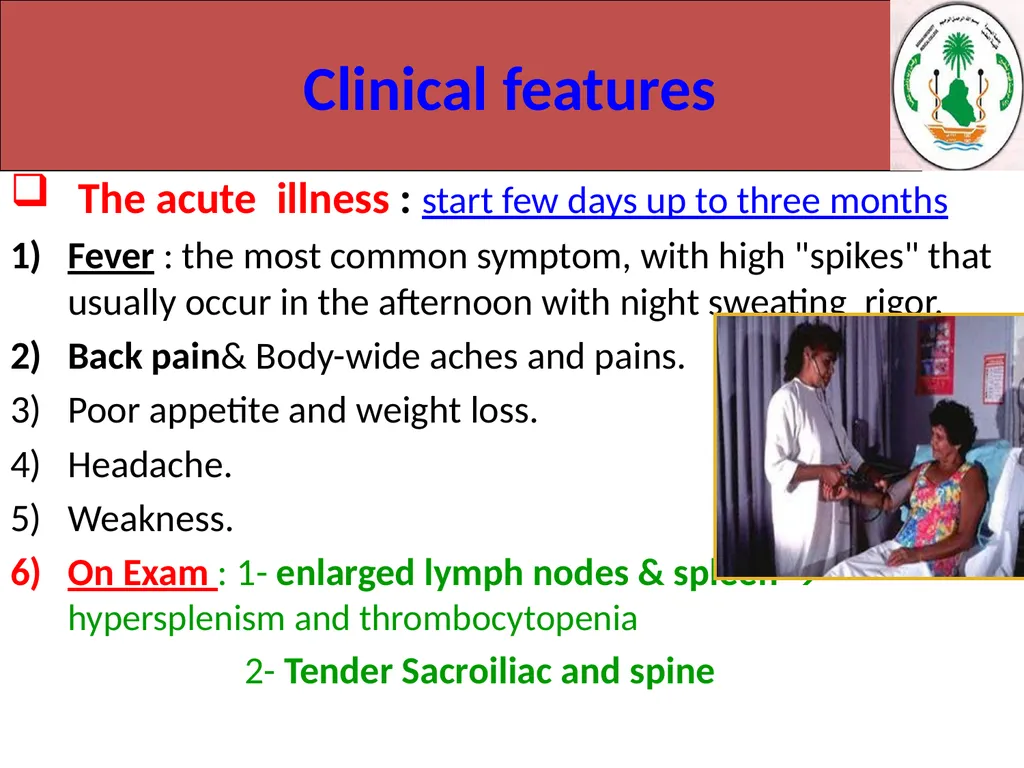
slide5. Clinical features The acute illness : start few days up to three months
Fever : the most common symptom, with high "spikes" that usually occur in the afternoon with night sweating rigor.
Back pain& Body-wide aches and pains.
Poor appetite and weight loss.
Headache.
Weakness.
On Exam : 1- enlarged lymph nodes & spleen ïƒ hypersplenism and thrombocytopenia
2- Tender Sacroiliac and spine<br>
slide6. Chronic Localised infection 30 % : chronic fatigue , depressive episodes, arthritis
Neurobrucellosis
meningitis, stroke, haemorrhage
uveitis , Retinal thrombophlebitis
Cranial nerve palsy
Myelopathy
Heart
Endocarditis , myocarditis<br>
slide7. 4. Hematological :
Pancytopenia
splenic abscess
hilar lymph. Node
5. Skeleton :
Suppurative arthritis
Spinal spondylitis or sacroilitis and Paravertebral abscess
Osteomyelitis<br>
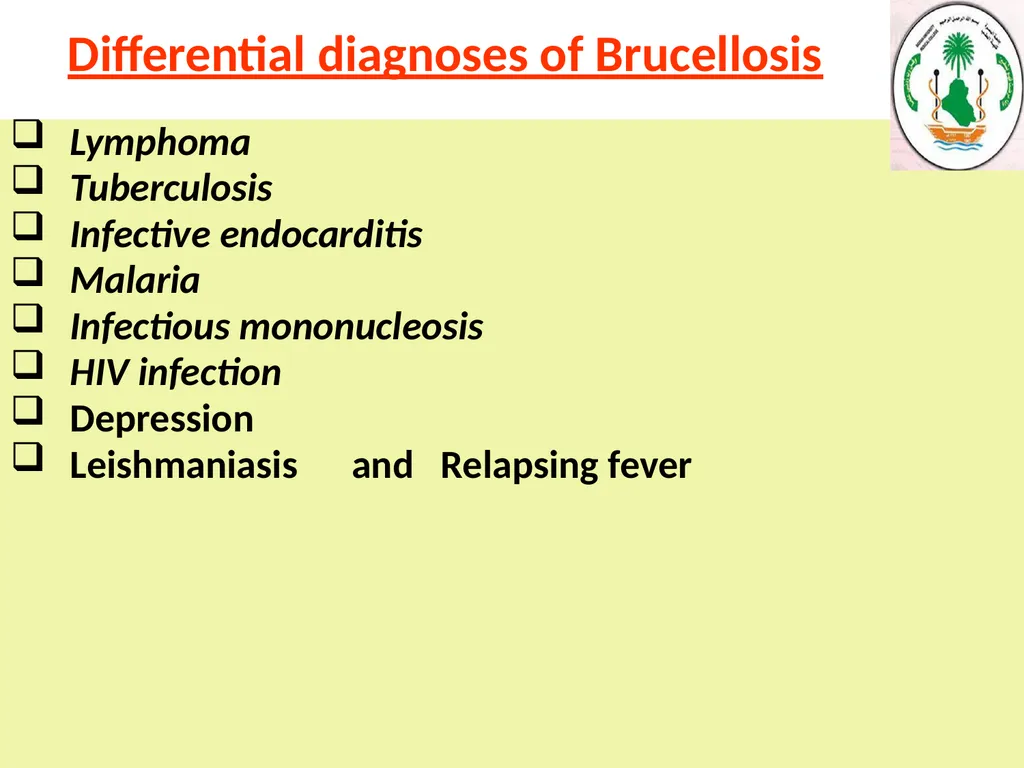
slide8. Differential diagnoses of Brucellosis Lymphoma
Tuberculosis
Infective endocarditis
Malaria
Infectious mononucleosis
HIV infection
Depression
Leishmaniasis and Relapsing fever<br>
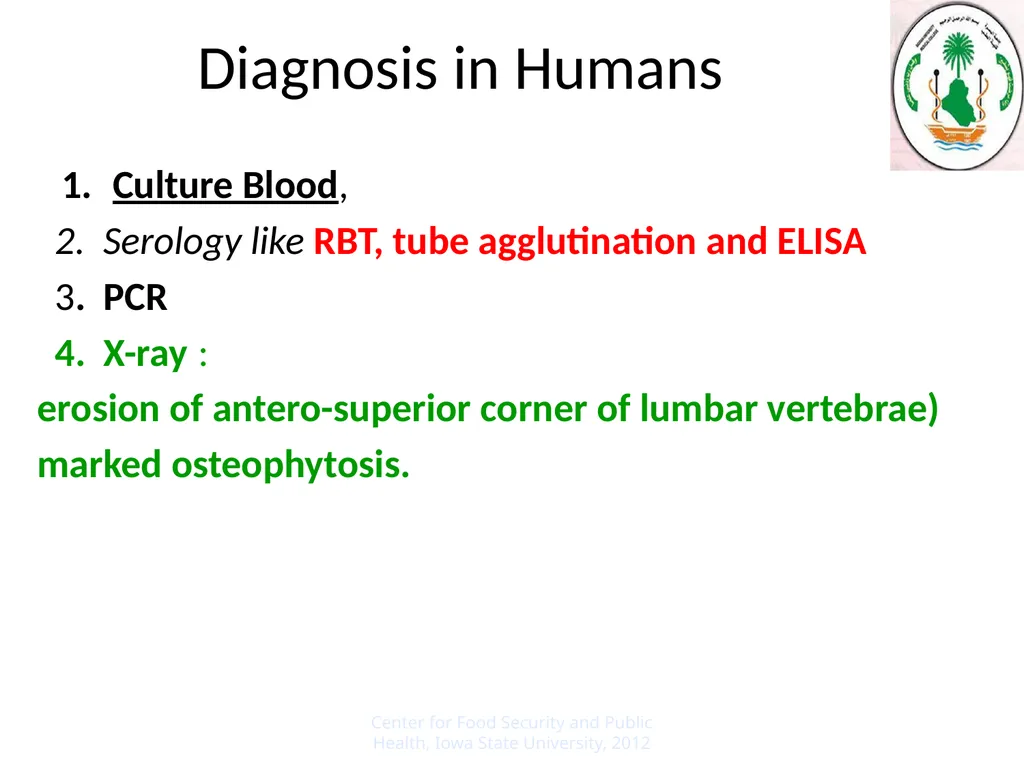
slide9. Diagnosis in Humans Culture Blood,
2. Serology like RBT, tube agglutination and ELISA
3. PCR
4. X-ray :
erosion of antero-superior corner of lumbar vertebrae)
marked osteophytosis. Center for Food Security and Public Health, Iowa State University, 2012<br>
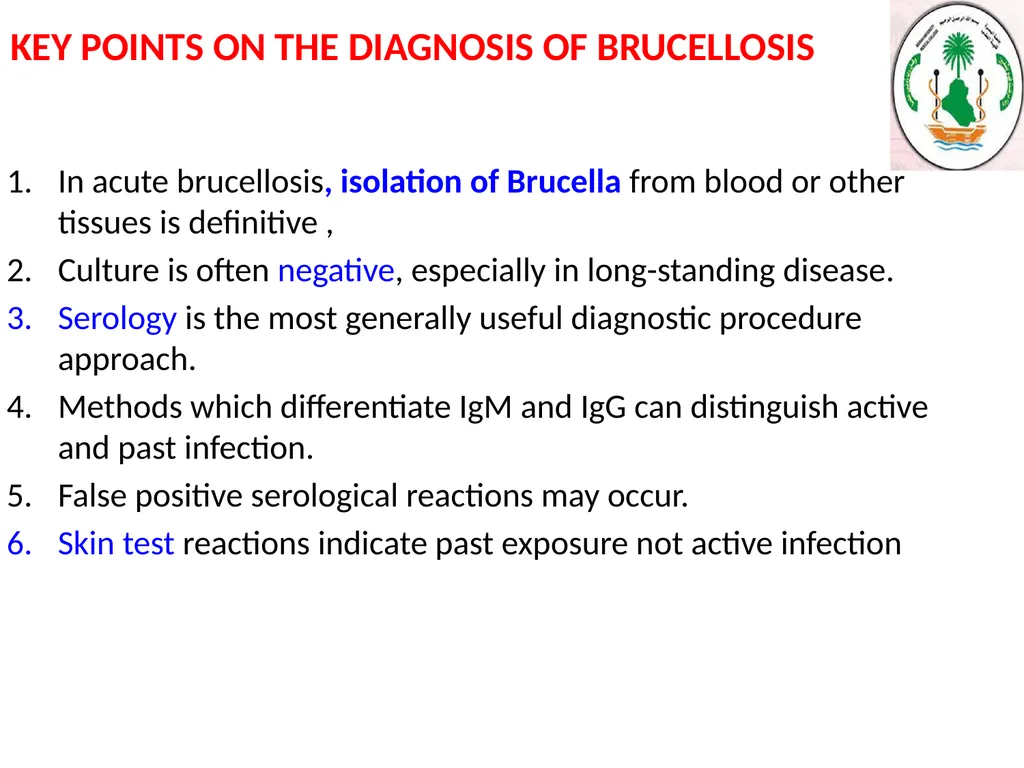
slide10. KEY POINTS ON THE DIAGNOSIS OF BRUCELLOSIS In acute brucellosis, isolation of Brucella from blood or other tissues is definitive ,
Culture is often negative, especially in long-standing disease.
Serology is the most generally useful diagnostic procedure approach.
Methods which differentiate IgM and IgG can distinguish active and past infection.
False positive serological reactions may occur.
Skin test reactions indicate past exposure not active infection<br>
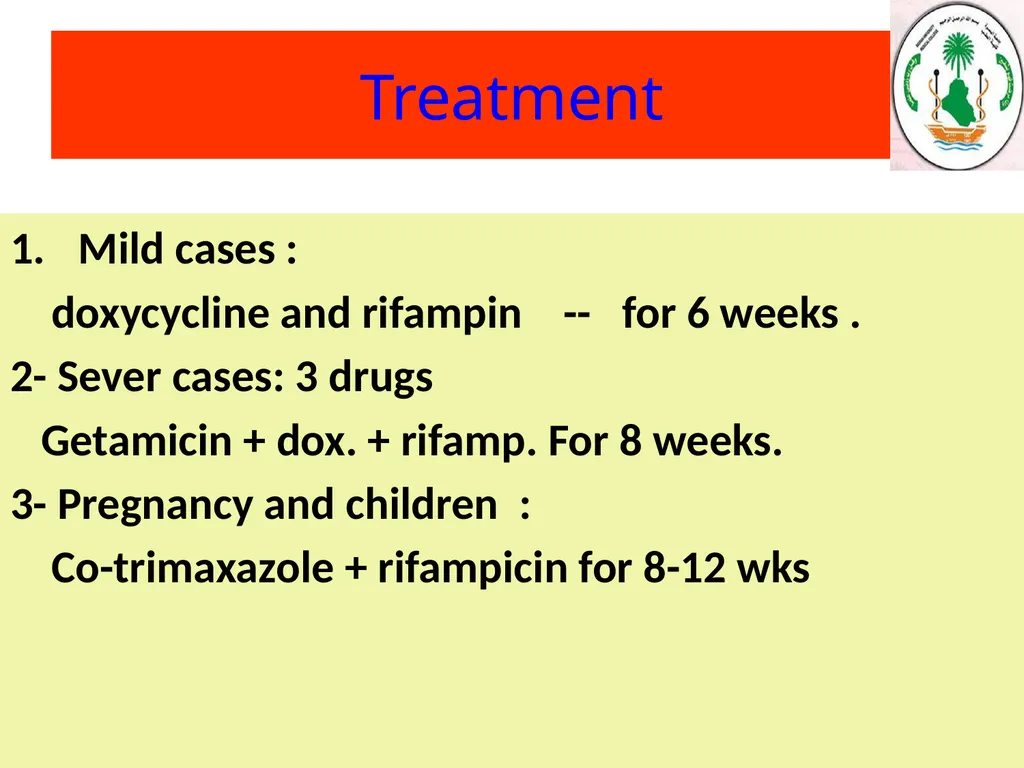
slide11. Treatment Mild cases :
doxycycline and rifampin -- for 6 weeks .
2- Sever cases: 3 drugs
Getamicin + dox. + rifamp. For 8 weeks.
3- Pregnancy and children :
Co-trimaxazole + rifampicin for 8-12 wks<br>
slide12. Prognosis _ Rarely fatal <2% (untreated)
Antibiotics necessary
Death usually caused by :
Endocarditis
meningitis Center for Food Security and Public Health, Iowa State University, 2012<br>
slide13. Prevention and Control Pausterization of milk. Susceptible to heat, disinfectant
For occupational exposure, use caution, animal vaccination, protective gloves.
Post-exposure prophylaxis<br>
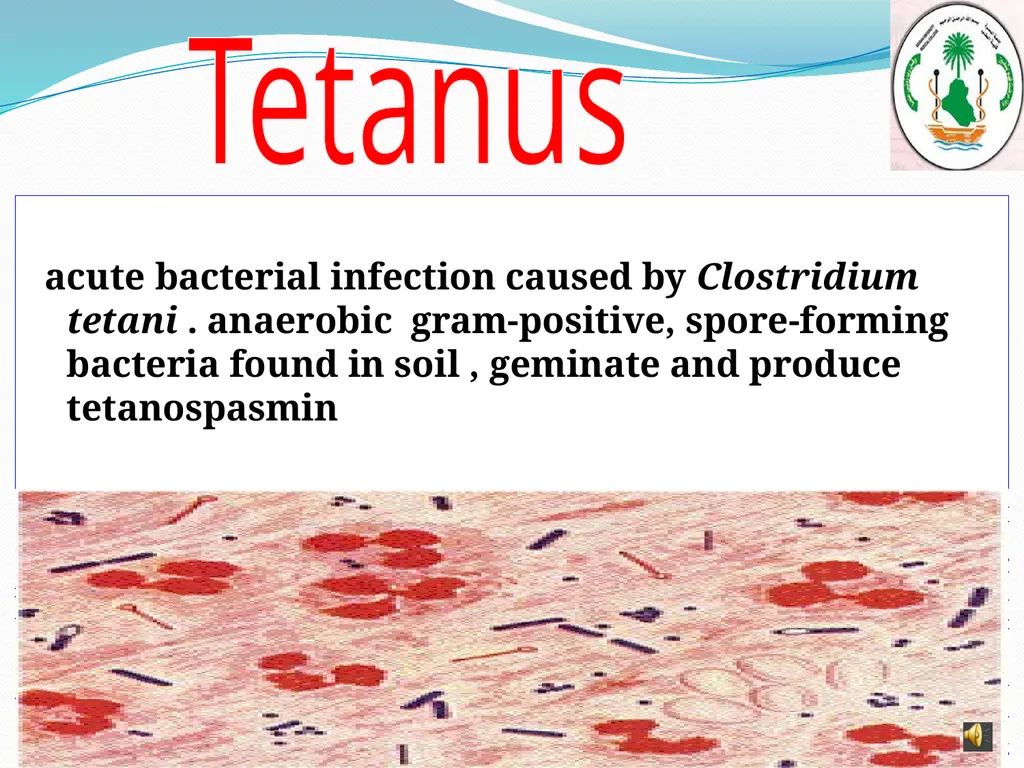
slide14. acute bacterial infection caused by Clostridium tetani . anaerobic gram-positive, spore-forming bacteria found in soil , geminate and produce tetanospasmin Tetanus<br>
slide15. 1-7day,
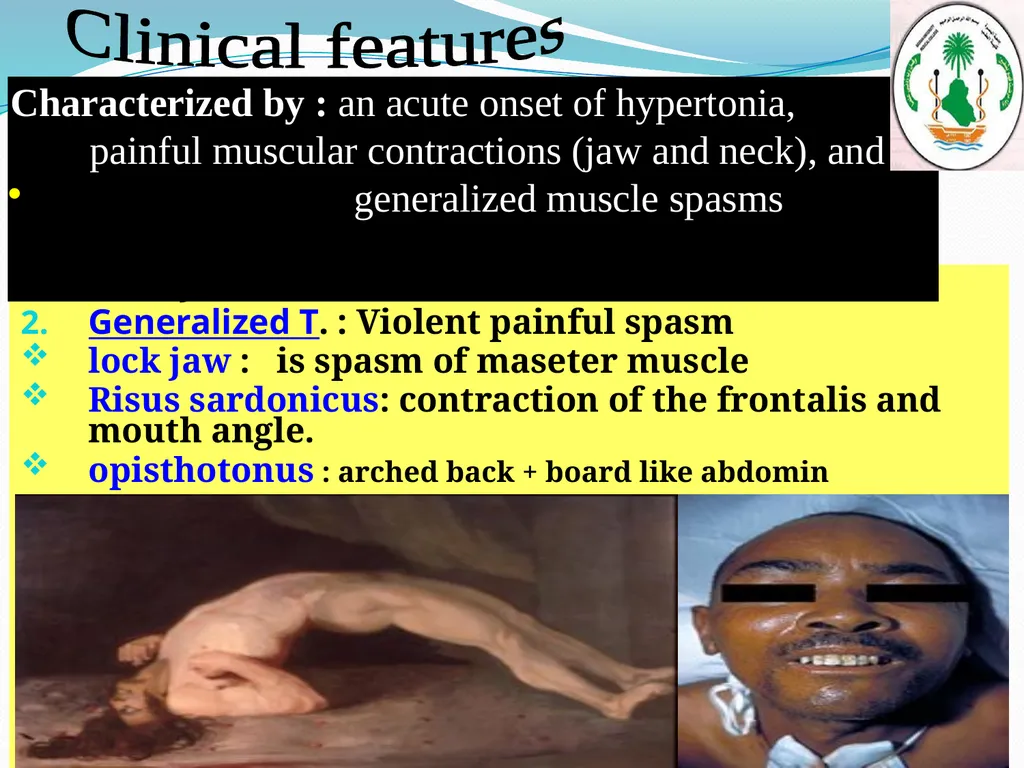
Generalized T. : Violent painful spasm
lock jaw : is spasm of maseter muscle
Risus sardonicus: contraction of the frontalis and mouth angle.
opisthotonus : arched back + board like abdomin
. Characterized by : an acute onset of hypertonia, painful muscular contractions (jaw and neck), and
generalized muscle spasms Clinical features<br>
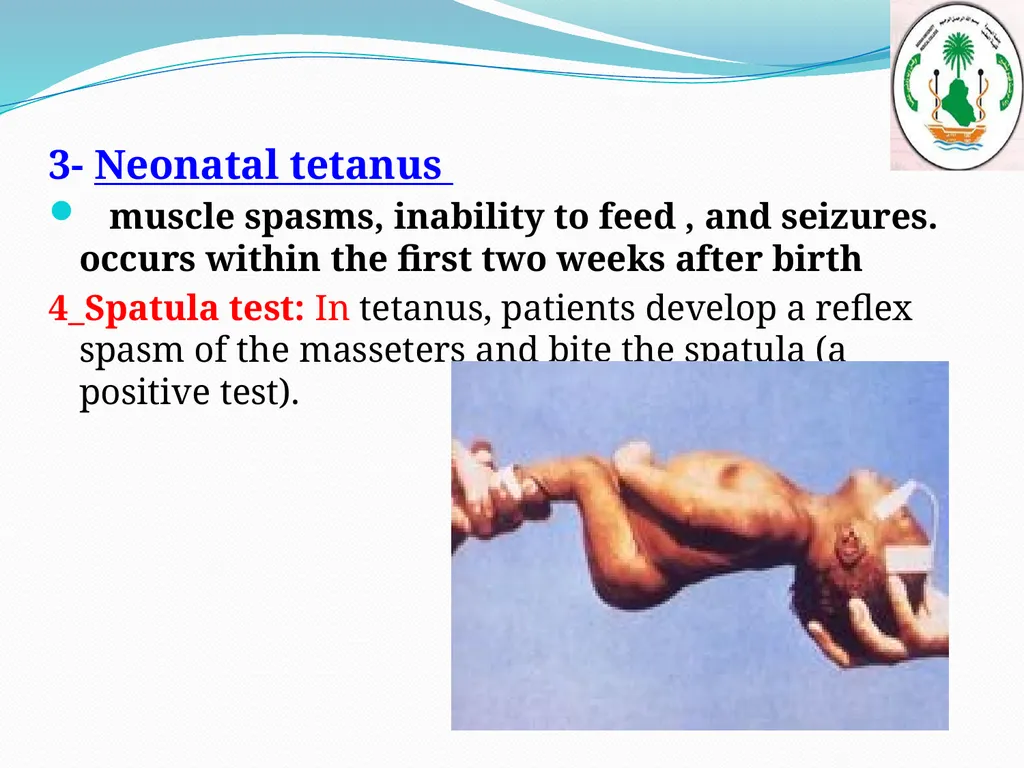
slide16. 3- Neonatal tetanus
muscle spasms, inability to feed , and seizures. occurs within the first two weeks after birth
4_Spatula test: In tetanus, patients develop a reflex spasm of the masseters and bite the spatula (a positive test).<br>
slide17. Laryngospasm
Fractures and dislocation
Hypertension and arrhythmia
Pulmonary embolism
Pneumonia
Malnutrition
Coma, neuropathies, and psychological aftereffects complications<br>
slide18. Differential diagnosis Meningitis
Low Ca+ or Mg+
Rabies.
Status epilepticus
Multiple sclerosis.
Hysterical<br>
slide19. tetanus antitoxin
antibiotics (penicillin, metronidazole) , wound debridement
Control spasm
diazepam + quit room
magnesium
human tetanus immunoglobulin – intrathecally
mechanical ventilation
General measures :
* hydration and nutrition
* treat secondary infection Treatment<br>
slide20. prevention sterile the injured skin
Active immunization .
passive immunization<br>
slide21. Quiz : All the following are possible causes of body spasm except:
hypocalcemia
Rabies.
Status epilepticus
Hypomagnesemia
Hypokalemia
the answer on google document in classroom:
https://classroom.google.com/c/MzQ4OTEwMjgyMzky?cjc=wz3okqj<br>

Identify the brucellosis and the causative micro-organism
Clarify the routs of transmission and pathogenesis
Discuss the presentation of brucellosis and mention the differential diagnosis of this febrile illness.
Identify the systemic complications of the disease
Explain the investigations needed to the diagnosis
Discuss the important lines of treatment
Discuss the methods of prevention of the disease<br>
slide2. Malta fever, Mediterranean fever
Undulant fever, Gastric fever Brucellosis<br>
slide3. Brucellosis Systemic bacterial enzootic infection caused by:
Brucella sp. Gram negative coccobacillus<br>
slide4. Ingestion unpasteurized milk/raw dairy products, uncooked meat
Contact with infected farm animals or its products as in slaughterhouse , meat-packing , plant employees, veterinarians. Transmission<br>
slide5. Clinical features The acute illness : start few days up to three months
Fever : the most common symptom, with high "spikes" that usually occur in the afternoon with night sweating rigor.
Back pain& Body-wide aches and pains.
Poor appetite and weight loss.
Headache.
Weakness.
On Exam : 1- enlarged lymph nodes & spleen ïƒ hypersplenism and thrombocytopenia
2- Tender Sacroiliac and spine<br>
slide6. Chronic Localised infection 30 % : chronic fatigue , depressive episodes, arthritis
Neurobrucellosis
meningitis, stroke, haemorrhage
uveitis , Retinal thrombophlebitis
Cranial nerve palsy
Myelopathy
Heart
Endocarditis , myocarditis<br>
slide7. 4. Hematological :
Pancytopenia
splenic abscess
hilar lymph. Node
5. Skeleton :
Suppurative arthritis
Spinal spondylitis or sacroilitis and Paravertebral abscess
Osteomyelitis<br>
slide8. Differential diagnoses of Brucellosis Lymphoma
Tuberculosis
Infective endocarditis
Malaria
Infectious mononucleosis
HIV infection
Depression
Leishmaniasis and Relapsing fever<br>
slide9. Diagnosis in Humans Culture Blood,
2. Serology like RBT, tube agglutination and ELISA
3. PCR
4. X-ray :
erosion of antero-superior corner of lumbar vertebrae)
marked osteophytosis. Center for Food Security and Public Health, Iowa State University, 2012<br>
slide10. KEY POINTS ON THE DIAGNOSIS OF BRUCELLOSIS In acute brucellosis, isolation of Brucella from blood or other tissues is definitive ,
Culture is often negative, especially in long-standing disease.
Serology is the most generally useful diagnostic procedure approach.
Methods which differentiate IgM and IgG can distinguish active and past infection.
False positive serological reactions may occur.
Skin test reactions indicate past exposure not active infection<br>
slide11. Treatment Mild cases :
doxycycline and rifampin -- for 6 weeks .
2- Sever cases: 3 drugs
Getamicin + dox. + rifamp. For 8 weeks.
3- Pregnancy and children :
Co-trimaxazole + rifampicin for 8-12 wks<br>
slide12. Prognosis _ Rarely fatal <2% (untreated)
Antibiotics necessary
Death usually caused by :
Endocarditis
meningitis Center for Food Security and Public Health, Iowa State University, 2012<br>
slide13. Prevention and Control Pausterization of milk. Susceptible to heat, disinfectant
For occupational exposure, use caution, animal vaccination, protective gloves.
Post-exposure prophylaxis<br>
slide14. acute bacterial infection caused by Clostridium tetani . anaerobic gram-positive, spore-forming bacteria found in soil , geminate and produce tetanospasmin Tetanus<br>
slide15. 1-7day,
Generalized T. : Violent painful spasm
lock jaw : is spasm of maseter muscle
Risus sardonicus: contraction of the frontalis and mouth angle.
opisthotonus : arched back + board like abdomin
. Characterized by : an acute onset of hypertonia, painful muscular contractions (jaw and neck), and
generalized muscle spasms Clinical features<br>
slide16. 3- Neonatal tetanus
muscle spasms, inability to feed , and seizures. occurs within the first two weeks after birth
4_Spatula test: In tetanus, patients develop a reflex spasm of the masseters and bite the spatula (a positive test).<br>
slide17. Laryngospasm
Fractures and dislocation
Hypertension and arrhythmia
Pulmonary embolism
Pneumonia
Malnutrition
Coma, neuropathies, and psychological aftereffects complications<br>
slide18. Differential diagnosis Meningitis
Low Ca+ or Mg+
Rabies.
Status epilepticus
Multiple sclerosis.
Hysterical<br>
slide19. tetanus antitoxin
antibiotics (penicillin, metronidazole) , wound debridement
Control spasm
diazepam + quit room
magnesium
human tetanus immunoglobulin – intrathecally
mechanical ventilation
General measures :
* hydration and nutrition
* treat secondary infection Treatment<br>
slide20. prevention sterile the injured skin
Active immunization .
passive immunization<br>
slide21. Quiz : All the following are possible causes of body spasm except:
hypocalcemia
Rabies.
Status epilepticus
Hypomagnesemia
Hypokalemia
the answer on google document in classroom:
https://classroom.google.com/c/MzQ4OTEwMjgyMzky?cjc=wz3okqj<br>