
Lecture 16 Linear Program Duality Duality

Published  . 0 views
↓ Download
Lecture 16 Linear Program Duality Duality
1 / 1
Lecture 16 Linear Program Duality Duality - slide 1 of 13 Lecture 16 Linear Program Duality Duality - slide 2 of 13 Lecture 16 Linear Program Duality Duality - slide 3 of 13 Lecture 16 Linear Program Duality Duality - slide 4 of 13 Lecture 16 Linear Program Duality Duality - slide 5 of 13 Lecture 16 Linear Program Duality Duality - slide 6 of 13 Lecture 16 Linear Program Duality Duality - slide 7 of 13 Lecture 16 Linear Program Duality Duality - slide 8 of 13 Lecture 16 Linear Program Duality Duality - slide 9 of 13 Lecture 16 Linear Program Duality Duality - slide 10 of 13 Lecture 16 Linear Program Duality Duality - slide 11 of 13 Lecture 16 Linear Program Duality Duality - slide 12 of 13 Lecture 16 Linear Program Duality Duality - slide 13 of 13

Description: Lecture 16 Linear Program Duality Duality Two-Player Zero-sum Games Game played with two competing players, when one player wins, the other player loses. Goal: Find the best strategy in the game Game as a matrix Can represent the game using

Related Topics

Download Presentation

"Lecture 16 Linear Program Duality Duality" is the property of its rightful owner. Permission is granted to download and print the materials on this website for personal, non-commercial use only, and to display it on your personal computer provided you do not modify the materials and that you retain all copyright notices contained in the materials. By downloading content from our website, you accept the terms of this agreement.

Presentation Transcript

slide1. Lecture 16 Linear Program Duality<br>
slide2. Duality<br>
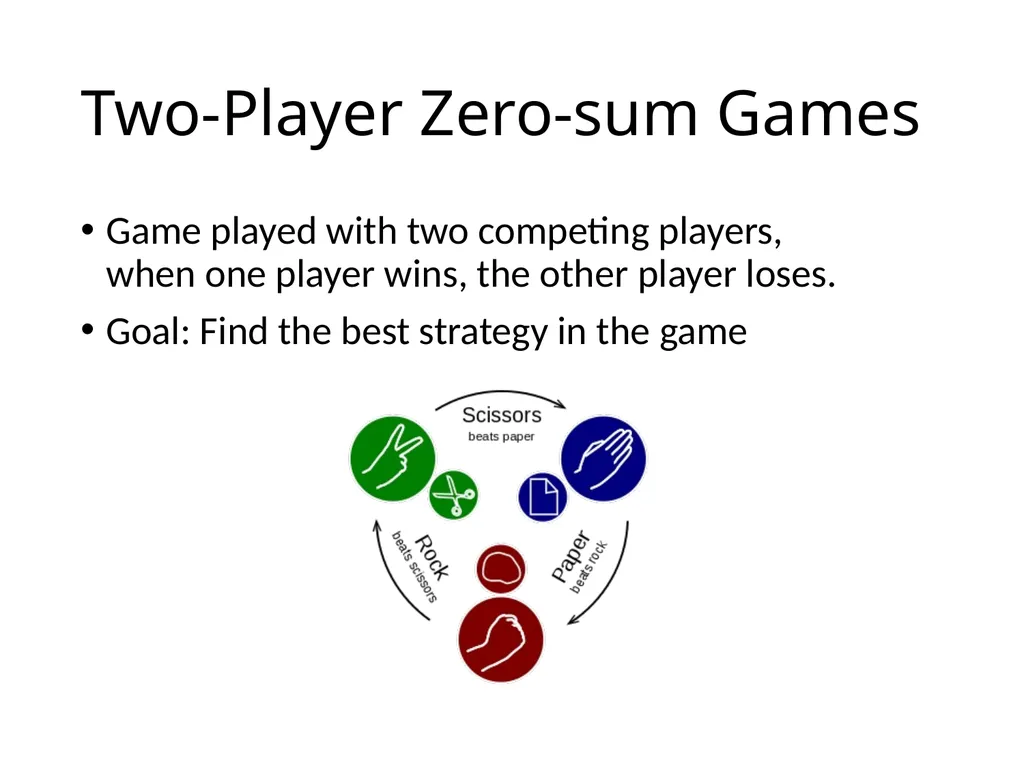
slide3. Two-Player Zero-sum Games Game played with two competing players, when one player wins, the other player loses.
Goal: Find the best strategy in the game<br>
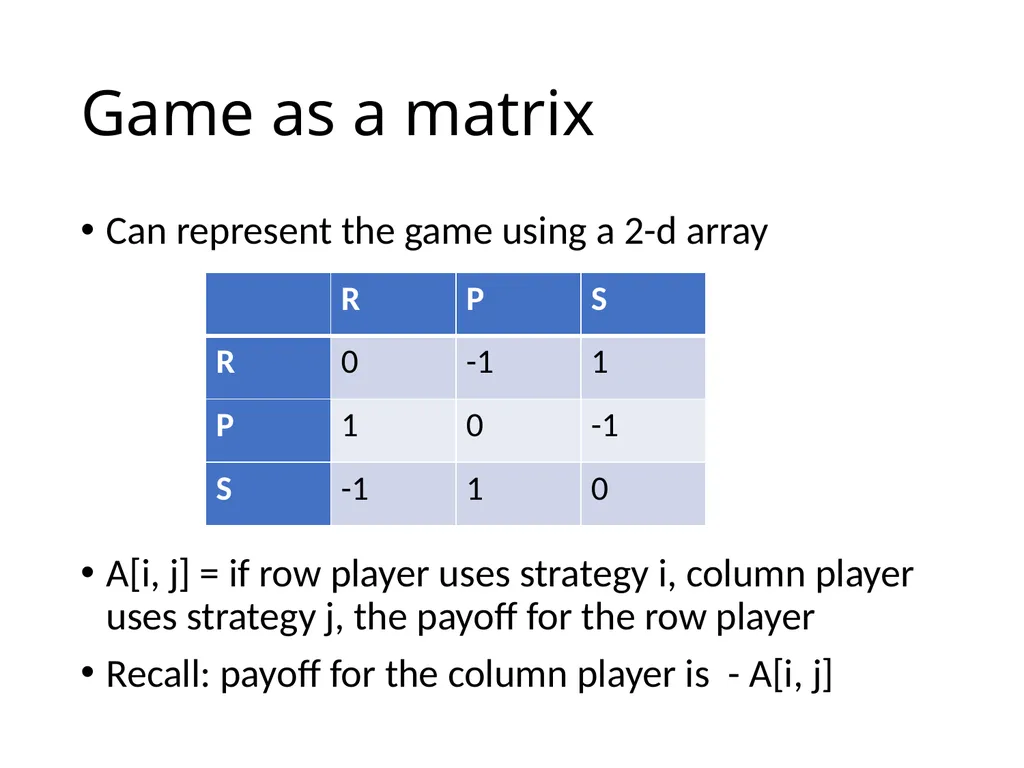
slide4. Game as a matrix Can represent the game using a 2-d array

A[i, j] = if row player uses strategy i, column player uses strategy j, the payoff for the row player
Recall: payoff for the column player is - A[i, j]<br>
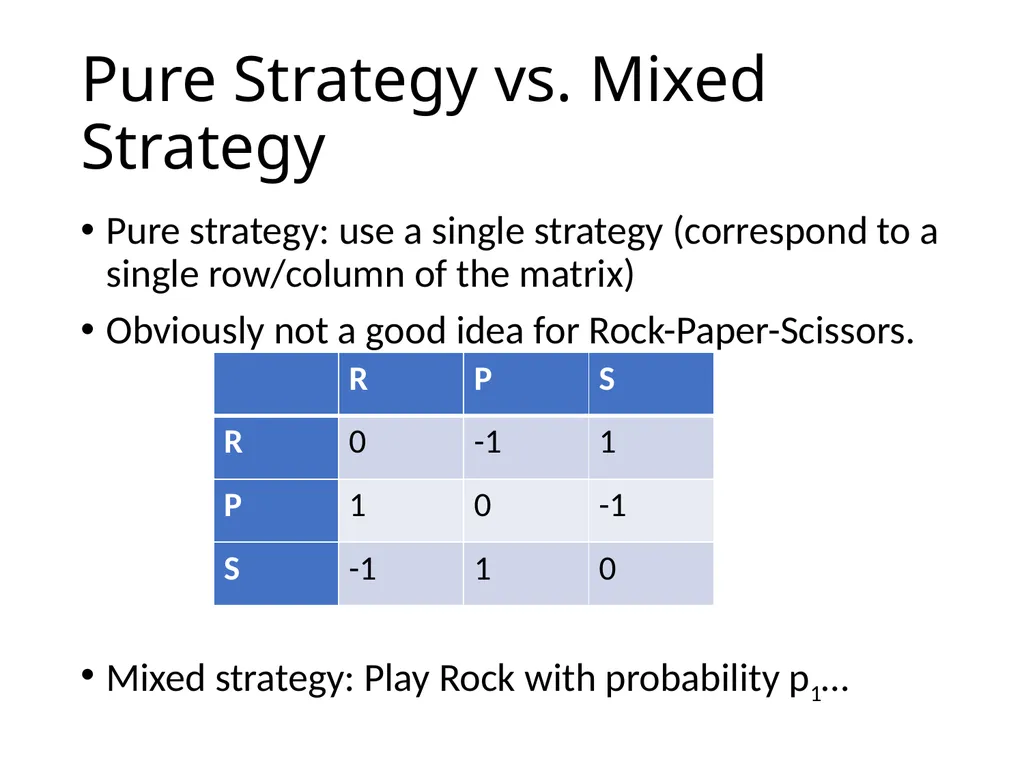
slide5. Pure Strategy vs. Mixed Strategy Pure strategy: use a single strategy (correspond to a single row/column of the matrix)
Obviously not a good idea for Rock-Paper-Scissors.

Mixed strategy: Play Rock with probability p1…<br>
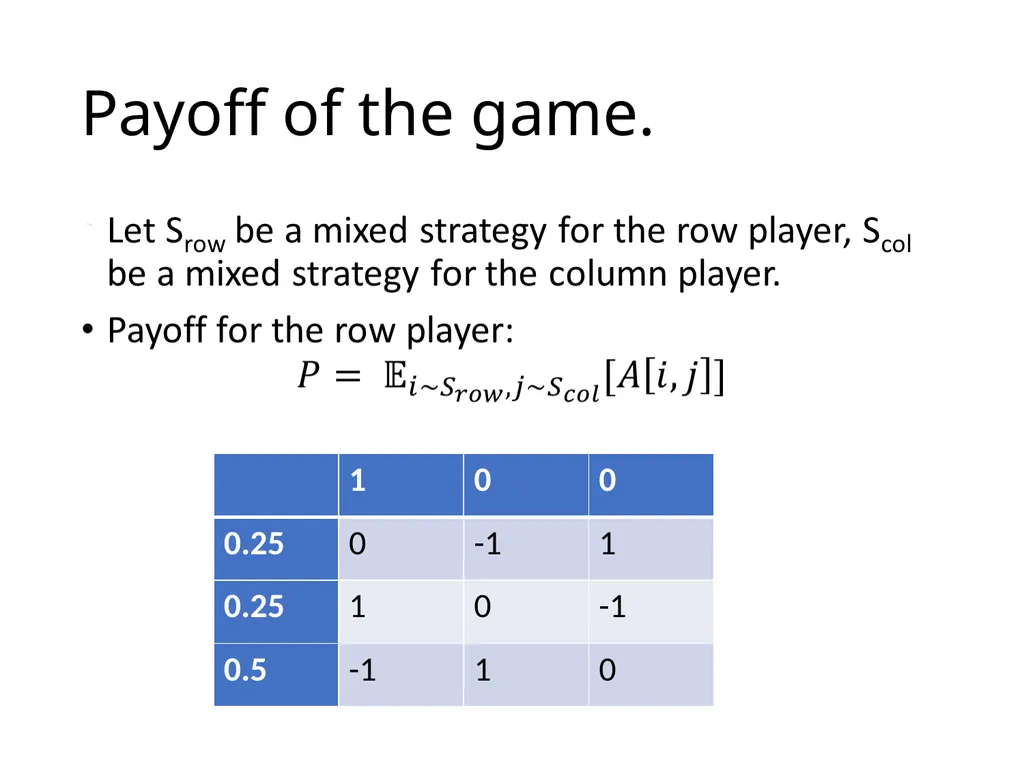
slide6. Payoff of the game.<br>
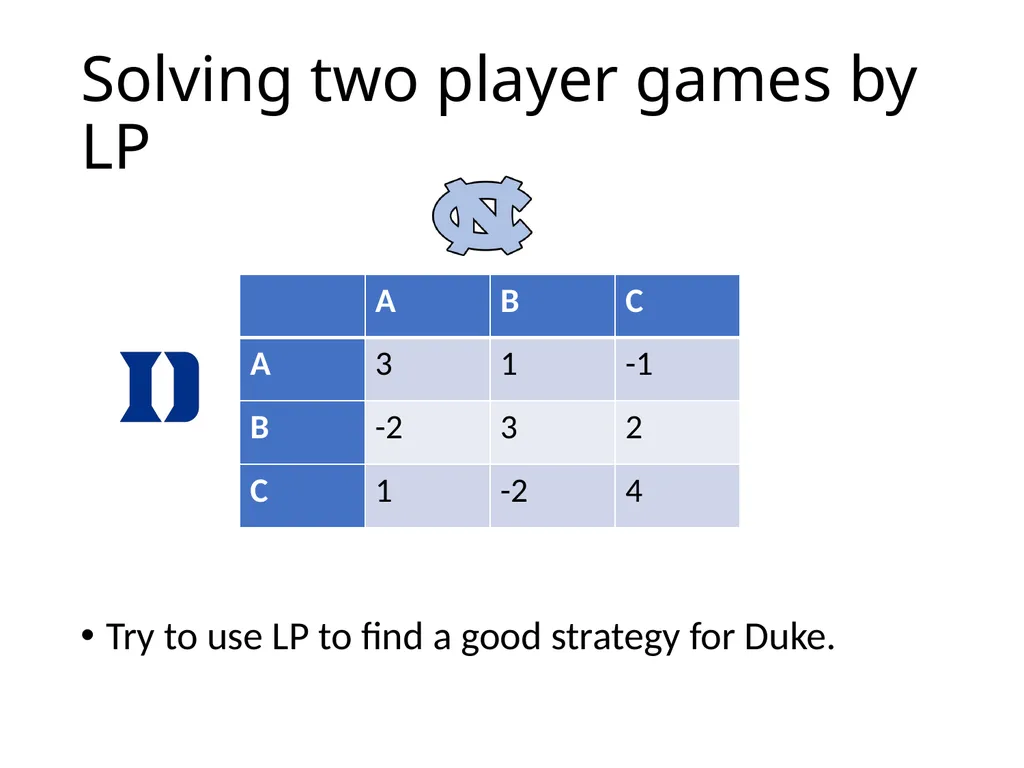
slide7. Solving two player games by LP Try to use LP to find a good strategy for Duke.<br>
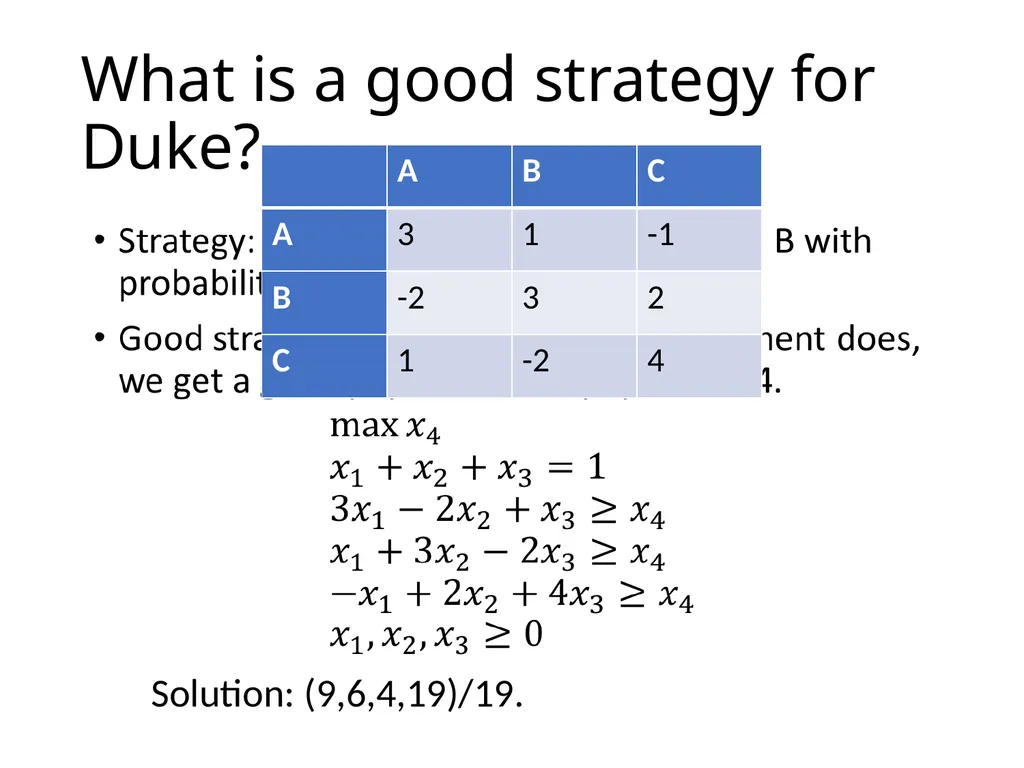
slide8. What is a good strategy for Duke? Solution: (9,6,4,19)/19.<br>
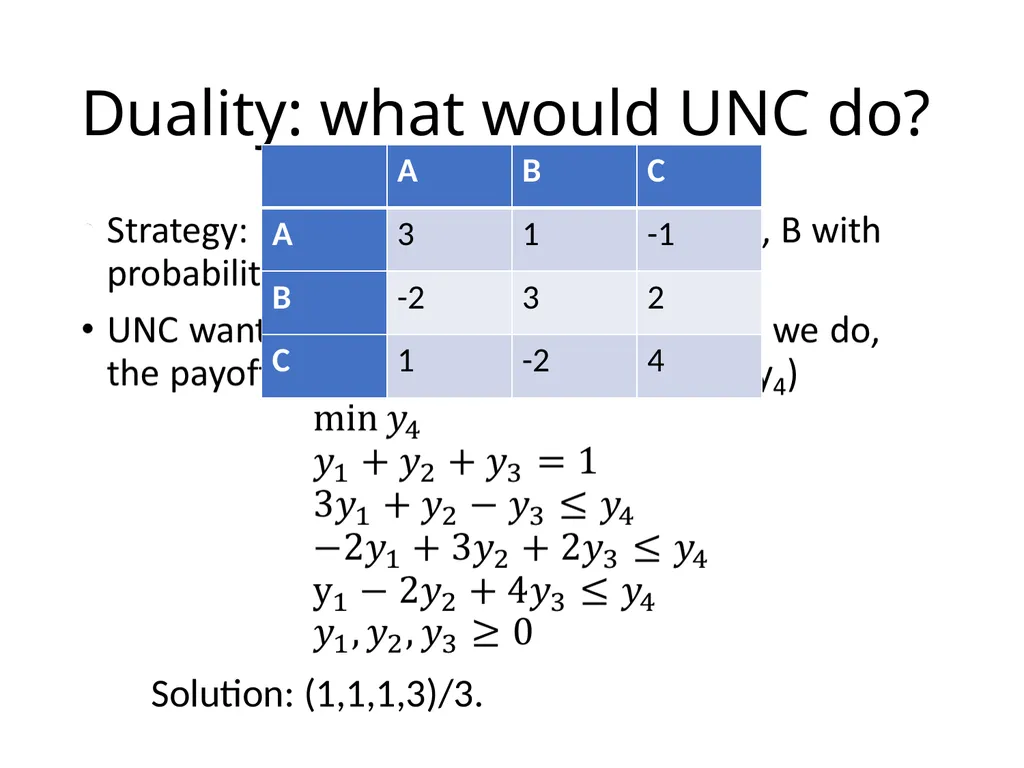
slide9. Duality: what would UNC do? Solution: (1,1,1,3)/3.<br>
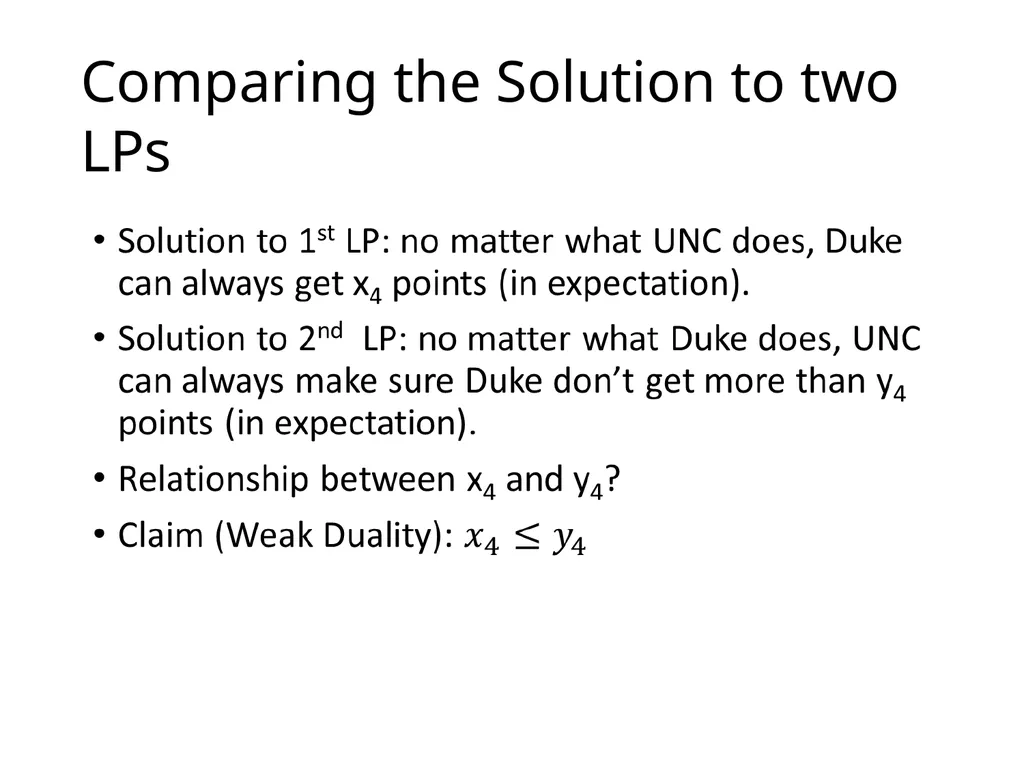
slide10. Comparing the Solution to two LPs<br>
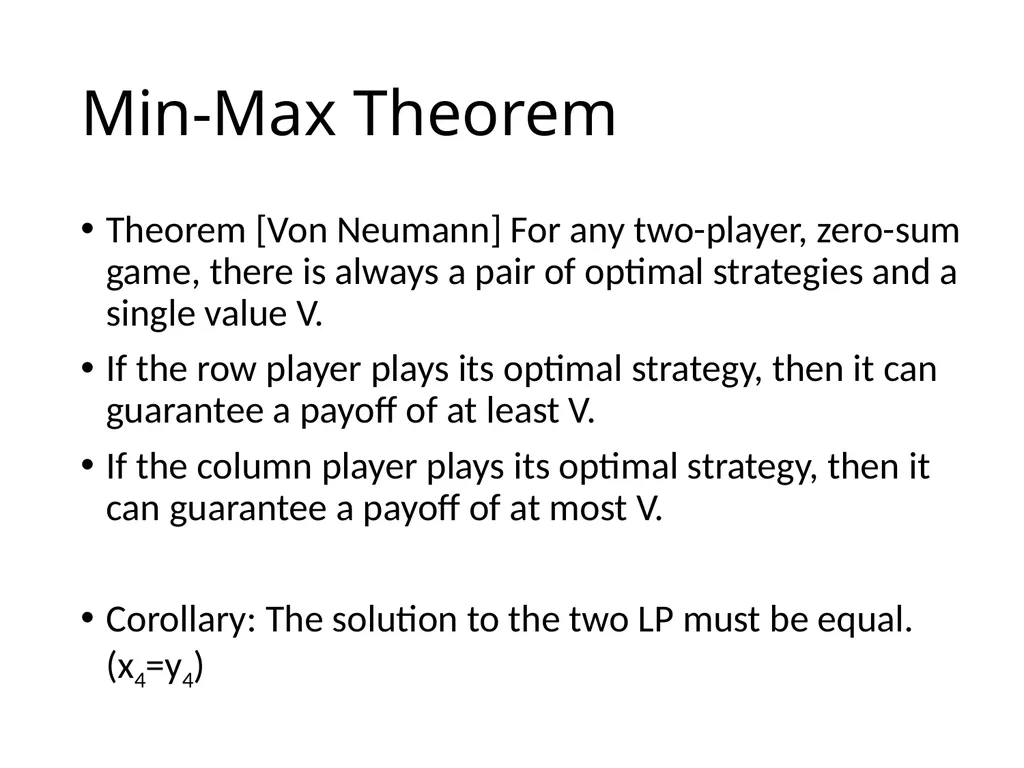
slide11. Min-Max Theorem Theorem [Von Neumann] For any two-player, zero-sum game, there is always a pair of optimal strategies and a single value V.
If the row player plays its optimal strategy, then it can guarantee a payoff of at least V.
If the column player plays its optimal strategy, then it can guarantee a payoff of at most V.

Corollary: The solution to the two LP must be equal. (x4=y4)<br>
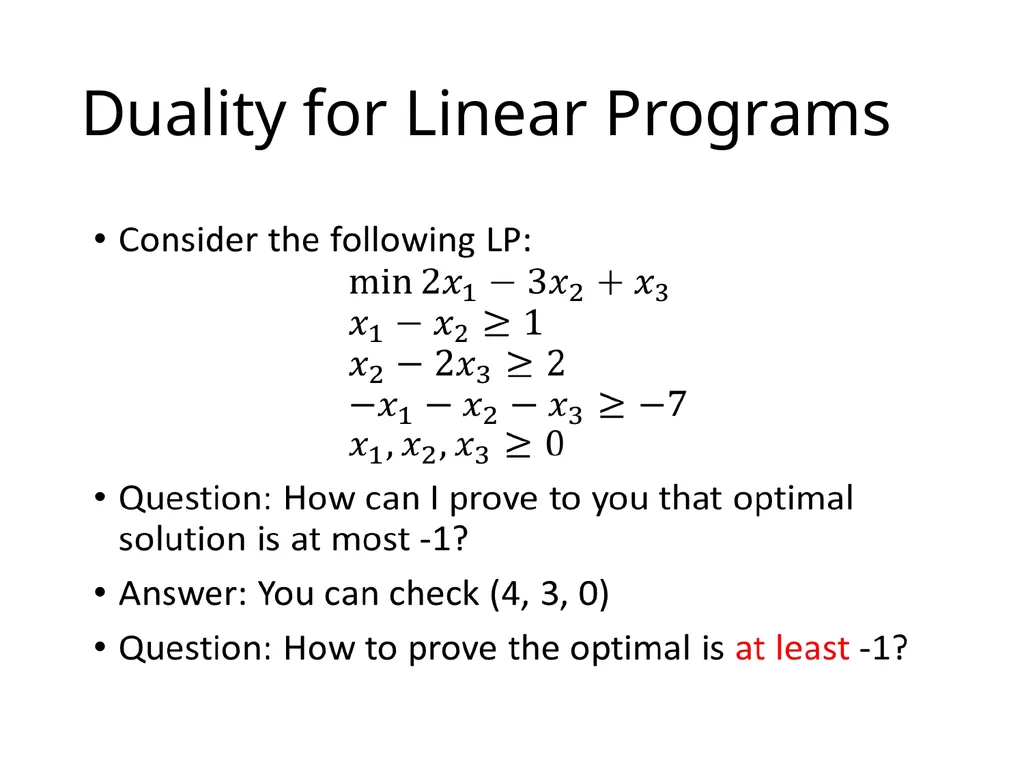
slide12. Duality for Linear Programs<br>
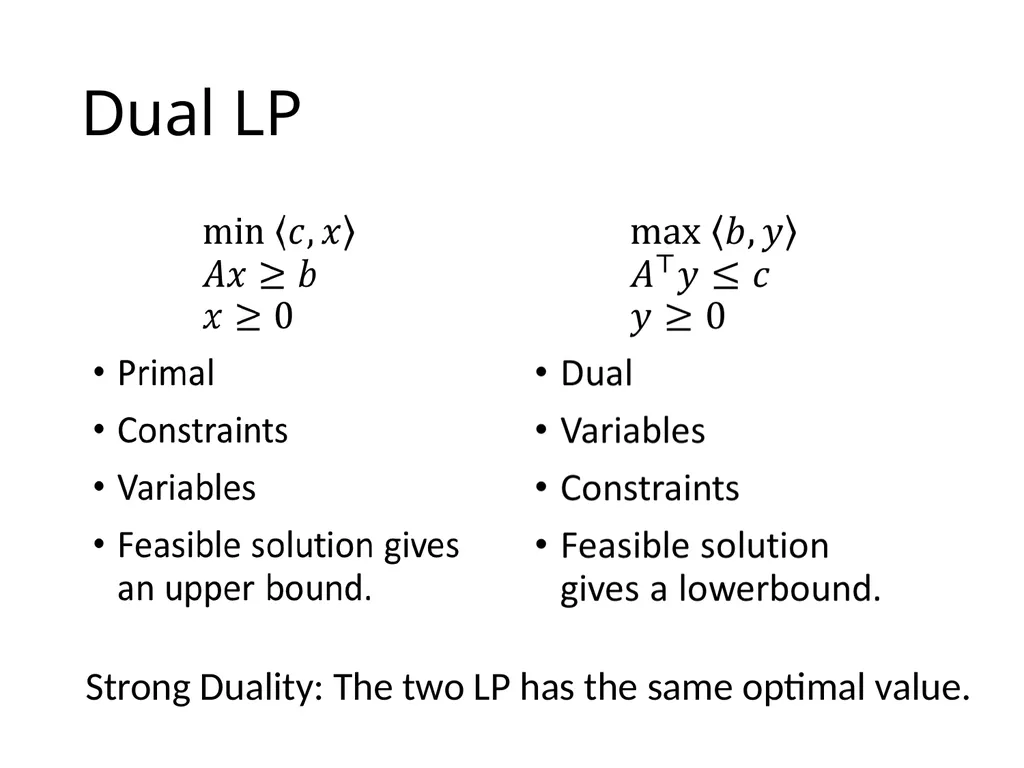
slide13. Dual LP Strong Duality: The two LP has the same optimal value.<br>