
Legal Liability Chapter 5 Learning Objective 1
Description: Legal Liability Chapter 5 Learning Objective 1 Understand the litigious environment in which CPAs practice. Changed Legal Environment Audit professionals have a responsibility under common law to fulfill implied or expressed contracts with
Related Topics
Download Presentation
"Legal Liability Chapter 5 Learning Objective 1" is the property of its rightful owner. Permission is granted to download and print the materials on this website for personal, non-commercial use only, and to display it on your personal computer provided you do not modify the materials and that you retain all copyright notices contained in the materials. By downloading content from our website, you accept the terms of this agreement.
Presentation Transcript
slide1. Legal Liability Chapter 5<br>
slide2. Learning Objective 1 Understand the litigious
environment in which
CPAs practice.<br>
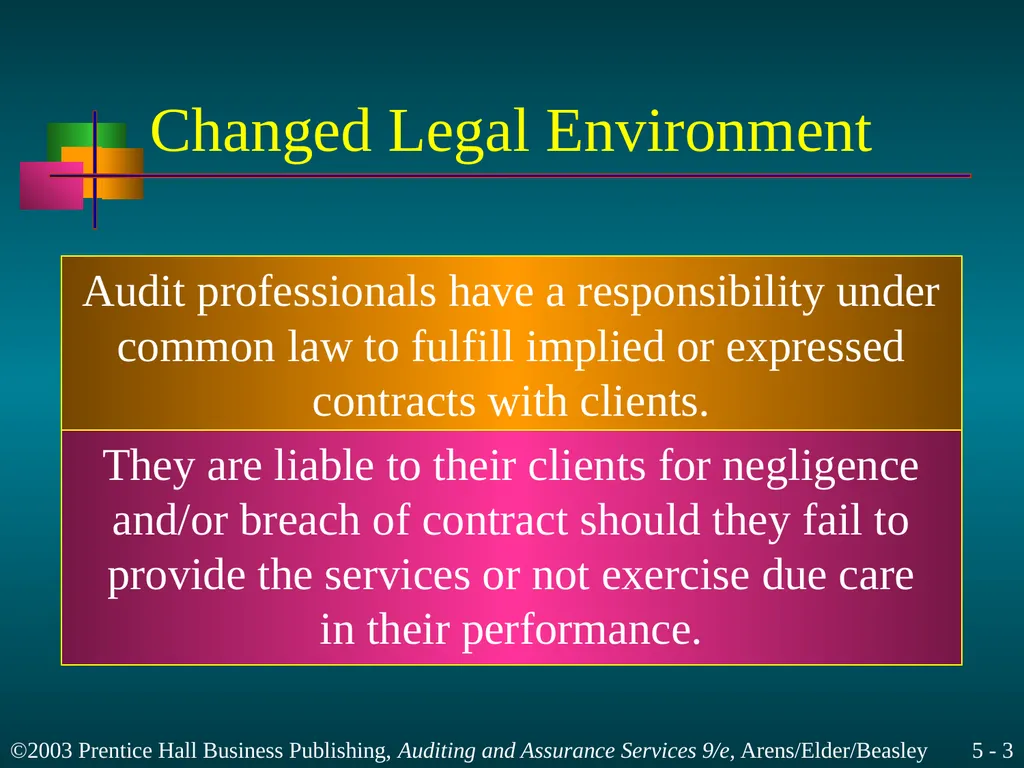
slide3. Changed Legal Environment Audit professionals have a responsibility under
common law to fulfill implied or expressed
contracts with clients. They are liable to their clients for negligence
and/or breach of contract should they fail to
provide the services or not exercise due care
in their performance.<br>
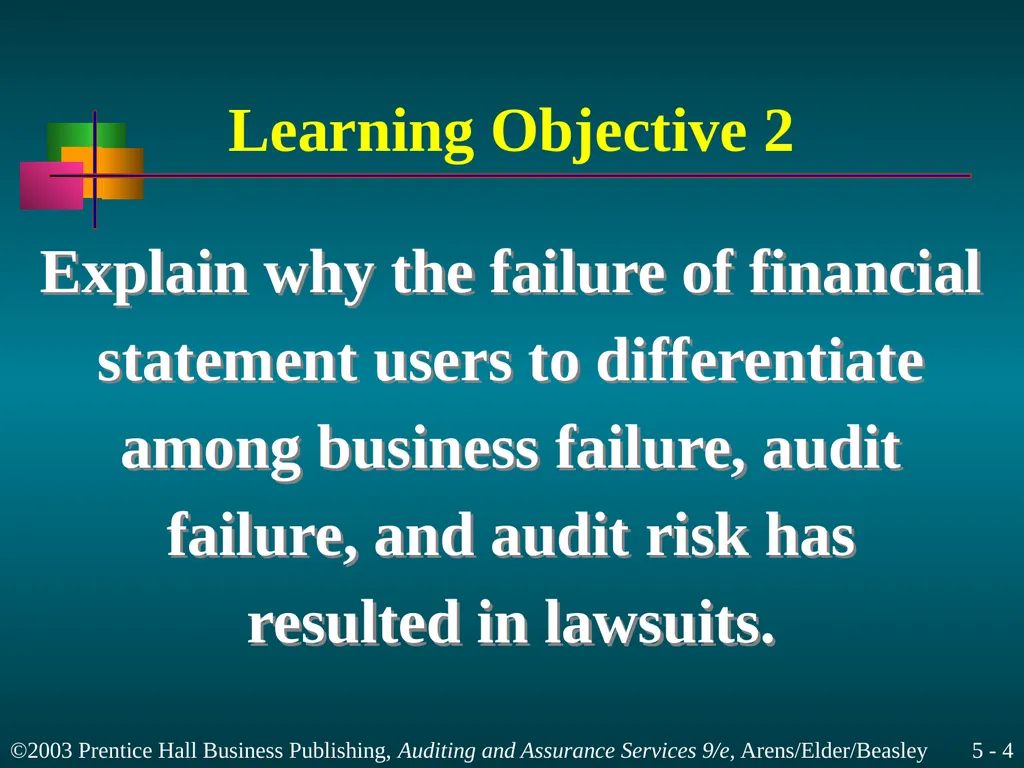
slide4. Learning Objective 2 Explain why the failure of financial
statement users to differentiate
among business failure, audit
failure, and audit risk has
resulted in lawsuits.<br>
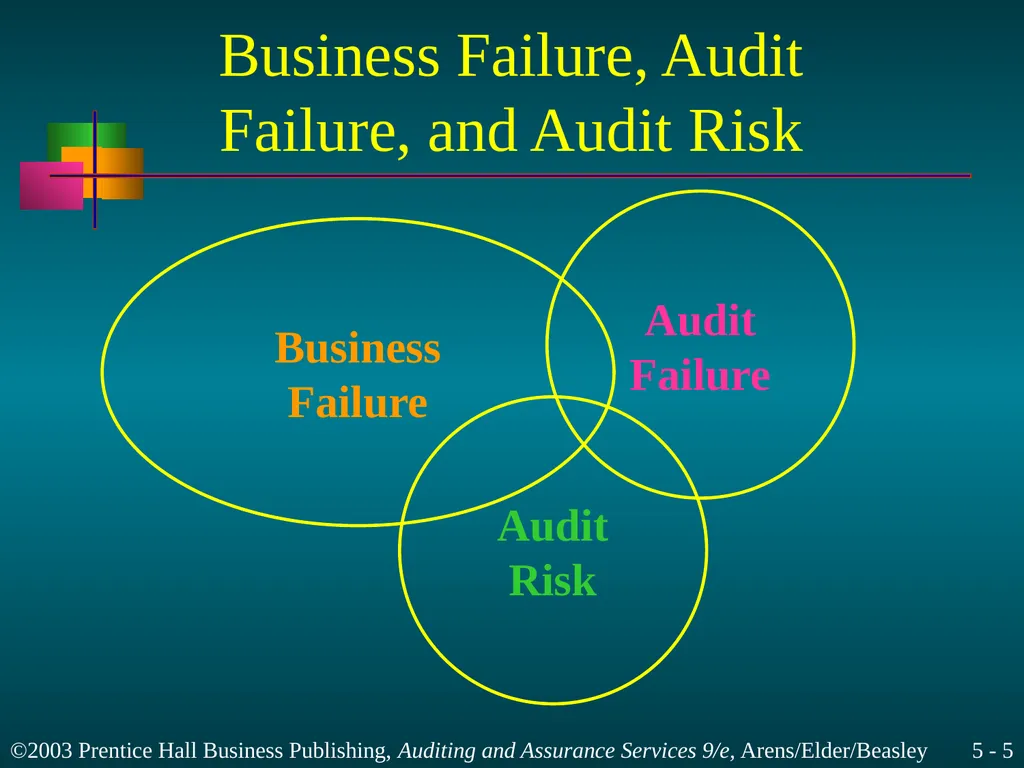
slide5. Business Failure, Audit Failure, and Audit Risk Business
Failure Audit
Failure Audit
Risk<br>
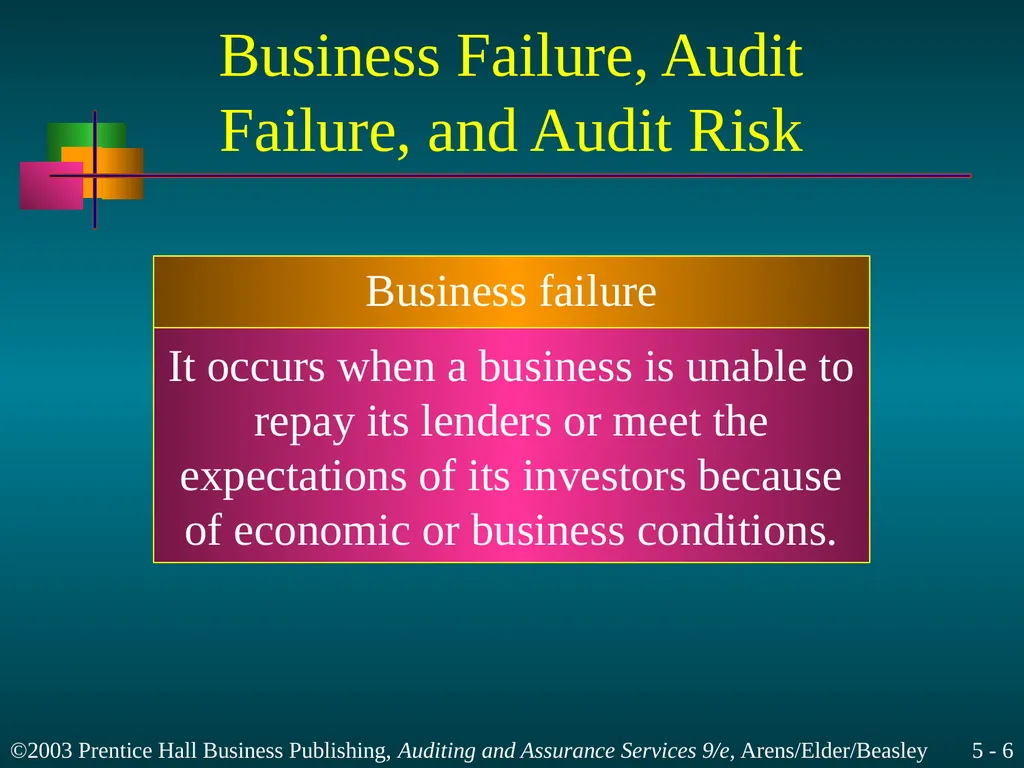
slide6. Business Failure, Audit Failure, and Audit Risk Business failure It occurs when a business is unable to
repay its lenders or meet the
expectations of its investors because
of economic or business conditions.<br>
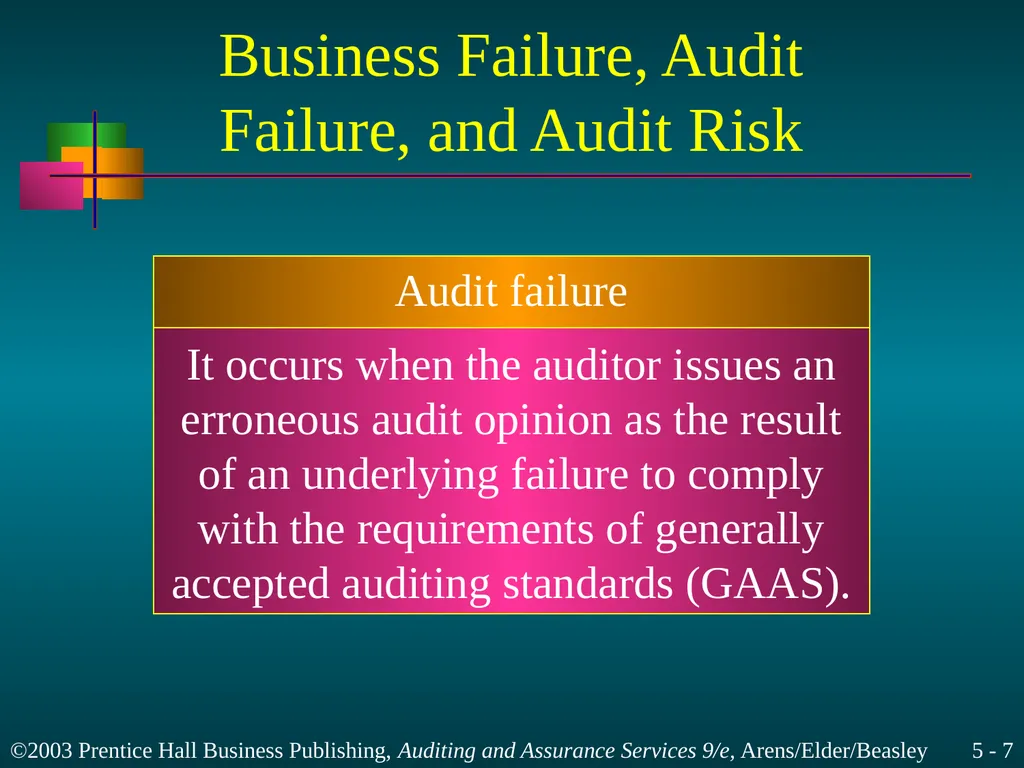
slide7. Business Failure, Audit Failure, and Audit Risk Audit failure It occurs when the auditor issues an
erroneous audit opinion as the result
of an underlying failure to comply
with the requirements of generally
accepted auditing standards (GAAS).<br>
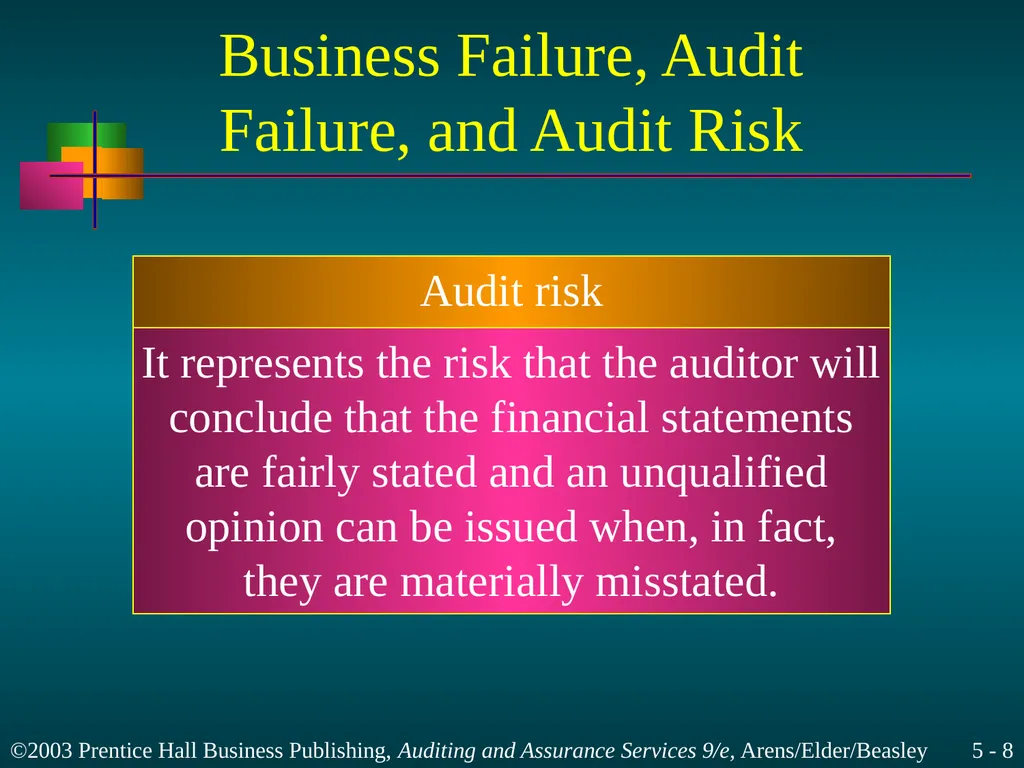
slide8. Business Failure, Audit Failure, and Audit Risk Audit risk It represents the risk that the auditor will
conclude that the financial statements
are fairly stated and an unqualified
opinion can be issued when, in fact,
they are materially misstated.<br>
slide9. Learning Objective 3 Use the primary legal concepts
and the terms concerning
accountants’ liability as a
basis for studying legal
liability of auditors.<br>
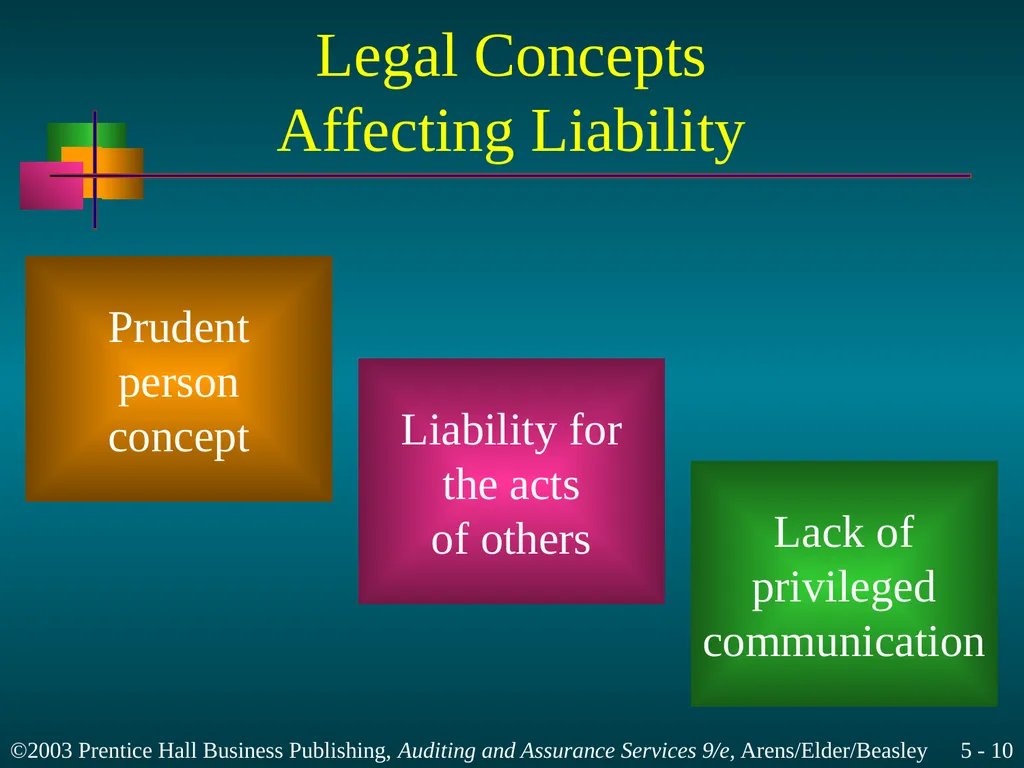
slide10. Lack of
privileged
communication Liability for
the acts
of others Prudent
person
concept Legal Concepts Affecting Liability<br>
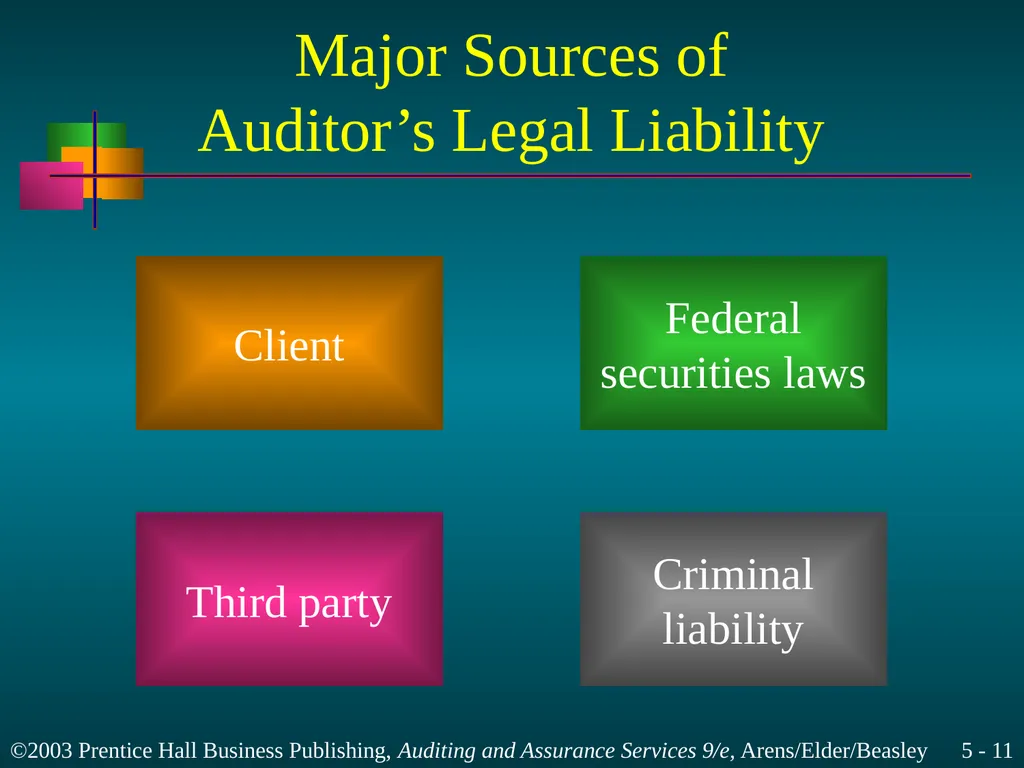
slide11. Federal
securities laws Third party Client Major Sources of Auditor’s Legal Liability Criminal
liability<br>
slide12. Learning Objective 4 Describe accountants’ liability
to clients and related defenses.<br>
slide13. Liability to Clients The most common
source of lawsuits
against CPAs
is from clients.<br>
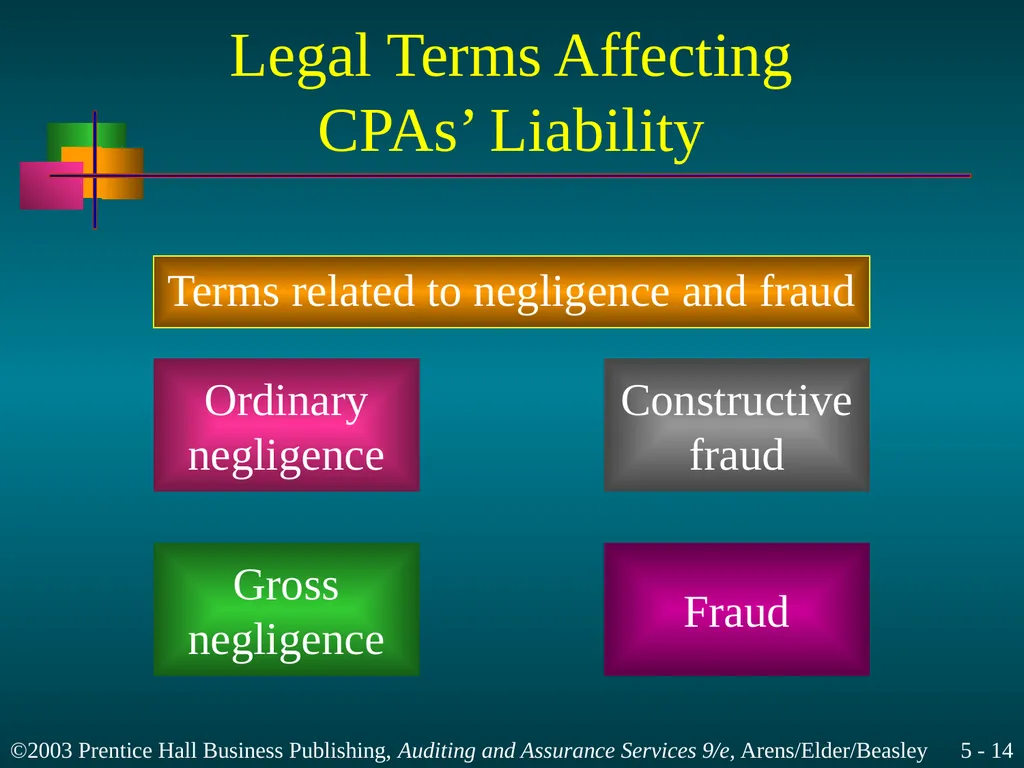
slide14. Legal Terms Affecting CPAs’ Liability Terms related to negligence and fraud Ordinary
negligence Gross
negligence Constructive
fraud Fraud<br>
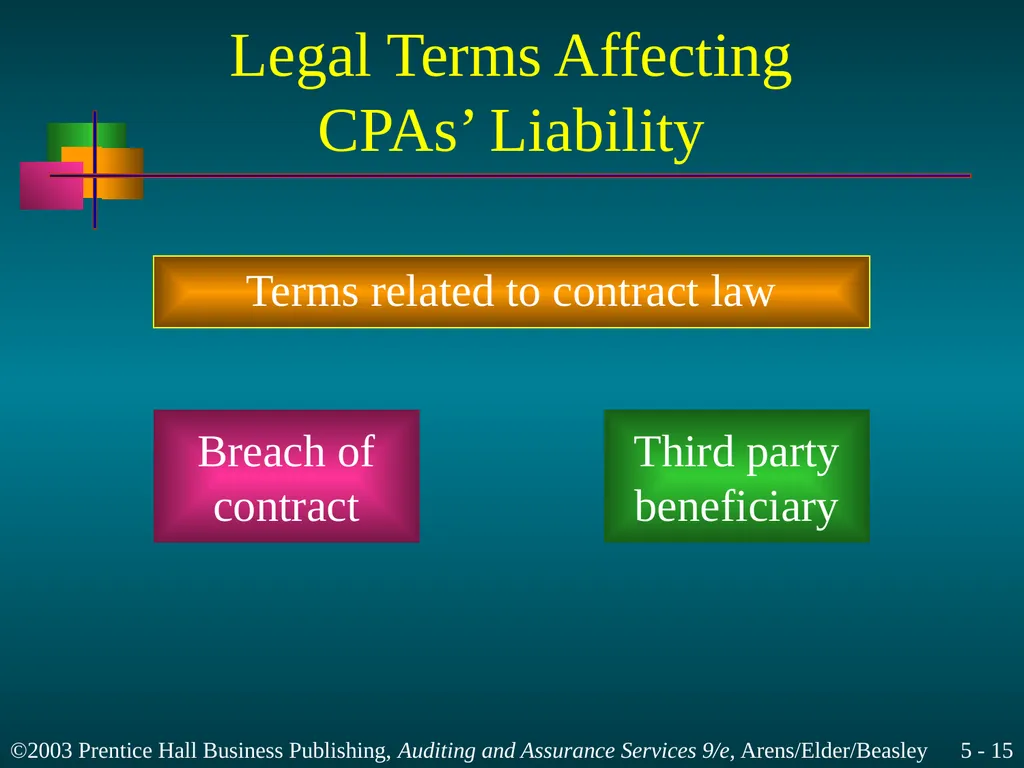
slide15. Legal Terms Affecting CPAs’ Liability Terms related to contract law Breach of
contract Third party
beneficiary<br>
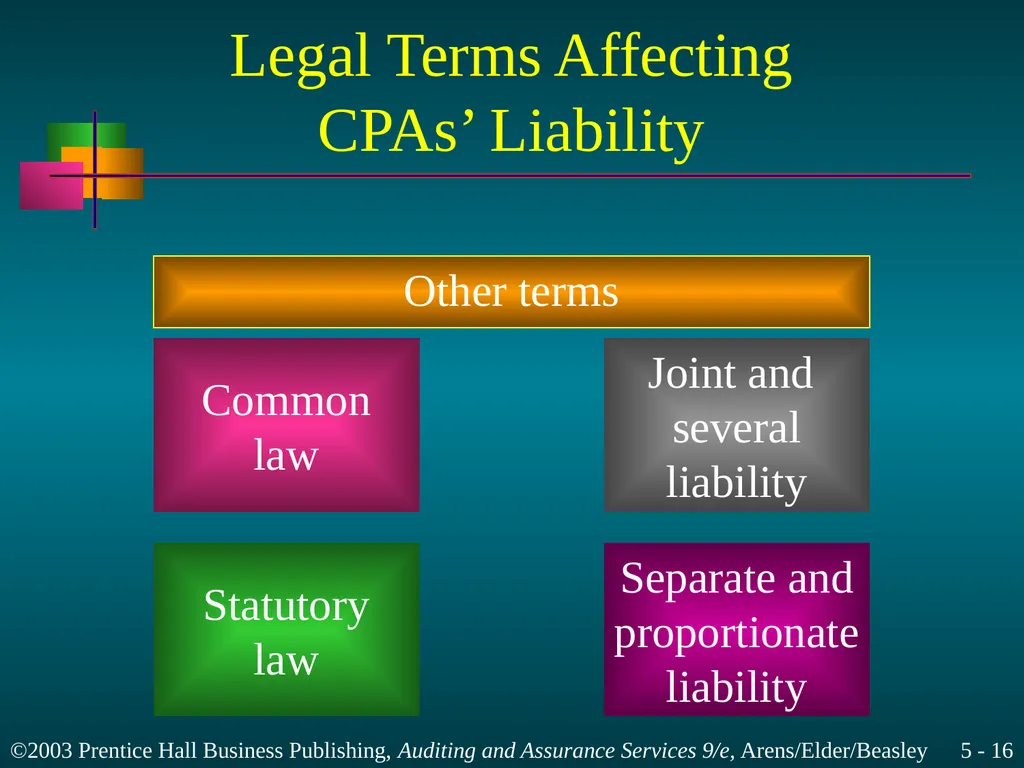
slide16. Legal Terms Affecting CPAs’ Liability Other terms Common
law Statutory
law Joint and
several
liability Separate and
proportionate
liability<br>
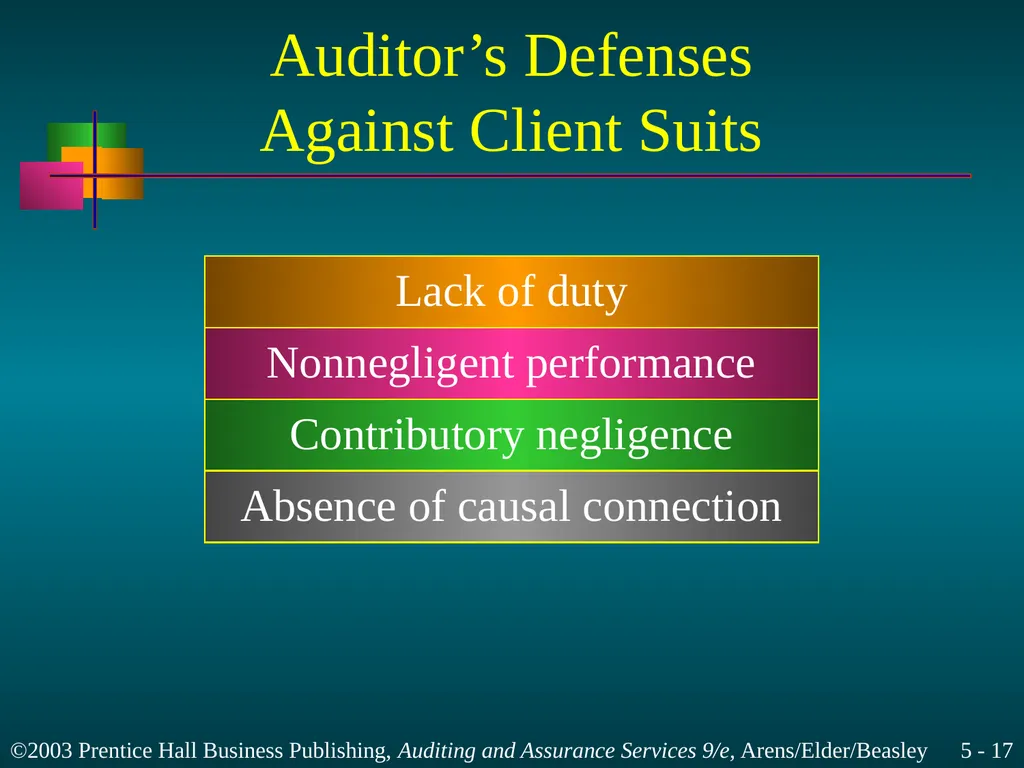
slide17. Auditor’s Defenses Against Client Suits Lack of duty Nonnegligent performance Contributory negligence Absence of causal connection<br>
slide18. Learning Objective 5 Describe accountants’ liability
to third parties under common
law and related defenses.<br>
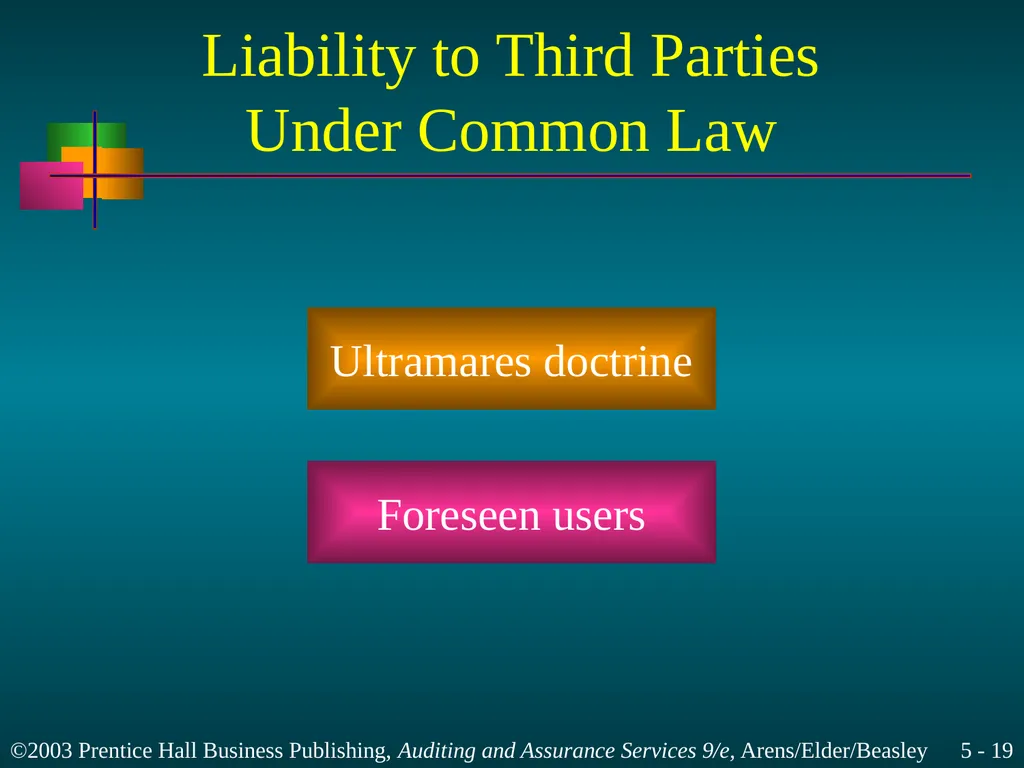
slide19. Liability to Third Parties Under Common Law Ultramares doctrine Foreseen users<br>
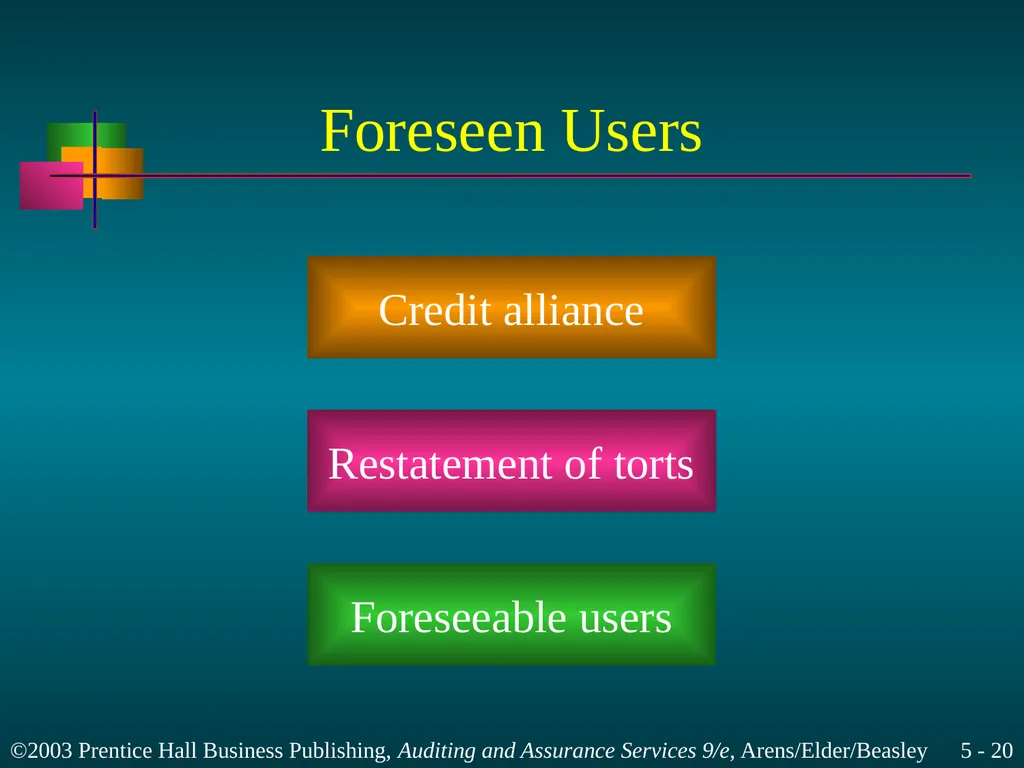
slide20. Foreseen Users Credit alliance Restatement of torts Foreseeable users<br>
slide21. Learning Objective 6 Describe accountants’ civil
liability under the federal
securities laws and
related defenses.<br>
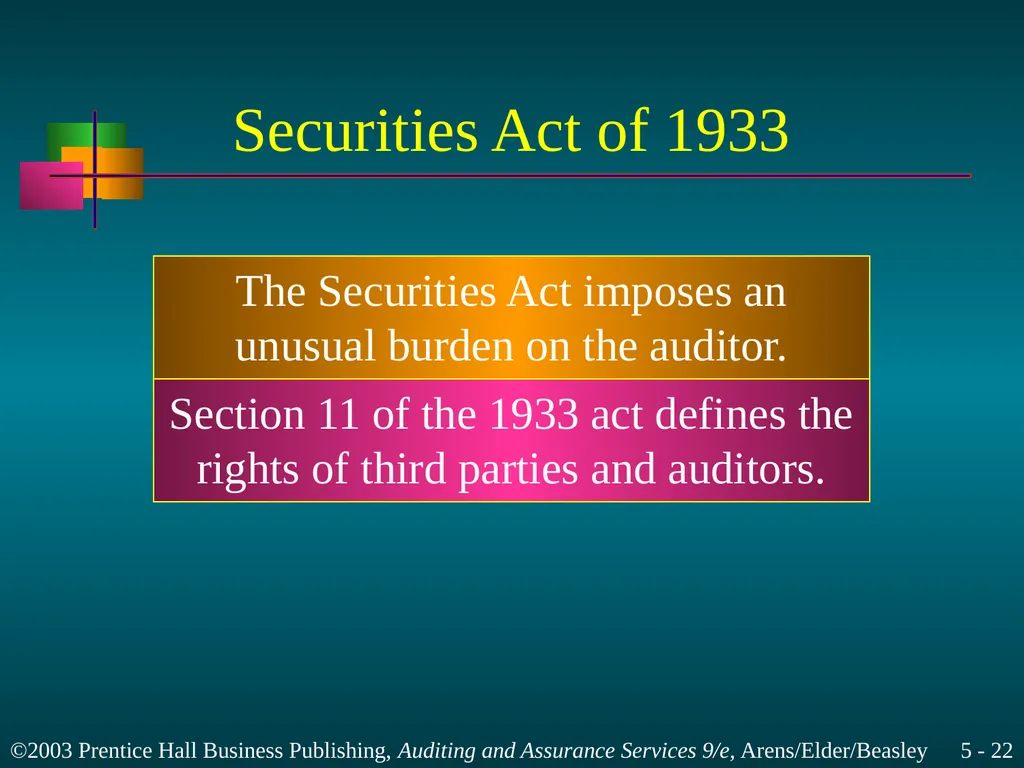
slide22. Securities Act of 1933 The Securities Act imposes an
unusual burden on the auditor. Section 11 of the 1933 act defines the
rights of third parties and auditors.<br>
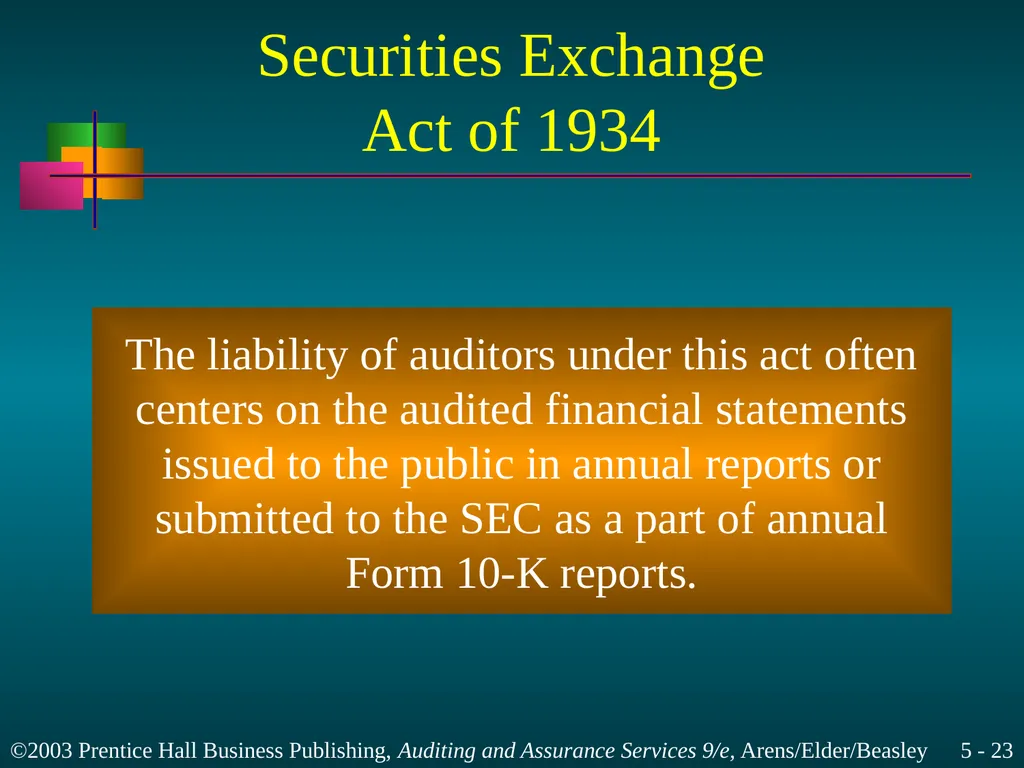
slide23. Securities Exchange Act of 1934 The liability of auditors under this act often
centers on the audited financial statements
issued to the public in annual reports or
submitted to the SEC as a part of annual
Form 10-K reports.<br>
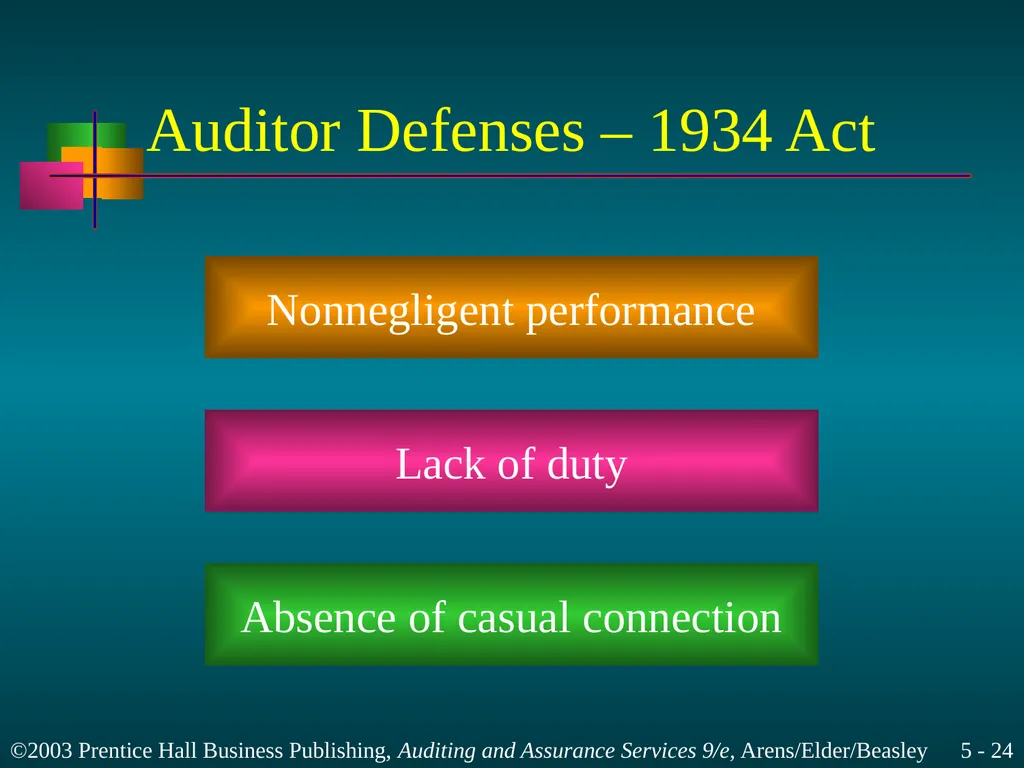
slide24. Auditor Defenses – 1934 Act Nonnegligent performance Lack of duty Absence of casual connection<br>
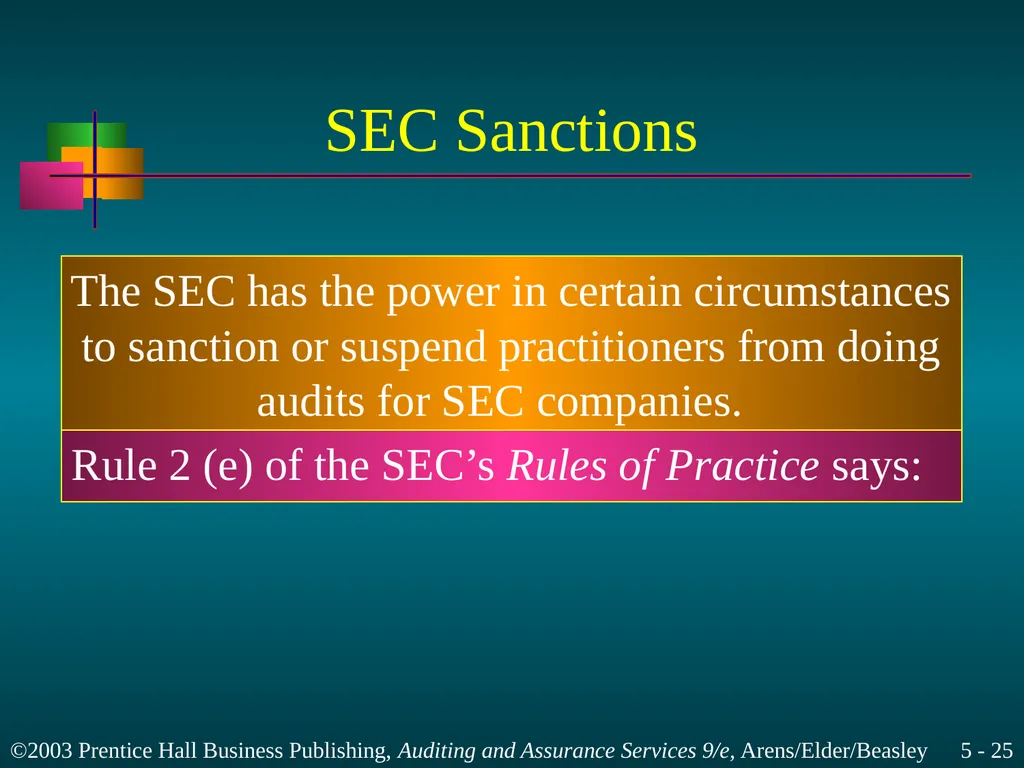
slide25. SEC Sanctions The SEC has the power in certain circumstances
to sanction or suspend practitioners from doing
audits for SEC companies. Rule 2 (e) of the SEC’s Rules of Practice says:<br>
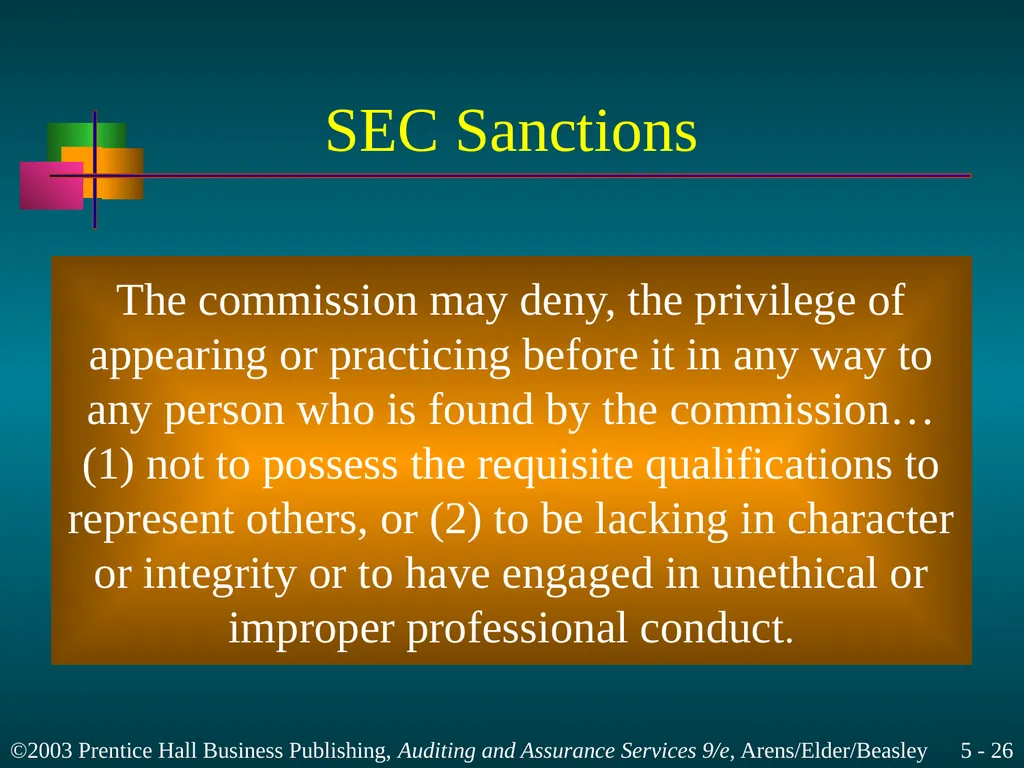
slide26. SEC Sanctions The commission may deny, the privilege of
appearing or practicing before it in any way to
any person who is found by the commission…
(1) not to possess the requisite qualifications to
represent others, or (2) to be lacking in character
or integrity or to have engaged in unethical or
improper professional conduct.<br>
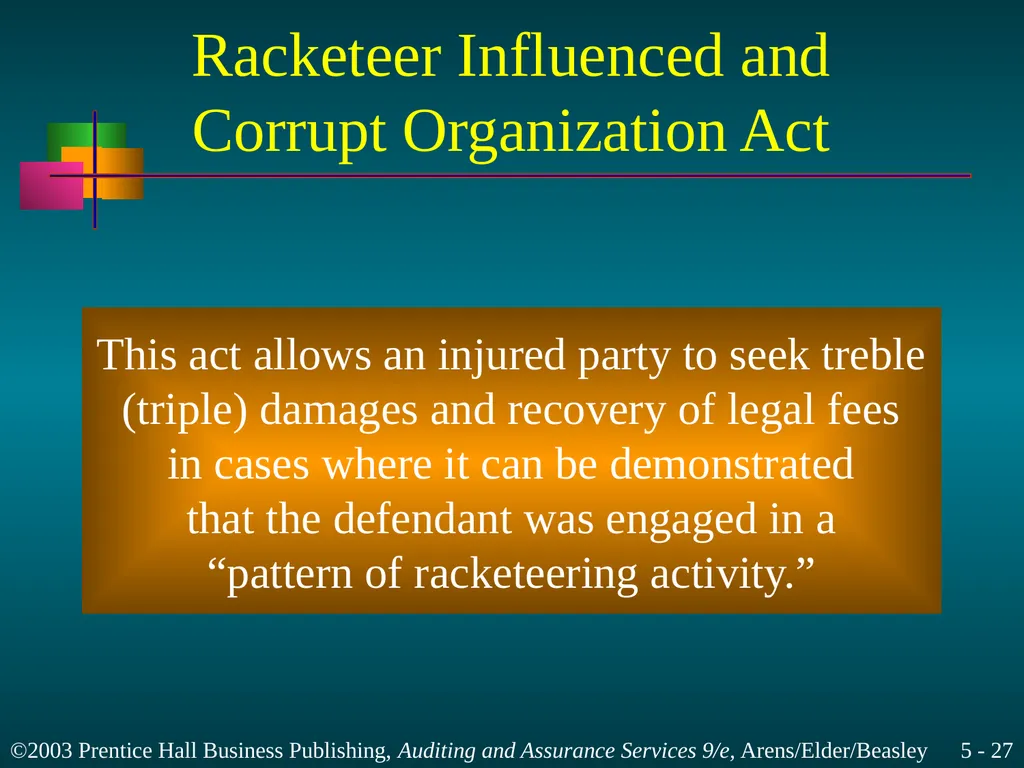
slide27. Racketeer Influenced and Corrupt Organization Act This act allows an injured party to seek treble
(triple) damages and recovery of legal fees
in cases where it can be demonstrated
that the defendant was engaged in a
“pattern of racketeering activity.”<br>
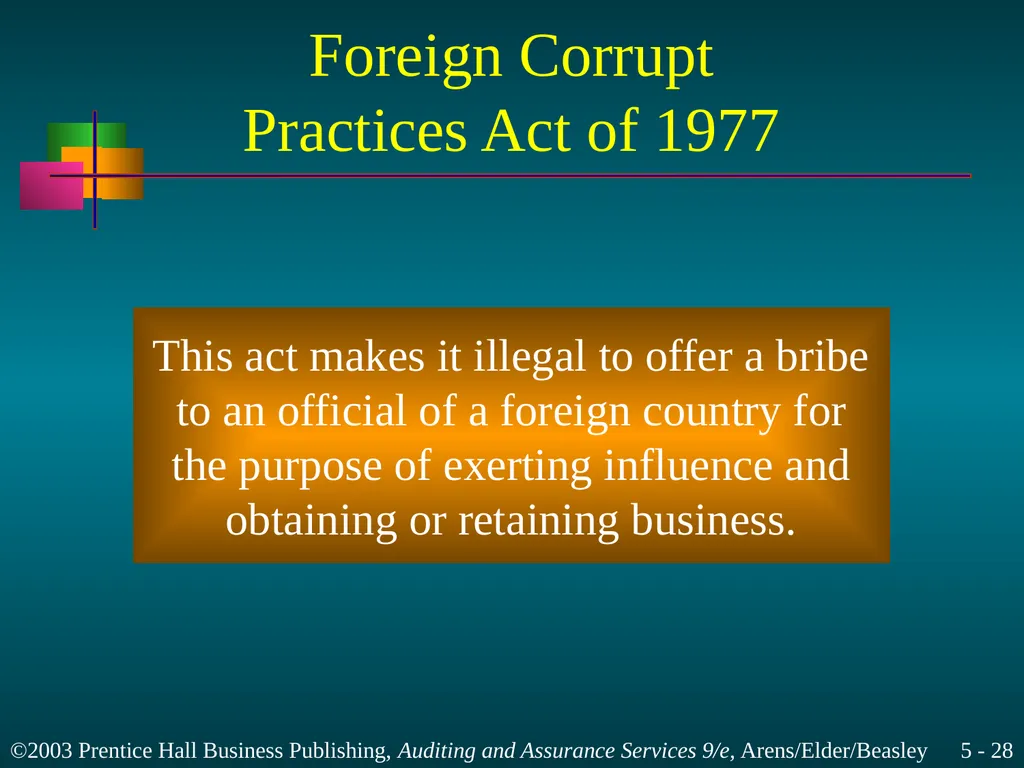
slide28. Foreign Corrupt Practices Act of 1977 This act makes it illegal to offer a bribe
to an official of a foreign country for
the purpose of exerting influence and
obtaining or retaining business.<br>
slide29. Learning Objective 7 Specify what constitutes
criminal liability
for accountants.<br>
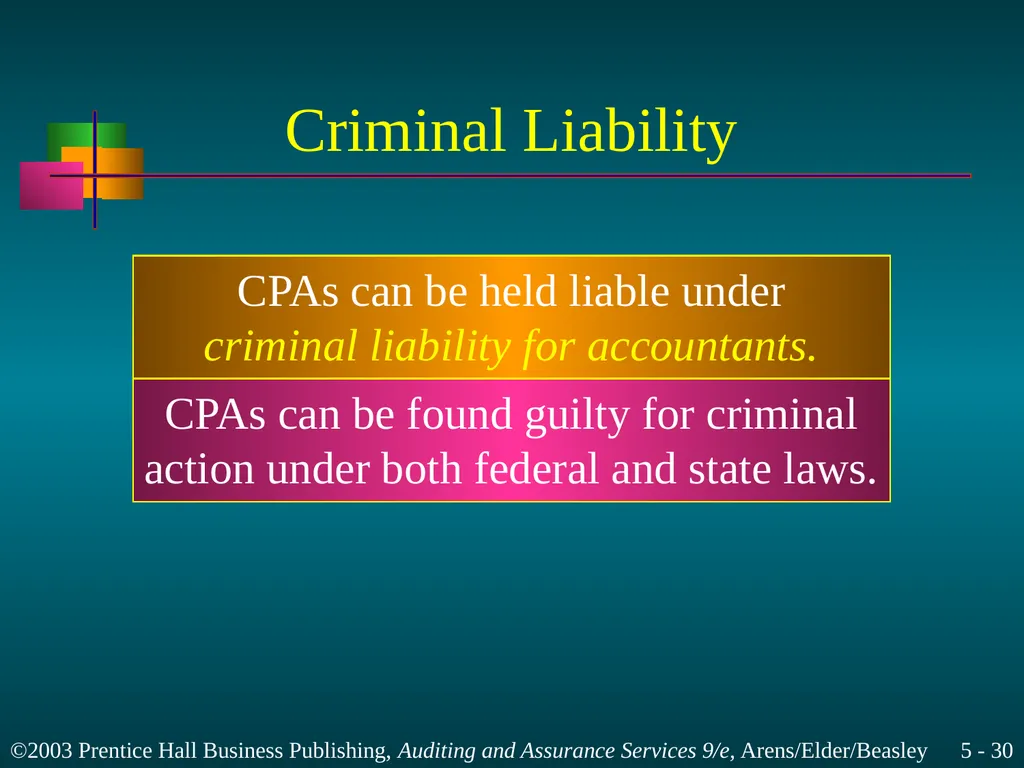
slide30. Criminal Liability CPAs can be held liable under
criminal liability for accountants. CPAs can be found guilty for criminal
action under both federal and state laws.<br>
slide31. Learning Objective 8 Describe what the profession and
the individual CPA can do and
what is being done to reduce
the threat of litigation.<br>
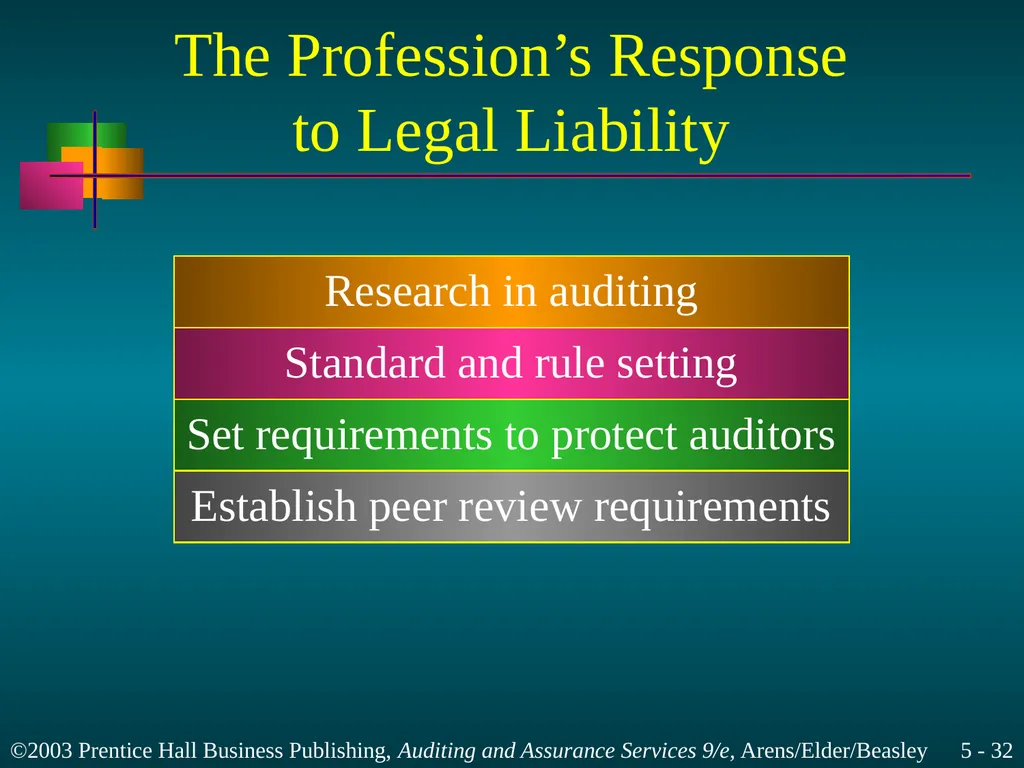
slide32. The Profession’s Response to Legal Liability Research in auditing Standard and rule setting Set requirements to protect auditors Establish peer review requirements<br>
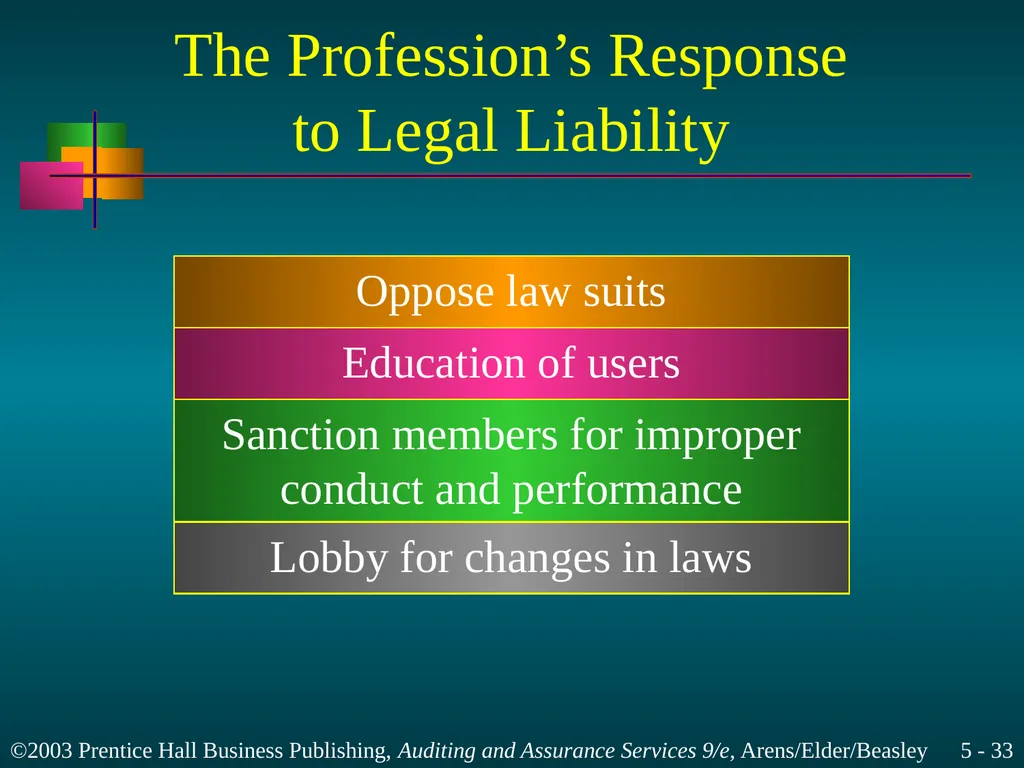
slide33. The Profession’s Response to Legal Liability Oppose law suits Education of users Sanction members for improper
conduct and performance Lobby for changes in laws<br>
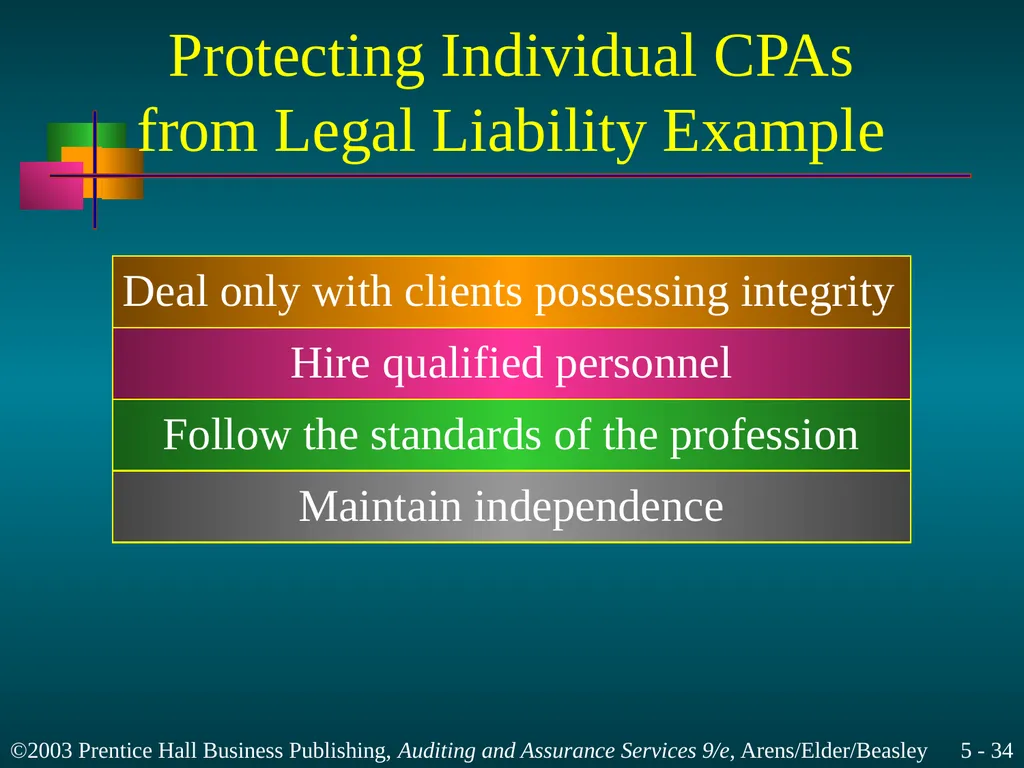
slide34. Protecting Individual CPAs from Legal Liability Example Deal only with clients possessing integrity Hire qualified personnel Follow the standards of the profession Maintain independence<br>
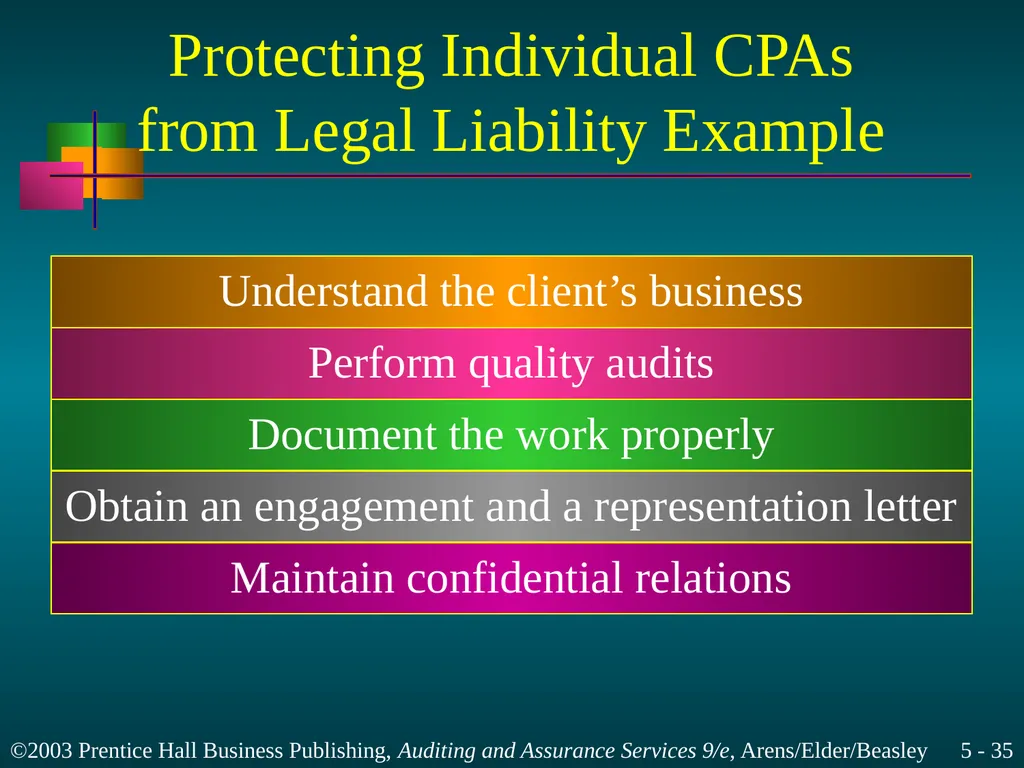
slide35. Protecting Individual CPAs from Legal Liability Example Understand the client’s business Perform quality audits Document the work properly Obtain an engagement and a representation letter Maintain confidential relations<br>
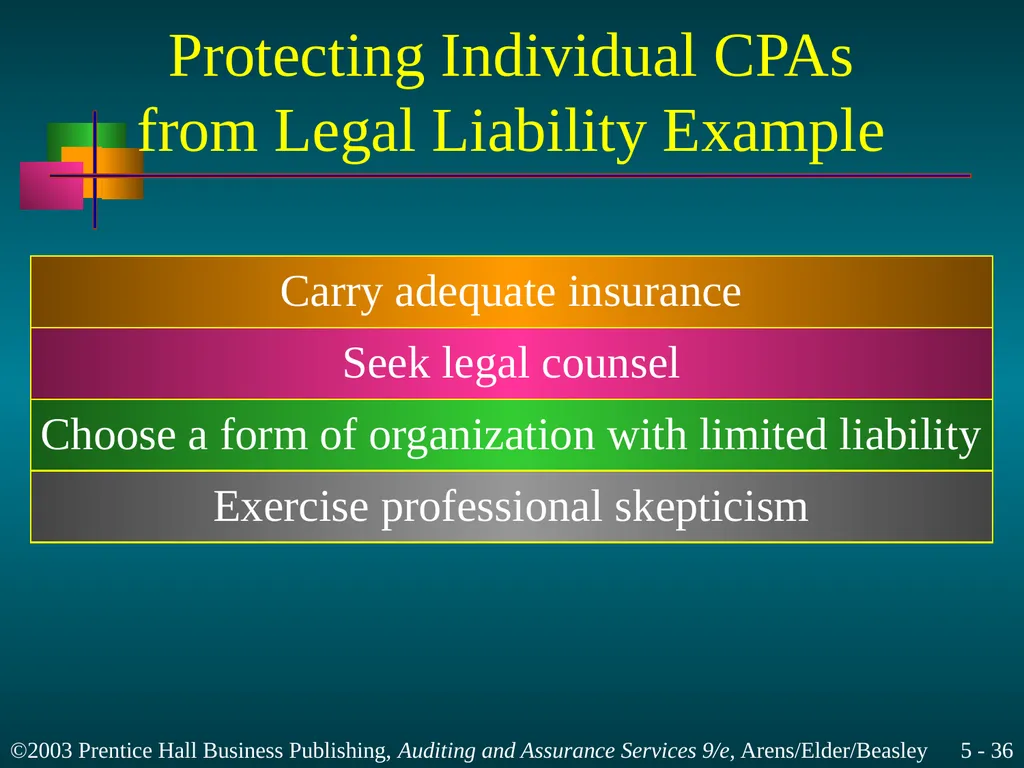
slide36. Protecting Individual CPAs from Legal Liability Example Carry adequate insurance Seek legal counsel Choose a form of organization with limited liability Exercise professional skepticism<br>
slide37. End of Chapter 5<br>
slide2. Learning Objective 1 Understand the litigious
environment in which
CPAs practice.<br>
slide3. Changed Legal Environment Audit professionals have a responsibility under
common law to fulfill implied or expressed
contracts with clients. They are liable to their clients for negligence
and/or breach of contract should they fail to
provide the services or not exercise due care
in their performance.<br>
slide4. Learning Objective 2 Explain why the failure of financial
statement users to differentiate
among business failure, audit
failure, and audit risk has
resulted in lawsuits.<br>
slide5. Business Failure, Audit Failure, and Audit Risk Business
Failure Audit
Failure Audit
Risk<br>
slide6. Business Failure, Audit Failure, and Audit Risk Business failure It occurs when a business is unable to
repay its lenders or meet the
expectations of its investors because
of economic or business conditions.<br>
slide7. Business Failure, Audit Failure, and Audit Risk Audit failure It occurs when the auditor issues an
erroneous audit opinion as the result
of an underlying failure to comply
with the requirements of generally
accepted auditing standards (GAAS).<br>
slide8. Business Failure, Audit Failure, and Audit Risk Audit risk It represents the risk that the auditor will
conclude that the financial statements
are fairly stated and an unqualified
opinion can be issued when, in fact,
they are materially misstated.<br>
slide9. Learning Objective 3 Use the primary legal concepts
and the terms concerning
accountants’ liability as a
basis for studying legal
liability of auditors.<br>
slide10. Lack of
privileged
communication Liability for
the acts
of others Prudent
person
concept Legal Concepts Affecting Liability<br>
slide11. Federal
securities laws Third party Client Major Sources of Auditor’s Legal Liability Criminal
liability<br>
slide12. Learning Objective 4 Describe accountants’ liability
to clients and related defenses.<br>
slide13. Liability to Clients The most common
source of lawsuits
against CPAs
is from clients.<br>
slide14. Legal Terms Affecting CPAs’ Liability Terms related to negligence and fraud Ordinary
negligence Gross
negligence Constructive
fraud Fraud<br>
slide15. Legal Terms Affecting CPAs’ Liability Terms related to contract law Breach of
contract Third party
beneficiary<br>
slide16. Legal Terms Affecting CPAs’ Liability Other terms Common
law Statutory
law Joint and
several
liability Separate and
proportionate
liability<br>
slide17. Auditor’s Defenses Against Client Suits Lack of duty Nonnegligent performance Contributory negligence Absence of causal connection<br>
slide18. Learning Objective 5 Describe accountants’ liability
to third parties under common
law and related defenses.<br>
slide19. Liability to Third Parties Under Common Law Ultramares doctrine Foreseen users<br>
slide20. Foreseen Users Credit alliance Restatement of torts Foreseeable users<br>
slide21. Learning Objective 6 Describe accountants’ civil
liability under the federal
securities laws and
related defenses.<br>
slide22. Securities Act of 1933 The Securities Act imposes an
unusual burden on the auditor. Section 11 of the 1933 act defines the
rights of third parties and auditors.<br>
slide23. Securities Exchange Act of 1934 The liability of auditors under this act often
centers on the audited financial statements
issued to the public in annual reports or
submitted to the SEC as a part of annual
Form 10-K reports.<br>
slide24. Auditor Defenses – 1934 Act Nonnegligent performance Lack of duty Absence of casual connection<br>
slide25. SEC Sanctions The SEC has the power in certain circumstances
to sanction or suspend practitioners from doing
audits for SEC companies. Rule 2 (e) of the SEC’s Rules of Practice says:<br>
slide26. SEC Sanctions The commission may deny, the privilege of
appearing or practicing before it in any way to
any person who is found by the commission…
(1) not to possess the requisite qualifications to
represent others, or (2) to be lacking in character
or integrity or to have engaged in unethical or
improper professional conduct.<br>
slide27. Racketeer Influenced and Corrupt Organization Act This act allows an injured party to seek treble
(triple) damages and recovery of legal fees
in cases where it can be demonstrated
that the defendant was engaged in a
“pattern of racketeering activity.”<br>
slide28. Foreign Corrupt Practices Act of 1977 This act makes it illegal to offer a bribe
to an official of a foreign country for
the purpose of exerting influence and
obtaining or retaining business.<br>
slide29. Learning Objective 7 Specify what constitutes
criminal liability
for accountants.<br>
slide30. Criminal Liability CPAs can be held liable under
criminal liability for accountants. CPAs can be found guilty for criminal
action under both federal and state laws.<br>
slide31. Learning Objective 8 Describe what the profession and
the individual CPA can do and
what is being done to reduce
the threat of litigation.<br>
slide32. The Profession’s Response to Legal Liability Research in auditing Standard and rule setting Set requirements to protect auditors Establish peer review requirements<br>
slide33. The Profession’s Response to Legal Liability Oppose law suits Education of users Sanction members for improper
conduct and performance Lobby for changes in laws<br>
slide34. Protecting Individual CPAs from Legal Liability Example Deal only with clients possessing integrity Hire qualified personnel Follow the standards of the profession Maintain independence<br>
slide35. Protecting Individual CPAs from Legal Liability Example Understand the client’s business Perform quality audits Document the work properly Obtain an engagement and a representation letter Maintain confidential relations<br>
slide36. Protecting Individual CPAs from Legal Liability Example Carry adequate insurance Seek legal counsel Choose a form of organization with limited liability Exercise professional skepticism<br>
slide37. End of Chapter 5<br>