04
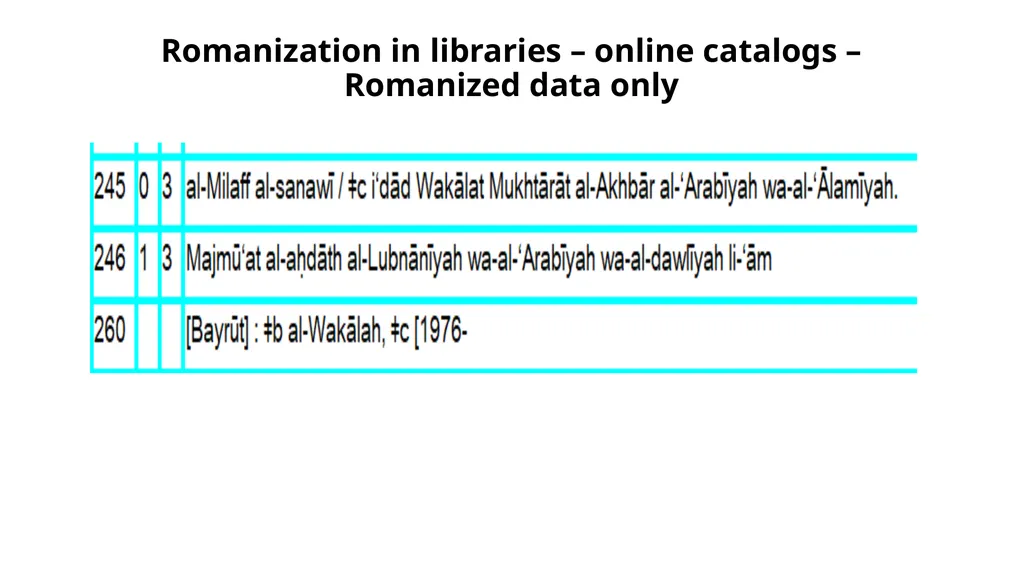
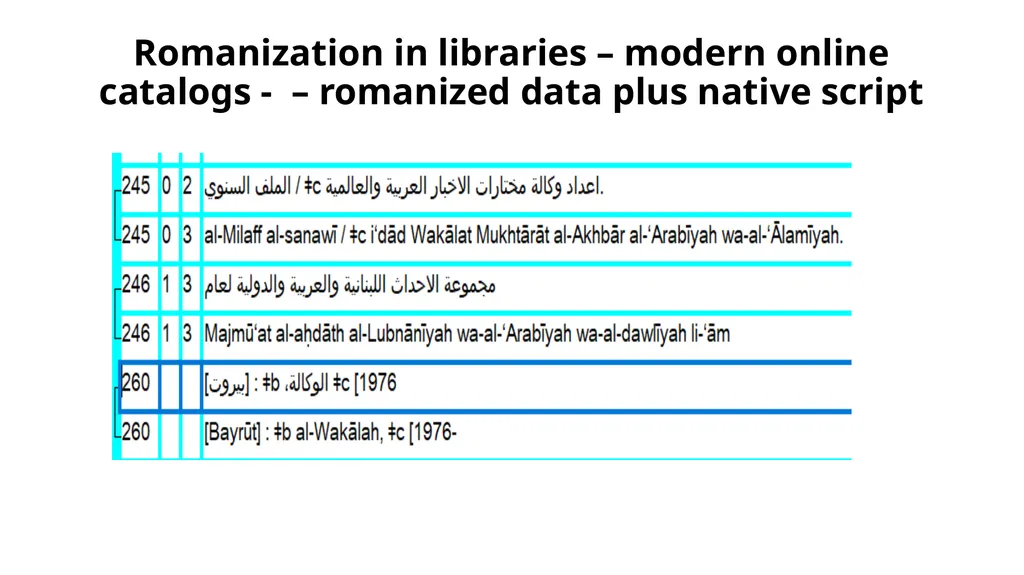
Romanization in libraries – modern online catalogs - – romanized data plus native script<br>
05
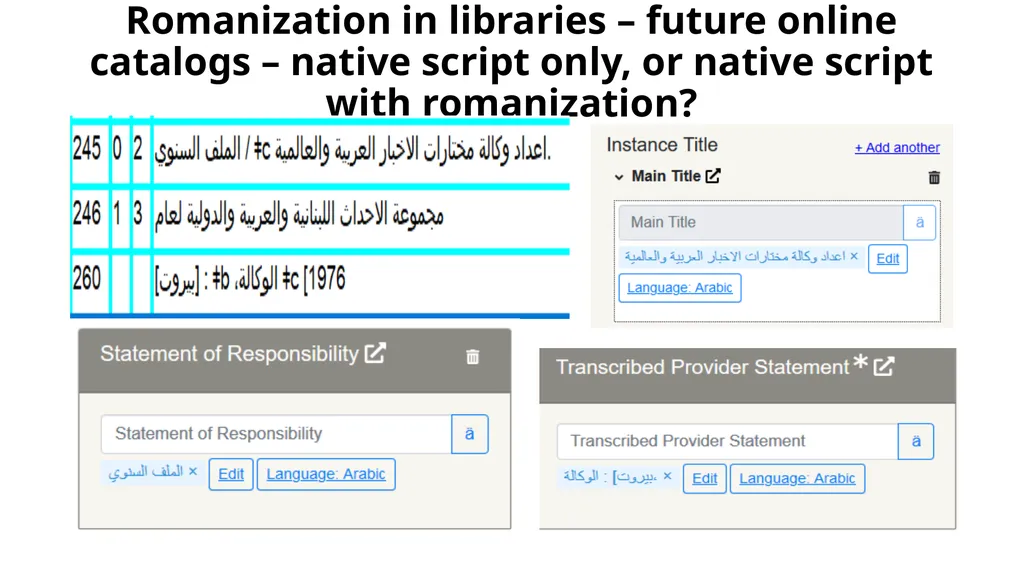
Romanization in libraries – future online catalogs – native script only, or native script with romanization?<br>
06
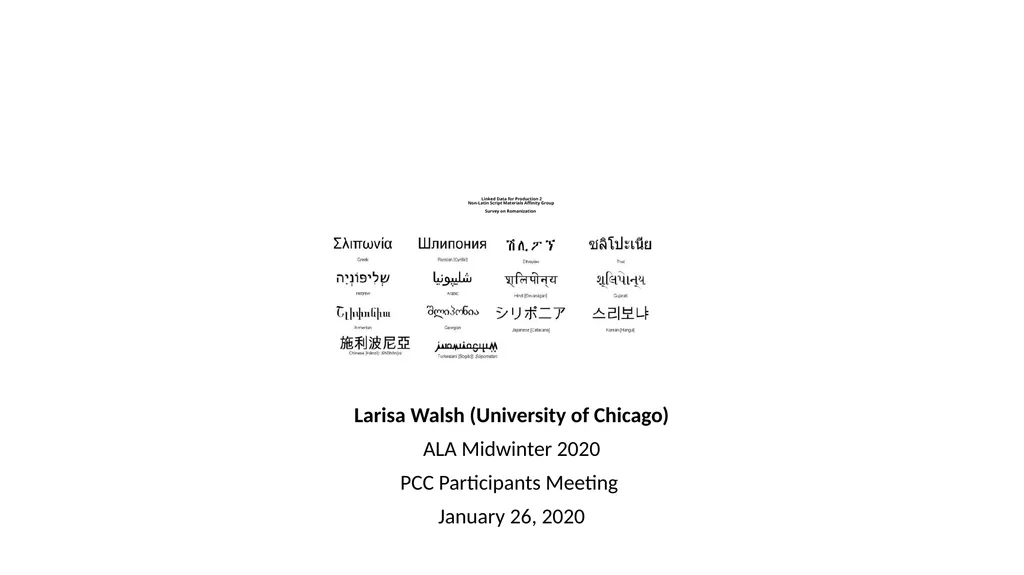
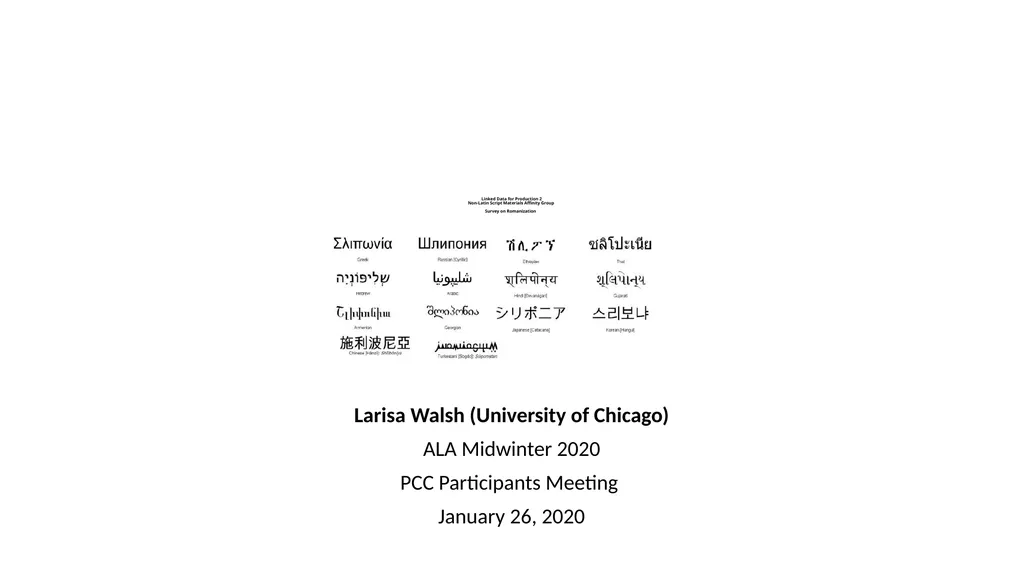
Survey on Romanization - background Linked Data for Production 2 Non-Latin Script Materials Affinity Group: to explore different models for dealing with native scripts in Sinopia (LD4P2 Linked Data editor) and create a community of practice for cataloging non-Latin script materials in the linked data environment in general, Sinopia specifically
Library of Congress practice for linked data cataloging: reduce amount of romanized data, romanization is limited to access points, descriptive fields in native scripts only<br>
07
To Romanize or not to Romanize? That is the question As library systems become more powerful in handling native scripts, and with the move to linked data, there is a desire to re-evaluate the current practice regarding romanization. Before any decisions can be made, we need to consider the impact on patrons, library staff, and systems used to manage resources in non-Latin scripts
Simple question: Do libraries still need to provide romanization for resources they collect? To Romanize or not to Romanize?<br>
08
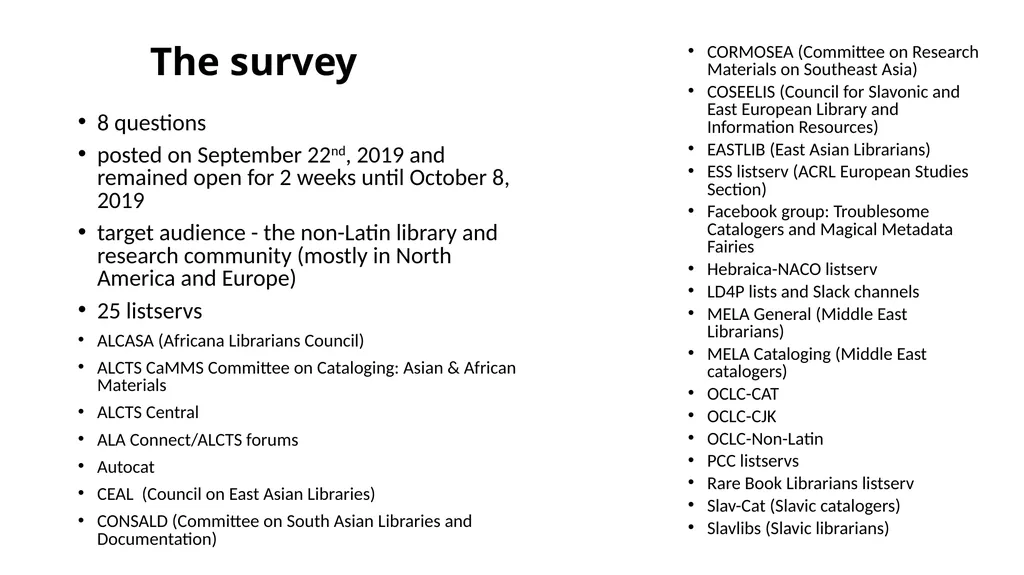
The survey 8 questions
posted on September 22nd, 2019 and remained open for 2 weeks until October 8, 2019
target audience - the non-Latin library and research community (mostly in North America and Europe)
25 listservs
ALCASA (Africana Librarians Council)
ALCTS CaMMS Committee on Cataloging: Asian & African Materials
ALCTS Central
ALA Connect/ALCTS forums
Autocat
CEAL (Council on East Asian Libraries)
CONSALD (Committee on South Asian Libraries and Documentation) CORMOSEA (Committee on Research Materials on Southeast Asia)
COSEELIS (Council for Slavonic and East European Library and Information Resources)
EASTLIB (East Asian Librarians)
ESS listserv (ACRL European Studies Section)
Facebook group: Troublesome Catalogers and Magical Metadata Fairies
Hebraica-NACO listserv
LD4P lists and Slack channels
MELA General (Middle East Librarians)
MELA Cataloging (Middle East catalogers)
OCLC-CAT
OCLC-CJK
OCLC-Non-Latin
PCC listservs
Rare Book Librarians listserv
Slav-Cat (Slavic catalogers)
Slavlibs (Slavic librarians)<br>
09
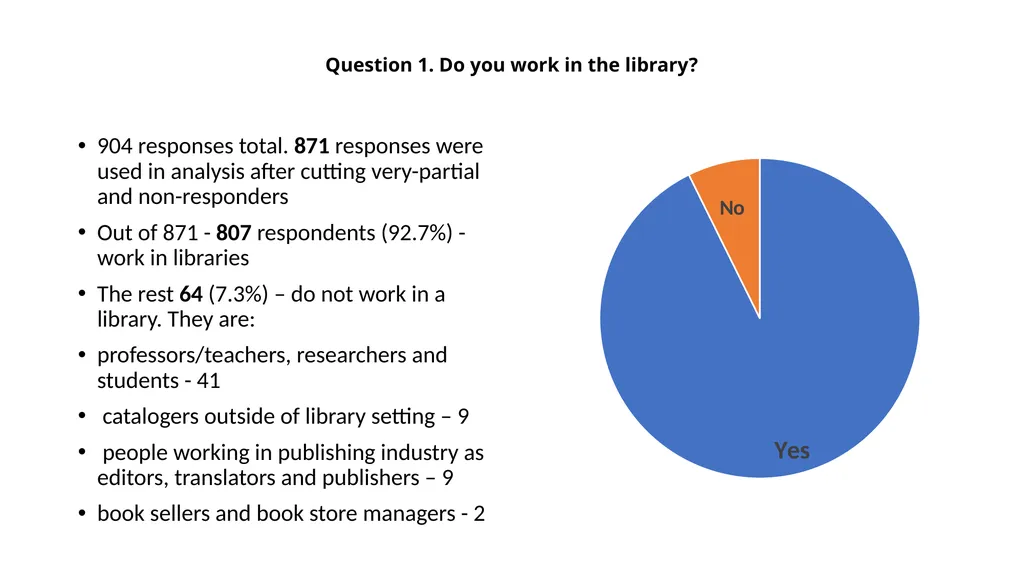
Question 1. Do you work in the library? 904 responses total. 871 responses were used in analysis after cutting very-partial and non-responders
Out of 871 - 807 respondents (92.7%) - work in libraries
The rest 64 (7.3%) – do not work in a library. They are:
professors/teachers, researchers and students - 41
catalogers outside of library setting – 9
people working in publishing industry as editors, translators and publishers – 9
book sellers and book store managers - 2<br>
10
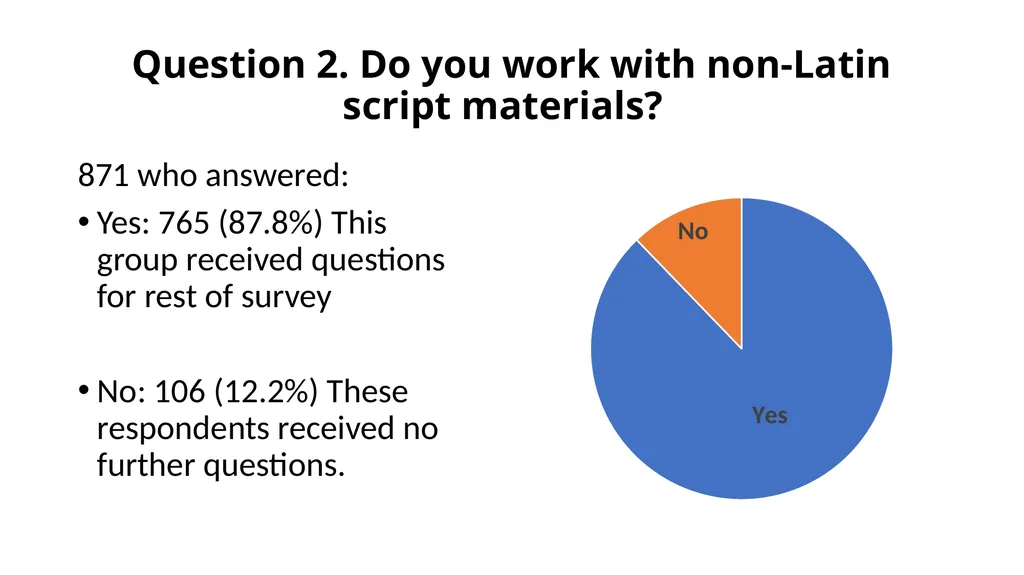
Question 2. Do you work with non-Latin script materials? 871 who answered:
Yes: 765 (87.8%) This group received questions for rest of survey
No: 106 (12.2%) These respondents received no further questions.<br>
11
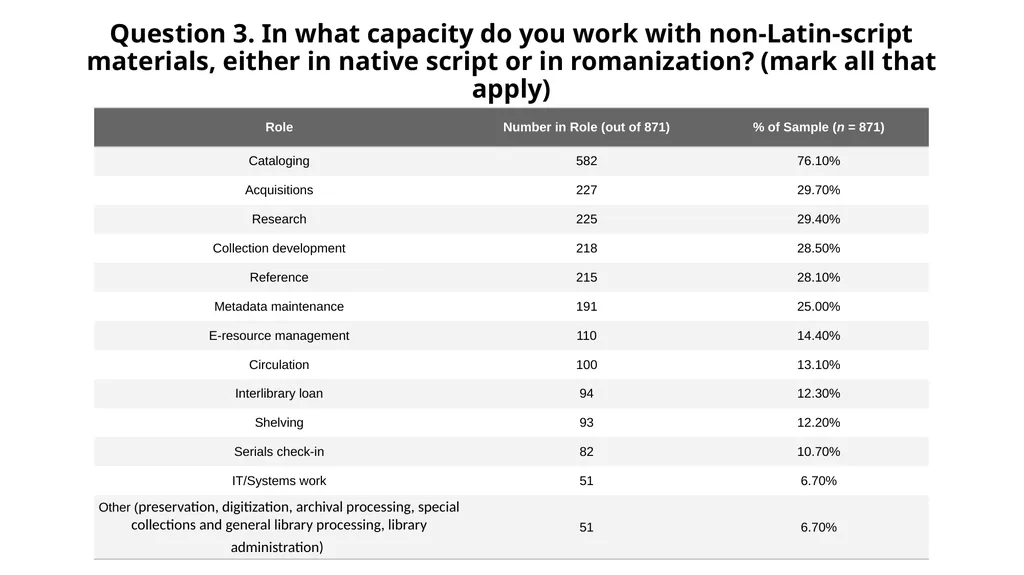
Question 3. In what capacity do you work with non-Latin-script materials, either in native script or in romanization? (mark all that apply)<br>
12
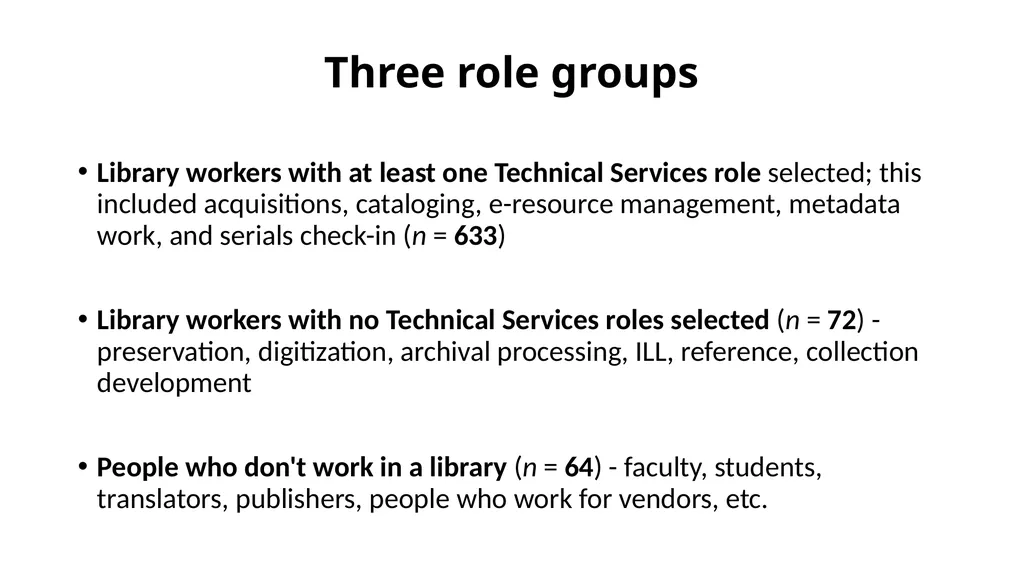
Three role groups Library workers with at least one Technical Services role selected; this included acquisitions, cataloging, e-resource management, metadata work, and serials check-in (n = 633)
Library workers with no Technical Services roles selected (n = 72) - preservation, digitization, archival processing, ILL, reference, collection development
People who don't work in a library (n = 64) - faculty, students, translators, publishers, people who work for vendors, etc.<br>
13
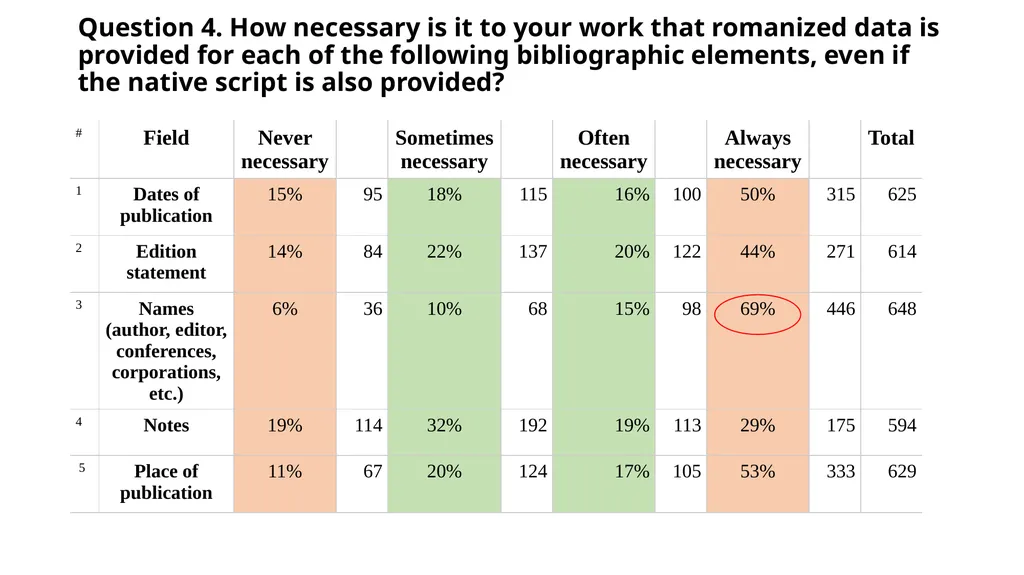
Question 4. How necessary is it to your work that romanized data is provided for each of the following bibliographic elements, even if the native script is also provided?<br>
14
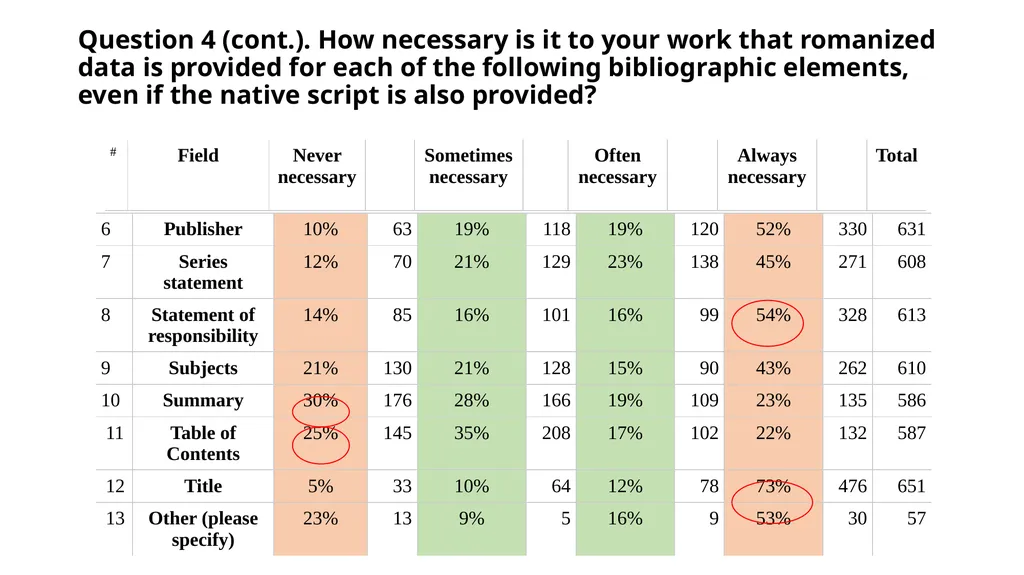
Question 4 (cont.). How necessary is it to your work that romanized data is provided for each of the following bibliographic elements, even if the native script is also provided?<br>
15
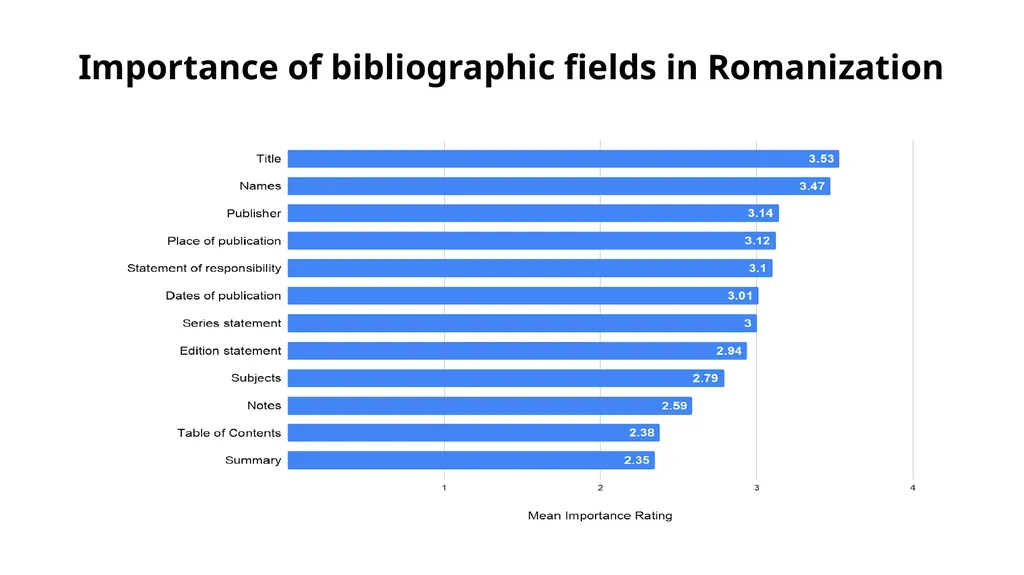
Importance of bibliographic fields in Romanization<br>
16
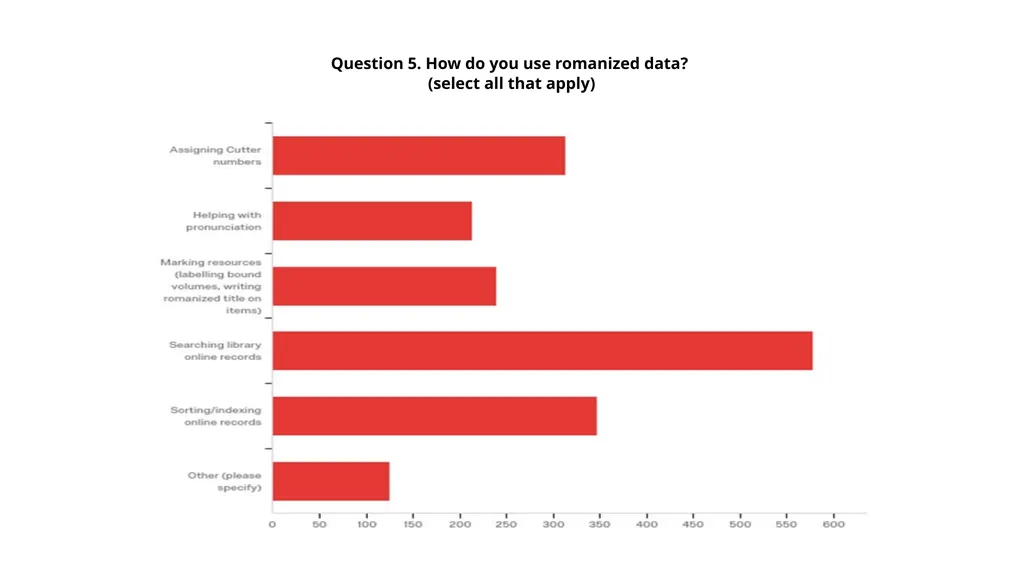
Question 5. How do you use romanized data? �(select all that apply)<br>
17
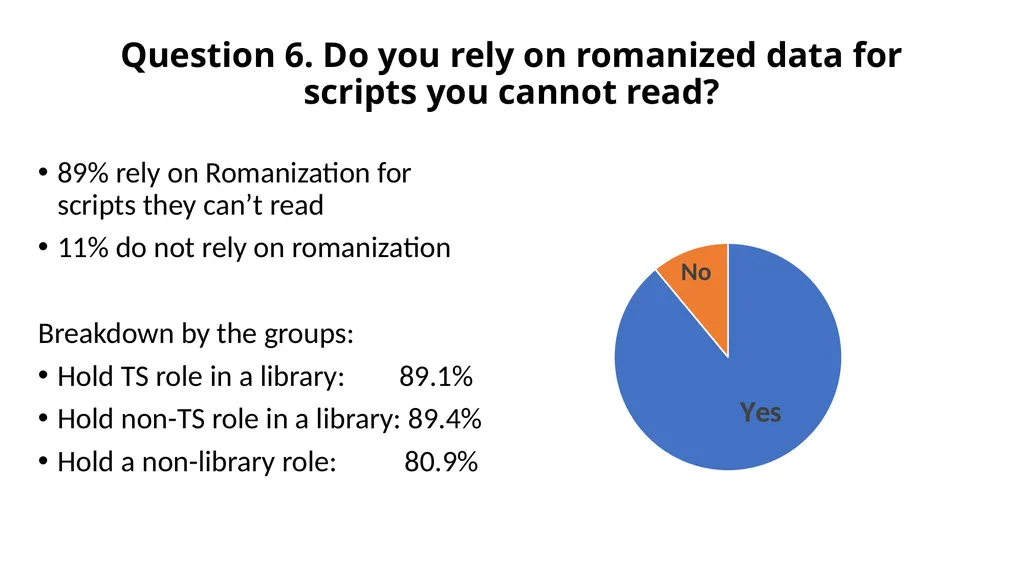
Question 6. Do you rely on romanized data for scripts you cannot read? 89% rely on Romanization for scripts they can’t read
11% do not rely on romanization
Breakdown by the groups:
Hold TS role in a library: 89.1%
Hold non-TS role in a library: 89.4%
Hold a non-library role: 80.9%<br>
18
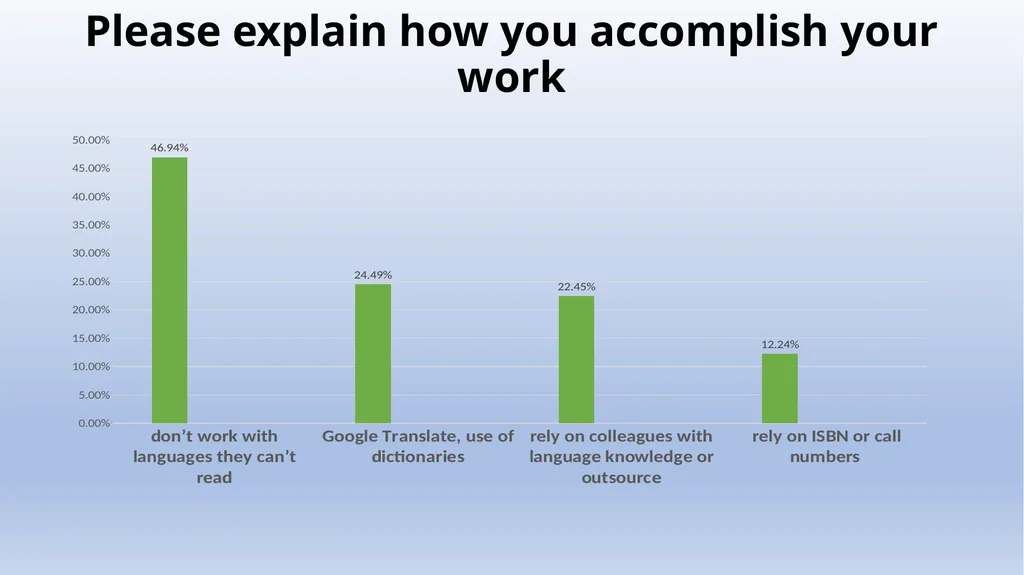
Please explain how you accomplish your work<br>
19
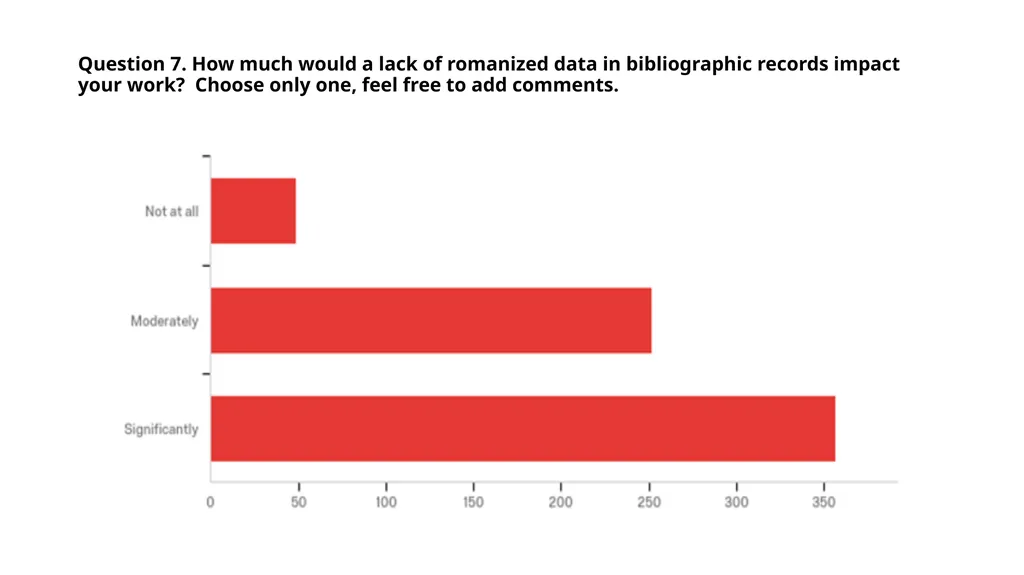
Question 7. How much would a lack of romanized data in bibliographic records impact your work? Choose only one, feel free to add comments.<br>
20
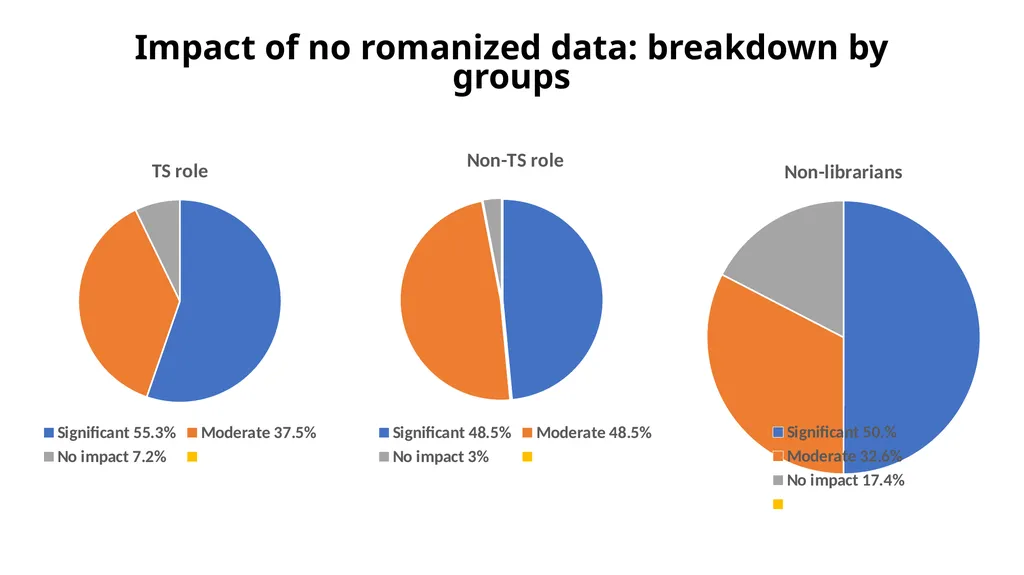
Impact of no romanized data: breakdown by groups<br>
21
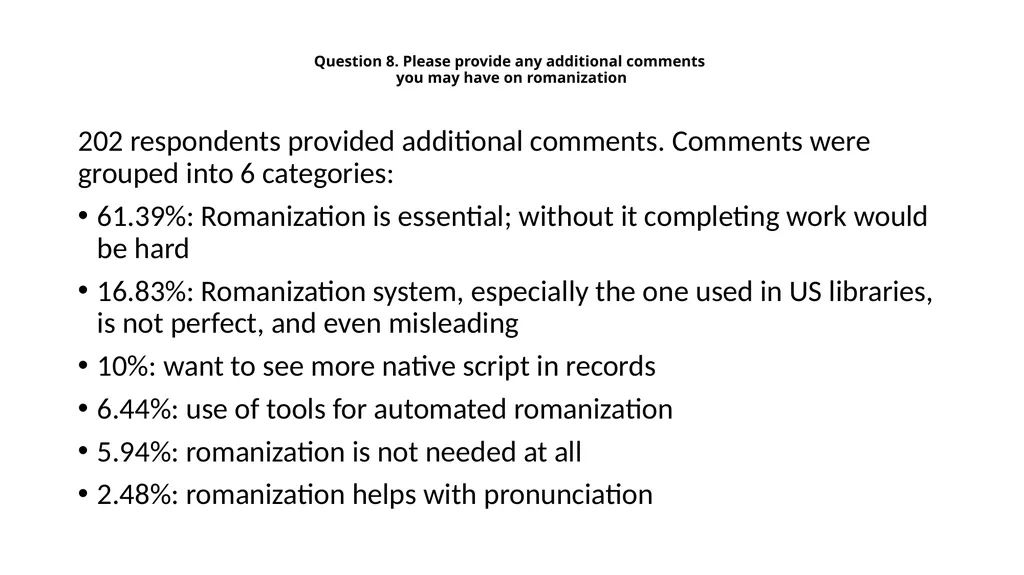
Question 8. Please provide any additional comments �you may have on romanization 202 respondents provided additional comments. Comments were grouped into 6 categories:
61.39%: Romanization is essential; without it completing work would be hard
16.83%: Romanization system, especially the one used in US libraries, is not perfect, and even misleading
10%: want to see more native script in records
6.44%: use of tools for automated romanization
5.94%: romanization is not needed at all
2.48%: romanization helps with pronunciation<br>
22
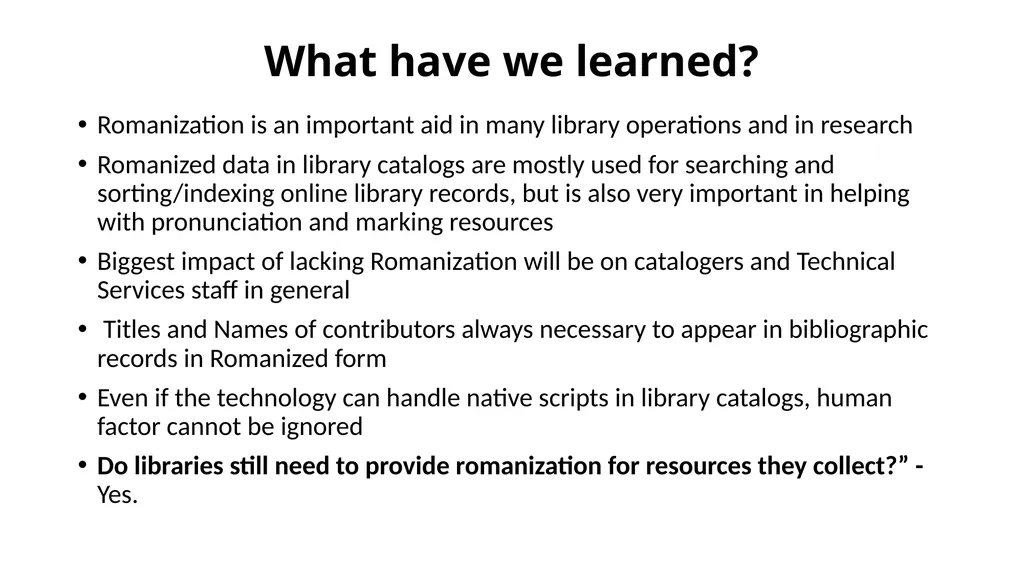
What have we learned? Romanization is an important aid in many library operations and in research
Romanized data in library catalogs are mostly used for searching and sorting/indexing online library records, but is also very important in helping with pronunciation and marking resources
Biggest impact of lacking Romanization will be on catalogers and Technical Services staff in general
Titles and Names of contributors always necessary to appear in bibliographic records in Romanized form
Even if the technology can handle native scripts in library catalogs, human factor cannot be ignored
Do libraries still need to provide romanization for resources they collect?” - Yes.<br>
23
Thank you for your attention!
Full report on the survey will be available on the LD4P2 Wiki
Submitted on behalf of the LD4P2 Non-Latin Script Materials Affinity Group by:
Larisa Walsh (University of Chicago)
Xiaoli Li (University of California, Davis)
Leigh Billings (University of Michigan)
Craig Smith (University of Michigan)
James Kalwara (University of Colorado, Boulder)<br>