Liquid Mixtures CLS 101: Chemistry for Nursing Iman AlAjeyan Mixtures A mixture is a material system made up by two or more different substances which are mixed together but are not combined chemically. The air is a mixture of gases,
"Liquid Mixtures CLS 101: Chemistry for Nursing" is the property of its rightful owner. Permission is granted to
download and print the materials on this website for personal, non-commercial use only, and to display it
on your personal computer provided you do not modify the materials and that you retain all copyright
notices contained in the materials. By downloading content from our website, you accept the terms of this
agreement.
Presentation Transcript
01
Liquid Mixtures CLS 101: Chemistry for Nursing
Iman AlAjeyan<br>
02
Mixtures
A mixture is a material system made up by two or more different substances which are mixed together but are not combined chemically.
The air is a mixture of gases, largely nitrogen, oxygen, and carbon dioxide, along with smaller percentages of other substances.<br>
03
Liquid Mixture
There are 4 types:
Solutions
Suspensions
Colloids
Emulsions<br>
04
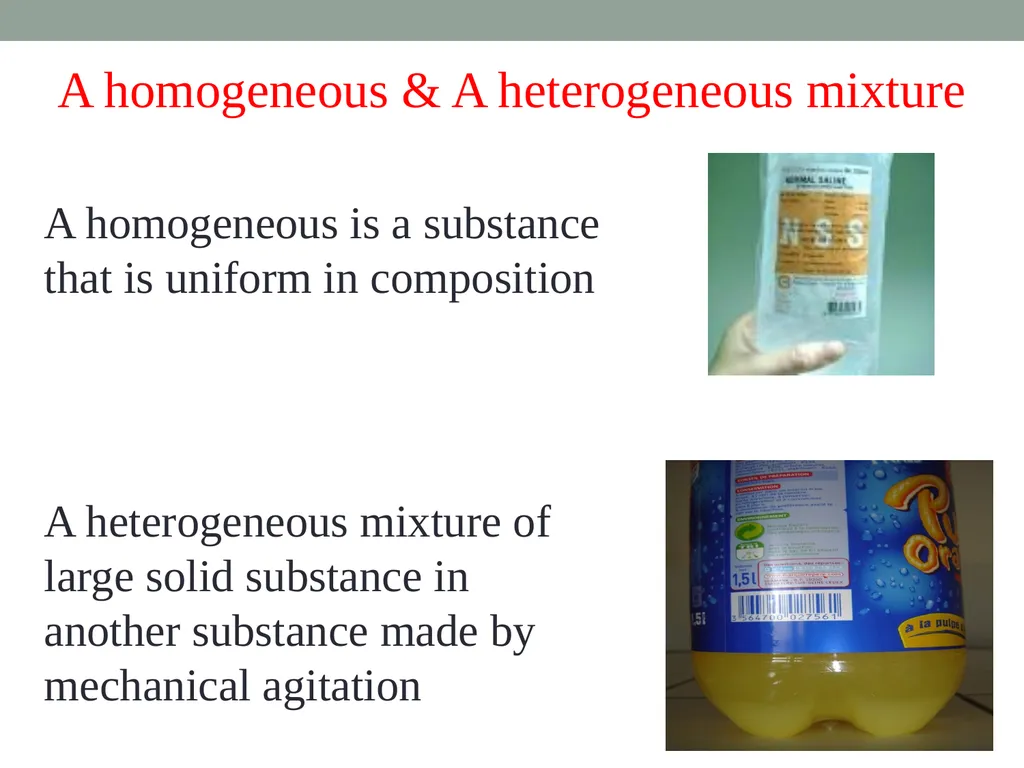
A homogeneous is a substance that is uniform in composition A heterogeneous mixture of large solid substance in another substance made by mechanical agitation A homogeneous & A heterogeneous mixture<br>
05
A solution is a homogeneous (A substance that is uniform in composition) mixture of one or more substances called solutes dissolved in another substance called the solvent. The solute can be solid, liquid, or gas but the solvent is always a liquid. E.g. salt solution, sugar solution,... Solutions<br>
06
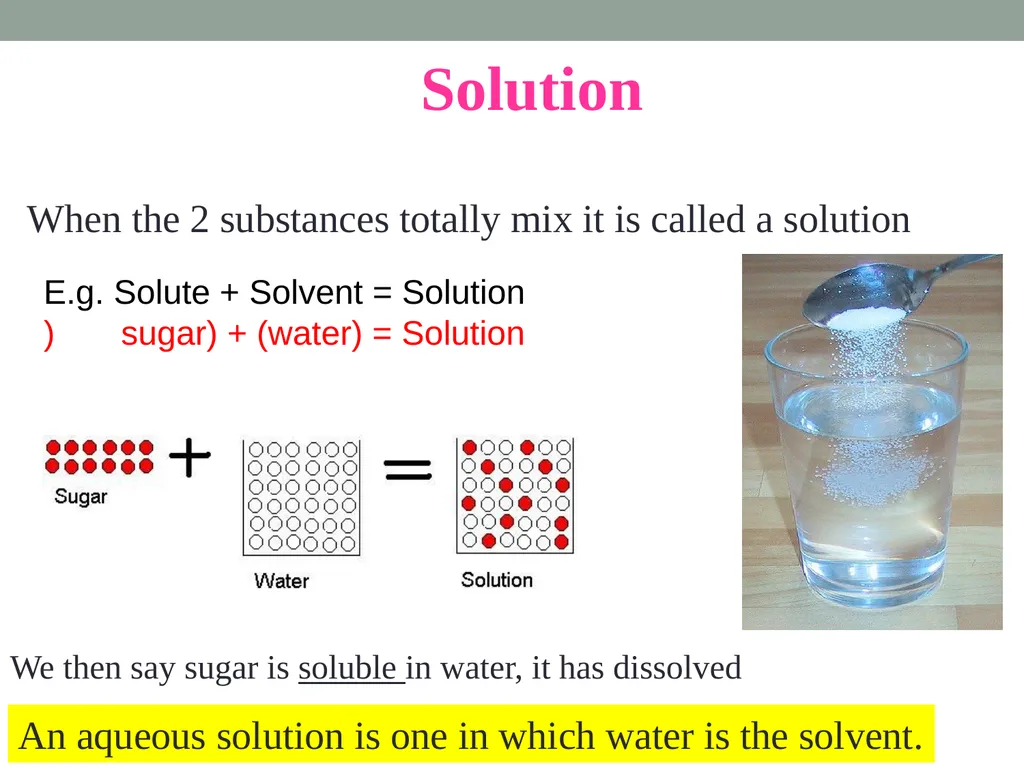
Solution When the 2 substances totally mix it is called a solution E.g. Solute + Solvent = Solution
) sugar) + (water) = Solution We then say sugar is soluble in water, it has dissolved An aqueous solution is one in which water is the solvent.<br>
07
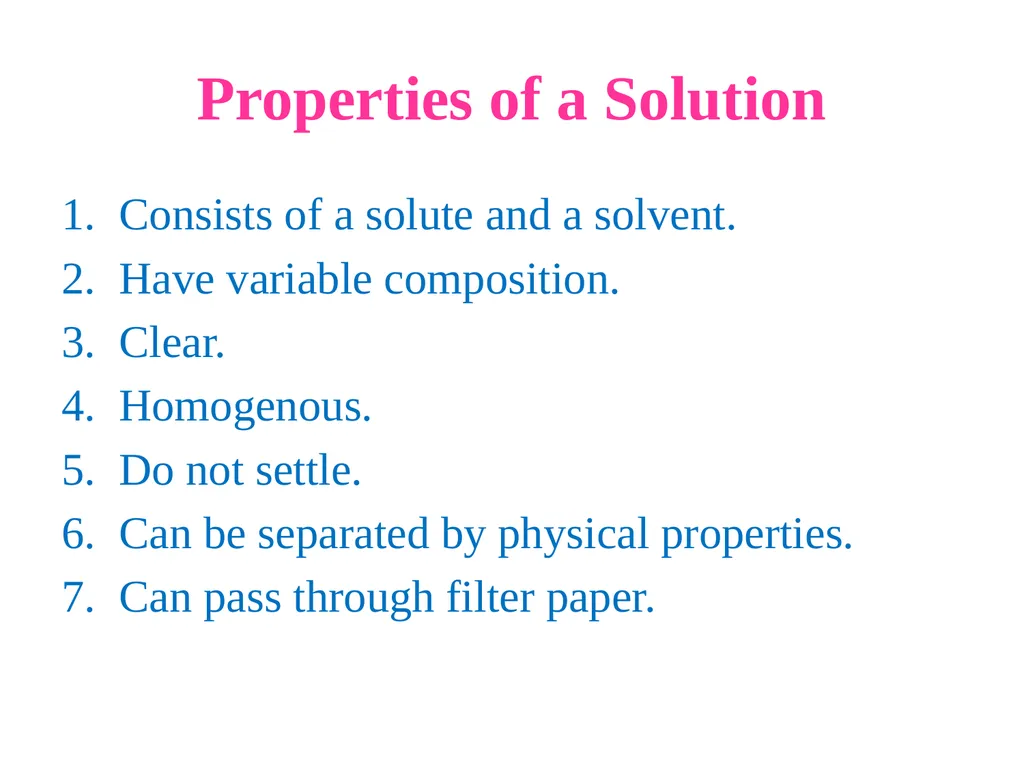
Properties of a Solution Consists of a solute and a solvent.
Have variable composition.
Clear.
Homogenous.
Do not settle.
Can be separated by physical properties.
Can pass through filter paper.<br>
08
A suspension is a heterogeneous mixture of large solid substance in another substance made by mechanical agitation.
The substances distributed in the background material is not dissolved and will settle out unless the mixture is constantly shaken. Suspensions<br>
09
The size of the particles is great enough so they are visible to the naked eye.
The solute is always a solid substance but the solvent can be solid, liquid, or gas. E.g. mud in water, flour in water, some medicines, dust or water in air,...<br>
10
Properties of a Suspension Consists of a solid in a solvent.
Heterogeneous.
Not clear.
Settle.
Do not pass through filter paper or membranes.<br>
11
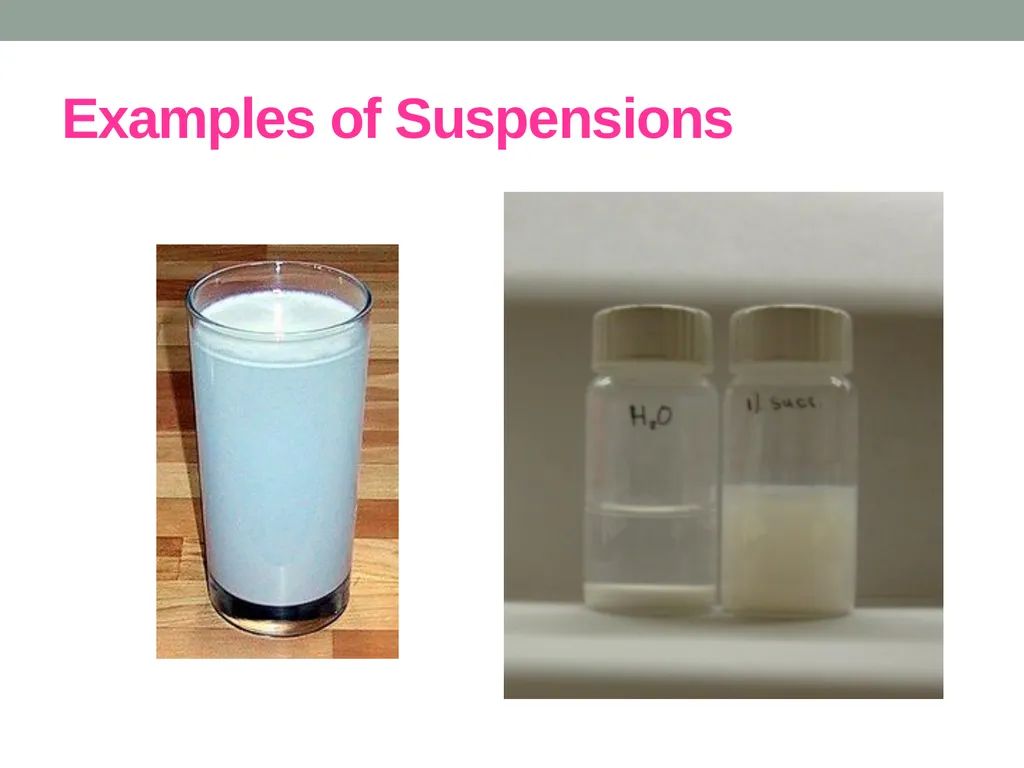
Examples of Suspensions<br>
12
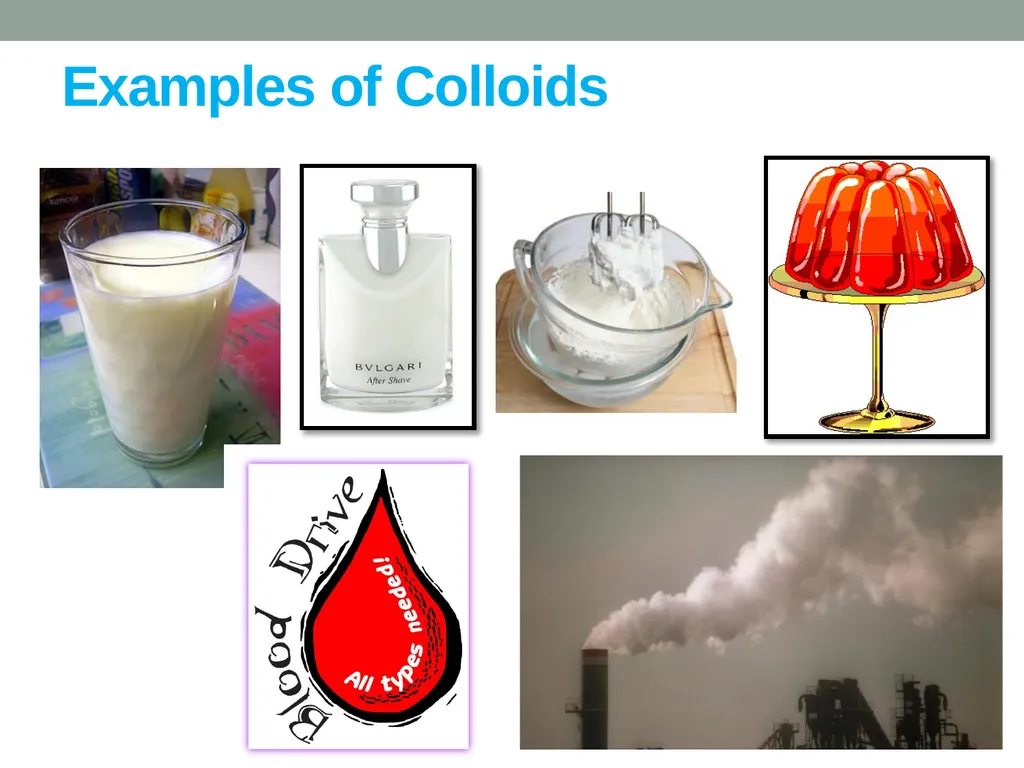
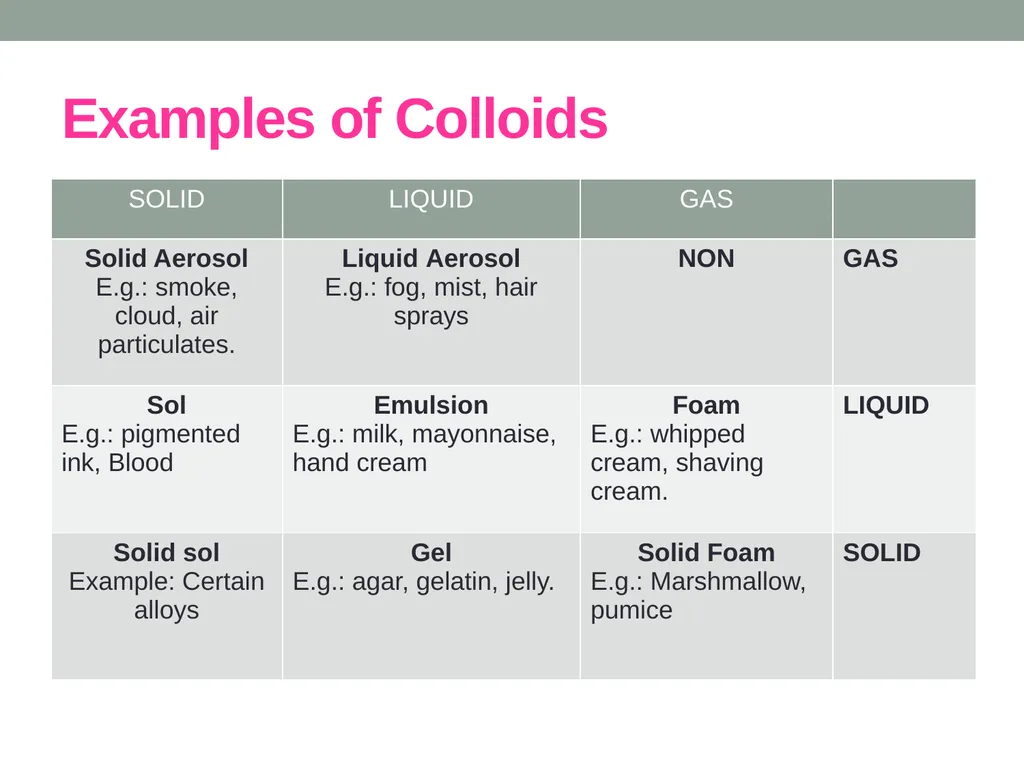
Is a homogeneous solution with intermediate particle size between a solution and a suspension. The solute can be solid, liquid, or gas substance AND the solvent can also be solid, liquid, or gas. E.g. Foam (Whipped cream), Gel (jelly), smoke, blood,...<br>
13
Examples of Colloids<br>
14
Examples of Colloids<br>
15
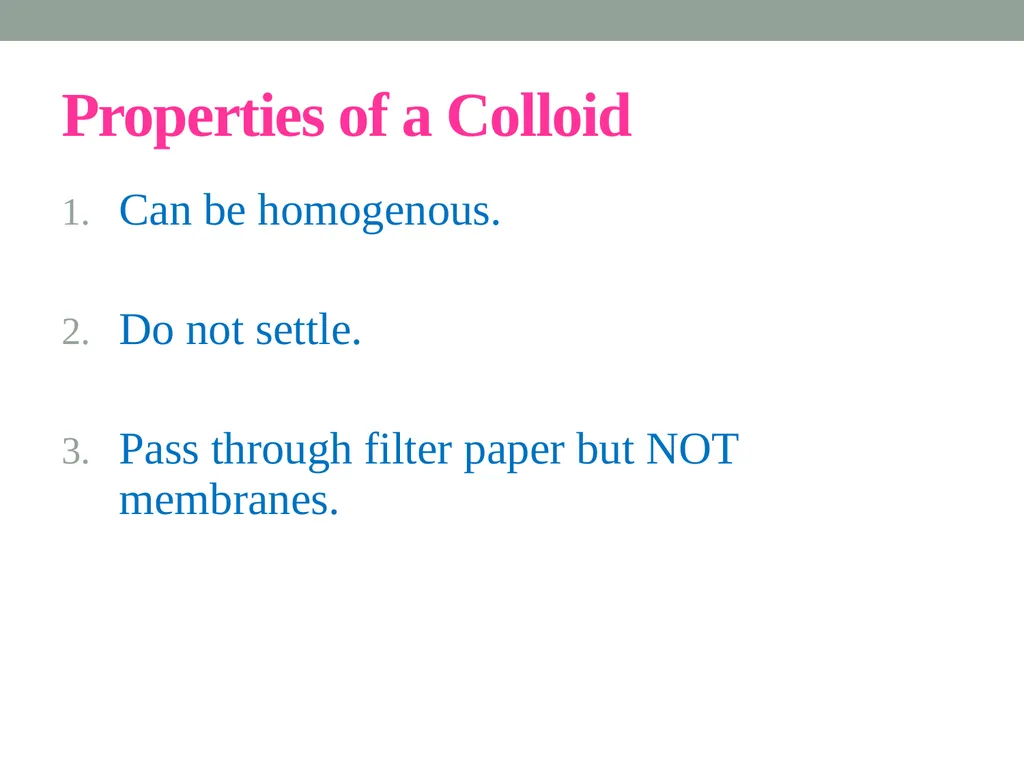
Properties of a Colloid Can be homogenous.
Do not settle.
Pass through filter paper but NOT membranes.<br>
16
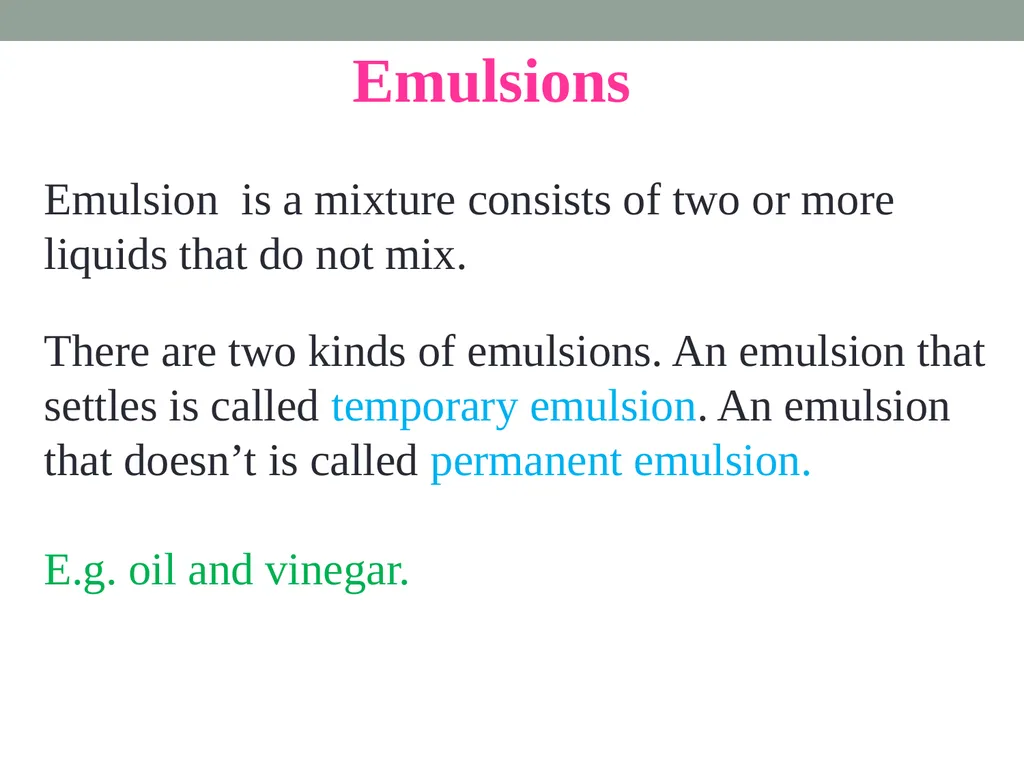
Emulsions
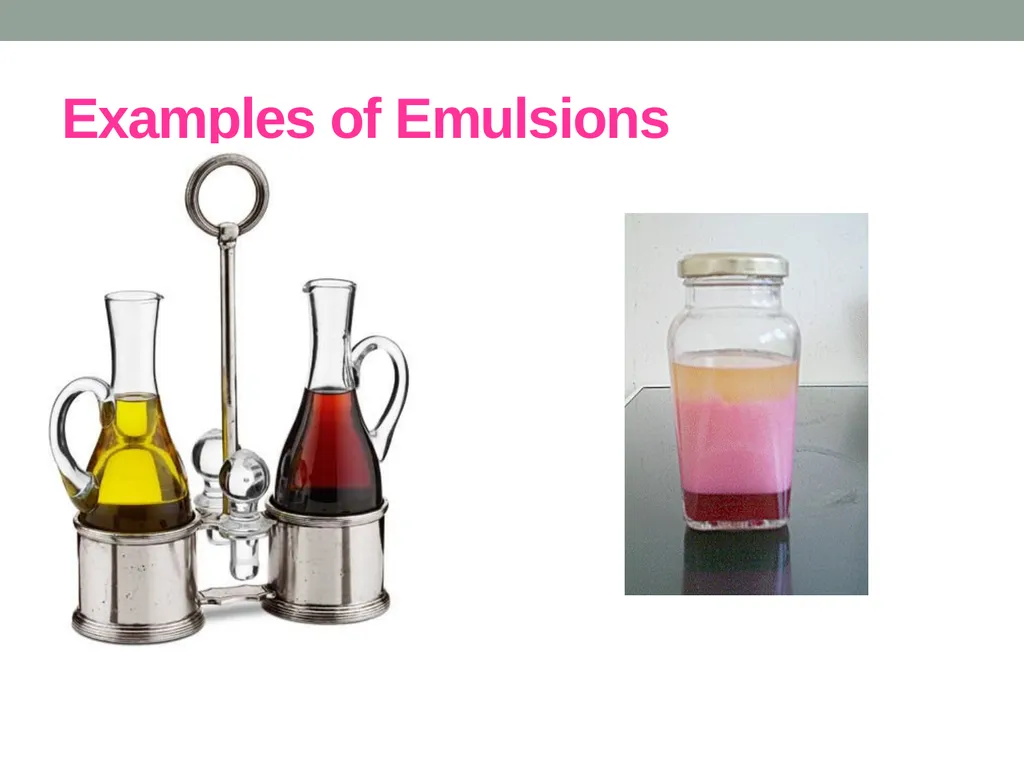
Emulsion is a mixture consists of two or more liquids that do not mix. There are two kinds of emulsions. An emulsion that settles is called temporary emulsion. An emulsion that doesn’t is called permanent emulsion.