04
Purpose of the literature review Demonstrate familiarity with the topic and scholarly context
Develop a theoretical framework and methodology
Position your approach in relation to other researchers
Show how your research fits in<br>
05
Conducting a literature review:
5 steps<br>
06
Step 1 Search for relevant literature<br>
07
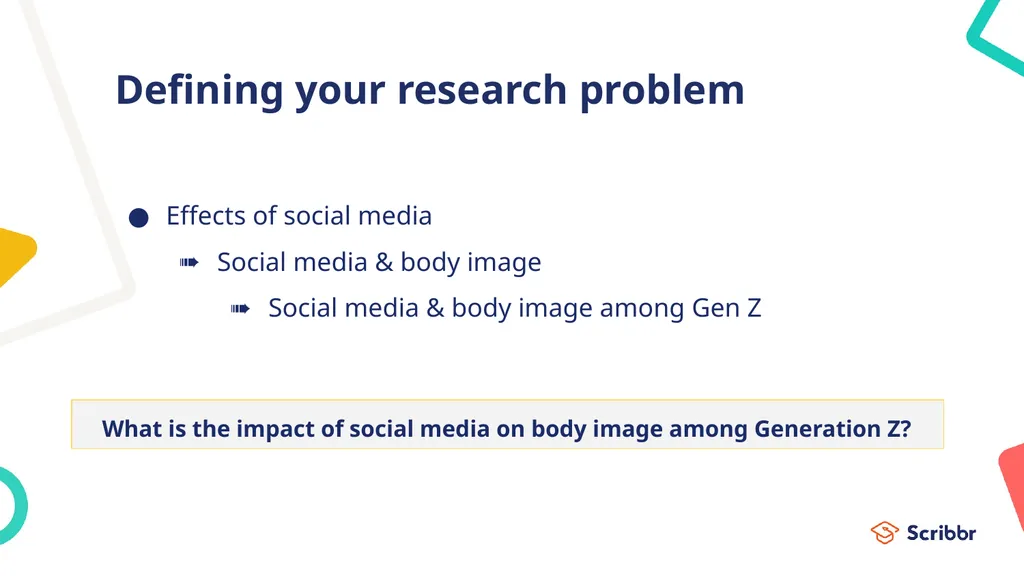
Defining your research problem Effects of social media
Social media & body image
Social media & body image among Gen Z What is the impact of social media on body image among Generation Z?<br>
08
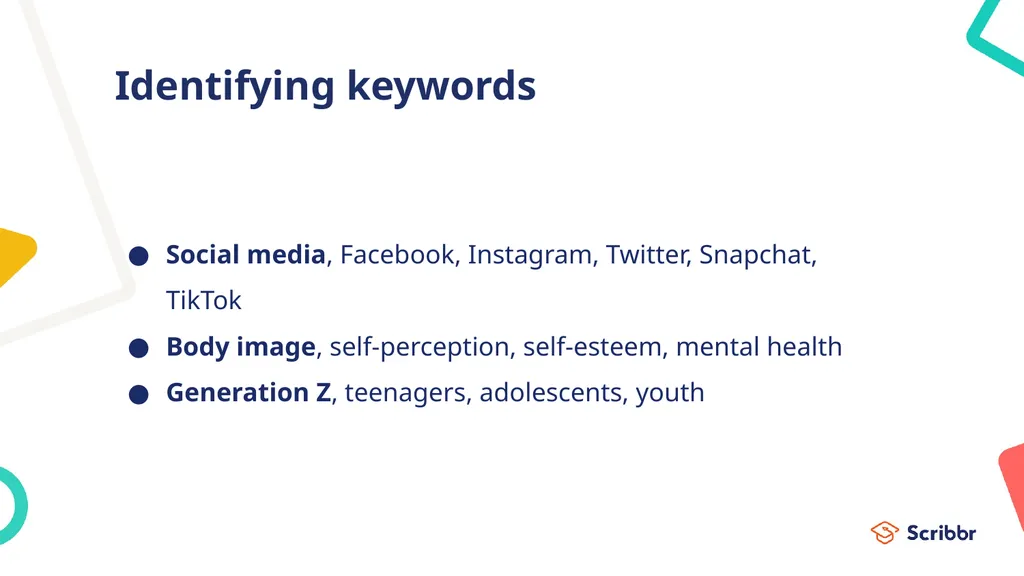
Identifying keywords Social media, Facebook, Instagram, Twitter, Snapchat, TikTok
Body image, self-perception, self-esteem, mental health
Generation Z, teenagers, adolescents, youth<br>
09
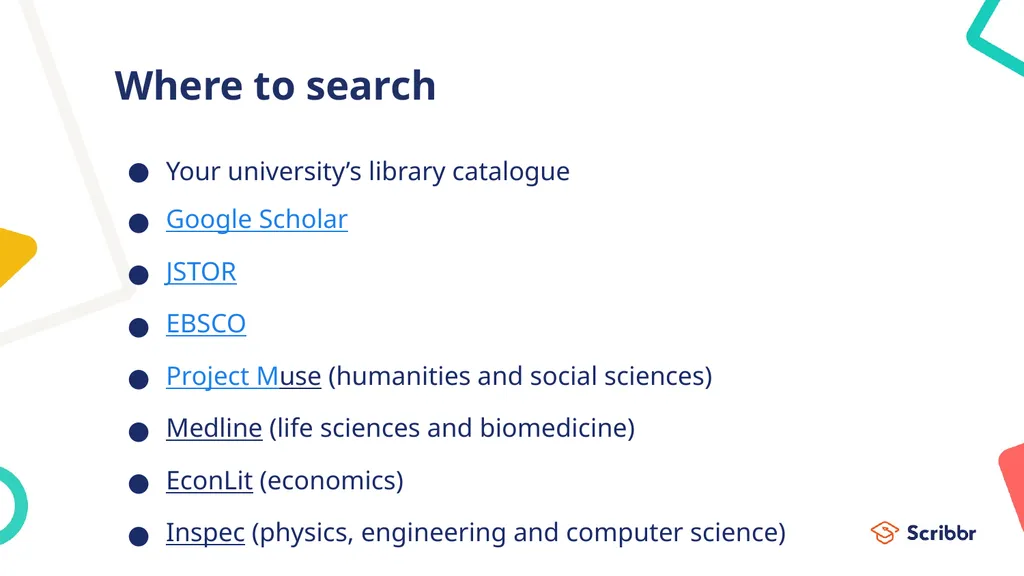
Where to search Your university’s library catalogue
Google Scholar
JSTOR
EBSCO
Project Muse (humanities and social sciences)
Medline (life sciences and biomedicine)
EconLit (economics)
Inspec (physics, engineering and computer science)<br>
10
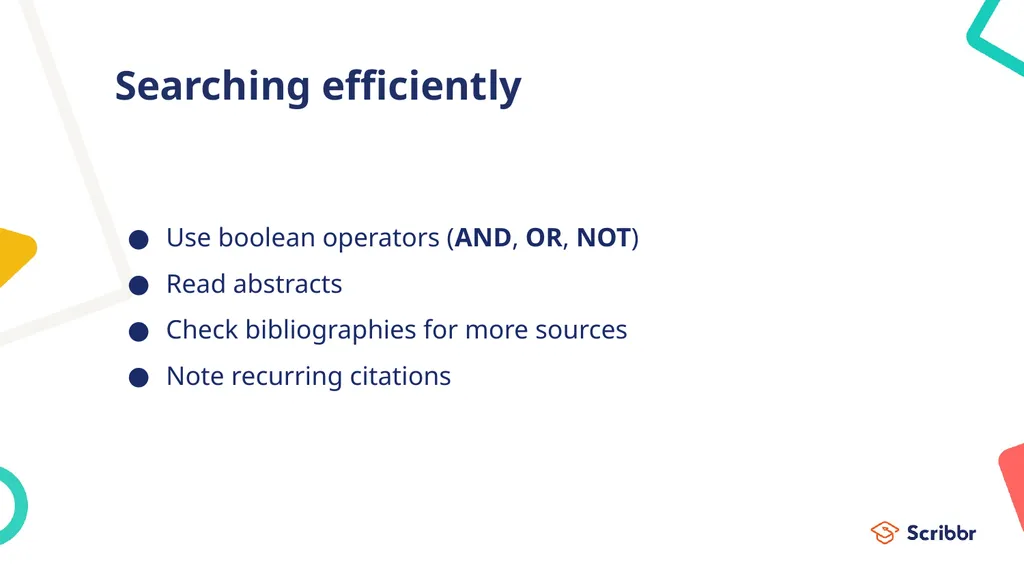
Searching efficiently Use boolean operators (AND, OR, NOT)
Read abstracts
Check bibliographies for more sources
Note recurring citations<br>
11
Step 2 Evaluate and select sources<br>
12
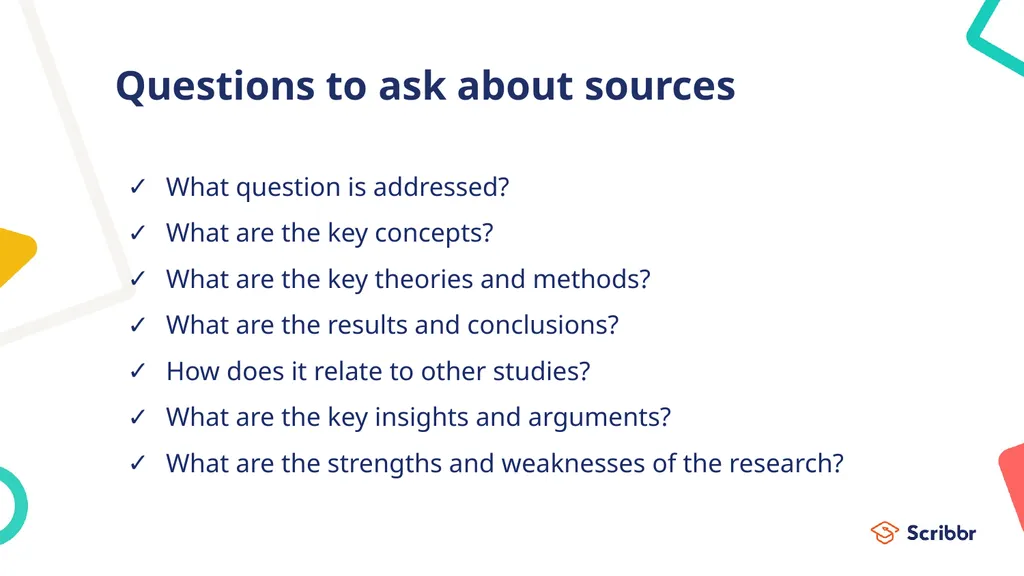
Questions to ask about sources What question is addressed?
What are the key concepts?
What are the key theories and methods?
What are the results and conclusions?
How does it relate to other studies?
What are the key insights and arguments?
What are the strengths and weaknesses of the research?<br>
13
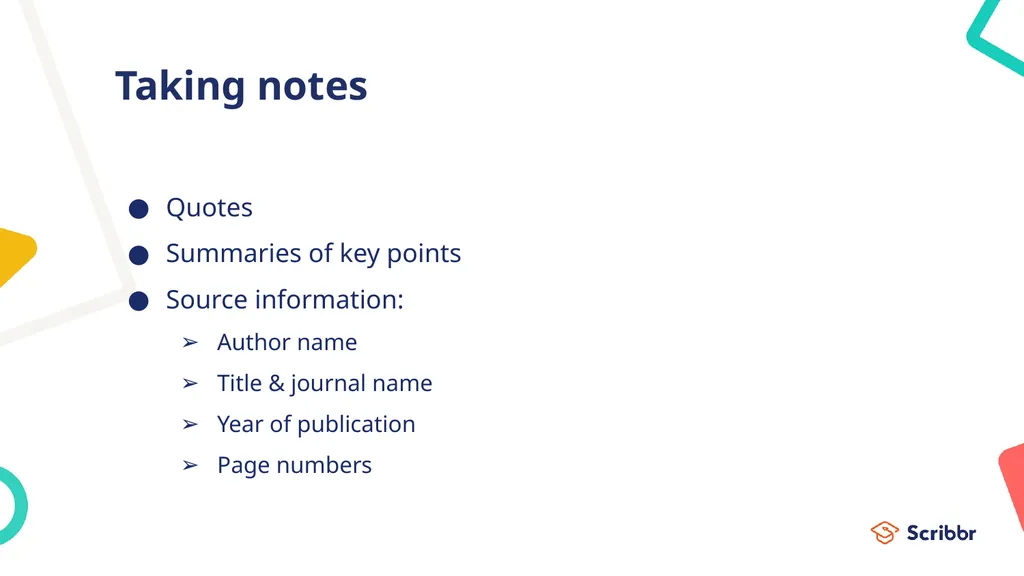
Taking notes Quotes
Summaries of key points
Source information:
Author name
Title & journal name
Year of publication
Page numbers<br>
14
Step 3 Identify themes, debates, and gaps<br>
15
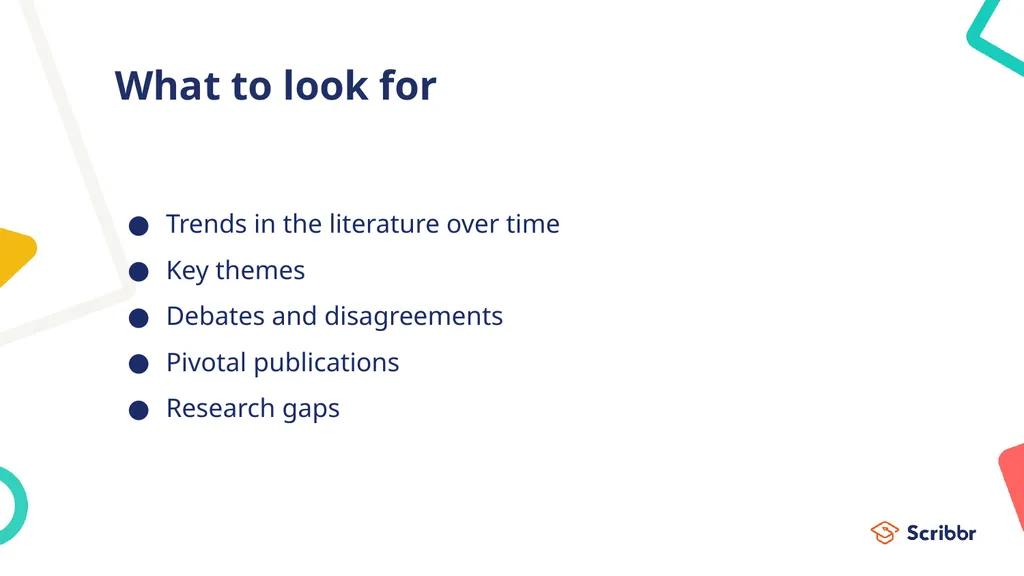
What to look for Trends in the literature over time
Key themes
Debates and disagreements
Pivotal publications
Research gaps<br>
16
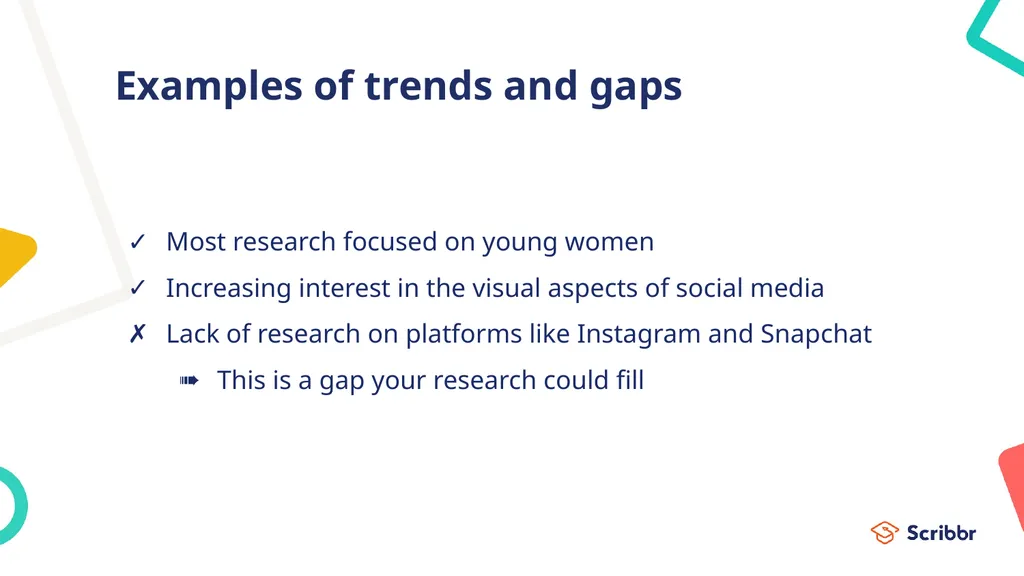
Examples of trends and gaps Most research focused on young women
Increasing interest in the visual aspects of social media
Lack of research on platforms like Instagram and Snapchat
This is a gap your research could fill<br>
17
Step 4 Outline your structure<br>
18
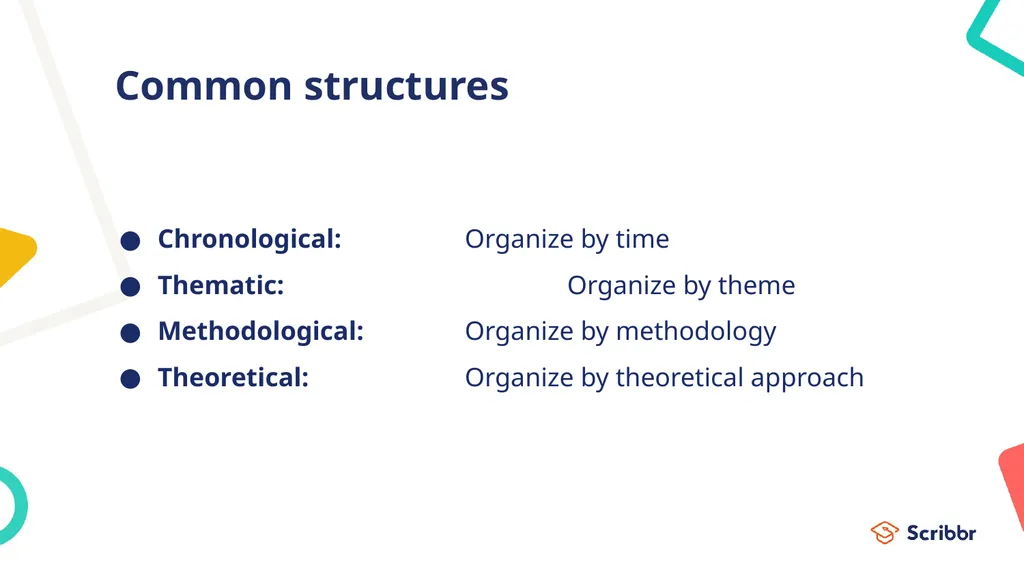
Common structures Chronological: Organize by time
Thematic: Organize by theme
Methodological: Organize by methodology
Theoretical: Organize by theoretical approach<br>
19
Step 5 Write your literature review<br>
20
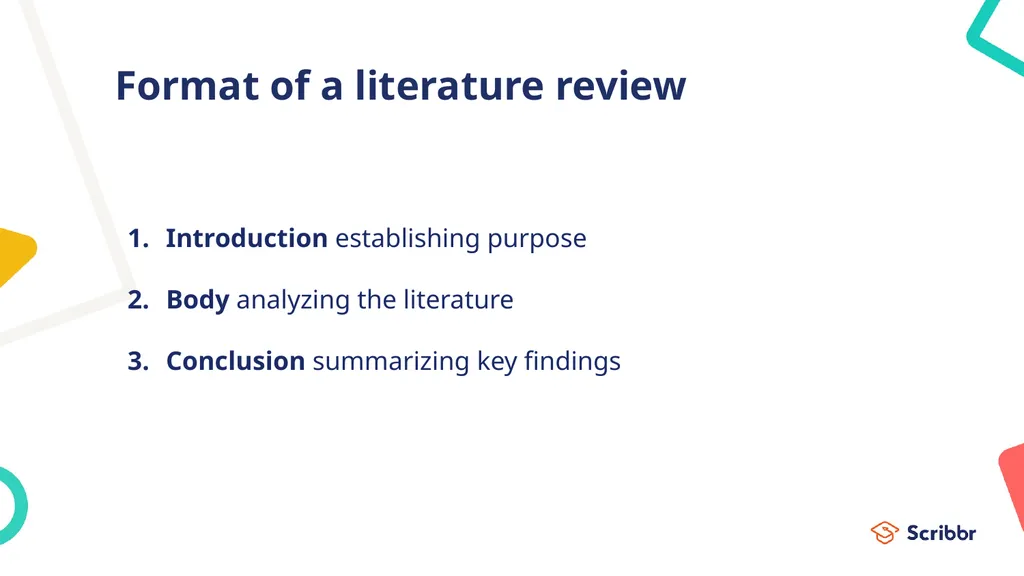
Format of a literature review Introduction establishing purpose
Body analyzing the literature
Conclusion summarizing key findings<br>
21
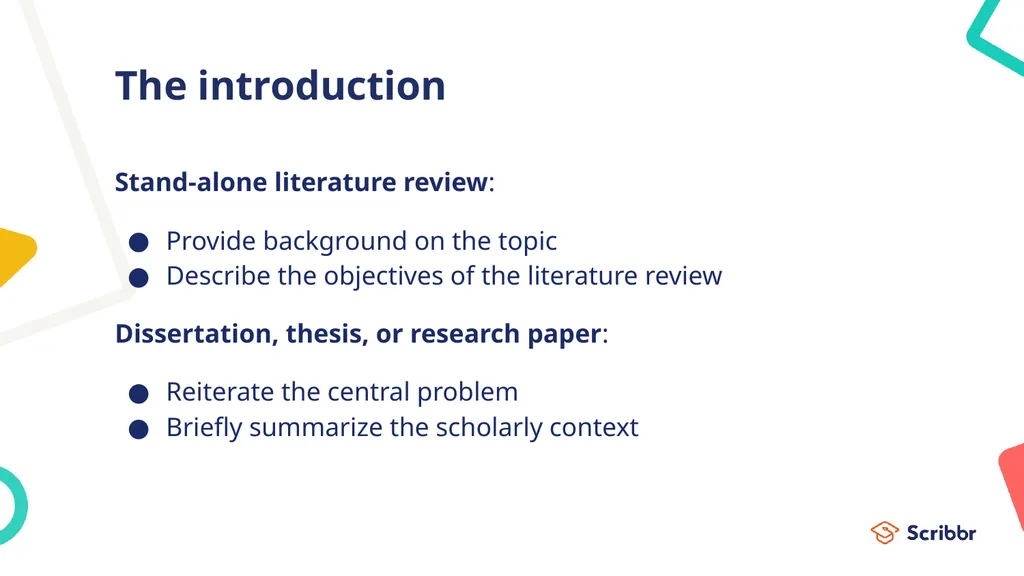
The introduction Stand-alone literature review:
Provide background on the topic
Describe the objectives of the literature review
Dissertation, thesis, or research paper:
Reiterate the central problem
Briefly summarize the scholarly context<br>
22
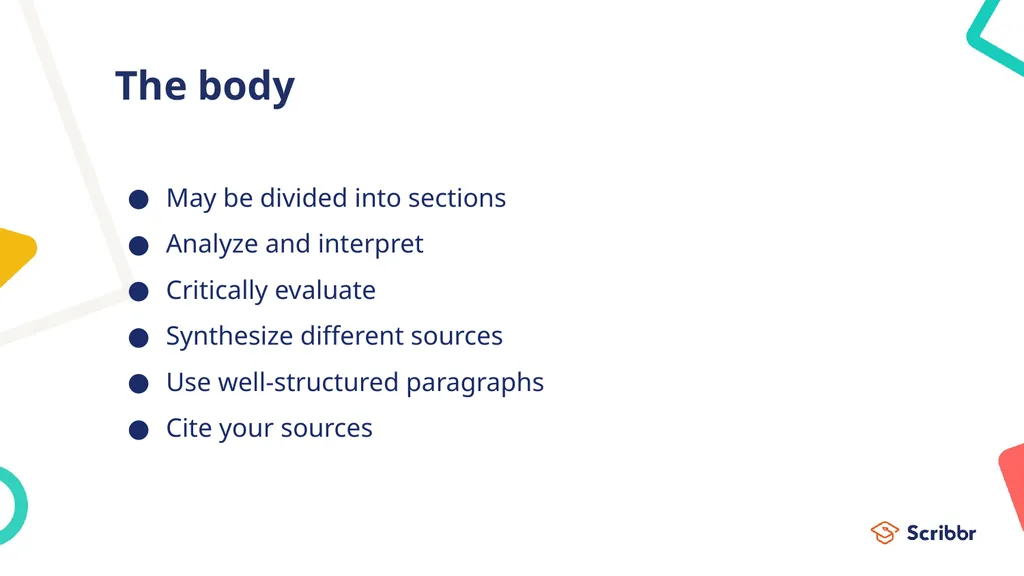
The body May be divided into sections
Analyze and interpret
Critically evaluate
Synthesize different sources
Use well-structured paragraphs
Cite your sources<br>
23
The conclusion Stand-alone literature review:
Discuss the overall implications
Make suggestions for future research
Dissertation, thesis, or research paper:
Show how the literature review has informed your approach
State what gaps your research will address<br>
24
Recommended� resources<br>
25
Free Scribbr resources Knowledge Base (300+ articles)
Citation Generator
YouTube Channel<br>
26
Hi, we’re Scribbr 👋 We are a team of 60 people in Amsterdam, and we partner with more than 500 freelance editors across the globe to help students graduate and become better academic writers.
Every day, we work hard on our Proofreading & Editing service, Plagiarism Checker, Citation Generator, Knowledge Base and educational YouTube channel.<br>
27
Guidelines for using this presentation This presentation can be freely used and modified for educational purposes. You may:
Display this presentation in a classroom environment
Modify or delete slides
Distribute this presentation in print or in private student environments (e.g. Moodle, BlackBoard, Google Classroom)
Please do give credit to Scribbr for creating this resource.
Questions or feedback? Email shona@scribbr.com and we’ll be in touch!<br>