LMIC Universities and other stakeholders should accelerate partnerships for national development Nelson Sewankambo Makerere University College of Health Sciences LMICs are at the cross-roads with many disruptive changes: Partnerships are a
"LMIC Universities and other stakeholders should" is the property of its rightful owner. Permission is granted to
download and print the materials on this website for personal, non-commercial use only, and to display it
on your personal computer provided you do not modify the materials and that you retain all copyright
notices contained in the materials. By downloading content from our website, you accept the terms of this
agreement.
Presentation Transcript
01
LMIC Universities and other stakeholders should accelerate partnerships for national development Nelson Sewankambo
Makerere University College of Health Sciences<br>
02
LMICs are at the cross-roads with many disruptive changes: Partnerships are a potential solution The knowledge economy & globalization -> human capital
Country resources not adequately exploited for LMICs’ development
Underutilized potential eg Africa’s population Young/doubling - 2030
Rapid technological changes and the Fourth Industrial revolution
COVID-19 pandemic & HIC nationalism undermining LMICs
Climate Change and its greater impact on the most vulnerable
Widening inequalities between and with countries
All above call for redefining the Future of work<br>
03
Insufficient LMIC partnerships with stakeholders (communities, LMIC governments, research institutions, industry, private sector, funders): Why? A fixed mindset to first think of collaboration with HICs
LMICs coloniality/relationships with the countries’ colonial past
Weak infrastructure, low resources, uncertain nature and quality of university academic core in many LMIC institutions
The World bank policy de-emphasized tertially education based on the infamous study (Psacharopoulos et al 1986)
The vexing problematic of the role of higher education in LMICs national development and nature of the pact between Universities, political authorities and society at large<br>
04
Medical and Nursing Education Partnerships<br>
05
AFREhealth: A pan-African consortium led by Africans to address Africa’s health needs<br>
06
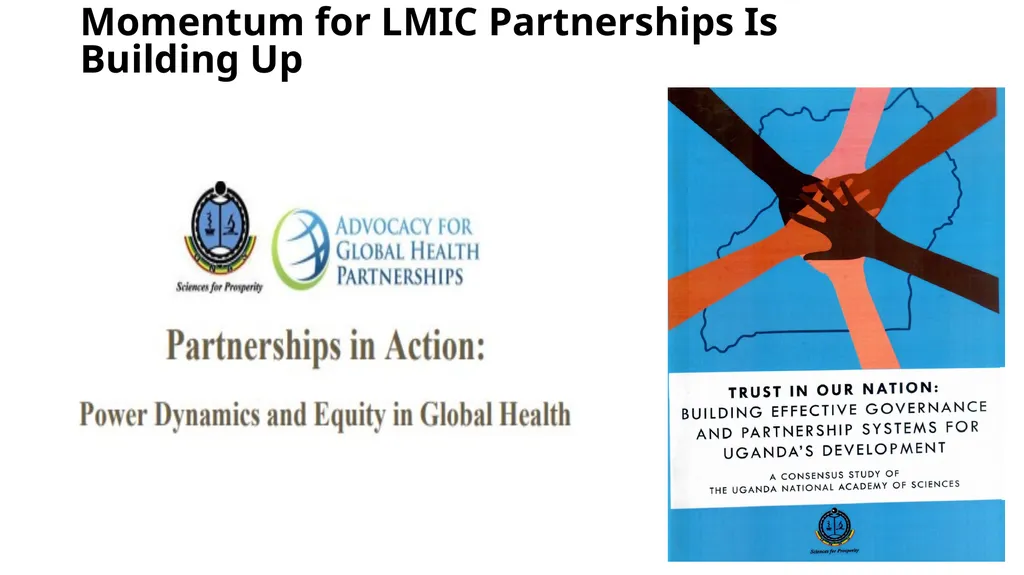
Momentum for LMIC Partnerships Is Building Up<br>
07
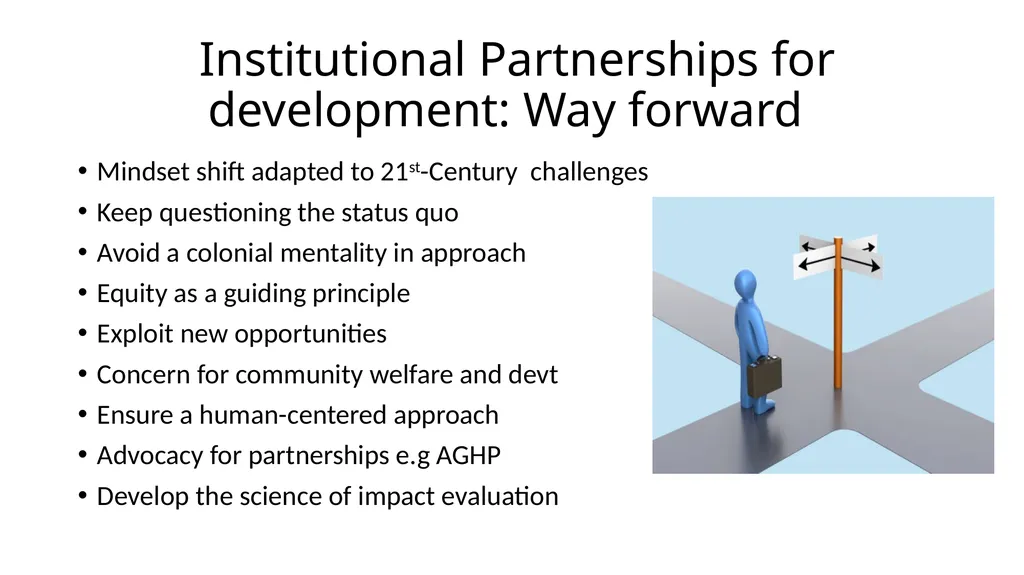
Institutional Partnerships for development: Way forward Mindset shift adapted to 21st-Century challenges
Keep questioning the status quo
Avoid a colonial mentality in approach
Equity as a guiding principle
Exploit new opportunities
Concern for community welfare and devt
Ensure a human-centered approach
Advocacy for partnerships e.g AGHP
Develop the science of impact evaluation<br>
08
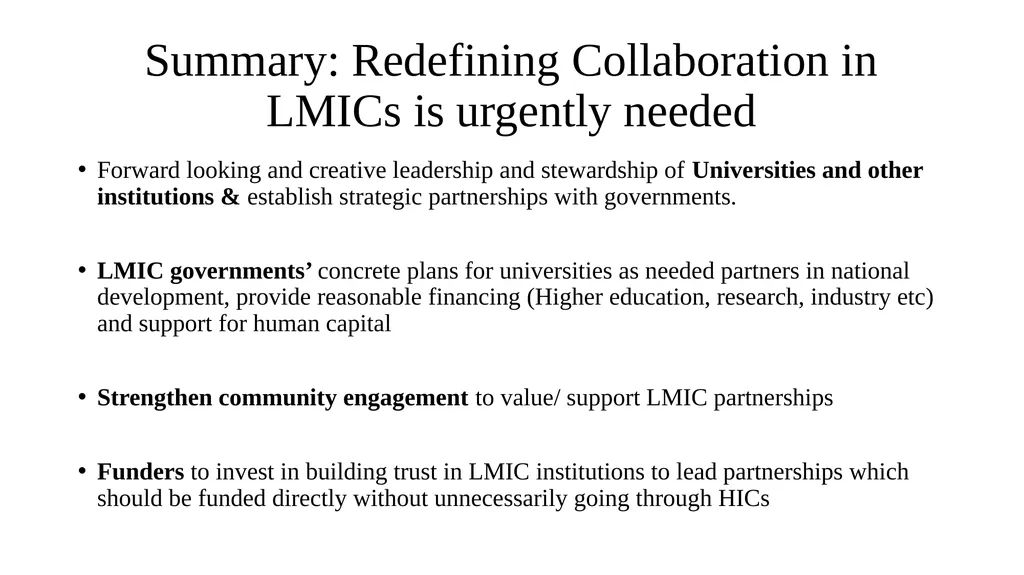
Summary: Redefining Collaboration in LMICs is urgently needed Forward looking and creative leadership and stewardship of Universities and other institutions & establish strategic partnerships with governments.
LMIC governments’ concrete plans for universities as needed partners in national development, provide reasonable financing (Higher education, research, industry etc) and support for human capital
Strengthen community engagement to value/ support LMIC partnerships
Funders to invest in building trust in LMIC institutions to lead partnerships which should be funded directly without unnecessarily going through HICs<br>