Macbeth An Evaluation-II Theme of Evil in Macbeth Three witches symbol of evil War and Treachery Instruments of evil: Macbeth and Lady Macbeth Internal battle of good and evil Evil omen in nature Macbeths alienation from God and from man
"Macbeth An Evaluation-II Theme of Evil in Macbeth" is the property of its rightful owner. Permission is granted to
download and print the materials on this website for personal, non-commercial use only, and to display it
on your personal computer provided you do not modify the materials and that you retain all copyright
notices contained in the materials. By downloading content from our website, you accept the terms of this
agreement.
Presentation Transcript
01
Macbeth An Evaluation-II<br>
02
Theme of Evil in Macbeth Three witches symbol of evil
War and Treachery
Instruments of evil: Macbeth and Lady Macbeth
Internal battle of good and evil
Evil omen in nature
Macbeth’s alienation from God and from man
Restoration of peace and harmony after a battle against evil<br>
03
The Role of the Three witches In Macbeth A symbol of the force of evil
Mischievous and weird
Deception
Devils within a man
Cause of eternal damnation
Motivation behind the murders
Reactions of Macbeth and Banquo towards the witches<br>
04
Macbeth’s Conscience and its Decline Moral choice before Macbeth
Ambition ignited by the Witches
Lady Macbeth’s views about Macbeth’s sound conscience
His on views about himself
Hallucinations
sleeplessness
Sense of guilt after murder
Sense of insecurity
Fear and Banquo’s ghost
Complete degeneration of his conscience
Lost confidence and apparition scene
Remorse but no choice left<br>
05
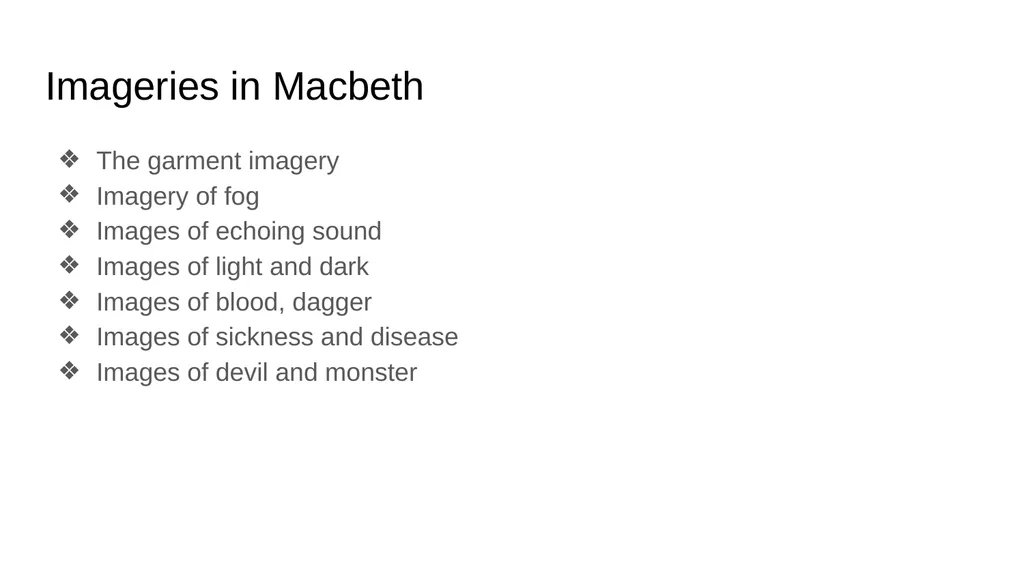
Imageries in Macbeth The garment imagery
Imagery of fog
Images of echoing sound
Images of light and dark
Images of blood, dagger
Images of sickness and disease
Images of devil and monster<br>
06
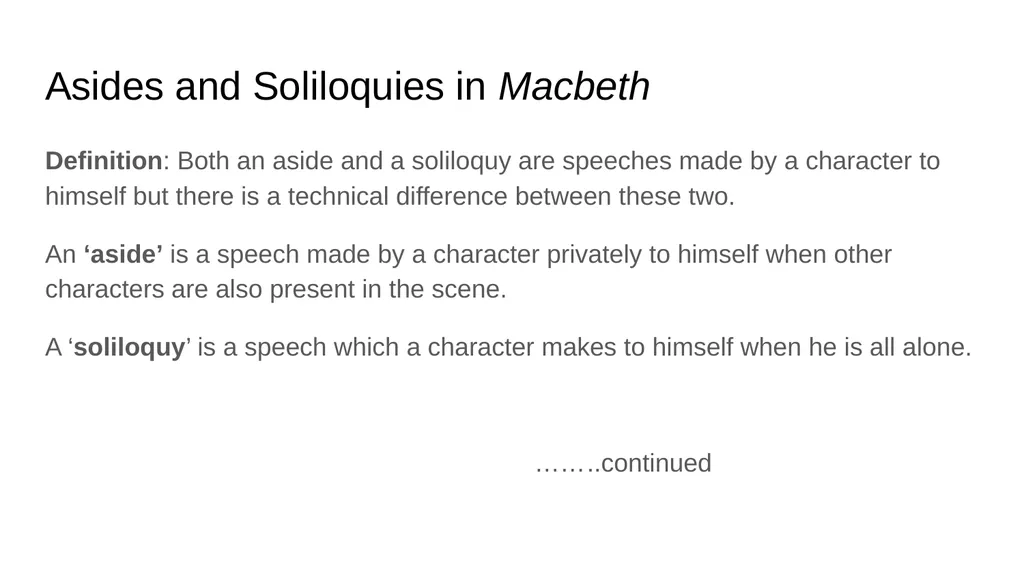
Asides and Soliloquies in Macbeth Definition: Both an aside and a soliloquy are speeches made by a character to himself but there is a technical difference between these two.
An ‘aside’ is a speech made by a character privately to himself when other characters are also present in the scene.
A ‘soliloquy’ is a speech which a character makes to himself when he is all alone.
……..continued<br>
07
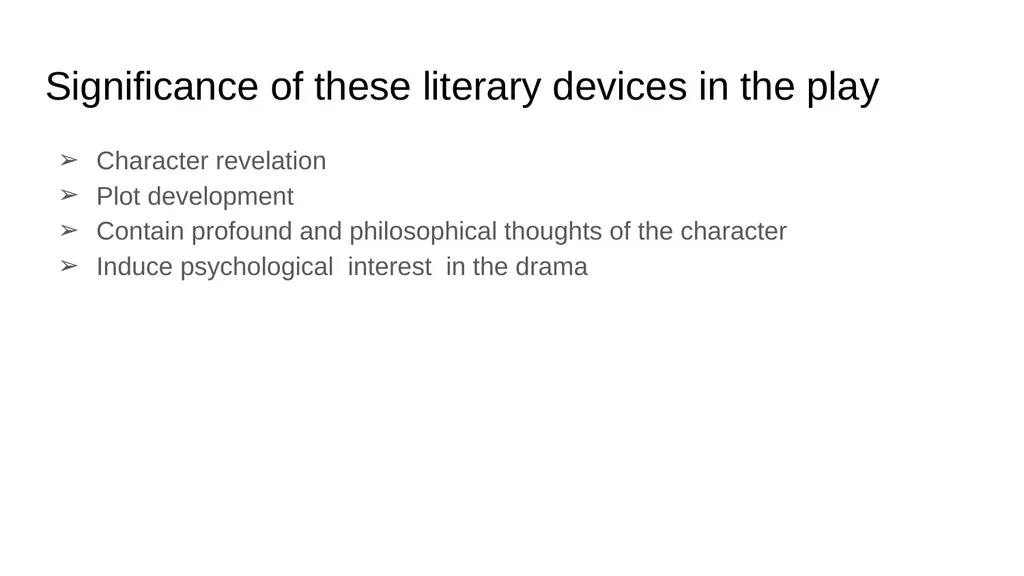
Significance of these literary devices in the play Character revelation
Plot development
Contain profound and philosophical thoughts of the character
Induce psychological interest in the drama<br>
08
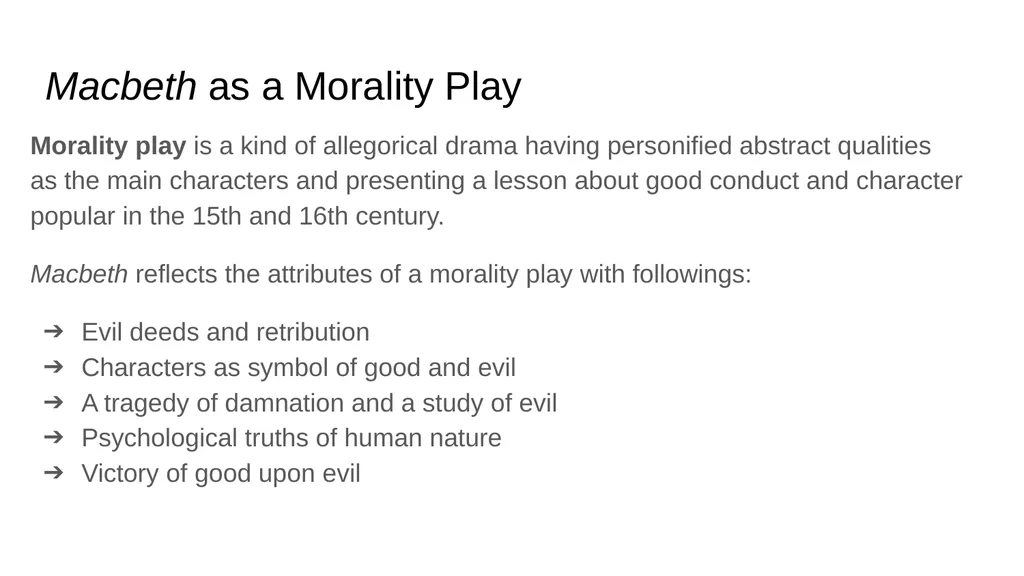
Macbeth as a Morality Play Morality play is a kind of allegorical drama having personified abstract qualities as the main characters and presenting a lesson about good conduct and character popular in the 15th and 16th century.
Macbeth reflects the attributes of a morality play with followings:
Evil deeds and retribution
Characters as symbol of good and evil
A tragedy of damnation and a study of evil
Psychological truths of human nature
Victory of good upon evil<br>
09
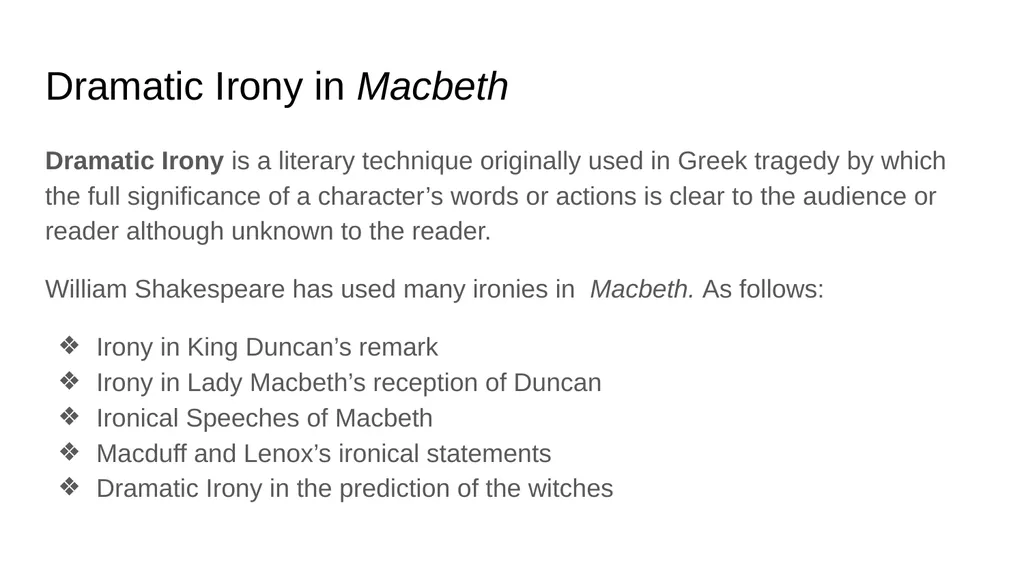
Dramatic Irony in Macbeth Dramatic Irony is a literary technique originally used in Greek tragedy by which the full significance of a character’s words or actions is clear to the audience or reader although unknown to the reader.
William Shakespeare has used many ironies in Macbeth. As follows:
Irony in King Duncan’s remark
Irony in Lady Macbeth’s reception of Duncan
Ironical Speeches of Macbeth
Macduff and Lenox’s ironical statements
Dramatic Irony in the prediction of the witches<br>
10
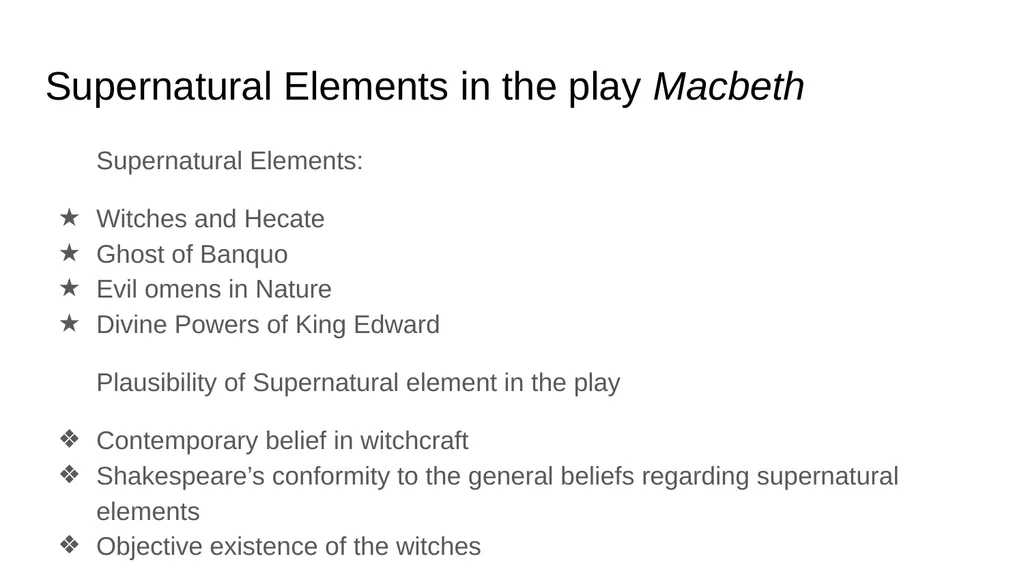
Supernatural Elements in the play Macbeth Supernatural Elements:
Witches and Hecate
Ghost of Banquo
Evil omens in Nature
Divine Powers of King Edward
Plausibility of Supernatural element in the play
Contemporary belief in witchcraft
Shakespeare’s conformity to the general beliefs regarding supernatural elements
Objective existence of the witches<br>