04
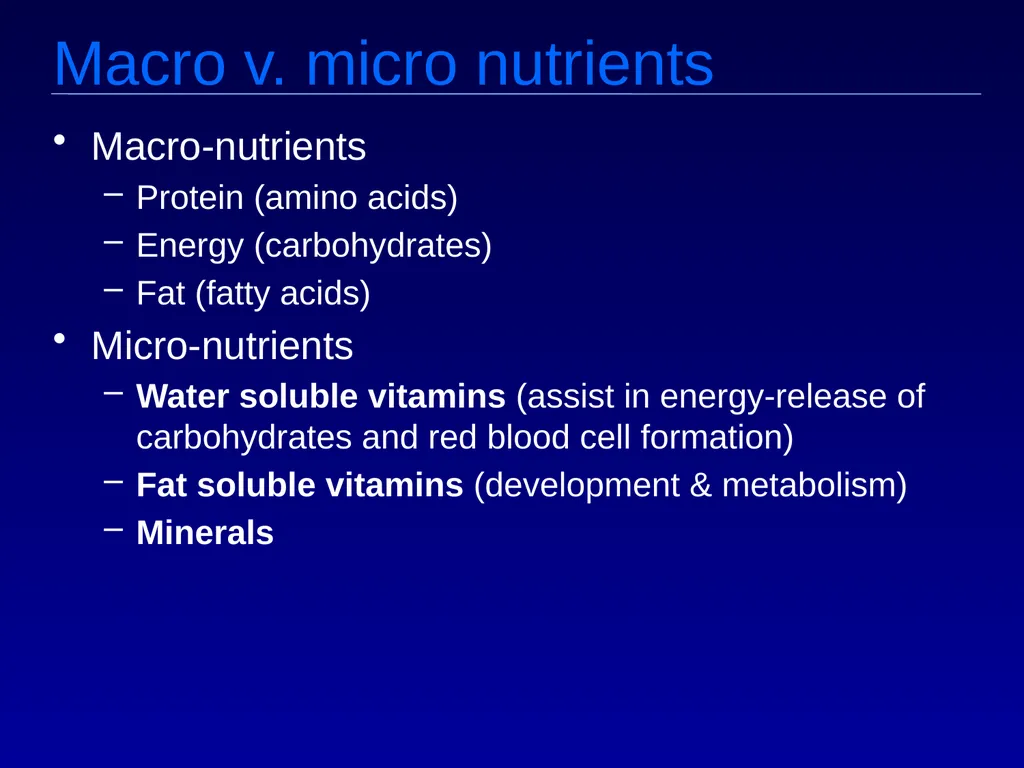
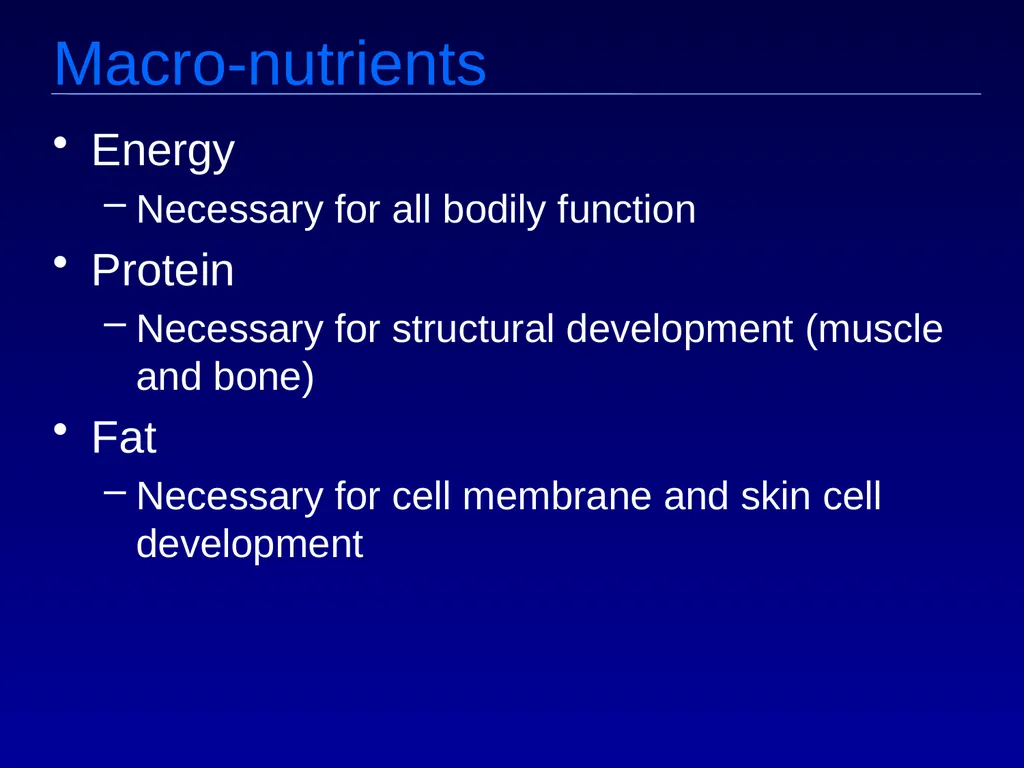
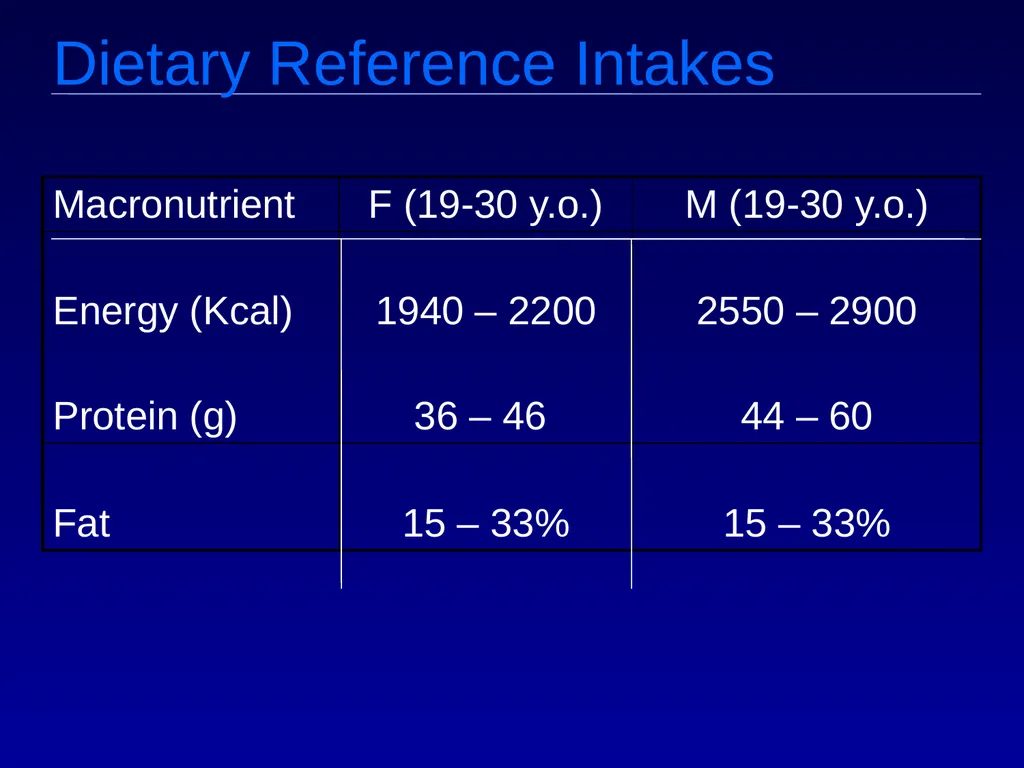
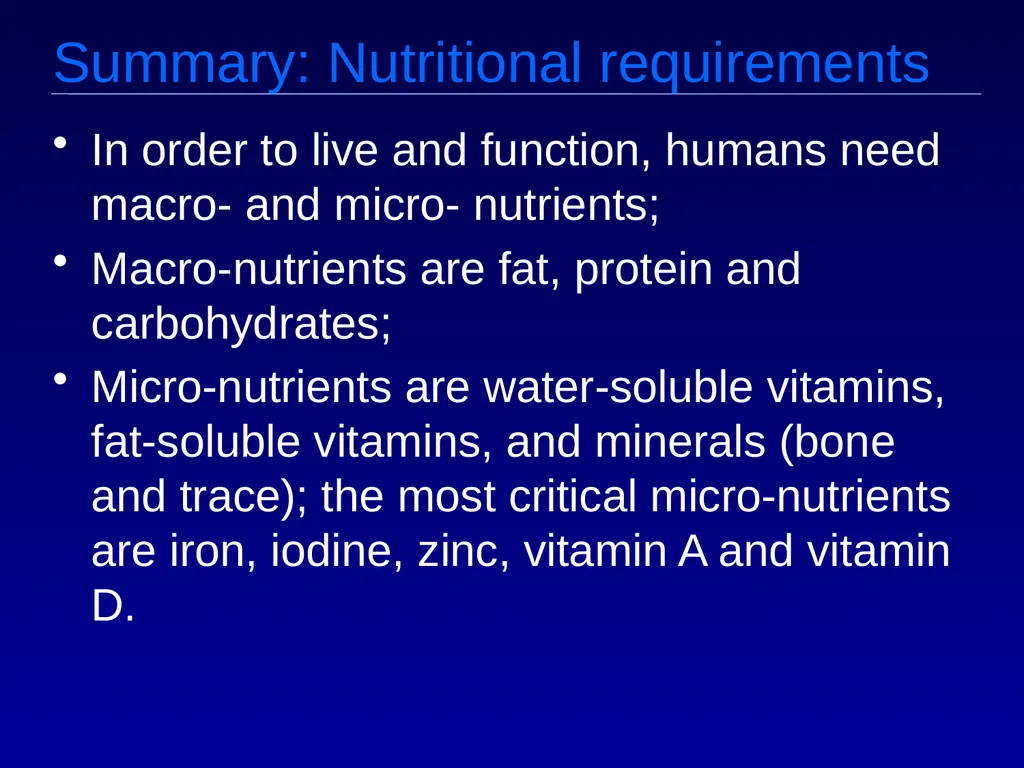
Summary: Nutritional requirements In order to live and function, humans need macro- and micro- nutrients;
Macro-nutrients are fat, protein and carbohydrates;
Micro-nutrients are water-soluble vitamins, fat-soluble vitamins, and minerals (bone and trace); the most critical micro-nutrients are iron, iodine, zinc, vitamin A and vitamin D.<br>
05
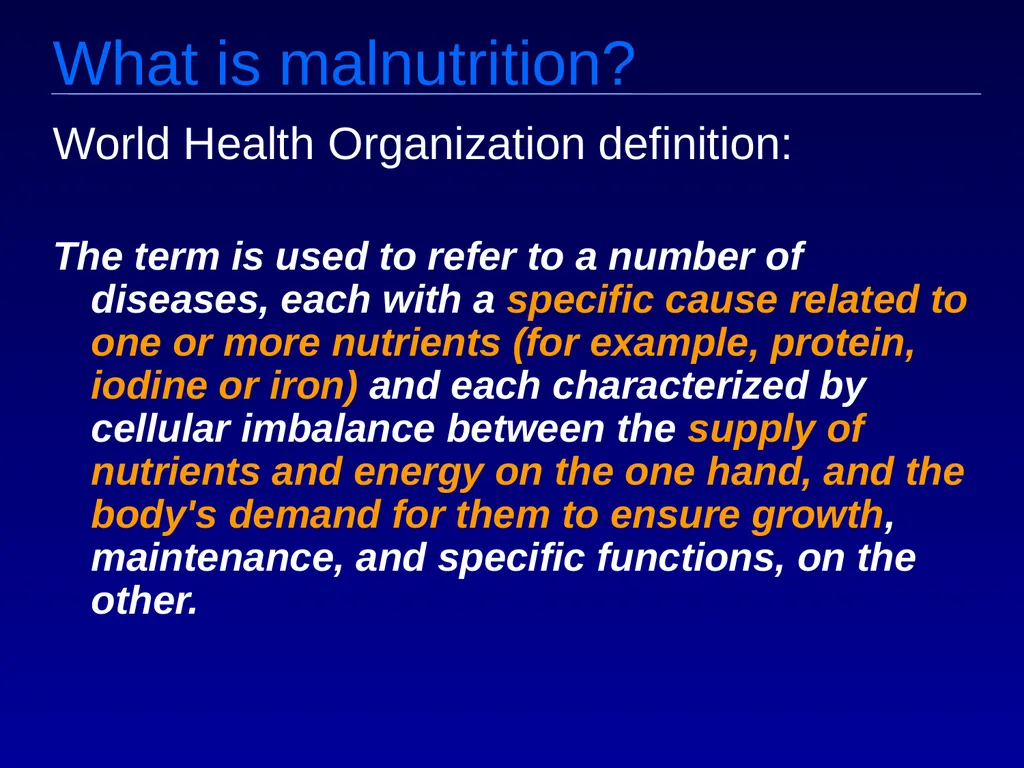
What is malnutrition? World Health Organization definition:
The term is used to refer to a number of diseases, each with a specific cause related to one or more nutrients (for example, protein, iodine or iron) and each characterized by cellular imbalance between the supply of nutrients and energy on the one hand, and the body's demand for them to ensure growth, maintenance, and specific functions, on the other.<br>
06
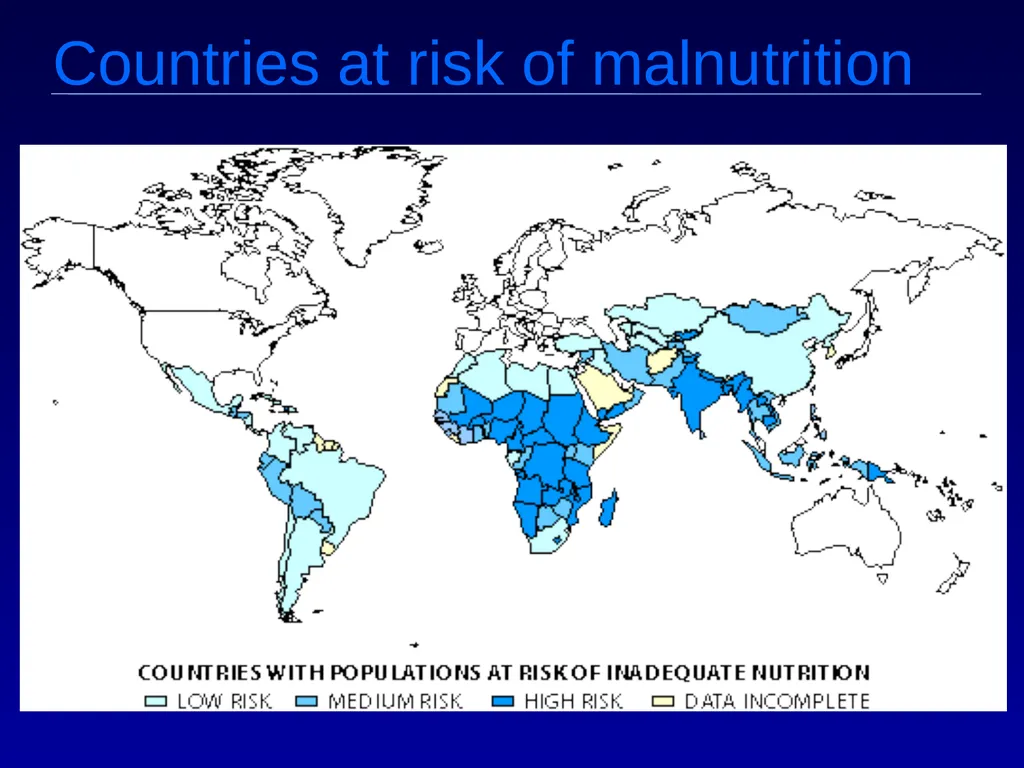
Countries at risk of malnutrition<br>
07
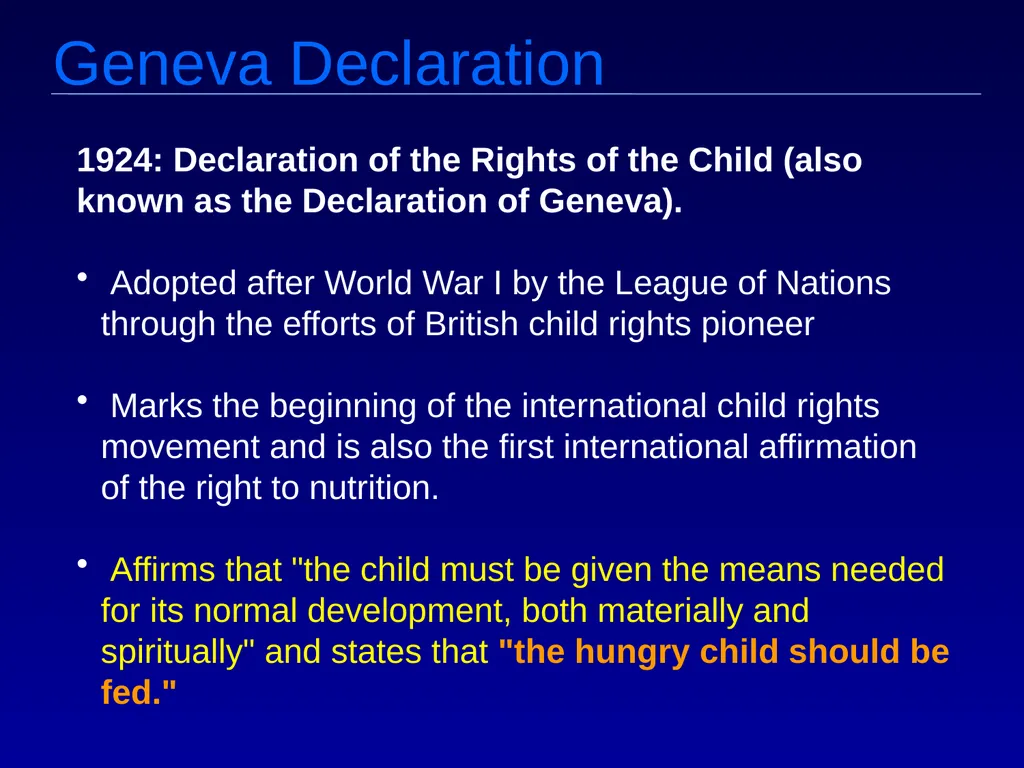
Geneva Declaration 1924: Declaration of the Rights of the Child (also known as the Declaration of Geneva).
Adopted after World War I by the League of Nations through the efforts of British child rights pioneer
Marks the beginning of the international child rights movement and is also the first international affirmation of the right to nutrition.
Affirms that "the child must be given the means needed for its normal development, both materially and spiritually" and states that "the hungry child should be fed."<br>
08
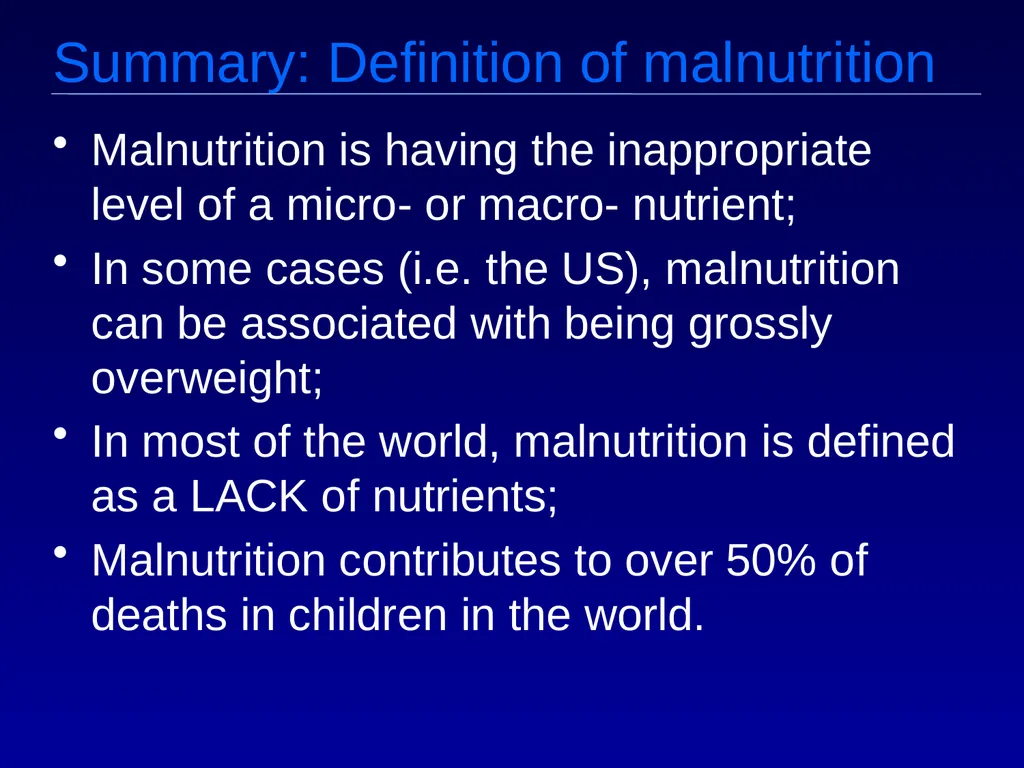
Summary: Definition of malnutrition Malnutrition is having the inappropriate level of a micro- or macro- nutrient;
In some cases (i.e. the US), malnutrition can be associated with being grossly overweight;
In most of the world, malnutrition is defined as a LACK of nutrients;
Malnutrition contributes to over 50% of deaths in children in the world.<br>
09
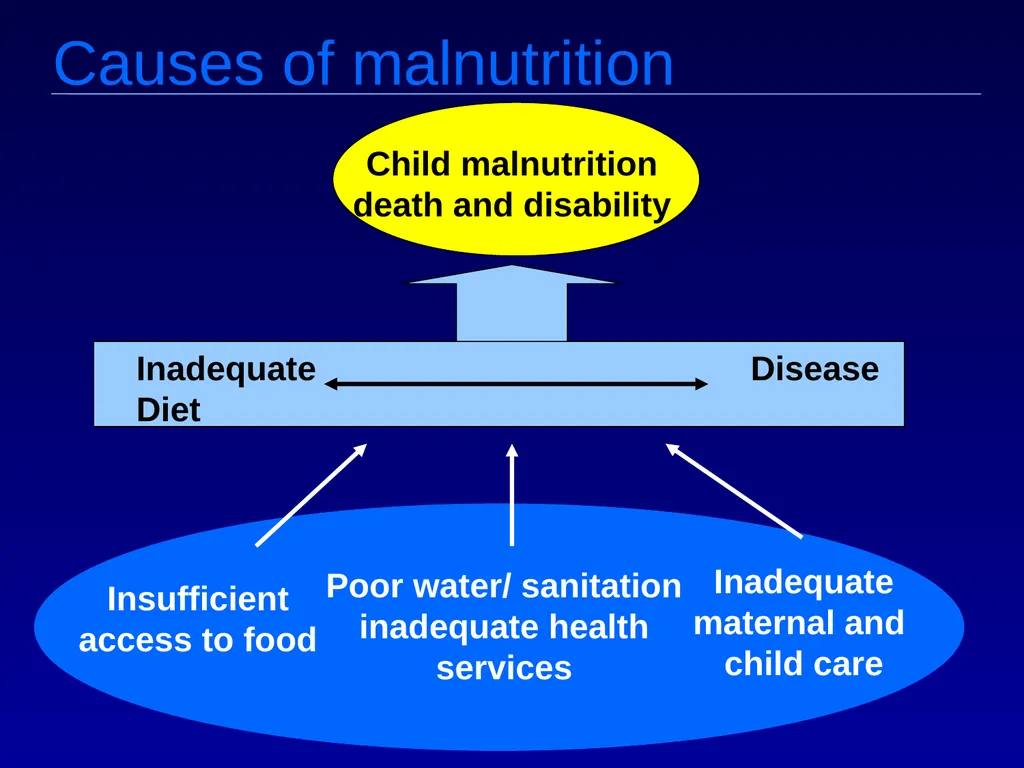
Child malnutrition
death and disability Inadequate Disease
Diet Insufficient
access to food Inadequate
maternal and
child care Poor water/ sanitation
inadequate health
services Causes of malnutrition<br>
10
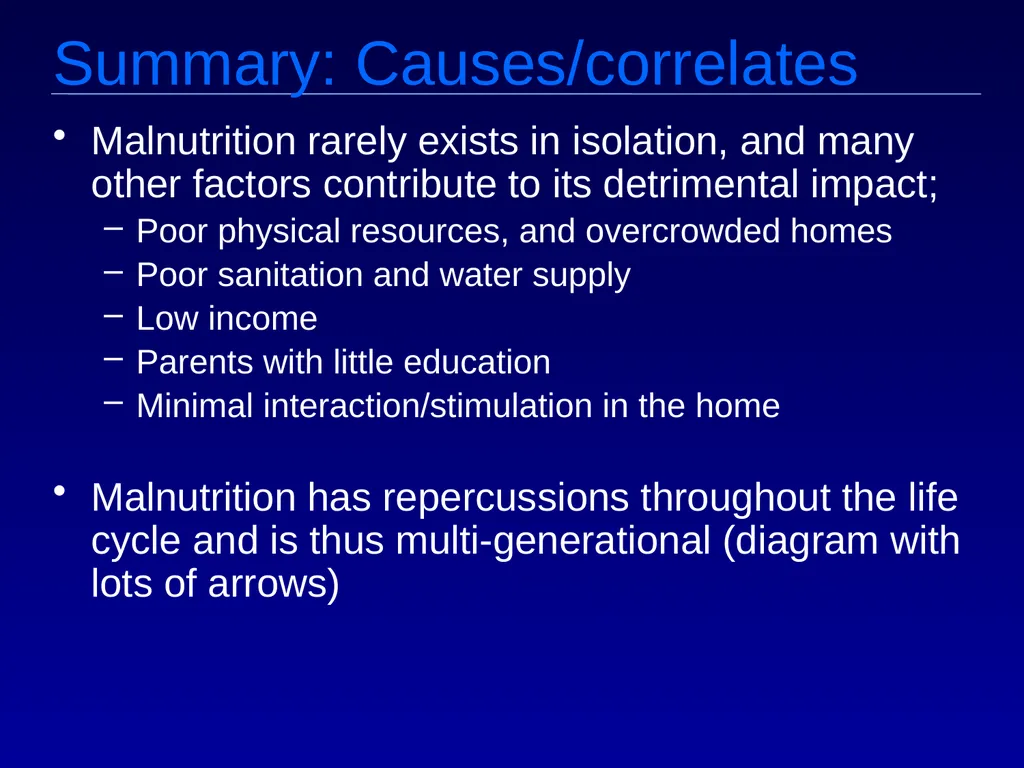
Summary: Causes/correlates Malnutrition rarely exists in isolation, and many other factors contribute to its detrimental impact;
Poor physical resources, and overcrowded homes
Poor sanitation and water supply
Low income
Parents with little education
Minimal interaction/stimulation in the home
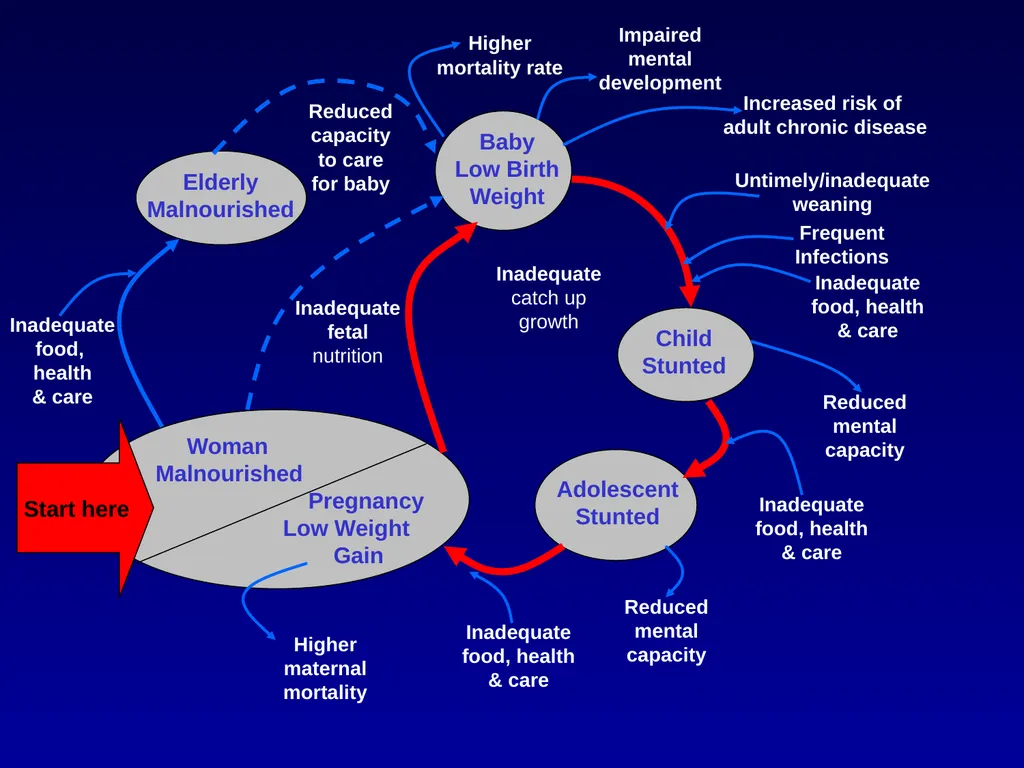
Malnutrition has repercussions throughout the life cycle and is thus multi-generational (diagram with lots of arrows)<br>
11
Baby
Low Birth
Weight Child
Stunted Adolescent
Stunted Woman
Malnourished
Pregnancy
Low Weight
Gain Elderly
Malnourished Higher
mortality rate Impaired
mental
development Increased risk of
adult chronic disease Untimely/inadequate
weaning Frequent
Infections Inadequate
catch up
growth Inadequate
food, health
& care Reduced
mental
capacity Inadequate
food, health
& care Reduced
mental
capacity Inadequate
fetal
nutrition Inadequate
food,
health
& care Inadequate
food, health
& care Higher
maternal
mortality Reduced
capacity
to care
for baby Start here<br>
12
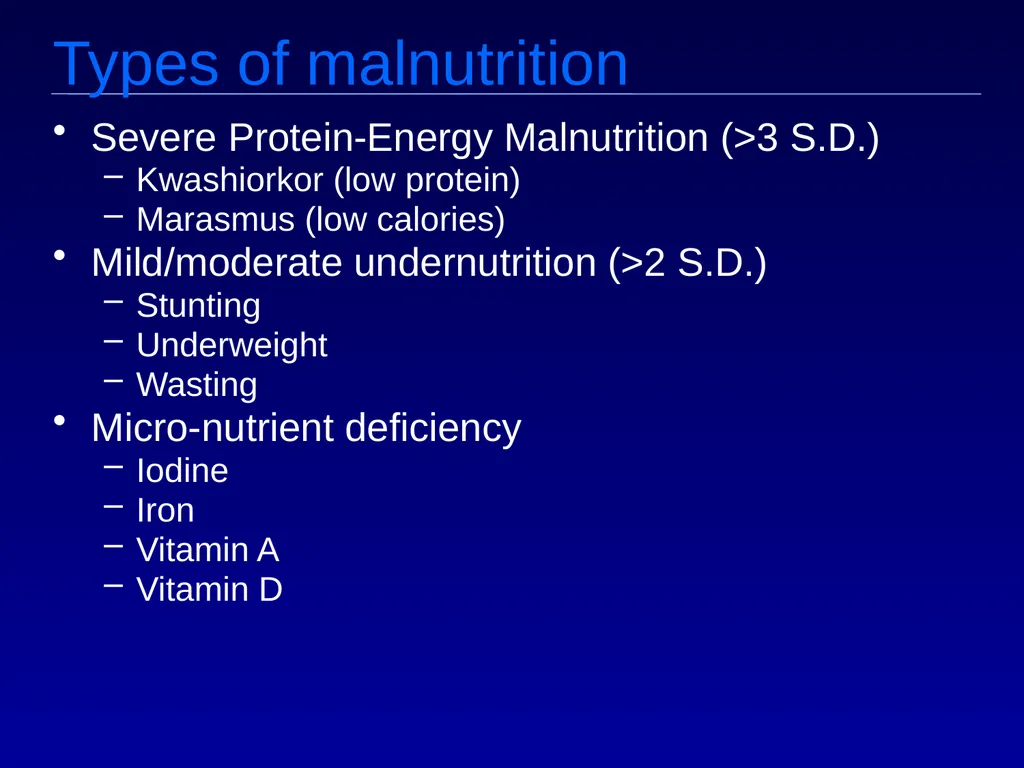
Types of malnutrition Severe Protein-Energy Malnutrition (>3 S.D.)
Kwashiorkor (low protein)
Marasmus (low calories)
Mild/moderate undernutrition (>2 S.D.)
Stunting
Underweight
Wasting
Micro-nutrient deficiency
Iodine
Iron
Vitamin A
Vitamin D<br>
13
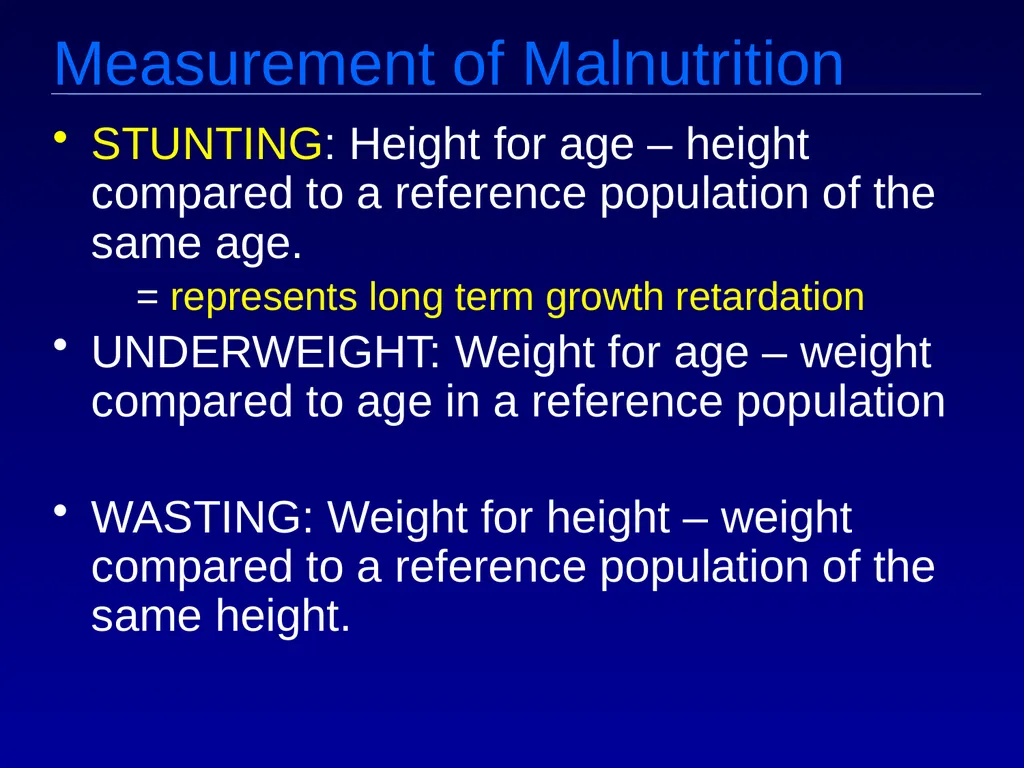
Measurement of Malnutrition STUNTING: Height for age – height compared to a reference population of the same age.
= represents long term growth retardation
UNDERWEIGHT: Weight for age – weight compared to age in a reference population
WASTING: Weight for height – weight compared to a reference population of the same height.<br>
14
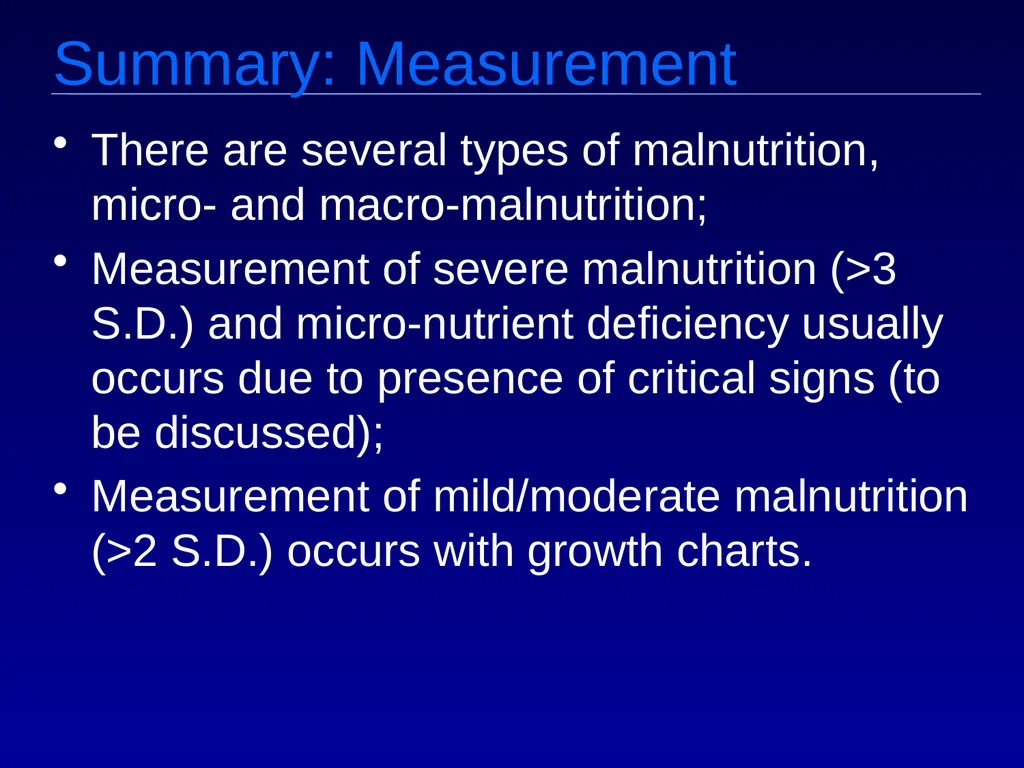
Summary: Measurement There are several types of malnutrition, micro- and macro-malnutrition;
Measurement of severe malnutrition (>3 S.D.) and micro-nutrient deficiency usually occurs due to presence of critical signs (to be discussed);
Measurement of mild/moderate malnutrition (>2 S.D.) occurs with growth charts.<br>
15
Severe malnutrition % <5 y.o. Developing Countries 12%
Least Developed Countries 13%
(India 21%, Bangladesh 21%, Cambodia 18%) Data for 1992-98, UNICEF State of the World’s Children 2000<br>
16
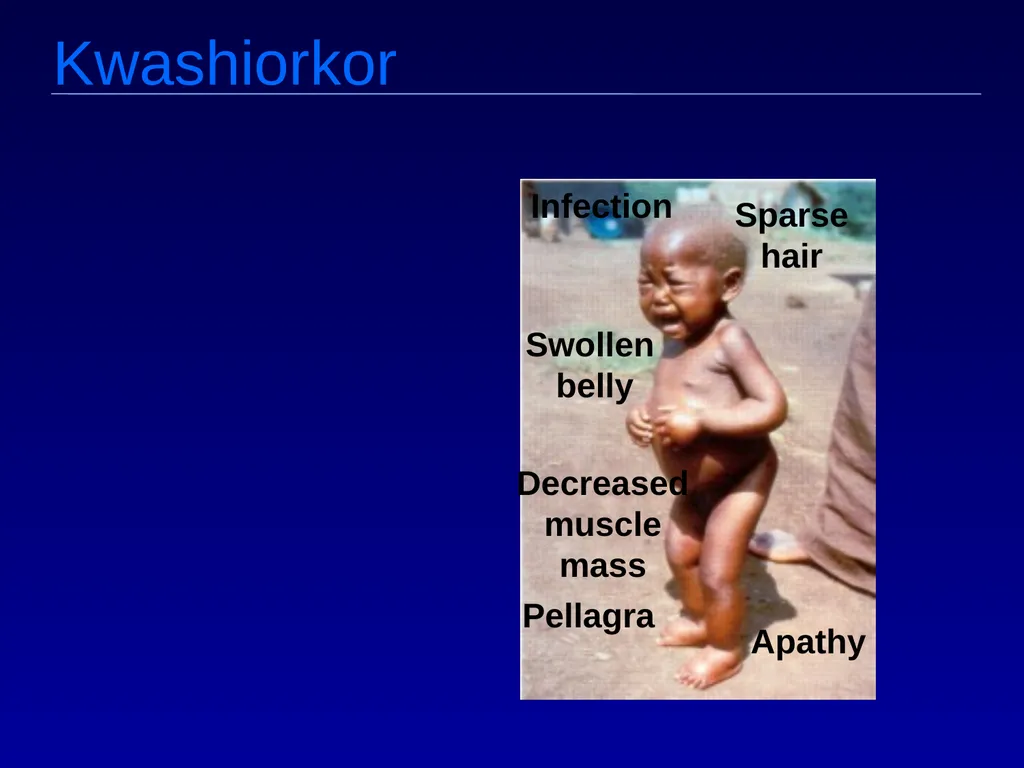
Kwashiorkor Swollen
belly Pellagra Decreased
muscle
mass Sparse
hair Infection Apathy<br>
17
Kwashiorkor (low protein) Decreased muscle mass (failure to gain weight and of linear growth)
Swollen belly (edema and lipid build-up around the liver)
Changes in skin pigment (pellagra); may lose pigment where the skin has peeled away (desquamated) and the skin may darken where it has been irritated or traumatized
Hair lightens and thins, or becomes reddish and brittle.
Increased infections and increased severity of normally mild infection, diarrhea
Apathy, lethargy, irritability
Death does not occur from actual starvation but from secondary infection<br>
18
Kwashiorkor – mechanisms Occurs in reaction to emergency situations (famine)
Kwashiorkor more likely in areas where cassava, yam, plantain, rice and maize are staples, not wheat
Increased carbohydrate intake with decreased protein intake eventually leads to edema (water) and fatty liver<br>
19
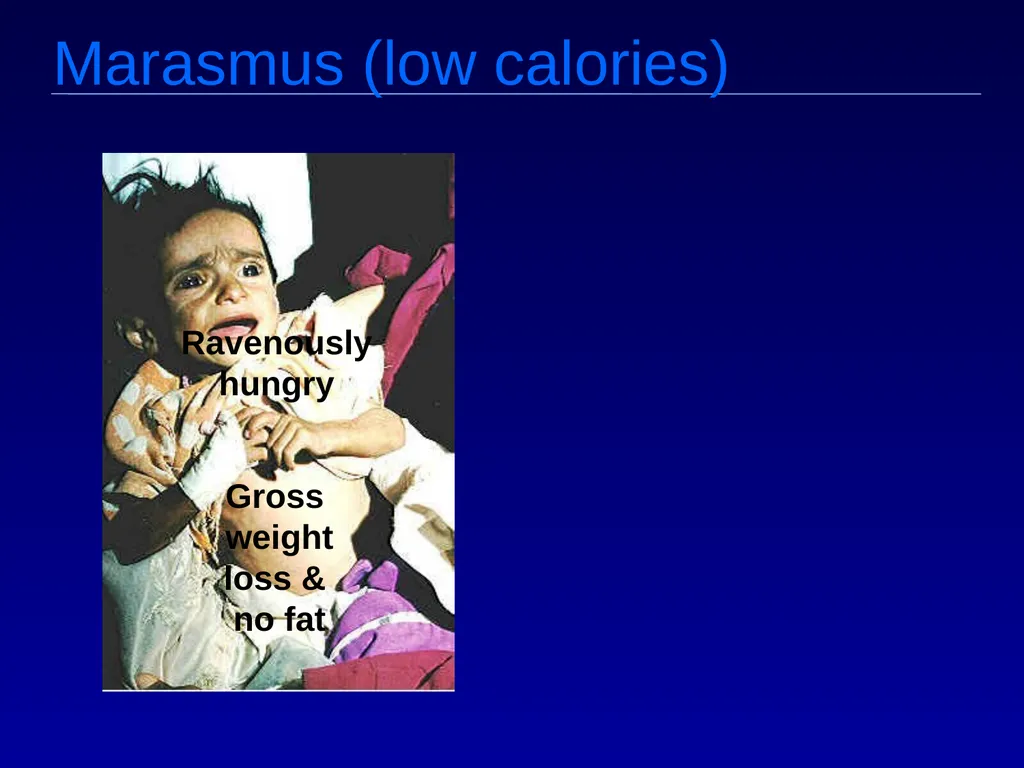
Marasmus (low calories) Ravenously
hungry Gross
weight
loss &
no fat<br>
20
Marasmus Deficit in calories – “marasmus” comes from Greek origin of word “to waste”
Gross weight loss
Hyper-alert and ravenously hungry
Children have no subcutaneous fat or muscle
eventually starve to death (immediate cause often is pneumonia)<br>
21
Marasmus – mechanism Energy intake is insufficient for body’s requirements – body must draw on own stores
Liver glycogen exhausted in a few hours – skeletal muscle protein used via gluconeogenesis to maintain adequate plasma glucose
When near starvation is prolonged, fatty acids are incompletely oxidized to ketone bodies, which can be used by brain and other organs for energy
High cortisol and growth hormone levels
Mechanism is same as anorexia<br>
22
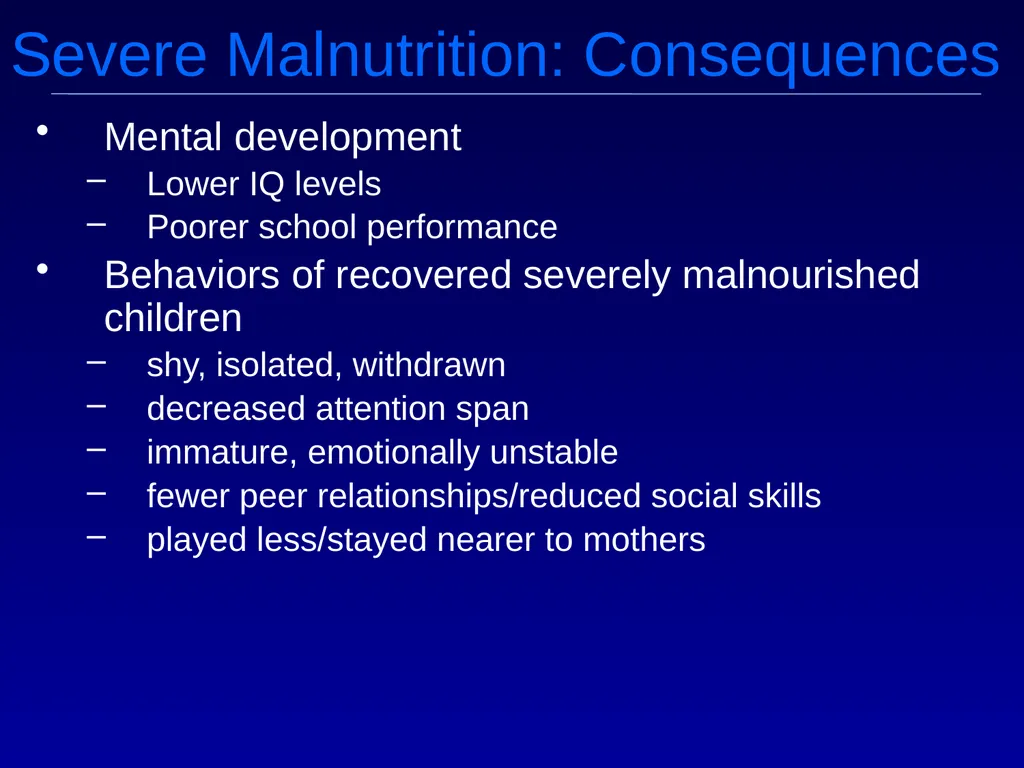
Mental development
Lower IQ levels
Poorer school performance
Behaviors of recovered severely malnourished children
shy, isolated, withdrawn
decreased attention span
immature, emotionally unstable
fewer peer relationships/reduced social skills
played less/stayed nearer to mothers Severe Malnutrition: Consequences<br>
23
Summary: Severe malnutrition Severe malnutrition is defined as > 3 s.d. away from median reference standards;
66M children under the age of 5 are severely malnourished (64M of these in developing countries);
Key types of severe malnutrition are kwashiorkor (low protein) and marasmus (low calories);
Severe malnutrition results in severe deficits for children<br>
24
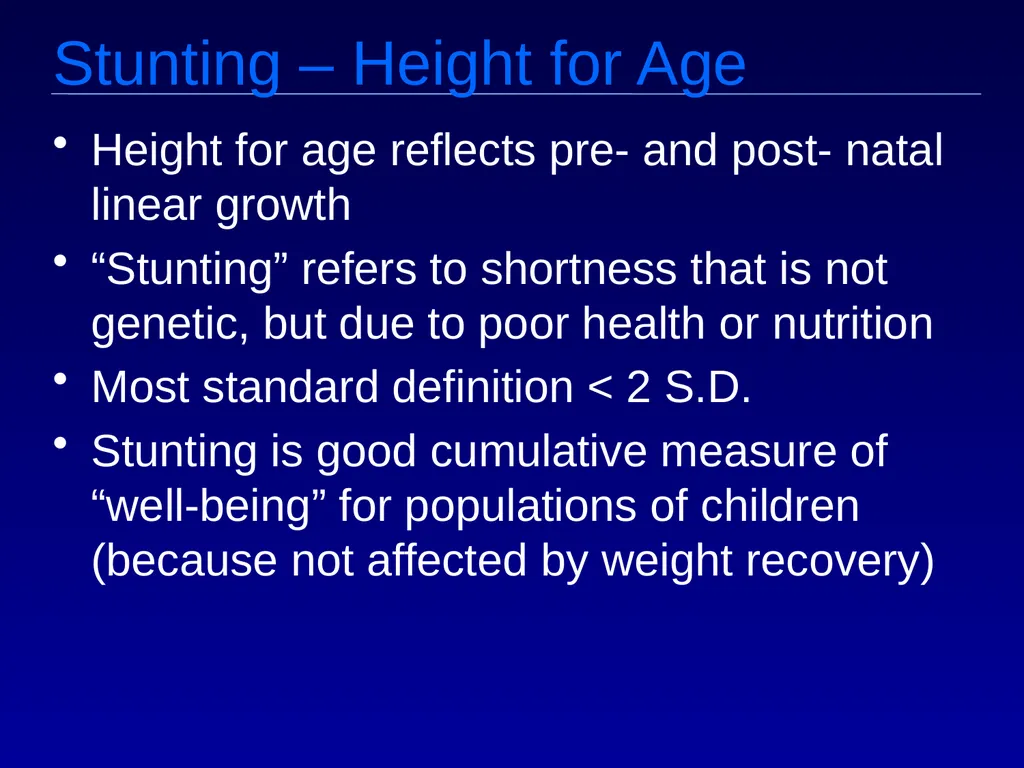
Stunting – Height for Age Height for age reflects pre- and post- natal linear growth
“Stunting” refers to shortness that is not genetic, but due to poor health or nutrition
Most standard definition < 2 S.D.
Stunting is good cumulative measure of “well-being” for populations of children (because not affected by weight recovery)<br>
25
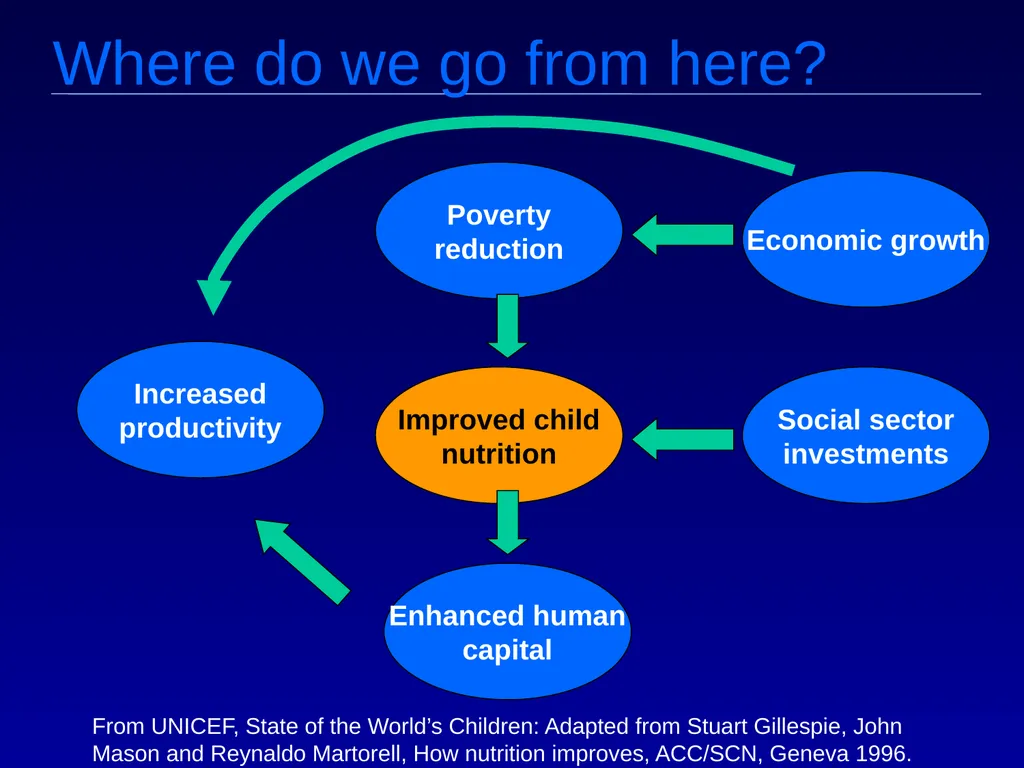
From UNICEF, State of the World’s Children: Adapted from Stuart Gillespie, John Mason and Reynaldo Martorell, How nutrition improves, ACC/SCN, Geneva 1996. Where do we go from here? Improved child
nutrition Increased
productivity Enhanced human
capital Poverty
reduction Economic growth Social sector
investments<br>