
Manufacturing Processes Chapter Seven Chase, R.,
Description: Manufacturing Processes Chapter Seven Chase, R., Shankar, R., Jacobs, F. R. (2010). Operations and Supply Chain Management, 14e. McGraw-Hill Education. Copyright 2014 by The McGraw-Hill Companies, Inc. All rights reserved.
Related Topics
Download Presentation
"Manufacturing Processes Chapter Seven Chase, R.," is the property of its rightful owner. Permission is granted to download and print the materials on this website for personal, non-commercial use only, and to display it on your personal computer provided you do not modify the materials and that you retain all copyright notices contained in the materials. By downloading content from our website, you accept the terms of this agreement.
Presentation Transcript
slide1. Manufacturing
Processes Chapter Seven
Chase, R., Shankar, R., & Jacobs, F. R. (2010). Operations and Supply Chain Management, 14e. McGraw-Hill Education. Copyright © 2014 by The McGraw-Hill Companies, Inc. All rights reserved. McGraw-Hill/Irwin<br>
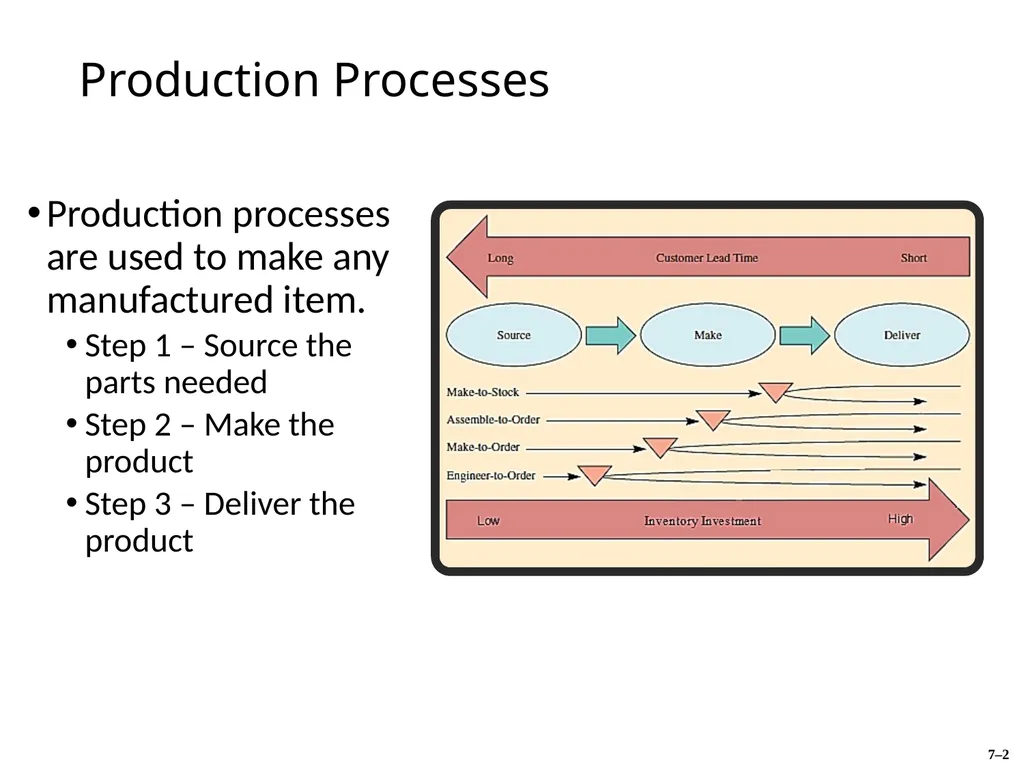
slide2. Production Processes Production processes are used to make any manufactured item.
Step 1 – Source the parts needed
Step 2 – Make the product
Step 3 – Deliver the product<br>
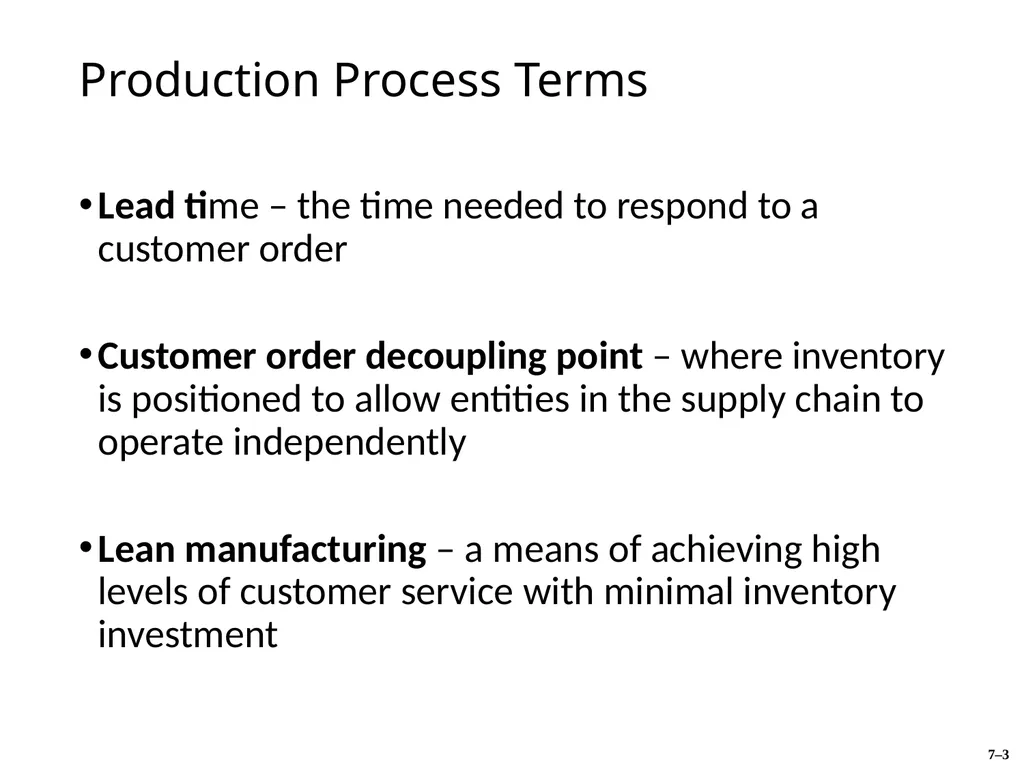
slide3. Production Process Terms Lead time – the time needed to respond to a customer order
Customer order decoupling point – where inventory is positioned to allow entities in the supply chain to operate independently
Lean manufacturing – a means of achieving high levels of customer service with minimal inventory investment<br>
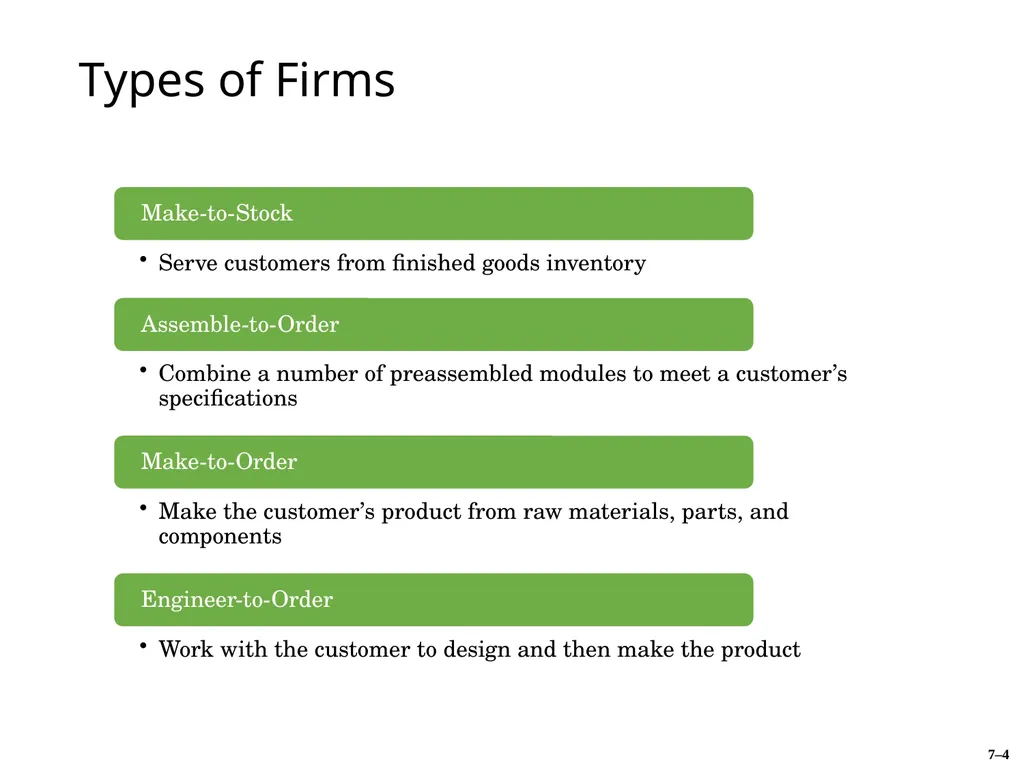
slide4. Types of Firms<br>
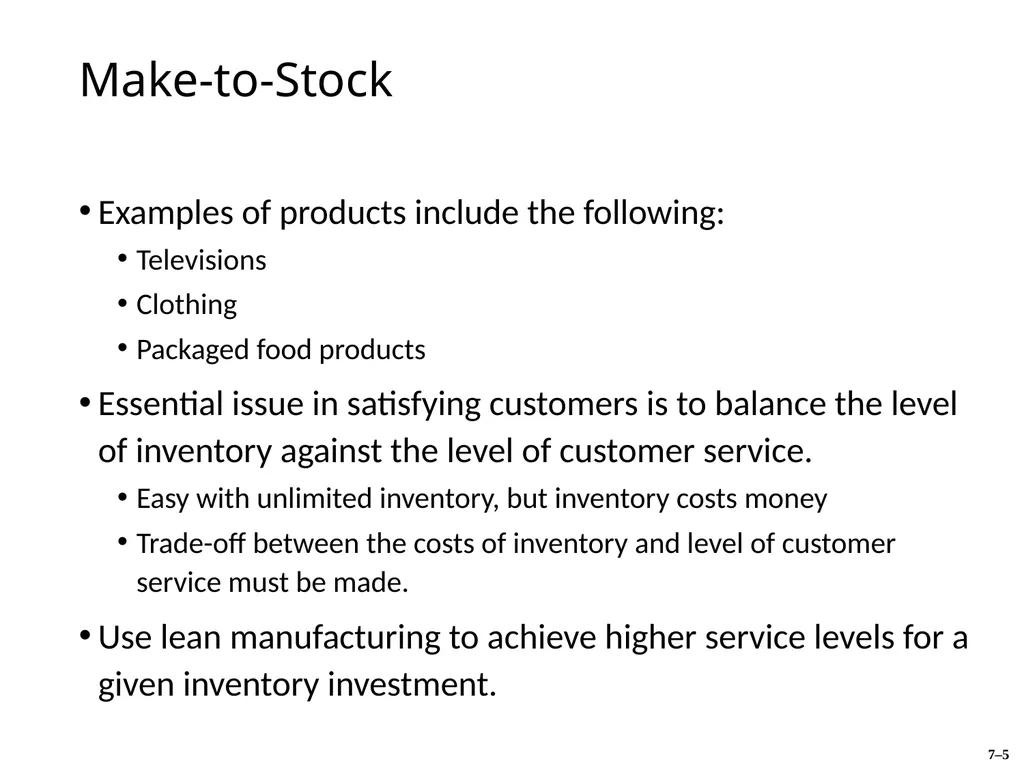
slide5. Make-to-Stock Examples of products include the following:
Televisions
Clothing
Packaged food products
Essential issue in satisfying customers is to balance the level of inventory against the level of customer service.
Easy with unlimited inventory, but inventory costs money
Trade-off between the costs of inventory and level of customer service must be made.
Use lean manufacturing to achieve higher service levels for a given inventory investment.<br>
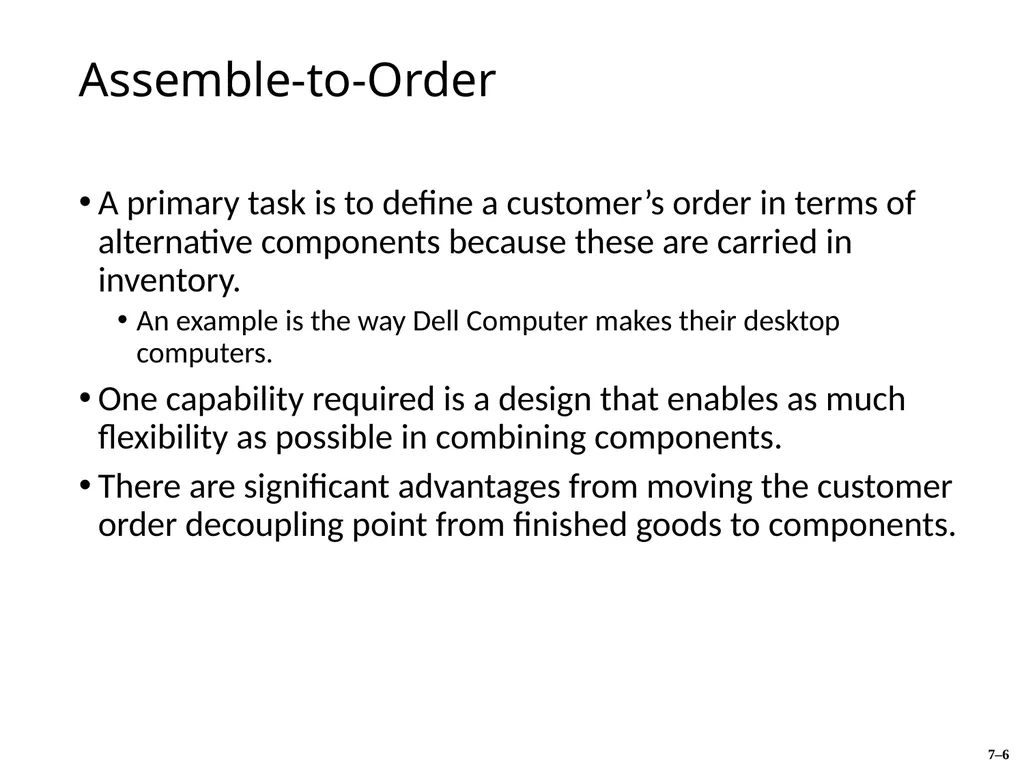
slide6. Assemble-to-Order A primary task is to define a customer’s order in terms of alternative components because these are carried in inventory.
An example is the way Dell Computer makes their desktop computers.
One capability required is a design that enables as much flexibility as possible in combining components.
There are significant advantages from moving the customer order decoupling point from finished goods to components.<br>
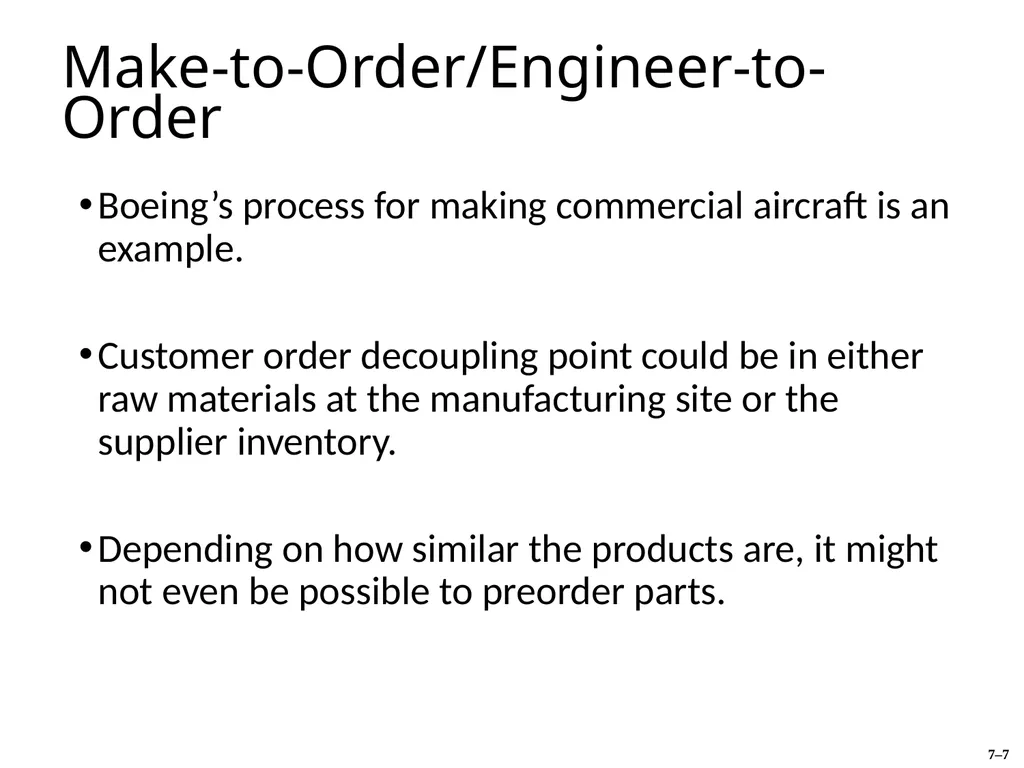
slide7. Make-to-Order/Engineer-to-Order Boeing’s process for making commercial aircraft is an example.
Customer order decoupling point could be in either raw materials at the manufacturing site or the supplier inventory.
Depending on how similar the products are, it might not even be possible to preorder parts.<br>
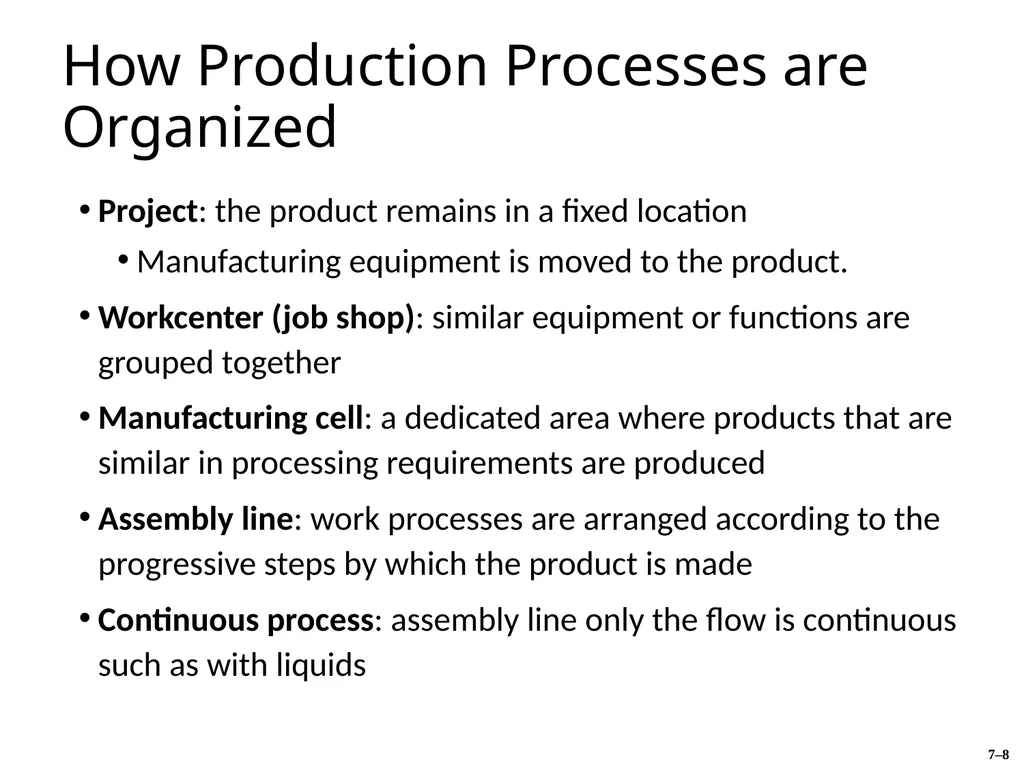
slide8. How Production Processes are Organized Project: the product remains in a fixed location
Manufacturing equipment is moved to the product.
Workcenter (job shop): similar equipment or functions are grouped together
Manufacturing cell: a dedicated area where products that are similar in processing requirements are produced
Assembly line: work processes are arranged according to the progressive steps by which the product is made
Continuous process: assembly line only the flow is continuous such as with liquids<br>
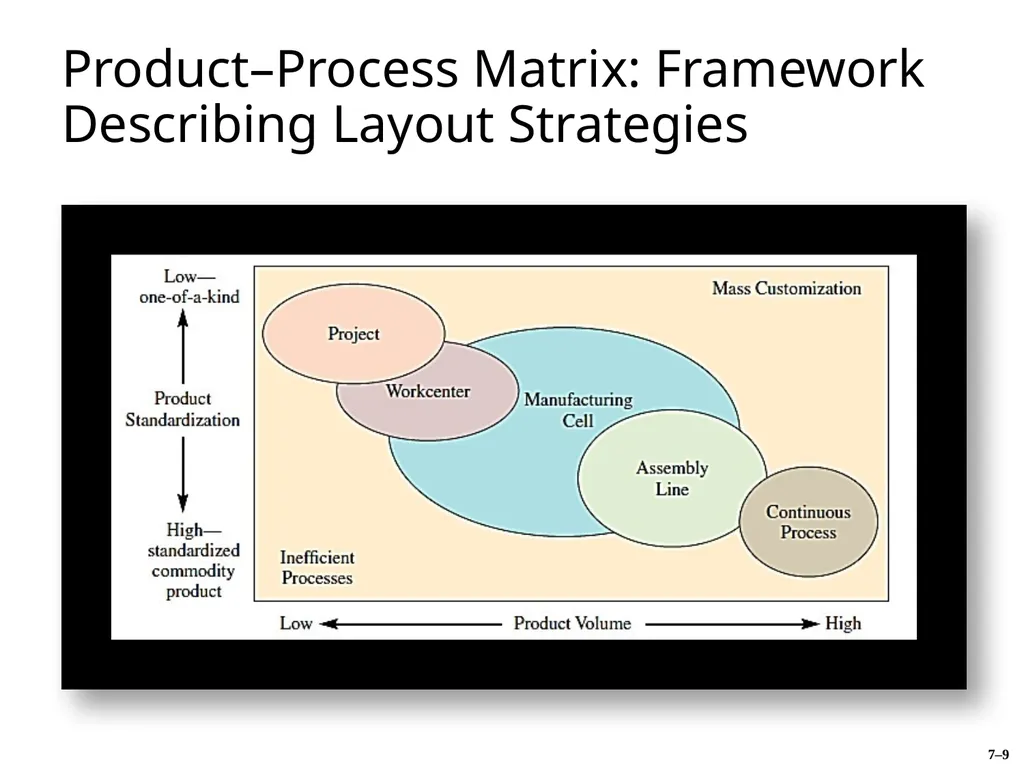
slide9. Product–Process Matrix: Framework Describing Layout Strategies<br>
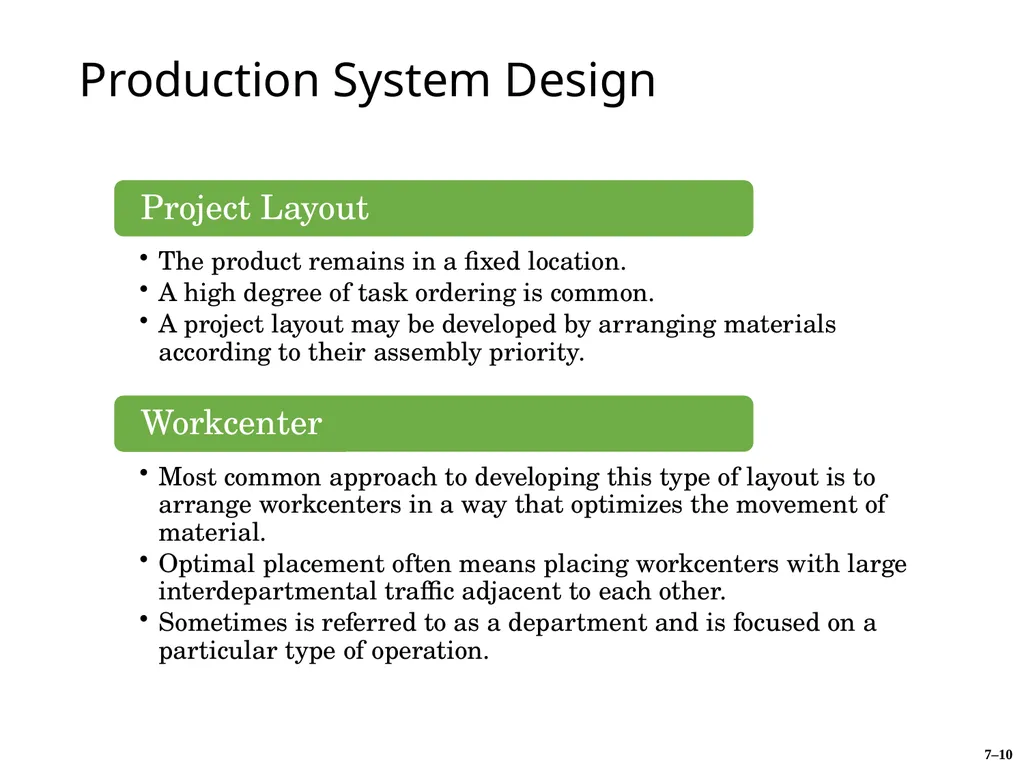
slide10. Production System Design<br>
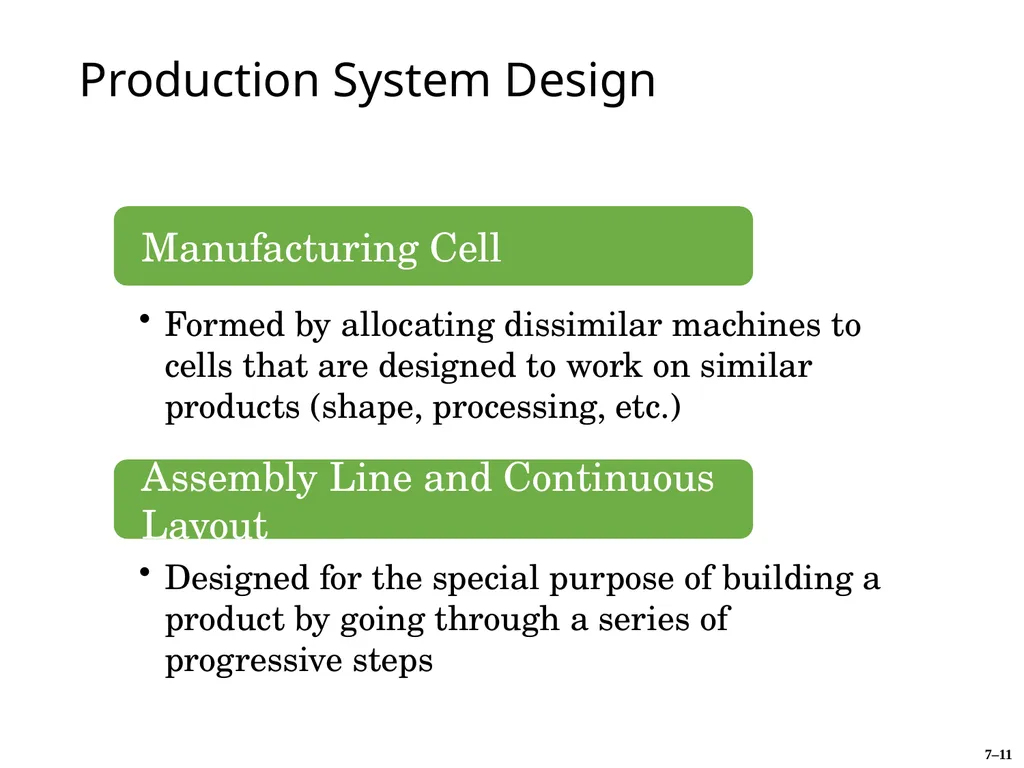
slide11. Production System Design<br>
Chase, R., Shankar, R., & Jacobs, F. R. (2010). Operations and Supply Chain Management, 14e. McGraw-Hill Education. Copyright © 2014 by The McGraw-Hill Companies, Inc. All rights reserved. McGraw-Hill/Irwin<br>
slide2. Production Processes Production processes are used to make any manufactured item.
Step 1 – Source the parts needed
Step 2 – Make the product
Step 3 – Deliver the product<br>
slide3. Production Process Terms Lead time – the time needed to respond to a customer order
Customer order decoupling point – where inventory is positioned to allow entities in the supply chain to operate independently
Lean manufacturing – a means of achieving high levels of customer service with minimal inventory investment<br>
slide4. Types of Firms<br>
slide5. Make-to-Stock Examples of products include the following:
Televisions
Clothing
Packaged food products
Essential issue in satisfying customers is to balance the level of inventory against the level of customer service.
Easy with unlimited inventory, but inventory costs money
Trade-off between the costs of inventory and level of customer service must be made.
Use lean manufacturing to achieve higher service levels for a given inventory investment.<br>
slide6. Assemble-to-Order A primary task is to define a customer’s order in terms of alternative components because these are carried in inventory.
An example is the way Dell Computer makes their desktop computers.
One capability required is a design that enables as much flexibility as possible in combining components.
There are significant advantages from moving the customer order decoupling point from finished goods to components.<br>
slide7. Make-to-Order/Engineer-to-Order Boeing’s process for making commercial aircraft is an example.
Customer order decoupling point could be in either raw materials at the manufacturing site or the supplier inventory.
Depending on how similar the products are, it might not even be possible to preorder parts.<br>
slide8. How Production Processes are Organized Project: the product remains in a fixed location
Manufacturing equipment is moved to the product.
Workcenter (job shop): similar equipment or functions are grouped together
Manufacturing cell: a dedicated area where products that are similar in processing requirements are produced
Assembly line: work processes are arranged according to the progressive steps by which the product is made
Continuous process: assembly line only the flow is continuous such as with liquids<br>
slide9. Product–Process Matrix: Framework Describing Layout Strategies<br>
slide10. Production System Design<br>
slide11. Production System Design<br>