Marketing Research: An Applied Orientation Seventh Edition, Global Edition Marketing Research Copyright 2020 by Pearson Education Ltd. All Rights Reserved. Redefining Marketing Research (1 of 2) The American Marketing Association (AMA)
"Marketing Research: An Applied Orientation Seventh" is the property of its rightful owner. Permission is granted to
download and print the materials on this website for personal, non-commercial use only, and to display it
on your personal computer provided you do not modify the materials and that you retain all copyright
notices contained in the materials. By downloading content from our website, you accept the terms of this
agreement.
Redefining Marketing Research (1 of 2) The American Marketing Association (AMA) redefined Marketing Research as: The function that links the consumer, the customer, and public to the marketer through INFORMATION<br>
03
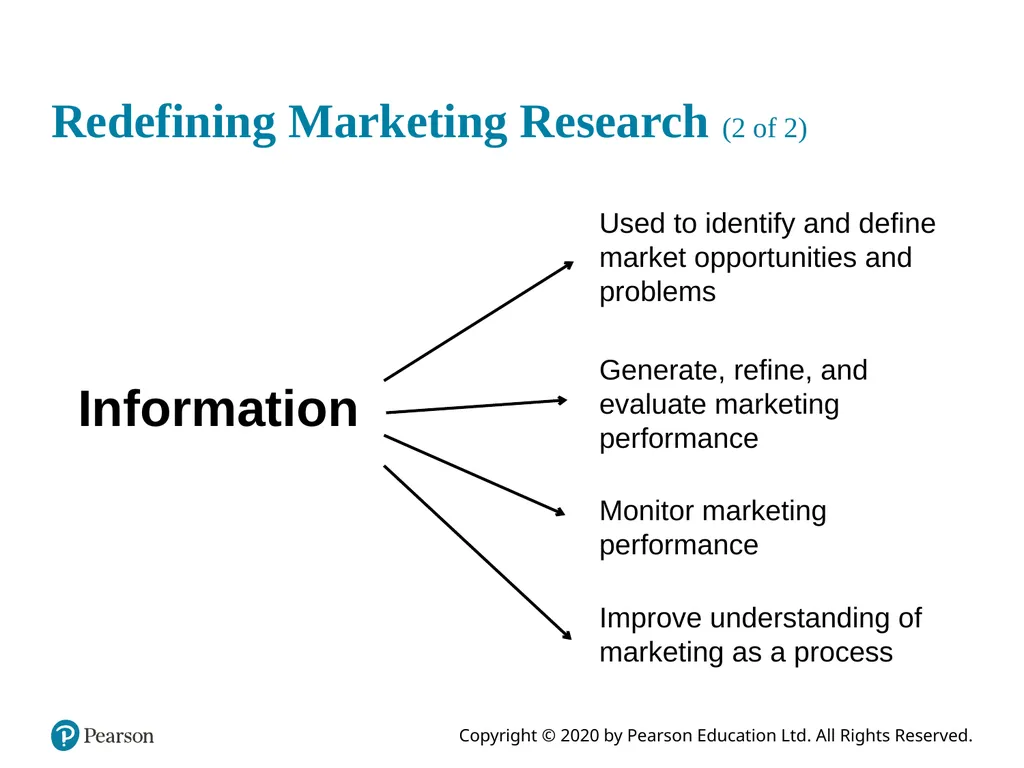
Redefining Marketing Research (2 of 2) Information Used to identify and define market opportunities and problems Generate, refine, and evaluate marketing performance Monitor marketing performance Improve understanding of marketing as a process<br>
04
Definition of Marketing Research Marketing research is the systematic and objective
identification
collection
analysis
dissemination
and use of information
For the purpose of improving decision making related to the
identification and
solution of problems and opportunities in marketing<br>
05
Marketing research is the systematic and objective
identification
collection
analysis
dissemination
and use of information
For the purpose of improving decision making related to the
identification and
solution of problems and opportunities in marketing<br>
06
Market Research Specifies the information necessary to address these issues
Manages and implements the data collection process
Analyzes the results
Communicates the findings and their implications
Helps managers use this information to make decisions<br>
07
Classification of Marketing Research Problem-Identification Research
Research undertaken to help identify problems which are not necessarily apparent on the surface and yet exist or are likely to arise in the future. Examples: market potential, market share, image, market characteristics, sales analysis, forecasting, and trends research. Problem-Solving Research
Research undertaken to help solve specific marketing problems. Examples: segmentation, product, pricing, promotion, and distribution research.<br>
08
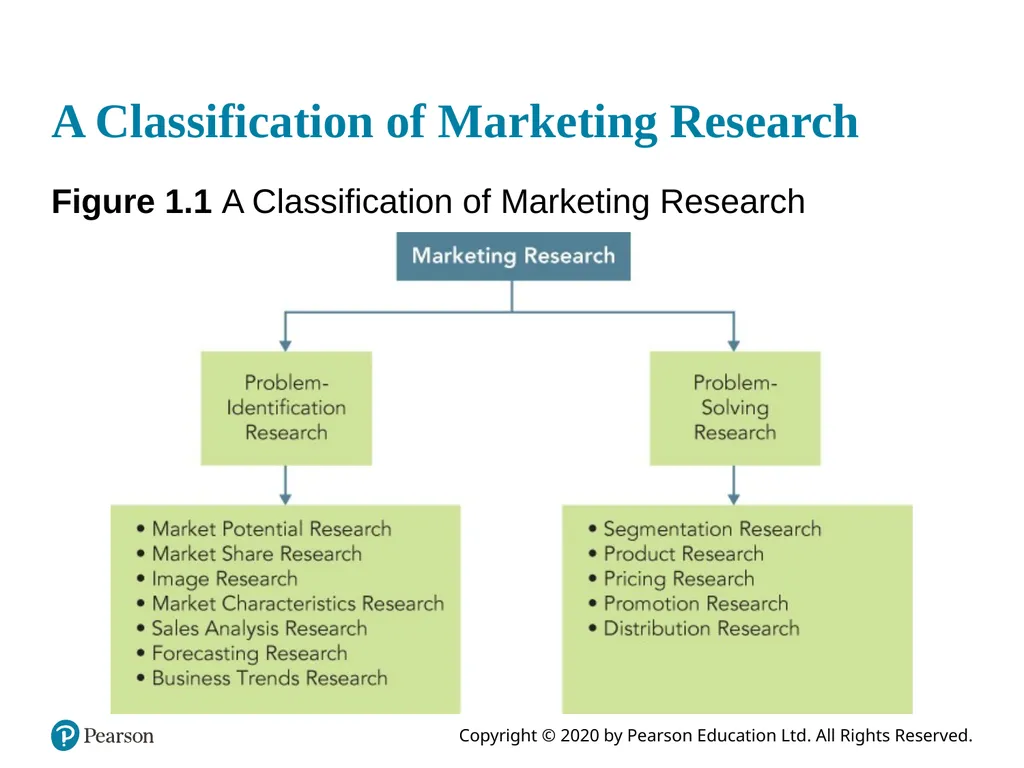
A Classification of Marketing Research Figure 1.1 A Classification of Marketing Research<br>
09
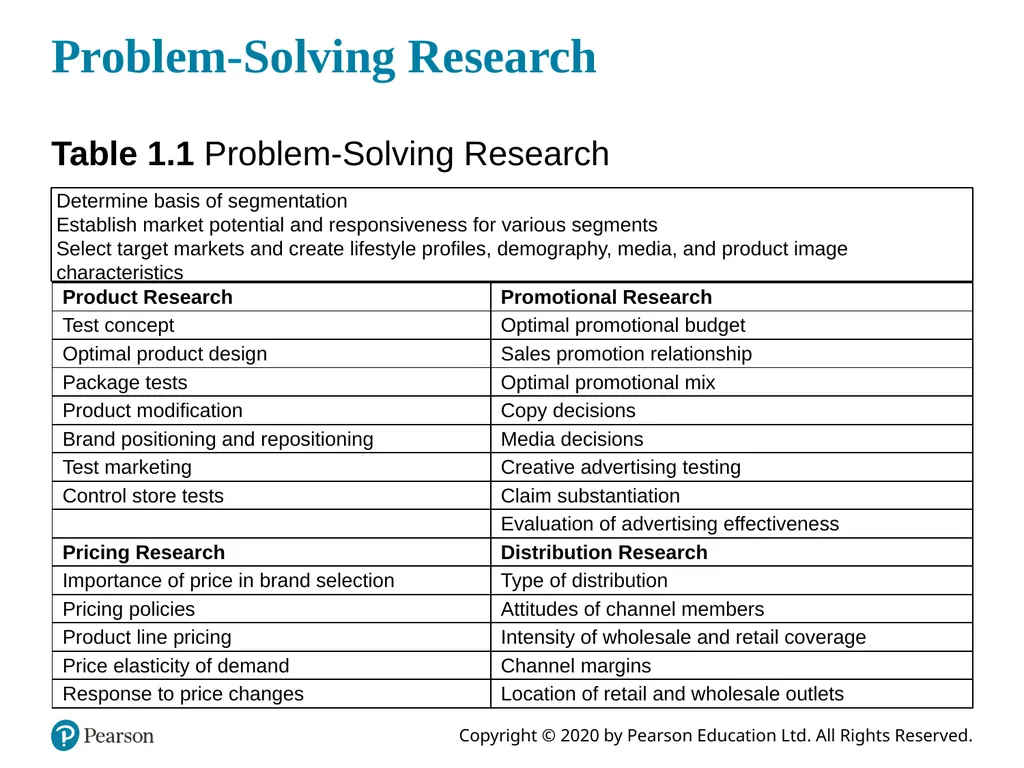
Problem-Solving Research Table 1.1 Problem-Solving Research Determine basis of segmentation
Establish market potential and responsiveness for various segments
Select target markets and create lifestyle profiles, demography, media, and product image characteristics<br>
10
Marketing Research Process (1 of 2) Step 1 : Problem Definition
Step 2 : Development of an Approach to the Problem
Step 3 : Research Design Formulation
Step 4 : Fieldwork or Data Collection
Step 5 : Data Preparation and Analysis
Step 6 : Report Preparation and Presentation<br>
11
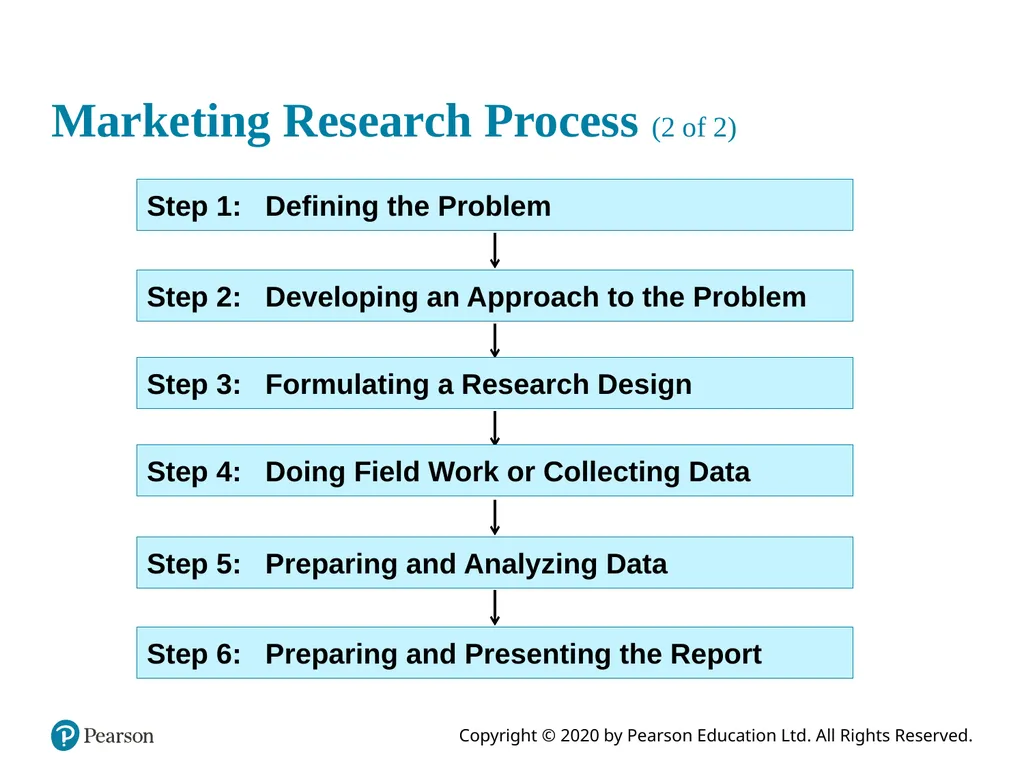
Marketing Research Process (2 of 2) Step 1: Defining the Problem Step 2: Developing an Approach to the Problem Step 3: Formulating a Research Design Step 4: Doing Field Work or Collecting Data Step 5: Preparing and Analyzing Data Step 6: Preparing and Presenting the Report<br>
12
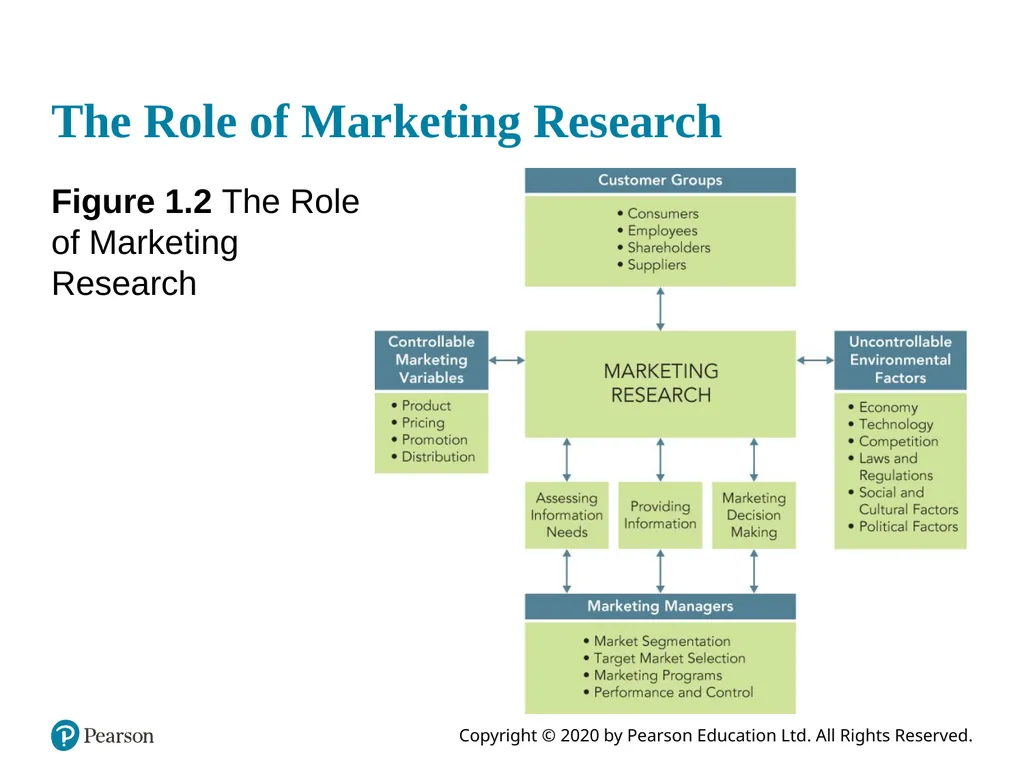
The Role of Marketing Research Figure 1.2 The Role of Marketing Research<br>
13
Marketing Research Suppliers & Services (1 of 2) Figure 1.3 Marketing Research Suppliers and Services<br>
14
Marketing Research Suppliers & Services (2 of 2) Internal suppliers
External suppliers
Full-service suppliers
Syndicated services
Standardized services
Customized services
Internet/social media services
Limited-service suppliers
Field services
Focus groups and qualitative services
Technical and analytical services
Other services<br>
15
Criteria for Selecting a Research Supplier What is the reputation of the supplier?
Do they complete projects on schedule?
Are they known for maintaining ethical standards?
Are they flexible?
Are their research projects of high quality?
What kind and how much experience does the supplier have? Has the firm had experience with projects similar to this one?
Do the supplier's personnel have both technical and non-technical expertise?
Can they communicate well with the client?
Competitive bids should be compared on the basis of quality as well as price.<br>
16
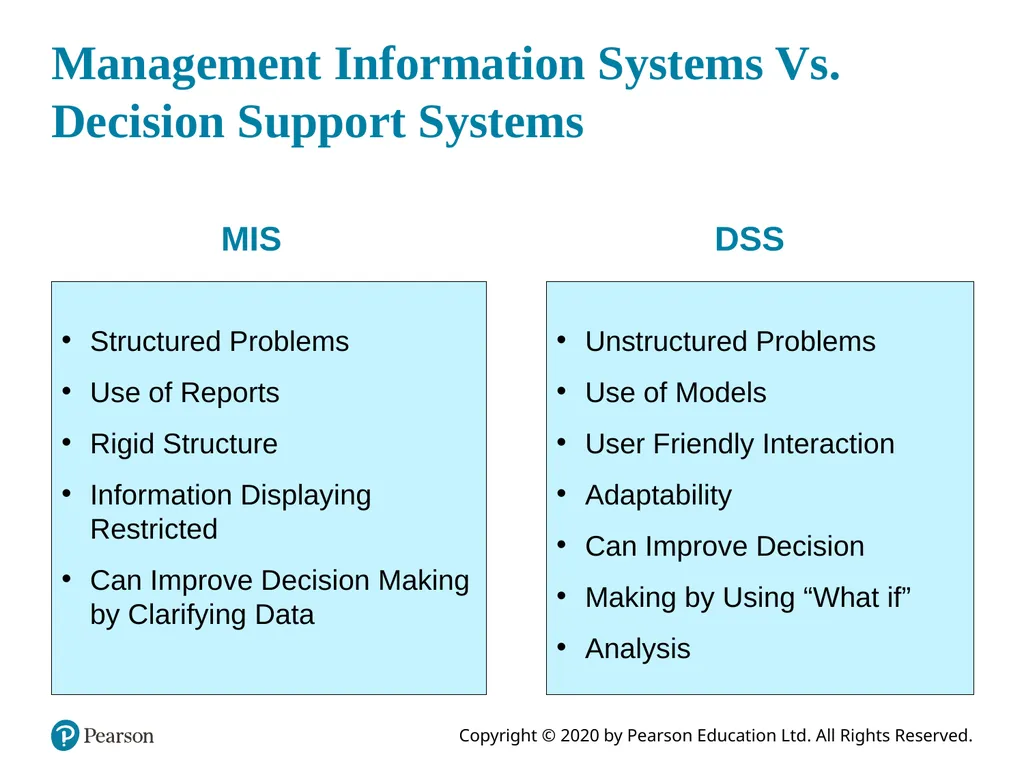
Management Information Systems Vs. Decision Support Systems MIS Structured Problems
Use of Reports
Rigid Structure
Information Displaying Restricted
Can Improve Decision Making by Clarifying Data DSS Unstructured Problems
Use of Models
User Friendly Interaction
Adaptability
Can Improve Decision
Making by Using “What if”
Analysis<br>
17
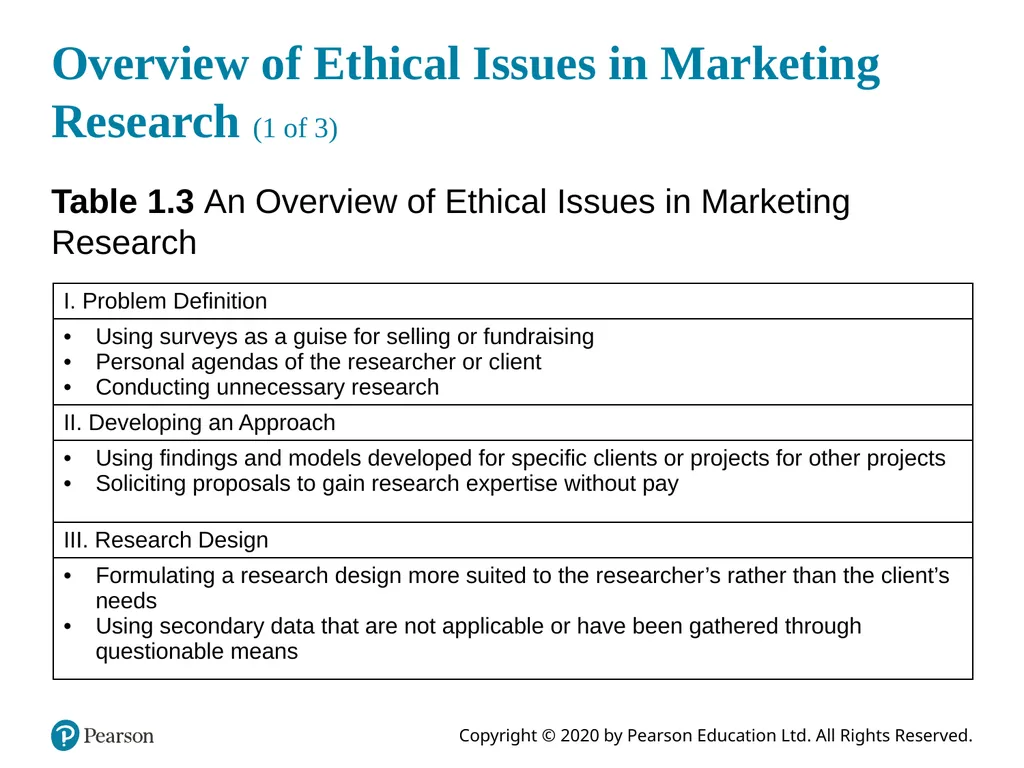
Overview of Ethical Issues in Marketing Research (1 of 3) Table 1.3 An Overview of Ethical Issues in Marketing Research<br>
18
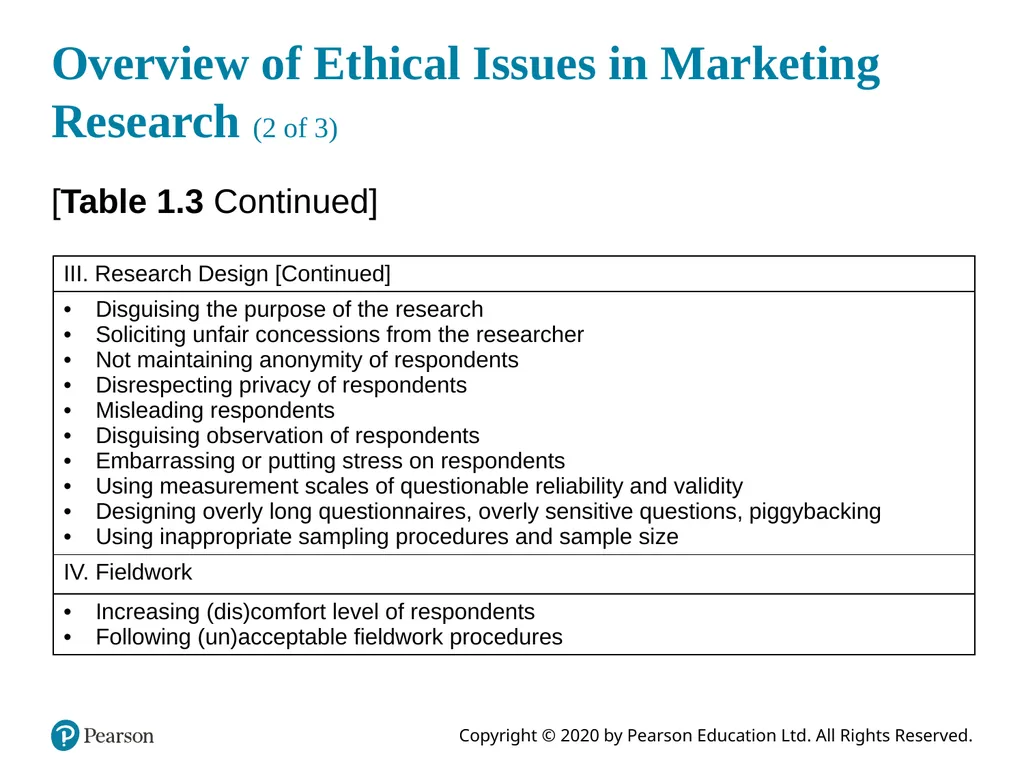
Overview of Ethical Issues in Marketing Research (2 of 3) [Table 1.3 Continued]<br>
19
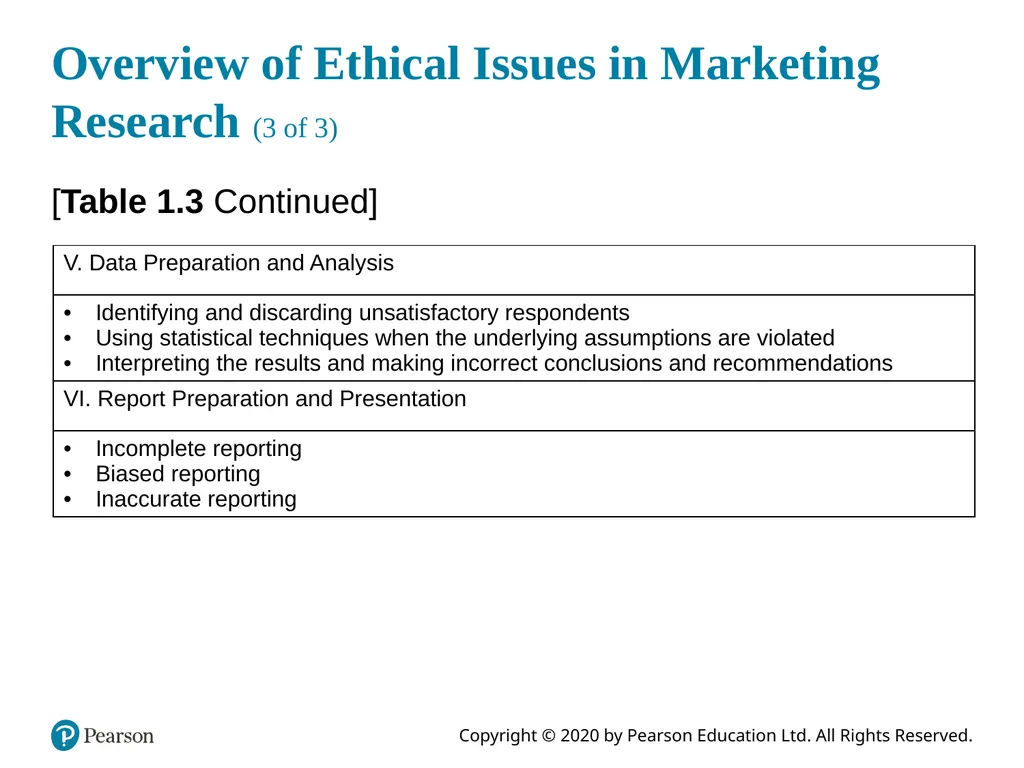
Overview of Ethical Issues in Marketing Research (3 of 3) [Table 1.3 Continued]<br>