
Measuring Query Name Minimization Joao Damas Geoff



Description: Measuring Query Name Minimization Joao Damas Geoff Huston APNIC Labs September 2020 Quick Summary NON-query name minimisation resolution sequence Quick Summary Query name minimisation technique described in RFC 7816 Quick Summary Query name
Related Topics
Download Presentation
"Measuring Query Name Minimization Joao Damas Geoff" is the property of its rightful owner. Permission is granted to download and print the materials on this website for personal, non-commercial use only, and to display it on your personal computer provided you do not modify the materials and that you retain all copyright notices contained in the materials. By downloading content from our website, you accept the terms of this agreement.
Presentation Transcript
slide1. Measuring Query Name Minimization Joao Damas
Geoff Huston
APNIC Labs
September 2020<br>
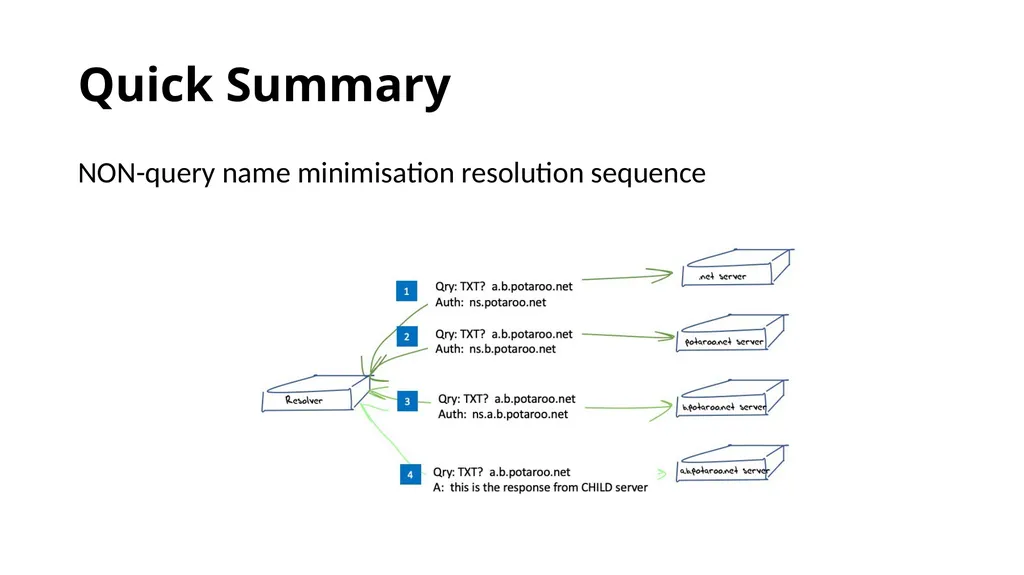
slide2. Quick Summary NON-query name minimisation resolution sequence<br>
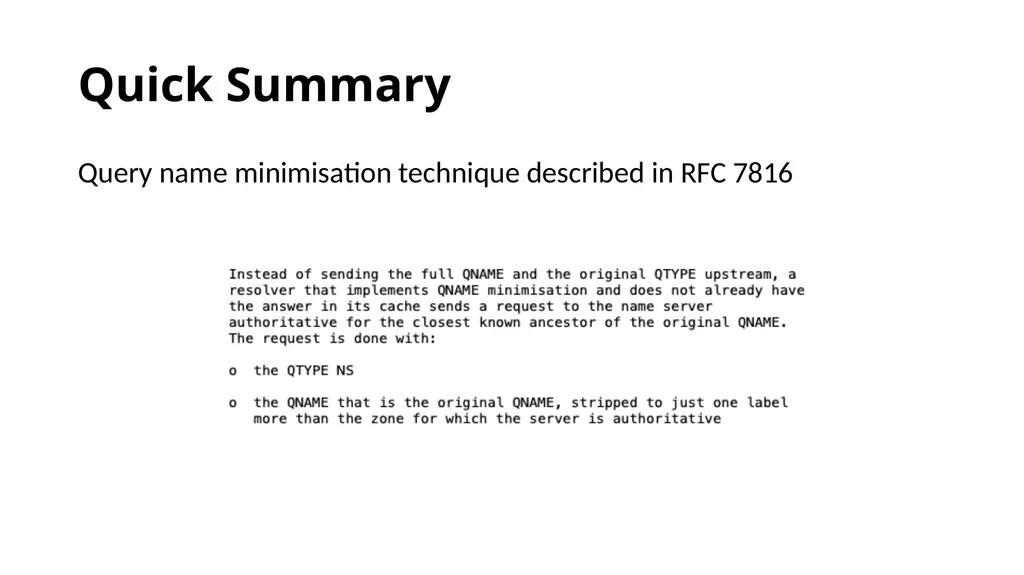
slide3. Quick Summary Query name minimisation technique described in RFC 7816<br>
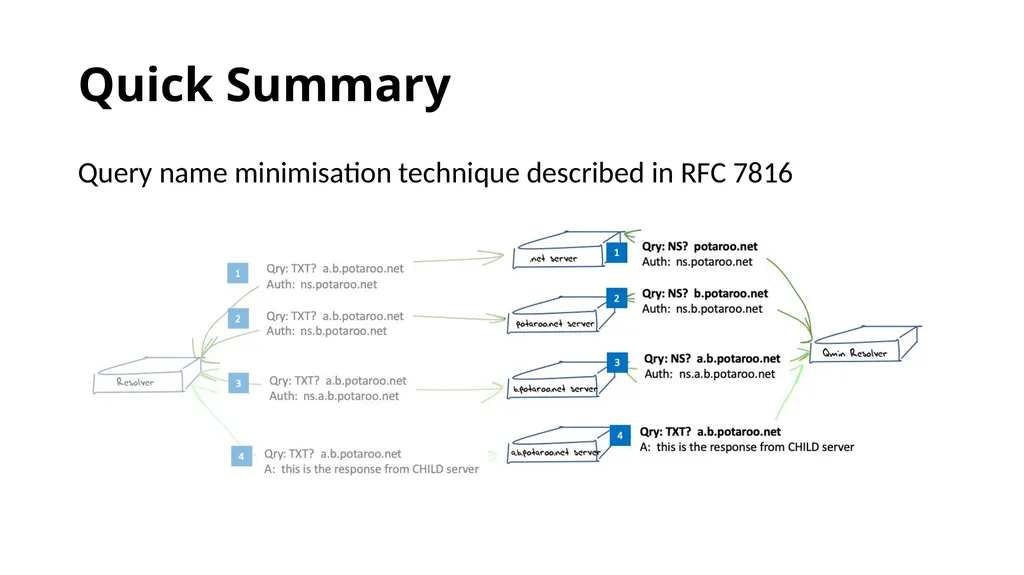
slide4. Quick Summary Query name minimisation technique described in RFC 7816<br>
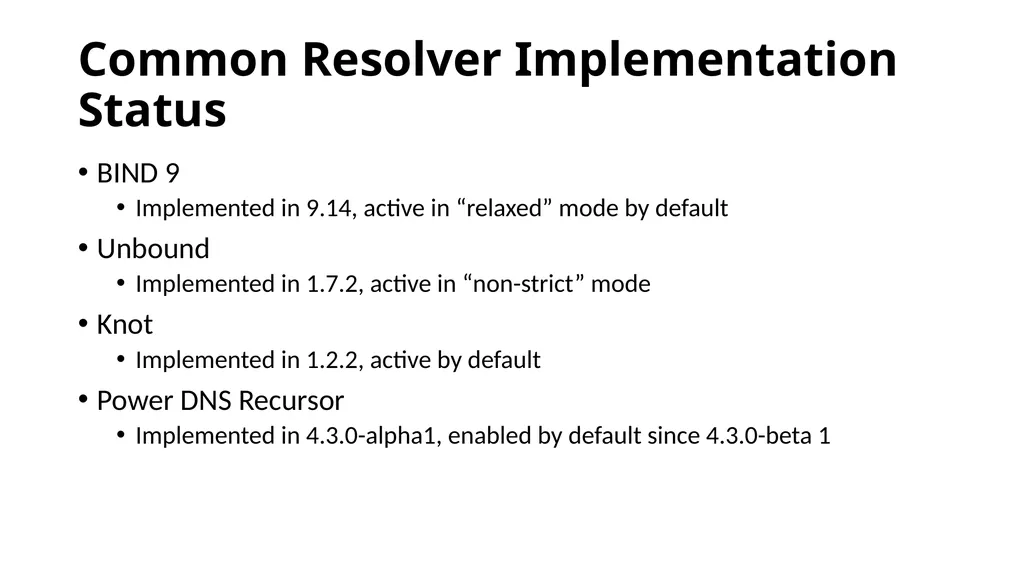
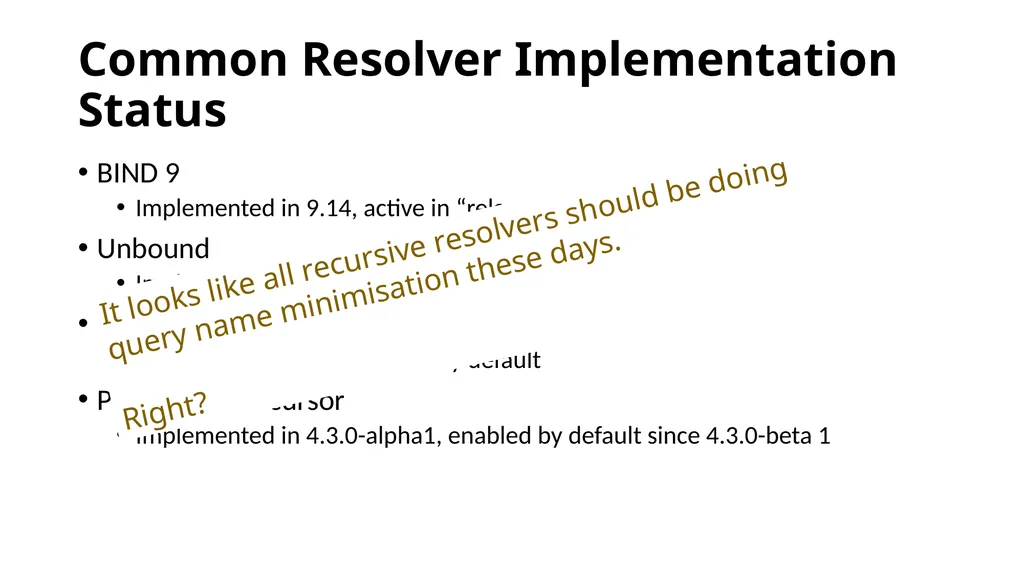
slide5. Common Resolver Implementation Status BIND 9
Implemented in 9.14, active in “relaxed” mode by default
Unbound
Implemented in 1.7.2, active in “non-strict” mode
Knot
Implemented in 1.2.2, active by default
Power DNS Recursor
Implemented in 4.3.0-alpha1, enabled by default since 4.3.0-beta 1<br>
slide6. Common Resolver Implementation Status BIND 9
Implemented in 9.14, active in “relaxed” mode by default
Unbound
Implemented in 1.7.2, active in “non-strict” mode
Knot
Implemented in 1.2.2, active by default
Power DNS Recursor
Implemented in 4.3.0-alpha1, enabled by default since 4.3.0-beta 1 It looks like all recursive resolvers should be doing query name minimisation these days.
Right?<br>
slide7. Measurements Let’s look at the adoption of query name minimisation from the perspectives of the end user and their queries, and from the perspective of recursive resolvers<br>
slide8. Users whose Queries are handled with Qname Minimization<br>
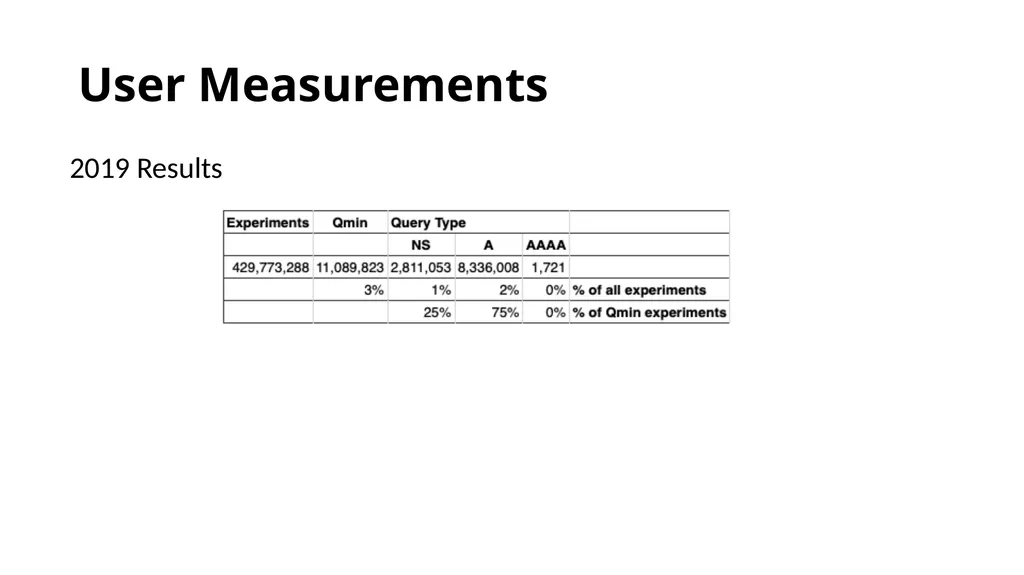
slide9. User Measurements 2019 Results<br>
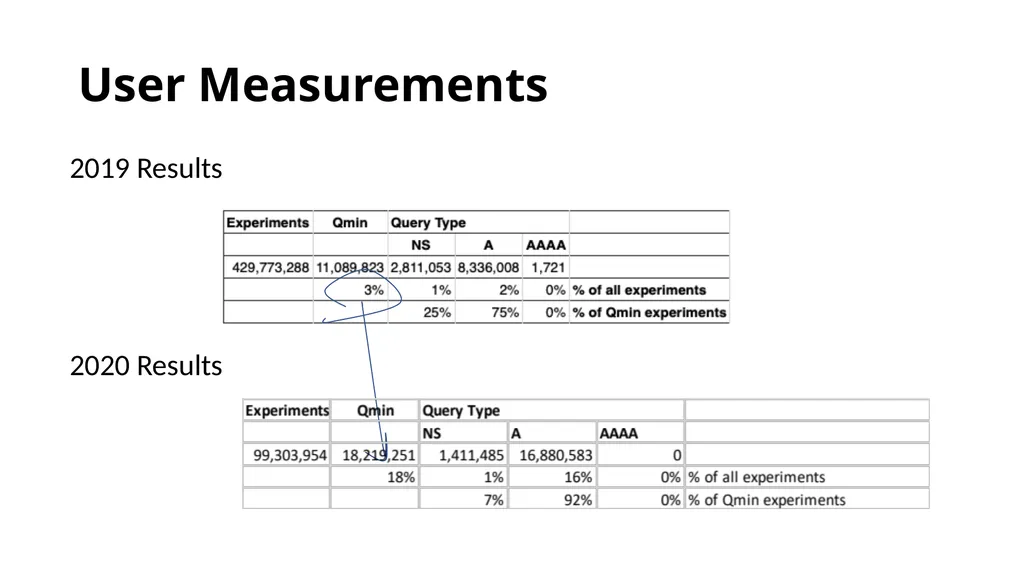
slide10. User Measurements 2019 Results 2020 Results<br>
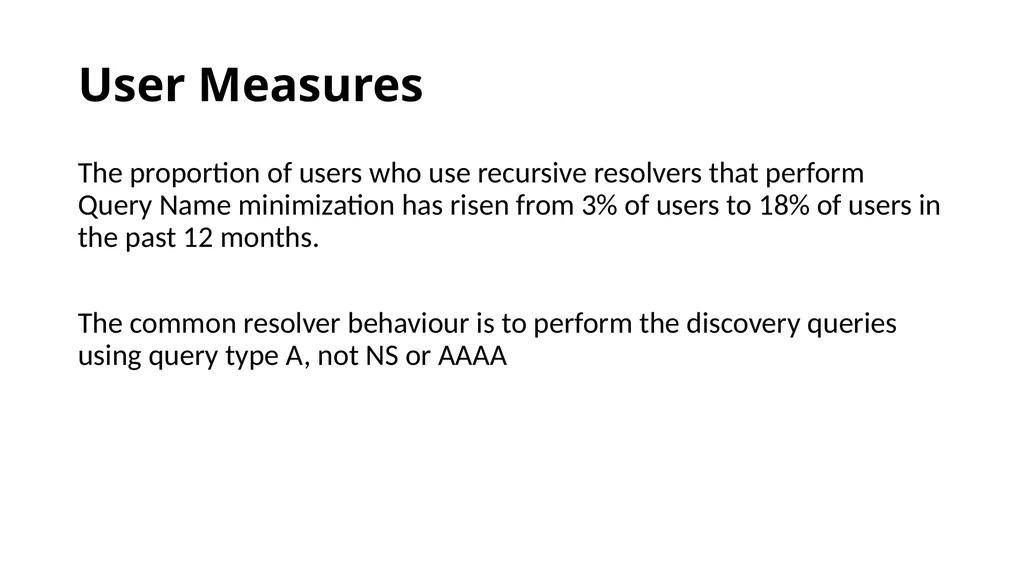
slide11. User Measures The proportion of users who use recursive resolvers that perform Query Name minimization has risen from 3% of users to 18% of users in the past 12 months.
The common resolver behaviour is to perform the discovery queries using query type A, not NS or AAAA<br>
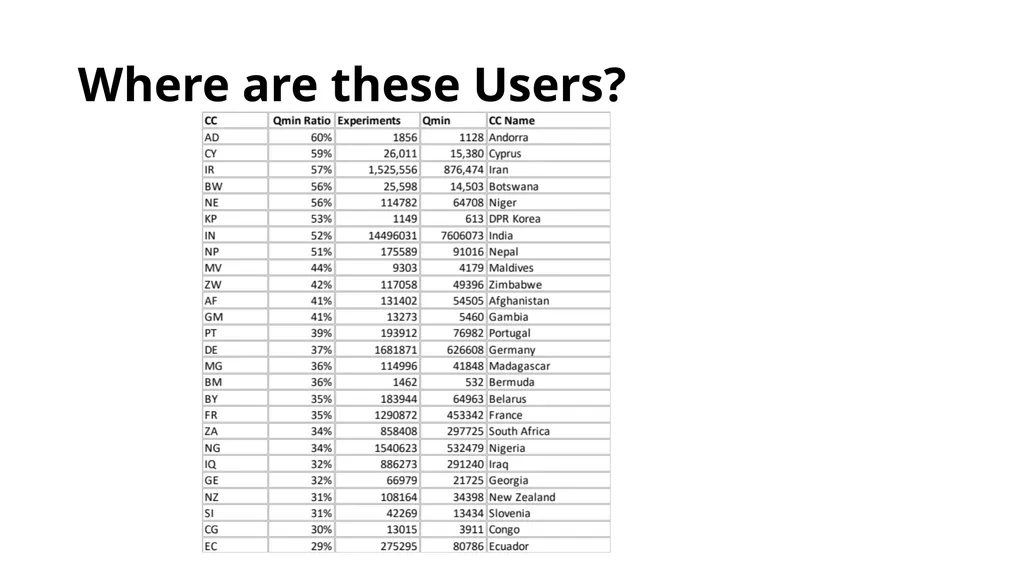
slide12. Where are these Users?<br>
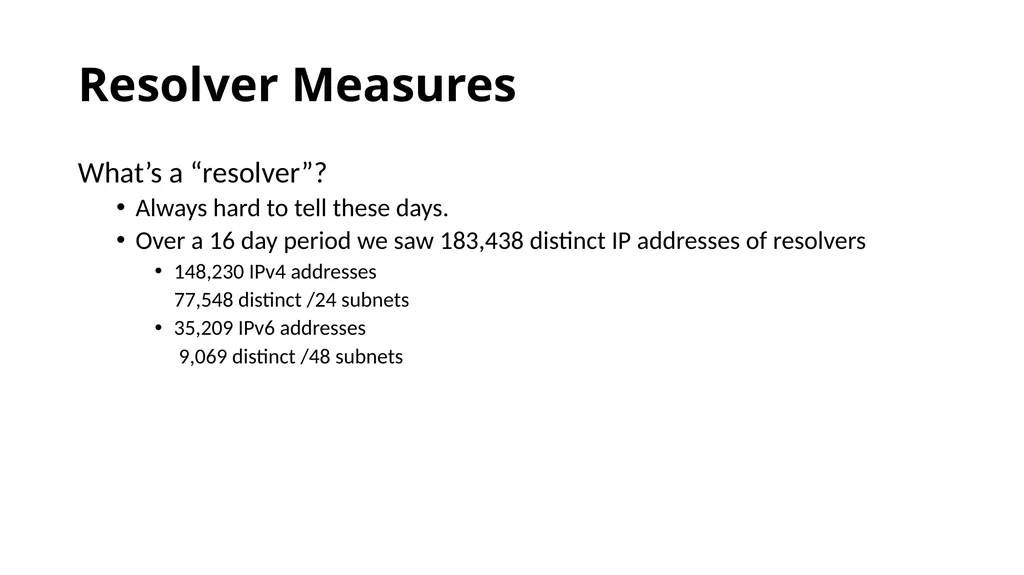
slide13. Resolver Measures What’s a “resolver”?
Always hard to tell these days.
Over a 16 day period we saw 183,438 distinct IP addresses of resolvers
148,230 IPv4 addresses
77,548 distinct /24 subnets
35,209 IPv6 addresses
9,069 distinct /48 subnets<br>
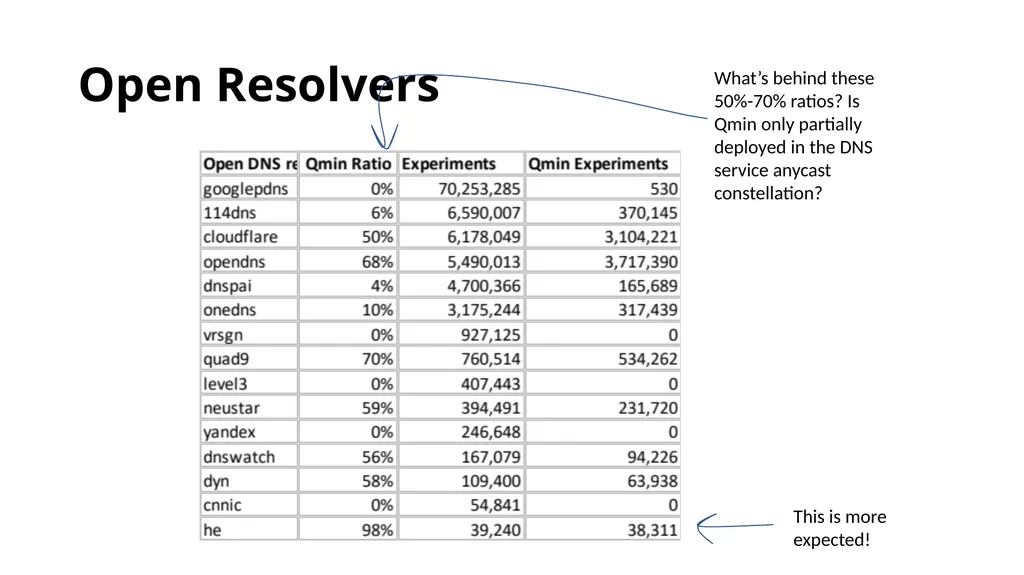
slide14. Open Resolvers This is more expected! What’s behind these 50%-70% ratios? Is Qmin only partially deployed in the DNS service anycast constellation? ;<br>
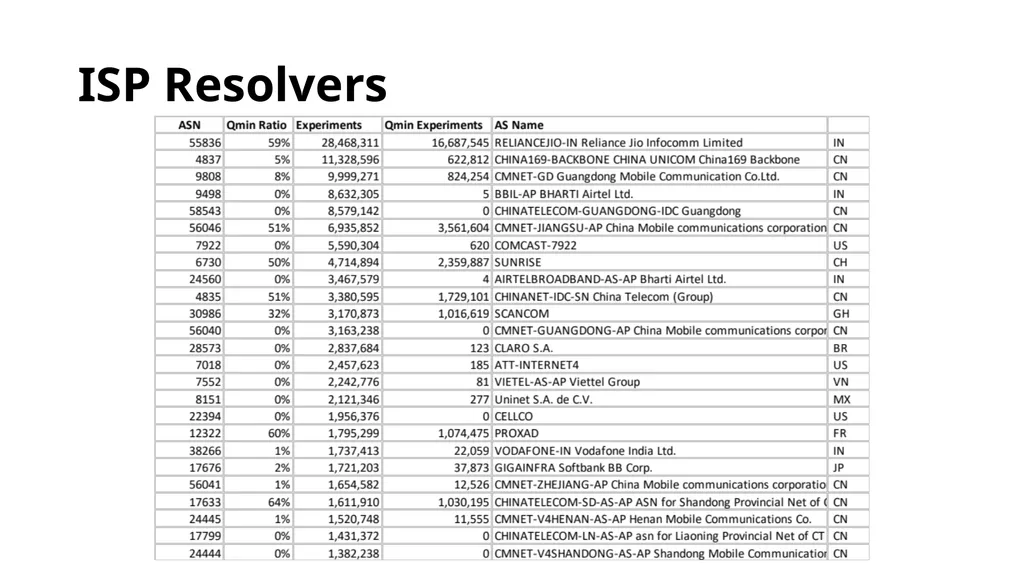
slide15. ISP Resolvers<br>
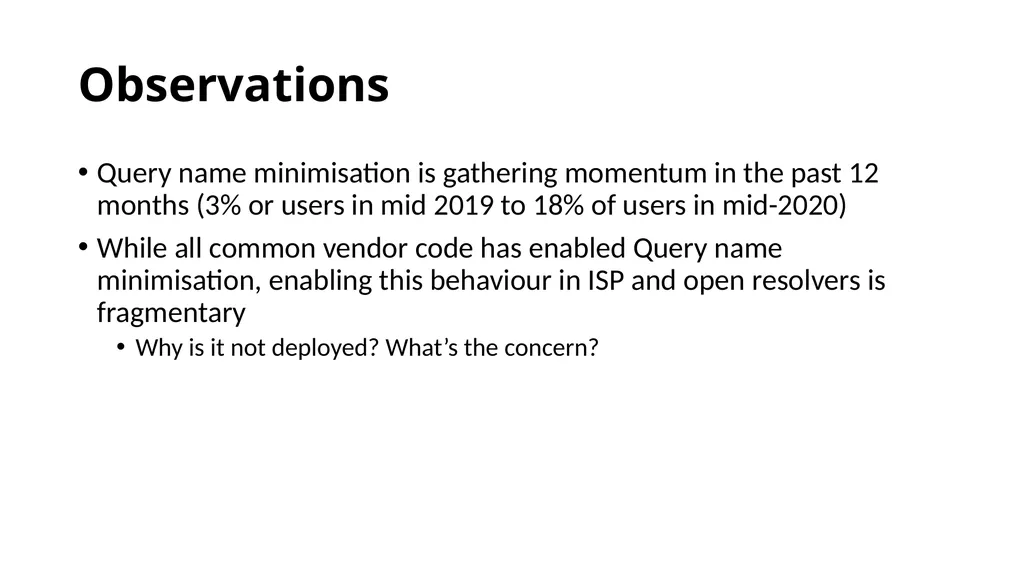
slide16. Observations Query name minimisation is gathering momentum in the past 12 months (3% or users in mid 2019 to 18% of users in mid-2020)
While all common vendor code has enabled Query name minimisation, enabling this behaviour in ISP and open resolvers is fragmentary
Why is it not deployed? What’s the concern?<br>
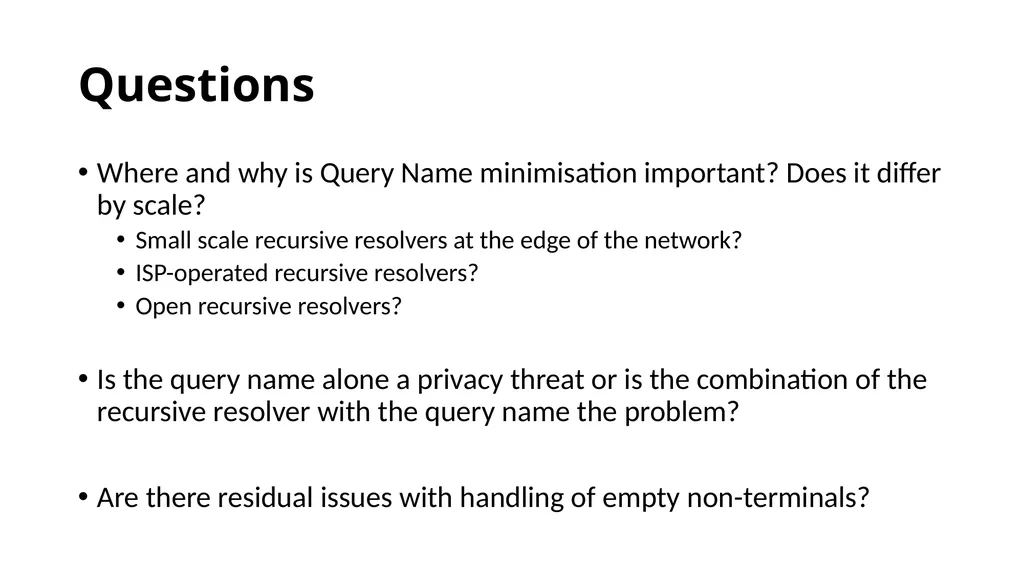
slide17. Questions Where and why is Query Name minimisation important? Does it differ by scale?
Small scale recursive resolvers at the edge of the network?
ISP-operated recursive resolvers?
Open recursive resolvers?
Is the query name alone a privacy threat or is the combination of the recursive resolver with the query name the problem?
Are there residual issues with handling of empty non-terminals?<br>
slide18. Thanks!<br>
Geoff Huston
APNIC Labs
September 2020<br>
slide2. Quick Summary NON-query name minimisation resolution sequence<br>
slide3. Quick Summary Query name minimisation technique described in RFC 7816<br>
slide4. Quick Summary Query name minimisation technique described in RFC 7816<br>
slide5. Common Resolver Implementation Status BIND 9
Implemented in 9.14, active in “relaxed” mode by default
Unbound
Implemented in 1.7.2, active in “non-strict” mode
Knot
Implemented in 1.2.2, active by default
Power DNS Recursor
Implemented in 4.3.0-alpha1, enabled by default since 4.3.0-beta 1<br>
slide6. Common Resolver Implementation Status BIND 9
Implemented in 9.14, active in “relaxed” mode by default
Unbound
Implemented in 1.7.2, active in “non-strict” mode
Knot
Implemented in 1.2.2, active by default
Power DNS Recursor
Implemented in 4.3.0-alpha1, enabled by default since 4.3.0-beta 1 It looks like all recursive resolvers should be doing query name minimisation these days.
Right?<br>
slide7. Measurements Let’s look at the adoption of query name minimisation from the perspectives of the end user and their queries, and from the perspective of recursive resolvers<br>
slide8. Users whose Queries are handled with Qname Minimization<br>
slide9. User Measurements 2019 Results<br>
slide10. User Measurements 2019 Results 2020 Results<br>
slide11. User Measures The proportion of users who use recursive resolvers that perform Query Name minimization has risen from 3% of users to 18% of users in the past 12 months.
The common resolver behaviour is to perform the discovery queries using query type A, not NS or AAAA<br>
slide12. Where are these Users?<br>
slide13. Resolver Measures What’s a “resolver”?
Always hard to tell these days.
Over a 16 day period we saw 183,438 distinct IP addresses of resolvers
148,230 IPv4 addresses
77,548 distinct /24 subnets
35,209 IPv6 addresses
9,069 distinct /48 subnets<br>
slide14. Open Resolvers This is more expected! What’s behind these 50%-70% ratios? Is Qmin only partially deployed in the DNS service anycast constellation? ;<br>
slide15. ISP Resolvers<br>
slide16. Observations Query name minimisation is gathering momentum in the past 12 months (3% or users in mid 2019 to 18% of users in mid-2020)
While all common vendor code has enabled Query name minimisation, enabling this behaviour in ISP and open resolvers is fragmentary
Why is it not deployed? What’s the concern?<br>
slide17. Questions Where and why is Query Name minimisation important? Does it differ by scale?
Small scale recursive resolvers at the edge of the network?
ISP-operated recursive resolvers?
Open recursive resolvers?
Is the query name alone a privacy threat or is the combination of the recursive resolver with the query name the problem?
Are there residual issues with handling of empty non-terminals?<br>
slide18. Thanks!<br>