Medical Ethics History Basic Principles. Batch 28 What Is Medical Ethics, and Why Is It Important? Medical ethics involves examining a specific problem, usually a clinical case, and using values, facts, and logic to decide what the best
"Medical Ethics History & Basic Principles. Batch" is the property of its rightful owner. Permission is granted to
download and print the materials on this website for personal, non-commercial use only, and to display it
on your personal computer provided you do not modify the materials and that you retain all copyright
notices contained in the materials. By downloading content from our website, you accept the terms of this
agreement.
Presentation Transcript
01
Medical Ethics History & Basic Principles. Batch 28<br>
02
What Is Medical Ethics, and Why Is It Important? Medical ethics involves examining a specific problem, usually a clinical case, and using values, facts, and logic to decide what the best course of action should be.
Ethics is often seen as a proscriptive activity—telling you what you cannot do. But in many cases it can be very freeing. It can affirm that you are doing the right thing.<br>
03
Perplexing everyday ethical problems Accepting money from pharmaceutical or device manufacturers;
Getting romantically involved with a patient or family member;
Covering up a mistake;
Reporting an impaired colleague;
Cherry-picking patients;
Prescribing a placebo;
Breaching patient confidentiality owing to a health risk.<br>
04
The History of Medical Ethics The term medical ethics first dates back to 1803, when English author and physician Thomas Percival published a document describing the requirements and expectations of medical professionals within medical facilities.
In the 1930s, medicine was a paternalistic profession.
After World War II, the world learned German doctors working in the concentration camps and conducting deadly scientific experiments in which the subjects had no say. Efforts to right these wrongs, enshrined in the Nuremberg Code, signaled the beginning of modern medical ethics.<br>
05
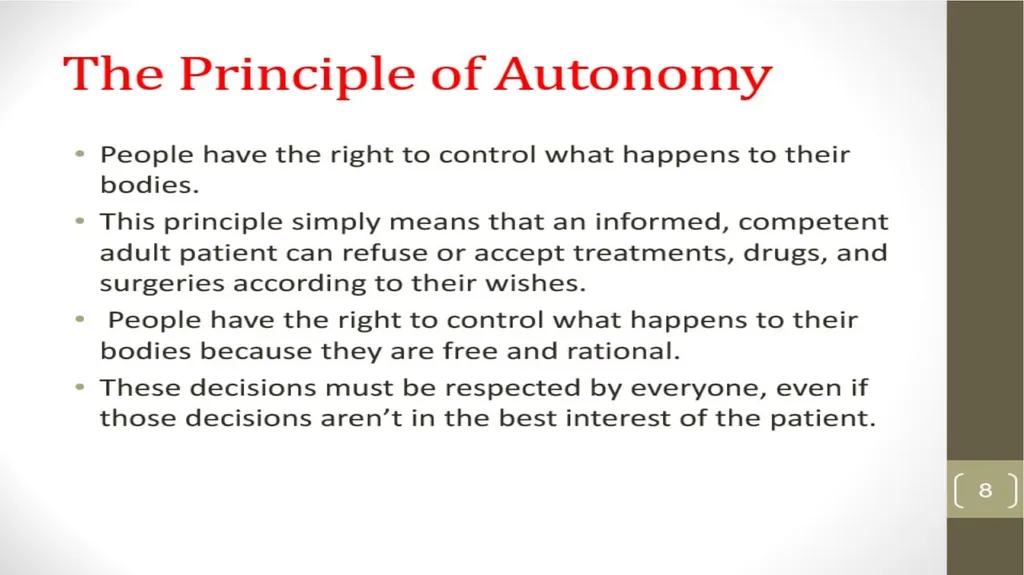
The Rise of Patient Autonomy and Transparency In the 1960s and 1970s, medicine put a new emphasis on patients' right to know what was being done to them and have a say in the clinical process.
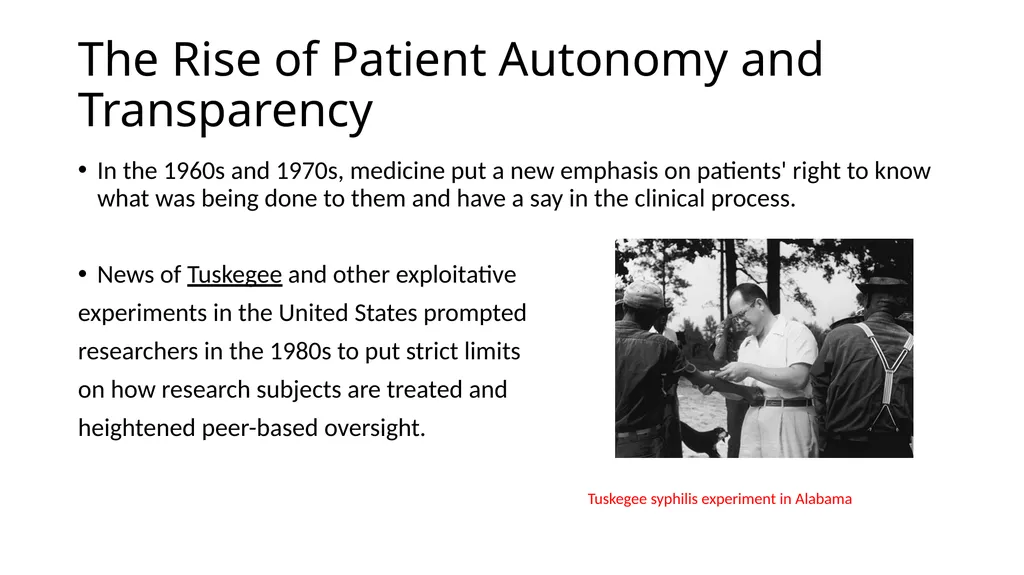
News of Tuskegee and other exploitative
experiments in the United States prompted
researchers in the 1980s to put strict limits
on how research subjects are treated and
heightened peer-based oversight.
Tuskegee syphilis experiment in Alabama<br>
06
Contd. Dialysis, another new technology of the 1960s, was a scarce and expensive resource at the time. Doctors had the unwelcome task of selecting which patients would get dialysis. Bioethicists, a new profession at the time, arose to help make these determinations.
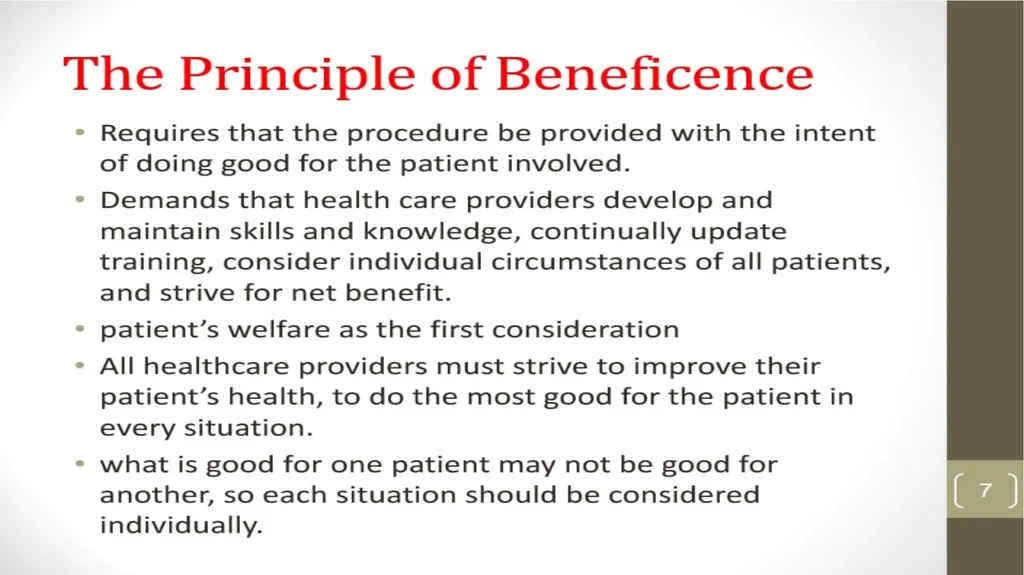
bioethicists came up with new ethical principles that could be used to determine allocation. "Beneficence" described the provider's obligation to support the well-being of the patient.
Then, as more people received dialysis, providers had another ethical challenge: that dialysis could harm quality of life. The harms could outweigh the benefit in some dialysis patients. That is, providers had to balance beneficence with an obligation of "nonmaleficence“- to avoid harm.<br>
07
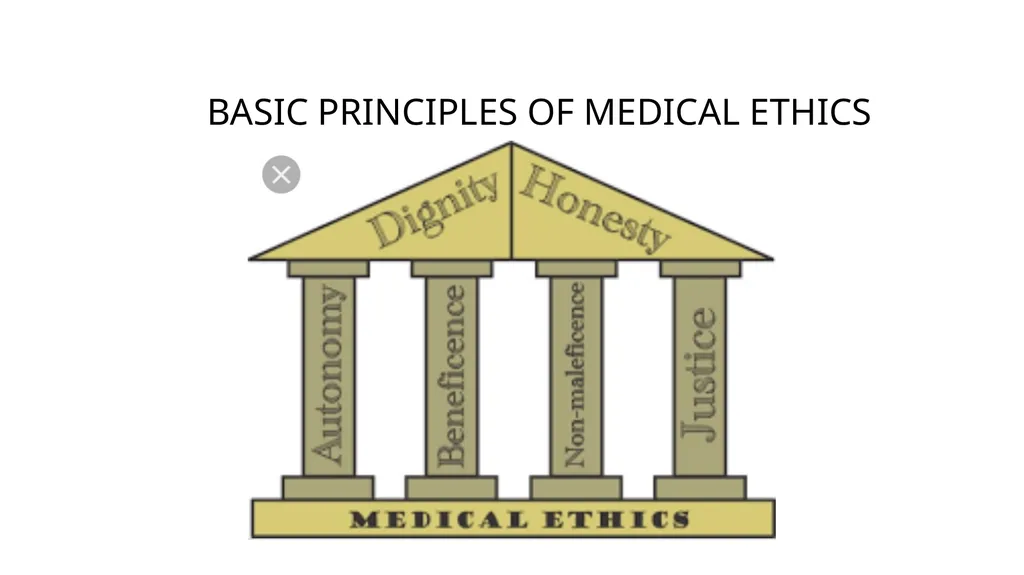
BASIC PRINCIPLES OF MEDICAL ETHICS<br>
08
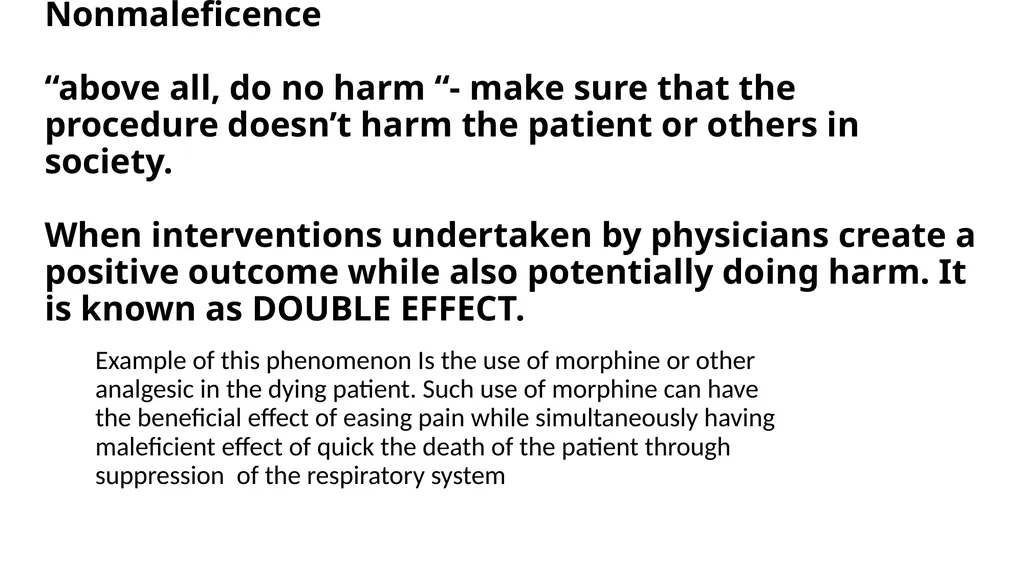
Nonmaleficence “above all, do no harm “- make sure that the procedure doesn’t harm the patient or others in society. When interventions undertaken by physicians create a positive outcome while also potentially doing harm. It is known as DOUBLE EFFECT. Example of this phenomenon Is the use of morphine or other analgesic in the dying patient. Such use of morphine can have the beneficial effect of easing pain while simultaneously having maleficient effect of quick the death of the patient through suppression of the respiratory system<br>
09
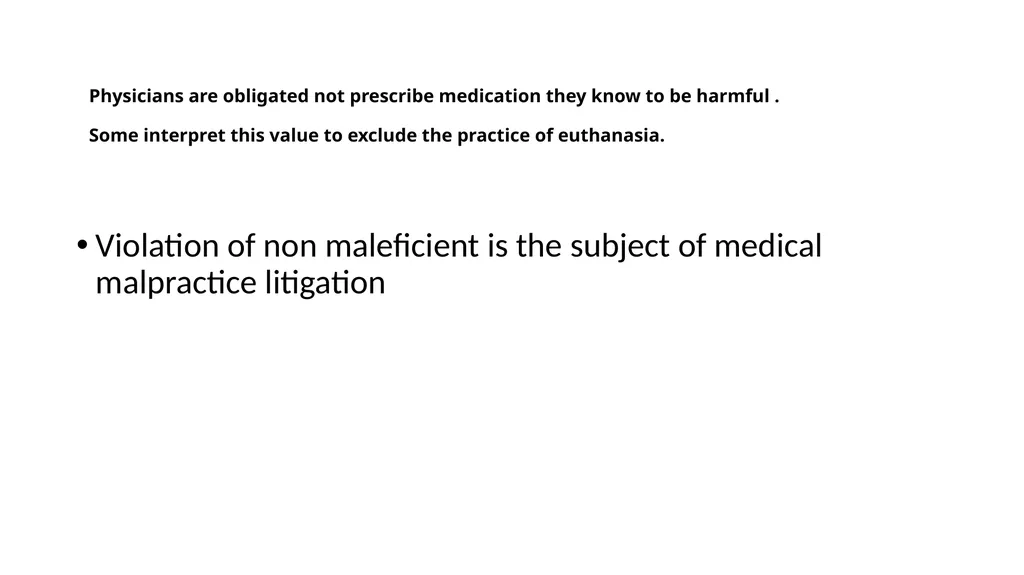
Physicians are obligated not prescribe medication they know to be harmful . Some interpret this value to exclude the practice of euthanasia. Violation of non maleficient is the subject of medical malpractice litigation<br>
10
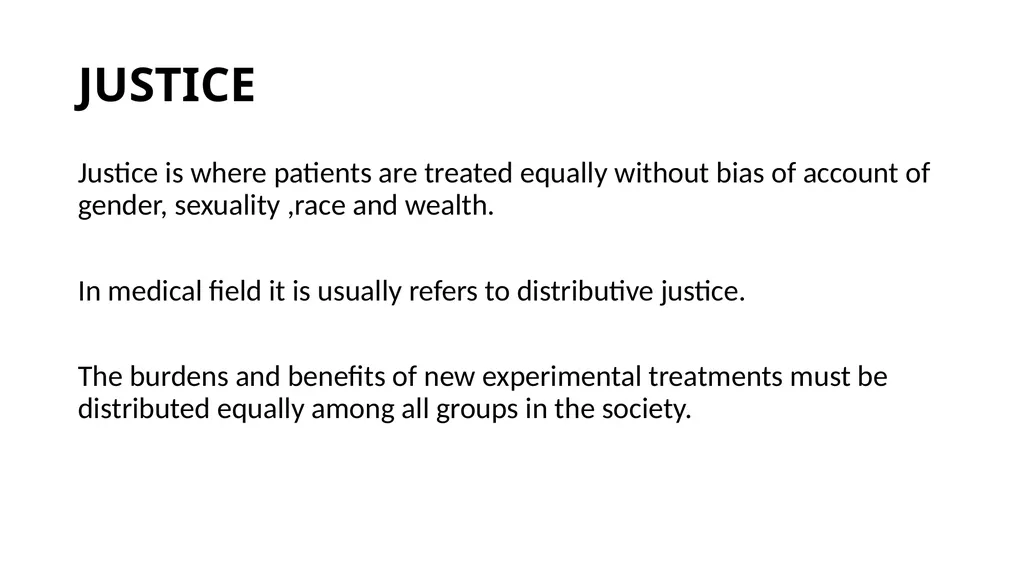
JUSTICE Justice is where patients are treated equally without bias of account of gender, sexuality ,race and wealth.
In medical field it is usually refers to distributive justice.
The burdens and benefits of new experimental treatments must be distributed equally among all groups in the society.<br>
11
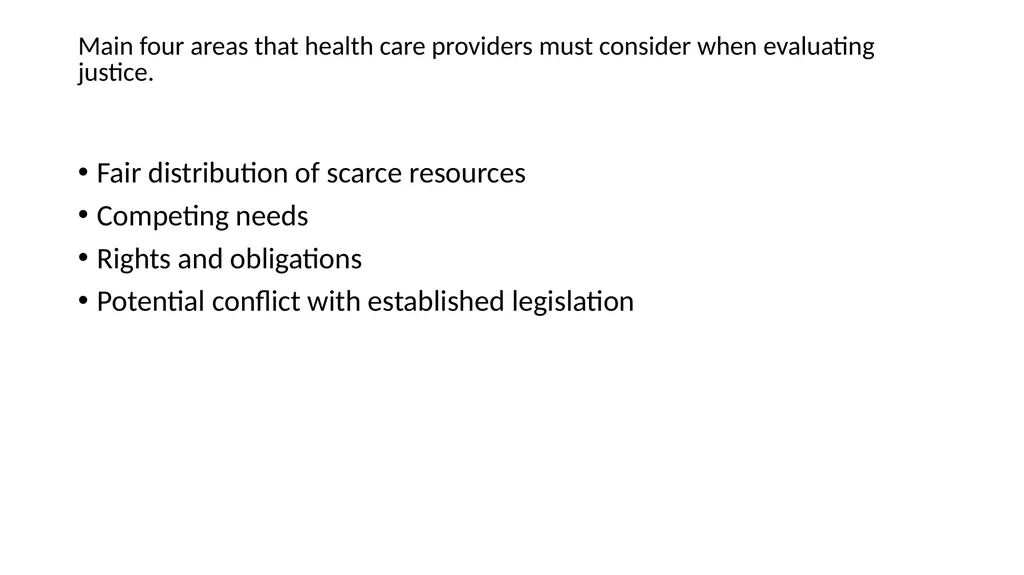
Main four areas that health care providers must consider when evaluating justice. Fair distribution of scarce resources
Competing needs
Rights and obligations
Potential conflict with established legislation<br>