Meningitis Awareness Training Laura Smythson Deputy Director of Wellbeing Meningitis is an infection of the protective membranes that surround the brain and spinal cord (meninges). What is meningitis? Meningitis can be very serious if not
"Meningitis Awareness Training Laura Smythson" is the property of its rightful owner. Permission is granted to
download and print the materials on this website for personal, non-commercial use only, and to display it
on your personal computer provided you do not modify the materials and that you retain all copyright
notices contained in the materials. By downloading content from our website, you accept the terms of this
agreement.
Presentation Transcript
01
Meningitis Awareness Training Laura Smythson
Deputy Director of Wellbeing<br>
02
Meningitis is an infection of the protective membranes that surround the brain and spinal cord (meninges). What is meningitis? Meningitis can be very serious if not treated quickly.
It can cause life-threatening blood poisoning (septicaemia) and result in permanent damage to the brain or nerves. It can affect anyone, but is most common in babies, young children, teenagers and young adults.
Students are at a higher risk because of their lifestyle<br>
03
Viral Meningitis
Rarely life threatening
Not always severe enough to be diagnosed or admitted to hospital
Not contagious
Caused by viruses such as colds, flu, measles, mumps, rubella
Can cause severe illness
Can reoccur
Slow recovery
Ongoing symptoms such as headaches, exhaustion Groups of Meningitis<br>
04
Bacterial meningitis
Life threatening
Can occur at any age but risk is increased in young children, students and the elderly
Will need significant medical care
Can result in disability, loss of hearing, loss of limb
There are many types of bacterial meningitis.
Currently there is no vaccine to protect against all types of bacterial meningitis.
Vaccines available A, C, W, Y, B Bacterial Meningitis<br>
05
Meningitis is usually caught from people who carry these viruses or bacteria in their nose or throat but aren't ill themselves.
10% student age population carry meningococcal disease
It can also be caught from someone with meningitis, but this is less common.
Sneezing
Coughing
Kissing
Sharing utensils, cutlery and toothbrushes How is it spread?<br>
06
What are the signs and symptoms of meningitis? Fever, cold hands and feet Drowsy, difficult to wake Severe muscle pain Severe headache<br>
07
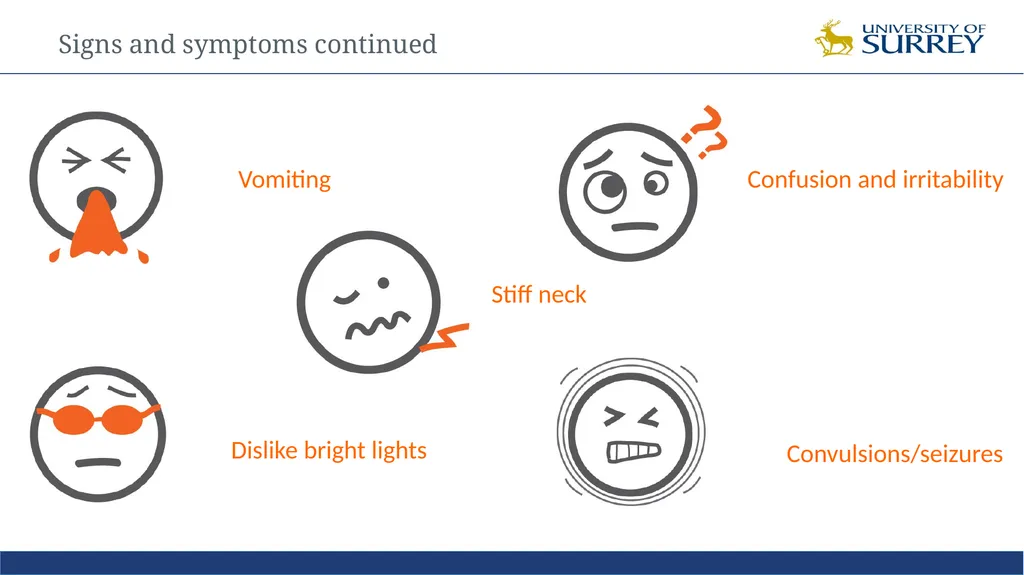
Signs and symptoms continued Vomiting Confusion and irritability Dislike bright lights Stiff neck Convulsions/seizures<br>
08
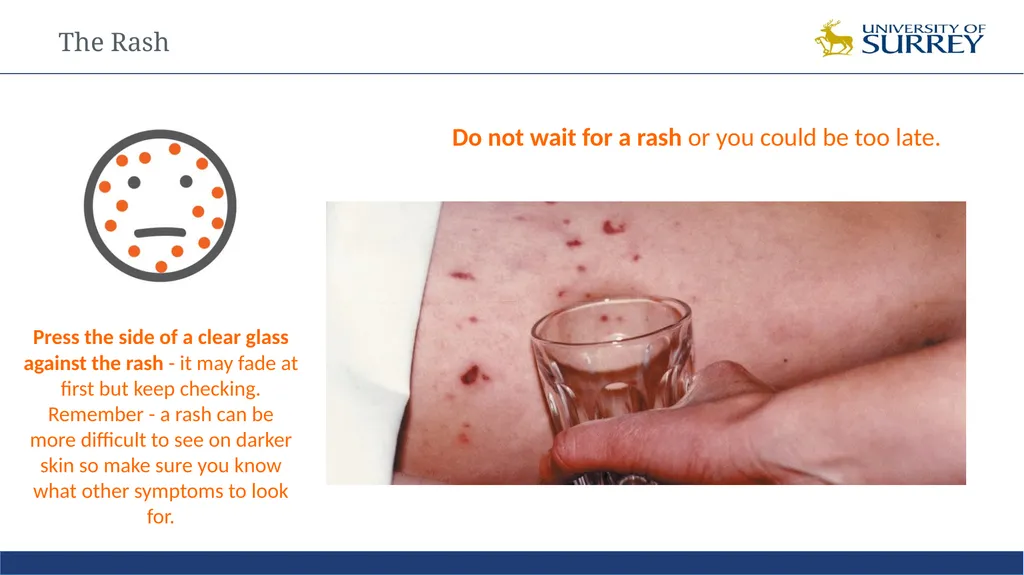
The Rash Press the side of a clear glass against the rash - it may fade at first but keep checking. Remember - a rash can be more difficult to see on darker skin so make sure you know what other symptoms to look for. Do not wait for a rash or you could be too late.<br>
09
Tom’s story
Meningitis at Surrey 2017
What if a student complains of symptoms of meningitis?
Take note of symptoms
Look for a rash
Use glass test
Do not wait for a rash to appear
If symptoms of meningitis, call 999 if off campus
or security on 3333 Real life stories<br>
10
There are 2 types of meningitis, viral and bacterial
We are most concerned with bacterial meningitis due to its high mortality rate
Students are at a higher risk due to their lifestyle behaviours
Prompt recognition of the symptoms is the most effective form of defence against all types of meningitis
Don’t worry about looking foolish, if you are worried, seek help
Encourage students to get vaccinated as soon as they get to University
Find out more on www.meningitisnow.org Key points<br>