Migration from Ukraine to Poland Past and present Paweł Kaczmarczyk Centre of Migration Research University of Warsaw Meeting of the Baltic Sea Parliamentary Conference Wednesday, 19th April 2022 1 What I will talk about Migration from
"Migration from Ukraine to Poland Past and present" is the property of its rightful owner. Permission is granted to
download and print the materials on this website for personal, non-commercial use only, and to display it
on your personal computer provided you do not modify the materials and that you retain all copyright
notices contained in the materials. By downloading content from our website, you accept the terms of this
agreement.
Presentation Transcript
01
Migration from Ukraine to Poland Past and present Paweł Kaczmarczyk Centre of Migration Research University of Warsaw Meeting of the Baltic Sea Parliamentary Conference
Wednesday, 19th April 2022 1<br>
02
What I will talk about… Migration from Poland to Ukraine
Context
Process
Outlook 2<br>
03
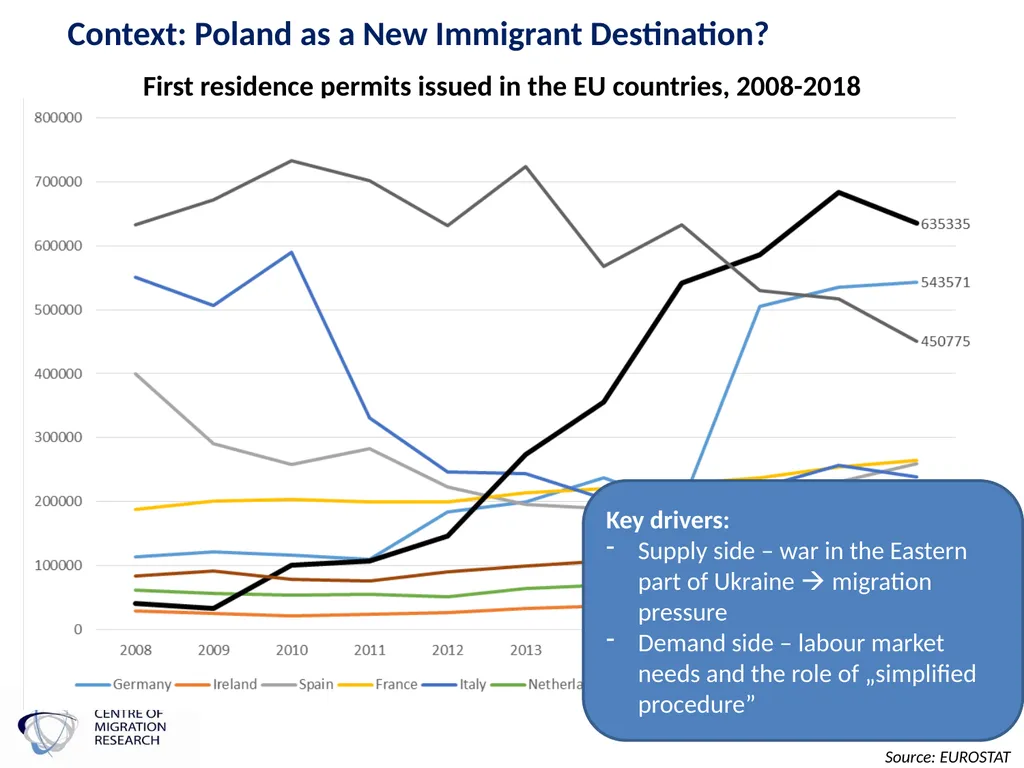
First residence permits issued in the EU countries, 2008-2018 Context: Poland as a New Immigrant Destination? Source: EUROSTAT Key drivers:
Supply side – war in the Eastern part of Ukraine migration pressure
Demand side – labour market needs and the role of „simplified procedure”<br>
04
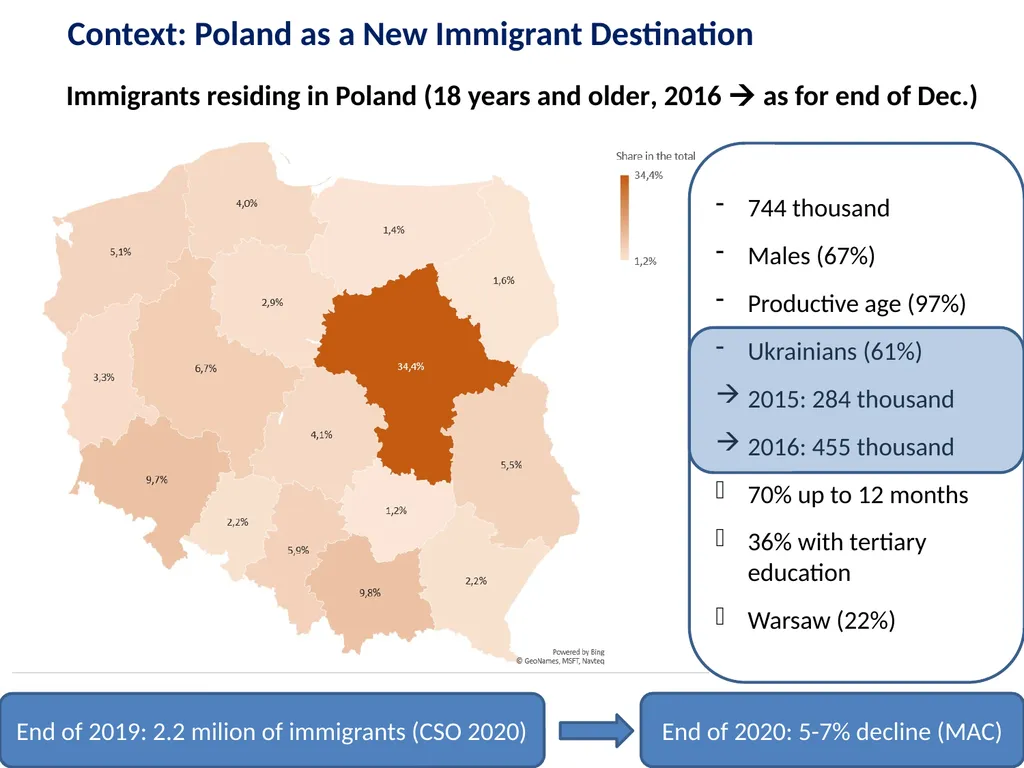
Immigrants residing in Poland (18 years and older, 2016 as for end of Dec.) Context: Poland as a New Immigrant Destination Source: CSO 2018 744 thousand
Males (67%)
Productive age (97%)
Ukrainians (61%)
2015: 284 thousand
2016: 455 thousand
70% up to 12 months
36% with tertiary education
Warsaw (22%) End of 2019: 2.2 milion of immigrants (CSO 2020) End of 2020: 5-7% decline (MAC)<br>
05
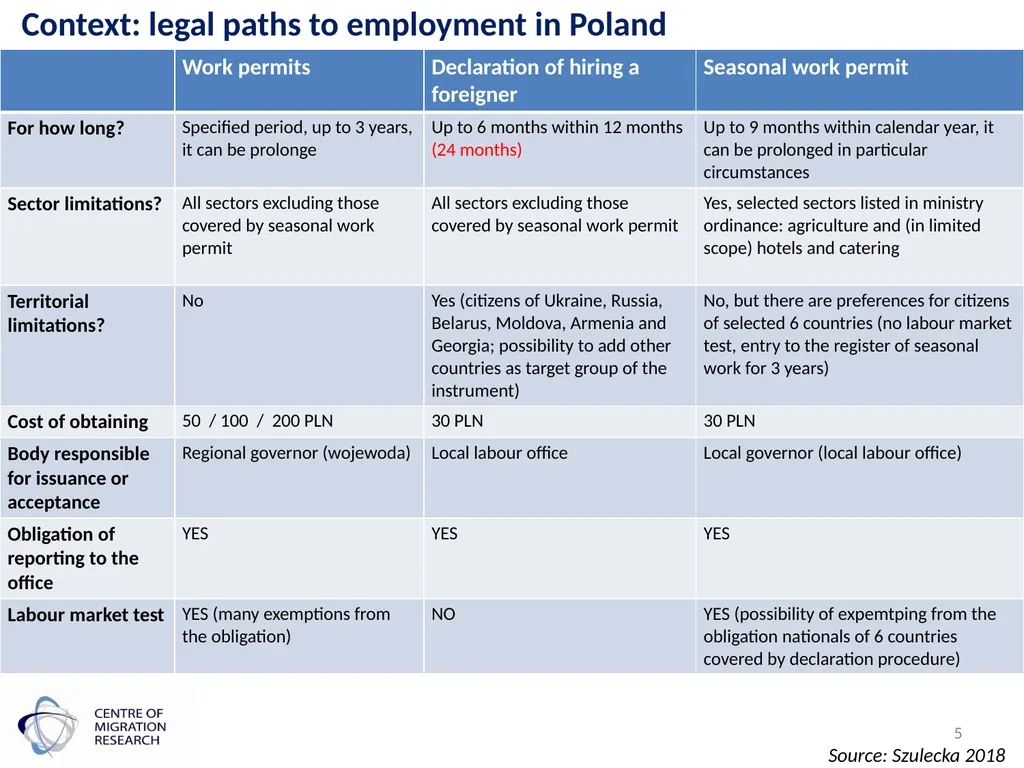
5 Source: Szulecka 2018 Context: legal paths to employment in Poland<br>
06
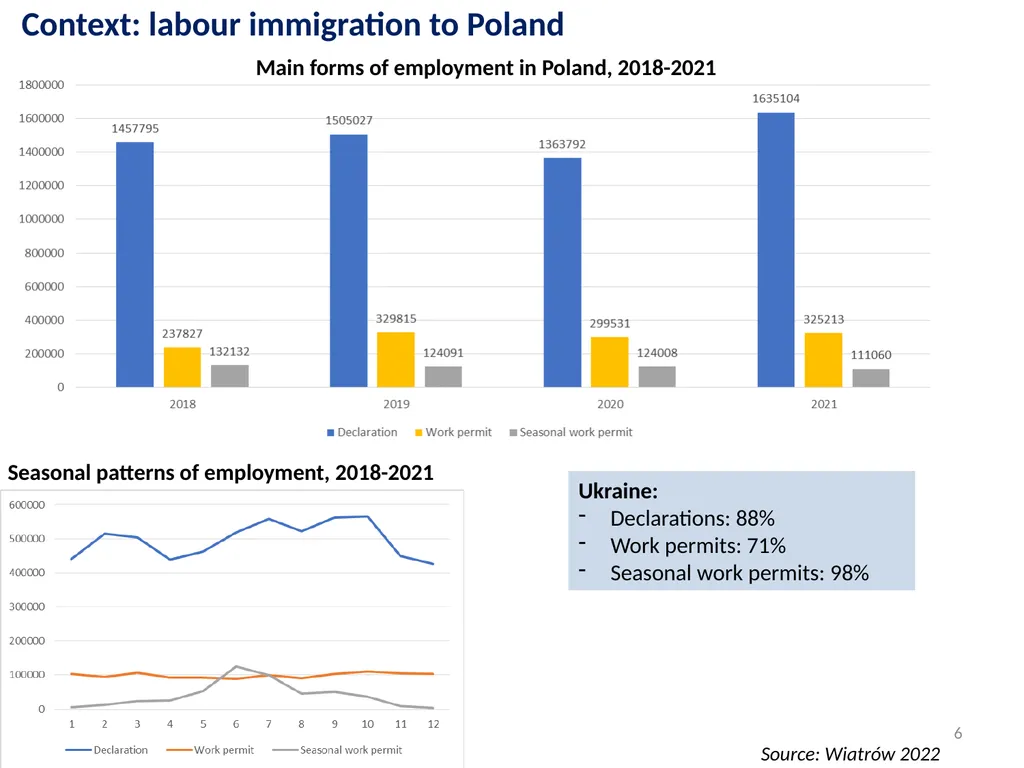
6 Source: Wiatrów 2022 Context: labour immigration to Poland Main forms of employment in Poland, 2018-2021 Seasonal patterns of employment, 2018-2021 Ukraine:
Declarations: 88%
Work permits: 71%
Seasonal work permits: 98%<br>
07
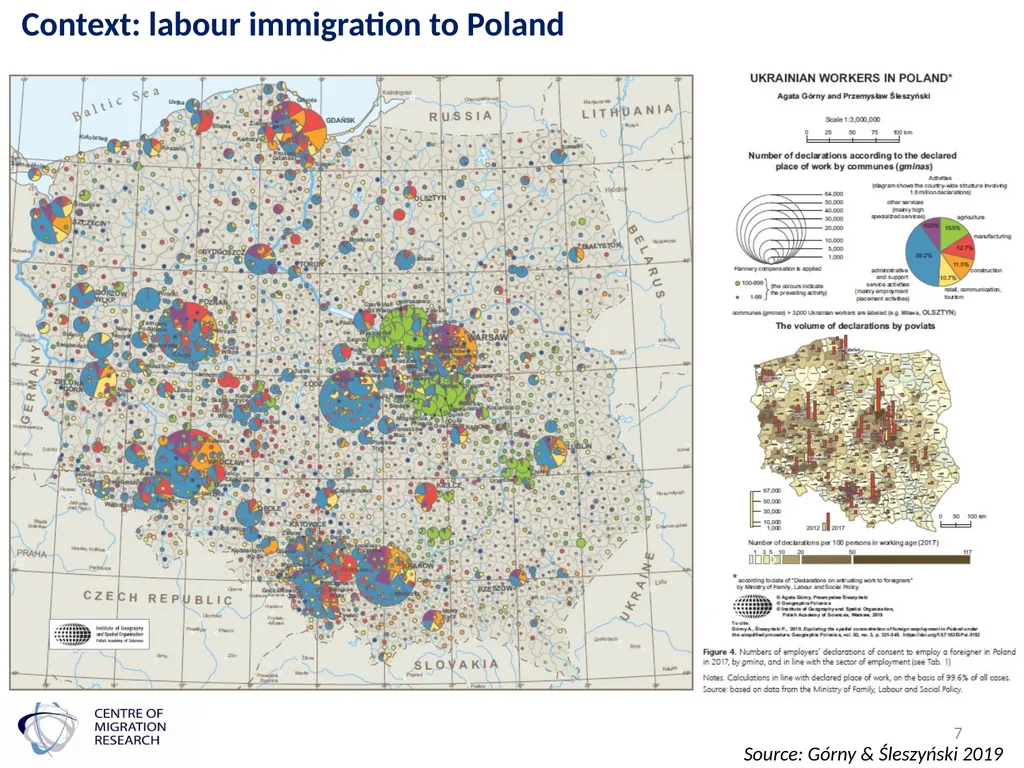
7 Source: Górny & Śleszyński 2019 Context: labour immigration to Poland<br>
08
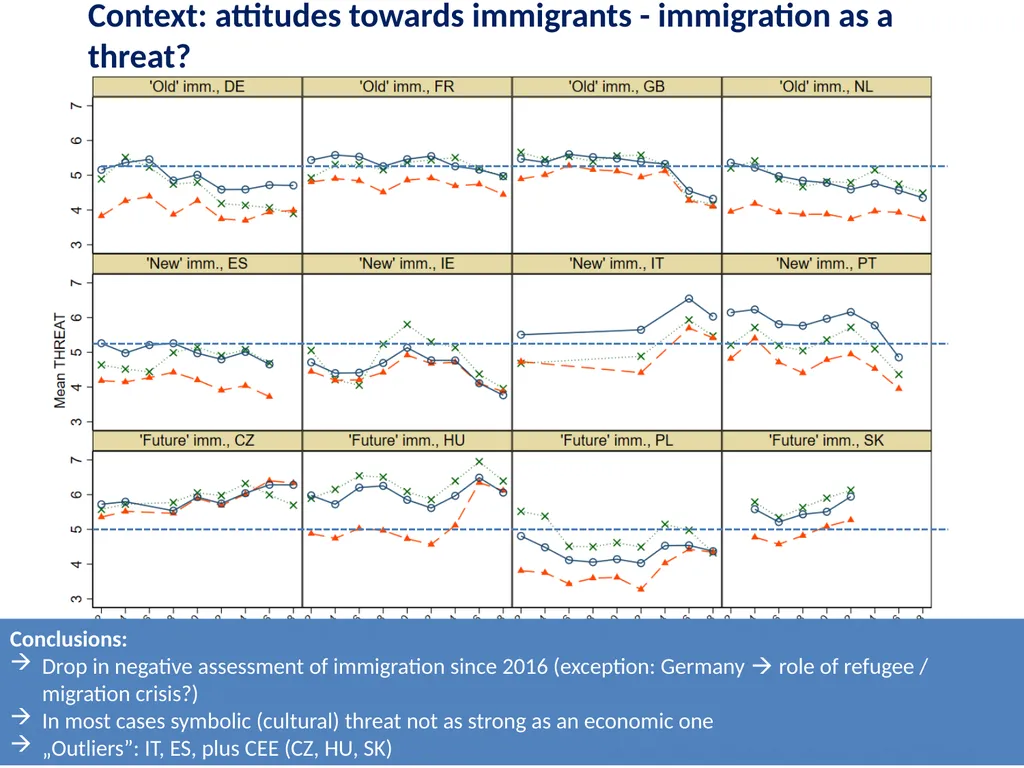
Context: attitudes towards immigrants - immigration as a threat? Source: Own elaboration based on the ESS data 8 Conclusions:
Drop in negative assessment of immigration since 2016 (exception: Germany role of refugee / migration crisis?)
In most cases symbolic (cultural) threat not as strong as an economic one
„Outliers”: IT, ES, plus CEE (CZ, HU, SK)<br>
09
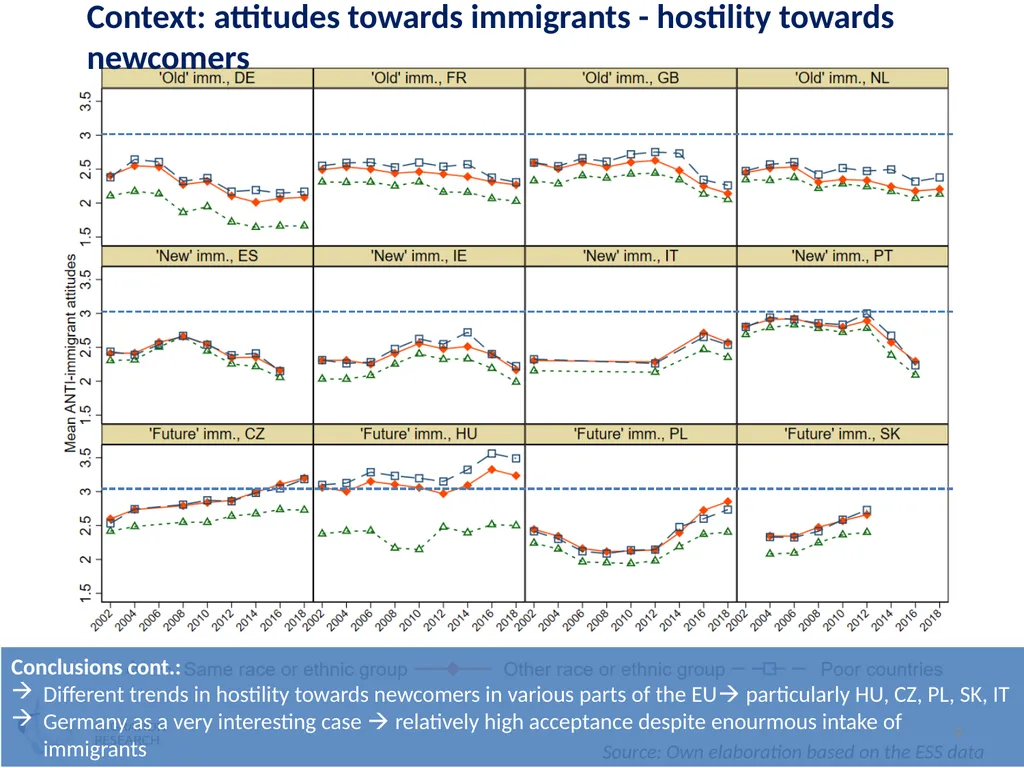
Context: attitudes towards immigrants - hostility towards newcomers Source: Own elaboration based on the ESS data Conclusions cont.:
Different trends in hostility towards newcomers in various parts of the EU particularly HU, CZ, PL, SK, IT
Germany as a very interesting case relatively high acceptance despite enourmous intake of immigrants 9<br>
10
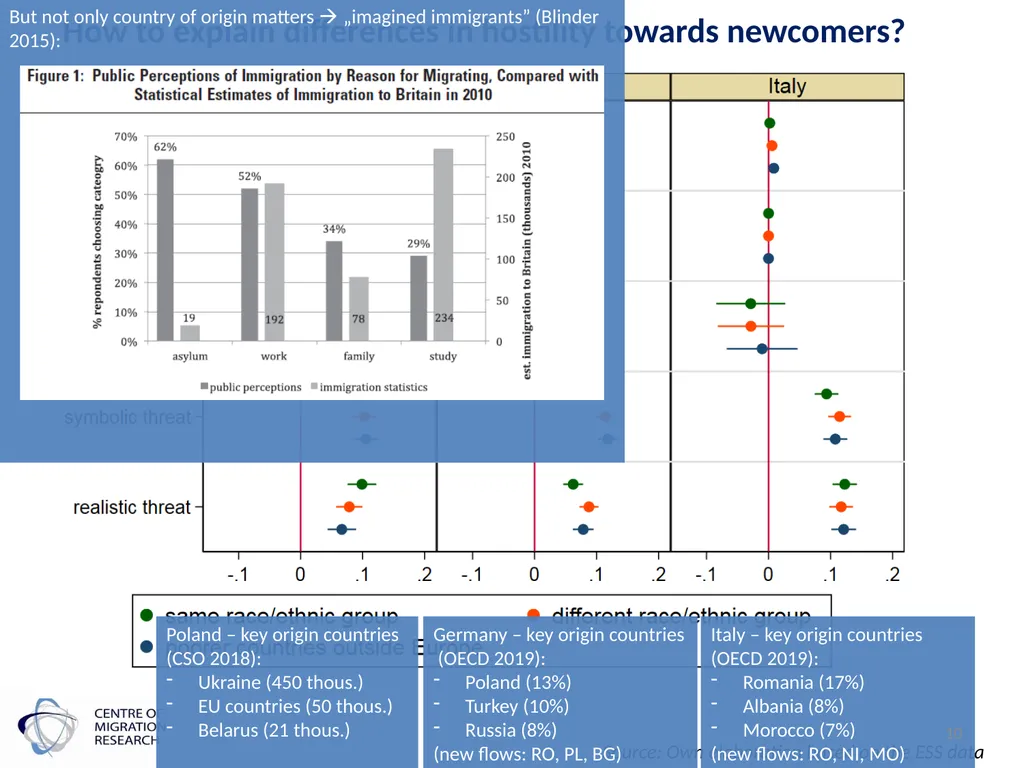
How to explain differences in hostility towards newcomers? Source: Own elaboration based on the ESS data Poland – key origin countries (CSO 2018):
Ukraine (450 thous.)
EU countries (50 thous.)
Belarus (21 thous.) Germany – key origin countries (OECD 2019):
Poland (13%)
Turkey (10%)
Russia (8%)
(new flows: RO, PL, BG) Italy – key origin countries (OECD 2019):
Romania (17%)
Albania (8%)
Morocco (7%)
(new flows: RO, NI, MO) 10<br>
11
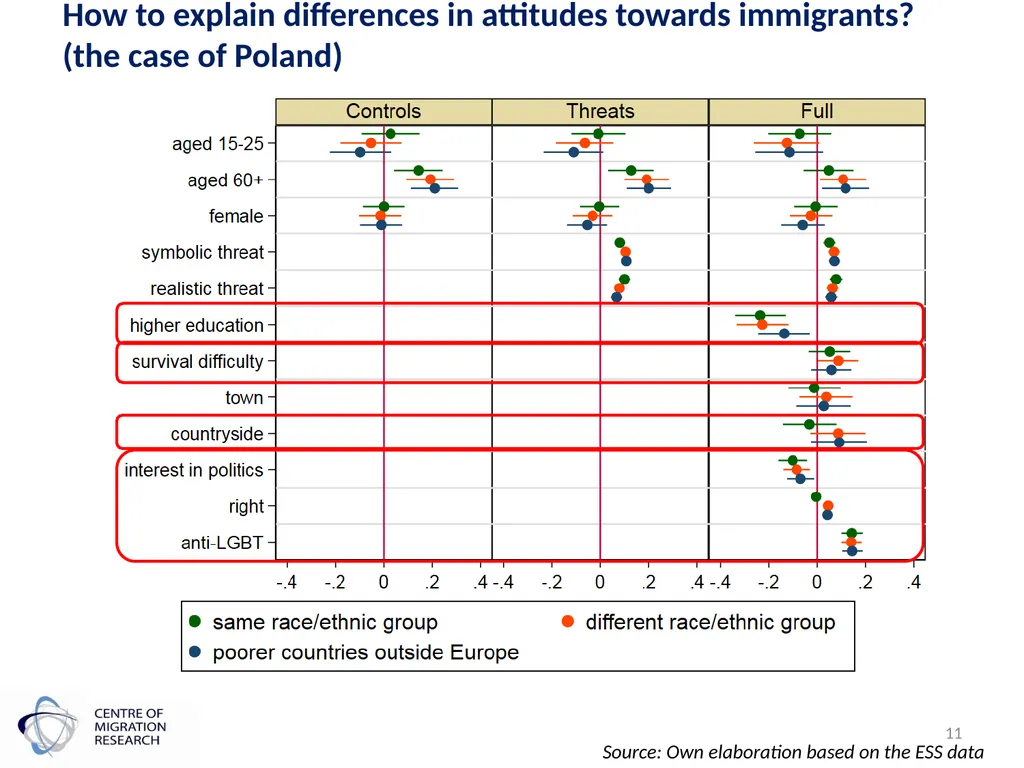
How to explain differences in attitudes towards immigrants? (the case of Poland) Source: Own elaboration based on the ESS data 11<br>
12
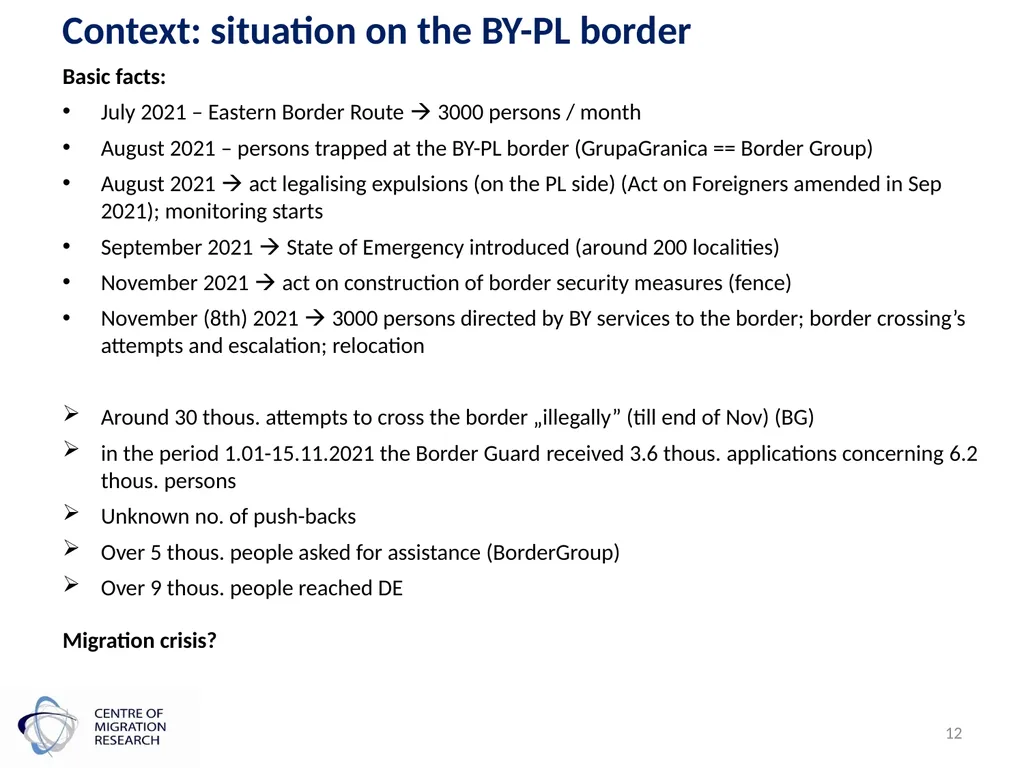
Context: situation on the BY-PL border Basic facts:
July 2021 – Eastern Border Route 3000 persons / month
August 2021 – persons trapped at the BY-PL border (GrupaGranica == Border Group)
August 2021 act legalising expulsions (on the PL side) (Act on Foreigners amended in Sep 2021); monitoring starts
September 2021 State of Emergency introduced (around 200 localities)
November 2021 act on construction of border security measures (fence)
November (8th) 2021 3000 persons directed by BY services to the border; border crossing’s attempts and escalation; relocation
Around 30 thous. attempts to cross the border „illegally” (till end of Nov) (BG)
in the period 1.01-15.11.2021 the Border Guard received 3.6 thous. applications concerning 6.2 thous. persons
Unknown no. of push-backs
Over 5 thous. people asked for assistance (BorderGroup)
Over 9 thous. people reached DE
Migration crisis? 12<br>
13
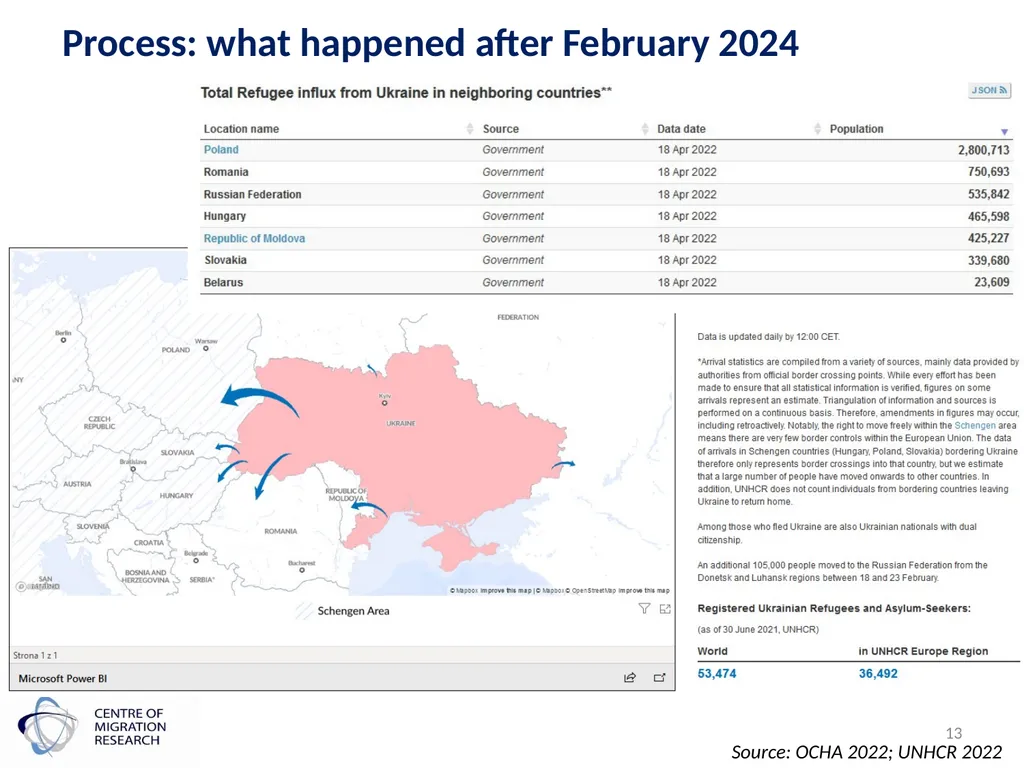
Process: what happened after February 2024 13 Source: OCHA 2022; UNHCR 2022<br>
14
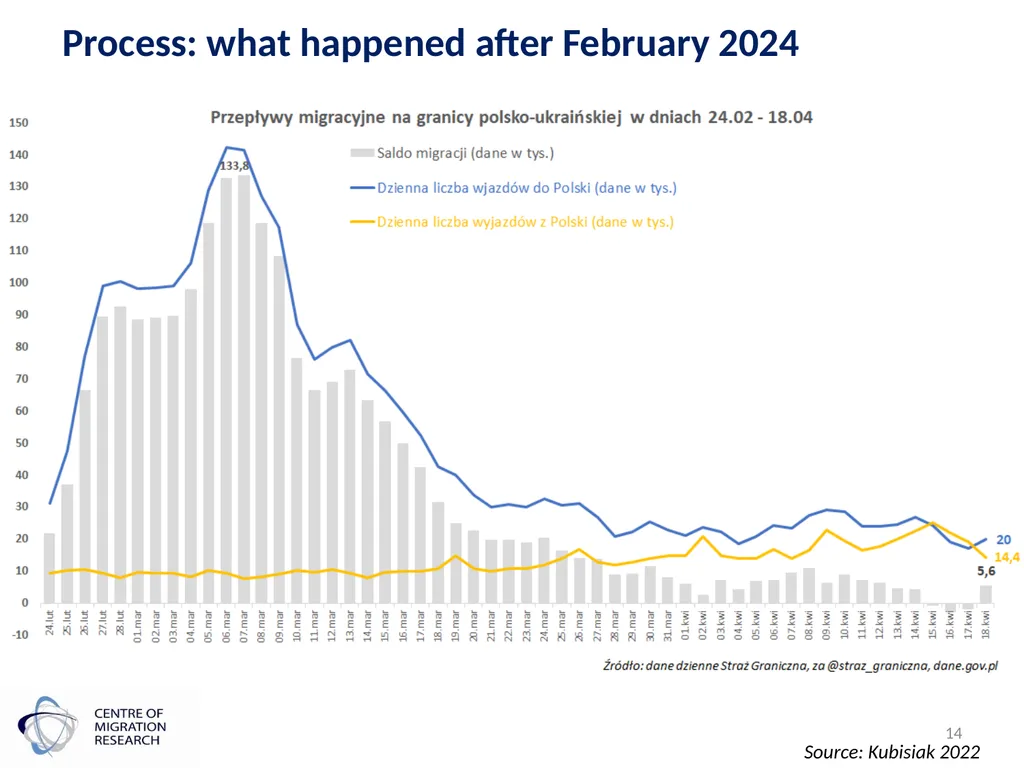
Process: what happened after February 2024 14 Source: Kubisiak 2022<br>
15
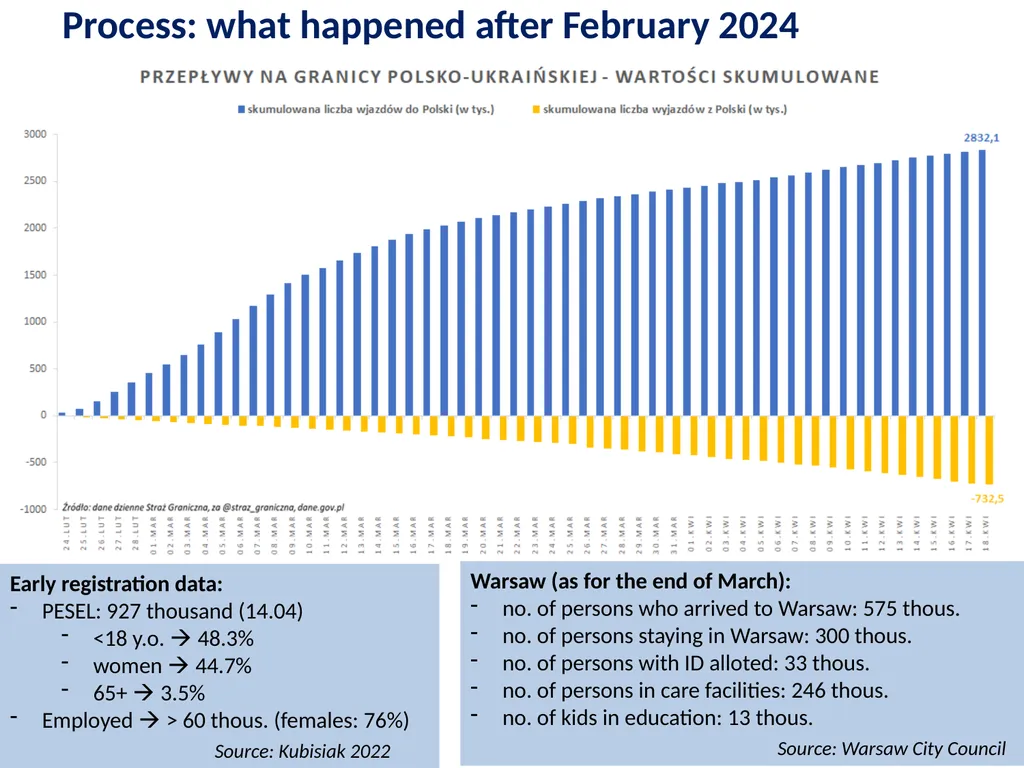
Process: what happened after February 2024 15 Source: Kubisiak 2022 Warsaw (as for the end of March):
no. of persons who arrived to Warsaw: 575 thous.
no. of persons staying in Warsaw: 300 thous.
no. of persons with ID alloted: 33 thous.
no. of persons in care facilities: 246 thous.
no. of kids in education: 13 thous.
Source: Warsaw City Council Early registration data:
PESEL: 927 thousand (14.04)
<18 y.o. 48.3%
women 44.7%
65+ 3.5%
Employed > 60 thous. (females: 76%)
Source: Kubisiak 2022<br>
16
Outlook Key unknowns
When and how the war will end?
What will be the economic / political / social situation in Ukraine?
What will be the future inflow and what will happen with people who have left the war zone so far?
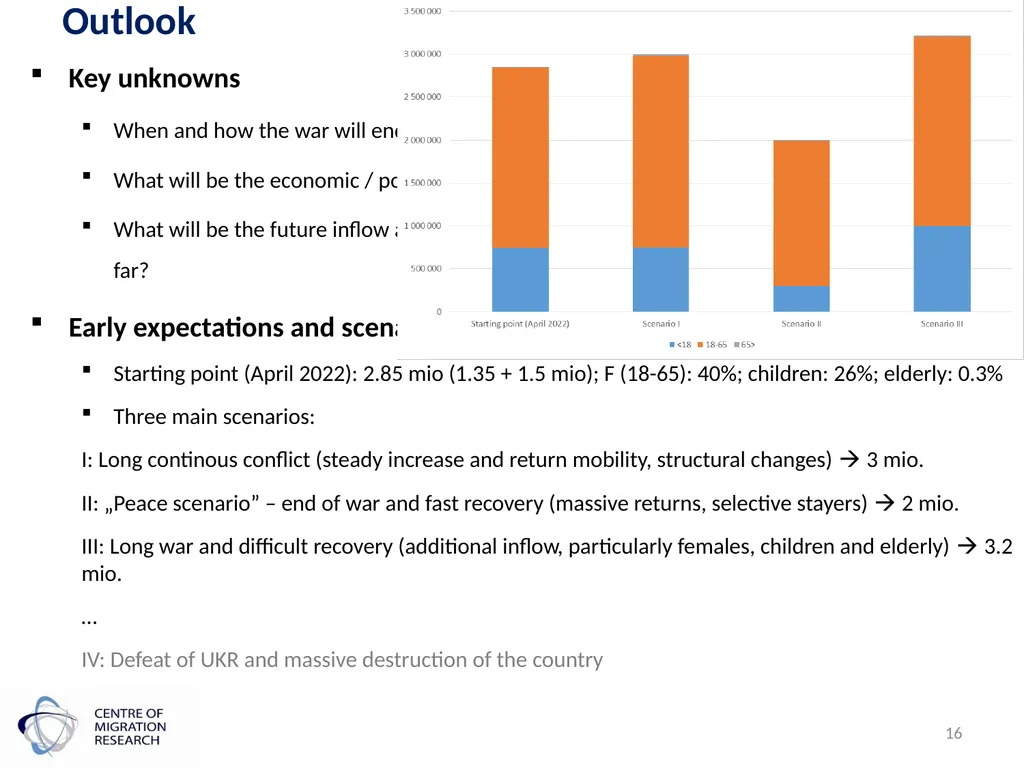
Early expectations and scenarios
Starting point (April 2022): 2.85 mio (1.35 + 1.5 mio); F (18-65): 40%; children: 26%; elderly: 0.3%
Three main scenarios:
I: Long continous conflict (steady increase and return mobility, structural changes) 3 mio.
II: „Peace scenario” – end of war and fast recovery (massive returns, selective stayers) 2 mio.
III: Long war and difficult recovery (additional inflow, particularly females, children and elderly) 3.2 mio.
…
IV: Defeat of UKR and massive destruction of the country 16<br>
17
Outlook Challenges
Housing (relocation?)
Education / child care
Health care
Labour market
Attitudes towards newcomers // politicization and media impact communication strategies 17<br>