
Mineral Identification Let’s identify some
Description: Mineral Identification Lets identify some minerals! What do good scientists do? GOOD SCIENTISTS work together and share their information. observe carefully. record their observations. learn from their observations and continue to test,
Related Topics
Download Presentation
"Mineral Identification Let’s identify some" is the property of its rightful owner. Permission is granted to download and print the materials on this website for personal, non-commercial use only, and to display it on your personal computer provided you do not modify the materials and that you retain all copyright notices contained in the materials. By downloading content from our website, you accept the terms of this agreement.
Presentation Transcript
slide1. Mineral Identification Let’s identify some minerals!<br>
slide2. What do good scientists do? GOOD SCIENTISTS…
work together and share their information.
observe carefully.
record their observations.
learn from their observations and continue to test, examine, and discuss.<br>
slide3. What are minerals? MINERALS ARE…
matter.
inorganic (nonliving) solids found in nature.
made up of elements such as
silicon, oxygen, carbon, iron. ( Si O C Fe)
NOT ROCKS!! Rocks are made up of minerals.<br>
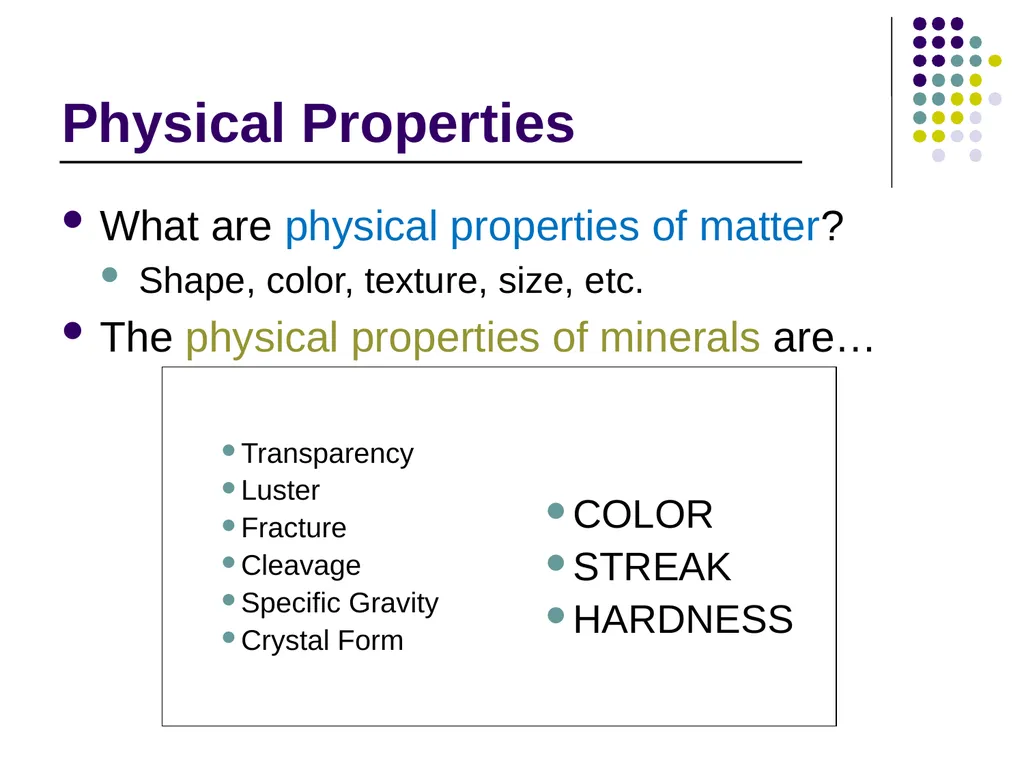
slide4. Physical Properties What are physical properties of matter?
Shape, color, texture, size, etc.
The physical properties of minerals are…<br>
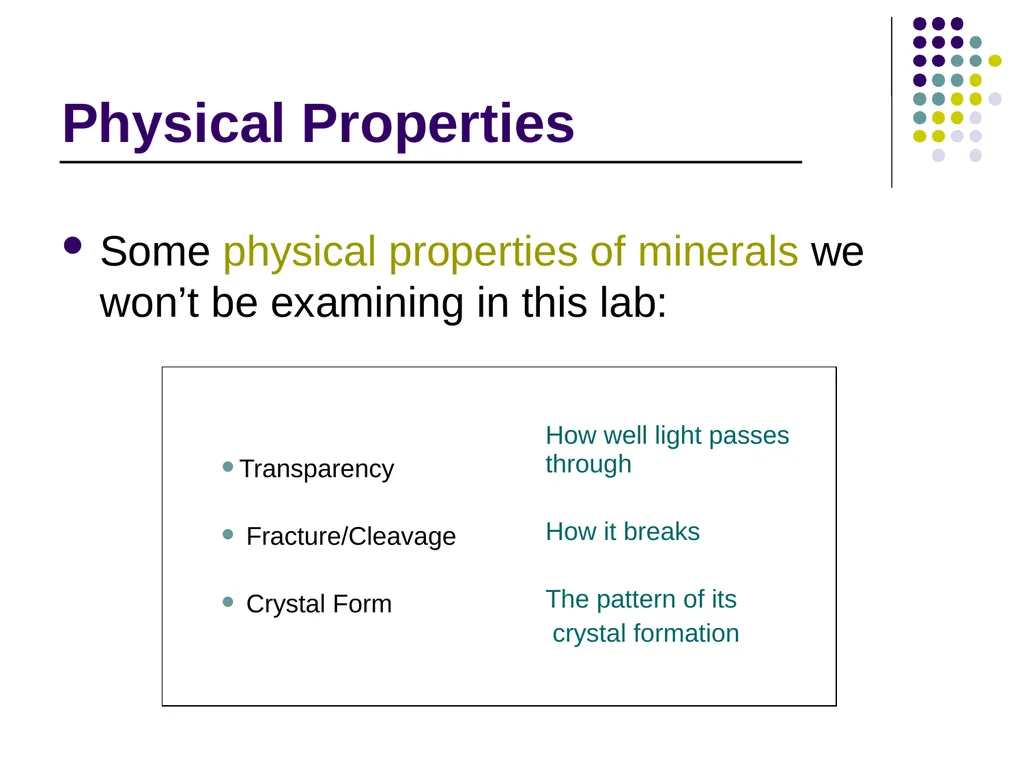
slide5. Physical Properties Some physical properties of minerals we won’t be examining in this lab:<br>
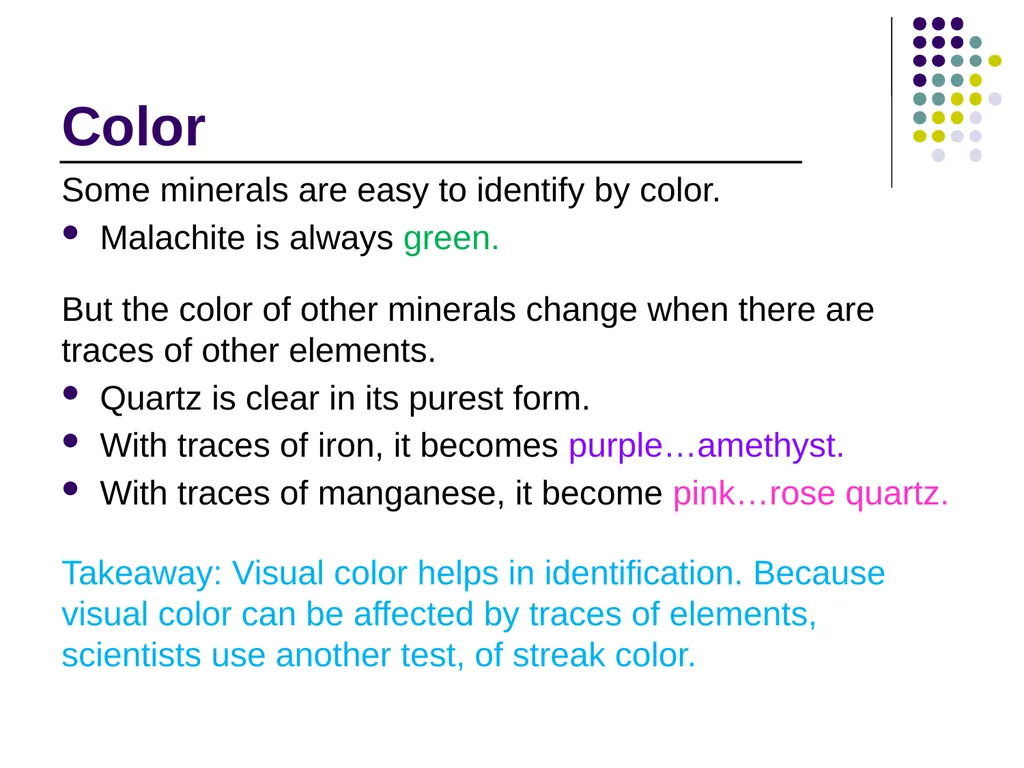
slide6. Color Some minerals are easy to identify by color.
Malachite is always green.
But the color of other minerals change when there are traces of other elements.
Quartz is clear in its purest form.
With traces of iron, it becomes purple…amethyst.
With traces of manganese, it become pink…rose quartz.
Takeaway: Visual color helps in identification. Because visual color can be affected by traces of elements, scientists use another test, of streak color.<br>
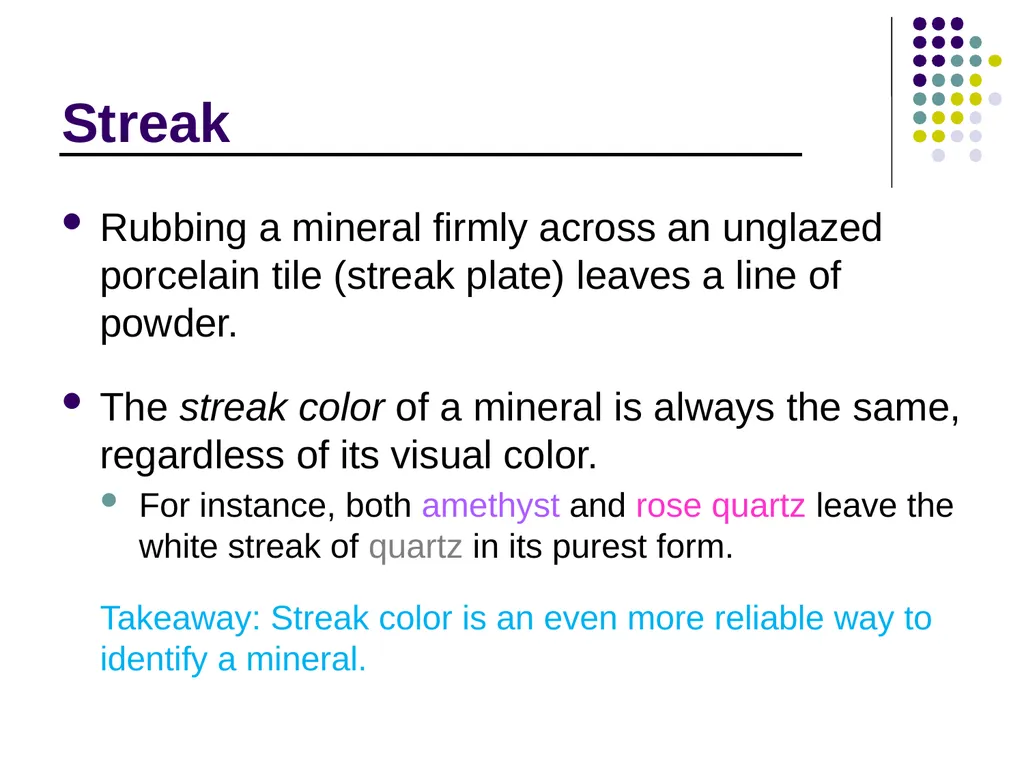
slide7. Streak Rubbing a mineral firmly across an unglazed porcelain tile (streak plate) leaves a line of powder.
The streak color of a mineral is always the same, regardless of its visual color.
For instance, both amethyst and rose quartz leave the white streak of quartz in its purest form.
Takeaway: Streak color is an even more reliable way to identify a mineral.<br>
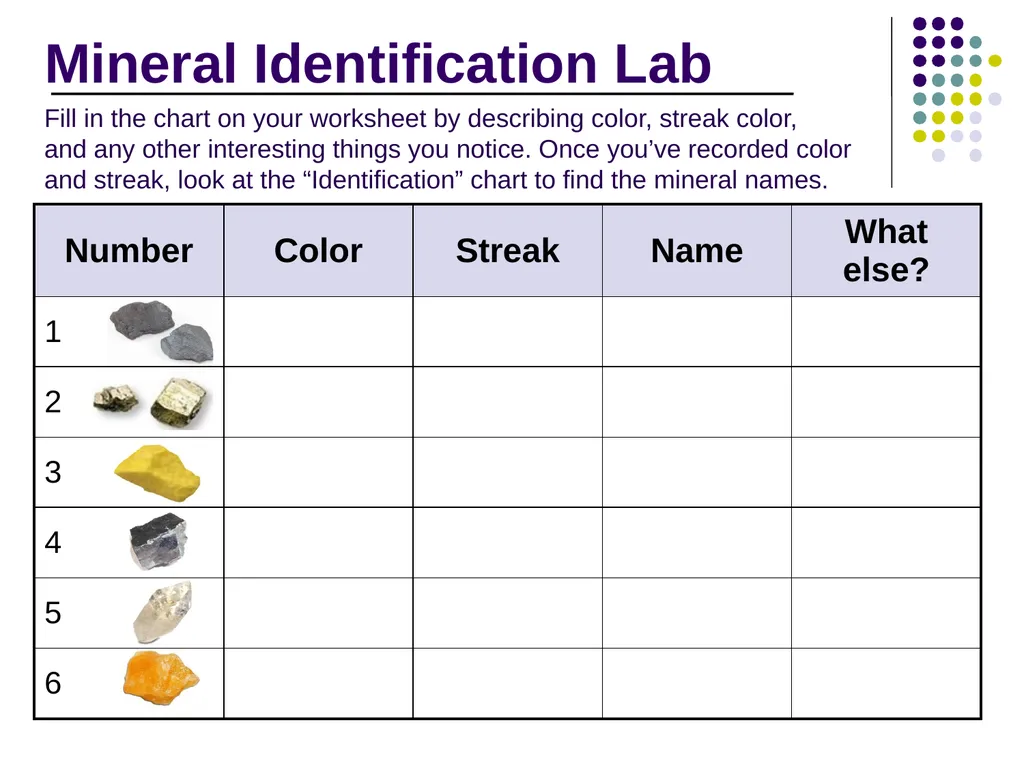
slide8. Mineral Identification Lab Fill in the chart on your worksheet by describing color, streak color,
and any other interesting things you notice. Once you’ve recorded color and streak, look at the “Identification” chart to find the mineral names.<br>
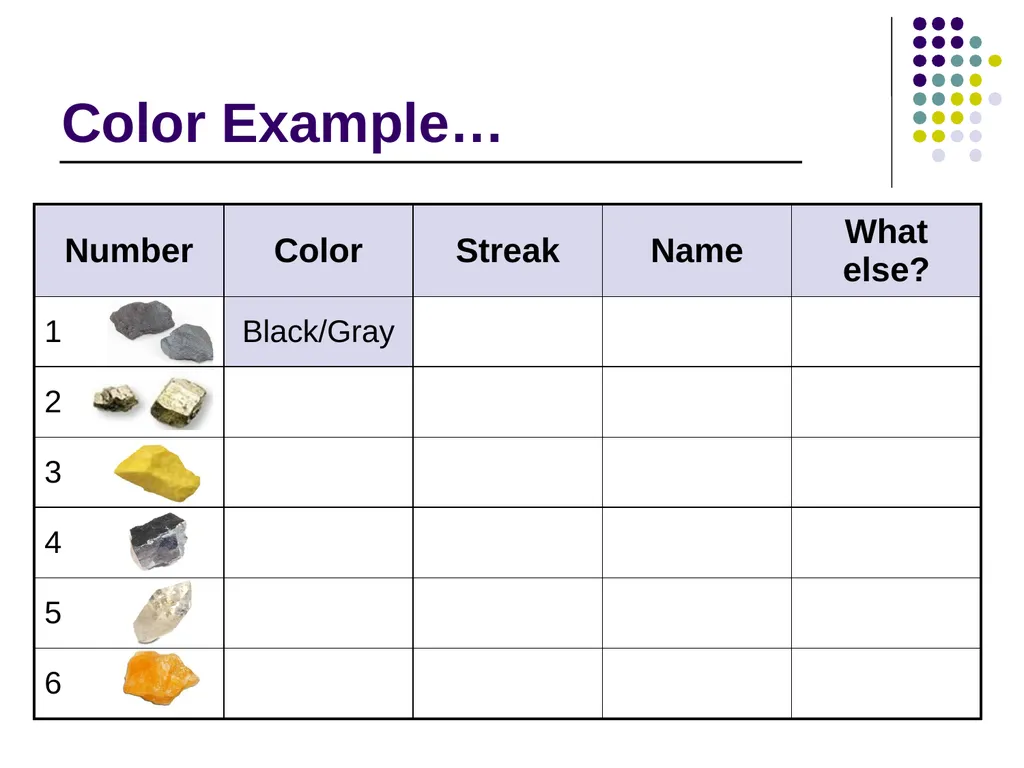
slide9. Color Example…<br>
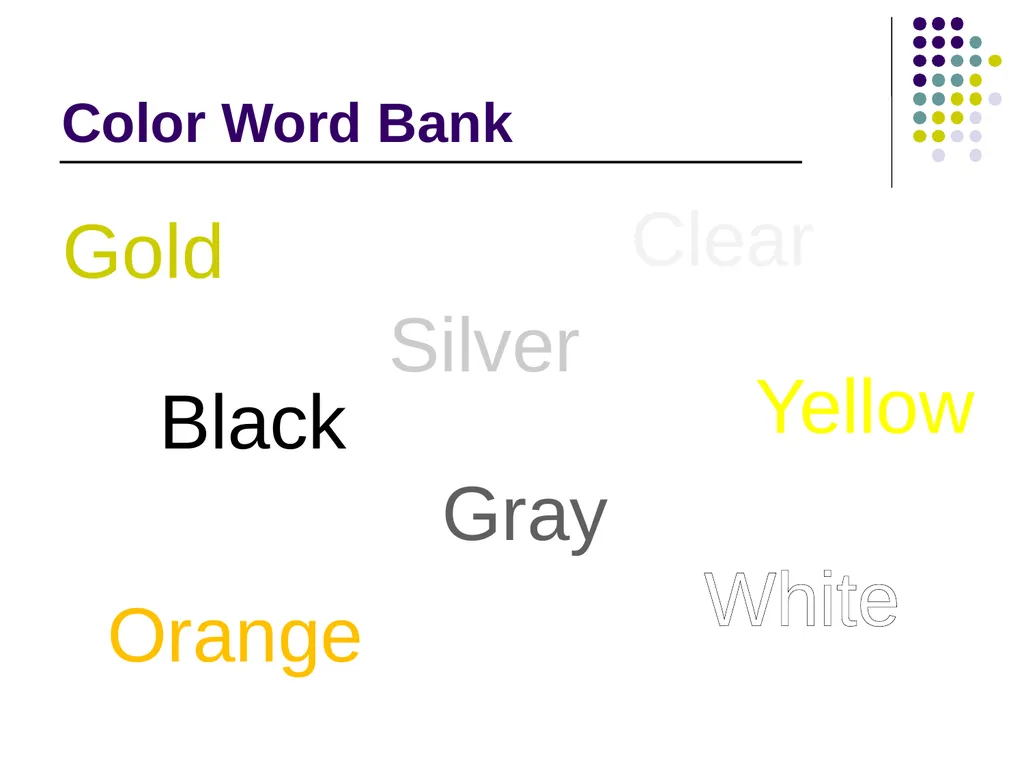
slide10. Color Word Bank Gold Black Orange Silver White Yellow Gray Clear<br>
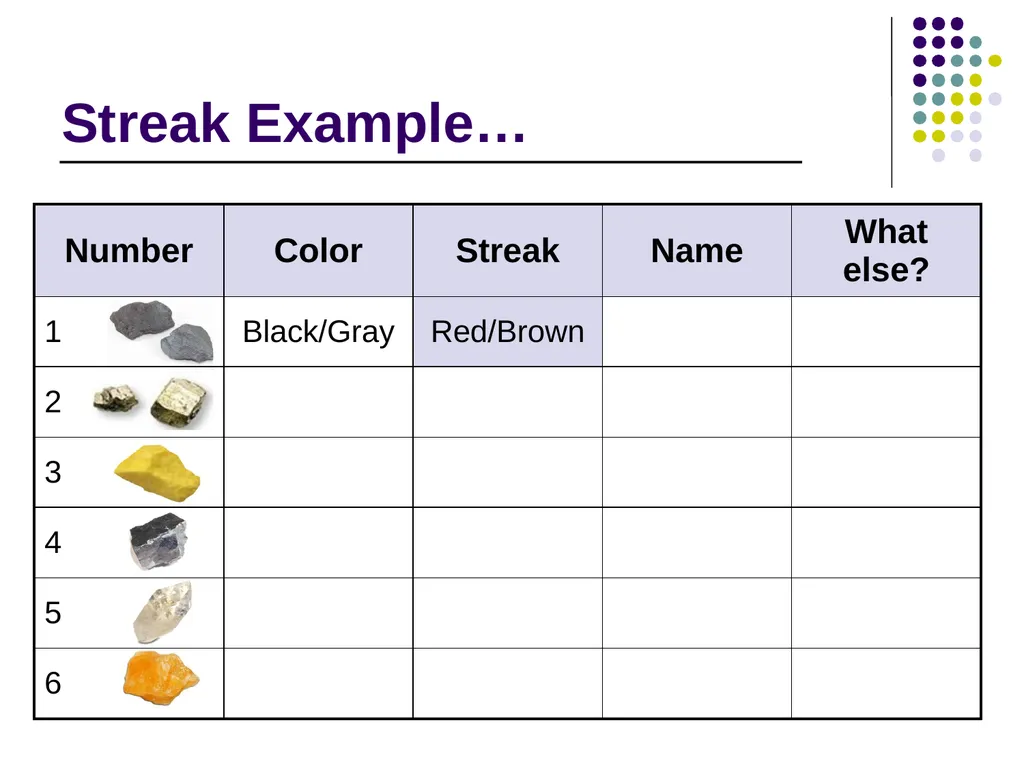
slide11. Streak Example…<br>
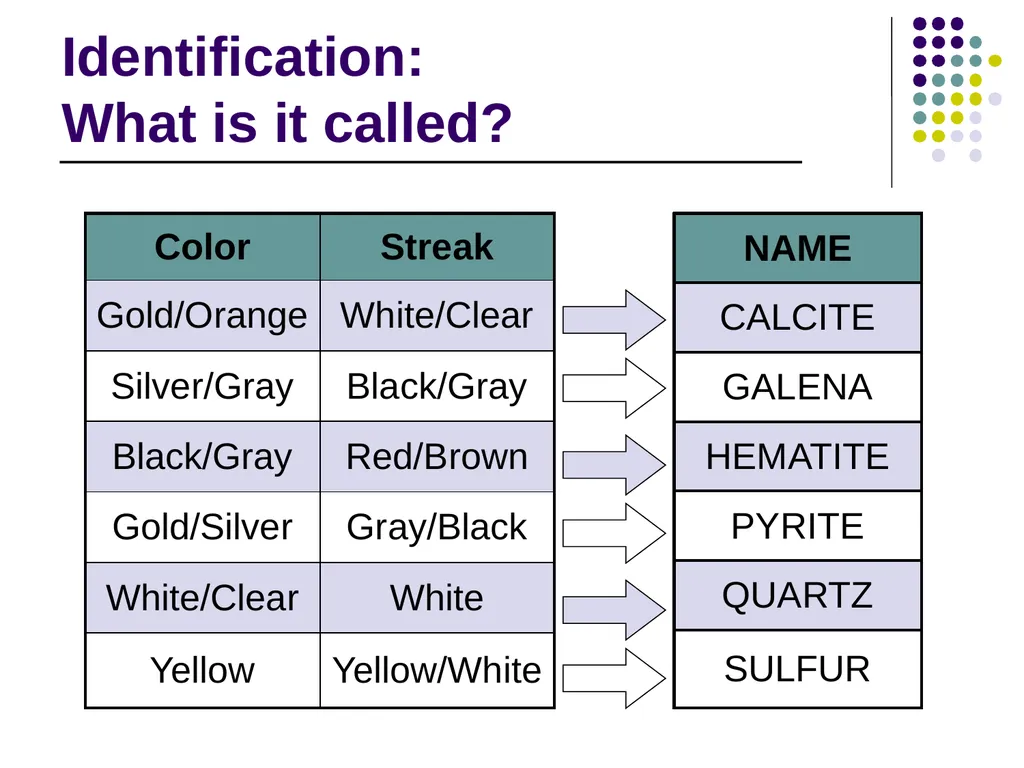
slide12. Identification: What is it called?<br>
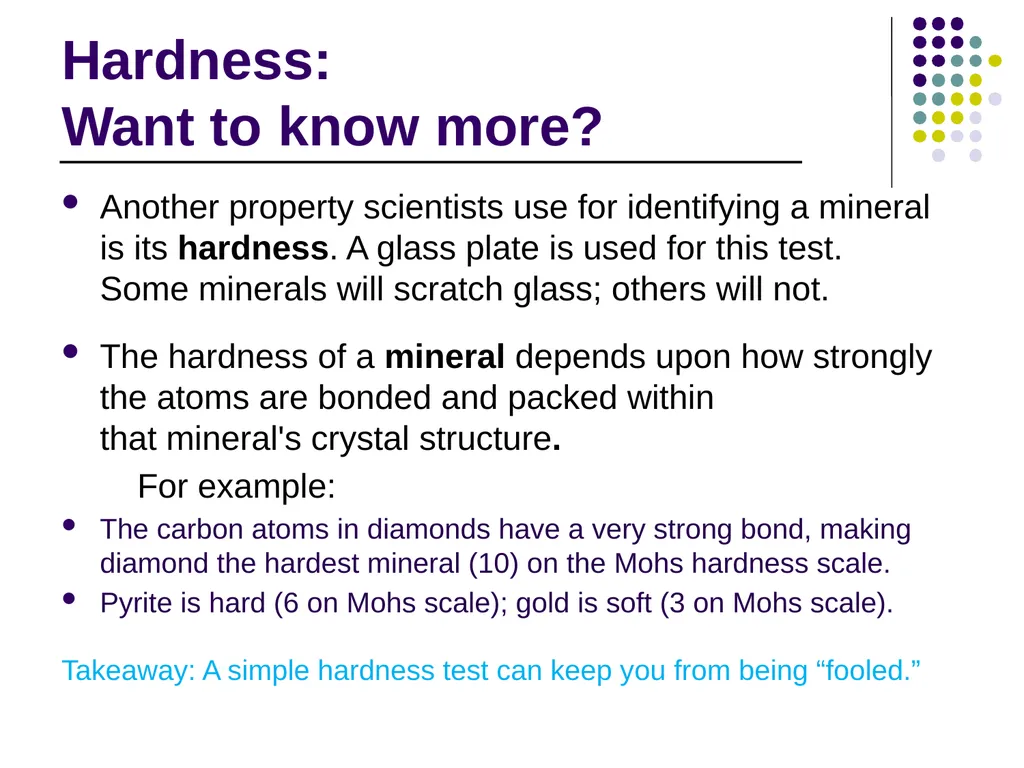
slide13. Hardness: Want to know more? Another property scientists use for identifying a mineral is its hardness. A glass plate is used for this test. Some minerals will scratch glass; others will not.
The hardness of a mineral depends upon how strongly the atoms are bonded and packed within that mineral's crystal structure.
For example:
The carbon atoms in diamonds have a very strong bond, making diamond the hardest mineral (10) on the Mohs hardness scale.
Pyrite is hard (6 on Mohs scale); gold is soft (3 on Mohs scale).
Takeaway: A simple hardness test can keep you from being “fooled.”<br>
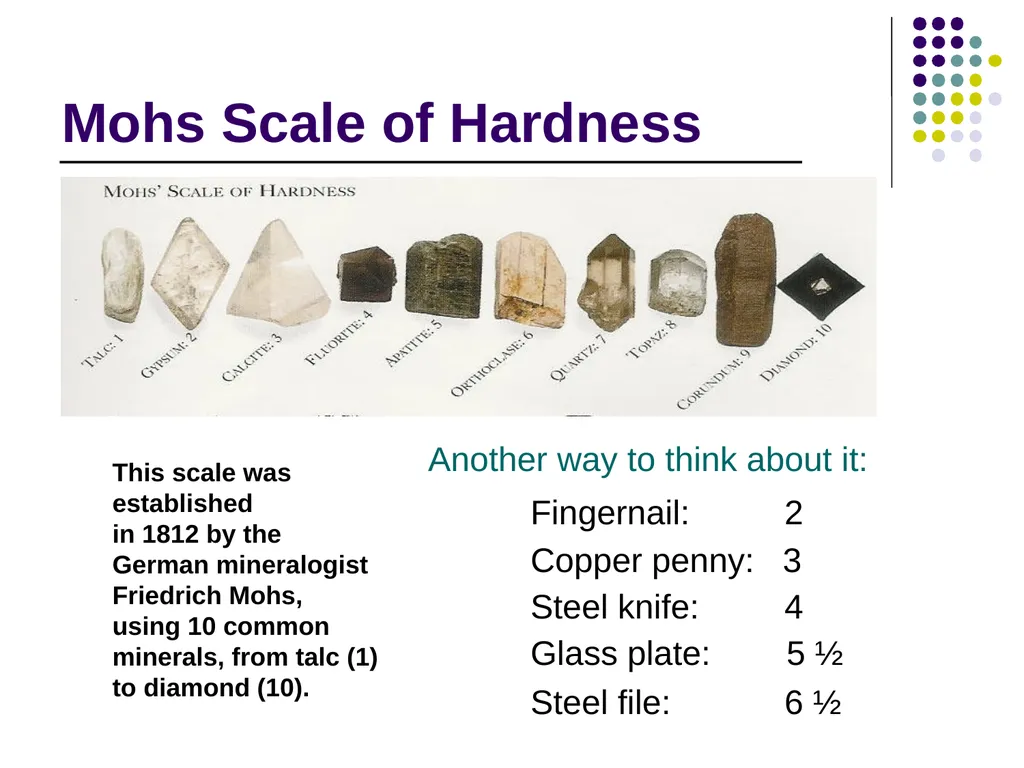
slide14. Mohs Scale of Hardness This scale was established
in 1812 by the
German mineralogist
Friedrich Mohs,
using 10 common minerals, from talc (1) to diamond (10). Another way to think about it:
Fingernail: 2
Copper penny: 3
Steel knife: 4
Glass plate: 5 ½
Steel file: 6 ½<br>
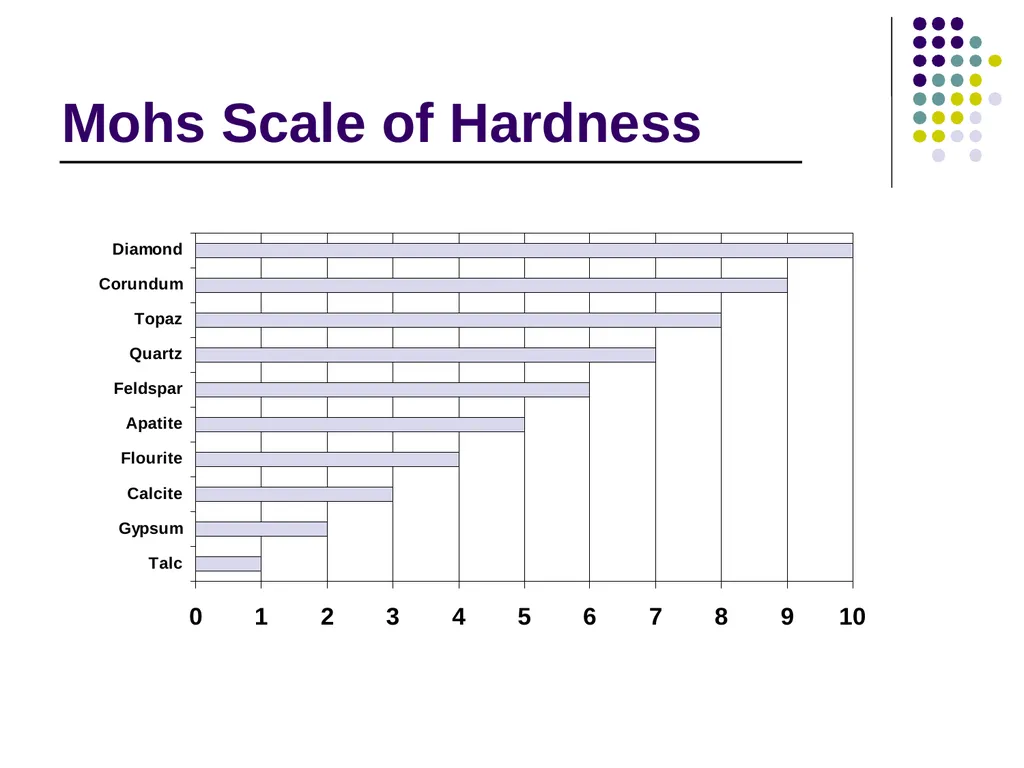
slide15. Mohs Scale of Hardness<br>
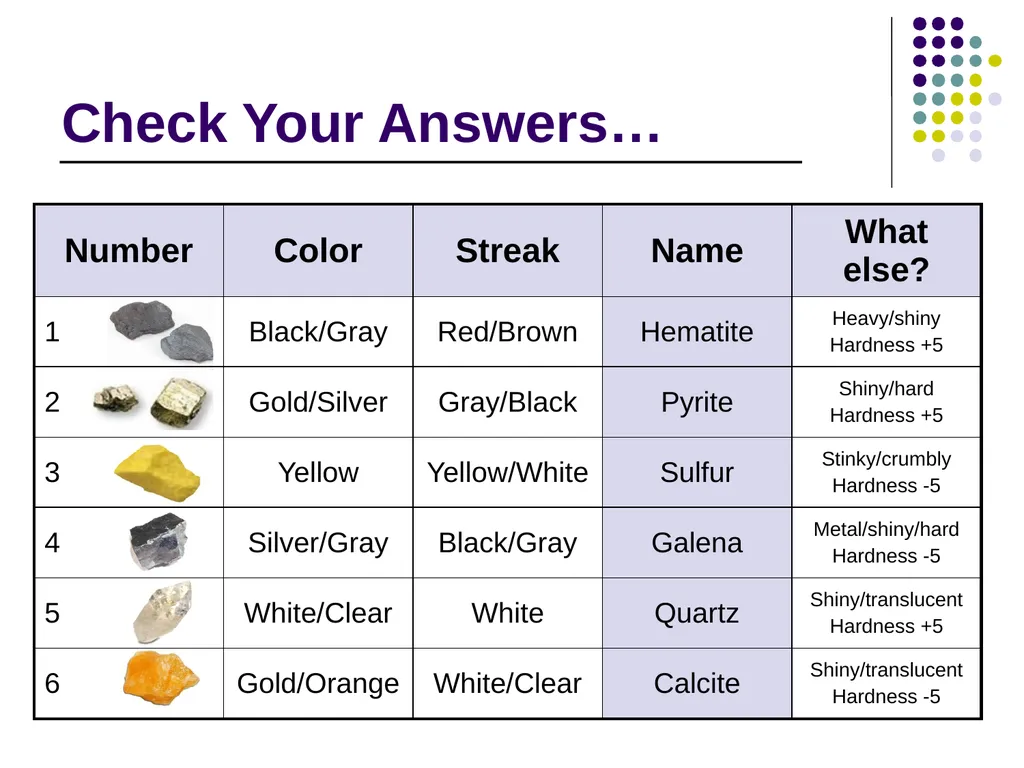
slide16. Check Your Answers…<br>
slide17. Congratulations! You rock as a mineralogist!<br>
slide2. What do good scientists do? GOOD SCIENTISTS…
work together and share their information.
observe carefully.
record their observations.
learn from their observations and continue to test, examine, and discuss.<br>
slide3. What are minerals? MINERALS ARE…
matter.
inorganic (nonliving) solids found in nature.
made up of elements such as
silicon, oxygen, carbon, iron. ( Si O C Fe)
NOT ROCKS!! Rocks are made up of minerals.<br>
slide4. Physical Properties What are physical properties of matter?
Shape, color, texture, size, etc.
The physical properties of minerals are…<br>
slide5. Physical Properties Some physical properties of minerals we won’t be examining in this lab:<br>
slide6. Color Some minerals are easy to identify by color.
Malachite is always green.
But the color of other minerals change when there are traces of other elements.
Quartz is clear in its purest form.
With traces of iron, it becomes purple…amethyst.
With traces of manganese, it become pink…rose quartz.
Takeaway: Visual color helps in identification. Because visual color can be affected by traces of elements, scientists use another test, of streak color.<br>
slide7. Streak Rubbing a mineral firmly across an unglazed porcelain tile (streak plate) leaves a line of powder.
The streak color of a mineral is always the same, regardless of its visual color.
For instance, both amethyst and rose quartz leave the white streak of quartz in its purest form.
Takeaway: Streak color is an even more reliable way to identify a mineral.<br>
slide8. Mineral Identification Lab Fill in the chart on your worksheet by describing color, streak color,
and any other interesting things you notice. Once you’ve recorded color and streak, look at the “Identification” chart to find the mineral names.<br>
slide9. Color Example…<br>
slide10. Color Word Bank Gold Black Orange Silver White Yellow Gray Clear<br>
slide11. Streak Example…<br>
slide12. Identification: What is it called?<br>
slide13. Hardness: Want to know more? Another property scientists use for identifying a mineral is its hardness. A glass plate is used for this test. Some minerals will scratch glass; others will not.
The hardness of a mineral depends upon how strongly the atoms are bonded and packed within that mineral's crystal structure.
For example:
The carbon atoms in diamonds have a very strong bond, making diamond the hardest mineral (10) on the Mohs hardness scale.
Pyrite is hard (6 on Mohs scale); gold is soft (3 on Mohs scale).
Takeaway: A simple hardness test can keep you from being “fooled.”<br>
slide14. Mohs Scale of Hardness This scale was established
in 1812 by the
German mineralogist
Friedrich Mohs,
using 10 common minerals, from talc (1) to diamond (10). Another way to think about it:
Fingernail: 2
Copper penny: 3
Steel knife: 4
Glass plate: 5 ½
Steel file: 6 ½<br>
slide15. Mohs Scale of Hardness<br>
slide16. Check Your Answers…<br>
slide17. Congratulations! You rock as a mineralogist!<br>