MODULE 15 Access to Financing Learning Objectives
Description: MODULE 15 Access to Financing Learning Objectives Outcomes By participating in this training you will be able to: Structure Lesson 1. Microfinance Lesson 2. Sources of Capital and Support System for Farmers Existing DA CreditLoan
Related Topics
Download Presentation
"MODULE 15 Access to Financing Learning Objectives" is the property of its rightful owner. Permission is granted to download and print the materials on this website for personal, non-commercial use only, and to display it on your personal computer provided you do not modify the materials and that you retain all copyright notices contained in the materials. By downloading content from our website, you accept the terms of this agreement.
Presentation Transcript
slide1. MODULE 15
Access to Financing<br>
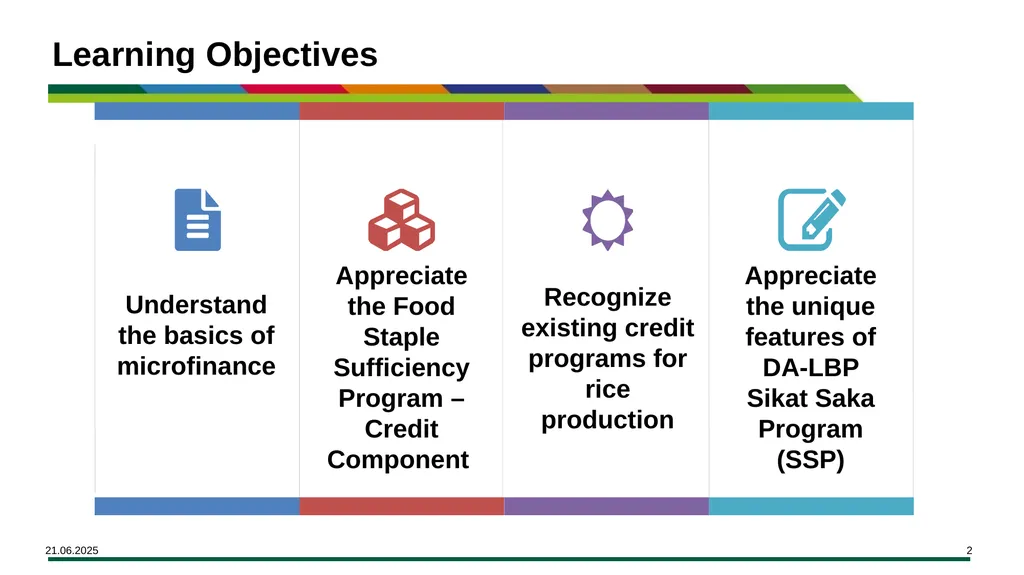
slide2. Learning Objectives<br>
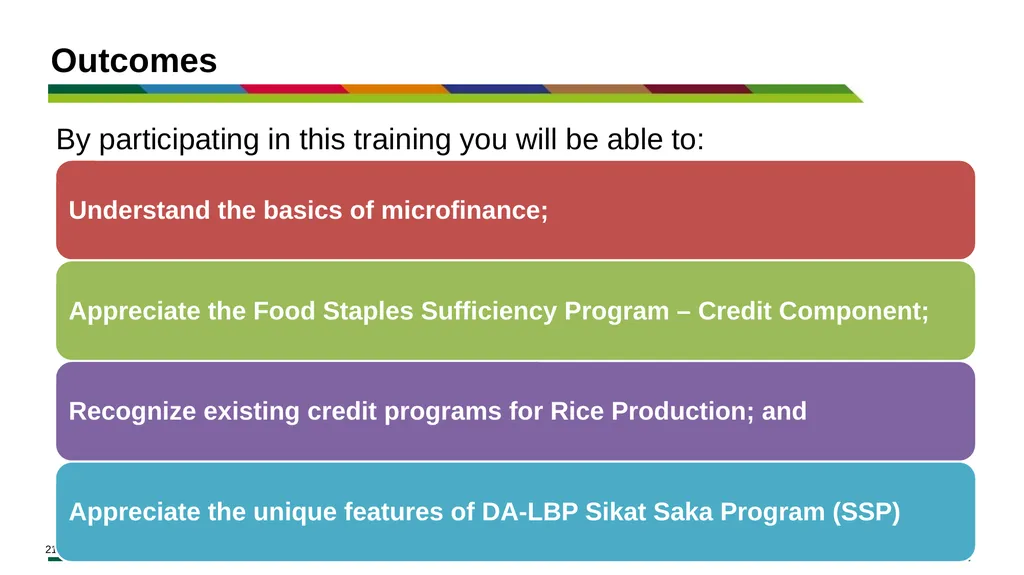
slide3. Outcomes By participating in this training you will be able to:<br>
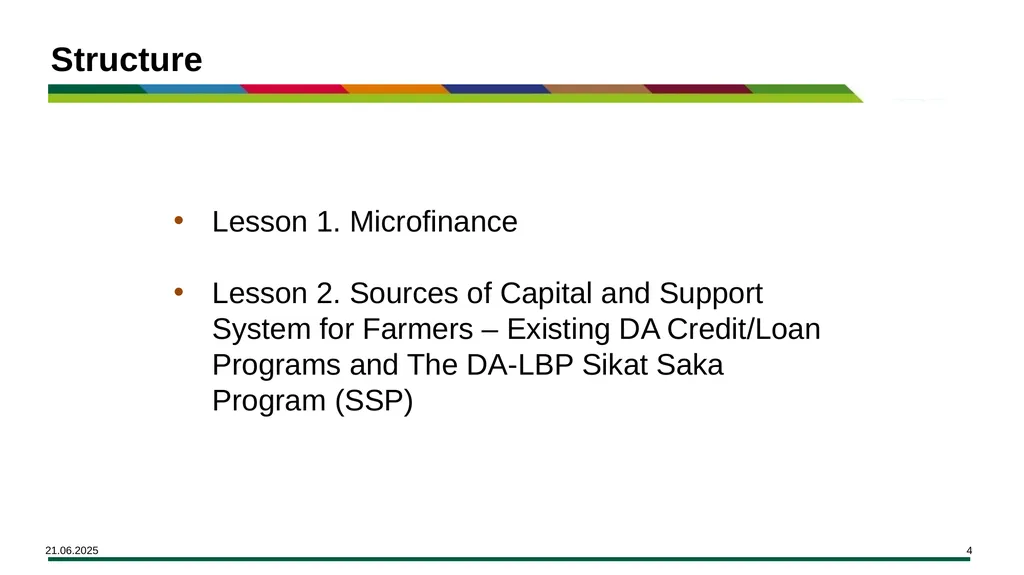
slide4. Structure Lesson 1. Microfinance
Lesson 2. Sources of Capital and Support System for Farmers – Existing DA Credit/Loan Programs and The DA-LBP Sikat Saka Program (SSP)<br>
slide5. Lesson 1: Microfinance Learning Objectives:
Learn the basics of microfinance
Identify sources of microfinance<br>
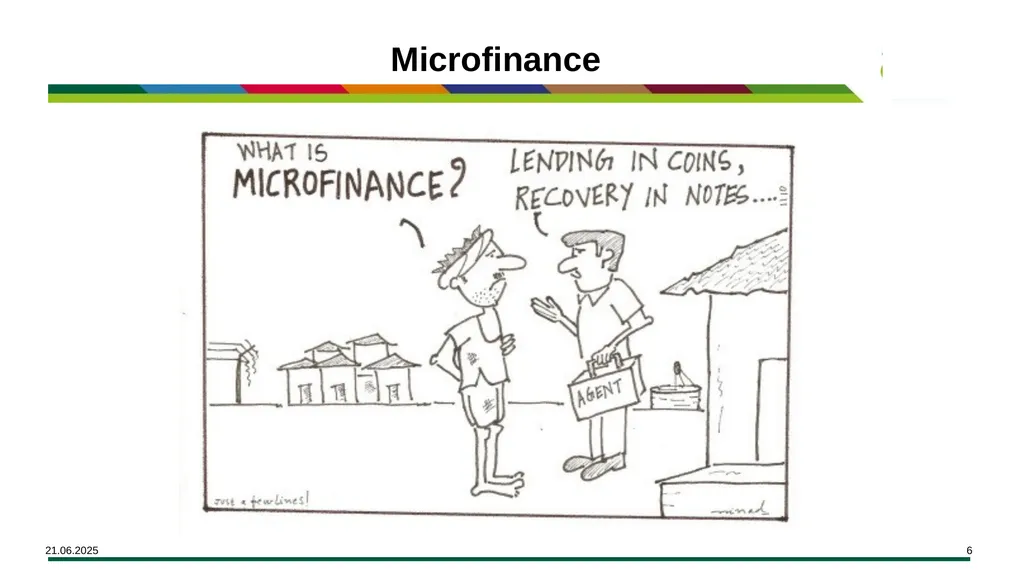
slide6. Microfinance<br>
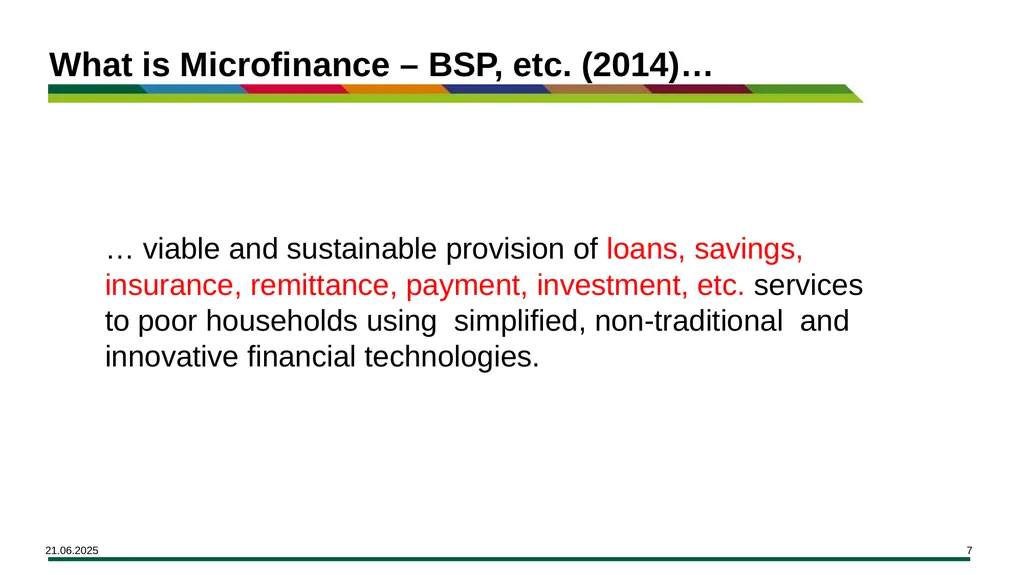
slide7. … viable and sustainable provision of loans, savings, insurance, remittance, payment, investment, etc. services to poor households using simplified, non-traditional and innovative financial technologies. What is Microfinance – BSP, etc. (2014)…<br>
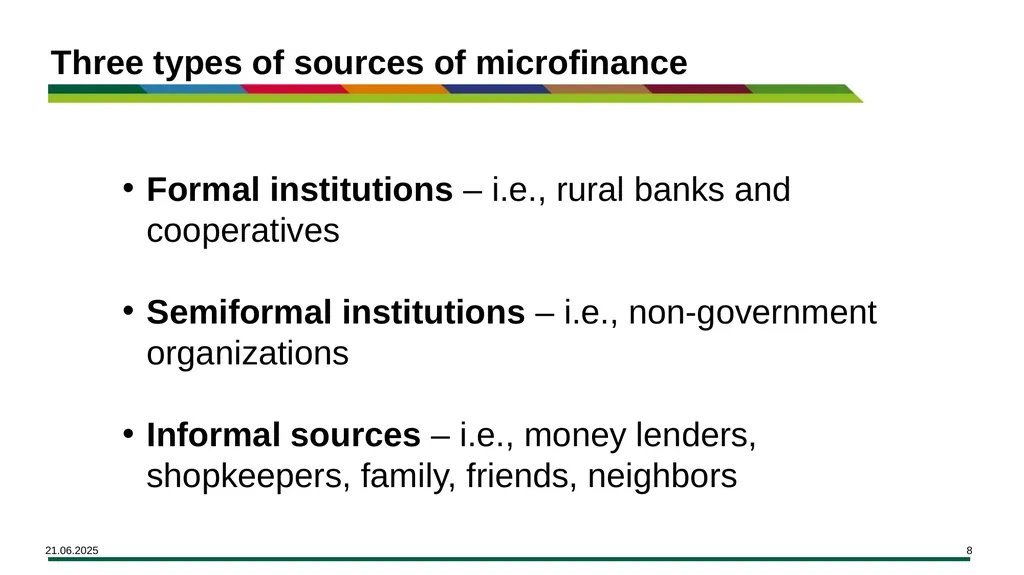
slide8. Three types of sources of microfinance Formal institutions – i.e., rural banks and cooperatives
Semiformal institutions – i.e., non-government organizations
Informal sources – i.e., money lenders, shopkeepers, family, friends, neighbors<br>
slide9. Lesson 2: Sources of Capital and Support System for Farmers – Existing DA Credit/Loan Programs and The DA-LBP Sikat Saka Program (SSP) Learning Objectives
Create awareness on Food Staples Sufficiency Program – Credit Component
Identify existing credit/loan programs for rice production
Promote appreciation of the Credit Programs of the Government<br>
slide10. Outcome At the end of this training, participants will be able to:<br>
slide11. Structure Food Staples Sufficiency Program – Credit Component (FSSP-CC)
Agriculture and Fisheries Financing Program
Agrarian Production Credit Program
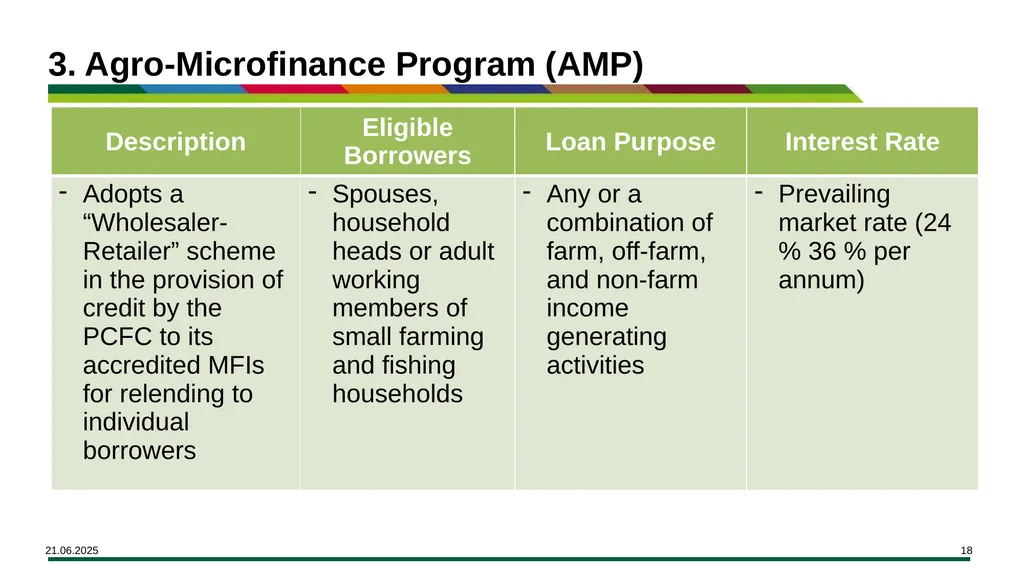
Agri-Microfinance Program
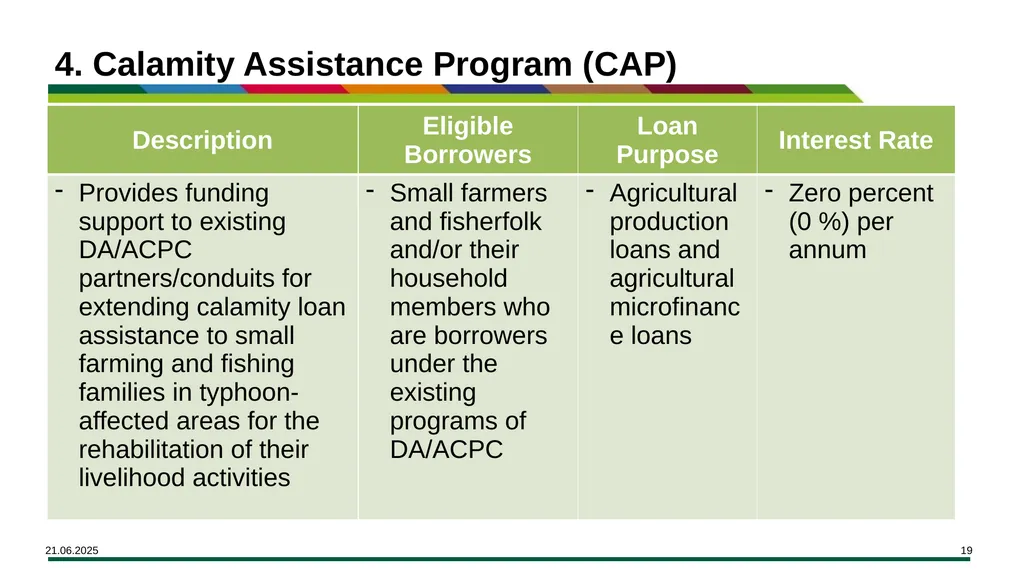
Calamity Assistance Program
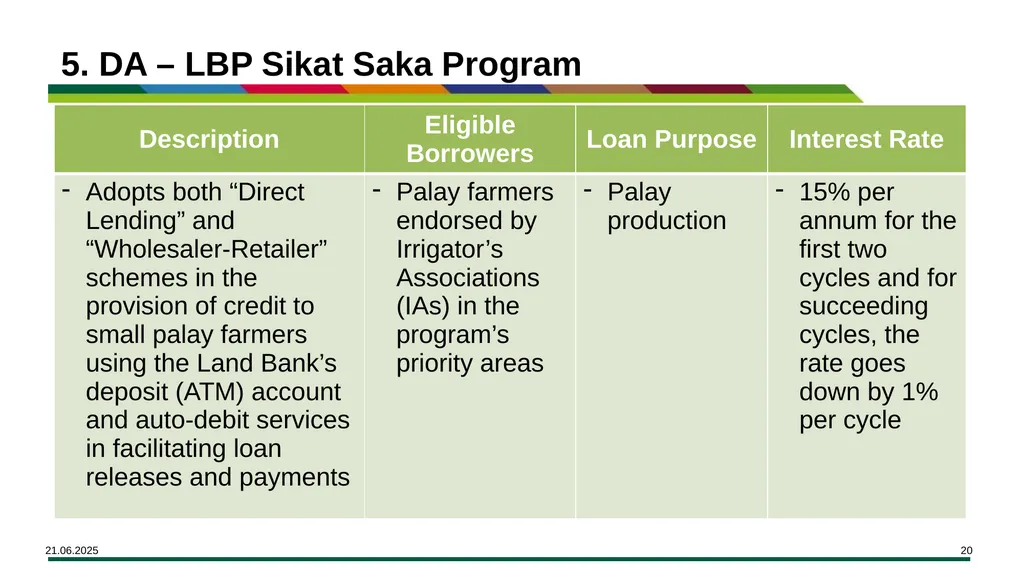
DA-LBP Sikat Saka Program<br>
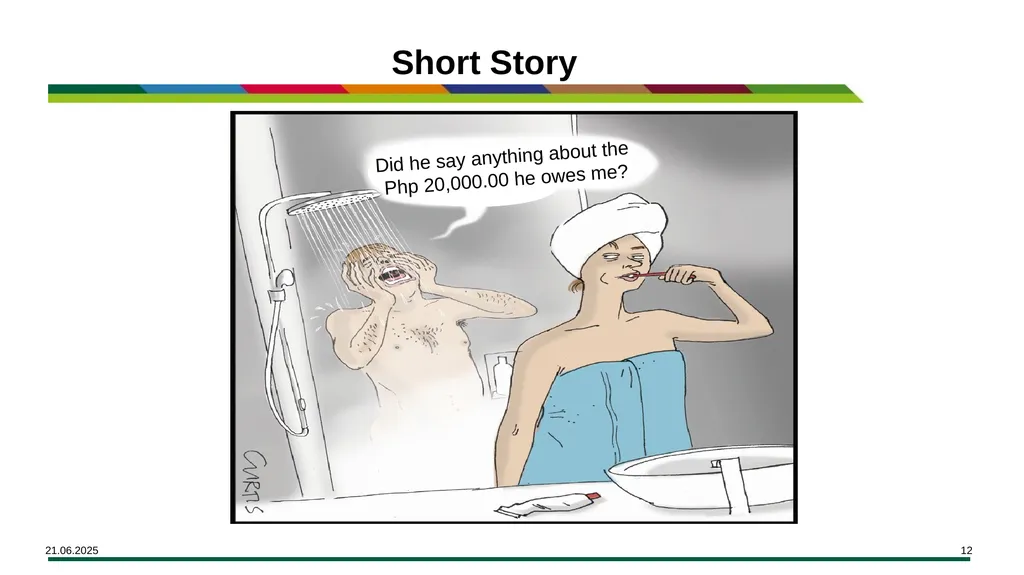
slide12. Short Story Did he say anything about the
Php 20,000.00 he owes me?<br>
slide13. Food Staples Sufficiency Program – Credit Component (FSSP-CC)<br>
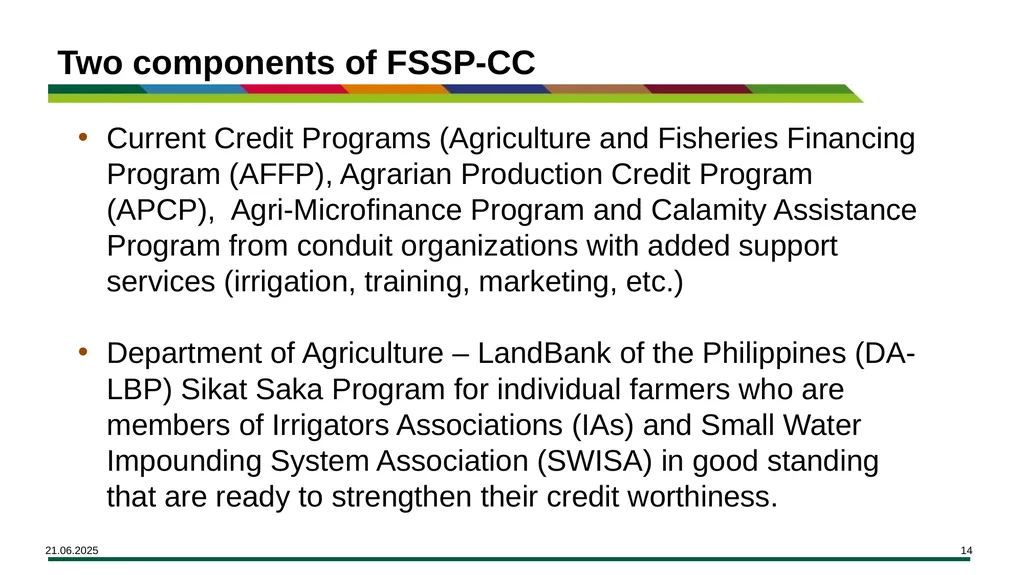
slide14. Two components of FSSP-CC Current Credit Programs (Agriculture and Fisheries Financing Program (AFFP), Agrarian Production Credit Program (APCP), Agri-Microfinance Program and Calamity Assistance Program from conduit organizations with added support services (irrigation, training, marketing, etc.)
Department of Agriculture – LandBank of the Philippines (DA-LBP) Sikat Saka Program for individual farmers who are members of Irrigators Associations (IAs) and Small Water Impounding System Association (SWISA) in good standing that are ready to strengthen their credit worthiness.<br>
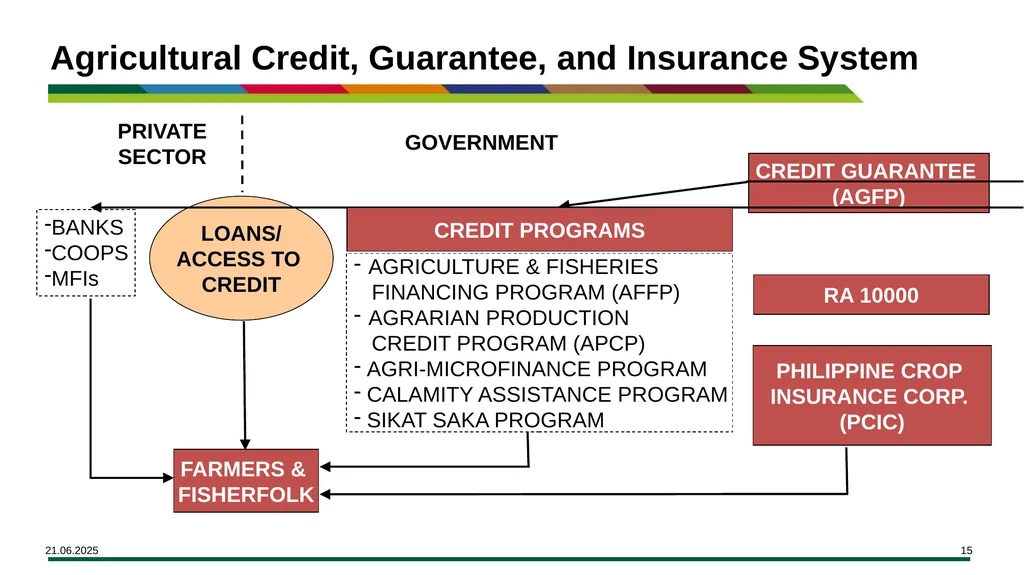
slide15. PRIVATE SECTOR GOVERNMENT LOANS/
ACCESS TO
CREDIT CREDIT GUARANTEE
(AGFP) PHILIPPINE CROP
INSURANCE CORP.
(PCIC) BANKS
COOPS
MFIs FARMERS &
FISHERFOLK CREDIT PROGRAMS RA 10000 Agricultural Credit, Guarantee, and Insurance System AGRICULTURE & FISHERIES
FINANCING PROGRAM (AFFP)
AGRARIAN PRODUCTION
CREDIT PROGRAM (APCP)
AGRI-MICROFINANCE PROGRAM
CALAMITY ASSISTANCE PROGRAM
SIKAT SAKA PROGRAM<br>
slide16. 1. Agriculture and Fisheries Financing Program (AFFP)<br>
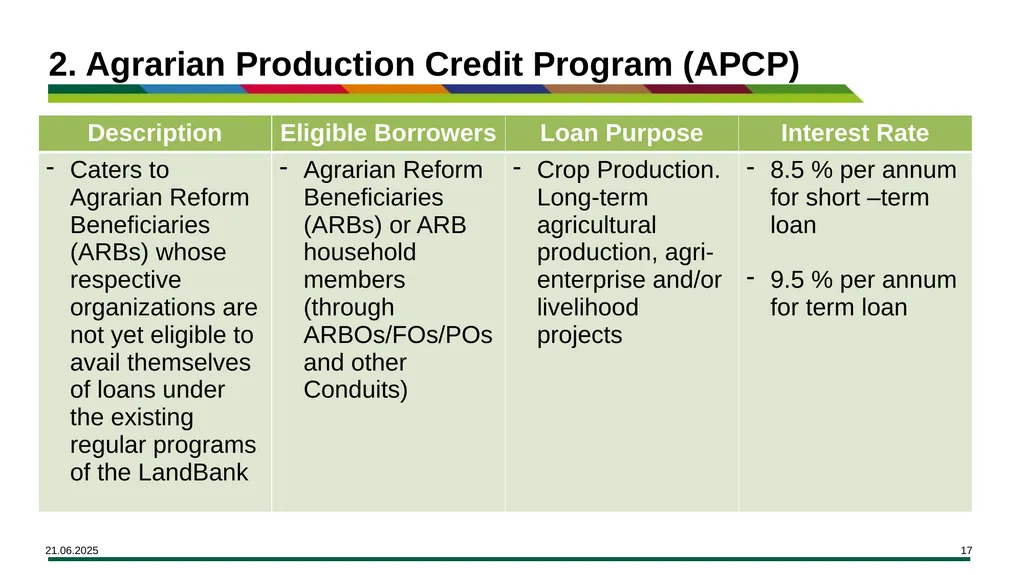
slide17. 2. Agrarian Production Credit Program (APCP)<br>
slide18. 3. Agro-Microfinance Program (AMP)<br>
slide19. 4. Calamity Assistance Program (CAP)<br>
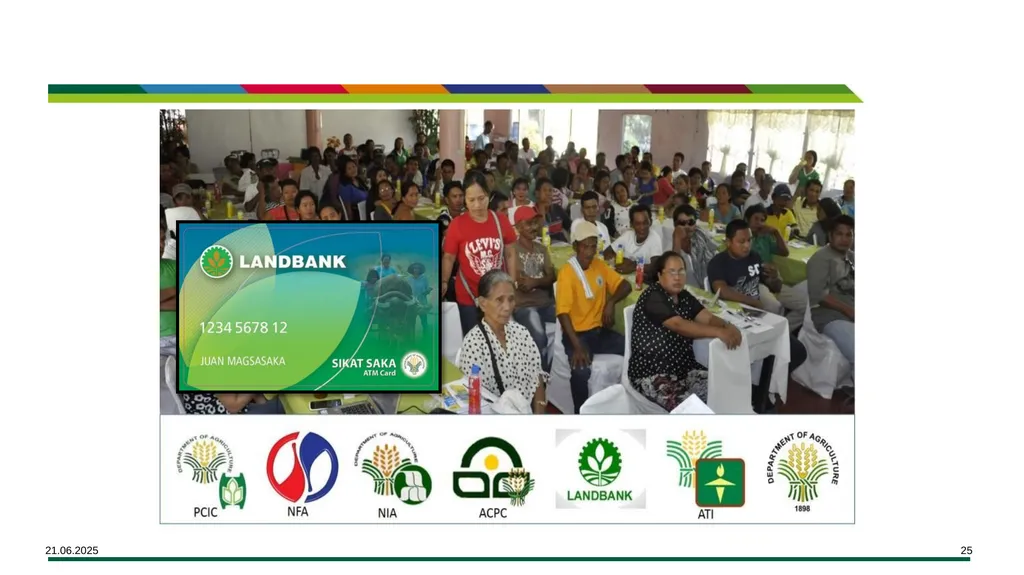
slide20. 5. DA – LBP Sikat Saka Program<br>
slide21. DA-LBP
Sikat Saka Program<br>
slide22. Program Objectives To provide credit assistance to palay farmers in a timely manner and at an affordable cost
To improve the viability and sustainability of palay production
To expand the credit outreach and increase rice production for food sufficiency.<br>
slide23. Program features Accessibility
Affordability
Timeliness
Face and Credit Worthiness
Management Takeover Agreement<br>
slide24. Integrated support services of the Sikat Saka Marketing Component (National Food Authority and National Agribusiness Corporation)
NFA will cover the procurement process.
NABCOR’s marketing component will be limited in regions where their facility is accessible like Region 6.
Rice Crop Insurance by Philippine Crop Insurance Corporation (PCIC)<br>
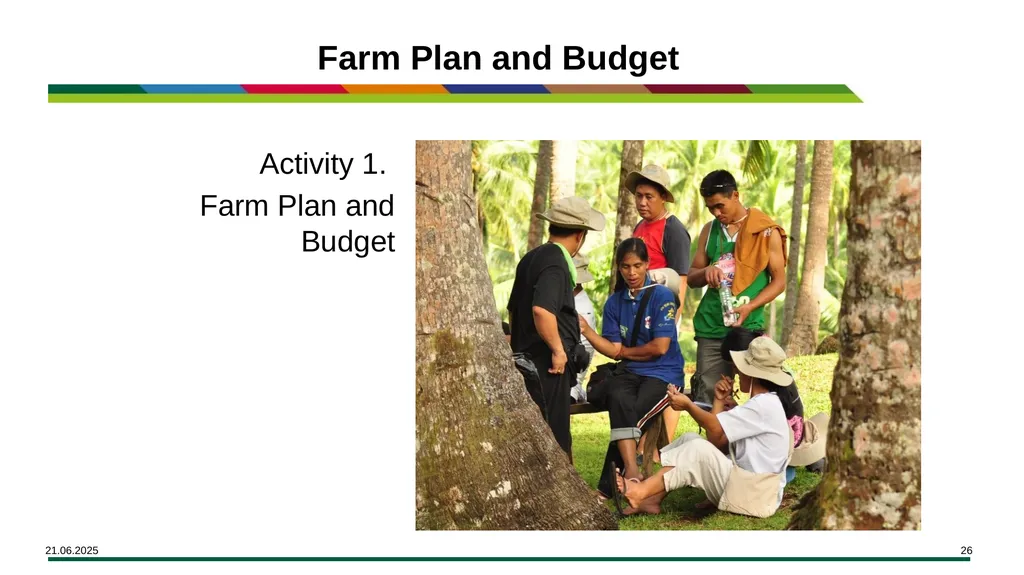
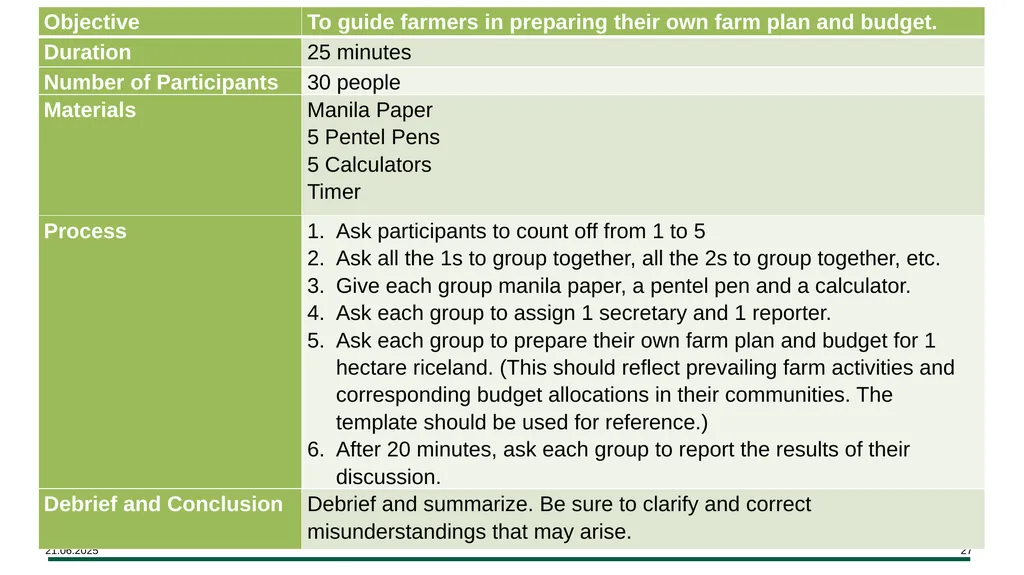
slide26. Farm Plan and Budget Activity 1.
Farm Plan and Budget<br>
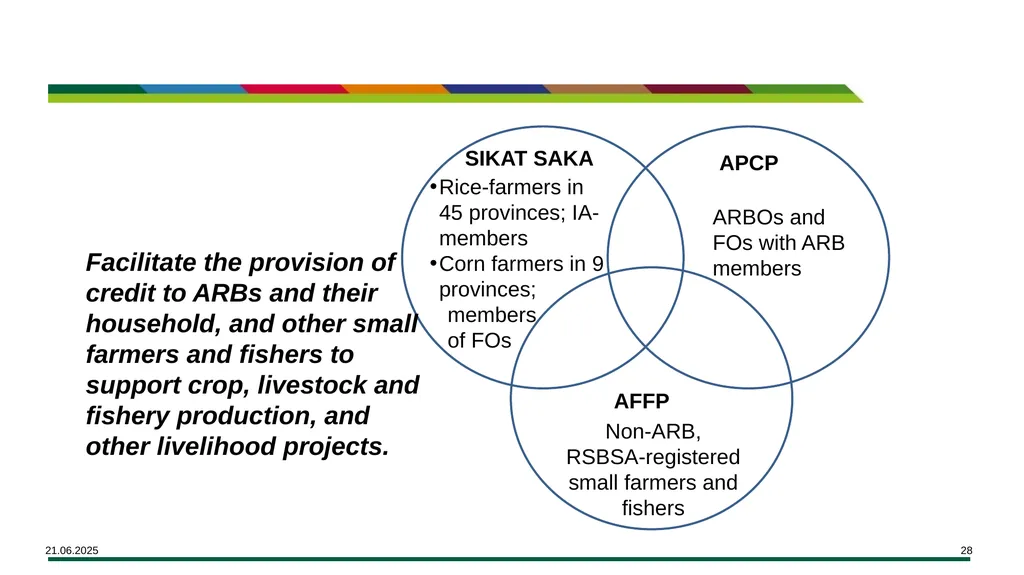
slide28. SIKAT SAKA Rice-farmers in 45 provinces; IA-members
Corn farmers in 9 provinces;
members
of FOs APCP ARBOs and FOs with ARB members AFFP Non-ARB, RSBSA-registered small farmers and fishers Facilitate the provision of credit to ARBs and their household, and other small farmers and fishers to support crop, livestock and fishery production, and other livelihood projects.<br>
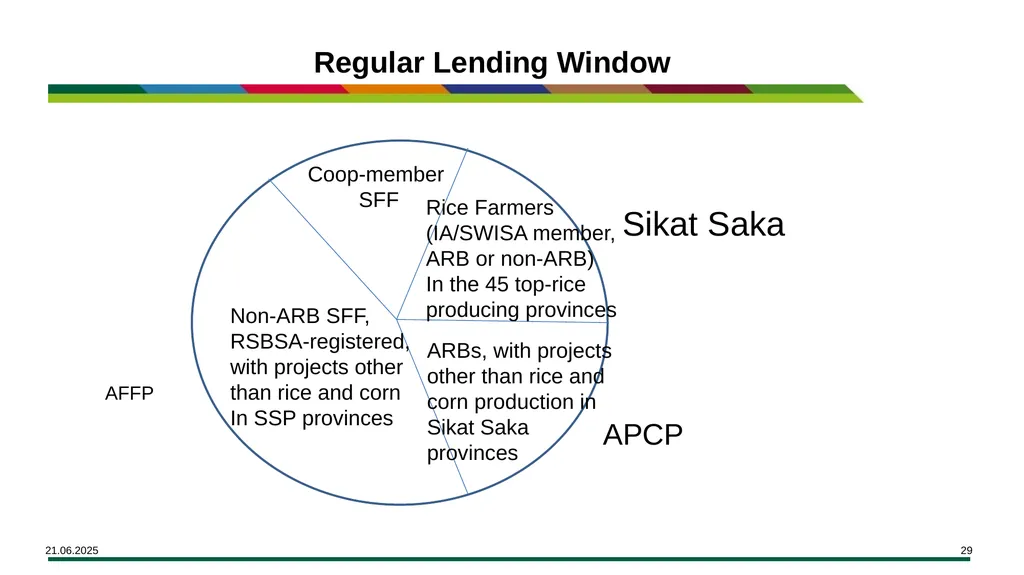
slide29. Rice Farmers
(IA/SWISA member,
ARB or non-ARB)
In the 45 top-rice
producing provinces ARBs, with projects
other than rice and corn production in Sikat Saka provinces Non-ARB SFF,
RSBSA-registered,
with projects other
than rice and corn
In SSP provinces Coop-member
SFF Regular Lending Window Sikat Saka APCP AFFP<br>
slide30. Tic-Tac-Toe Game Activity 2
Tic-Tac-Toe<br>

slide32. Thank you!!!<br>
Access to Financing<br>
slide2. Learning Objectives<br>
slide3. Outcomes By participating in this training you will be able to:<br>
slide4. Structure Lesson 1. Microfinance
Lesson 2. Sources of Capital and Support System for Farmers – Existing DA Credit/Loan Programs and The DA-LBP Sikat Saka Program (SSP)<br>
slide5. Lesson 1: Microfinance Learning Objectives:
Learn the basics of microfinance
Identify sources of microfinance<br>
slide6. Microfinance<br>
slide7. … viable and sustainable provision of loans, savings, insurance, remittance, payment, investment, etc. services to poor households using simplified, non-traditional and innovative financial technologies. What is Microfinance – BSP, etc. (2014)…<br>
slide8. Three types of sources of microfinance Formal institutions – i.e., rural banks and cooperatives
Semiformal institutions – i.e., non-government organizations
Informal sources – i.e., money lenders, shopkeepers, family, friends, neighbors<br>
slide9. Lesson 2: Sources of Capital and Support System for Farmers – Existing DA Credit/Loan Programs and The DA-LBP Sikat Saka Program (SSP) Learning Objectives
Create awareness on Food Staples Sufficiency Program – Credit Component
Identify existing credit/loan programs for rice production
Promote appreciation of the Credit Programs of the Government<br>
slide10. Outcome At the end of this training, participants will be able to:<br>
slide11. Structure Food Staples Sufficiency Program – Credit Component (FSSP-CC)
Agriculture and Fisheries Financing Program
Agrarian Production Credit Program
Agri-Microfinance Program
Calamity Assistance Program
DA-LBP Sikat Saka Program<br>
slide12. Short Story Did he say anything about the
Php 20,000.00 he owes me?<br>
slide13. Food Staples Sufficiency Program – Credit Component (FSSP-CC)<br>
slide14. Two components of FSSP-CC Current Credit Programs (Agriculture and Fisheries Financing Program (AFFP), Agrarian Production Credit Program (APCP), Agri-Microfinance Program and Calamity Assistance Program from conduit organizations with added support services (irrigation, training, marketing, etc.)
Department of Agriculture – LandBank of the Philippines (DA-LBP) Sikat Saka Program for individual farmers who are members of Irrigators Associations (IAs) and Small Water Impounding System Association (SWISA) in good standing that are ready to strengthen their credit worthiness.<br>
slide15. PRIVATE SECTOR GOVERNMENT LOANS/
ACCESS TO
CREDIT CREDIT GUARANTEE
(AGFP) PHILIPPINE CROP
INSURANCE CORP.
(PCIC) BANKS
COOPS
MFIs FARMERS &
FISHERFOLK CREDIT PROGRAMS RA 10000 Agricultural Credit, Guarantee, and Insurance System AGRICULTURE & FISHERIES
FINANCING PROGRAM (AFFP)
AGRARIAN PRODUCTION
CREDIT PROGRAM (APCP)
AGRI-MICROFINANCE PROGRAM
CALAMITY ASSISTANCE PROGRAM
SIKAT SAKA PROGRAM<br>
slide16. 1. Agriculture and Fisheries Financing Program (AFFP)<br>
slide17. 2. Agrarian Production Credit Program (APCP)<br>
slide18. 3. Agro-Microfinance Program (AMP)<br>
slide19. 4. Calamity Assistance Program (CAP)<br>
slide20. 5. DA – LBP Sikat Saka Program<br>
slide21. DA-LBP
Sikat Saka Program<br>
slide22. Program Objectives To provide credit assistance to palay farmers in a timely manner and at an affordable cost
To improve the viability and sustainability of palay production
To expand the credit outreach and increase rice production for food sufficiency.<br>
slide23. Program features Accessibility
Affordability
Timeliness
Face and Credit Worthiness
Management Takeover Agreement<br>
slide24. Integrated support services of the Sikat Saka Marketing Component (National Food Authority and National Agribusiness Corporation)
NFA will cover the procurement process.
NABCOR’s marketing component will be limited in regions where their facility is accessible like Region 6.
Rice Crop Insurance by Philippine Crop Insurance Corporation (PCIC)<br>
slide26. Farm Plan and Budget Activity 1.
Farm Plan and Budget<br>
slide28. SIKAT SAKA Rice-farmers in 45 provinces; IA-members
Corn farmers in 9 provinces;
members
of FOs APCP ARBOs and FOs with ARB members AFFP Non-ARB, RSBSA-registered small farmers and fishers Facilitate the provision of credit to ARBs and their household, and other small farmers and fishers to support crop, livestock and fishery production, and other livelihood projects.<br>
slide29. Rice Farmers
(IA/SWISA member,
ARB or non-ARB)
In the 45 top-rice
producing provinces ARBs, with projects
other than rice and corn production in Sikat Saka provinces Non-ARB SFF,
RSBSA-registered,
with projects other
than rice and corn
In SSP provinces Coop-member
SFF Regular Lending Window Sikat Saka APCP AFFP<br>
slide30. Tic-Tac-Toe Game Activity 2
Tic-Tac-Toe<br>
slide32. Thank you!!!<br>