
Module 5: Healthcare Systems Developed through the














Description: Module 5: Healthcare Systems Developed through the APTR Initiative to Enhance Prevention and Population Health Education in collaboration with the Brody School of Medicine at East Carolina University with funding from the Centers for
Related Topics
Download Presentation
"Module 5: Healthcare Systems Developed through the" is the property of its rightful owner. Permission is granted to download and print the materials on this website for personal, non-commercial use only, and to display it on your personal computer provided you do not modify the materials and that you retain all copyright notices contained in the materials. By downloading content from our website, you accept the terms of this agreement.
Presentation Transcript
slide1. Module 5:
Healthcare Systems Developed through the APTR Initiative to Enhance Prevention and Population
Health Education in collaboration with the Brody School of Medicine at East Carolina University with funding from the Centers for Disease Control and Prevention US Healthcare Delivery Systems<br>
slide2. Acknowledgments This education module is made possible through the Centers for Disease Control and Prevention (CDC) and the Association for Prevention Teaching and Research (APTR) Cooperative Agreement, No. 5U50CD300860. The module represents the opinions of the author(s) and does not necessarily represent the views of the Centers for Disease Control and Prevention or the Association for Prevention Teaching and Research. APTR wishes to acknowledge the following individuals that developed this module:
Joseph Nicholas, MD, MPH
University of Rochester School of Medicine
Anna Zendell, PhD, MSW
Center for Public Health Continuing Education
University at Albany School of Public Health
Mary Applegate, MD, MPH
University at Albany School of Public Health
Cheryl Reeves, MS, MLS
Center for Public Health Continuing Education
University at Albany School of Public Health<br>
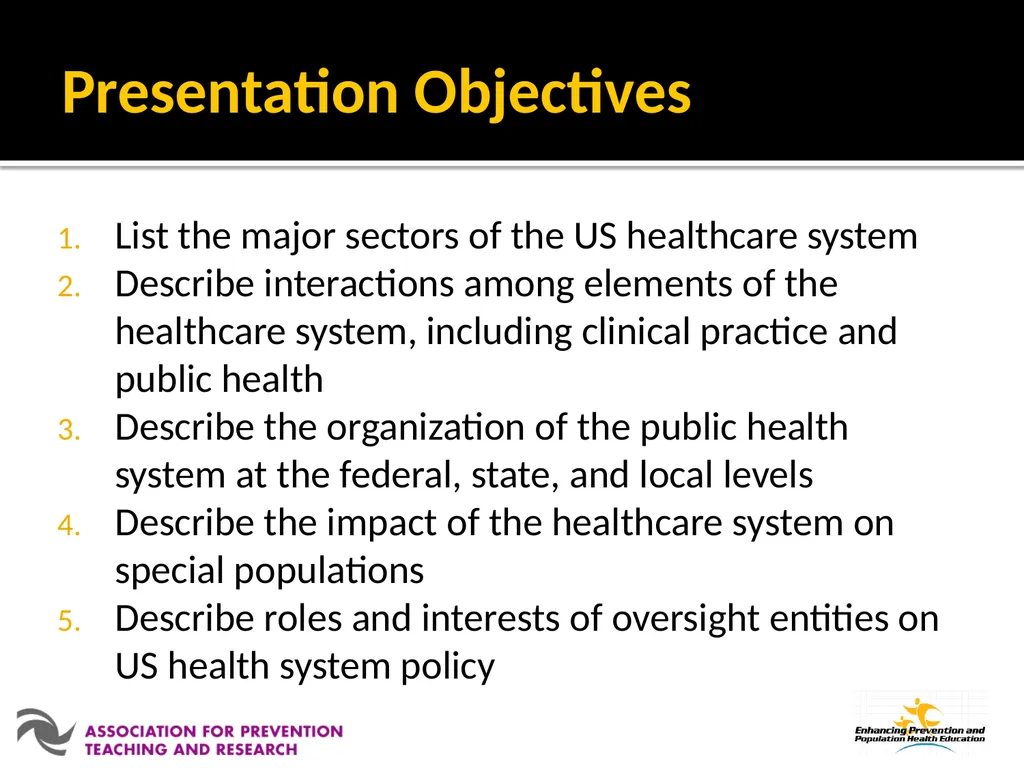
slide3. Presentation Objectives List the major sectors of the US healthcare system
Describe interactions among elements of the healthcare system, including clinical practice and public health
Describe the organization of the public health system at the federal, state, and local levels
Describe the impact of the healthcare system on special populations
Describe roles and interests of oversight entities on US health system policy<br>
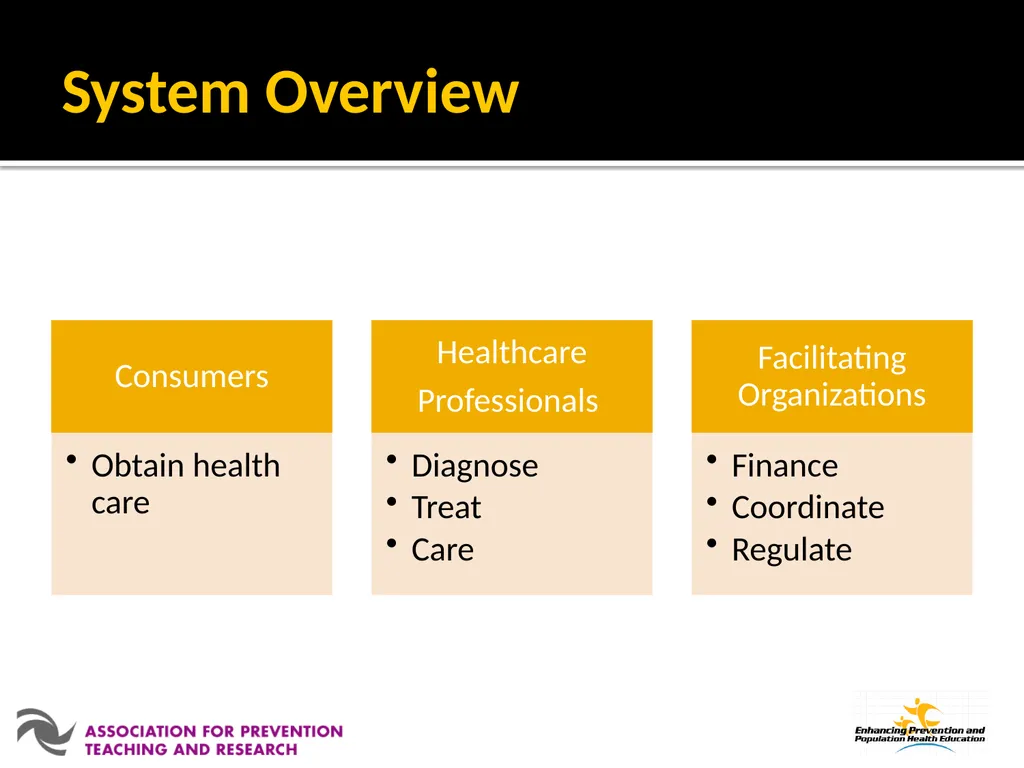
slide4. System Overview<br>
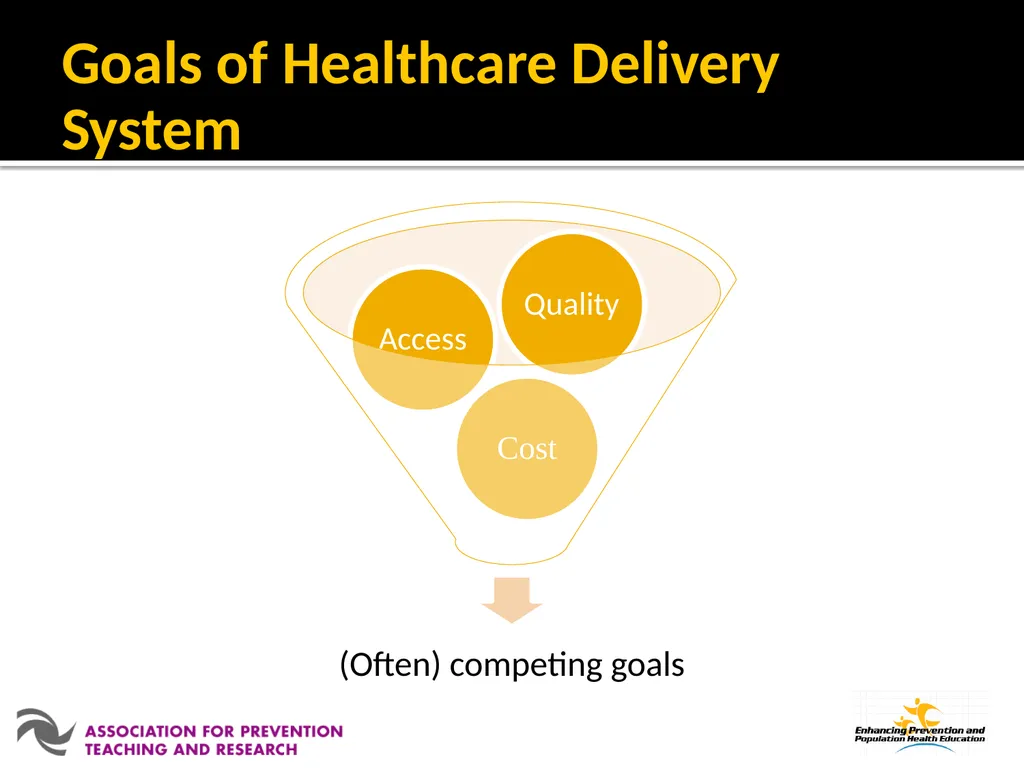
slide5. Goals of Healthcare Delivery System<br>
slide6. Questions to Consider Who currently utilizes health care in the US?
Where do most healthcare encounters occur?
What is the reason for most encounters?
What are the different models for organizing, funding and regulating these encounters?
How do public health and clinical practice influence one another?<br>
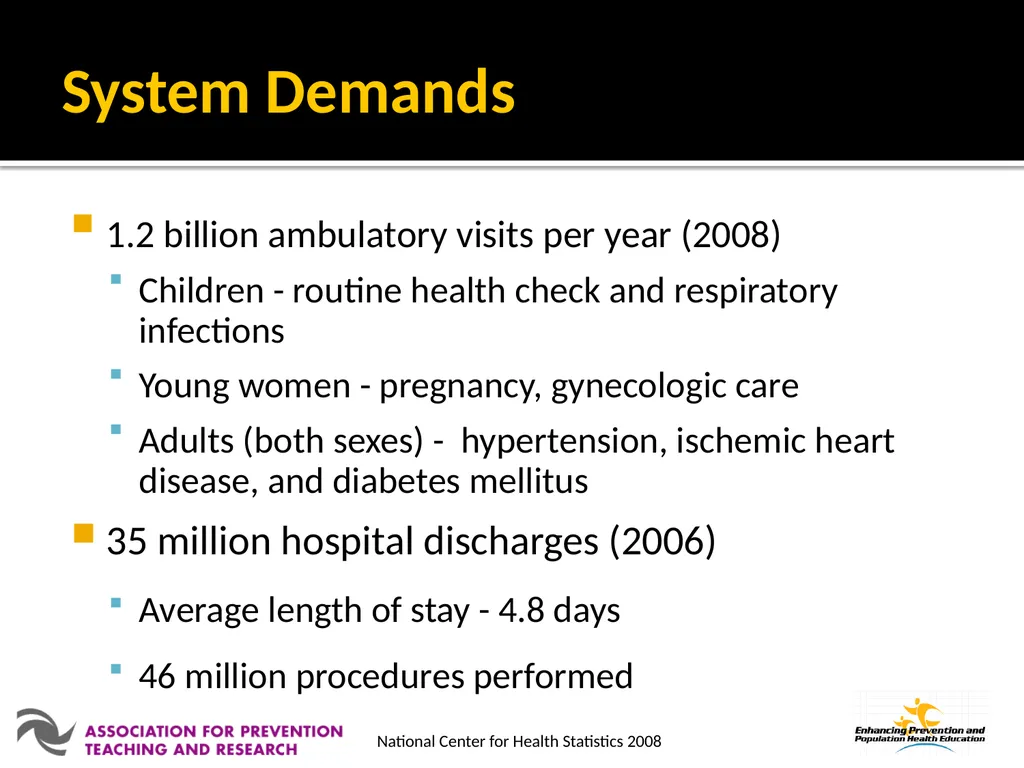
slide7. System Demands 1.2 billion ambulatory visits per year (2008)
Children - routine health check and respiratory infections
Young women - pregnancy, gynecologic care
Adults (both sexes) - hypertension, ischemic heart disease, and diabetes mellitus
35 million hospital discharges (2006)
Average length of stay - 4.8 days
46 million procedures performed National Center for Health Statistics 2008<br>
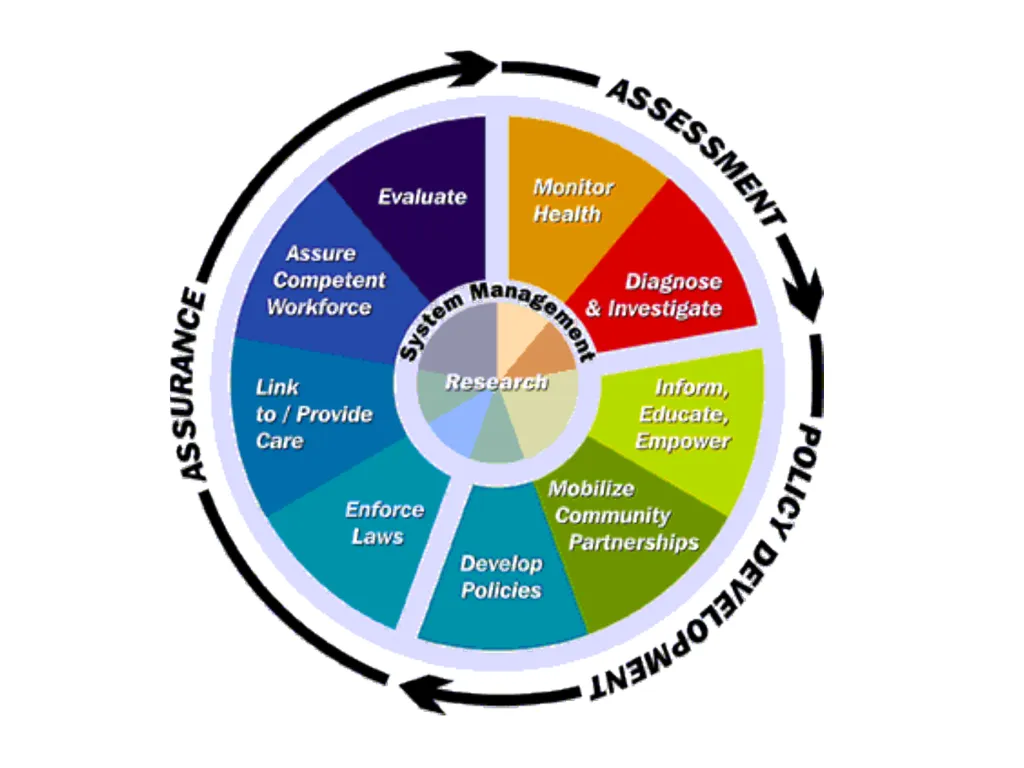
slide8. Overview of Public Health System<br>
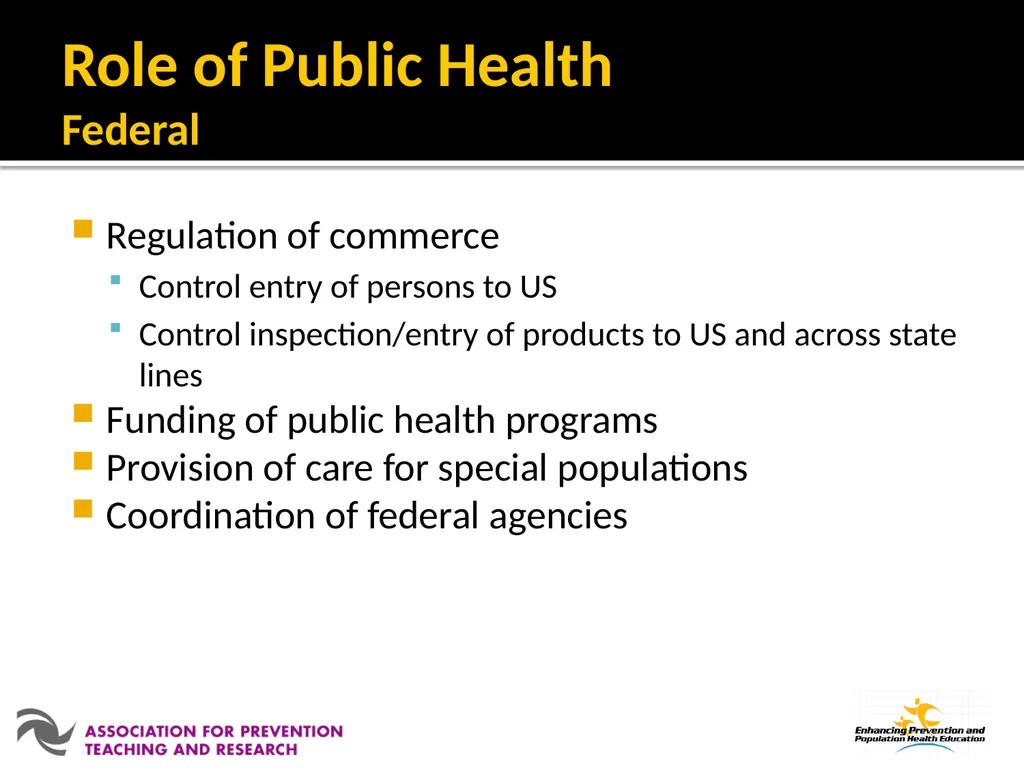
slide9. Role of Public Health Federal Regulation of commerce
Control entry of persons to US
Control inspection/entry of products to US and across state lines
Funding of public health programs
Provision of care for special populations
Coordination of federal agencies<br>
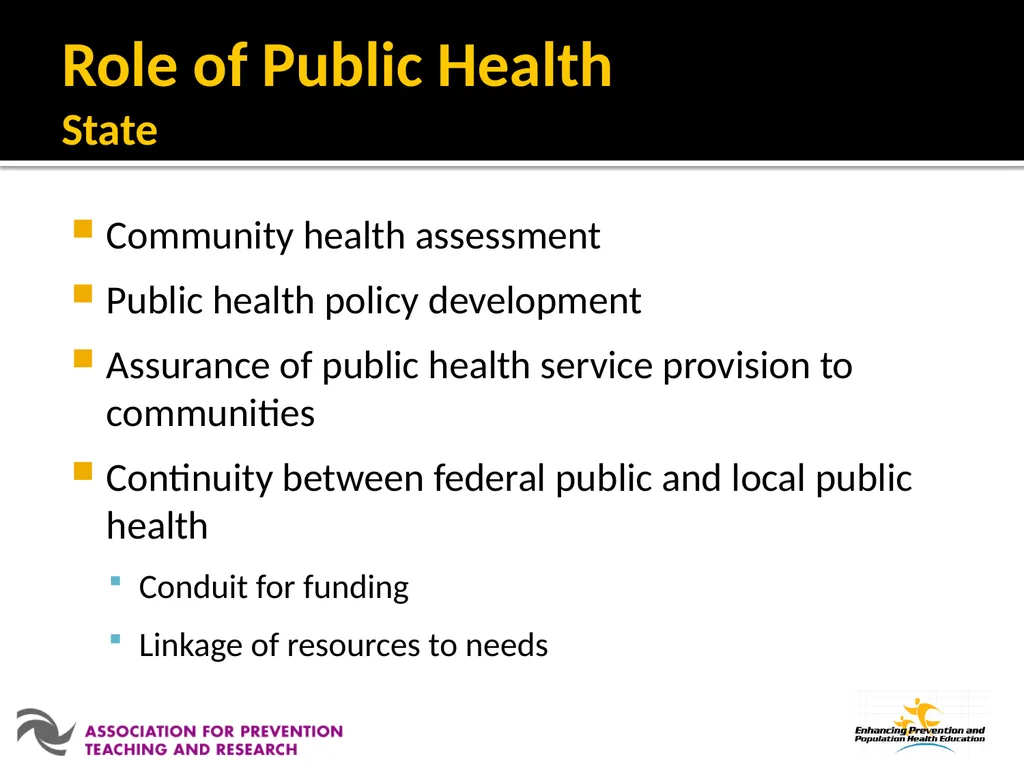
slide10. Community health assessment
Public health policy development
Assurance of public health service provision to communities
Continuity between federal public and local public health
Conduit for funding
Linkage of resources to needs Role of Public Health State<br>
slide12. May be city and/or county-based
Provide mandated public health services
Enact and enforce public health codes as mandated by state and federal officials
Must meet minimum threshold of state standards
May be more rigorous than state standards Role of Public Health Local<br>
slide13. Vital statistics
Communicable disease control
Maternal and child health
Environmental health
Health education
Public health laboratories Local Public Health Functions<br>
slide14. Clinical Medicine and Public Health Clinical Medicine
Patient-focused
Diagnosis and treatment
Medical care paradigm
Public Health
Population-focused
Disease prevention and health promotion
Spectrum of interventions<br>
slide15. Healthcare System Sectors<br>
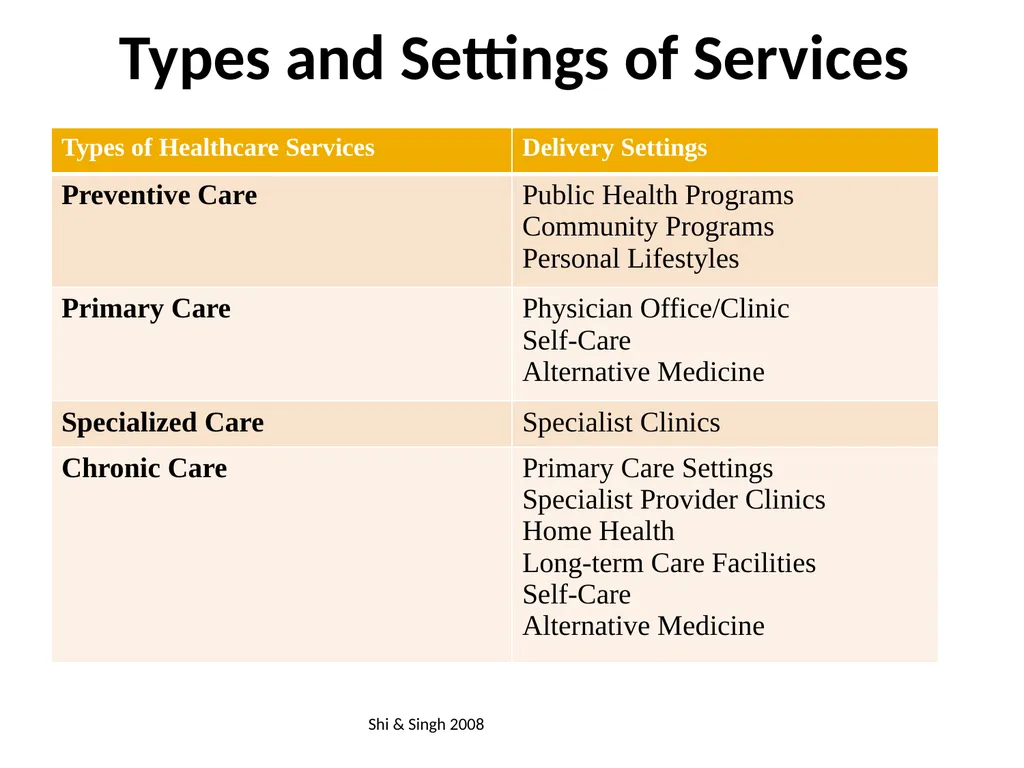
slide16. Types and Settings of Services Shi & Singh 2008<br>
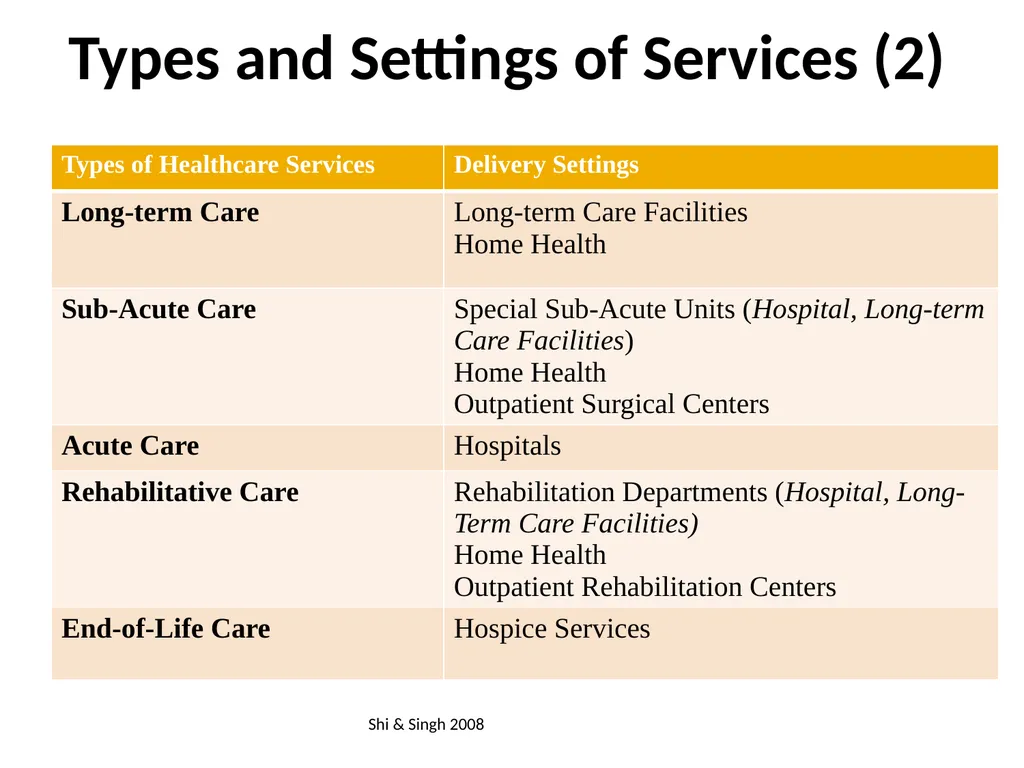
slide17. Types and Settings of Services (2) Shi & Singh 2008<br>
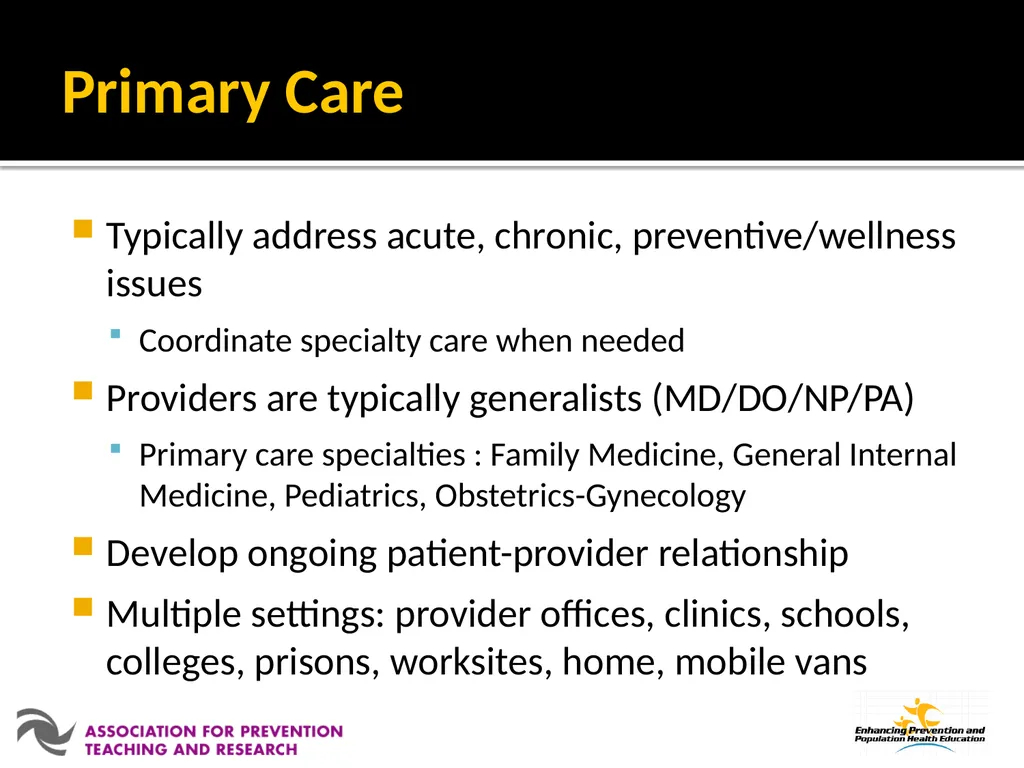
slide18. Typically address acute, chronic, preventive/wellness issues
Coordinate specialty care when needed
Providers are typically generalists (MD/DO/NP/PA)
Primary care specialties : Family Medicine, General Internal Medicine, Pediatrics, Obstetrics-Gynecology
Develop ongoing patient-provider relationship
Multiple settings: provider offices, clinics, schools, colleges, prisons, worksites, home, mobile vans Primary Care<br>
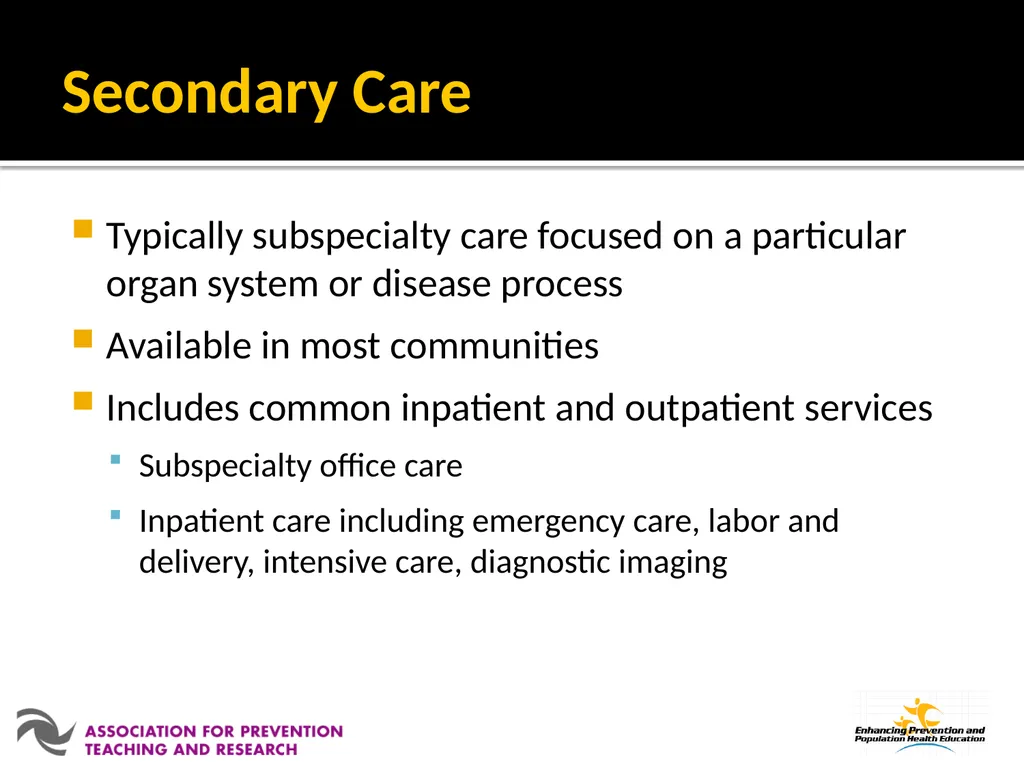
slide19. Secondary Care Typically subspecialty care focused on a particular organ system or disease process
Available in most communities
Includes common inpatient and outpatient services
Subspecialty office care
Inpatient care including emergency care, labor and delivery, intensive care, diagnostic imaging<br>
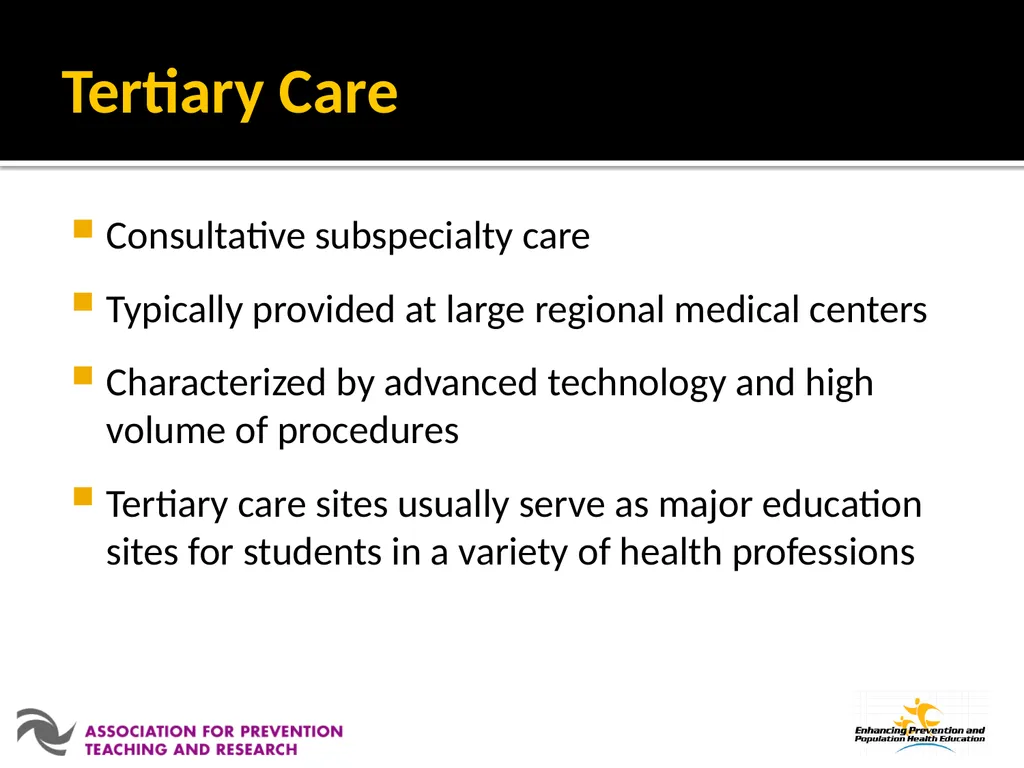
slide20. Tertiary Care Consultative subspecialty care
Typically provided at large regional medical centers
Characterized by advanced technology and high volume of procedures
Tertiary care sites usually serve as major education sites for students in a variety of health professions<br>
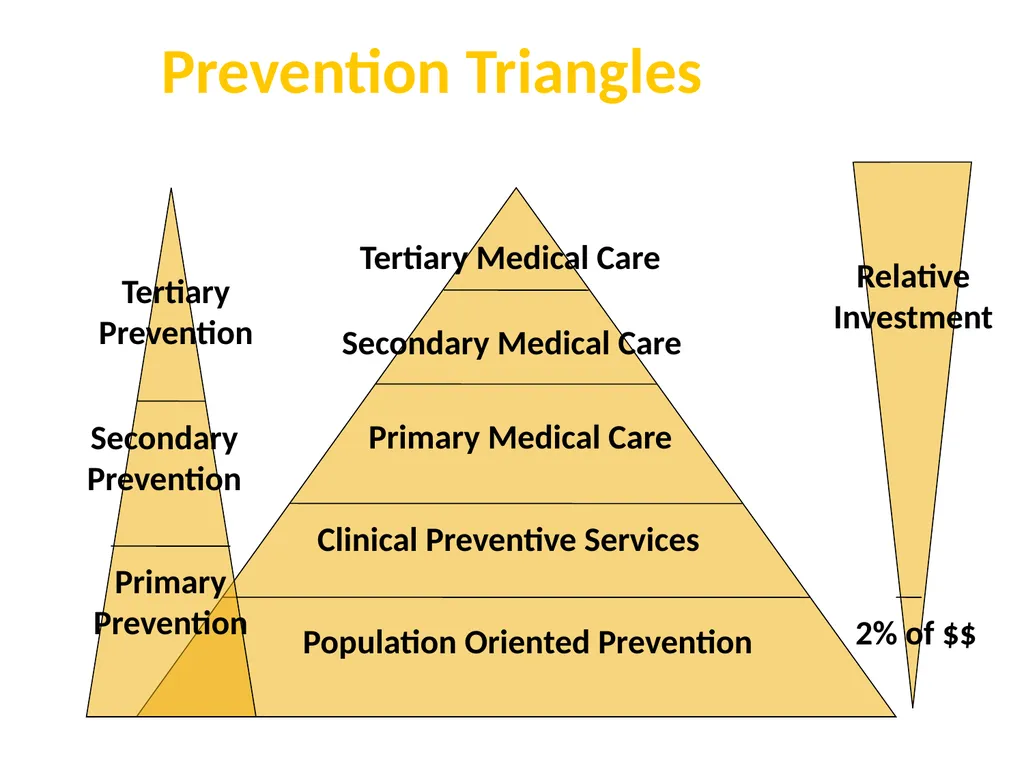
slide21. Prevention Triangles Population Oriented Prevention Clinical Preventive Services Primary Medical Care Secondary Medical Care Tertiary Medical Care Relative
Investment Tertiary
Prevention Secondary
Prevention Primary
Prevention 2% of $$<br>
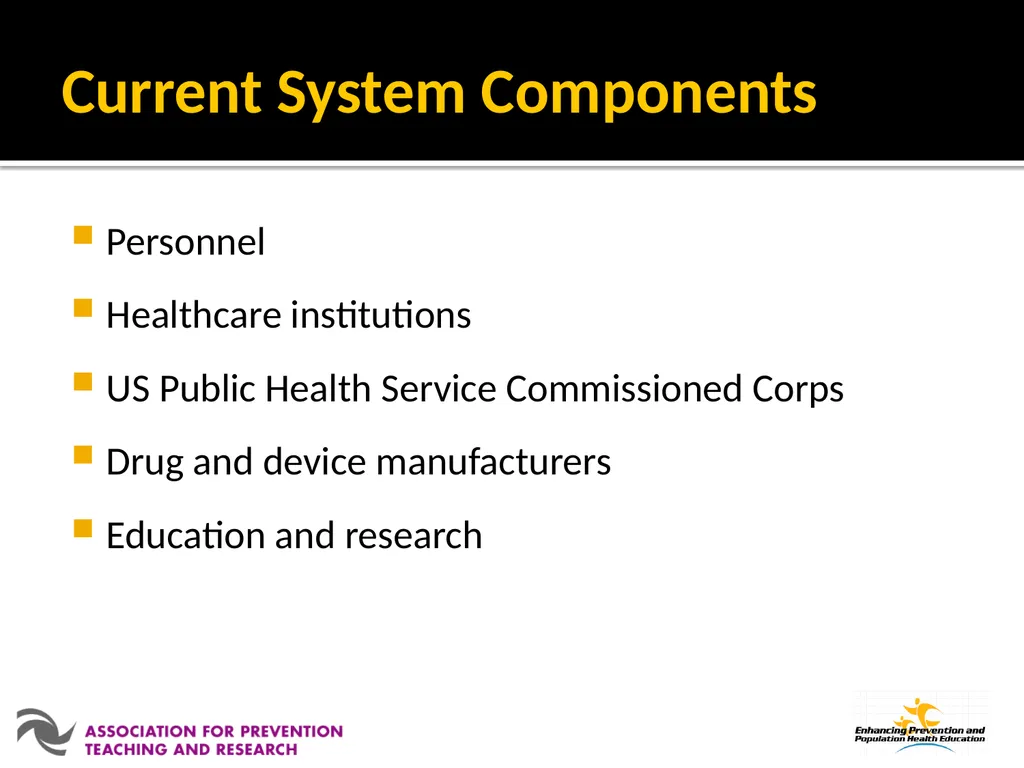
slide22. Current System Components Personnel
Healthcare institutions
US Public Health Service Commissioned Corps
Drug and device manufacturers
Education and research<br>
slide23. Personnel Nurses
Physicians (MD/DO)
NP,PA, midwives
Pharmacists
Dentists
Several million ancillary personnel
80% involved in direct healthcare provision
Therapists, social workers, lab technicians National Center for Health Statistics 2004<br>
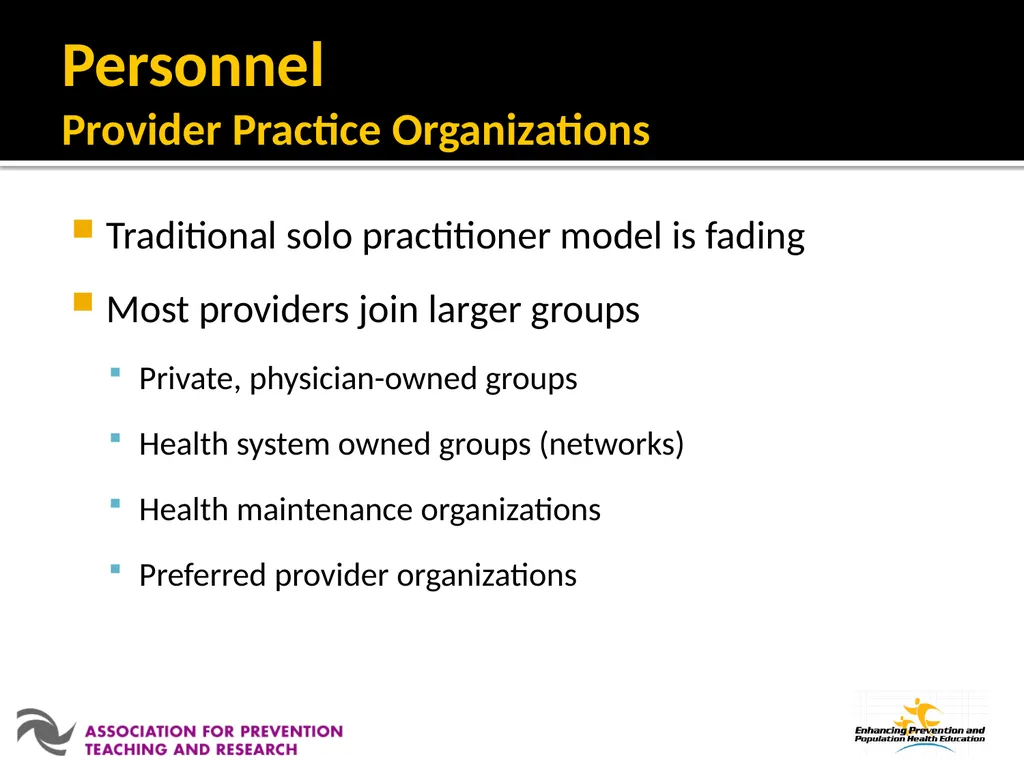
slide24. Personnel Provider Practice Organizations Traditional solo practitioner model is fading
Most providers join larger groups
Private, physician-owned groups
Health system owned groups (networks)
Health maintenance organizations
Preferred provider organizations<br>
slide25. Healthcare Institutions Hospitals Private, community hospitals
Not for profits are most common
Many are religiously affiliated
Private, for profit
Public (state or local government)
Psychiatric hospitals
Academic medical centers
VA and military centers<br>
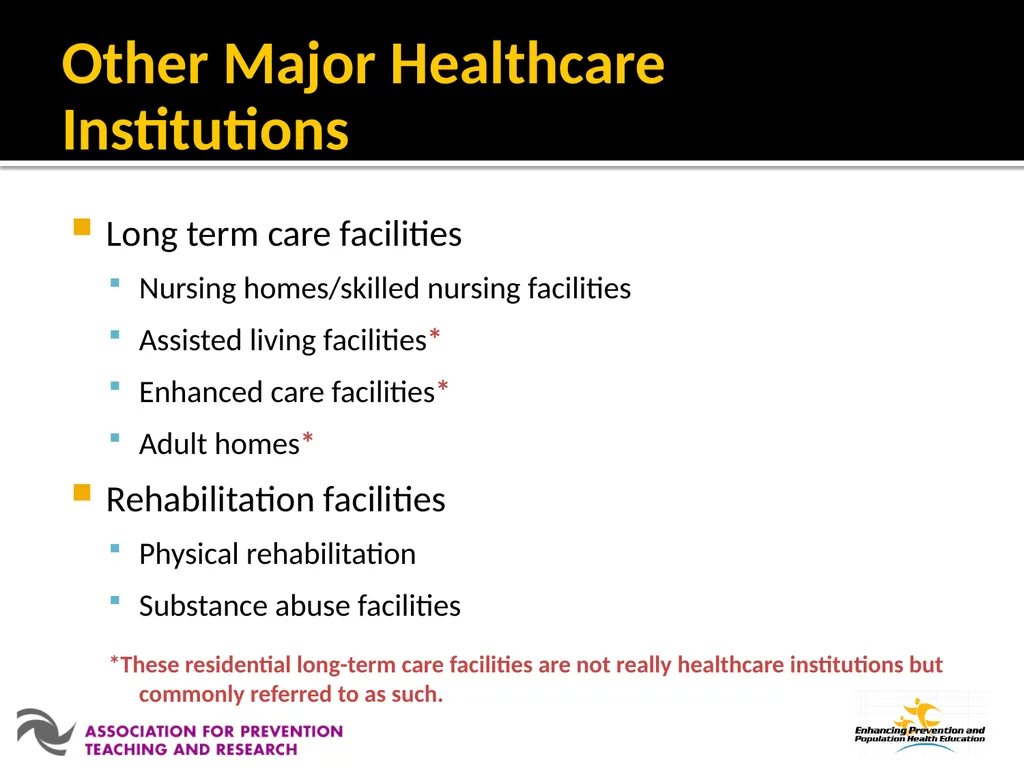
slide26. Other Major Healthcare Institutions Long term care facilities
Nursing homes/skilled nursing facilities
Assisted living facilities*
Enhanced care facilities*
Adult homes*
Rehabilitation facilities
Physical rehabilitation
Substance abuse facilities
*These residential long-term care facilities are not really healthcare institutions but commonly referred to as such.<br>
slide27. US Public Health Service Commissioned Corps 6,600 full time clinical and public health professionals
Provide primary care in underserved areas
Staff domestic and international public health emergencies
Work in research, administrative and public health capacities in a number of federal agencies<br>
slide28. Pharmaceuticals and Devices Large industry with major impact on cost and policy
$234 billion in 2008
Growing rapidly with the passage of Medicare D (prescription benefit)
Regulated by Food and Drug Administration Hartman et al 2010<br>
slide29. Education and Research Public/Private funding mix supports undergraduate nursing, medical and physician assistant programs
Public funding of Graduate Medical Education
US does not actively manage specialty choice or distribution of its physician workforce
Government is major funder for basic medical research
Industry is major funder for clinical trials of drugs, and devices and continuing medical education<br>
slide30. Healthcare Oversight<br>
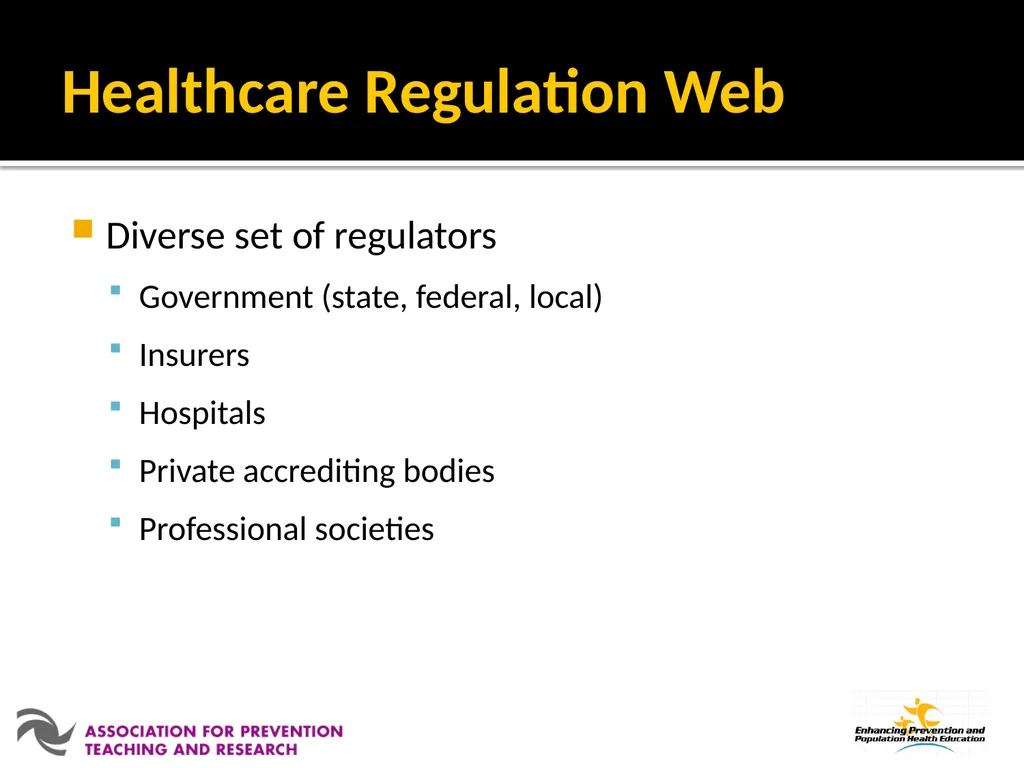
slide31. Healthcare Regulation Web Diverse set of regulators
Government (state, federal, local)
Insurers
Hospitals
Private accrediting bodies
Professional societies<br>
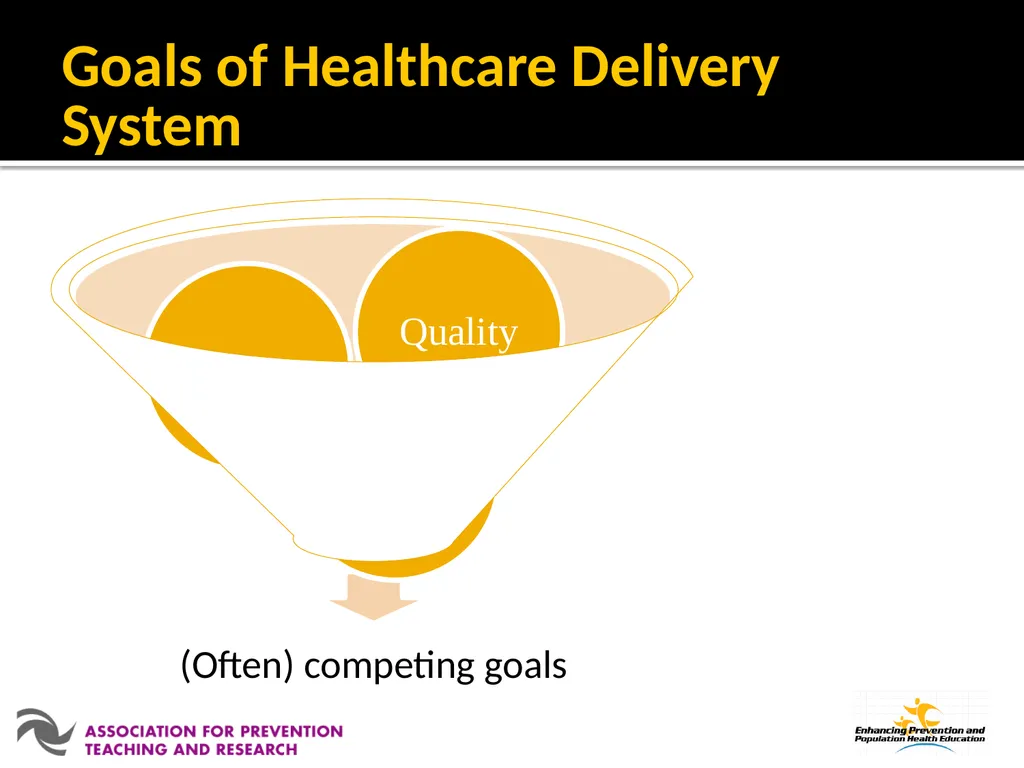
slide32. Goals of Healthcare Delivery System<br>
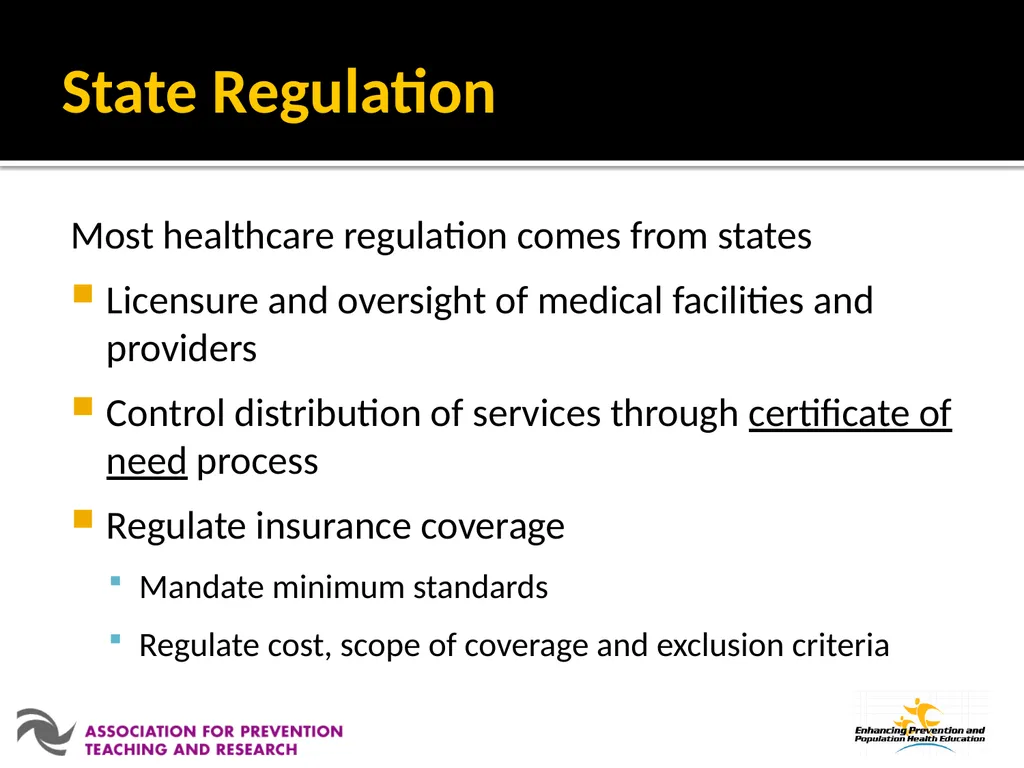
slide33. State Regulation Most healthcare regulation comes from states
Licensure and oversight of medical facilities and providers
Control distribution of services through certificate of need process
Regulate insurance coverage
Mandate minimum standards
Regulate cost, scope of coverage and exclusion criteria<br>
slide34. Certificate of Need (CON) Purpose
Cost containment
Prevent unnecessary duplication of health care
Ensure high quality health services
Accomplishes this through many roles
Extensive review process<br>
slide35. Federal Regulation Regulatory power derived from federal status as the major payor in most systems (Medicare, Medicaid)
Reimbursement is increasingly tied to compliance with federal standards
Department of Health and Human Services (DHHS) is the major federal actor in healthcare regulation<br>
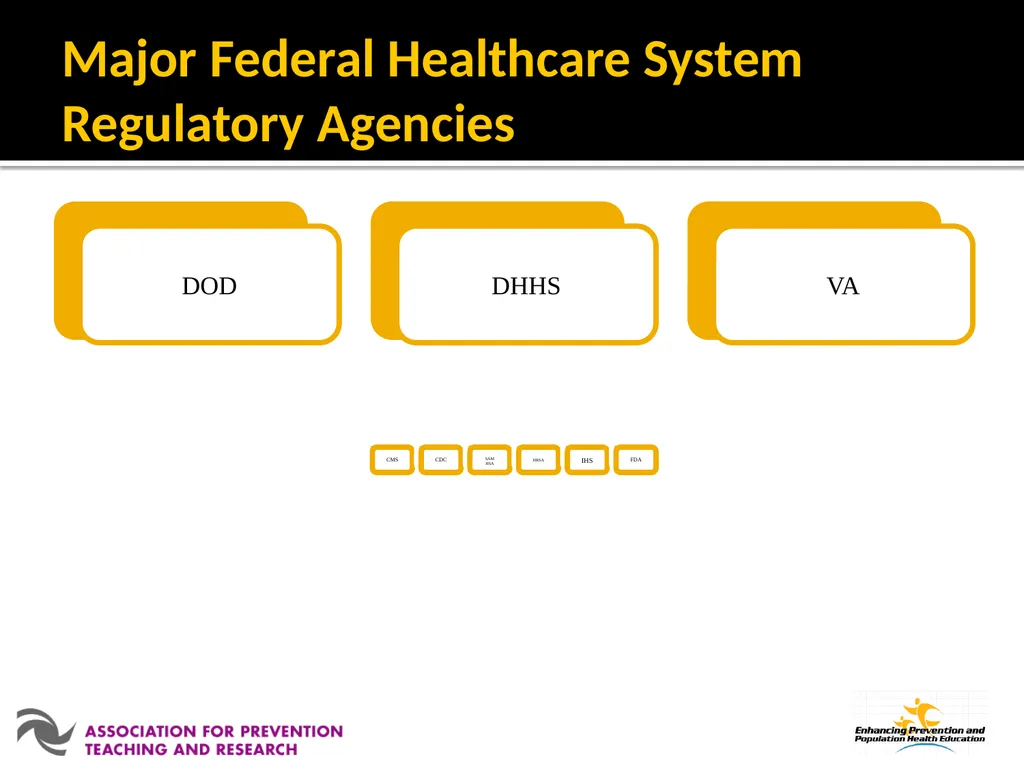
slide36. Major Federal Healthcare System Regulatory Agencies<br>
slide37. Contract with physicians/hospitals to encourage
Quality
Cost control
Market share
Set standards
Audit providers and institutions
Adjust payments accordingly Regulators Insurers<br>
slide38. Credential physicians, physician assistants, midwives, nurses, other healthcare staff
Hospital credentialing often necessary for malpractice insurance eligibility
Regular review of medical staff for quality, professional conduct and practice standards Regulators Hospitals<br>
slide39. JCAHO (Joint Commission on Accreditation of Healthcare Organizations)
Accredits hospitals
Private organization of member hospitals
NCQA (National Committee for Quality Assurance)
Accredits managed care plans
Private organization representing employers/purchasers
Specialty Organizations
Specific certifications (bariatric surgery centers, Baby Friendly USA) Regulators Private Accrediting Organizations<br>
slide40. Professional Societies Historically the major regulator of healthcare delivery until increasing influence of government and insurance industries
Still influential in determining acceptable professional practice standards, and contributing to regulatory policy<br>
slide41. Professional Impairment Regulatory System Response Most common impairments
Substance abuse/dependency
Mental illness
Aging-related impairments a growing problem
Trend toward treatment vs. sanction<br>
slide42. Special Populations<br>
slide43. Veterans Unique health care infrastructure
Inter-generational health care needs
Health/public health considerations
War-related injuries
Chemical exposure
Homelessness
Post traumatic stress disorder
Prisoners of war<br>
slide44. Indian Health Service Created through treaties between US government and Indian tribes
Eligibility for US benefits and programs
Contract Health Services (CHS) to supplement
Considerations for American Indians
Safe water and sewage
Injury mortality rate 2-4x other Americans<br>
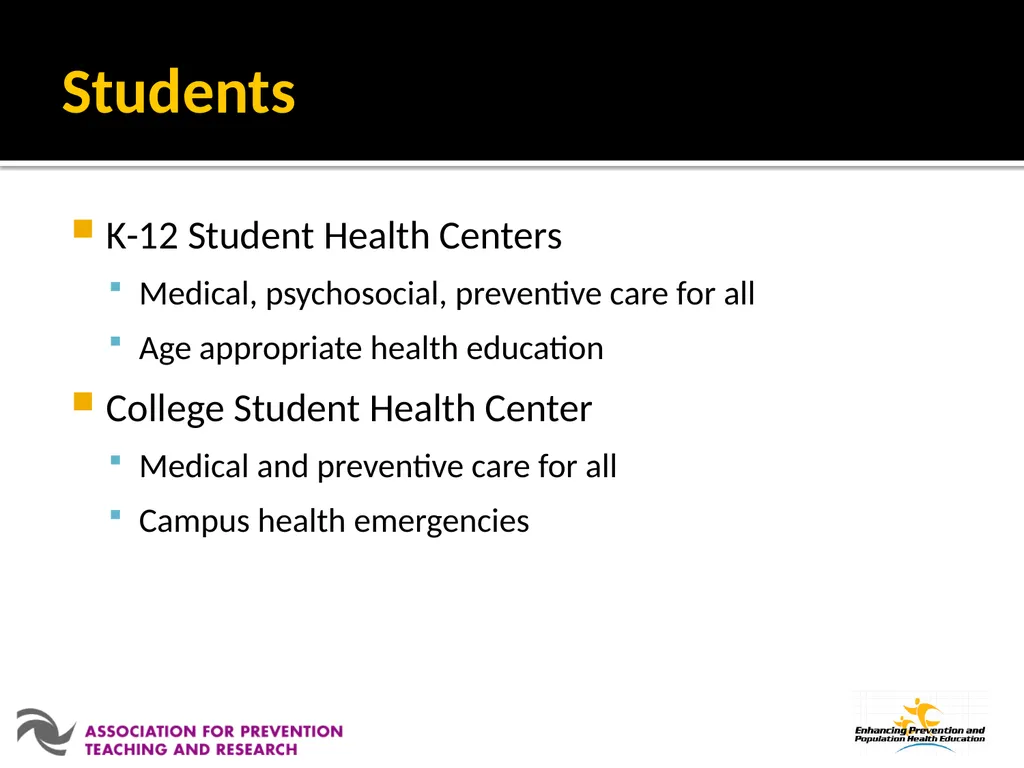
slide45. Students K-12 Student Health Centers
Medical, psychosocial, preventive care for all
Age appropriate health education
College Student Health Center
Medical and preventive care for all
Campus health emergencies<br>
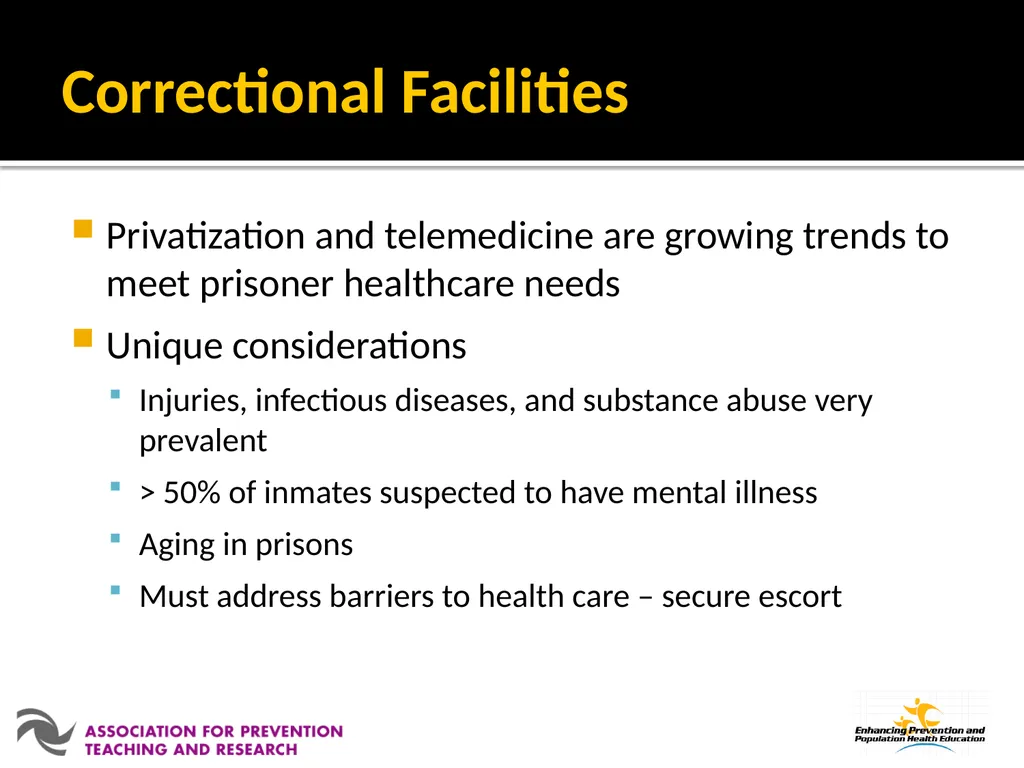
slide46. Correctional Facilities Privatization and telemedicine are growing trends to meet prisoner healthcare needs
Unique considerations
Injuries, infectious diseases, and substance abuse very prevalent
> 50% of inmates suspected to have mental illness
Aging in prisons
Must address barriers to health care – secure escort<br>
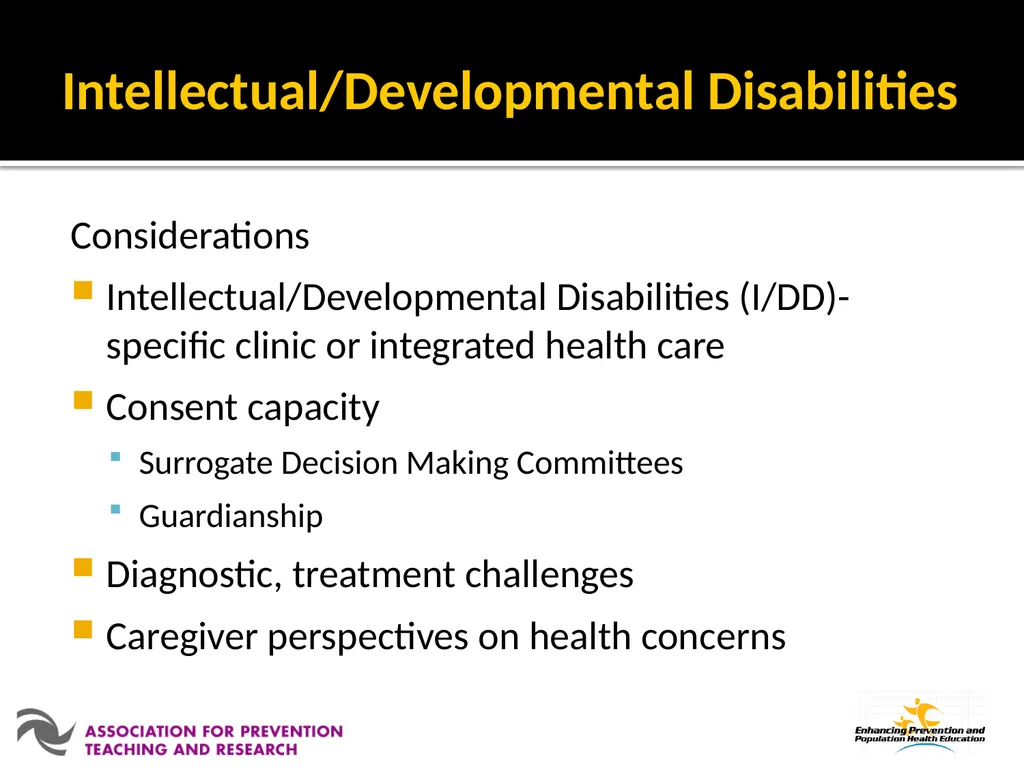
slide47. Intellectual/Developmental Disabilities Considerations
Intellectual/Developmental Disabilities (I/DD)-specific clinic or integrated health care
Consent capacity
Surrogate Decision Making Committees
Guardianship
Diagnostic, treatment challenges
Caregiver perspectives on health concerns<br>
slide48. Global Perspective on Healthcare Systems<br>
slide49. Evaluation of US Healthcare System Strengths
Advanced diagnostic and therapeutic technology
Timely availability of subspecialists and procedures<br>
slide50. Evaluation of US Healthcare System Weaknesses
Limited access to multiple underserved populations
High cost with marginal population outcomes
Fragmentation of care
Insufficient primary care workforce
Highly bureaucratic/large administrative costs
Misaligned incentives<br>
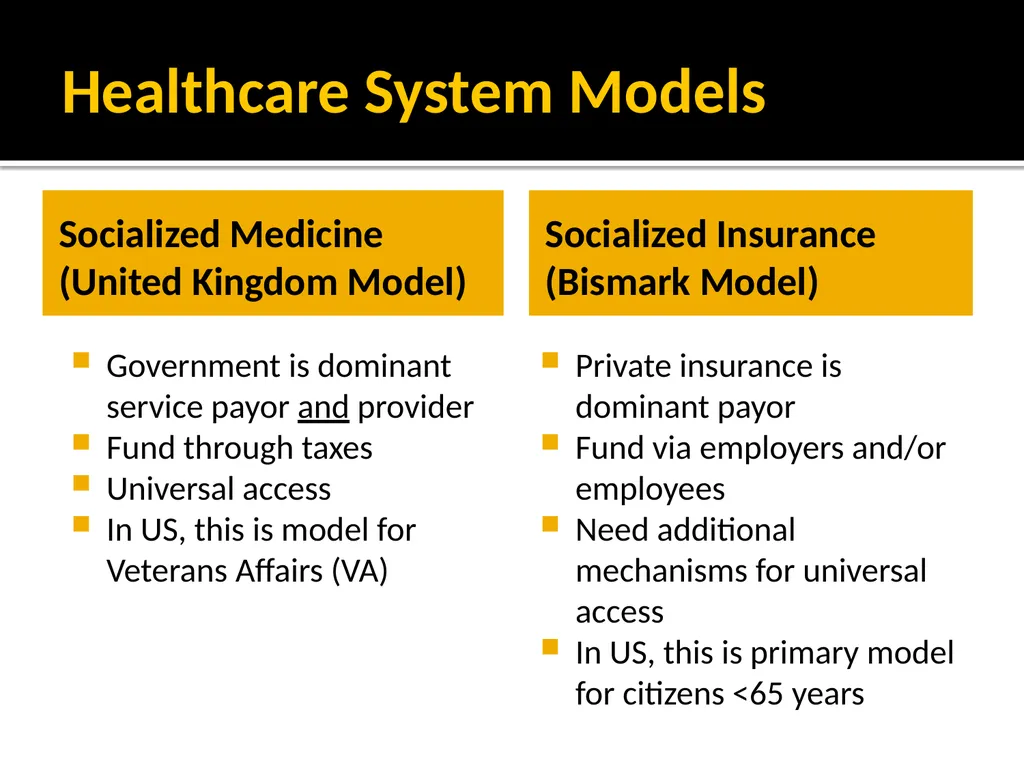
slide51. Healthcare System Models Socialized Medicine
(United Kingdom Model) Government is dominant service payor and provider
Fund through taxes
Universal access
In US, this is model for Veterans Affairs (VA) Socialized Insurance
(Bismark Model) Private insurance is dominant payor
Fund via employers and/or employees
Need additional mechanisms for universal access
In US, this is primary model for citizens <65 years<br>
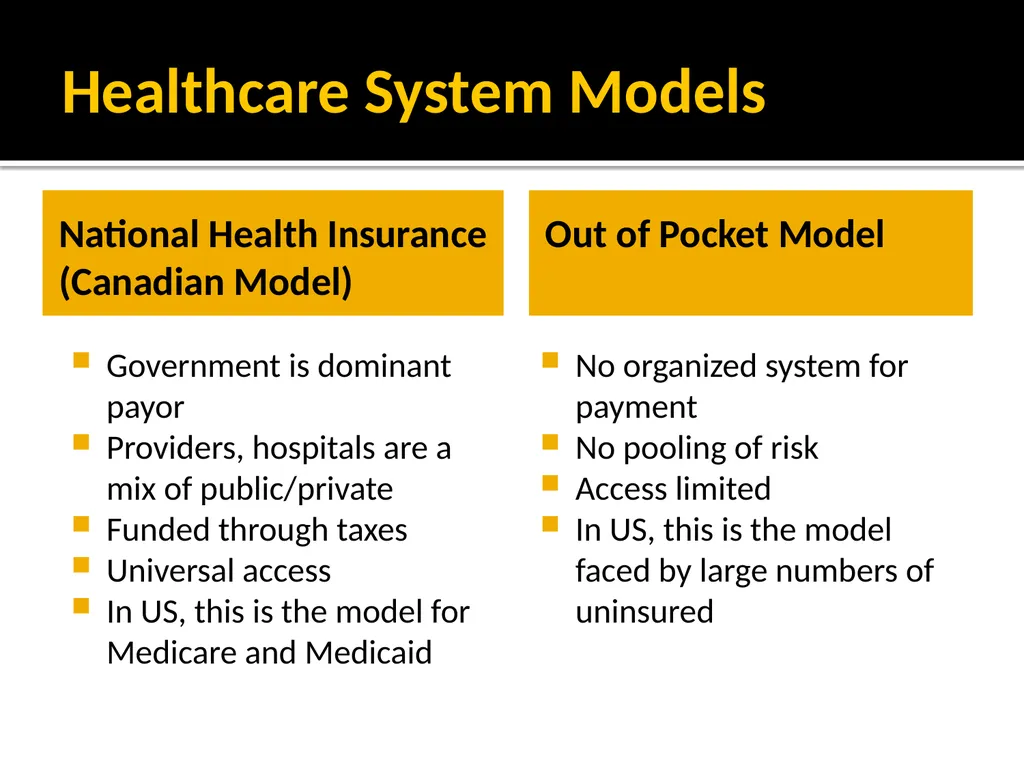
slide52. Healthcare System Models National Health Insurance
(Canadian Model) Government is dominant payor
Providers, hospitals are a mix of public/private
Funded through taxes
Universal access
In US, this is the model for Medicare and Medicaid Out of Pocket Model No organized system for payment
No pooling of risk
Access limited
In US, this is the model faced by large numbers of uninsured<br>
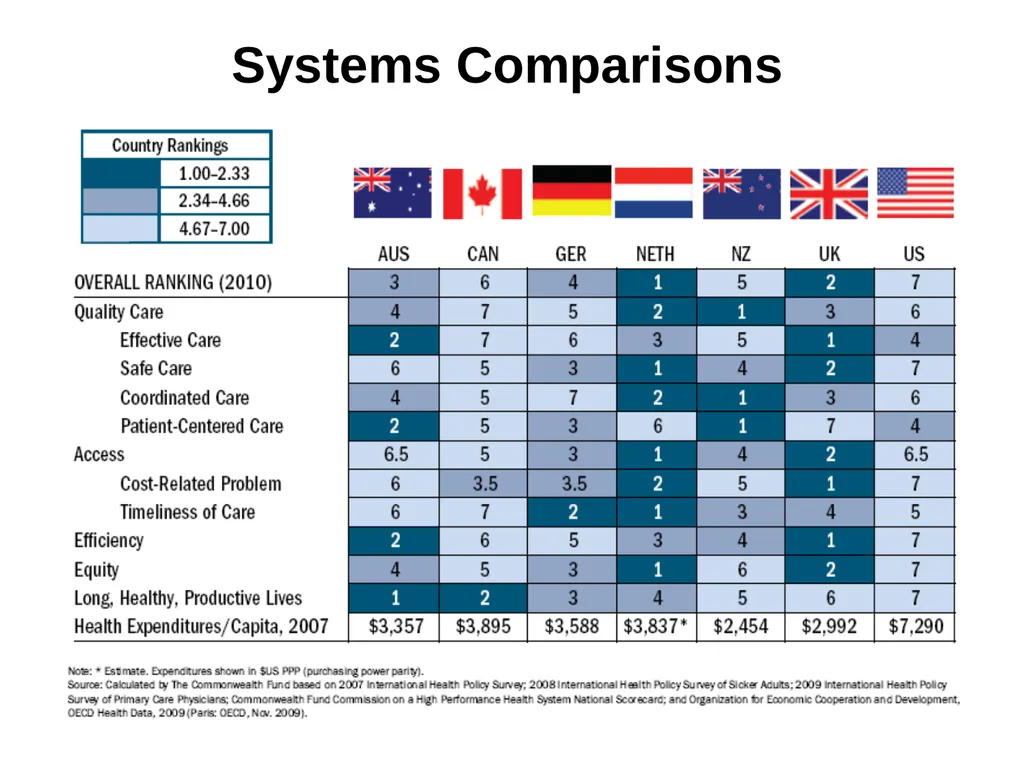
slide53. Systems Comparisons<br>
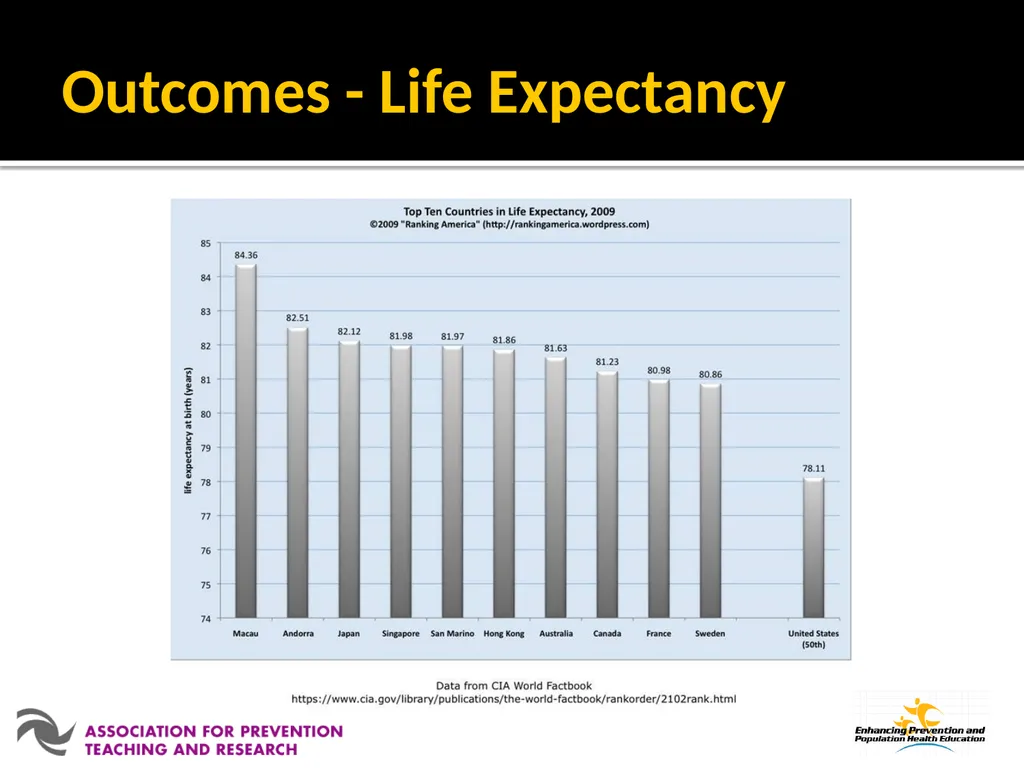
slide54. Outcomes - Life Expectancy<br>
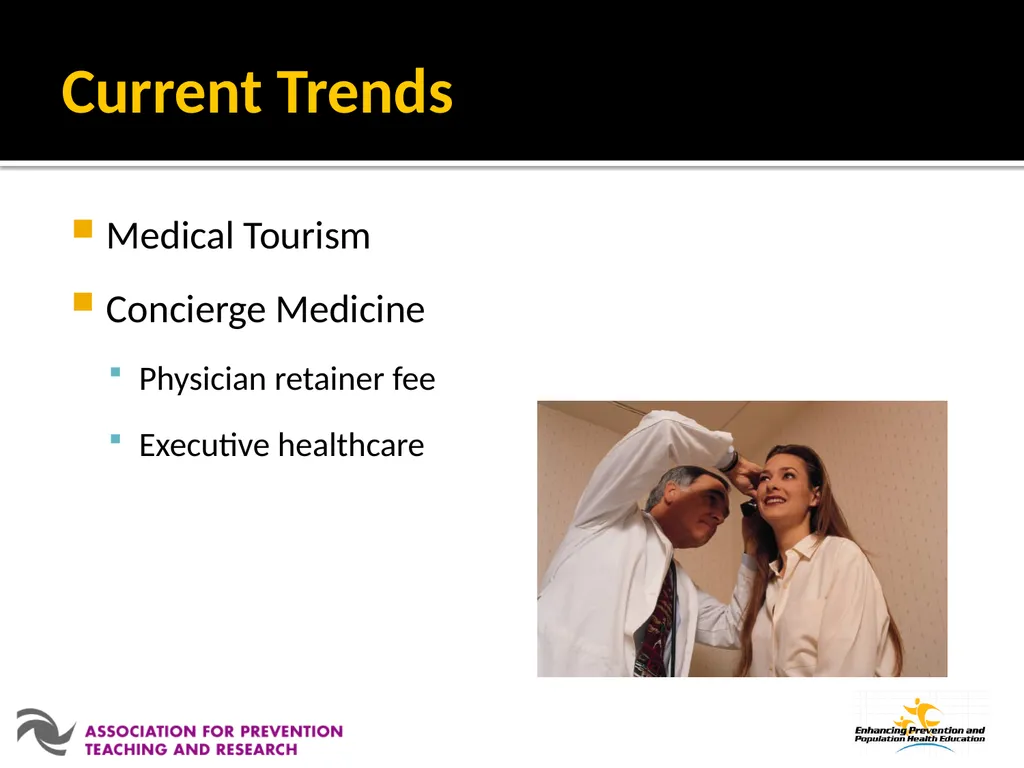
slide55. Current Trends Medical Tourism
Concierge Medicine
Physician retainer fee
Executive healthcare<br>
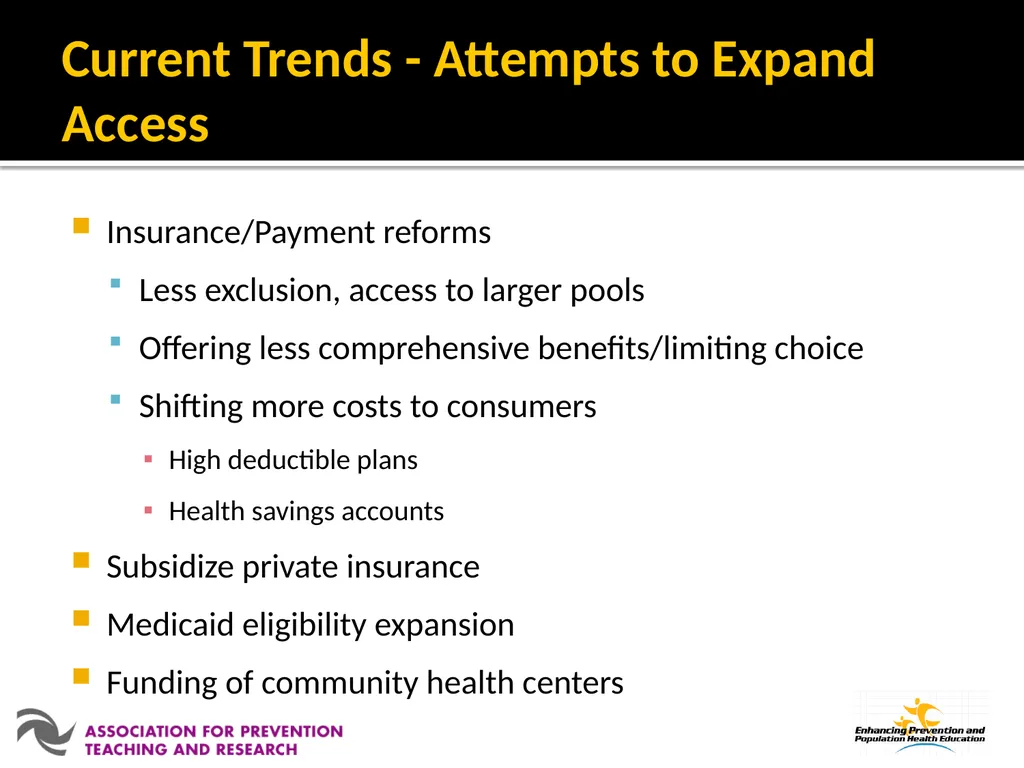
slide56. Current Trends - Attempts to Expand Access Insurance/Payment reforms
Less exclusion, access to larger pools
Offering less comprehensive benefits/limiting choice
Shifting more costs to consumers
High deductible plans
Health savings accounts
Subsidize private insurance
Medicaid eligibility expansion
Funding of community health centers<br>
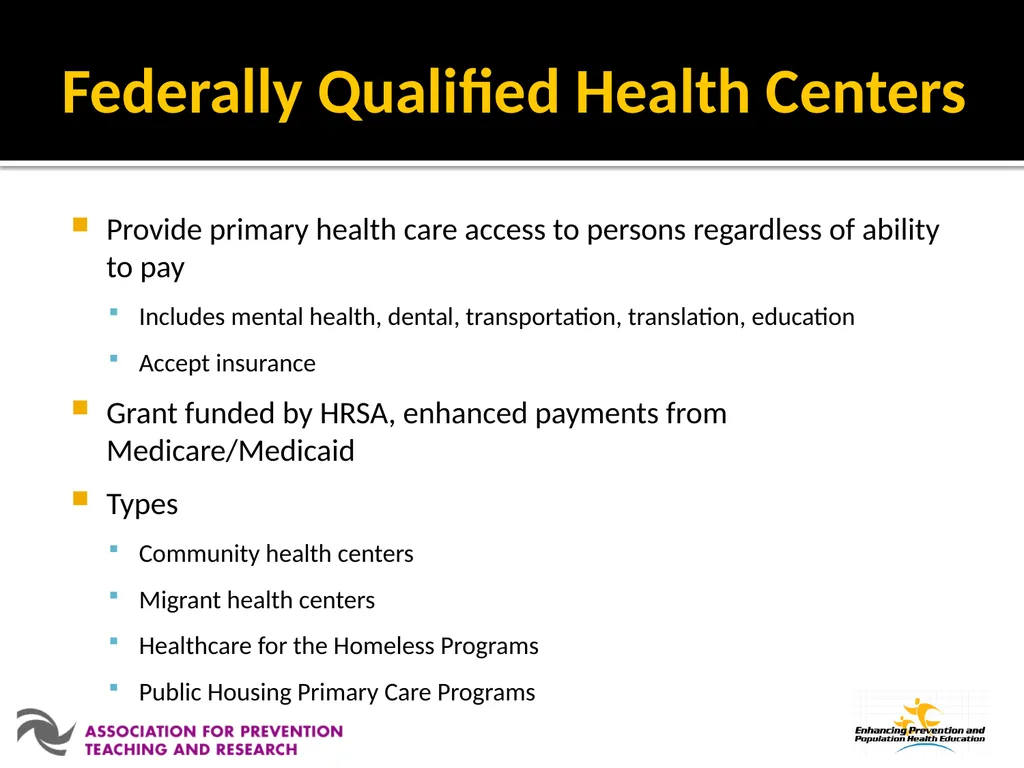
slide57. Federally Qualified Health Centers Provide primary health care access to persons regardless of ability to pay
Includes mental health, dental, transportation, translation, education
Accept insurance
Grant funded by HRSA, enhanced payments from Medicare/Medicaid
Types
Community health centers
Migrant health centers
Healthcare for the Homeless Programs
Public Housing Primary Care Programs<br>
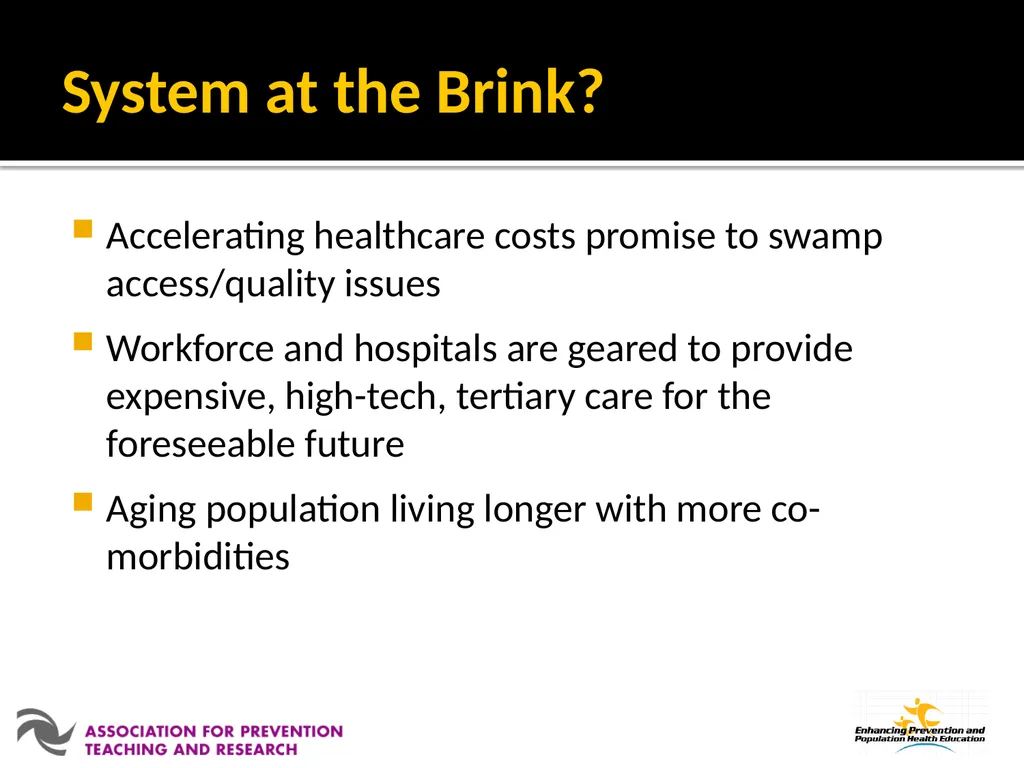
slide58. System at the Brink? Accelerating healthcare costs promise to swamp access/quality issues
Workforce and hospitals are geared to provide expensive, high-tech, tertiary care for the foreseeable future
Aging population living longer with more co-morbidities<br>
slide59. Impending Demographic Tsunami<br>
slide60. Paradigm Shift in Healthcare Delivery<br>
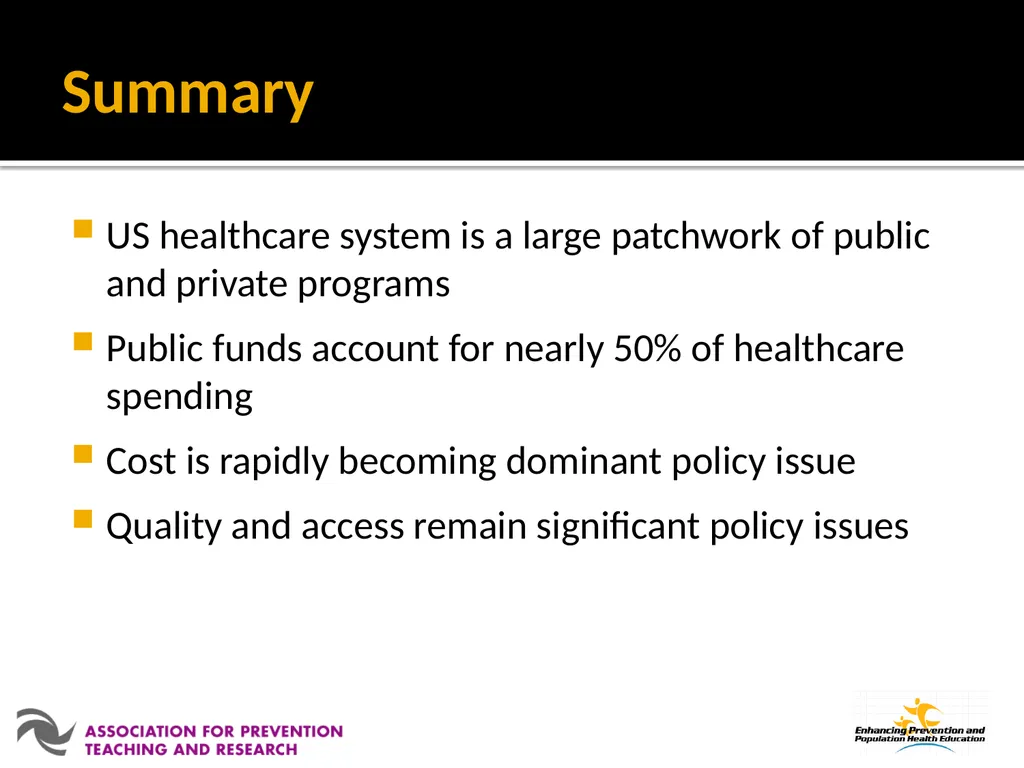
slide61. Summary US healthcare system is a large patchwork of public and private programs
Public funds account for nearly 50% of healthcare spending
Cost is rapidly becoming dominant policy issue
Quality and access remain significant policy issues<br>
slide62. Collaborating Institutions Department of Public Health
Brody School of Medicine at East Carolina University
Department of Community & Family Medicine
Duke University School of Medicine<br>
slide63. Advisory Committee Mike Barry, CAE
Lorrie Basnight, MD
Nancy Bennett, MD, MS
Ruth Gaare Bernheim, JD, MPH
Amber Berrian, MPH
James Cawley, MPH, PA-C
Jack Dillenberg, DDS, MPH
Kristine Gebbie, RN, DrPH
Asim Jani, MD, MPH, FACP
Denise Koo, MD, MPH
Suzanne Lazorick, MD, MPH
Rika Maeshiro, MD, MPH
Dan Mareck, MD
Steve McCurdy, MD, MPH
Susan M. Meyer, PhD
Sallie Rixey, MD, MEd
Nawraz Shawir, MBBS<br>
slide64. APTR Sharon Hull, MD, MPH
President
Allison L. Lewis
Executive Director
O. Kent Nordvig, MEd
Project Representative<br>
Health Education in collaboration with the Brody School of Medicine at East Carolina University with funding from the Centers for Disease Control and Prevention US Healthcare Delivery Systems<br>
slide2. Acknowledgments This education module is made possible through the Centers for Disease Control and Prevention (CDC) and the Association for Prevention Teaching and Research (APTR) Cooperative Agreement, No. 5U50CD300860. The module represents the opinions of the author(s) and does not necessarily represent the views of the Centers for Disease Control and Prevention or the Association for Prevention Teaching and Research. APTR wishes to acknowledge the following individuals that developed this module:
Joseph Nicholas, MD, MPH
University of Rochester School of Medicine
Anna Zendell, PhD, MSW
Center for Public Health Continuing Education
University at Albany School of Public Health
Mary Applegate, MD, MPH
University at Albany School of Public Health
Cheryl Reeves, MS, MLS
Center for Public Health Continuing Education
University at Albany School of Public Health<br>
slide3. Presentation Objectives List the major sectors of the US healthcare system
Describe interactions among elements of the healthcare system, including clinical practice and public health
Describe the organization of the public health system at the federal, state, and local levels
Describe the impact of the healthcare system on special populations
Describe roles and interests of oversight entities on US health system policy<br>
slide4. System Overview<br>
slide5. Goals of Healthcare Delivery System<br>
slide6. Questions to Consider Who currently utilizes health care in the US?
Where do most healthcare encounters occur?
What is the reason for most encounters?
What are the different models for organizing, funding and regulating these encounters?
How do public health and clinical practice influence one another?<br>
slide7. System Demands 1.2 billion ambulatory visits per year (2008)
Children - routine health check and respiratory infections
Young women - pregnancy, gynecologic care
Adults (both sexes) - hypertension, ischemic heart disease, and diabetes mellitus
35 million hospital discharges (2006)
Average length of stay - 4.8 days
46 million procedures performed National Center for Health Statistics 2008<br>
slide8. Overview of Public Health System<br>
slide9. Role of Public Health Federal Regulation of commerce
Control entry of persons to US
Control inspection/entry of products to US and across state lines
Funding of public health programs
Provision of care for special populations
Coordination of federal agencies<br>
slide10. Community health assessment
Public health policy development
Assurance of public health service provision to communities
Continuity between federal public and local public health
Conduit for funding
Linkage of resources to needs Role of Public Health State<br>
slide12. May be city and/or county-based
Provide mandated public health services
Enact and enforce public health codes as mandated by state and federal officials
Must meet minimum threshold of state standards
May be more rigorous than state standards Role of Public Health Local<br>
slide13. Vital statistics
Communicable disease control
Maternal and child health
Environmental health
Health education
Public health laboratories Local Public Health Functions<br>
slide14. Clinical Medicine and Public Health Clinical Medicine
Patient-focused
Diagnosis and treatment
Medical care paradigm
Public Health
Population-focused
Disease prevention and health promotion
Spectrum of interventions<br>
slide15. Healthcare System Sectors<br>
slide16. Types and Settings of Services Shi & Singh 2008<br>
slide17. Types and Settings of Services (2) Shi & Singh 2008<br>
slide18. Typically address acute, chronic, preventive/wellness issues
Coordinate specialty care when needed
Providers are typically generalists (MD/DO/NP/PA)
Primary care specialties : Family Medicine, General Internal Medicine, Pediatrics, Obstetrics-Gynecology
Develop ongoing patient-provider relationship
Multiple settings: provider offices, clinics, schools, colleges, prisons, worksites, home, mobile vans Primary Care<br>
slide19. Secondary Care Typically subspecialty care focused on a particular organ system or disease process
Available in most communities
Includes common inpatient and outpatient services
Subspecialty office care
Inpatient care including emergency care, labor and delivery, intensive care, diagnostic imaging<br>
slide20. Tertiary Care Consultative subspecialty care
Typically provided at large regional medical centers
Characterized by advanced technology and high volume of procedures
Tertiary care sites usually serve as major education sites for students in a variety of health professions<br>
slide21. Prevention Triangles Population Oriented Prevention Clinical Preventive Services Primary Medical Care Secondary Medical Care Tertiary Medical Care Relative
Investment Tertiary
Prevention Secondary
Prevention Primary
Prevention 2% of $$<br>
slide22. Current System Components Personnel
Healthcare institutions
US Public Health Service Commissioned Corps
Drug and device manufacturers
Education and research<br>
slide23. Personnel Nurses
Physicians (MD/DO)
NP,PA, midwives
Pharmacists
Dentists
Several million ancillary personnel
80% involved in direct healthcare provision
Therapists, social workers, lab technicians National Center for Health Statistics 2004<br>
slide24. Personnel Provider Practice Organizations Traditional solo practitioner model is fading
Most providers join larger groups
Private, physician-owned groups
Health system owned groups (networks)
Health maintenance organizations
Preferred provider organizations<br>
slide25. Healthcare Institutions Hospitals Private, community hospitals
Not for profits are most common
Many are religiously affiliated
Private, for profit
Public (state or local government)
Psychiatric hospitals
Academic medical centers
VA and military centers<br>
slide26. Other Major Healthcare Institutions Long term care facilities
Nursing homes/skilled nursing facilities
Assisted living facilities*
Enhanced care facilities*
Adult homes*
Rehabilitation facilities
Physical rehabilitation
Substance abuse facilities
*These residential long-term care facilities are not really healthcare institutions but commonly referred to as such.<br>
slide27. US Public Health Service Commissioned Corps 6,600 full time clinical and public health professionals
Provide primary care in underserved areas
Staff domestic and international public health emergencies
Work in research, administrative and public health capacities in a number of federal agencies<br>
slide28. Pharmaceuticals and Devices Large industry with major impact on cost and policy
$234 billion in 2008
Growing rapidly with the passage of Medicare D (prescription benefit)
Regulated by Food and Drug Administration Hartman et al 2010<br>
slide29. Education and Research Public/Private funding mix supports undergraduate nursing, medical and physician assistant programs
Public funding of Graduate Medical Education
US does not actively manage specialty choice or distribution of its physician workforce
Government is major funder for basic medical research
Industry is major funder for clinical trials of drugs, and devices and continuing medical education<br>
slide30. Healthcare Oversight<br>
slide31. Healthcare Regulation Web Diverse set of regulators
Government (state, federal, local)
Insurers
Hospitals
Private accrediting bodies
Professional societies<br>
slide32. Goals of Healthcare Delivery System<br>
slide33. State Regulation Most healthcare regulation comes from states
Licensure and oversight of medical facilities and providers
Control distribution of services through certificate of need process
Regulate insurance coverage
Mandate minimum standards
Regulate cost, scope of coverage and exclusion criteria<br>
slide34. Certificate of Need (CON) Purpose
Cost containment
Prevent unnecessary duplication of health care
Ensure high quality health services
Accomplishes this through many roles
Extensive review process<br>
slide35. Federal Regulation Regulatory power derived from federal status as the major payor in most systems (Medicare, Medicaid)
Reimbursement is increasingly tied to compliance with federal standards
Department of Health and Human Services (DHHS) is the major federal actor in healthcare regulation<br>
slide36. Major Federal Healthcare System Regulatory Agencies<br>
slide37. Contract with physicians/hospitals to encourage
Quality
Cost control
Market share
Set standards
Audit providers and institutions
Adjust payments accordingly Regulators Insurers<br>
slide38. Credential physicians, physician assistants, midwives, nurses, other healthcare staff
Hospital credentialing often necessary for malpractice insurance eligibility
Regular review of medical staff for quality, professional conduct and practice standards Regulators Hospitals<br>
slide39. JCAHO (Joint Commission on Accreditation of Healthcare Organizations)
Accredits hospitals
Private organization of member hospitals
NCQA (National Committee for Quality Assurance)
Accredits managed care plans
Private organization representing employers/purchasers
Specialty Organizations
Specific certifications (bariatric surgery centers, Baby Friendly USA) Regulators Private Accrediting Organizations<br>
slide40. Professional Societies Historically the major regulator of healthcare delivery until increasing influence of government and insurance industries
Still influential in determining acceptable professional practice standards, and contributing to regulatory policy<br>
slide41. Professional Impairment Regulatory System Response Most common impairments
Substance abuse/dependency
Mental illness
Aging-related impairments a growing problem
Trend toward treatment vs. sanction<br>
slide42. Special Populations<br>
slide43. Veterans Unique health care infrastructure
Inter-generational health care needs
Health/public health considerations
War-related injuries
Chemical exposure
Homelessness
Post traumatic stress disorder
Prisoners of war<br>
slide44. Indian Health Service Created through treaties between US government and Indian tribes
Eligibility for US benefits and programs
Contract Health Services (CHS) to supplement
Considerations for American Indians
Safe water and sewage
Injury mortality rate 2-4x other Americans<br>
slide45. Students K-12 Student Health Centers
Medical, psychosocial, preventive care for all
Age appropriate health education
College Student Health Center
Medical and preventive care for all
Campus health emergencies<br>
slide46. Correctional Facilities Privatization and telemedicine are growing trends to meet prisoner healthcare needs
Unique considerations
Injuries, infectious diseases, and substance abuse very prevalent
> 50% of inmates suspected to have mental illness
Aging in prisons
Must address barriers to health care – secure escort<br>
slide47. Intellectual/Developmental Disabilities Considerations
Intellectual/Developmental Disabilities (I/DD)-specific clinic or integrated health care
Consent capacity
Surrogate Decision Making Committees
Guardianship
Diagnostic, treatment challenges
Caregiver perspectives on health concerns<br>
slide48. Global Perspective on Healthcare Systems<br>
slide49. Evaluation of US Healthcare System Strengths
Advanced diagnostic and therapeutic technology
Timely availability of subspecialists and procedures<br>
slide50. Evaluation of US Healthcare System Weaknesses
Limited access to multiple underserved populations
High cost with marginal population outcomes
Fragmentation of care
Insufficient primary care workforce
Highly bureaucratic/large administrative costs
Misaligned incentives<br>
slide51. Healthcare System Models Socialized Medicine
(United Kingdom Model) Government is dominant service payor and provider
Fund through taxes
Universal access
In US, this is model for Veterans Affairs (VA) Socialized Insurance
(Bismark Model) Private insurance is dominant payor
Fund via employers and/or employees
Need additional mechanisms for universal access
In US, this is primary model for citizens <65 years<br>
slide52. Healthcare System Models National Health Insurance
(Canadian Model) Government is dominant payor
Providers, hospitals are a mix of public/private
Funded through taxes
Universal access
In US, this is the model for Medicare and Medicaid Out of Pocket Model No organized system for payment
No pooling of risk
Access limited
In US, this is the model faced by large numbers of uninsured<br>
slide53. Systems Comparisons<br>
slide54. Outcomes - Life Expectancy<br>
slide55. Current Trends Medical Tourism
Concierge Medicine
Physician retainer fee
Executive healthcare<br>
slide56. Current Trends - Attempts to Expand Access Insurance/Payment reforms
Less exclusion, access to larger pools
Offering less comprehensive benefits/limiting choice
Shifting more costs to consumers
High deductible plans
Health savings accounts
Subsidize private insurance
Medicaid eligibility expansion
Funding of community health centers<br>
slide57. Federally Qualified Health Centers Provide primary health care access to persons regardless of ability to pay
Includes mental health, dental, transportation, translation, education
Accept insurance
Grant funded by HRSA, enhanced payments from Medicare/Medicaid
Types
Community health centers
Migrant health centers
Healthcare for the Homeless Programs
Public Housing Primary Care Programs<br>
slide58. System at the Brink? Accelerating healthcare costs promise to swamp access/quality issues
Workforce and hospitals are geared to provide expensive, high-tech, tertiary care for the foreseeable future
Aging population living longer with more co-morbidities<br>
slide59. Impending Demographic Tsunami<br>
slide60. Paradigm Shift in Healthcare Delivery<br>
slide61. Summary US healthcare system is a large patchwork of public and private programs
Public funds account for nearly 50% of healthcare spending
Cost is rapidly becoming dominant policy issue
Quality and access remain significant policy issues<br>
slide62. Collaborating Institutions Department of Public Health
Brody School of Medicine at East Carolina University
Department of Community & Family Medicine
Duke University School of Medicine<br>
slide63. Advisory Committee Mike Barry, CAE
Lorrie Basnight, MD
Nancy Bennett, MD, MS
Ruth Gaare Bernheim, JD, MPH
Amber Berrian, MPH
James Cawley, MPH, PA-C
Jack Dillenberg, DDS, MPH
Kristine Gebbie, RN, DrPH
Asim Jani, MD, MPH, FACP
Denise Koo, MD, MPH
Suzanne Lazorick, MD, MPH
Rika Maeshiro, MD, MPH
Dan Mareck, MD
Steve McCurdy, MD, MPH
Susan M. Meyer, PhD
Sallie Rixey, MD, MEd
Nawraz Shawir, MBBS<br>
slide64. APTR Sharon Hull, MD, MPH
President
Allison L. Lewis
Executive Director
O. Kent Nordvig, MEd
Project Representative<br>