Monitoring Conservation Easement Lands in Orange County The Nature Conservancy Zachary Principe TNCs Orange County History 1990: TNC prepares management plan for 22,000 acres of The Irvine Companys open space lands 1992: TNC assumes
"Monitoring Conservation Easement Lands in Orange" is the property of its rightful owner. Permission is granted to
download and print the materials on this website for personal, non-commercial use only, and to display it
on your personal computer provided you do not modify the materials and that you retain all copyright
notices contained in the materials. By downloading content from our website, you accept the terms of this
agreement.
Presentation Transcript
01
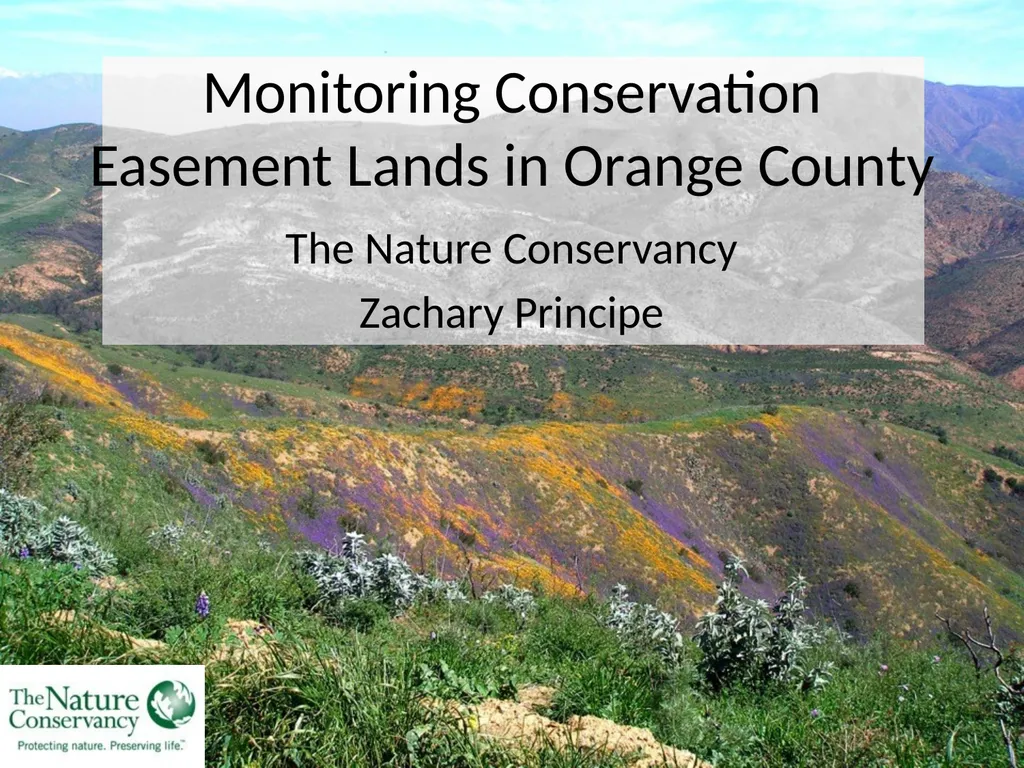
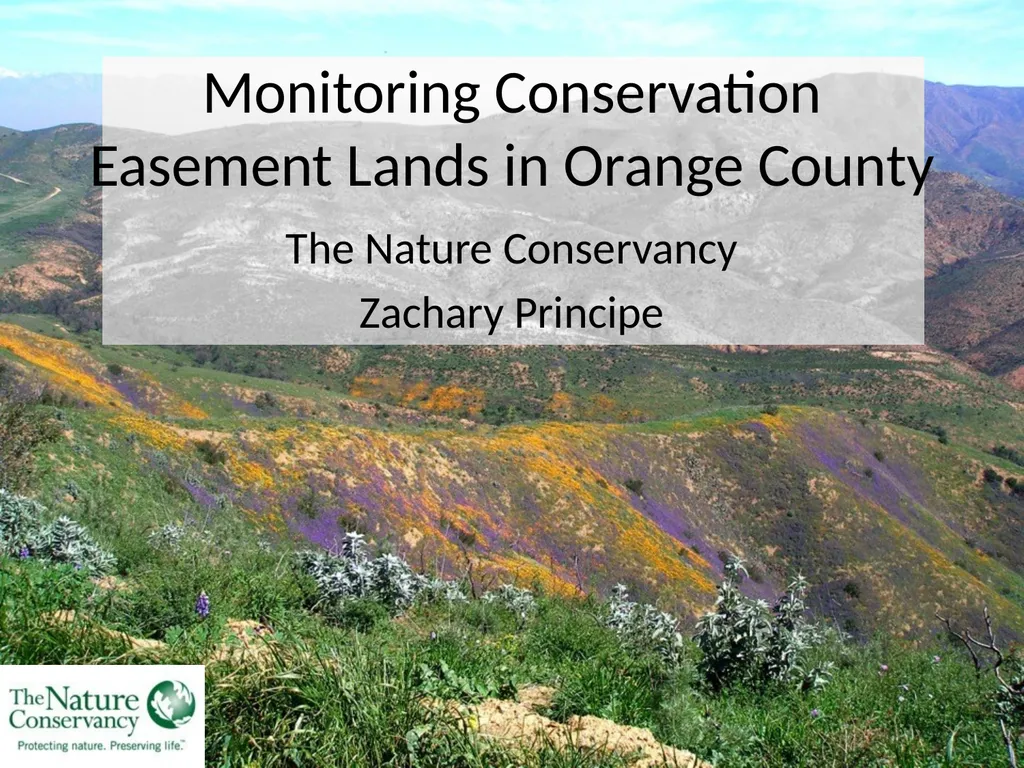
Monitoring Conservation Easement Lands in Orange County The Nature Conservancy
Zachary Principe<br>
02
TNC’s Orange County History 1990: TNC prepares management plan for 22,000 acres of The Irvine Company’s open space lands
1992: TNC assumes management of the 22,000 acres
Docent program established in coordination with Laguna Greenbelt
Natural resource management and monitoring programs initiated
invasive species, wildlife and restoration
1996: NROC established. Assisted with development of monitoring and management programs
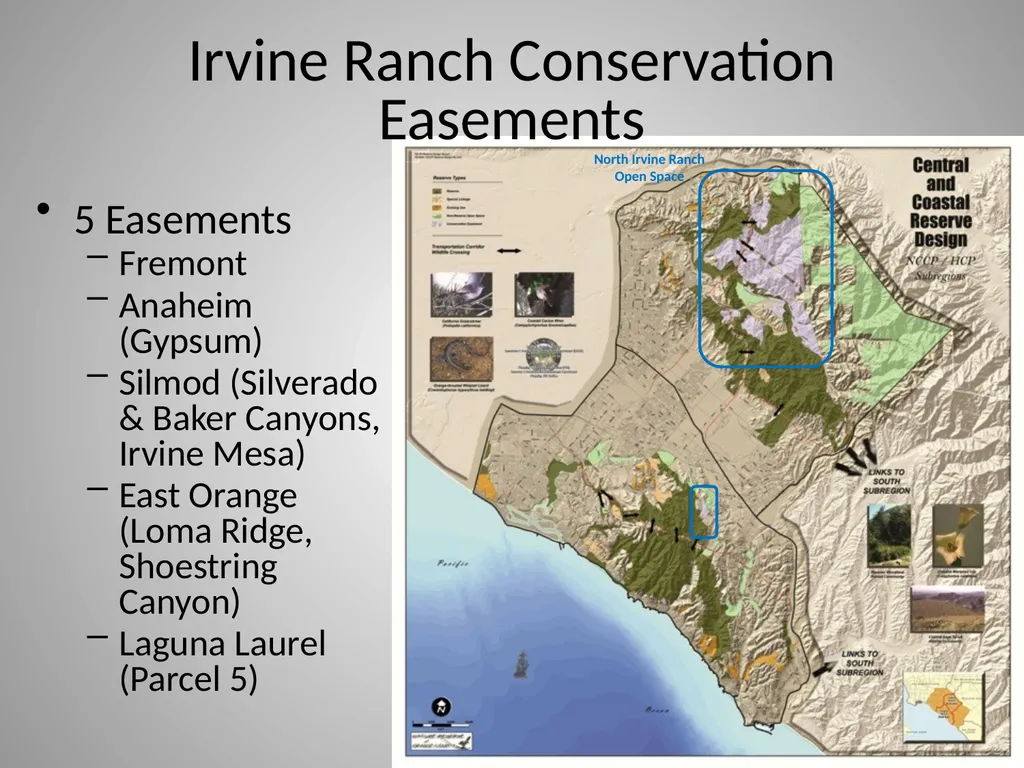
2002: The Irvine Company dedicates Conservation Easements on an additional 11,500 acres
2007: TNC’s management role on Irvine Ranch transferred to Irvine Ranch Conservancy
2007 to present: Monitoring condition and enforce protection of Conservation Values on easement lands<br>
03
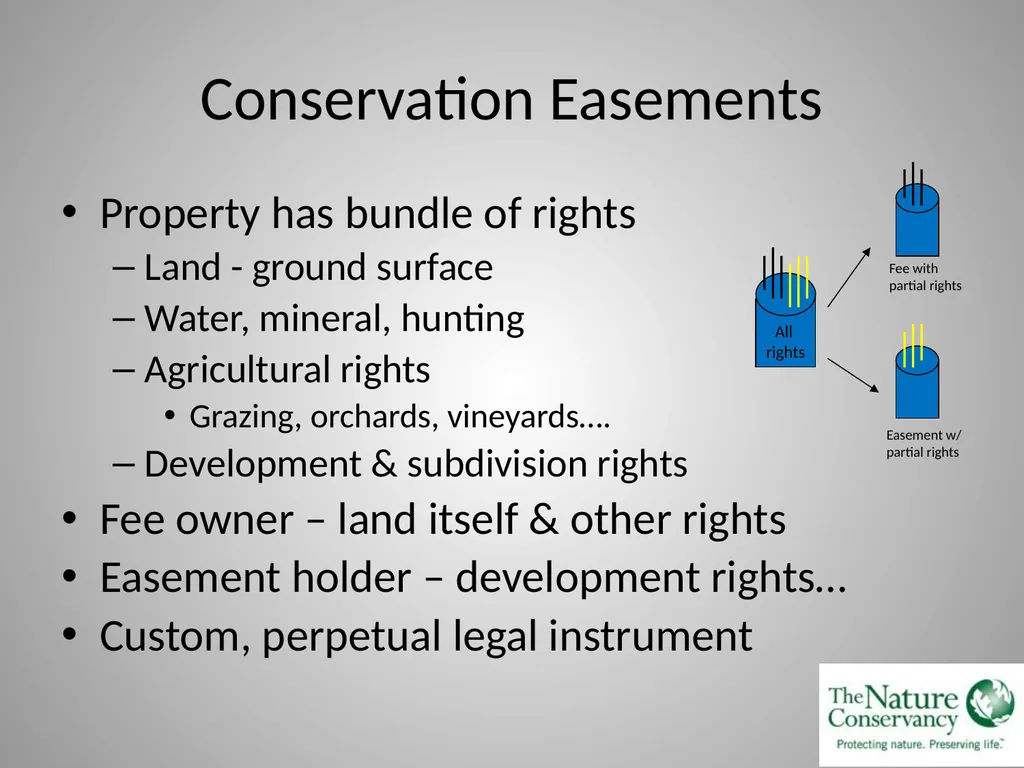
Conservation Easements Property has bundle of rights
Land - ground surface
Water, mineral, hunting
Agricultural rights
Grazing, orchards, vineyards….
Development & subdivision rights
Fee owner – land itself & other rights
Easement holder – development rights…
Custom, perpetual legal instrument All
rights Fee with
partial rights Easement w/
partial rights<br>
04
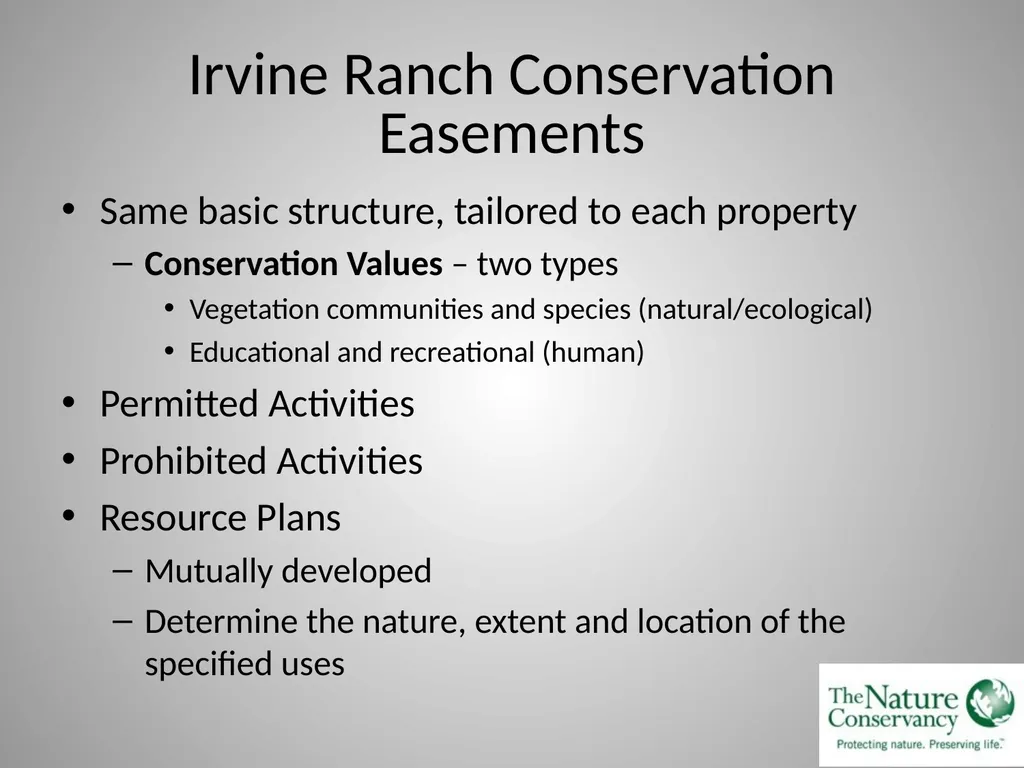
Irvine Ranch Conservation Easements Same basic structure, tailored to each property
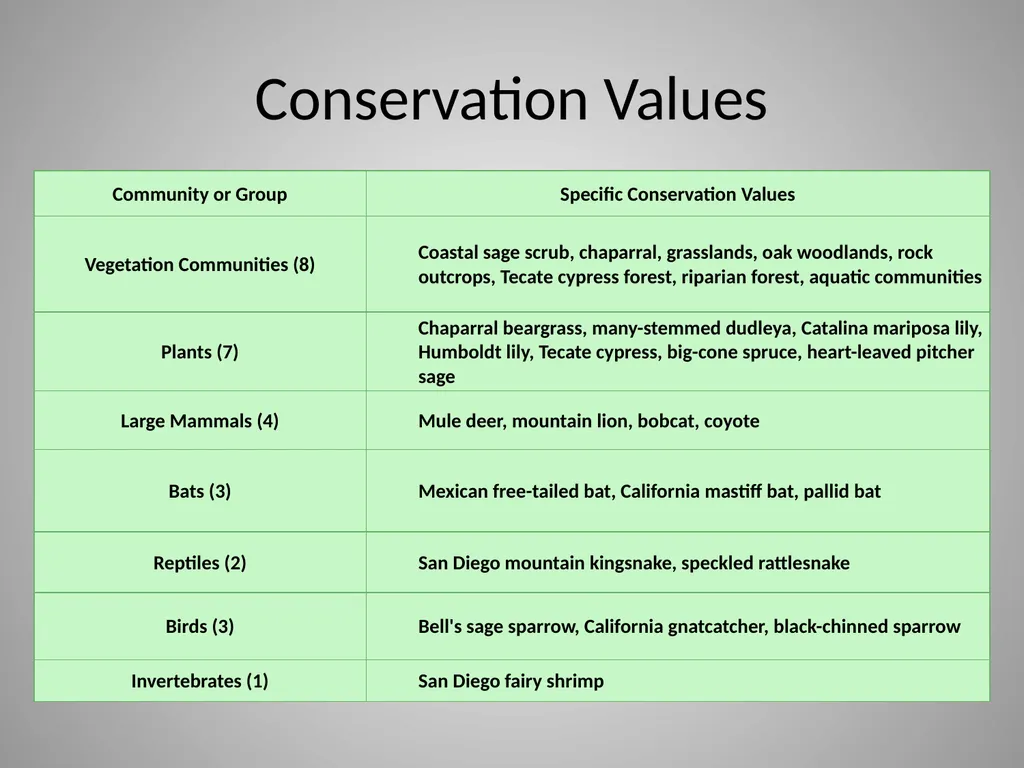
Conservation Values – two types
Vegetation communities and species (natural/ecological)
Educational and recreational (human)
Permitted Activities
Prohibited Activities
Resource Plans
Mutually developed
Determine the nature, extent and location of the specified uses<br>
05
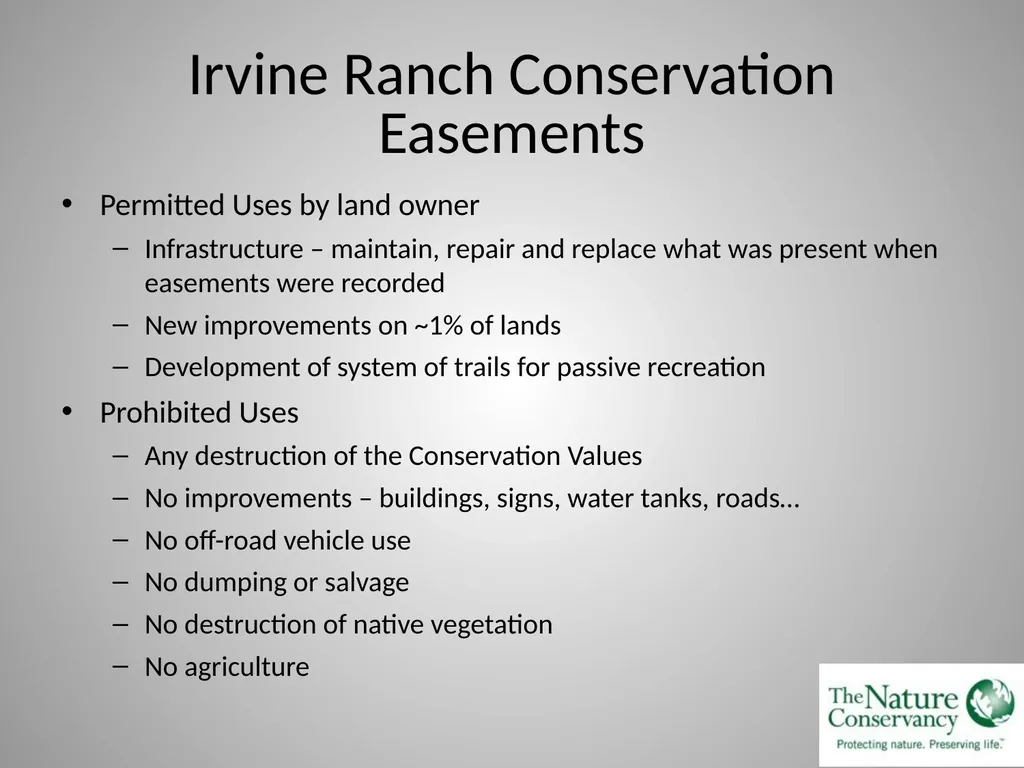
Irvine Ranch Conservation Easements Permitted Uses by land owner
Infrastructure – maintain, repair and replace what was present when easements were recorded
New improvements on ~1% of lands
Development of system of trails for passive recreation
Prohibited Uses
Any destruction of the Conservation Values
No improvements – buildings, signs, water tanks, roads…
No off-road vehicle use
No dumping or salvage
No destruction of native vegetation
No agriculture<br>
06
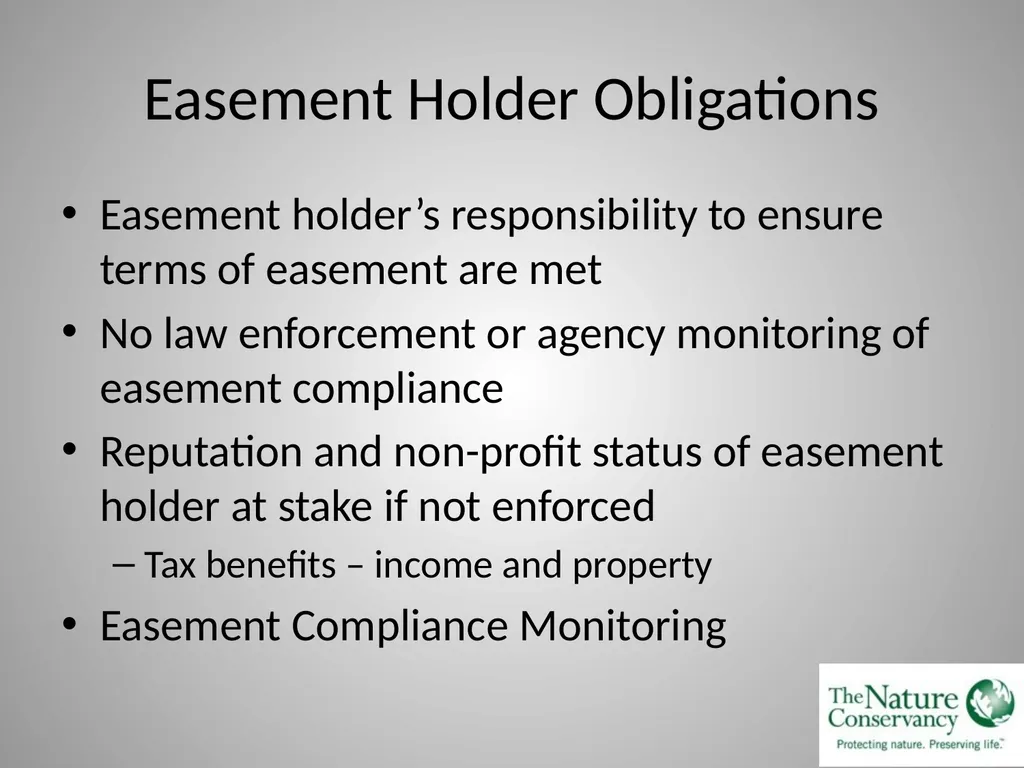
Easement Holder Obligations Easement holder’s responsibility to ensure terms of easement are met
No law enforcement or agency monitoring of easement compliance
Reputation and non-profit status of easement holder at stake if not enforced
Tax benefits – income and property
Easement Compliance Monitoring<br>
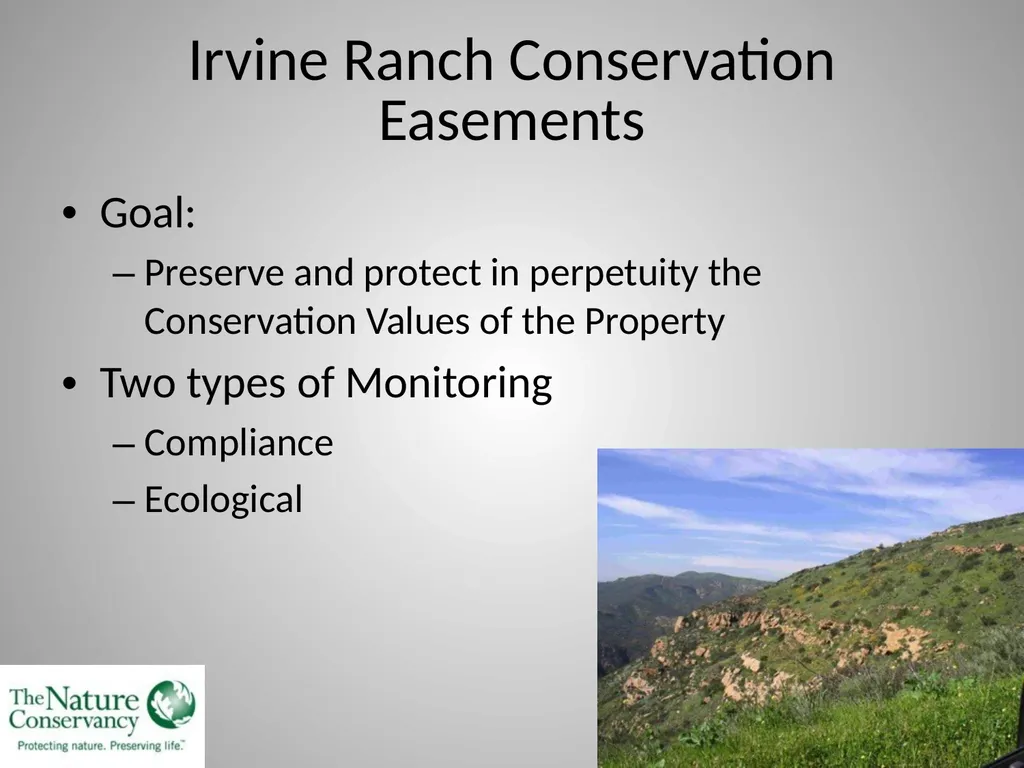
Irvine Ranch Conservation Easements Goal:
Preserve and protect in perpetuity the Conservation Values of the Property
Two types of Monitoring
Compliance
Ecological<br>
10
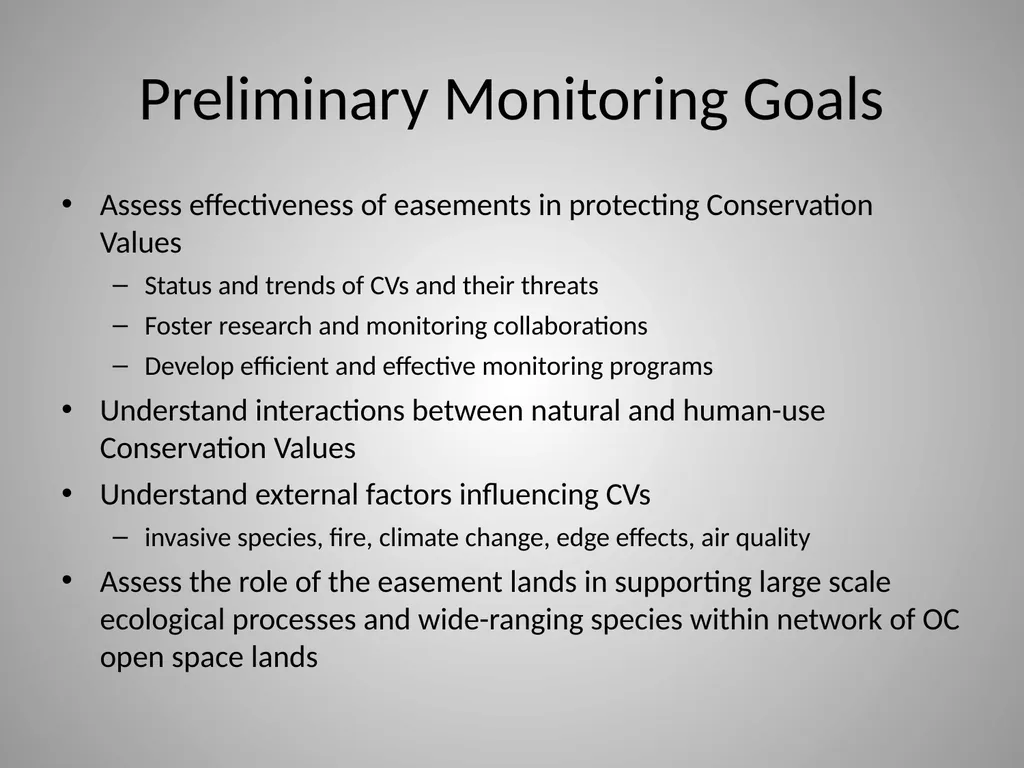
Preliminary Monitoring Goals Assess effectiveness of easements in protecting Conservation Values
Status and trends of CVs and their threats
Foster research and monitoring collaborations
Develop efficient and effective monitoring programs
Understand interactions between natural and human-use Conservation Values
Understand external factors influencing CVs
invasive species, fire, climate change, edge effects, air quality
Assess the role of the easement lands in supporting large scale ecological processes and wide-ranging species within network of OC open space lands<br>
11
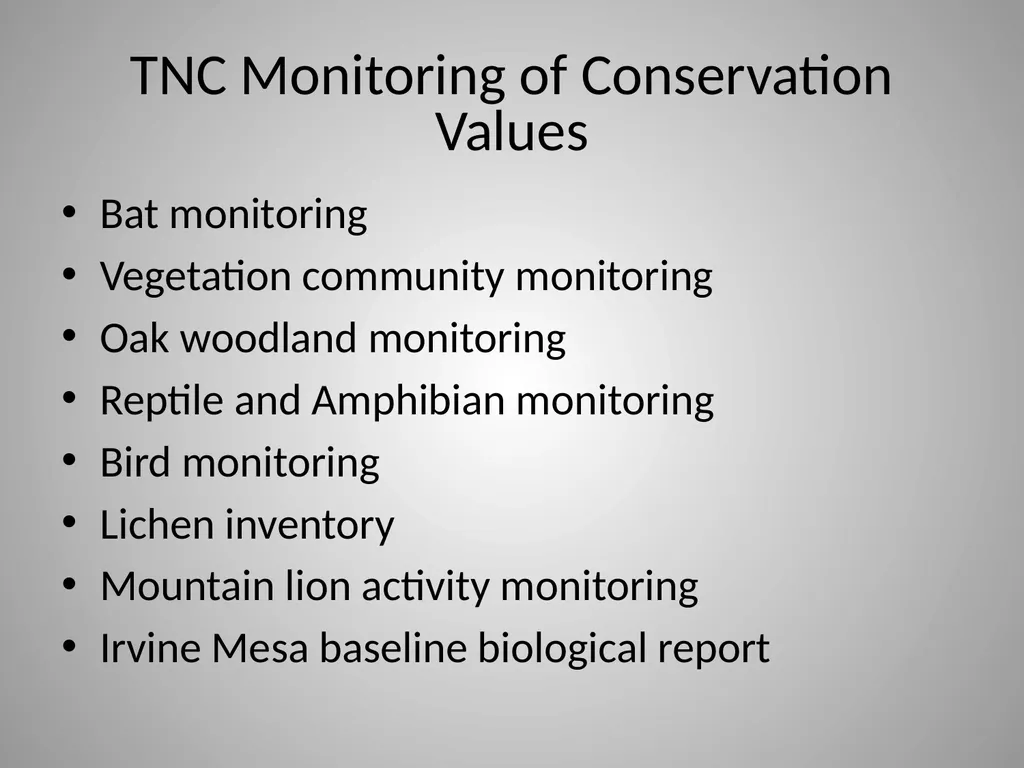
TNC Monitoring of Conservation Values Bat monitoring
Vegetation community monitoring
Oak woodland monitoring
Reptile and Amphibian monitoring
Bird monitoring
Lichen inventory
Mountain lion activity monitoring
Irvine Mesa baseline biological report<br>
12
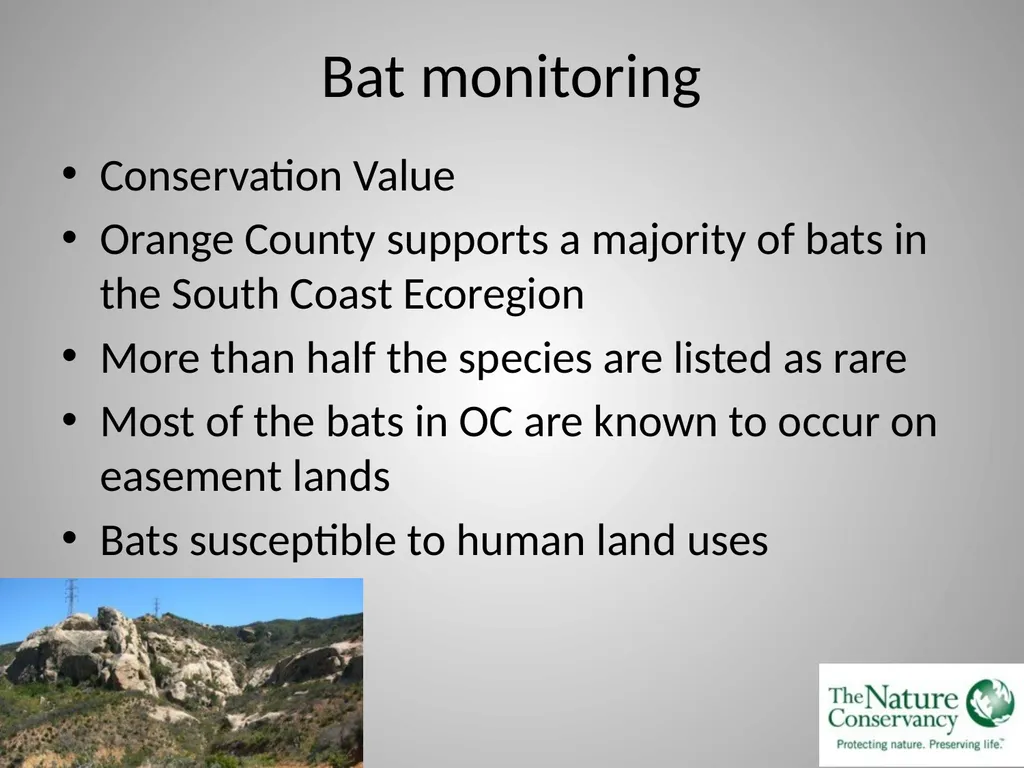
Bat monitoring Conservation Value
Orange County supports a majority of bats in the South Coast Ecoregion
More than half the species are listed as rare
Most of the bats in OC are known to occur on easement lands
Bats susceptible to human land uses<br>
13
Bat monitoring goals Species composition (including seasonal variations);
Roosting (locations, types, timing, species, numbers);
Foraging locations (seasonal use, hot spots);
Long-term patterns in species composition, diversity, and roosting;
Used to inform conservation activities<br>
14
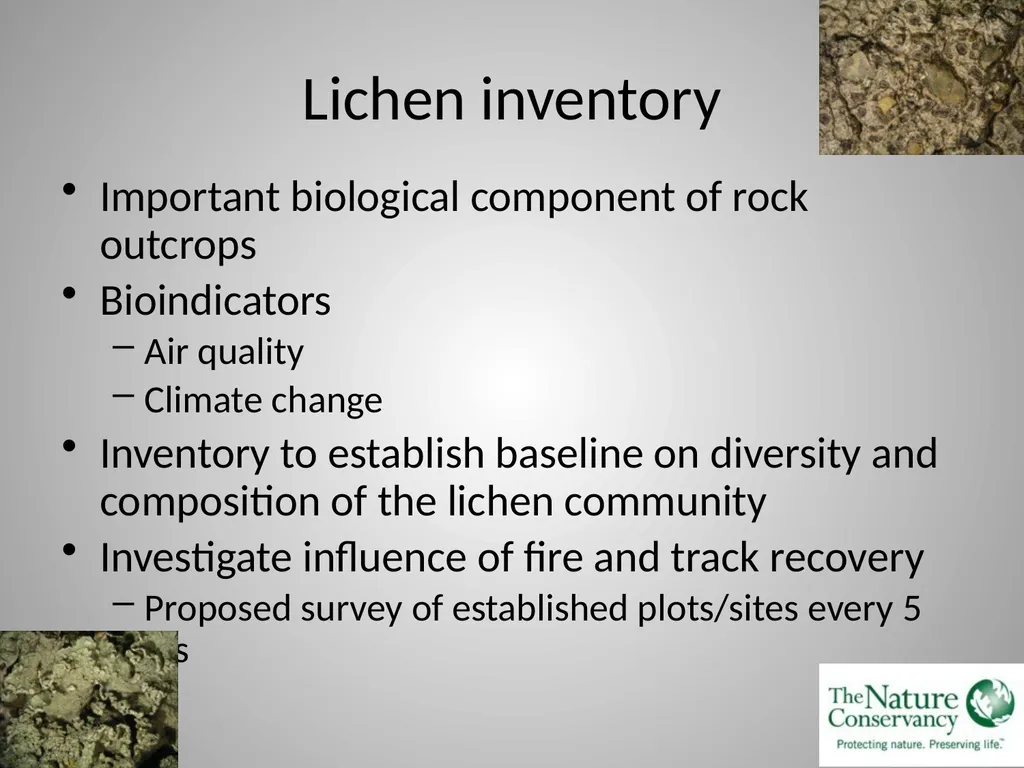
Lichen inventory Important biological component of rock outcrops
Bioindicators
Air quality
Climate change
Inventory to establish baseline on diversity and composition of the lichen community
Investigate influence of fire and track recovery
Proposed survey of established plots/sites every 5 yrs<br>
15
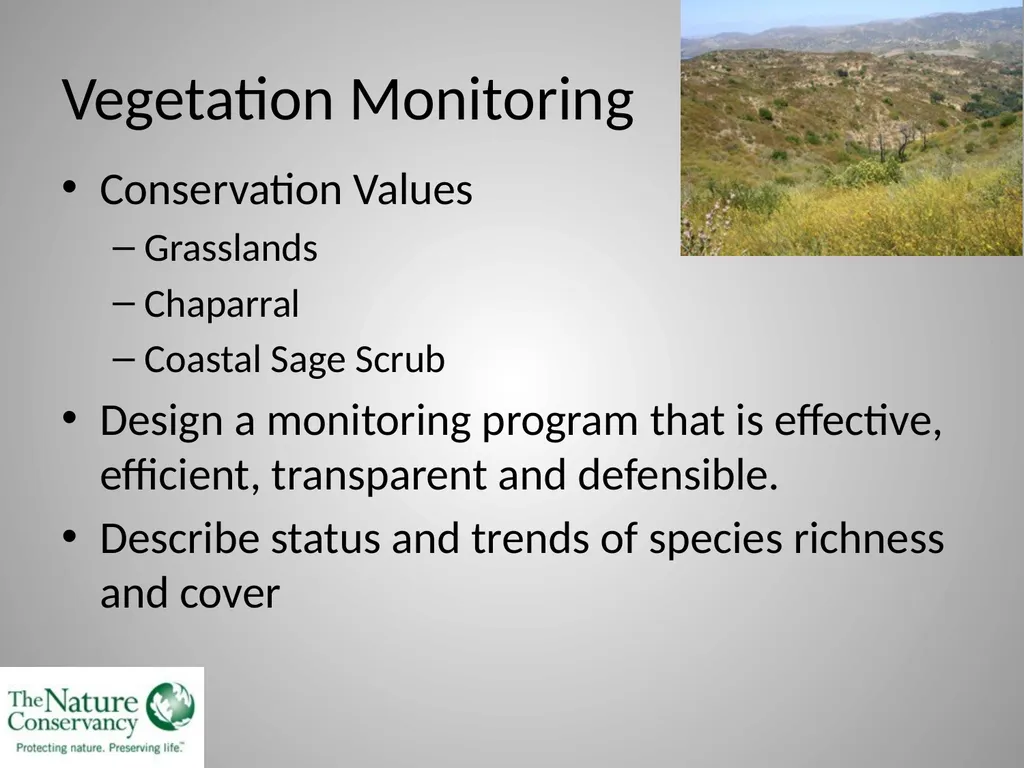
Vegetation Monitoring Conservation Values
Grasslands
Chaparral
Coastal Sage Scrub
Design a monitoring program that is effective, efficient, transparent and defensible.
Describe status and trends of species richness and cover<br>
16
Oak Woodland Monitoring Objectives
Develop a robust and cost effective monitoring protocol
Provide information on oak populations relevant for measuring oak woodland viability and easement success
Goals
Describe the current status of adult oaks in woodlands
Understand if oak woodlands are likely to persist in the future
Evaluate different methods to estimate woodland structure and tree condition
Evaluate the power and robustness of the monitoring program<br>
17
Bird Monitoring Objective: Obtain baseline bird community composition data
Goals:
Characterize bird species richness and abundance
Document populations and locations of special status bird species
Refine the habitat associations of individual species
Monitor the natural recolonization of bird species into burn areas
Use baseline data to develop monitoring program to detect trends in species richness and abundance<br>
18
Looking Forward Track changes to status of Conservation Values
Maximize effectiveness and efficiency
Collaborate with partners
Monitoring at the appropriate scale to obtain meaningful for result for communities and taxa
Utilize baseline data to guide establishment of long-term monitoring program<br>