Multi-Agency Interoperability Training Operational
Description: Multi-Agency Interoperability Training Operational and Tactical Command Module: Action Review College of Policing 2017 1 Objectives Identify how to take action and review what happens in regard to the Joint Decision Model (JDM)
Related Topics
Download Presentation
"Multi-Agency Interoperability Training Operational" is the property of its rightful owner. Permission is granted to download and print the materials on this website for personal, non-commercial use only, and to display it on your personal computer provided you do not modify the materials and that you retain all copyright notices contained in the materials. By downloading content from our website, you accept the terms of this agreement.

Presentation Transcript
slide1. Multi-Agency Interoperability TrainingOperational and Tactical Command Module: Action & Review © College of Policing 2017 1<br>
slide2. Objectives Identify how to take action and review what happens in regard to the Joint Decision Model (JDM)
Recognise the importance of a post event debrief
Explain the need for joint learning in order to sustain interoperability © College of Policing 2017 2<br>
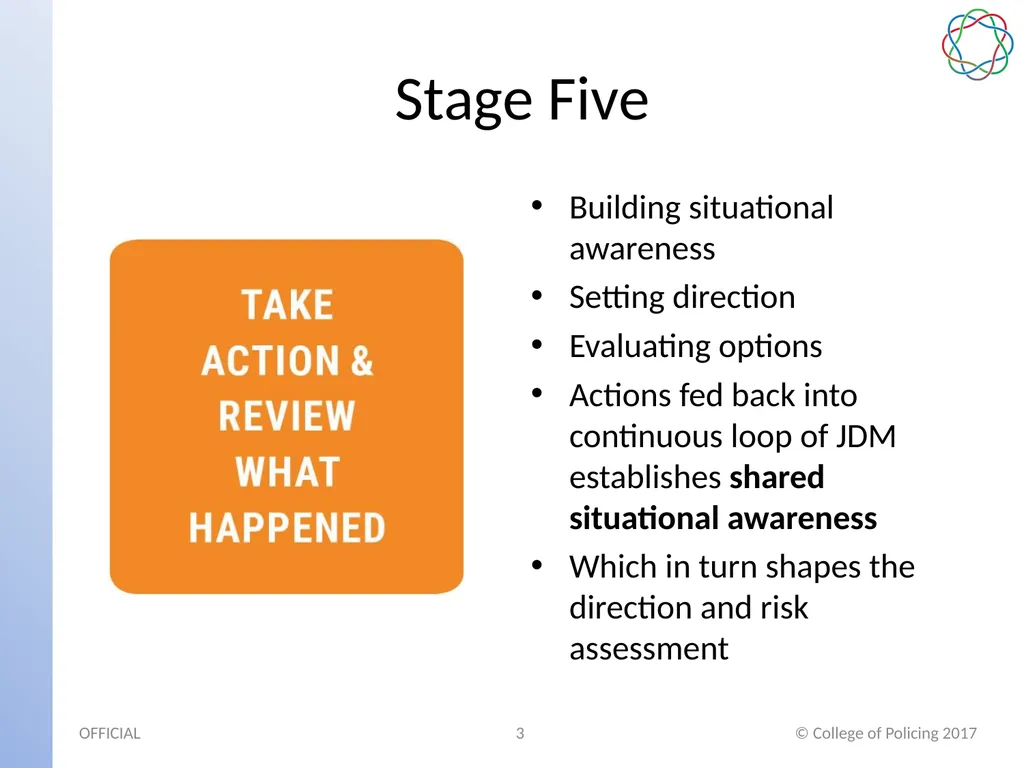
slide3. Stage Five Building situational awareness
Setting direction
Evaluating options
Actions fed back into continuous loop of JDM establishes shared situational awareness
Which in turn shapes the direction and risk assessment © College of Policing 2017 3<br>
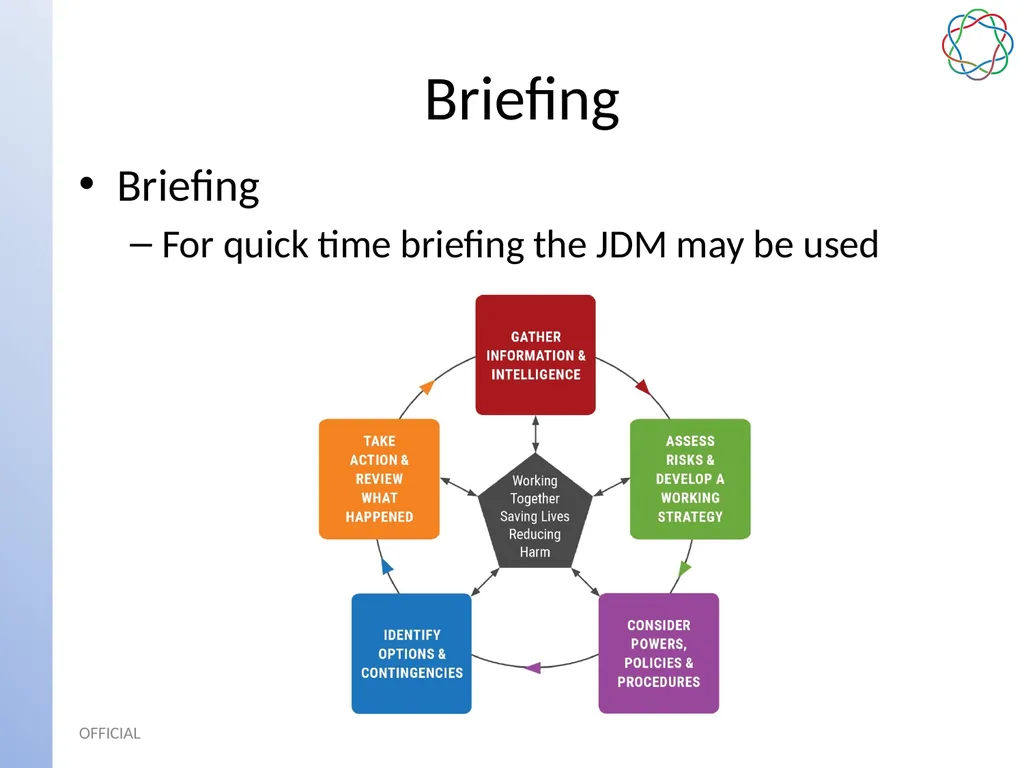
slide4. Briefing Briefing
For quick time briefing the JDM may be used<br>
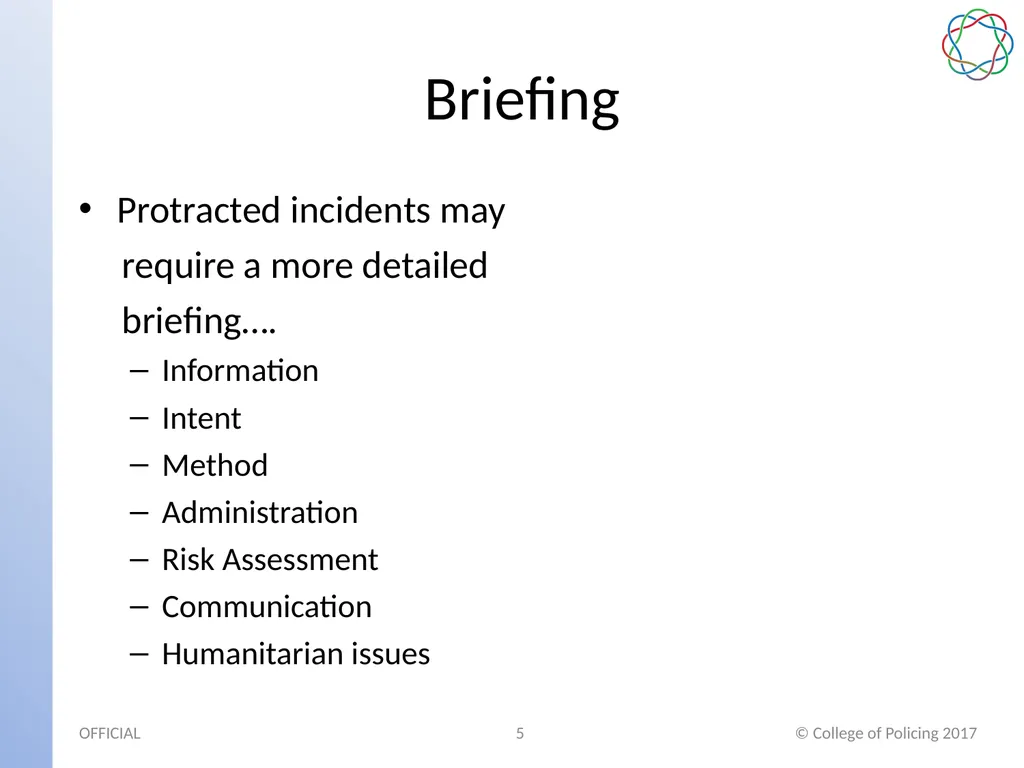
slide5. Briefing Protracted incidents may
require a more detailed
briefing….
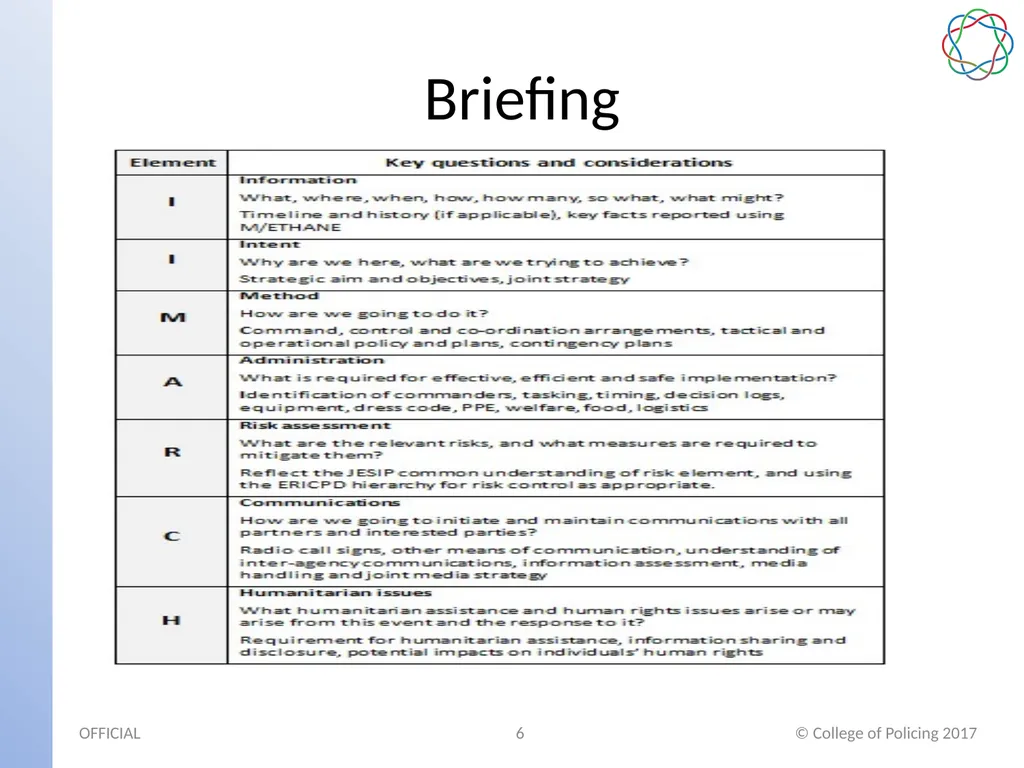
Information
Intent
Method
Administration
Risk Assessment
Communication
Humanitarian issues © College of Policing 2017 5<br>
slide6. Briefing © College of Policing 2017 6<br>
slide7. Joint Learning & De-briefing Building and sustaining interoperability requires that lessons identified are shared in order that unintended consequences are minimised, and opportunities for greater interoperability are realised
Those involved should ensure they know how to contribute to relevant de-briefing procedures © College of Policing 2017 7<br>
slide8. Capturing Lessons Joint hot debrief (where possible)
Deal with key welfare issues and document them
Where lessons identified, feedback through single service procedures to get them addressed if possible
Multi-agency debrief
Any lessons identified that meet the criteria can be fed into national arrangements for Joint Organisational Learning © College of Policing 2017 8<br>
slide9. Joint Organisational Learning (JOL) National arrangements to collate and review lessons from across the country are now in place
Joint Organisational Learning is part of the JESIP Joint Doctrine and should become the standard for multi-agency learning
All services & Local Resilience Forums can submit mutually agreed lessons identified via the system hosted on ResilienceDirect © College of Policing 2017 9<br>
slide10. To conclude on a positive……it works! © College of Policing 2017 10 “….the fantastic effect of JESIP on the ground”
Steve Voice Sussex Police talking about the multi-agency response to the Shoreham Air Crash - August 2015<br>
slide11. Questions © College of Policing 2017 11<br>
slide2. Objectives Identify how to take action and review what happens in regard to the Joint Decision Model (JDM)
Recognise the importance of a post event debrief
Explain the need for joint learning in order to sustain interoperability © College of Policing 2017 2<br>
slide3. Stage Five Building situational awareness
Setting direction
Evaluating options
Actions fed back into continuous loop of JDM establishes shared situational awareness
Which in turn shapes the direction and risk assessment © College of Policing 2017 3<br>
slide4. Briefing Briefing
For quick time briefing the JDM may be used<br>
slide5. Briefing Protracted incidents may
require a more detailed
briefing….
Information
Intent
Method
Administration
Risk Assessment
Communication
Humanitarian issues © College of Policing 2017 5<br>
slide6. Briefing © College of Policing 2017 6<br>
slide7. Joint Learning & De-briefing Building and sustaining interoperability requires that lessons identified are shared in order that unintended consequences are minimised, and opportunities for greater interoperability are realised
Those involved should ensure they know how to contribute to relevant de-briefing procedures © College of Policing 2017 7<br>
slide8. Capturing Lessons Joint hot debrief (where possible)
Deal with key welfare issues and document them
Where lessons identified, feedback through single service procedures to get them addressed if possible
Multi-agency debrief
Any lessons identified that meet the criteria can be fed into national arrangements for Joint Organisational Learning © College of Policing 2017 8<br>
slide9. Joint Organisational Learning (JOL) National arrangements to collate and review lessons from across the country are now in place
Joint Organisational Learning is part of the JESIP Joint Doctrine and should become the standard for multi-agency learning
All services & Local Resilience Forums can submit mutually agreed lessons identified via the system hosted on ResilienceDirect © College of Policing 2017 9<br>
slide10. To conclude on a positive……it works! © College of Policing 2017 10 “….the fantastic effect of JESIP on the ground”
Steve Voice Sussex Police talking about the multi-agency response to the Shoreham Air Crash - August 2015<br>
slide11. Questions © College of Policing 2017 11<br>