ر Nanotoxicology Definitions- Particle Size Nano =
Description: ر Nanotoxicology Definitions- Particle Size Nano Ultrafine 100 nm Nano 10 nm Fine 100 nm - 3 m Nanotoxicology is the study of the toxicity of nanomaterials. Because of quantum size effects and large surface area to volume ratio,
Related Topics
Download Presentation
"ر Nanotoxicology Definitions- Particle Size Nano =" is the property of its rightful owner. Permission is granted to download and print the materials on this website for personal, non-commercial use only, and to display it on your personal computer provided you do not modify the materials and that you retain all copyright notices contained in the materials. By downloading content from our website, you accept the terms of this agreement.
Presentation Transcript
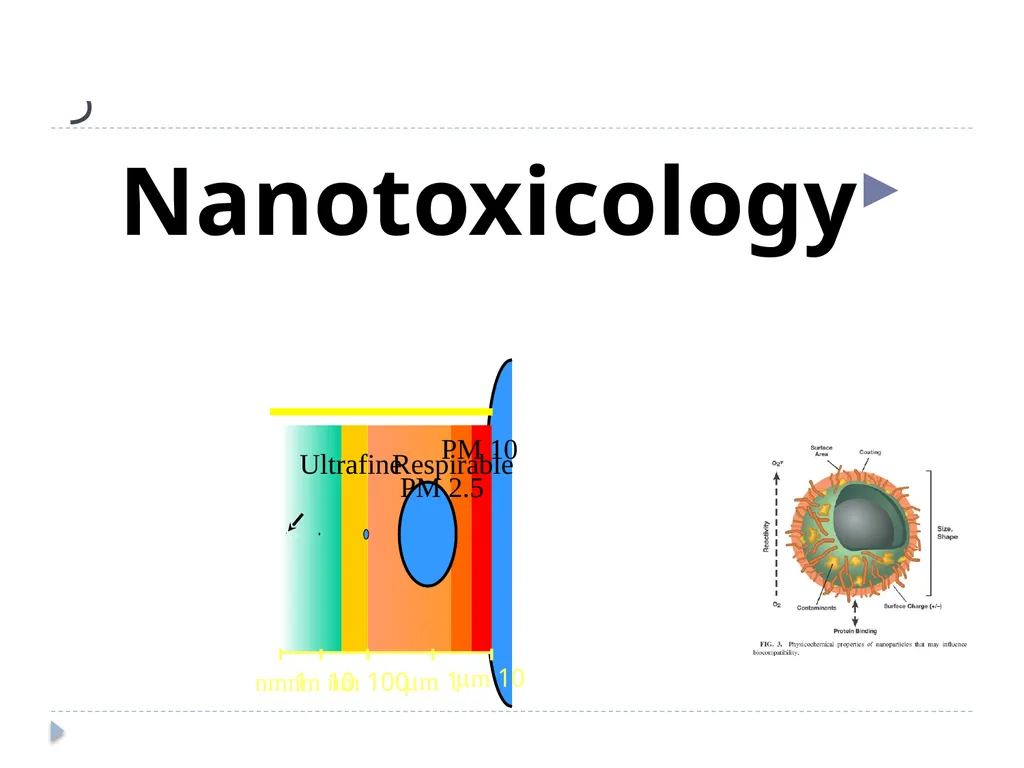
slide1. ر Nanotoxicology<br>
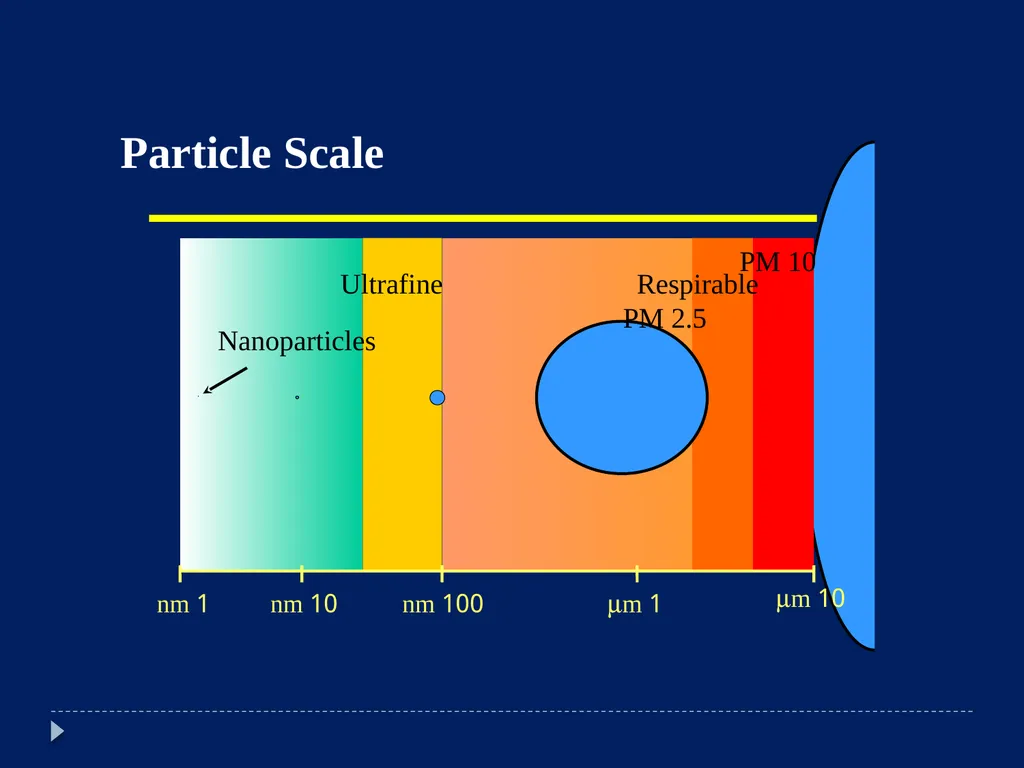
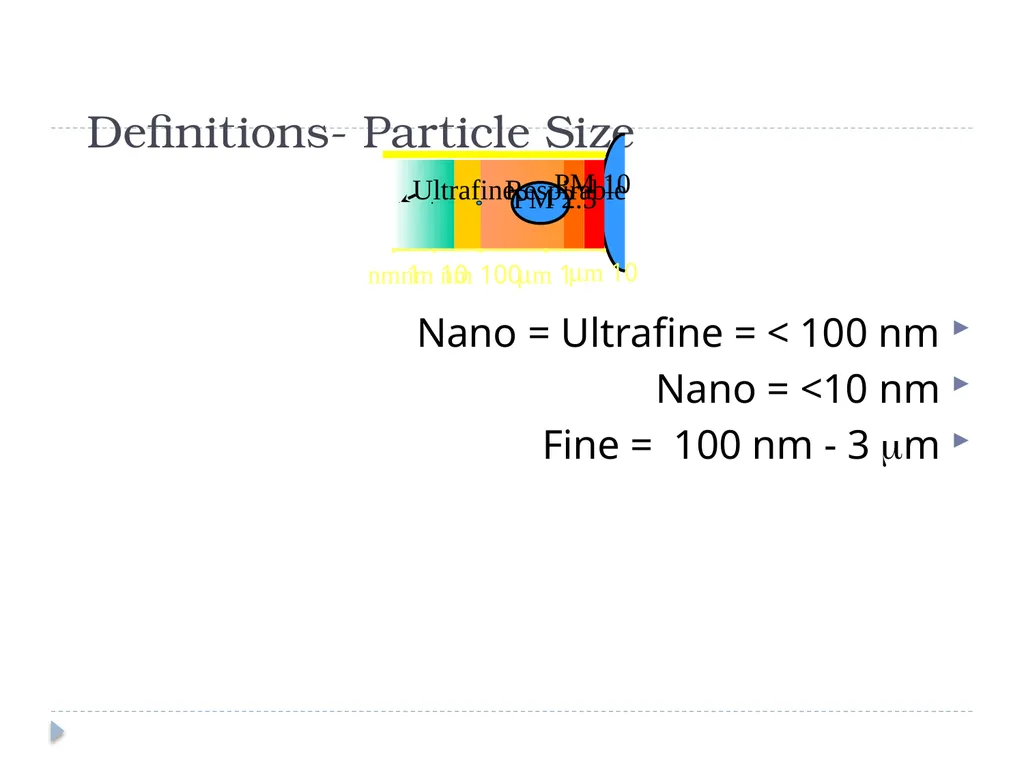
slide5. Definitions- Particle Size Nano = Ultrafine = < 100 nm
Nano = <10 nm
Fine = 100 nm - 3 m<br>
slide6. Nanotoxicology
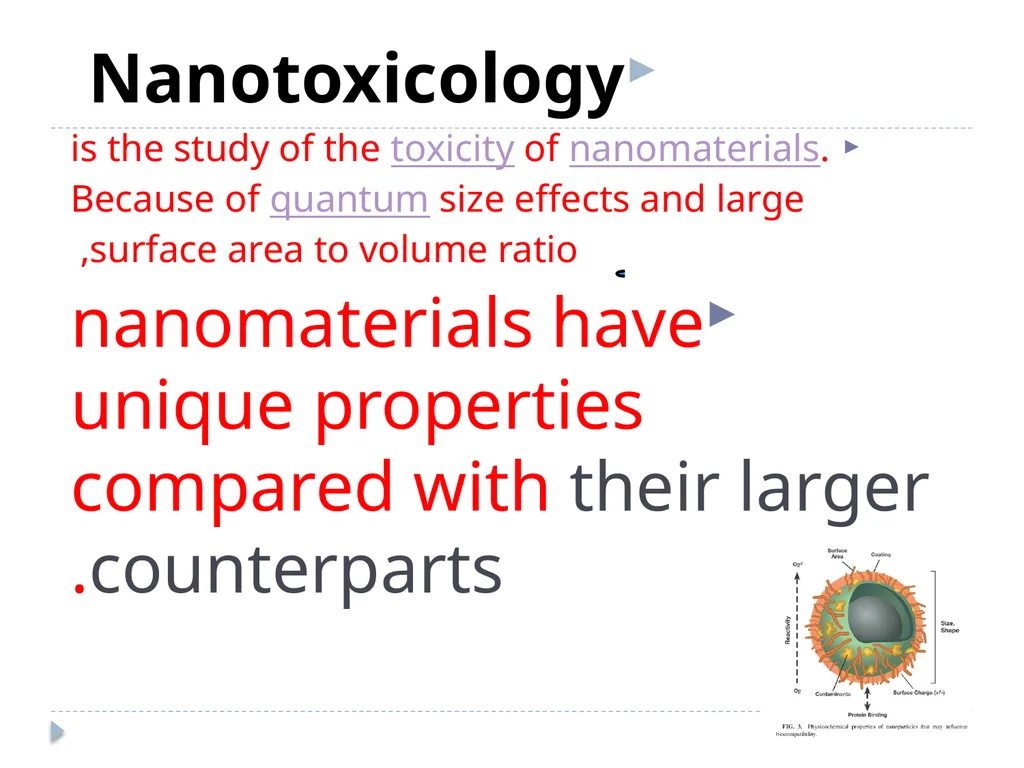
is the study of the toxicity of nanomaterials. Because of quantum size effects and large surface area to volume ratio,
nanomaterials have unique properties compared with their larger counterparts.<br>
slide7. Nanotoxicology is a branch of bionanoscience which deals with the study and application of toxicity of nanomaterials.
Nanomaterials, even when made of inert elements like gold,
become highly active at nanometer dimensions.<br>
slide8. Nanotoxicological studies are intended
to determine whether and to what extent these properties may pose a threat to the environment and to human beings.[2] For instance,
Diesel nanoparticles have been found to damage the cardiovascular system in a mouse model<br>
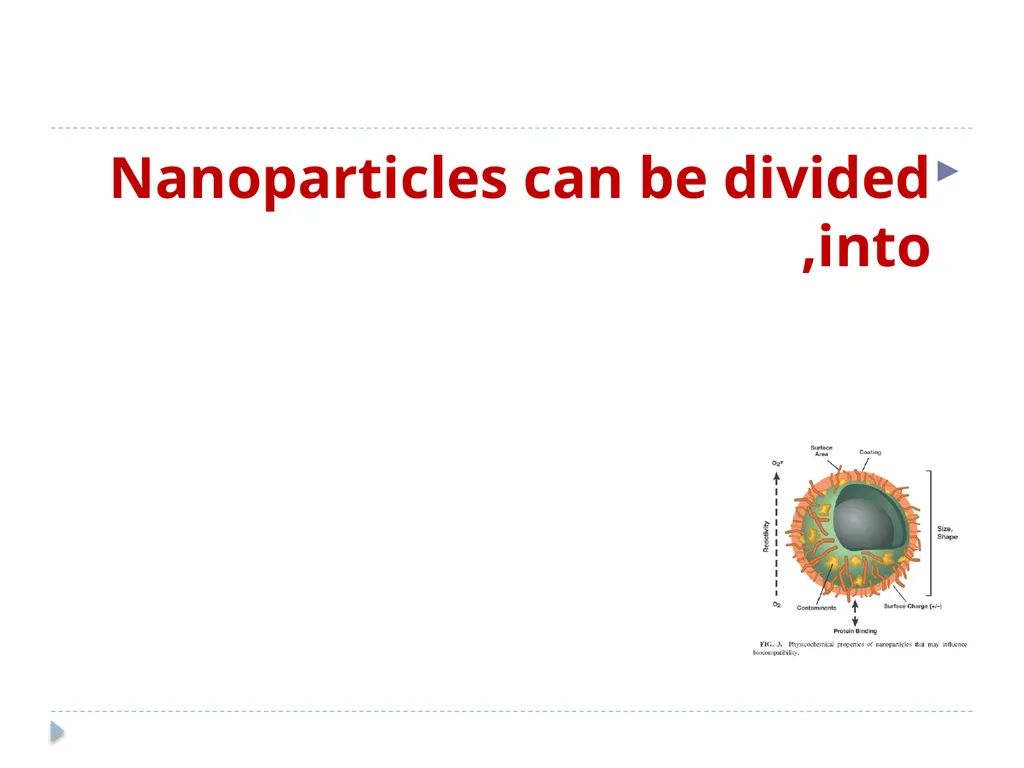
slide9. Nanoparticles can be divided into,<br>
slide10. 1-Manufactured nanoparticles like carbon nanotubes
2- naturally occurring nanoparticles from volcanic eruptions, atmospheric chemistry etc.<br>
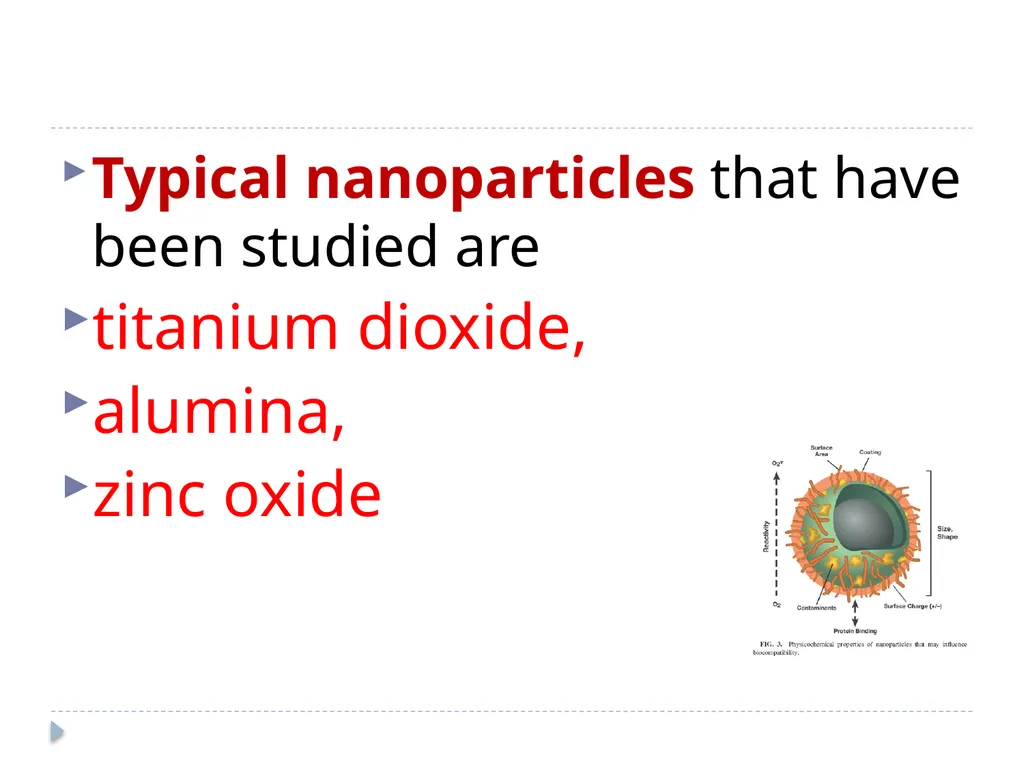
slide11. Typical nanoparticles that have been studied are
titanium dioxide,
alumina,
zinc oxide<br>
slide12. In addition, some nanoparticles seem to be able to translocate from their site of deposition to distant sites such as
the blood and the brain.<br>
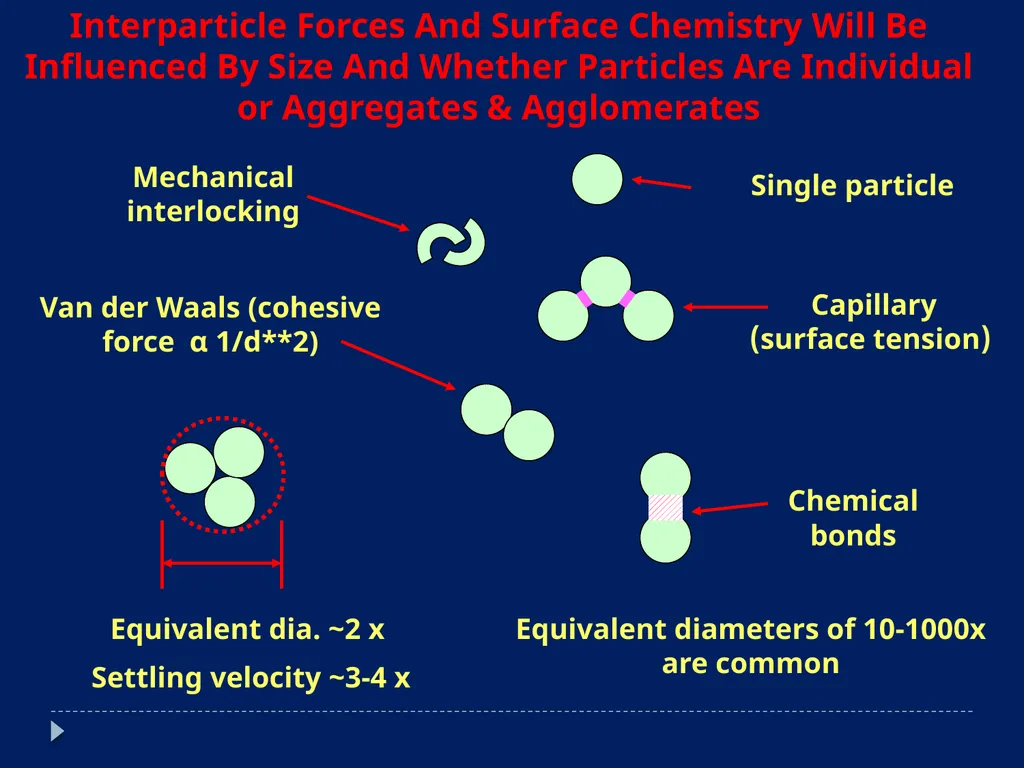
slide13. Equivalent dia. ~2 x
Settling velocity ~3-4 x Mechanical interlocking Capillary
(surface tension) Van der Waals (cohesive force α 1/d**2) Chemical bonds Single particle Equivalent diameters of 10-1000x are common Interparticle Forces And Surface Chemistry Will Be Influenced By Size And Whether Particles Are Individual or Aggregates & Agglomerates<br>
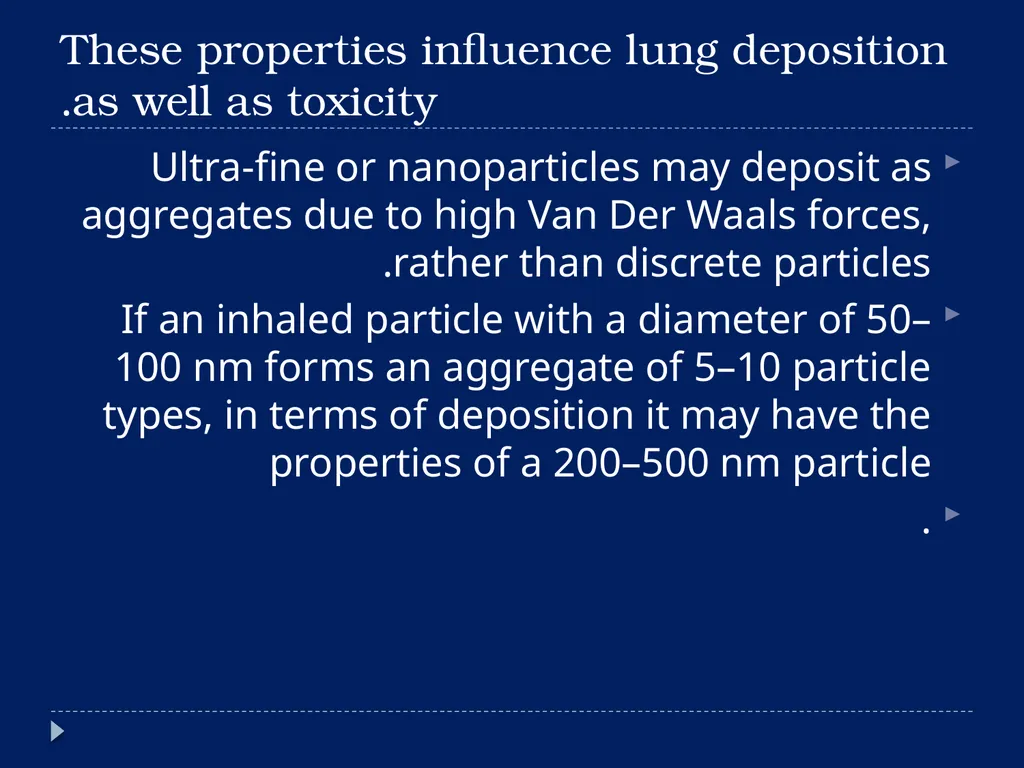
slide14. These properties influence lung deposition as well as toxicity. Ultra-fine or nanoparticles may deposit as aggregates due to high Van Der Waals forces, rather than discrete particles.
If an inhaled particle with a diameter of 50–100 nm forms an aggregate of 5–10 particle types, in terms of deposition it may have the properties of a 200–500 nm particle
.<br>
slide16. From a large-scale literature review,
release of airborne engineered nanoparticles and associated worker exposure from various production and handling activities at different workplaces are very probable.[5]<br>
slide17. Carbon nanotubes –
characterized by their microscopic size frequently likened to asbestos, due to their needle-like fiber shape.<br>
slide18. raising concerns that exposure to carbon nanotubes may lead to (cancer of the lining of the lungs caused by exposure to asbestos).[8]<br>
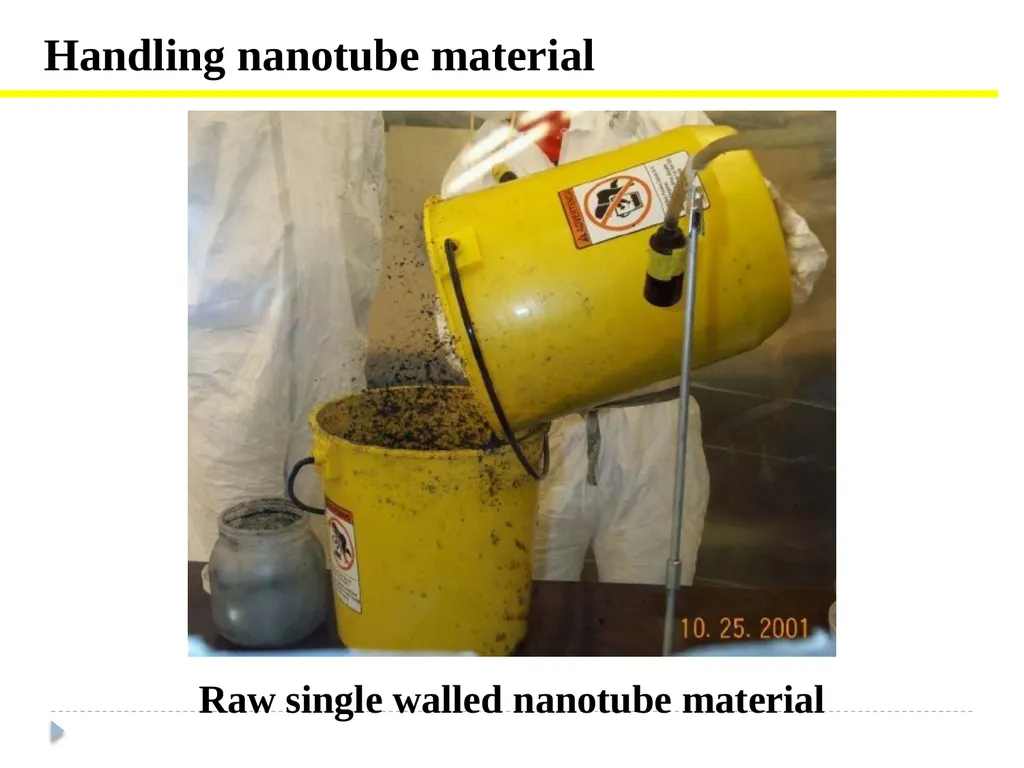
slide19. Handling nanotube material Raw single walled nanotube material<br>
slide20. The potential for workplace exposure was
highlighted by the 2004 Royal Society report[11] which recommended a review of existing regulations to assess and control workplace exposure<br>
slide21. to nanoparticles and nanotubes. The report expressed particular concern for the inhalation of large quantities of nanoparticles by workers involved in the manufacturing process.<br>
slide22. Reactive oxygen specie<br>
slide23. The greater chemical reactivity
of nanomaterials can result in increased production of reactive oxygen species (ROS), including free radicals.[<br>
slide24. ROS production has been found in a diverse range of nanomaterials including carbon fullerenes, carbon nanotubes and nanoparticle metal oxides<br>
slide25. ROS and free radical production is one of the primary mechanisms of nanoparticle toxicity; it may result in oxidative stress, inflammation, and consequent damage to proteins, membranes and DNA.[13]<br>
slide26. Biodistribution
The extremely small size of nanomaterials also means that they much more readily gain entry into the human body than larger sized particles. How these nanoparticles behave inside the body is still a major question that needs to be resolved..<br>
slide27. The behavior of nanoparticles is a function of their size, shape and surface reactivity with the surrounding tissue.
In principle, a large number of particles could overload the body's phagocytes,<br>
slide28. cells that ingest and destroy foreign matter, thereby triggering stress reactions that lead to inflammation and weaken the body’s defense against other pathogens<br>
slide29. In addition to questions about what happens if non-degradable or slowly degradable
nanoparticles accumulate in bodily organs, another concern is their potential interaction or interference with biological processes inside the body..<br>
slide30. Nanomaterials are able to cross biological membranes and access cells, tissues and organs that larger-sized particles normally cannot.[14]
Nanomaterials can gain access to the blood stream via inhalation[15] or ingestion.[16]<br>
slide31. At least some nanomaterials can penetrate the skin;[17] Broken skin is an ineffective particle barrier,[19] suggesting that acne, eczema<br>
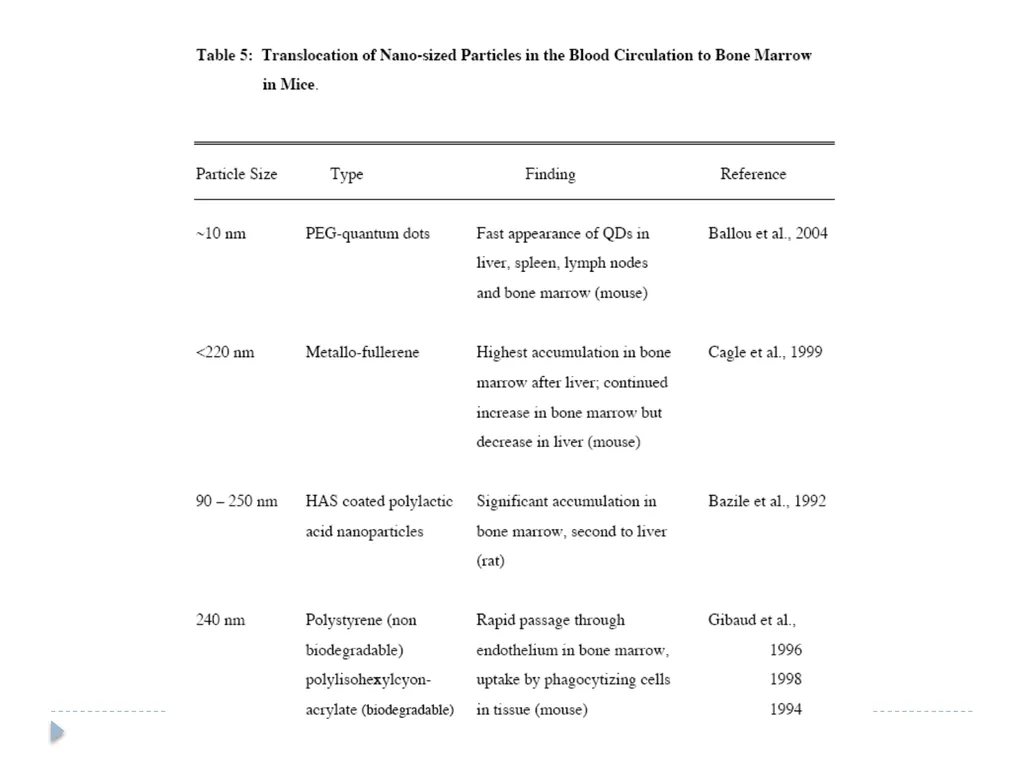
slide32. having wounds or severe sunburn may accelerate skin uptake of nanomaterials. Then, once in the blood stream, nanomaterials can be transported around the body and be taken up by organs and tissues, including the brain, heart, liver, kidneys, spleen, bone marrow and nervous system.[<br>
slide33. 19] Nanomaterials have proved toxic to human tissue and cell cultures, resulting in increased oxidative stress, inflammatory cytokine production and cell death.[15]<br>
slide34. Unlike larger particles, nanomaterials may be taken up by cell mitochondria[20] and the cell nucleus.[21][22] Studies demonstrate the potential for nanomaterials to cause DNA mutation[22]and induce major structural damage to mitochondria, even resulting in cell death.[20][23]<br>
slide35. the cells with which they come into contact including but not limited to DNA breakage and oxidation, mutations, reduced cell viability, warped morphology, induced apoptosis and necrosis, and decreased proliferation.[30<br>
slide36. Cytotoxicity[
A primary marker for the damaging effects of NPs has been cell viability. Cells exposed to metallic NPs have, in the case of copper oxide, had up to 60% of their cells rendered unviable.[30]<br>
slide37. , the positively charged metal ions often experience an electrostatic attraction to the cell membrane of nearby cells, covering the membrane and preventing it from permeating the necessary fuels and wastes.[30]<br>
slide38. for transportation and communication, the cells are often rendered inactive.
NPs have been found to induce apoptosis in certain cells primarily due to the mitochondrial damage and oxidative stress brought on by the foreign NPs electrostatic reactions<br>
slide39. Thanks for your attention<br>
slide5. Definitions- Particle Size Nano = Ultrafine = < 100 nm
Nano = <10 nm
Fine = 100 nm - 3 m<br>
slide6. Nanotoxicology
is the study of the toxicity of nanomaterials. Because of quantum size effects and large surface area to volume ratio,
nanomaterials have unique properties compared with their larger counterparts.<br>
slide7. Nanotoxicology is a branch of bionanoscience which deals with the study and application of toxicity of nanomaterials.
Nanomaterials, even when made of inert elements like gold,
become highly active at nanometer dimensions.<br>
slide8. Nanotoxicological studies are intended
to determine whether and to what extent these properties may pose a threat to the environment and to human beings.[2] For instance,
Diesel nanoparticles have been found to damage the cardiovascular system in a mouse model<br>
slide9. Nanoparticles can be divided into,<br>
slide10. 1-Manufactured nanoparticles like carbon nanotubes
2- naturally occurring nanoparticles from volcanic eruptions, atmospheric chemistry etc.<br>
slide11. Typical nanoparticles that have been studied are
titanium dioxide,
alumina,
zinc oxide<br>
slide12. In addition, some nanoparticles seem to be able to translocate from their site of deposition to distant sites such as
the blood and the brain.<br>
slide13. Equivalent dia. ~2 x
Settling velocity ~3-4 x Mechanical interlocking Capillary
(surface tension) Van der Waals (cohesive force α 1/d**2) Chemical bonds Single particle Equivalent diameters of 10-1000x are common Interparticle Forces And Surface Chemistry Will Be Influenced By Size And Whether Particles Are Individual or Aggregates & Agglomerates<br>
slide14. These properties influence lung deposition as well as toxicity. Ultra-fine or nanoparticles may deposit as aggregates due to high Van Der Waals forces, rather than discrete particles.
If an inhaled particle with a diameter of 50–100 nm forms an aggregate of 5–10 particle types, in terms of deposition it may have the properties of a 200–500 nm particle
.<br>
slide16. From a large-scale literature review,
release of airborne engineered nanoparticles and associated worker exposure from various production and handling activities at different workplaces are very probable.[5]<br>
slide17. Carbon nanotubes –
characterized by their microscopic size frequently likened to asbestos, due to their needle-like fiber shape.<br>
slide18. raising concerns that exposure to carbon nanotubes may lead to (cancer of the lining of the lungs caused by exposure to asbestos).[8]<br>
slide19. Handling nanotube material Raw single walled nanotube material<br>
slide20. The potential for workplace exposure was
highlighted by the 2004 Royal Society report[11] which recommended a review of existing regulations to assess and control workplace exposure<br>
slide21. to nanoparticles and nanotubes. The report expressed particular concern for the inhalation of large quantities of nanoparticles by workers involved in the manufacturing process.<br>
slide22. Reactive oxygen specie<br>
slide23. The greater chemical reactivity
of nanomaterials can result in increased production of reactive oxygen species (ROS), including free radicals.[<br>
slide24. ROS production has been found in a diverse range of nanomaterials including carbon fullerenes, carbon nanotubes and nanoparticle metal oxides<br>
slide25. ROS and free radical production is one of the primary mechanisms of nanoparticle toxicity; it may result in oxidative stress, inflammation, and consequent damage to proteins, membranes and DNA.[13]<br>
slide26. Biodistribution
The extremely small size of nanomaterials also means that they much more readily gain entry into the human body than larger sized particles. How these nanoparticles behave inside the body is still a major question that needs to be resolved..<br>
slide27. The behavior of nanoparticles is a function of their size, shape and surface reactivity with the surrounding tissue.
In principle, a large number of particles could overload the body's phagocytes,<br>
slide28. cells that ingest and destroy foreign matter, thereby triggering stress reactions that lead to inflammation and weaken the body’s defense against other pathogens<br>
slide29. In addition to questions about what happens if non-degradable or slowly degradable
nanoparticles accumulate in bodily organs, another concern is their potential interaction or interference with biological processes inside the body..<br>
slide30. Nanomaterials are able to cross biological membranes and access cells, tissues and organs that larger-sized particles normally cannot.[14]
Nanomaterials can gain access to the blood stream via inhalation[15] or ingestion.[16]<br>
slide31. At least some nanomaterials can penetrate the skin;[17] Broken skin is an ineffective particle barrier,[19] suggesting that acne, eczema<br>
slide32. having wounds or severe sunburn may accelerate skin uptake of nanomaterials. Then, once in the blood stream, nanomaterials can be transported around the body and be taken up by organs and tissues, including the brain, heart, liver, kidneys, spleen, bone marrow and nervous system.[<br>
slide33. 19] Nanomaterials have proved toxic to human tissue and cell cultures, resulting in increased oxidative stress, inflammatory cytokine production and cell death.[15]<br>
slide34. Unlike larger particles, nanomaterials may be taken up by cell mitochondria[20] and the cell nucleus.[21][22] Studies demonstrate the potential for nanomaterials to cause DNA mutation[22]and induce major structural damage to mitochondria, even resulting in cell death.[20][23]<br>
slide35. the cells with which they come into contact including but not limited to DNA breakage and oxidation, mutations, reduced cell viability, warped morphology, induced apoptosis and necrosis, and decreased proliferation.[30<br>
slide36. Cytotoxicity[
A primary marker for the damaging effects of NPs has been cell viability. Cells exposed to metallic NPs have, in the case of copper oxide, had up to 60% of their cells rendered unviable.[30]<br>
slide37. , the positively charged metal ions often experience an electrostatic attraction to the cell membrane of nearby cells, covering the membrane and preventing it from permeating the necessary fuels and wastes.[30]<br>
slide38. for transportation and communication, the cells are often rendered inactive.
NPs have been found to induce apoptosis in certain cells primarily due to the mitochondrial damage and oxidative stress brought on by the foreign NPs electrostatic reactions<br>
slide39. Thanks for your attention<br>