
National Press Foundation Presentation David John,




Description: National Press Foundation Presentation David John, AARP Improving the U.S. Retirement System Essential reforms: Creating Retirement Savings Coverage: Who does not have access to a workplace retirement savings program Payroll deduction
Related Topics
Download Presentation
"National Press Foundation Presentation David John," is the property of its rightful owner. Permission is granted to download and print the materials on this website for personal, non-commercial use only, and to display it on your personal computer provided you do not modify the materials and that you retain all copyright notices contained in the materials. By downloading content from our website, you accept the terms of this agreement.
Presentation Transcript
slide1. National Press Foundation Presentation David John, AARP<br>
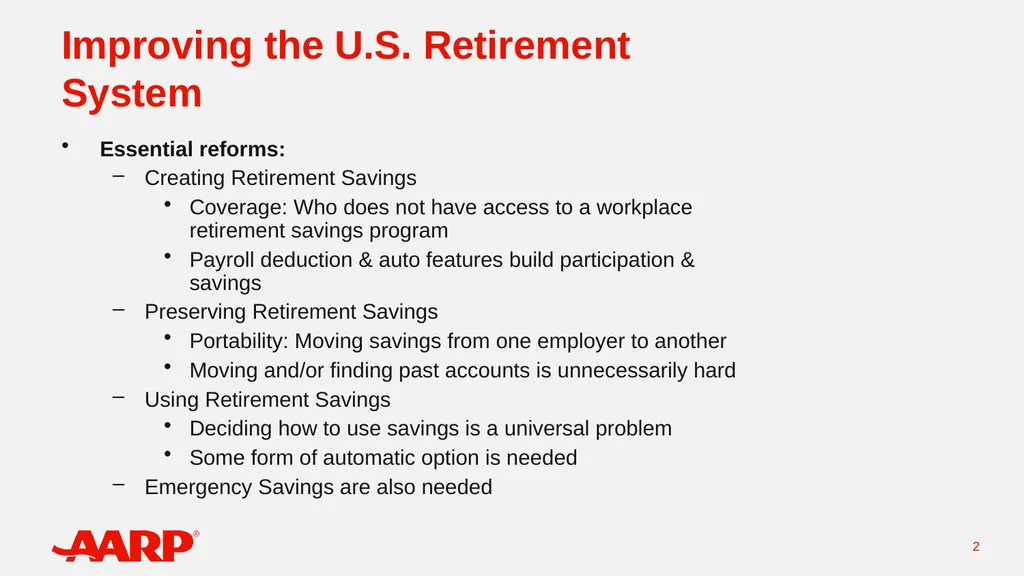
slide2. Improving the U.S. Retirement System Essential reforms:
Creating Retirement Savings
Coverage: Who does not have access to a workplace retirement savings program
Payroll deduction & auto features build participation & savings
Preserving Retirement Savings
Portability: Moving savings from one employer to another
Moving and/or finding past accounts is unnecessarily hard
Using Retirement Savings
Deciding how to use savings is a universal problem
Some form of automatic option is needed
Emergency Savings are also needed<br>
slide3. Building Retirement Savings<br>
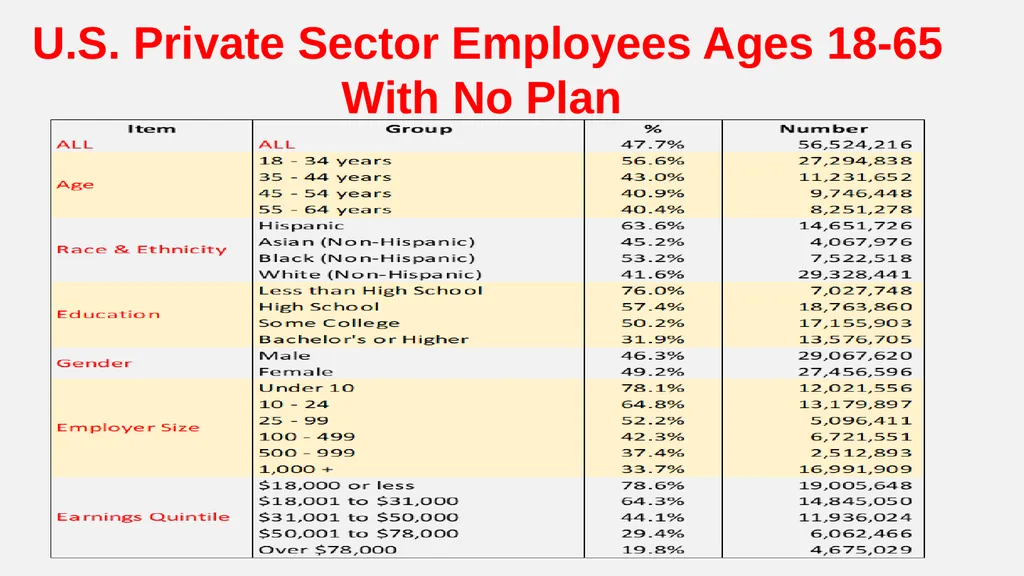
slide4. U.S. Private Sector Employees Ages 18-65 With No Plan<br>
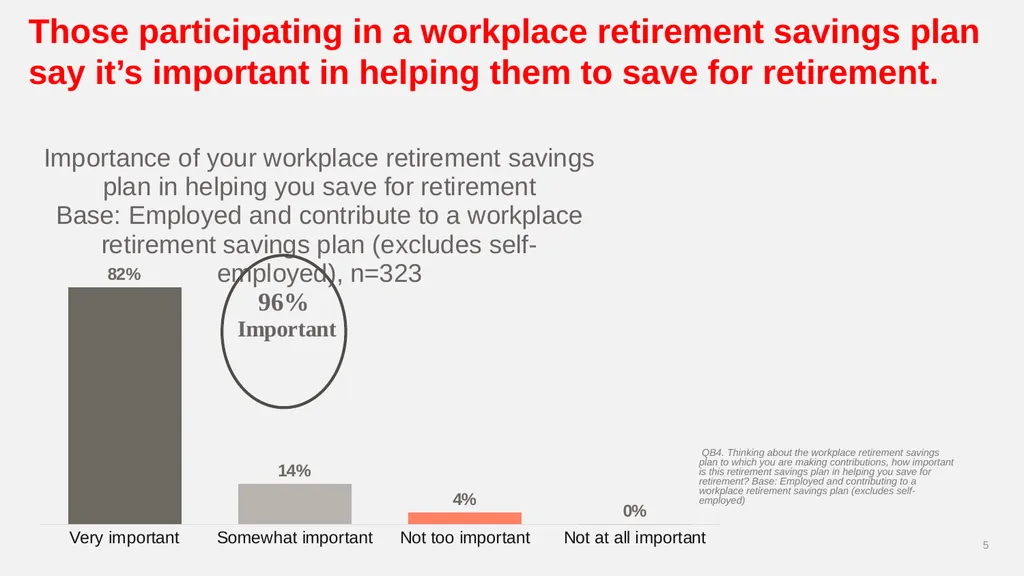
slide5. Those participating in a workplace retirement savings plan say it’s important in helping them to save for retirement. 5 QB4. Thinking about the workplace retirement savings plan to which you are making contributions, how important is this retirement savings plan in helping you save for retirement? Base: Employed and contributing to a workplace retirement savings plan (excludes self-employed)<br>
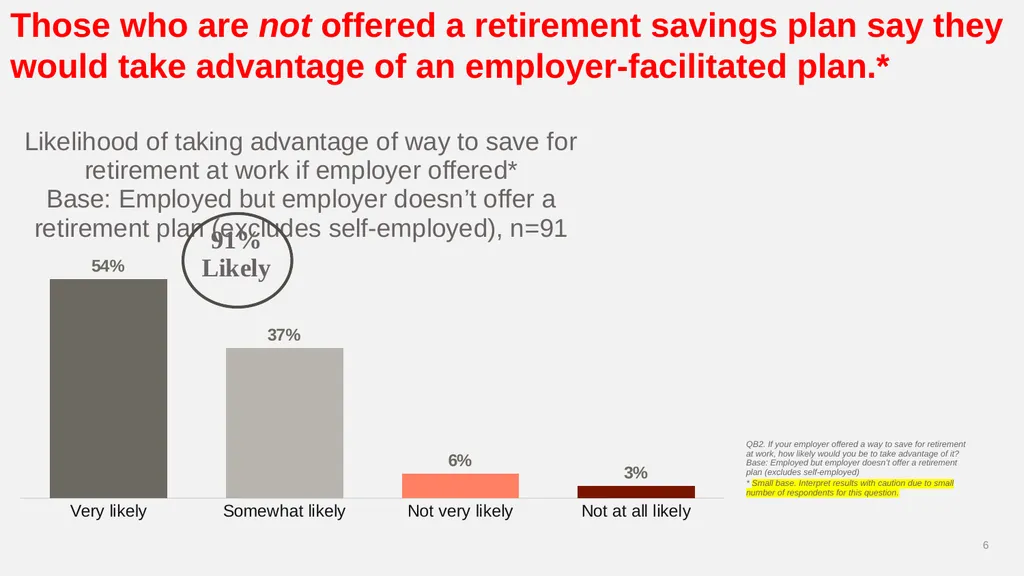
slide6. Those who are not offered a retirement savings plan say they would take advantage of an employer-facilitated plan.* 6 QB2. If your employer offered a way to save for retirement at work, how likely would you be to take advantage of it? Base: Employed but employer doesn’t offer a retirement plan (excludes self-employed)
* Small base. Interpret results with caution due to small number of respondents for this question.<br>
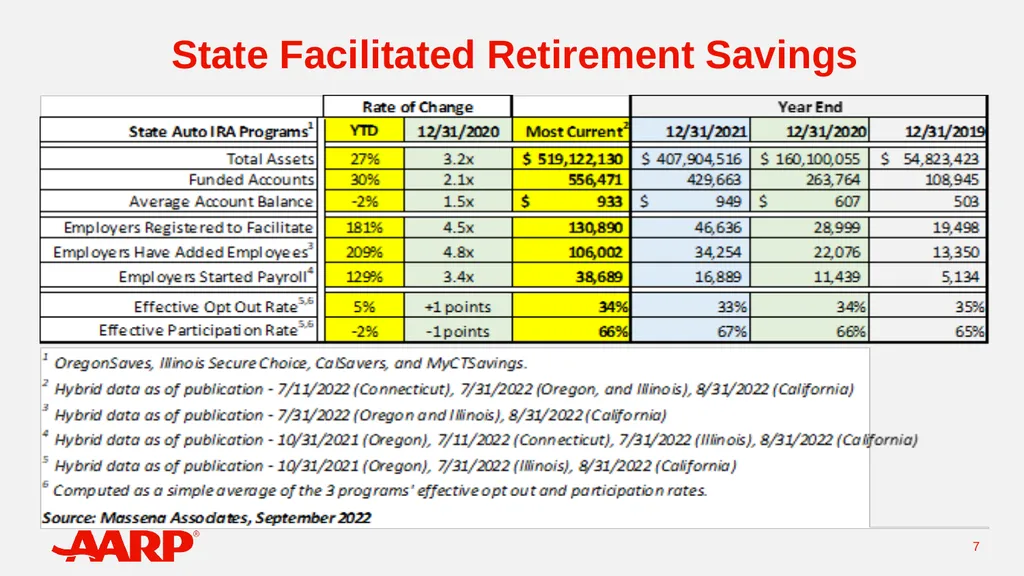
slide7. State Facilitated Retirement Savings<br>
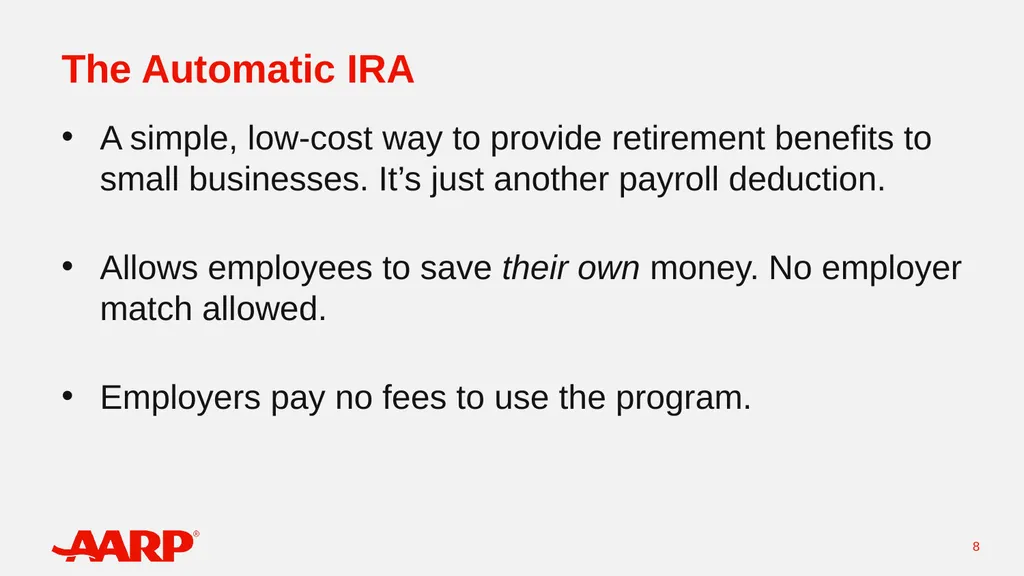
slide8. The Automatic IRA A simple, low-cost way to provide retirement benefits to small businesses. It’s just another payroll deduction.
Allows employees to save their own money. No employer match allowed.
Employers pay no fees to use the program.<br>
slide9. The Automatic IRA Simple & easy to understand for employees.
Employees like automatic enrollment and are grateful for the guidance.
Appears to spur growth of other plans also.<br>
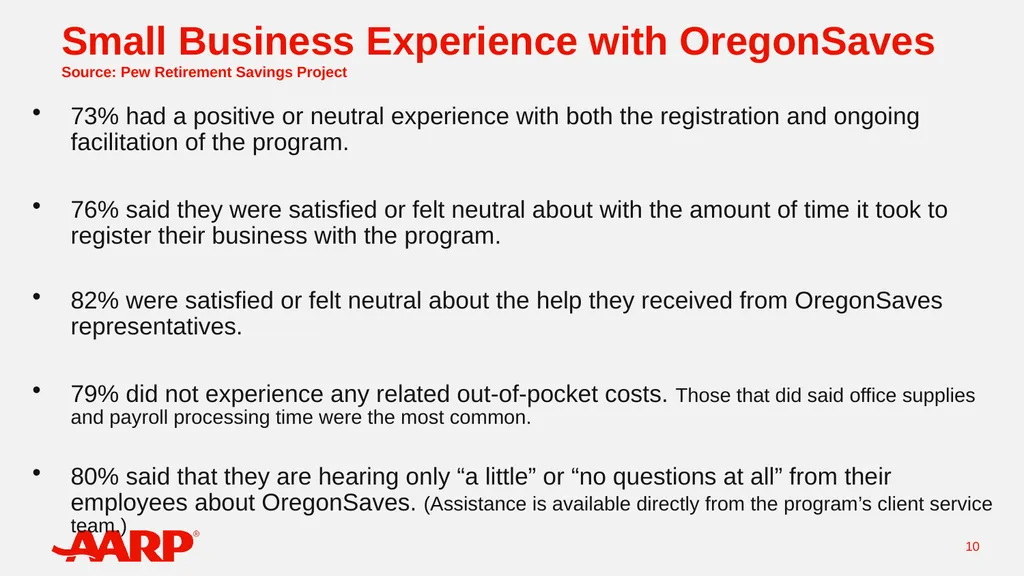
slide10. Small Business Experience with OregonSaves Source: Pew Retirement Savings Project 73% had a positive or neutral experience with both the registration and ongoing facilitation of the program.
76% said they were satisfied or felt neutral about with the amount of time it took to register their business with the program.
82% were satisfied or felt neutral about the help they received from OregonSaves representatives.
79% did not experience any related out-of-pocket costs. Those that did said office supplies and payroll processing time were the most common.
80% said that they are hearing only “a little” or “no questions at all” from their employees about OregonSaves. (Assistance is available directly from the program’s client service team.)<br>
slide11. Preserving Retirement Savings<br>
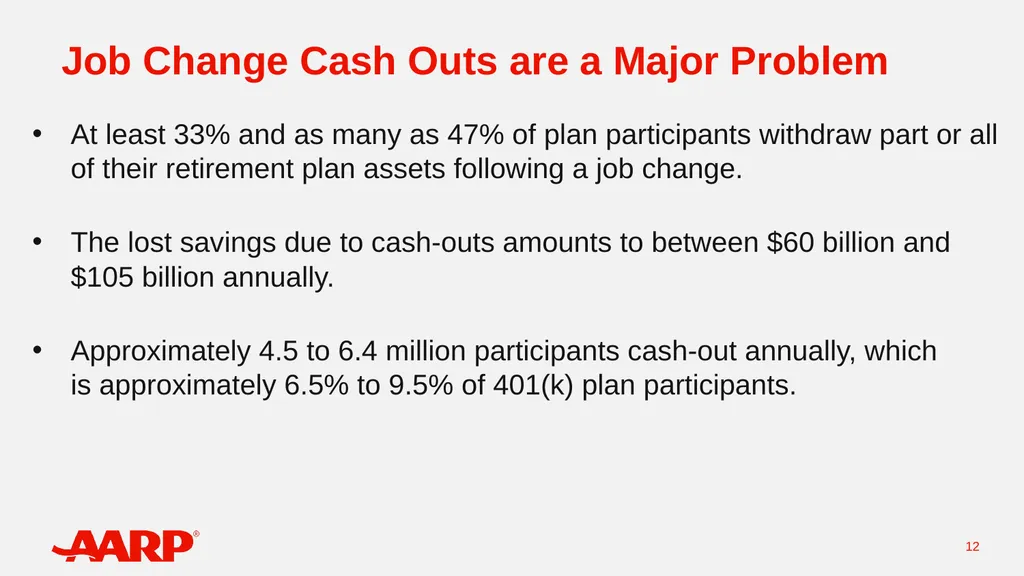
slide12. Job Change Cash Outs are a Major Problem At least 33% and as many as 47% of plan participants withdraw part or all of their retirement plan assets following a job change.
The lost savings due to cash-outs amounts to between $60 billion and $105 billion annually.
Approximately 4.5 to 6.4 million participants cash-out annually, which is approximately 6.5% to 9.5% of 401(k) plan participants.<br>
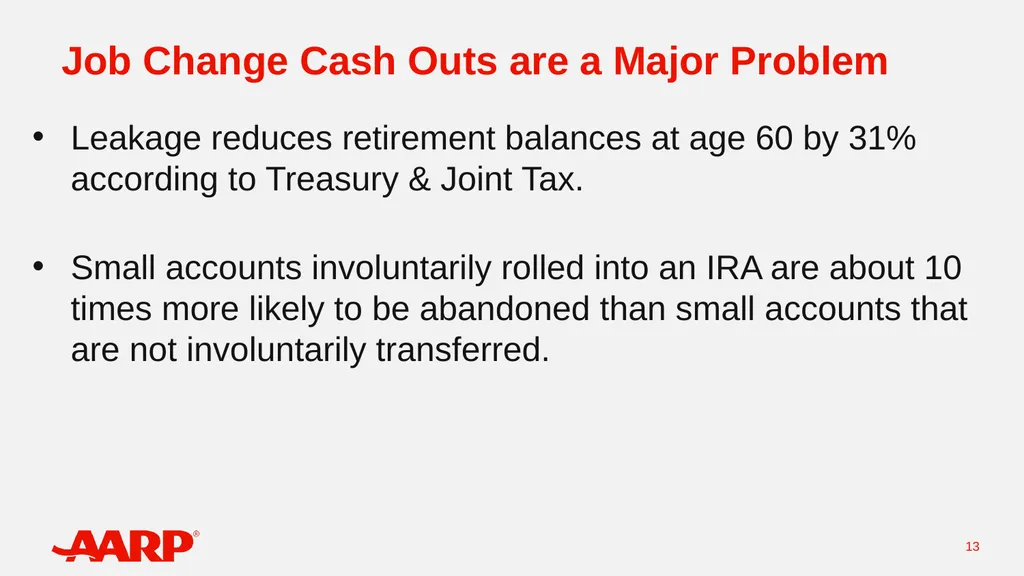
slide13. Job Change Cash Outs are a Major Problem Leakage reduces retirement balances at age 60 by 31% according to Treasury & Joint Tax.
Small accounts involuntarily rolled into an IRA are about 10 times more likely to be abandoned than small accounts that are not involuntarily transferred.<br>
slide14. Regulatory & Business Practices Can Help Require qualified DC plans to accept rollovers with appropriate protections.
Permit Roth IRAs to be rolled over to qualified plans.
Prevent shrinkage & promote growth of small auto-rollover IRA balances by allowing them to be invested in QDIAs.<br>
slide15. Regulatory & Business Practices Can Help Use the entire account balance in determining the $5,000 limit on auto rollovers to IRAs.
Support “automatic portability” rollovers between employer plans when employees change jobs.<br>
slide16. Establish a Pensions Dashboard A dashboard would include an online registry allowing each worker to track their retirement accounts and benefits.
It could also offer services such as recovering and consolidating lost accounts, projecting future income, or even providing or referring unbiased financial advice to users.
In order to find and consolidate accounts, the saver must proactively go to the dashboard and then act.<br>
slide17. Automatic Rollover or One Lifetime Account Default consolidation of all or many of a saver’s accounts, including small or inactive ones, can simplify the task of managing accounts, reduce costs, and discourage leakage.
Savers do not need to take action to benefit.
Australia and New Zealand have accounts that move with the saver from job to job.
State Auto IRAs are receiving deposits from more than one employer.<br>
slide18. Using Retirement Savings<br>
slide19. From Saving to Spending 73% of Americans say they do not have the financial skills to manage their money in retirement. (Oakley and Kenneally (2019)
79% say that retirees don’t have the investment skills to ensure their retirement savings last throughout retirement.
Inflation makes that process harder.
Annuities can be expensive and are unpopular. An automatic, flexible solution is needed to help people supplement their Social Security benefits.<br>
slide20. Building Emergency Savings<br>
slide21. Emergency Savings Build Resilience Having and using emergency savings strengthens household finances for several years after the emergency. (Sabat & Gallagher)
A 2018 AARP poll found that about 7 of 10 people would join a payroll deduction emergency savings program.
But enrollment difficulties reduce participation.
A new NEST study in the UK showed that auto enrollment increased participation by 50 percentage points & savings by 300%.<br>
slide22. Questions?<br>
slide2. Improving the U.S. Retirement System Essential reforms:
Creating Retirement Savings
Coverage: Who does not have access to a workplace retirement savings program
Payroll deduction & auto features build participation & savings
Preserving Retirement Savings
Portability: Moving savings from one employer to another
Moving and/or finding past accounts is unnecessarily hard
Using Retirement Savings
Deciding how to use savings is a universal problem
Some form of automatic option is needed
Emergency Savings are also needed<br>
slide3. Building Retirement Savings<br>
slide4. U.S. Private Sector Employees Ages 18-65 With No Plan<br>
slide5. Those participating in a workplace retirement savings plan say it’s important in helping them to save for retirement. 5 QB4. Thinking about the workplace retirement savings plan to which you are making contributions, how important is this retirement savings plan in helping you save for retirement? Base: Employed and contributing to a workplace retirement savings plan (excludes self-employed)<br>
slide6. Those who are not offered a retirement savings plan say they would take advantage of an employer-facilitated plan.* 6 QB2. If your employer offered a way to save for retirement at work, how likely would you be to take advantage of it? Base: Employed but employer doesn’t offer a retirement plan (excludes self-employed)
* Small base. Interpret results with caution due to small number of respondents for this question.<br>
slide7. State Facilitated Retirement Savings<br>
slide8. The Automatic IRA A simple, low-cost way to provide retirement benefits to small businesses. It’s just another payroll deduction.
Allows employees to save their own money. No employer match allowed.
Employers pay no fees to use the program.<br>
slide9. The Automatic IRA Simple & easy to understand for employees.
Employees like automatic enrollment and are grateful for the guidance.
Appears to spur growth of other plans also.<br>
slide10. Small Business Experience with OregonSaves Source: Pew Retirement Savings Project 73% had a positive or neutral experience with both the registration and ongoing facilitation of the program.
76% said they were satisfied or felt neutral about with the amount of time it took to register their business with the program.
82% were satisfied or felt neutral about the help they received from OregonSaves representatives.
79% did not experience any related out-of-pocket costs. Those that did said office supplies and payroll processing time were the most common.
80% said that they are hearing only “a little” or “no questions at all” from their employees about OregonSaves. (Assistance is available directly from the program’s client service team.)<br>
slide11. Preserving Retirement Savings<br>
slide12. Job Change Cash Outs are a Major Problem At least 33% and as many as 47% of plan participants withdraw part or all of their retirement plan assets following a job change.
The lost savings due to cash-outs amounts to between $60 billion and $105 billion annually.
Approximately 4.5 to 6.4 million participants cash-out annually, which is approximately 6.5% to 9.5% of 401(k) plan participants.<br>
slide13. Job Change Cash Outs are a Major Problem Leakage reduces retirement balances at age 60 by 31% according to Treasury & Joint Tax.
Small accounts involuntarily rolled into an IRA are about 10 times more likely to be abandoned than small accounts that are not involuntarily transferred.<br>
slide14. Regulatory & Business Practices Can Help Require qualified DC plans to accept rollovers with appropriate protections.
Permit Roth IRAs to be rolled over to qualified plans.
Prevent shrinkage & promote growth of small auto-rollover IRA balances by allowing them to be invested in QDIAs.<br>
slide15. Regulatory & Business Practices Can Help Use the entire account balance in determining the $5,000 limit on auto rollovers to IRAs.
Support “automatic portability” rollovers between employer plans when employees change jobs.<br>
slide16. Establish a Pensions Dashboard A dashboard would include an online registry allowing each worker to track their retirement accounts and benefits.
It could also offer services such as recovering and consolidating lost accounts, projecting future income, or even providing or referring unbiased financial advice to users.
In order to find and consolidate accounts, the saver must proactively go to the dashboard and then act.<br>
slide17. Automatic Rollover or One Lifetime Account Default consolidation of all or many of a saver’s accounts, including small or inactive ones, can simplify the task of managing accounts, reduce costs, and discourage leakage.
Savers do not need to take action to benefit.
Australia and New Zealand have accounts that move with the saver from job to job.
State Auto IRAs are receiving deposits from more than one employer.<br>
slide18. Using Retirement Savings<br>
slide19. From Saving to Spending 73% of Americans say they do not have the financial skills to manage their money in retirement. (Oakley and Kenneally (2019)
79% say that retirees don’t have the investment skills to ensure their retirement savings last throughout retirement.
Inflation makes that process harder.
Annuities can be expensive and are unpopular. An automatic, flexible solution is needed to help people supplement their Social Security benefits.<br>
slide20. Building Emergency Savings<br>
slide21. Emergency Savings Build Resilience Having and using emergency savings strengthens household finances for several years after the emergency. (Sabat & Gallagher)
A 2018 AARP poll found that about 7 of 10 people would join a payroll deduction emergency savings program.
But enrollment difficulties reduce participation.
A new NEST study in the UK showed that auto enrollment increased participation by 50 percentage points & savings by 300%.<br>
slide22. Questions?<br>