NavyMarine Corps Watch Standing Learning Topics Introduction General Orders Reasons we stand watch Types of watches Scenario Deck Log Watch terms Watch stations Definition of a watch Watch: Any period of time during which an individual is
"Navy/Marine Corps Watch Standing Learning Topics" is the property of its rightful owner. Permission is granted to
download and print the materials on this website for personal, non-commercial use only, and to display it
on your personal computer provided you do not modify the materials and that you retain all copyright
notices contained in the materials. By downloading content from our website, you accept the terms of this
agreement.
Presentation Transcript
01
Navy/Marine Corps Watch Standing<br>
02
Learning Topics Introduction
General Orders
Reasons we stand watch
Types of watches
Scenario
Deck Log
Watch terms
Watch stations<br>
03
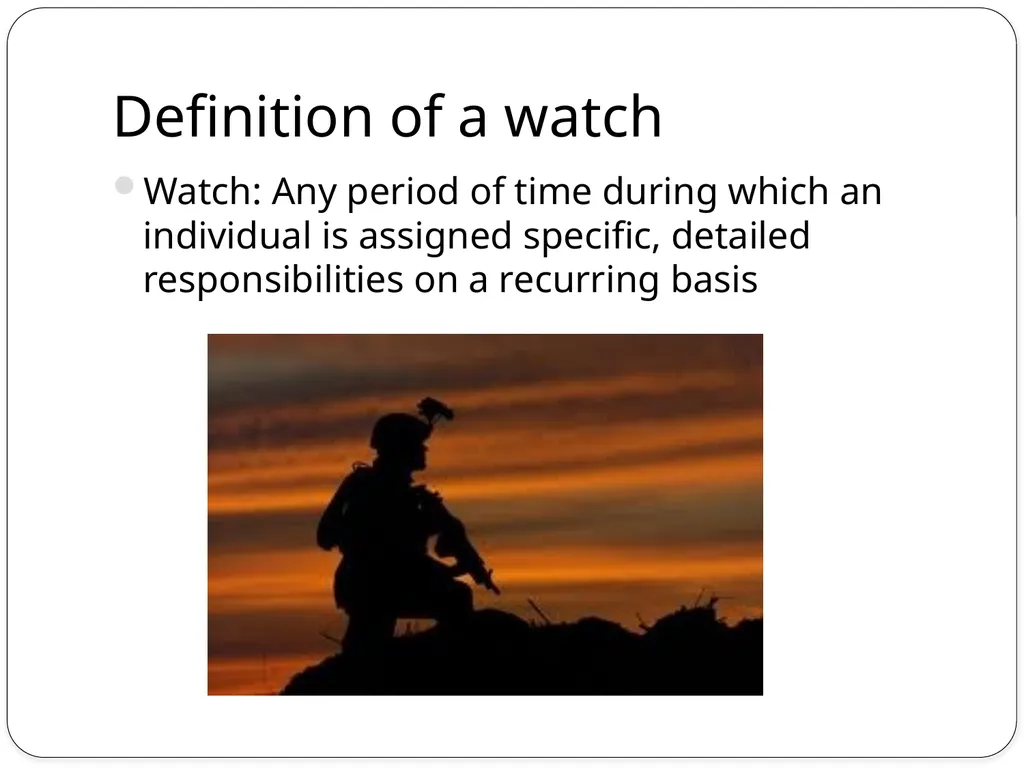
Definition of a watch Watch: Any period of time during which an individual is assigned specific, detailed responsibilities on a recurring basis<br>
04
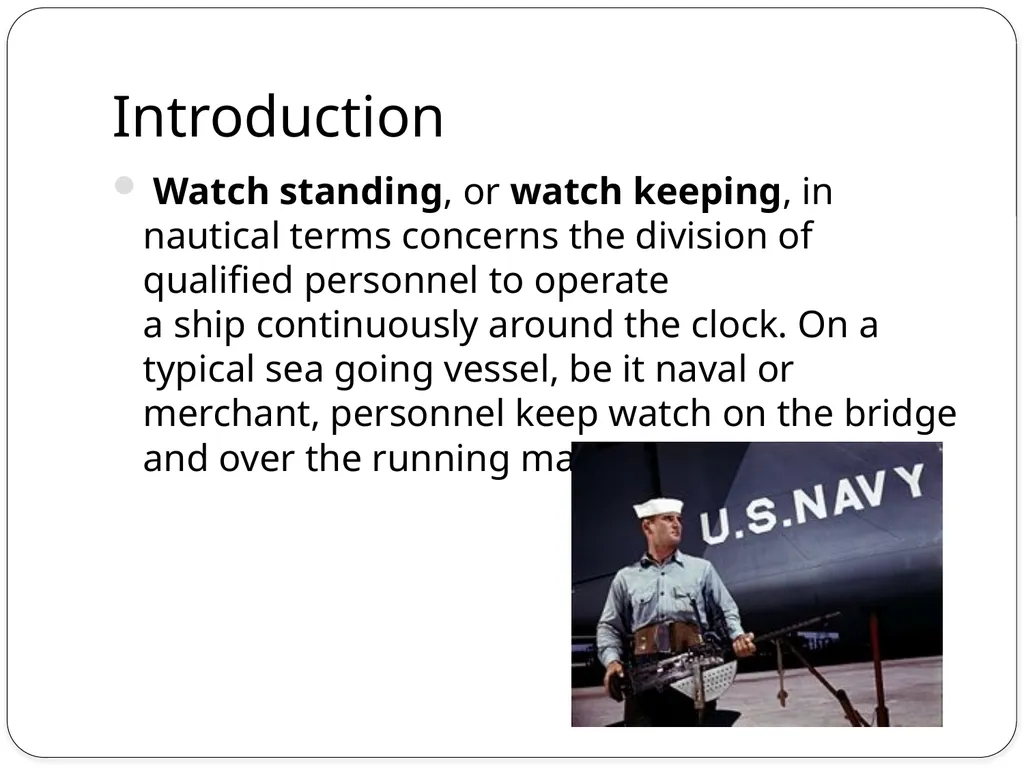
Introduction Watch standing, or watch keeping, in nautical terms concerns the division of qualified personnel to operate a ship continuously around the clock. On a typical sea going vessel, be it naval or merchant, personnel keep watch on the bridge and over the running machinery.<br>
05
General Orders of the Sentry 1. To take charge of this post and all government property in view.
2. To walk my post in a military manner, keeping always on the alert, and observing everything that takes place within sight or hearing.
3. To report all violations of orders I am instructed to enforce.
4. To repeat all calls from posts more distant from the guard house than my own.
5. To quit my post only when properly relieved.
6. To receive, obey and pass on to the sentry who relieves me, all orders from the Commanding Officer, Command Duty Officer, Officer of the Deck, and Officers and Petty Officers of the Watch only.
7. To talk to no one except in the line of duty.
8. To give the alarm in case of fire or disorder.
9. To call the Officer of the Deck in any case not covered by instructions.
10. To salute all officers and all colors and standards not cased.
11. To be especially watchful at night, and, during the time for challenging, to challenge all persons on or near my post and to allow no one to pass without proper authority.<br>
06
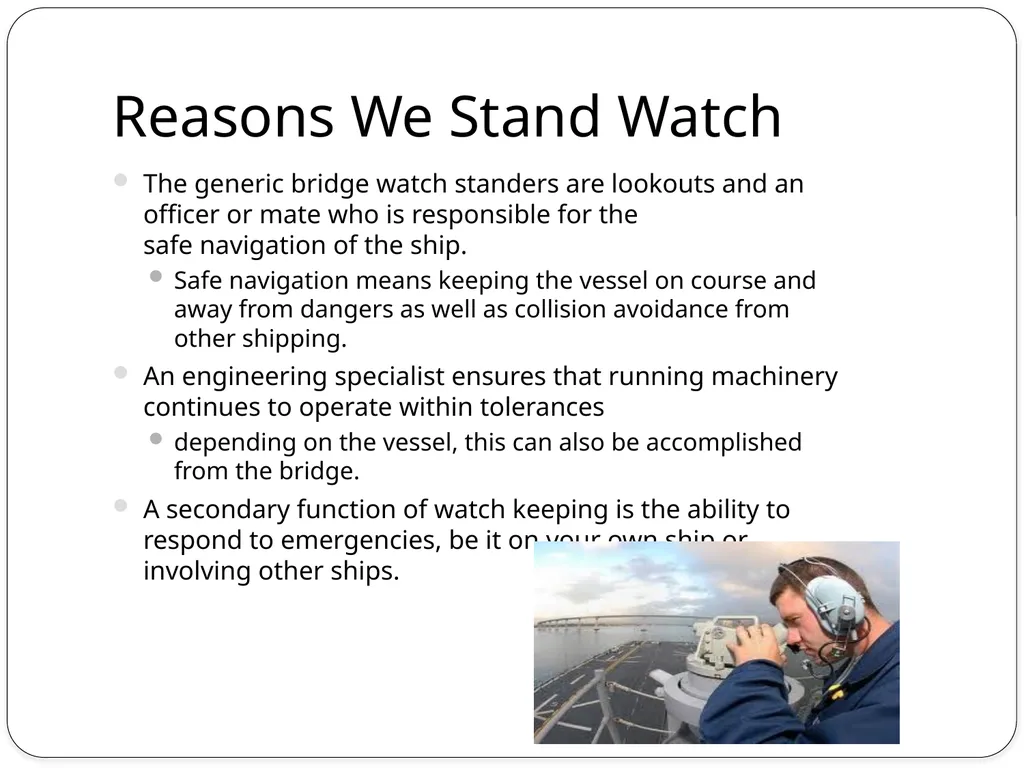
Reasons We Stand Watch The generic bridge watch standers are lookouts and an officer or mate who is responsible for the safe navigation of the ship.
Safe navigation means keeping the vessel on course and away from dangers as well as collision avoidance from other shipping.
An engineering specialist ensures that running machinery continues to operate within tolerances
depending on the vessel, this can also be accomplished from the bridge.
A secondary function of watch keeping is the ability to respond to emergencies, be it on your own ship or involving other ships.<br>
07
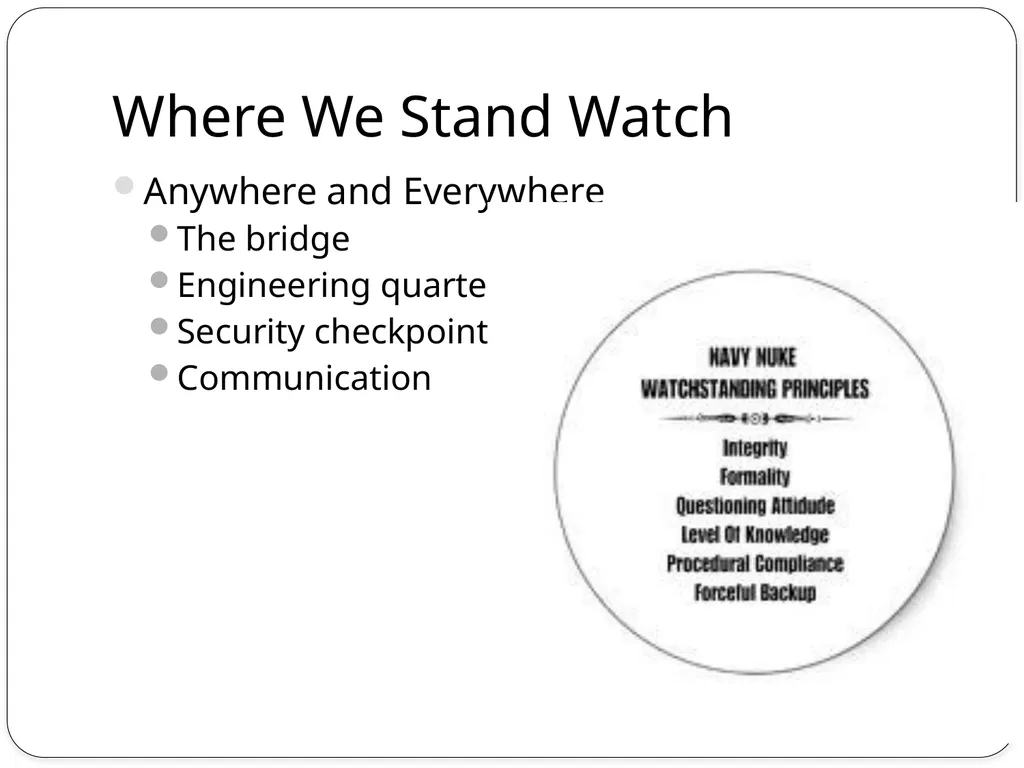
Where We Stand Watch Anywhere and Everywhere
The bridge
Engineering quarters
Security checkpoints
Communication<br>
08
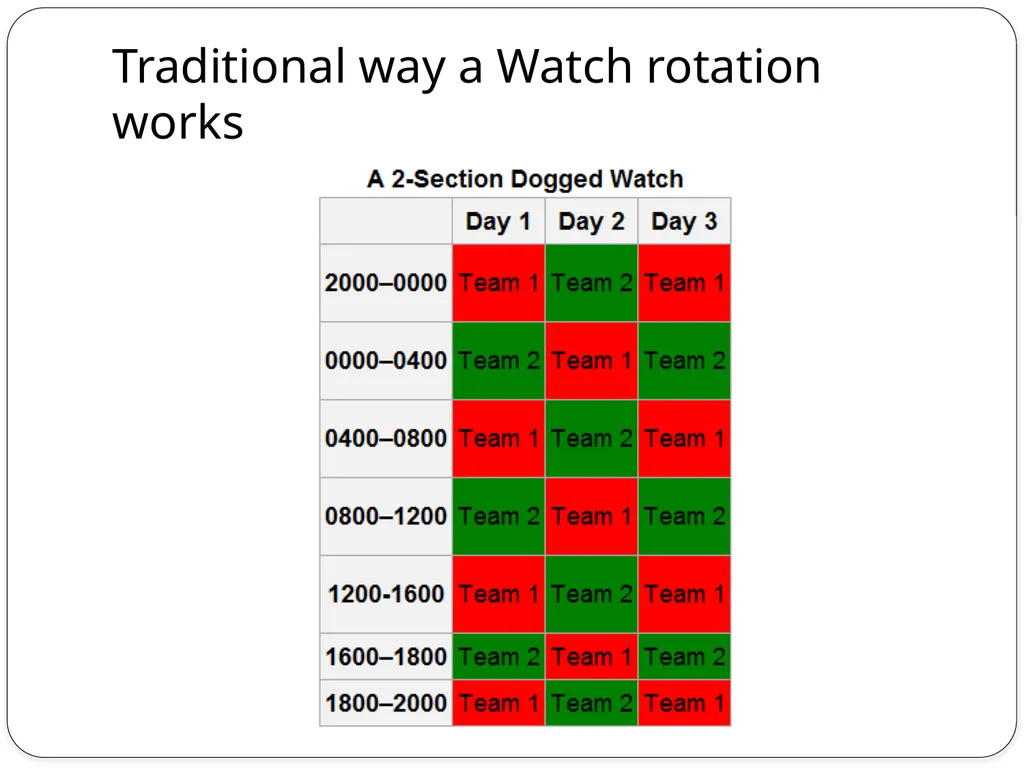
Traditional way a Watch rotation works<br>
09
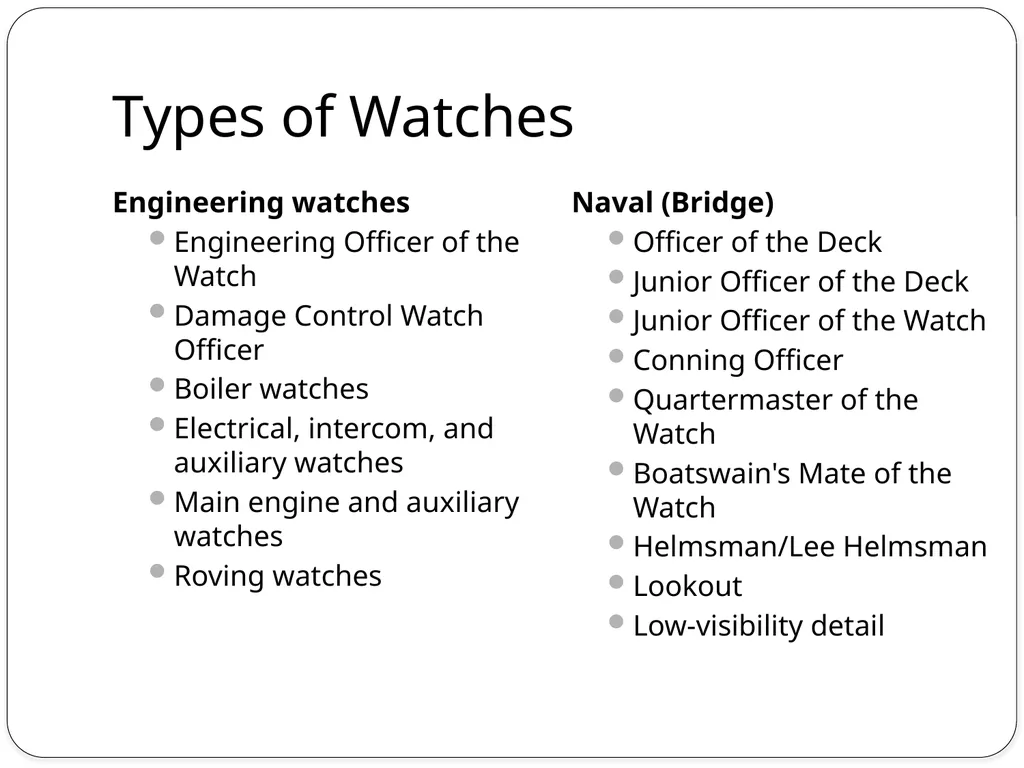
Types of Watches Naval (Bridge)
Officer of the Deck
Junior Officer of the Deck
Junior Officer of the Watch
Conning Officer
Quartermaster of the Watch
Boatswain's Mate of the Watch
Helmsman/Lee Helmsman
Lookout
Low-visibility detail Engineering watches
Engineering Officer of the Watch
Damage Control Watch Officer
Boiler watches
Electrical, intercom, and auxiliary watches
Main engine and auxiliary watches
Roving watches<br>
10
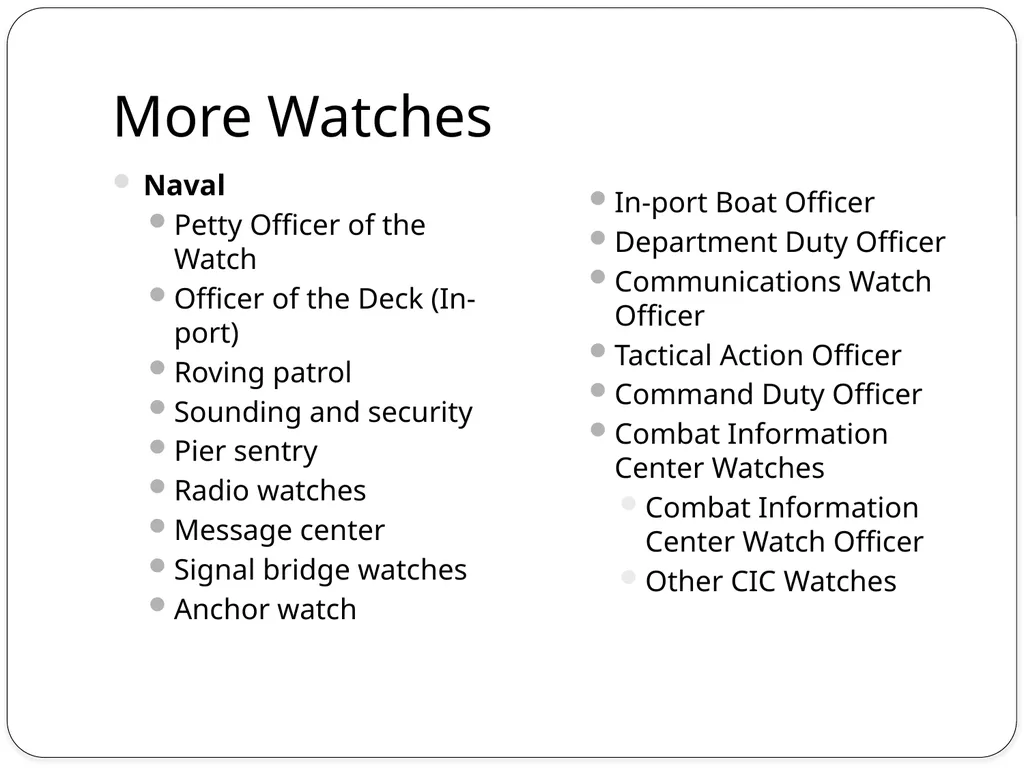
More Watches Naval
Petty Officer of the Watch
Officer of the Deck (In-port)
Roving patrol
Sounding and security
Pier sentry
Radio watches
Message center
Signal bridge watches
Anchor watch In-port Boat Officer
Department Duty Officer
Communications Watch Officer
Tactical Action Officer
Command Duty Officer
Combat Information Center Watches
Combat Information Center Watch Officer
Other CIC Watches<br>
11
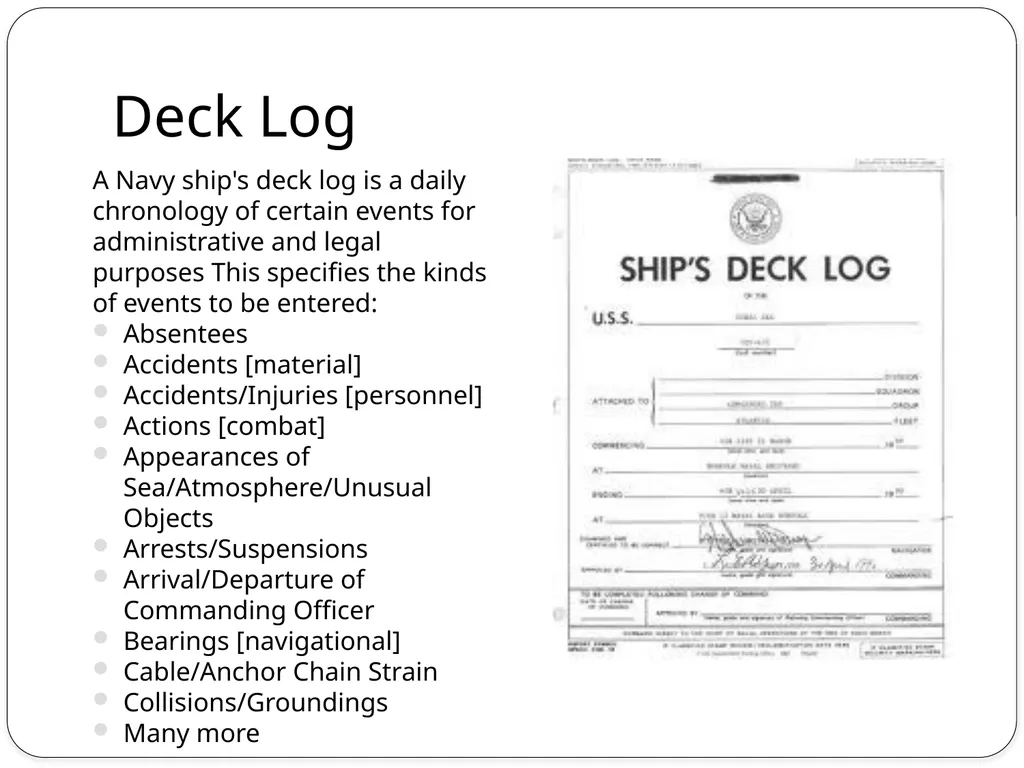
Deck Log A Navy ship's deck log is a daily chronology of certain events for administrative and legal purposes This specifies the kinds of events to be entered:
Absentees
Accidents [material]
Accidents/Injuries [personnel]
Actions [combat]
Appearances of Sea/Atmosphere/Unusual Objects
Arrests/Suspensions
Arrival/Departure of Commanding Officer
Bearings [navigational]
Cable/Anchor Chain Strain
Collisions/Groundings
Many more<br>
12
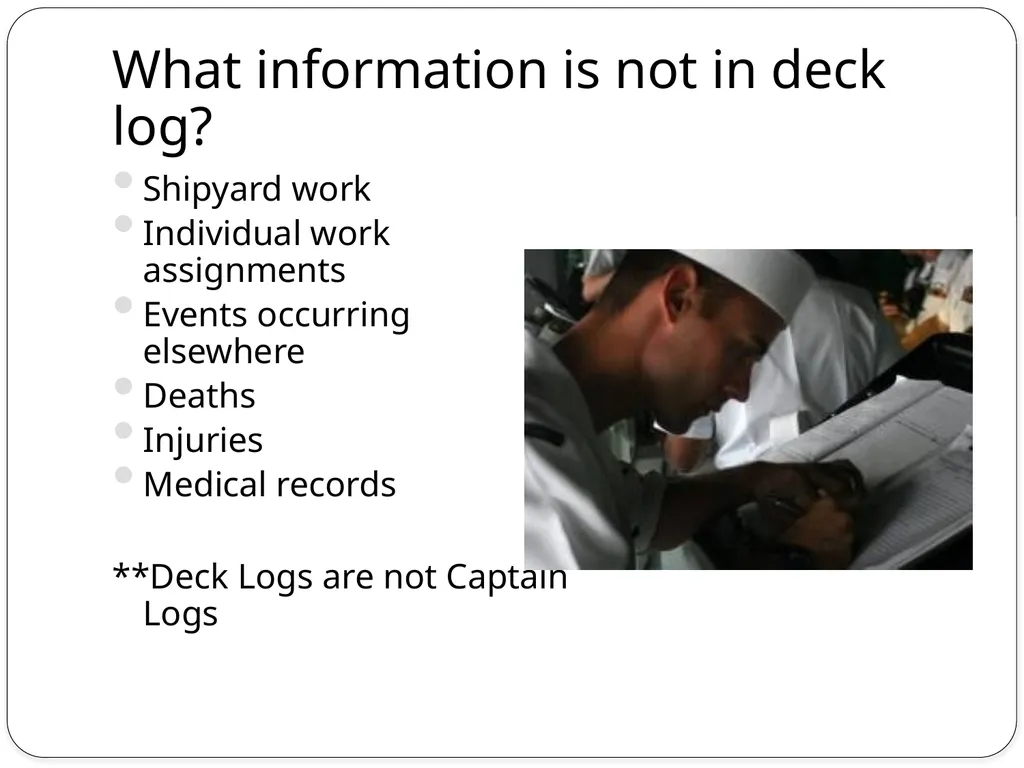
What information is not in deck log? Shipyard work
Individual work assignments
Events occurring elsewhere
Deaths
Injuries
Medical records
**Deck Logs are not Captain Logs<br>
13
Watch, Quarter, and Station Bill It shows the personnel duty assignments for a division as specified in the ship's battle organization and regulation's manual.
Its purpose is to inform division personnel of their assignment
The ship’s organized plan for action is contained in the battle bill.
Based on the organization manual and other publications and directives.
Contains lists of stations that must be manned during battle and at other specified times.
Using the organization manual and the battle bill as references, each division officer and division chief assigns qualified personnel in the division to the stations and enters their names on the watch, quarter, and station bill<br>
14
Conclusion Know the general orders of the sentry
Never leave a post unless properly relieved
Get used to standing watch now
You signed up for a career in the navy and you will be standing watch as long as you're still a member.<br>