
NCI-Molecular Analysis for Therapy Choice
Description: NCI-Molecular Analysis for Therapy Choice (NCI-MATCH or EAY131) Interim Analysis Results Study Chairs: Keith T. Flaherty1, Alice P. Chen2, Peter J. ODwyer3, Barbara A. Conley2, Stanley R. Hamilton4, Mickey Williams5, Robert J. Gray6, Shuli
Related Topics
Download Presentation
"NCI-Molecular Analysis for Therapy Choice" is the property of its rightful owner. Permission is granted to download and print the materials on this website for personal, non-commercial use only, and to display it on your personal computer provided you do not modify the materials and that you retain all copyright notices contained in the materials. By downloading content from our website, you accept the terms of this agreement.
Presentation Transcript
slide1. NCI-Molecular Analysis for Therapy Choice
(NCI-MATCH or EAY131) Interim Analysis Results Study Chairs: Keith T. Flaherty1, Alice P. Chen2, Peter J. O'Dwyer3, Barbara A. Conley2, Stanley R. Hamilton4, Mickey Williams5, Robert J. Gray6, Shuli Li6, Lisa M. McShane6, Lawrence V. Rubinstein2, Susanna I. Lee1, Frank I. Lin7, Paolo F. Caimi8, Albert A. Nemcek, Jr.,9 Edith P. Mitchell10, James A. Zwiebel2
1Massachusetts General Hospital, Boston, MA; 2National Cancer Institute (NCI), Division of Cancer Treatment and Diagnosis, Bethesda, MD; 3University of Pennsylvania, Philadelphia, PA; 4MD Anderson Cancer Center, Houston, TX; 5 NCI Frederick National Laboratory for Cancer Research, Frederick, MD; 6Dana-Farber Cancer Institute, Boston, MA; 7NCI Cancer Imaging Program, Rockville, MD 8Case Western Reserve University, Cleveland, OH, 9TNorthwestern University, Chicago, IL, 10Thomas Jefferson University, Philadelphia, PA 05/06/2016<br>
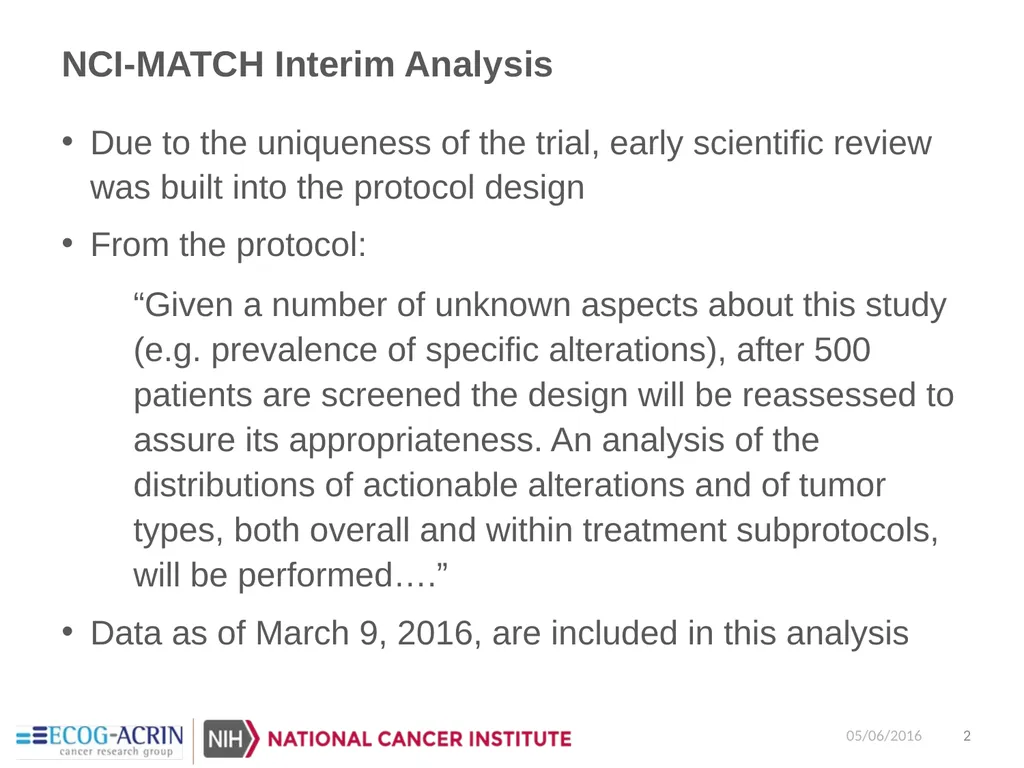
slide2. NCI-MATCH Interim Analysis Due to the uniqueness of the trial, early scientific review was built into the protocol design
From the protocol:
“Given a number of unknown aspects about this study (e.g. prevalence of specific alterations), after 500 patients are screened the design will be reassessed to assure its appropriateness. An analysis of the distributions of actionable alterations and of tumor types, both overall and within treatment subprotocols, will be performed….”
Data as of March 9, 2016, are included in this analysis 2 05/06/2016<br>
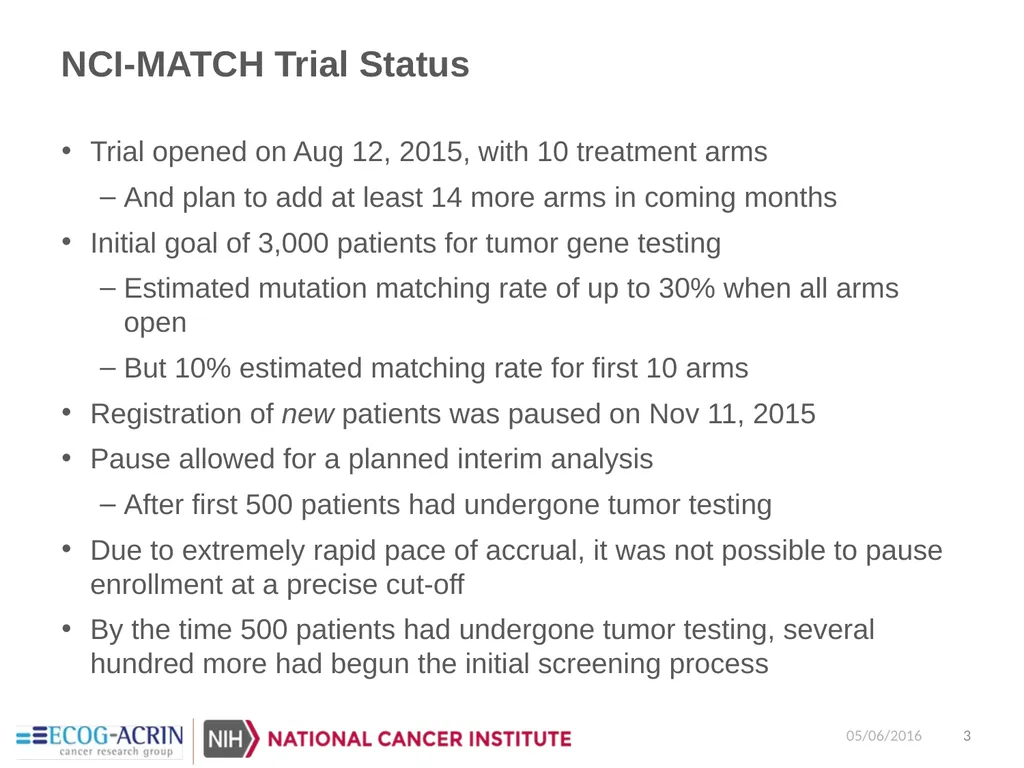
slide3. Trial opened on Aug 12, 2015, with 10 treatment arms
And plan to add at least 14 more arms in coming months
Initial goal of 3,000 patients for tumor gene testing
Estimated mutation matching rate of up to 30% when all arms open
But 10% estimated matching rate for first 10 arms
Registration of new patients was paused on Nov 11, 2015
Pause allowed for a planned interim analysis
After first 500 patients had undergone tumor testing
Due to extremely rapid pace of accrual, it was not possible to pause enrollment at a precise cut-off
By the time 500 patients had undergone tumor testing, several hundred more had begun the initial screening process NCI-MATCH Trial Status 3 05/06/2016<br>
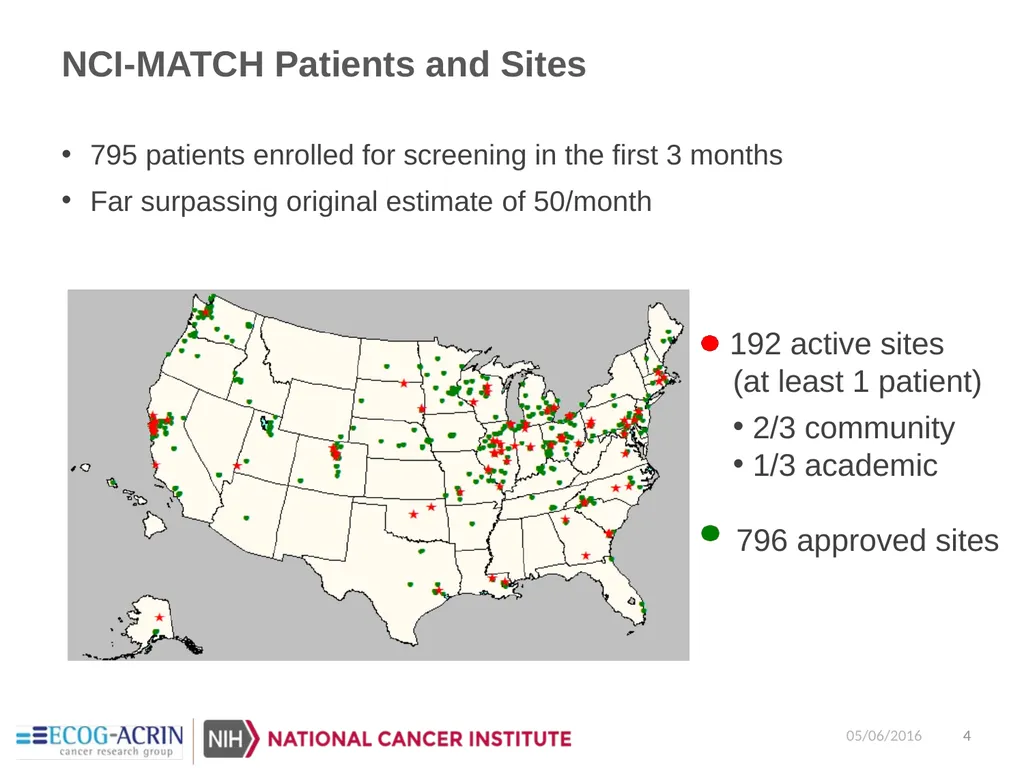
slide4. NCI-MATCH Patients and Sites 795 patients enrolled for screening in the first 3 months
Far surpassing original estimate of 50/month 4 05/06/2016<br>
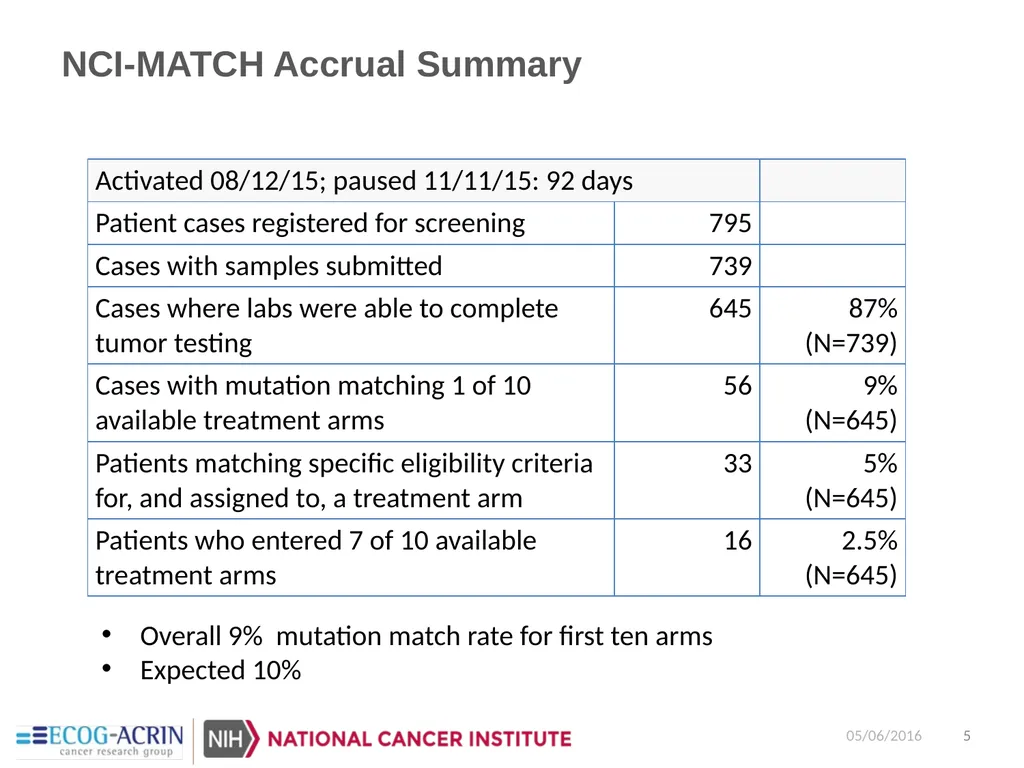
slide5. NCI-MATCH Accrual Summary 5 05/06/2016 Overall 9% mutation match rate for first ten arms
Expected 10%<br>
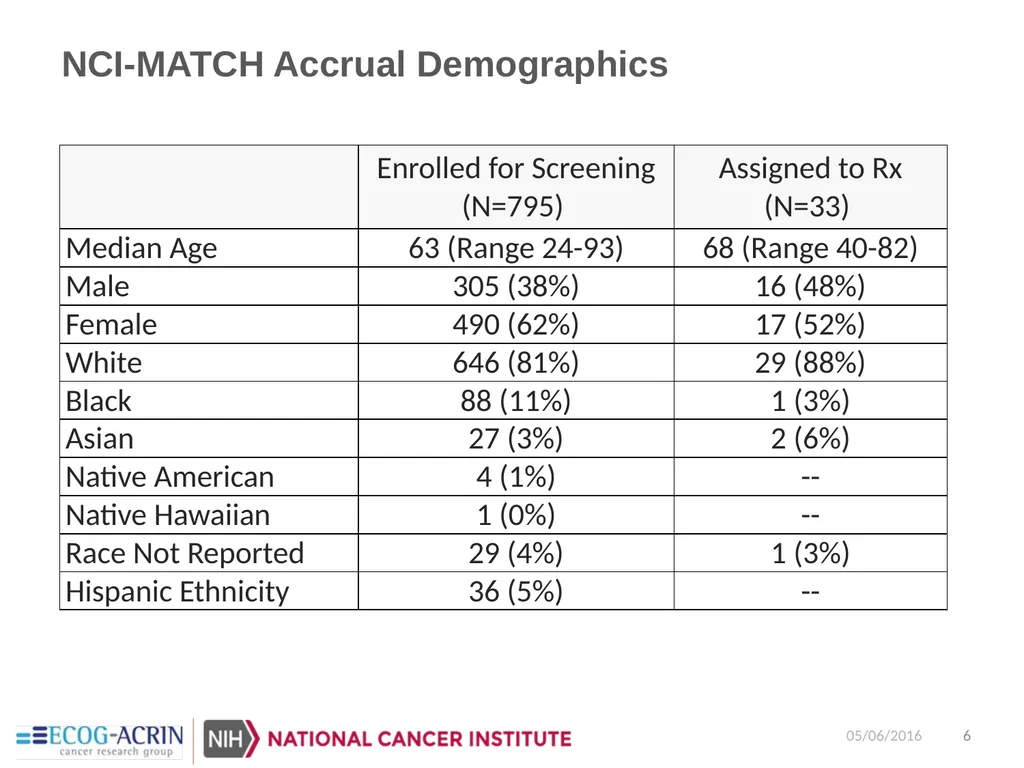
slide6. NCI-MATCH Accrual Demographics 6 05/06/2016<br>
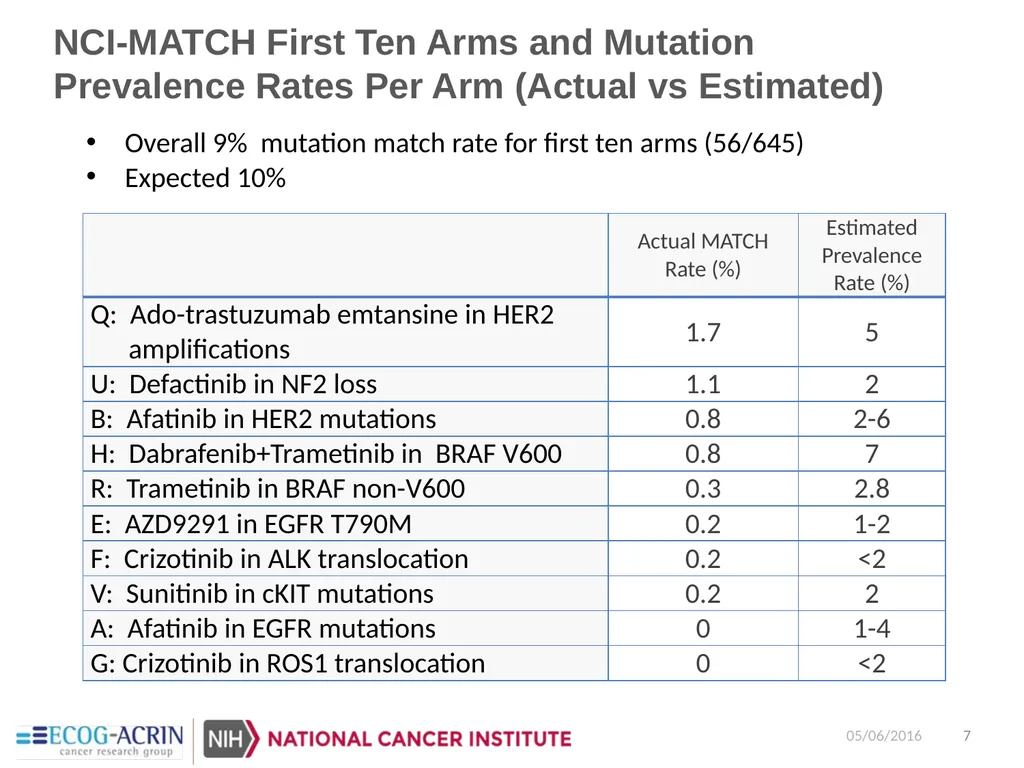
slide7. NCI-MATCH First Ten Arms and Mutation Prevalence Rates Per Arm (Actual vs Estimated) Overall 9% mutation match rate for first ten arms (56/645)
Expected 10% 7 05/06/2016<br>
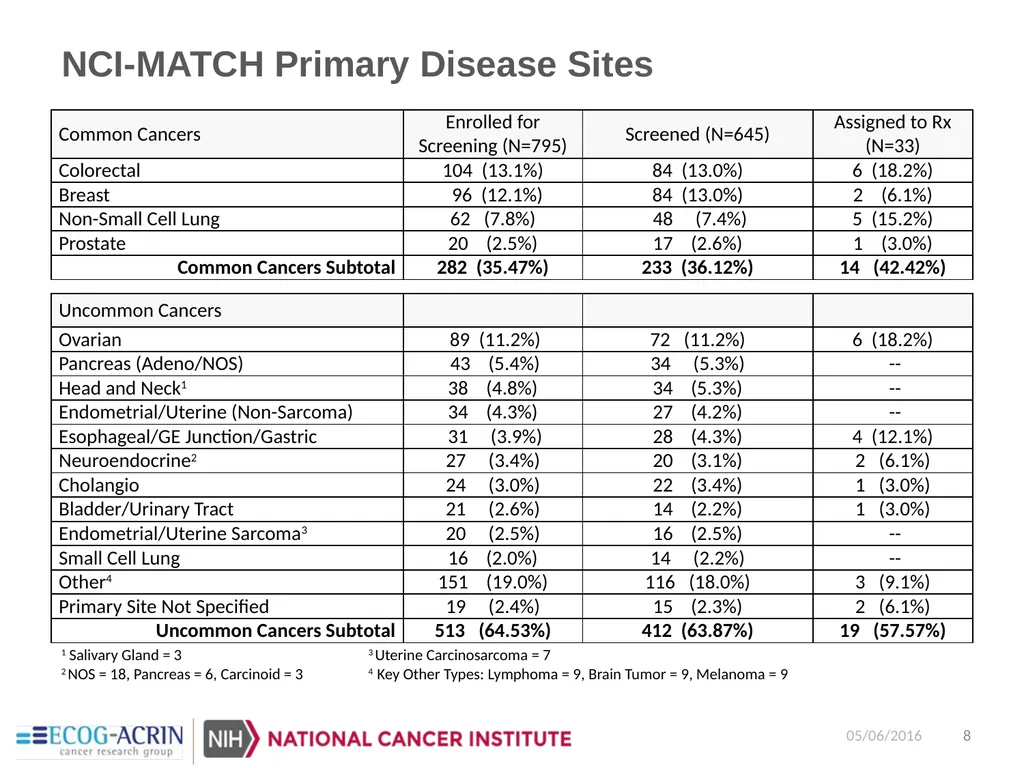
slide8. NCI-MATCH Primary Disease Sites 1 Salivary Gland = 3 3 Uterine Carcinosarcoma = 7
2 NOS = 18, Pancreas = 6, Carcinoid = 3 4 Key Other Types: Lymphoma = 9, Brain Tumor = 9, Melanoma = 9 8 05/06/2016<br>
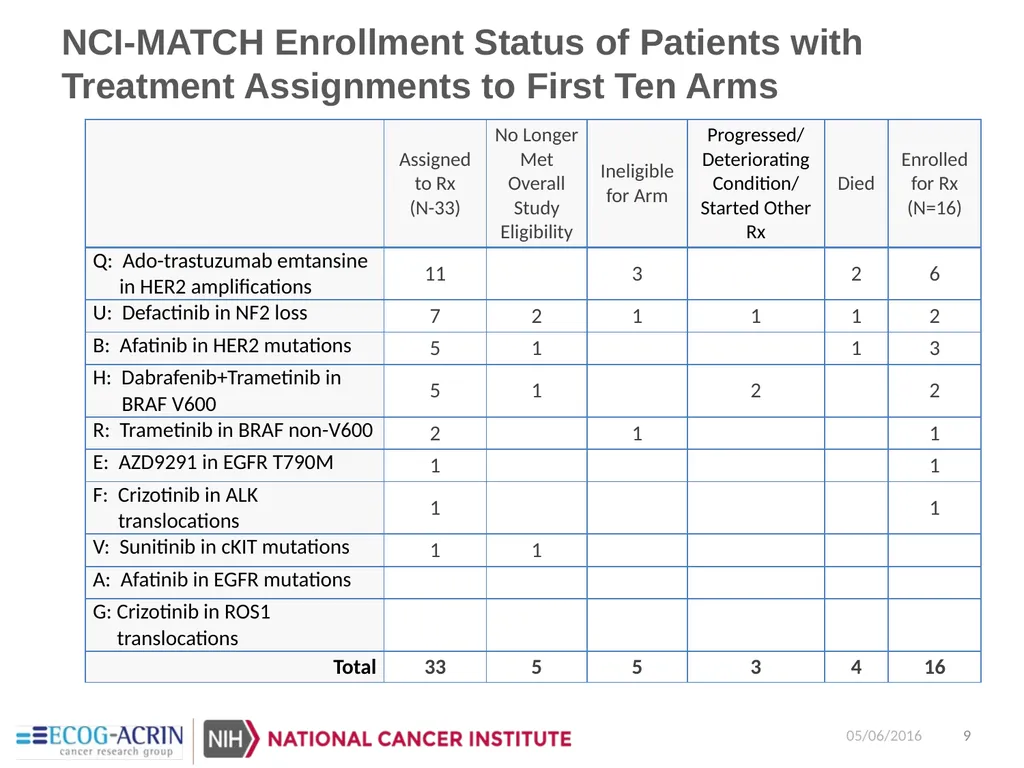
slide9. NCI-MATCH Enrollment Status of Patients with Treatment Assignments to First Ten Arms 9 05/06/2016<br>
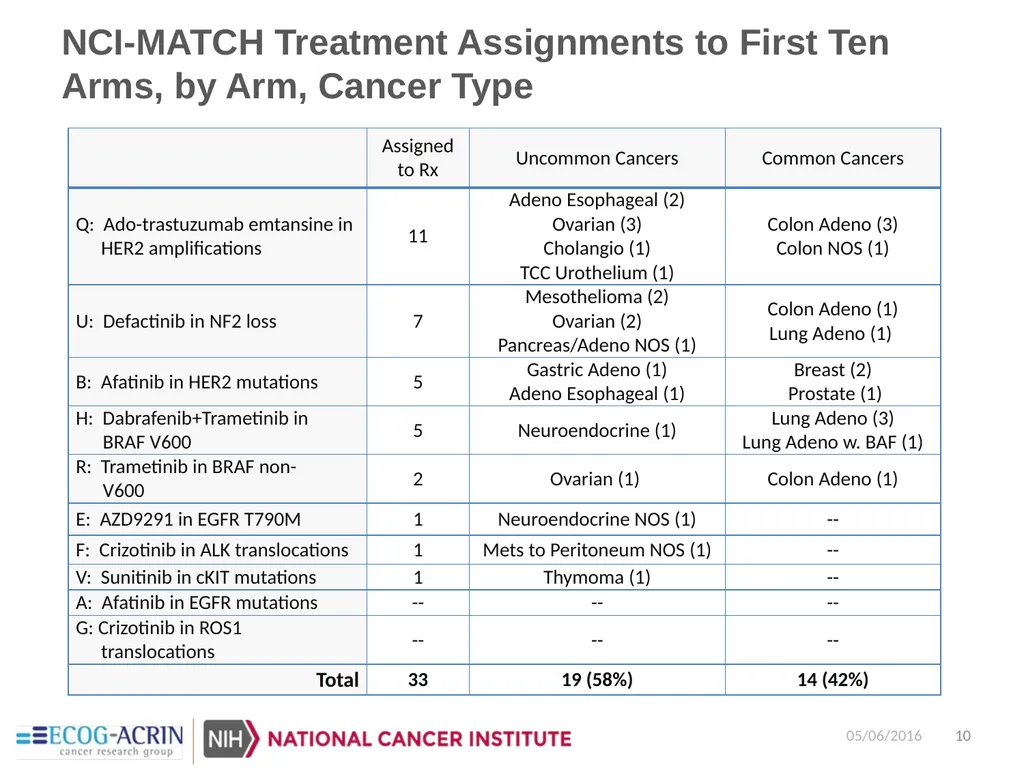
slide10. NCI-MATCH Treatment Assignments to First Ten Arms, by Arm, Cancer Type 10 05/06/2016<br>
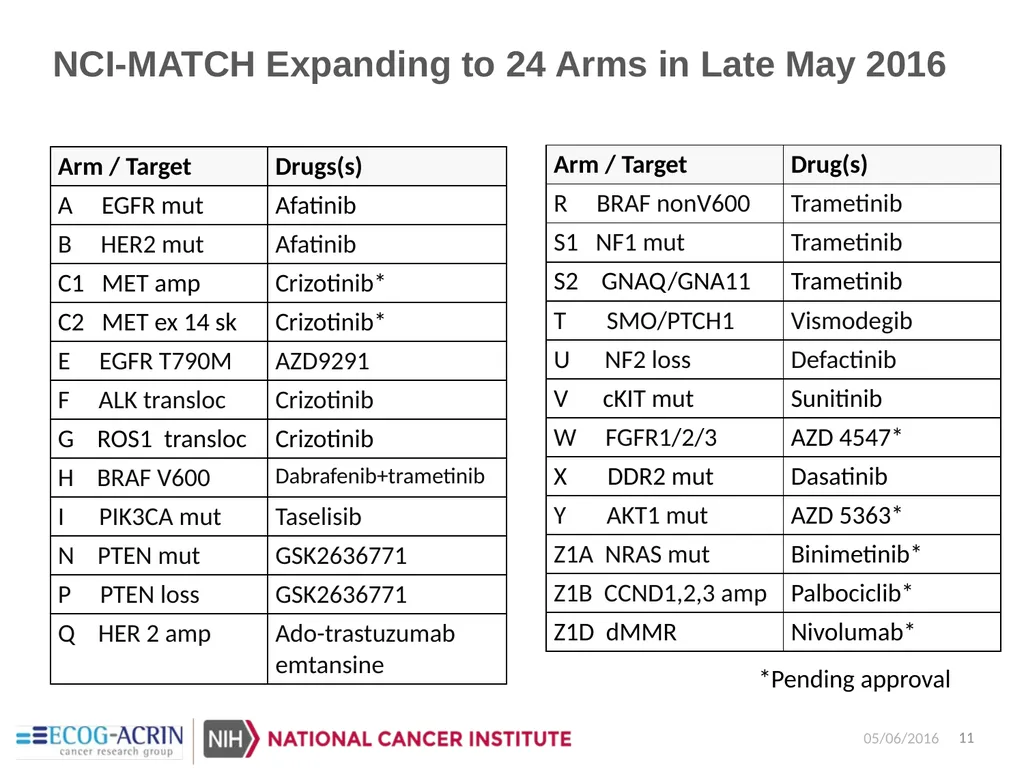
slide11. NCI-MATCH Expanding to 24 Arms in Late May 2016 *Pending approval 05/06/2016 11<br>
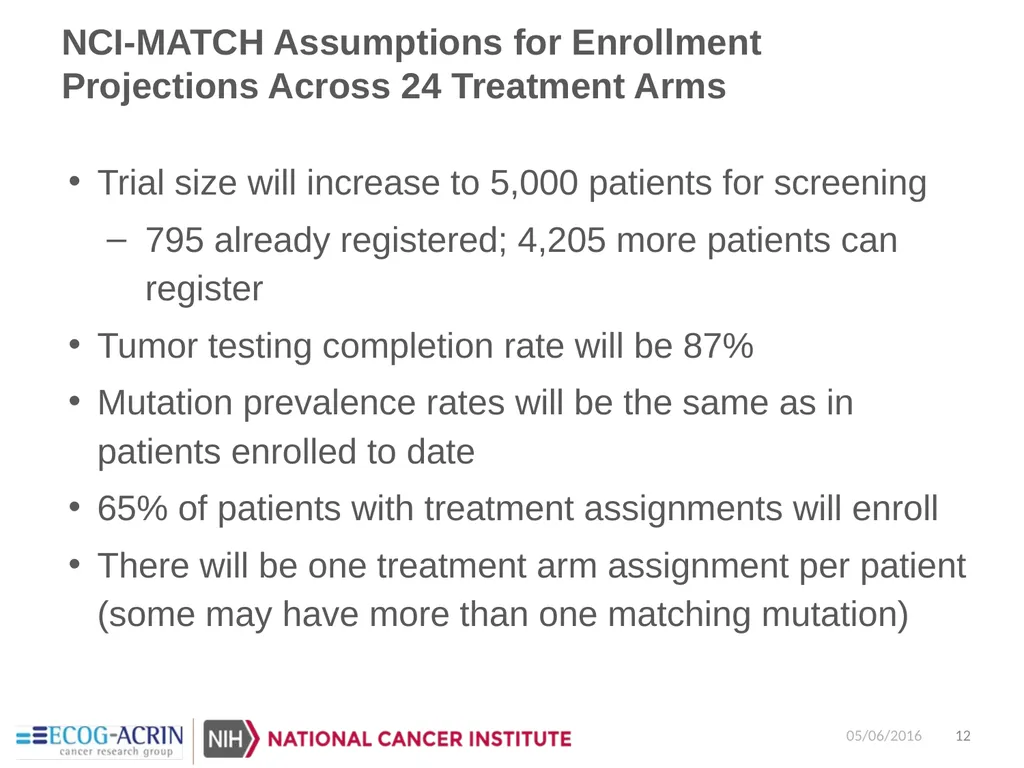
slide12. NCI-MATCH Assumptions for Enrollment Projections Across 24 Treatment Arms Trial size will increase to 5,000 patients for screening
795 already registered; 4,205 more patients can register
Tumor testing completion rate will be 87%
Mutation prevalence rates will be the same as in patients enrolled to date
65% of patients with treatment assignments will enroll
There will be one treatment arm assignment per patient (some may have more than one matching mutation) 12 05/06/2016<br>
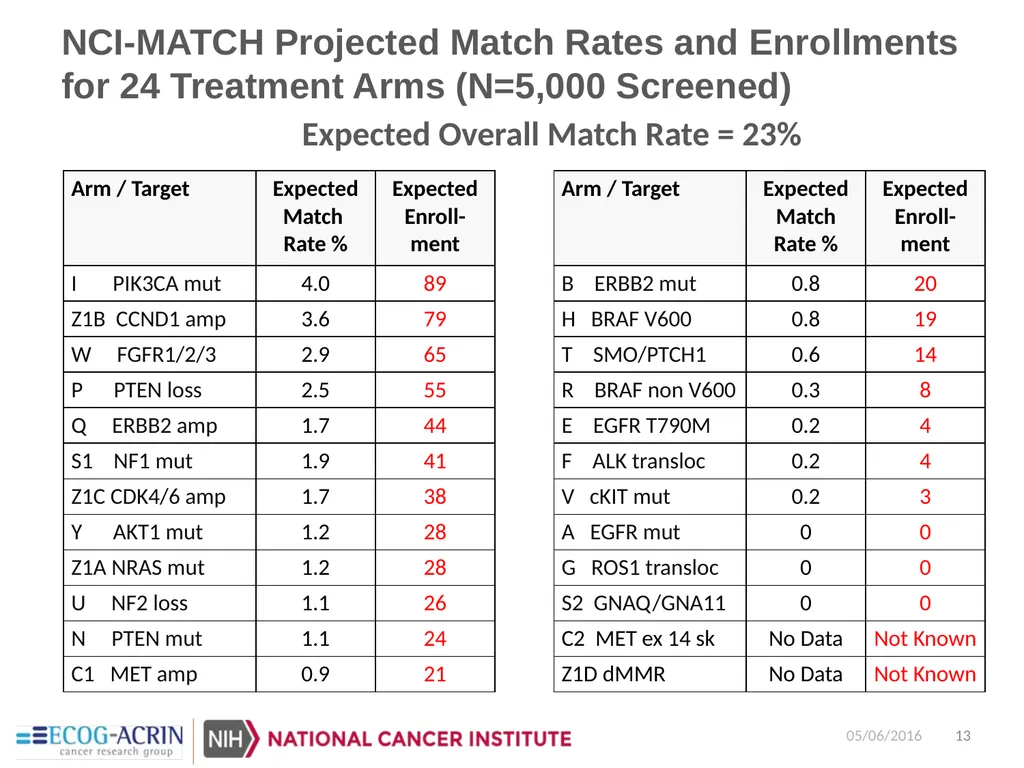
slide13. NCI-MATCH Projected Match Rates and Enrollments for 24 Treatment Arms (N=5,000 Screened) Expected Overall Match Rate = 23% 13 05/06/2016<br>
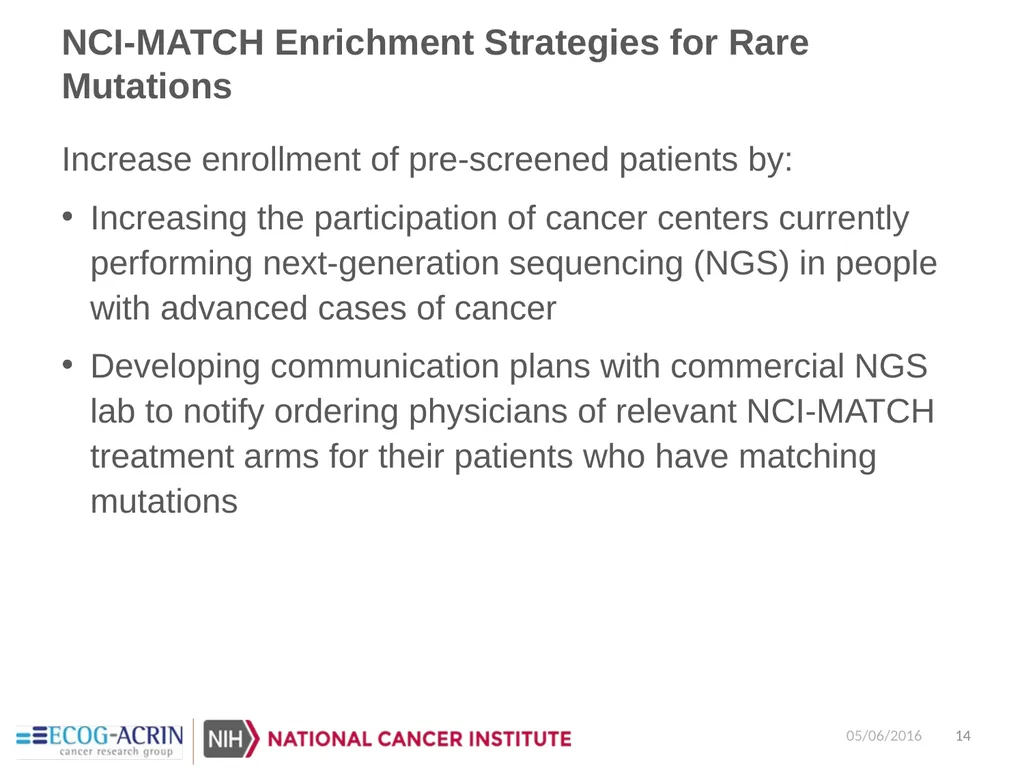
slide14. NCI-MATCH Enrichment Strategies for Rare Mutations Increase enrollment of pre-screened patients by:
Increasing the participation of cancer centers currently performing next-generation sequencing (NGS) in people with advanced cases of cancer
Developing communication plans with commercial NGS lab to notify ordering physicians of relevant NCI-MATCH treatment arms for their patients who have matching mutations 05/06/2016 14<br>
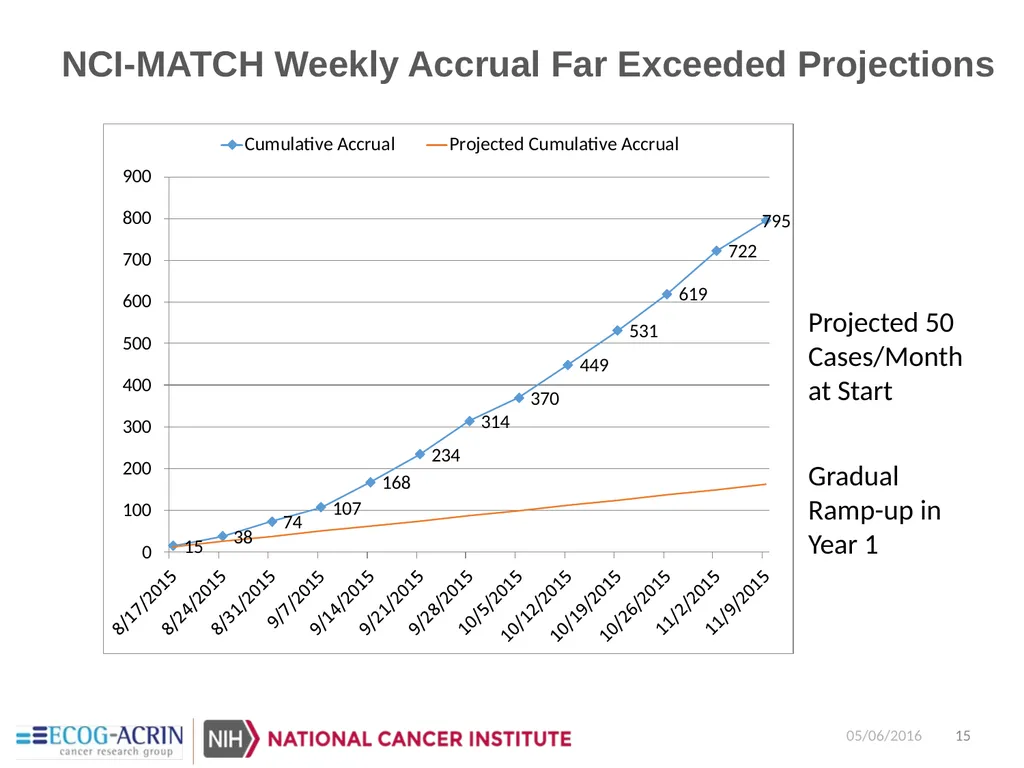
slide15. NCI-MATCH Weekly Accrual Far Exceeded Projections Projected 50 Cases/Month at Start
Gradual Ramp-up in Year 1 15 05/06/2016<br>
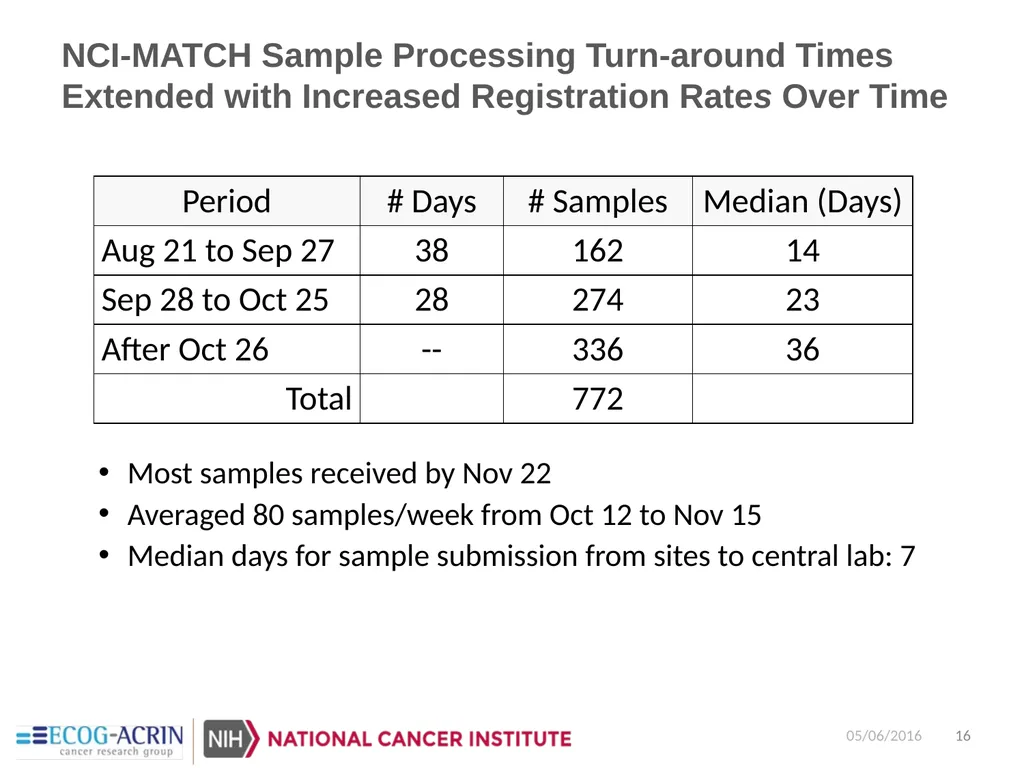
slide16. NCI-MATCH Sample Processing Turn-around Times Extended with Increased Registration Rates Over Time Most samples received by Nov 22
Averaged 80 samples/week from Oct 12 to Nov 15
Median days for sample submission from sites to central lab: 7 16 05/06/2016<br>
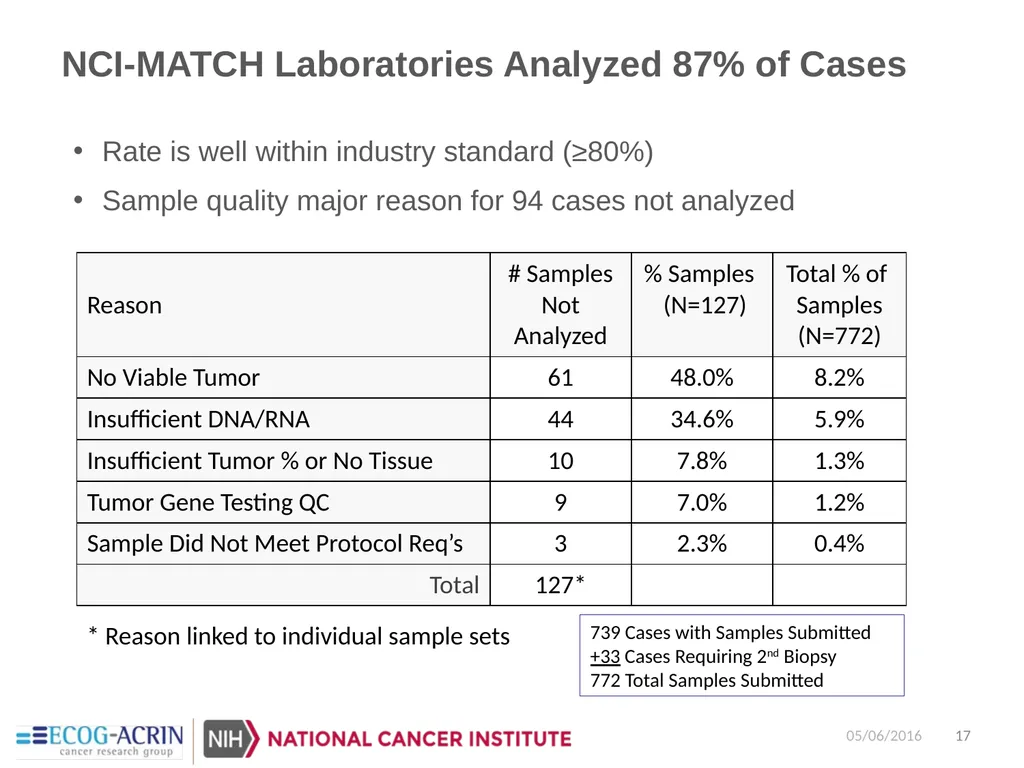
slide17. NCI-MATCH Laboratories Analyzed 87% of Cases Rate is well within industry standard (≥80%)
Sample quality major reason for 94 cases not analyzed 739 Cases with Samples Submitted +33 Cases Requiring 2nd Biopsy 772 Total Samples Submitted * Reason linked to individual sample sets 17 05/06/2016<br>
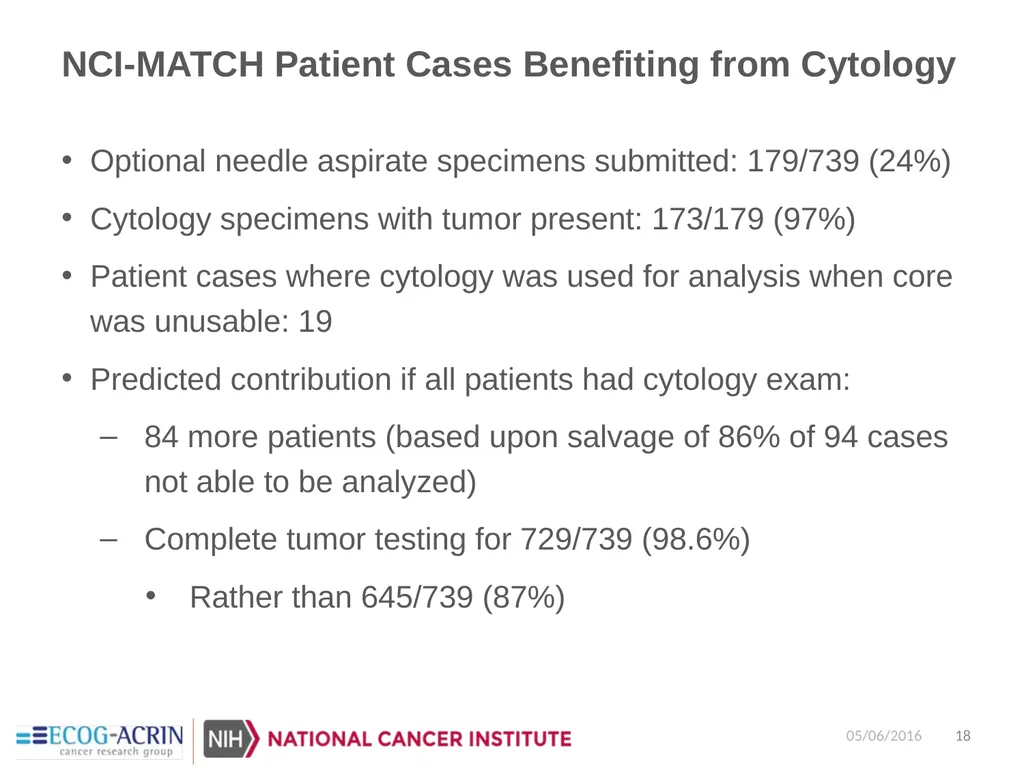
slide18. NCI-MATCH Patient Cases Benefiting from Cytology Optional needle aspirate specimens submitted: 179/739 (24%)
Cytology specimens with tumor present: 173/179 (97%)
Patient cases where cytology was used for analysis when core was unusable: 19
Predicted contribution if all patients had cytology exam:
84 more patients (based upon salvage of 86% of 94 cases not able to be analyzed)
Complete tumor testing for 729/739 (98.6%)
Rather than 645/739 (87%) 18 05/06/2016<br>
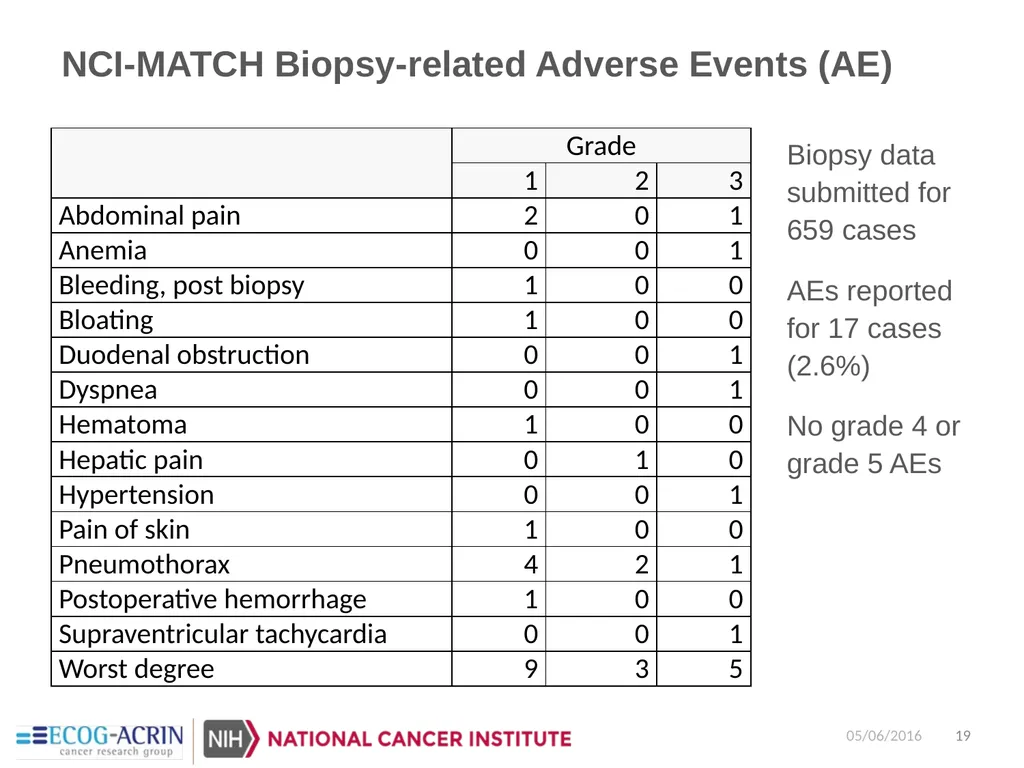
slide19. NCI-MATCH Biopsy-related Adverse Events (AE) Biopsy data submitted for 659 cases
AEs reported for 17 cases (2.6%)
No grade 4 or grade 5 AEs 05/06/2016 19<br>
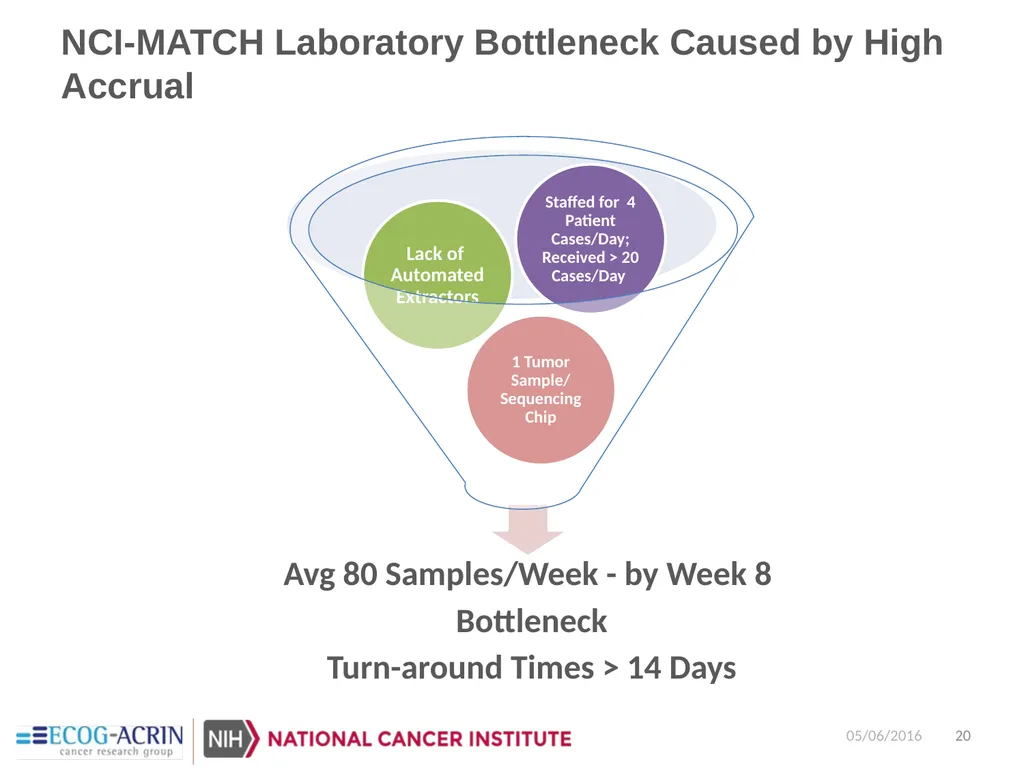
slide20. NCI-MATCH Laboratory Bottleneck Caused by High Accrual 20 05/06/2016<br>
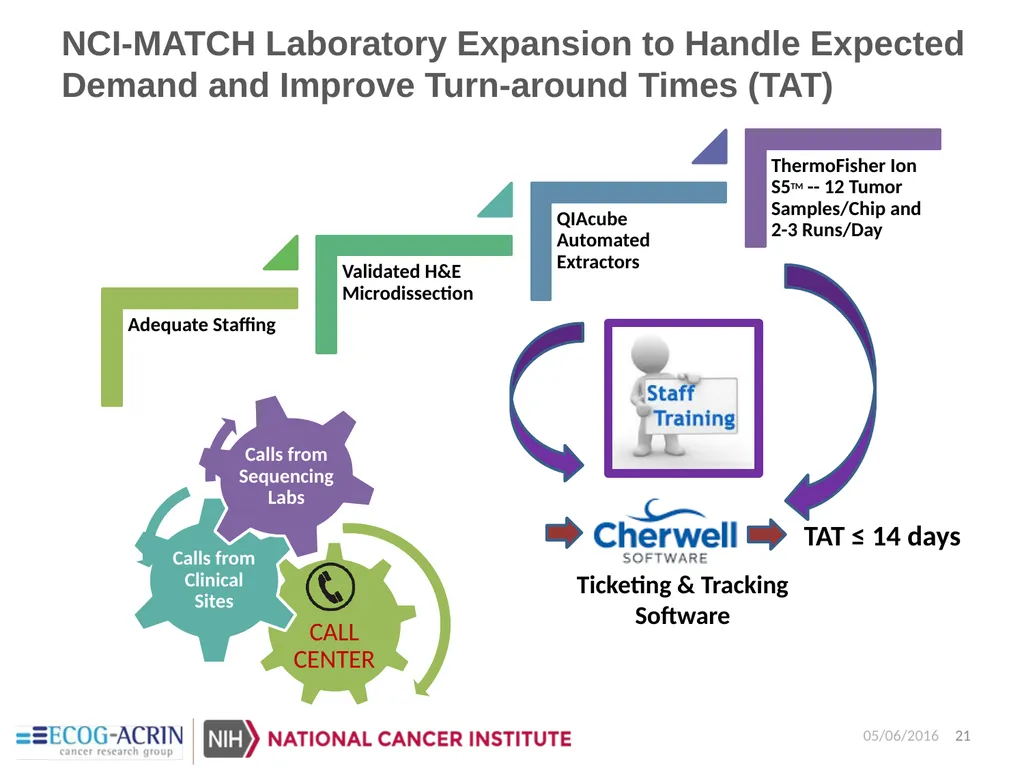
slide21. NCI-MATCH Laboratory Expansion to Handle Expected Demand and Improve Turn-around Times (TAT) 21 05/06/2016 TAT ≤ 14 days Ticketing & Tracking Software<br>
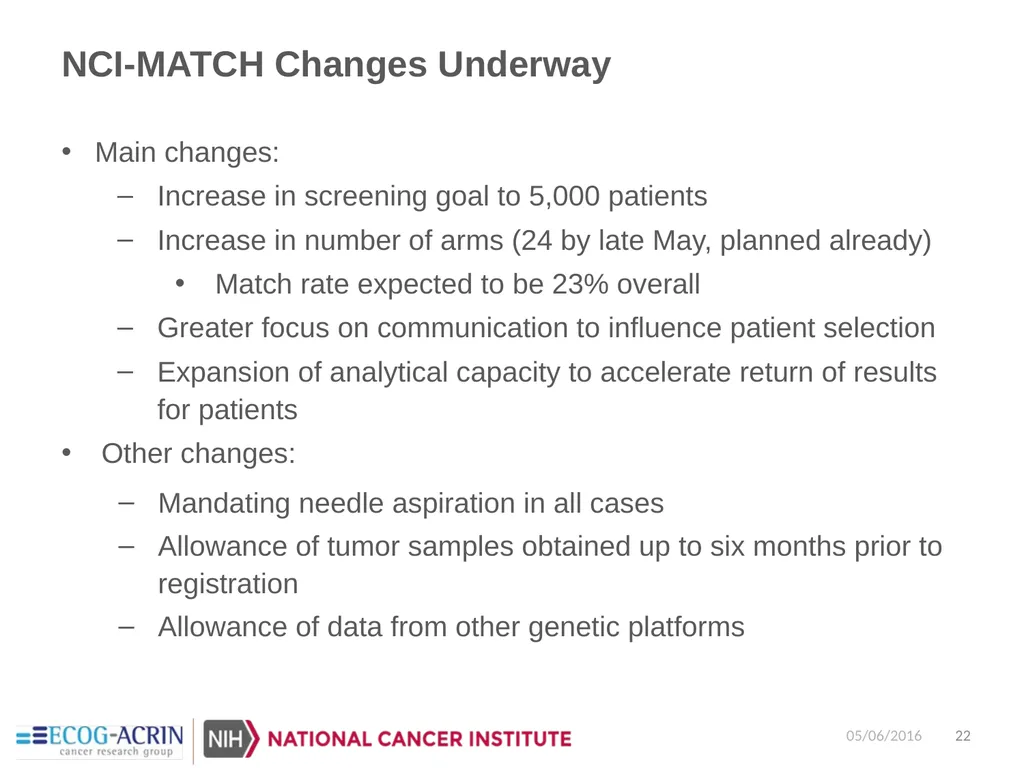
slide22. NCI-MATCH Changes Underway Main changes:
Increase in screening goal to 5,000 patients
Increase in number of arms (24 by late May, planned already)
Match rate expected to be 23% overall
Greater focus on communication to influence patient selection
Expansion of analytical capacity to accelerate return of results for patients
Other changes:
Mandating needle aspiration in all cases
Allowance of tumor samples obtained up to six months prior to registration
Allowance of data from other genetic platforms 22 05/06/2016<br>
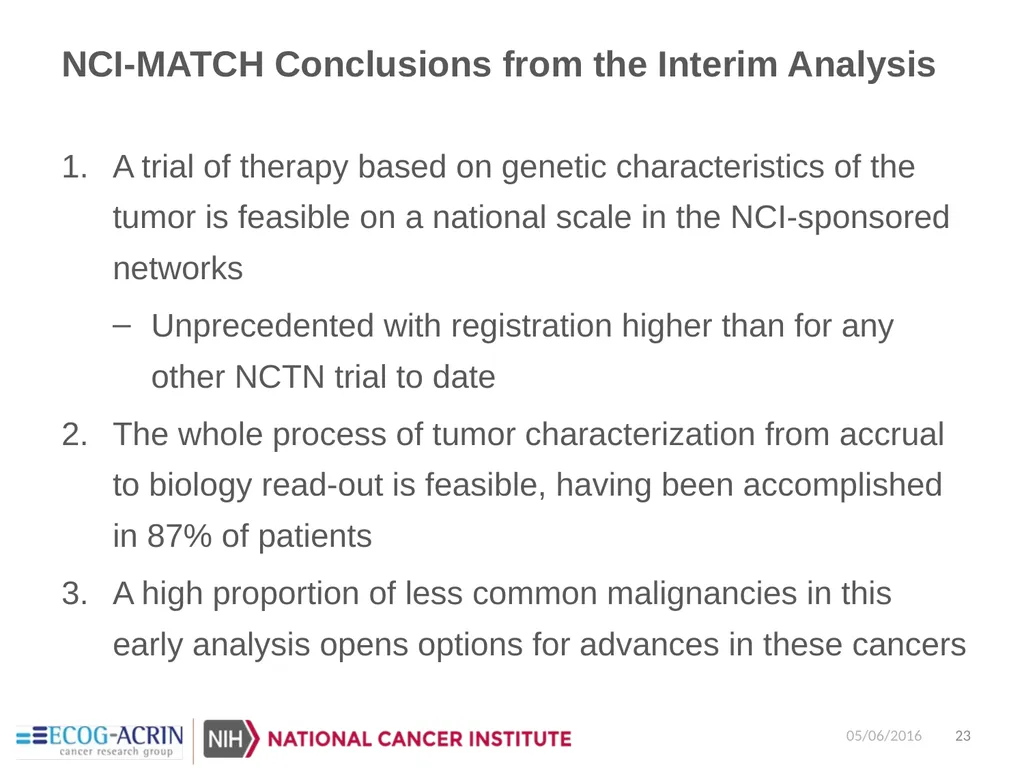
slide23. NCI-MATCH Conclusions from the Interim Analysis A trial of therapy based on genetic characteristics of the tumor is feasible on a national scale in the NCI-sponsored networks
Unprecedented with registration higher than for any other NCTN trial to date
The whole process of tumor characterization from accrual to biology read-out is feasible, having been accomplished in 87% of patients
A high proportion of less common malignancies in this early analysis opens options for advances in these cancers 23 05/06/2016<br>
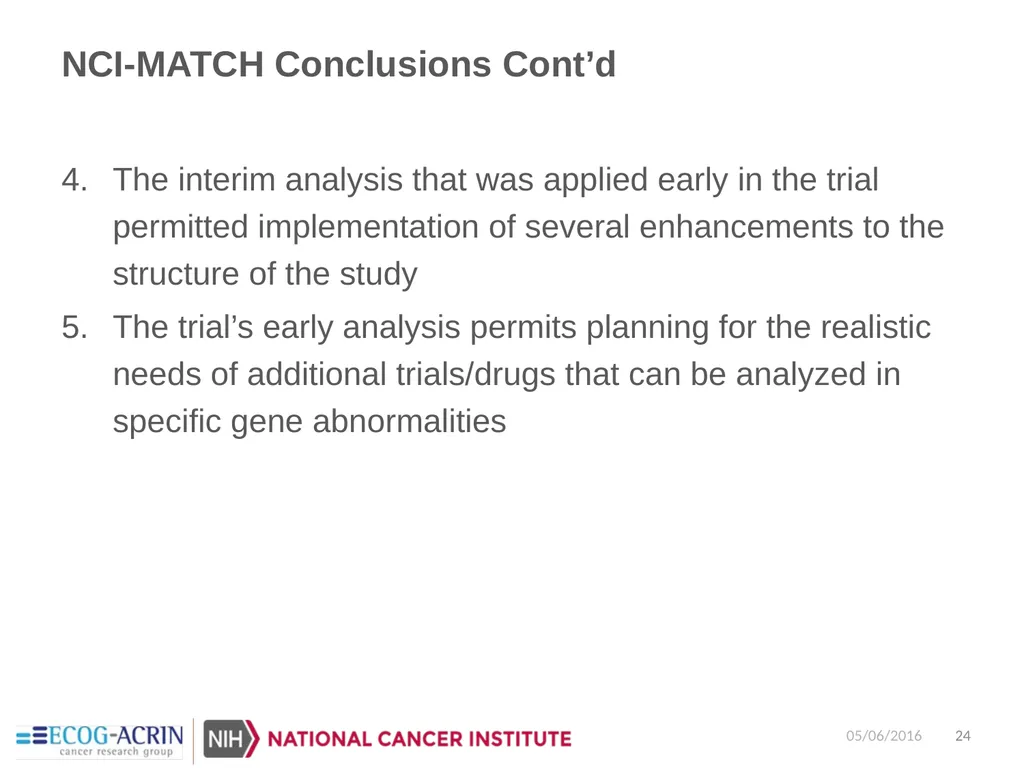
slide24. NCI-MATCH Conclusions Cont’d The interim analysis that was applied early in the trial permitted implementation of several enhancements to the structure of the study
The trial’s early analysis permits planning for the realistic needs of additional trials/drugs that can be analyzed in specific gene abnormalities 24 05/06/2016<br>
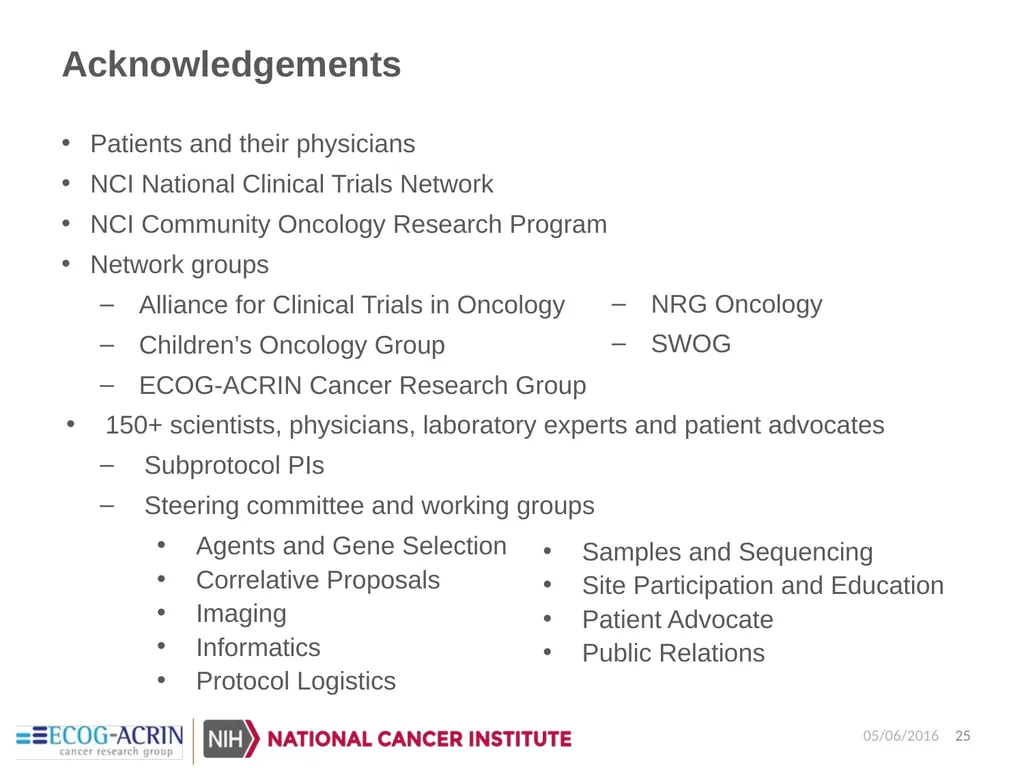
slide25. Acknowledgements Patients and their physicians
NCI National Clinical Trials Network
NCI Community Oncology Research Program
Network groups
Alliance for Clinical Trials in Oncology
Children’s Oncology Group
ECOG-ACRIN Cancer Research Group
150+ scientists, physicians, laboratory experts and patient advocates
Subprotocol PIs
Steering committee and working groups
Agents and Gene Selection
Correlative Proposals
Imaging
Informatics
Protocol Logistics 25 05/06/2016 Samples and Sequencing
Site Participation and Education
Patient Advocate
Public Relations NRG Oncology
SWOG<br>
slide26. Resources for NCI-MATCH Main Webpages: cancer.gov/nci-match
ecog-acrin.org/nci-match-eay131
Protocol Documents: ctsu.org (password required)
Spanish: cancer.gov/espanol/nci-match
Email Inquiries: match@jimmy.harvard.edu
NCI’s Cancer Information Service:
1-800-4-CANCER and cancer.gov/contact 05/06/2016 26<br>
1Massachusetts General Hospital, Boston, MA; 2National Cancer Institute (NCI), Division of Cancer Treatment and Diagnosis, Bethesda, MD; 3University of Pennsylvania, Philadelphia, PA; 4MD Anderson Cancer Center, Houston, TX; 5 NCI Frederick National Laboratory for Cancer Research, Frederick, MD; 6Dana-Farber Cancer Institute, Boston, MA; 7NCI Cancer Imaging Program, Rockville, MD 8Case Western Reserve University, Cleveland, OH, 9TNorthwestern University, Chicago, IL, 10Thomas Jefferson University, Philadelphia, PA 05/06/2016<br>
slide2. NCI-MATCH Interim Analysis Due to the uniqueness of the trial, early scientific review was built into the protocol design
From the protocol:
“Given a number of unknown aspects about this study (e.g. prevalence of specific alterations), after 500 patients are screened the design will be reassessed to assure its appropriateness. An analysis of the distributions of actionable alterations and of tumor types, both overall and within treatment subprotocols, will be performed….”
Data as of March 9, 2016, are included in this analysis 2 05/06/2016<br>
slide3. Trial opened on Aug 12, 2015, with 10 treatment arms
And plan to add at least 14 more arms in coming months
Initial goal of 3,000 patients for tumor gene testing
Estimated mutation matching rate of up to 30% when all arms open
But 10% estimated matching rate for first 10 arms
Registration of new patients was paused on Nov 11, 2015
Pause allowed for a planned interim analysis
After first 500 patients had undergone tumor testing
Due to extremely rapid pace of accrual, it was not possible to pause enrollment at a precise cut-off
By the time 500 patients had undergone tumor testing, several hundred more had begun the initial screening process NCI-MATCH Trial Status 3 05/06/2016<br>
slide4. NCI-MATCH Patients and Sites 795 patients enrolled for screening in the first 3 months
Far surpassing original estimate of 50/month 4 05/06/2016<br>
slide5. NCI-MATCH Accrual Summary 5 05/06/2016 Overall 9% mutation match rate for first ten arms
Expected 10%<br>
slide6. NCI-MATCH Accrual Demographics 6 05/06/2016<br>
slide7. NCI-MATCH First Ten Arms and Mutation Prevalence Rates Per Arm (Actual vs Estimated) Overall 9% mutation match rate for first ten arms (56/645)
Expected 10% 7 05/06/2016<br>
slide8. NCI-MATCH Primary Disease Sites 1 Salivary Gland = 3 3 Uterine Carcinosarcoma = 7
2 NOS = 18, Pancreas = 6, Carcinoid = 3 4 Key Other Types: Lymphoma = 9, Brain Tumor = 9, Melanoma = 9 8 05/06/2016<br>
slide9. NCI-MATCH Enrollment Status of Patients with Treatment Assignments to First Ten Arms 9 05/06/2016<br>
slide10. NCI-MATCH Treatment Assignments to First Ten Arms, by Arm, Cancer Type 10 05/06/2016<br>
slide11. NCI-MATCH Expanding to 24 Arms in Late May 2016 *Pending approval 05/06/2016 11<br>
slide12. NCI-MATCH Assumptions for Enrollment Projections Across 24 Treatment Arms Trial size will increase to 5,000 patients for screening
795 already registered; 4,205 more patients can register
Tumor testing completion rate will be 87%
Mutation prevalence rates will be the same as in patients enrolled to date
65% of patients with treatment assignments will enroll
There will be one treatment arm assignment per patient (some may have more than one matching mutation) 12 05/06/2016<br>
slide13. NCI-MATCH Projected Match Rates and Enrollments for 24 Treatment Arms (N=5,000 Screened) Expected Overall Match Rate = 23% 13 05/06/2016<br>
slide14. NCI-MATCH Enrichment Strategies for Rare Mutations Increase enrollment of pre-screened patients by:
Increasing the participation of cancer centers currently performing next-generation sequencing (NGS) in people with advanced cases of cancer
Developing communication plans with commercial NGS lab to notify ordering physicians of relevant NCI-MATCH treatment arms for their patients who have matching mutations 05/06/2016 14<br>
slide15. NCI-MATCH Weekly Accrual Far Exceeded Projections Projected 50 Cases/Month at Start
Gradual Ramp-up in Year 1 15 05/06/2016<br>
slide16. NCI-MATCH Sample Processing Turn-around Times Extended with Increased Registration Rates Over Time Most samples received by Nov 22
Averaged 80 samples/week from Oct 12 to Nov 15
Median days for sample submission from sites to central lab: 7 16 05/06/2016<br>
slide17. NCI-MATCH Laboratories Analyzed 87% of Cases Rate is well within industry standard (≥80%)
Sample quality major reason for 94 cases not analyzed 739 Cases with Samples Submitted +33 Cases Requiring 2nd Biopsy 772 Total Samples Submitted * Reason linked to individual sample sets 17 05/06/2016<br>
slide18. NCI-MATCH Patient Cases Benefiting from Cytology Optional needle aspirate specimens submitted: 179/739 (24%)
Cytology specimens with tumor present: 173/179 (97%)
Patient cases where cytology was used for analysis when core was unusable: 19
Predicted contribution if all patients had cytology exam:
84 more patients (based upon salvage of 86% of 94 cases not able to be analyzed)
Complete tumor testing for 729/739 (98.6%)
Rather than 645/739 (87%) 18 05/06/2016<br>
slide19. NCI-MATCH Biopsy-related Adverse Events (AE) Biopsy data submitted for 659 cases
AEs reported for 17 cases (2.6%)
No grade 4 or grade 5 AEs 05/06/2016 19<br>
slide20. NCI-MATCH Laboratory Bottleneck Caused by High Accrual 20 05/06/2016<br>
slide21. NCI-MATCH Laboratory Expansion to Handle Expected Demand and Improve Turn-around Times (TAT) 21 05/06/2016 TAT ≤ 14 days Ticketing & Tracking Software<br>
slide22. NCI-MATCH Changes Underway Main changes:
Increase in screening goal to 5,000 patients
Increase in number of arms (24 by late May, planned already)
Match rate expected to be 23% overall
Greater focus on communication to influence patient selection
Expansion of analytical capacity to accelerate return of results for patients
Other changes:
Mandating needle aspiration in all cases
Allowance of tumor samples obtained up to six months prior to registration
Allowance of data from other genetic platforms 22 05/06/2016<br>
slide23. NCI-MATCH Conclusions from the Interim Analysis A trial of therapy based on genetic characteristics of the tumor is feasible on a national scale in the NCI-sponsored networks
Unprecedented with registration higher than for any other NCTN trial to date
The whole process of tumor characterization from accrual to biology read-out is feasible, having been accomplished in 87% of patients
A high proportion of less common malignancies in this early analysis opens options for advances in these cancers 23 05/06/2016<br>
slide24. NCI-MATCH Conclusions Cont’d The interim analysis that was applied early in the trial permitted implementation of several enhancements to the structure of the study
The trial’s early analysis permits planning for the realistic needs of additional trials/drugs that can be analyzed in specific gene abnormalities 24 05/06/2016<br>
slide25. Acknowledgements Patients and their physicians
NCI National Clinical Trials Network
NCI Community Oncology Research Program
Network groups
Alliance for Clinical Trials in Oncology
Children’s Oncology Group
ECOG-ACRIN Cancer Research Group
150+ scientists, physicians, laboratory experts and patient advocates
Subprotocol PIs
Steering committee and working groups
Agents and Gene Selection
Correlative Proposals
Imaging
Informatics
Protocol Logistics 25 05/06/2016 Samples and Sequencing
Site Participation and Education
Patient Advocate
Public Relations NRG Oncology
SWOG<br>
slide26. Resources for NCI-MATCH Main Webpages: cancer.gov/nci-match
ecog-acrin.org/nci-match-eay131
Protocol Documents: ctsu.org (password required)
Spanish: cancer.gov/espanol/nci-match
Email Inquiries: match@jimmy.harvard.edu
NCI’s Cancer Information Service:
1-800-4-CANCER and cancer.gov/contact 05/06/2016 26<br>