NEWCASTLE DISEASE RANIKHET DISEASE, AVIAN PNEUMOENCEPHALITIS, FOWL PEST, AVIAN DISTEMPER, DOYLES DISEASE Dr. Ravi Shankar Kr Mandal Assistant Professor Veterinary Medicine BVC, Patna Highly contagious and often severe disease found
"NEWCASTLE DISEASE RANIKHET DISEASE, AVIAN" is the property of its rightful owner. Permission is granted to
download and print the materials on this website for personal, non-commercial use only, and to display it
on your personal computer provided you do not modify the materials and that you retain all copyright
notices contained in the materials. By downloading content from our website, you accept the terms of this
agreement.
Presentation Transcript
01
NEWCASTLE DISEASE RANIKHET DISEASE, AVIAN PNEUMOENCEPHALITIS,
FOWL PEST, AVIAN DISTEMPER, DOYLE’S DISEASE Dr. Ravi Shankar Kr Mandal
Assistant Professor
Veterinary Medicine
BVC, Patna<br>
02
Highly contagious and often severe disease found worldwide that affects birds including domestic poultry
Characterized by respiratory signs (distress, coughing, sneezing), nervous signs leading to wing paralysis, inco-ordination, torticolis, swelling of head and chalky white diarrhoea
Causes considerable loss to poultry industry by way of morbidity, mortality and drop in egg production
The name given by Doyle to a highly contagious viral infection of poultry, also known as fowl pest, which was first reported on a farm near Newcastle upon Tyne, United Kingdom, in 1926
At about the same time, a disease with similar symptoms was observed in Java ( now Jakarta), Indonesia
In India , the disease was first recorded at Ranikhet in Kumoan hills (Nainital District, Uttaranchal) by Edward in 1927: hence the name Ranikhet disease NEWCASTLE DISEASE<br>
03
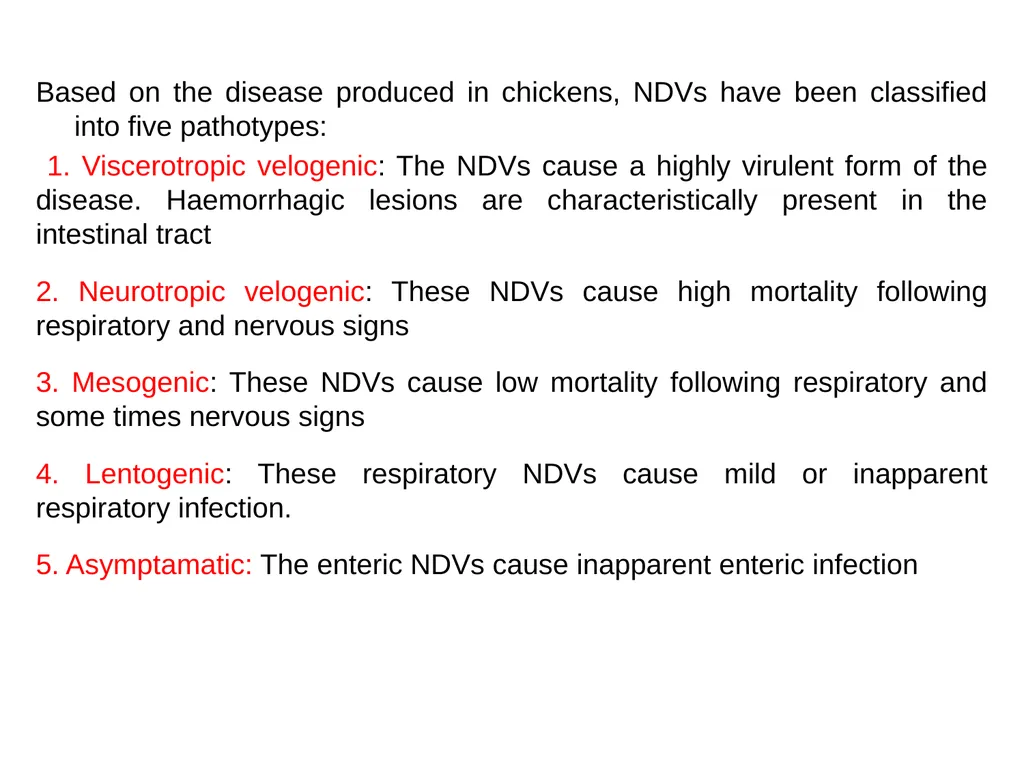
Paramyxovirus type1 (PMV-1) belongs to the genus Avulavirus, family Paramyxoviridae
It is a negative-sense, single-stranded RNA virus ETIOLOGY 3 strains
1. Velogenic strains produce severe nervous and respiratory signs, spread rapidly, and cause up to 90% mortality
2. Mesogenic strains cause coughing, affect egg quality and production, and result in up to 10% mortality
3. Lentogenic strains produce mild signs with negligible mortality<br>
04
Based on the disease produced in chickens, NDVs have been classified into five pathotypes:
1. Viscerotropic velogenic: The NDVs cause a highly virulent form of the disease. Haemorrhagic lesions are characteristically present in the intestinal tract
2. Neurotropic velogenic: These NDVs cause high mortality following respiratory and nervous signs
3. Mesogenic: These NDVs cause low mortality following respiratory and some times nervous signs
4. Lentogenic: These respiratory NDVs cause mild or inapparent respiratory infection.
5. Asymptamatic: The enteric NDVs cause inapparent enteric infection<br>
05
Infected birds shed virus in exhaled air, respiratory discharge, and feces during incubation period, clinical manifestation and varying period during convalescence
Inhalation of aerosols and Ingestion of contaminated feed and water
Movement of people, and contaminated equipment or litter, poultry products TRANSMISSION SUSCEPTBLE HOST Newcastle disease virus strains of low virulence are prevalent in free-living wild birds, live bird markets, and poultry, especially waterfowl.
Migratory waterfowl and shorebirds can be infected with low and virulent NDV and can shed NDV without any apparent clinical signs of illness
Infection of domestic poultry with naturally circulating low NDV can contribute to respiratory distress in young naive birds and lower productivity in adult birds.<br>
06
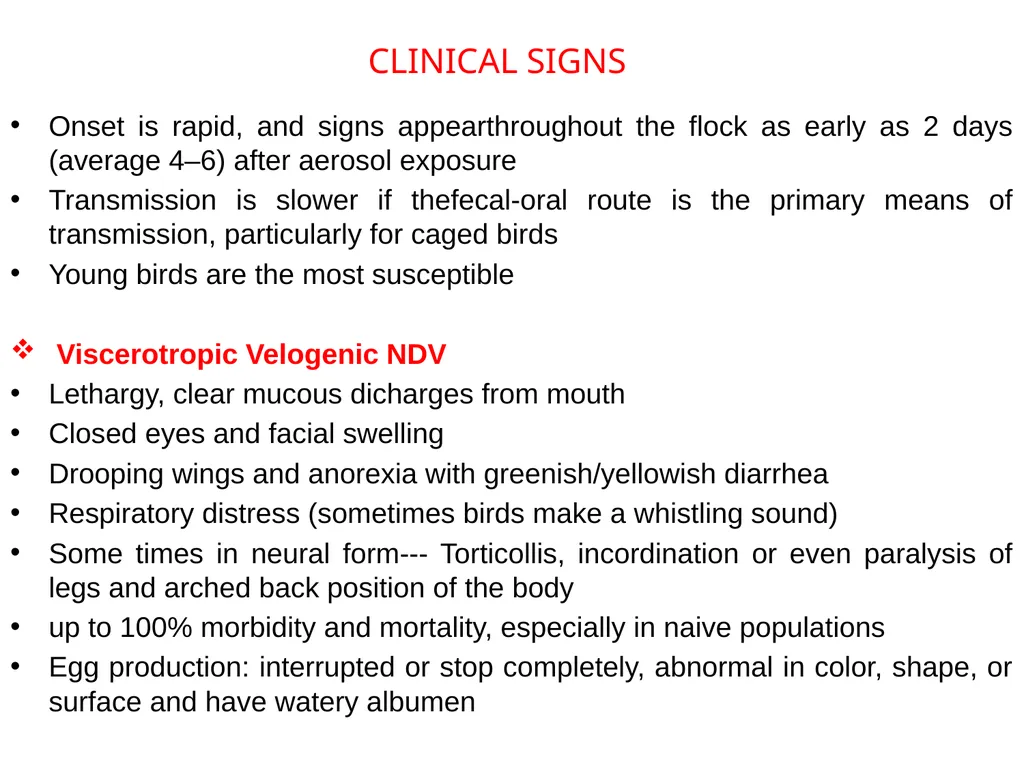
Onset is rapid, and signs appearthroughout the flock as early as 2 days (average 4–6) after aerosol exposure
Transmission is slower if thefecal-oral route is the primary means of transmission, particularly for caged birds
Young birds are the most susceptible
Viscerotropic Velogenic NDV
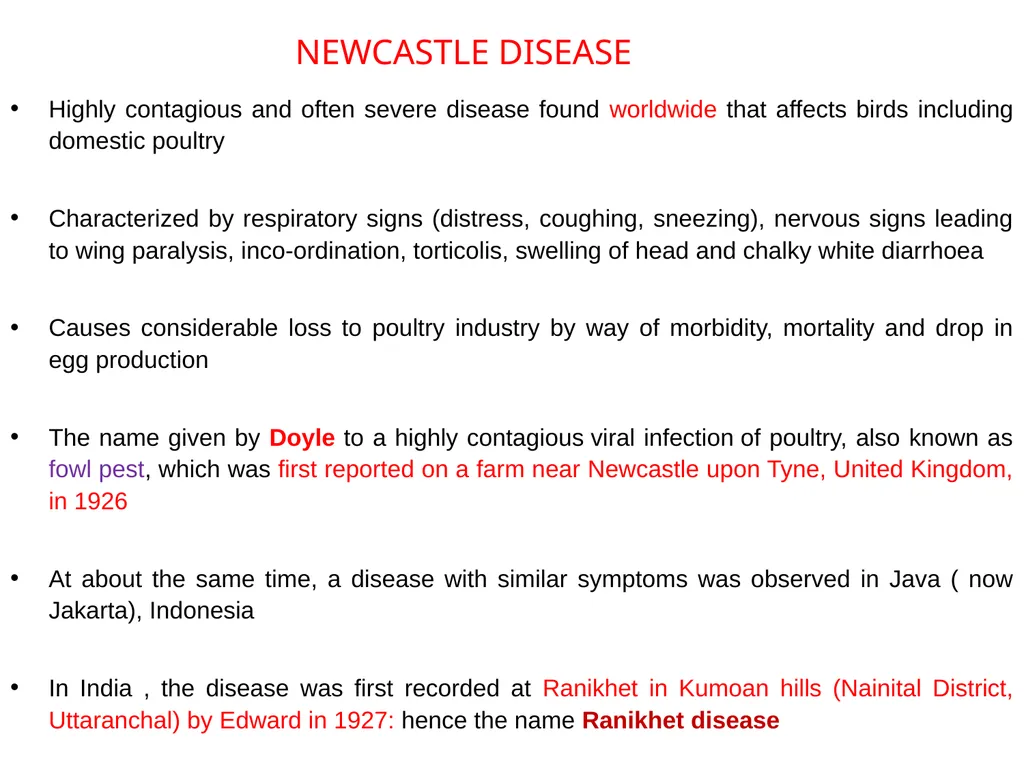
Lethargy, clear mucous dicharges from mouth
Closed eyes and facial swelling
Drooping wings and anorexia with greenish/yellowish diarrhea
Respiratory distress (sometimes birds make a whistling sound)
Some times in neural form--- Torticollis, incordination or even paralysis of legs and arched back position of the body
up to 100% morbidity and mortality, especially in naive populations
Egg production: interrupted or stop completely, abnormal in color, shape, or surface and have watery albumen CLINICAL SIGNS<br>
07
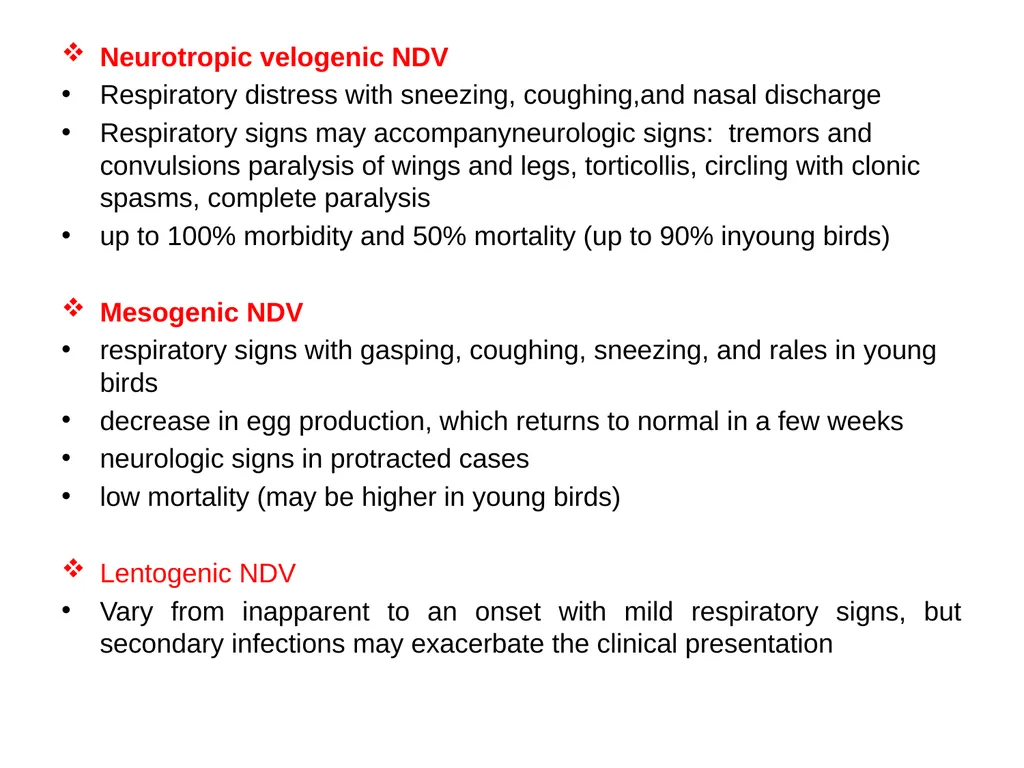
Neurotropic velogenic NDV
Respiratory distress with sneezing, coughing,and nasal discharge
Respiratory signs may accompanyneurologic signs: tremors and convulsions paralysis of wings and legs, torticollis, circling with clonic spasms, complete paralysis
up to 100% morbidity and 50% mortality (up to 90% inyoung birds)
Mesogenic NDV
respiratory signs with gasping, coughing, sneezing, and rales in young birds
decrease in egg production, which returns to normal in a few weeks
neurologic signs in protracted cases
low mortality (may be higher in young birds)
Lentogenic NDV
Vary from inapparent to an onset with mild respiratory signs, but secondary infections may exacerbate the clinical presentation<br>
08
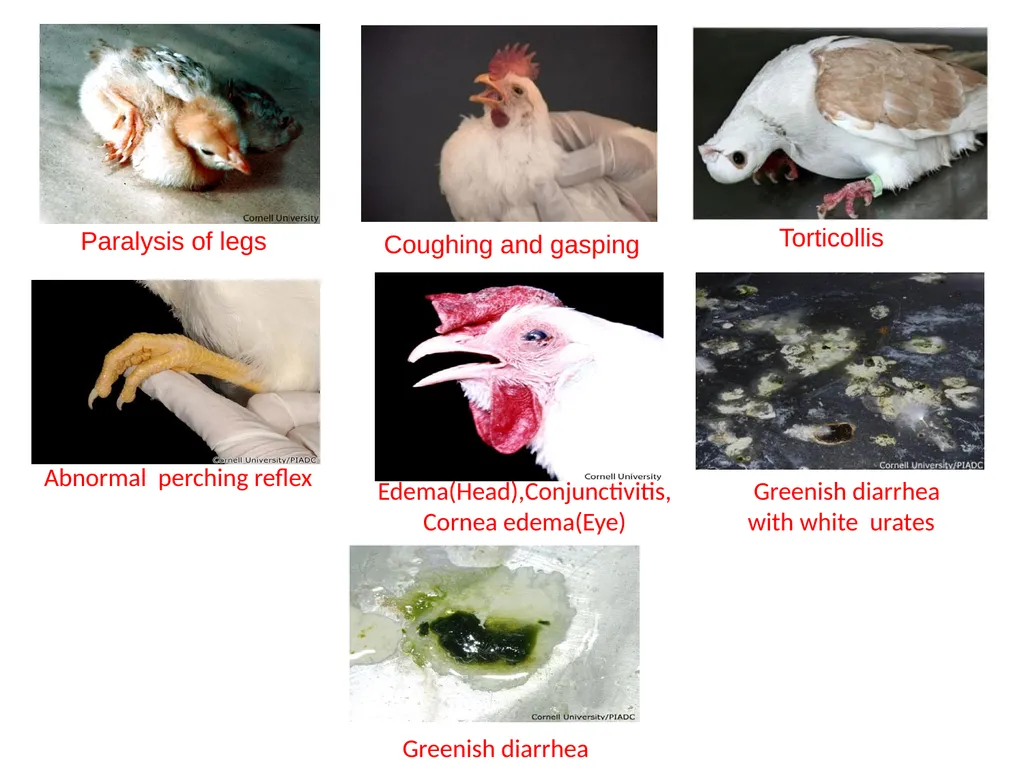
Paralysis of legs Torticollis Abnormal perching reflex Edema(Head),Conjunctivitis, Cornea edema(Eye) Greenish diarrhea Greenish diarrhea with white urates Coughing and gasping<br>
09
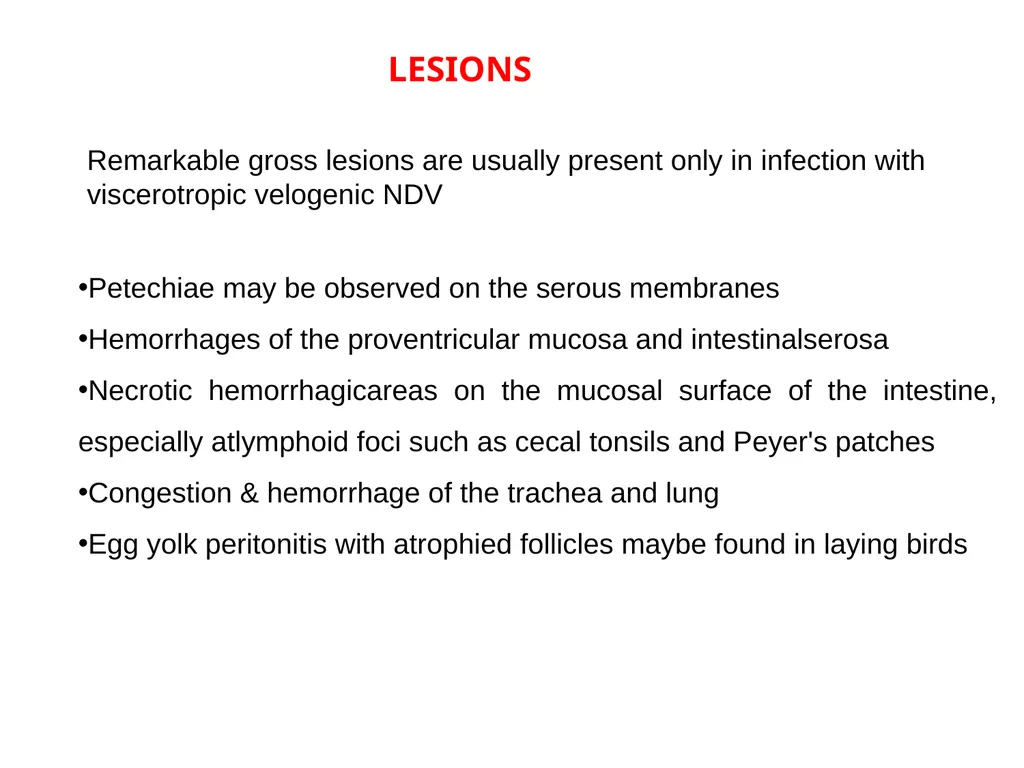
LESIONS Remarkable gross lesions are usually present only in infection with viscerotropic velogenic NDV Petechiae may be observed on the serous membranes
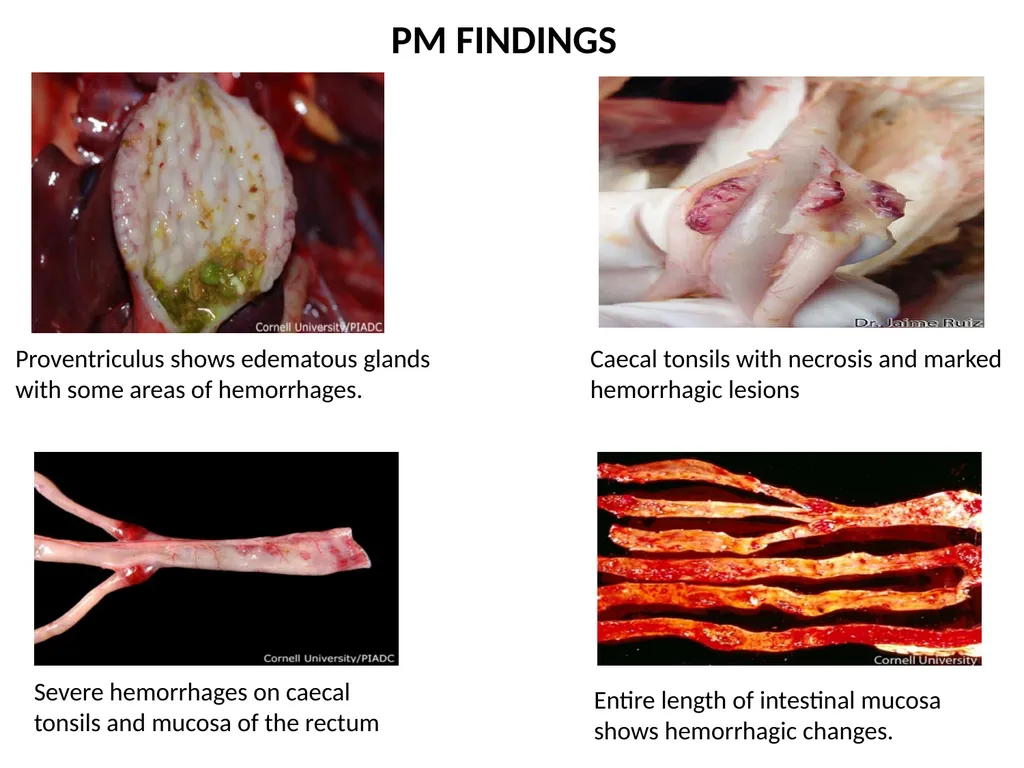
Hemorrhages of the proventricular mucosa and intestinalserosa
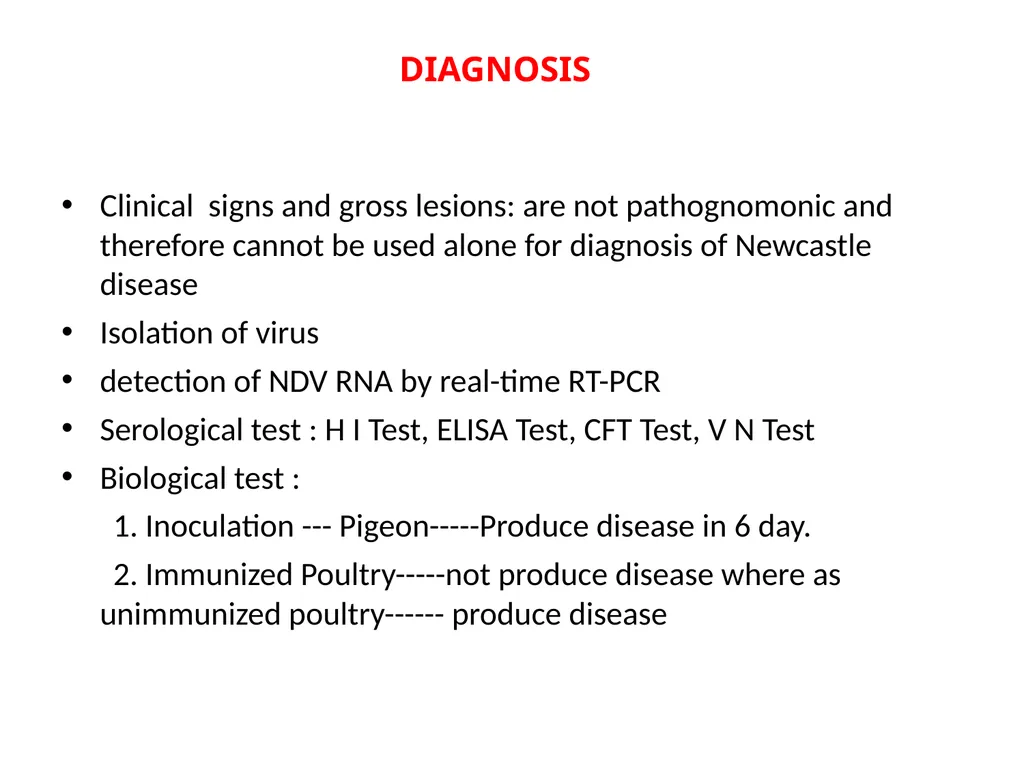
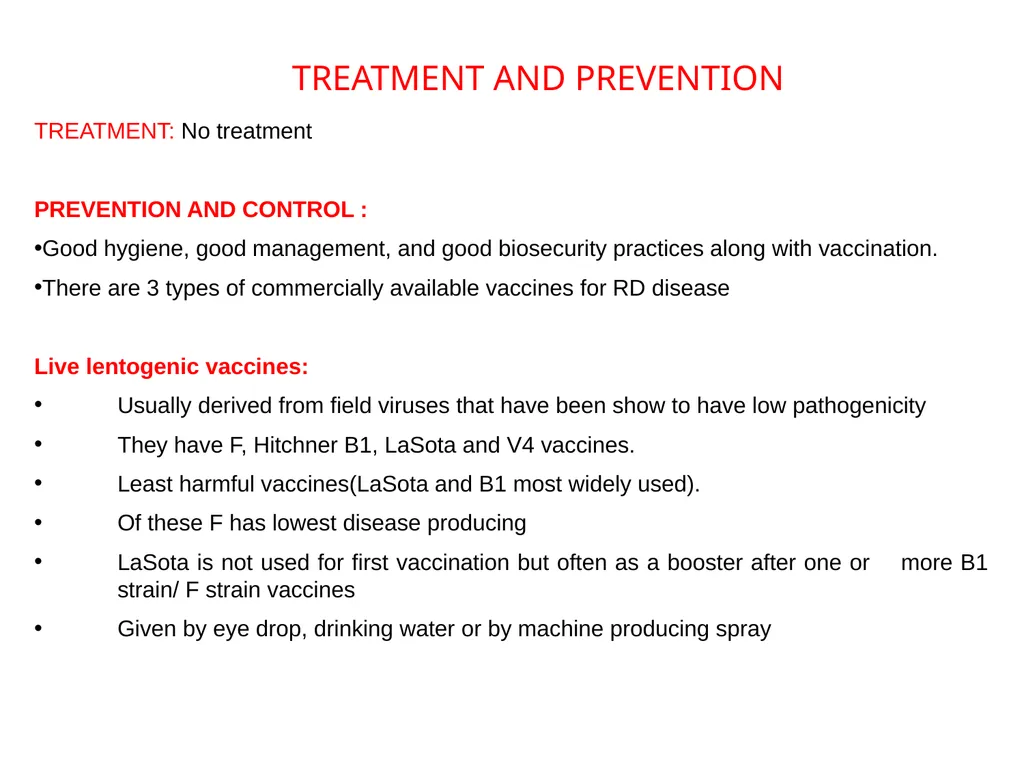
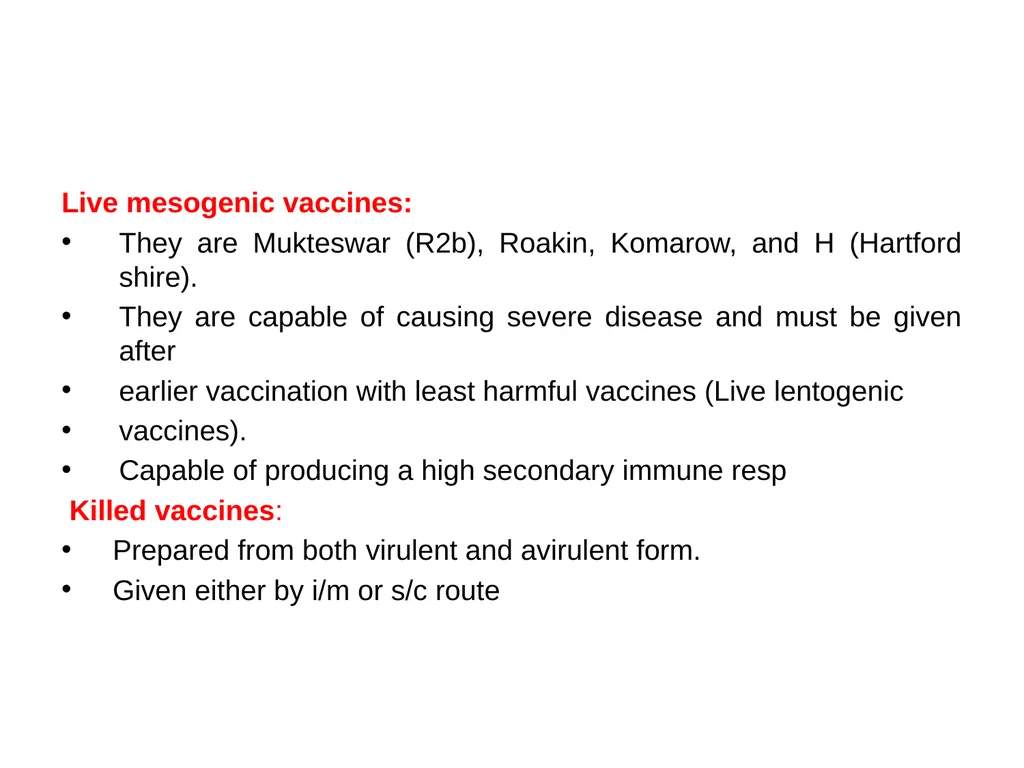
Necrotic hemorrhagicareas on the mucosal surface of the intestine, especially atlymphoid foci such as cecal tonsils and Peyer's patches
Congestion & hemorrhage of the trachea and lung
Egg yolk peritonitis with atrophied follicles maybe found in laying birds<br>
10
Caecal tonsils with necrosis and marked hemorrhagic lesions Proventriculus shows edematous glands with some areas of hemorrhages. Severe hemorrhages on caecal tonsils and mucosa of the rectum Entire length of intestinal mucosa shows hemorrhagic changes. PM FINDINGS<br>
11
Clinical signs and gross lesions: are not pathognomonic and therefore cannot be used alone for diagnosis of Newcastle disease
Isolation of virus
detection of NDV RNA by real-time RT-PCR
Serological test : H I Test, ELISA Test, CFT Test, V N Test
Biological test :
1. Inoculation --- Pigeon-----Produce disease in 6 day.
2. Immunized Poultry-----not produce disease where as unimmunized poultry------ produce disease DIAGNOSIS<br>
12
TREATMENT: No treatment
PREVENTION AND CONTROL :
Good hygiene, good management, and good biosecurity practices along with vaccination.
There are 3 types of commercially available vaccines for RD disease
Live lentogenic vaccines:
Usually derived from field viruses that have been show to have low pathogenicity
They have F, Hitchner B1, LaSota and V4 vaccines.
Least harmful vaccines(LaSota and B1 most widely used).
Of these F has lowest disease producing
LaSota is not used for first vaccination but often as a booster after one or more B1 strain/ F strain vaccines
Given by eye drop, drinking water or by machine producing spray TREATMENT AND PREVENTION<br>
13
Live mesogenic vaccines:
They are Mukteswar (R2b), Roakin, Komarow, and H (Hartford shire).
They are capable of causing severe disease and must be given after
earlier vaccination with least harmful vaccines (Live lentogenic
vaccines).
Capable of producing a high secondary immune resp
Killed vaccines:
Prepared from both virulent and avirulent form.
Given either by i/m or s/c route<br>