01
Nonproliferation Detection Technology Graduate Course Framework Utilizing Nontraditional Learning J. Davidson1, S. Landsberger2, W. Charlton2,
M. Borrego3, C. Egozi1
1Los Alamos National Laboratory, Los Alamos, P.O. Box 1663, New Mexico, USA 87545
2University of Texas, Nuclear and Radiation Engineering Program, Walker Department of Mechanical Engineering Austin, Texas, USA 78712
3University of Texas, Walker Department of Mechanical Engineering, Austin, Texas, USA 78712<br>
04
Why Non-traditional Learning? Nuclear security is a multi-disciplinary field
Combination between science, technology, policy, behavior sciences, military strategy, and tactics
These educational disciplines are taught differently
More closely represents the workplace<br>
05
Why Nuclear Nonproliferation Detection Technology? Growing importance of nuclear nonproliferation
Need experts who understand related technology and policy implications
Unique focus
Many courses on nuclear nonproliferation, but few focused on technical aspects of detection with military and political considerations
Non-traditional learning is well suited, given professional structures (think tanks, political appointments, national labs, etc.) throughout nonproliferation
New graduate level course on nuclear nonproliferation technology at UT Austin would fill gap in existing courses and provide students with unique perspective to aid in employment opportunities<br>
06
NUCLEAR NONPROLIFERATION NTL FRAMEWORK<br>
07
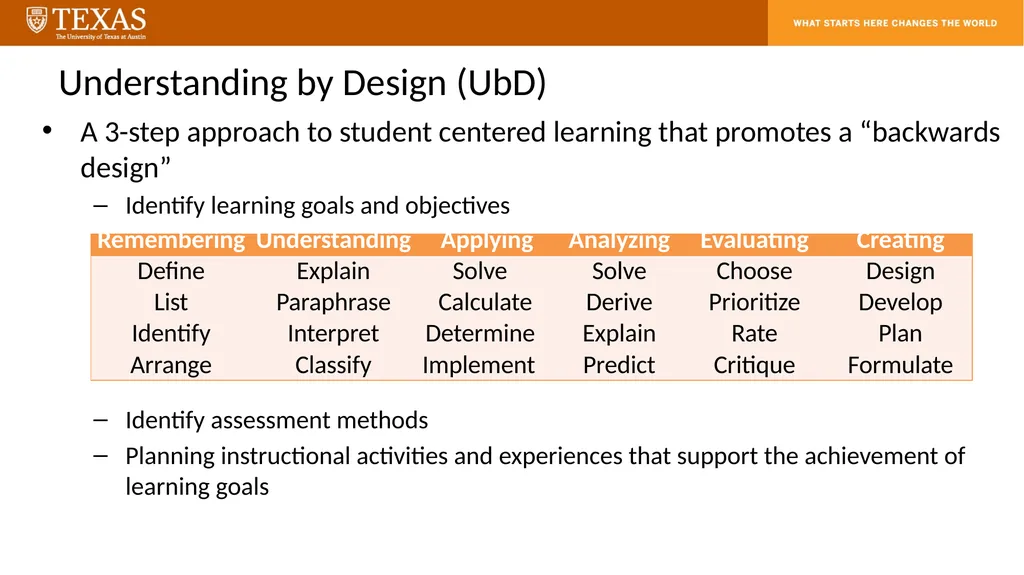
Understanding by Design (UbD) A 3-step approach to student centered learning that promotes a “backwards design”
Identify learning goals and objectives
Identify assessment methods
Planning instructional activities and experiences that support the achievement of learning goals<br>
08
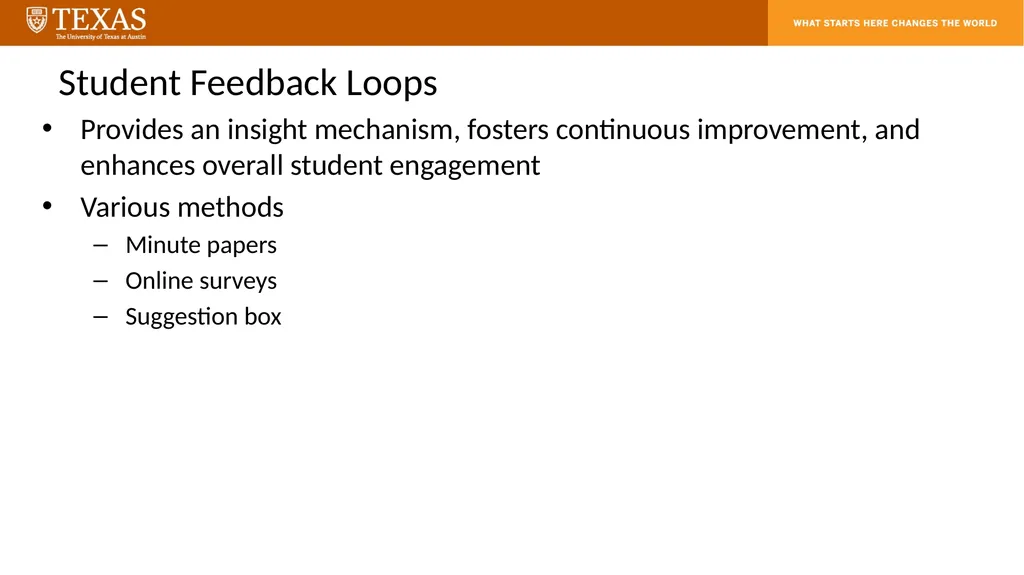
Student Feedback Loops Provides an insight mechanism, fosters continuous improvement, and enhances overall student engagement
Various methods
Minute papers
Online surveys
Suggestion box<br>
09
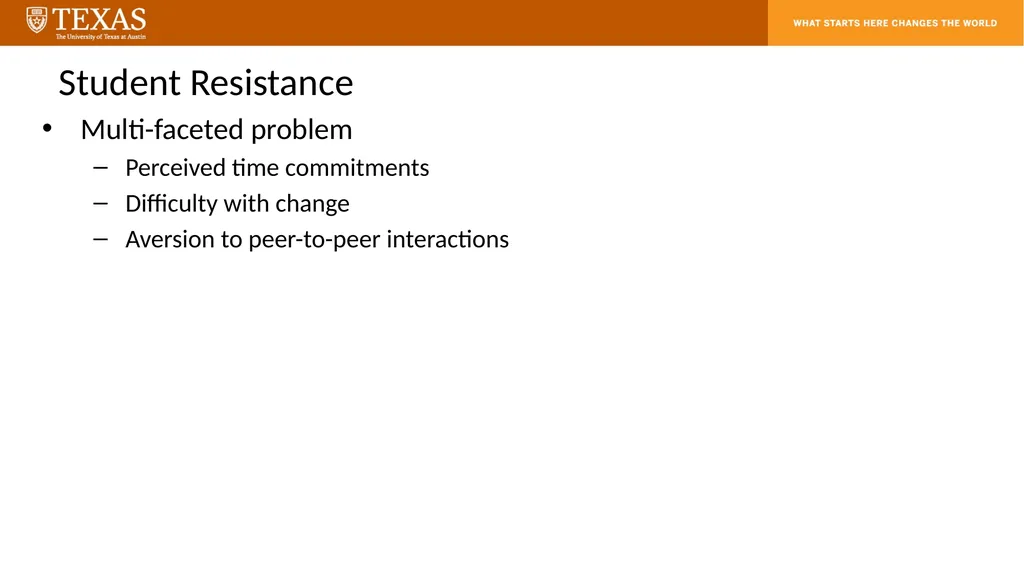
Student Resistance Multi-faceted problem
Perceived time commitments
Difficulty with change
Aversion to peer-to-peer interactions<br>
10
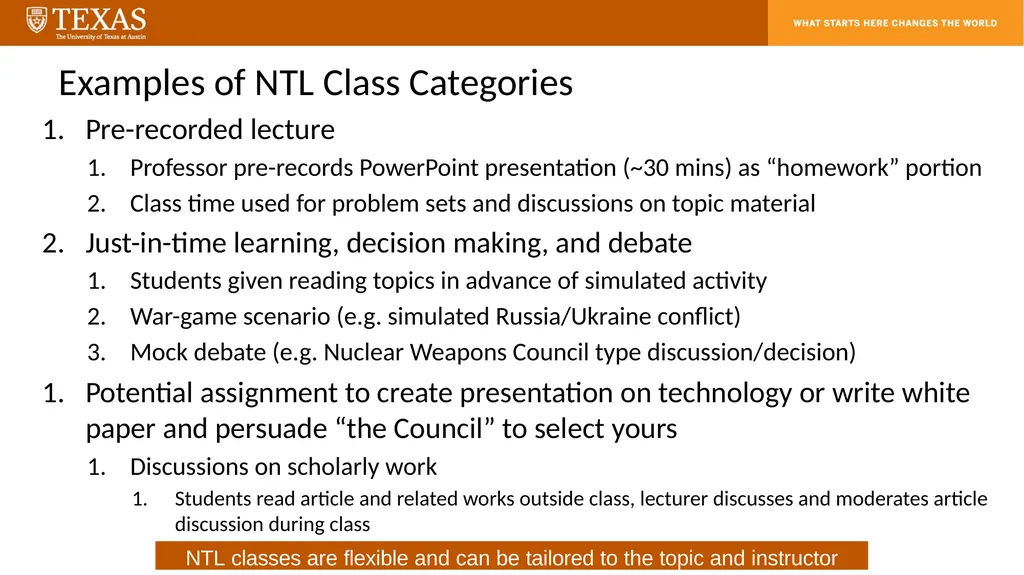
Examples of NTL Class Categories Pre-recorded lecture
Professor pre-records PowerPoint presentation (~30 mins) as “homework” portion
Class time used for problem sets and discussions on topic material
Just-in-time learning, decision making, and debate
Students given reading topics in advance of simulated activity
War-game scenario (e.g. simulated Russia/Ukraine conflict)
Mock debate (e.g. Nuclear Weapons Council type discussion/decision) Potential assignment to create presentation on technology or write white paper and persuade “the Council” to select yours
Discussions on scholarly work
Students read article and related works outside class, lecturer discusses and moderates article discussion during class NTL classes are flexible and can be tailored to the topic and instructor<br>
11
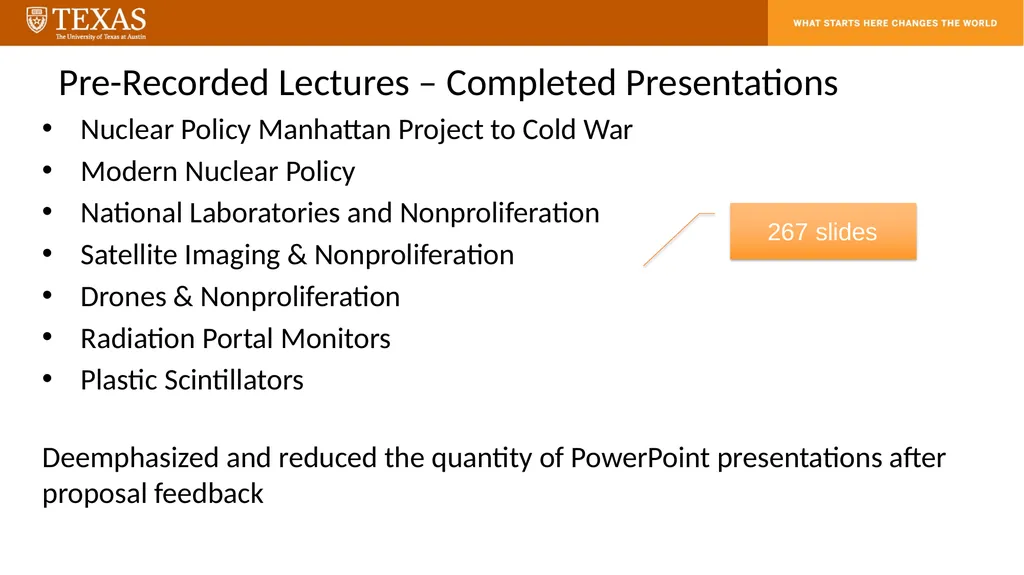
Pre-Recorded Lectures – Completed Presentations Nuclear Policy Manhattan Project to Cold War
Modern Nuclear Policy
National Laboratories and Nonproliferation
Satellite Imaging & Nonproliferation
Drones & Nonproliferation
Radiation Portal Monitors
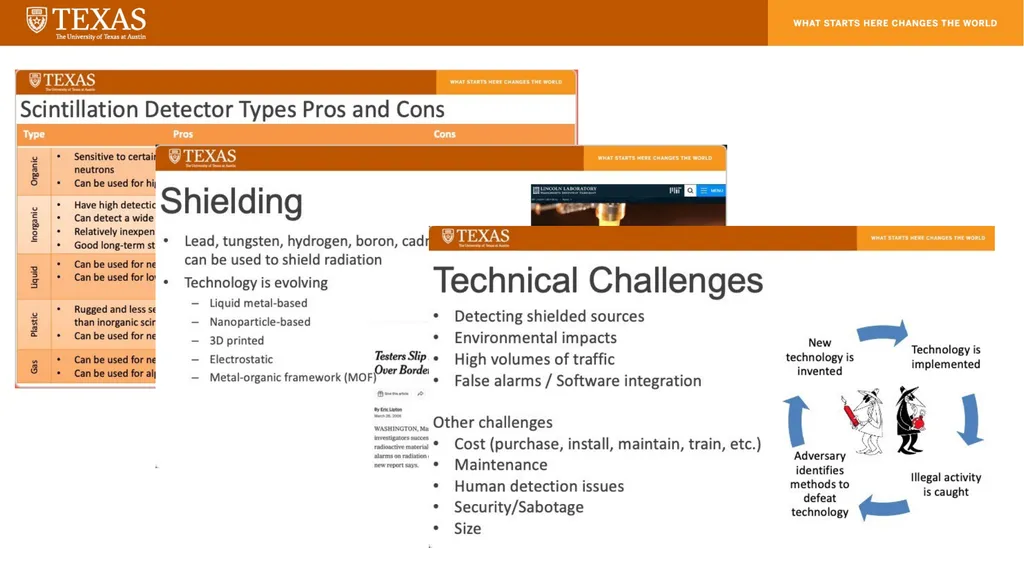
Plastic Scintillators
Deemphasized and reduced the quantity of PowerPoint presentations after proposal feedback 267 slides<br>
12
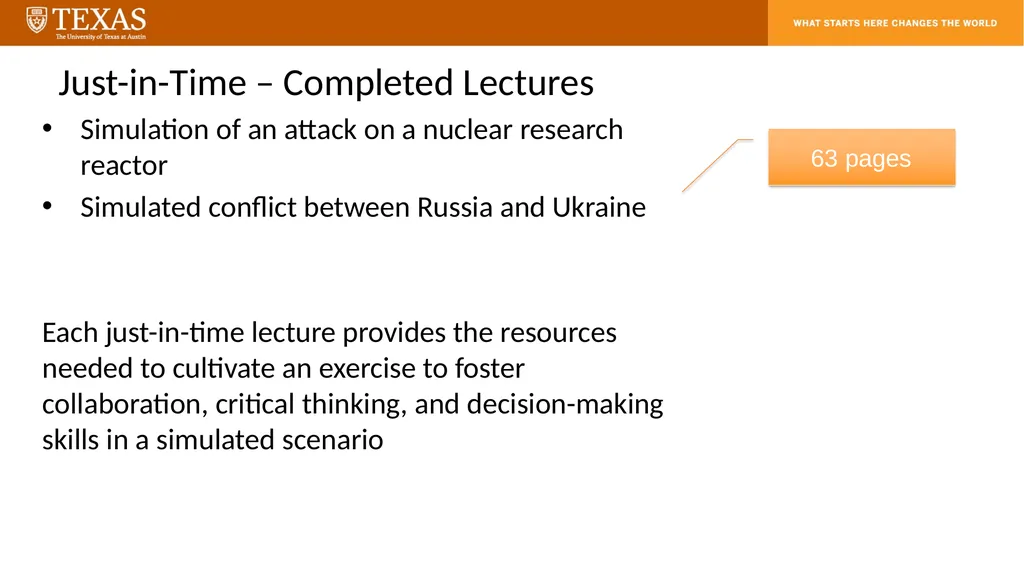
Just-in-Time – Completed Lectures Simulation of an attack on a nuclear research reactor
Simulated conflict between Russia and Ukraine
Each just-in-time lecture provides the resources needed to cultivate an exercise to foster collaboration, critical thinking, and decision-making skills in a simulated scenario 63 pages<br>
13
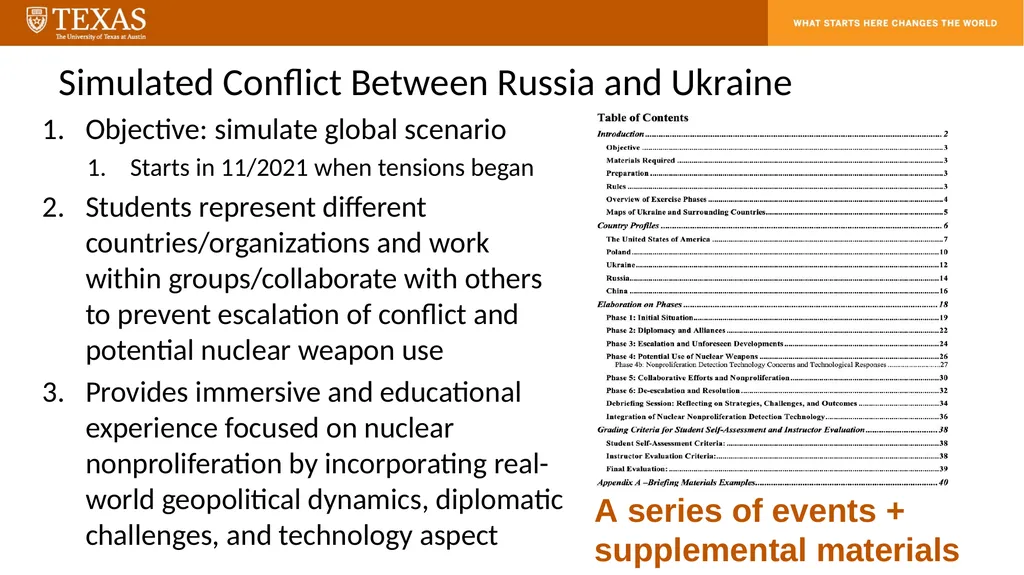
Simulated Conflict Between Russia and Ukraine Objective: simulate global scenario
Starts in 11/2021 when tensions began
Students represent different countries/organizations and work within groups/collaborate with others to prevent escalation of conflict and potential nuclear weapon use
Provides immersive and educational experience focused on nuclear nonproliferation by incorporating real-world geopolitical dynamics, diplomatic challenges, and technology aspect A series of events + supplemental materials<br>
14
JiT Scenarios Each phase contains
Evolving information and complexities
In class assignments or questions
Suggestions for instructor<br>
15
Discussions on Scholarly Work Students complete assigned reading outside of lecture time
Book section, news article, publication, etc.
During class, the lecturer discusses and helps moderate a discussion regarding the assigned reading
A potential assignment could be to write a position paper on the article
Class time could be utilized to debate a particular stance<br>
16
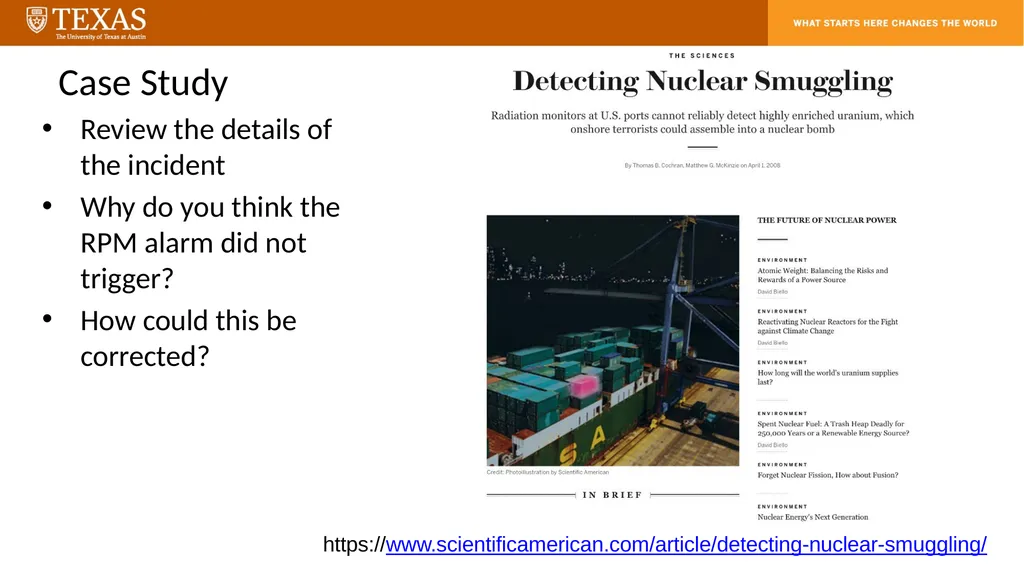
Case Study Review the details of the incident
Why do you think the RPM alarm did not trigger?
How could this be corrected? https://www.scientificamerican.com/article/detecting-nuclear-smuggling/<br>
17
Student Perception – NTL Pilot Overview 3 classes, one of each NTL category
Integrated into ME 397 Nuclear Security Systems Design, taught by Dr. Charlton in fall 2023
End of course 20 question voluntary survey
IRB exemption<br>
19
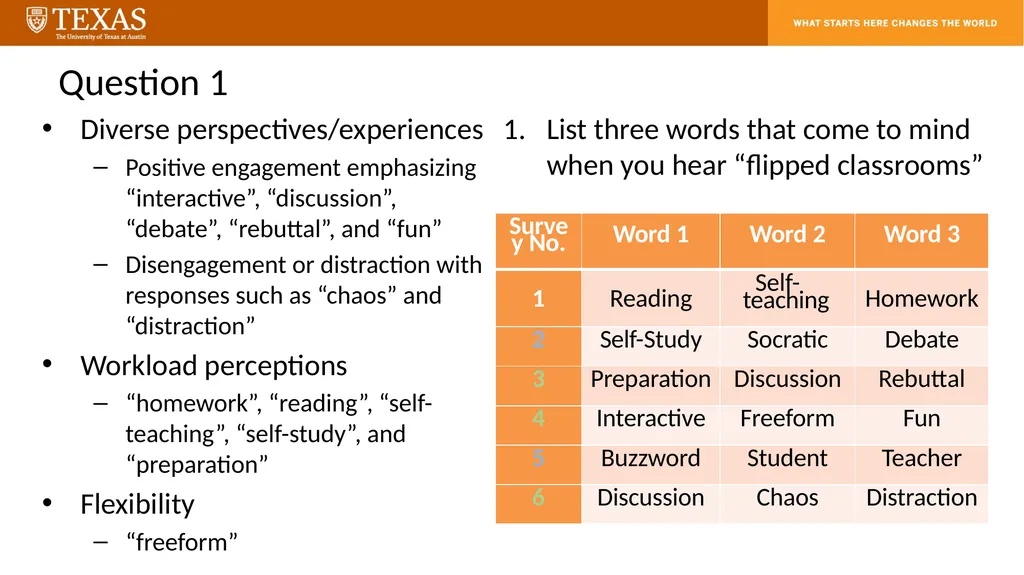
Question 1 Diverse perspectives/experiences
Positive engagement emphasizing “interactive”, “discussion”, “debate”, “rebuttal”, and “fun”
Disengagement or distraction with responses such as “chaos” and “distraction”
Workload perceptions
“homework”, “reading”, “self-teaching”, “self-study”, and “preparation”
Flexibility
“freeform” List three words that come to mind when you hear “flipped classrooms”<br>
20
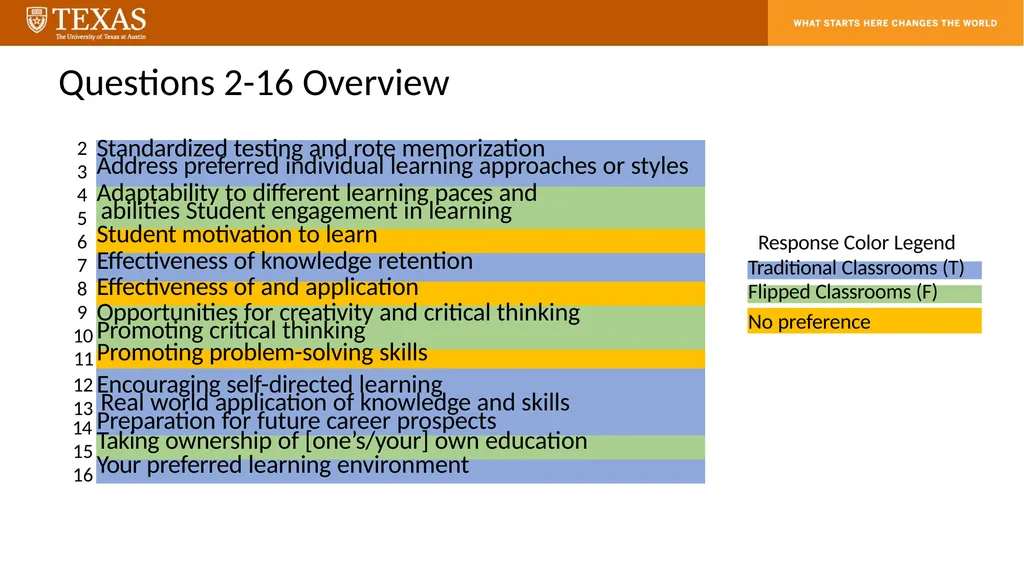
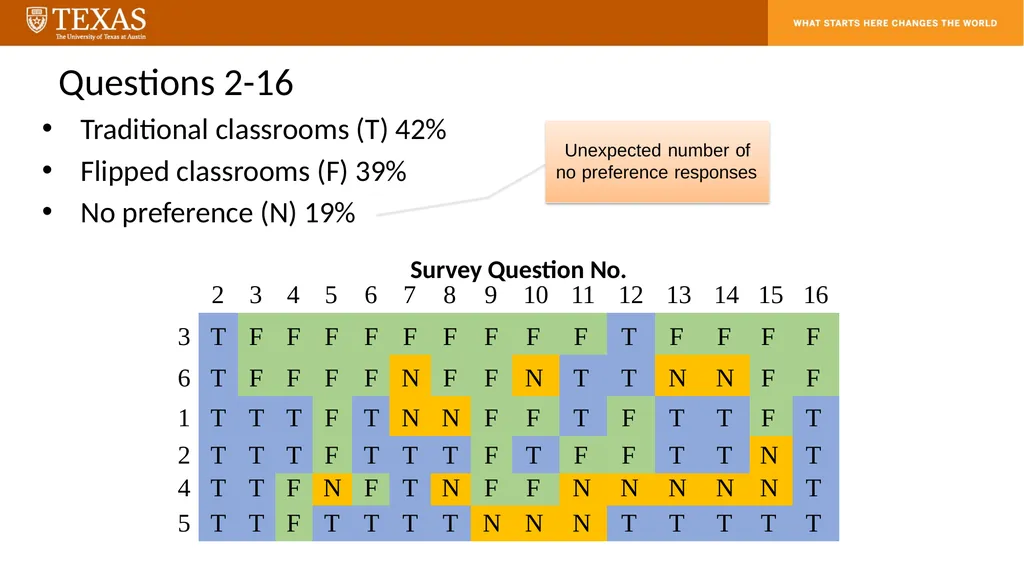
Questions 2-16 Overview 2
3
4
5
6
7
8
9
10
11
12
13 Response Color Legend Traditional Classrooms (T) Flipped Classrooms (F) No preference 14
15
16<br>
21
Questions 2-16 Traditional classrooms (T) 42%
Flipped classrooms (F) 39%
No preference (N) 19% Survey Question No. Unexpected number of no preference responses<br>
22
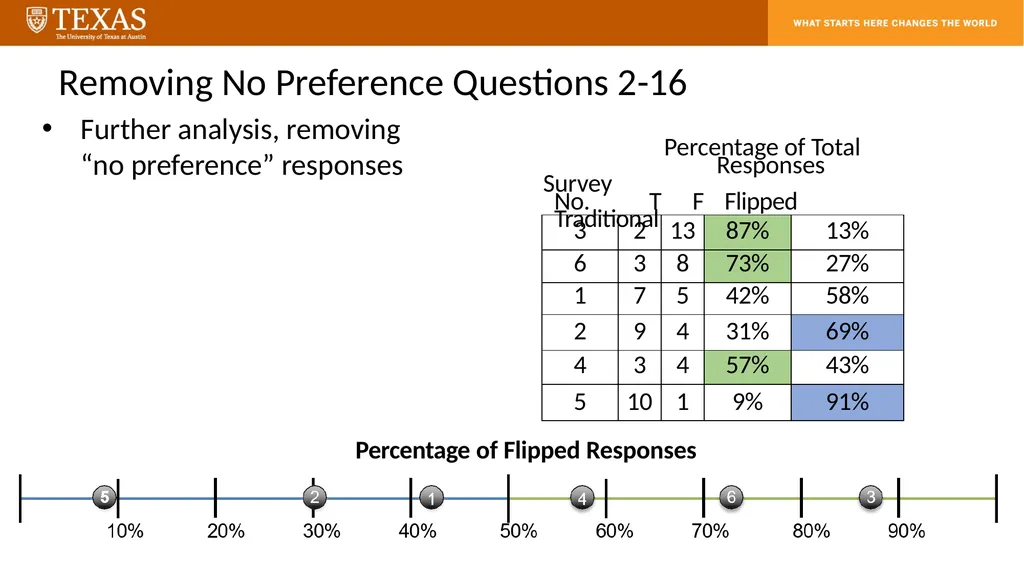
Removing No Preference Questions 2-16 Further analysis, removing “no preference” responses Survey
No. T F Flipped Traditional Percentage of Total Responses Percentage of Flipped Responses4<br>
23
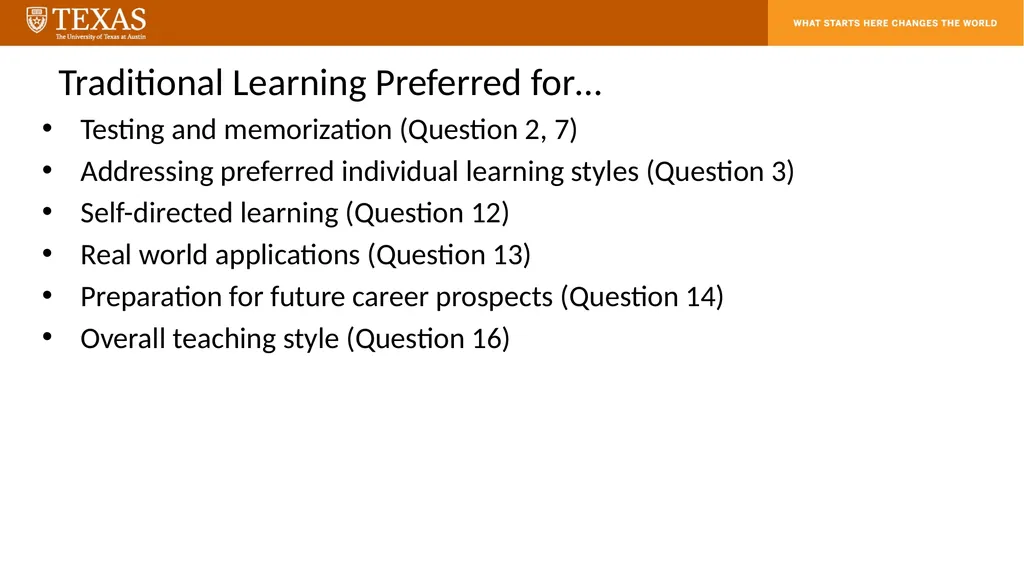
Traditional Learning Preferred for… Testing and memorization (Question 2, 7)
Addressing preferred individual learning styles (Question 3)
Self-directed learning (Question 12)
Real world applications (Question 13)
Preparation for future career prospects (Question 14)
Overall teaching style (Question 16)<br>
24
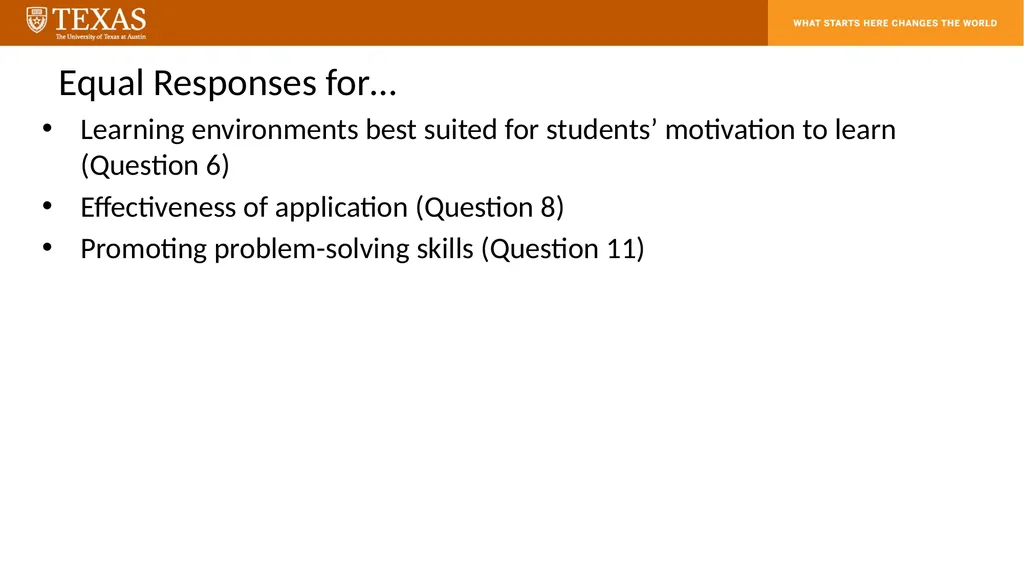
Equal Responses for… Learning environments best suited for students’ motivation to learn (Question 6)
Effectiveness of application (Question 8)
Promoting problem-solving skills (Question 11)<br>
25
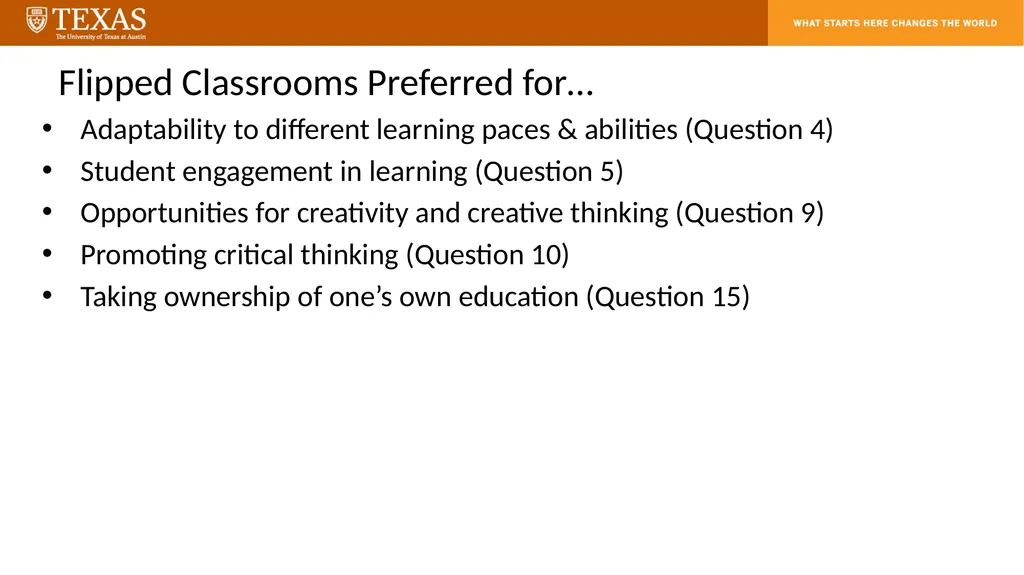
Flipped Classrooms Preferred for… Adaptability to different learning paces & abilities (Question 4)
Student engagement in learning (Question 5)
Opportunities for creativity and creative thinking (Question 9)
Promoting critical thinking (Question 10)
Taking ownership of one’s own education (Question 15)<br>
26
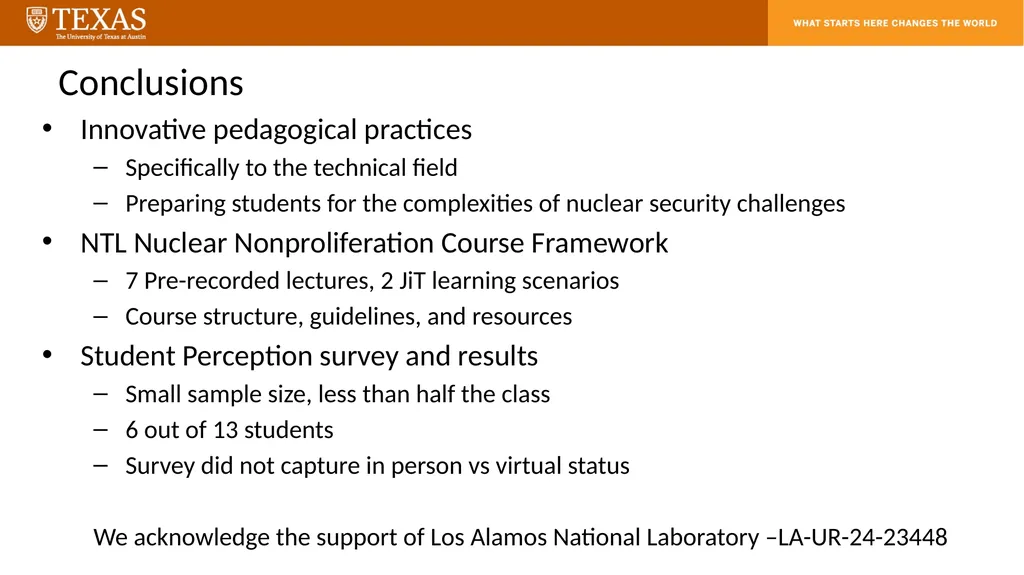
Conclusions Innovative pedagogical practices
Specifically to the technical field
Preparing students for the complexities of nuclear security challenges
NTL Nuclear Nonproliferation Course Framework
7 Pre-recorded lectures, 2 JiT learning scenarios
Course structure, guidelines, and resources
Student Perception survey and results
Small sample size, less than half the class
6 out of 13 students
Survey did not capture in person vs virtual status
We acknowledge the support of Los Alamos National Laboratory –LA-UR-24-23448<br>