NUCLEAR PHYSICS BY MARIASTEFFI.S ASSISTANT
Description: NUCLEAR PHYSICS BY MARIASTEFFI.S ASSISTANT PROFESSOR OF PHYSICS CPA COLLEGE, BODINAYAKANUR CONTENT Introduction Classification of Nuclei Fission Vs Fusion Nuclear chain reaction Cosmic ray Shower Applications INTRODUCTION Atomic nucleus is
Related Topics
Download Presentation
"NUCLEAR PHYSICS BY MARIASTEFFI.S ASSISTANT" is the property of its rightful owner. Permission is granted to download and print the materials on this website for personal, non-commercial use only, and to display it on your personal computer provided you do not modify the materials and that you retain all copyright notices contained in the materials. By downloading content from our website, you accept the terms of this agreement.
Presentation Transcript
slide1. NUCLEAR PHYSICS BYMARIASTEFFI.SASSISTANT PROFESSOR OF PHYSICSCPA COLLEGE, BODINAYAKANUR<br>
slide2. CONTENT Introduction
Classification of Nuclei
Fission Vs Fusion
Nuclear chain reaction
Cosmic ray Shower
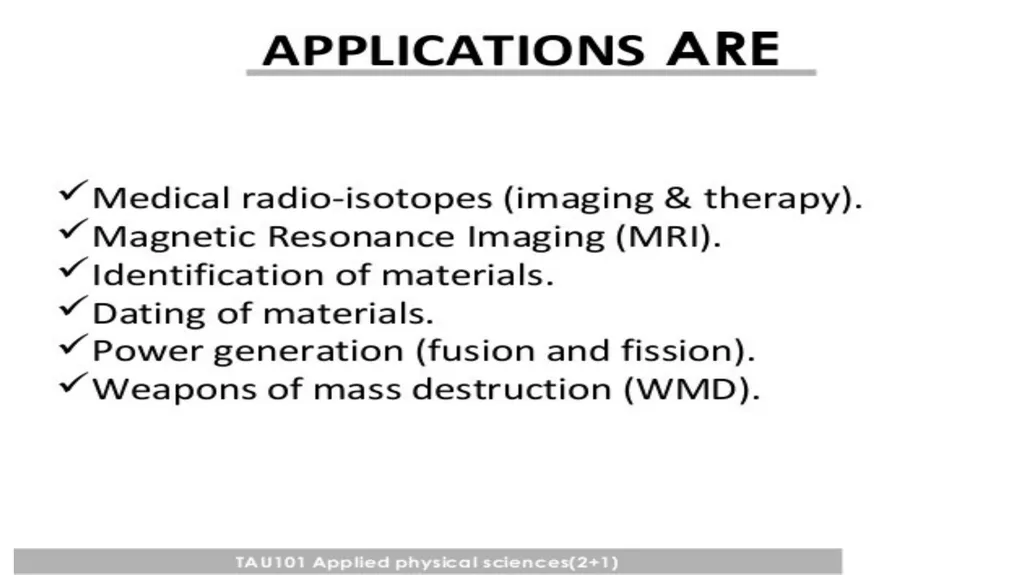
Applications<br>
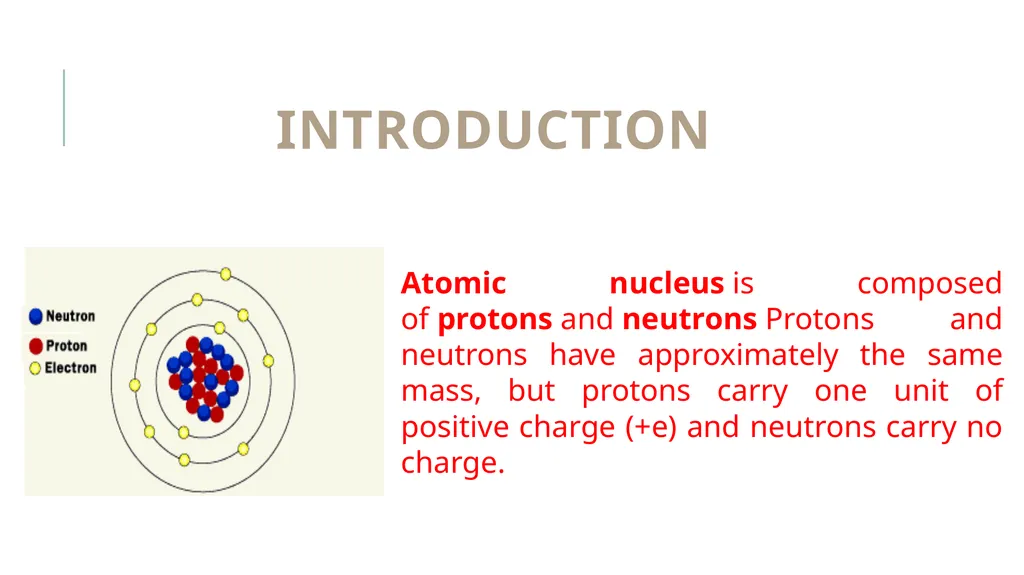
slide3. INTRODUCTION Atomic nucleus is composed of protons and neutrons Protons and neutrons have approximately the same mass, but protons carry one unit of positive charge (+e) and neutrons carry no charge.<br>
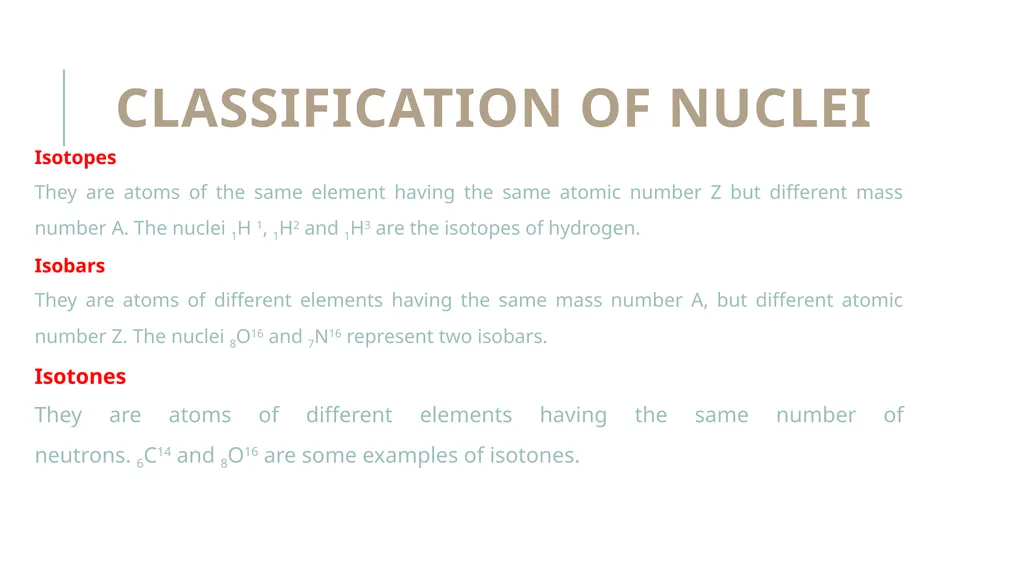
slide4. CLASSIFICATION OF NUCLEI Isotopes
They are atoms of the same element having the same atomic number Z but different mass number A. The nuclei 1H 1, 1H2 and 1H3 are the isotopes of hydrogen.
Isobars
They are atoms of different elements having the same mass number A, but different atomic number Z. The nuclei 8O16 and 7N16 represent two isobars.
Isotones
They are atoms of different elements having the same number of neutrons. 6C14 and 8O16 are some examples of isotones.<br>
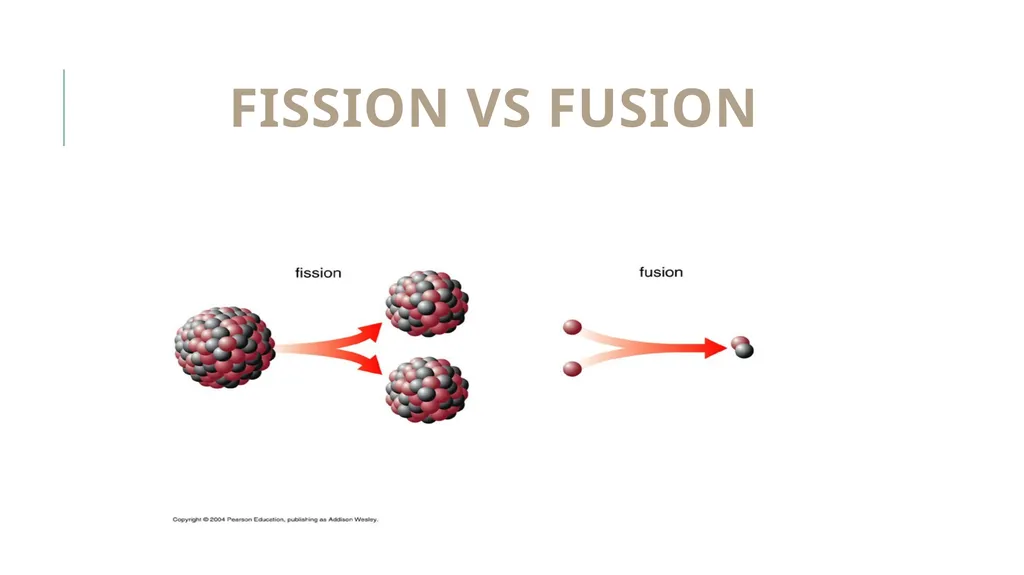
slide5. FISSION VS FUSION<br>
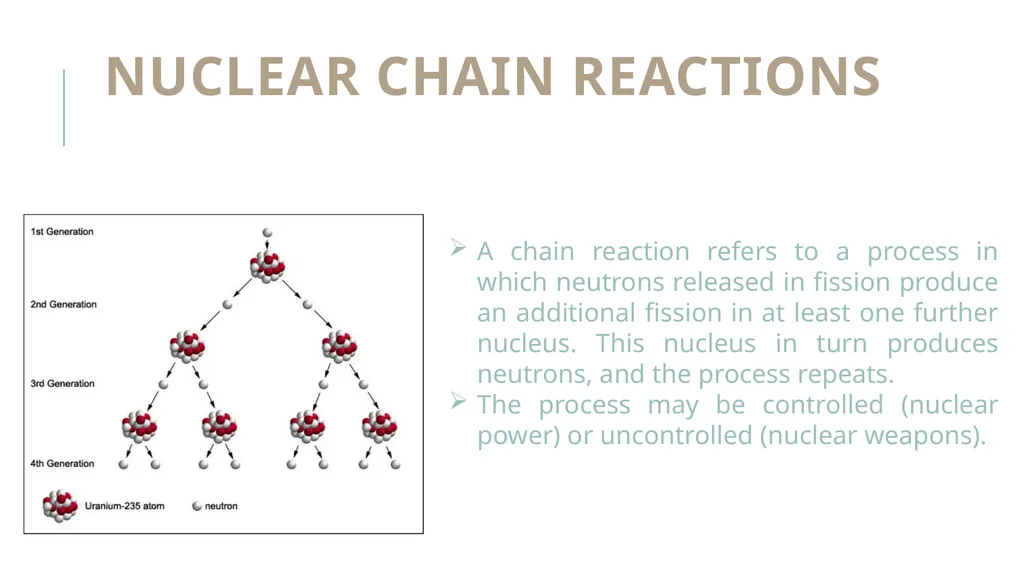
slide6. Nuclear Chain Reactions A chain reaction refers to a process in which neutrons released in fission produce an additional fission in at least one further nucleus. This nucleus in turn produces neutrons, and the process repeats.
The process may be controlled (nuclear power) or uncontrolled (nuclear weapons).<br>
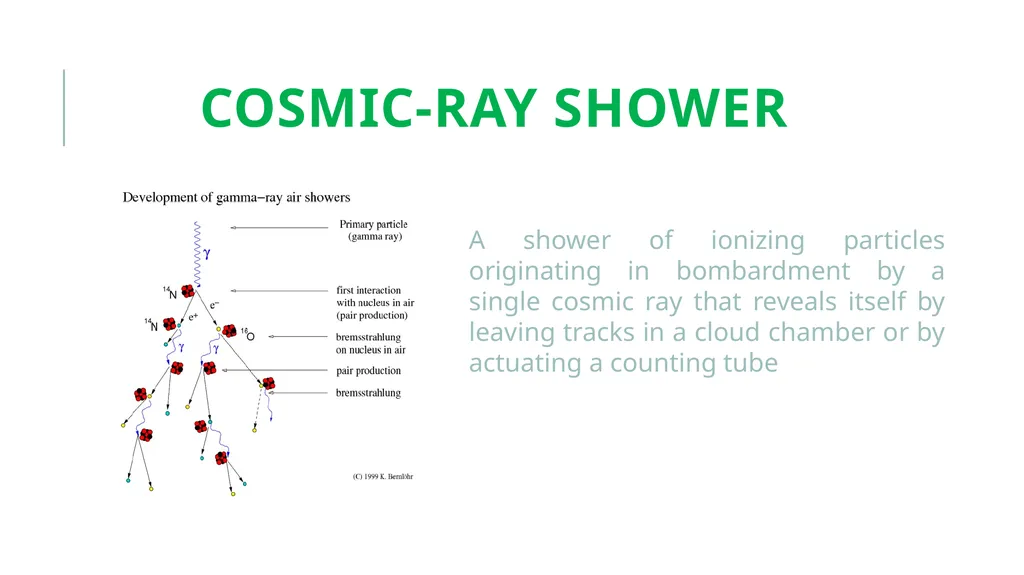
slide7. COSMIC-RAY SHOWER A shower of ionizing particles originating in bombardment by a single cosmic ray that reveals itself by leaving tracks in a cloud chamber or by actuating a counting tube<br>
slide9. THANK YOU<br>
slide2. CONTENT Introduction
Classification of Nuclei
Fission Vs Fusion
Nuclear chain reaction
Cosmic ray Shower
Applications<br>
slide3. INTRODUCTION Atomic nucleus is composed of protons and neutrons Protons and neutrons have approximately the same mass, but protons carry one unit of positive charge (+e) and neutrons carry no charge.<br>
slide4. CLASSIFICATION OF NUCLEI Isotopes
They are atoms of the same element having the same atomic number Z but different mass number A. The nuclei 1H 1, 1H2 and 1H3 are the isotopes of hydrogen.
Isobars
They are atoms of different elements having the same mass number A, but different atomic number Z. The nuclei 8O16 and 7N16 represent two isobars.
Isotones
They are atoms of different elements having the same number of neutrons. 6C14 and 8O16 are some examples of isotones.<br>
slide5. FISSION VS FUSION<br>
slide6. Nuclear Chain Reactions A chain reaction refers to a process in which neutrons released in fission produce an additional fission in at least one further nucleus. This nucleus in turn produces neutrons, and the process repeats.
The process may be controlled (nuclear power) or uncontrolled (nuclear weapons).<br>
slide7. COSMIC-RAY SHOWER A shower of ionizing particles originating in bombardment by a single cosmic ray that reveals itself by leaving tracks in a cloud chamber or by actuating a counting tube<br>
slide9. THANK YOU<br>