
Nurturing young scientists into the research
Description: Nurturing young scientists into the research culture Dr Paul Demo, Regional Director for Africa International Potato Center (CIP) Email: p.democgiar.org Seminar delivered at the University of Nairobi, 12 October 2023 Outline Why this
Related Topics
Download Presentation
"Nurturing young scientists into the research" is the property of its rightful owner. Permission is granted to download and print the materials on this website for personal, non-commercial use only, and to display it on your personal computer provided you do not modify the materials and that you retain all copyright notices contained in the materials. By downloading content from our website, you accept the terms of this agreement.
Presentation Transcript
slide1. Nurturing young scientists into the research culture Dr Paul Demo,
Regional Director for Africa
International Potato Center (CIP)
Email: p.demo@cgiar.org Seminar delivered at the University of Nairobi, 12 October 2023<br>
slide2. Outline Why this seminar?
2. Some definitions
3. Skills required to be successful scientist
4. Importance of sound preparation and self-confidence
before and during scientist’s career
5. Experience sharing<br>
slide3. 1. Why this seminar? To contribute to nurturing young scientist into the research culture<br>
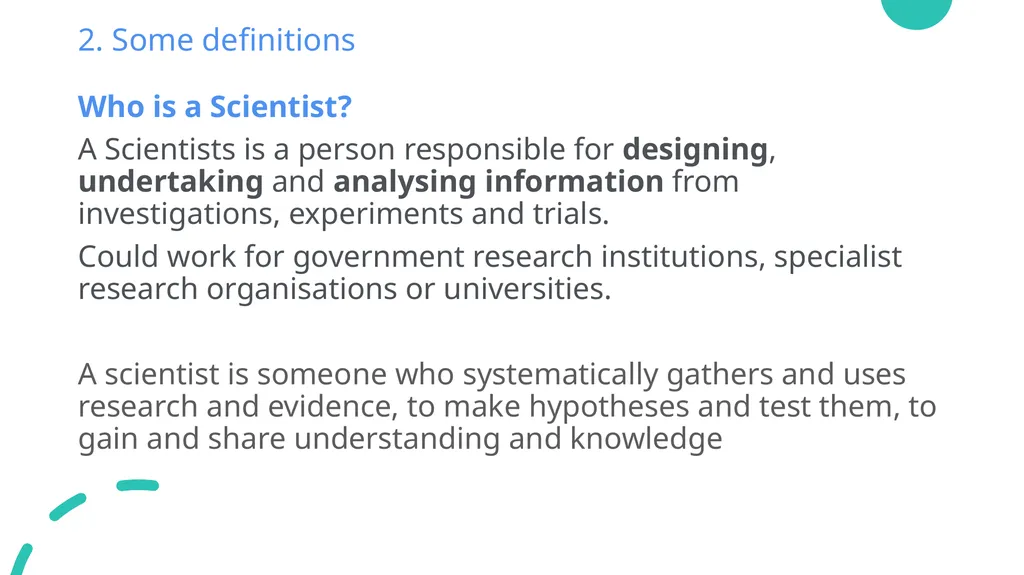
slide4. 2. Some definitions Who is a Scientist?
A Scientists is a person responsible for designing, undertaking and analysing information from investigations, experiments and trials.
Could work for government research institutions, specialist research organisations or universities.
A scientist is someone who systematically gathers and uses research and evidence, to make hypotheses and test them, to gain and share understanding and knowledge<br>
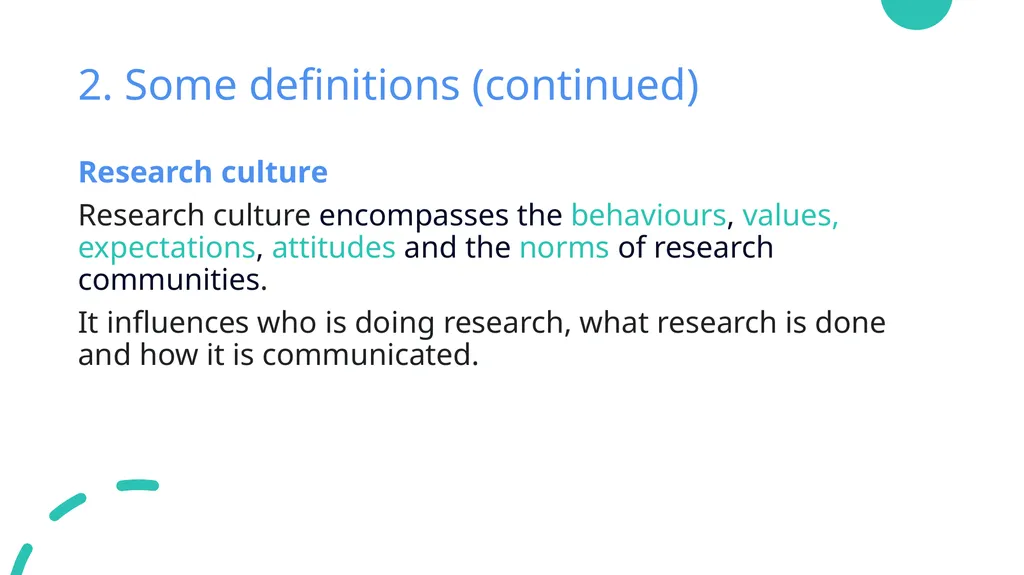
slide5. 2. Some definitions (continued) Research culture
Research culture encompasses the behaviours, values, expectations, attitudes and the norms of research communities.
It influences who is doing research, what research is done and how it is communicated.<br>
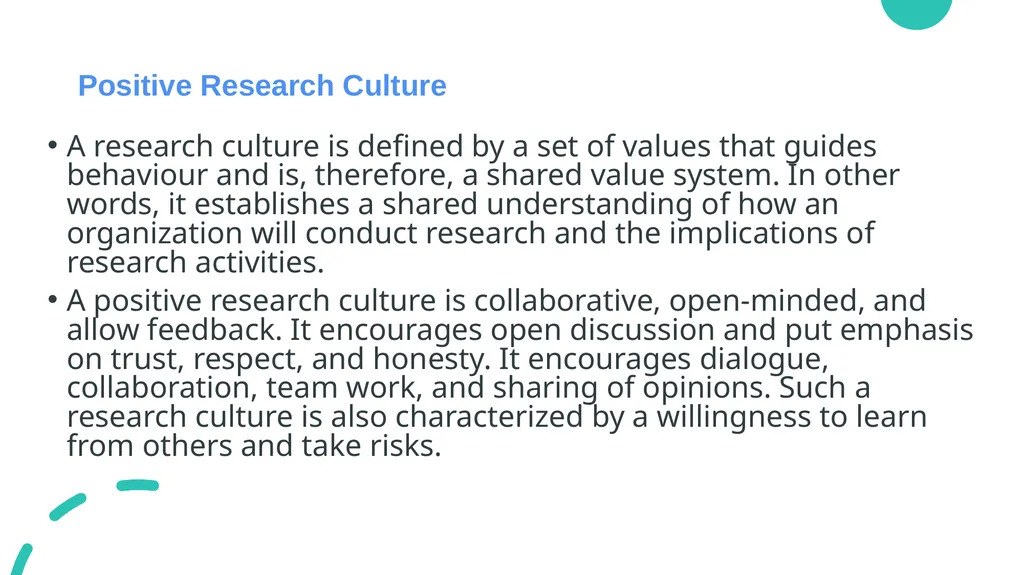
slide6. Positive Research Culture A research culture is defined by a set of values that guides behaviour and is, therefore, a shared value system. In other words, it establishes a shared understanding of how an organization will conduct research and the implications of research activities.
A positive research culture is collaborative, open-minded, and allow feedback. It encourages open discussion and put emphasis on trust, respect, and honesty. It encourages dialogue, collaboration, team work, and sharing of opinions. Such a research culture is also characterized by a willingness to learn from others and take risks.<br>
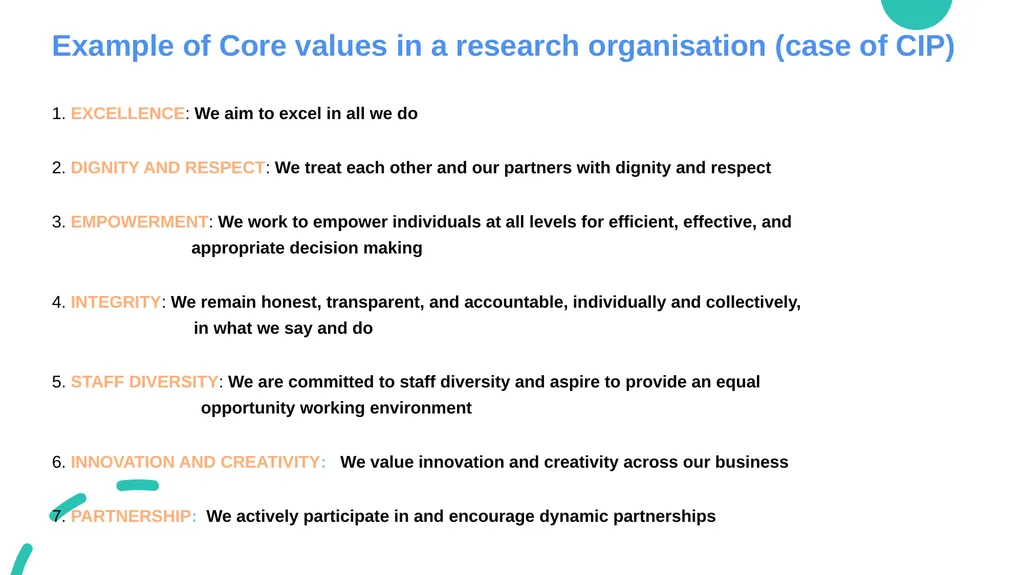
slide7. Example of Core values in a research organisation (case of CIP) 1. EXCELLENCE: We aim to excel in all we do
2. DIGNITY AND RESPECT: We treat each other and our partners with dignity and respect
3. EMPOWERMENT: We work to empower individuals at all levels for efficient, effective, and
appropriate decision making
4. INTEGRITY: We remain honest, transparent, and accountable, individually and collectively,
in what we say and do
5. STAFF DIVERSITY: We are committed to staff diversity and aspire to provide an equal
opportunity working environment
6. INNOVATION AND CREATIVITY: We value innovation and creativity across our business
7. PARTNERSHIP: We actively participate in and encourage dynamic partnerships<br>
slide8. 3. Skills required to be a successful scientist Curiosity
Science is primarily based on asking questions and performing tests and analyses based on these questions.
Analytical ability and foresight: Scientist looks for connections
Problem-solving skills
A scientist should be able to identify and test a problem or idea using the scientific method.
Organizational skills
Data and information collected should be carefully organised for analysis
Collaboration and teamwork
Determination: Scientist try several times
Communication skills
Very useful not only for presenting research results but also for successful project proposal development
Proposal development and Project management skills
Many scientists perform various projects that support their scientific investigations. As a scientist you should be able to plan and execute a variety of projects in an efficient and timely manner.
Leadership skills (for team leaders)
This is particularly important when a scientist is leading a research team<br>
slide9. 4. Importance of sound preparation and self-confidence before and during scientist’s career Some areas to pay attention to:
Master key core scientific courses in area of specialisation during academic training programmes
Master key experimental methods in field of specialisation
Master key statistical analysis tools
Skills in proposal writing extremely important
Publication records and regularity in publishing<br>
slide10. 5. Experience sharing Pursuing your passion and dream is important for success
Enjoy what you do and give your best
Make yourself indispensable in your working unit through outstanding results
Ability to raise fund is crucial for successful scientist career in research organisations
Publish as much as possible with your scientific team or network
Build your reputation and trust with partners and donors
Technical or scientific excellence is not enough<br>
slide11. 5. Experience sharing (continued) Cost saving ability and aiming at highest value for money in what you do
Technical feasibility of a technology is not enough, do not forget financial feasibility of the technologies being developed
Being business minded is added advantage
Consider needs assessment when planning to design a research project (Clients driven research)
Try to understand the concept of impact pathway
Understand what research Outputs, Outcomes and Impact are<br>
slide12. ACKNOWLEDGEMENT TO THE UNIVERSITY OF NAIROBI FOR THE INVITATION
And
TO International Potato Center (CIP), my employer<br>
slide13. Thank you for your Attention<br>
Regional Director for Africa
International Potato Center (CIP)
Email: p.demo@cgiar.org Seminar delivered at the University of Nairobi, 12 October 2023<br>
slide2. Outline Why this seminar?
2. Some definitions
3. Skills required to be successful scientist
4. Importance of sound preparation and self-confidence
before and during scientist’s career
5. Experience sharing<br>
slide3. 1. Why this seminar? To contribute to nurturing young scientist into the research culture<br>
slide4. 2. Some definitions Who is a Scientist?
A Scientists is a person responsible for designing, undertaking and analysing information from investigations, experiments and trials.
Could work for government research institutions, specialist research organisations or universities.
A scientist is someone who systematically gathers and uses research and evidence, to make hypotheses and test them, to gain and share understanding and knowledge<br>
slide5. 2. Some definitions (continued) Research culture
Research culture encompasses the behaviours, values, expectations, attitudes and the norms of research communities.
It influences who is doing research, what research is done and how it is communicated.<br>
slide6. Positive Research Culture A research culture is defined by a set of values that guides behaviour and is, therefore, a shared value system. In other words, it establishes a shared understanding of how an organization will conduct research and the implications of research activities.
A positive research culture is collaborative, open-minded, and allow feedback. It encourages open discussion and put emphasis on trust, respect, and honesty. It encourages dialogue, collaboration, team work, and sharing of opinions. Such a research culture is also characterized by a willingness to learn from others and take risks.<br>
slide7. Example of Core values in a research organisation (case of CIP) 1. EXCELLENCE: We aim to excel in all we do
2. DIGNITY AND RESPECT: We treat each other and our partners with dignity and respect
3. EMPOWERMENT: We work to empower individuals at all levels for efficient, effective, and
appropriate decision making
4. INTEGRITY: We remain honest, transparent, and accountable, individually and collectively,
in what we say and do
5. STAFF DIVERSITY: We are committed to staff diversity and aspire to provide an equal
opportunity working environment
6. INNOVATION AND CREATIVITY: We value innovation and creativity across our business
7. PARTNERSHIP: We actively participate in and encourage dynamic partnerships<br>
slide8. 3. Skills required to be a successful scientist Curiosity
Science is primarily based on asking questions and performing tests and analyses based on these questions.
Analytical ability and foresight: Scientist looks for connections
Problem-solving skills
A scientist should be able to identify and test a problem or idea using the scientific method.
Organizational skills
Data and information collected should be carefully organised for analysis
Collaboration and teamwork
Determination: Scientist try several times
Communication skills
Very useful not only for presenting research results but also for successful project proposal development
Proposal development and Project management skills
Many scientists perform various projects that support their scientific investigations. As a scientist you should be able to plan and execute a variety of projects in an efficient and timely manner.
Leadership skills (for team leaders)
This is particularly important when a scientist is leading a research team<br>
slide9. 4. Importance of sound preparation and self-confidence before and during scientist’s career Some areas to pay attention to:
Master key core scientific courses in area of specialisation during academic training programmes
Master key experimental methods in field of specialisation
Master key statistical analysis tools
Skills in proposal writing extremely important
Publication records and regularity in publishing<br>
slide10. 5. Experience sharing Pursuing your passion and dream is important for success
Enjoy what you do and give your best
Make yourself indispensable in your working unit through outstanding results
Ability to raise fund is crucial for successful scientist career in research organisations
Publish as much as possible with your scientific team or network
Build your reputation and trust with partners and donors
Technical or scientific excellence is not enough<br>
slide11. 5. Experience sharing (continued) Cost saving ability and aiming at highest value for money in what you do
Technical feasibility of a technology is not enough, do not forget financial feasibility of the technologies being developed
Being business minded is added advantage
Consider needs assessment when planning to design a research project (Clients driven research)
Try to understand the concept of impact pathway
Understand what research Outputs, Outcomes and Impact are<br>
slide12. ACKNOWLEDGEMENT TO THE UNIVERSITY OF NAIROBI FOR THE INVITATION
And
TO International Potato Center (CIP), my employer<br>
slide13. Thank you for your Attention<br>