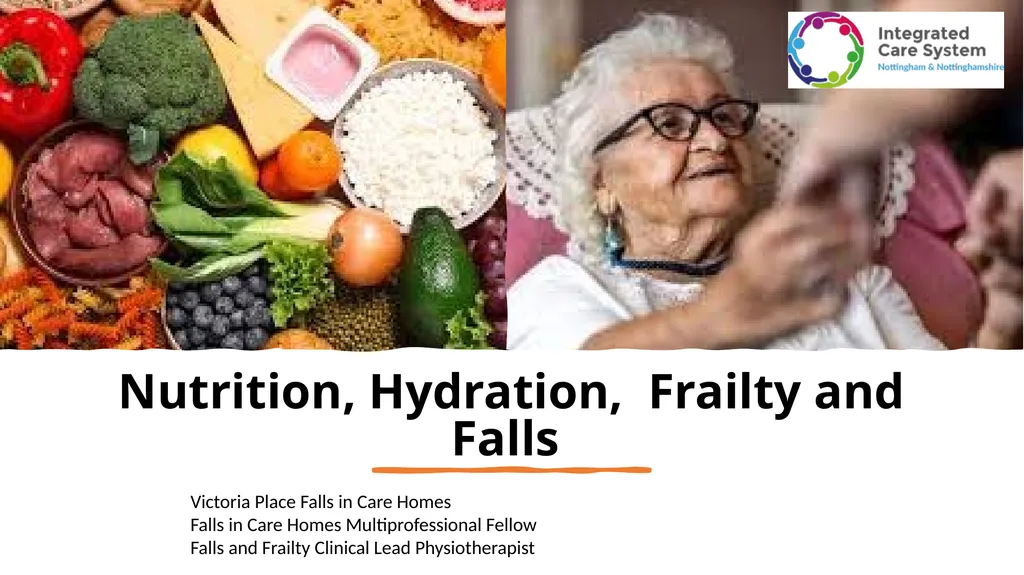
Nutrition, Hydration, Frailty and Falls Victoria

Published  . 0 views
↓ Download
Nutrition, Hydration, Frailty and Falls Victoria
1 / 1
Nutrition, Hydration, Frailty and Falls Victoria - slide 1 of 17 Nutrition, Hydration, Frailty and Falls Victoria - slide 2 of 17 Nutrition, Hydration, Frailty and Falls Victoria - slide 3 of 17 Nutrition, Hydration, Frailty and Falls Victoria - slide 4 of 17 Nutrition, Hydration, Frailty and Falls Victoria - slide 5 of 17 Nutrition, Hydration, Frailty and Falls Victoria - slide 6 of 17 Nutrition, Hydration, Frailty and Falls Victoria - slide 7 of 17 Nutrition, Hydration, Frailty and Falls Victoria - slide 8 of 17 Nutrition, Hydration, Frailty and Falls Victoria - slide 9 of 17 Nutrition, Hydration, Frailty and Falls Victoria - slide 10 of 17 Nutrition, Hydration, Frailty and Falls Victoria - slide 11 of 17 Nutrition, Hydration, Frailty and Falls Victoria - slide 12 of 17 Nutrition, Hydration, Frailty and Falls Victoria - slide 13 of 17 Nutrition, Hydration, Frailty and Falls Victoria - slide 14 of 17 Nutrition, Hydration, Frailty and Falls Victoria - slide 15 of 17 Nutrition, Hydration, Frailty and Falls Victoria - slide 16 of 17 Nutrition, Hydration, Frailty and Falls Victoria - slide 17 of 17
Description: Nutrition, Hydration, Frailty and Falls Victoria Place Falls in Care Homes Falls in Care Homes Multiprofessional Fellow Falls and Frailty Clinical Lead Physiotherapist What is Frailty ? How are Frailty, Nutrition , Hydration and Falls

Related Topics

Download Presentation

"Nutrition, Hydration, Frailty and Falls Victoria" is the property of its rightful owner. Permission is granted to download and print the materials on this website for personal, non-commercial use only, and to display it on your personal computer provided you do not modify the materials and that you retain all copyright notices contained in the materials. By downloading content from our website, you accept the terms of this agreement.

Presentation Transcript

slide1. Nutrition, Hydration, Frailty and Falls Victoria Place Falls in Care Homes
Falls in Care Homes Multiprofessional Fellow
Falls and Frailty Clinical Lead Physiotherapist<br>
slide2. What is Frailty ?
How are Frailty, Nutrition , Hydration and Falls Linked?
Causes for malnutrition in people experiencing frailty
Nutrient requirements for people experiencing frailty
How good nutrition helps to prevent falls
Proactive intervention
Brief Intervention for Nutrition
Falls Audit Content<br>
slide3. Frailty and Falls The incidence of falls in frail adults is 44%
Over half of frail adults will fall at least once each year.
This is much higher for people living in care homes where people are three times more likely to experience a fall
40% admissions to hospital from CHs are due to falls
If a frail person falls there is a high risk of a fractured neck of femur or hospitalisation.
Frailty-induced falls are associated with a greater risk of fractures, hospitalisation and institutionalisation.
As the severity of frailty increases, the risk of future falls increases.
10% of people who sustain a hip fracture will die within 1 month and a third will die within 12 months .<br>
slide4. Frailty Described as a lack of physical reserve to common and minor health or social care stressors.
It isn’t the same as old age.
Young people can experience Frailty
Many adults do experience frailty
Identified using the Clinical Frailty Scale which is a score of 1 – 9
REACT to Frailty
Can be made worse by poor nutrition and falls.<br>
slide5. What are the symptoms of frailty? To be diagnosed with Frailty a person must have 3 or more of these symptoms
1. Weight loss
2. Muscle Weakness (Poor handgrip strength is a good test)
3. Exhaustion
4. Slow walking speed
5. Low physical activity Can you think of a resident who is displaying 3 or more of these symptoms<br>
slide6. Poor Nutrition
Poor Hydration Falls
Frailty Residents who are experiencing poor nutrition or hydration are much more likely to develop frailty and falls.

Poor nutrition can mean not enough intake , or not enough nutrients, or both.

If a resident is experiencing poor nutrition this is commonly referred to as malnutrition

If a resident is experiencing poor fluid intake this is commonly referred to as dehydration<br>
slide7. Factors which can increase the risk of malnutrition
Social factors
Isolation
Limited knowledge of nutrition
Alcohol or drug dependency
Physical factors
Poor dentition
Loss of appetite due to loss of smell or taste
Loss of movement or strength in hands arms
Poor swallow
Mouth pain
Medical factors
Conditions causing a lack of appetite (such as cancer or liver disease)
Mental health conditions such as depression
Dementia
Any condition that reduces the body’s ability to absorb or use nutrients
Vomiting or diarrhoea
Eating disorders
Taking multiple medications and medication side effects Can you think of any residents who may be malnourished ?

How could you spot this ?

How did you overcome this ?<br>
slide8. Protein Requirements Increase with Age and Frailty Requirements in old age are similar to young adults
A person over the age 65 should be getting at least 90 grams of protein per day
Food first approach
High protein diets contribute to muscle production and repair
Protein intake very importance to reduce falls and frailty
Consider meat alternatives that are high in protein .
Eggs , Nuts, Lentils , Cheese, Yogurt
Protein powders , protein infused shakes, drinks<br>
slide9. Calcium and Vitamin D Essential for the maintenance of bone health during the ageing process
As people age the reproduction of bone slows down and bone become more porous . This leads to reduced flexibility and increased likelihood of fracture.
Calcium in the major component of bone – provides strength and structure to the bone
Calcium also stimulates bone production but only if there are sufficient levels of vitamin D in the body.
Vitamin D helps the body to absorb calcium and create calcium stores within bone used to regeneration , repair and production of new bone tissue.<br>
slide10. Folate People with low folate are more prone to reduced muscle strength and size which in turn causes falls and frailty .
Folate plays a key role in skeletal muscle development , repair and function .
Folate foods :
broccoli.
brussels sprouts.
leafy green vegetables, such as cabbage, kale, spring greens and spinach.
peas.
chickpeas and kidney beans.
liver (avoid liver if you are pregnant)
breakfast cereals fortified with folic acid<br>
slide11. Vitamin B12 B12 helps with the production of red blood cells
As people age, they are not able to absorb B12 as well as thy used to which often leads to anemia
Anemia can increase falls risk.
Therefore, need lots of sources of this in the diet<br>
slide12. Iron Anaemia is often a common nutritional issue for people with frailty.
As people age the body slows down on its production of red blood cells.
Gut ages – causing malabsorption of nutrients also increases with age which also contributes to lower red blood cells.
About 10% of people over the age of 65 will have anaemia which is often not diagnosed.
Presents often as fatigue, weakness, shortness of breath , headaches and low BP – in turn can cause falls, frailty and increased pre existing frailty .<br>
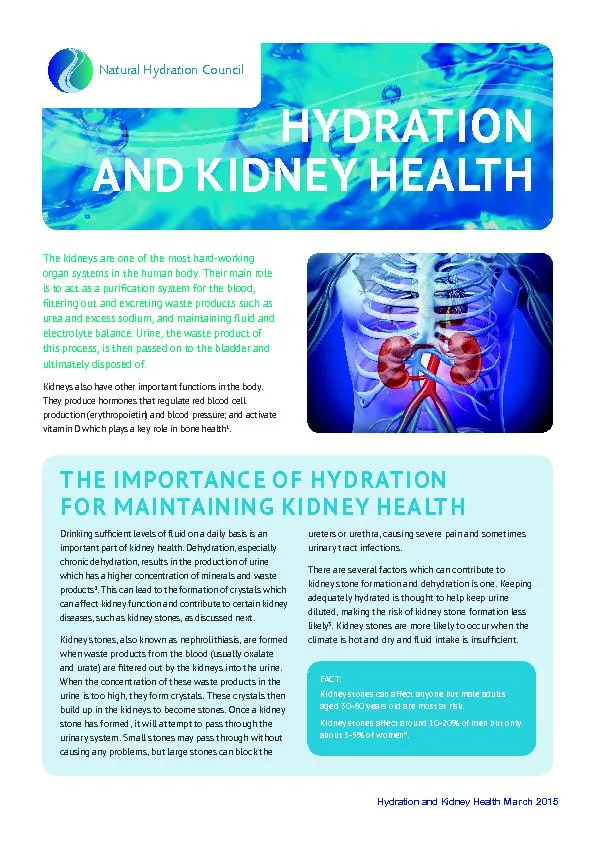
slide13. Consequences of dehydration â–¶ Urinary tract infections â–¶ Constipation â–¶ Low blood pressure â–¶ Confusion â–¶ Falls â–¶ Kidney failure â–¶ Seizures â–¶ Poor temperature regulation â–¶ Pressure injury â–¶ Poor wound healing â–¶ Harmful drug levels in the body â–¶ Death. Dehydration Dehydration can be life threatening and is a frequent cause of hospital admission but is often preventable. Causes of dehydration â–¶ Reduced sense of thirst â–¶ Diarrhoea and vomiting â–¶ Concerns about continence â–¶ Swallowing difficulties â–¶ Reduced ability to drink â–¶ High environmental temperature (hot weather) â–¶ Taste changes â–¶ High body temperature (fever) â–¶ Medicines â–¶ Reduced access to fluid/preferred drinks â–¶ Reduced kidney function.<br>
slide14. How to support good hydration for residents
Availability of drinks- Drinks should be available everywhere, at all times, at the right temperature and of the right type. There should always be a range of options that meet all needs and preferences
Opportunistic drinks- When medications are provided, a full glass of fluid should be given, rather than just a few sips
Accessibility- Help and support to access a drink and whilst drinking should be provided.
This may mean using adapted drinking cups/glasses which meet residents’ needs. Health professionals (such as Speech and Language Therapists or Occupational Therapists) may be able to advise on these.
Social interaction - Dinking with others can encourage fluid intake
Cup and glass sizes- Carers should know the volume of all commonly used cups, mugs and glasses within their care home and
how that relates to the amount that residents need to be encouraged to drink each day
Attractive options -Try to make the drink look appealing and recognisable to encourage intake
Reassurance - Residents may need to be discreetly reminded that there is support if fear of incontinence is a barrier to drinking well
Education - Supporting the resident, relatives and carers to understand the importance of drinking regularly.<br>
slide16. Take away messages Good hydration and nutrition will significantly reduce the risk of falls and will help to prevent frailty and the progression of frailty.
It is important to consider any issues on an individual basis and to seek advice .
GP and aligned care home teams are there to support .
Consider the learning from today and how you can use this to monitor diet nutrition and hydration in your residents.
If you raise concerns - Ask for an update
Always involve the resident and their friends and family with permission<br>
slide17. Enhanced Hydration Care Home Practitioner Course
This course is designed to equip you with the necessary knowledge and skills to provide optimal hydration care and is available for all Care Home staff within Nottingham and Nottinghamshire.
To access the course, simply visit: https://learning.roccaresystems.co.uk/ and use the free coupon code during registration: Coupon Code: ROCNOTTSICBTRAINING2024
If you have any questions or need assistance, feel free to reach out to us at support@roccaresystems.co.uk. We're here to support you every step of the way. Ongoing training available to all care home staff :<br>