
Objectives: Basic Web Application Model Web
Description: Objectives: Basic Web Application Model Web Development FrameworksLanguages Resources: Web Frameworks Popular Frameworks 10 Things to Know Angular React Knockout Videos: Rest Postman Chrome Developer Tools LECTURE 32: INTRO TO WEB
Related Topics
Download Presentation
"Objectives: Basic Web Application Model Web" is the property of its rightful owner. Permission is granted to download and print the materials on this website for personal, non-commercial use only, and to display it on your personal computer provided you do not modify the materials and that you retain all copyright notices contained in the materials. By downloading content from our website, you accept the terms of this agreement.
Presentation Transcript
slide1. Objectives:
Basic Web Application Model Web Development Frameworks/Languages
Resources:
Web Frameworks
Popular Frameworks
10 Things to Know
Angular
React
Knockout
Videos:
Rest
Postman
Chrome Developer Tools LECTURE 32: INTRO TO WEB DEVELOPMENT<br>
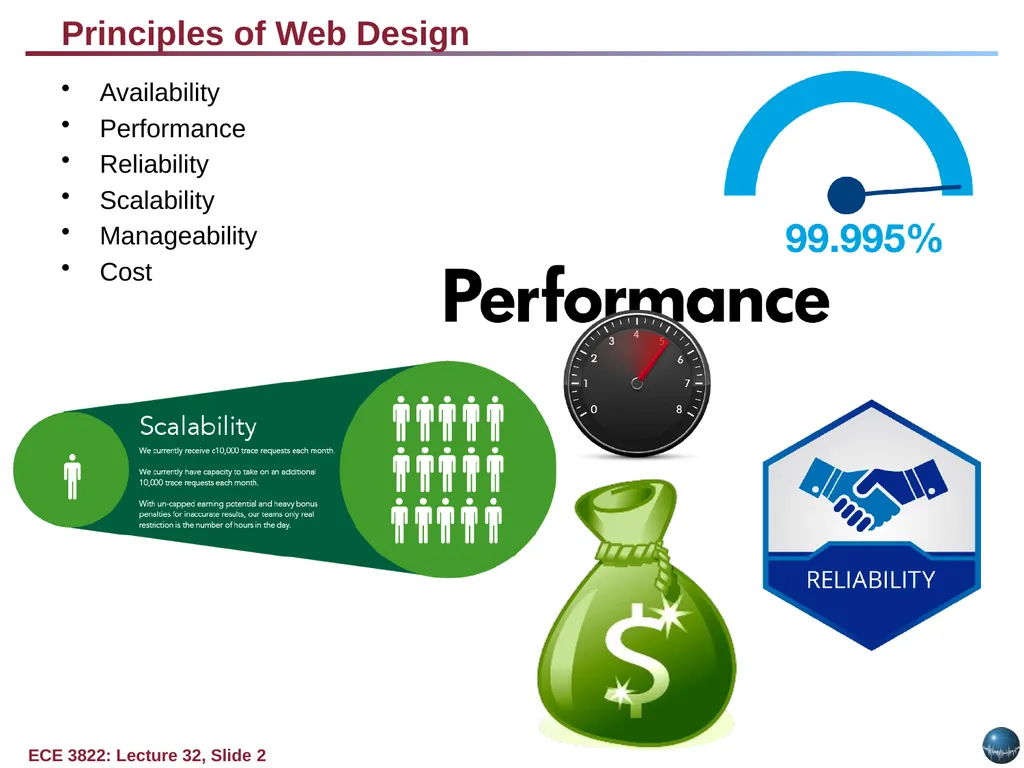
slide2. Principles of Web Design Availability
Performance
Reliability
Scalability
Manageability
Cost<br>
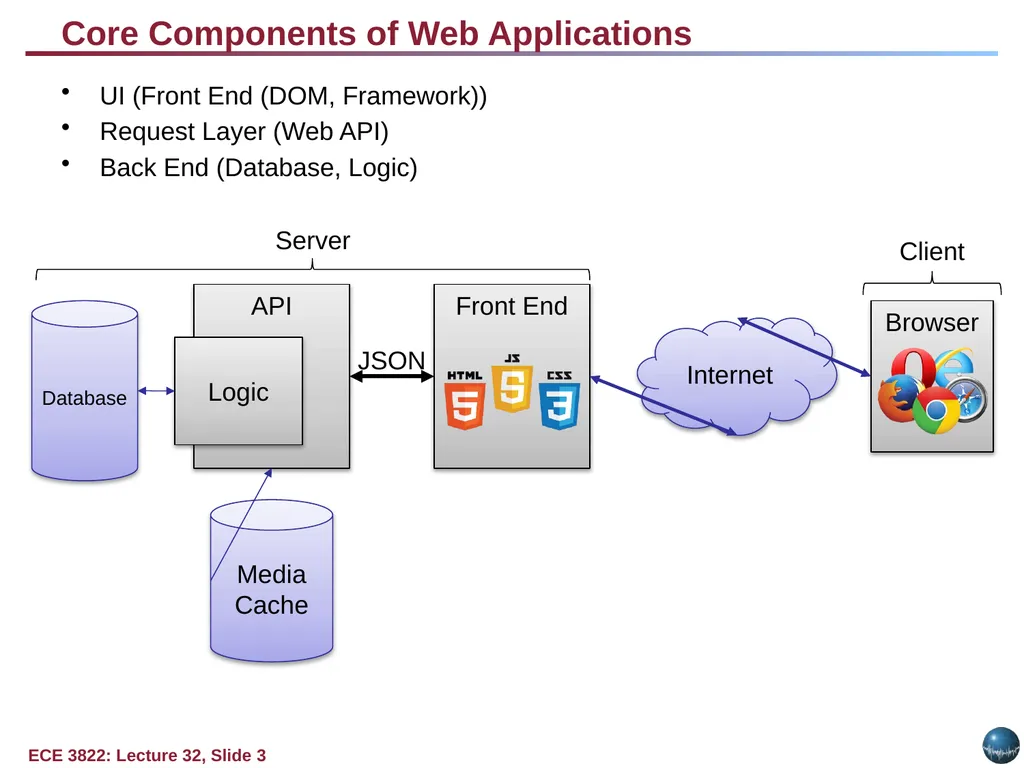
slide3. Core Components of Web Applications UI (Front End (DOM, Framework))
Request Layer (Web API)
Back End (Database, Logic) Internet Browser Media Cache API Front End JSON Database Logic Client Server<br>
slide4. Frontend development<br>
slide5. Front End Languages HTML/CSS
Javascript
Java (applets)
What is the most popular?
Answer: Javascript/HTML/CSS is the only real option for front-end native languages and is basically the standard. But there are many variations on JavaScript that are used.<br>
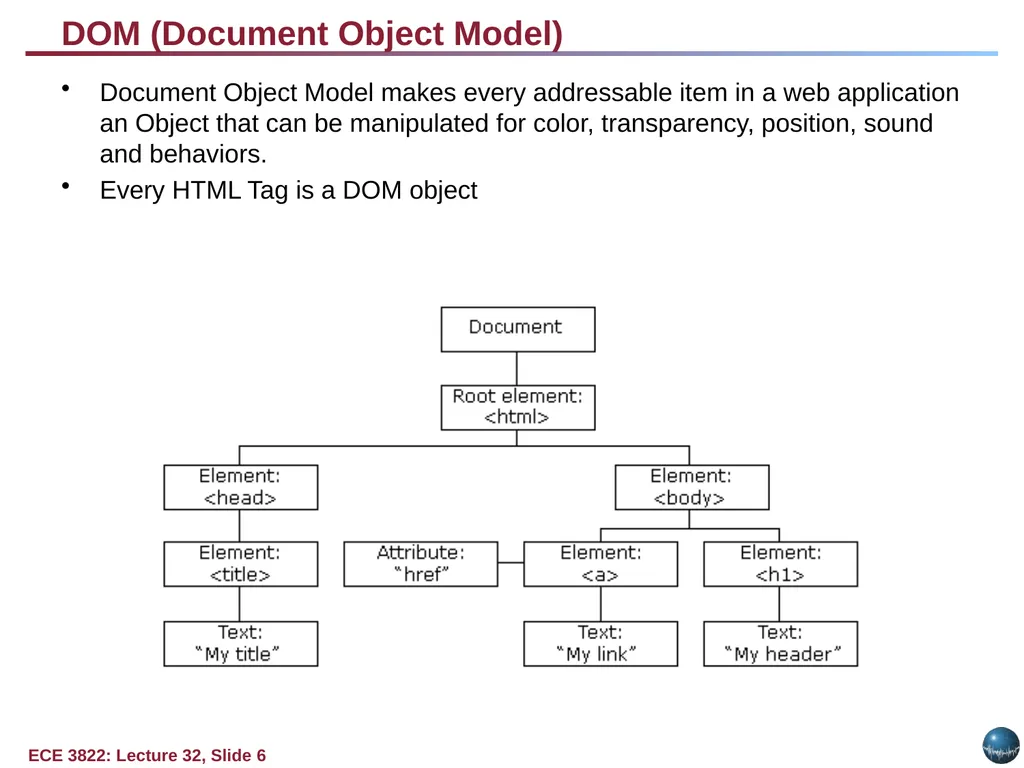
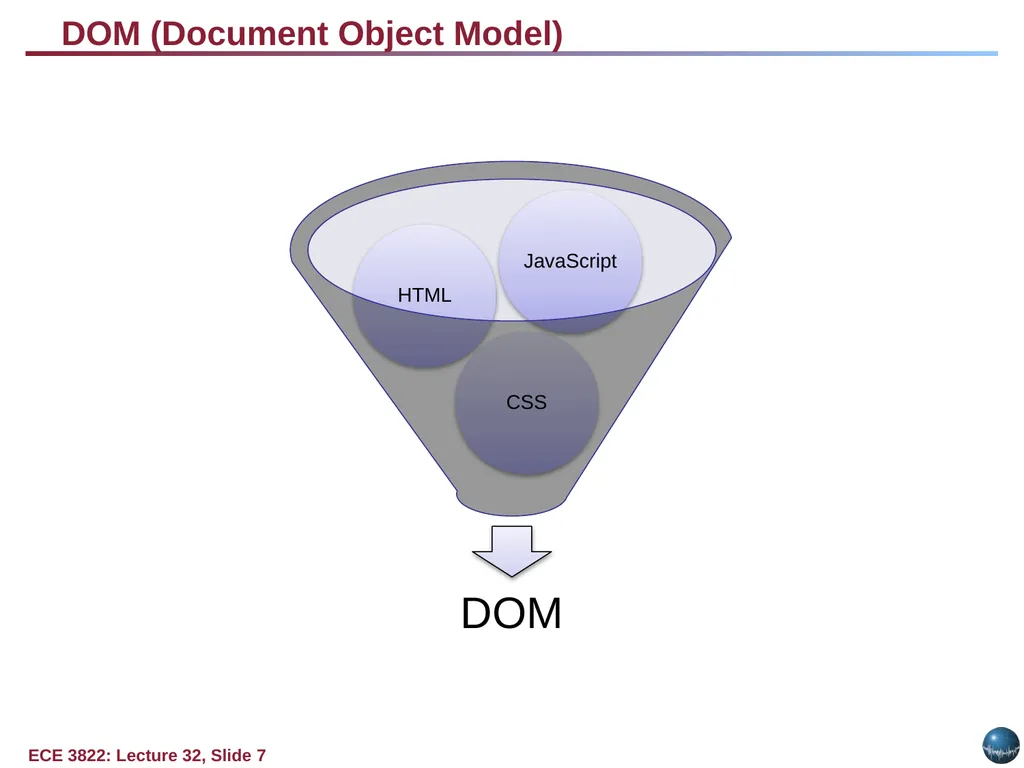
slide6. DOM (Document Object Model) Document Object Model makes every addressable item in a web application an Object that can be manipulated for color, transparency, position, sound and behaviors.
Every HTML Tag is a DOM object<br>
slide7. DOM (Document Object Model)<br>
slide8. What is a Framework? Software Framework designed to reduce overhead in web development
Types of Framework Architectures
Model-View-Controller (MVC)
Push vs Pull Based
Most MVC Frameworks user push-based architecture “action based” (Django, Ruby on Rails, Symfony, Stripes)
Pull-based or “component based” (Lift, Angular2, React)
Three Tier Organization
Client (Usually the browser running HTML/Javascipt/CSS)
Application (Running the Business Logic)
Database (Data Storage)
Types of Frameworks
Server Side: Django, Ruby on Rails
Client Side: Angular, React, Vue<br>
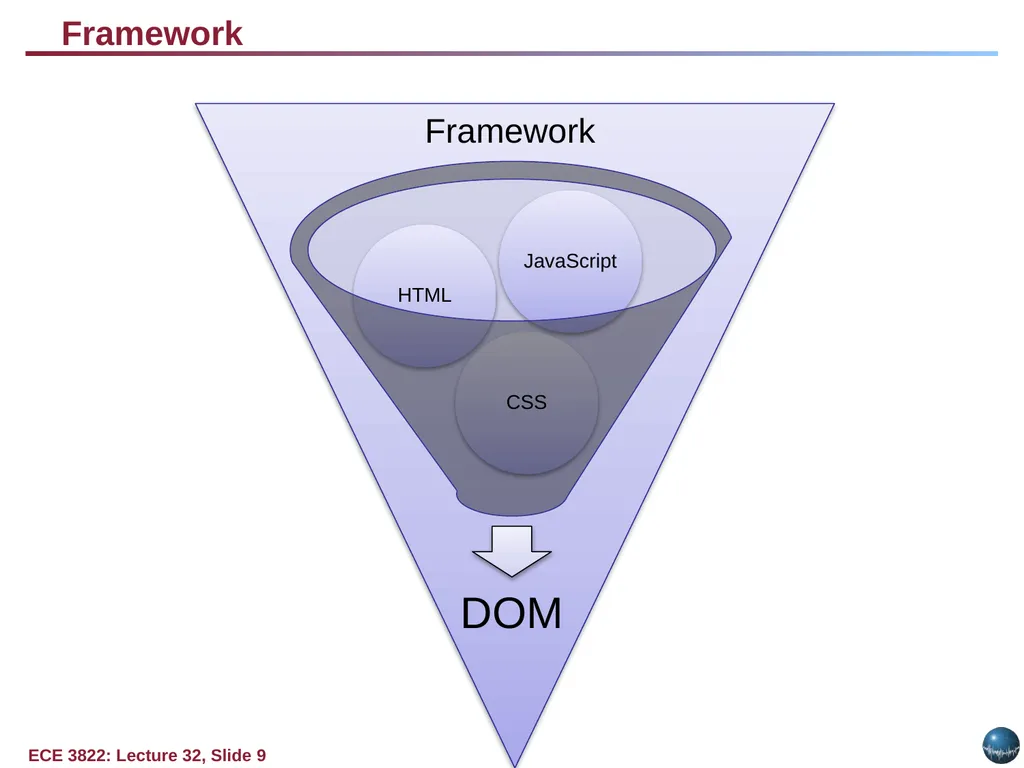
slide9. Framework Framework<br>
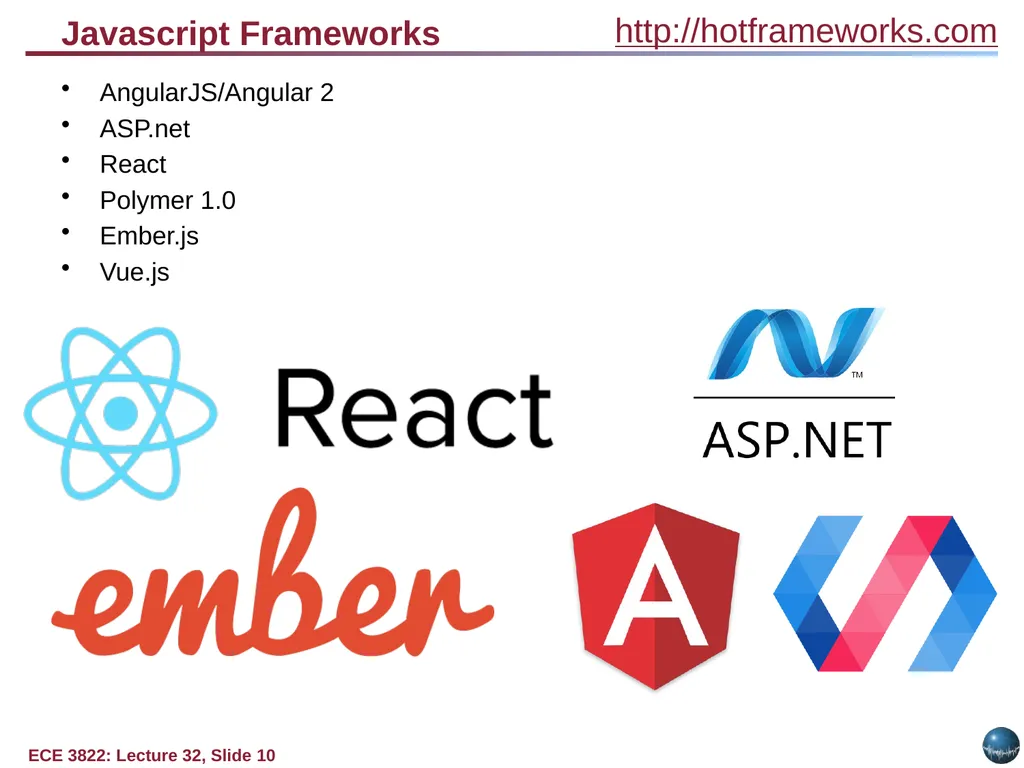
slide10. Javascript Frameworks AngularJS/Angular 2
ASP.net
React
Polymer 1.0
Ember.js
Vue.js http://hotframeworks.com<br>
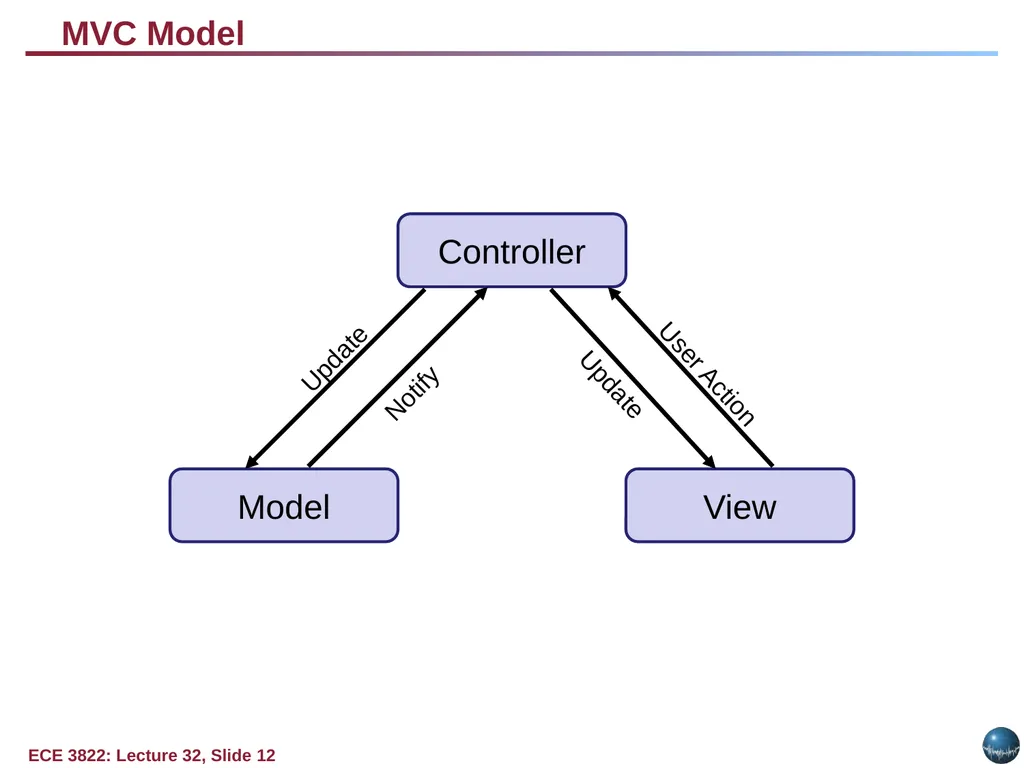
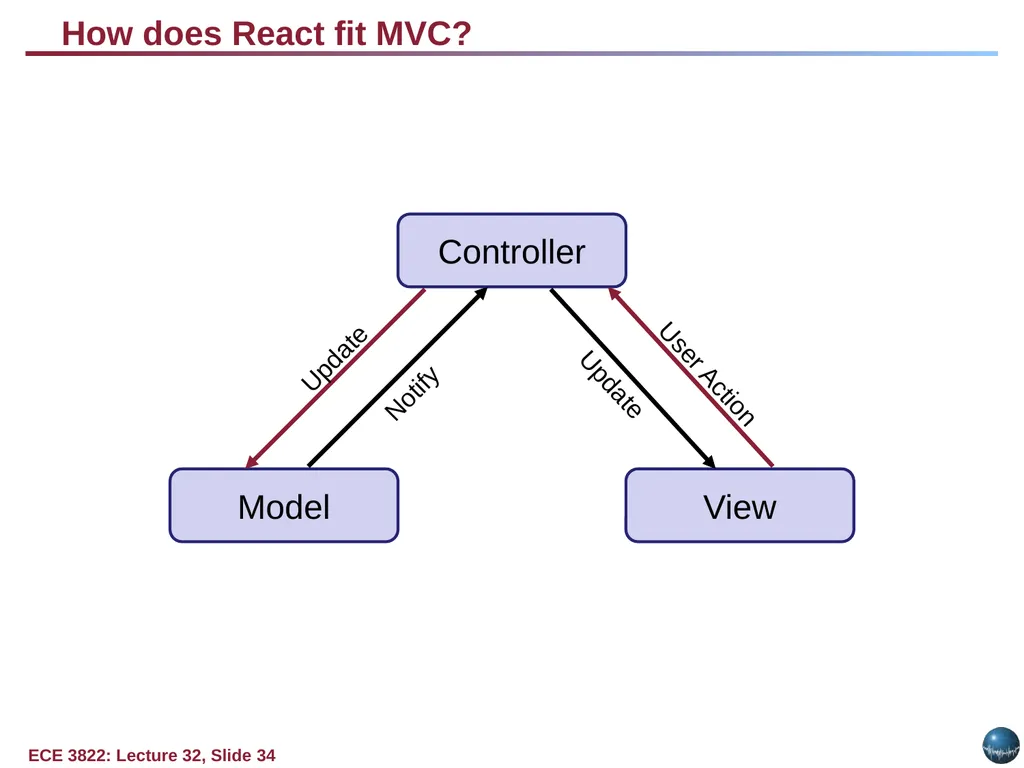
slide11. MVC (Model View Controller) A Web Application Development Framework
Model (M):
Where the data for the DOM is stored and handled)
This is where the backend connects
View (V):
Think of this like a Page which is a single DOM
Where changes to the page are rendered and displayed
Control (C):
This handles user input and interactions
Buttons
Forms
General Interface<br>
slide12. MVC Model Controller Model View Update Notify Update User Action<br>
slide13. BACKEND development<br>
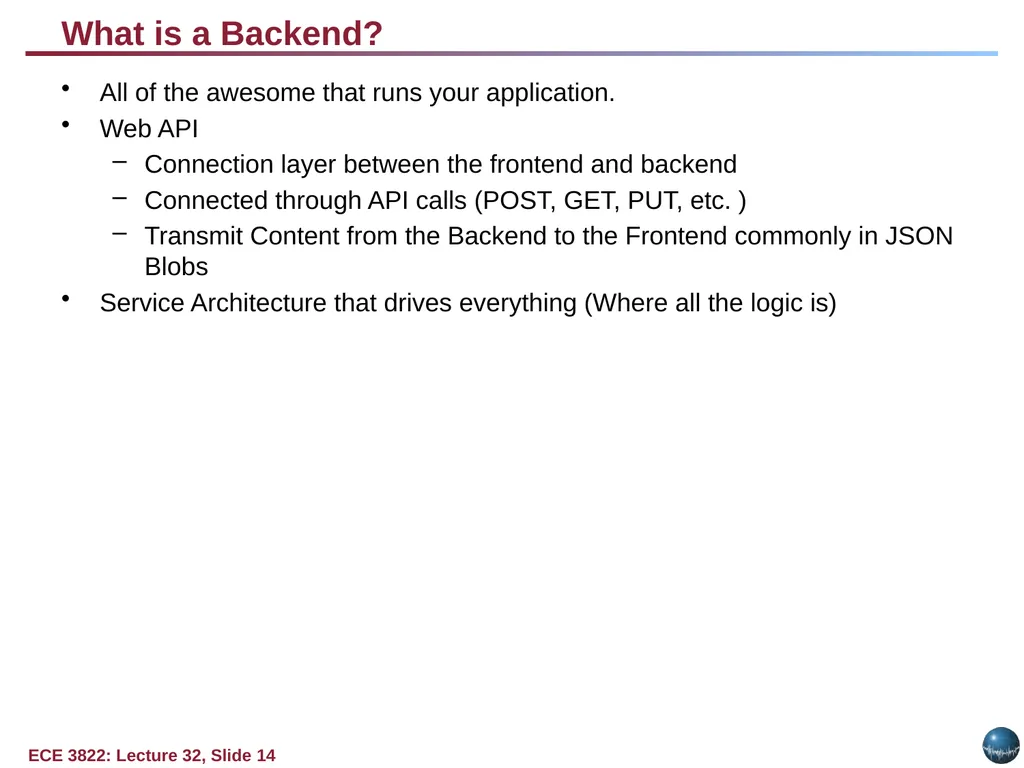
slide14. What is a Backend? All of the awesome that runs your application.
Web API
Connection layer between the frontend and backend
Connected through API calls (POST, GET, PUT, etc. )
Transmit Content from the Backend to the Frontend commonly in JSON Blobs
Service Architecture that drives everything (Where all the logic is)<br>
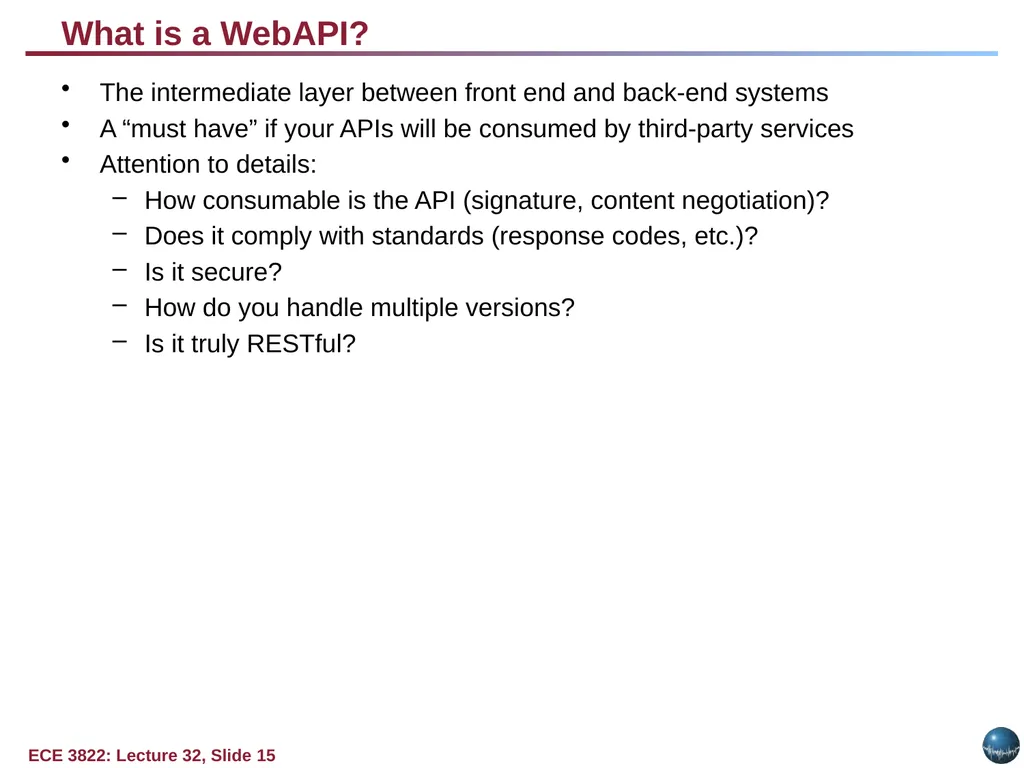
slide15. What is a WebAPI? The intermediate layer between front end and back-end systems
A “must have” if your APIs will be consumed by third-party services
Attention to details:
How consumable is the API (signature, content negotiation)?
Does it comply with standards (response codes, etc.)?
Is it secure?
How do you handle multiple versions?
Is it truly RESTful?<br>
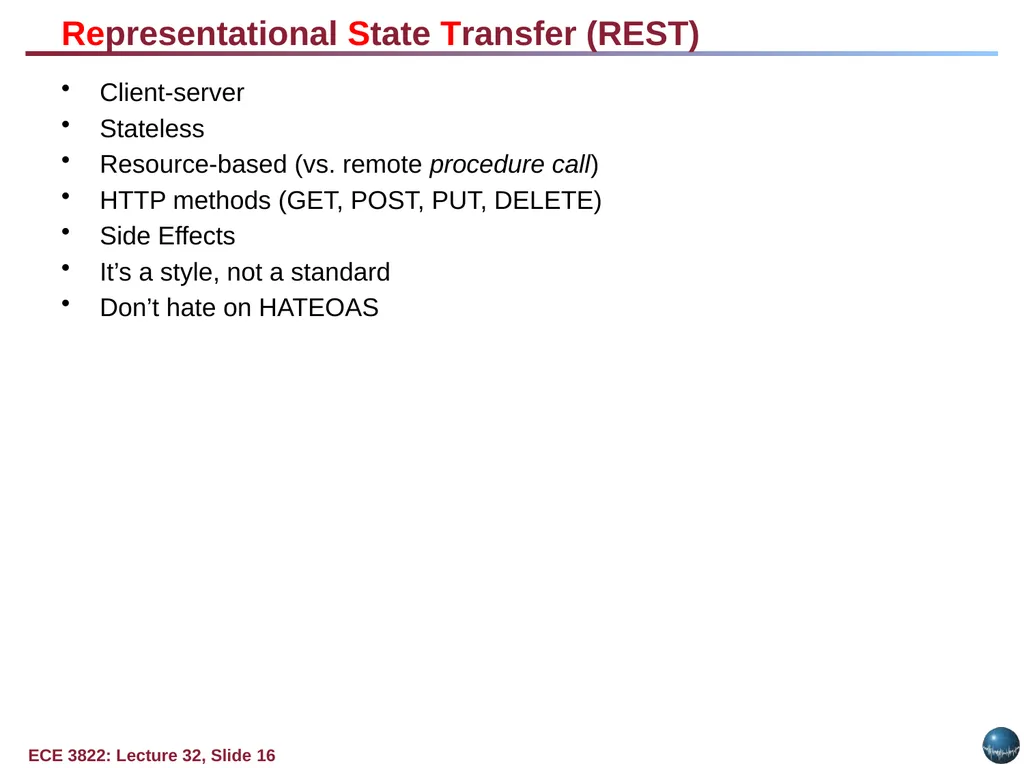
slide16. Representational State Transfer (REST) Client-server
Stateless
Resource-based (vs. remote procedure call)
HTTP methods (GET, POST, PUT, DELETE)
Side Effects
It’s a style, not a standard
Don’t hate on HATEOAS<br>
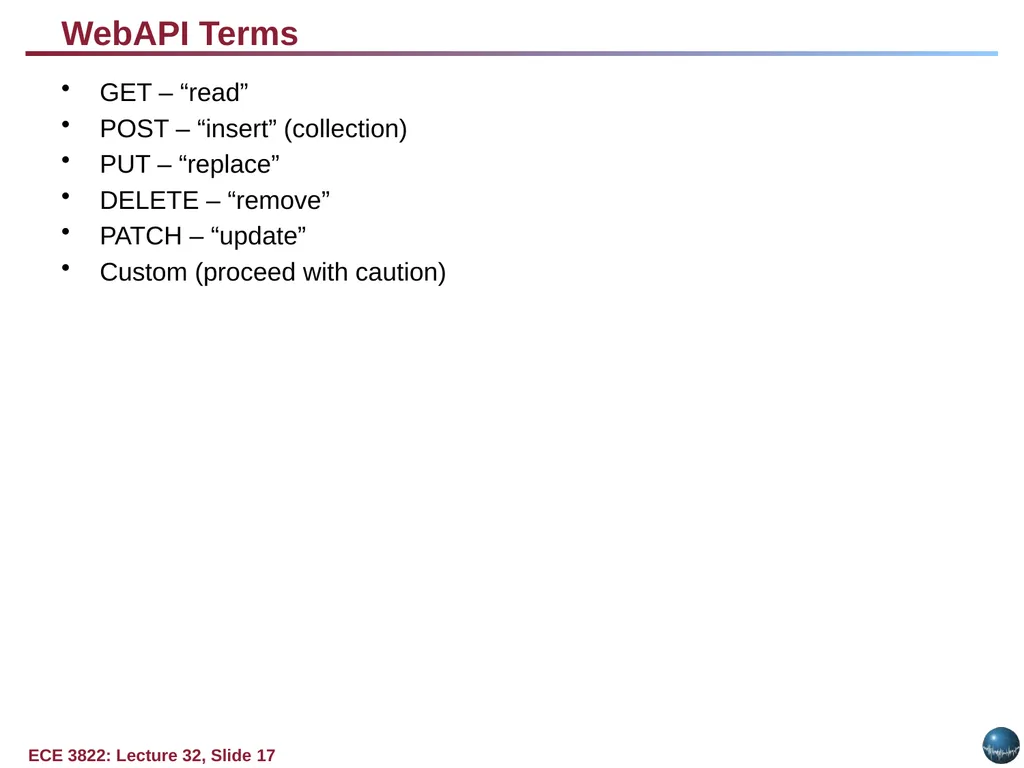
slide17. WebAPI Terms GET – “read”
POST – “insert” (collection)
PUT – “replace”
DELETE – “remove”
PATCH – “update”
Custom (proceed with caution)<br>
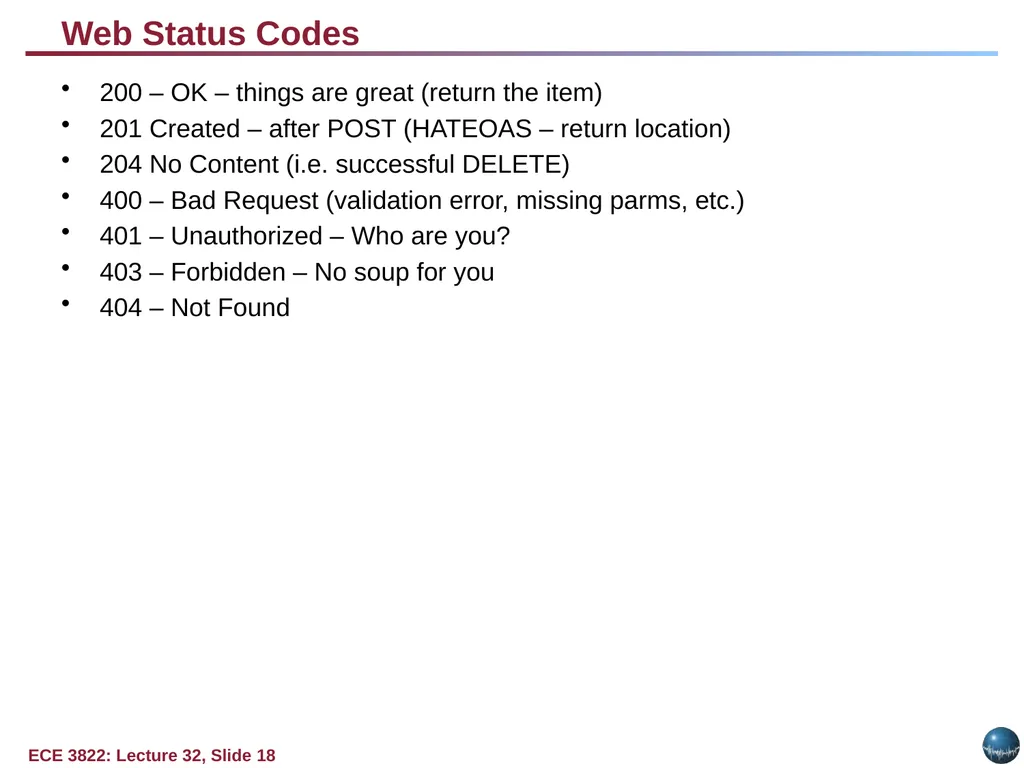
slide18. Web Status Codes 200 – OK – things are great (return the item)
201 Created – after POST (HATEOAS – return location)
204 No Content (i.e. successful DELETE)
400 – Bad Request (validation error, missing parms, etc.)
401 – Unauthorized – Who are you?
403 – Forbidden – No soup for you
404 – Not Found<br>
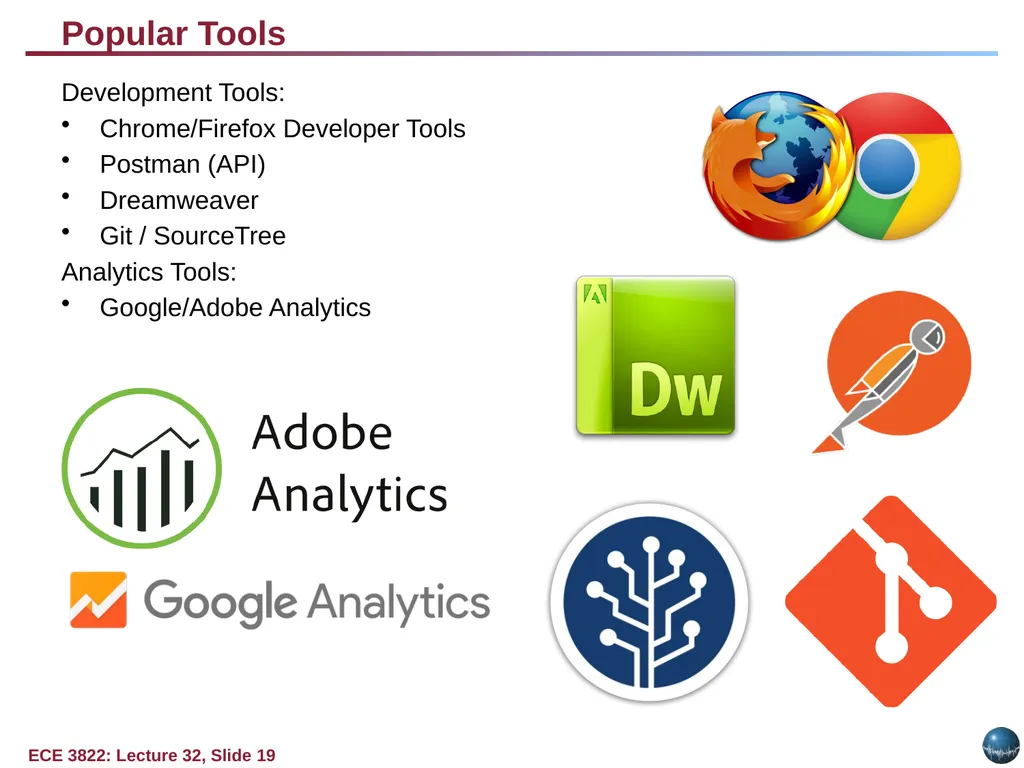
slide19. Popular Tools Development Tools:
Chrome/Firefox Developer Tools
Postman (API)
Dreamweaver
Git / SourceTree
Analytics Tools:
Google/Adobe Analytics<br>
slide20. Chrome Development Tools Demo Demo Time!<br>
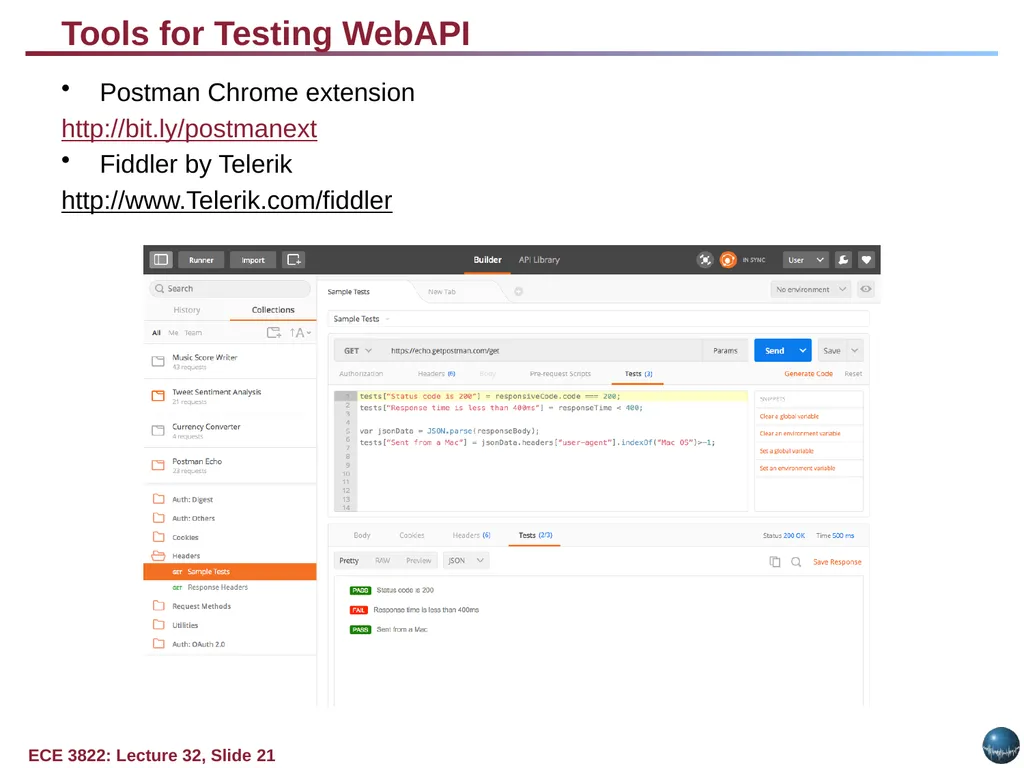
slide21. Tools for Testing WebAPI Postman Chrome extension
http://bit.ly/postmanext
Fiddler by Telerik
http://www.Telerik.com/fiddler<br>
slide22. WebAPI Demo Demo Time!<br>
slide23. Appendix<br>
slide24. Hypermedia as the Engine of Application State (HATEOAS) Hypermedia is the key
It all starts at a URL
Resources are returned
Media types and locations are included
References based on state<br>
slide25. What is Angular MVC Structure
Framework
Single Page Application (SPA)
Client Side Template
Testing<br>
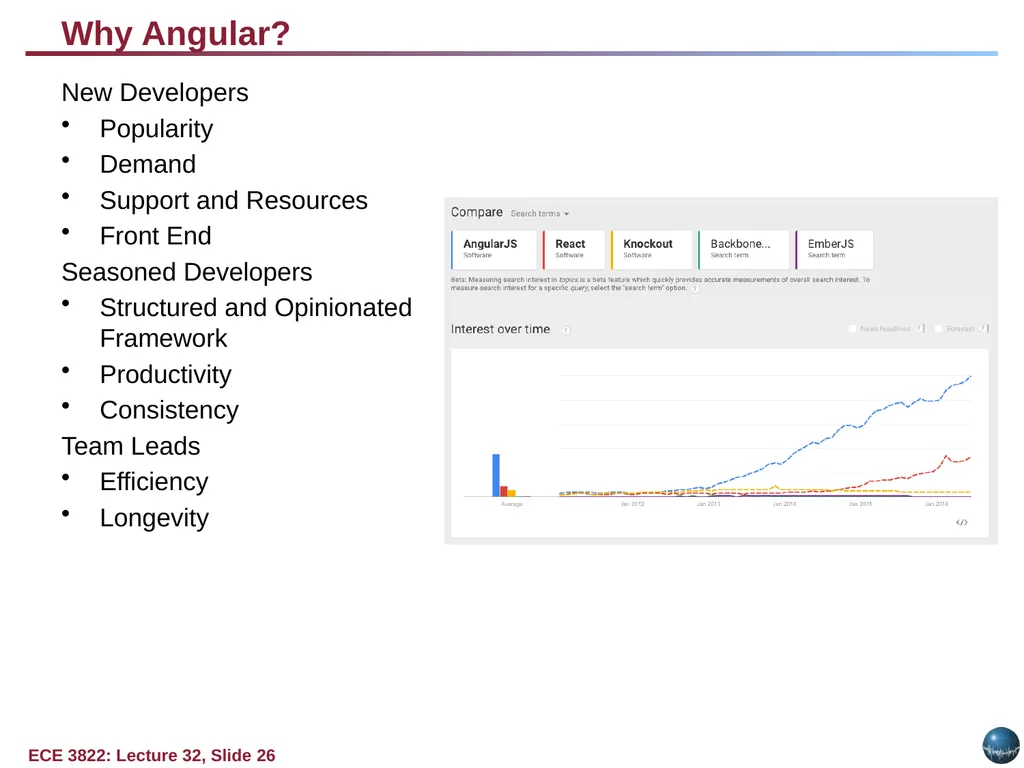
slide26. Why Angular? New Developers
Popularity
Demand
Support and Resources
Front End
Seasoned Developers
Structured and Opinionated Framework
Productivity
Consistency
Team Leads
Efficiency
Longevity<br>
slide27. Angular vs. Angular 2 Angular 2
Component Based UI
More Modular Design
TypeScript
Backwards Compatible
Faster Angular 1
Structured MVC Framework
Separation of HTML and Logic
Client Side Templating<br>
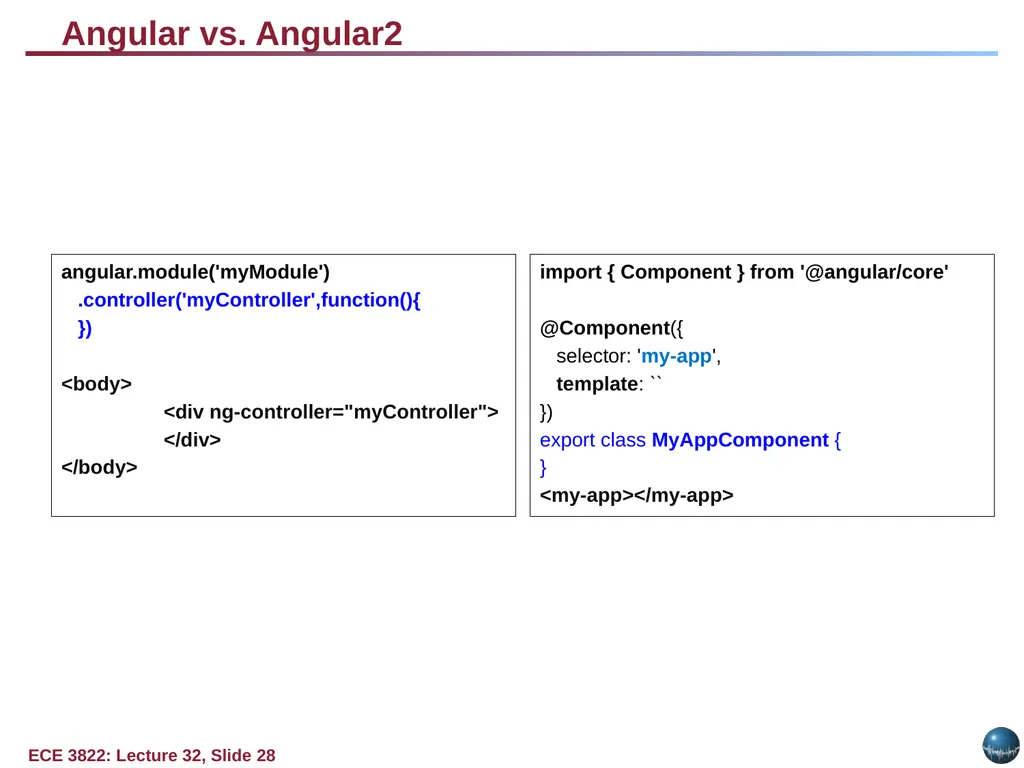
slide28. Angular vs. Angular2 angular.module('myModule')
.controller('myController',function(){
})
<body>
<div ng-controller="myController">
</div>
</body> import { Component } from '@angular/core'
@Component({
selector: 'my-app',
template: ``
})
export class MyAppComponent {
}
<my-app></my-app><br>
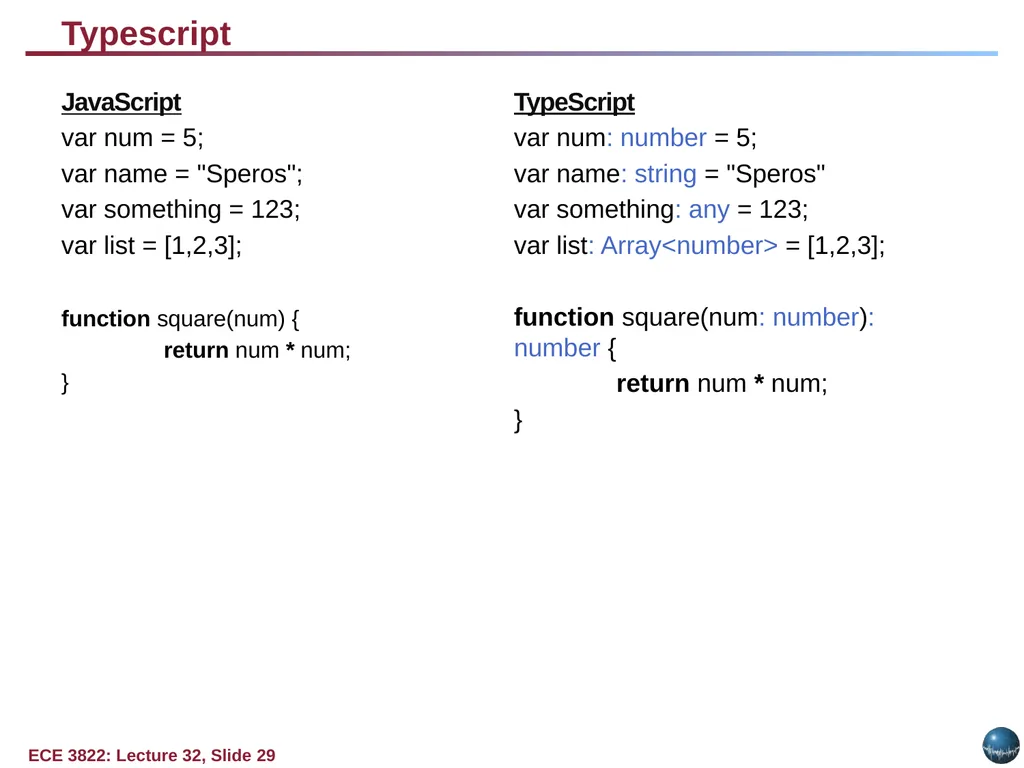
slide29. Typescript JavaScript
var num = 5;
var name = "Speros";
var something = 123;
var list = [1,2,3];
function square(num) {
return num * num;
} TypeScript
var num: number = 5;
var name: string = "Speros"
var something: any = 123;
var list: Array<number> = [1,2,3];
function square(num: number): number {
return num * num;
}<br>
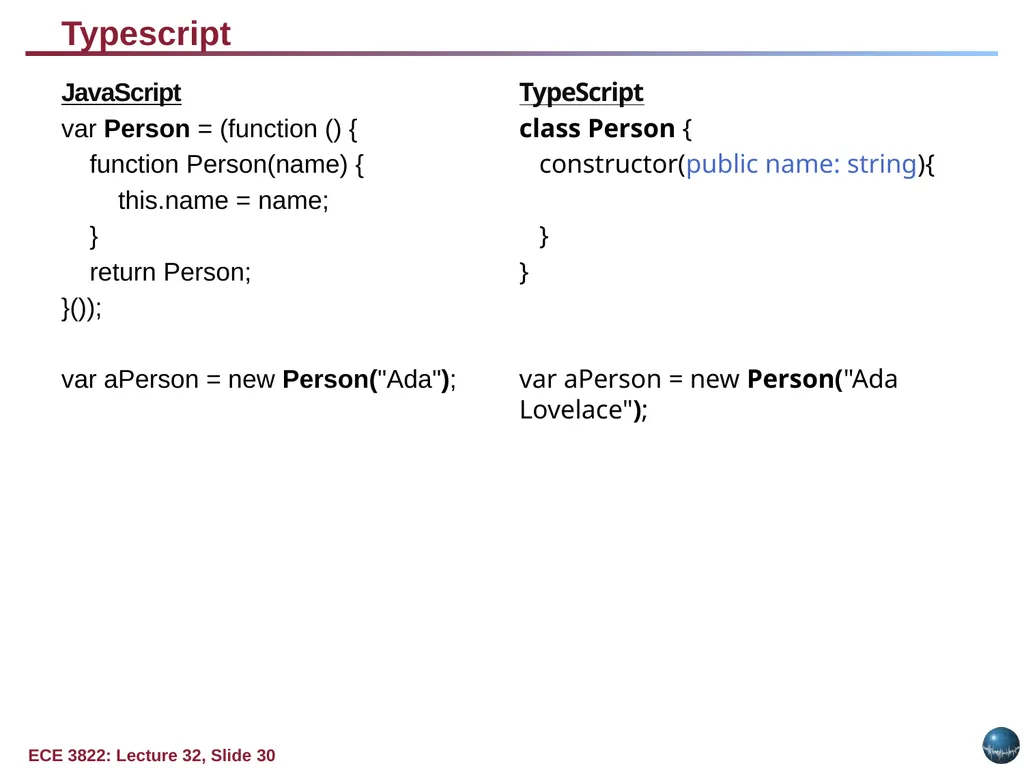
slide30. Typescript JavaScript
var Person = (function () {
function Person(name) {
this.name = name;
}
return Person;
}());
var aPerson = new Person("Ada"); TypeScript
class Person {
constructor(public name: string){
}
}
var aPerson = new Person("Ada Lovelace");<br>
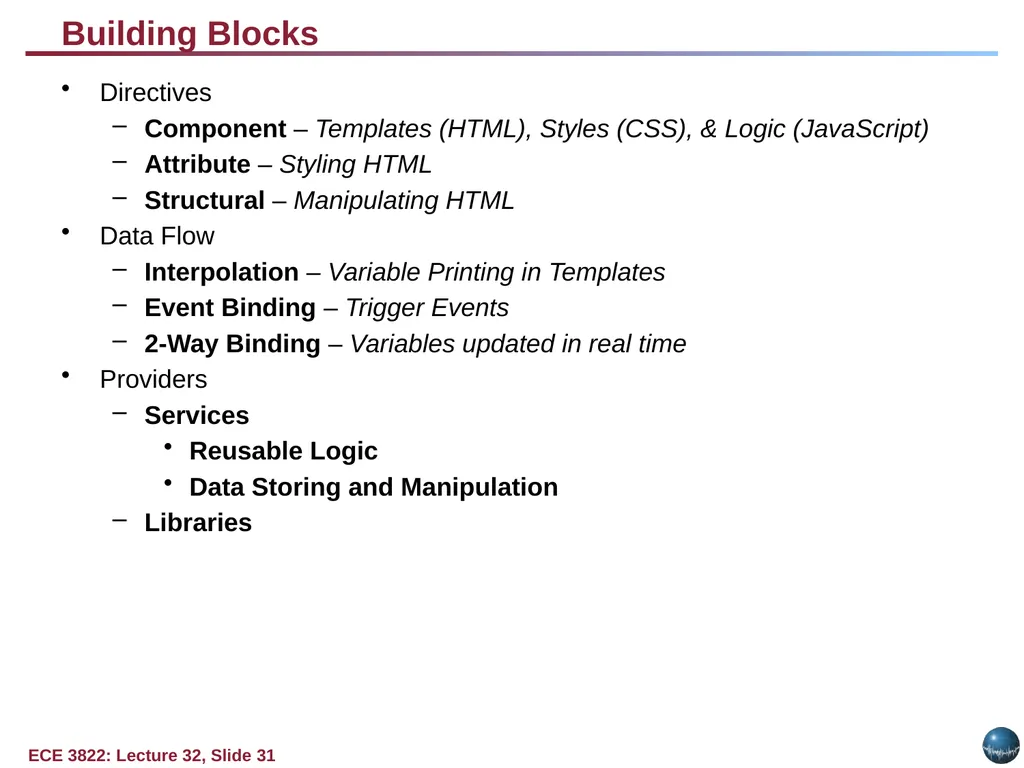
slide31. Building Blocks Directives
Component – Templates (HTML), Styles (CSS), & Logic (JavaScript)
Attribute – Styling HTML
Structural – Manipulating HTML
Data Flow
Interpolation – Variable Printing in Templates
Event Binding – Trigger Events
2-Way Binding – Variables updated in real time
Providers
Services
Reusable Logic
Data Storing and Manipulation
Libraries<br>
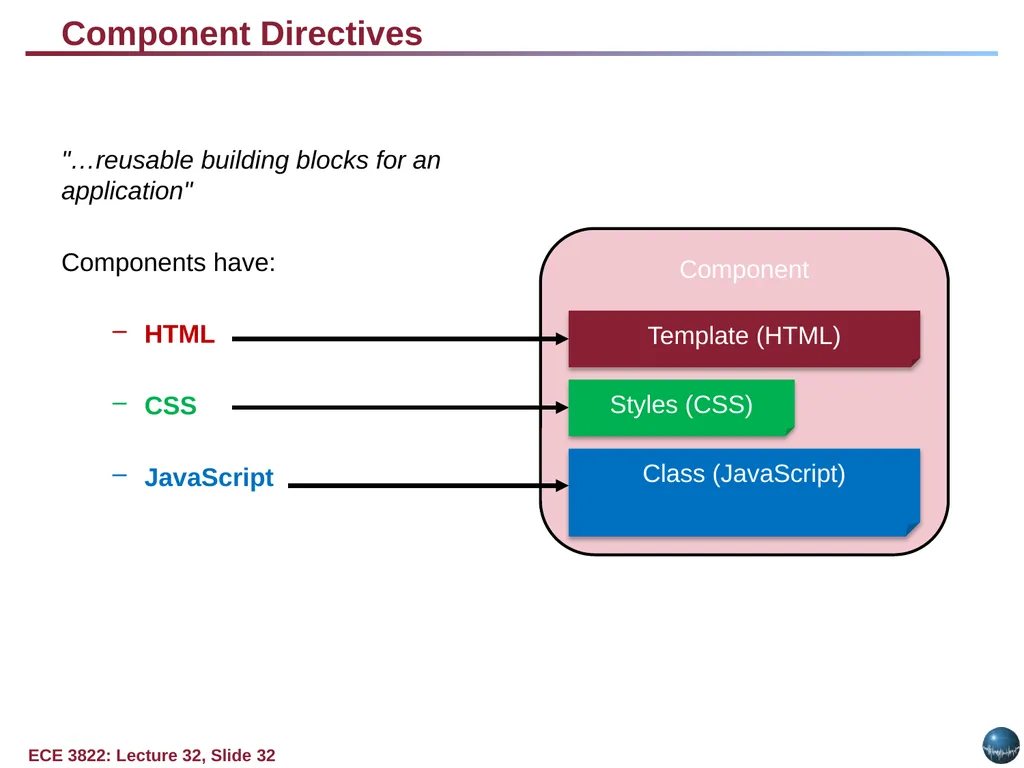
slide32. Component Directives "…reusable building blocks for an application"
Components have:
HTML
CSS
JavaScript Component Template (HTML) Class (JavaScript) Styles (CSS)<br>
slide33. Learn Angular/Angular2 http://www.learn-angular.org/
http://learnangular2.com/<br>
slide34. How does React fit MVC?<br>
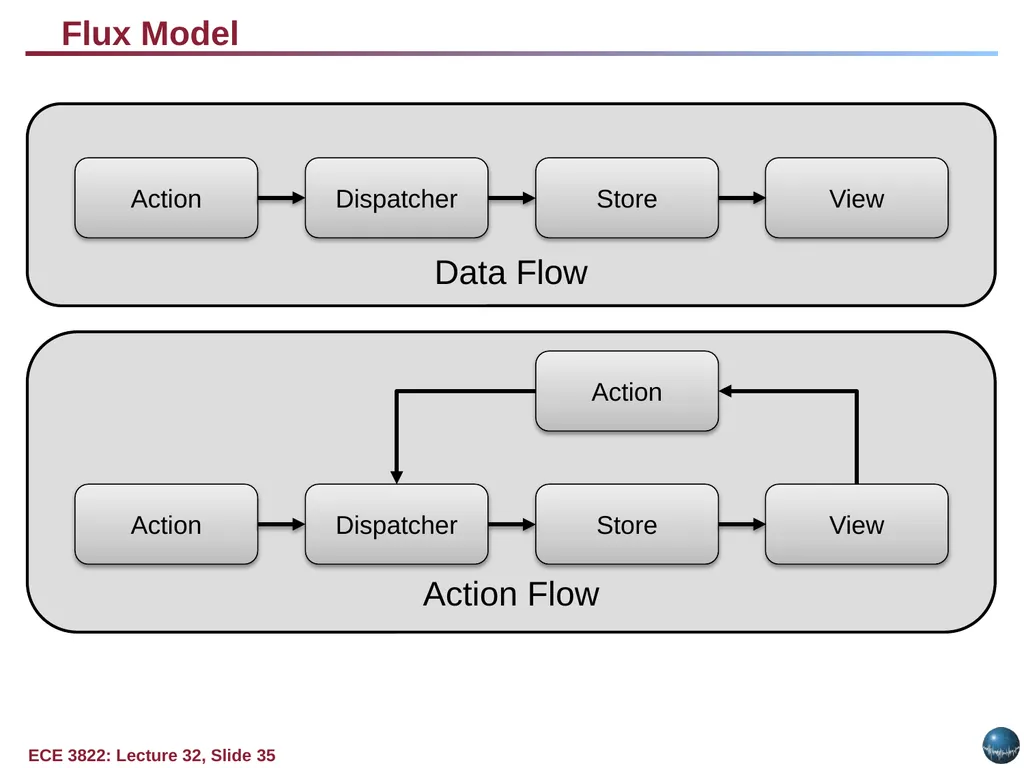
slide35. Flux Model Data Flow Action Dispatcher Store View Action Flow Action Dispatcher Store View Action<br>
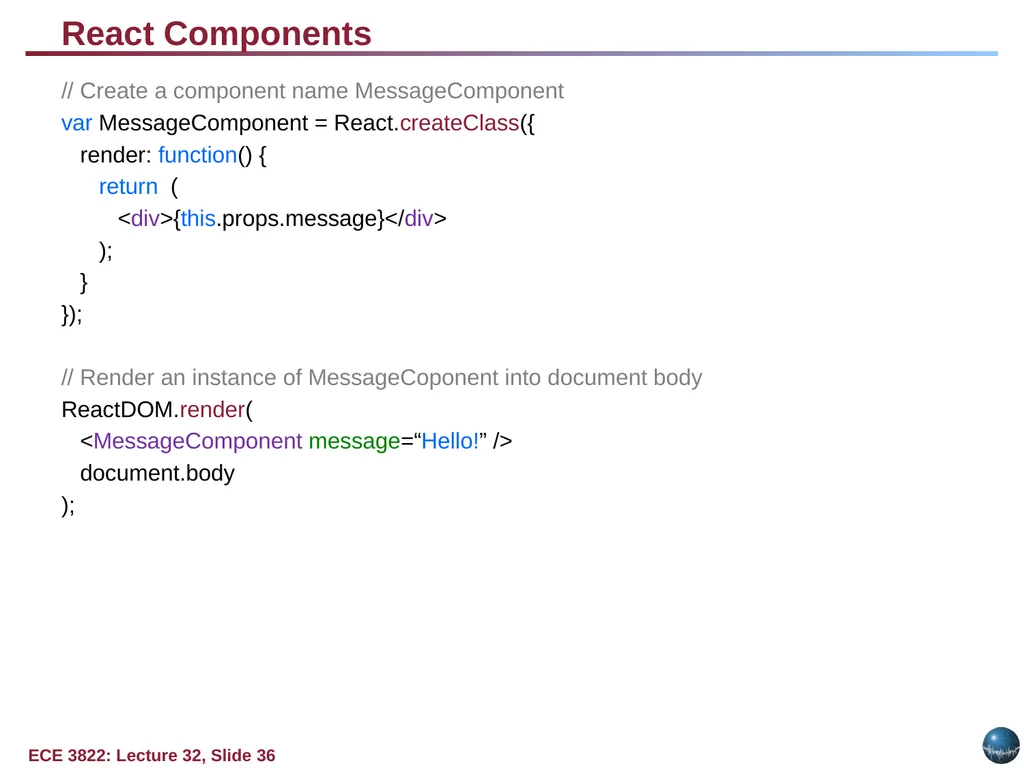
slide36. React Components // Create a component name MessageComponent
var MessageComponent = React.createClass({
render: function() {
return (
<div>{this.props.message}</div>
);
}
});
// Render an instance of MessageCoponent into document body
ReactDOM.render(
<MessageComponent message=“Hello!” />
document.body
);<br>
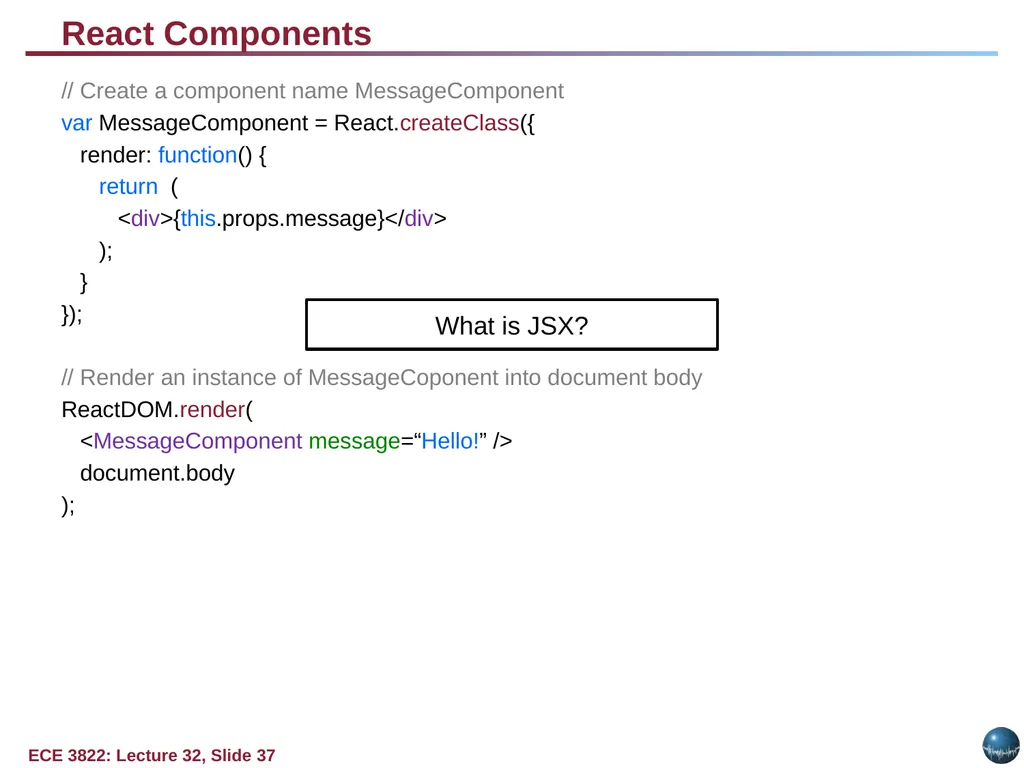
slide37. React Components // Create a component name MessageComponent
var MessageComponent = React.createClass({
render: function() {
return (
<div>{this.props.message}</div>
);
}
});
// Render an instance of MessageCoponent into document body
ReactDOM.render(
<MessageComponent message=“Hello!” />
document.body
); What is JSX?<br>
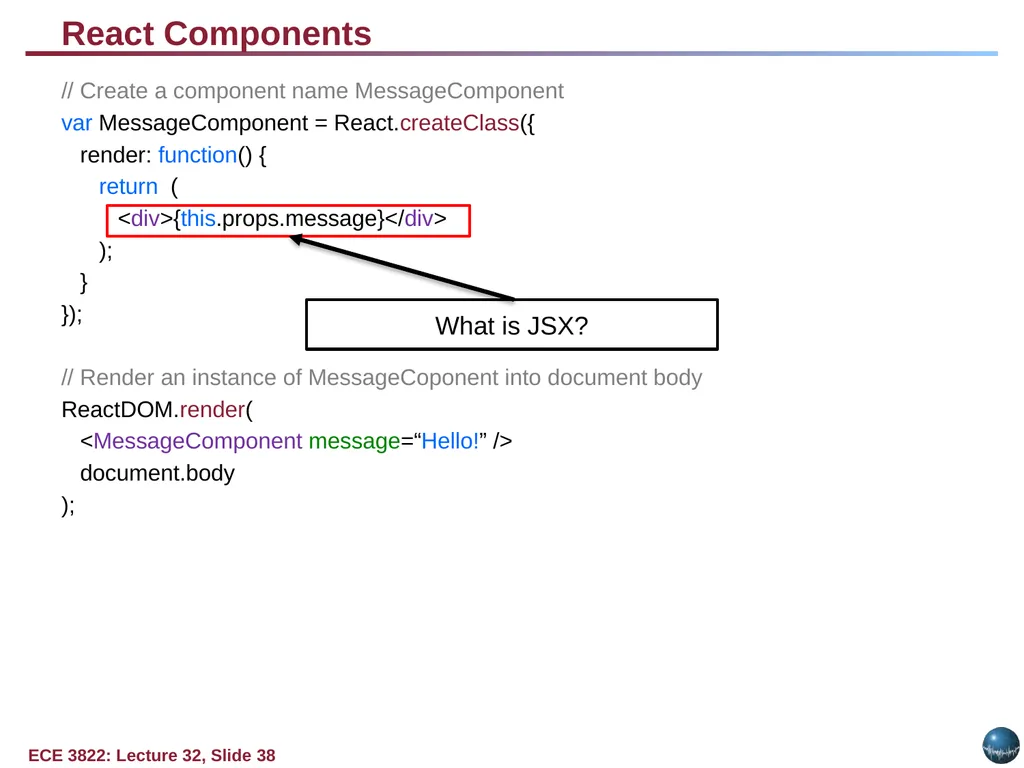
slide38. React Components // Create a component name MessageComponent
var MessageComponent = React.createClass({
render: function() {
return (
<div>{this.props.message}</div>
);
}
});
// Render an instance of MessageCoponent into document body
ReactDOM.render(
<MessageComponent message=“Hello!” />
document.body
); What is JSX?<br>
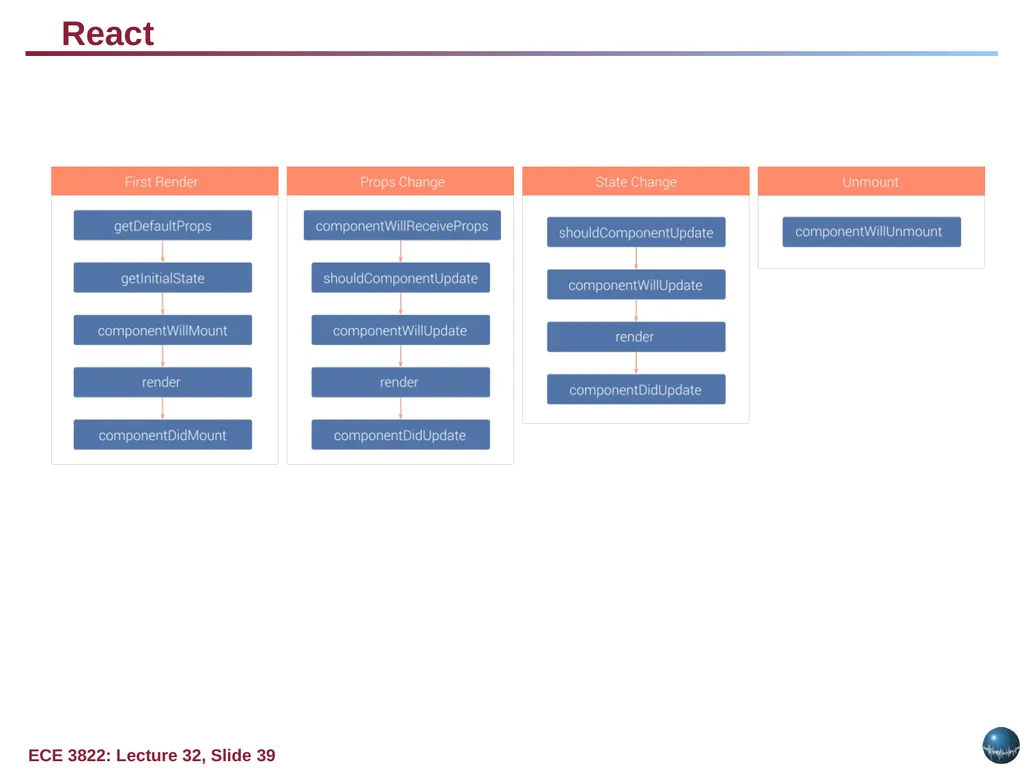
slide39. React<br>
slide40. Learn React https://www.codecademy.com/lrn/react-101
https://css-tricks.com/learning-react-redux/<br>
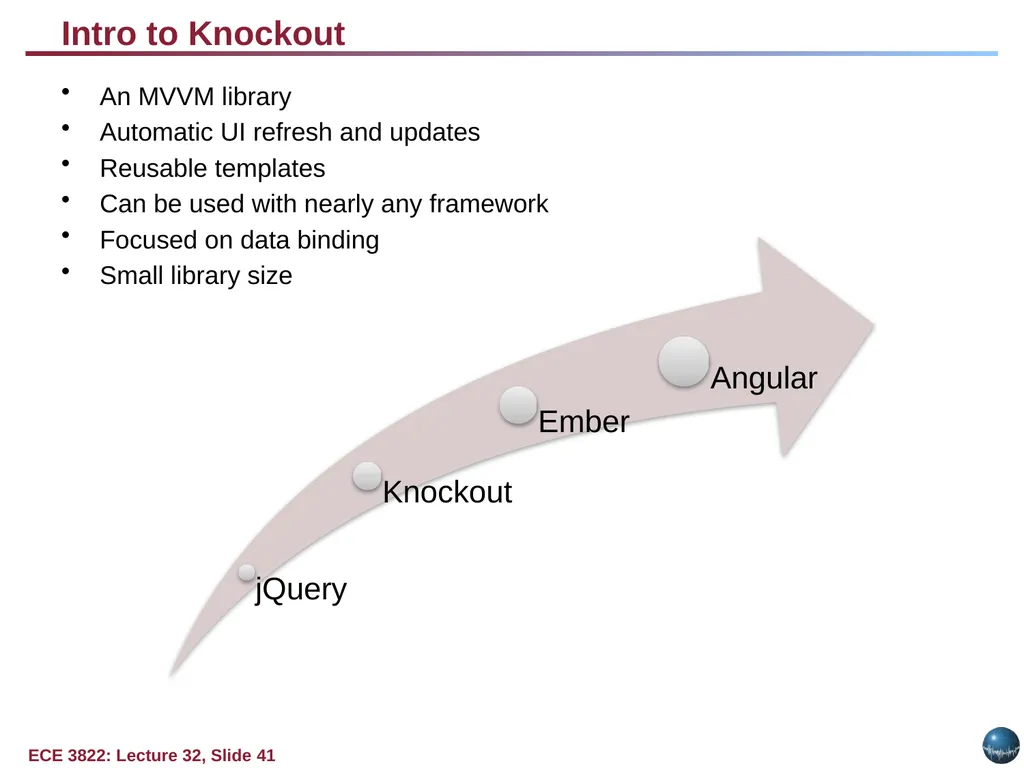
slide41. Intro to Knockout An MVVM library
Automatic UI refresh and updates
Reusable templates
Can be used with nearly any framework
Focused on data binding
Small library size<br>
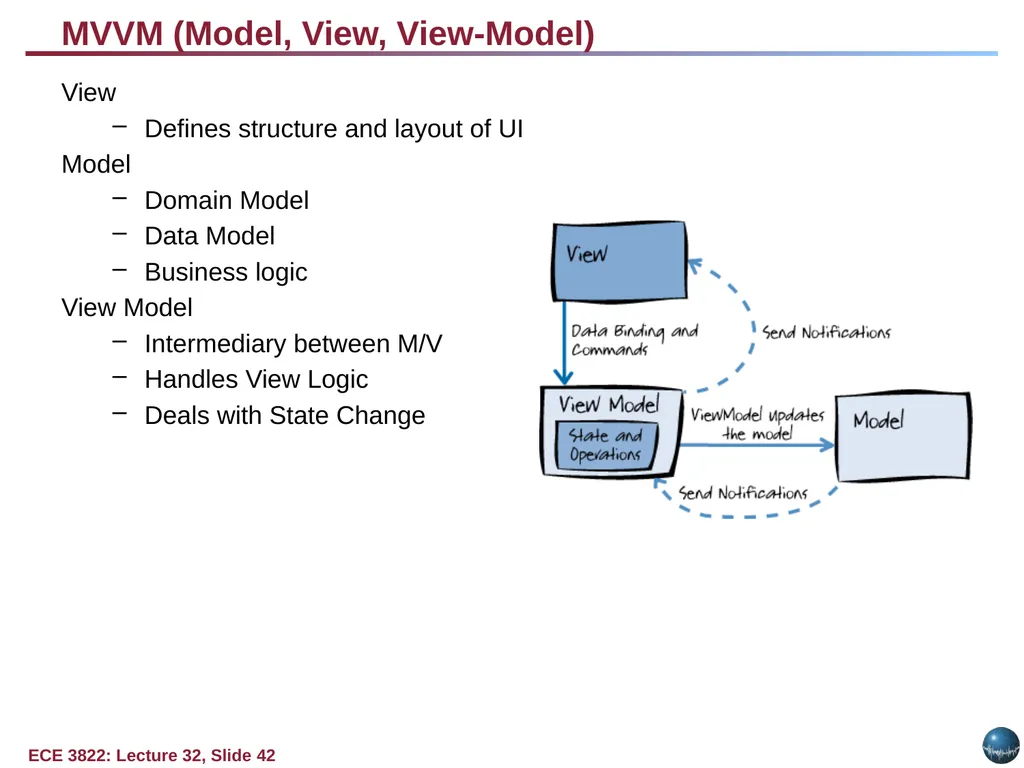
slide42. MVVM (Model, View, View-Model) View
Defines structure and layout of UI
Model
Domain Model
Data Model
Business logic
View Model
Intermediary between M/V
Handles View Logic
Deals with State Change<br>
slide43. Learn Knockout http://learn.knockoutjs.com/#/?tutorial=intro<br>
Basic Web Application Model Web Development Frameworks/Languages
Resources:
Web Frameworks
Popular Frameworks
10 Things to Know
Angular
React
Knockout
Videos:
Rest
Postman
Chrome Developer Tools LECTURE 32: INTRO TO WEB DEVELOPMENT<br>
slide2. Principles of Web Design Availability
Performance
Reliability
Scalability
Manageability
Cost<br>
slide3. Core Components of Web Applications UI (Front End (DOM, Framework))
Request Layer (Web API)
Back End (Database, Logic) Internet Browser Media Cache API Front End JSON Database Logic Client Server<br>
slide4. Frontend development<br>
slide5. Front End Languages HTML/CSS
Javascript
Java (applets)
What is the most popular?
Answer: Javascript/HTML/CSS is the only real option for front-end native languages and is basically the standard. But there are many variations on JavaScript that are used.<br>
slide6. DOM (Document Object Model) Document Object Model makes every addressable item in a web application an Object that can be manipulated for color, transparency, position, sound and behaviors.
Every HTML Tag is a DOM object<br>
slide7. DOM (Document Object Model)<br>
slide8. What is a Framework? Software Framework designed to reduce overhead in web development
Types of Framework Architectures
Model-View-Controller (MVC)
Push vs Pull Based
Most MVC Frameworks user push-based architecture “action based” (Django, Ruby on Rails, Symfony, Stripes)
Pull-based or “component based” (Lift, Angular2, React)
Three Tier Organization
Client (Usually the browser running HTML/Javascipt/CSS)
Application (Running the Business Logic)
Database (Data Storage)
Types of Frameworks
Server Side: Django, Ruby on Rails
Client Side: Angular, React, Vue<br>
slide9. Framework Framework<br>
slide10. Javascript Frameworks AngularJS/Angular 2
ASP.net
React
Polymer 1.0
Ember.js
Vue.js http://hotframeworks.com<br>
slide11. MVC (Model View Controller) A Web Application Development Framework
Model (M):
Where the data for the DOM is stored and handled)
This is where the backend connects
View (V):
Think of this like a Page which is a single DOM
Where changes to the page are rendered and displayed
Control (C):
This handles user input and interactions
Buttons
Forms
General Interface<br>
slide12. MVC Model Controller Model View Update Notify Update User Action<br>
slide13. BACKEND development<br>
slide14. What is a Backend? All of the awesome that runs your application.
Web API
Connection layer between the frontend and backend
Connected through API calls (POST, GET, PUT, etc. )
Transmit Content from the Backend to the Frontend commonly in JSON Blobs
Service Architecture that drives everything (Where all the logic is)<br>
slide15. What is a WebAPI? The intermediate layer between front end and back-end systems
A “must have” if your APIs will be consumed by third-party services
Attention to details:
How consumable is the API (signature, content negotiation)?
Does it comply with standards (response codes, etc.)?
Is it secure?
How do you handle multiple versions?
Is it truly RESTful?<br>
slide16. Representational State Transfer (REST) Client-server
Stateless
Resource-based (vs. remote procedure call)
HTTP methods (GET, POST, PUT, DELETE)
Side Effects
It’s a style, not a standard
Don’t hate on HATEOAS<br>
slide17. WebAPI Terms GET – “read”
POST – “insert” (collection)
PUT – “replace”
DELETE – “remove”
PATCH – “update”
Custom (proceed with caution)<br>
slide18. Web Status Codes 200 – OK – things are great (return the item)
201 Created – after POST (HATEOAS – return location)
204 No Content (i.e. successful DELETE)
400 – Bad Request (validation error, missing parms, etc.)
401 – Unauthorized – Who are you?
403 – Forbidden – No soup for you
404 – Not Found<br>
slide19. Popular Tools Development Tools:
Chrome/Firefox Developer Tools
Postman (API)
Dreamweaver
Git / SourceTree
Analytics Tools:
Google/Adobe Analytics<br>
slide20. Chrome Development Tools Demo Demo Time!<br>
slide21. Tools for Testing WebAPI Postman Chrome extension
http://bit.ly/postmanext
Fiddler by Telerik
http://www.Telerik.com/fiddler<br>
slide22. WebAPI Demo Demo Time!<br>
slide23. Appendix<br>
slide24. Hypermedia as the Engine of Application State (HATEOAS) Hypermedia is the key
It all starts at a URL
Resources are returned
Media types and locations are included
References based on state<br>
slide25. What is Angular MVC Structure
Framework
Single Page Application (SPA)
Client Side Template
Testing<br>
slide26. Why Angular? New Developers
Popularity
Demand
Support and Resources
Front End
Seasoned Developers
Structured and Opinionated Framework
Productivity
Consistency
Team Leads
Efficiency
Longevity<br>
slide27. Angular vs. Angular 2 Angular 2
Component Based UI
More Modular Design
TypeScript
Backwards Compatible
Faster Angular 1
Structured MVC Framework
Separation of HTML and Logic
Client Side Templating<br>
slide28. Angular vs. Angular2 angular.module('myModule')
.controller('myController',function(){
})
<body>
<div ng-controller="myController">
</div>
</body> import { Component } from '@angular/core'
@Component({
selector: 'my-app',
template: ``
})
export class MyAppComponent {
}
<my-app></my-app><br>
slide29. Typescript JavaScript
var num = 5;
var name = "Speros";
var something = 123;
var list = [1,2,3];
function square(num) {
return num * num;
} TypeScript
var num: number = 5;
var name: string = "Speros"
var something: any = 123;
var list: Array<number> = [1,2,3];
function square(num: number): number {
return num * num;
}<br>
slide30. Typescript JavaScript
var Person = (function () {
function Person(name) {
this.name = name;
}
return Person;
}());
var aPerson = new Person("Ada"); TypeScript
class Person {
constructor(public name: string){
}
}
var aPerson = new Person("Ada Lovelace");<br>
slide31. Building Blocks Directives
Component – Templates (HTML), Styles (CSS), & Logic (JavaScript)
Attribute – Styling HTML
Structural – Manipulating HTML
Data Flow
Interpolation – Variable Printing in Templates
Event Binding – Trigger Events
2-Way Binding – Variables updated in real time
Providers
Services
Reusable Logic
Data Storing and Manipulation
Libraries<br>
slide32. Component Directives "…reusable building blocks for an application"
Components have:
HTML
CSS
JavaScript Component Template (HTML) Class (JavaScript) Styles (CSS)<br>
slide33. Learn Angular/Angular2 http://www.learn-angular.org/
http://learnangular2.com/<br>
slide34. How does React fit MVC?<br>
slide35. Flux Model Data Flow Action Dispatcher Store View Action Flow Action Dispatcher Store View Action<br>
slide36. React Components // Create a component name MessageComponent
var MessageComponent = React.createClass({
render: function() {
return (
<div>{this.props.message}</div>
);
}
});
// Render an instance of MessageCoponent into document body
ReactDOM.render(
<MessageComponent message=“Hello!” />
document.body
);<br>
slide37. React Components // Create a component name MessageComponent
var MessageComponent = React.createClass({
render: function() {
return (
<div>{this.props.message}</div>
);
}
});
// Render an instance of MessageCoponent into document body
ReactDOM.render(
<MessageComponent message=“Hello!” />
document.body
); What is JSX?<br>
slide38. React Components // Create a component name MessageComponent
var MessageComponent = React.createClass({
render: function() {
return (
<div>{this.props.message}</div>
);
}
});
// Render an instance of MessageCoponent into document body
ReactDOM.render(
<MessageComponent message=“Hello!” />
document.body
); What is JSX?<br>
slide39. React<br>
slide40. Learn React https://www.codecademy.com/lrn/react-101
https://css-tricks.com/learning-react-redux/<br>
slide41. Intro to Knockout An MVVM library
Automatic UI refresh and updates
Reusable templates
Can be used with nearly any framework
Focused on data binding
Small library size<br>
slide42. MVVM (Model, View, View-Model) View
Defines structure and layout of UI
Model
Domain Model
Data Model
Business logic
View Model
Intermediary between M/V
Handles View Logic
Deals with State Change<br>
slide43. Learn Knockout http://learn.knockoutjs.com/#/?tutorial=intro<br>