
Open Innovation Open Innovation is a paradigm that
MY
Published · 43 slides · 0 views

1 / 1
Description
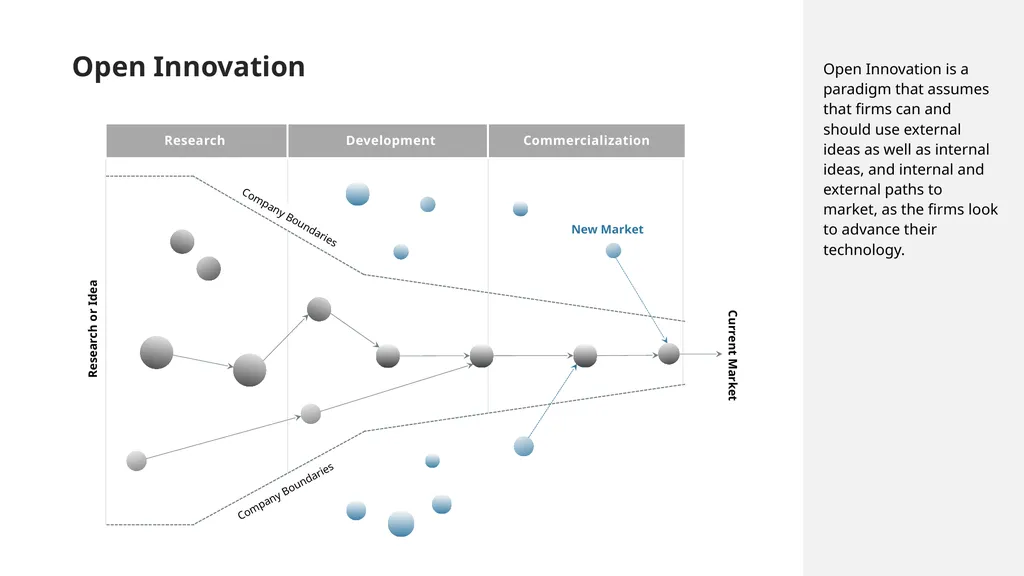
Open Innovation Open Innovation is a paradigm that assumes that firms can and should use external ideas as well as internal ideas, and internal and external paths to market, as the firms look to advance their technology. New Market Research
Related Topics
Share
Embed code
Download this presentation From Below
"Open Innovation Open Innovation is a paradigm that" is the property of its rightful owner. Permission is granted to download and print the materials on this website for personal, non-commercial use only, and to display it on your personal computer provided you do not modify the materials and that you retain all copyright notices contained in the materials. By downloading content from our website, you accept the terms of this agreement.
Presentation Transcript
01
Open Innovation Open Innovation is a paradigm that assumes that firms can and should use external ideas as well as internal ideas, and internal and external paths to market, as the firms look to advance their technology. New Market Research or Idea Current Market Company Boundaries Company Boundaries<br>
02
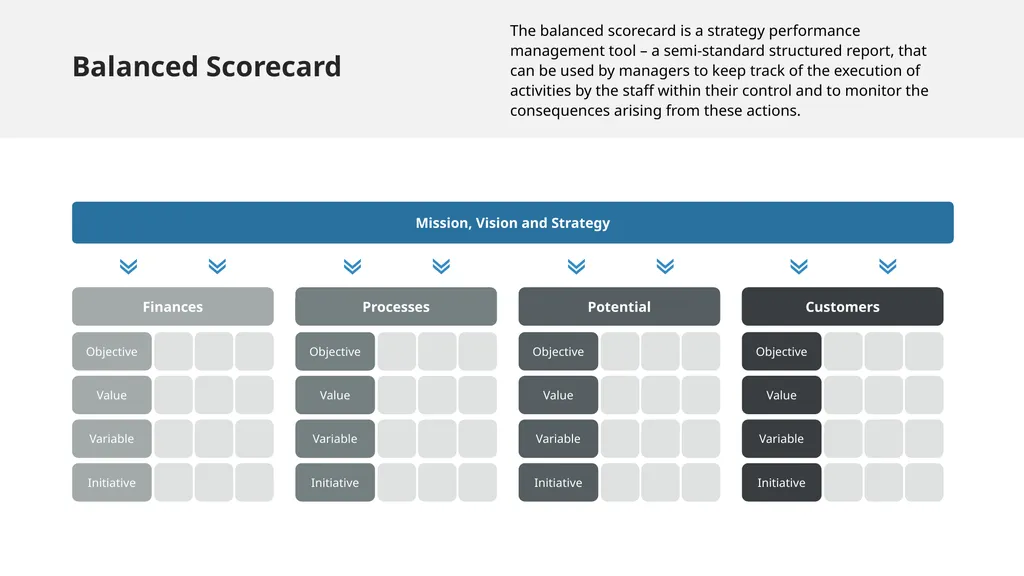
Balanced Scorecard The balanced scorecard is a strategy performance management tool – a semi-standard structured report, that can be used by managers to keep track of the execution of activities by the staff within their control and to monitor the consequences arising from these actions. Mission, Vision and Strategy Finances Objective Value Variable Initiative Processes Objective Value Variable Initiative Potential Objective Value Variable Initiative Customers Objective Value Variable Initiative<br>
03
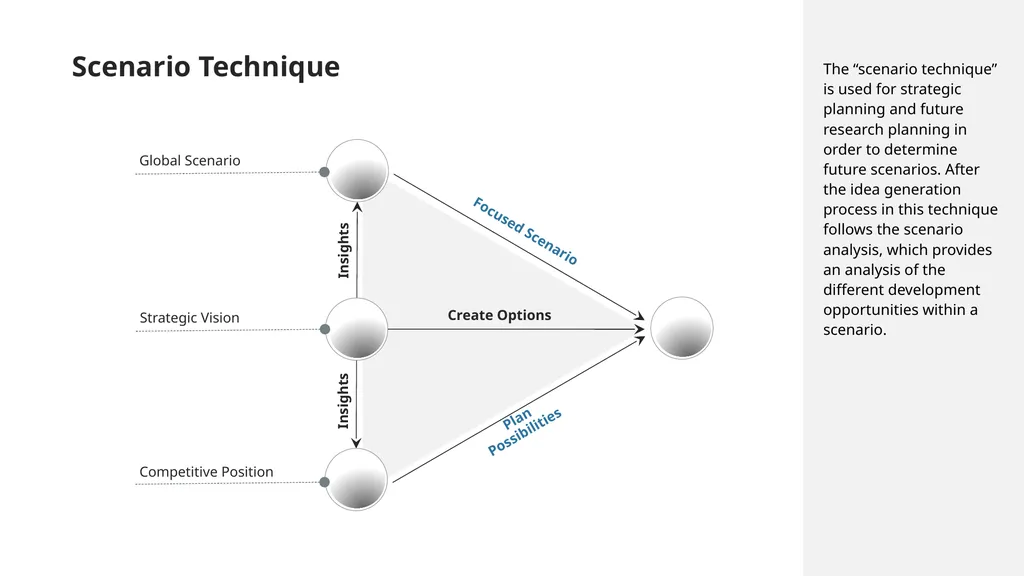
Scenario Technique The “scenario technique” is used for strategic planning and future research planning in order to determine future scenarios. After the idea generation process in this technique follows the scenario analysis, which provides an analysis of the different development opportunities within a scenario. Create Options Insights Insights Focused Scenario Plan Possibilities<br>
04
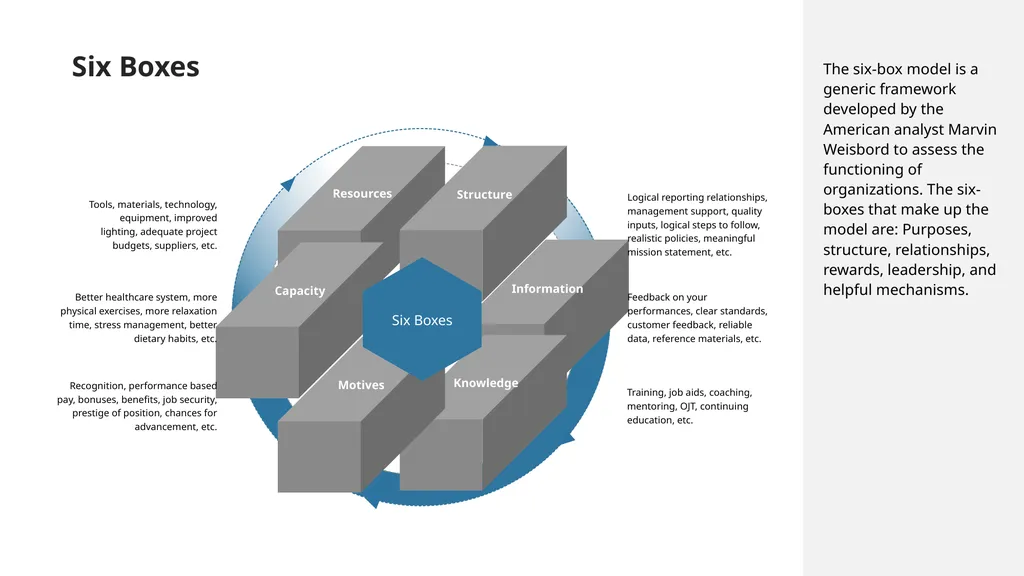
Six Boxes The six-box model is a generic framework developed by the American analyst Marvin Weisbord to assess the functioning of organizations. The six-boxes that make up the model are: Purposes, structure, relationships, rewards, leadership, and helpful mechanisms. Tools, materials, technology, equipment, improved lighting, adequate project budgets, suppliers, etc. Logical reporting relationships, management support, quality inputs, logical steps to follow, realistic policies, meaningful mission statement, etc. Feedback on your performances, clear standards, customer feedback, reliable data, reference materials, etc. Training, job aids, coaching, mentoring, OJT, continuing education, etc. Recognition, performance based pay, bonuses, benefits, job security, prestige of position, chances for advancement, etc. Better healthcare system, more physical exercises, more relaxation time, stress management, better dietary habits, etc.<br>
05
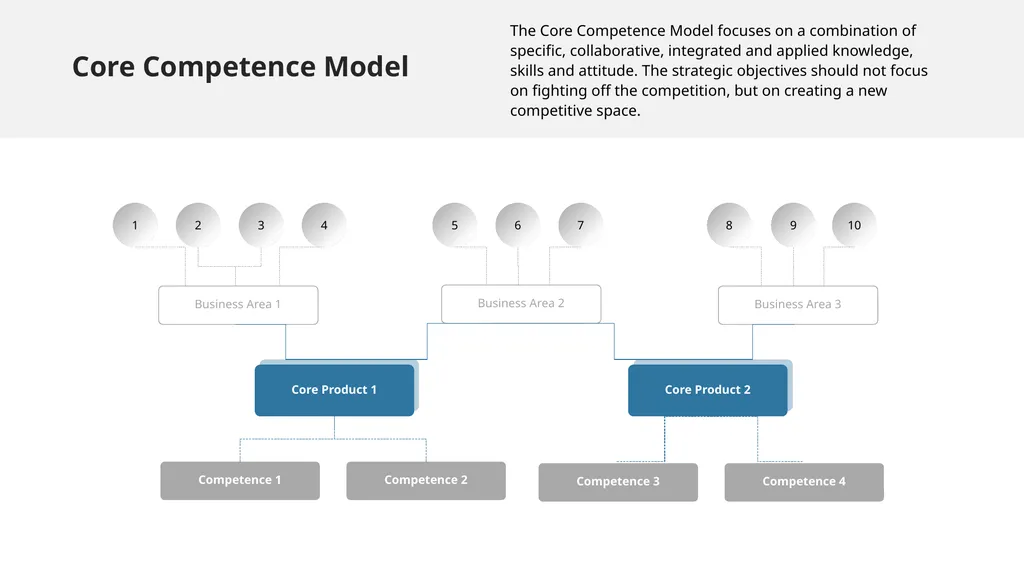
Core Competence Model The Core Competence Model focuses on a combination of specific, collaborative, integrated and applied knowledge, skills and attitude. The strategic objectives should not focus on fighting off the competition, but on creating a new competitive space.<br>
06
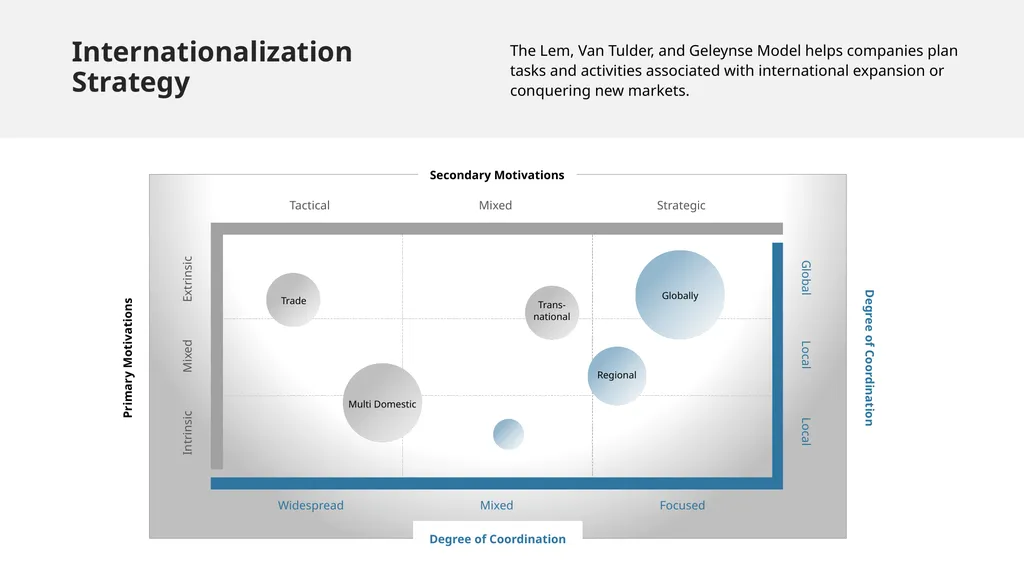
Internationalization Strategy The Lem, Van Tulder, and Geleynse Model helps companies plan tasks and activities associated with international expansion or conquering new markets. Primary Motivations Degree of Coordination Degree of Coordination Secondary Motivations<br>
07
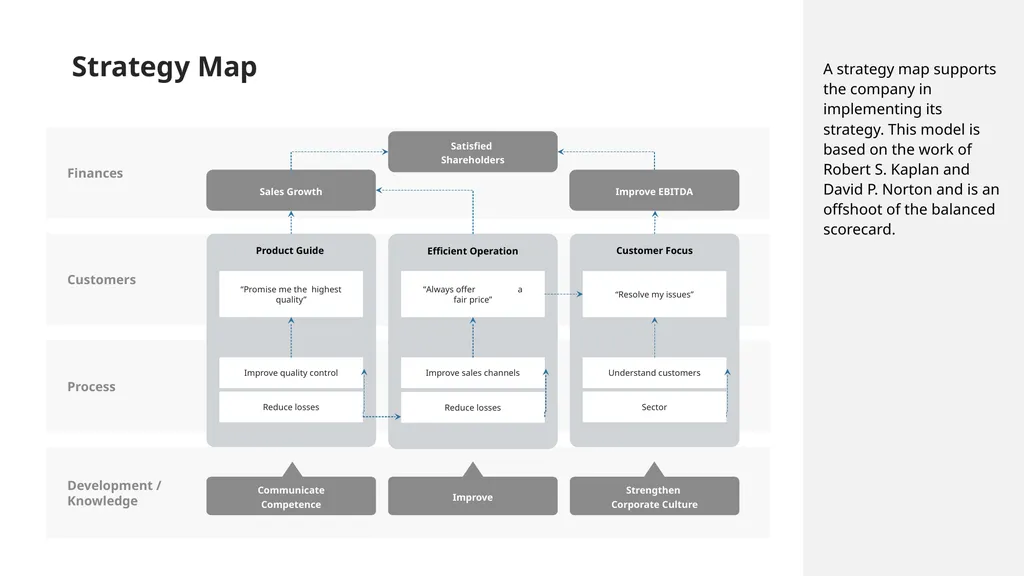
Strategy Map A strategy map supports
the company in implementing its strategy. This model is based on the work of Robert S. Kaplan and David P. Norton and is an offshoot of the balanced scorecard. Finances Customers Process Development /
Knowledge<br>
08
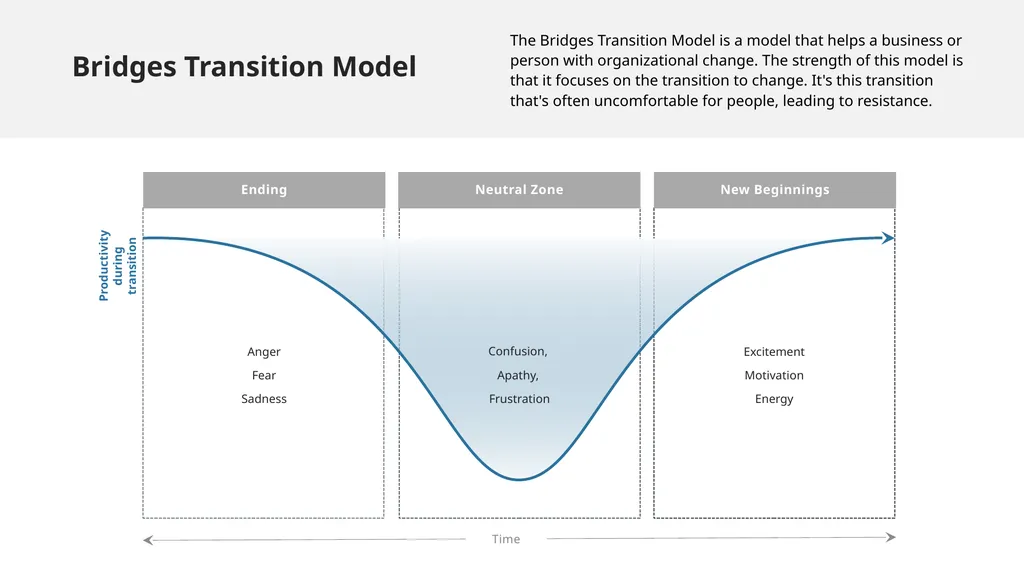
Bridges Transition Model The Bridges Transition Model is a model that helps a business or person with organizational change. The strength of this model is that it focuses on the transition to change. It's this transition that's often uncomfortable for people, leading to resistance. Excitement
Motivation
Energy Anger
Fear
Sadness Confusion,
Apathy,
Frustration Productivity during transition<br>
Motivation
Energy Anger
Fear
Sadness Confusion,
Apathy,
Frustration Productivity during transition<br>
09
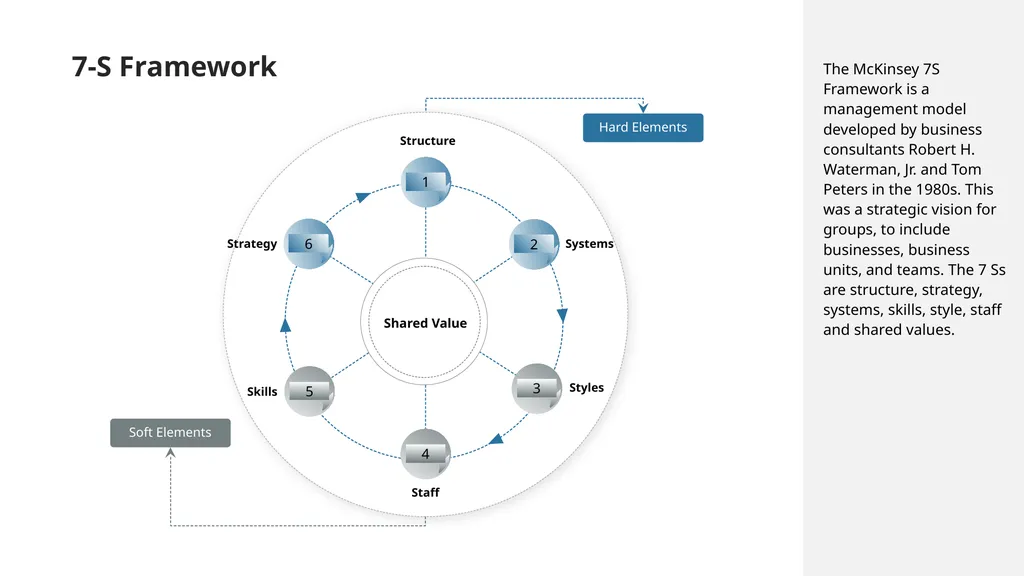
Hard Elements 7-S Framework The McKinsey 7S Framework is a management model developed by business consultants Robert H. Waterman, Jr. and Tom Peters in the 1980s. This was a strategic vision for groups, to include businesses, business units, and teams. The 7 Ss are structure, strategy, systems, skills, style, staff and shared values. Structure Systems Styles Staff Skills Strategy Soft Elements Shared Value<br>
10
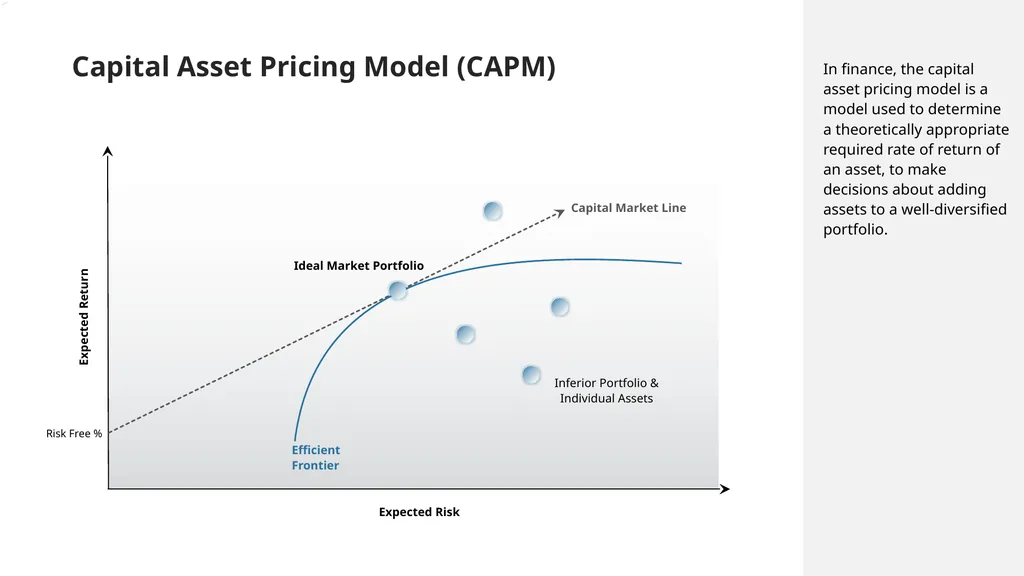
Capital Asset Pricing Model (CAPM) In finance, the capital asset pricing model is a model used to determine a theoretically appropriate required rate of return of an asset, to make decisions about adding assets to a well-diversified portfolio. Ideal Market Portfolio Inferior Portfolio & Individual Assets<br>
11
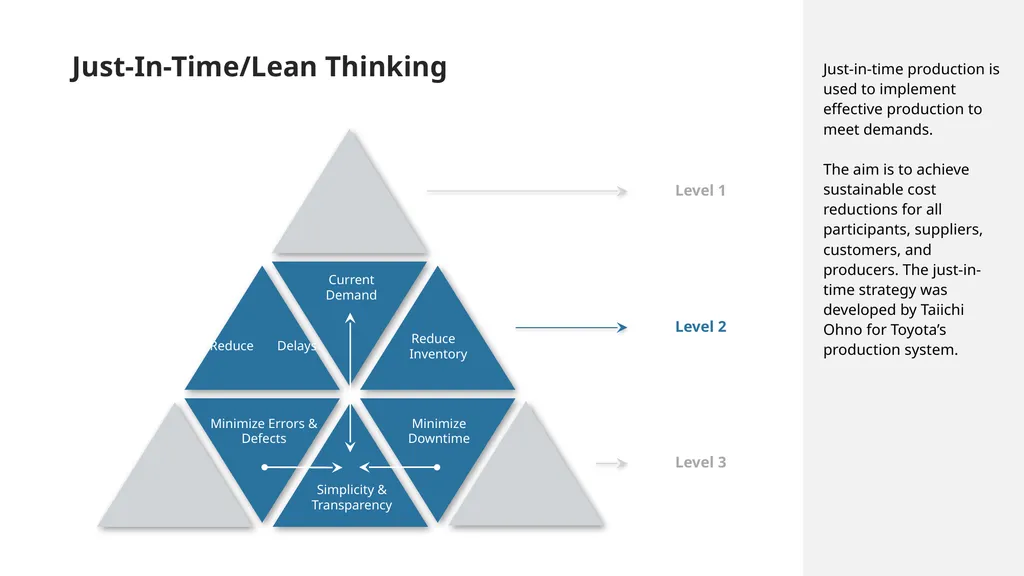
Just-In-Time/Lean Thinking Just-in-time production is used to implement effective production to meet demands.
The aim is to achieve sustainable cost reductions for all participants, suppliers, customers, and producers. The just-in-time strategy was developed by Taiichi Ohno for Toyota’s production system.<br>
12
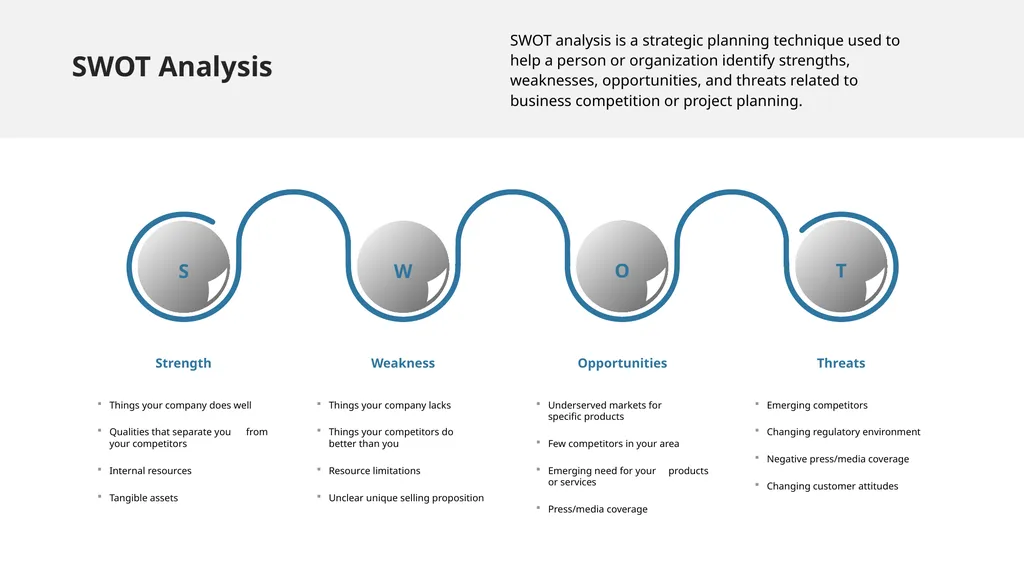
SWOT Analysis SWOT analysis is a strategic planning technique used to help a person or organization identify strengths, weaknesses, opportunities, and threats related to business competition or project planning. Strength
Things your company does well
Qualities that separate you from your competitors
Internal resources
Tangible assets Weakness
Things your company lacks
Things your competitors do better than you
Resource limitations
Unclear unique selling proposition Opportunities
Underserved markets for specific products
Few competitors in your area
Emerging need for your products or services
Press/media coverage Threats
Emerging competitors
Changing regulatory environment
Negative press/media coverage
Changing customer attitudes<br>
13
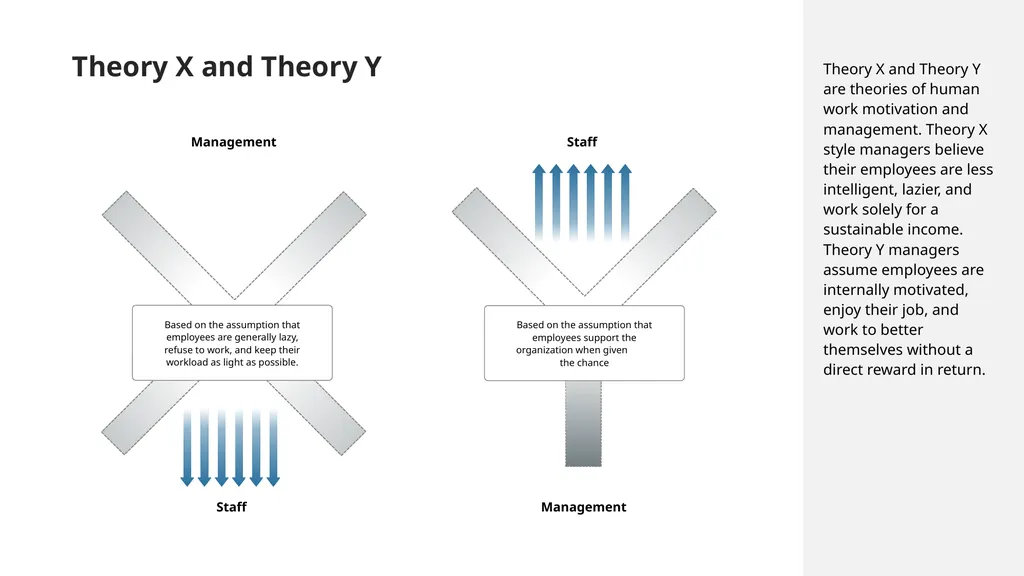
Theory X and Theory Y Theory X and Theory Y are theories of human work motivation and management. Theory X style managers believe their employees are less intelligent, lazier, and work solely for a sustainable income. Theory Y managers assume employees are internally motivated, enjoy their job, and work to better themselves without a direct reward in return. Staff Management Staff Management Based on the assumption that employees support the organization when given the chance Based on the assumption that employees are generally lazy, refuse to work, and keep their workload as light as possible.<br>
14
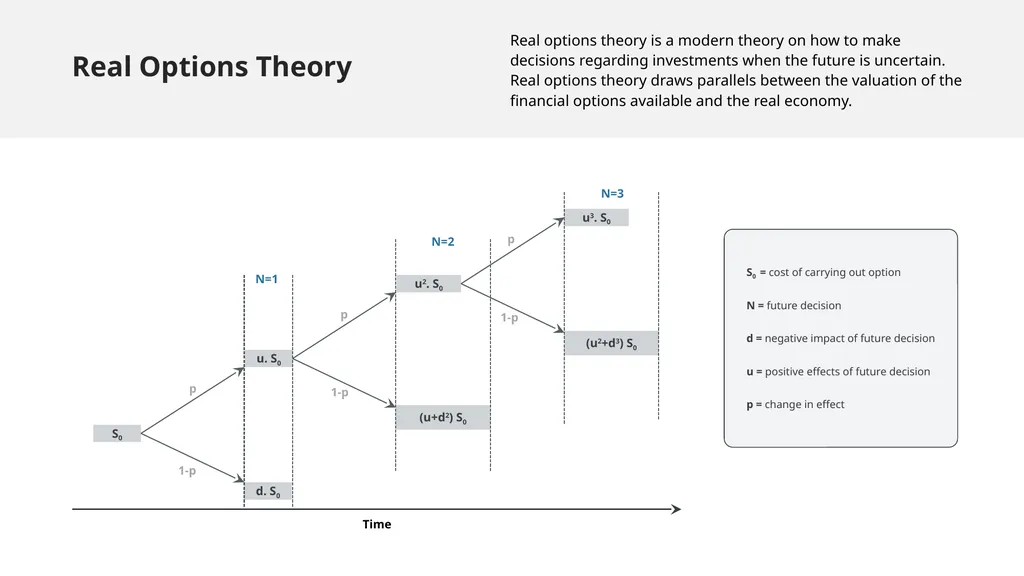
Real Options Theory Real options theory is a modern theory on how to make decisions regarding investments when the future is uncertain. Real options theory draws parallels between the valuation of the financial options available and the real economy. S0 u. S0 d. S0 u2. S0 (u+d2) S0 u3. S0 (u2+d3) S0 N=1 N=2 N=3 S0 = cost of carrying out option
N = future decision
d = negative impact of future decision
u = positive effects of future decision
p = change in effect<br>
N = future decision
d = negative impact of future decision
u = positive effects of future decision
p = change in effect<br>
15
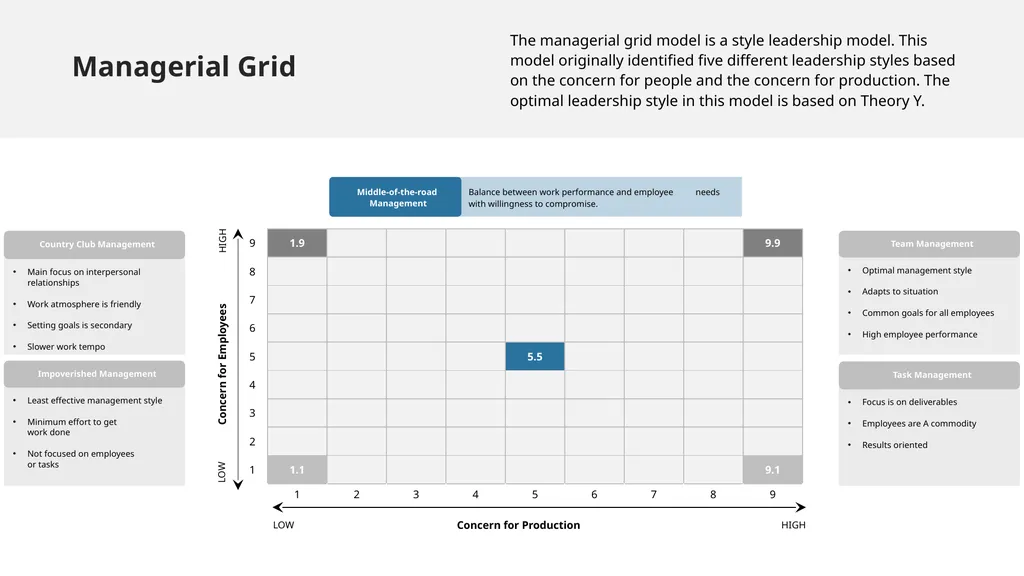
Managerial Grid The managerial grid model is a style leadership model. This model originally identified five different leadership styles based on the concern for people and the concern for production. The optimal leadership style in this model is based on Theory Y.<br>
16
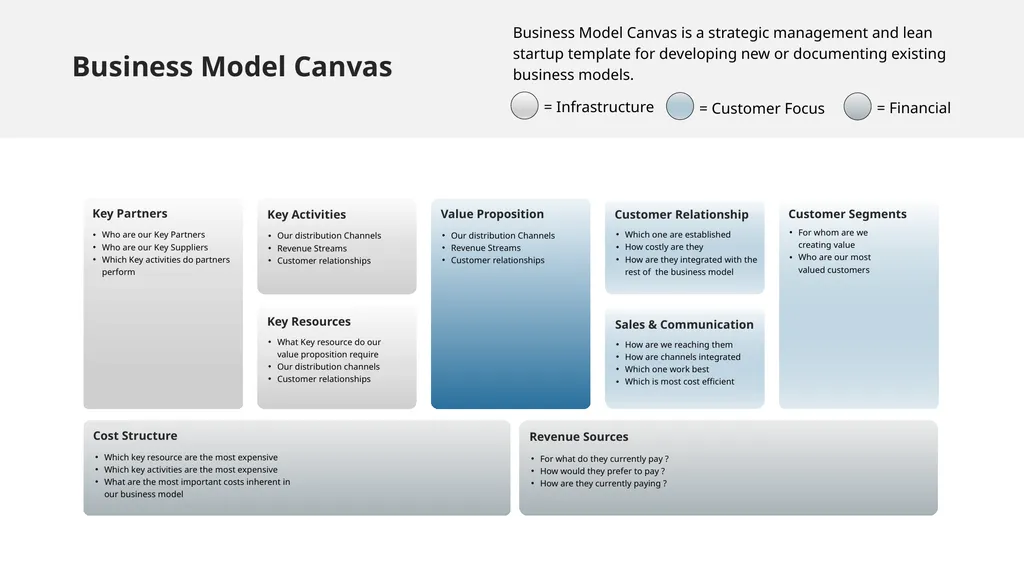
Business Model Canvas Business Model Canvas is a strategic management and lean startup template for developing new or documenting existing business models. = Infrastructure = Customer Focus = Financial<br>
17
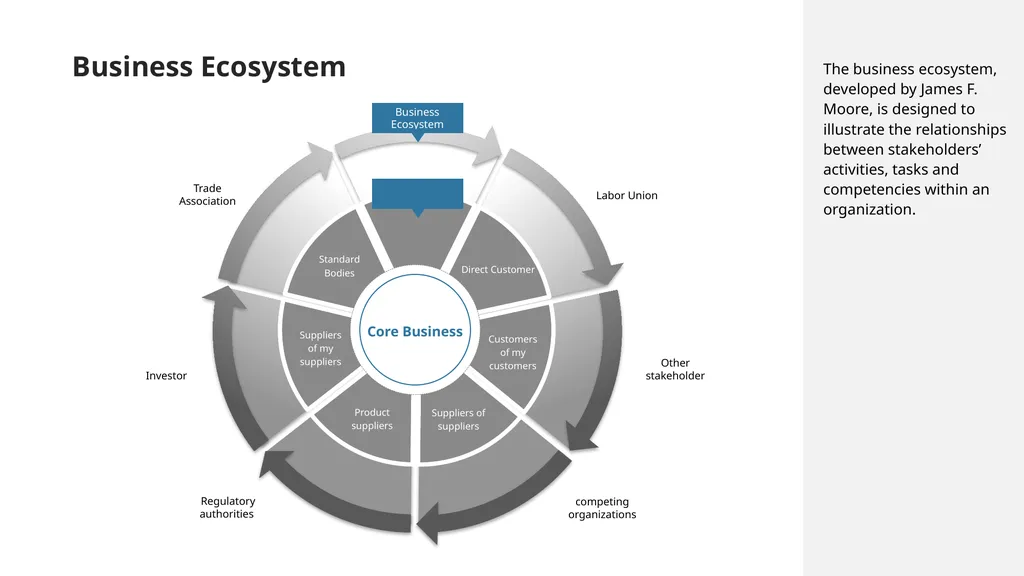
Business Ecosystem The business ecosystem, developed by James F. Moore, is designed to illustrate the relationships between stakeholders’ activities, tasks and competencies within an organization. Labor Union Other stakeholder competing organizations Regulatory authorities Investor Trade Association<br>
18
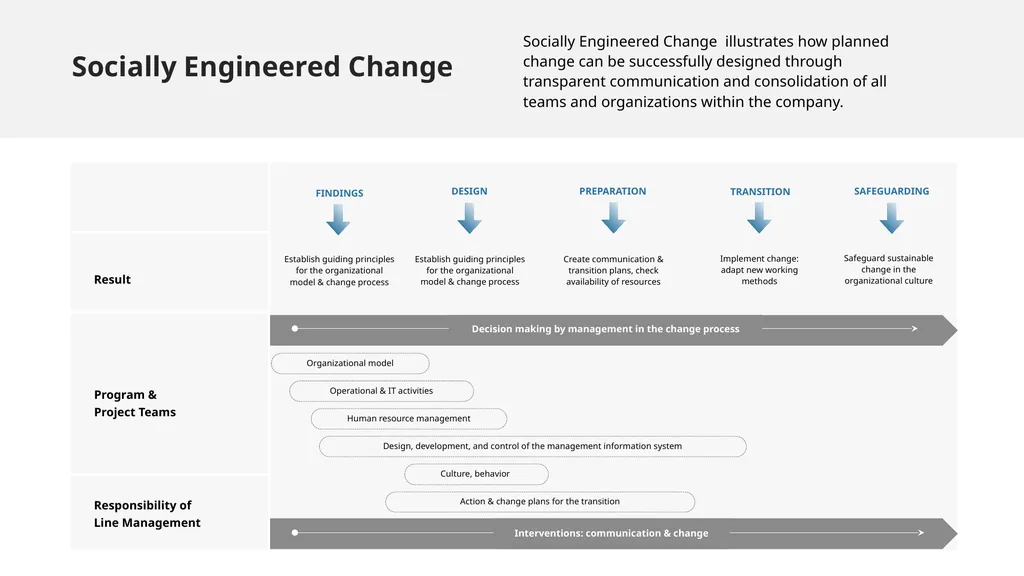
Socially Engineered Change Socially Engineered Change illustrates how planned change can be successfully designed through transparent communication and consolidation of all teams and organizations within the company.<br>
19
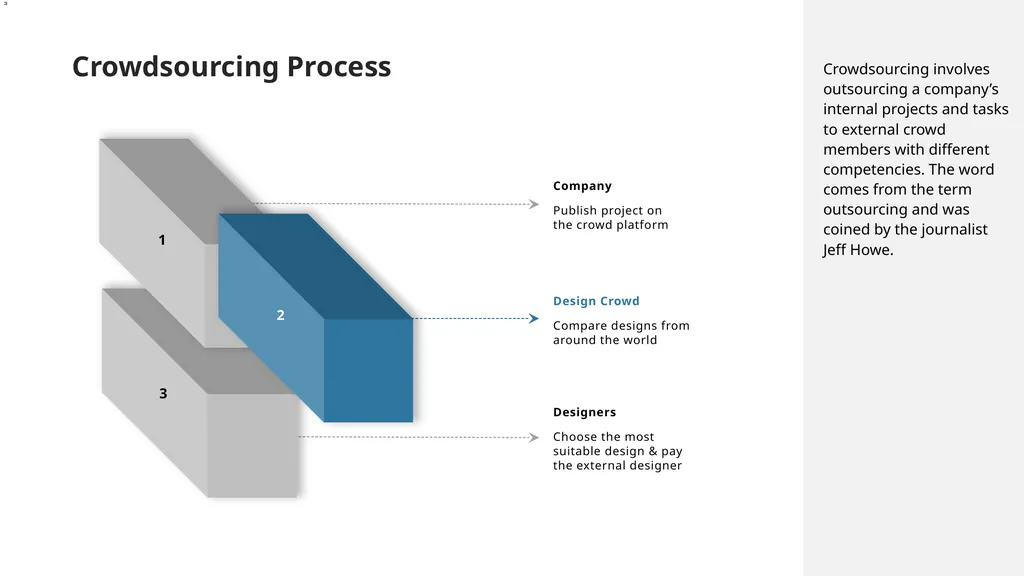
Crowdsourcing Process Crowdsourcing involves outsourcing a company’s internal projects and tasks to external crowd members with different competencies. The word comes from the term outsourcing and was coined by the journalist
Jeff Howe. Designers
Choose the most suitable design & pay the external designer Company
Publish project on the crowd platform Design Crowd
Compare designs from around the world<br>
Choose the most suitable design & pay the external designer Company
Publish project on the crowd platform Design Crowd
Compare designs from around the world<br>
20
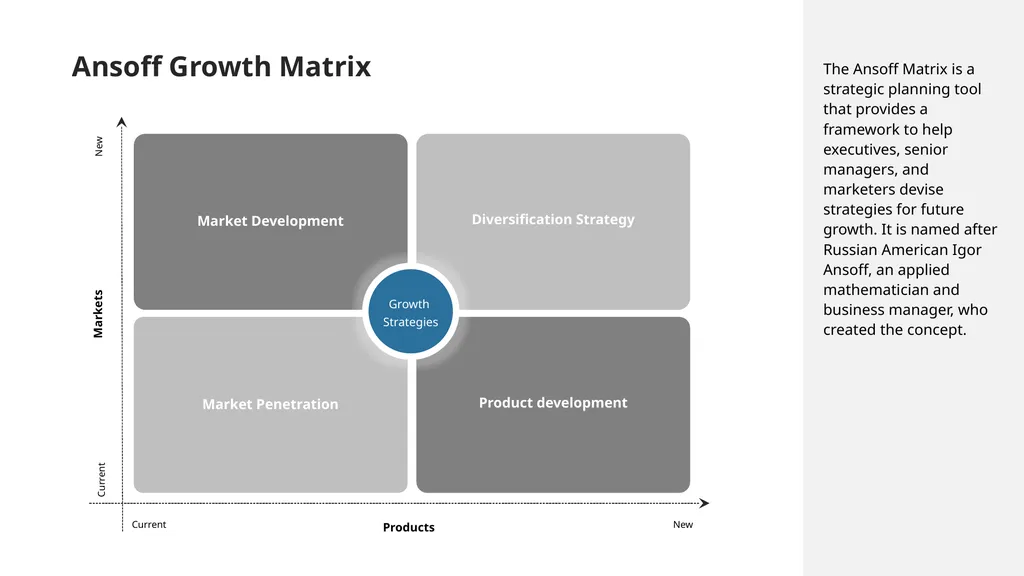
Ansoff Growth Matrix The Ansoff Matrix is a strategic planning tool that provides a framework to help executives, senior managers, and marketers devise strategies for future growth. It is named after Russian American Igor Ansoff, an applied mathematician and business manager, who created the concept. Growth
Strategies<br>
Strategies<br>
21
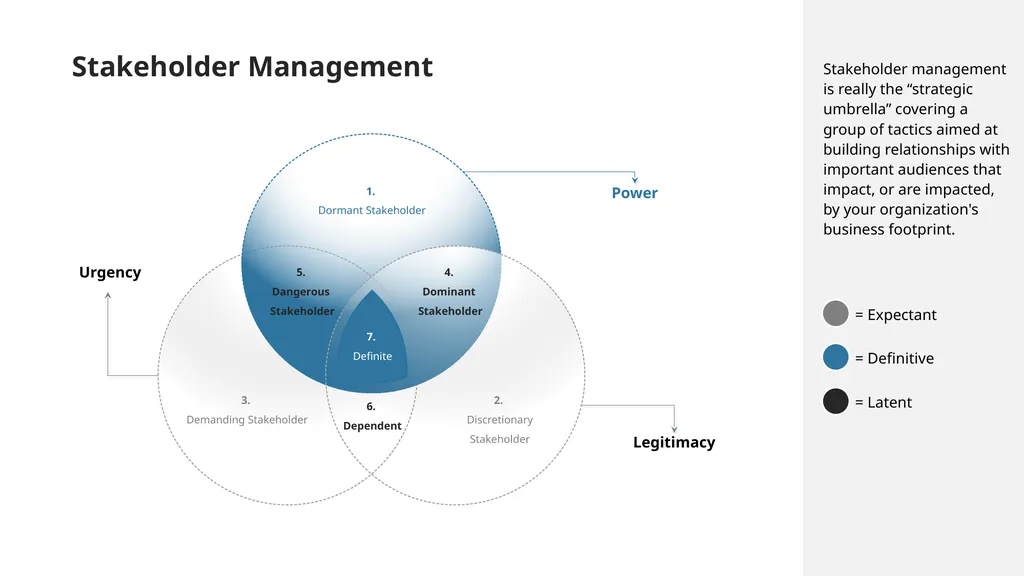
Stakeholder Management Stakeholder management is really the “strategic umbrella” covering a group of tactics aimed at building relationships with important audiences that impact, or are impacted, by your organization's business footprint. 1.
Dormant Stakeholder 5.
Dangerous
Stakeholder 4.
Dominant
Stakeholder 3.
Demanding Stakeholder 2.
Discretionary Stakeholder 6.
Dependent = Expectant = Definitive = Latent<br>
Dormant Stakeholder 5.
Dangerous
Stakeholder 4.
Dominant
Stakeholder 3.
Demanding Stakeholder 2.
Discretionary Stakeholder 6.
Dependent = Expectant = Definitive = Latent<br>
22
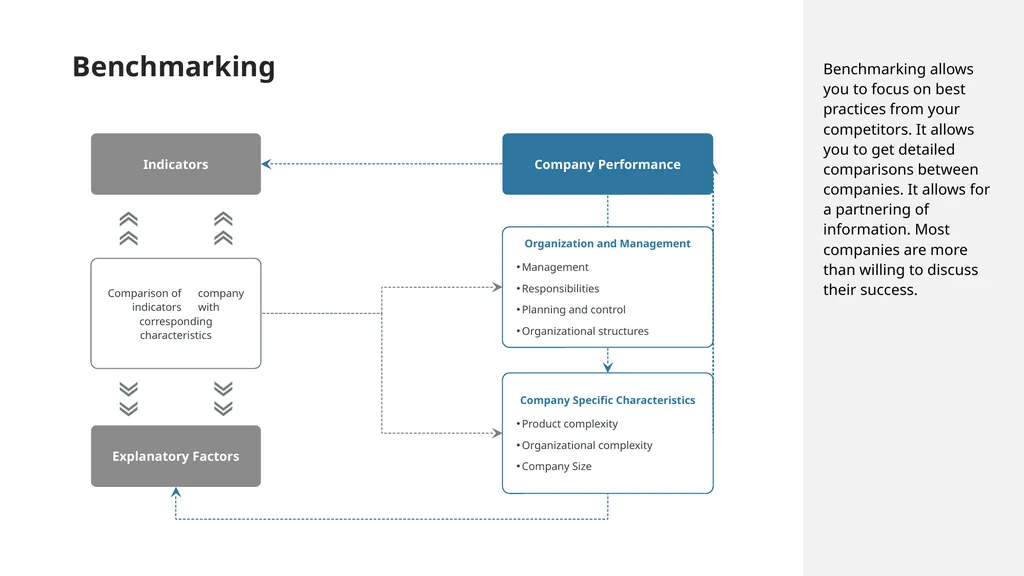
Benchmarking Benchmarking allows you to focus on best practices from your competitors. It allows you to get detailed comparisons between companies. It allows for a partnering of information. Most companies are more than willing to discuss their success. Indicators Explanatory Factors Comparison of company indicators with corresponding characteristics Company Performance Company Specific Characteristics
Product complexity
Organizational complexity
Company Size Organization and Management
Management
Responsibilities
Planning and control
Organizational structures<br>
Product complexity
Organizational complexity
Company Size Organization and Management
Management
Responsibilities
Planning and control
Organizational structures<br>
23
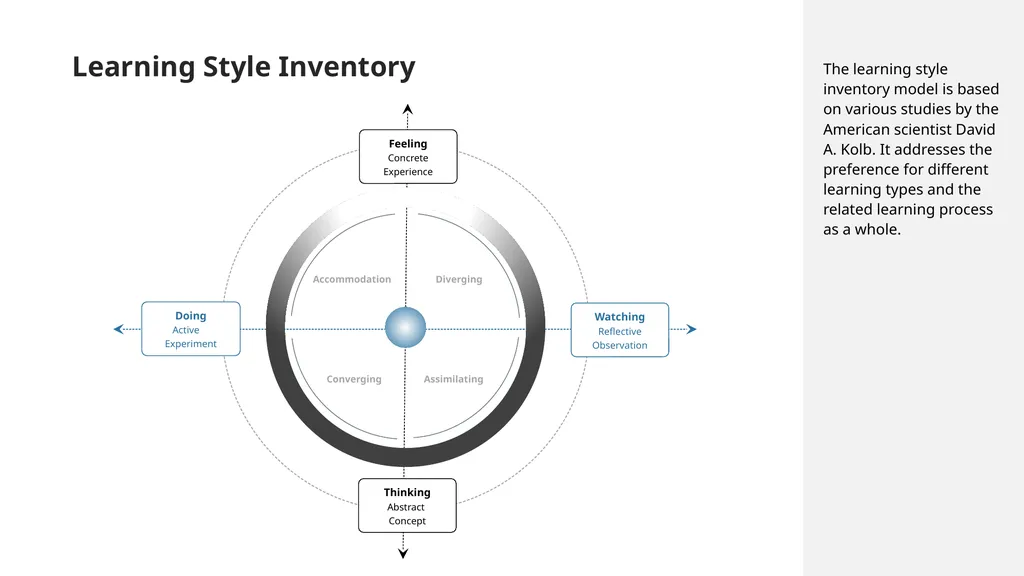
Learning Style Inventory The learning style inventory model is based on various studies by the American scientist David A. Kolb. It addresses the preference for different learning types and the related learning process as a whole. Diverging Accommodation Assimilating Converging Feeling
Concrete Experience Watching
Reflective Observation Doing
Active
Experiment Thinking
Abstract
Concept<br>
Concrete Experience Watching
Reflective Observation Doing
Active
Experiment Thinking
Abstract
Concept<br>
24
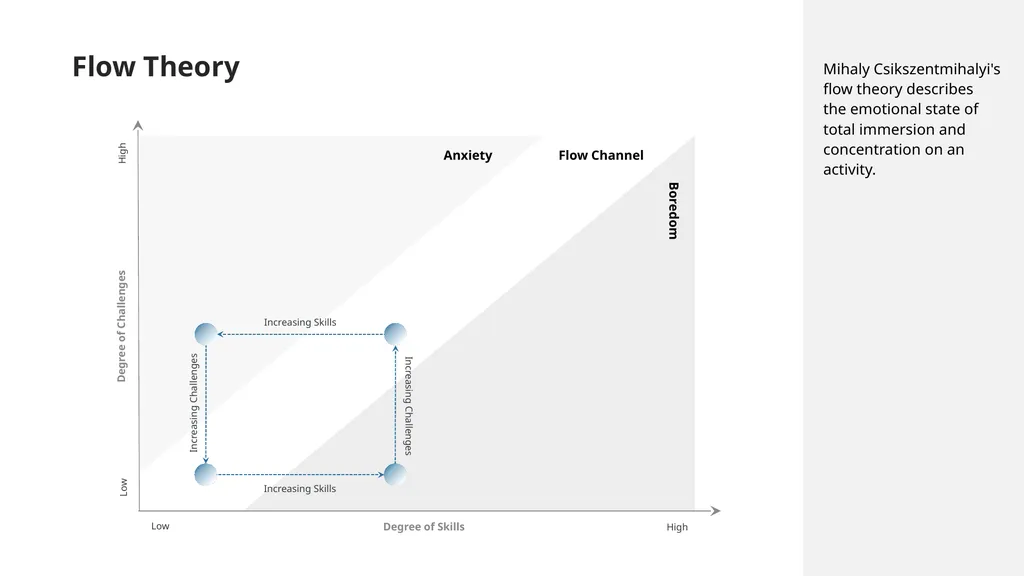
Flow Theory Mihaly Csikszentmihalyi's flow theory describes
the emotional state of
total immersion and concentration on an activity. Anxiety Boredom Flow Channel Increasing Skills Increasing Challenges Increasing Challenges Increasing Skills<br>
25
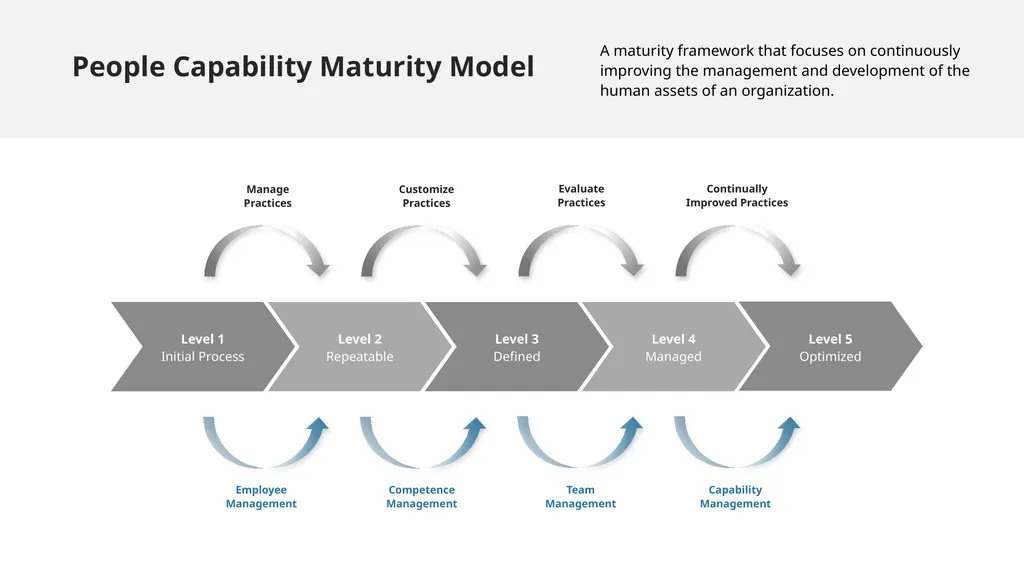
People Capability Maturity Model A maturity framework that focuses on continuously improving the management and development of the human assets of an organization. Manage Practices Customize Practices Evaluate Practices Continually Improved Practices Employee Management Competence Management Team Management Capability Management<br>
26
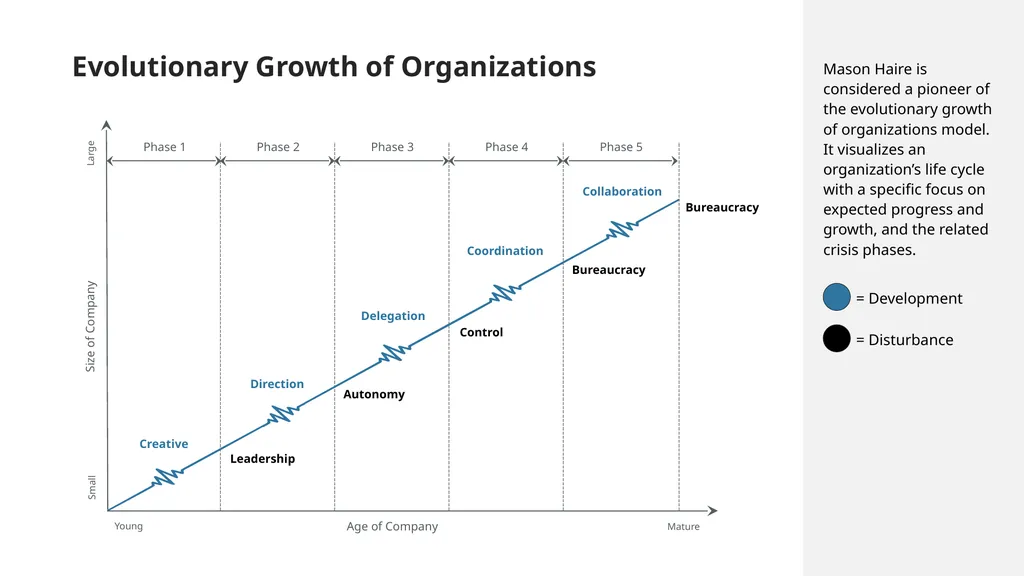
Evolutionary Growth of Organizations Mason Haire is considered a pioneer of the evolutionary growth of organizations model. It visualizes an organization’s life cycle with a specific focus on expected progress and growth, and the related crisis phases. Creative Direction Delegation Coordination Collaboration Leadership Autonomy Control Bureaucracy Bureaucracy = Development = Disturbance<br>
27
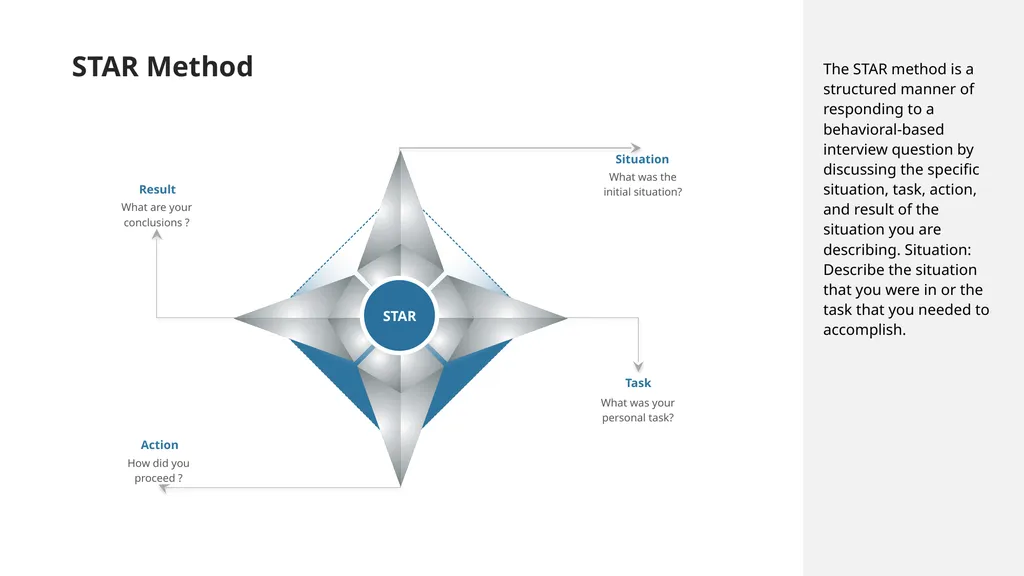
STAR Method The STAR method is a structured manner of responding to a behavioral-based interview question by discussing the specific situation, task, action, and result of the situation you are describing. Situation: Describe the situation that you were in or the task that you needed to accomplish. STAR Situation What was the initial situation? Task What was your personal task? Action How did you proceed ? Result What are your conclusions ?<br>
28
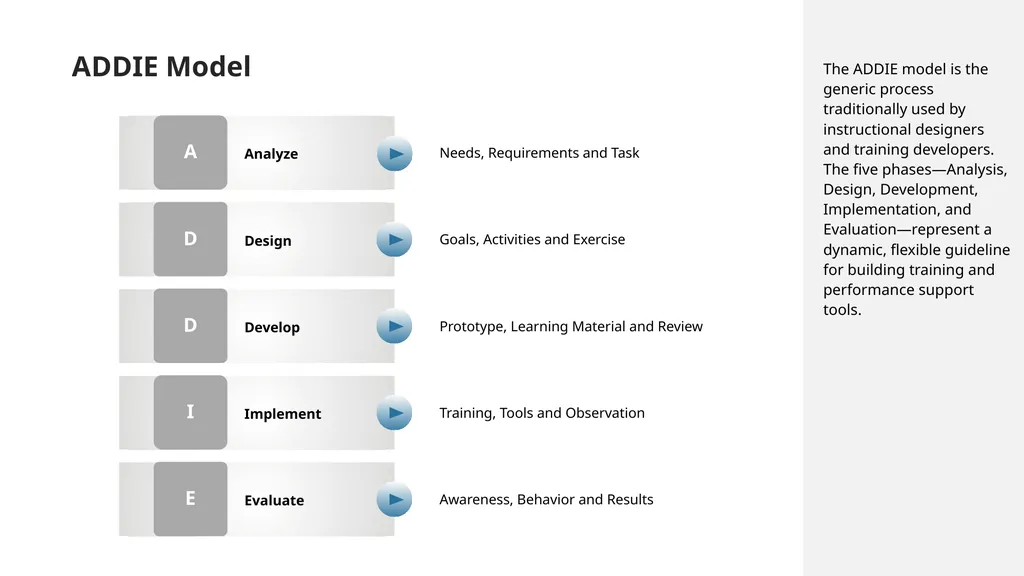
ADDIE Model The ADDIE model is the generic process traditionally used by instructional designers and training developers. The five phases—Analysis, Design, Development, Implementation, and Evaluation—represent a dynamic, flexible guideline for building training and performance support tools. Needs, Requirements and Task Analyze Goals, Activities and Exercise Design Prototype, Learning Material and Review Develop Training, Tools and Observation Implement Awareness, Behavior and Results Evaluate<br>
29
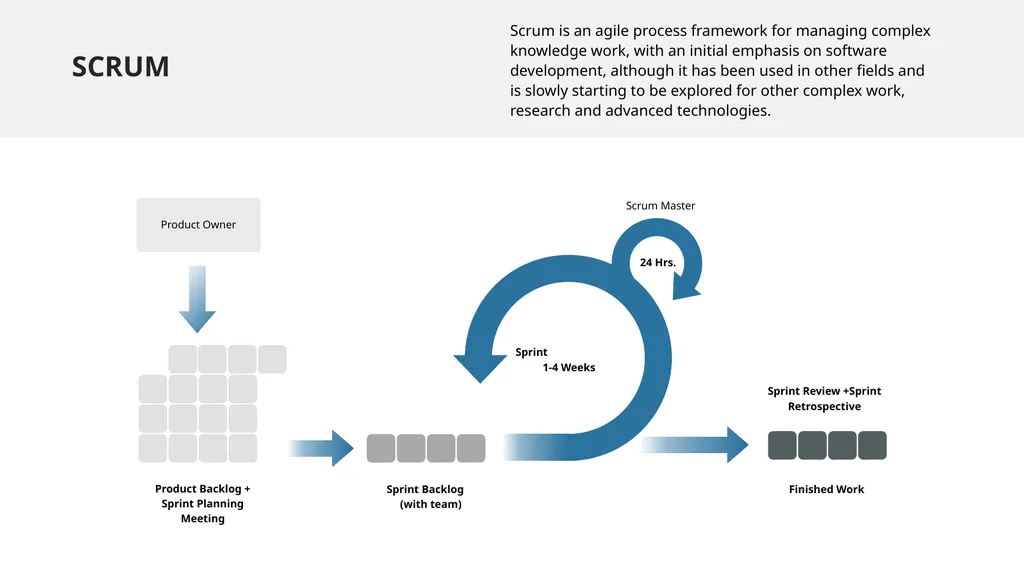
SCRUM Scrum is an agile process framework for managing complex knowledge work, with an initial emphasis on software development, although it has been used in other fields and is slowly starting to be explored for other complex work, research and advanced technologies.<br>
30
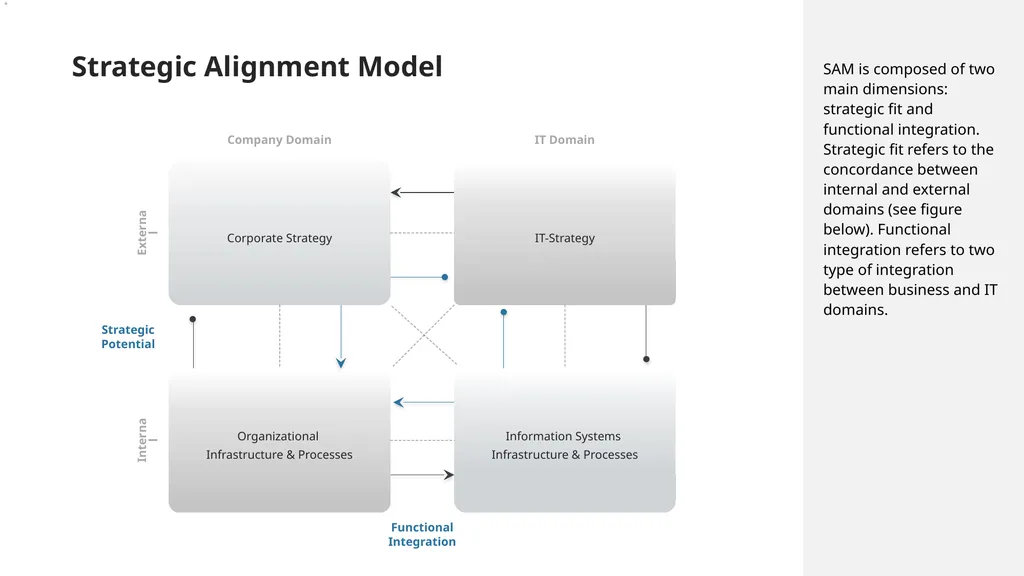
Strategic Alignment Model SAM is composed of two main dimensions: strategic fit and functional integration. Strategic fit refers to the concordance between internal and external domains (see figure below). Functional integration refers to two type of integration between business and IT domains. Organizational
Infrastructure & Processes IT-Strategy Corporate Strategy Information Systems
Infrastructure & Processes External Internal Company Domain IT Domain Strategic Potential Functional Integration<br>
Infrastructure & Processes IT-Strategy Corporate Strategy Information Systems
Infrastructure & Processes External Internal Company Domain IT Domain Strategic Potential Functional Integration<br>
31
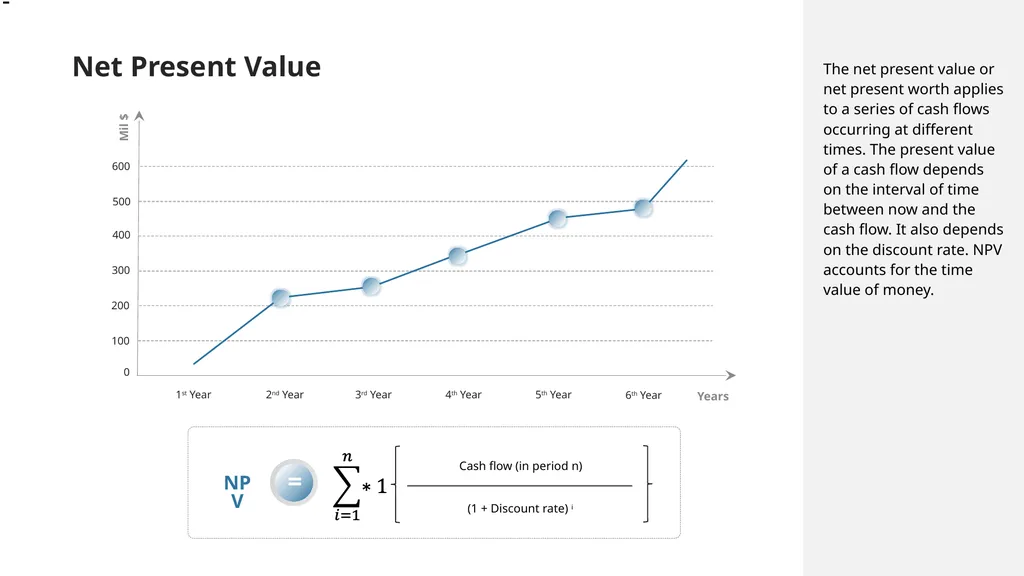
Net Present Value The net present value or net present worth applies to a series of cash flows occurring at different times. The present value of a cash flow depends on the interval of time between now and the cash flow. It also depends on the discount rate. NPV accounts for the time value of money.<br>
32
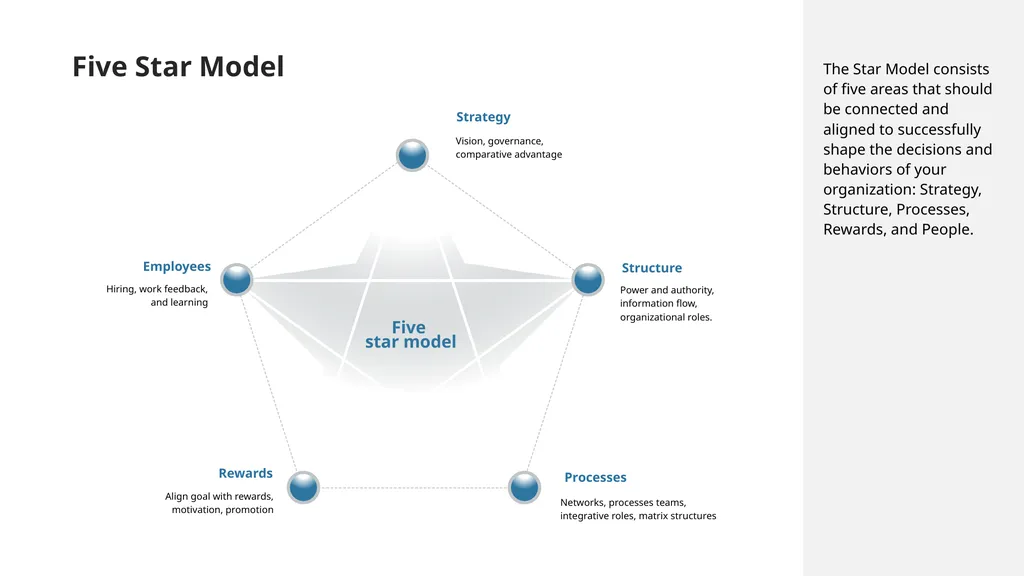
Five Star Model The Star Model consists of five areas that should be connected and aligned to successfully shape the decisions and behaviors of your organization: Strategy, Structure, Processes, Rewards, and People. Five
star model Strategy Employees Structure Processes Rewards Vision, governance, comparative advantage Power and authority, information flow, organizational roles. Networks, processes teams, integrative roles, matrix structures Align goal with rewards, motivation, promotion Hiring, work feedback, and learning<br>
33
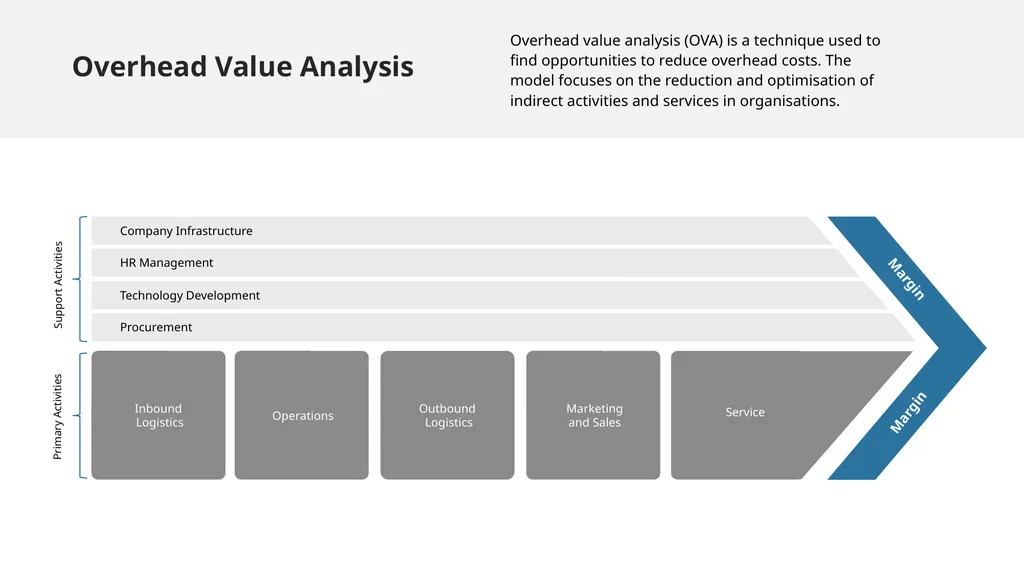
Overhead Value Analysis Overhead value analysis (OVA) is a technique used to find opportunities to reduce overhead costs. The model focuses on the reduction and optimisation of indirect activities and services in organisations. Inbound
Logistics Operations Outbound
Logistics Marketing and Sales Primary Activities Support Activities<br>
Logistics Operations Outbound
Logistics Marketing and Sales Primary Activities Support Activities<br>
34
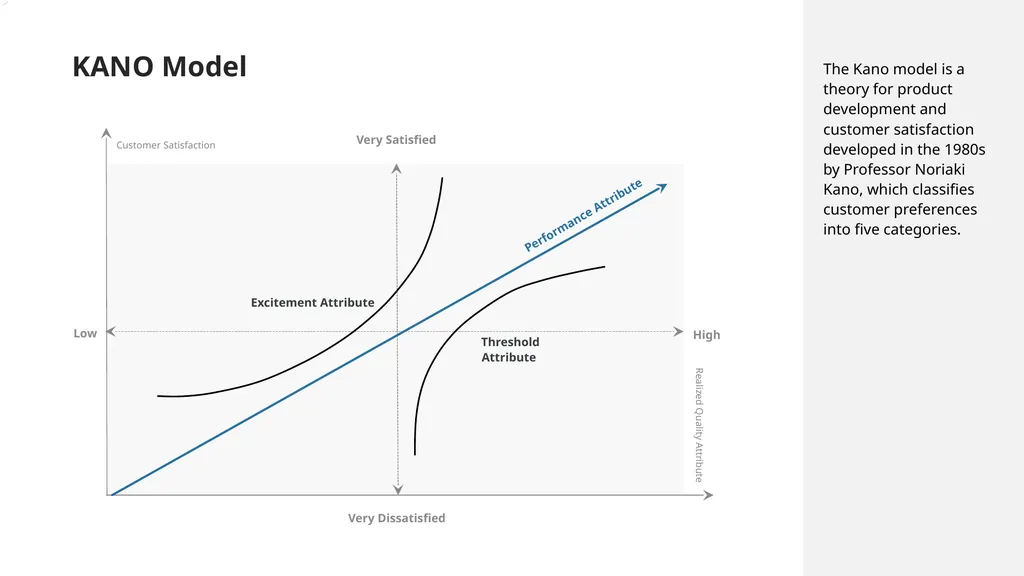
KANO Model The Kano model is a theory for product development and customer satisfaction developed in the 1980s by Professor Noriaki Kano, which classifies customer preferences into five categories. Realized Quality Attribute Customer Satisfaction Excitement Attribute Threshold Attribute<br>
35
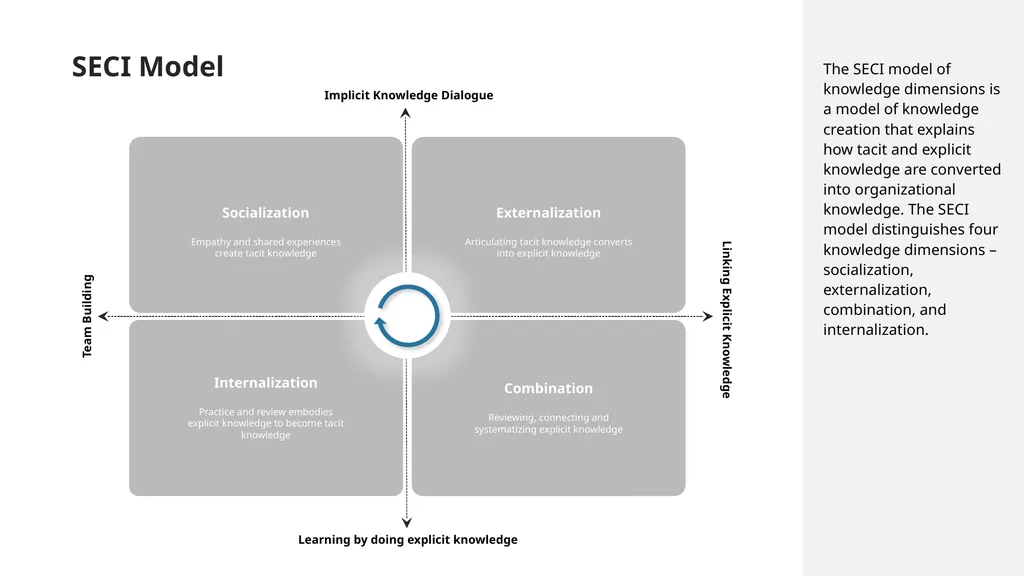
SECI Model The SECI model of knowledge dimensions is a model of knowledge creation that explains how tacit and explicit knowledge are converted into organizational knowledge. The SECI model distinguishes four knowledge dimensions – socialization, externalization, combination, and internalization. Team Building Learning by doing explicit knowledge Implicit Knowledge Dialogue Linking Explicit Knowledge Socialization
Empathy and shared experiences create tacit knowledge Externalization
Articulating tacit knowledge converts into explicit knowledge Internalization
Practice and review embodies explicit knowledge to become tacit knowledge Combination
Reviewing, connecting and systematizing explicit knowledge<br>
Empathy and shared experiences create tacit knowledge Externalization
Articulating tacit knowledge converts into explicit knowledge Internalization
Practice and review embodies explicit knowledge to become tacit knowledge Combination
Reviewing, connecting and systematizing explicit knowledge<br>
36
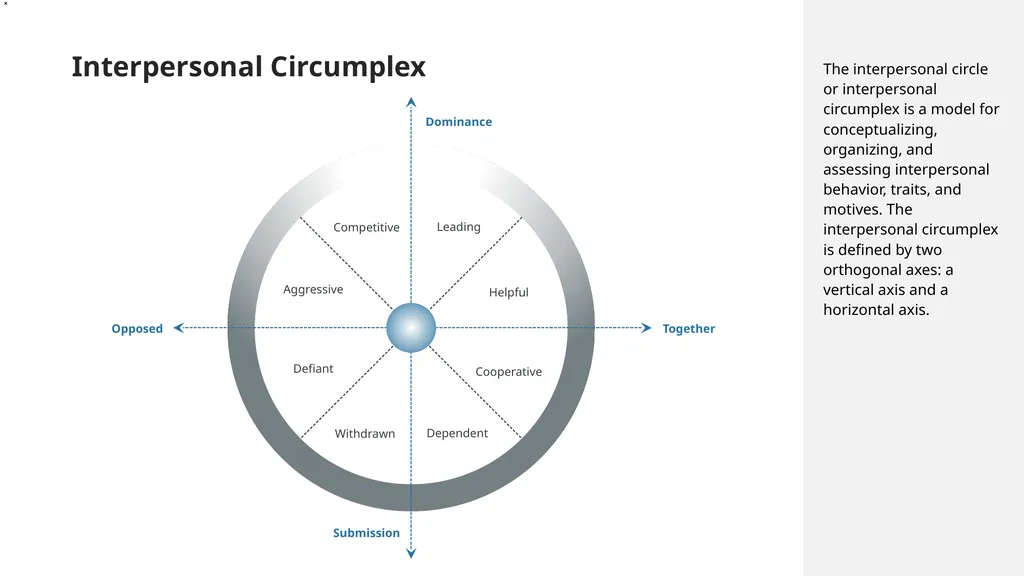
Interpersonal Circumplex The interpersonal circle or interpersonal circumplex is a model for conceptualizing, organizing, and assessing interpersonal behavior, traits, and motives. The interpersonal circumplex is defined by two orthogonal axes: a vertical axis and a horizontal axis. Dominance Submission Together Opposed Aggressive Helpful Leading Competitive Defiant Cooperative Dependent Withdrawn<br>
37
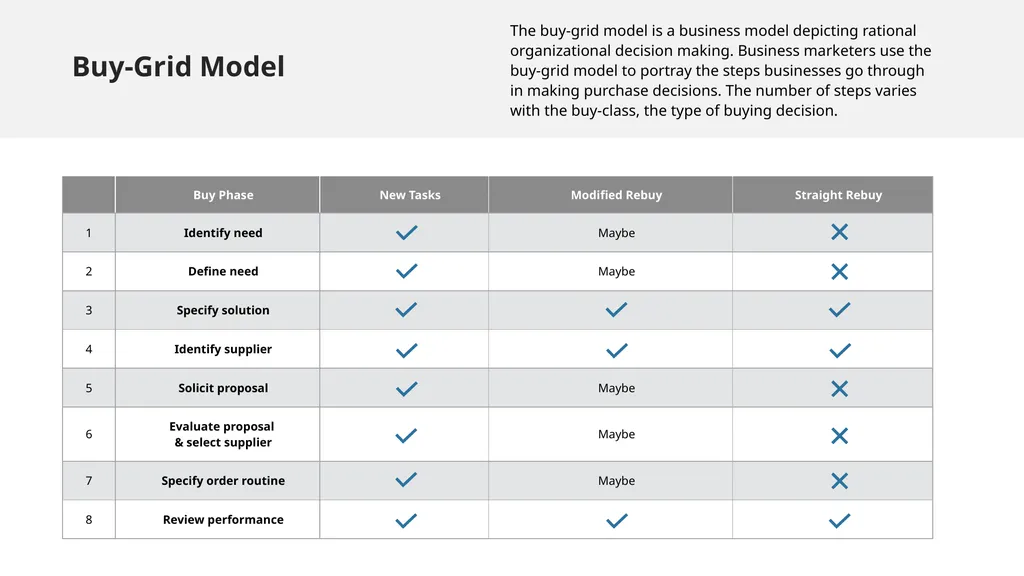
Buy-Grid Model The buy-grid model is a business model depicting rational organizational decision making. Business marketers use the buy-grid model to portray the steps businesses go through in making purchase decisions. The number of steps varies with the buy-class, the type of buying decision.<br>
38
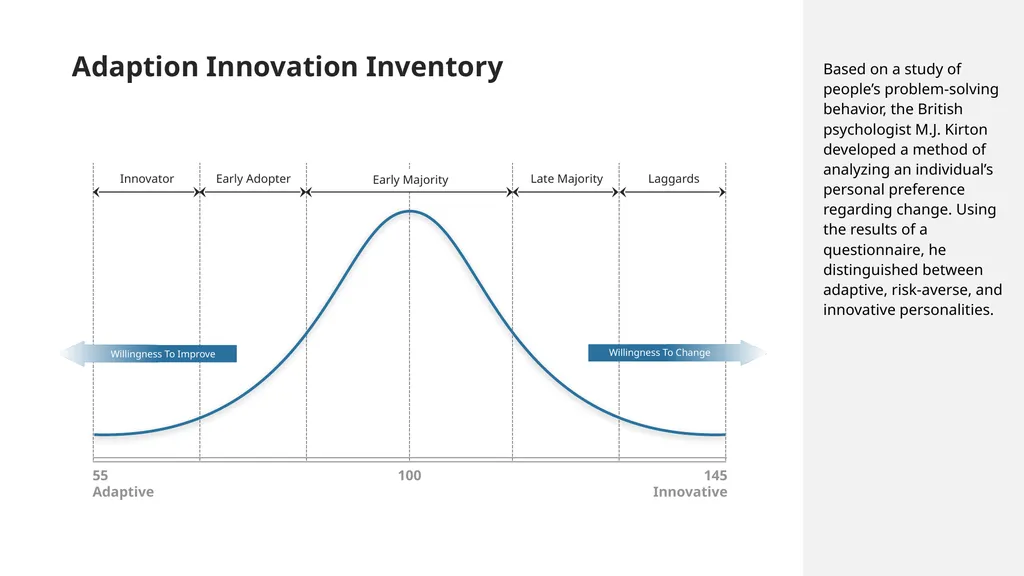
Adaption Innovation Inventory Based on a study of people’s problem-solving behavior, the British psychologist M.J. Kirton developed a method of analyzing an individual’s personal preference regarding change. Using the results of a questionnaire, he distinguished between adaptive, risk-averse, and innovative personalities.<br>
39
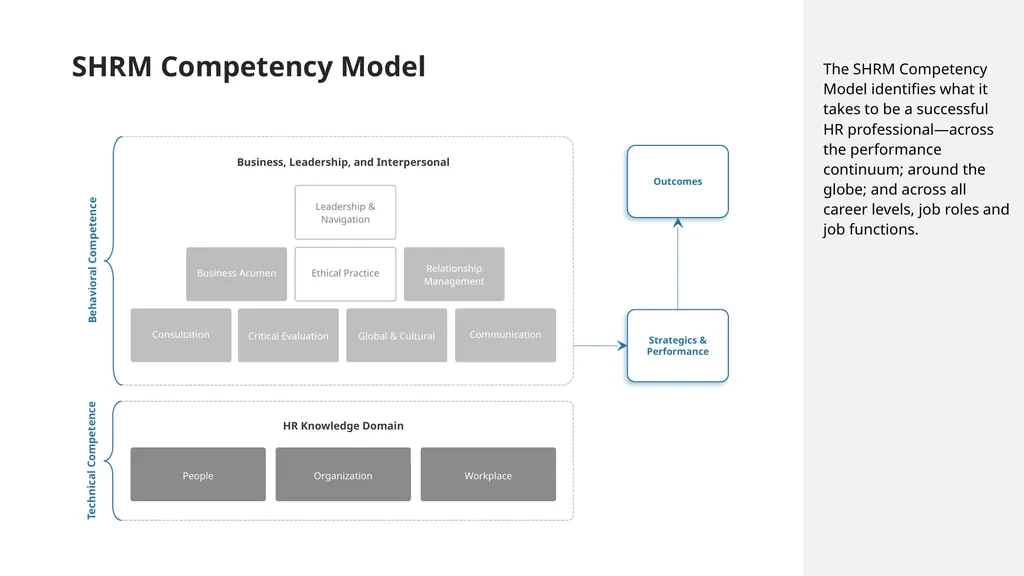
SHRM Competency Model The SHRM Competency Model identifies what it takes to be a successful HR professional—across the performance continuum; around the globe; and across all career levels, job roles and job functions.<br>
40
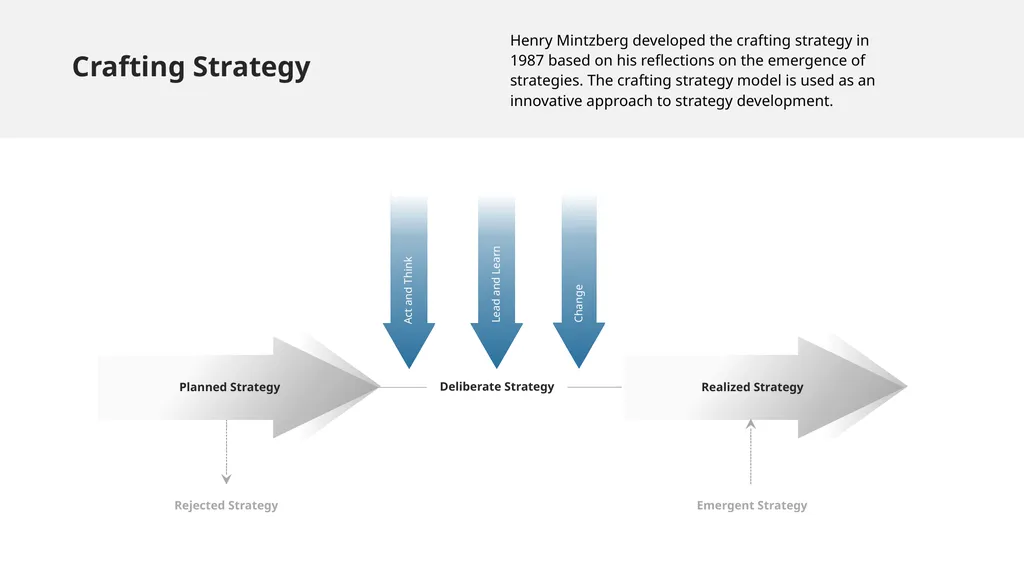
Crafting Strategy Henry Mintzberg developed the crafting strategy in 1987 based on his reflections on the emergence of strategies. The crafting strategy model is used as an innovative approach to strategy development. Rejected Strategy Emergent Strategy<br>
41
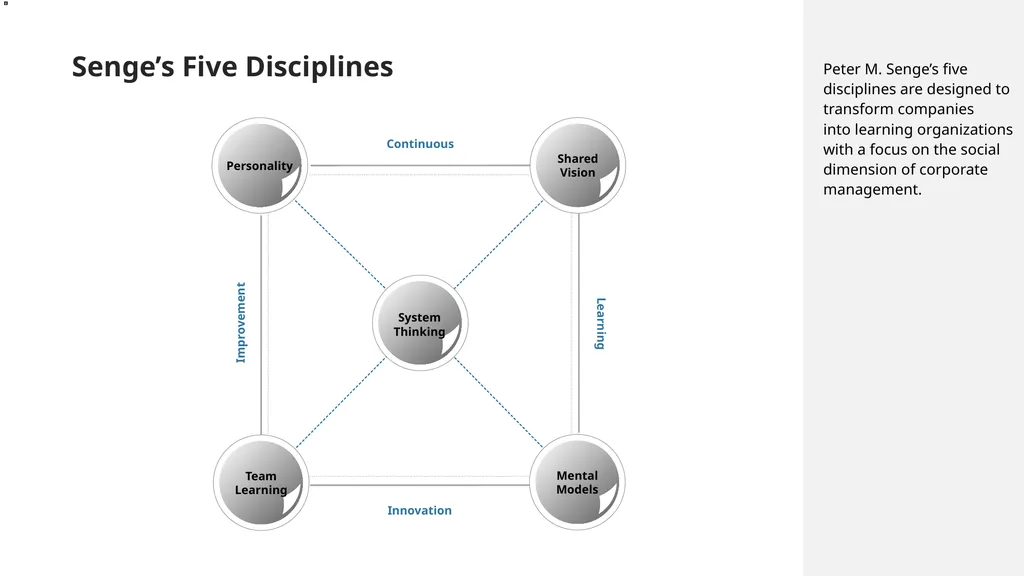
Senge’s Five Disciplines Peter M. Senge’s five disciplines are designed to transform companies
into learning organizations with a focus on the social dimension of corporate management. Innovation Continuous Improvement Learning<br>
42
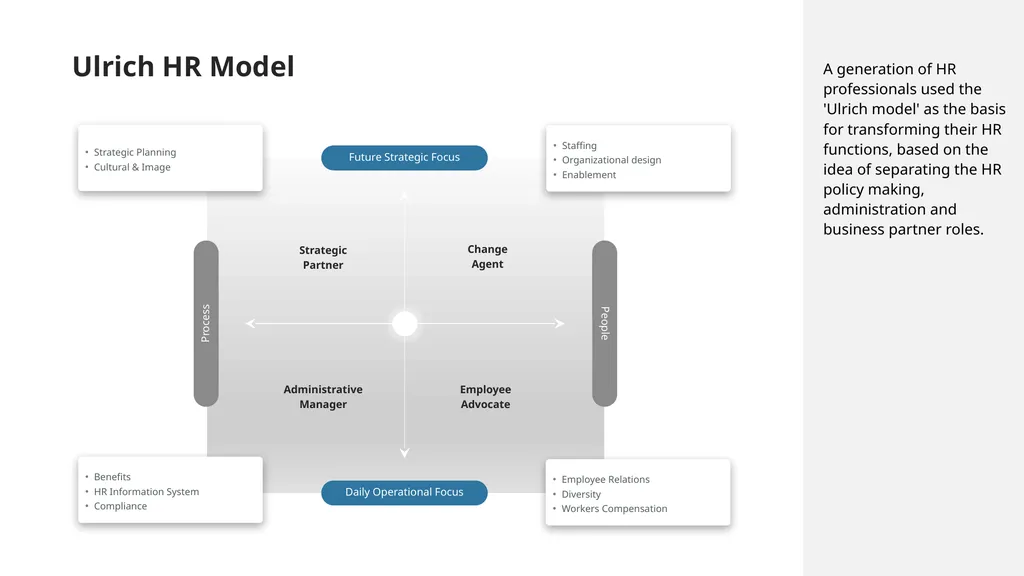
Ulrich HR Model A generation of HR professionals used the 'Ulrich model' as the basis for transforming their HR functions, based on the idea of separating the HR policy making, administration and business partner roles. Strategic Partner Change Agent Employee Advocate Administrative Manager Future Strategic Focus Daily Operational Focus People Process Strategic Planning
Cultural & Image Staffing
Organizational design
Enablement Benefits
HR Information System
Compliance Employee Relations
Diversity
Workers Compensation<br>
Cultural & Image Staffing
Organizational design
Enablement Benefits
HR Information System
Compliance Employee Relations
Diversity
Workers Compensation<br>
43
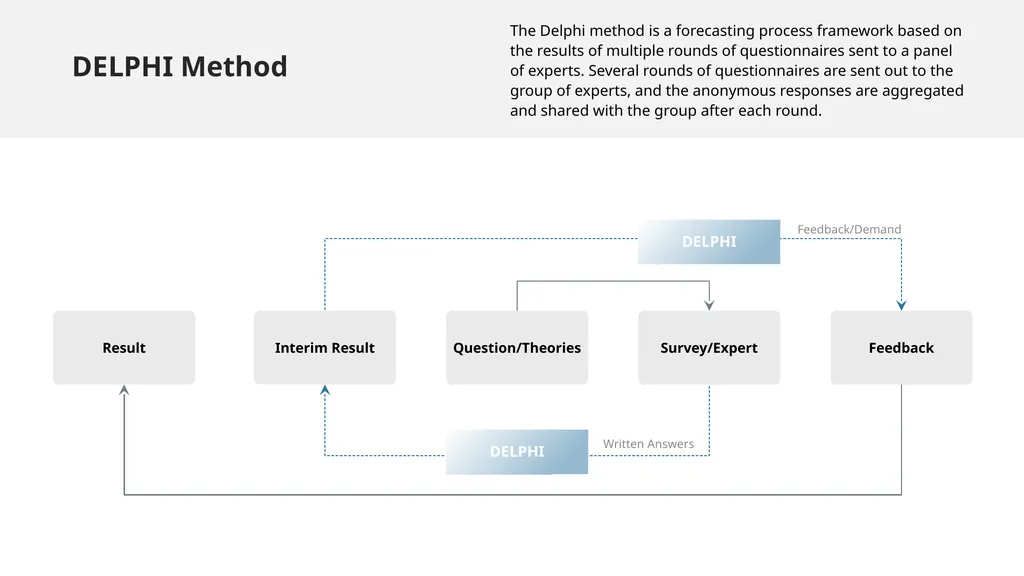
DELPHI Method The Delphi method is a forecasting process framework based on the results of multiple rounds of questionnaires sent to a panel of experts. Several rounds of questionnaires are sent out to the group of experts, and the anonymous responses are aggregated and shared with the group after each round. Result Interim Result Question/Theories Survey/Expert Feedback DELPHI DELPHI Written Answers Feedback/Demand<br>