Operating Budget Mid-Year Update July 1, 2024 to June 30, 2025 Presented to the Seattle Colleges Board of Trustees February, 2025 Presented by: Dr. Rosie Rimando-Chareunsap, Chancellor Dr. Rachel Solemsaas, North President Collective Impact
"Operating Budget Mid-Year Update July 1, 2024 to" is the property of its rightful owner. Permission is granted to
download and print the materials on this website for personal, non-commercial use only, and to display it
on your personal computer provided you do not modify the materials and that you retain all copyright
notices contained in the materials. By downloading content from our website, you accept the terms of this
agreement.
Presentation Transcript
01
Operating Budget
Mid-Year Update
July 1, 2024 to June 30, 2025
Presented to the Seattle Colleges Board of Trustees
February, 2025 Presented by: Dr. Rosie Rimando-Chareunsap, Chancellor Dr. Rachel Solemsaas, North President<br>
02
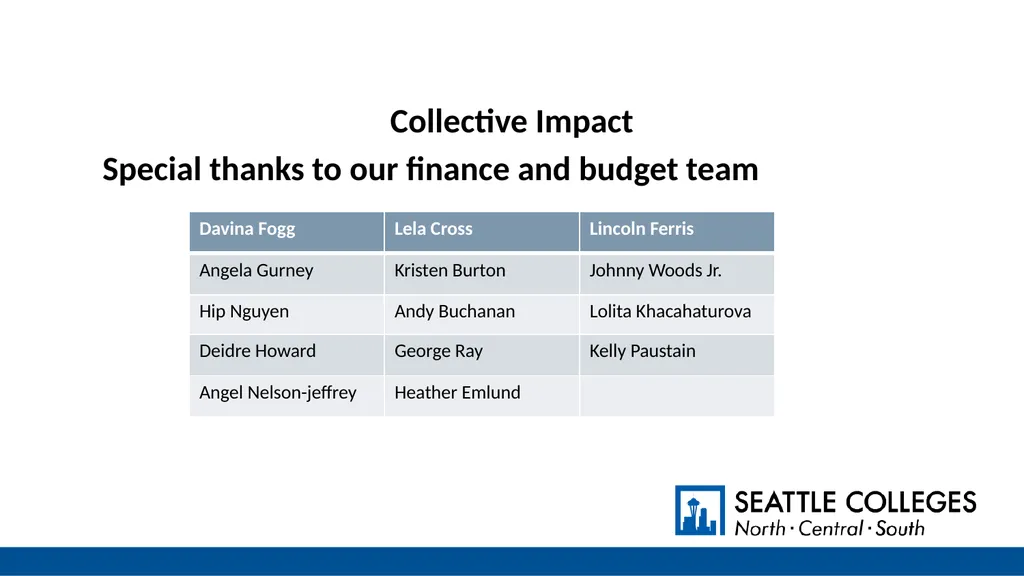
Collective Impact
Special thanks to our finance and budget team<br>
03
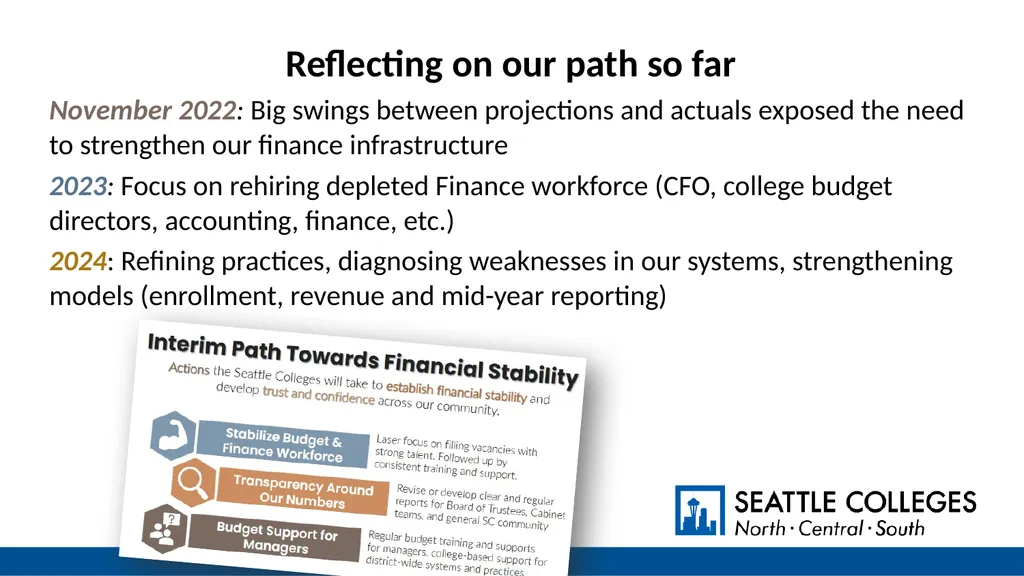
Reflecting on our path so far
November 2022: Big swings between projections and actuals exposed the need to strengthen our finance infrastructure
2023: Focus on rehiring depleted Finance workforce (CFO, college budget directors, accounting, finance, etc.)
2024: Refining practices, diagnosing weaknesses in our systems, strengthening models (enrollment, revenue and mid-year reporting)<br>
04
Interim Path Towards Financial Stability Actions the Seattle Colleges will take to establish financial stability and develop trust and confidence across our community. Stabilize Budget & Finance Workforce Transparency Around Our Numbers Budget Support for Managers Laser focus on filling vacancies with strong talent. Followed up by consistent training and support. Revise or develop clear and regular reports for Board of Trustees, Cabinet teams, and general SC community Regular budget training and supports for managers, college-based support for district-wide systems and practices 2022-2023 Financial Stabilization Priorities<br>
05
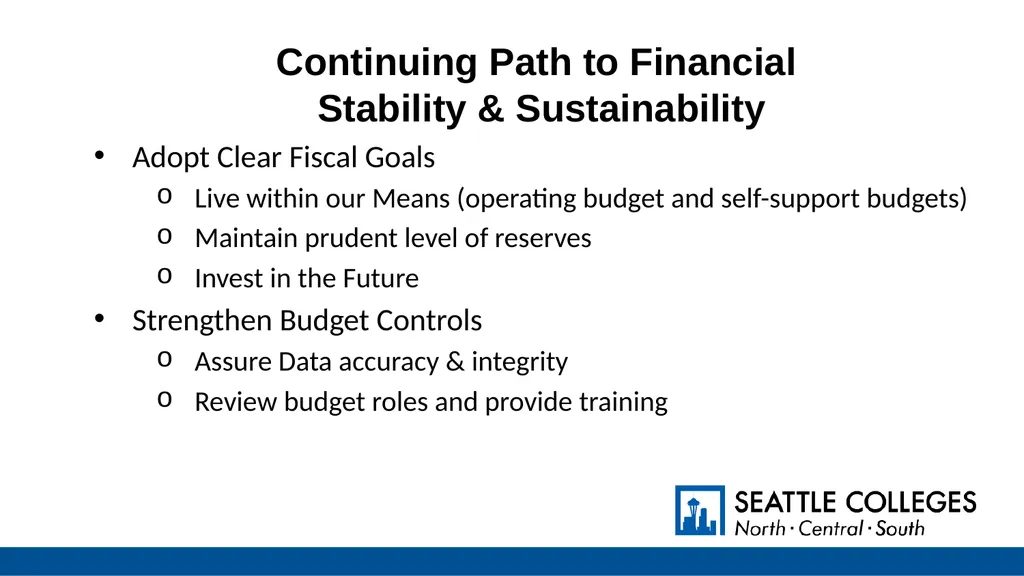
Adopt Clear Fiscal Goals
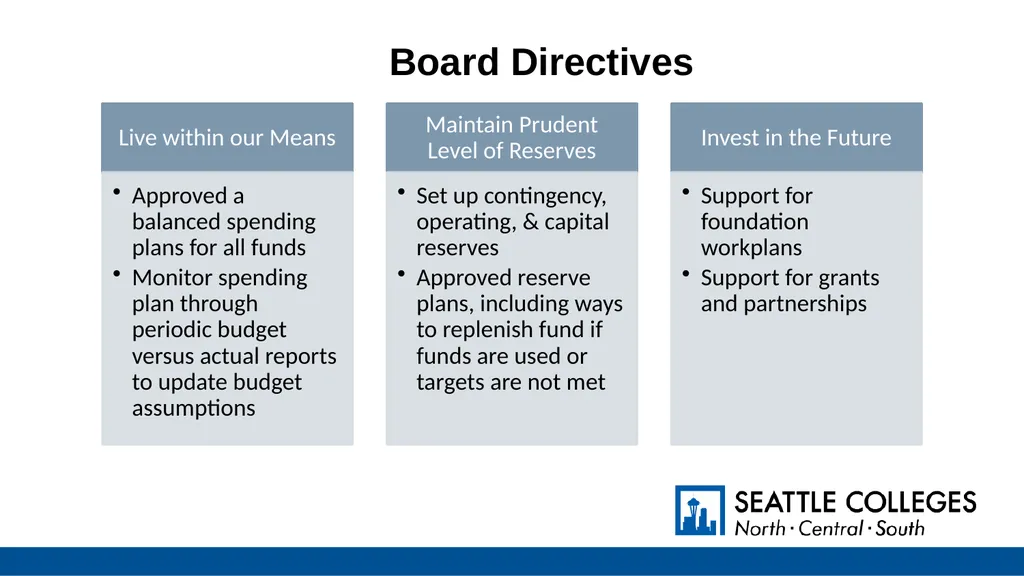
Live within our Means (operating budget and self-support budgets)
Maintain prudent level of reserves
Invest in the Future
Strengthen Budget Controls
Assure Data accuracy & integrity
Review budget roles and provide training Continuing Path to Financial Stability & Sustainability<br>
06
Board Directives<br>
07
67% State Allocation Budget 101 82% Personnel Costs<br>
08
Enrollment Trends<br>
09
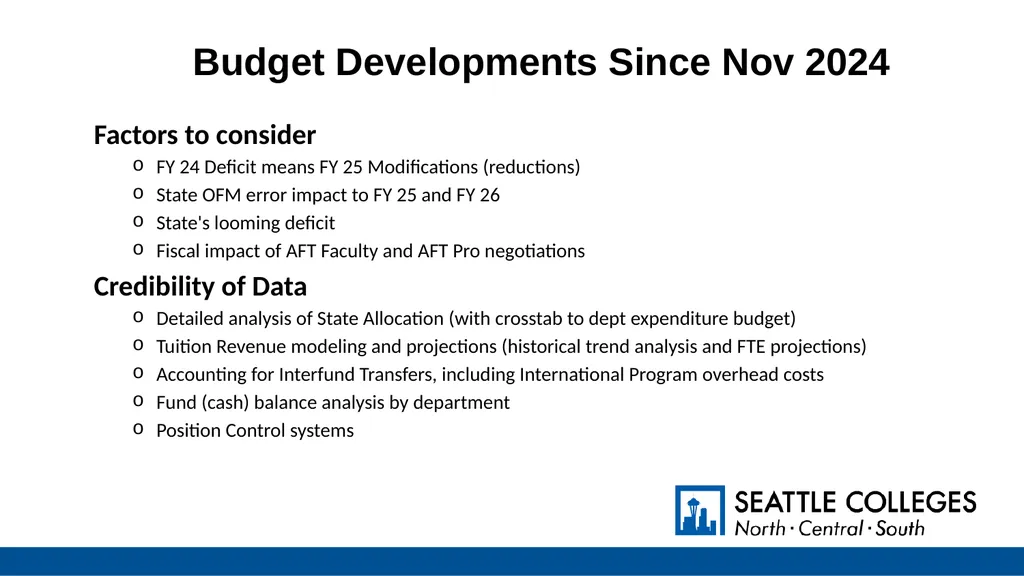
Factors to consider
FY 24 Deficit means FY 25 Modifications (reductions)
State OFM error impact to FY 25 and FY 26
State's looming deficit
Fiscal impact of AFT Faculty and AFT Pro negotiations
Credibility of Data
Detailed analysis of State Allocation (with crosstab to dept expenditure budget)
Tuition Revenue modeling and projections (historical trend analysis and FTE projections)
Accounting for Interfund Transfers, including International Program overhead costs
Fund (cash) balance analysis by department
Position Control systems Budget Developments Since Nov 2024<br>
10
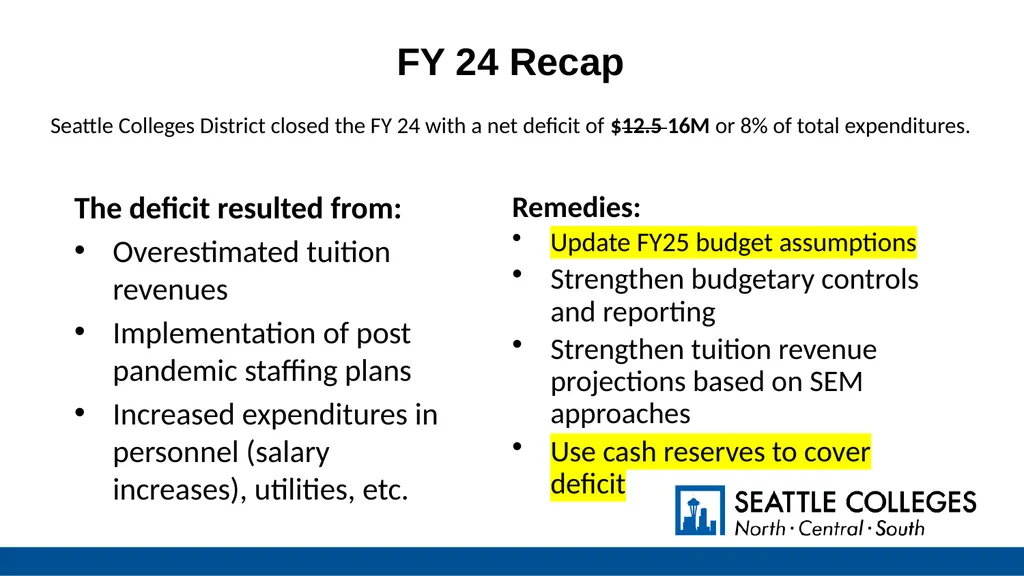
The deficit resulted from:
Overestimated tuition revenues
Implementation of post pandemic staffing plans
Increased expenditures in personnel (salary increases), utilities, etc. FY 24 Recap
Seattle Colleges District closed the FY 24 with a net deficit of $12.5 16M or 8% of total expenditures. Remedies:
Update FY25 budget assumptions
Strengthen budgetary controls and reporting
Strengthen tuition revenue projections based on SEM approaches
Use cash reserves to cover deficit<br>
11
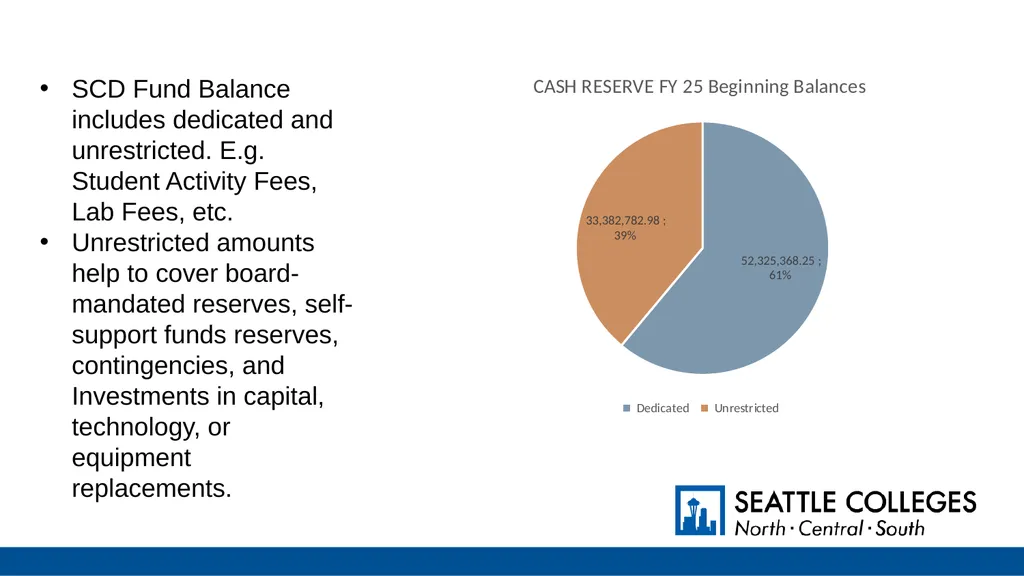
SCD Fund Balance includes dedicated and unrestricted. E.g. Student Activity Fees, Lab Fees, etc.
Unrestricted amounts help to cover board-mandated reserves, self-support funds reserves, contingencies, and Investments in capital, technology, or equipment replacements.<br>
12
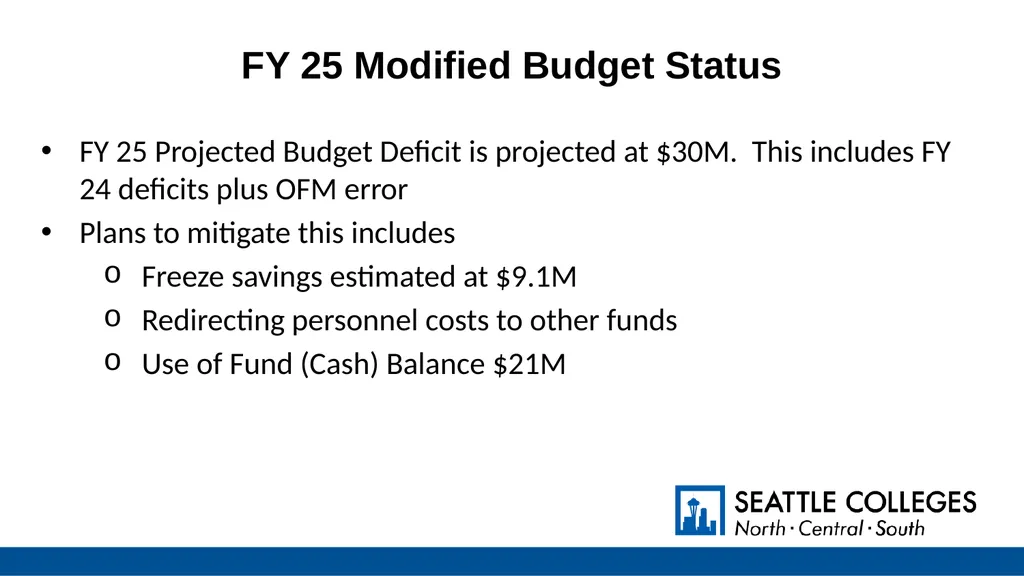
FY 25 Projected Budget Deficit is projected at $30M. This includes FY 24 deficits plus OFM error
Plans to mitigate this includes
Freeze savings estimated at $9.1M
Redirecting personnel costs to other funds
Use of Fund (Cash) Balance $21M FY 25 Modified Budget Status<br>
13
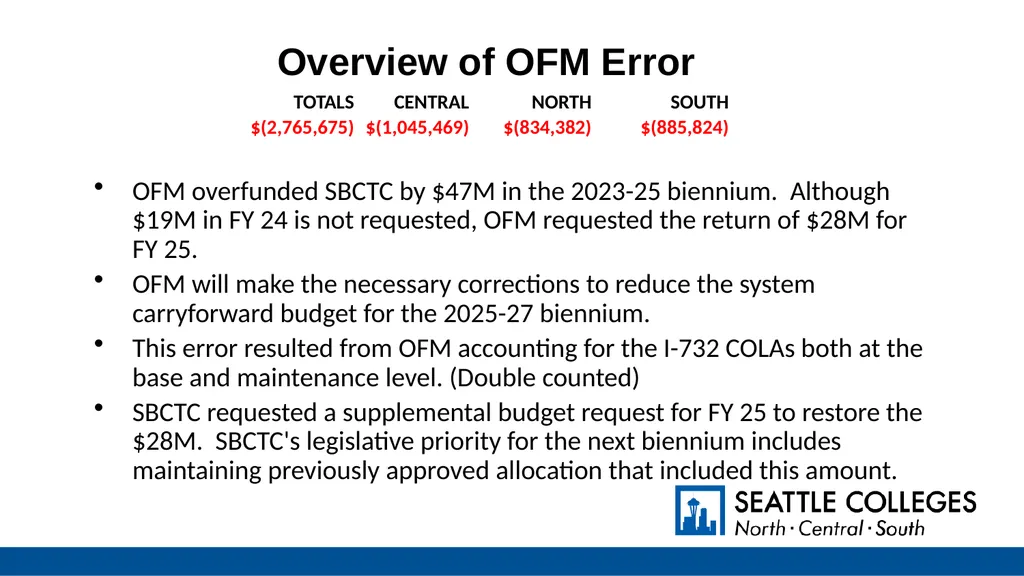
OFM overfunded SBCTC by $47M in the 2023-25 biennium. Although $19M in FY 24 is not requested, OFM requested the return of $28M for FY 25.
OFM will make the necessary corrections to reduce the system carryforward budget for the 2025-27 biennium.
This error resulted from OFM accounting for the I-732 COLAs both at the base and maintenance level. (Double counted)
SBCTC requested a supplemental budget request for FY 25 to restore the $28M. SBCTC's legislative priority for the next biennium includes maintaining previously approved allocation that included this amount. Overview of OFM Error<br>
14
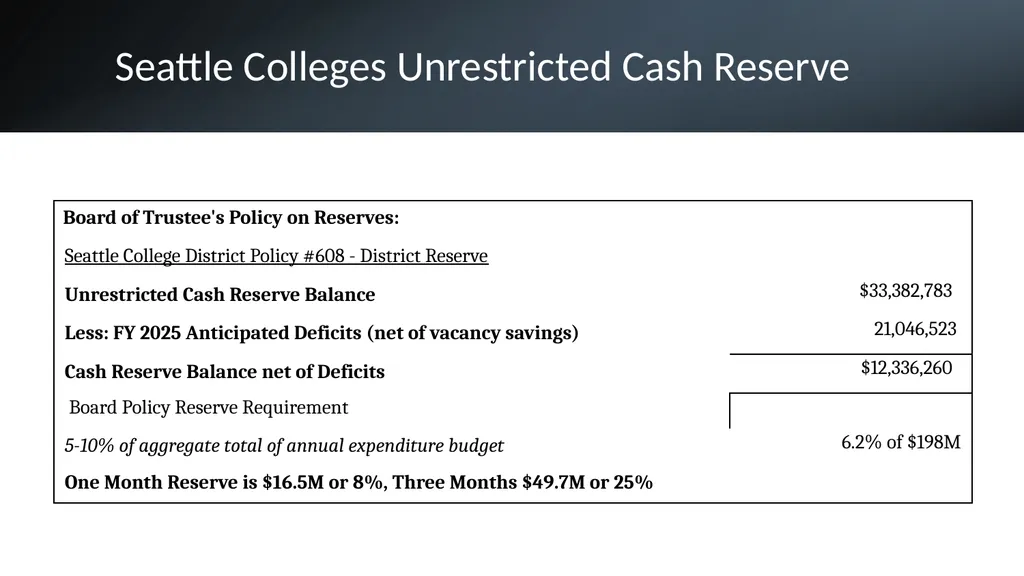
Seattle Colleges Unrestricted Cash Reserve<br>
15
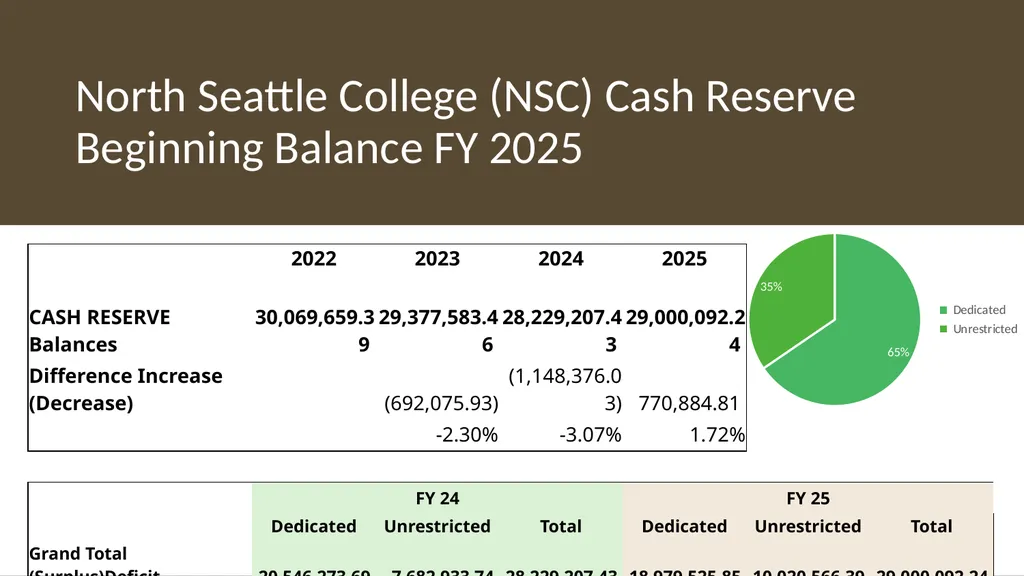
North Seattle College (NSC) Cash Reserve Beginning Balance FY 2025<br>
16
North<br>
17
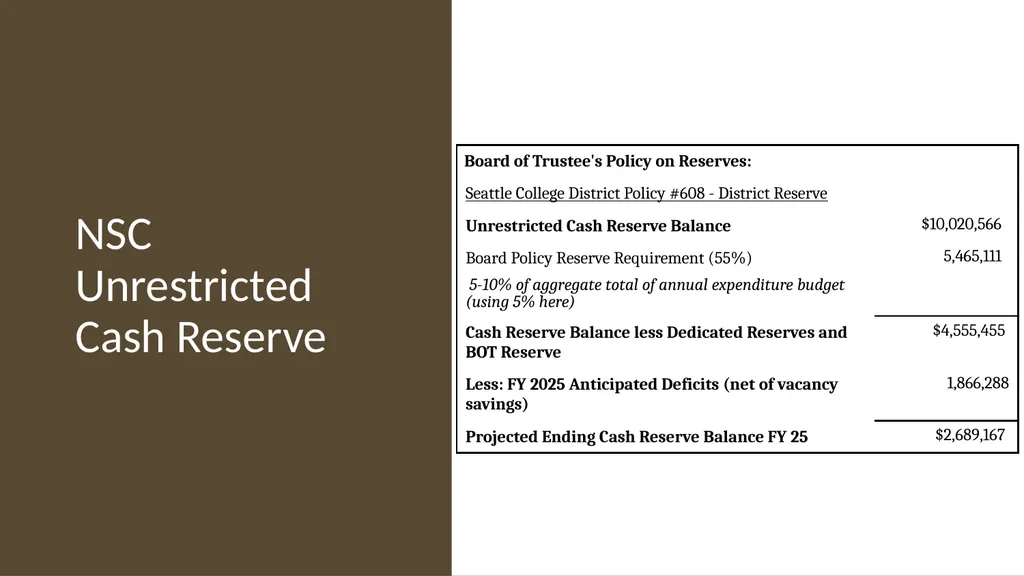
NSC Unrestricted Cash Reserve<br>
18
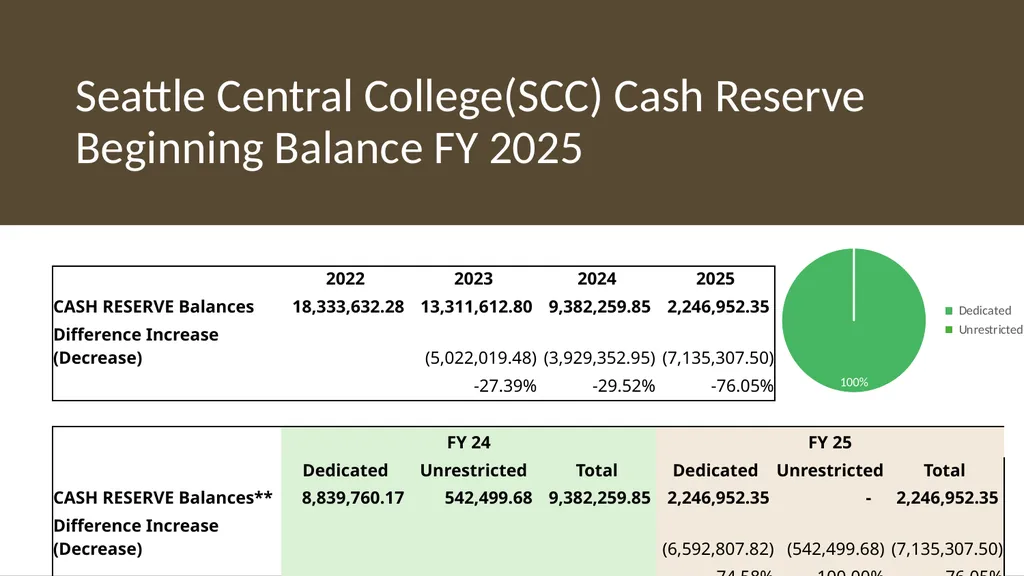
Seattle Central College(SCC) Cash Reserve Beginning Balance FY 2025<br>
19
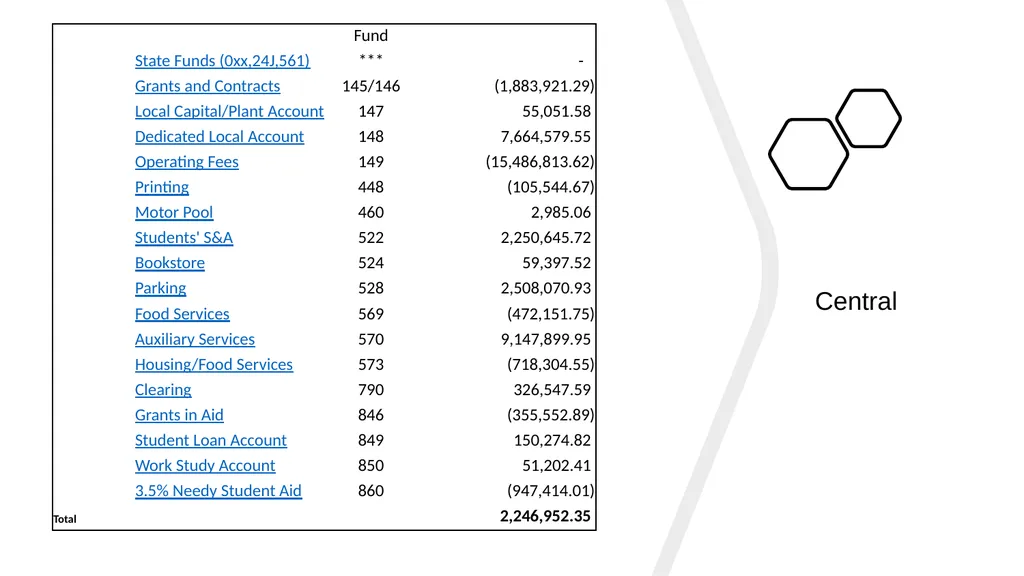
Central<br>
20
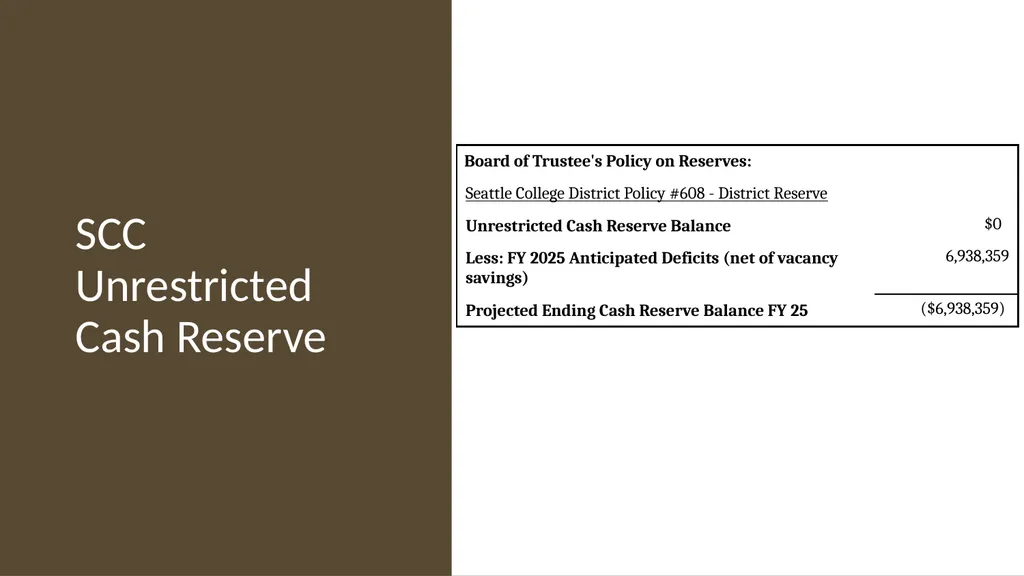
SCC Unrestricted Cash Reserve<br>
21
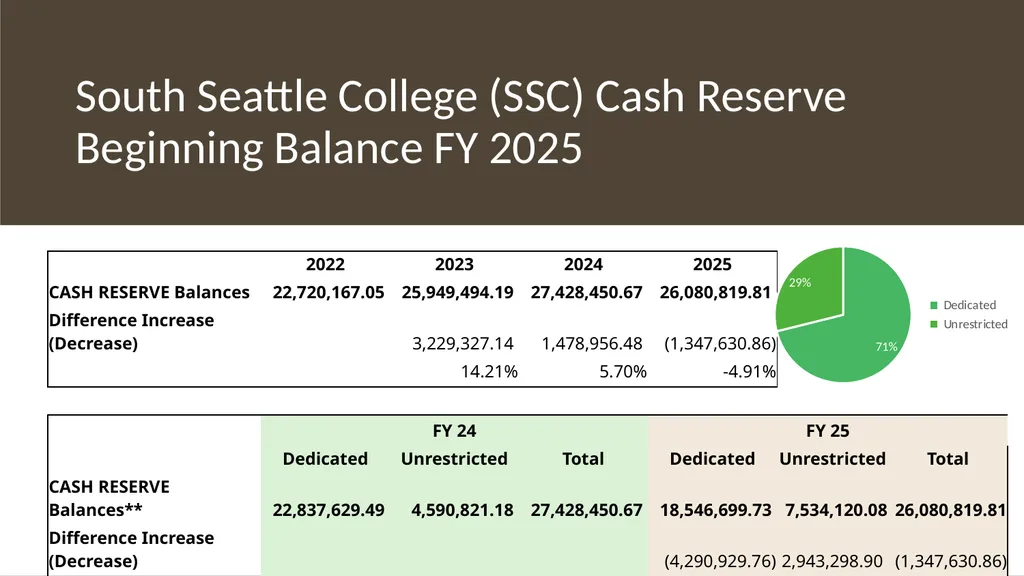
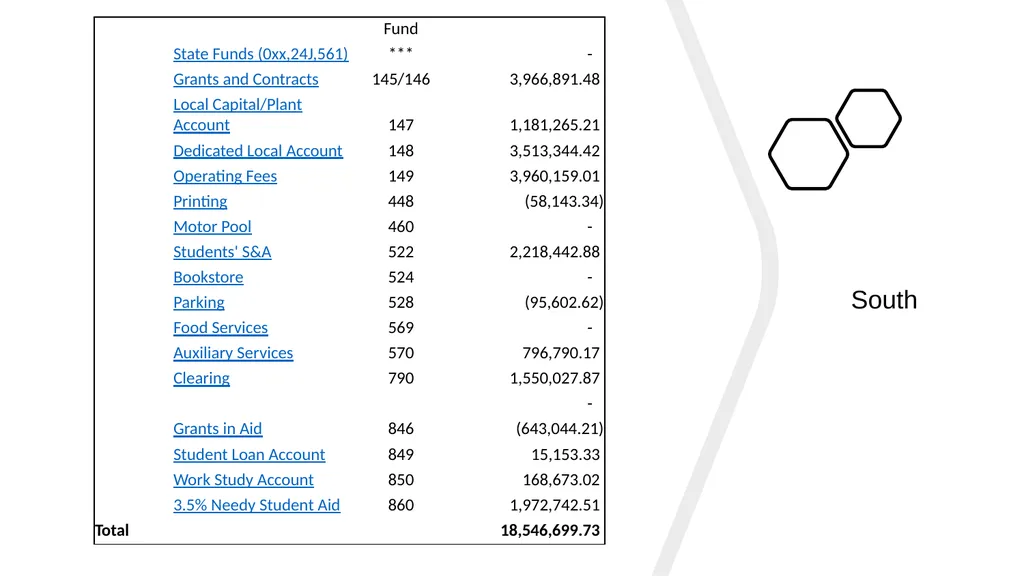
South Seattle College (SSC) Cash Reserve Beginning Balance FY 2025<br>
22
South<br>
23
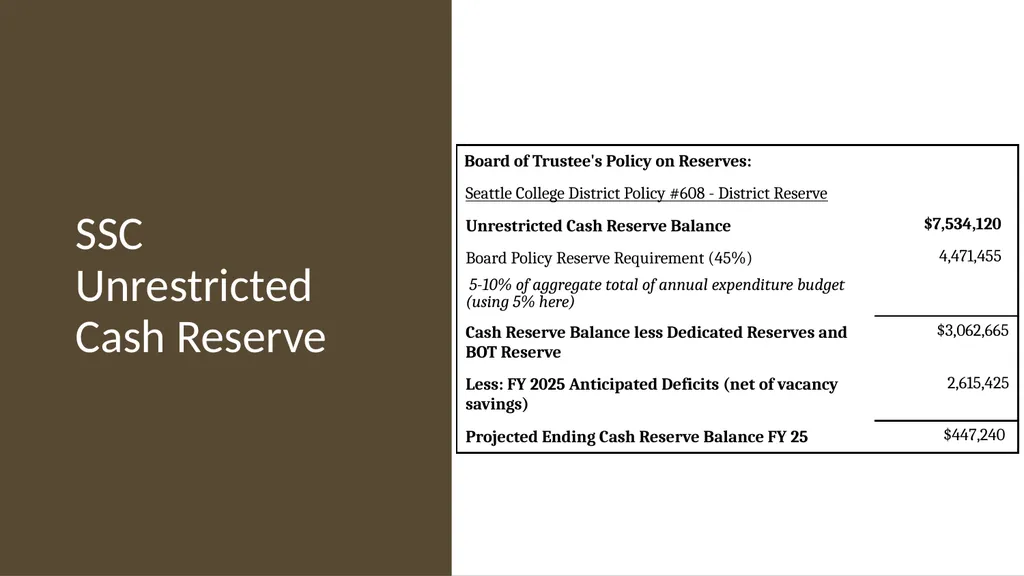
SSC Unrestricted Cash Reserve<br>
24
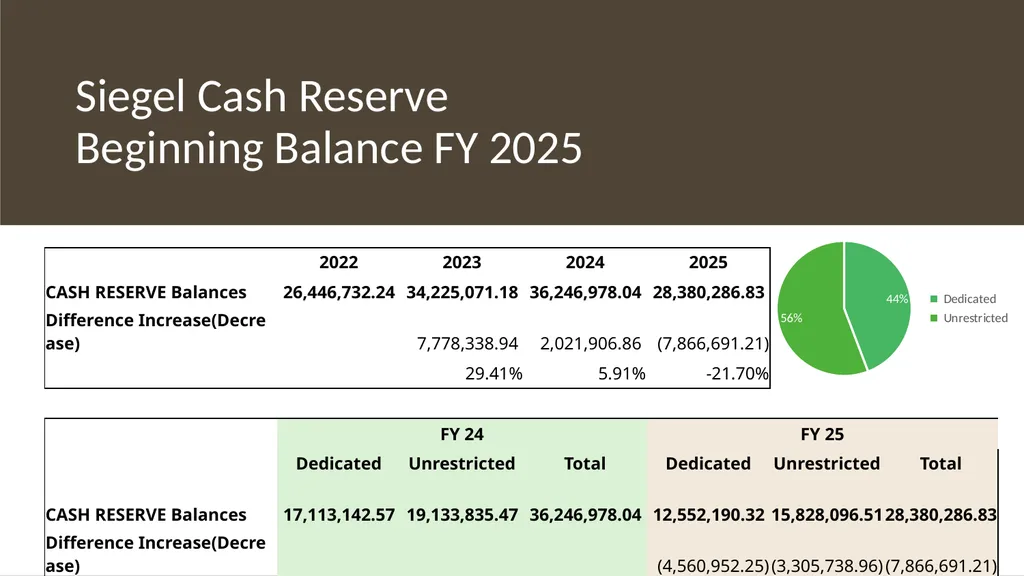
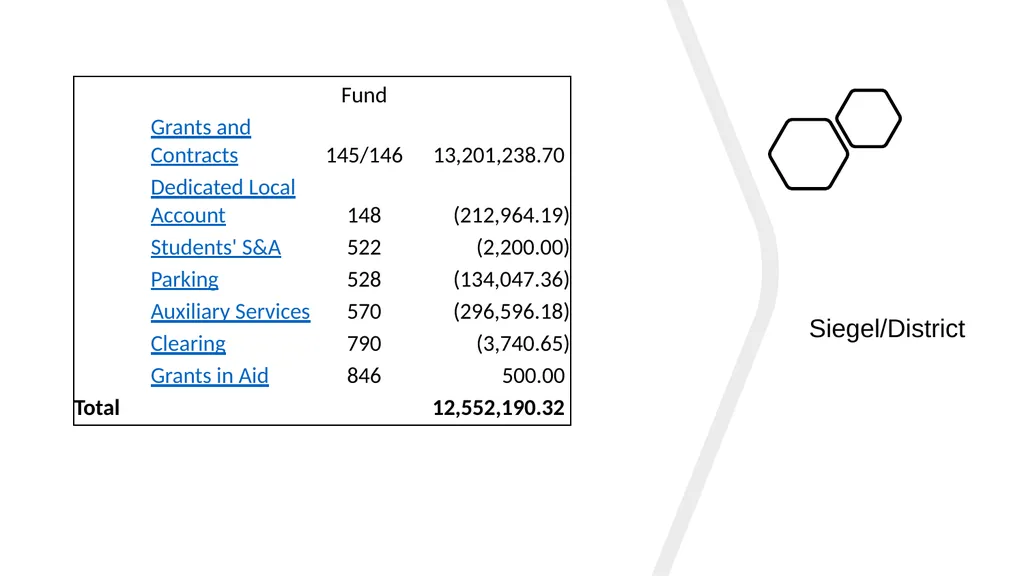
Siegel Cash Reserve Beginning Balance FY 2025<br>
25
Siegel/District<br>
26
Siegel/District Unrestricted Cash Reserve<br>
27
FY 26 & Beyond
New Considerations:
State Budget Deficit
CBA commitment
Replenish Fund (Cash) Balance<br>
28
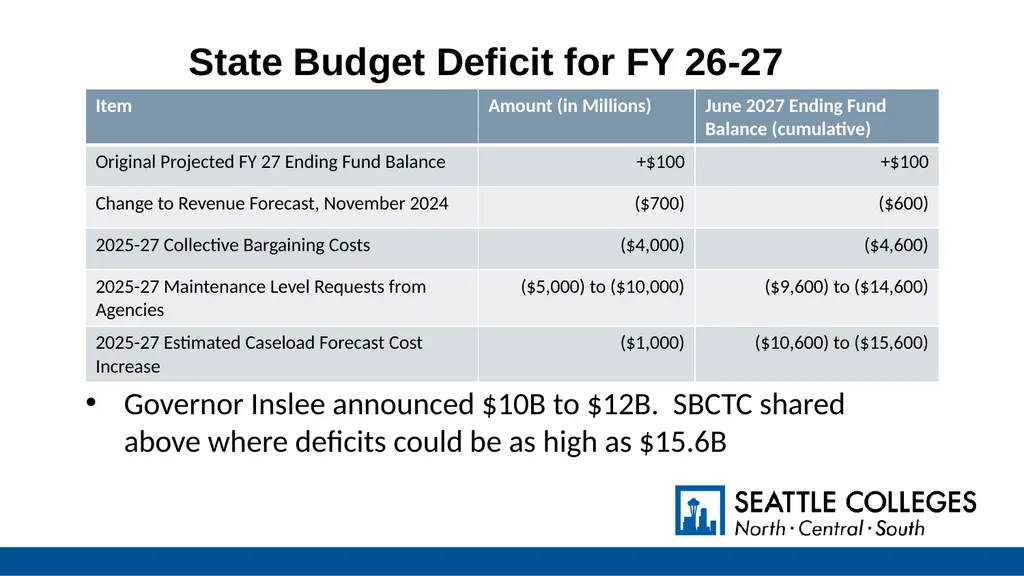
Governor Inslee announced $10B to $12B. SBCTC shared above where deficits could be as high as $15.6B State Budget Deficit for FY 26-27<br>
29
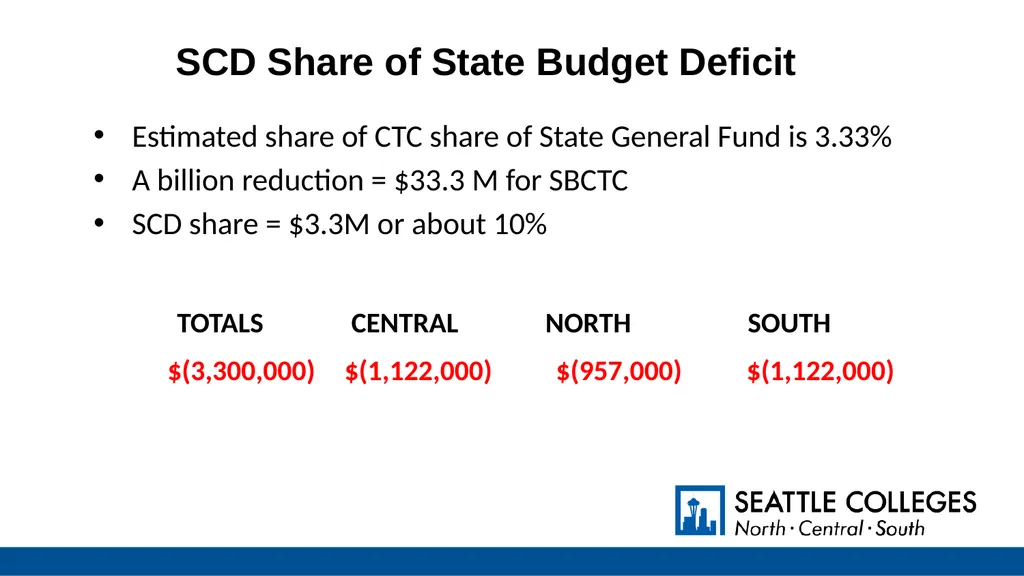
Estimated share of CTC share of State General Fund is 3.33%
A billion reduction = $33.3 M for SBCTC
SCD share = $3.3M or about 10% SCD Share of State Budget Deficit<br>
30
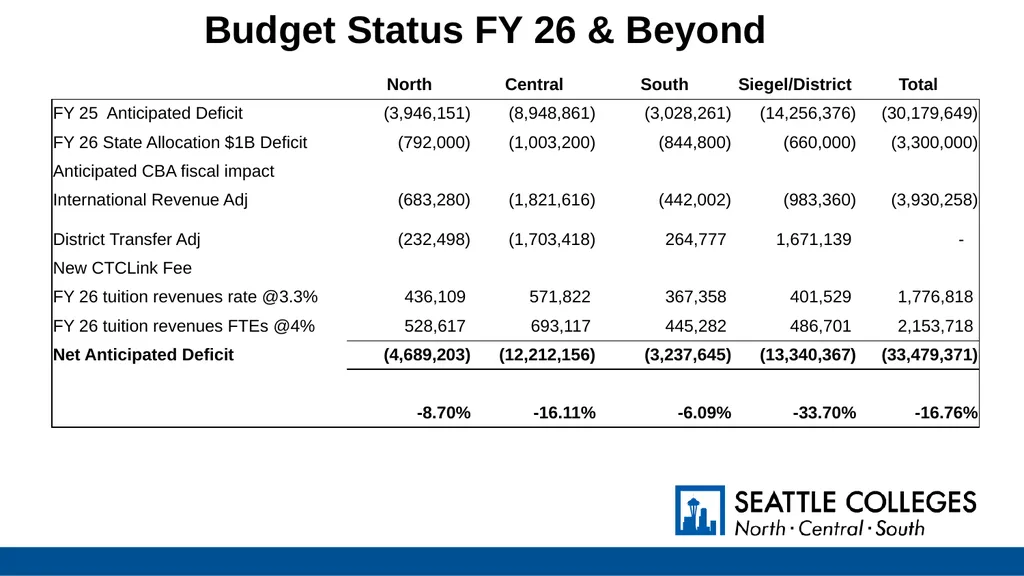
Budget Status FY 26 & Beyond<br>
31
Perfect Storm ThePhoto by PhotoAuthor is licensed under CCYYSA. Pandemic + Great Resignation + CTCLink Conversion<br>
32
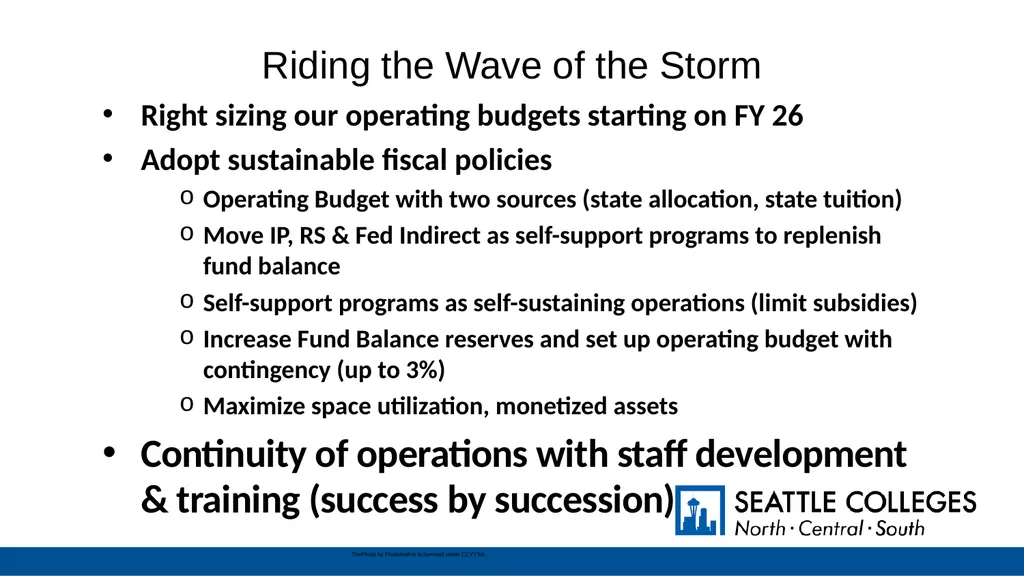
Riding the Wave of the Storm ThePhoto by PhotoAuthor is licensed under CCYYSA. Right sizing our operating budgets starting on FY 26
Adopt sustainable fiscal policies
Operating Budget with two sources (state allocation, state tuition)
Move IP, RS & Fed Indirect as self-support programs to replenish fund balance
Self-support programs as self-sustaining operations (limit subsidies)
Increase Fund Balance reserves and set up operating budget with contingency (up to 3%)
Maximize space utilization, monetized assets
Continuity of operations with staff development & training (success by succession)<br>
33
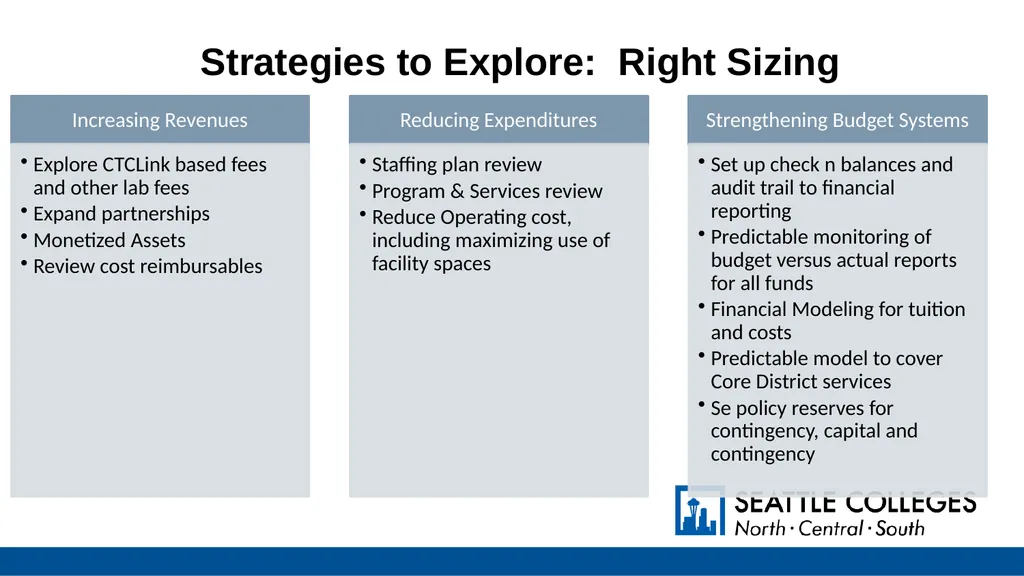
Strategies to Explore: Right Sizing<br>
34
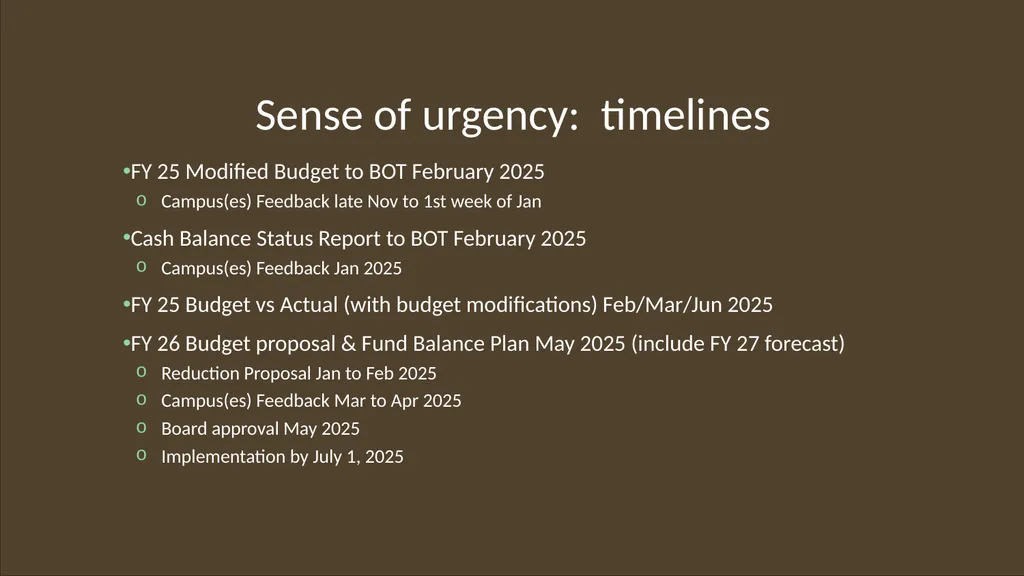
Sense of urgency: timelines FY 25 Modified Budget to BOT February 2025
Campus(es) Feedback late Nov to 1st week of Jan
Cash Balance Status Report to BOT February 2025
Campus(es) Feedback Jan 2025
FY 25 Budget vs Actual (with budget modifications) Feb/Mar/Jun 2025
FY 26 Budget proposal & Fund Balance Plan May 2025 (include FY 27 forecast)
Reduction Proposal Jan to Feb 2025
Campus(es) Feedback Mar to Apr 2025
Board approval May 2025
Implementation by July 1, 2025<br>