Operations and Safety Committee Update 1 Spring 2018 OPTN Policy 2.6.B Deceased Donor Blood Subtype Determination Can only use for allocation when no conflicting subtyping results Conflicting results include those from transplant hospital
"Operations and Safety Committee Update 1 Spring" is the property of its rightful owner. Permission is granted to
download and print the materials on this website for personal, non-commercial use only, and to display it
on your personal computer provided you do not modify the materials and that you retain all copyright
notices contained in the materials. By downloading content from our website, you accept the terms of this
agreement.
Presentation Transcript
01
Operations and Safety Committee Update 1 Spring 2018<br>
02
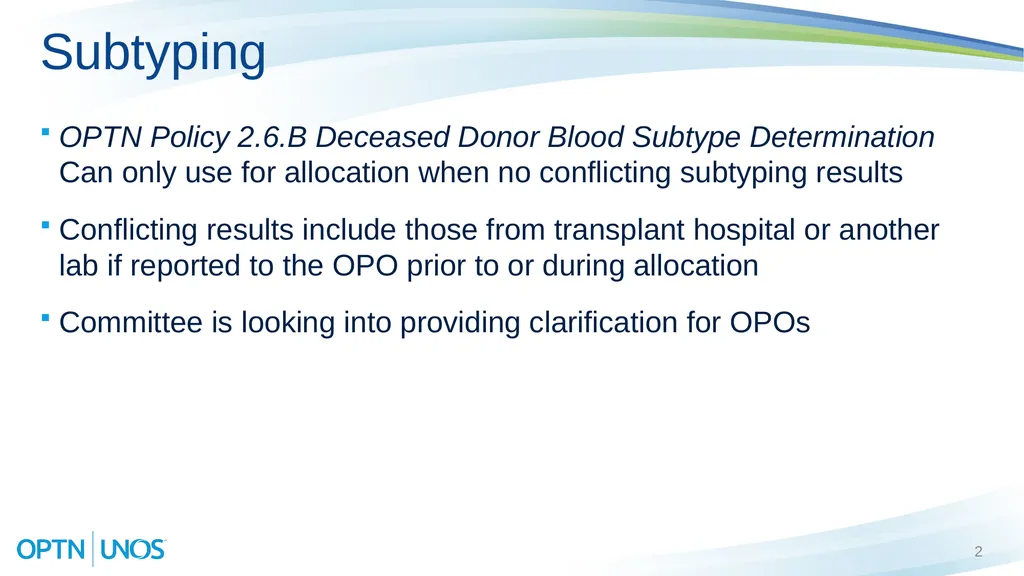
OPTN Policy 2.6.B Deceased Donor Blood Subtype Determination Can only use for allocation when no conflicting subtyping results
Conflicting results include those from transplant hospital or another lab if reported to the OPO prior to or during allocation
Committee is looking into providing clarification for OPOs Subtyping 2<br>
03
3 Extra Vessels: Reducing Reporting Burdens and Clarifying Policies Operations and Safety Committee<br>
04
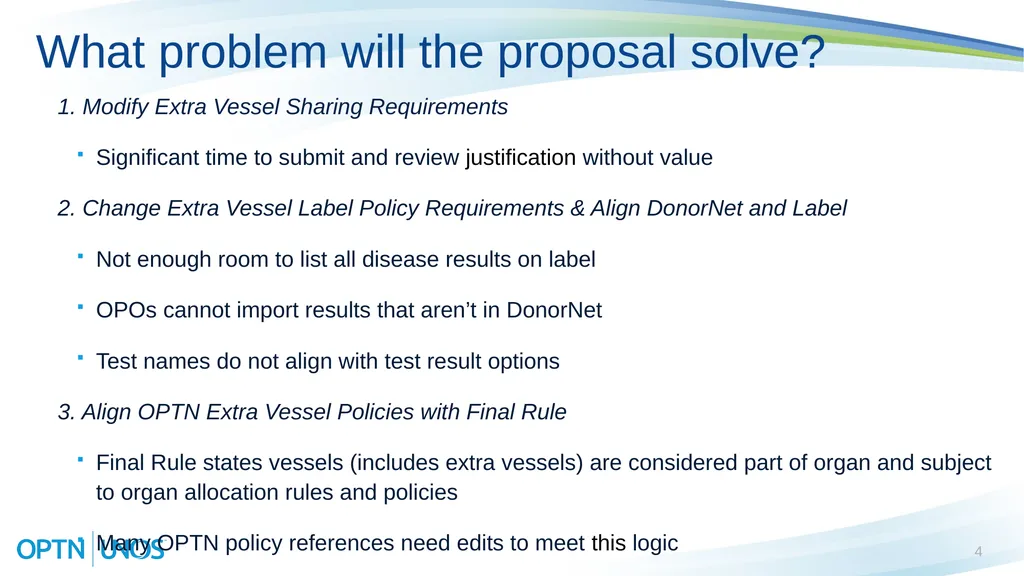
4 What problem will the proposal solve? 1. Modify Extra Vessel Sharing Requirements
Significant time to submit and review justification without value
2. Change Extra Vessel Label Policy Requirements & Align DonorNet and Label
Not enough room to list all disease results on label
OPOs cannot import results that aren’t in DonorNet
Test names do not align with test result options
3. Align OPTN Extra Vessel Policies with Final Rule
Final Rule states vessels (includes extra vessels) are considered part of organ and subject to organ allocation rules and policies
Many OPTN policy references need edits to meet this logic<br>
05
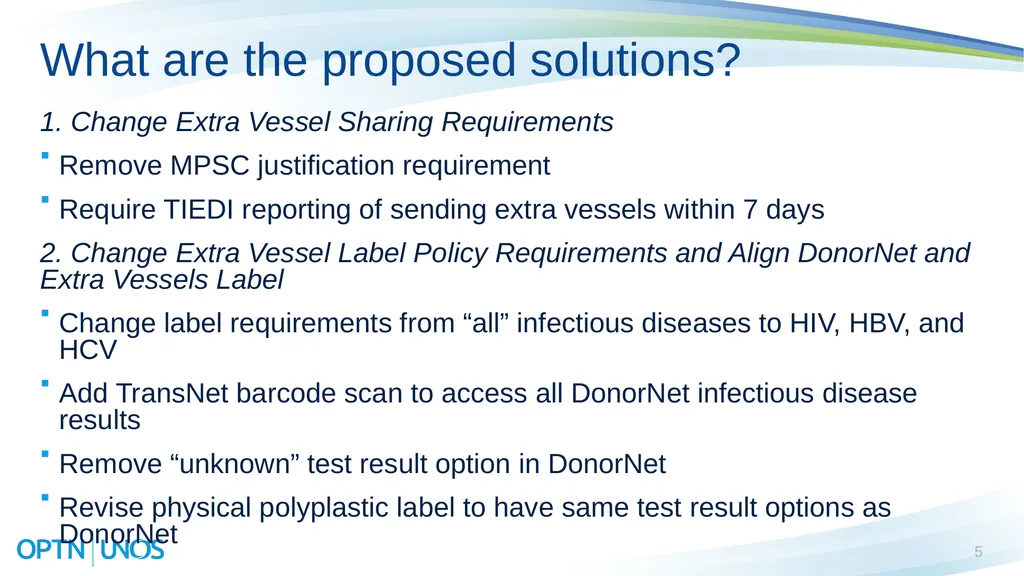
1. Change Extra Vessel Sharing Requirements
Remove MPSC justification requirement
Require TIEDI reporting of sending extra vessels within 7 days
2. Change Extra Vessel Label Policy Requirements and Align DonorNet and Extra Vessels Label
Change label requirements from “all” infectious diseases to HIV, HBV, and HCV
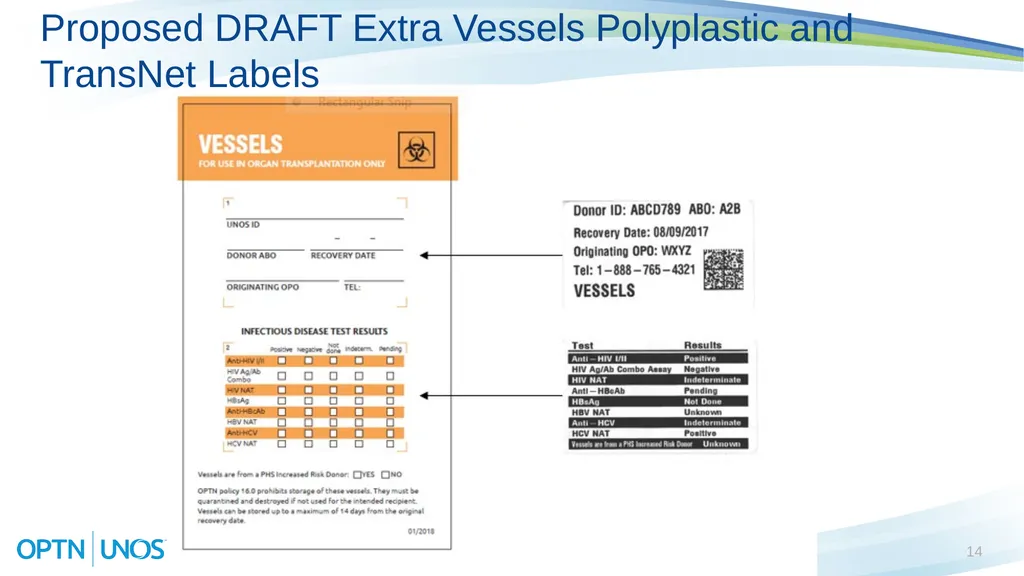
Add TransNet barcode scan to access all DonorNet infectious disease results
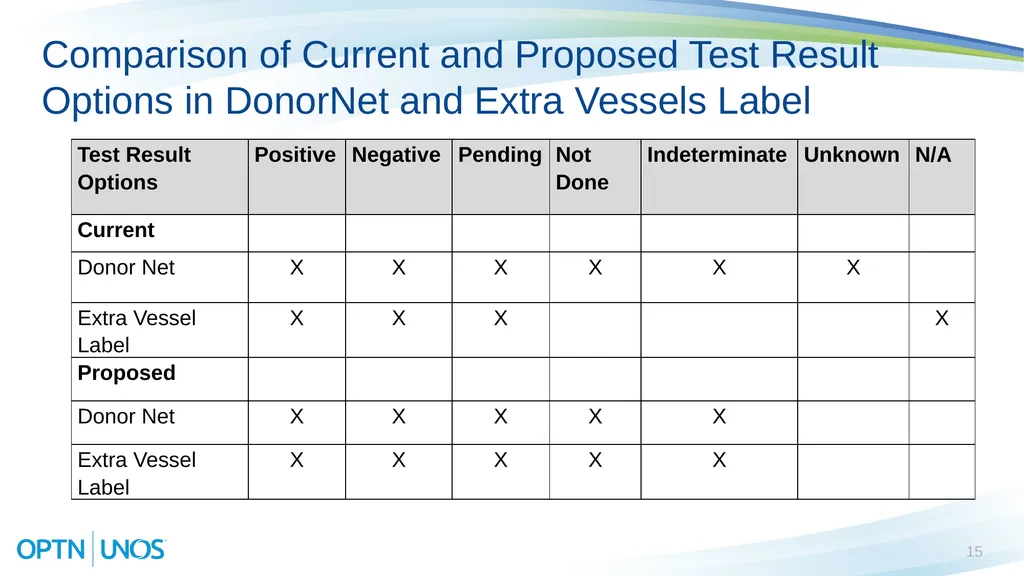
Remove “unknown” test result option in DonorNet
Revise physical polyplastic label to have same test result options as DonorNet What are the proposed solutions? 5<br>
06
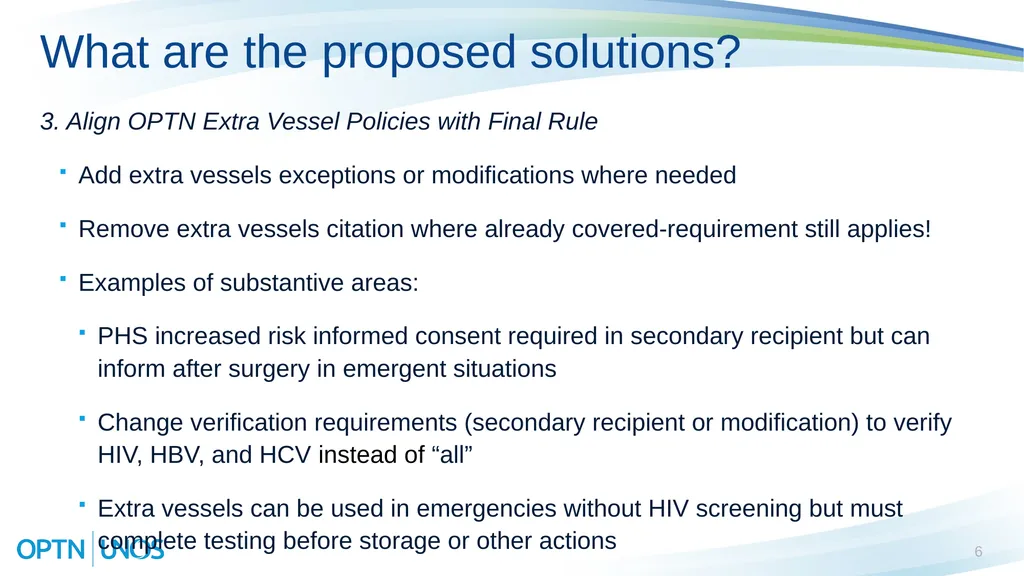
6 What are the proposed solutions? 3. Align OPTN Extra Vessel Policies with Final Rule
Add extra vessels exceptions or modifications where needed
Remove extra vessels citation where already covered-requirement still applies!
Examples of substantive areas:
PHS increased risk informed consent required in secondary recipient but can inform after surgery in emergent situations
Change verification requirements (secondary recipient or modification) to verify HIV, HBV, and HCV instead of “all”
Extra vessels can be used in emergencies without HIV screening but must complete testing before storage or other actions<br>
07
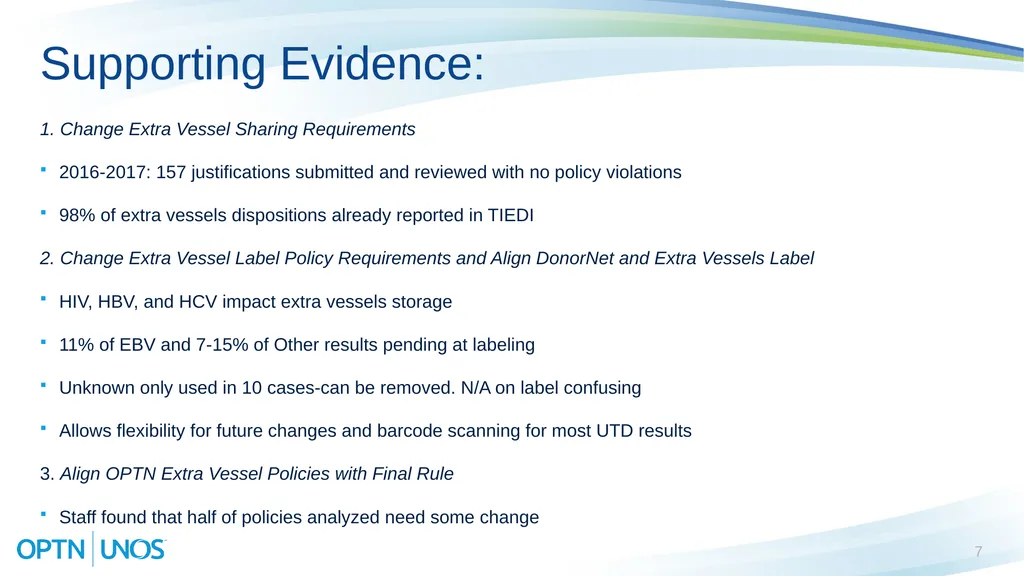
Supporting Evidence: 7 1. Change Extra Vessel Sharing Requirements
2016-2017: 157 justifications submitted and reviewed with no policy violations
98% of extra vessels dispositions already reported in TIEDI
2. Change Extra Vessel Label Policy Requirements and Align DonorNet and Extra Vessels Label
HIV, HBV, and HCV impact extra vessels storage
11% of EBV and 7-15% of Other results pending at labeling
Unknown only used in 10 cases-can be removed. N/A on label confusing
Allows flexibility for future changes and barcode scanning for most UTD results
3. Align OPTN Extra Vessel Policies with Final Rule
Staff found that half of policies analyzed need some change<br>
08
Transplant Hospitals
Will have overall reduced burden
Receivers of extra vessels no longer submit justification
Senders of extra vessels must report in TIEDI within seven days
Educate staff that organ policies apply to extra vessels
Train extra vessels users how to read new extra vessels label and scan for additional results How will members implement this proposal? 8<br>
09
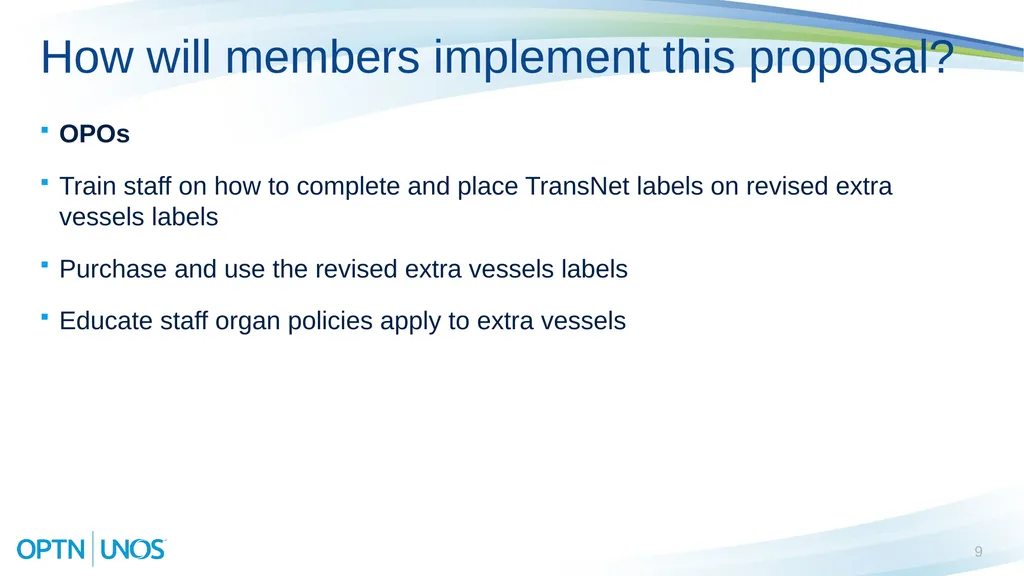
OPOs
Train staff on how to complete and place TransNet labels on revised extra vessels labels
Purchase and use the revised extra vessels labels
Educate staff organ policies apply to extra vessels How will members implement this proposal? 9<br>
10
What other infectious disease tests do OPOs perform due to travel history or local protocols that are not required by OPTN policy? Specific Feedback 10<br>
11
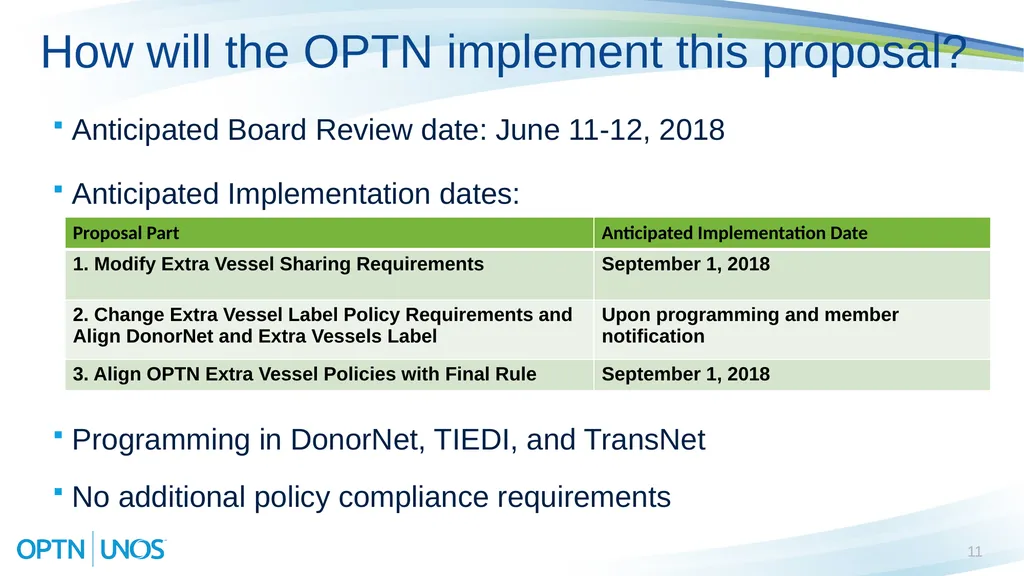
Anticipated Board Review date: June 11-12, 2018
Anticipated Implementation dates:
September 1, 2018 (Parts 1 and 3)
Upon programming and member notification (Part 2)
Programming in DonorNet, TIEDI, and TransNet
No additional policy compliance requirements How will the OPTN implement this proposal? 11<br>
12
David Marshman, CPTC
Operations and Safety Committee Chair
David.Marshman@lifelinkfound.org
Susan Tlusty
Operations and Safety Committee Liaison
Susan.tlusty@unos.org Questions? 12<br>
13
Extra Slides 13<br>
14
Proposed DRAFT Extra Vessels Polyplastic and TransNet Labels 14<br>
15
Comparison of Current and Proposed Test Result Options in DonorNet and Extra Vessels Label 15<br>
16
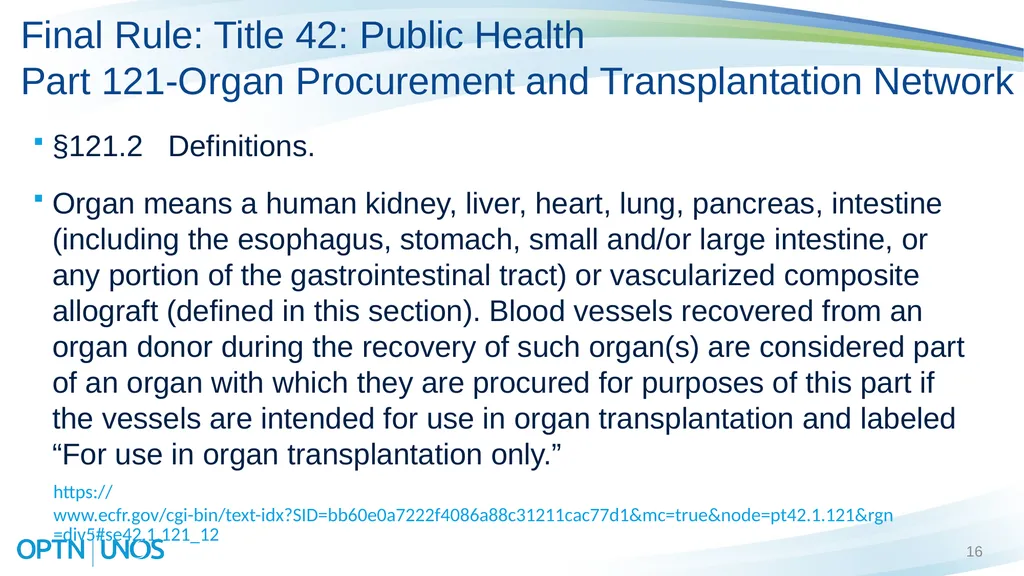
§121.2 Definitions.
Organ means a human kidney, liver, heart, lung, pancreas, intestine (including the esophagus, stomach, small and/or large intestine, or any portion of the gastrointestinal tract) or vascularized composite allograft (defined in this section). Blood vessels recovered from an organ donor during the recovery of such organ(s) are considered part of an organ with which they are procured for purposes of this part if the vessels are intended for use in organ transplantation and labeled “For use in organ transplantation only.” Final Rule: Title 42: Public Health Part 121-Organ Procurement and Transplantation Network 16 https://www.ecfr.gov/cgi-bin/text-idx?SID=bb60e0a7222f4086a88c31211cac77d1&mc=true&node=pt42.1.121&rgn=div5#se42.1.121_12<br>
17
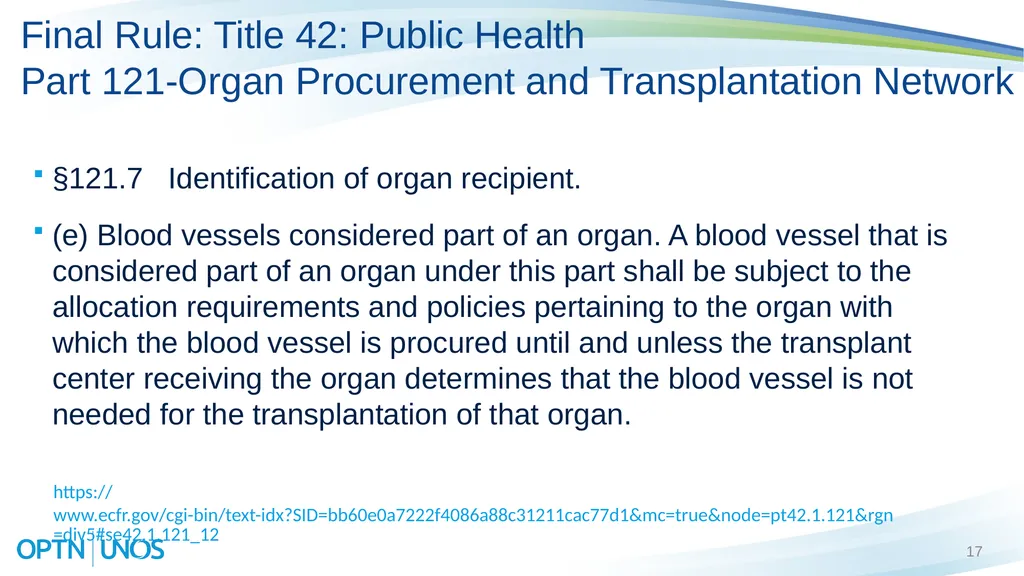
§121.7 Identification of organ recipient.
(e) Blood vessels considered part of an organ. A blood vessel that is considered part of an organ under this part shall be subject to the allocation requirements and policies pertaining to the organ with which the blood vessel is procured until and unless the transplant center receiving the organ determines that the blood vessel is not needed for the transplantation of that organ. Final Rule: Title 42: Public Health Part 121-Organ Procurement and Transplantation Network 17 https://www.ecfr.gov/cgi-bin/text-idx?SID=bb60e0a7222f4086a88c31211cac77d1&mc=true&node=pt42.1.121&rgn=div5#se42.1.121_12<br>