
Organization and Accounting for PPPs and
CP
Published · 28 slides · 0 views

1 / 1


Description
Organization and Accounting for PPPs and Concession Contracts. Prof. Frans van Schaik Non-financial assets have huge impact on government balance sheet Basic drives of man are few: to get enough food, to find shelter, and to keep debt off
Related Topics
Share
Embed code
Download this presentation From Below
"Organization and Accounting for PPPs and" is the property of its rightful owner. Permission is granted to download and print the materials on this website for personal, non-commercial use only, and to display it on your personal computer provided you do not modify the materials and that you retain all copyright notices contained in the materials. By downloading content from our website, you accept the terms of this agreement.
Presentation Transcript
01
Organization and Accounting for PPPs and Concession Contracts. Prof. Frans van Schaik<br>
02
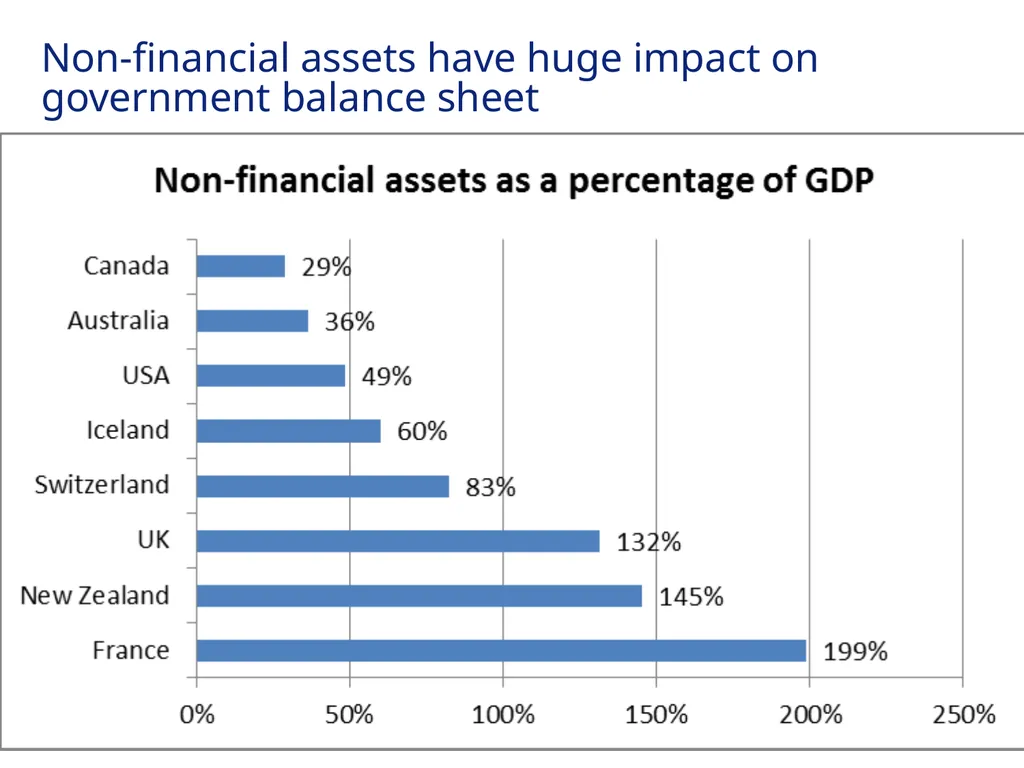
Non-financial assets have huge impact on government balance sheet<br>
03
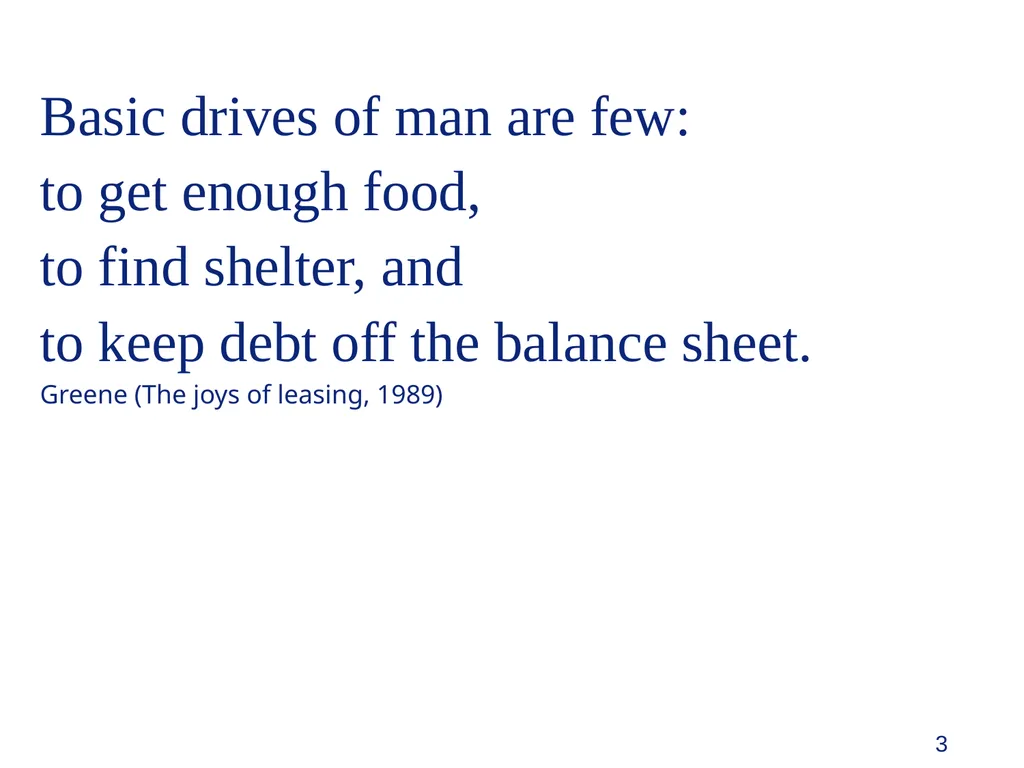
Basic drives of man are few:
to get enough food,
to find shelter, and
to keep debt off the balance sheet. Greene (The joys of leasing, 1989) 3<br>
04
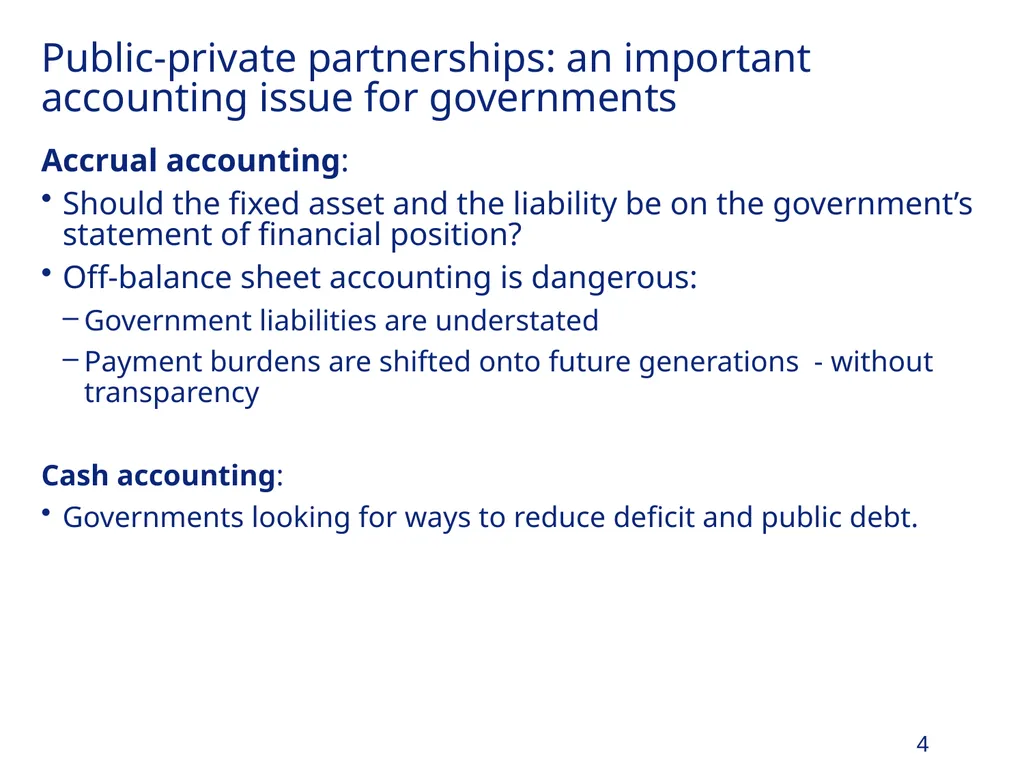
Public-private partnerships: an important accounting issue for governments Accrual accounting:
Should the fixed asset and the liability be on the government’s statement of financial position?
Off-balance sheet accounting is dangerous:
Government liabilities are understated
Payment burdens are shifted onto future generations - without transparency
Cash accounting:
Governments looking for ways to reduce deficit and public debt. 4<br>
Should the fixed asset and the liability be on the government’s statement of financial position?
Off-balance sheet accounting is dangerous:
Government liabilities are understated
Payment burdens are shifted onto future generations - without transparency
Cash accounting:
Governments looking for ways to reduce deficit and public debt. 4<br>
05
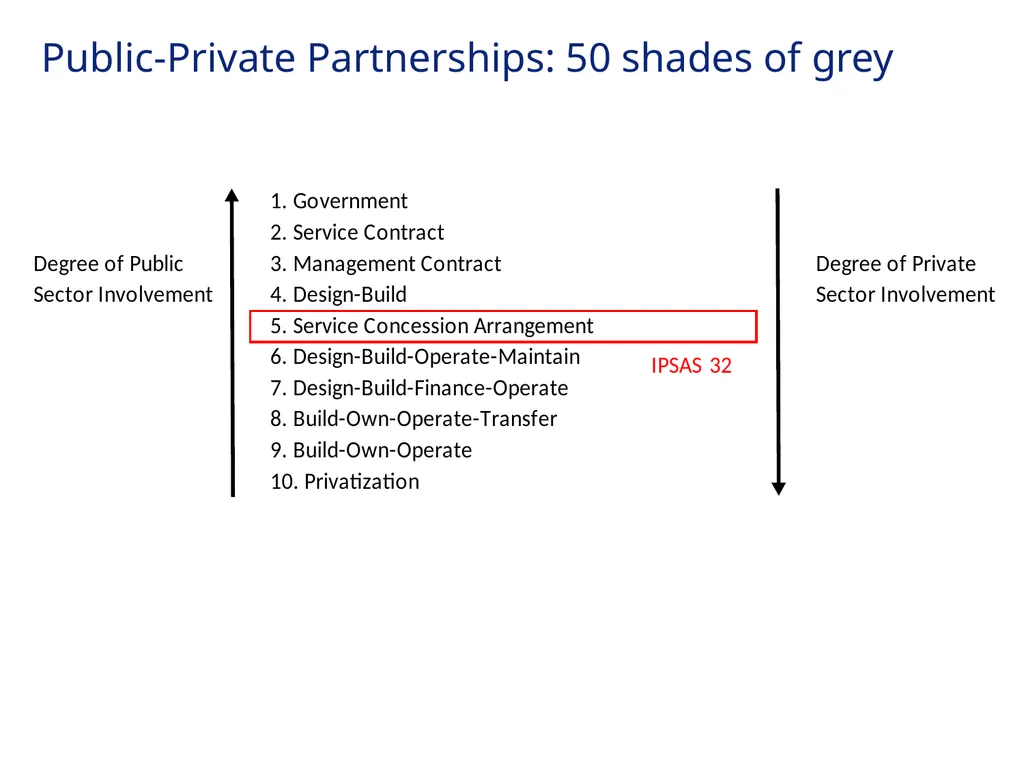
Public-Private Partnerships: 50 shades of grey<br>
06
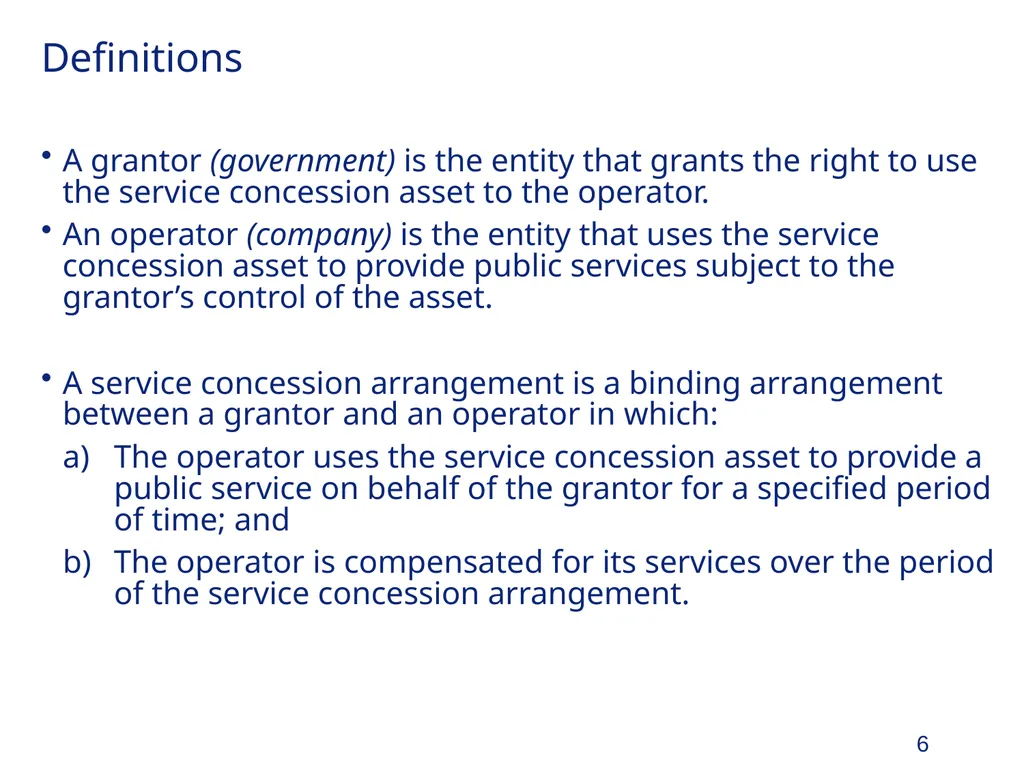
Definitions A grantor (government) is the entity that grants the right to use the service concession asset to the operator.
An operator (company) is the entity that uses the service concession asset to provide public services subject to the grantor’s control of the asset.
A service concession arrangement is a binding arrangement between a grantor and an operator in which:
The operator uses the service concession asset to provide a public service on behalf of the grantor for a specified period of time; and
The operator is compensated for its services over the period of the service concession arrangement. 6<br>
An operator (company) is the entity that uses the service concession asset to provide public services subject to the grantor’s control of the asset.
A service concession arrangement is a binding arrangement between a grantor and an operator in which:
The operator uses the service concession asset to provide a public service on behalf of the grantor for a specified period of time; and
The operator is compensated for its services over the period of the service concession arrangement. 6<br>
07
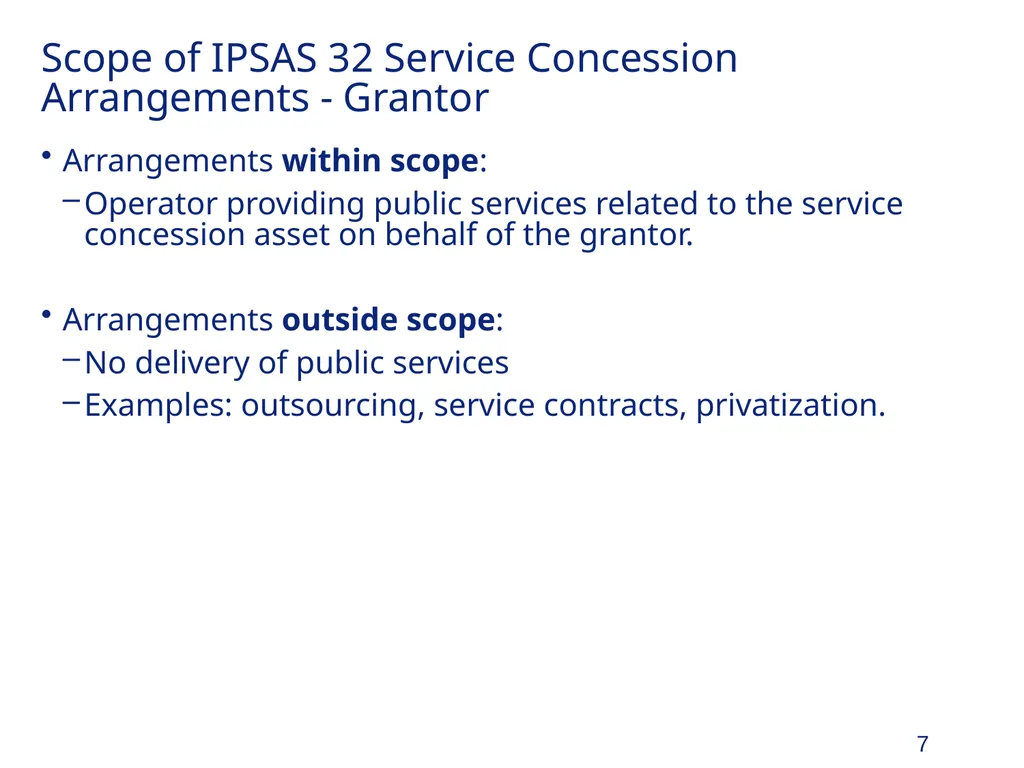
Scope of IPSAS 32 Service Concession Arrangements - Grantor Arrangements within scope:
Operator providing public services related to the service concession asset on behalf of the grantor.
Arrangements outside scope:
No delivery of public services
Examples: outsourcing, service contracts, privatization. 7<br>
Operator providing public services related to the service concession asset on behalf of the grantor.
Arrangements outside scope:
No delivery of public services
Examples: outsourcing, service contracts, privatization. 7<br>
08
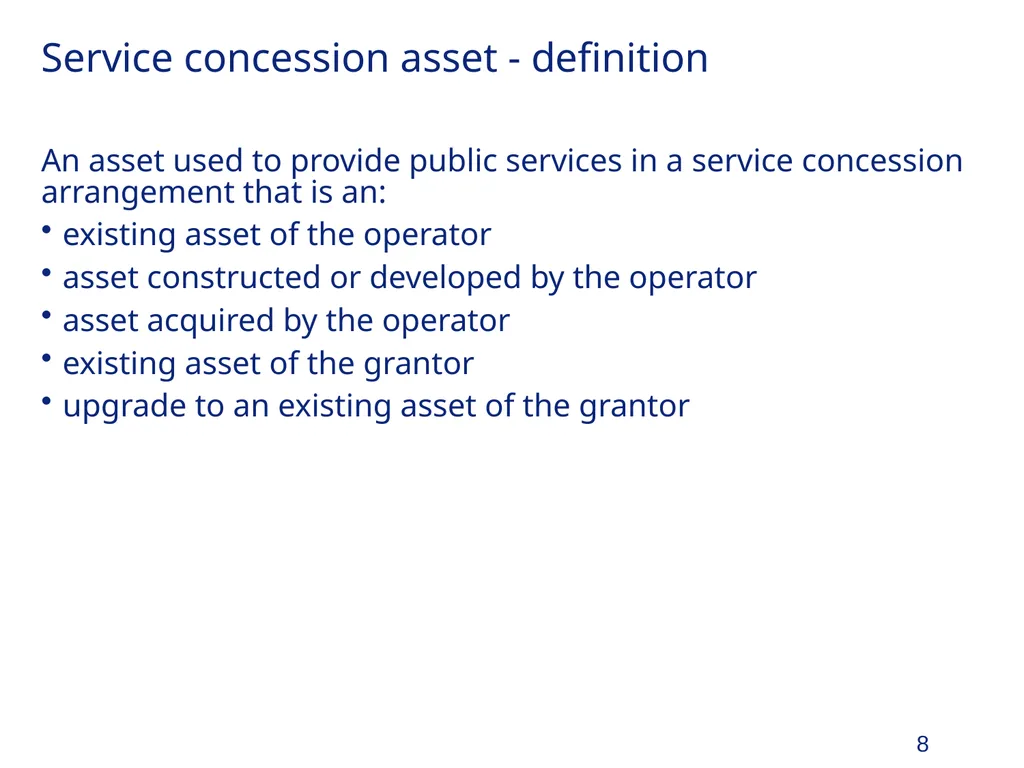
Service concession asset - definition An asset used to provide public services in a service concession arrangement that is an:
existing asset of the operator
asset constructed or developed by the operator
asset acquired by the operator
existing asset of the grantor
upgrade to an existing asset of the grantor 8<br>
existing asset of the operator
asset constructed or developed by the operator
asset acquired by the operator
existing asset of the grantor
upgrade to an existing asset of the grantor 8<br>
09
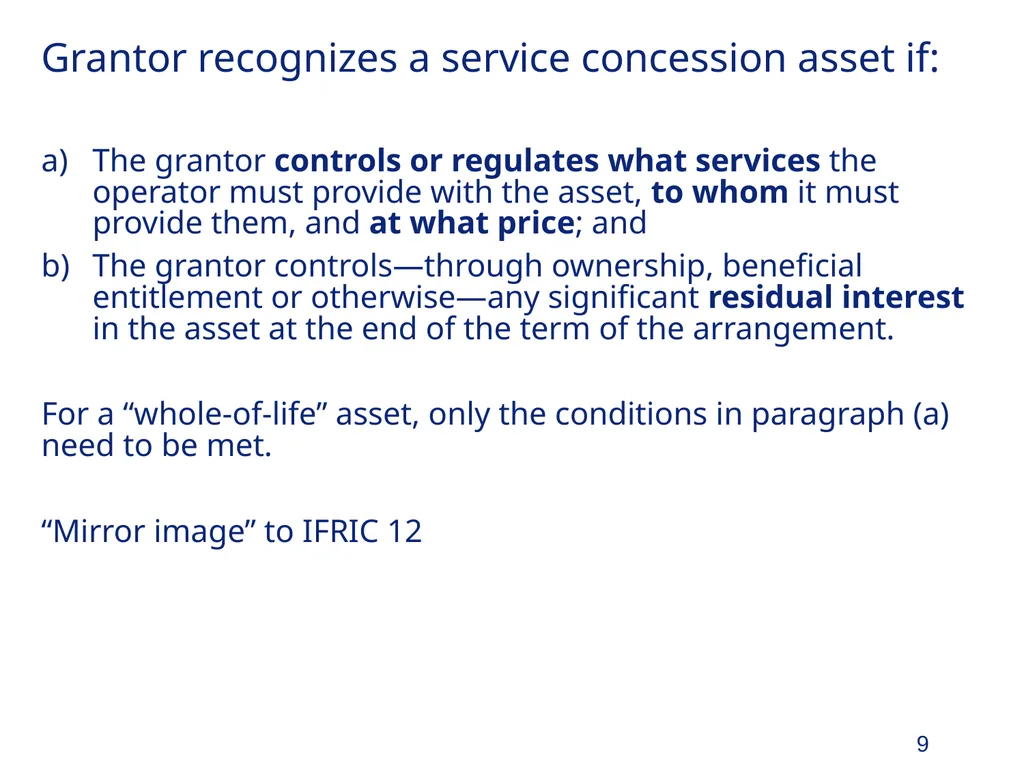
Grantor recognizes a service concession asset if: The grantor controls or regulates what services the operator must provide with the asset, to whom it must provide them, and at what price; and
The grantor controls—through ownership, beneficial entitlement or otherwise—any significant residual interest in the asset at the end of the term of the arrangement.
For a “whole-of-life” asset, only the conditions in paragraph (a) need to be met.
“Mirror image” to IFRIC 12 9<br>
The grantor controls—through ownership, beneficial entitlement or otherwise—any significant residual interest in the asset at the end of the term of the arrangement.
For a “whole-of-life” asset, only the conditions in paragraph (a) need to be met.
“Mirror image” to IFRIC 12 9<br>
10
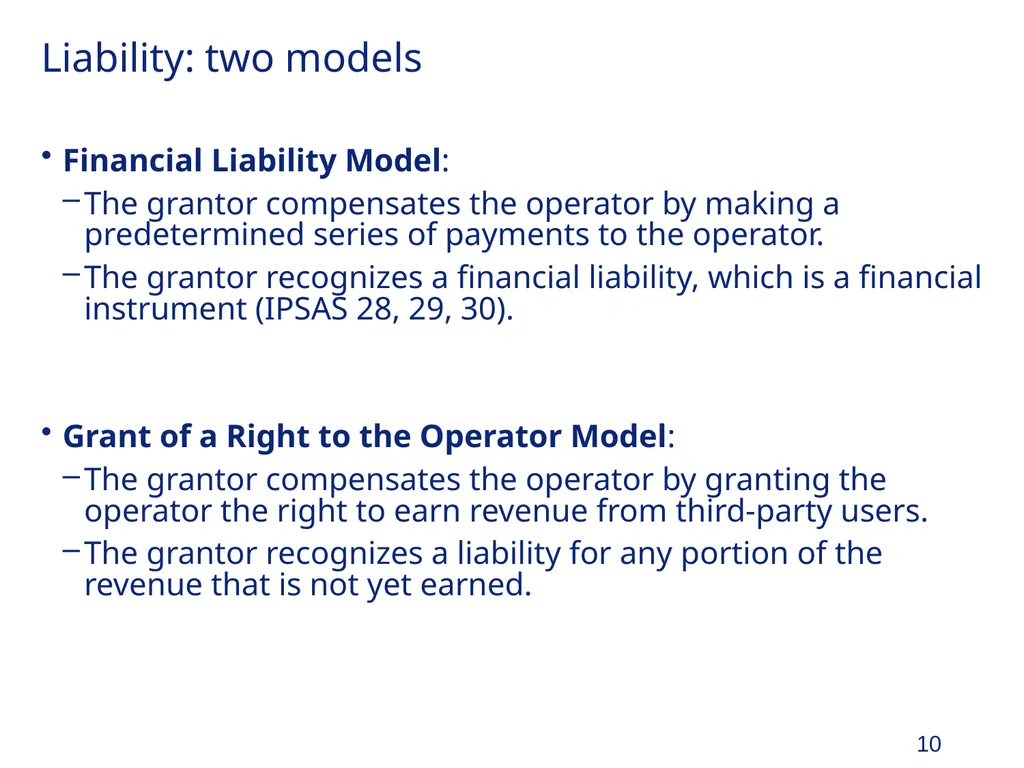
Liability: two models Financial Liability Model:
The grantor compensates the operator by making a predetermined series of payments to the operator.
The grantor recognizes a financial liability, which is a financial instrument (IPSAS 28, 29, 30).
Grant of a Right to the Operator Model:
The grantor compensates the operator by granting the operator the right to earn revenue from third-party users.
The grantor recognizes a liability for any portion of the revenue that is not yet earned. 10<br>
The grantor compensates the operator by making a predetermined series of payments to the operator.
The grantor recognizes a financial liability, which is a financial instrument (IPSAS 28, 29, 30).
Grant of a Right to the Operator Model:
The grantor compensates the operator by granting the operator the right to earn revenue from third-party users.
The grantor recognizes a liability for any portion of the revenue that is not yet earned. 10<br>
11
Revenue recognition:
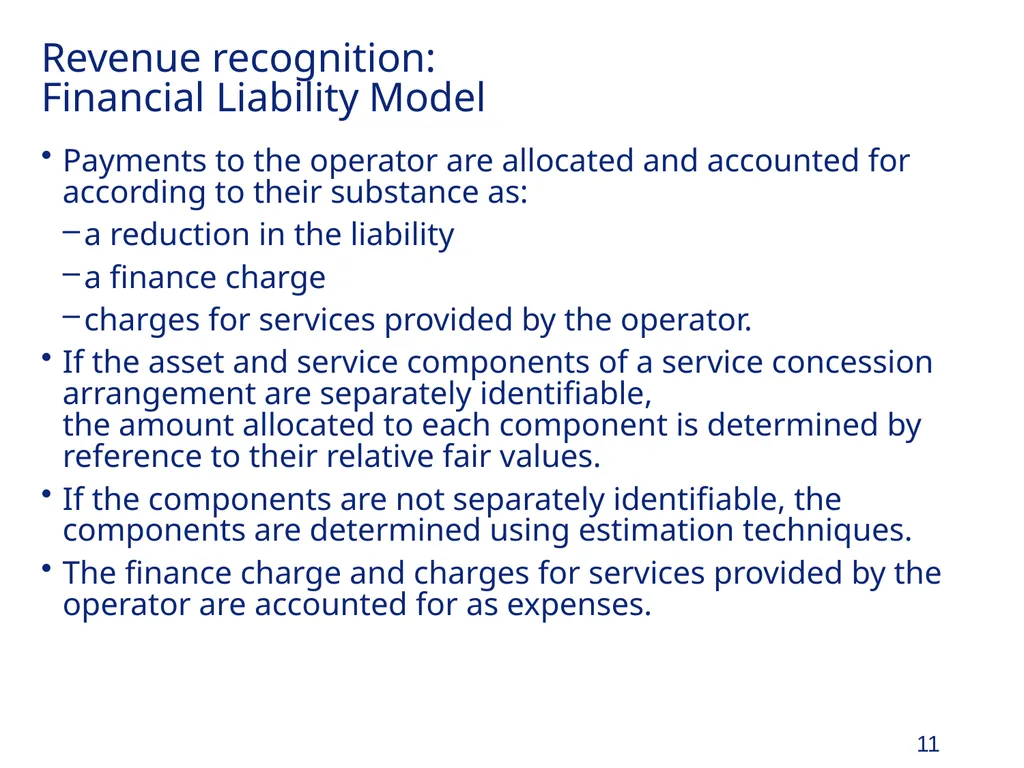
Financial Liability Model Payments to the operator are allocated and accounted for according to their substance as:
a reduction in the liability
a finance charge
charges for services provided by the operator.
If the asset and service components of a service concession arrangement are separately identifiable, the amount allocated to each component is determined by reference to their relative fair values.
If the components are not separately identifiable, the components are determined using estimation techniques.
The finance charge and charges for services provided by the operator are accounted for as expenses. 11<br>
a reduction in the liability
a finance charge
charges for services provided by the operator.
If the asset and service components of a service concession arrangement are separately identifiable, the amount allocated to each component is determined by reference to their relative fair values.
If the components are not separately identifiable, the components are determined using estimation techniques.
The finance charge and charges for services provided by the operator are accounted for as expenses. 11<br>
12
Revenue recognition:
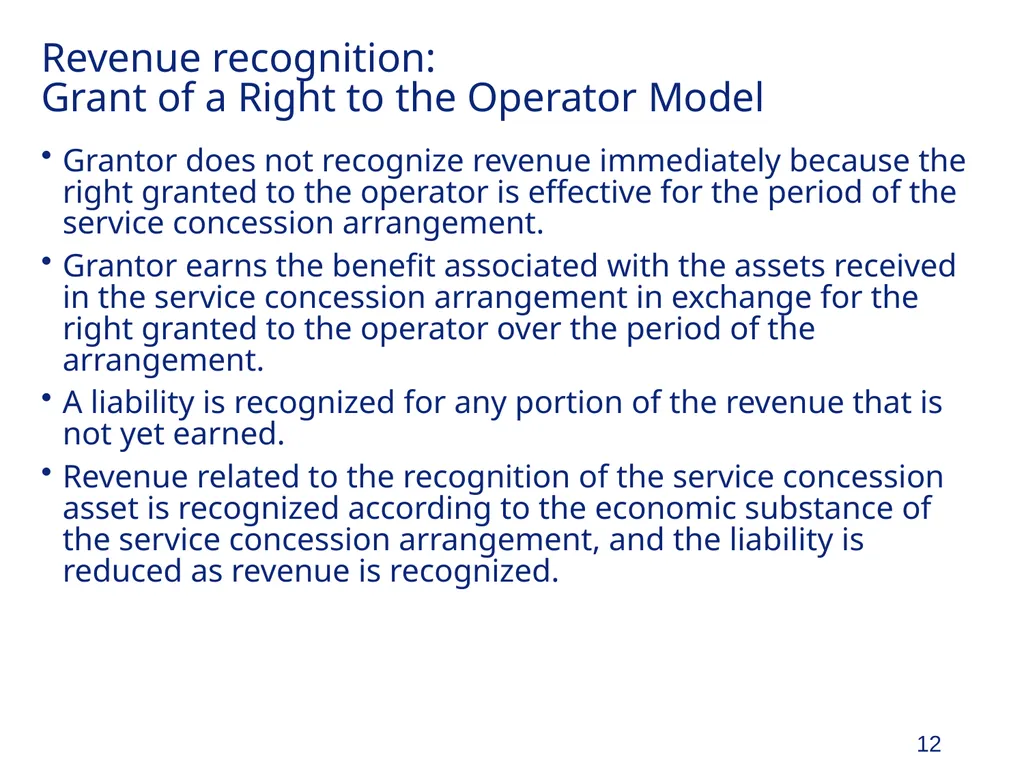
Grant of a Right to the Operator Model Grantor does not recognize revenue immediately because the right granted to the operator is effective for the period of the service concession arrangement.
Grantor earns the benefit associated with the assets received in the service concession arrangement in exchange for the right granted to the operator over the period of the arrangement.
A liability is recognized for any portion of the revenue that is not yet earned.
Revenue related to the recognition of the service concession asset is recognized according to the economic substance of the service concession arrangement, and the liability is reduced as revenue is recognized. 12<br>
Grantor earns the benefit associated with the assets received in the service concession arrangement in exchange for the right granted to the operator over the period of the arrangement.
A liability is recognized for any portion of the revenue that is not yet earned.
Revenue related to the recognition of the service concession asset is recognized according to the economic substance of the service concession arrangement, and the liability is reduced as revenue is recognized. 12<br>
13
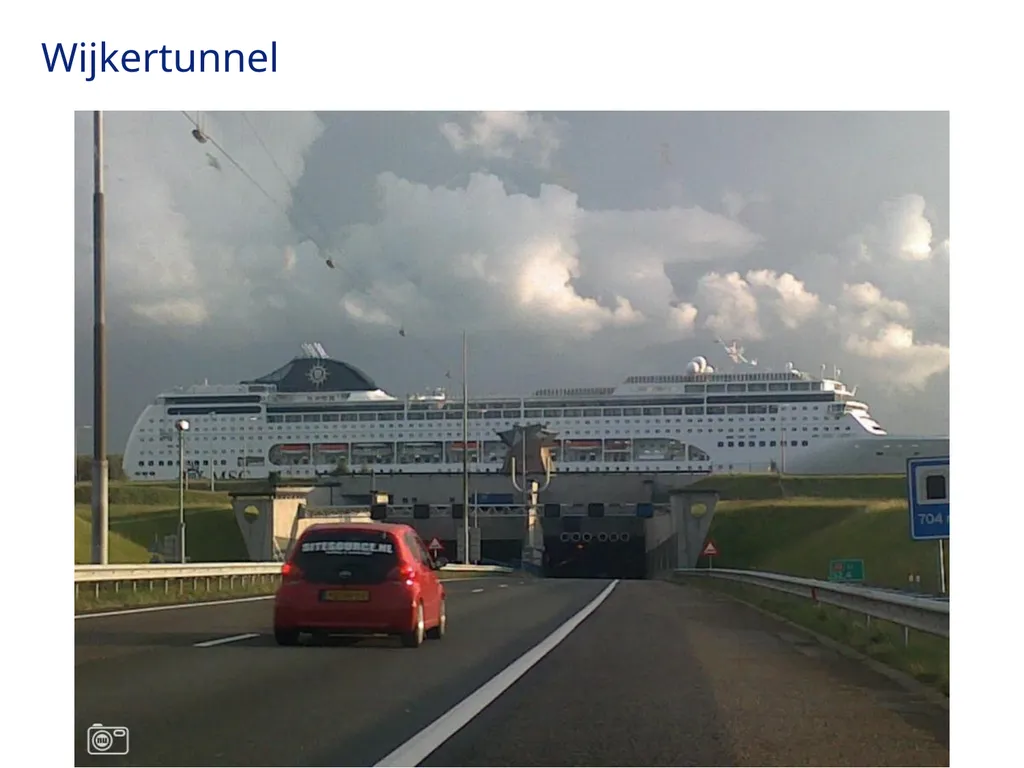
Wijkertunnel 13<br>
14
Wijkertunnel: reporting in accordance with IPSAS 32 First large service concession arrangement in the Netherlands
Tunnel under canal between Amsterdam and North Sea
Consortium of banks (among others ING and Commerzbank) paid 3/4 of 272 million euro building costs
Shadow toll: Netherlands government pays toll to the consortium for each vehicle passing through the tunnel during 30 years. Present value of expected payments: 1 billion euro. 14<br>
Tunnel under canal between Amsterdam and North Sea
Consortium of banks (among others ING and Commerzbank) paid 3/4 of 272 million euro building costs
Shadow toll: Netherlands government pays toll to the consortium for each vehicle passing through the tunnel during 30 years. Present value of expected payments: 1 billion euro. 14<br>
15
Wijkertunnel – Is this a service concession arrangement? Yes:
The operator uses Wijkertunnel to provide a public service on behalf of the grantor for a specified period of time; and
The operator is compensated for its services over the period of the service concession arrangement.
Wijkertunnel is an asset constructed by the operator 15<br>
The operator uses Wijkertunnel to provide a public service on behalf of the grantor for a specified period of time; and
The operator is compensated for its services over the period of the service concession arrangement.
Wijkertunnel is an asset constructed by the operator 15<br>
16
Does Wijkertunnel meet the recognition criteria of a service concession asset for the grantor? Yes. Meets both recognition criteria:
The grantor controls or regulates what services the operator must provide with the asset, to whom it must provide them, and at what price.
The grantor controls—through ownership, beneficial entitlement or otherwise—any significant residual interest in the asset at the end of the term of the arrangement.
Government controls price (free) 16<br>
The grantor controls or regulates what services the operator must provide with the asset, to whom it must provide them, and at what price.
The grantor controls—through ownership, beneficial entitlement or otherwise—any significant residual interest in the asset at the end of the term of the arrangement.
Government controls price (free) 16<br>
17
Wijkertunnel: Financial liability model or
Grant of a right to the operator model? Financial liability model, because:
The grantor compensates the operator by making a predetermined series of payments to the operator.
Accounting:
The grantor recognizes a financial liability, i.e. a financial instrument (IPSAS 28, 29, 30).
Determinable series of payments (IPSAS 32, BC4, BC25) 17<br>
The grantor compensates the operator by making a predetermined series of payments to the operator.
Accounting:
The grantor recognizes a financial liability, i.e. a financial instrument (IPSAS 28, 29, 30).
Determinable series of payments (IPSAS 32, BC4, BC25) 17<br>
18
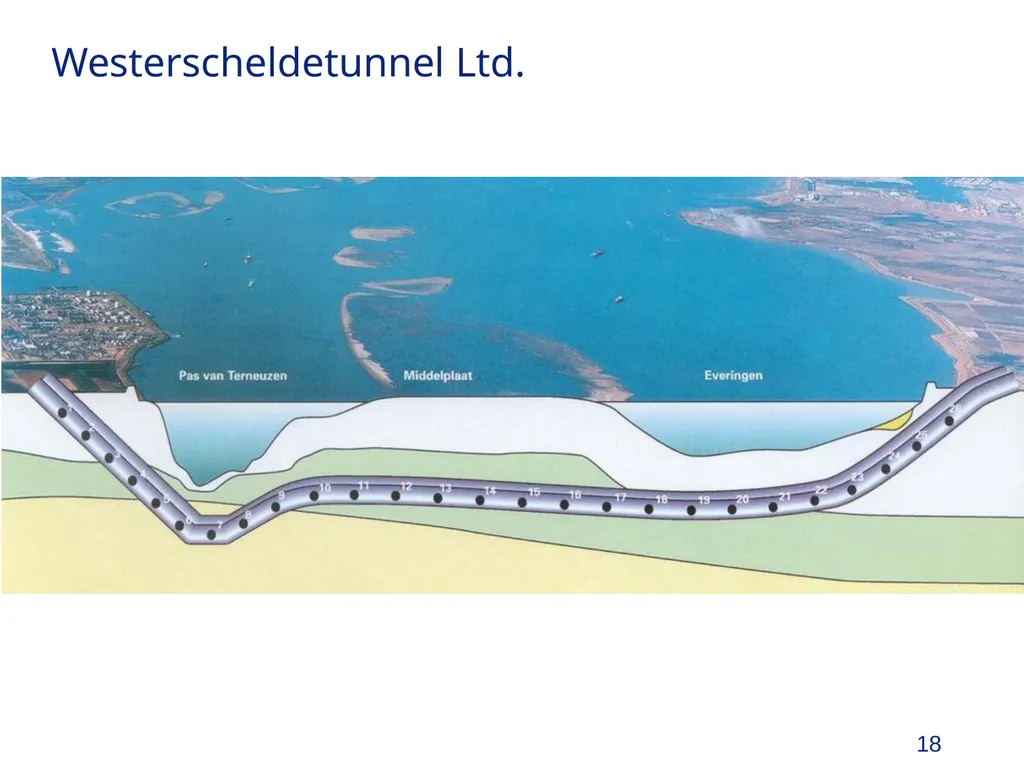
18 Westerscheldetunnel Ltd.<br>
19
Westerscheldetunnel Ltd.: reporting in accordance with IPSAS 32 Building costs: € 725 million
Public corporation - objective: design, build and operate a 6.6 km tunnel under the Westerschelde river
All shares owned by government
Tol: rate varies between € 3,50 and € 22,50 per vehicle (approximately 40% of all costs)
After 30 years capital expenditure will have been recovered and tunnel will be free 19<br>
Public corporation - objective: design, build and operate a 6.6 km tunnel under the Westerschelde river
All shares owned by government
Tol: rate varies between € 3,50 and € 22,50 per vehicle (approximately 40% of all costs)
After 30 years capital expenditure will have been recovered and tunnel will be free 19<br>
20
Westerscheldetunnel – Is this a service concession arrangement? Yes:
The operator uses Westerscheldetunnel to provide a public service on behalf of the grantor for a specified period of time; and
The operator is compensated for its services over the period of the service concession arrangement.
Westerscheldetunnel is an asset constructed by the operator (N.V.) 20<br>
The operator uses Westerscheldetunnel to provide a public service on behalf of the grantor for a specified period of time; and
The operator is compensated for its services over the period of the service concession arrangement.
Westerscheldetunnel is an asset constructed by the operator (N.V.) 20<br>
21
Should government recognize Westerscheldetunnel as an asset? Yes. Tunnel meets both recognition criteria:
The grantor controls or regulates what services the operator must provide with the asset, to whom it must provide them, and at what price.
The grantor controls—through ownership, beneficial entitlement or otherwise—any significant residual interest in the asset at the end of the term of the arrangement.
Government controls price by regulation
Government controls residual value (after 30 years), even though N.V. retains ownership 21<br>
The grantor controls or regulates what services the operator must provide with the asset, to whom it must provide them, and at what price.
The grantor controls—through ownership, beneficial entitlement or otherwise—any significant residual interest in the asset at the end of the term of the arrangement.
Government controls price by regulation
Government controls residual value (after 30 years), even though N.V. retains ownership 21<br>
22
Westerscheldetunnel: Financial liability model or Grant of a right to the operator model? Grant of a Right to the Operator Model, because:
The grantor compensates the operator by granting the operator the right to earn revenue from third-party users.
Accounting:
The government recognizes a liability for any portion of the revenue that is not yet earned.
Revenue related to the recognition of the service concession asset is recognized according to the economic substance, and the liability is reduced as revenue is recognized 22<br>
The grantor compensates the operator by granting the operator the right to earn revenue from third-party users.
Accounting:
The government recognizes a liability for any portion of the revenue that is not yet earned.
Revenue related to the recognition of the service concession asset is recognized according to the economic substance, and the liability is reduced as revenue is recognized 22<br>
23
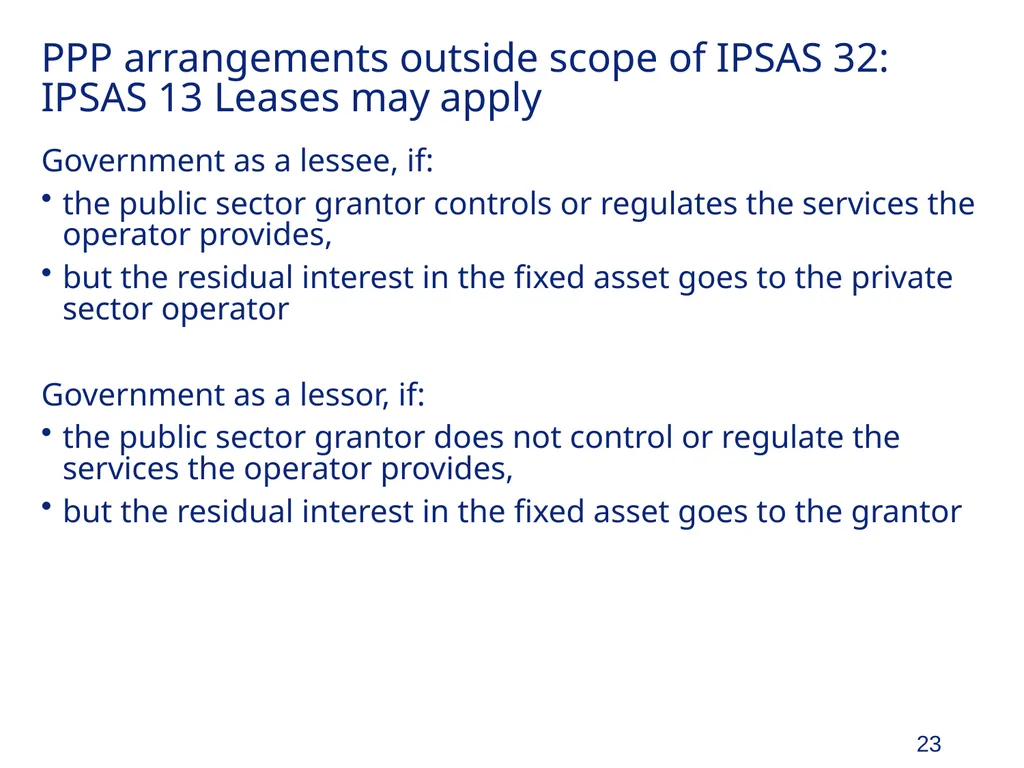
PPP arrangements outside scope of IPSAS 32:
IPSAS 13 Leases may apply Government as a lessee, if:
the public sector grantor controls or regulates the services the operator provides,
but the residual interest in the fixed asset goes to the private sector operator
Government as a lessor, if:
the public sector grantor does not control or regulate the services the operator provides,
but the residual interest in the fixed asset goes to the grantor 23<br>
the public sector grantor controls or regulates the services the operator provides,
but the residual interest in the fixed asset goes to the private sector operator
Government as a lessor, if:
the public sector grantor does not control or regulate the services the operator provides,
but the residual interest in the fixed asset goes to the grantor 23<br>
24
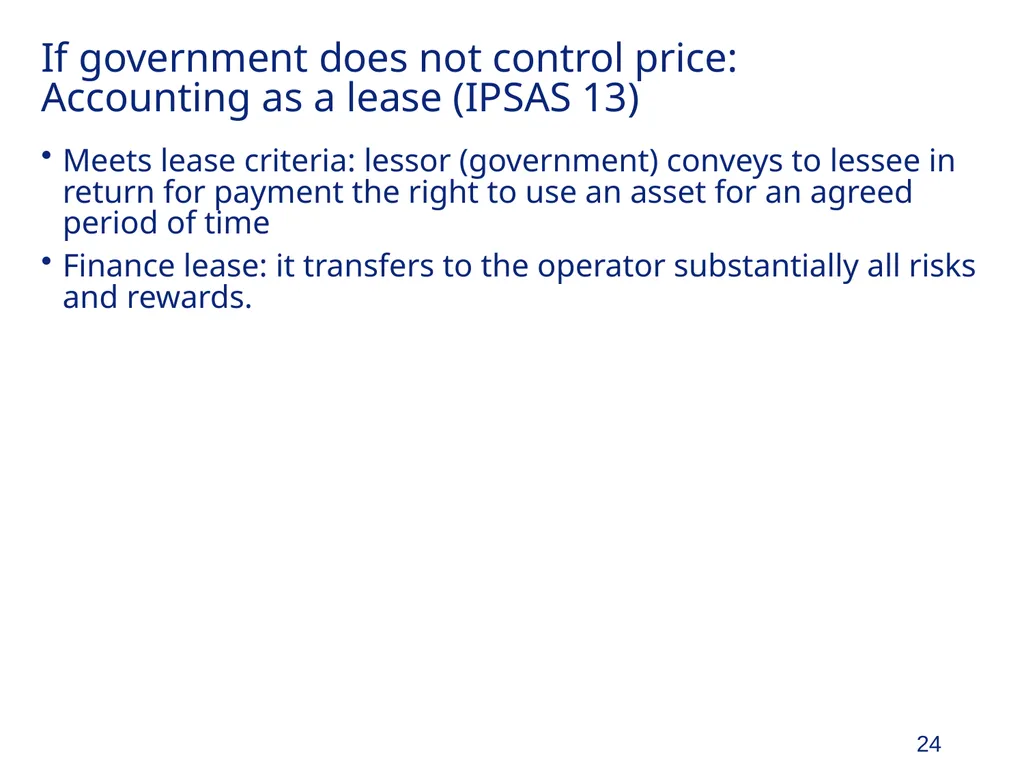
If government does not control price:
Accounting as a lease (IPSAS 13) Meets lease criteria: lessor (government) conveys to lessee in return for payment the right to use an asset for an agreed period of time
Finance lease: it transfers to the operator substantially all risks and rewards. 24<br>
Finance lease: it transfers to the operator substantially all risks and rewards. 24<br>
25
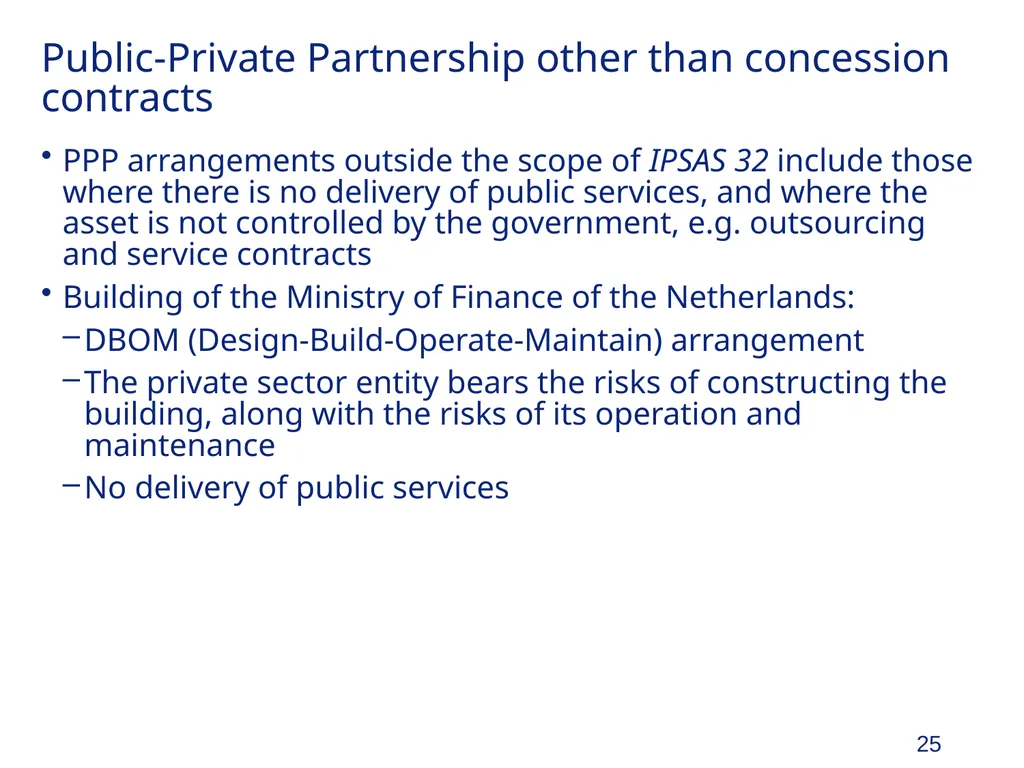
Public-Private Partnership other than concession contracts PPP arrangements outside the scope of IPSAS 32 include those where there is no delivery of public services, and where the asset is not controlled by the government, e.g. outsourcing and service contracts
Building of the Ministry of Finance of the Netherlands:
DBOM (Design-Build-Operate-Maintain) arrangement
The private sector entity bears the risks of constructing the building, along with the risks of its operation and maintenance
No delivery of public services 25<br>
Building of the Ministry of Finance of the Netherlands:
DBOM (Design-Build-Operate-Maintain) arrangement
The private sector entity bears the risks of constructing the building, along with the risks of its operation and maintenance
No delivery of public services 25<br>
26
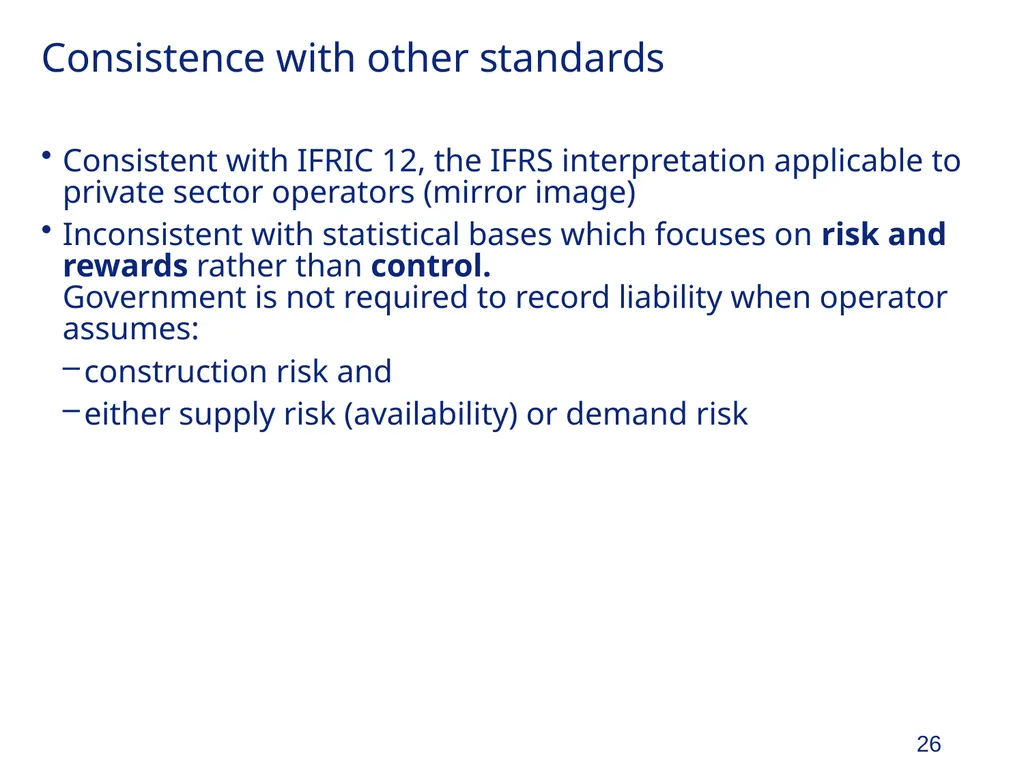
Consistence with other standards Consistent with IFRIC 12, the IFRS interpretation applicable to private sector operators (mirror image)
Inconsistent with statistical bases which focuses on risk and rewards rather than control. Government is not required to record liability when operator assumes:
construction risk and
either supply risk (availability) or demand risk 26<br>
Inconsistent with statistical bases which focuses on risk and rewards rather than control. Government is not required to record liability when operator assumes:
construction risk and
either supply risk (availability) or demand risk 26<br>
27
Lessons learnt IPSAS 32 is major improvement of government financial reporting in:
Accountability, because service concession assets and liabilities are no longer off-balance sheet
Decision-making, because service concession arrangements should now be justified by value-for-money rather than meeting debt reduction objectives
There is a need for supreme audit institutions to scrutinize complex service concession arrangements, because governments have a preference for off-balance sheet accounting 27<br>
Accountability, because service concession assets and liabilities are no longer off-balance sheet
Decision-making, because service concession arrangements should now be justified by value-for-money rather than meeting debt reduction objectives
There is a need for supreme audit institutions to scrutinize complex service concession arrangements, because governments have a preference for off-balance sheet accounting 27<br>
28
IPSAS. For better decision making and accountability in government. Visit www.ipsasb.org
or mail schaikf@euronet.nl
fvanschaik@uva.nl<br>
or mail schaikf@euronet.nl
fvanschaik@uva.nl<br>