Over-the-Counter Hearing Aids Agenda Items Audiology Scope of Practice Hearing Loss Hearing Aids Over-the-Counter Hearing Aids Educate. Promote. Collaborate. Tools for patients Tools for pharmacists Tools for physicians Audiology Scope of
"Over-the-Counter Hearing Aids Agenda Items" is the property of its rightful owner. Permission is granted to
download and print the materials on this website for personal, non-commercial use only, and to display it
on your personal computer provided you do not modify the materials and that you retain all copyright
notices contained in the materials. By downloading content from our website, you accept the terms of this
agreement.
Presentation Transcript
01
Over-the-Counter Hearing Aids<br>
02
Agenda Items Audiology Scope of Practice
Hearing Loss
Hearing Aids
Over-the-Counter Hearing Aids
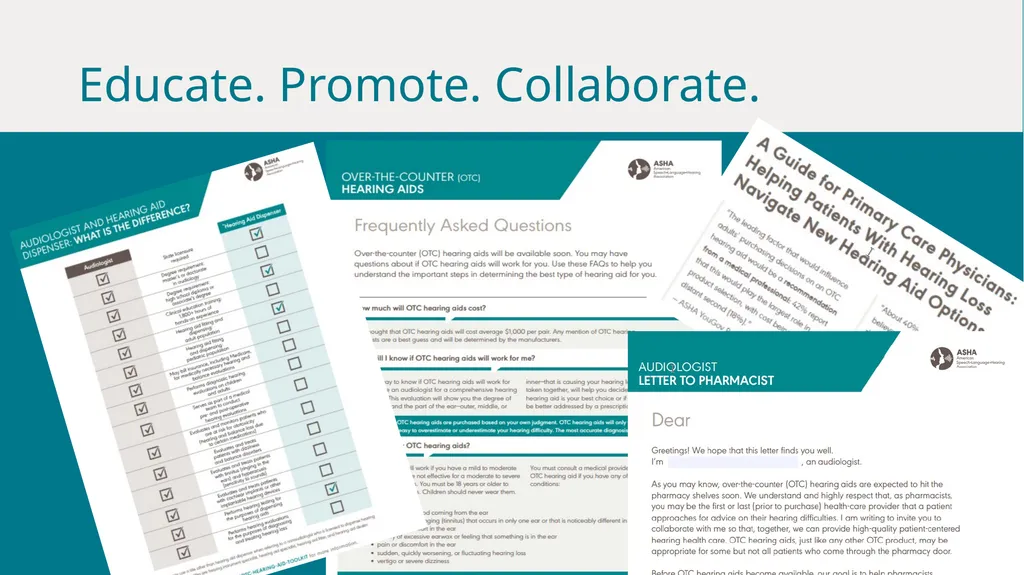
Educate. Promote. Collaborate.
Tools for patients
Tools for pharmacists
Tools for physicians<br>
03
Audiology Scope of Practice Audiologists are responsible for the assessment and treatment of hearing, balance, and other related disorders across the lifespan. Responsibilities may include the provision of
comprehensive audiologic (re)habilitation services for individuals who are experiencing hearing, balance, or other related disorders;
recommendations for the selection, fitting, and dispensing of hearing devices; and
education to other professionals about the symptoms of hearing loss, the specific needs of persons using hearing devices, and the role of audiologists.
Audiologists should remain informed of federal and state mandates and initiatives that impact individuals with hearing loss.<br>
04
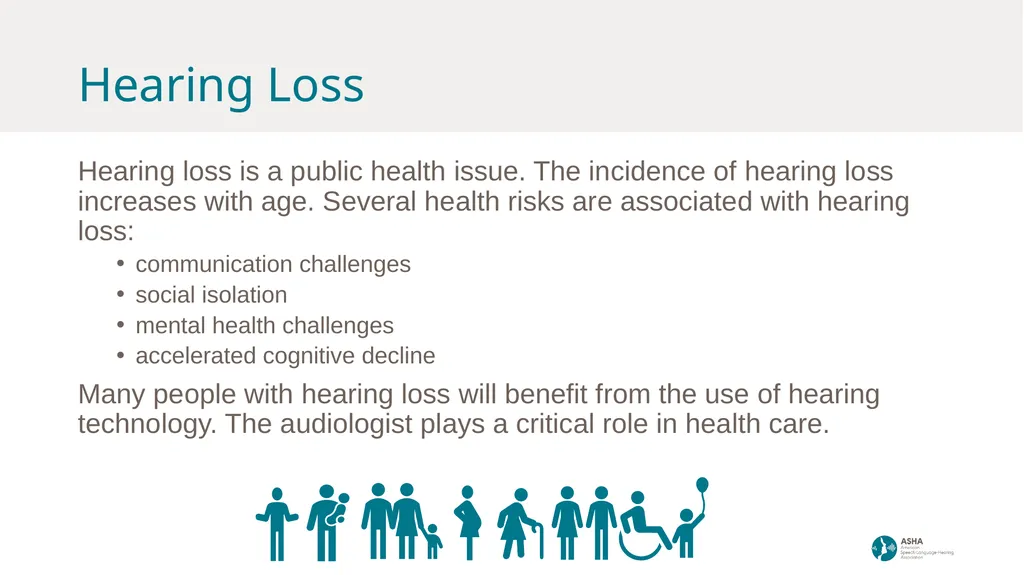
Hearing Loss Hearing loss is a public health issue. The incidence of hearing loss increases with age. Several health risks are associated with hearing loss:
communication challenges
social isolation
mental health challenges
accelerated cognitive decline
Many people with hearing loss will benefit from the use of hearing technology. The audiologist plays a critical role in health care.<br>
05
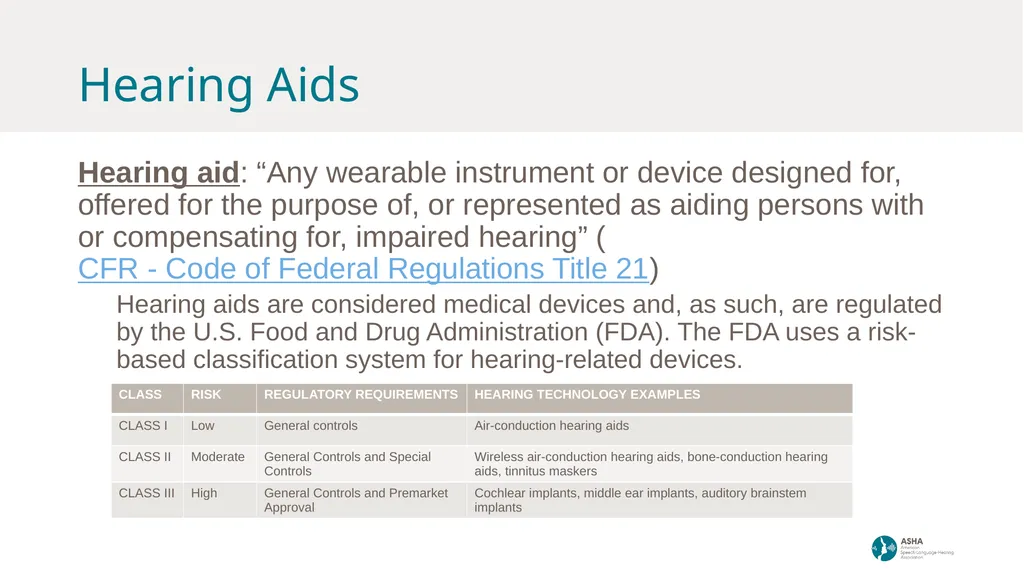
Hearing Aids Hearing aid: “Any wearable instrument or device designed for, offered for the purpose of, or represented as aiding persons with or compensating for, impaired hearing” (CFR - Code of Federal Regulations Title 21)
Hearing aids are considered medical devices and, as such, are regulated by the U.S. Food and Drug Administration (FDA). The FDA uses a risk-based classification system for hearing-related devices.<br>
06
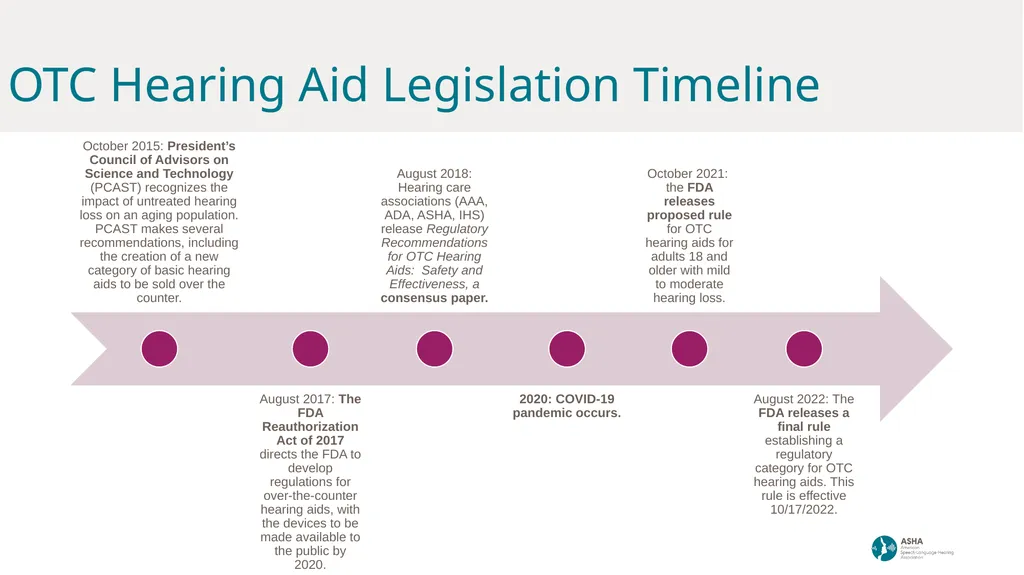
OTC Hearing Aid Legislation Timeline<br>
07
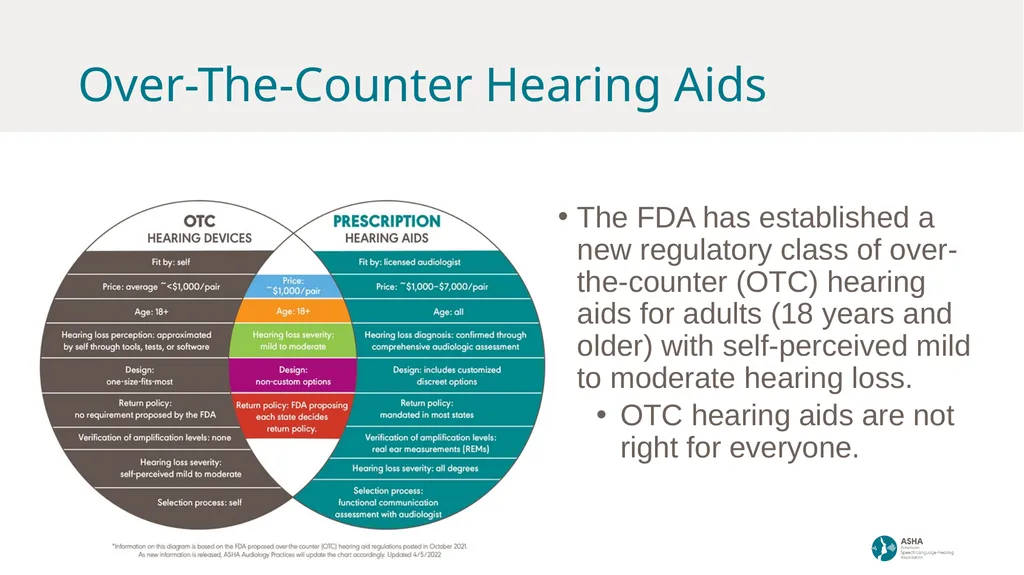
Over-The-Counter Hearing Aids The FDA has established a new regulatory class of over-the-counter (OTC) hearing aids for adults (18 years and older) with self-perceived mild to moderate hearing loss.
OTC hearing aids are not right for everyone.<br>
08
ASHA OTC Hearing Aid Toolkit ASHA is committed to helping audiologists minimize the disruption of OTC hearing aids on their practice and identifying opportunities to raise awareness of audiology. Audiologists can use the ASHA Over-the-Counter Hearing Aid Toolkit to:
educate patients about OTC hearing aids;
promote the continued value of an audiologist; and
collaborate with and market your practice to other trusted professionals influencing OTC hearing aid decisions.<br>