
Partnership for sustainable immunization financing
LD
Published · 20 slides · 0 views
1 / 1
Description
Partnership for sustainable immunization financing Symposium for parliamentarians on sustainable Immunization financing House Of Parliament Tower Hill, Freetown 8th November, 2013 Presentation outline Immunization GIVS GVAPDecade of
Related Topics
Share
Embed code
Download this presentation From Below
"Partnership for sustainable immunization financing" is the property of its rightful owner. Permission is granted to download and print the materials on this website for personal, non-commercial use only, and to display it on your personal computer provided you do not modify the materials and that you retain all copyright notices contained in the materials. By downloading content from our website, you accept the terms of this agreement.
Presentation Transcript
01
Partnership for sustainable immunization financing Symposium for parliamentarians on sustainable Immunization financing
House Of Parliament Tower Hill, Freetown
8th November, 2013<br>
House Of Parliament Tower Hill, Freetown
8th November, 2013<br>
02
Presentation outline Immunization
GIVS
GVAP/Decade of Vaccine (DoV)
Partnership
Economics of Vaccine development
Cost implications of New vaccine
Co-financing
cMYP
Role of Parliamentarians in Sustainable Immunization Financing<br>
GIVS
GVAP/Decade of Vaccine (DoV)
Partnership
Economics of Vaccine development
Cost implications of New vaccine
Co-financing
cMYP
Role of Parliamentarians in Sustainable Immunization Financing<br>
03
Immunization Vaccines — which protect against disease by inducing immunity — are widely and routinely administered around the world based on the principle that it is better to prevent people from falling ill than to treat them once they are ill.
Standard immunization currently averts an estimated two to three million deaths every year in all age groups
Without vaccines, as well as safe and effective vaccine distribution systems and delivery practices, disease would become more rampant, the public health system would be overburdened with treatment costs, and deaths
In Sierra Leone immunization has contributed significantly in reducing illnesses and deaths from (Tuberculosis, tetanus, whooping cough, measles, polio, Respiratory infections - e.g pneumonia), and yellow fever.
Immunization is therefore a valuable tool for protecting health, enhancing economic security and political stability, and saving lives.<br>
04
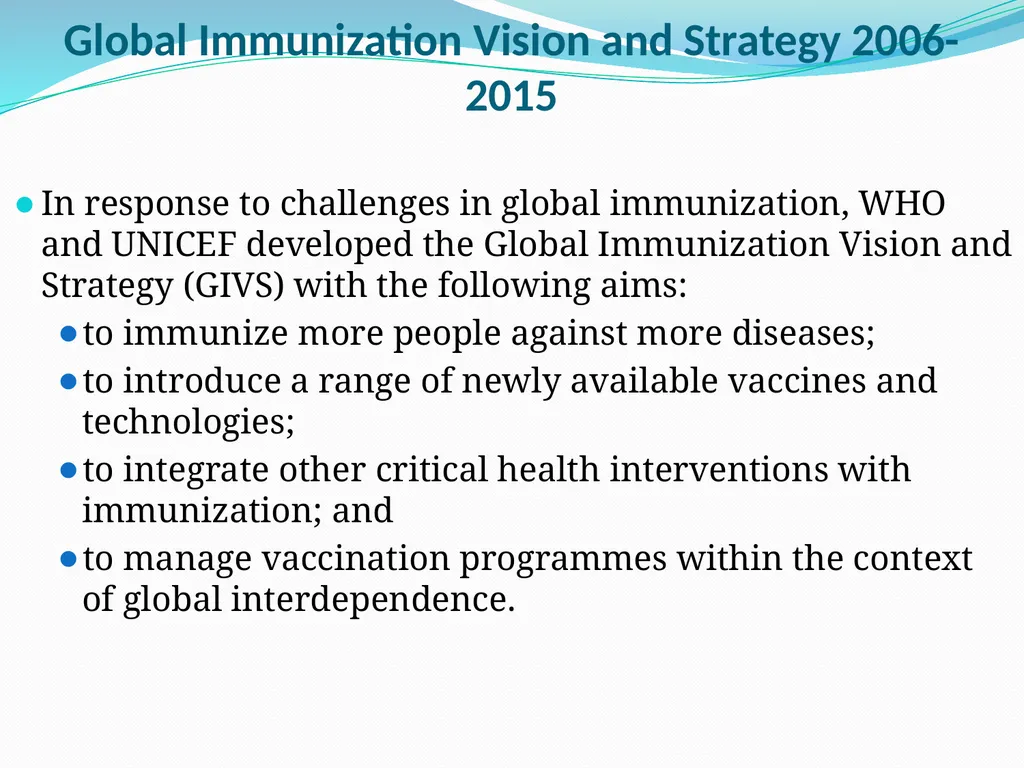
Global Immunization Vision and Strategy 2006-2015 In response to challenges in global immunization, WHO and UNICEF developed the Global Immunization Vision and Strategy (GIVS) with the following aims:
to immunize more people against more diseases;
to introduce a range of newly available vaccines and technologies;
to integrate other critical health interventions with immunization; and
to manage vaccination programmes within the context of global interdependence.<br>
to immunize more people against more diseases;
to introduce a range of newly available vaccines and technologies;
to integrate other critical health interventions with immunization; and
to manage vaccination programmes within the context of global interdependence.<br>
05
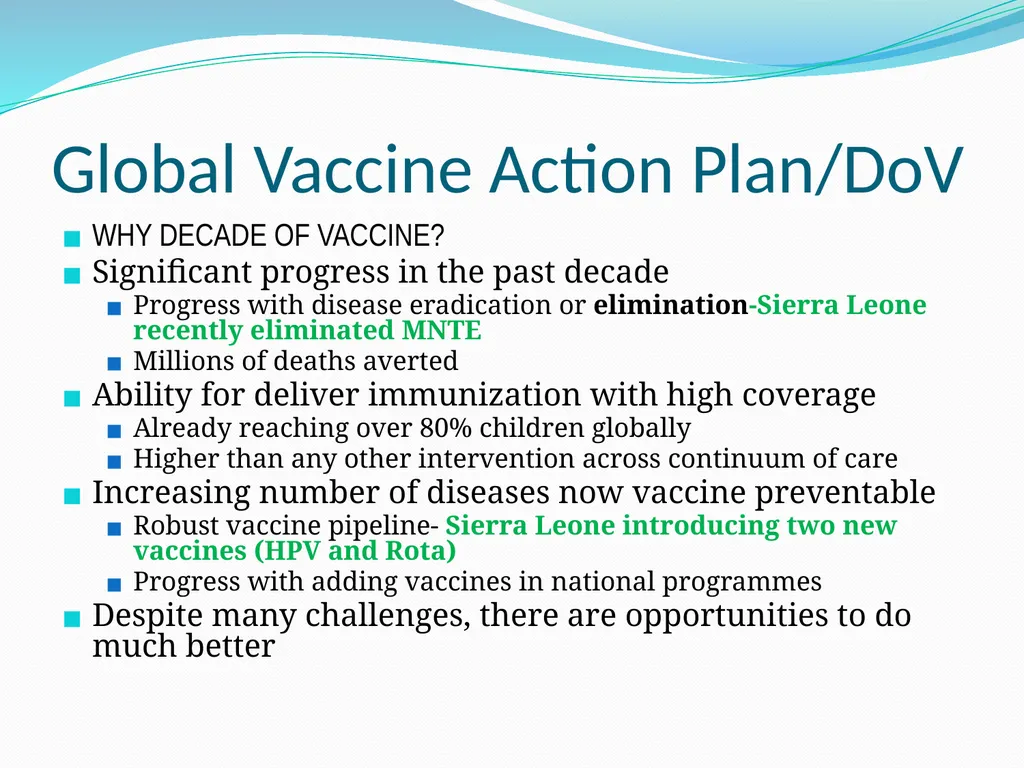
Global Vaccine Action Plan/DoV WHY DECADE OF VACCINE?
Significant progress in the past decade
Progress with disease eradication or elimination-Sierra Leone recently eliminated MNTE
Millions of deaths averted
Ability for deliver immunization with high coverage
Already reaching over 80% children globally
Higher than any other intervention across continuum of care
Increasing number of diseases now vaccine preventable
Robust vaccine pipeline- Sierra Leone introducing two new vaccines (HPV and Rota)
Progress with adding vaccines in national programmes
Despite many challenges, there are opportunities to do much better<br>
06
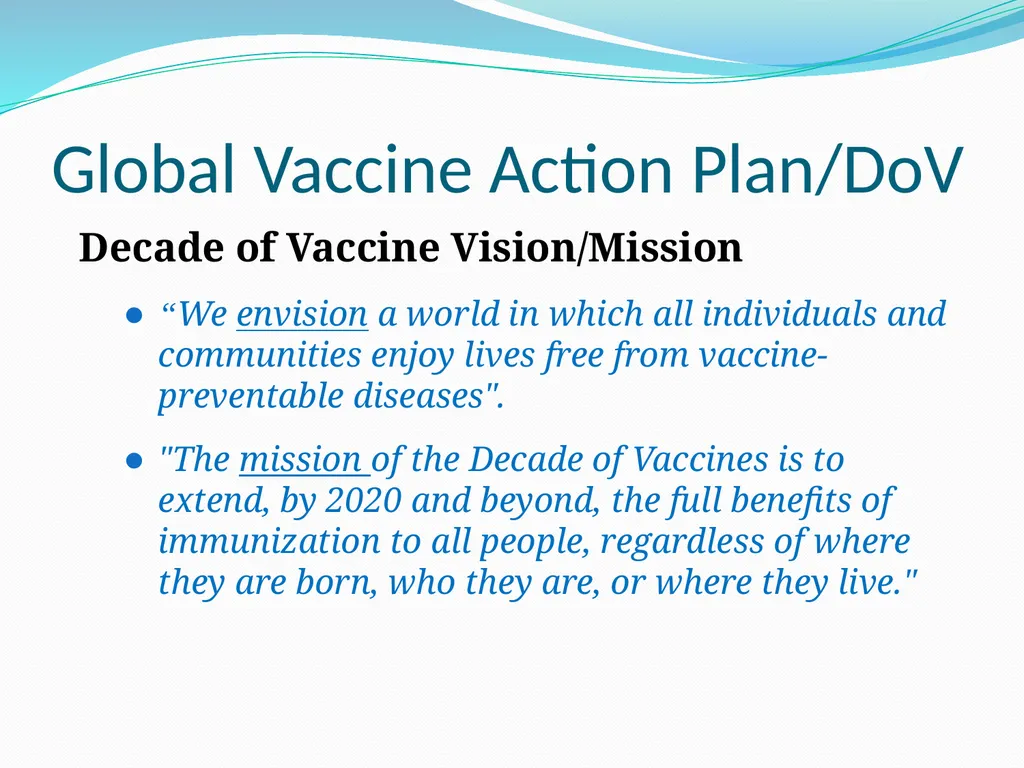
Global Vaccine Action Plan/DoV Decade of Vaccine Vision/Mission
“We envision a world in which all individuals and communities enjoy lives free from vaccine-preventable diseases".
"The mission of the Decade of Vaccines is to extend, by 2020 and beyond, the full benefits of immunization to all people, regardless of where they are born, who they are, or where they live."<br>
07
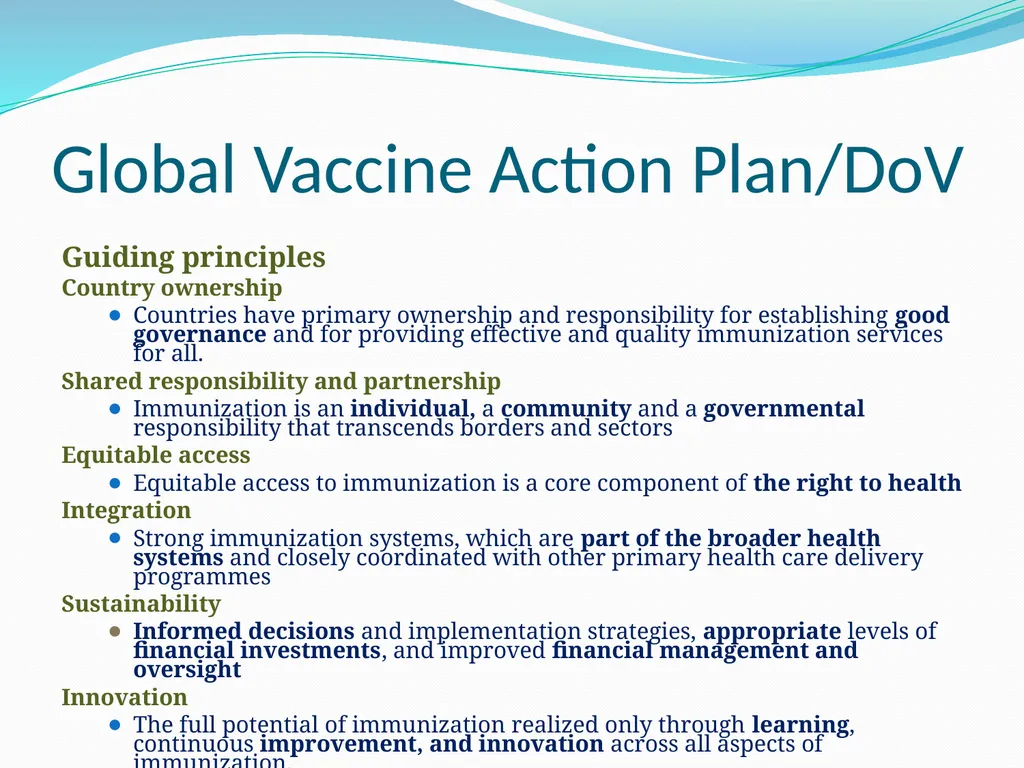
Global Vaccine Action Plan/DoV Guiding principles
Country ownership
Countries have primary ownership and responsibility for establishing good governance and for providing effective and quality immunization services for all.
Shared responsibility and partnership
Immunization is an individual, a community and a governmental responsibility that transcends borders and sectors
Equitable access
Equitable access to immunization is a core component of the right to health
Integration
Strong immunization systems, which are part of the broader health systems and closely coordinated with other primary health care delivery programmes
Sustainability
Informed decisions and implementation strategies, appropriate levels of financial investments, and improved financial management and oversight
Innovation
The full potential of immunization realized only through learning, continuous improvement, and innovation across all aspects of immunization.<br>
08
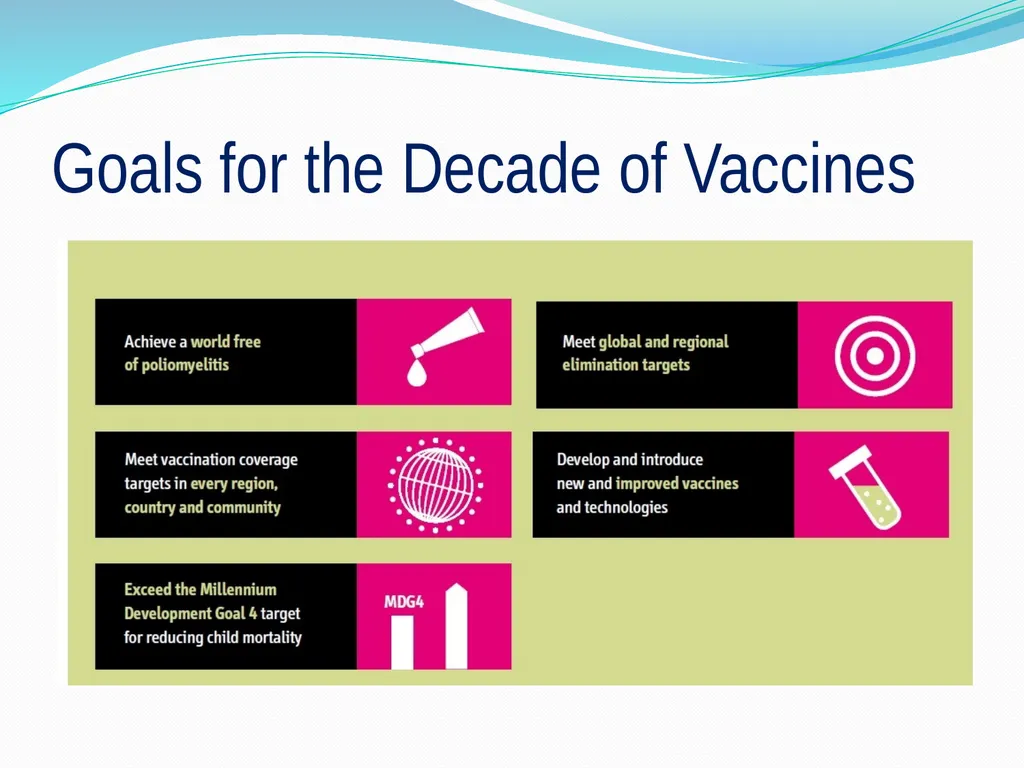
Goals for the Decade of Vaccines<br>
09
Global Partnership for immunization In the decade of vaccine, the role of partnership is very crucial to ensure:
Vaccine development and production
Ensuring quality and safety of vaccines
Financing immunization services
Quality Immunization services delivery
Monitoring and evaluation of immunization services<br>
Vaccine development and production
Ensuring quality and safety of vaccines
Financing immunization services
Quality Immunization services delivery
Monitoring and evaluation of immunization services<br>
10
Partnership for sustainable immunization financing within GAVI GAVI Alliance launched in 2000 is a global health partnership representing stakeholders in immunisation from both private and public sectors with members from:
developing world and donor governments,
private sector philanthropists such as the Bill & Melinda Gates Foundation,
the financial community,
developed and developing country vaccine manufacturers
research and technical institutes,
civil society organizations and
multilateral organizations like the World Health Organization (WHO), the United Nations Children's Fund (UNICEF) and the World Bank.<br>
11
WHO’s work in Immunization Supporting and facilitating research and development;
Ensuring the quality and safety of vaccines;
Developing policies and strategies for maximizing the use of vaccines;
Supporting countries in acquiring the skills and infrastructure needed to achieve disease control and eradication.
WHO’s Department of Immunisation, Vaccines and Biologicals is charged with ensuring that all people at risk are protected against Vaccine Preventable Diseases
Establishing global standards for vaccine administration and management<br>
12
UNICEF work in Immunization UNICEF is the world’s largest purchaser of vaccines for developing countries and a key partner in global immunisation efforts.
Its supply division, based in Copenhagen, is responsible for global purchasing, including over $100 million per year spent on vaccines and safe injection equipment.
As part of its mandate to promote child survival, UNICEF has advocated, mobilized resources and built capacity in government systems and communities to ensure that children receive basic immunization services.
Vaccine safety and potency maintenance through support to governments for ensuring functional cold chain system for vaccine storage
Support to demand creation for vaccination service utilization through advocacy and social mobilization<br>
13
Developing Countries Governments Developing country members on the GAVI Alliance Board represent all countries eligible to receive GAVI support.
They gather views and feedback from their peers in ministries of health to ensure that developing country perspectives remain at the forefront of all GAVI policy decision-making.
Developing country board members also share knowledge and best-practice with their colleagues and act as advocates for immunisation.
They also keep countries up-to-date with immunisation information through written communications and regional or global forums.<br>
14
Economics of vaccine development : Vaccines are much less profitable than medicines
Largest pool of potential customers are governments that are unlikely to pay for vaccines to ensure profit for manufacturers
Therefore limited quantities often have been manufactured, increasing the cost per dose.
GAVI partnership has been able to maximize the economy of scale through pooling together the needs of countries and negotiating lower prices for vaccines and encouraging manufacturers to produce
It is therefore economically wise for countries to continue co-financing vaccines with the aim for future ownership<br>
15
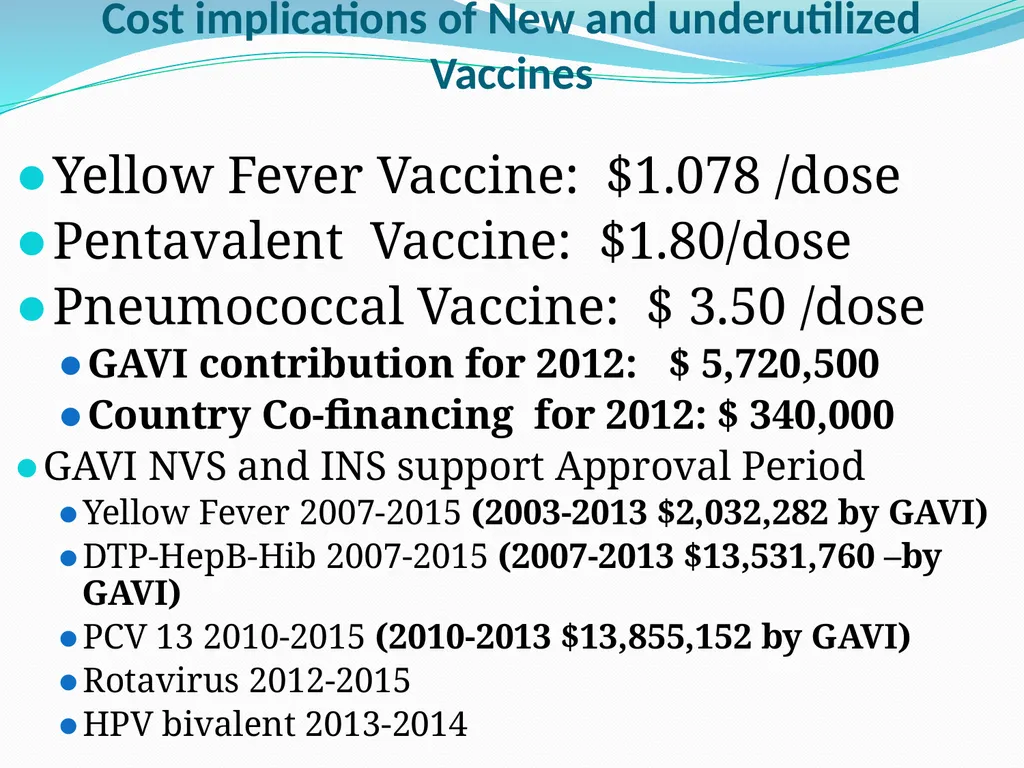
Cost implications of New and underutilized Vaccines Yellow Fever Vaccine: $1.078 /dose
Pentavalent Vaccine: $1.80/dose
Pneumococcal Vaccine: $ 3.50 /dose
GAVI contribution for 2012: $ 5,720,500
Country Co-financing for 2012: $ 340,000
GAVI NVS and INS support Approval Period
Yellow Fever 2007-2015 (2003-2013 $2,032,282 by GAVI)
DTP-HepB-Hib 2007-2015 (2007-2013 $13,531,760 –by GAVI)
PCV 13 2010-2015 (2010-2013 $13,855,152 by GAVI)
Rotavirus 2012-2015
HPV bivalent 2013-2014<br>
16
Co- Financing Required co-financing amounts
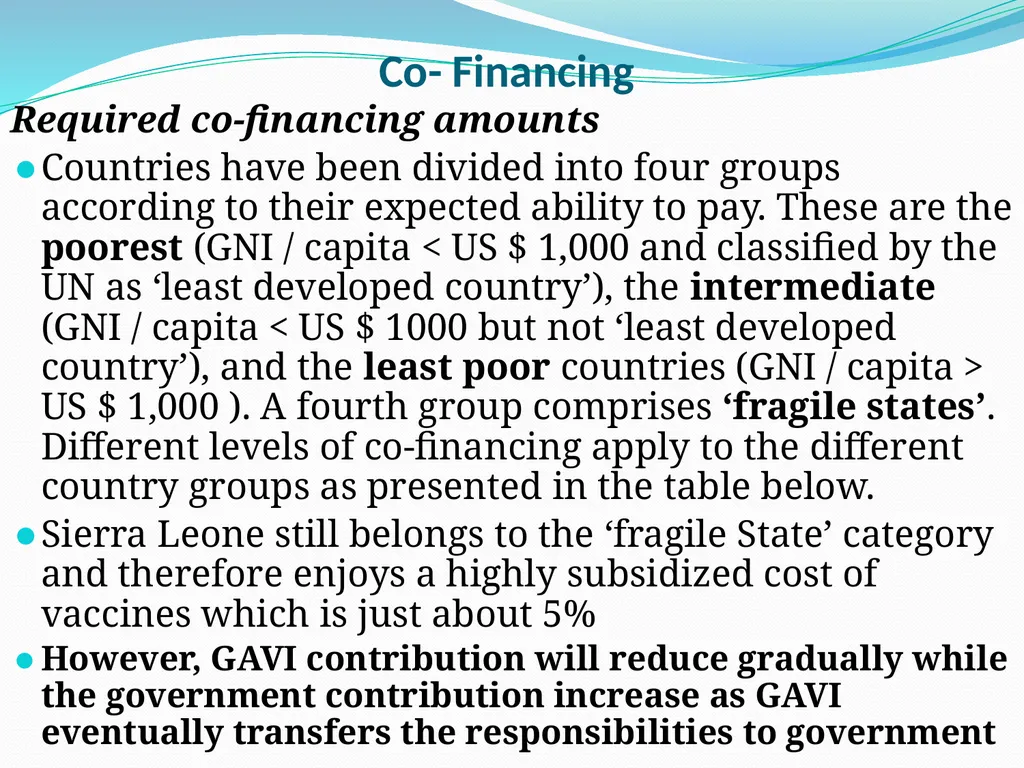
Countries have been divided into four groups according to their expected ability to pay. These are the poorest (GNI / capita < US $ 1,000 and classified by the UN as ‘least developed country’), the intermediate (GNI / capita < US $ 1000 but not ‘least developed country’), and the least poor countries (GNI / capita > US $ 1,000 ). A fourth group comprises ‘fragile states’. Different levels of co-financing apply to the different country groups as presented in the table below.
Sierra Leone still belongs to the ‘fragile State’ category and therefore enjoys a highly subsidized cost of vaccines which is just about 5%
However, GAVI contribution will reduce gradually while the government contribution increase as GAVI eventually transfers the responsibilities to government<br>
17
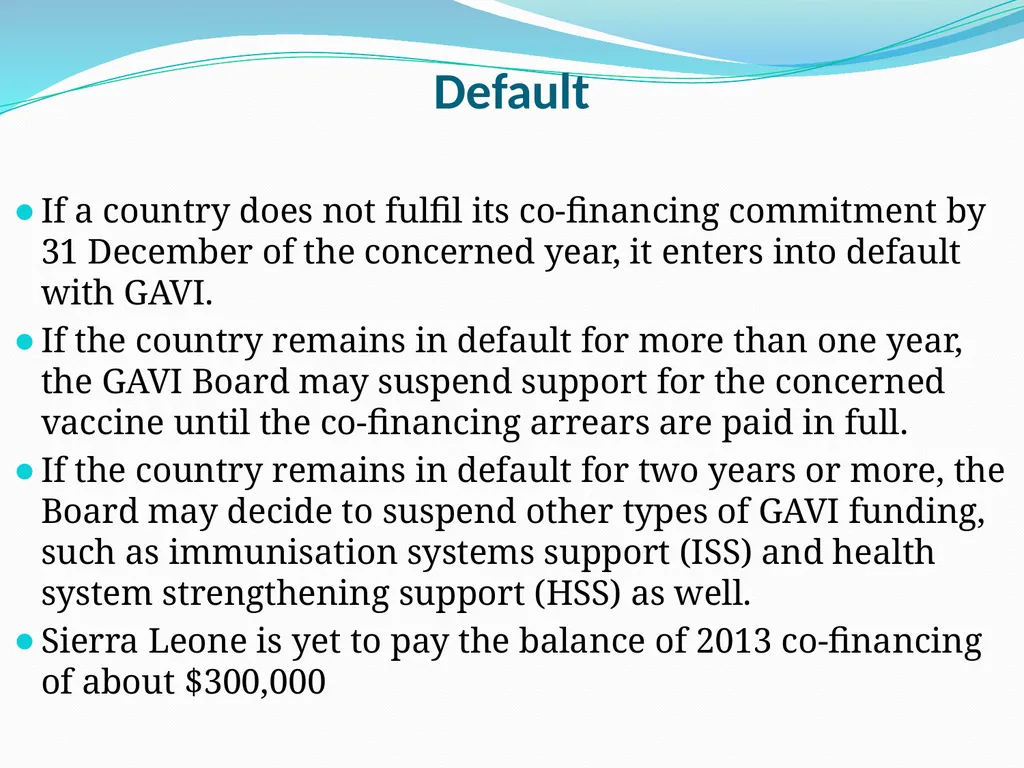
Default If a country does not fulfil its co-financing commitment by 31 December of the concerned year, it enters into default with GAVI.
If the country remains in default for more than one year, the GAVI Board may suspend support for the concerned vaccine until the co-financing arrears are paid in full.
If the country remains in default for two years or more, the Board may decide to suspend other types of GAVI funding, such as immunisation systems support (ISS) and health system strengthening support (HSS) as well.
Sierra Leone is yet to pay the balance of 2013 co-financing of about $300,000<br>
18
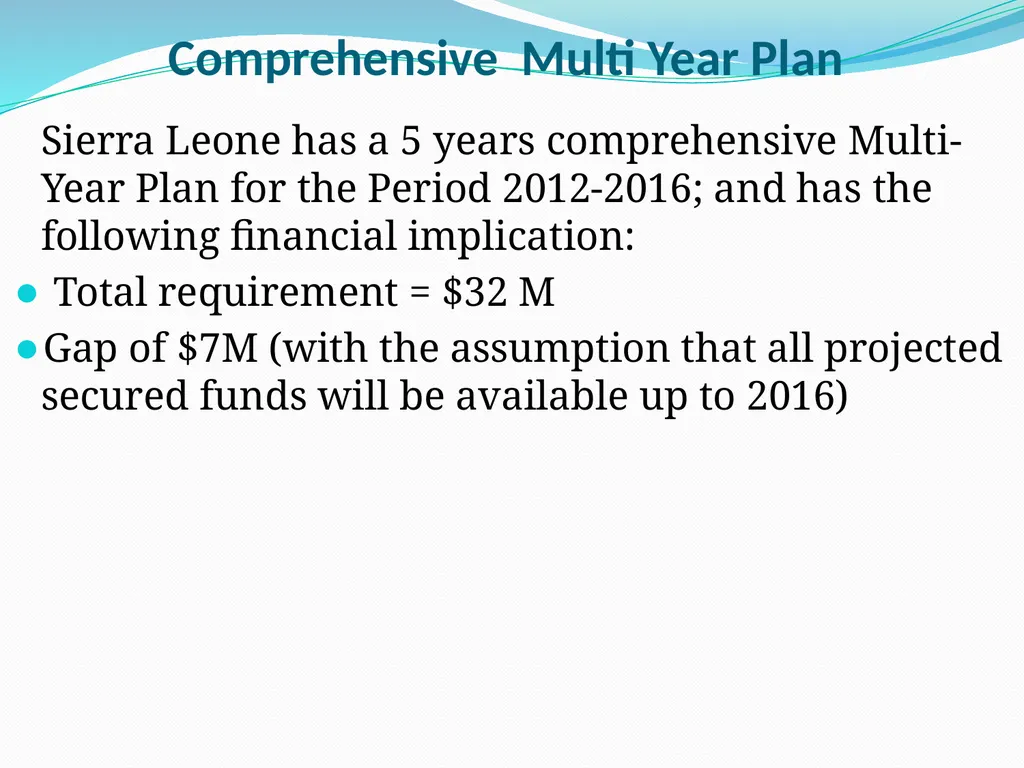
Comprehensive Multi Year Plan Sierra Leone has a 5 years comprehensive Multi-Year Plan for the Period 2012-2016; and has the following financial implication:
Total requirement = $32 M
Gap of $7M (with the assumption that all projected secured funds will be available up to 2016)<br>
Total requirement = $32 M
Gap of $7M (with the assumption that all projected secured funds will be available up to 2016)<br>
19
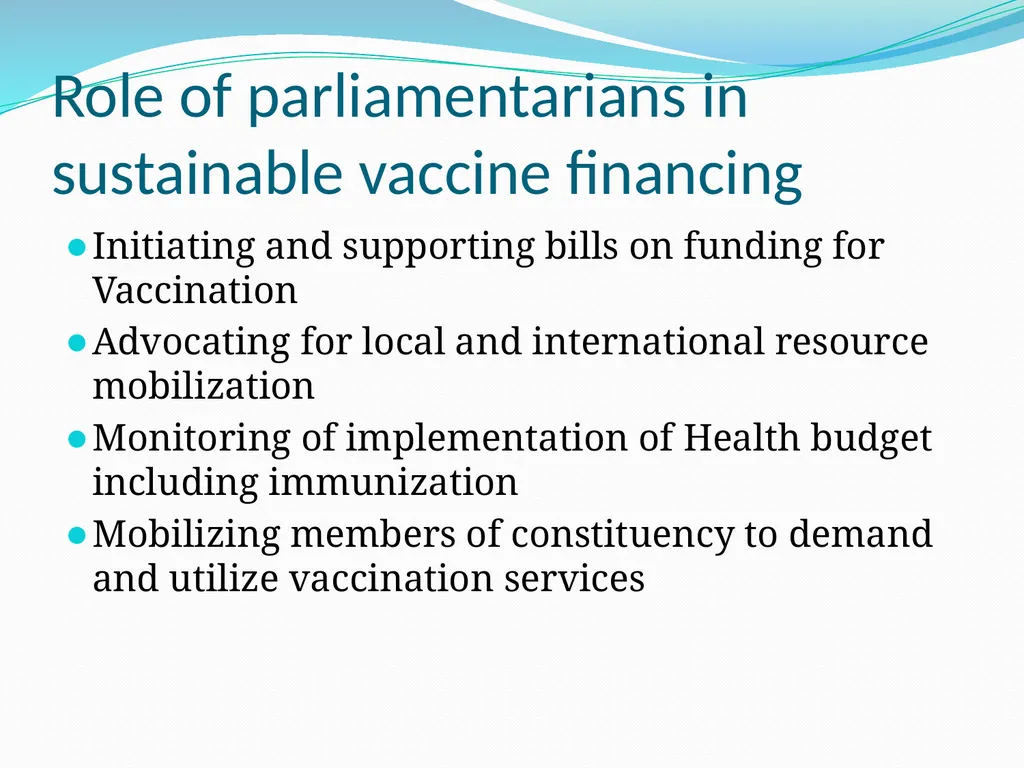
Role of parliamentarians in sustainable vaccine financing Initiating and supporting bills on funding for Vaccination
Advocating for local and international resource mobilization
Monitoring of implementation of Health budget including immunization
Mobilizing members of constituency to demand and utilize vaccination services<br>
Advocating for local and international resource mobilization
Monitoring of implementation of Health budget including immunization
Mobilizing members of constituency to demand and utilize vaccination services<br>
20
Thank you<br>