
Performance Analysis of Digital Modulation

Description: Performance Analysis of Digital Modulation Techniques Binary modulation schemes ASK, FSK, PSK n 1, M 2 (Only Two output conditions are possible) Baud is equal to the bit rate M-ary Modulation Techniques QPSK, 8-PSK, 18-PSK, QAM, 16-QAM
Related Topics
Download Presentation
"Performance Analysis of Digital Modulation" is the property of its rightful owner. Permission is granted to download and print the materials on this website for personal, non-commercial use only, and to display it on your personal computer provided you do not modify the materials and that you retain all copyright notices contained in the materials. By downloading content from our website, you accept the terms of this agreement.
Presentation Transcript
slide1. Performance Analysis of Digital Modulation Techniques<br>
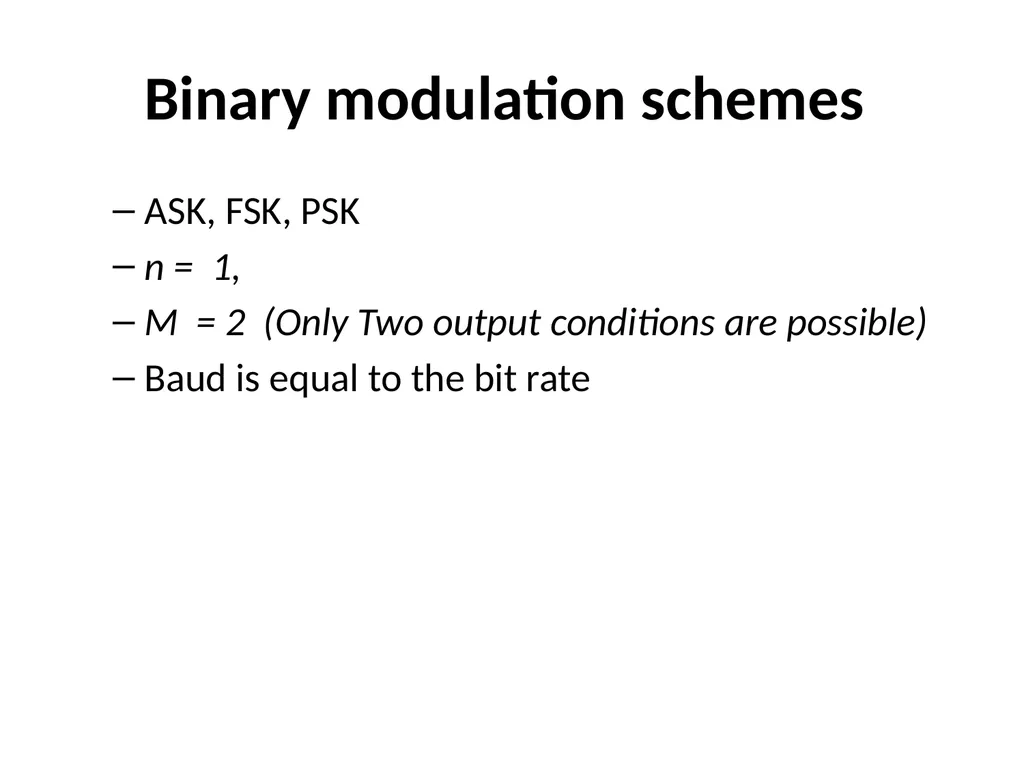
slide3. Binary modulation schemes ASK, FSK, PSK
n = 1,
M = 2 (Only Two output conditions are possible)
Baud is equal to the bit rate<br>
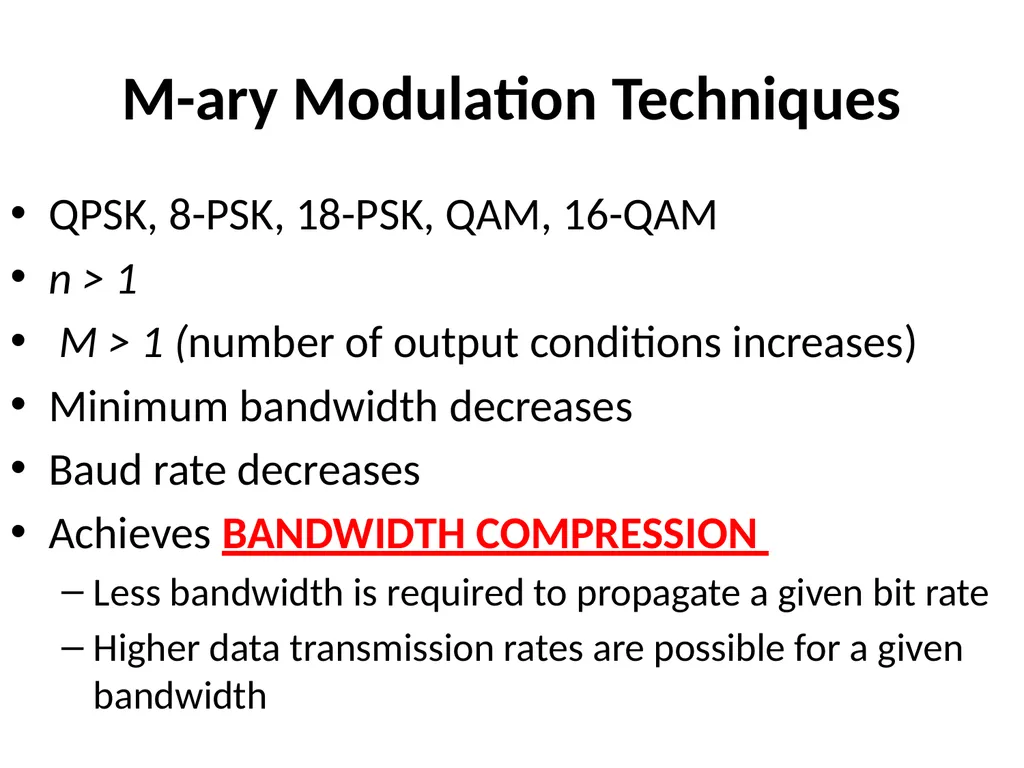
slide4. M-ary Modulation Techniques QPSK, 8-PSK, 18-PSK, QAM, 16-QAM
n > 1
M > 1 (number of output conditions increases)
Minimum bandwidth decreases
Baud rate decreases
Achieves BANDWIDTH COMPRESSION
Less bandwidth is required to propagate a given bit rate
Higher data transmission rates are possible for a given bandwidth<br>
slide5. BANDWIDTH EFFICIENCY Also called as Information density or Spectral efficiency
Used to compare the performance of one digital modulation technique to another<br>
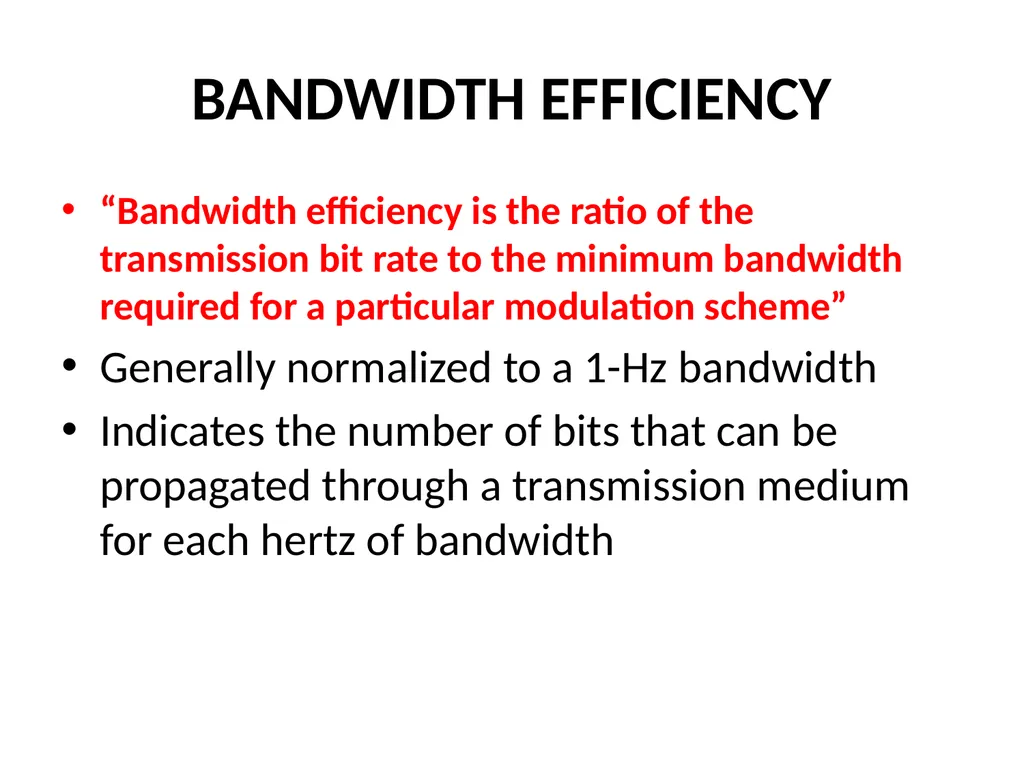
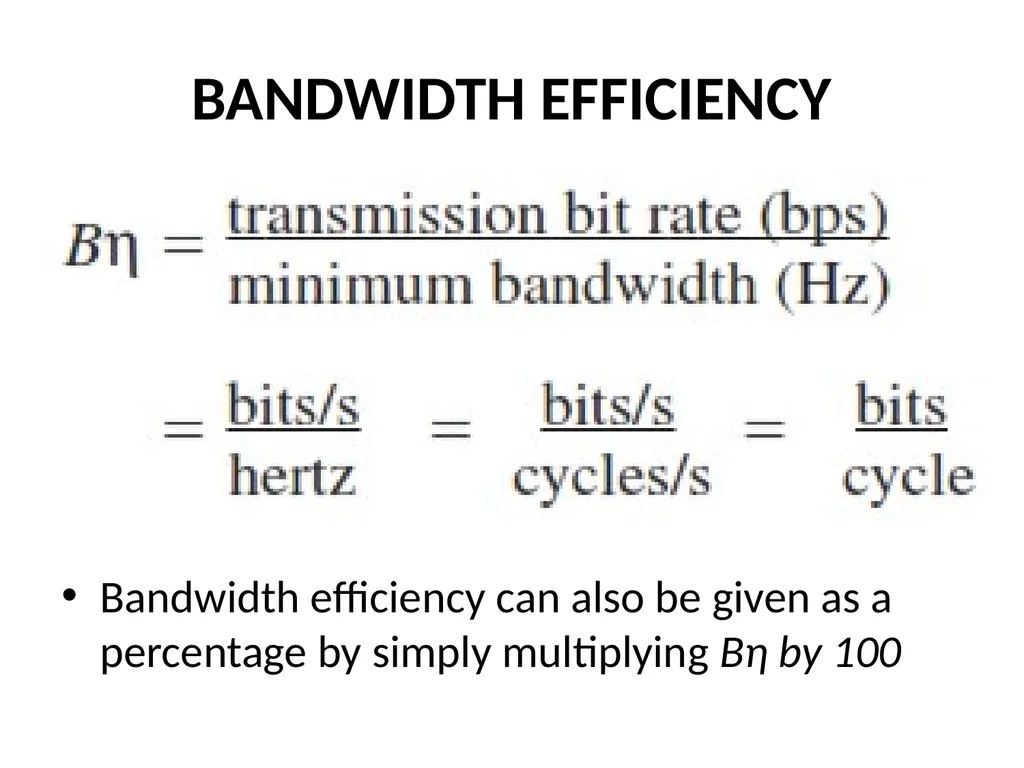
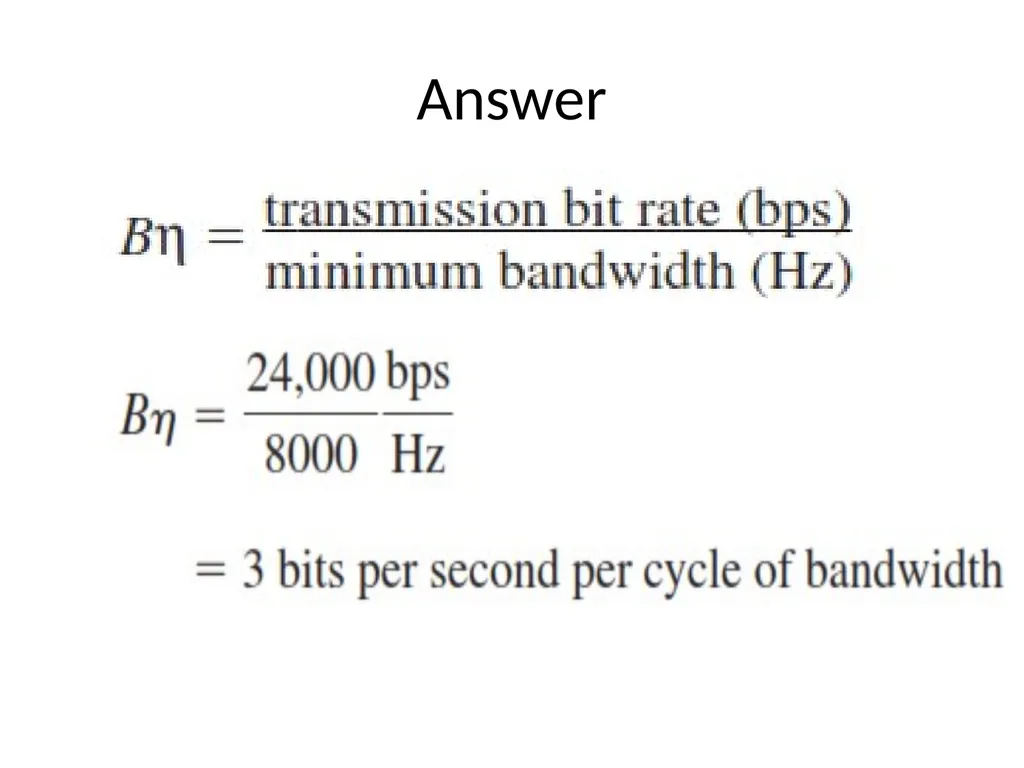
slide6. BANDWIDTH EFFICIENCY “Bandwidth efficiency is the ratio of the transmission bit rate to the minimum bandwidth required for a particular modulation scheme”
Generally normalized to a 1-Hz bandwidth
Indicates the number of bits that can be propagated through a transmission medium for each hertz of bandwidth<br>
slide7. BANDWIDTH EFFICIENCY Bandwidth efficiency can also be given as a percentage by simply multiplying Bη by 100<br>
slide8. Problems<br>
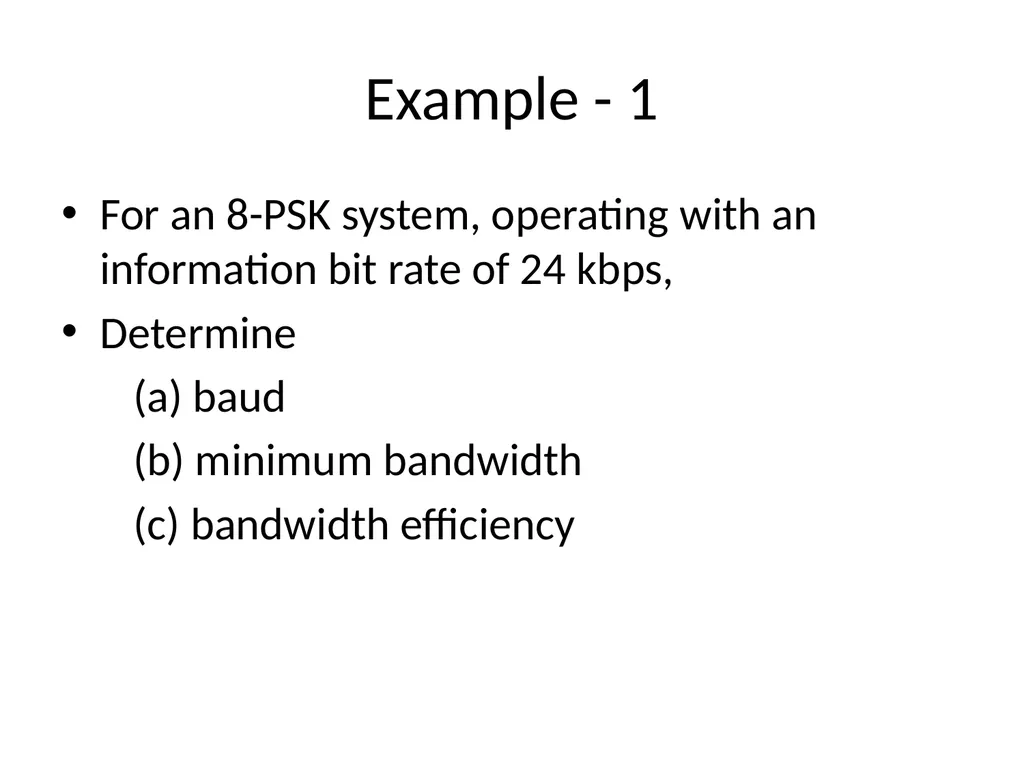
slide9. Example - 1 For an 8-PSK system, operating with an information bit rate of 24 kbps,
Determine
(a) baud
(b) minimum bandwidth
(c) bandwidth efficiency<br>
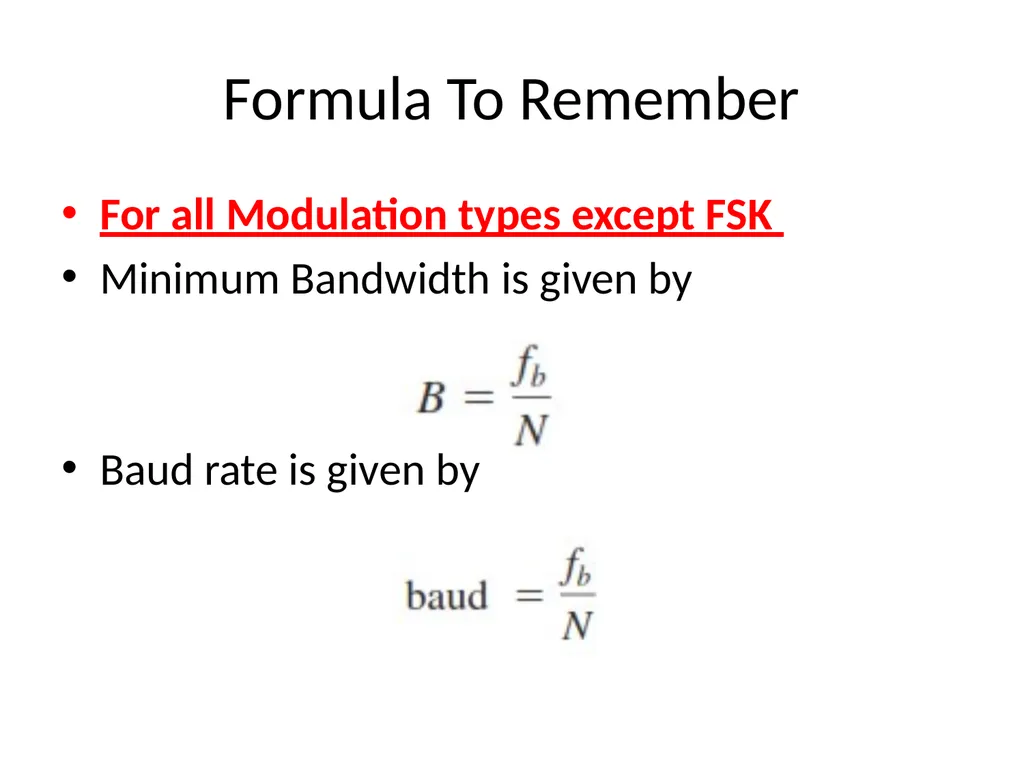
slide10. Formula To Remember For all Modulation types except FSK
Minimum Bandwidth is given by
Baud rate is given by<br>
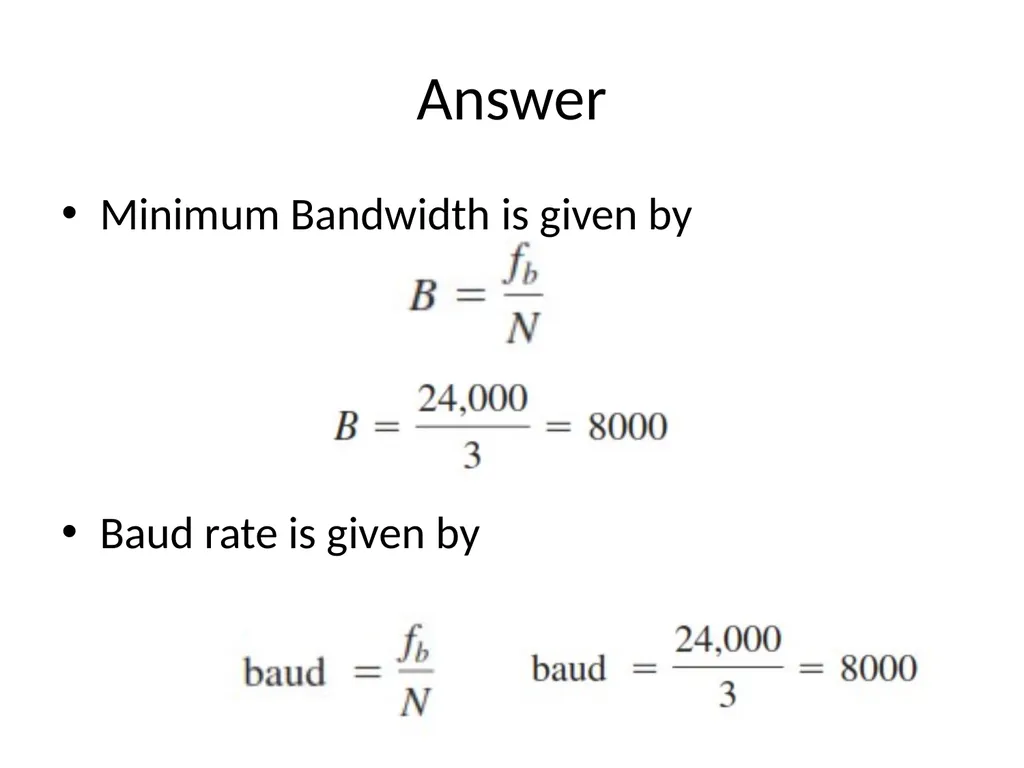
slide11. Answer Minimum Bandwidth is given by
Baud rate is given by<br>
slide12. Answer<br>
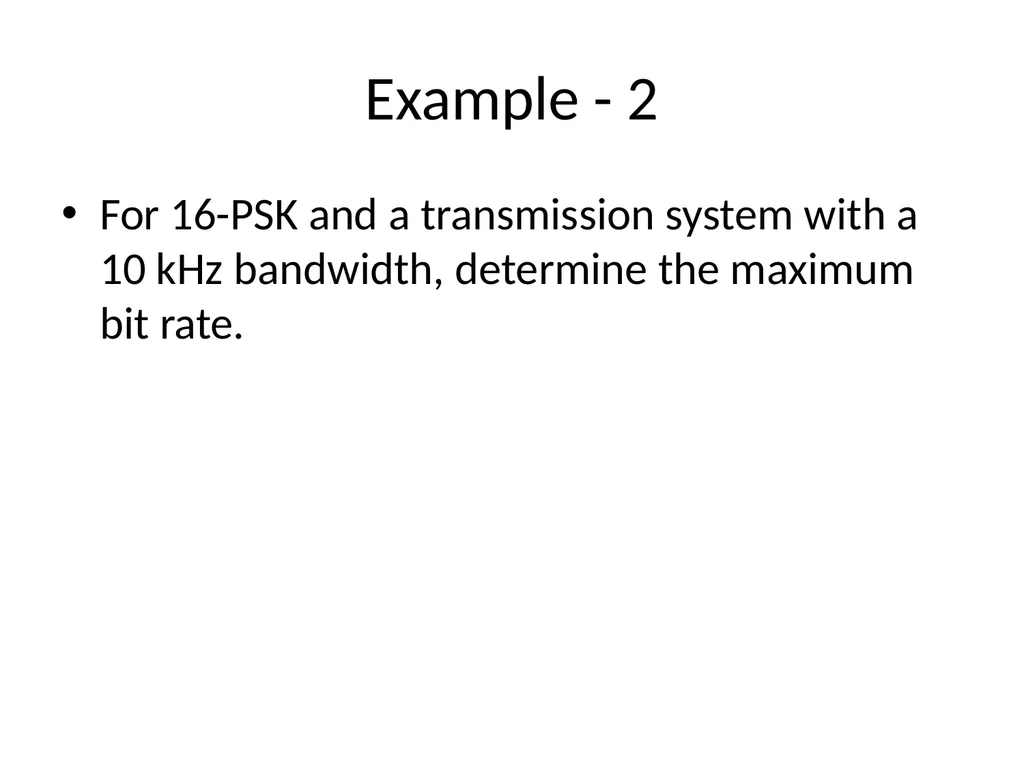
slide13. Example - 2 For 16-PSK and a transmission system with a 10 kHz bandwidth, determine the maximum bit rate.<br>
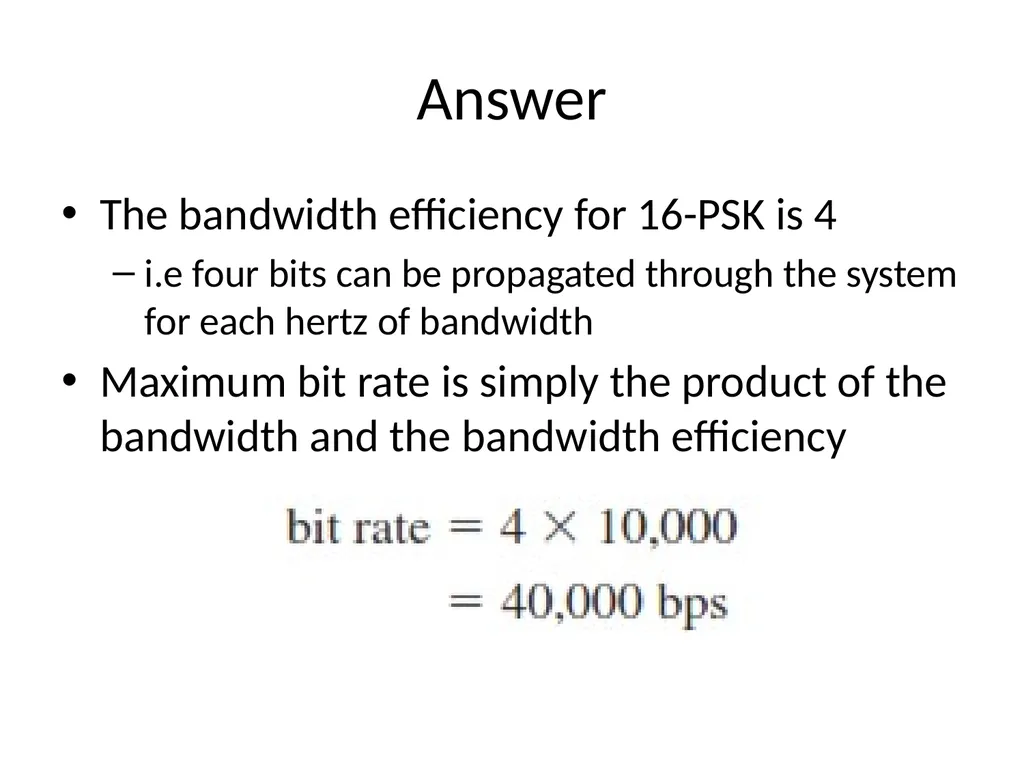
slide14. Answer The bandwidth efficiency for 16-PSK is 4
i.e four bits can be propagated through the system for each hertz of bandwidth
Maximum bit rate is simply the product of the bandwidth and the bandwidth efficiency<br>
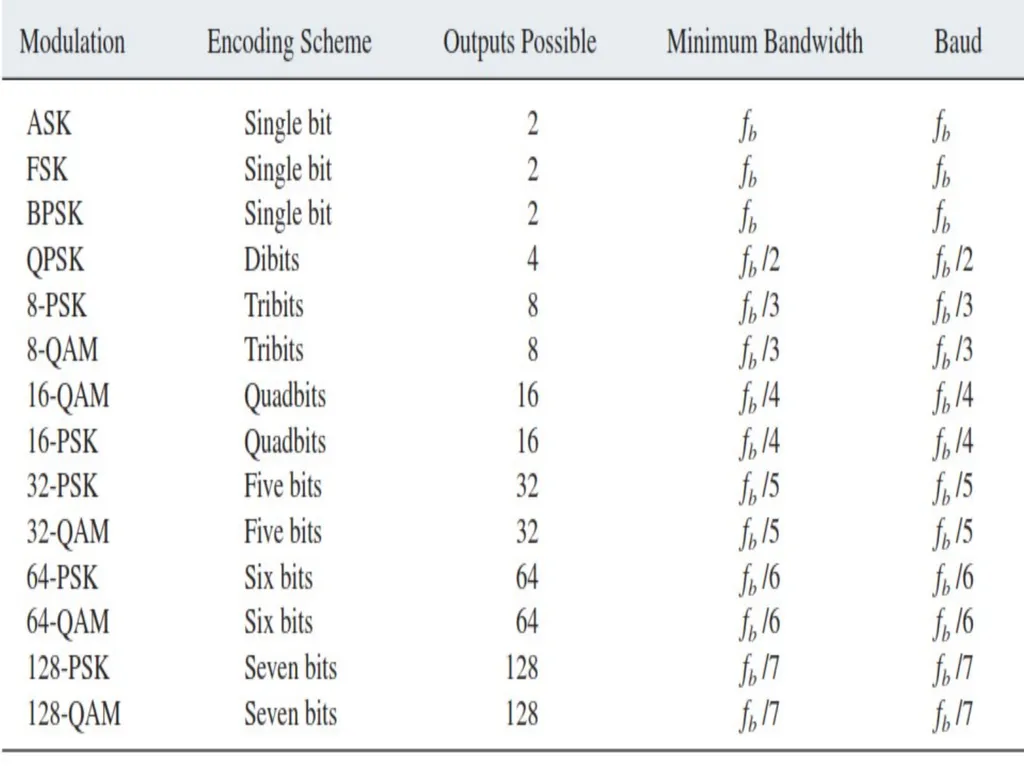
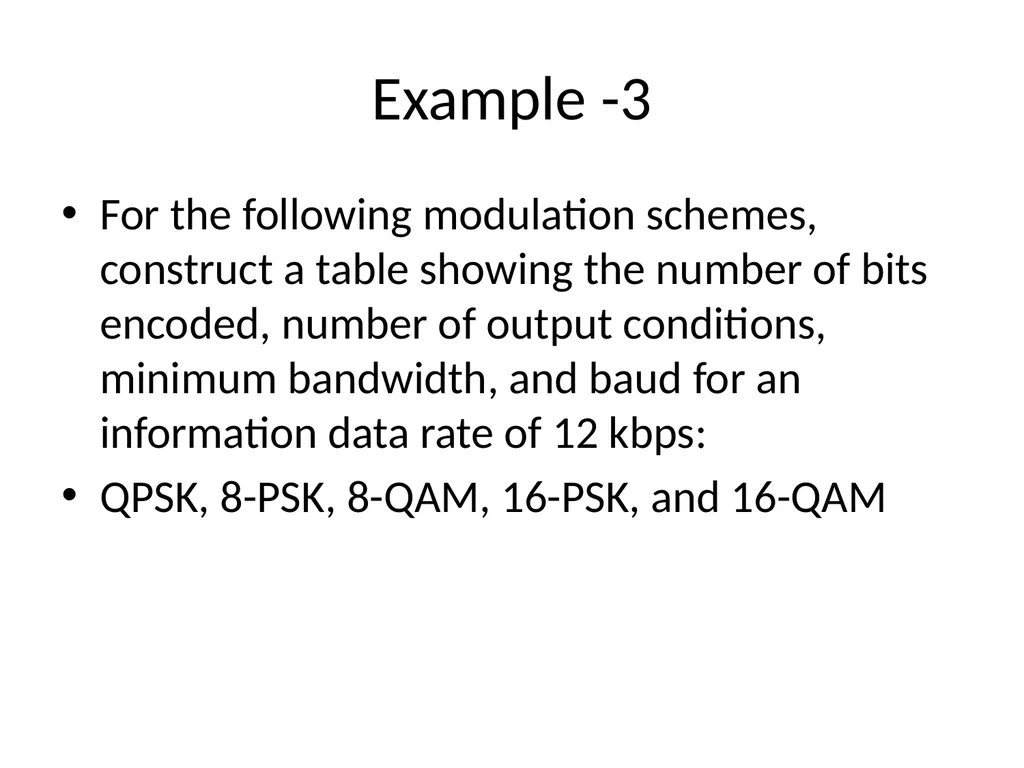
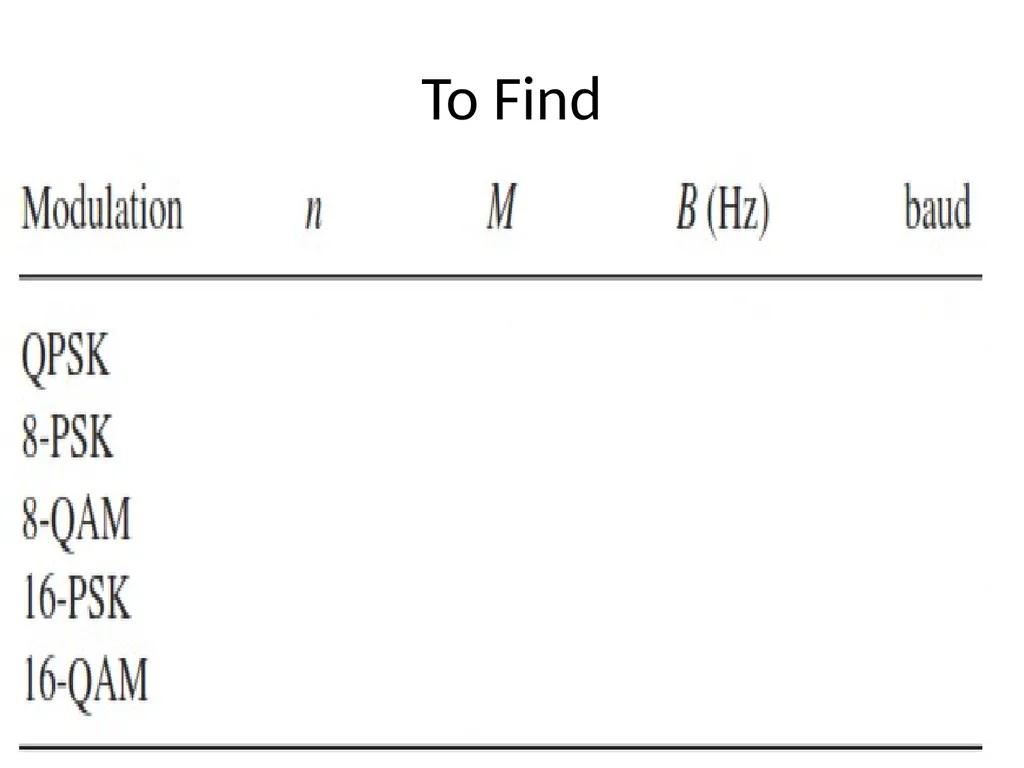
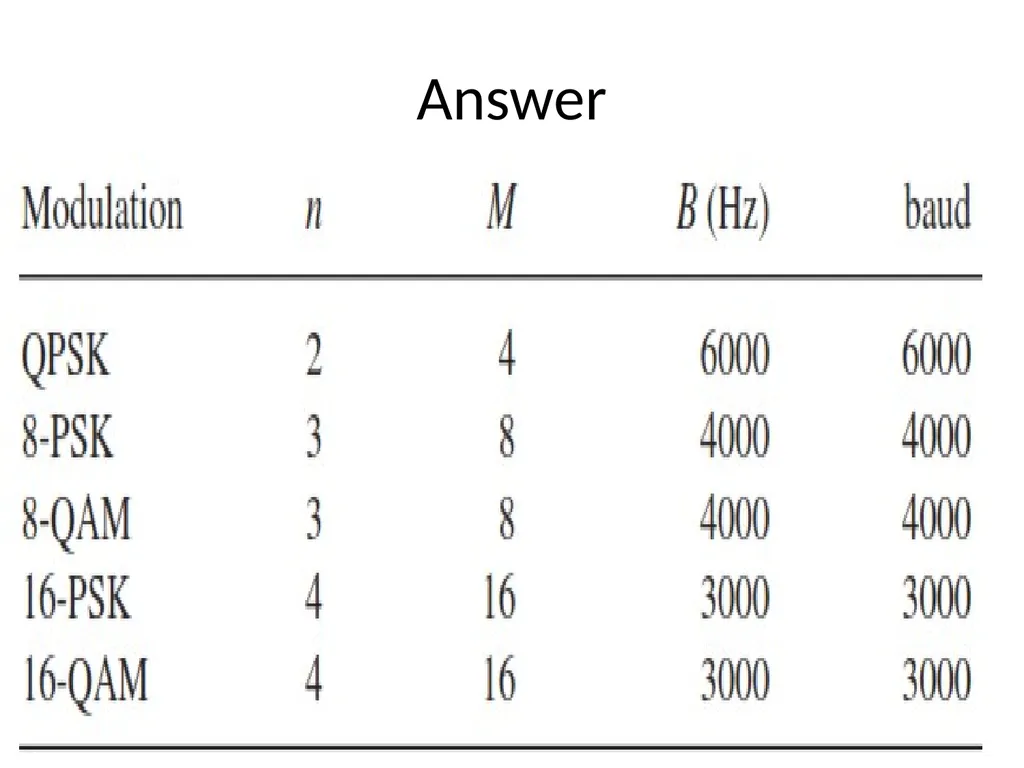
slide15. Example -3 For the following modulation schemes, construct a table showing the number of bits encoded, number of output conditions, minimum bandwidth, and baud for an information data rate of 12 kbps:
QPSK, 8-PSK, 8-QAM, 16-PSK, and 16-QAM<br>
slide16. To Find<br>
slide17. Answer<br>
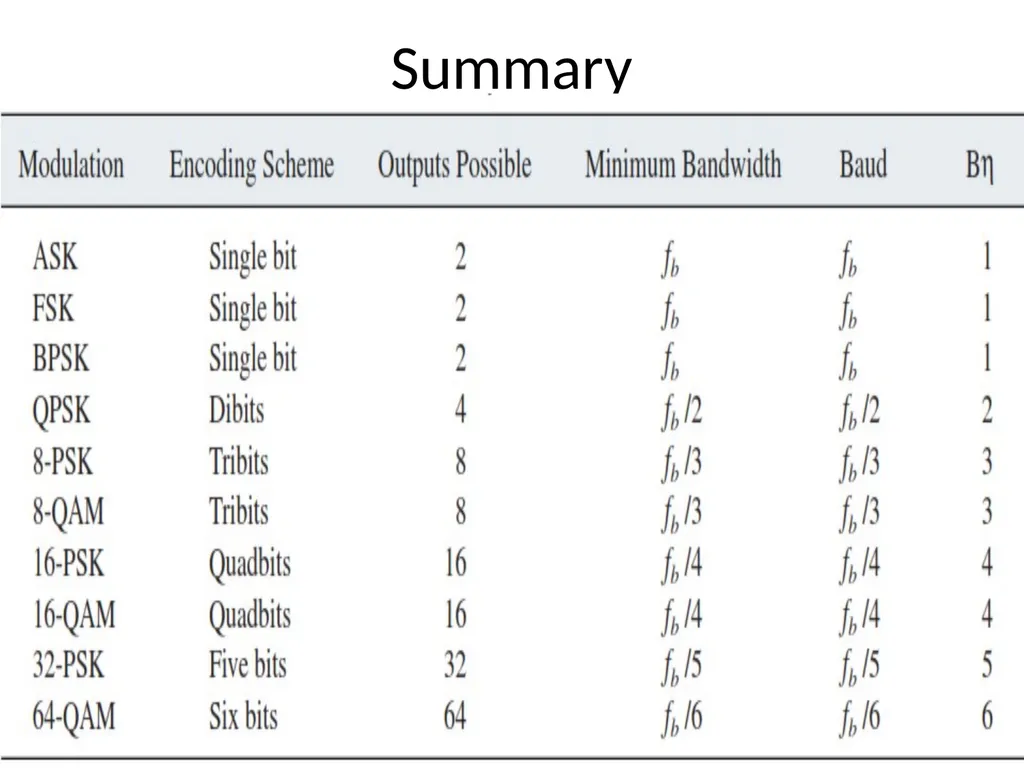
slide18. Summary<br>
slide3. Binary modulation schemes ASK, FSK, PSK
n = 1,
M = 2 (Only Two output conditions are possible)
Baud is equal to the bit rate<br>
slide4. M-ary Modulation Techniques QPSK, 8-PSK, 18-PSK, QAM, 16-QAM
n > 1
M > 1 (number of output conditions increases)
Minimum bandwidth decreases
Baud rate decreases
Achieves BANDWIDTH COMPRESSION
Less bandwidth is required to propagate a given bit rate
Higher data transmission rates are possible for a given bandwidth<br>
slide5. BANDWIDTH EFFICIENCY Also called as Information density or Spectral efficiency
Used to compare the performance of one digital modulation technique to another<br>
slide6. BANDWIDTH EFFICIENCY “Bandwidth efficiency is the ratio of the transmission bit rate to the minimum bandwidth required for a particular modulation scheme”
Generally normalized to a 1-Hz bandwidth
Indicates the number of bits that can be propagated through a transmission medium for each hertz of bandwidth<br>
slide7. BANDWIDTH EFFICIENCY Bandwidth efficiency can also be given as a percentage by simply multiplying Bη by 100<br>
slide8. Problems<br>
slide9. Example - 1 For an 8-PSK system, operating with an information bit rate of 24 kbps,
Determine
(a) baud
(b) minimum bandwidth
(c) bandwidth efficiency<br>
slide10. Formula To Remember For all Modulation types except FSK
Minimum Bandwidth is given by
Baud rate is given by<br>
slide11. Answer Minimum Bandwidth is given by
Baud rate is given by<br>
slide12. Answer<br>
slide13. Example - 2 For 16-PSK and a transmission system with a 10 kHz bandwidth, determine the maximum bit rate.<br>
slide14. Answer The bandwidth efficiency for 16-PSK is 4
i.e four bits can be propagated through the system for each hertz of bandwidth
Maximum bit rate is simply the product of the bandwidth and the bandwidth efficiency<br>
slide15. Example -3 For the following modulation schemes, construct a table showing the number of bits encoded, number of output conditions, minimum bandwidth, and baud for an information data rate of 12 kbps:
QPSK, 8-PSK, 8-QAM, 16-PSK, and 16-QAM<br>
slide16. To Find<br>
slide17. Answer<br>
slide18. Summary<br>