
personal and career development LEVEL 3 MODULE 1
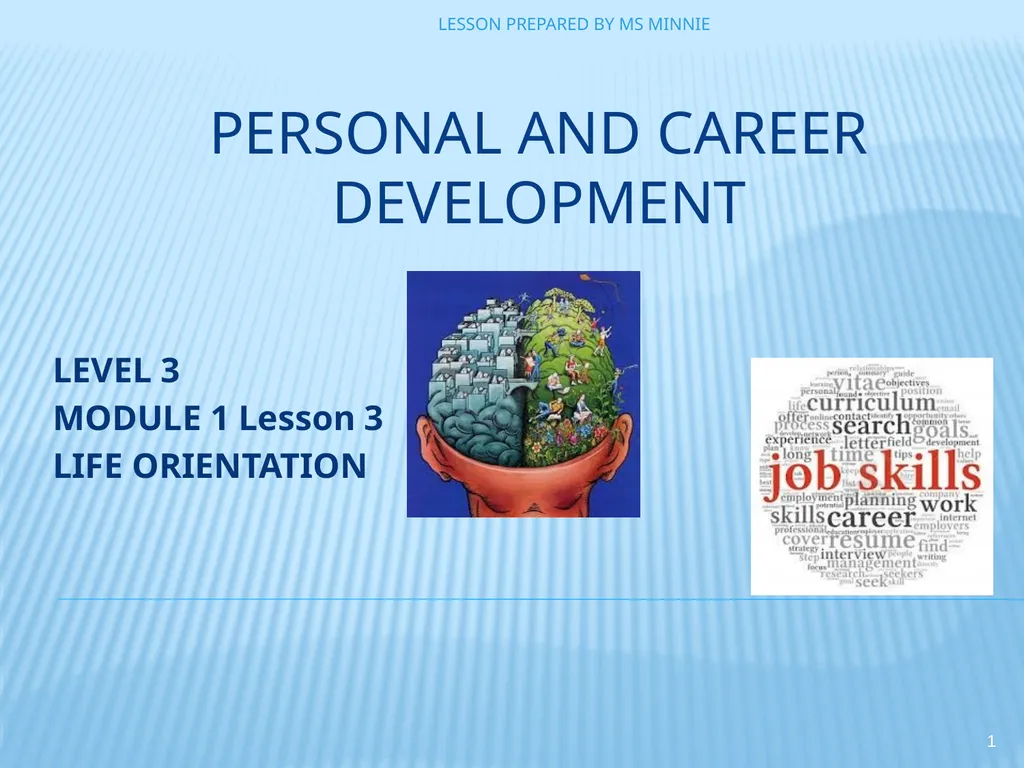
Description: personal and career development LEVEL 3 MODULE 1 Lesson 3 LIFE ORIENTATION LESSON PREPARED BY MS MINNIE 1 Module 1 LESSON PREPARED BY MS MINNIE 2 Emotions and workplace relationships Emotions and relationships Problematic workplace
Related Topics
Download Presentation
"personal and career development LEVEL 3 MODULE 1" is the property of its rightful owner. Permission is granted to download and print the materials on this website for personal, non-commercial use only, and to display it on your personal computer provided you do not modify the materials and that you retain all copyright notices contained in the materials. By downloading content from our website, you accept the terms of this agreement.
Presentation Transcript
slide1. personal and career development LEVEL 3
MODULE 1 Lesson 3
LIFE ORIENTATION LESSON PREPARED BY MS MINNIE 1<br>
slide2. Module 1 LESSON PREPARED BY MS MINNIE 2 Emotions and workplace relationships<br>
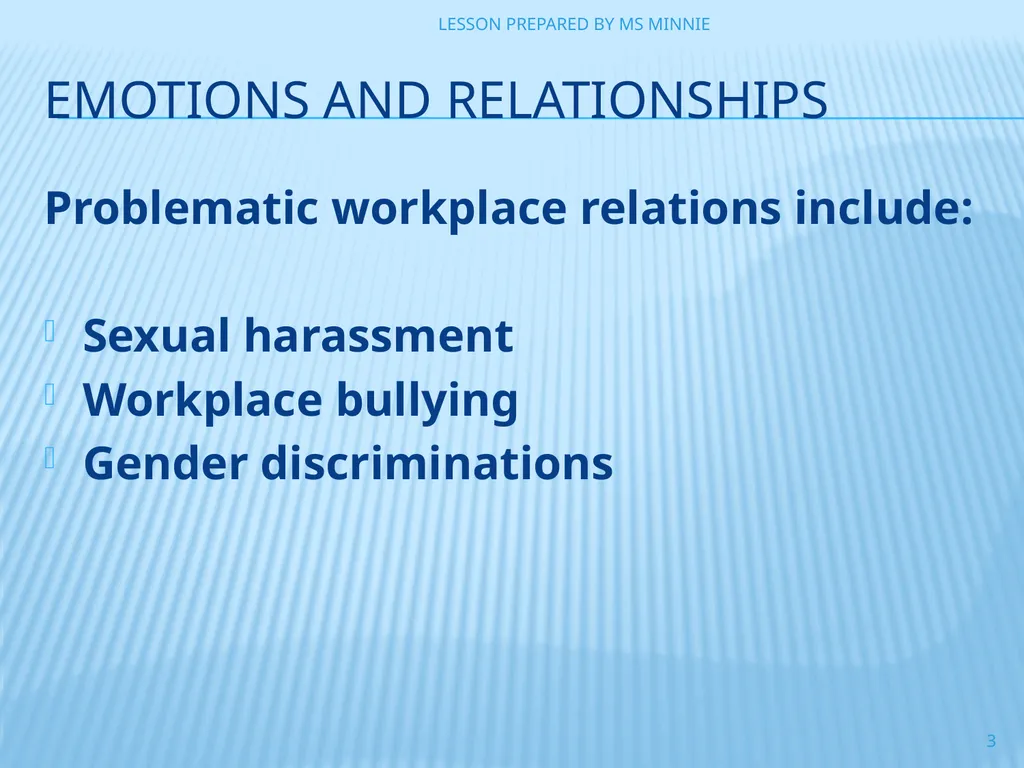
slide3. Emotions and relationships Problematic workplace relations include:
Sexual harassment
Workplace bullying
Gender discriminations LESSON PREPARED BY MS MINNIE 3<br>
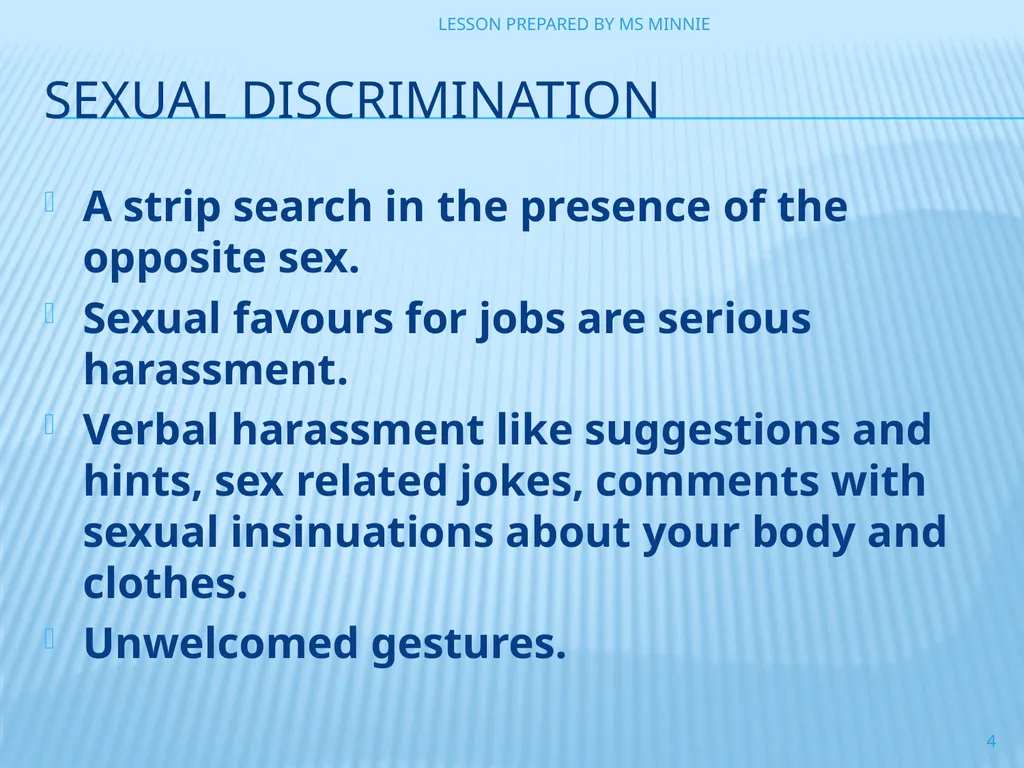
slide4. Sexual discrimination A strip search in the presence of the opposite sex.
Sexual favours for jobs are serious harassment.
Verbal harassment like suggestions and hints, sex related jokes, comments with sexual insinuations about your body and clothes.
Unwelcomed gestures. LESSON PREPARED BY MS MINNIE 4<br>
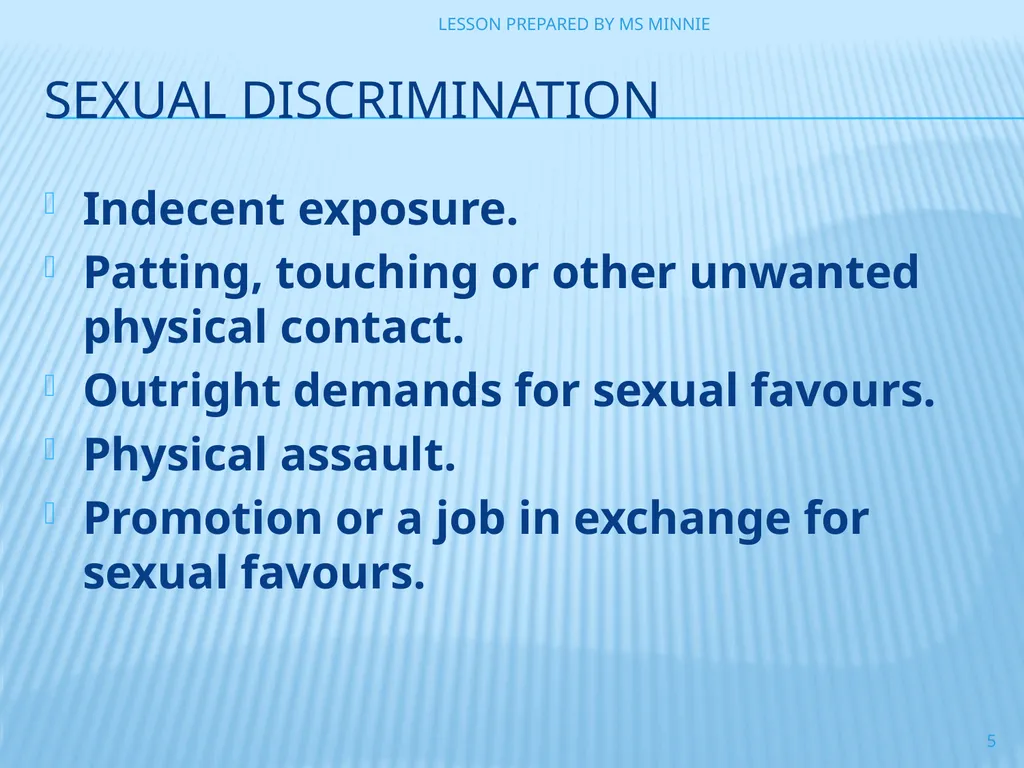
slide5. Sexual discrimination Indecent exposure.
Patting, touching or other unwanted physical contact.
Outright demands for sexual favours.
Physical assault.
Promotion or a job in exchange for sexual favours. LESSON PREPARED BY MS MINNIE 5<br>
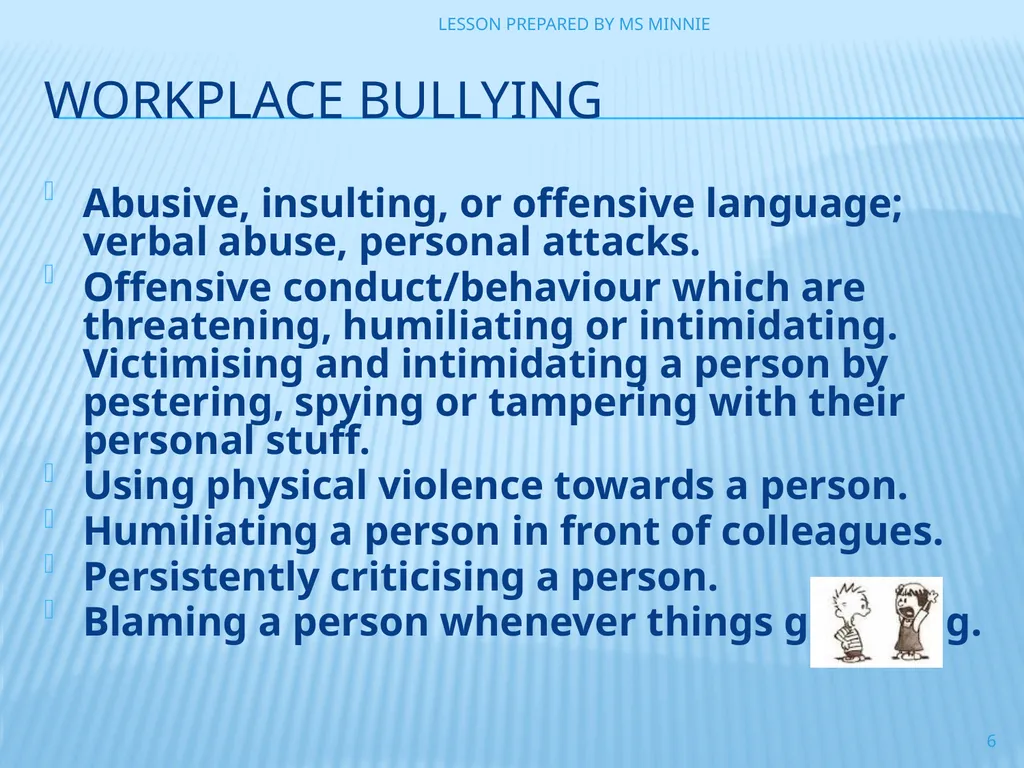
slide6. Workplace bullying Abusive, insulting, or offensive language; verbal abuse, personal attacks.
Offensive conduct/behaviour which are threatening, humiliating or intimidating. Victimising and intimidating a person by pestering, spying or tampering with their personal stuff.
Using physical violence towards a person.
Humiliating a person in front of colleagues.
Persistently criticising a person.
Blaming a person whenever things go wrong. LESSON PREPARED BY MS MINNIE 6<br>
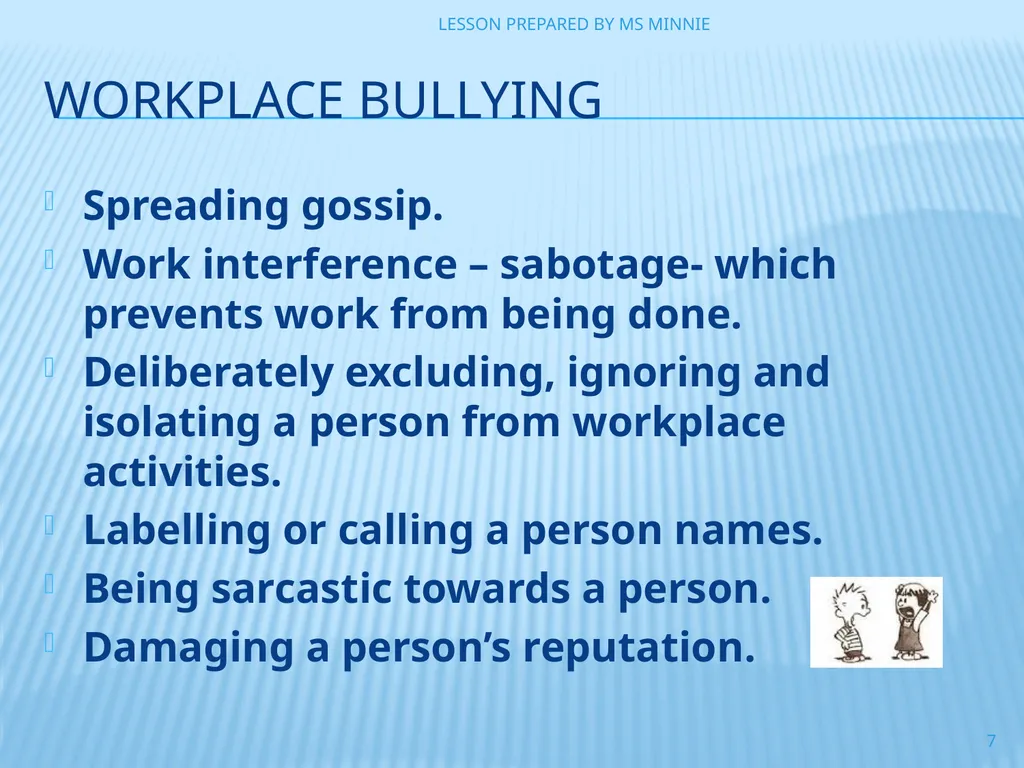
slide7. Workplace bullying Spreading gossip.
Work interference – sabotage- which prevents work from being done.
Deliberately excluding, ignoring and isolating a person from workplace activities.
Labelling or calling a person names.
Being sarcastic towards a person.
Damaging a person’s reputation. LESSON PREPARED BY MS MINNIE 7<br>
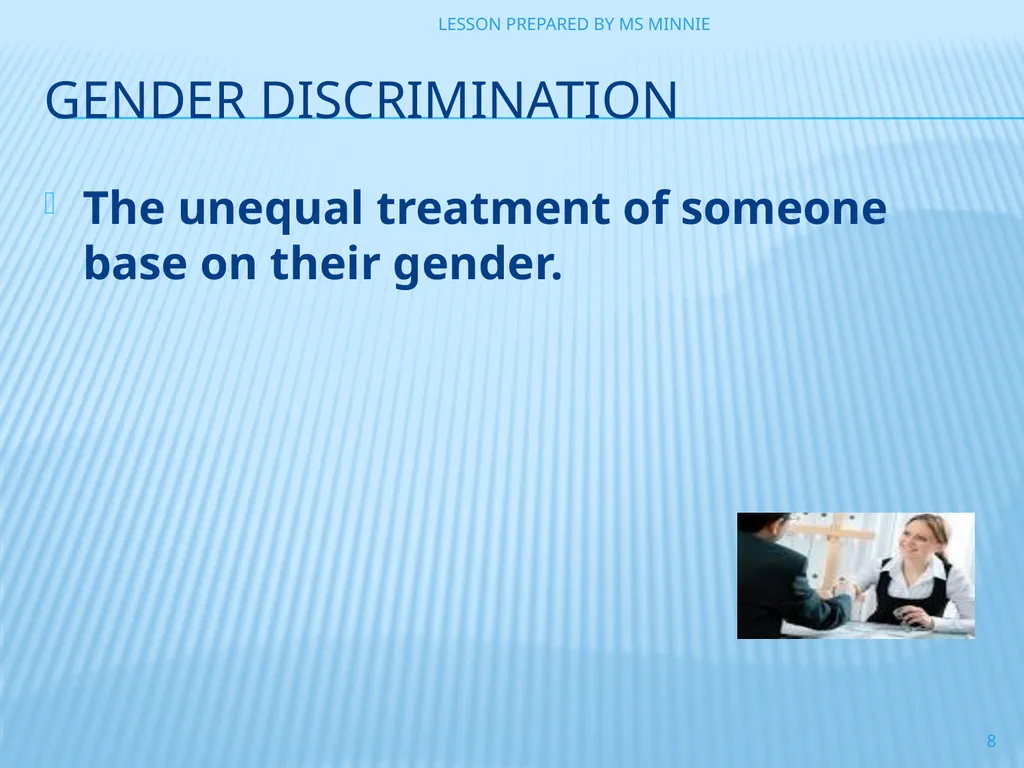
slide8. Gender discrimination The unequal treatment of someone base on their gender. LESSON PREPARED BY MS MINNIE 8<br>
slide9. Reporting mechanisms and disciplinary actions Any form of harassment is unfair labour practice and may involve the following steps:
Lay a complaint with the designated person.
The accused person is invited to a meeting and may bring a representative.
Document the details.
The accusations are investigated and a hearing is set. LESSON PREPARED BY MS MINNIE 9<br>
slide10. Reporting mechanisms and disciplinary actions The accused is informed about the allegations.
The accused is allowed to answer and responses are documented.
Depending of the seriousness of the complaint, the accused may be suspended or relocated until the investigation is complete.
The investigation should be conducted according to company policy. LESSON PREPARED BY MS MINNIE 10<br>
slide11. Mechanisms to cope with difficult relations and emotions at work LESSON PREPARED BY MS MINNIE 11 These strategies may include the following:
Informal methods
Avoiding- this is when you pretend the problem does not exist. No one wins in this situation
Accommodating- you give in to others and let them have their way. Practice assertiveness to deliver your message.
Compromise- you find a middle way where both parties get what they want. Compromise can be a short term solution.
Collaborate- you listen actively, identify the main issue and find a creative solution together.<br>
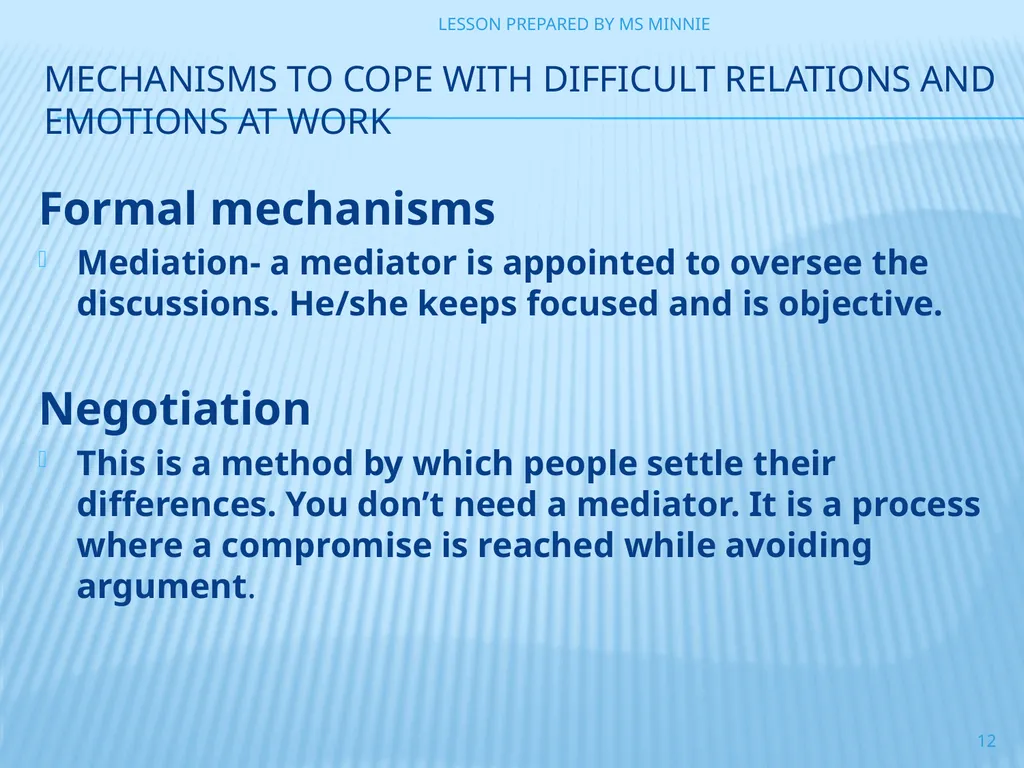
slide12. Mechanisms to cope with difficult relations and emotions at work Formal mechanisms
Mediation- a mediator is appointed to oversee the discussions. He/she keeps focused and is objective.
Negotiation
This is a method by which people settle their differences. You don’t need a mediator. It is a process where a compromise is reached while avoiding argument. LESSON PREPARED BY MS MINNIE 12<br>
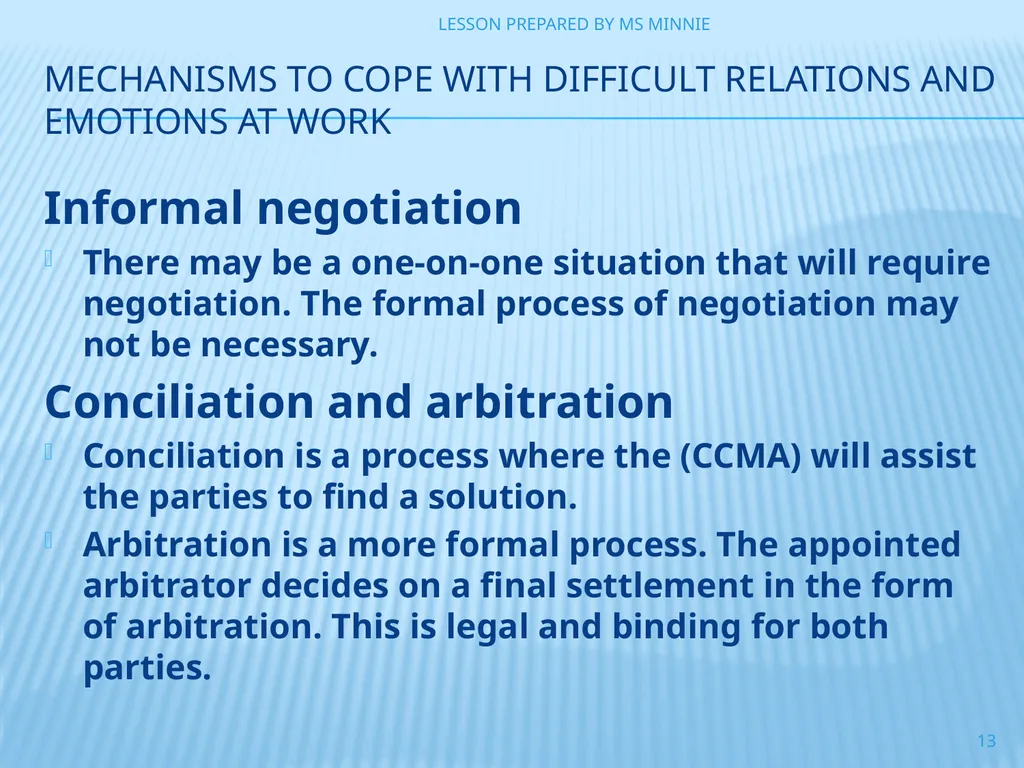
slide13. Mechanisms to cope with difficult relations and emotions at work Informal negotiation
There may be a one-on-one situation that will require negotiation. The formal process of negotiation may not be necessary.
Conciliation and arbitration
Conciliation is a process where the (CCMA) will assist the parties to find a solution.
Arbitration is a more formal process. The appointed arbitrator decides on a final settlement in the form of arbitration. This is legal and binding for both parties. LESSON PREPARED BY MS MINNIE 13<br>
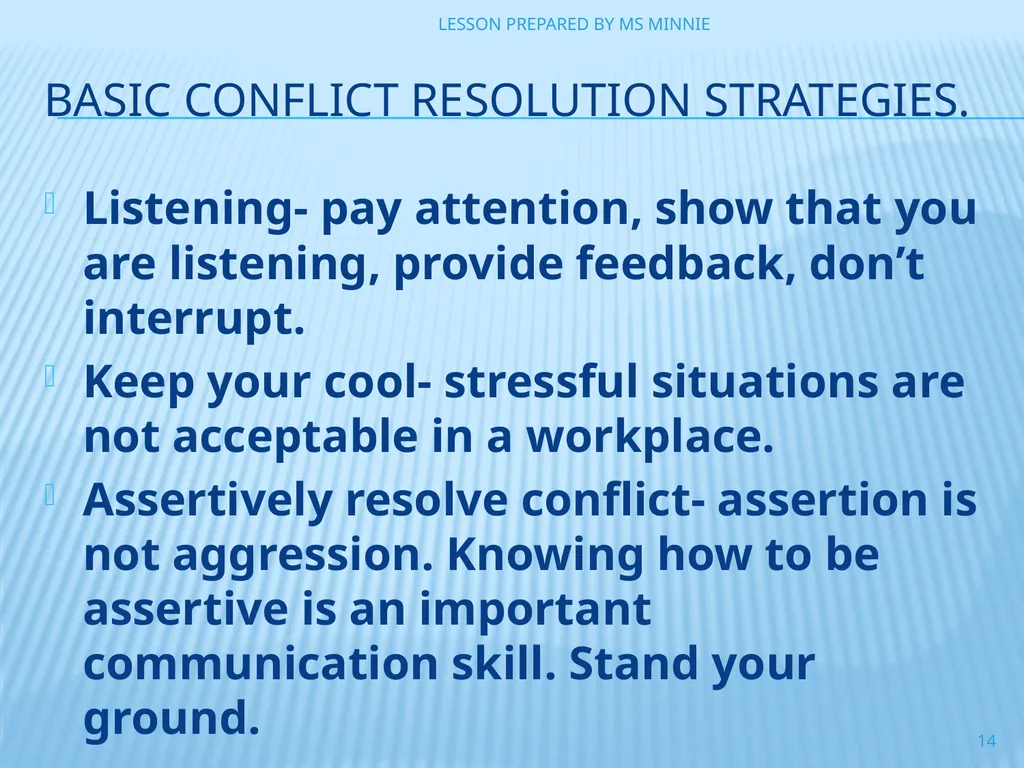
slide14. BASIC conflict resolution strategies. Listening- pay attention, show that you are listening, provide feedback, don’t interrupt.
Keep your cool- stressful situations are not acceptable in a workplace.
Assertively resolve conflict- assertion is not aggression. Knowing how to be assertive is an important communication skill. Stand your ground. LESSON PREPARED BY MS MINNIE 14<br>
MODULE 1 Lesson 3
LIFE ORIENTATION LESSON PREPARED BY MS MINNIE 1<br>
slide2. Module 1 LESSON PREPARED BY MS MINNIE 2 Emotions and workplace relationships<br>
slide3. Emotions and relationships Problematic workplace relations include:
Sexual harassment
Workplace bullying
Gender discriminations LESSON PREPARED BY MS MINNIE 3<br>
slide4. Sexual discrimination A strip search in the presence of the opposite sex.
Sexual favours for jobs are serious harassment.
Verbal harassment like suggestions and hints, sex related jokes, comments with sexual insinuations about your body and clothes.
Unwelcomed gestures. LESSON PREPARED BY MS MINNIE 4<br>
slide5. Sexual discrimination Indecent exposure.
Patting, touching or other unwanted physical contact.
Outright demands for sexual favours.
Physical assault.
Promotion or a job in exchange for sexual favours. LESSON PREPARED BY MS MINNIE 5<br>
slide6. Workplace bullying Abusive, insulting, or offensive language; verbal abuse, personal attacks.
Offensive conduct/behaviour which are threatening, humiliating or intimidating. Victimising and intimidating a person by pestering, spying or tampering with their personal stuff.
Using physical violence towards a person.
Humiliating a person in front of colleagues.
Persistently criticising a person.
Blaming a person whenever things go wrong. LESSON PREPARED BY MS MINNIE 6<br>
slide7. Workplace bullying Spreading gossip.
Work interference – sabotage- which prevents work from being done.
Deliberately excluding, ignoring and isolating a person from workplace activities.
Labelling or calling a person names.
Being sarcastic towards a person.
Damaging a person’s reputation. LESSON PREPARED BY MS MINNIE 7<br>
slide8. Gender discrimination The unequal treatment of someone base on their gender. LESSON PREPARED BY MS MINNIE 8<br>
slide9. Reporting mechanisms and disciplinary actions Any form of harassment is unfair labour practice and may involve the following steps:
Lay a complaint with the designated person.
The accused person is invited to a meeting and may bring a representative.
Document the details.
The accusations are investigated and a hearing is set. LESSON PREPARED BY MS MINNIE 9<br>
slide10. Reporting mechanisms and disciplinary actions The accused is informed about the allegations.
The accused is allowed to answer and responses are documented.
Depending of the seriousness of the complaint, the accused may be suspended or relocated until the investigation is complete.
The investigation should be conducted according to company policy. LESSON PREPARED BY MS MINNIE 10<br>
slide11. Mechanisms to cope with difficult relations and emotions at work LESSON PREPARED BY MS MINNIE 11 These strategies may include the following:
Informal methods
Avoiding- this is when you pretend the problem does not exist. No one wins in this situation
Accommodating- you give in to others and let them have their way. Practice assertiveness to deliver your message.
Compromise- you find a middle way where both parties get what they want. Compromise can be a short term solution.
Collaborate- you listen actively, identify the main issue and find a creative solution together.<br>
slide12. Mechanisms to cope with difficult relations and emotions at work Formal mechanisms
Mediation- a mediator is appointed to oversee the discussions. He/she keeps focused and is objective.
Negotiation
This is a method by which people settle their differences. You don’t need a mediator. It is a process where a compromise is reached while avoiding argument. LESSON PREPARED BY MS MINNIE 12<br>
slide13. Mechanisms to cope with difficult relations and emotions at work Informal negotiation
There may be a one-on-one situation that will require negotiation. The formal process of negotiation may not be necessary.
Conciliation and arbitration
Conciliation is a process where the (CCMA) will assist the parties to find a solution.
Arbitration is a more formal process. The appointed arbitrator decides on a final settlement in the form of arbitration. This is legal and binding for both parties. LESSON PREPARED BY MS MINNIE 13<br>
slide14. BASIC conflict resolution strategies. Listening- pay attention, show that you are listening, provide feedback, don’t interrupt.
Keep your cool- stressful situations are not acceptable in a workplace.
Assertively resolve conflict- assertion is not aggression. Knowing how to be assertive is an important communication skill. Stand your ground. LESSON PREPARED BY MS MINNIE 14<br>