Personal Philosophy Human nature, Change, Needs, Society, Biological, Psychological, Cultural Impacts on the way a person navigates life. By: Toni Handboy, MSW, LAC, Wakpa Waste Counseling Services Peer Recovery Specialist Certified
"Personal Philosophy Human nature, Change, Needs," is the property of its rightful owner. Permission is granted to
download and print the materials on this website for personal, non-commercial use only, and to display it
on your personal computer provided you do not modify the materials and that you retain all copyright
notices contained in the materials. By downloading content from our website, you accept the terms of this
agreement.
Share
Embed code
Presentation Transcript
01
Personal Philosophy Human nature, Change, Needs, Society, Biological, Psychological, Cultural Impacts on the way a person navigates life.
By: Toni Handboy, MSW, LAC, Wakpa Waste Counseling Services
Peer Recovery Specialist Certified
Behavioral Health Director
June 1, 2026<br>
02
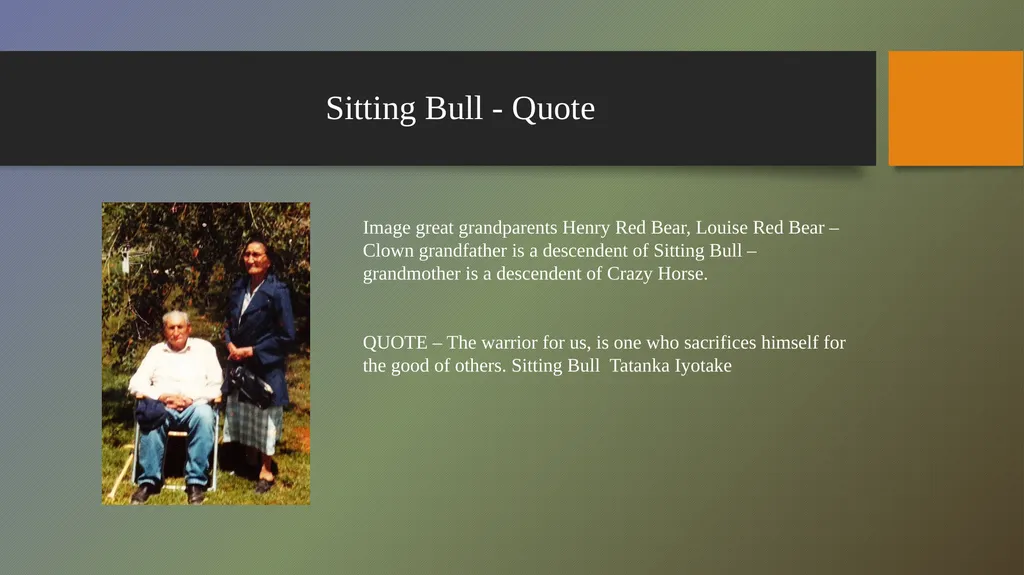
Sitting Bull - Quote Image great grandparents Henry Red Bear, Louise Red Bear – Clown grandfather is a descendent of Sitting Bull – grandmother is a descendent of Crazy Horse.
QUOTE – The warrior for us, is one who sacrifices himself for the good of others. Sitting Bull Tatanka Iyotake<br>
03
Peer Recovery: Integrating Lived Experience into Treatment Systems From a Lakota perspective, healing has always been rooted in relationship, community, spirituality, and lived experience.
Lived experience peer recovery, long before modern behavioral health systems existed, our people relied upon those who had endured hardship, suffering, loss, and survival to help guide others toward healing and balance.
The wisdom gained through struggle was viewed not as weakness, but as knowledge, responsibility, and purpose.<br>
04
Peer Recovery: Cont’d When integrating lived experience into treatment systems aligns naturally with Lakota values because healing is understood as a collective and relational process rather than an individual journey alone.
Recovery is about restoring balance, focusing on the Lakota philosophy mental, emotional, physical and emotional balance.
Reconnecting to community, family and to the culture.
Those with lived experience reflects traditional storytelling, kinship, shared responsibility, and walking alongside one another without judgment.<br>
05
Lakota-centered principles Healing Through Relationship Lakota philosophy teaches that healing happens through connection. Isolation contributes to suffering, while belonging strengthens wellness.
Peer Support restores relationships by helping individuals feel seen, heard, valued ,and understood.
The phase “Mitakuye Oyas’in” – “All My Relations” – reminds us that healing impacts not only the individual, but the family, ancestors, and future generations.<br>
06
Lakota Centered principles Lived Experience as Sacred Knowledge Individuals with lived experience in addiction, trauma, grief, incarceration, or recovery carry valuable teachings.
Their experience can help guide others away from shame and toward hope. Recovery stories become medicine for the community.
In Lakota tradition, wisdom is often earned through hardship, survival, humility, and perseverance. Those who have walked difficult paths may become helpers, mentors, advocates, and protectors, for others.<br>
07
Lakota-centered principles Cultural Identity as Prevention and Healing Disconnection from identity, language, spirituality, and community has contributed to historical and inter generational trauma among Indigenous peoples.
Reconnecting individuals with Lakota values, ceremony, teachings, and cultural practices strengthens resilience and recovery.
Examples listed of activities and support.<br>
08
Integrating culture into treatment systems – peer recovery based services and support Talking circles
Smudging and prayer
Elder teachings
Language revitalization
Traditional arts and beading
Drumming and singing
Land-based healing and camps
Equine and nature-based wellness activities
CULTURE IS NOT AN “EXTRA SERVICE.” CULTURE ITSELF IS MEDICINE.<br>
09
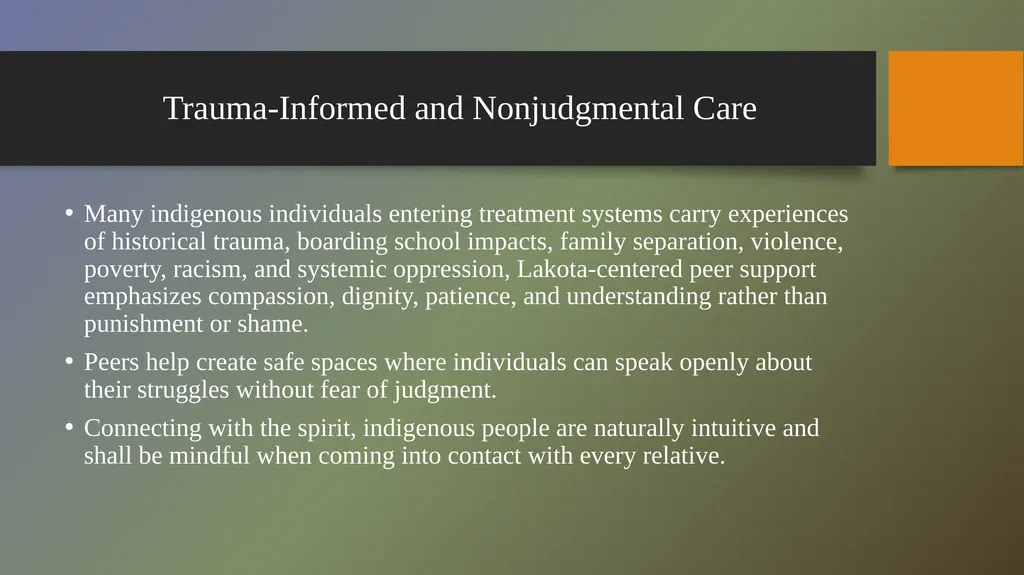
Trauma-Informed and Nonjudgmental Care Many indigenous individuals entering treatment systems carry experiences of historical trauma, boarding school impacts, family separation, violence, poverty, racism, and systemic oppression, Lakota-centered peer support emphasizes compassion, dignity, patience, and understanding rather than punishment or shame.
Peers help create safe spaces where individuals can speak openly about their struggles without fear of judgment.
Connecting with the spirit, indigenous people are naturally intuitive and shall be mindful when coming into contact with every relative.<br>
10
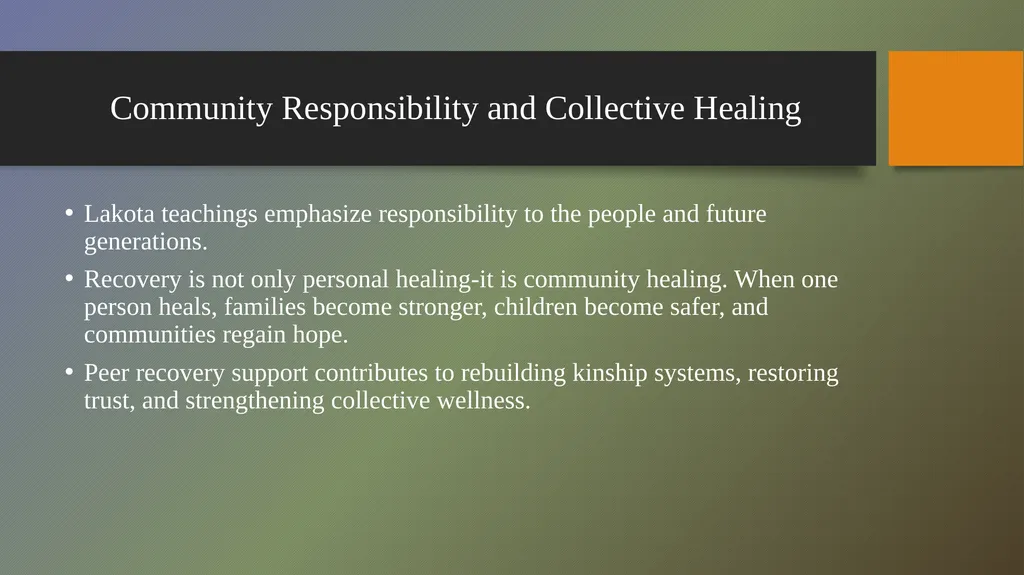
Community Responsibility and Collective Healing Lakota teachings emphasize responsibility to the people and future generations.
Recovery is not only personal healing-it is community healing. When one person heals, families become stronger, children become safer, and communities regain hope.
Peer recovery support contributes to rebuilding kinship systems, restoring trust, and strengthening collective wellness.<br>
11
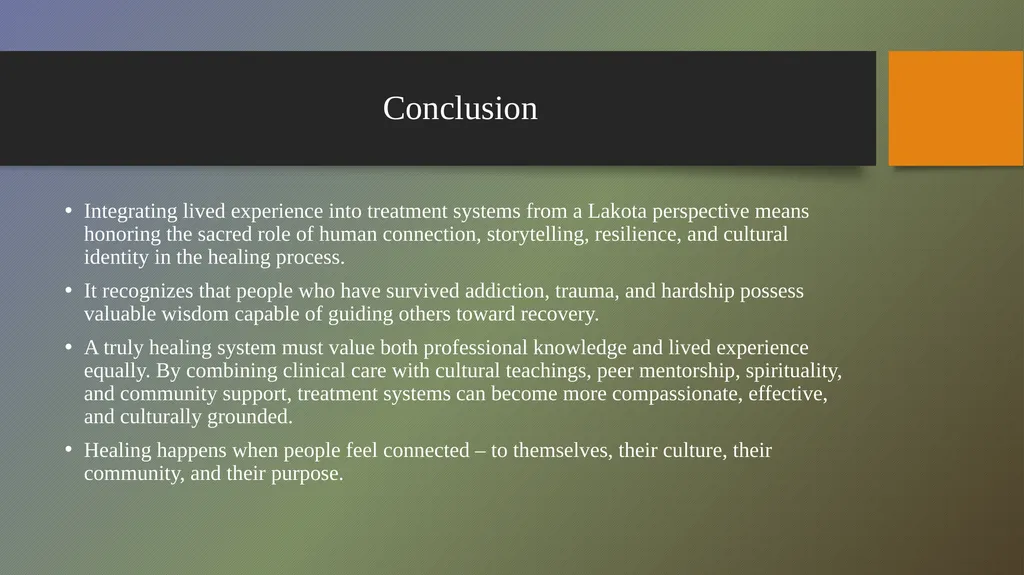
Conclusion Integrating lived experience into treatment systems from a Lakota perspective means honoring the sacred role of human connection, storytelling, resilience, and cultural identity in the healing process.
It recognizes that people who have survived addiction, trauma, and hardship possess valuable wisdom capable of guiding others toward recovery.
A truly healing system must value both professional knowledge and lived experience equally. By combining clinical care with cultural teachings, peer mentorship, spirituality, and community support, treatment systems can become more compassionate, effective, and culturally grounded.
Healing happens when people feel connected – to themselves, their culture, their community, and their purpose.<br>
12
INSPIRATIONAL - MOTIVATIONAL Recovery happens through connection, culture, community, and compassion.
Waunsila – to have compassion
Wopila, Thank you.
Toni.Handboy@ihs.gov
605-964-0722<br>
13
Change – Transformation With change comes the four directions of life. Starting with Mental, Physical, Spiritual and Emotional that we assess our 4 aspects of self-awareness for balance.
This can also be true for the four elements of seasons. Each season represents change. Summer (life), Winter (transition) Spring (readiness) and Fall (change, to renew).
Change can also be the four stages of development in life. Starting from Fetus (Birth), Child, Adult and then into Elderly.
When internal change happens and then external change will take place.<br>