Playtesting Chapter 9 of Game Design Workshop a play centric approach to creating innovative games, Tracy Fullerton, Burlington, MA, Morgan Kaufmann, 2008. Involves Selection Recruiting Preparation Controls Analysis Playtesting is NOT NOT
"Playtesting Chapter 9 of Game Design Workshop a" is the property of its rightful owner. Permission is granted to
download and print the materials on this website for personal, non-commercial use only, and to display it
on your personal computer provided you do not modify the materials and that you retain all copyright
notices contained in the materials. By downloading content from our website, you accept the terms of this
agreement.
Presentation Transcript
01
Playtesting Chapter 9 of
Game Design Workshop a play centric approach to creating innovative games, Tracy Fullerton, Burlington, MA, Morgan Kaufmann, 2008.<br>
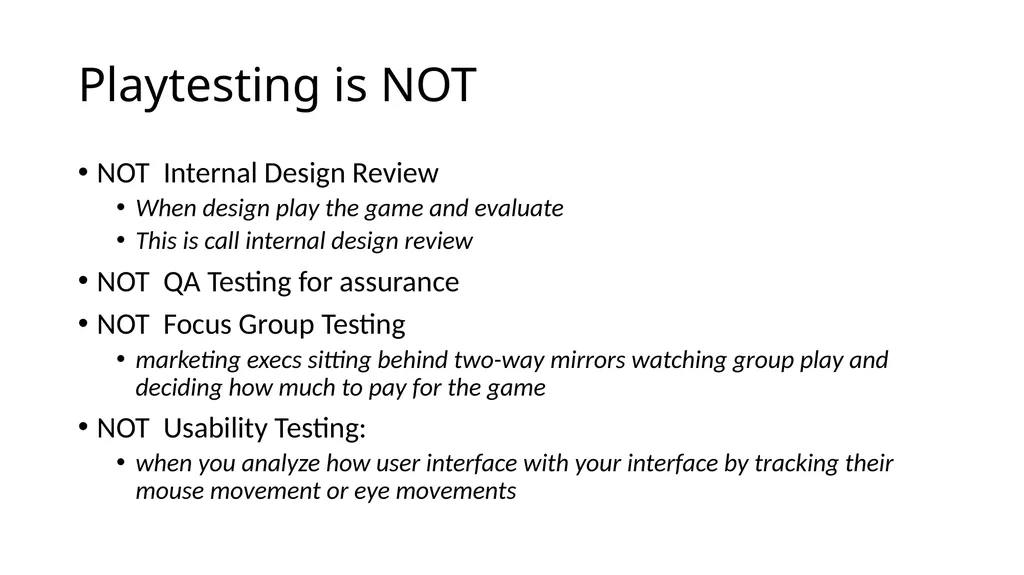
Playtesting is NOT NOT Internal Design Review
When design play the game and evaluate
This is call internal design review
NOT QA Testing for assurance
NOT Focus Group Testing
marketing execs sitting behind two-way mirrors watching group play and deciding how much to pay for the game
NOT Usability Testing:
when you analyze how user interface with your interface by tracking their mouse movement or eye movements<br>
04
Playtesting Goals Useful feedback from players to improve the overall experience of the game
Make sure the game is functioning the way you intend.
Internally Complete
Balance
Fun to Play<br>
05
Playtesting and Interactive Design Designer’s role: Advocate for the user
Keep the players’ needs and perspective throughout the design and production process
Reason for playtesting:
Keep the game from straying
Playtesting should be tightly integrated in development/production process<br>
06
Recruitment Self-test is important
Confidants: friends and colleague
Provide fresh eyes
Help them test (early stage can be confusing)
When game become playable, move on!!
People you don’t know
Unbiased feedback
Find the “ideal players”
Know your target and recruit accordingly<br>
07
Considerations for a playtest session DO NOT help tester with game play
Think what comes in the box (typical instructions/tutorials for players) are fine
Think of yourself as an investigator/observer
Record what they say, do and analyze their responses
Let them make mistakes
Best way to learn about your game!!
Observe how each person approach the game
Are the rules confusing?
Let an objective person run the session
You be an observe and just observe<br>
08
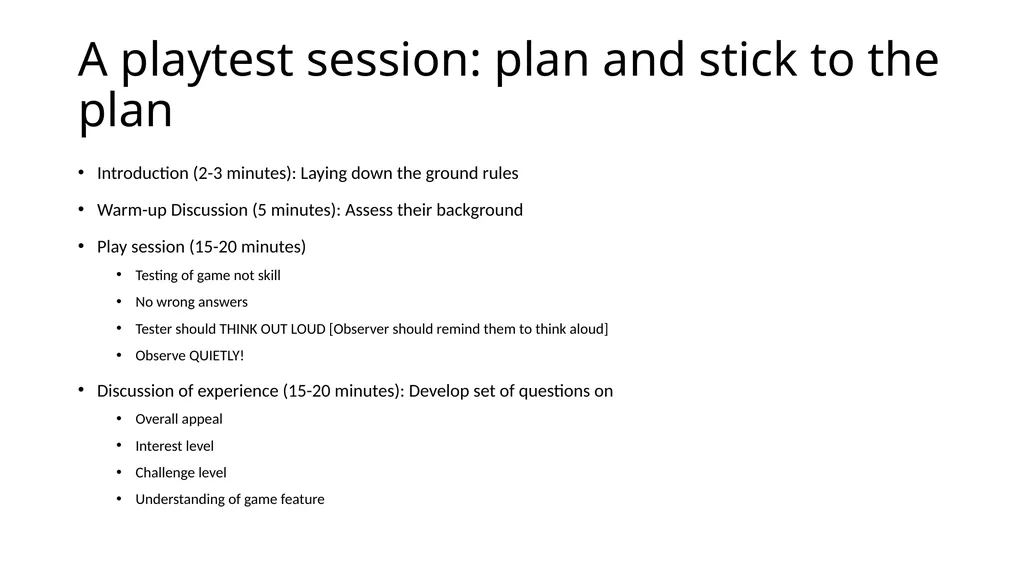
A playtest session: plan and stick to the plan Introduction (2-3 minutes): Laying down the ground rules
Warm-up Discussion (5 minutes): Assess their background
Play session (15-20 minutes)
Testing of game not skill
No wrong answers
Tester should THINK OUT LOUD [Observer should remind them to think aloud]
Observe QUIETLY!
Discussion of experience (15-20 minutes): Develop set of questions on
Overall appeal
Interest level
Challenge level
Understanding of game feature<br>
09
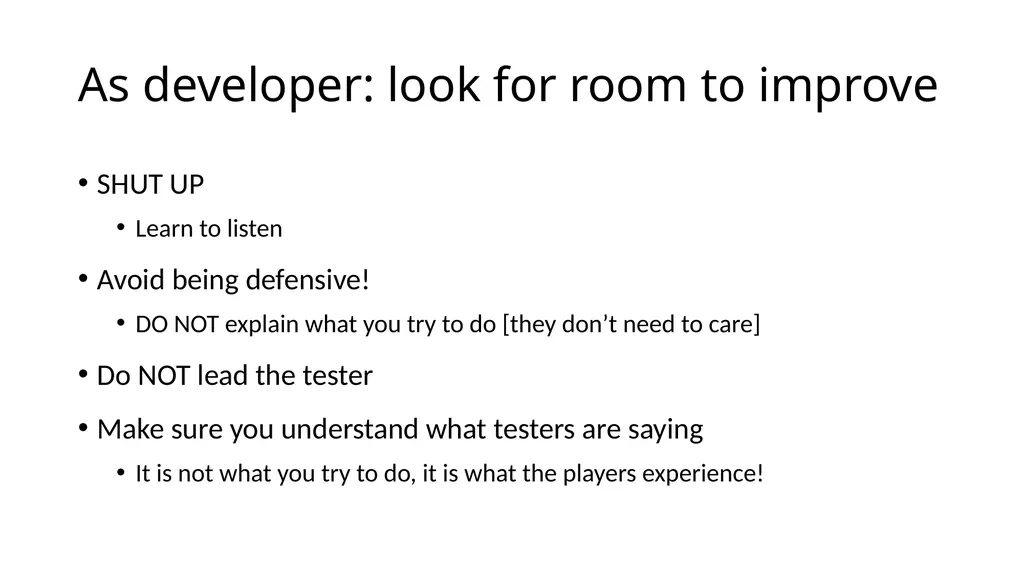
As developer: look for room to improve SHUT UP
Learn to listen
Avoid being defensive!
DO NOT explain what you try to do [they don’t need to care]
Do NOT lead the tester
Make sure you understand what testers are saying
It is not what you try to do, it is what the players experience!<br>
10
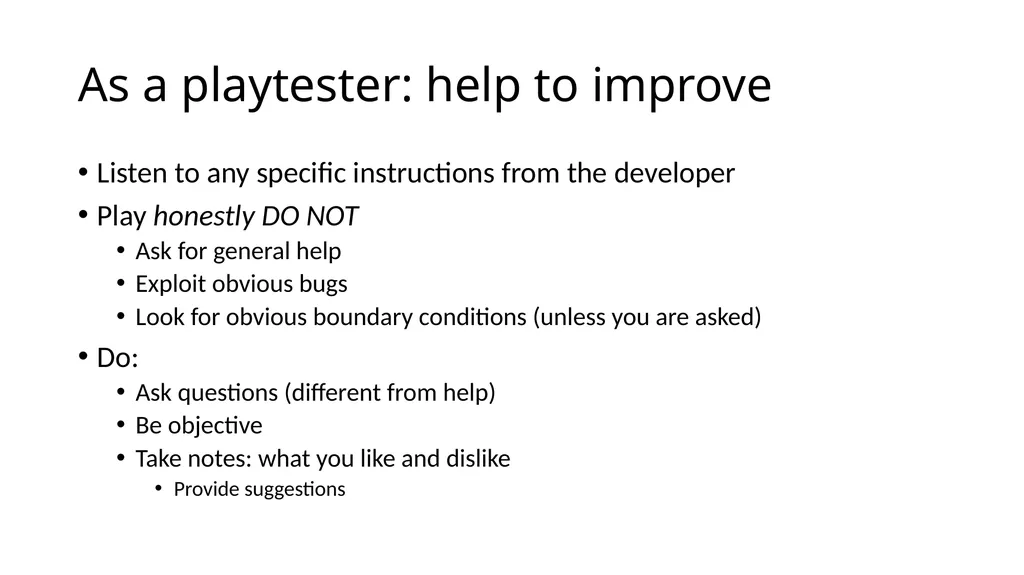
As a playtester: help to improve Listen to any specific instructions from the developer
Play honestly DO NOT
Ask for general help
Exploit obvious bugs
Look for obvious boundary conditions (unless you are asked)
Do:
Ask questions (different from help)
Be objective
Take notes: what you like and dislike
Provide suggestions<br>
11
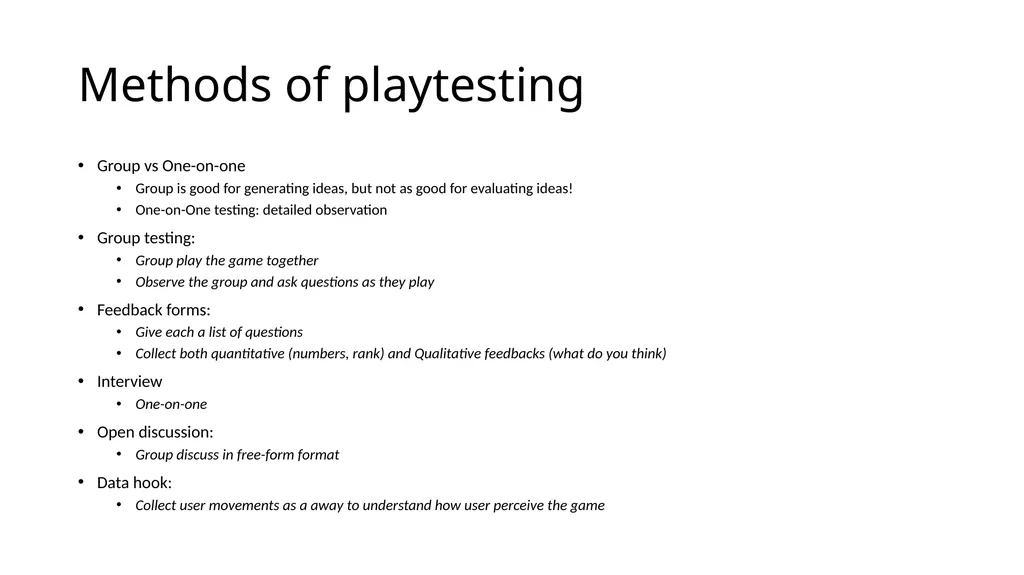
Methods of playtesting Group vs One-on-one
Group is good for generating ideas, but not as good for evaluating ideas!
One-on-One testing: detailed observation
Group testing:
Group play the game together
Observe the group and ask questions as they play
Feedback forms:
Give each a list of questions
Collect both quantitative (numbers, rank) and Qualitative feedbacks (what do you think)
Interview
One-on-one
Open discussion:
Group discuss in free-form format
Data hook:
Collect user movements as a away to understand how user perceive the game<br>
12
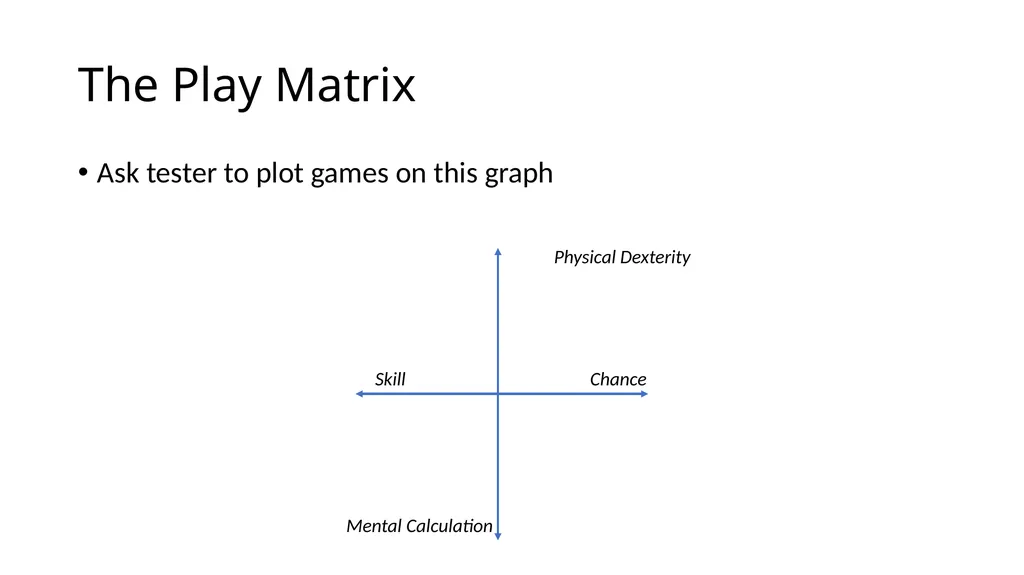
The Play Matrix Ask tester to plot games on this graph<br>
13
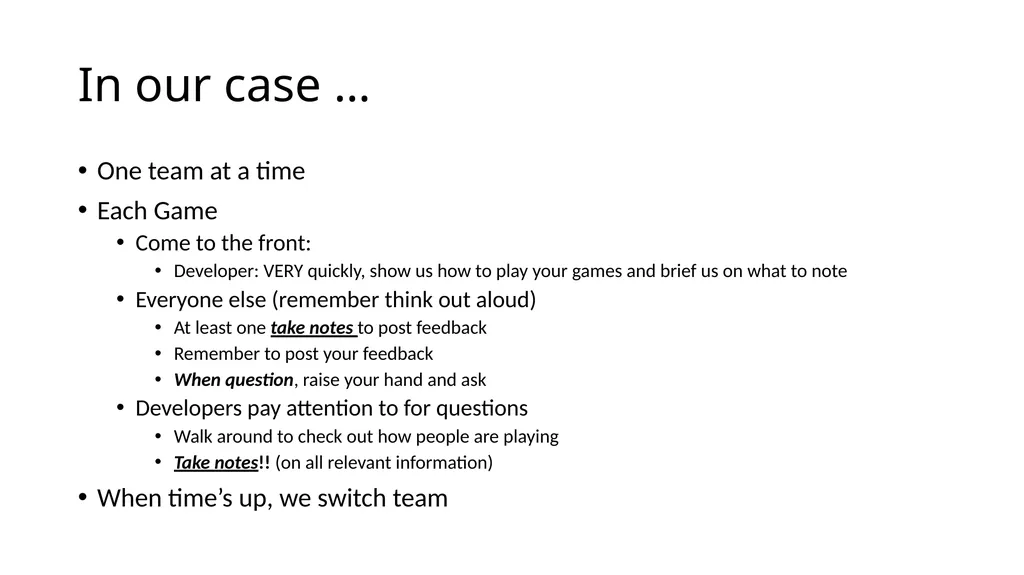
In our case … One team at a time
Each Game
Come to the front:
Developer: VERY quickly, show us how to play your games and brief us on what to note
Everyone else (remember think out aloud)
At least one take notes to post feedback
Remember to post your feedback
When question, raise your hand and ask
Developers pay attention to for questions
Walk around to check out how people are playing
Take notes!! (on all relevant information)
When time’s up, we switch team<br>
14
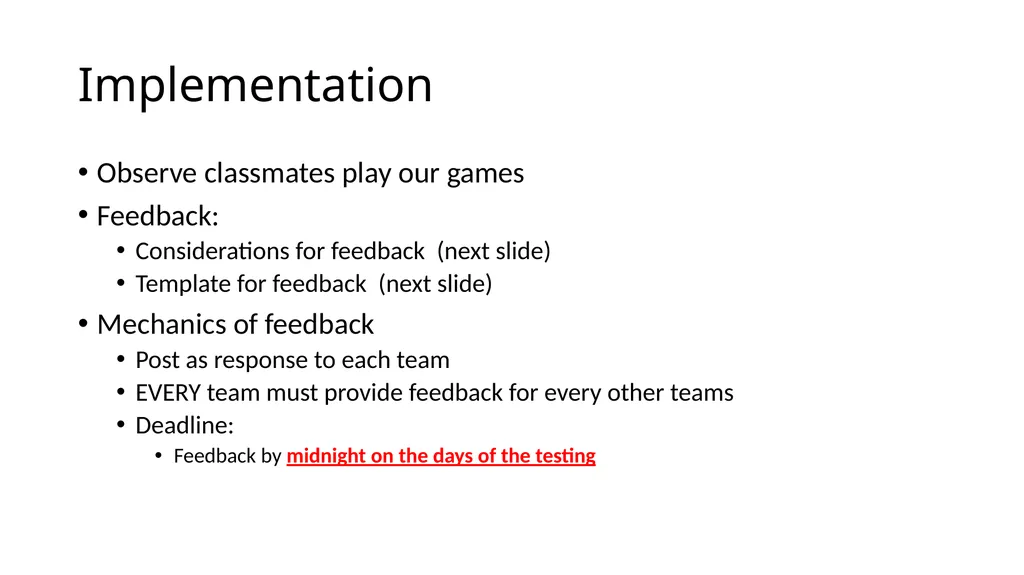
Implementation Observe classmates play our games
Feedback:
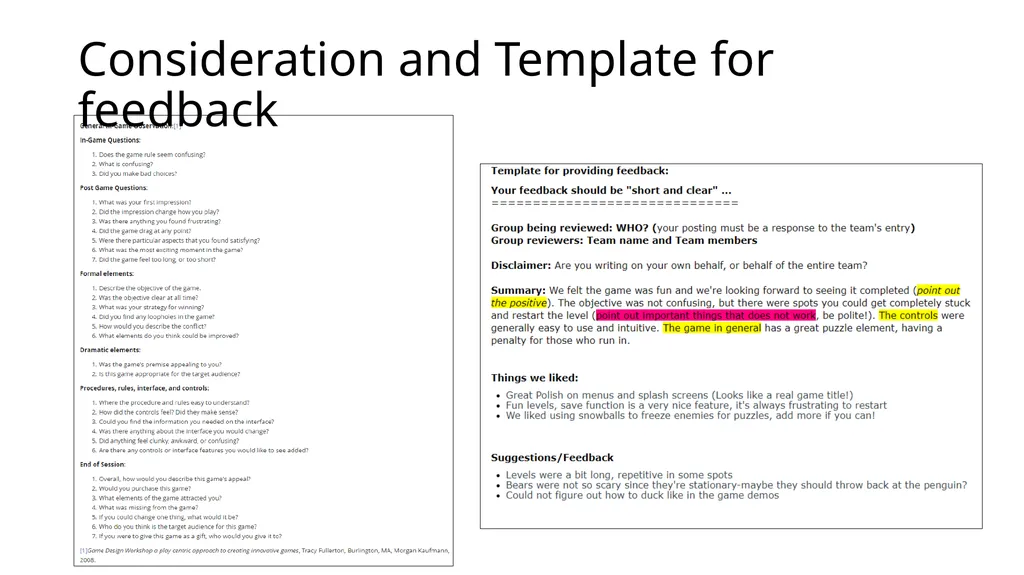
Considerations for feedback (next slide)
Template for feedback (next slide)
Mechanics of feedback
Post as response to each team
EVERY team must provide feedback for every other teams
Deadline:
Feedback by midnight on the days of the testing<br>