PNEUMONIA PRESENTED BY: PRATIBHA CHARAN NURSING
Description: PNEUMONIA PRESENTED BY: PRATIBHA CHARAN NURSING TUTOR INTRODUCTION It is an inflammatory condition of the lung that is caused by a microbial agent. Pneumonitis is a general term that describes an inflammatory process in the lung tissue that
Related Topics
Download Presentation
"PNEUMONIA PRESENTED BY: PRATIBHA CHARAN NURSING" is the property of its rightful owner. Permission is granted to download and print the materials on this website for personal, non-commercial use only, and to display it on your personal computer provided you do not modify the materials and that you retain all copyright notices contained in the materials. By downloading content from our website, you accept the terms of this agreement.
Presentation Transcript
slide1. PNEUMONIA PRESENTED BY:
PRATIBHA CHARAN
NURSING TUTOR<br>
slide2. INTRODUCTION It is an inflammatory condition of the lung that is caused by a microbial agent.
Pneumonitis is a general term that describes an inflammatory process in the lung tissue that may predispose a patient to or place a patient at risk for microbial invasion.
It is the leading cause of death from the infectious disease.<br>
slide3. definition An inflammation of the lung parenchyma is known as pneumonia.
Pneumonia is mainly caused by microorganism which enter the lower respiratory system and cause infection. The microorganism includes bacteria, fungi, parasites and viruses.<br>
slide4. epidemiology Common illness affecting approximately 450 million people a year occuring in all part of the world, 4 million death yearly.
Rates are greater in children less than five years and adult older than 75 years.
It occurs five times more in the developing world than in the developed world.<br>
slide5. etiology There are many causes of pneumonia including bacteria, viruses, fungal agent and protozoa.
It may also result from
Inhalation of toxic agents
Smoke
Dust
Aspiration of food
Fluid
vomitus<br>
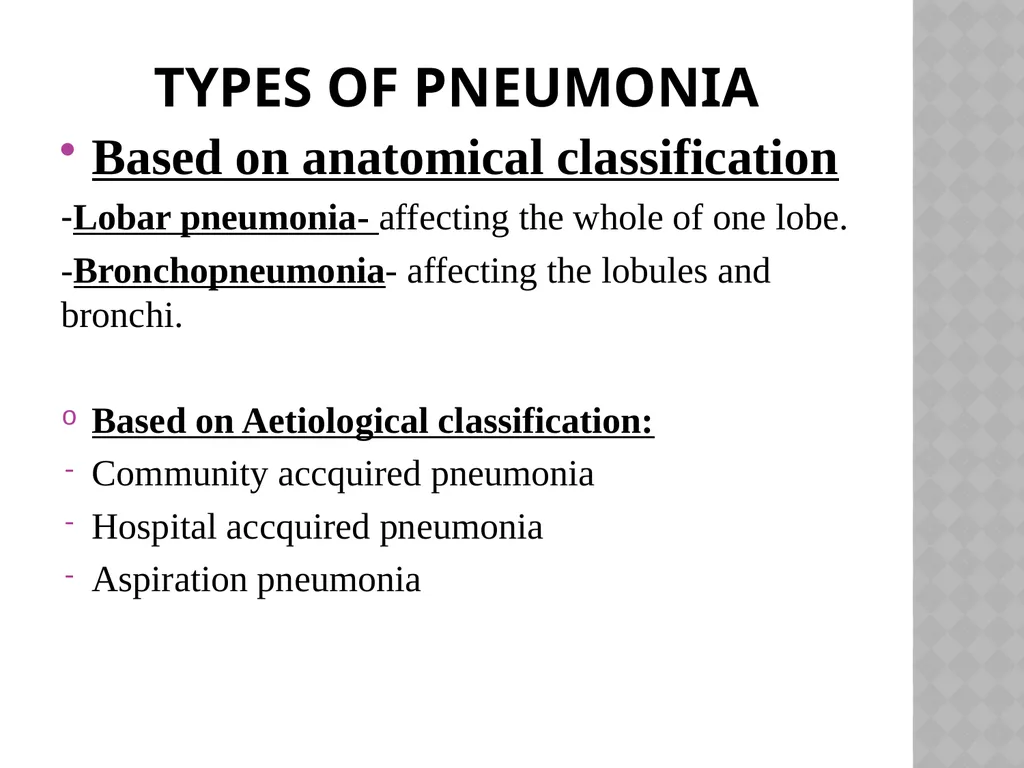
slide6. Types of pneumonia Based on anatomical classification
-Lobar pneumonia- affecting the whole of one lobe.
-Bronchopneumonia- affecting the lobules and bronchi.
Based on Aetiological classification:
Community accquired pneumonia
Hospital accquired pneumonia
Aspiration pneumonia<br>
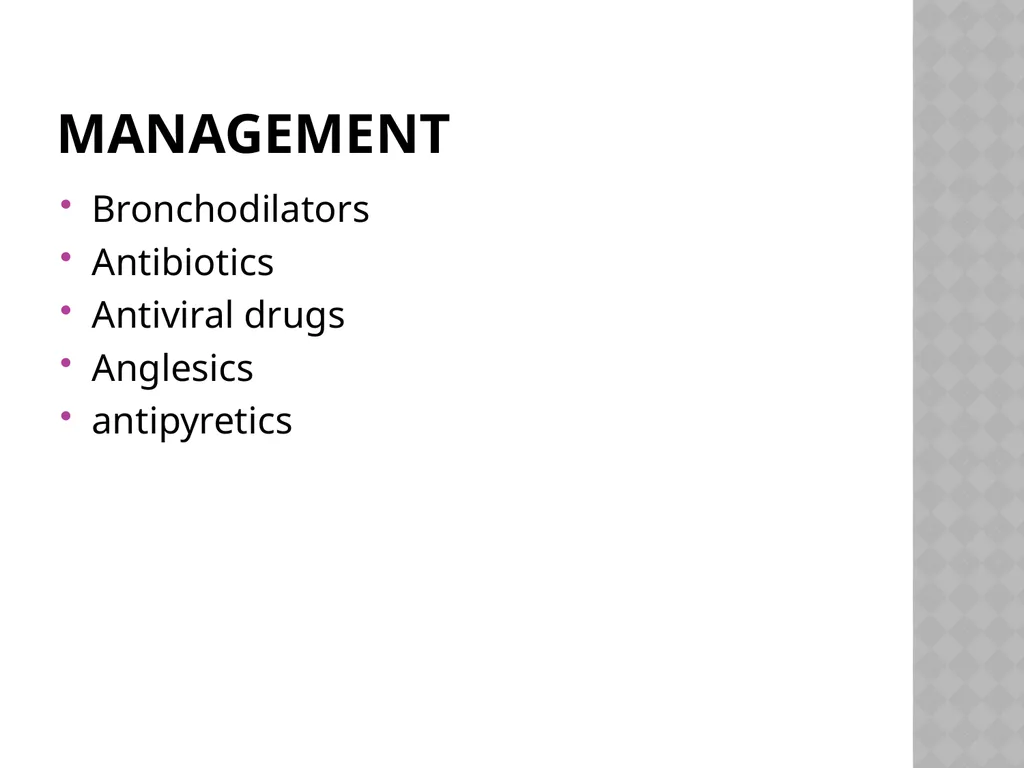
slide7. management Bronchodilators
Antibiotics
Antiviral drugs
Anglesics
antipyretics<br>
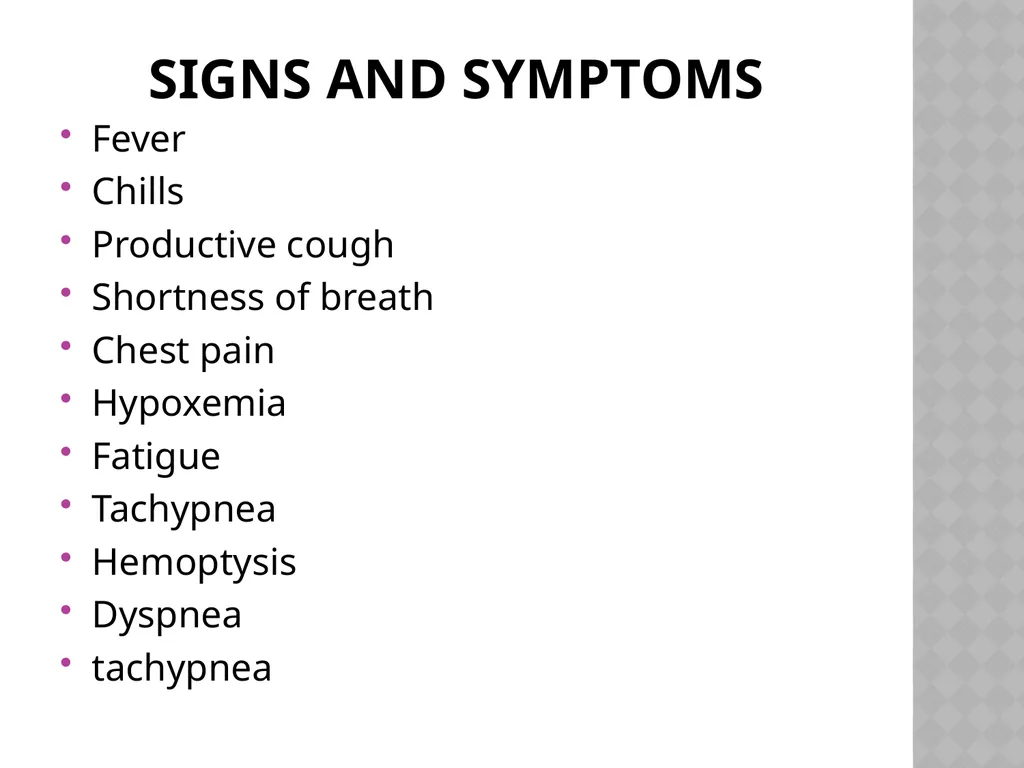
slide8. Signs and symptoms Fever
Chills
Productive cough
Shortness of breath
Chest pain
Hypoxemia
Fatigue
Tachypnea
Hemoptysis
Dyspnea
tachypnea<br>
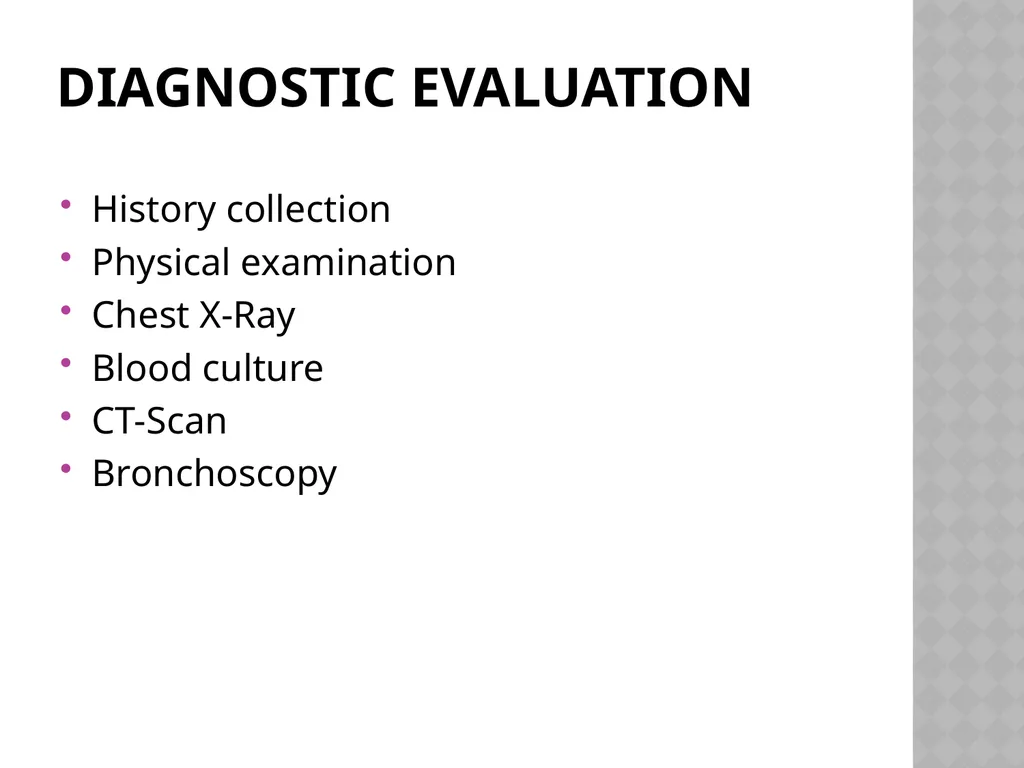
slide9. Diagnostic evaluation History collection
Physical examination
Chest X-Ray
Blood culture
CT-Scan
Bronchoscopy<br>
PRATIBHA CHARAN
NURSING TUTOR<br>
slide2. INTRODUCTION It is an inflammatory condition of the lung that is caused by a microbial agent.
Pneumonitis is a general term that describes an inflammatory process in the lung tissue that may predispose a patient to or place a patient at risk for microbial invasion.
It is the leading cause of death from the infectious disease.<br>
slide3. definition An inflammation of the lung parenchyma is known as pneumonia.
Pneumonia is mainly caused by microorganism which enter the lower respiratory system and cause infection. The microorganism includes bacteria, fungi, parasites and viruses.<br>
slide4. epidemiology Common illness affecting approximately 450 million people a year occuring in all part of the world, 4 million death yearly.
Rates are greater in children less than five years and adult older than 75 years.
It occurs five times more in the developing world than in the developed world.<br>
slide5. etiology There are many causes of pneumonia including bacteria, viruses, fungal agent and protozoa.
It may also result from
Inhalation of toxic agents
Smoke
Dust
Aspiration of food
Fluid
vomitus<br>
slide6. Types of pneumonia Based on anatomical classification
-Lobar pneumonia- affecting the whole of one lobe.
-Bronchopneumonia- affecting the lobules and bronchi.
Based on Aetiological classification:
Community accquired pneumonia
Hospital accquired pneumonia
Aspiration pneumonia<br>
slide7. management Bronchodilators
Antibiotics
Antiviral drugs
Anglesics
antipyretics<br>
slide8. Signs and symptoms Fever
Chills
Productive cough
Shortness of breath
Chest pain
Hypoxemia
Fatigue
Tachypnea
Hemoptysis
Dyspnea
tachypnea<br>
slide9. Diagnostic evaluation History collection
Physical examination
Chest X-Ray
Blood culture
CT-Scan
Bronchoscopy<br>