
Poliomyelitis Introduction A terryfying



Description: Poliomyelitis Introduction A terryfying communicable disease resulting in devastating paralysis, polio continues to be prevalent in much of the developing world. Poliomylitis is first known to have occurred nearly 6,000 years ago, as
Related Topics
Download Presentation
"Poliomyelitis Introduction A terryfying" is the property of its rightful owner. Permission is granted to download and print the materials on this website for personal, non-commercial use only, and to display it on your personal computer provided you do not modify the materials and that you retain all copyright notices contained in the materials. By downloading content from our website, you accept the terms of this agreement.
Presentation Transcript
slide1. Poliomyelitis<br>
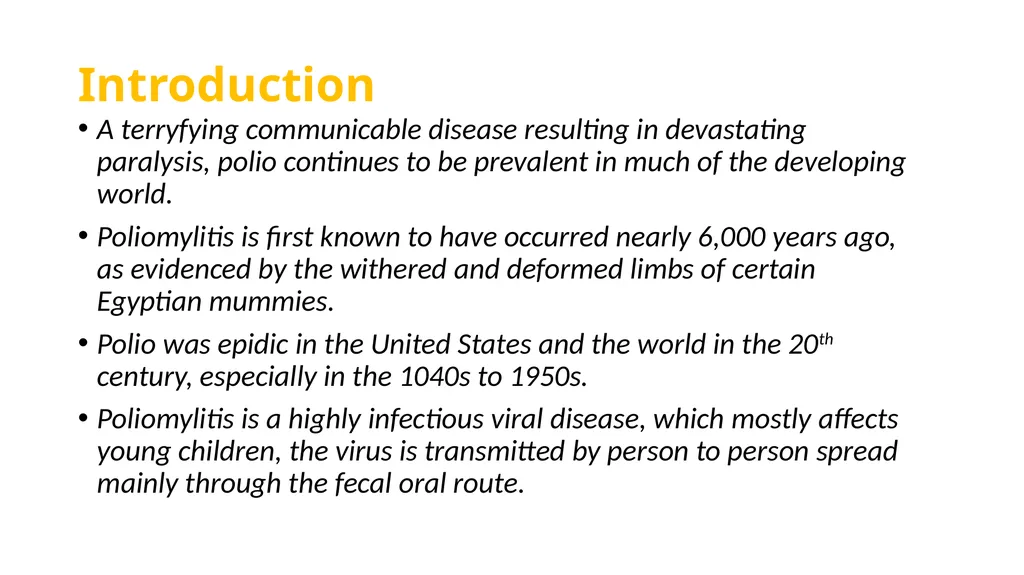
slide2. Introduction A terryfying communicable disease resulting in devastating paralysis, polio continues to be prevalent in much of the developing world.
Poliomylitis is first known to have occurred nearly 6,000 years ago, as evidenced by the withered and deformed limbs of certain Egyptian mummies.
Polio was epidic in the United States and the world in the 20th century, especially in the 1040s to 1950s.
Poliomylitis is a highly infectious viral disease, which mostly affects young children, the virus is transmitted by person to person spread mainly through the fecal oral route.<br>
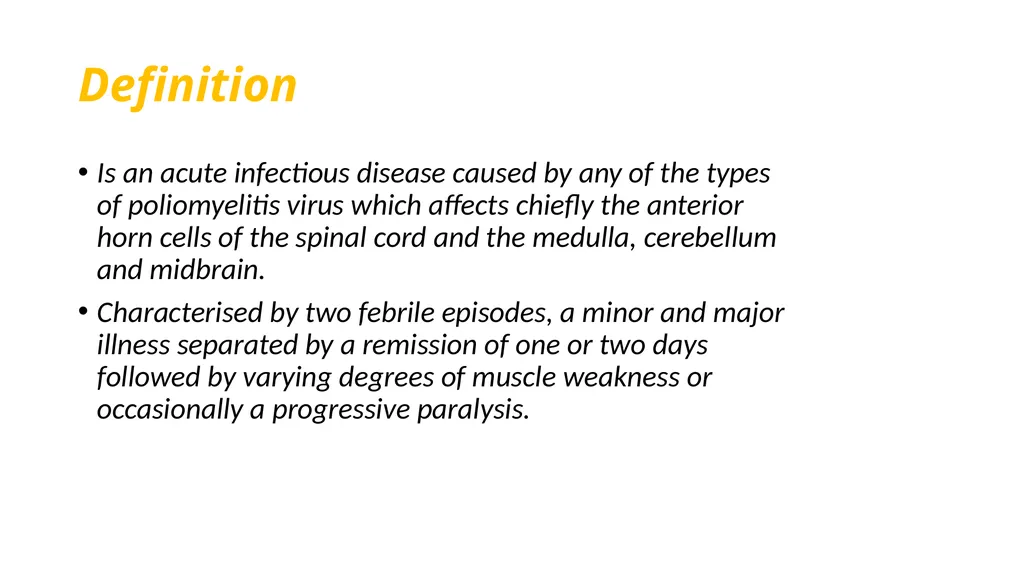
slide3. Definition Is an acute infectious disease caused by any of the types of poliomyelitis virus which affects chiefly the anterior horn cells of the spinal cord and the medulla, cerebellum and midbrain.
Characterised by two febrile episodes, a minor and major illness separated by a remission of one or two days followed by varying degrees of muscle weakness or occasionally a progressive paralysis.<br>
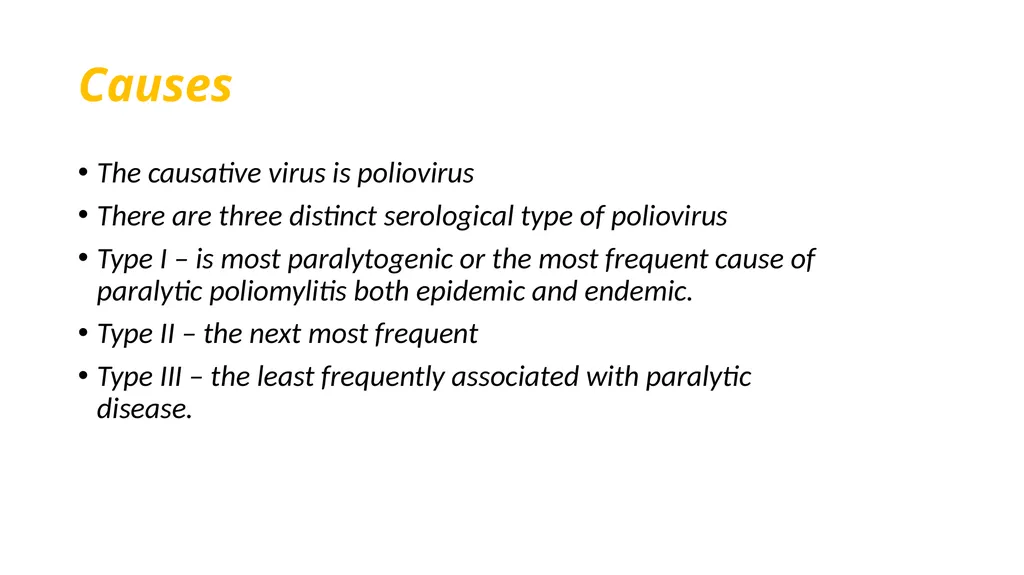
slide4. Causes The causative virus is poliovirus
There are three distinct serological type of poliovirus
Type I – is most paralytogenic or the most frequent cause of paralytic poliomylitis both epidemic and endemic.
Type II – the next most frequent
Type III – the least frequently associated with paralytic disease.<br>
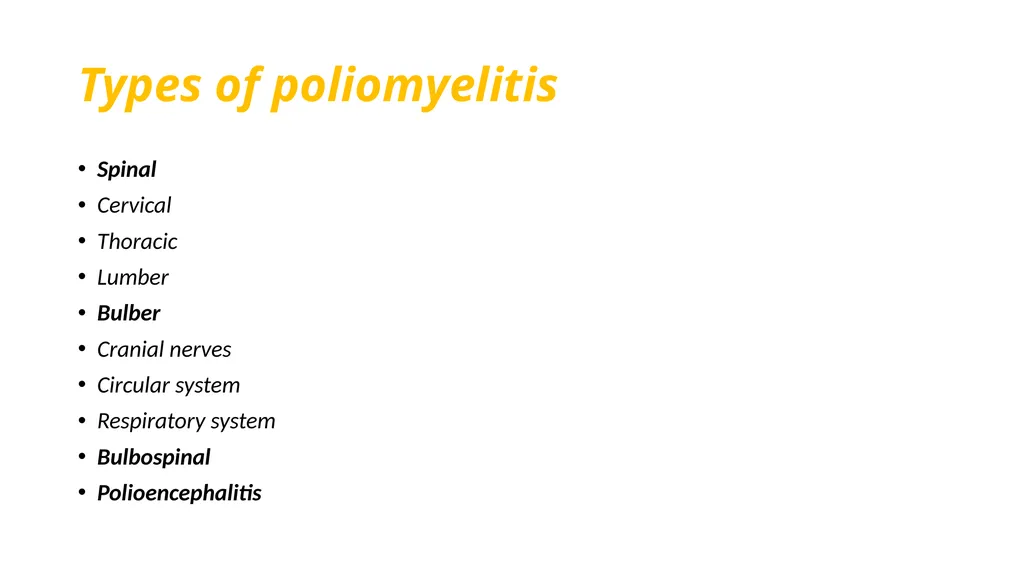
slide5. Types of poliomyelitis Spinal
Cervical
Thoracic
Lumber
Bulber
Cranial nerves
Circular system
Respiratory system
Bulbospinal
Polioencephalitis<br>
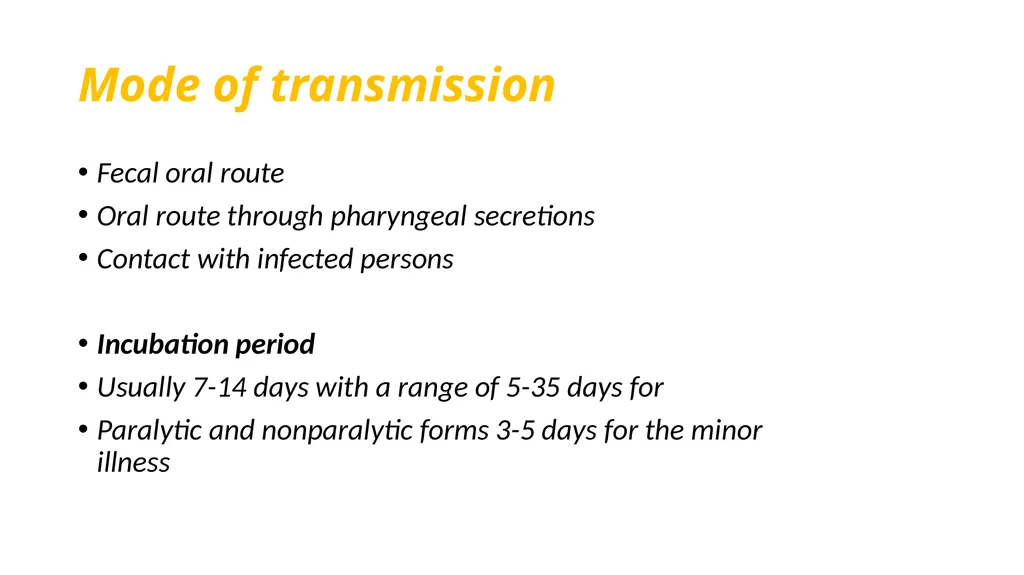
slide6. Mode of transmission Fecal oral route
Oral route through pharyngeal secretions
Contact with infected persons
Incubation period
Usually 7-14 days with a range of 5-35 days for
Paralytic and nonparalytic forms 3-5 days for the minor illness<br>
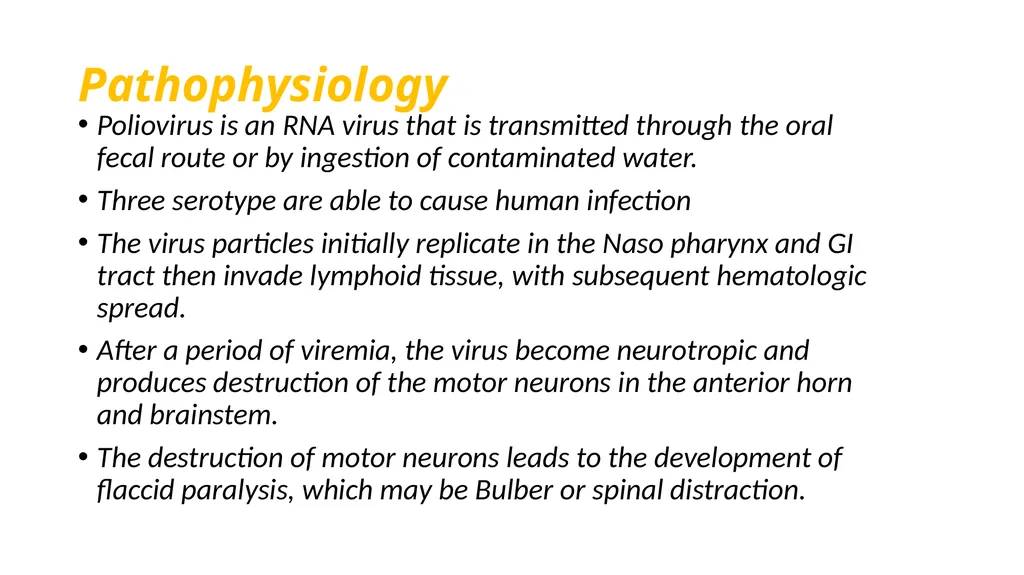
slide7. Pathophysiology Poliovirus is an RNA virus that is transmitted through the oral fecal route or by ingestion of contaminated water.
Three serotype are able to cause human infection
The virus particles initially replicate in the Naso pharynx and GI tract then invade lymphoid tissue, with subsequent hematologic spread.
After a period of viremia, the virus become neurotropic and produces destruction of the motor neurons in the anterior horn and brainstem.
The destruction of motor neurons leads to the development of flaccid paralysis, which may be Bulber or spinal distraction.<br>
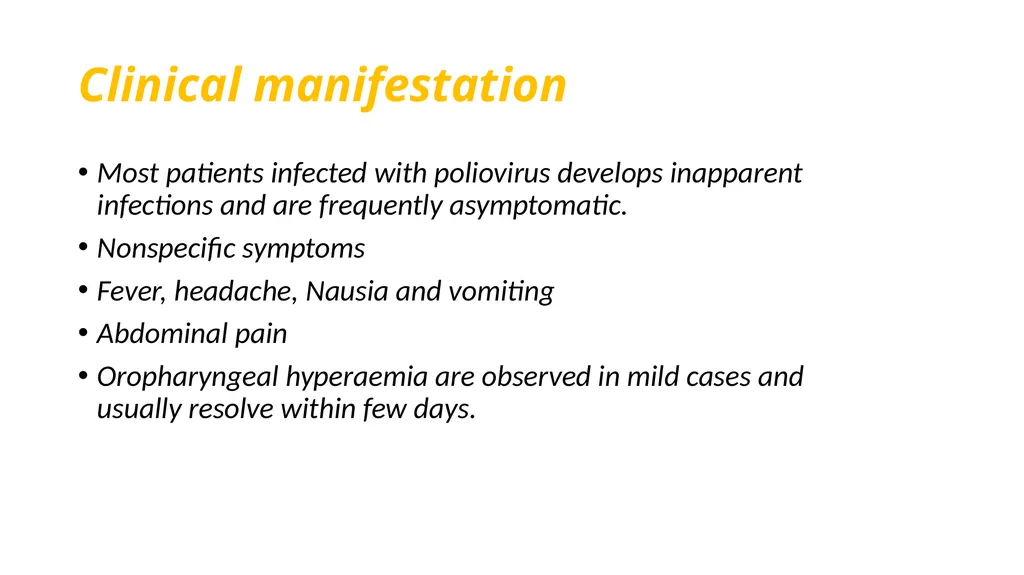
slide8. Clinical manifestation Most patients infected with poliovirus develops inapparent infections and are frequently asymptomatic.
Nonspecific symptoms
Fever, headache, Nausia and vomiting
Abdominal pain
Oropharyngeal hyperaemia are observed in mild cases and usually resolve within few days.<br>
slide9. Non paralytic poliomylitis
It is characterized by the symptoms described above the addition to the following
Nuchal rigidity
More severe headache
Back and lower extremity pain
Meningitis<br>
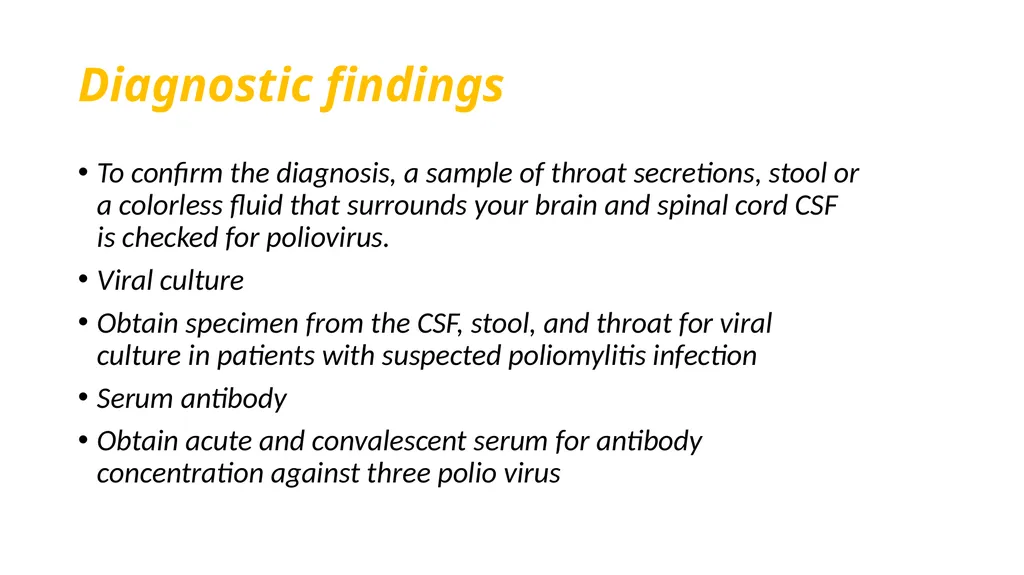
slide10. Diagnostic findings To confirm the diagnosis, a sample of throat secretions, stool or a colorless fluid that surrounds your brain and spinal cord CSF is checked for poliovirus.
Viral culture
Obtain specimen from the CSF, stool, and throat for viral culture in patients with suspected poliomylitis infection
Serum antibody
Obtain acute and convalescent serum for antibody concentration against three polio virus<br>
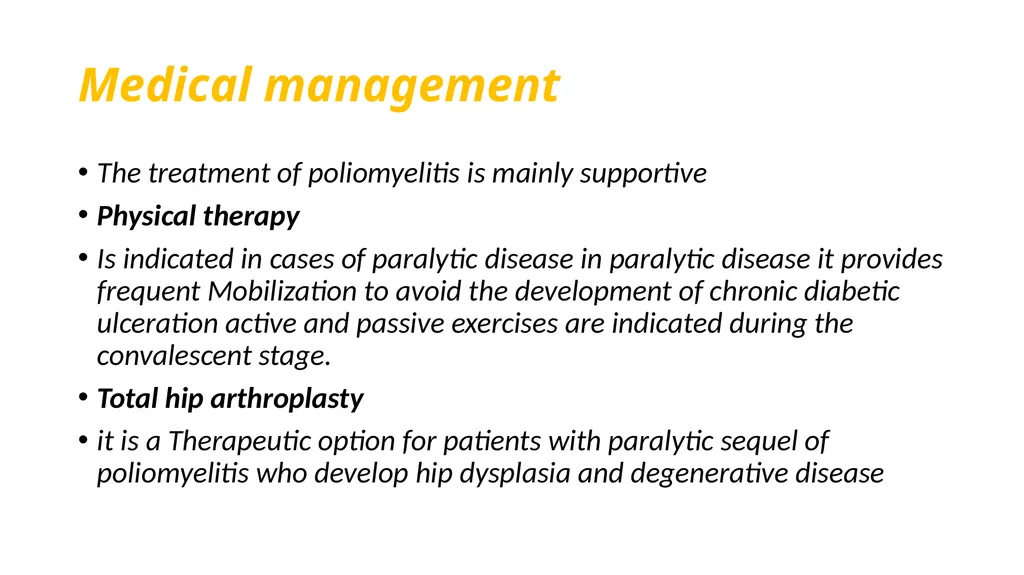
slide11. Medical management The treatment of poliomyelitis is mainly supportive
Physical therapy
Is indicated in cases of paralytic disease in paralytic disease it provides frequent Mobilization to avoid the development of chronic diabetic ulceration active and passive exercises are indicated during the convalescent stage.
Total hip arthroplasty
it is a Therapeutic option for patients with paralytic sequel of poliomyelitis who develop hip dysplasia and degenerative disease<br>
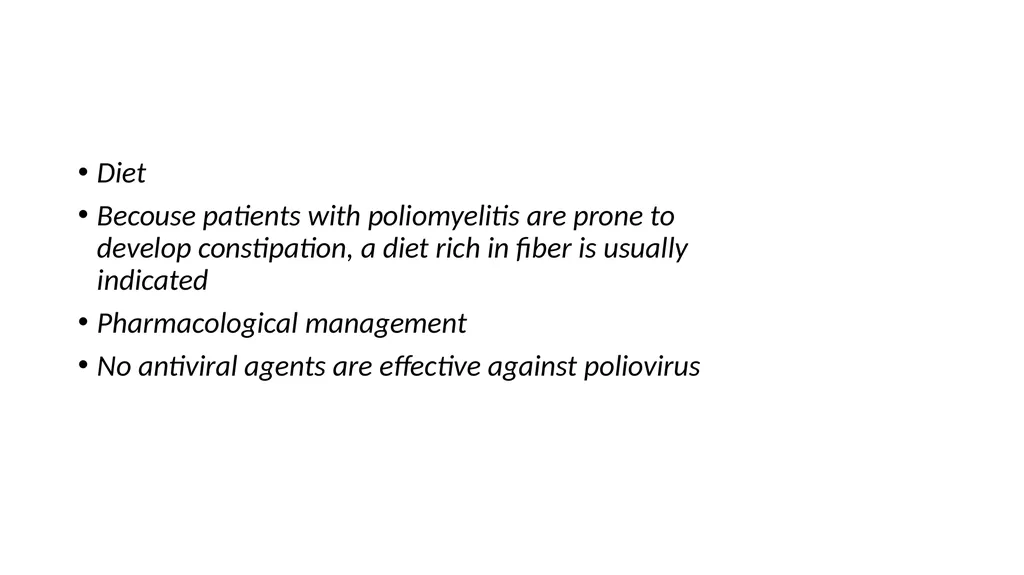
slide12. Diet
Becouse patients with poliomyelitis are prone to develop constipation, a diet rich in fiber is usually indicated
Pharmacological management
No antiviral agents are effective against poliovirus<br>
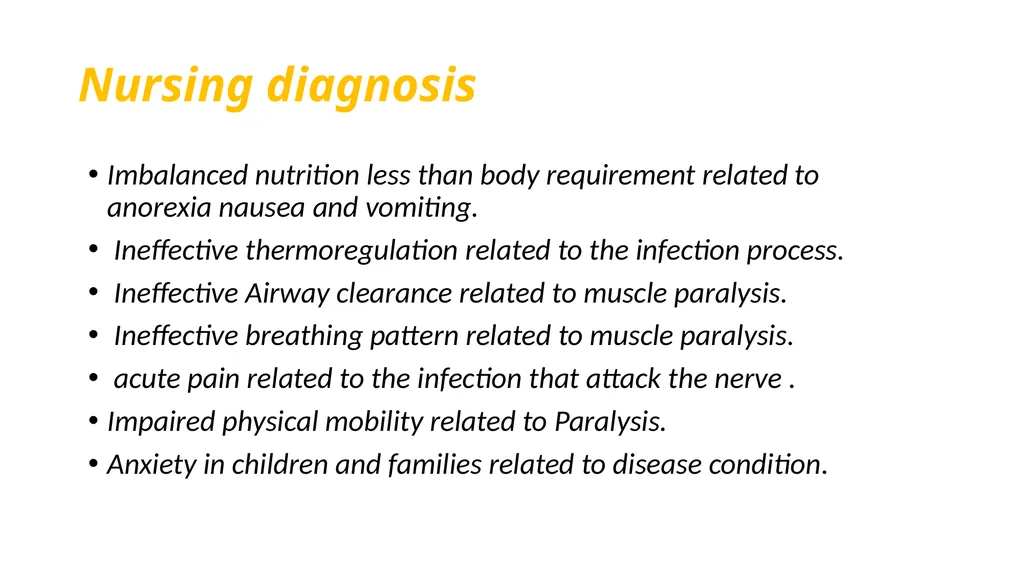
slide13. Nursing diagnosis Imbalanced nutrition less than body requirement related to anorexia nausea and vomiting.
Ineffective thermoregulation related to the infection process.
Ineffective Airway clearance related to muscle paralysis.
Ineffective breathing pattern related to muscle paralysis.
acute pain related to the infection that attack the nerve .
Impaired physical mobility related to Paralysis.
Anxiety in children and families related to disease condition.<br>
slide2. Introduction A terryfying communicable disease resulting in devastating paralysis, polio continues to be prevalent in much of the developing world.
Poliomylitis is first known to have occurred nearly 6,000 years ago, as evidenced by the withered and deformed limbs of certain Egyptian mummies.
Polio was epidic in the United States and the world in the 20th century, especially in the 1040s to 1950s.
Poliomylitis is a highly infectious viral disease, which mostly affects young children, the virus is transmitted by person to person spread mainly through the fecal oral route.<br>
slide3. Definition Is an acute infectious disease caused by any of the types of poliomyelitis virus which affects chiefly the anterior horn cells of the spinal cord and the medulla, cerebellum and midbrain.
Characterised by two febrile episodes, a minor and major illness separated by a remission of one or two days followed by varying degrees of muscle weakness or occasionally a progressive paralysis.<br>
slide4. Causes The causative virus is poliovirus
There are three distinct serological type of poliovirus
Type I – is most paralytogenic or the most frequent cause of paralytic poliomylitis both epidemic and endemic.
Type II – the next most frequent
Type III – the least frequently associated with paralytic disease.<br>
slide5. Types of poliomyelitis Spinal
Cervical
Thoracic
Lumber
Bulber
Cranial nerves
Circular system
Respiratory system
Bulbospinal
Polioencephalitis<br>
slide6. Mode of transmission Fecal oral route
Oral route through pharyngeal secretions
Contact with infected persons
Incubation period
Usually 7-14 days with a range of 5-35 days for
Paralytic and nonparalytic forms 3-5 days for the minor illness<br>
slide7. Pathophysiology Poliovirus is an RNA virus that is transmitted through the oral fecal route or by ingestion of contaminated water.
Three serotype are able to cause human infection
The virus particles initially replicate in the Naso pharynx and GI tract then invade lymphoid tissue, with subsequent hematologic spread.
After a period of viremia, the virus become neurotropic and produces destruction of the motor neurons in the anterior horn and brainstem.
The destruction of motor neurons leads to the development of flaccid paralysis, which may be Bulber or spinal distraction.<br>
slide8. Clinical manifestation Most patients infected with poliovirus develops inapparent infections and are frequently asymptomatic.
Nonspecific symptoms
Fever, headache, Nausia and vomiting
Abdominal pain
Oropharyngeal hyperaemia are observed in mild cases and usually resolve within few days.<br>
slide9. Non paralytic poliomylitis
It is characterized by the symptoms described above the addition to the following
Nuchal rigidity
More severe headache
Back and lower extremity pain
Meningitis<br>
slide10. Diagnostic findings To confirm the diagnosis, a sample of throat secretions, stool or a colorless fluid that surrounds your brain and spinal cord CSF is checked for poliovirus.
Viral culture
Obtain specimen from the CSF, stool, and throat for viral culture in patients with suspected poliomylitis infection
Serum antibody
Obtain acute and convalescent serum for antibody concentration against three polio virus<br>
slide11. Medical management The treatment of poliomyelitis is mainly supportive
Physical therapy
Is indicated in cases of paralytic disease in paralytic disease it provides frequent Mobilization to avoid the development of chronic diabetic ulceration active and passive exercises are indicated during the convalescent stage.
Total hip arthroplasty
it is a Therapeutic option for patients with paralytic sequel of poliomyelitis who develop hip dysplasia and degenerative disease<br>
slide12. Diet
Becouse patients with poliomyelitis are prone to develop constipation, a diet rich in fiber is usually indicated
Pharmacological management
No antiviral agents are effective against poliovirus<br>
slide13. Nursing diagnosis Imbalanced nutrition less than body requirement related to anorexia nausea and vomiting.
Ineffective thermoregulation related to the infection process.
Ineffective Airway clearance related to muscle paralysis.
Ineffective breathing pattern related to muscle paralysis.
acute pain related to the infection that attack the nerve .
Impaired physical mobility related to Paralysis.
Anxiety in children and families related to disease condition.<br>