POLLUTION CAUSES AND REMEDIES What is pollution ? Pollution is defined as an unwanted change in the environment which involves the physical, biological and chemical changes involving air,water and land which affects the human life in one
"POLLUTION CAUSES AND REMEDIES What is pollution ?" is the property of its rightful owner. Permission is granted to
download and print the materials on this website for personal, non-commercial use only, and to display it
on your personal computer provided you do not modify the materials and that you retain all copyright
notices contained in the materials. By downloading content from our website, you accept the terms of this
agreement.
Presentation Transcript
01
POLLUTION CAUSES AND REMEDIES<br>
02
What is pollution ? Pollution is defined as an unwanted change in the environment which involves the physical, biological and chemical changes involving air,water and land which affects the human life in one way or the other.
It also affects the natural resources, living conditions and the cultural aspects of the humans.
It can be natural or manmade.
The amount of pollution has increased due to the increase in population and decrease in the natural resources.<br>
03
POLLUTANTS Pollutants are substance or energy which when introduced into the environment causes undesired effects or adverse effects on useful resources. These pollutants may be gases, liquid sand solids .
Three factors determine the severity of a pollutant: its chemical nature, the concentration and the persistence.<br>
04
Type of pollutions 1-AIR POLLUTION
2-WATER POLLUTION<br>
05
AIR POLLUTION May be defined as any atmospheric condition in which certain substances are present in such concentrations that they can produce undesirable effects on man and his environment .
Air pollution contains all contaminants that can be found in the environment, especially the atmosphere.
These hazardous substances can be either in the form of gases or particles.<br>
06
MAIN CAUSES: Major Pollutants:
1..) Carbon Monoxide
2.) Sulfur Dioxide
3.) Nitrogen Dioxide
4.) Particulate Matter
5.) Ground Level Ozone<br>
07
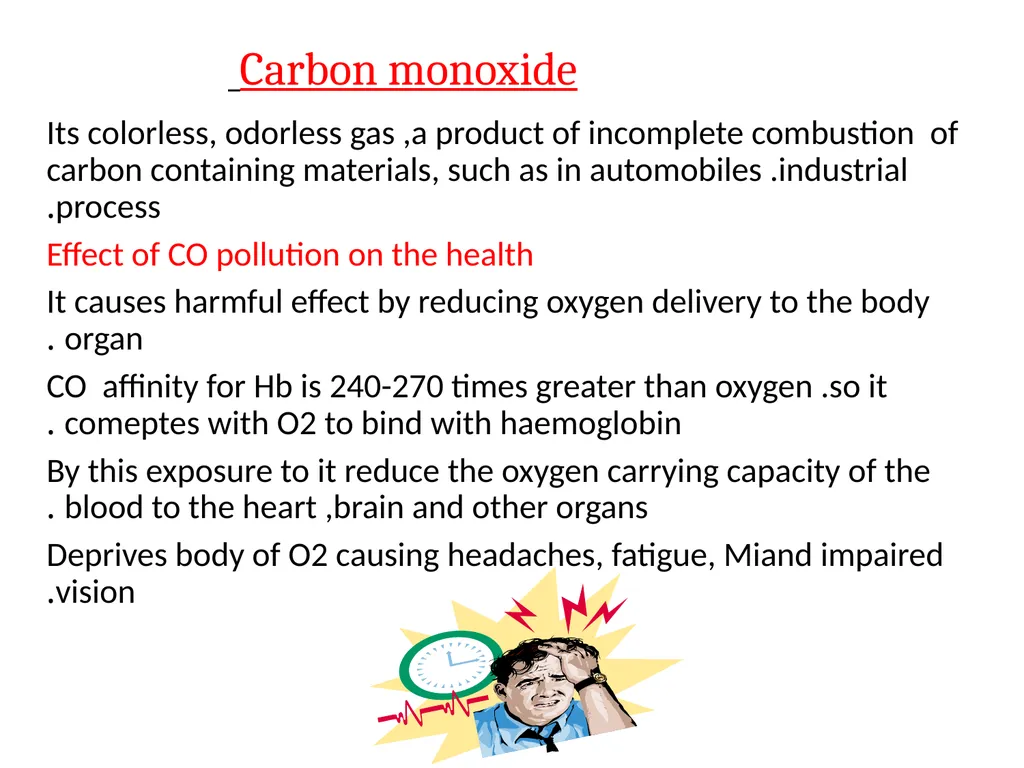
Carbon monoxide Its colorless, odorless gas ,a product of incomplete combustion of carbon containing materials, such as in automobiles .industrial process.
Effect of CO pollution on the health
It causes harmful effect by reducing oxygen delivery to the body organ .
CO affinity for Hb is 240-270 times greater than oxygen .so it comeptes with O2 to bind with haemoglobin .
By this exposure to it reduce the oxygen carrying capacity of the blood to the heart ,brain and other organs .
Deprives body of O2 causing headaches, fatigue, Miand impaired vision.<br>
08
Sulfur Dioxide
produced when coal and fuel oil are burned .
present in power plant exhaust.
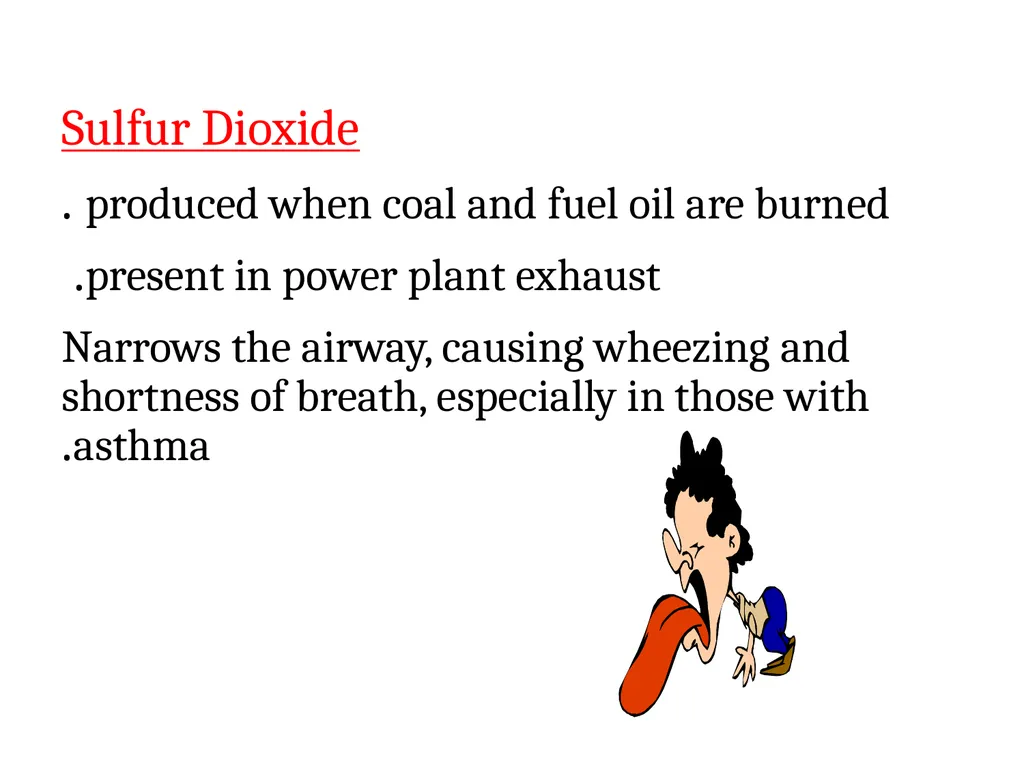
Narrows the airway, causing wheezing and shortness of breath, especially in those with asthma.<br>
09
Nitrogen Dioxid
Reddish, brown gas
produced when nitric oxide combines with oxygen in the atmosphere
present in car exhaust and power plants
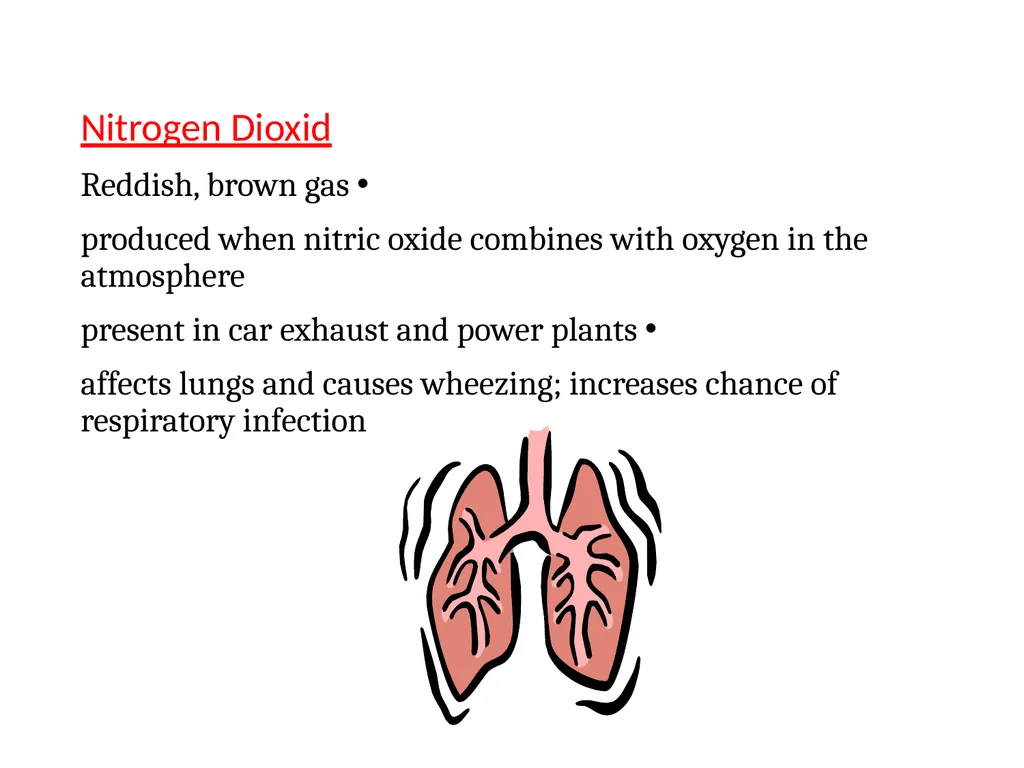
affects lungs and causes wheezing; increases chance of respiratory infection<br>
10
Particulate Matter
Sea salt, soil dust, volcanic particles, smoke from forest fires account for particulate emissions each year.
Small particles are removed from the atmosphere by accretion to water droplets, which grow in size until they are large enough to precipitate.
Particulate matter contains microscopic solids or liquid droplets that are so small that they can be inhaled and cause serious health problems.<br>
11
Ground Level Ozone Ozone is formed in the atmosphere when energetic ultraviolet (UV) radiation dissociates molecules of oxygen, O2, into separate oxygen atoms.
Free oxygen atoms can recombine to form oxygen molecules but if a free oxygen atom (O-2) collides with an oxygen molecule(O2), it joins up, forming ozone (O3).
Breathing ozone can trigger a variety of health problems, particularly for children, the elderly, and people of all ages who have lung diseases such as asthma.
Ground level ozone can also have harmful effects on sensitive vegetation and ecosystems.<br>
12
REMEDIES:
1-Keep green plants indoors - they keep the air clean and are aesthetically appealing.
2-Ventilation through windows should be sufficient. Even in air-conditioned offices, care should be taken to allow free flow of fresh air for a few hours every day.
3-Exhaust fans are important especially in kitchens at homes. Do not allow smoke to stay inside.
4-Usage of good building material is a must. Emulsion paint on the walls enhances the finish, but has ill effects on the air inside a room.<br>
13
water pollution Water is essential for life. without water there would be no life.
Water pollution can be defined in many ways. Usually, it means one or more substances have built up in water to such an extent that they cause problems for animals or people.<br>
14
CAUSES : 1-Pathogens :
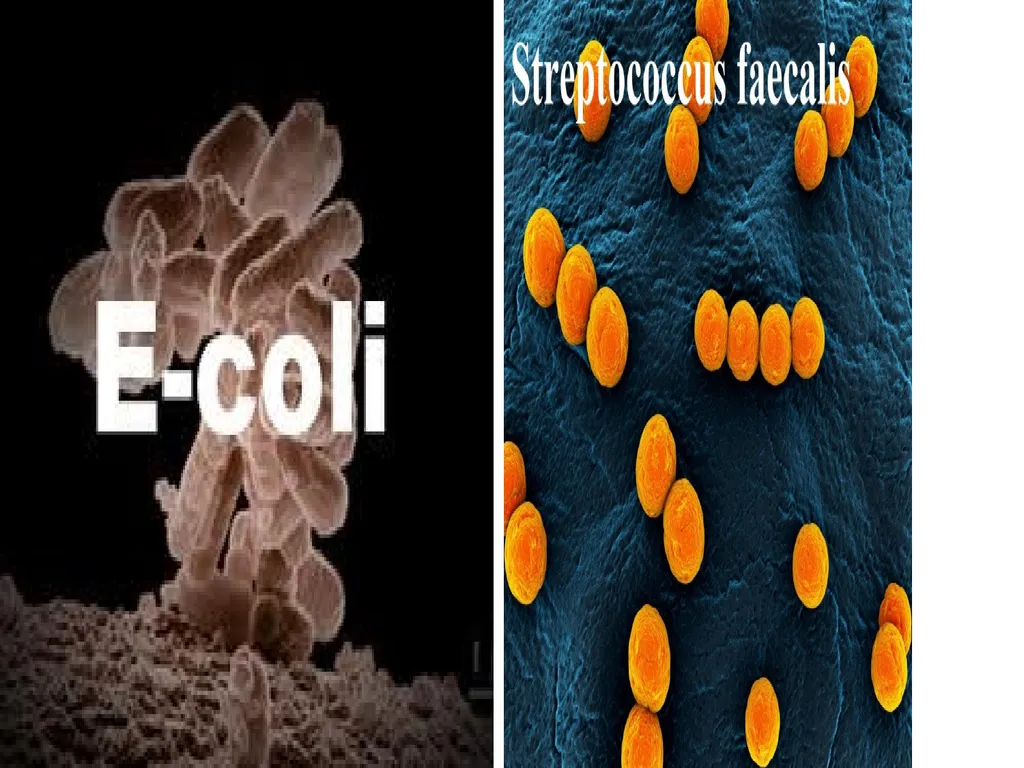
The most serious water pollutants are the disease causing agents are called pathogens. pathogens include bacteria and other organisms that enter water from domestic sewage and animal excreta.
Human excreta contains bacteria such as E.coli and Streptococcus which cause gastrointestinal diseases.<br>
15
ORGANIC WASTES: The other major water pollutant is organic matter such as leaves, grass, trash, etc.,
Excessive phytoplankton growth within water is also a cause of pollution. These waste are biodegradable.<br>
16
REMEDIES : Stabilization of eco systems – by reduction in waste input, harvesting and removal of biomass, trapping of nutrients.
Reutilisation and recycling of waste – including industrial effluents, sewage and thermal pollutants can be recycled to beneficial use viz., to generate cheaper fuel gas and electricity.
Removal of pollutants – Various pollutants ( radio active,chemical,biological)can be removed by appropriated methods like absorption, electro dialysis, ion exchange, reverse osmosis.<br>