
Presentation at the 20th International Myeloma
FD
Published · 21 slides · 0 views

1 / 1
Description
Presentation at the 20th International Myeloma Society Annual Meeting September 2730, 2023 Isatuximab Plus Carfilzomib and Dexamethasone Versus Carfilzomib and Dexamethasone in Patients With Relapsed Multiple Myeloma (IKEMA): Overall
Related Topics
Share
Embed code
Download this presentation From Below
"Presentation at the 20th International Myeloma" is the property of its rightful owner. Permission is granted to download and print the materials on this website for personal, non-commercial use only, and to display it on your personal computer provided you do not modify the materials and that you retain all copyright notices contained in the materials. By downloading content from our website, you accept the terms of this agreement.
Presentation Transcript
01
Presentation at the 20th International Myeloma Society Annual Meeting | September 27–30, 2023 Isatuximab Plus Carfilzomib and Dexamethasone Versus Carfilzomib and Dexamethasone in Patients With Relapsed Multiple Myeloma (IKEMA): Overall Survival Analysis Kwee Yong1, Thomas Martin2, Meletios-Athanasios Dimopoulos3, Joseph Mikhael4, Marcelo Capra5, Thierry Facon6, Roman Hajek7, Ivan Špička8, Ross Baker9, Kihyun Kim10, Gracia Martinez11,
Chang-Ki Min12, Ludek Pour13, Xavier Leleu14, Albert Oriol15, Youngil Koh16, Kenshi Suzuki17,
France Casca18, Sandrine Macé19, Marie-Laure Risse20, Philippe Moreau21 1Department of Haematology, University College Hospital, London, UK; 2Department of Hematology, University of California at San Francisco, San Francisco, CA, USA; 3The National and Kapodistrian University of Athens, Athens, Greece; 4Translational Genomics Research Institute, City of Hope Cancer Center, Phoenix, AZ, USA; 5Centro Integrado de Hematologia e Oncologia, Hospital Mãe de Deus, Porto Alegre, Brazil; 6Department of Haematology, Lille University Hospital, Lille, France; 7Department of Hemato-Oncology, University Hospital Ostrava and Faculty of Medicine, University of Ostrava, Ostrava, Czech Republic;
8Department of Hematology, 1st Faculty of Medicine, Charles University and General Hospital, Prague, Czech Republic; 9Perth Blood Institute, Murdoch University, Perth, Australia; 10Division of Hematology-Oncology, Department of Medicine, Samsung Medical Center, Sungkyunkwan University School of Medicine, Seoul, South Korea; 11Hospital das Clínicas da Faculdade de Medicina da Universidade de São Paulo; Brazil; 12Department of Hematology, Seoul St. Mary’s Hospital, The Catholic University of Korea, Seoul, South Korea; 13Department of Internal Medicine, Hematology and Oncology, University Hospital Brno, Brno,
Czech Republic; 14Service d'Hématologie et Thérapie Cellulaire, CHU and CIC Inserm 1402, Poitiers Cedex, France; 15Institut Josep Carreras and Institut Catala d’Oncologia, Hospital Germans Trias I Pujol,
Badalona, Spain; 16Department of Internal Medicine, Seoul National University Hospital, Seoul, South Korea; 17Myeloma/Amyloidosis Center, Japanese Red Cross Medical Center, Tokyo, Japan;
18Ividata Life Science, Levallois-Perret, France; 19Sanofi, R&D, Chilly-Mazarin, France; 20Sanofi, R&D, Vitry-sur-Seine, France; 21Department of Hematology, University Hospital Hôtel-Dieu, Nantes, France ID #OA-48<br>
02
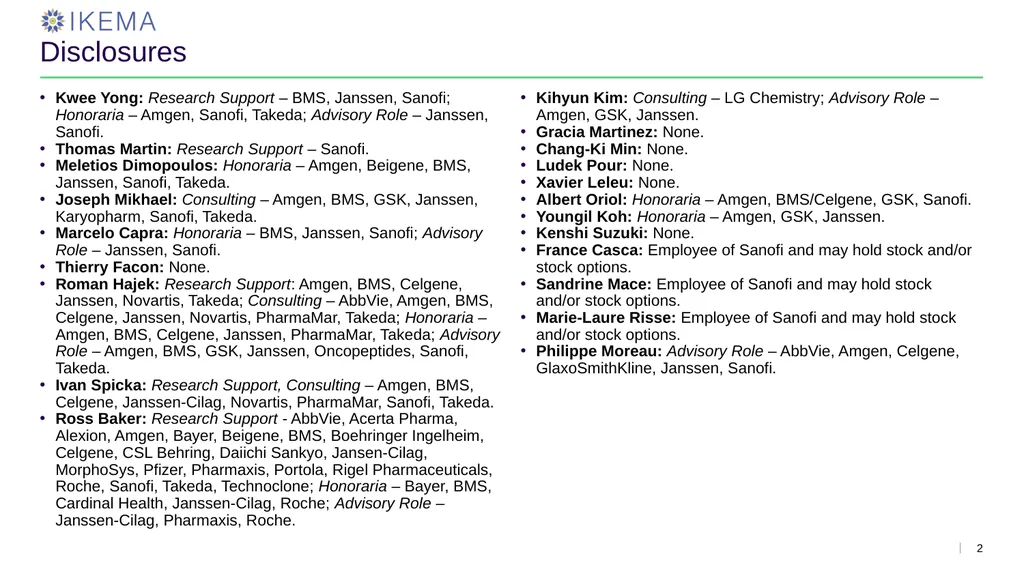
Disclosures Kwee Yong: Research Support – BMS, Janssen, Sanofi; Honoraria – Amgen, Sanofi, Takeda; Advisory Role – Janssen, Sanofi.
Thomas Martin: Research Support – Sanofi.
Meletios Dimopoulos: Honoraria – Amgen, Beigene, BMS, Janssen, Sanofi, Takeda.
Joseph Mikhael: Consulting – Amgen, BMS, GSK, Janssen, Karyopharm, Sanofi, Takeda.
Marcelo Capra: Honoraria – BMS, Janssen, Sanofi; Advisory Role – Janssen, Sanofi.
Thierry Facon: None.
Roman Hajek: Research Support: Amgen, BMS, Celgene, Janssen, Novartis, Takeda; Consulting – AbbVie, Amgen, BMS, Celgene, Janssen, Novartis, PharmaMar, Takeda; Honoraria – Amgen, BMS, Celgene, Janssen, PharmaMar, Takeda; Advisory Role – Amgen, BMS, GSK, Janssen, Oncopeptides, Sanofi, Takeda.
Ivan Spicka: Research Support, Consulting – Amgen, BMS, Celgene, Janssen-Cilag, Novartis, PharmaMar, Sanofi, Takeda.
Ross Baker: Research Support - AbbVie, Acerta Pharma, Alexion, Amgen, Bayer, Beigene, BMS, Boehringer Ingelheim, Celgene, CSL Behring, Daiichi Sankyo, Jansen-Cilag, MorphoSys, Pfizer, Pharmaxis, Portola, Rigel Pharmaceuticals, Roche, Sanofi, Takeda, Technoclone; Honoraria – Bayer, BMS, Cardinal Health, Janssen-Cilag, Roche; Advisory Role – Janssen-Cilag, Pharmaxis, Roche. Kihyun Kim: Consulting – LG Chemistry; Advisory Role – Amgen, GSK, Janssen.
Gracia Martinez: None.
Chang-Ki Min: None.
Ludek Pour: None.
Xavier Leleu: None.
Albert Oriol: Honoraria – Amgen, BMS/Celgene, GSK, Sanofi.
Youngil Koh: Honoraria – Amgen, GSK, Janssen.
Kenshi Suzuki: None.
France Casca: Employee of Sanofi and may hold stock and/or stock options.
Sandrine Mace: Employee of Sanofi and may hold stock and/or stock options.
Marie-Laure Risse: Employee of Sanofi and may hold stock and/or stock options.
Philippe Moreau: Advisory Role – AbbVie, Amgen, Celgene, GlaxoSmithKline, Janssen, Sanofi. 2<br>
Thomas Martin: Research Support – Sanofi.
Meletios Dimopoulos: Honoraria – Amgen, Beigene, BMS, Janssen, Sanofi, Takeda.
Joseph Mikhael: Consulting – Amgen, BMS, GSK, Janssen, Karyopharm, Sanofi, Takeda.
Marcelo Capra: Honoraria – BMS, Janssen, Sanofi; Advisory Role – Janssen, Sanofi.
Thierry Facon: None.
Roman Hajek: Research Support: Amgen, BMS, Celgene, Janssen, Novartis, Takeda; Consulting – AbbVie, Amgen, BMS, Celgene, Janssen, Novartis, PharmaMar, Takeda; Honoraria – Amgen, BMS, Celgene, Janssen, PharmaMar, Takeda; Advisory Role – Amgen, BMS, GSK, Janssen, Oncopeptides, Sanofi, Takeda.
Ivan Spicka: Research Support, Consulting – Amgen, BMS, Celgene, Janssen-Cilag, Novartis, PharmaMar, Sanofi, Takeda.
Ross Baker: Research Support - AbbVie, Acerta Pharma, Alexion, Amgen, Bayer, Beigene, BMS, Boehringer Ingelheim, Celgene, CSL Behring, Daiichi Sankyo, Jansen-Cilag, MorphoSys, Pfizer, Pharmaxis, Portola, Rigel Pharmaceuticals, Roche, Sanofi, Takeda, Technoclone; Honoraria – Bayer, BMS, Cardinal Health, Janssen-Cilag, Roche; Advisory Role – Janssen-Cilag, Pharmaxis, Roche. Kihyun Kim: Consulting – LG Chemistry; Advisory Role – Amgen, GSK, Janssen.
Gracia Martinez: None.
Chang-Ki Min: None.
Ludek Pour: None.
Xavier Leleu: None.
Albert Oriol: Honoraria – Amgen, BMS/Celgene, GSK, Sanofi.
Youngil Koh: Honoraria – Amgen, GSK, Janssen.
Kenshi Suzuki: None.
France Casca: Employee of Sanofi and may hold stock and/or stock options.
Sandrine Mace: Employee of Sanofi and may hold stock and/or stock options.
Marie-Laure Risse: Employee of Sanofi and may hold stock and/or stock options.
Philippe Moreau: Advisory Role – AbbVie, Amgen, Celgene, GlaxoSmithKline, Janssen, Sanofi. 2<br>
03
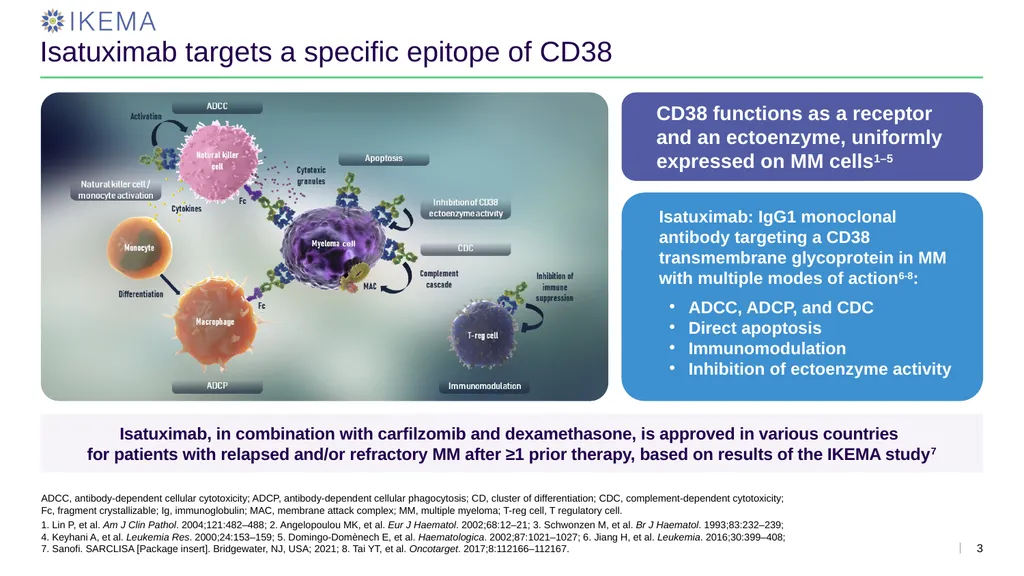
Isatuximab targets a specific epitope of CD38 ADCC, antibody-dependent cellular cytotoxicity; ADCP, antibody-dependent cellular phagocytosis; CD, cluster of differentiation; CDC, complement-dependent cytotoxicity; Fc, fragment crystallizable; Ig, immunoglobulin; MAC, membrane attack complex; MM, multiple myeloma; T-reg cell, T regulatory cell.
1. Lin P, et al. Am J Clin Pathol. 2004;121:482–488; 2. Angelopoulou MK, et al. Eur J Haematol. 2002;68:12–21; 3. Schwonzen M, et al. Br J Haematol. 1993;83:232–239; 4. Keyhani A, et al. Leukemia Res. 2000;24:153–159; 5. Domingo-Domènech E, et al. Haematologica. 2002;87:1021–1027; 6. Jiang H, et al. Leukemia. 2016;30:399–408; 7. Sanofi. SARCLISA [Package insert]. Bridgewater, NJ, USA; 2021; 8. Tai YT, et al. Oncotarget. 2017;8:112166–112167. 3 Isatuximab: IgG1 monoclonal antibody targeting a CD38 transmembrane glycoprotein in MM with multiple modes of action6-8:
ADCC, ADCP, and CDC
Direct apoptosis
Immunomodulation
Inhibition of ectoenzyme activity CD38 functions as a receptor and an ectoenzyme, uniformly expressed on MM cells1–5 Isatuximab, in combination with carfilzomib and dexamethasone, is approved in various countries for patients with relapsed and/or refractory MM after ≥1 prior therapy, based on results of the IKEMA study7<br>
1. Lin P, et al. Am J Clin Pathol. 2004;121:482–488; 2. Angelopoulou MK, et al. Eur J Haematol. 2002;68:12–21; 3. Schwonzen M, et al. Br J Haematol. 1993;83:232–239; 4. Keyhani A, et al. Leukemia Res. 2000;24:153–159; 5. Domingo-Domènech E, et al. Haematologica. 2002;87:1021–1027; 6. Jiang H, et al. Leukemia. 2016;30:399–408; 7. Sanofi. SARCLISA [Package insert]. Bridgewater, NJ, USA; 2021; 8. Tai YT, et al. Oncotarget. 2017;8:112166–112167. 3 Isatuximab: IgG1 monoclonal antibody targeting a CD38 transmembrane glycoprotein in MM with multiple modes of action6-8:
ADCC, ADCP, and CDC
Direct apoptosis
Immunomodulation
Inhibition of ectoenzyme activity CD38 functions as a receptor and an ectoenzyme, uniformly expressed on MM cells1–5 Isatuximab, in combination with carfilzomib and dexamethasone, is approved in various countries for patients with relapsed and/or refractory MM after ≥1 prior therapy, based on results of the IKEMA study7<br>
04
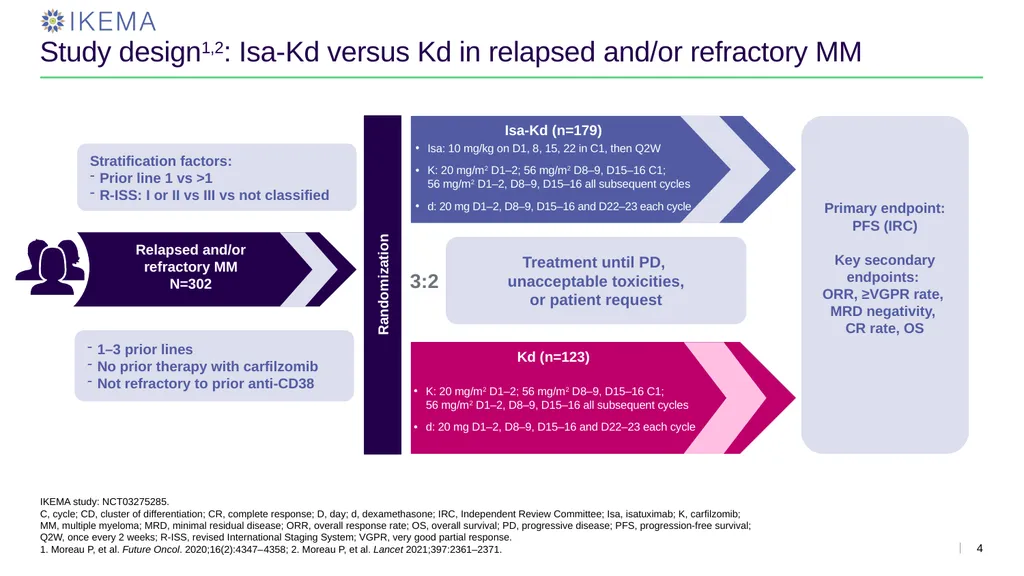
Study design1,2: Isa-Kd versus Kd in relapsed and/or refractory MM 4 Primary endpoint:
PFS (IRC)
Key secondary endpoints:
ORR, ≥VGPR rate,
MRD negativity,
CR rate, OS Relapsed and/or refractory MM N=302 3:2 Isa-Kd (n=179) Kd (n=123) Randomization Stratification factors:
Prior line 1 vs >1
R-ISS: I or II vs III vs not classified 1–3 prior lines
No prior therapy with carfilzomib
Not refractory to prior anti-CD38 Treatment until PD,
unacceptable toxicities,
or patient request Kd (n=123) Isa: 10 mg/kg on D1, 8, 15, 22 in C1, then Q2W
K: 20 mg/m2 D1–2; 56 mg/m2 D8–9, D15–16 C1; 56 mg/m2 D1–2, D8–9, D15–16 all subsequent cycles
d: 20 mg D1–2, D8–9, D15–16 and D22–23 each cycle K: 20 mg/m2 D1–2; 56 mg/m2 D8–9, D15–16 C1; 56 mg/m2 D1–2, D8–9, D15–16 all subsequent cycles
d: 20 mg D1–2, D8–9, D15–16 and D22–23 each cycle IKEMA study: NCT03275285.
C, cycle; CD, cluster of differentiation; CR, complete response; D, day; d, dexamethasone; IRC, Independent Review Committee; Isa, isatuximab; K, carfilzomib; MM, multiple myeloma; MRD, minimal residual disease; ORR, overall response rate; OS, overall survival; PD, progressive disease; PFS, progression-free survival; Q2W, once every 2 weeks; R-ISS, revised International Staging System; VGPR, very good partial response.
1. Moreau P, et al. Future Oncol. 2020;16(2):4347––4358; 2. Moreau P, et al. Lancet 2021;397:2361–2371.<br>
Key secondary endpoints:
ORR, ≥VGPR rate,
MRD negativity,
CR rate, OS Relapsed and/or refractory MM N=302 3:2 Isa-Kd (n=179) Kd (n=123) Randomization Stratification factors:
Prior line 1 vs >1
R-ISS: I or II vs III vs not classified 1–3 prior lines
No prior therapy with carfilzomib
Not refractory to prior anti-CD38 Treatment until PD,
unacceptable toxicities,
or patient request Kd (n=123) Isa: 10 mg/kg on D1, 8, 15, 22 in C1, then Q2W
K: 20 mg/m2 D1–2; 56 mg/m2 D8–9, D15–16 C1; 56 mg/m2 D1–2, D8–9, D15–16 all subsequent cycles
d: 20 mg D1–2, D8–9, D15–16 and D22–23 each cycle K: 20 mg/m2 D1–2; 56 mg/m2 D8–9, D15–16 C1; 56 mg/m2 D1–2, D8–9, D15–16 all subsequent cycles
d: 20 mg D1–2, D8–9, D15–16 and D22–23 each cycle IKEMA study: NCT03275285.
C, cycle; CD, cluster of differentiation; CR, complete response; D, day; d, dexamethasone; IRC, Independent Review Committee; Isa, isatuximab; K, carfilzomib; MM, multiple myeloma; MRD, minimal residual disease; ORR, overall response rate; OS, overall survival; PD, progressive disease; PFS, progression-free survival; Q2W, once every 2 weeks; R-ISS, revised International Staging System; VGPR, very good partial response.
1. Moreau P, et al. Future Oncol. 2020;16(2):4347––4358; 2. Moreau P, et al. Lancet 2021;397:2361–2371.<br>
05
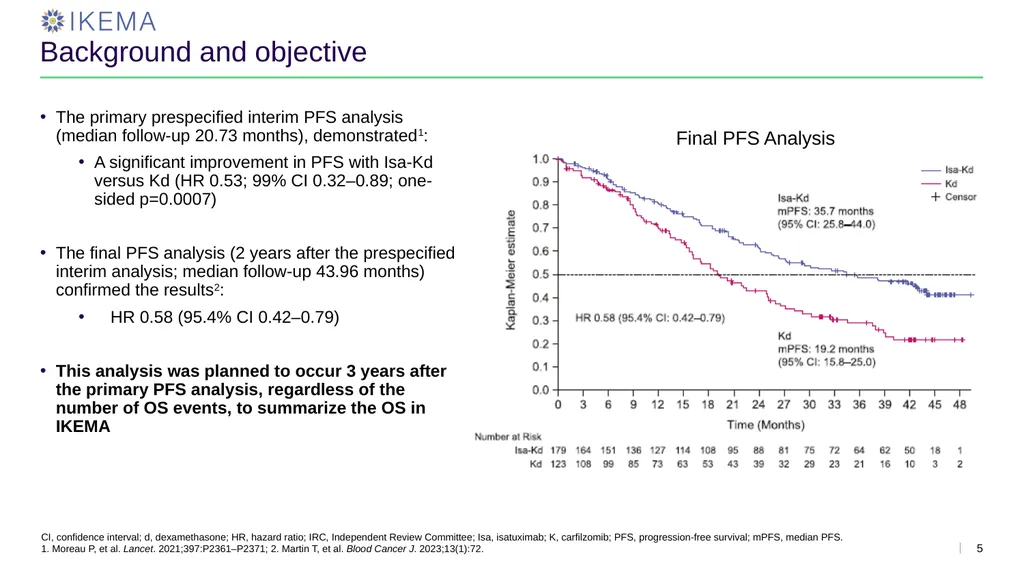
Background and objective The primary prespecified interim PFS analysis (median follow-up 20.73 months), demonstrated1:
A significant improvement in PFS with Isa-Kd versus Kd (HR 0.53; 99% CI 0.32–0.89; one-sided p=0.0007)
The final PFS analysis (2 years after the prespecified interim analysis; median follow-up 43.96 months) confirmed the results2:
HR 0.58 (95.4% CI 0.42–0.79)
This analysis was planned to occur 3 years after the primary PFS analysis, regardless of the number of OS events, to summarize the OS in IKEMA 5 Final PFS Analysis CI, confidence interval; d, dexamethasone; HR, hazard ratio; IRC, Independent Review Committee; Isa, isatuximab; K, carfilzomib; PFS, progression-free survival; mPFS, median PFS.
1. Moreau P, et al. Lancet. 2021;397:P2361–P2371; 2. Martin T, et al. Blood Cancer J. 2023;13(1):72.<br>
A significant improvement in PFS with Isa-Kd versus Kd (HR 0.53; 99% CI 0.32–0.89; one-sided p=0.0007)
The final PFS analysis (2 years after the prespecified interim analysis; median follow-up 43.96 months) confirmed the results2:
HR 0.58 (95.4% CI 0.42–0.79)
This analysis was planned to occur 3 years after the primary PFS analysis, regardless of the number of OS events, to summarize the OS in IKEMA 5 Final PFS Analysis CI, confidence interval; d, dexamethasone; HR, hazard ratio; IRC, Independent Review Committee; Isa, isatuximab; K, carfilzomib; PFS, progression-free survival; mPFS, median PFS.
1. Moreau P, et al. Lancet. 2021;397:P2361–P2371; 2. Martin T, et al. Blood Cancer J. 2023;13(1):72.<br>
06
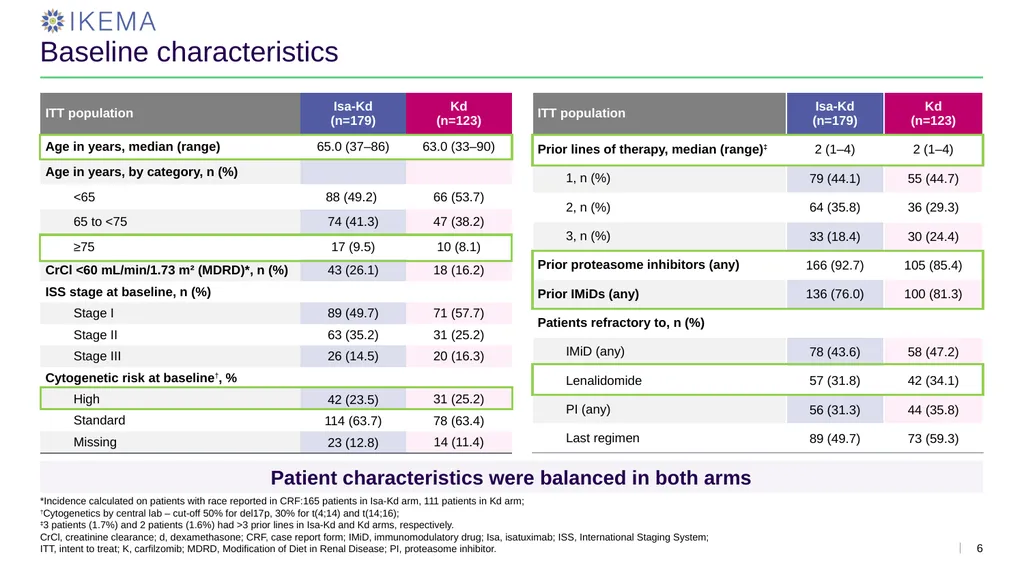
Baseline characteristics 6 *Incidence calculated on patients with race reported in CRF:165 patients in Isa-Kd arm, 111 patients in Kd arm;
†Cytogenetics by central lab – cut-off 50% for del17p, 30% for t(4;14) and t(14;16);
‡3 patients (1.7%) and 2 patients (1.6%) had >3 prior lines in Isa-Kd and Kd arms, respectively. CrCl, creatinine clearance; d, dexamethasone; CRF, case report form; IMiD, immunomodulatory drug; Isa, isatuximab; ISS, International Staging System; ITT, intent to treat; K, carfilzomib; MDRD, Modification of Diet in Renal Disease; PI, proteasome inhibitor. Patient characteristics were balanced in both arms<br>
†Cytogenetics by central lab – cut-off 50% for del17p, 30% for t(4;14) and t(14;16);
‡3 patients (1.7%) and 2 patients (1.6%) had >3 prior lines in Isa-Kd and Kd arms, respectively. CrCl, creatinine clearance; d, dexamethasone; CRF, case report form; IMiD, immunomodulatory drug; Isa, isatuximab; ISS, International Staging System; ITT, intent to treat; K, carfilzomib; MDRD, Modification of Diet in Renal Disease; PI, proteasome inhibitor. Patient characteristics were balanced in both arms<br>
07
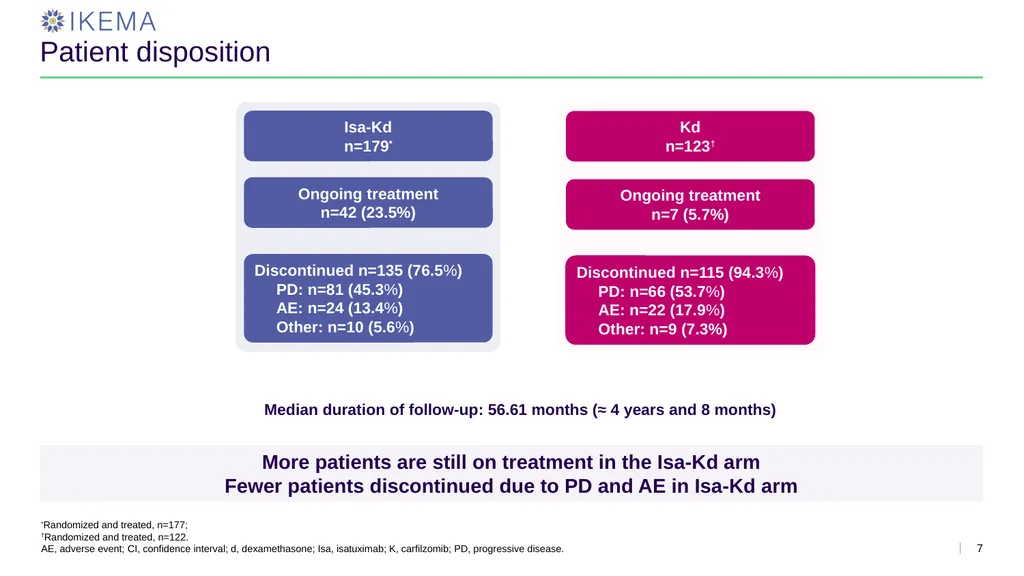
Patient disposition *Randomized and treated, n=177;
†Randomized and treated, n=122.
AE, adverse event; CI, confidence interval; d, dexamethasone; Isa, isatuximab; K, carfilzomib; PD, progressive disease. 7 More patients are still on treatment in the Isa-Kd arm
Fewer patients discontinued due to PD and AE in Isa-Kd arm Median duration of follow-up: 56.61 months (≈ 4 years and 8 months)<br>
†Randomized and treated, n=122.
AE, adverse event; CI, confidence interval; d, dexamethasone; Isa, isatuximab; K, carfilzomib; PD, progressive disease. 7 More patients are still on treatment in the Isa-Kd arm
Fewer patients discontinued due to PD and AE in Isa-Kd arm Median duration of follow-up: 56.61 months (≈ 4 years and 8 months)<br>
08
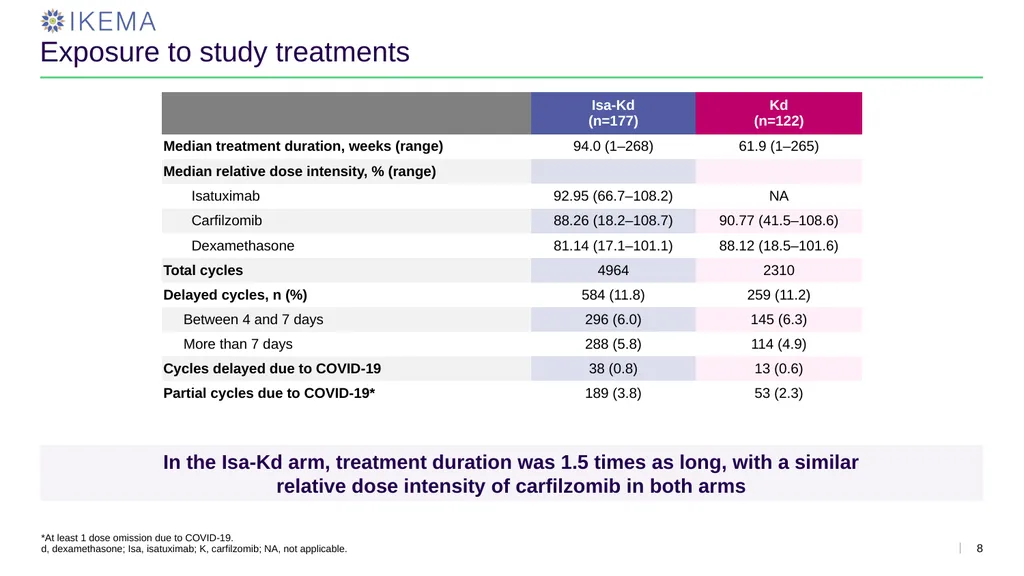
Exposure to study treatments *At least 1 dose omission due to COVID-19.
d, dexamethasone; Isa, isatuximab; K, carfilzomib; NA, not applicable. 8 In the Isa-Kd arm, treatment duration was 1.5 times as long, with a similar
relative dose intensity of carfilzomib in both arms<br>
d, dexamethasone; Isa, isatuximab; K, carfilzomib; NA, not applicable. 8 In the Isa-Kd arm, treatment duration was 1.5 times as long, with a similar
relative dose intensity of carfilzomib in both arms<br>
09
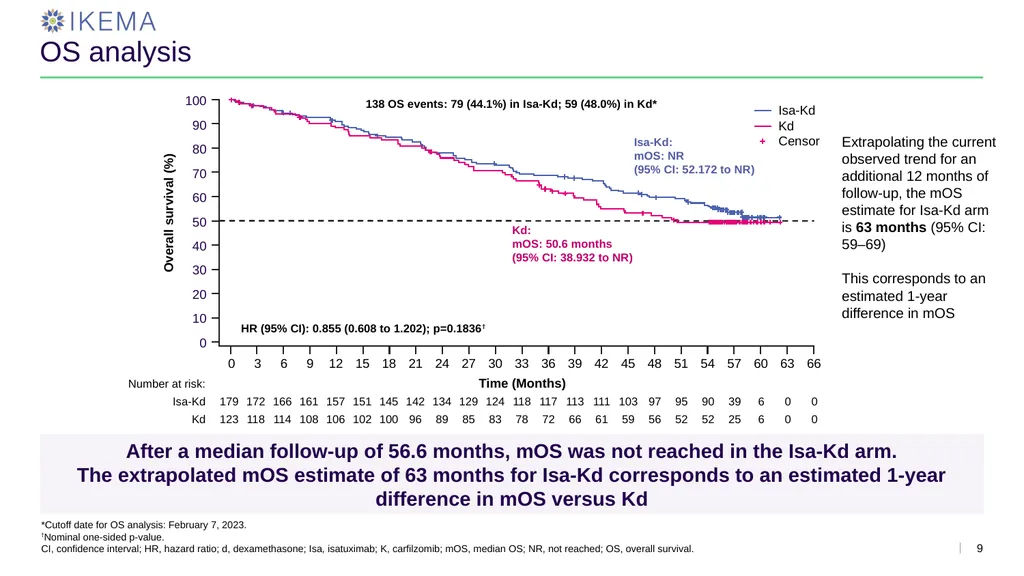
OS analysis *Cutoff date for OS analysis: February 7, 2023.
†Nominal one-sided p-value.
CI, confidence interval; HR, hazard ratio; d, dexamethasone; Isa, isatuximab; K, carfilzomib; mOS, median OS; NR, not reached; OS, overall survival. 9 138 OS events: 79 (44.1%) in Isa-Kd; 59 (48.0%) in Kd* Extrapolating the current observed trend for an additional 12 months of follow-up, the mOS estimate for Isa-Kd arm is 63 months (95% CI: 59–69)
This corresponds to an estimated 1-year difference in mOS After a median follow-up of 56.6 months, mOS was not reached in the Isa-Kd arm.
The extrapolated mOS estimate of 63 months for Isa-Kd corresponds to an estimated 1-year difference in mOS versus Kd Isa-Kd:
mOS: NR
(95% CI: 52.172 to NR) Kd:
mOS: 50.6 months
(95% CI: 38.932 to NR) HR (95% CI): 0.855 (0.608 to 1.202); p=0.1836† Time (Months) Overall survival (%)<br>
†Nominal one-sided p-value.
CI, confidence interval; HR, hazard ratio; d, dexamethasone; Isa, isatuximab; K, carfilzomib; mOS, median OS; NR, not reached; OS, overall survival. 9 138 OS events: 79 (44.1%) in Isa-Kd; 59 (48.0%) in Kd* Extrapolating the current observed trend for an additional 12 months of follow-up, the mOS estimate for Isa-Kd arm is 63 months (95% CI: 59–69)
This corresponds to an estimated 1-year difference in mOS After a median follow-up of 56.6 months, mOS was not reached in the Isa-Kd arm.
The extrapolated mOS estimate of 63 months for Isa-Kd corresponds to an estimated 1-year difference in mOS versus Kd Isa-Kd:
mOS: NR
(95% CI: 52.172 to NR) Kd:
mOS: 50.6 months
(95% CI: 38.932 to NR) HR (95% CI): 0.855 (0.608 to 1.202); p=0.1836† Time (Months) Overall survival (%)<br>
10
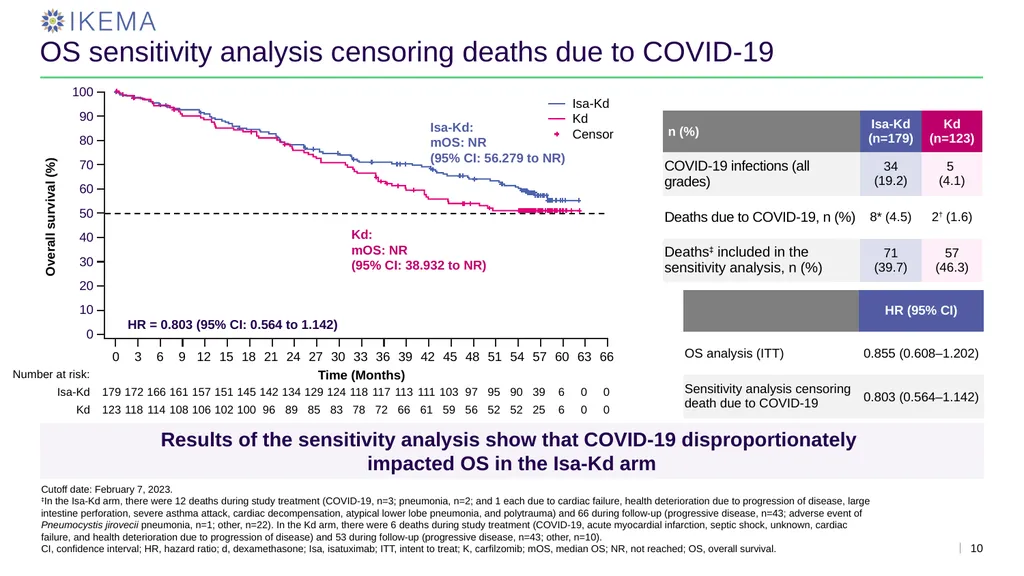
OS sensitivity analysis censoring deaths due to COVID-19 Cutoff date: February 7, 2023.
‡In the Isa-Kd arm, there were 12 deaths during study treatment (COVID-19, n=3; pneumonia, n=2; and 1 each due to cardiac failure, health deterioration due to progression of disease, large intestine perforation, severe asthma attack, cardiac decompensation, atypical lower lobe pneumonia, and polytrauma) and 66 during follow-up (progressive disease, n=43; adverse event of Pneumocystis jirovecii pneumonia, n=1; other, n=22). In the Kd arm, there were 6 deaths during study treatment (COVID-19, acute myocardial infarction, septic shock, unknown, cardiac failure, and health deterioration due to progression of disease) and 53 during follow-up (progressive disease, n=43; other, n=10).
CI, confidence interval; HR, hazard ratio; d, dexamethasone; Isa, isatuximab; ITT, intent to treat; K, carfilzomib; mOS, median OS; NR, not reached; OS, overall survival. 10 Results of the sensitivity analysis show that COVID-19 disproportionately impacted OS in the Isa-Kd arm Isa-Kd:
mOS: NR
(95% CI: 56.279 to NR) Kd:
mOS: NR
(95% CI: 38.932 to NR) HR = 0.803 (95% CI: 0.564 to 1.142) Overall survival (%) *3 patients during study treatment and 5 in the follow-up period;
†1 patient during study treatment and 1 in the follow-up period Time (Months)<br>
‡In the Isa-Kd arm, there were 12 deaths during study treatment (COVID-19, n=3; pneumonia, n=2; and 1 each due to cardiac failure, health deterioration due to progression of disease, large intestine perforation, severe asthma attack, cardiac decompensation, atypical lower lobe pneumonia, and polytrauma) and 66 during follow-up (progressive disease, n=43; adverse event of Pneumocystis jirovecii pneumonia, n=1; other, n=22). In the Kd arm, there were 6 deaths during study treatment (COVID-19, acute myocardial infarction, septic shock, unknown, cardiac failure, and health deterioration due to progression of disease) and 53 during follow-up (progressive disease, n=43; other, n=10).
CI, confidence interval; HR, hazard ratio; d, dexamethasone; Isa, isatuximab; ITT, intent to treat; K, carfilzomib; mOS, median OS; NR, not reached; OS, overall survival. 10 Results of the sensitivity analysis show that COVID-19 disproportionately impacted OS in the Isa-Kd arm Isa-Kd:
mOS: NR
(95% CI: 56.279 to NR) Kd:
mOS: NR
(95% CI: 38.932 to NR) HR = 0.803 (95% CI: 0.564 to 1.142) Overall survival (%) *3 patients during study treatment and 5 in the follow-up period;
†1 patient during study treatment and 1 in the follow-up period Time (Months)<br>
11
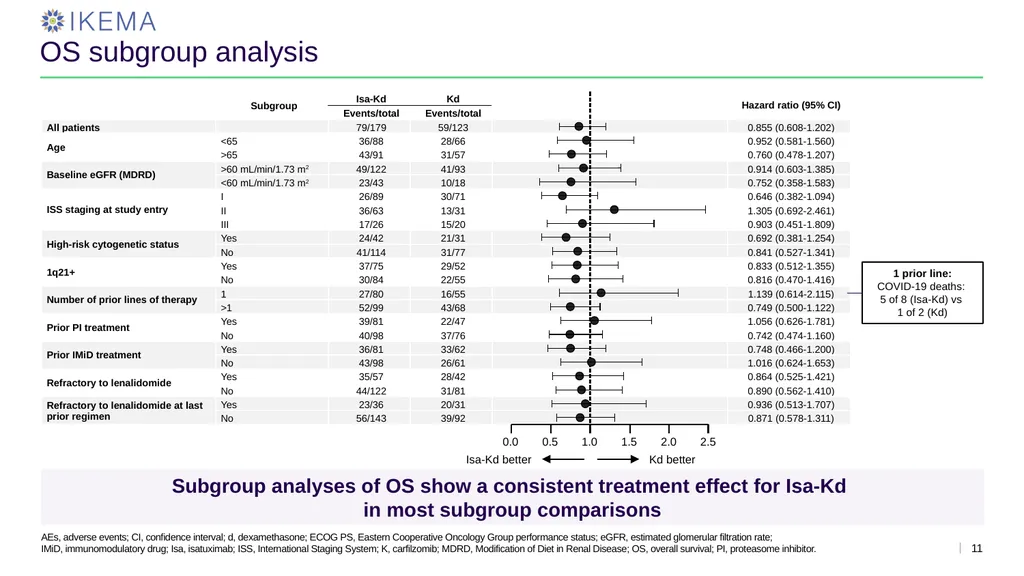
OS subgroup analysis AEs, adverse events; CI, confidence interval; d, dexamethasone; ECOG PS, Eastern Cooperative Oncology Group performance status; eGFR, estimated glomerular filtration rate;
IMiD, immunomodulatory drug; Isa, isatuximab; ISS, International Staging System; K, carfilzomib; MDRD, Modification of Diet in Renal Disease; OS, overall survival; PI, proteasome inhibitor. 11 Subgroup analyses of OS show a consistent treatment effect for Isa-Kd
in most subgroup comparisons 1 prior line:
COVID-19 deaths: 5 of 8 (Isa-Kd) vs 1 of 2 (Kd)<br>
in most subgroup comparisons 1 prior line:
COVID-19 deaths: 5 of 8 (Isa-Kd) vs 1 of 2 (Kd)<br>
12
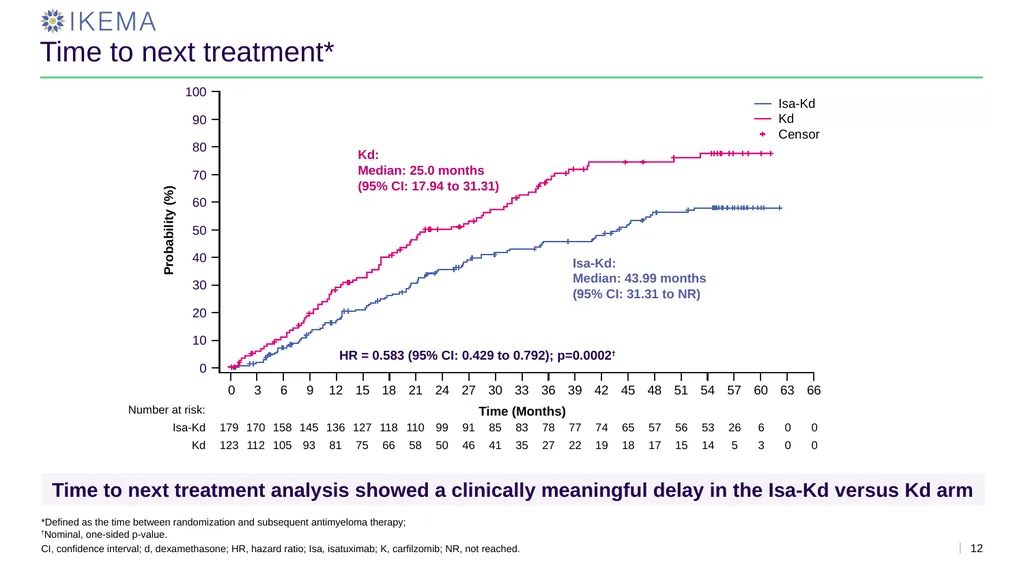
Time to next treatment* *Defined as the time between randomization and subsequent antimyeloma therapy;
†Nominal, one-sided p-value.
CI, confidence interval; d, dexamethasone; HR, hazard ratio; Isa, isatuximab; K, carfilzomib; NR, not reached. 12 Time to next treatment analysis showed a clinically meaningful delay in the Isa-Kd versus Kd arm Isa-Kd:
Median: 43.99 months
(95% CI: 31.31 to NR) Kd:
Median: 25.0 months
(95% CI: 17.94 to 31.31) HR = 0.583 (95% CI: 0.429 to 0.792); p=0.0002† Time (Months) Probability (%)<br>
CI, confidence interval; d, dexamethasone; HR, hazard ratio; Isa, isatuximab; K, carfilzomib; NR, not reached. 12 Time to next treatment analysis showed a clinically meaningful delay in the Isa-Kd versus Kd arm Isa-Kd:
Median: 43.99 months
(95% CI: 31.31 to NR) Kd:
Median: 25.0 months
(95% CI: 17.94 to 31.31) HR = 0.583 (95% CI: 0.429 to 0.792); p=0.0002† Time (Months) Probability (%)<br>
13
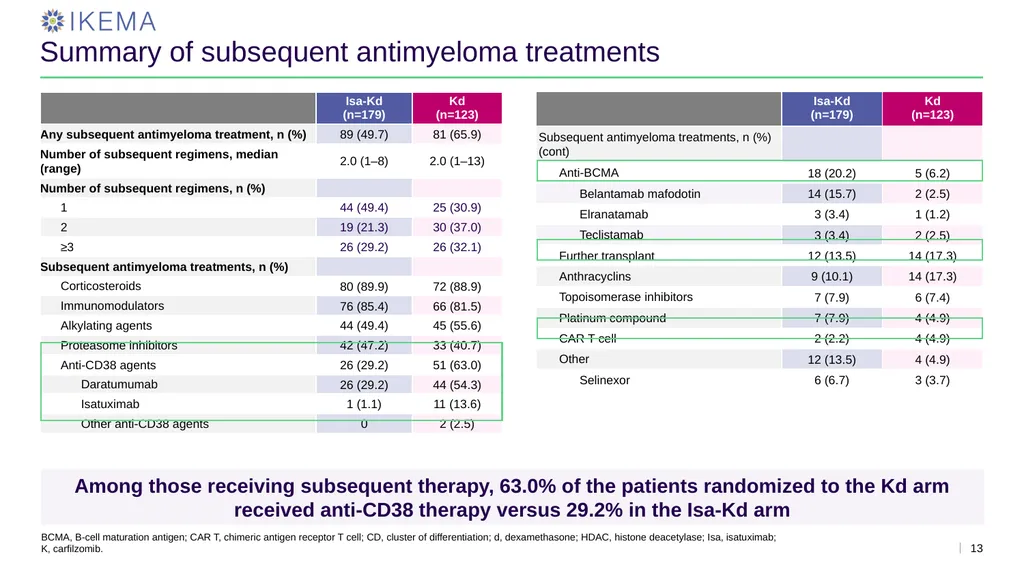
Summary of subsequent antimyeloma treatments BCMA, B-cell maturation antigen; CAR T, chimeric antigen receptor T cell; CD, cluster of differentiation; d, dexamethasone; HDAC, histone deacetylase; Isa, isatuximab;
K, carfilzomib. 13 Among those receiving subsequent therapy, 63.0% of the patients randomized to the Kd arm
received anti-CD38 therapy versus 29.2% in the Isa-Kd arm<br>
14
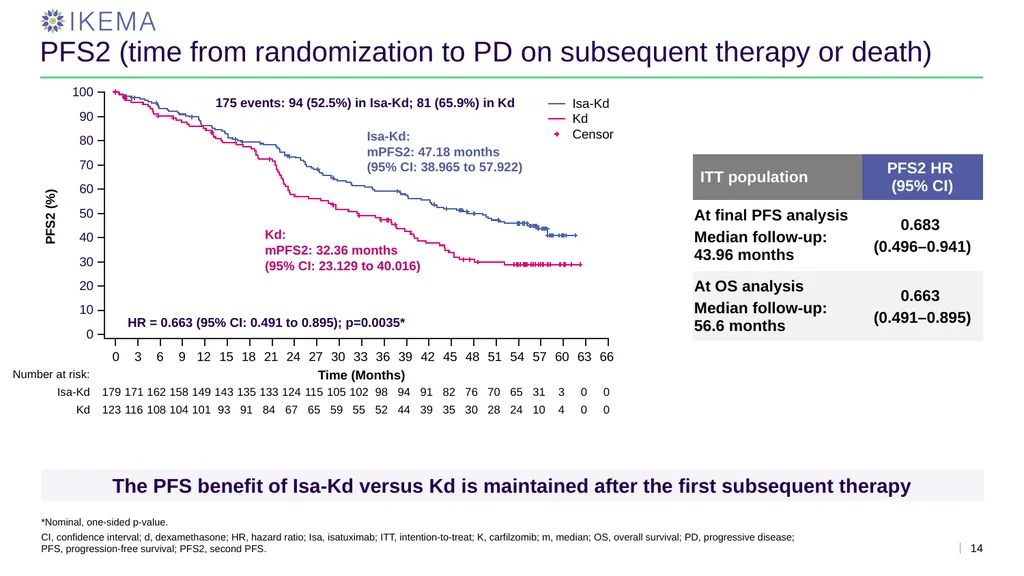
PFS2 (time from randomization to PD on subsequent therapy or death) *Nominal, one-sided p-value.
CI, confidence interval; d, dexamethasone; HR, hazard ratio; Isa, isatuximab; ITT, intention-to-treat; K, carfilzomib; m, median; OS, overall survival; PD, progressive disease; PFS, progression-free survival; PFS2, second PFS. 14 The PFS benefit of Isa-Kd versus Kd is maintained after the first subsequent therapy Isa-Kd:
mPFS2: 47.18 months
(95% CI: 38.965 to 57.922) Kd:
mPFS2: 32.36 months
(95% CI: 23.129 to 40.016) HR = 0.663 (95% CI: 0.491 to 0.895); p=0.0035* PFS2 (%) Time (Months) 175 events: 94 (52.5%) in Isa-Kd; 81 (65.9%) in Kd<br>
CI, confidence interval; d, dexamethasone; HR, hazard ratio; Isa, isatuximab; ITT, intention-to-treat; K, carfilzomib; m, median; OS, overall survival; PD, progressive disease; PFS, progression-free survival; PFS2, second PFS. 14 The PFS benefit of Isa-Kd versus Kd is maintained after the first subsequent therapy Isa-Kd:
mPFS2: 47.18 months
(95% CI: 38.965 to 57.922) Kd:
mPFS2: 32.36 months
(95% CI: 23.129 to 40.016) HR = 0.663 (95% CI: 0.491 to 0.895); p=0.0035* PFS2 (%) Time (Months) 175 events: 94 (52.5%) in Isa-Kd; 81 (65.9%) in Kd<br>
15
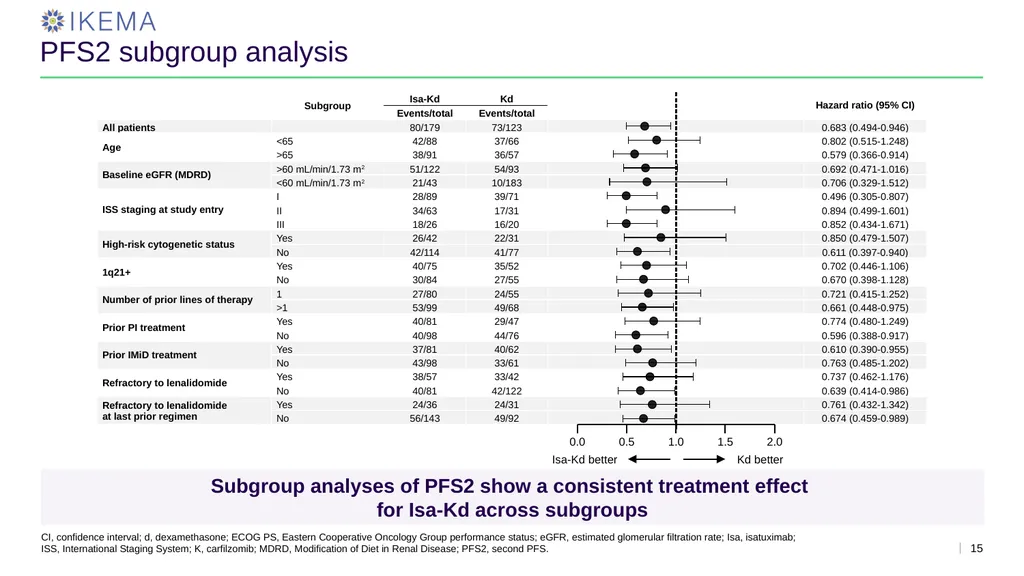
PFS2 subgroup analysis CI, confidence interval; d, dexamethasone; ECOG PS, Eastern Cooperative Oncology Group performance status; eGFR, estimated glomerular filtration rate; Isa, isatuximab;
ISS, International Staging System; K, carfilzomib; MDRD, Modification of Diet in Renal Disease; PFS2, second PFS. 15 Subgroup analyses of PFS2 show a consistent treatment effect
for Isa-Kd across subgroups<br>
for Isa-Kd across subgroups<br>
16
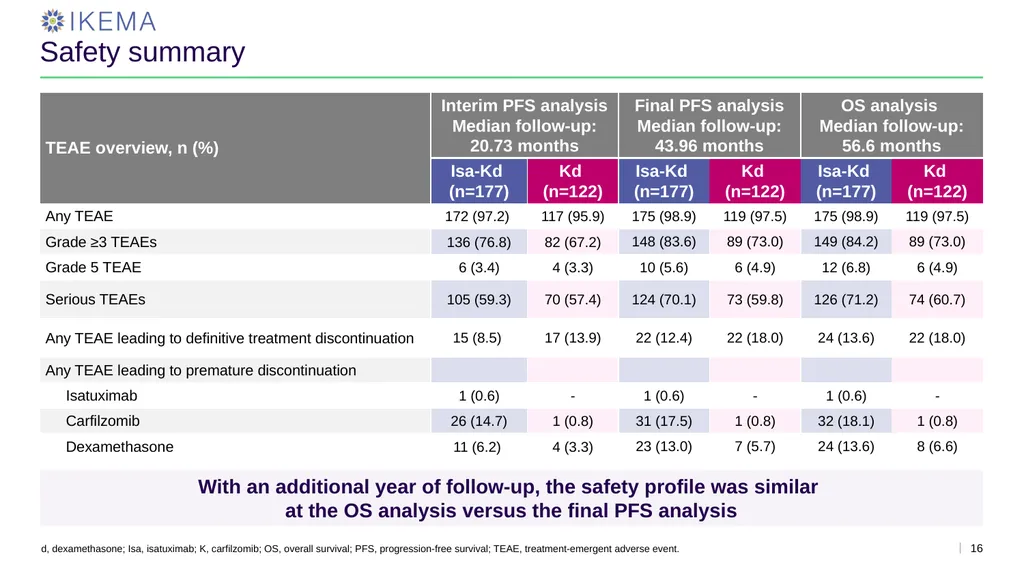
Safety summary d, dexamethasone; Isa, isatuximab; K, carfilzomib; OS, overall survival; PFS, progression-free survival; TEAE, treatment-emergent adverse event. 16 With an additional year of follow-up, the safety profile was similar
at the OS analysis versus the final PFS analysis<br>
at the OS analysis versus the final PFS analysis<br>
17
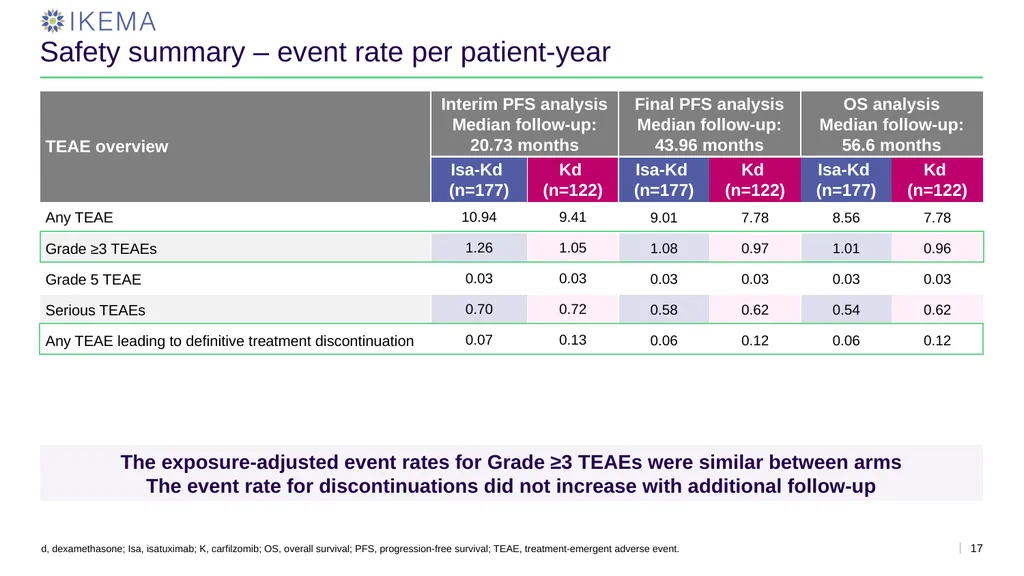
Safety summary – event rate per patient-year d, dexamethasone; Isa, isatuximab; K, carfilzomib; OS, overall survival; PFS, progression-free survival; TEAE, treatment-emergent adverse event. 17 The exposure-adjusted event rates for Grade ≥3 TEAEs were similar between arms
The event rate for discontinuations did not increase with additional follow-up<br>
The event rate for discontinuations did not increase with additional follow-up<br>
18
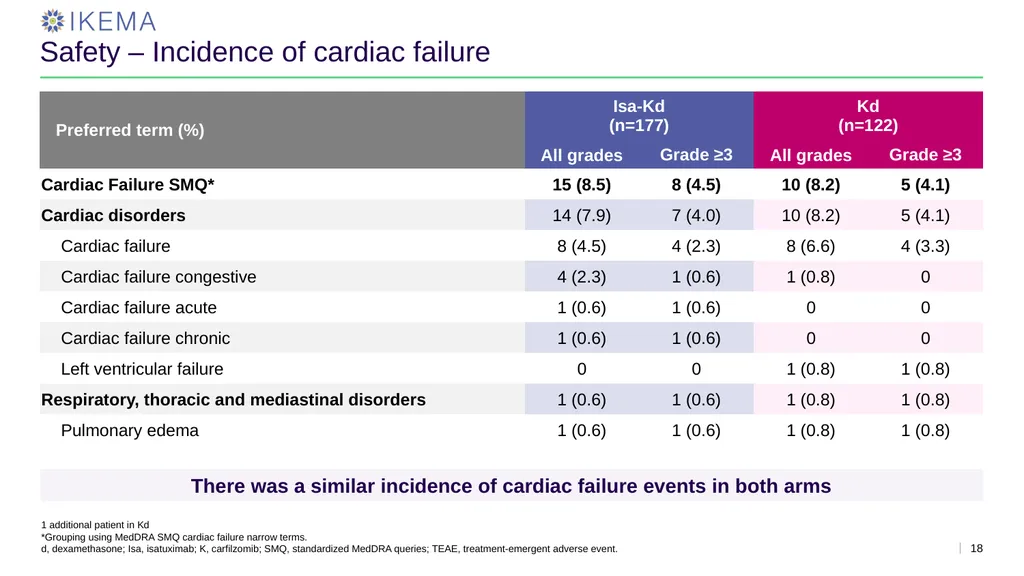
Safety – Incidence of cardiac failure 1 additional patient in Kd
*Grouping using MedDRA SMQ cardiac failure narrow terms.
d, dexamethasone; Isa, isatuximab; K, carfilzomib; SMQ, standardized MedDRA queries; TEAE, treatment-emergent adverse event. 18 There was a similar incidence of cardiac failure events in both arms<br>
*Grouping using MedDRA SMQ cardiac failure narrow terms.
d, dexamethasone; Isa, isatuximab; K, carfilzomib; SMQ, standardized MedDRA queries; TEAE, treatment-emergent adverse event. 18 There was a similar incidence of cardiac failure events in both arms<br>
19
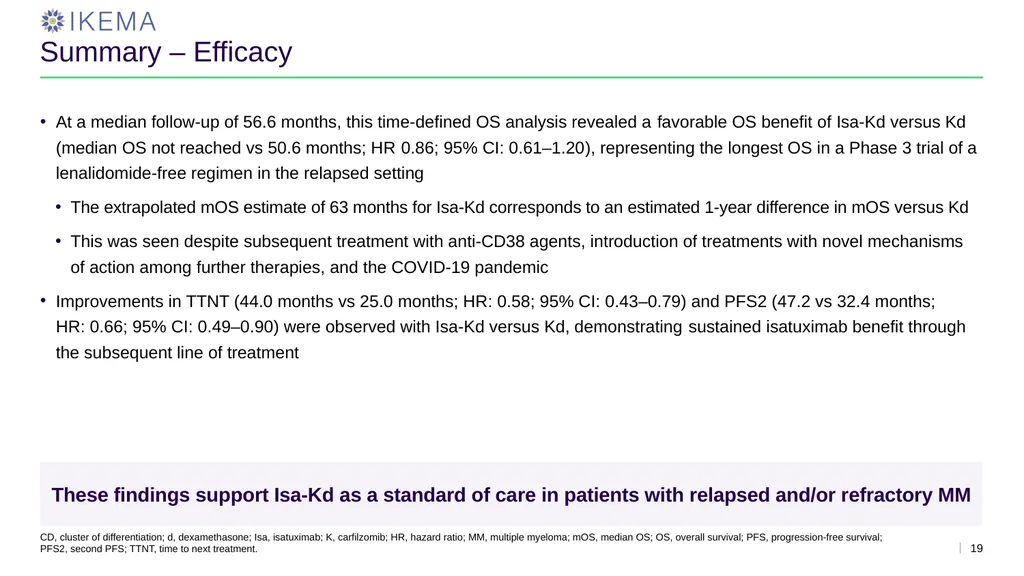
Summary – Efficacy At a median follow-up of 56.6 months, this time-defined OS analysis revealed a favorable OS benefit of Isa-Kd versus Kd (median OS not reached vs 50.6 months; HR 0.86; 95% CI: 0.61–1.20), representing the longest OS in a Phase 3 trial of a lenalidomide-free regimen in the relapsed setting
The extrapolated mOS estimate of 63 months for Isa-Kd corresponds to an estimated 1-year difference in mOS versus Kd
This was seen despite subsequent treatment with anti-CD38 agents, introduction of treatments with novel mechanisms of action among further therapies, and the COVID-19 pandemic
Improvements in TTNT (44.0 months vs 25.0 months; HR: 0.58; 95% CI: 0.43–0.79) and PFS2 (47.2 vs 32.4 months; HR: 0.66; 95% CI: 0.49–0.90) were observed with Isa-Kd versus Kd, demonstrating sustained isatuximab benefit through the subsequent line of treatment 19 These findings support Isa-Kd as a standard of care in patients with relapsed and/or refractory MM CD, cluster of differentiation; d, dexamethasone; Isa, isatuximab; K, carfilzomib; HR, hazard ratio; MM, multiple myeloma; mOS, median OS; OS, overall survival; PFS, progression-free survival; PFS2, second PFS; TTNT, time to next treatment.<br>
The extrapolated mOS estimate of 63 months for Isa-Kd corresponds to an estimated 1-year difference in mOS versus Kd
This was seen despite subsequent treatment with anti-CD38 agents, introduction of treatments with novel mechanisms of action among further therapies, and the COVID-19 pandemic
Improvements in TTNT (44.0 months vs 25.0 months; HR: 0.58; 95% CI: 0.43–0.79) and PFS2 (47.2 vs 32.4 months; HR: 0.66; 95% CI: 0.49–0.90) were observed with Isa-Kd versus Kd, demonstrating sustained isatuximab benefit through the subsequent line of treatment 19 These findings support Isa-Kd as a standard of care in patients with relapsed and/or refractory MM CD, cluster of differentiation; d, dexamethasone; Isa, isatuximab; K, carfilzomib; HR, hazard ratio; MM, multiple myeloma; mOS, median OS; OS, overall survival; PFS, progression-free survival; PFS2, second PFS; TTNT, time to next treatment.<br>
20
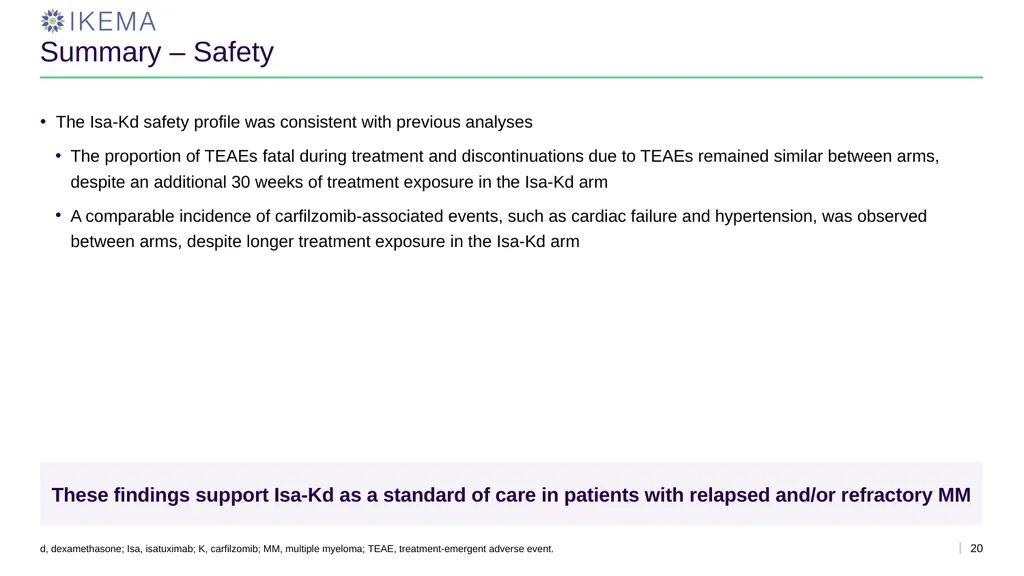
Summary – Safety The Isa-Kd safety profile was consistent with previous analyses
The proportion of TEAEs fatal during treatment and discontinuations due to TEAEs remained similar between arms, despite an additional 30 weeks of treatment exposure in the Isa-Kd arm
A comparable incidence of carfilzomib-associated events, such as cardiac failure and hypertension, was observed between arms, despite longer treatment exposure in the Isa-Kd arm 20 d, dexamethasone; Isa, isatuximab; K, carfilzomib; MM, multiple myeloma; TEAE, treatment-emergent adverse event. These findings support Isa-Kd as a standard of care in patients with relapsed and/or refractory MM<br>
The proportion of TEAEs fatal during treatment and discontinuations due to TEAEs remained similar between arms, despite an additional 30 weeks of treatment exposure in the Isa-Kd arm
A comparable incidence of carfilzomib-associated events, such as cardiac failure and hypertension, was observed between arms, despite longer treatment exposure in the Isa-Kd arm 20 d, dexamethasone; Isa, isatuximab; K, carfilzomib; MM, multiple myeloma; TEAE, treatment-emergent adverse event. These findings support Isa-Kd as a standard of care in patients with relapsed and/or refractory MM<br>
21
Acknowledgments 21 We would like to thank:
The participating patients and their caregivers
The study investigators
All staff who contributed to data collection and analyses
The data monitoring committee
Study funding: Sanofi
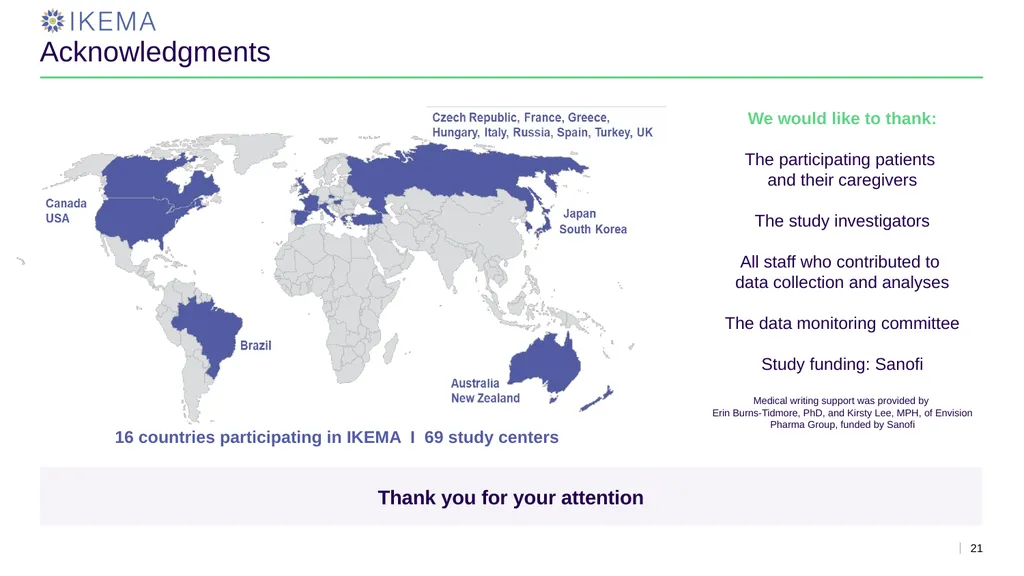
Medical writing support was provided by Erin Burns-Tidmore, PhD, and Kirsty Lee, MPH, of Envision Pharma Group, funded by Sanofi 16 countries participating in IKEMA I 69 study centers Thank you for your attention<br>
The participating patients and their caregivers
The study investigators
All staff who contributed to data collection and analyses
The data monitoring committee
Study funding: Sanofi
Medical writing support was provided by Erin Burns-Tidmore, PhD, and Kirsty Lee, MPH, of Envision Pharma Group, funded by Sanofi 16 countries participating in IKEMA I 69 study centers Thank you for your attention<br>