
Presentation to Portfolio Committee on Trade &



Description: Presentation to Portfolio Committee on Trade Industry Progress on Review of the Sugar Industry Regulations 13 September 2018 1 CONTENTS Background Objectives of the review of Sugar Regulations Regulatory Framework of the Sugar Industry
Related Topics
Download Presentation
"Presentation to Portfolio Committee on Trade &" is the property of its rightful owner. Permission is granted to download and print the materials on this website for personal, non-commercial use only, and to display it on your personal computer provided you do not modify the materials and that you retain all copyright notices contained in the materials. By downloading content from our website, you accept the terms of this agreement.
Presentation Transcript
slide1. Presentation to Portfolio Committee on
Trade & Industry Progress on Review of the Sugar Industry Regulations
13 September 2018 1<br>
slide2. CONTENTS Background
Objectives of the review of Sugar Regulations
Regulatory Framework of the Sugar Industry
Current Sugar Industry Structure
Process followed to amend the Sugar Regulations
Proposed Sugar Industry Structure
Proposed amendments to Sugar Regulations - transitional arrangements
Conclusion 2<br>
slide3. Background The Department of Trade and Industry is reviewing the regulation of the sugar industry to address the recognition of alternative associations such as the South African Farmers Development Association (SAFDA).
The aim is to ensure broad-based representation in the industry, improved competitiveness, and to promote transformation and inclusive growth. The review follows complaints by SAFDA to the department and Parliament’s trade and industry committee that it is not adequately represented within the industry. 3<br>
slide4. Background The sugar supply chain has two very distinct activities, the sugarcane production and the sugar milling sections.
It is a symbiotic relationship, since the one depends on the other.
The miller cannot exist without a supply of sugarcane, while the cane producer needs a miller.
Around this symbiotic relationship a structure exists, involving both the sugarcane farmers and the millers and which supports research, extension services, and sugar marketing. 4<br>
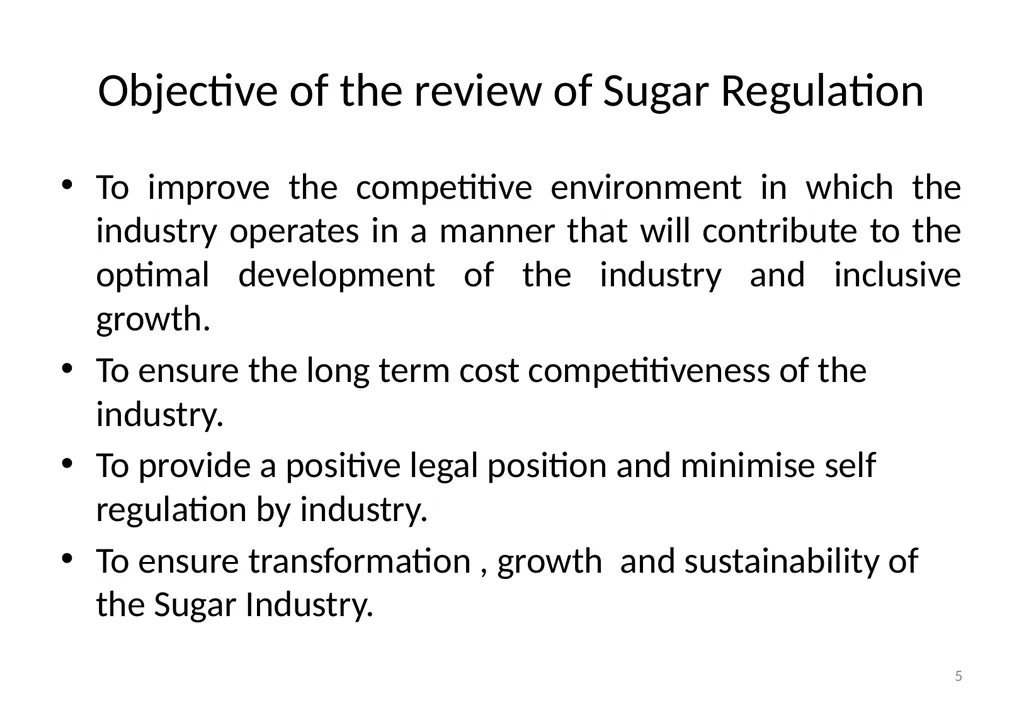
slide5. Objective of the review of Sugar Regulation To improve the competitive environment in which the industry operates in a manner that will contribute to the optimal development of the industry and inclusive growth.
To ensure the long term cost competitiveness of the industry.
To provide a positive legal position and minimise self regulation by industry.
To ensure transformation , growth and sustainability of the Sugar Industry. 5<br>
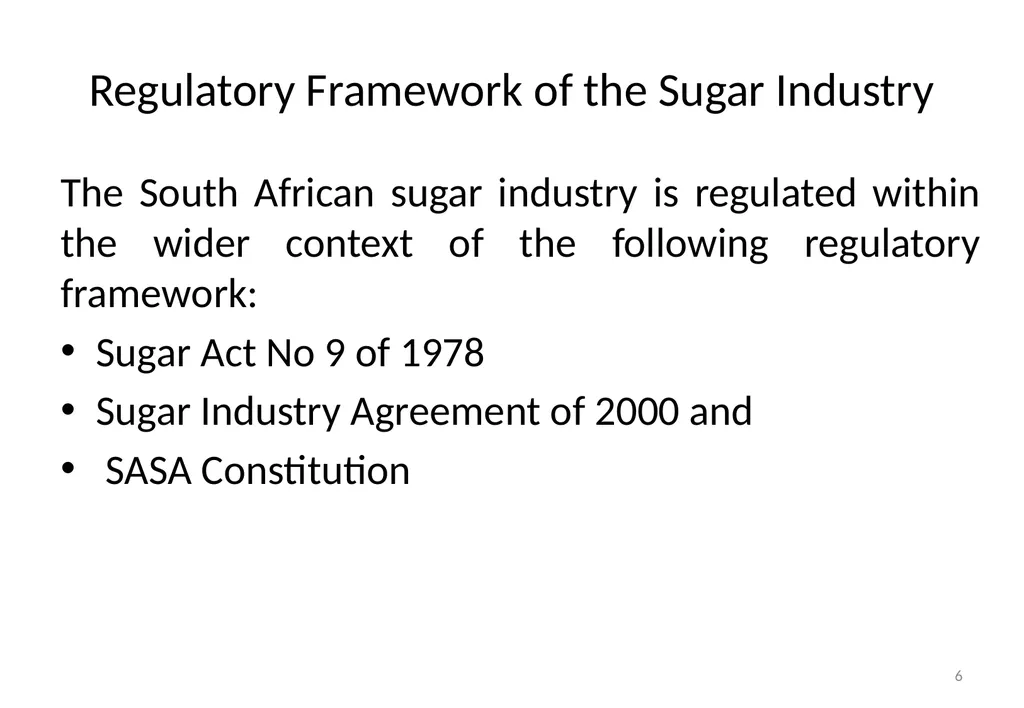
slide6. Regulatory Framework of the Sugar Industry The South African sugar industry is regulated within the wider context of the following regulatory framework:
Sugar Act No 9 of 1978
Sugar Industry Agreement of 2000 and
SASA Constitution 6<br>
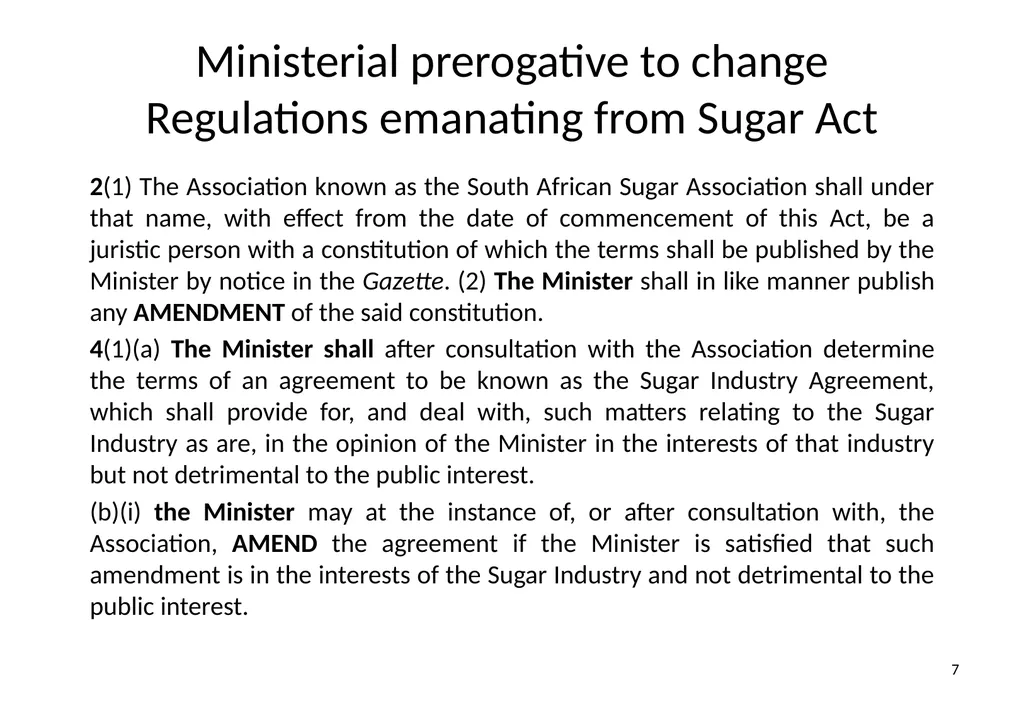
slide7. Ministerial prerogative to change Regulations emanating from Sugar Act 2(1) The Association known as the South African Sugar Association shall under that name, with effect from the date of commencement of this Act, be a juristic person with a constitution of which the terms shall be published by the Minister by notice in the Gazette. (2) The Minister shall in like manner publish any AMENDMENT of the said constitution.
4(1)(a) The Minister shall after consultation with the Association determine the terms of an agreement to be known as the Sugar Industry Agreement, which shall provide for, and deal with, such matters relating to the Sugar Industry as are, in the opinion of the Minister in the interests of that industry but not detrimental to the public interest.
(b)(i) the Minister may at the instance of, or after consultation with, the Association, AMEND the agreement if the Minister is satisfied that such amendment is in the interests of the Sugar Industry and not detrimental to the public interest. 7<br>
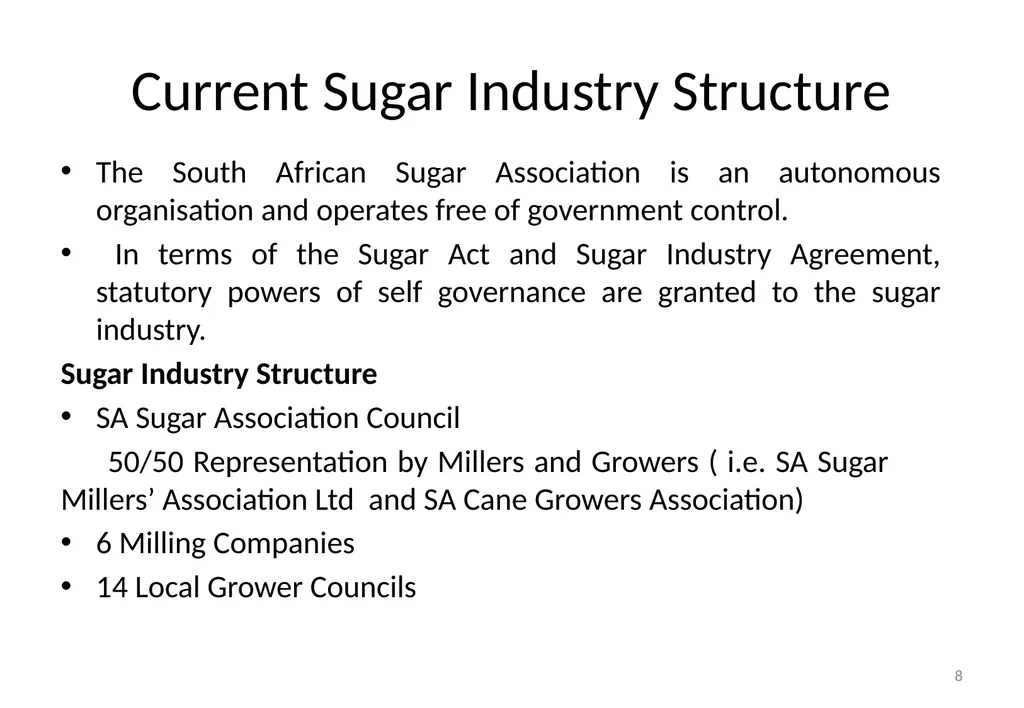
slide8. Current Sugar Industry Structure The South African Sugar Association is an autonomous organisation and operates free of government control.
In terms of the Sugar Act and Sugar Industry Agreement, statutory powers of self governance are granted to the sugar industry.
Sugar Industry Structure
SA Sugar Association Council
50/50 Representation by Millers and Growers ( i.e. SA Sugar Millers’ Association Ltd and SA Cane Growers Association)
6 Milling Companies
14 Local Grower Councils 8<br>
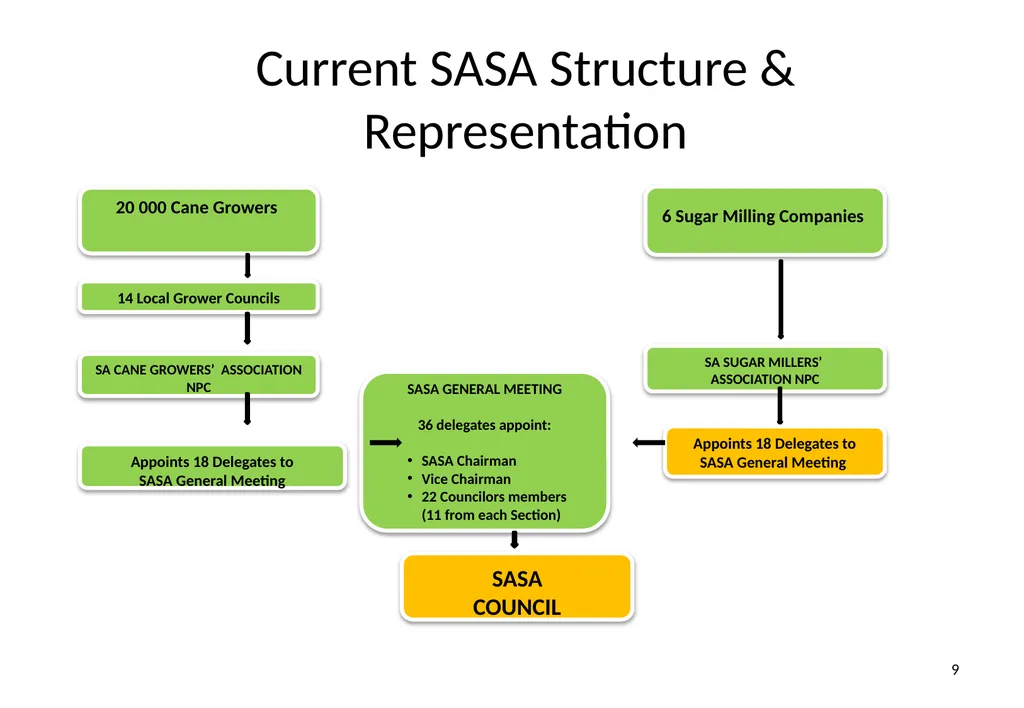
slide9. Current SASA Structure & Representation SASA
COUNCIL Appoints 18 Delegates to SASA General Meeting 9<br>
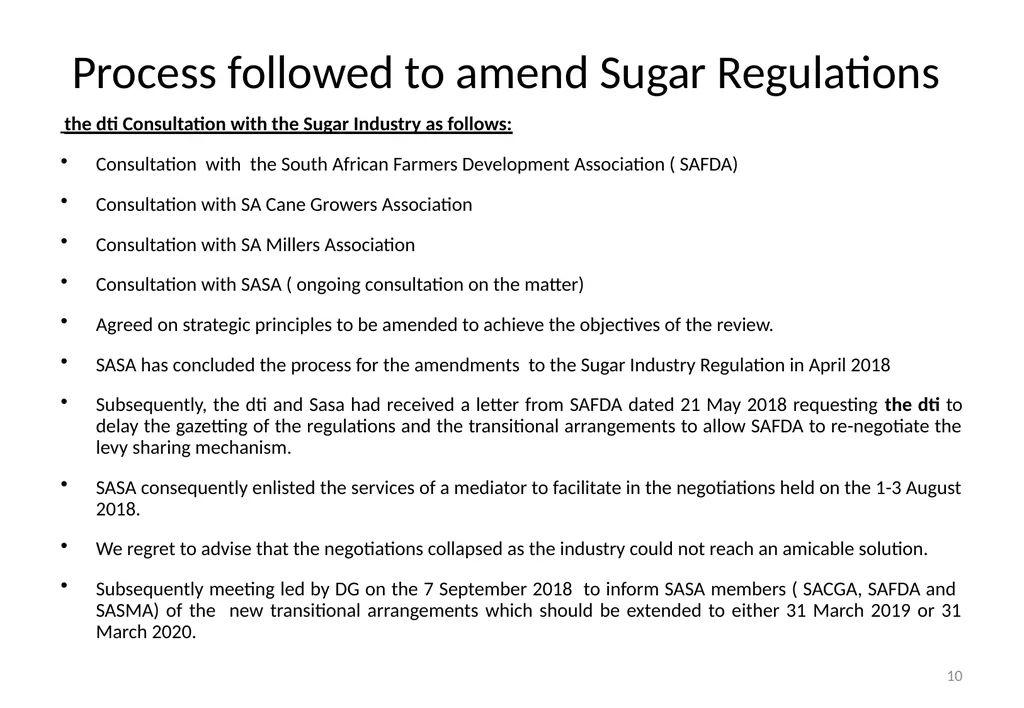
slide10. Process followed to amend Sugar Regulations the dti Consultation with the Sugar Industry as follows:
Consultation with the South African Farmers Development Association ( SAFDA)
Consultation with SA Cane Growers Association
Consultation with SA Millers Association
Consultation with SASA ( ongoing consultation on the matter)
Agreed on strategic principles to be amended to achieve the objectives of the review.
SASA has concluded the process for the amendments to the Sugar Industry Regulation in April 2018
Subsequently, the dti and Sasa had received a letter from SAFDA dated 21 May 2018 requesting the dti to delay the gazetting of the regulations and the transitional arrangements to allow SAFDA to re-negotiate the levy sharing mechanism.
SASA consequently enlisted the services of a mediator to facilitate in the negotiations held on the 1-3 August 2018.
We regret to advise that the negotiations collapsed as the industry could not reach an amicable solution.
Subsequently meeting led by DG on the 7 September 2018 to inform SASA members ( SACGA, SAFDA and SASMA) of the new transitional arrangements which should be extended to either 31 March 2019 or 31 March 2020. 10<br>
slide11. SASA DELEGATES Chairperson 24 appointed by Growers Section 24 appointed by SA Sugar Millers SA Sugar Millers’ Association
Chairperson
24 Delegates Growers Associations
24 Delegates SACGA
12 Delegates SAFDA
12 Delegates SASMA Others Others SACGA
Board SACGA
Congress 14 Local Grower Councils
Board 50% 50% SASA COUNCIL
Chairperson
2 Vice-Chairpersons
16 Councillors nominated by Growers Associations
16 Councillors nominated by Sugar Millers Associations 14 Mills PROPOSED SUGAR INDUSTRY
STRUCTURE
FOR TRANSITIONAL PERIOD MGB & local structures SAFDA structures 50/50 split 11<br>
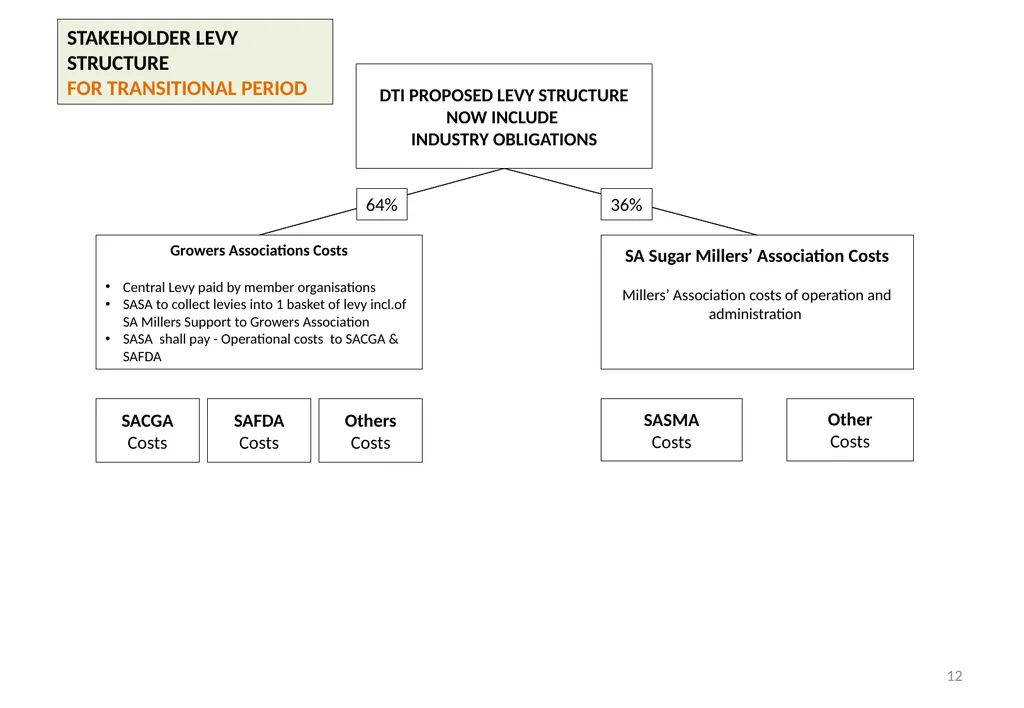
slide12. DTI PROPOSED LEVY STRUCTURE NOW INCLUDE INDUSTRY OBLIGATIONS SA Sugar Millers’ Association Costs
Millers’ Association costs of operation and administration Growers Associations Costs
Central Levy paid by member organisations
SASA to collect levies into 1 basket of levy incl.of SA Millers Support to Growers Association
SASA shall pay - Operational costs to SACGA & SAFDA SACGA
Costs SAFDA
Costs SASMA
Costs Other
Costs Others
Costs 36% 64% STAKEHOLDER LEVY STRUCTURE
FOR TRANSITIONAL PERIOD 12<br>
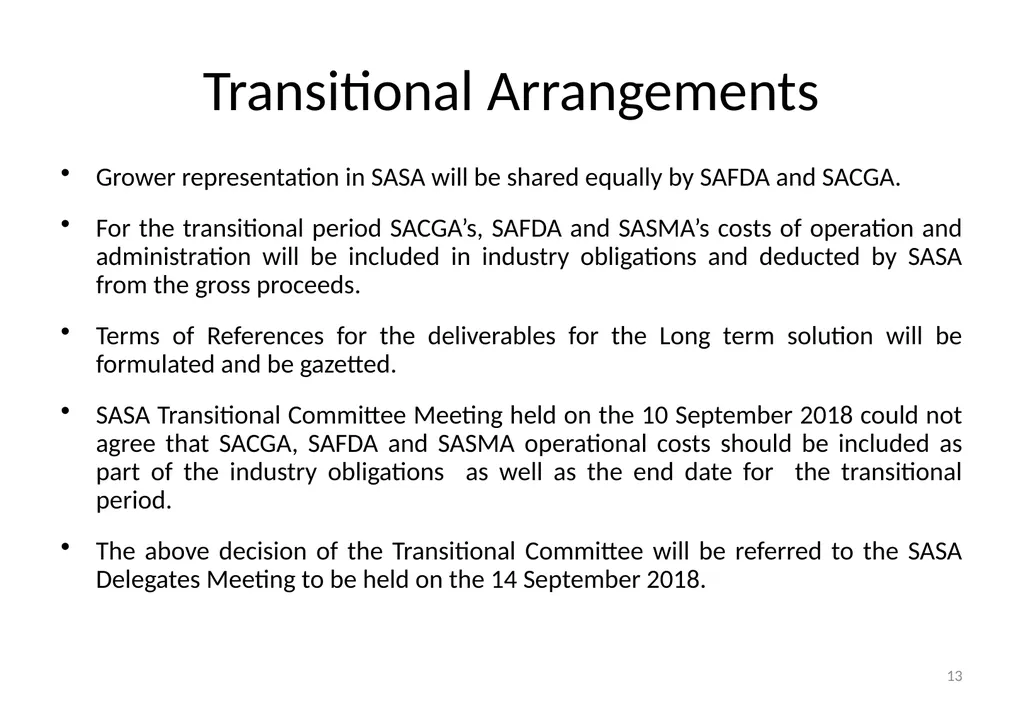
slide13. Transitional Arrangements Grower representation in SASA will be shared equally by SAFDA and SACGA.
For the transitional period SACGA’s, SAFDA and SASMA’s costs of operation and administration will be included in industry obligations and deducted by SASA from the gross proceeds.
Terms of References for the deliverables for the Long term solution will be formulated and be gazetted.
SASA Transitional Committee Meeting held on the 10 September 2018 could not agree that SACGA, SAFDA and SASMA operational costs should be included as part of the industry obligations as well as the end date for the transitional period.
The above decision of the Transitional Committee will be referred to the SASA Delegates Meeting to be held on the 14 September 2018. 13<br>
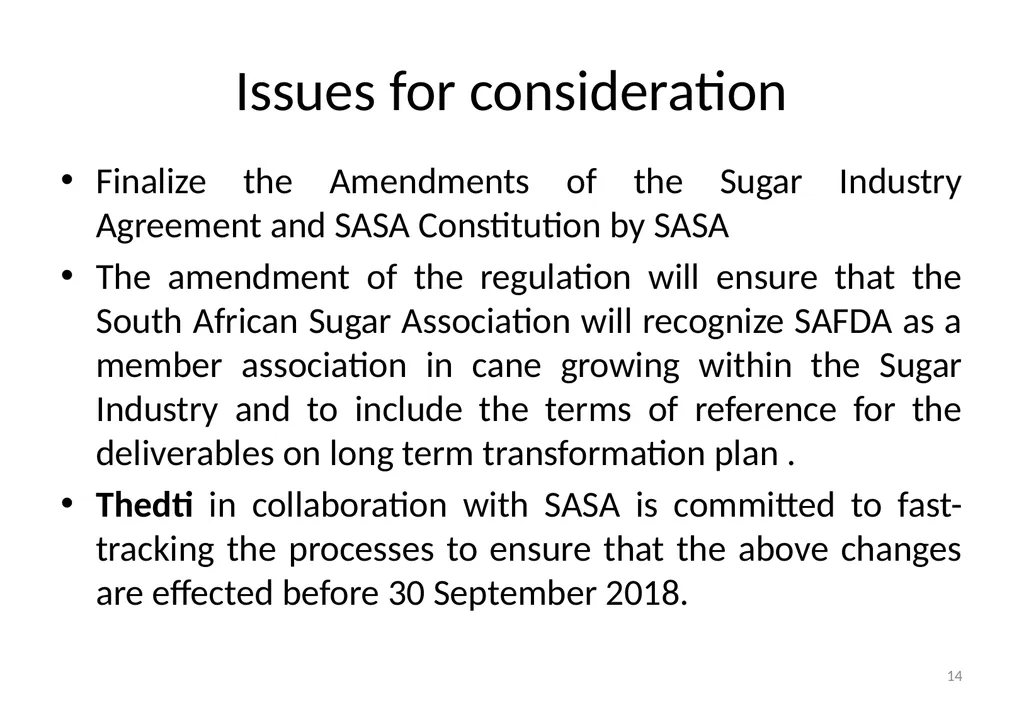
slide14. Issues for consideration Finalize the Amendments of the Sugar Industry Agreement and SASA Constitution by SASA
The amendment of the regulation will ensure that the South African Sugar Association will recognize SAFDA as a member association in cane growing within the Sugar Industry and to include the terms of reference for the deliverables on long term transformation plan .
Thedti in collaboration with SASA is committed to fast-tracking the processes to ensure that the above changes are effected before 30 September 2018. 14<br>
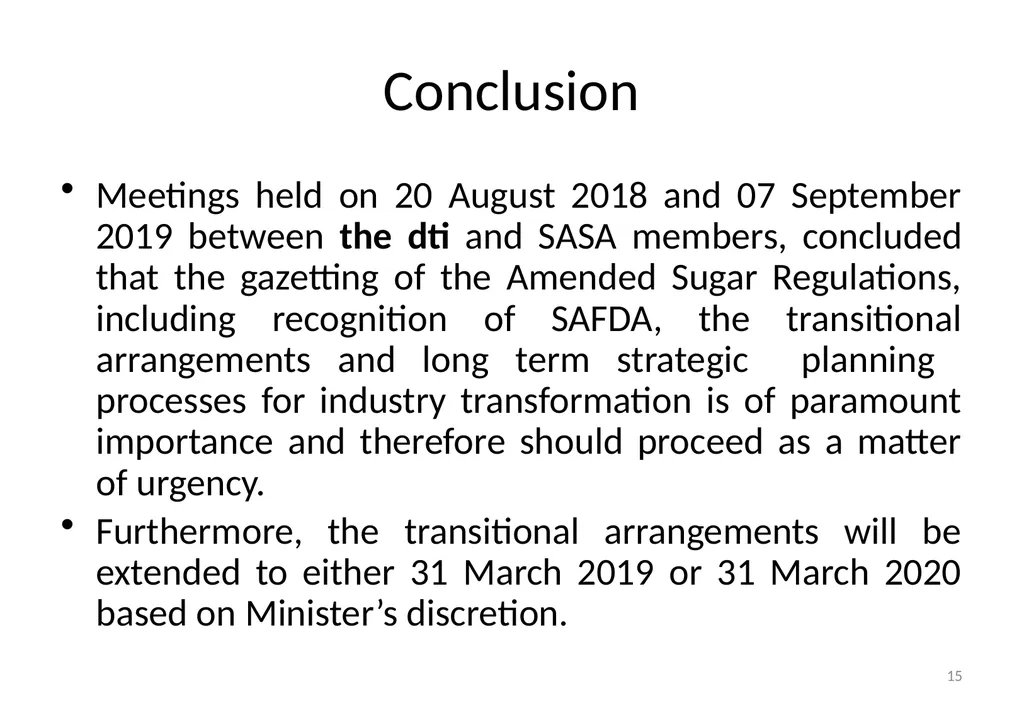
slide15. Conclusion Meetings held on 20 August 2018 and 07 September 2019 between the dti and SASA members, concluded that the gazetting of the Amended Sugar Regulations, including recognition of SAFDA, the transitional arrangements and long term strategic planning processes for industry transformation is of paramount importance and therefore should proceed as a matter of urgency.
Furthermore, the transitional arrangements will be extended to either 31 March 2019 or 31 March 2020 based on Minister’s discretion. 15<br>
slide16. “Action without vision is only passing time, vision without action is merely day dreaming, but vision with action can change the world.” 16<br>
slide17. 17<br>
13 September 2018 1<br>
slide2. CONTENTS Background
Objectives of the review of Sugar Regulations
Regulatory Framework of the Sugar Industry
Current Sugar Industry Structure
Process followed to amend the Sugar Regulations
Proposed Sugar Industry Structure
Proposed amendments to Sugar Regulations - transitional arrangements
Conclusion 2<br>
slide3. Background The Department of Trade and Industry is reviewing the regulation of the sugar industry to address the recognition of alternative associations such as the South African Farmers Development Association (SAFDA).
The aim is to ensure broad-based representation in the industry, improved competitiveness, and to promote transformation and inclusive growth. The review follows complaints by SAFDA to the department and Parliament’s trade and industry committee that it is not adequately represented within the industry. 3<br>
slide4. Background The sugar supply chain has two very distinct activities, the sugarcane production and the sugar milling sections.
It is a symbiotic relationship, since the one depends on the other.
The miller cannot exist without a supply of sugarcane, while the cane producer needs a miller.
Around this symbiotic relationship a structure exists, involving both the sugarcane farmers and the millers and which supports research, extension services, and sugar marketing. 4<br>
slide5. Objective of the review of Sugar Regulation To improve the competitive environment in which the industry operates in a manner that will contribute to the optimal development of the industry and inclusive growth.
To ensure the long term cost competitiveness of the industry.
To provide a positive legal position and minimise self regulation by industry.
To ensure transformation , growth and sustainability of the Sugar Industry. 5<br>
slide6. Regulatory Framework of the Sugar Industry The South African sugar industry is regulated within the wider context of the following regulatory framework:
Sugar Act No 9 of 1978
Sugar Industry Agreement of 2000 and
SASA Constitution 6<br>
slide7. Ministerial prerogative to change Regulations emanating from Sugar Act 2(1) The Association known as the South African Sugar Association shall under that name, with effect from the date of commencement of this Act, be a juristic person with a constitution of which the terms shall be published by the Minister by notice in the Gazette. (2) The Minister shall in like manner publish any AMENDMENT of the said constitution.
4(1)(a) The Minister shall after consultation with the Association determine the terms of an agreement to be known as the Sugar Industry Agreement, which shall provide for, and deal with, such matters relating to the Sugar Industry as are, in the opinion of the Minister in the interests of that industry but not detrimental to the public interest.
(b)(i) the Minister may at the instance of, or after consultation with, the Association, AMEND the agreement if the Minister is satisfied that such amendment is in the interests of the Sugar Industry and not detrimental to the public interest. 7<br>
slide8. Current Sugar Industry Structure The South African Sugar Association is an autonomous organisation and operates free of government control.
In terms of the Sugar Act and Sugar Industry Agreement, statutory powers of self governance are granted to the sugar industry.
Sugar Industry Structure
SA Sugar Association Council
50/50 Representation by Millers and Growers ( i.e. SA Sugar Millers’ Association Ltd and SA Cane Growers Association)
6 Milling Companies
14 Local Grower Councils 8<br>
slide9. Current SASA Structure & Representation SASA
COUNCIL Appoints 18 Delegates to SASA General Meeting 9<br>
slide10. Process followed to amend Sugar Regulations the dti Consultation with the Sugar Industry as follows:
Consultation with the South African Farmers Development Association ( SAFDA)
Consultation with SA Cane Growers Association
Consultation with SA Millers Association
Consultation with SASA ( ongoing consultation on the matter)
Agreed on strategic principles to be amended to achieve the objectives of the review.
SASA has concluded the process for the amendments to the Sugar Industry Regulation in April 2018
Subsequently, the dti and Sasa had received a letter from SAFDA dated 21 May 2018 requesting the dti to delay the gazetting of the regulations and the transitional arrangements to allow SAFDA to re-negotiate the levy sharing mechanism.
SASA consequently enlisted the services of a mediator to facilitate in the negotiations held on the 1-3 August 2018.
We regret to advise that the negotiations collapsed as the industry could not reach an amicable solution.
Subsequently meeting led by DG on the 7 September 2018 to inform SASA members ( SACGA, SAFDA and SASMA) of the new transitional arrangements which should be extended to either 31 March 2019 or 31 March 2020. 10<br>
slide11. SASA DELEGATES Chairperson 24 appointed by Growers Section 24 appointed by SA Sugar Millers SA Sugar Millers’ Association
Chairperson
24 Delegates Growers Associations
24 Delegates SACGA
12 Delegates SAFDA
12 Delegates SASMA Others Others SACGA
Board SACGA
Congress 14 Local Grower Councils
Board 50% 50% SASA COUNCIL
Chairperson
2 Vice-Chairpersons
16 Councillors nominated by Growers Associations
16 Councillors nominated by Sugar Millers Associations 14 Mills PROPOSED SUGAR INDUSTRY
STRUCTURE
FOR TRANSITIONAL PERIOD MGB & local structures SAFDA structures 50/50 split 11<br>
slide12. DTI PROPOSED LEVY STRUCTURE NOW INCLUDE INDUSTRY OBLIGATIONS SA Sugar Millers’ Association Costs
Millers’ Association costs of operation and administration Growers Associations Costs
Central Levy paid by member organisations
SASA to collect levies into 1 basket of levy incl.of SA Millers Support to Growers Association
SASA shall pay - Operational costs to SACGA & SAFDA SACGA
Costs SAFDA
Costs SASMA
Costs Other
Costs Others
Costs 36% 64% STAKEHOLDER LEVY STRUCTURE
FOR TRANSITIONAL PERIOD 12<br>
slide13. Transitional Arrangements Grower representation in SASA will be shared equally by SAFDA and SACGA.
For the transitional period SACGA’s, SAFDA and SASMA’s costs of operation and administration will be included in industry obligations and deducted by SASA from the gross proceeds.
Terms of References for the deliverables for the Long term solution will be formulated and be gazetted.
SASA Transitional Committee Meeting held on the 10 September 2018 could not agree that SACGA, SAFDA and SASMA operational costs should be included as part of the industry obligations as well as the end date for the transitional period.
The above decision of the Transitional Committee will be referred to the SASA Delegates Meeting to be held on the 14 September 2018. 13<br>
slide14. Issues for consideration Finalize the Amendments of the Sugar Industry Agreement and SASA Constitution by SASA
The amendment of the regulation will ensure that the South African Sugar Association will recognize SAFDA as a member association in cane growing within the Sugar Industry and to include the terms of reference for the deliverables on long term transformation plan .
Thedti in collaboration with SASA is committed to fast-tracking the processes to ensure that the above changes are effected before 30 September 2018. 14<br>
slide15. Conclusion Meetings held on 20 August 2018 and 07 September 2019 between the dti and SASA members, concluded that the gazetting of the Amended Sugar Regulations, including recognition of SAFDA, the transitional arrangements and long term strategic planning processes for industry transformation is of paramount importance and therefore should proceed as a matter of urgency.
Furthermore, the transitional arrangements will be extended to either 31 March 2019 or 31 March 2020 based on Minister’s discretion. 15<br>
slide16. “Action without vision is only passing time, vision without action is merely day dreaming, but vision with action can change the world.” 16<br>
slide17. 17<br>