
Prevent Training What is Prevent? Ideology and

Description: Prevent Training What is Prevent? Ideology and risks What is my duty? Session Structure What is Prevent? What are the risksthreats? Governor and School duty Session Structure What is Prevent? Prevent is part of the UKs Counter-Terrorism
Related Topics
Download Presentation
"Prevent Training What is Prevent? Ideology and" is the property of its rightful owner. Permission is granted to download and print the materials on this website for personal, non-commercial use only, and to display it on your personal computer provided you do not modify the materials and that you retain all copyright notices contained in the materials. By downloading content from our website, you accept the terms of this agreement.
Presentation Transcript
slide1. Prevent Training<br>
slide2. What is Prevent? Ideology and risks What is my duty? Session Structure<br>
slide3. What is Prevent? What are the risks/threats? Governor and School duty Session Structure<br>
slide4. What is Prevent? Prevent is part of the UK’s Counter-Terrorism Strategy, preventing people from becoming involved in terrorism or supporting terrorism. The Counter Terrorism & Security Act 2015 places a statutory duty for Specified Authorities including the Local Authority, schools and education establishments to have “due regard to the need to prevent people from being drawn into terrorism””<br>
slide5. Statutory Duty A multi-agency approach- Police, Social Care, NHS, Housing… Supporting those vulnerable to radicalisation Supporting and protecting communities Building resilience against radicalisation and extreme views. Providing alternative narratives to those leaning towards radicalised views. Prevent<br>
slide6. “Safeguarding vulnerable people from radicalisation is no different from safeguarding them from other forms of harm” Home Office, The Prevent Strategy<br>
slide7. Prevent is not about getting people susceptible to radicalisation into trouble, it’s about supporting them. You are safeguarding people. Prevent is not in the criminal space- it will not result criminal record or block any future opportunities for young people or adults e.g. education/work Myth Prevent is about getting people into trouble<br>
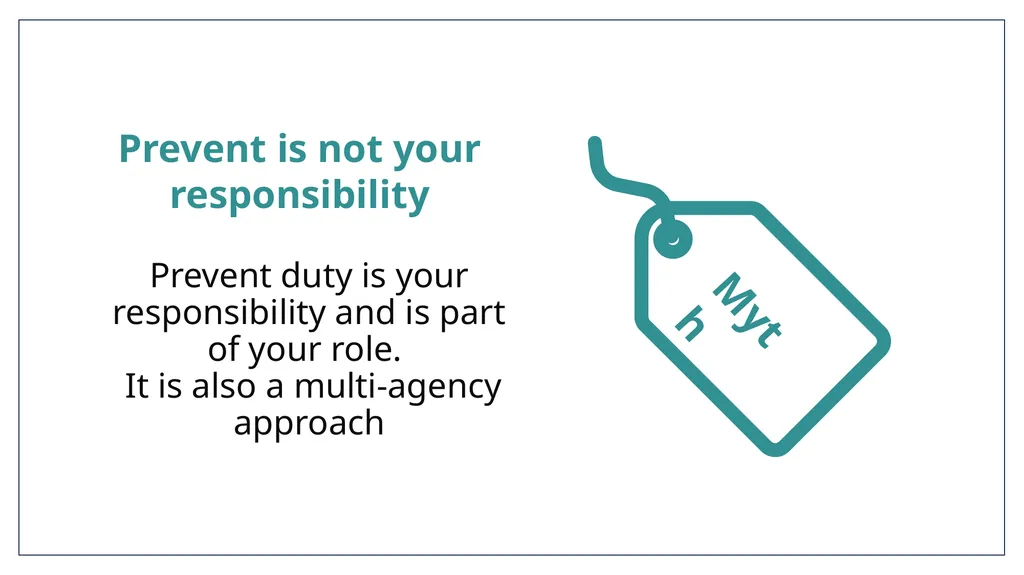
slide8. Prevent duty is your responsibility and is part of your role. It is also a multi-agency approach Myth Prevent is not your responsibility<br>
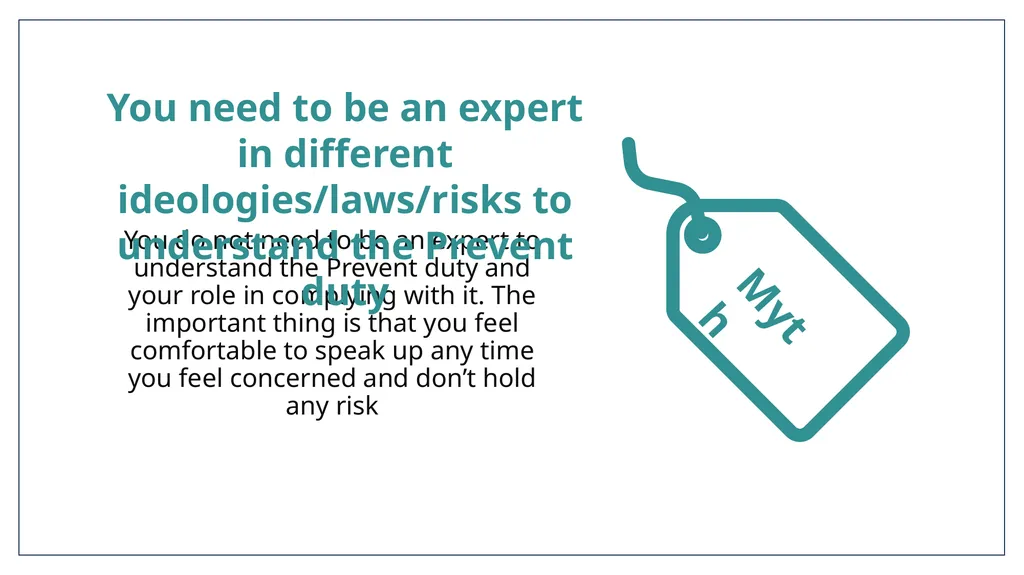
slide9. You do not need to be an expert to understand the Prevent duty and your role in complying with it. The important thing is that you feel comfortable to speak up any time you feel concerned and don’t hold any risk Myth You need to be an expert in different ideologies/laws/risks to understand the Prevent duty<br>
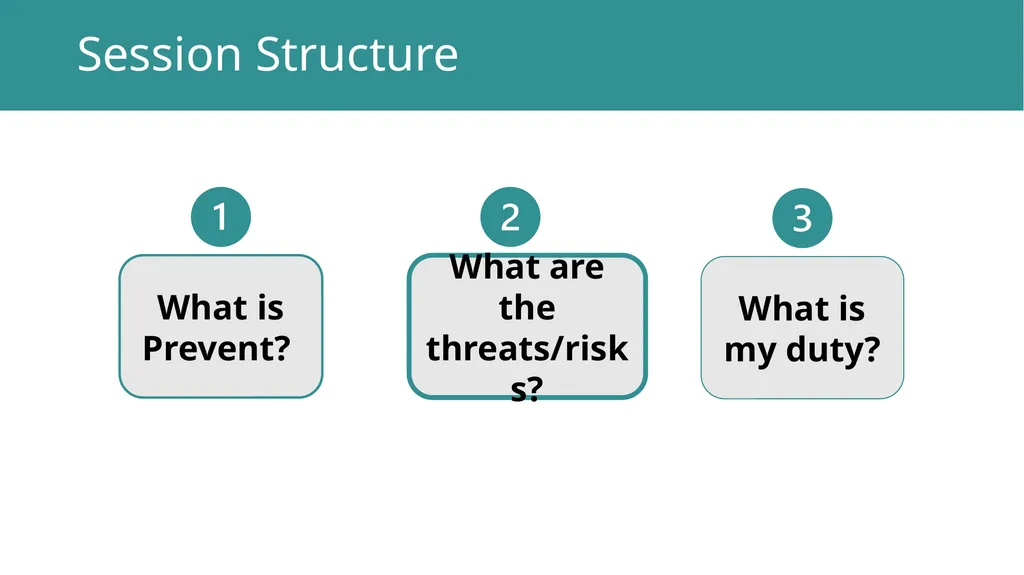
slide10. What is Prevent? What are the threats/risks? What is my duty? Session Structure<br>
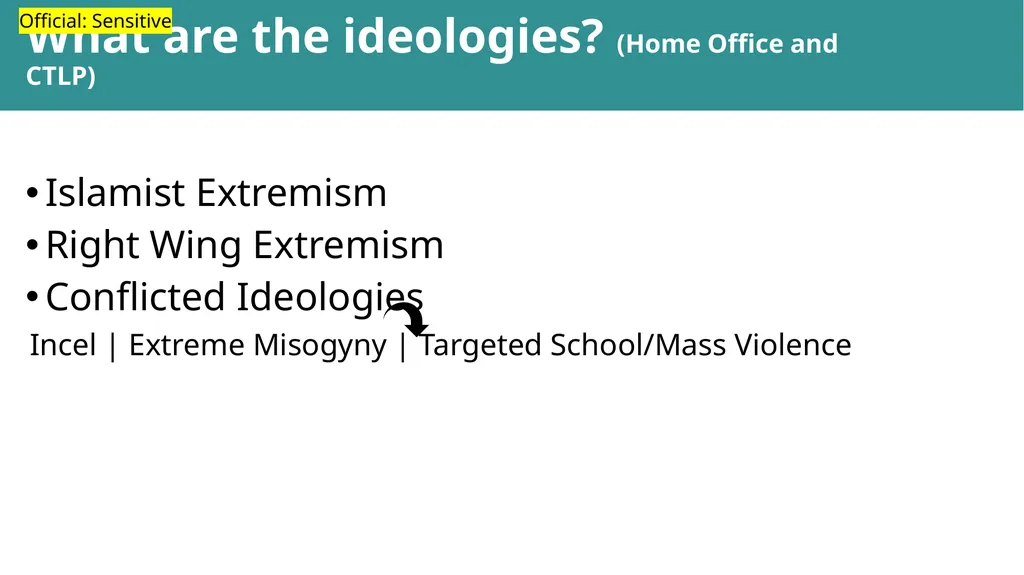
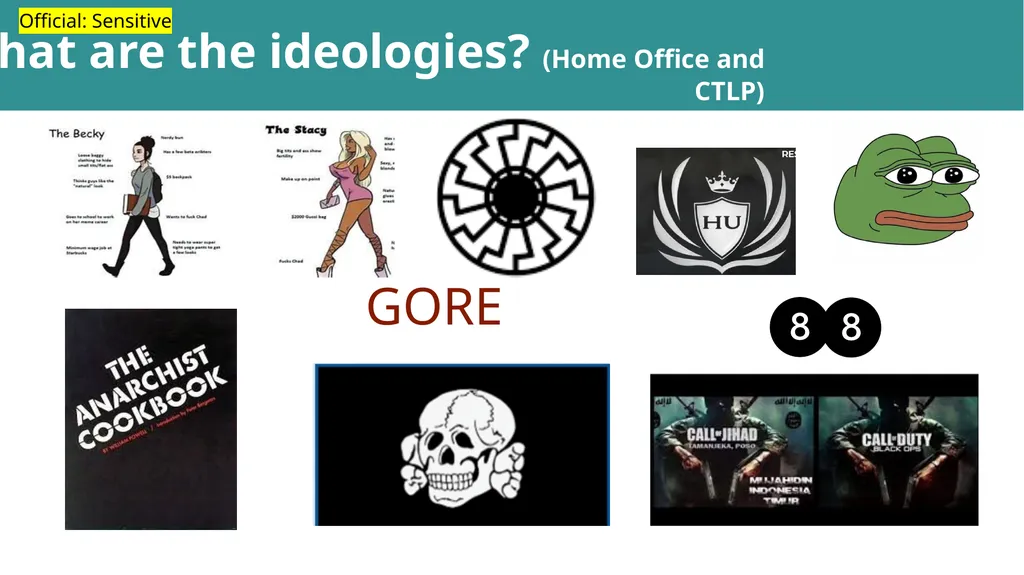
slide11. What are the ideologies? (Home Office and CTLP) Islamist Extremism
Right Wing Extremism
Conflicted Ideologies
Incel | Extreme Misogyny | Targeted School/Mass Violence Official: Sensitive<br>
slide12. What are the ideologies? (Home Office and CTLP) GORE Official: Sensitive<br>
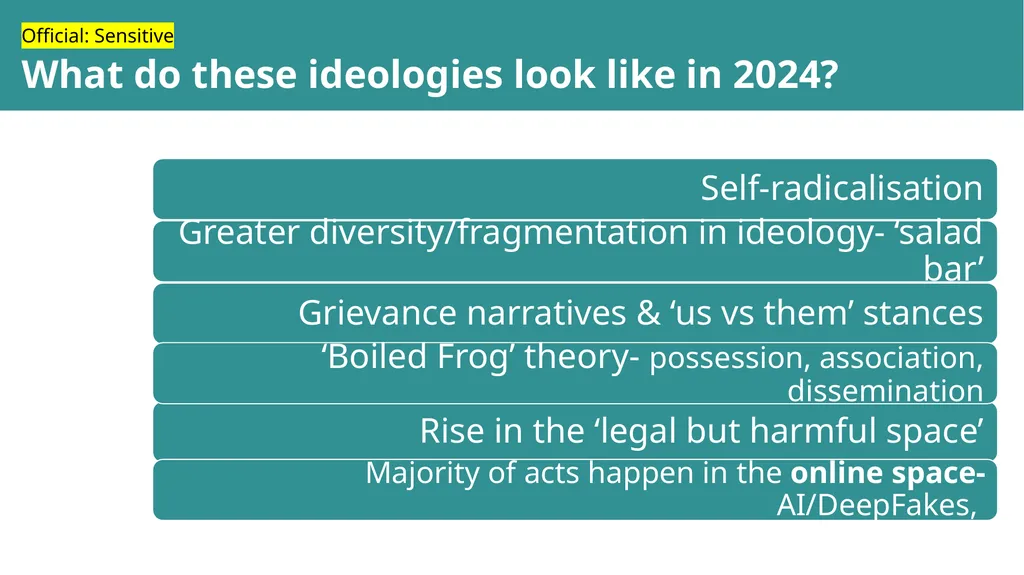
slide13. What do these ideologies look like in 2024? Official: Sensitive<br>
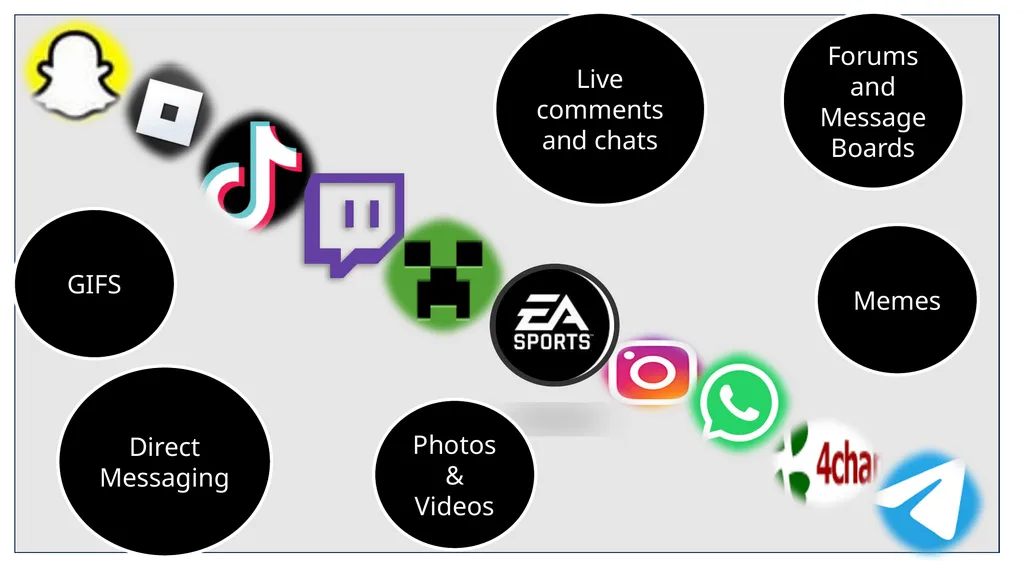
slide14. Memes GIFS Live comments and chats Photos & Videos Forums and Message Boards Direct Messaging<br>
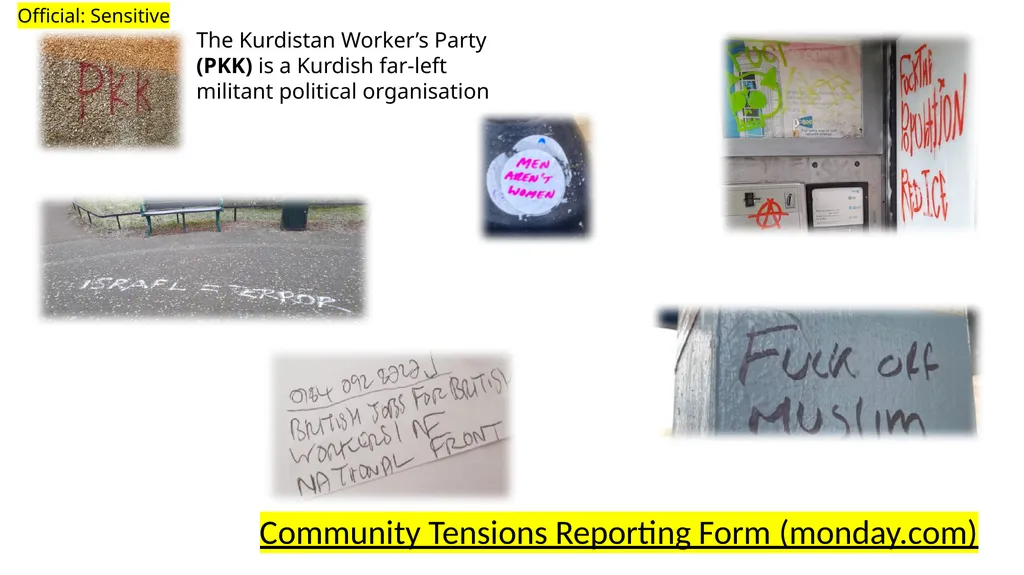
slide15. The Kurdistan Worker’s Party (PKK) is a Kurdish far-left militant political organisation Official: Sensitive Community Tensions Reporting Form (monday.com)<br>
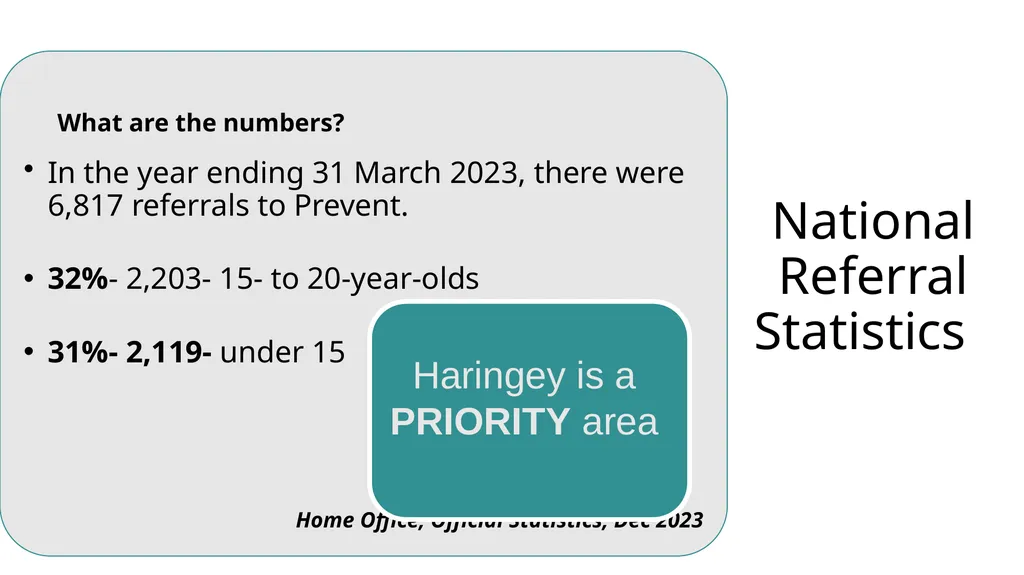
slide16. National Referral Statistics Haringey is a PRIORITY area What are the numbers?<br>
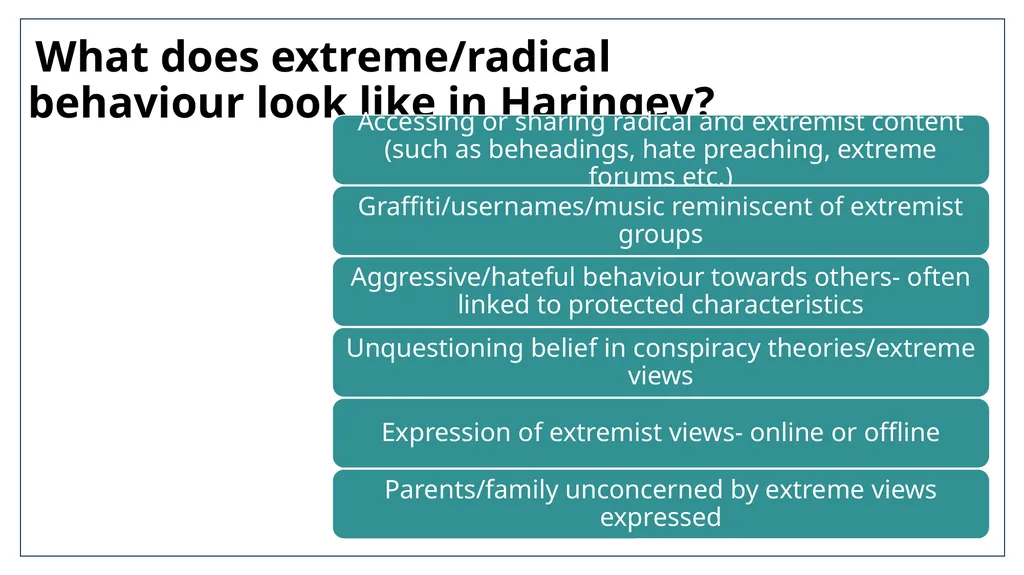
slide17. What does extreme/radical behaviour look like in Haringey?<br>
slide18. What is Prevent? What are the threats? What is my duty? Session Structure<br>
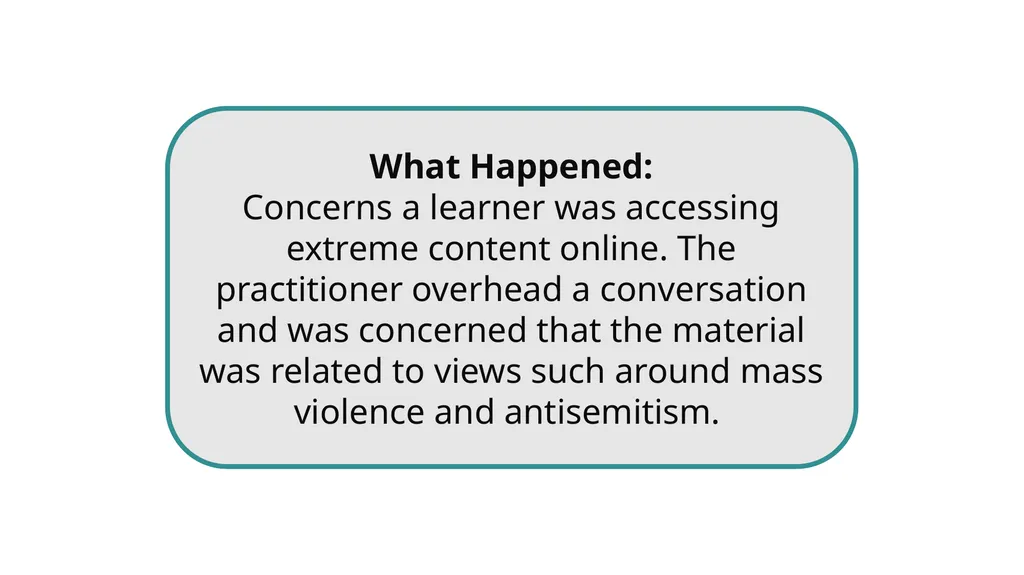
slide19. What Happened:
Concerns a learner was accessing extreme content online. The practitioner overhead a conversation and was concerned that the material was related to views such around mass violence and antisemitism.<br>
slide20. Response:
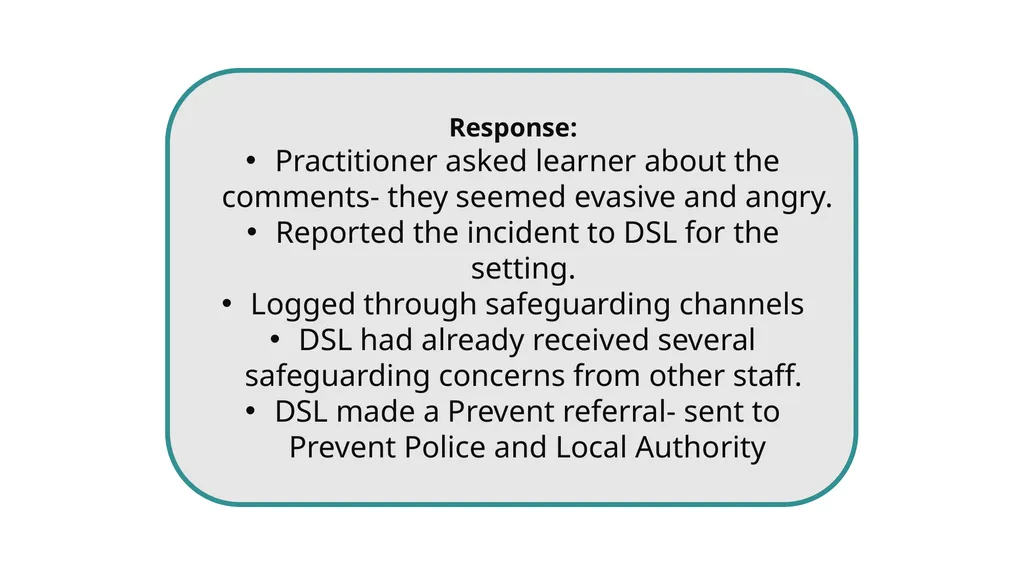
Practitioner asked learner about the comments- they seemed evasive and angry.
Reported the incident to DSL for the setting.
Logged through safeguarding channels
DSL had already received several safeguarding concerns from other staff.
DSL made a Prevent referral- sent to Prevent Police and Local Authority<br>
slide21. Support offered
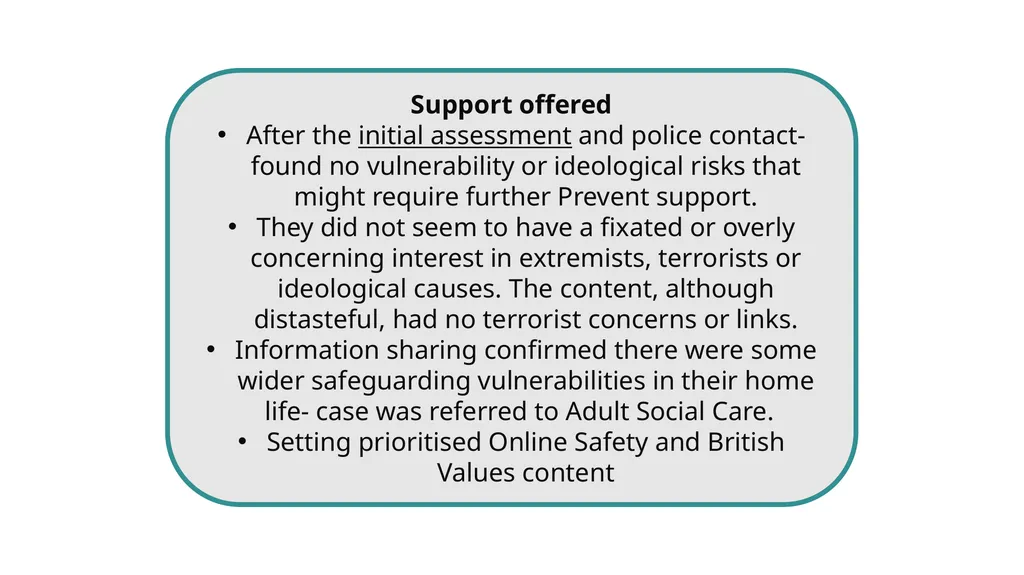
After the initial assessment and police contact- found no vulnerability or ideological risks that might require further Prevent support.
They did not seem to have a fixated or overly concerning interest in extremists, terrorists or ideological causes. The content, although distasteful, had no terrorist concerns or links.
Information sharing confirmed there were some wider safeguarding vulnerabilities in their home life- case was referred to Adult Social Care.
Setting prioritised Online Safety and British Values content<br>
slide22. What happened:
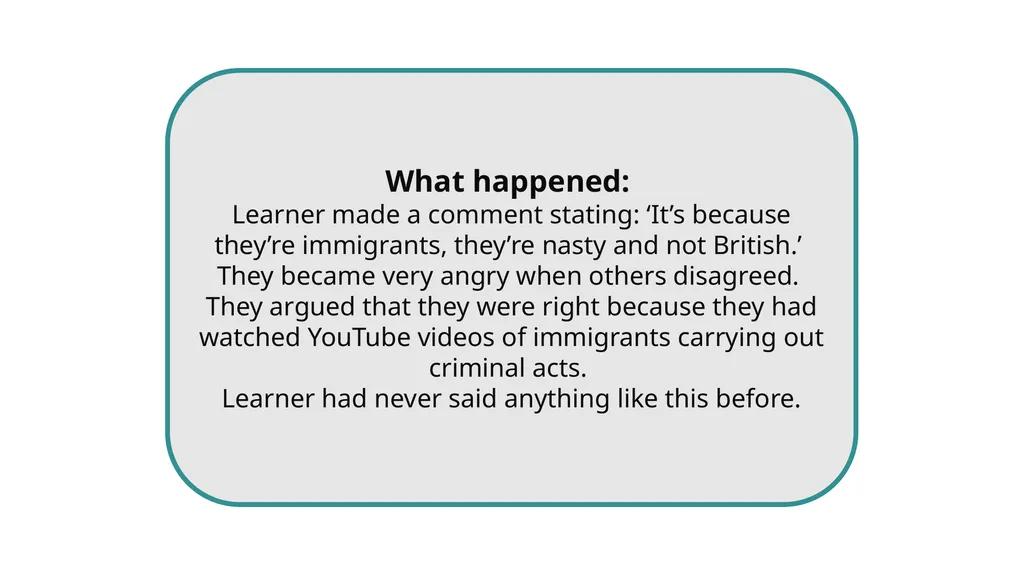
Learner made a comment stating: ‘It’s because they’re immigrants, they’re nasty and not British.’
They became very angry when others disagreed.
They argued that they were right because they had watched YouTube videos of immigrants carrying out criminal acts.
Learner had never said anything like this before.<br>
slide23. Response:
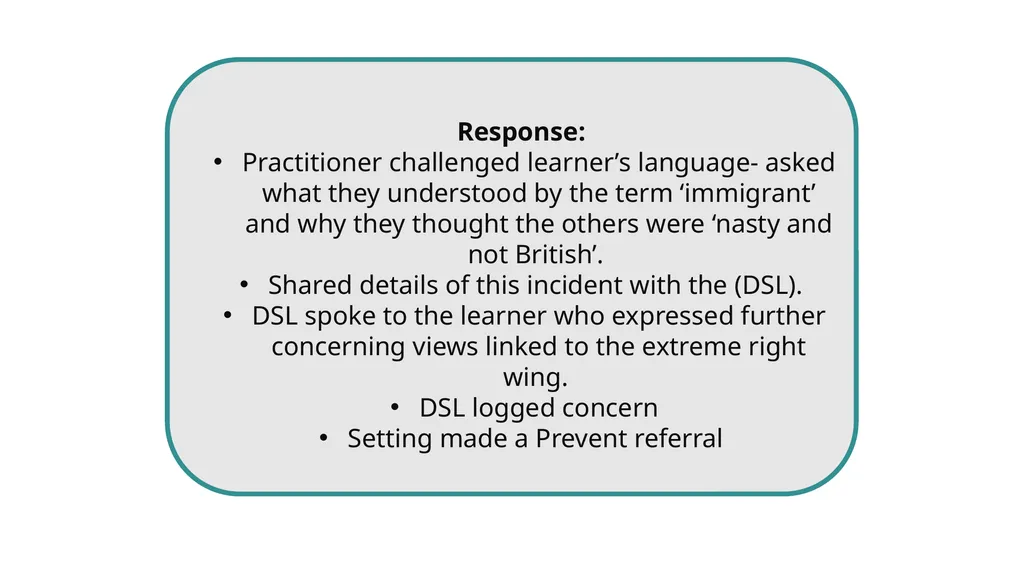
Practitioner challenged learner’s language- asked what they understood by the term ‘immigrant’ and why they thought the others were ‘nasty and not British’.
Shared details of this incident with the (DSL).
DSL spoke to the learner who expressed further concerning views linked to the extreme right wing.
DSL logged concern
Setting made a Prevent referral<br>
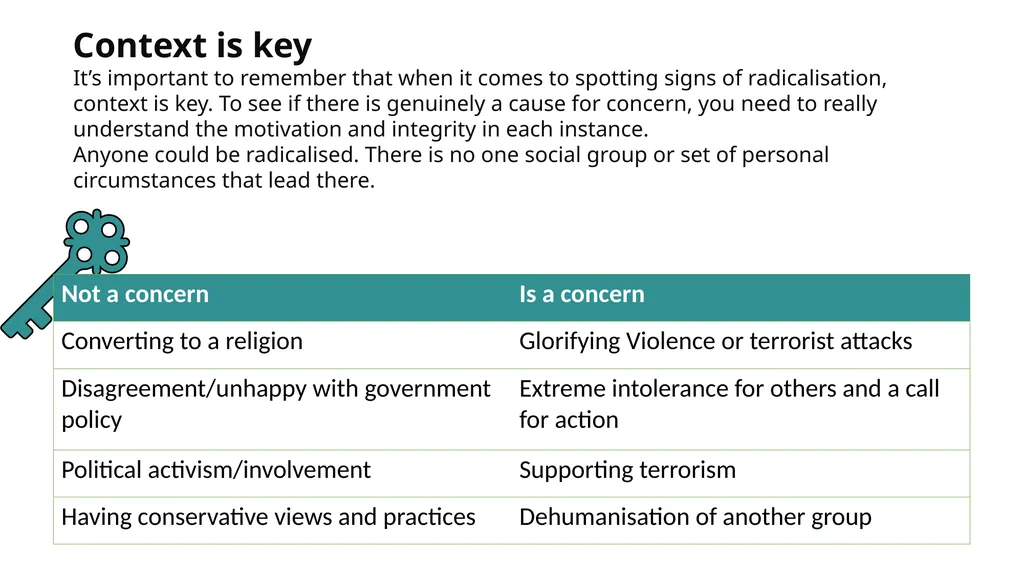
slide24. Context is key
It’s important to remember that when it comes to spotting signs of radicalisation, context is key. To see if there is genuinely a cause for concern, you need to really understand the motivation and integrity in each instance.
Anyone could be radicalised. There is no one social group or set of personal circumstances that lead there.<br>
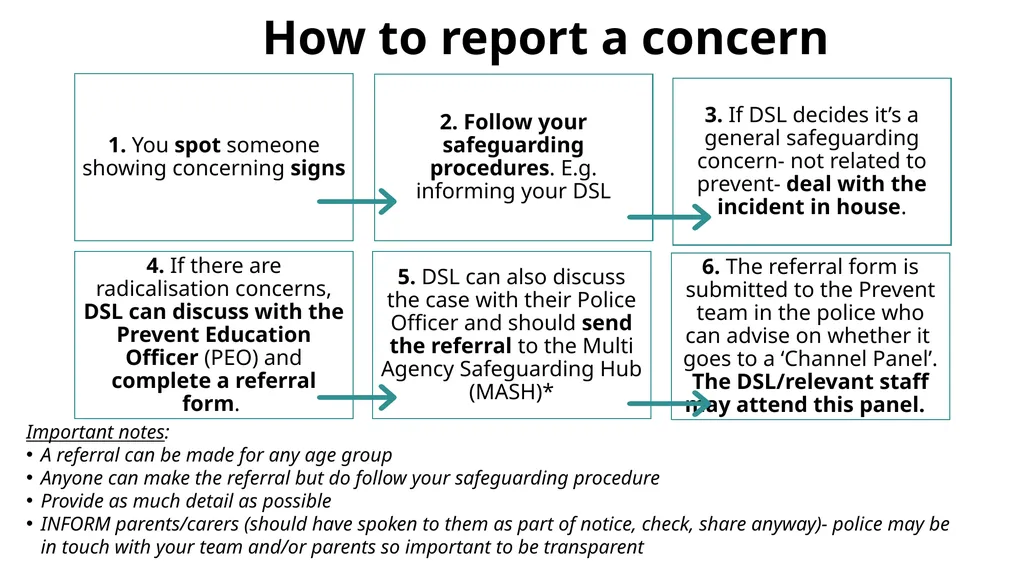
slide25. How to report a concern Important notes:
A referral can be made for any age group
Anyone can make the referral but do follow your safeguarding procedure
Provide as much detail as possible
INFORM parents/carers (should have spoken to them as part of notice, check, share anyway)- police may be in touch with your team and/or parents so important to be transparent<br>
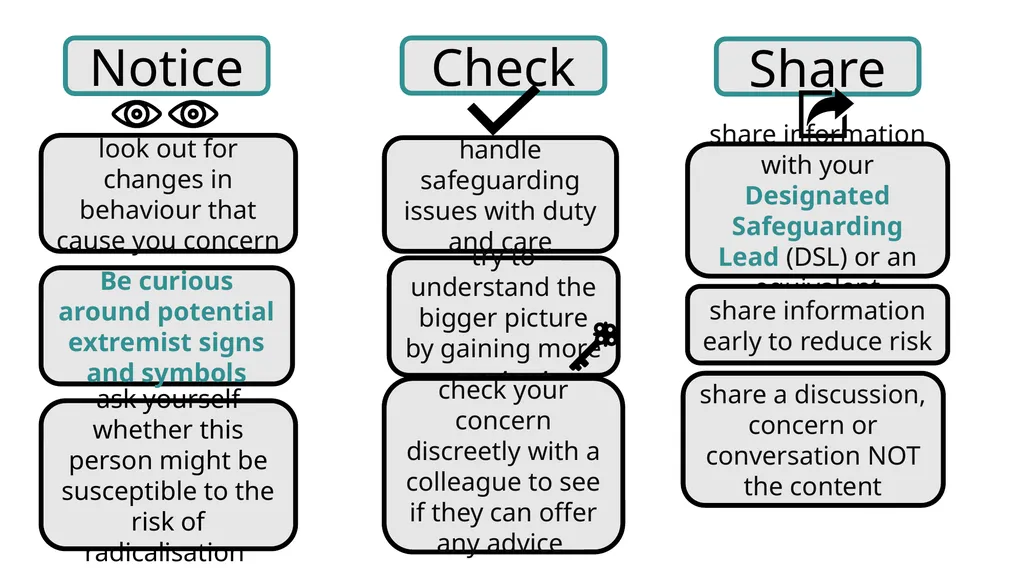
slide26. Notice Check Share look out for changes in behaviour that cause you concern Be curious around potential extremist signs and symbols ask yourself whether this person might be susceptible to the risk of radicalisation handle safeguarding issues with duty and care try to understand the bigger picture by gaining more context check your concern discreetly with a colleague to see if they can offer any advice share information with your Designated Safeguarding Lead (DSL) or an equivalent share information early to reduce risk share a discussion, concern or conversation NOT the content<br>
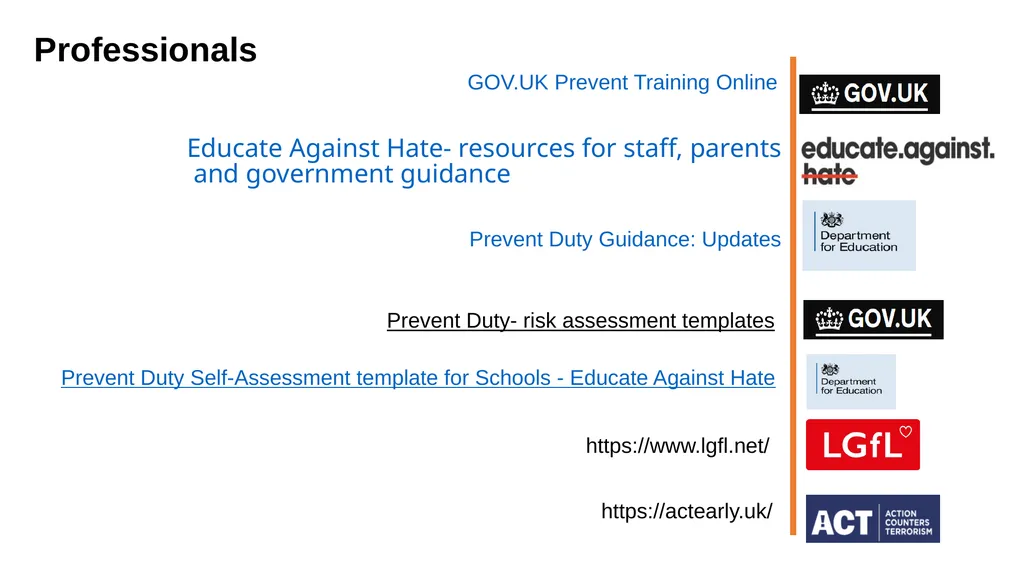
slide27. Educate Against Hate- resources for staff, parents and government guidance GOV.UK Prevent Training Online Professionals Prevent Duty Guidance: Updates Prevent Duty- risk assessment templates Prevent Duty Self-Assessment template for Schools - Educate Against Hate https://www.lgfl.net/ https://actearly.uk/<br>
slide28. https://www.thinkuknow.co.uk/ https://www.nspcc.org.uk/ https://www.childline.org.uk https://www.internetmatters.org/issues/radicalisation/ https://www.saferinternet.org.uk/ http://parentzone.org.uk/ Parents<br>
slide29. THANK YOU FOR YOUR TIME<br>
slide2. What is Prevent? Ideology and risks What is my duty? Session Structure<br>
slide3. What is Prevent? What are the risks/threats? Governor and School duty Session Structure<br>
slide4. What is Prevent? Prevent is part of the UK’s Counter-Terrorism Strategy, preventing people from becoming involved in terrorism or supporting terrorism. The Counter Terrorism & Security Act 2015 places a statutory duty for Specified Authorities including the Local Authority, schools and education establishments to have “due regard to the need to prevent people from being drawn into terrorism””<br>
slide5. Statutory Duty A multi-agency approach- Police, Social Care, NHS, Housing… Supporting those vulnerable to radicalisation Supporting and protecting communities Building resilience against radicalisation and extreme views. Providing alternative narratives to those leaning towards radicalised views. Prevent<br>
slide6. “Safeguarding vulnerable people from radicalisation is no different from safeguarding them from other forms of harm” Home Office, The Prevent Strategy<br>
slide7. Prevent is not about getting people susceptible to radicalisation into trouble, it’s about supporting them. You are safeguarding people. Prevent is not in the criminal space- it will not result criminal record or block any future opportunities for young people or adults e.g. education/work Myth Prevent is about getting people into trouble<br>
slide8. Prevent duty is your responsibility and is part of your role. It is also a multi-agency approach Myth Prevent is not your responsibility<br>
slide9. You do not need to be an expert to understand the Prevent duty and your role in complying with it. The important thing is that you feel comfortable to speak up any time you feel concerned and don’t hold any risk Myth You need to be an expert in different ideologies/laws/risks to understand the Prevent duty<br>
slide10. What is Prevent? What are the threats/risks? What is my duty? Session Structure<br>
slide11. What are the ideologies? (Home Office and CTLP) Islamist Extremism
Right Wing Extremism
Conflicted Ideologies
Incel | Extreme Misogyny | Targeted School/Mass Violence Official: Sensitive<br>
slide12. What are the ideologies? (Home Office and CTLP) GORE Official: Sensitive<br>
slide13. What do these ideologies look like in 2024? Official: Sensitive<br>
slide14. Memes GIFS Live comments and chats Photos & Videos Forums and Message Boards Direct Messaging<br>
slide15. The Kurdistan Worker’s Party (PKK) is a Kurdish far-left militant political organisation Official: Sensitive Community Tensions Reporting Form (monday.com)<br>
slide16. National Referral Statistics Haringey is a PRIORITY area What are the numbers?<br>
slide17. What does extreme/radical behaviour look like in Haringey?<br>
slide18. What is Prevent? What are the threats? What is my duty? Session Structure<br>
slide19. What Happened:
Concerns a learner was accessing extreme content online. The practitioner overhead a conversation and was concerned that the material was related to views such around mass violence and antisemitism.<br>
slide20. Response:
Practitioner asked learner about the comments- they seemed evasive and angry.
Reported the incident to DSL for the setting.
Logged through safeguarding channels
DSL had already received several safeguarding concerns from other staff.
DSL made a Prevent referral- sent to Prevent Police and Local Authority<br>
slide21. Support offered
After the initial assessment and police contact- found no vulnerability or ideological risks that might require further Prevent support.
They did not seem to have a fixated or overly concerning interest in extremists, terrorists or ideological causes. The content, although distasteful, had no terrorist concerns or links.
Information sharing confirmed there were some wider safeguarding vulnerabilities in their home life- case was referred to Adult Social Care.
Setting prioritised Online Safety and British Values content<br>
slide22. What happened:
Learner made a comment stating: ‘It’s because they’re immigrants, they’re nasty and not British.’
They became very angry when others disagreed.
They argued that they were right because they had watched YouTube videos of immigrants carrying out criminal acts.
Learner had never said anything like this before.<br>
slide23. Response:
Practitioner challenged learner’s language- asked what they understood by the term ‘immigrant’ and why they thought the others were ‘nasty and not British’.
Shared details of this incident with the (DSL).
DSL spoke to the learner who expressed further concerning views linked to the extreme right wing.
DSL logged concern
Setting made a Prevent referral<br>
slide24. Context is key
It’s important to remember that when it comes to spotting signs of radicalisation, context is key. To see if there is genuinely a cause for concern, you need to really understand the motivation and integrity in each instance.
Anyone could be radicalised. There is no one social group or set of personal circumstances that lead there.<br>
slide25. How to report a concern Important notes:
A referral can be made for any age group
Anyone can make the referral but do follow your safeguarding procedure
Provide as much detail as possible
INFORM parents/carers (should have spoken to them as part of notice, check, share anyway)- police may be in touch with your team and/or parents so important to be transparent<br>
slide26. Notice Check Share look out for changes in behaviour that cause you concern Be curious around potential extremist signs and symbols ask yourself whether this person might be susceptible to the risk of radicalisation handle safeguarding issues with duty and care try to understand the bigger picture by gaining more context check your concern discreetly with a colleague to see if they can offer any advice share information with your Designated Safeguarding Lead (DSL) or an equivalent share information early to reduce risk share a discussion, concern or conversation NOT the content<br>
slide27. Educate Against Hate- resources for staff, parents and government guidance GOV.UK Prevent Training Online Professionals Prevent Duty Guidance: Updates Prevent Duty- risk assessment templates Prevent Duty Self-Assessment template for Schools - Educate Against Hate https://www.lgfl.net/ https://actearly.uk/<br>
slide28. https://www.thinkuknow.co.uk/ https://www.nspcc.org.uk/ https://www.childline.org.uk https://www.internetmatters.org/issues/radicalisation/ https://www.saferinternet.org.uk/ http://parentzone.org.uk/ Parents<br>
slide29. THANK YOU FOR YOUR TIME<br>