
Prevention Trials: Operational Challenges and
Description: Prevention Trials: Operational Challenges and Opportunities Hooman Kamel, MD Co-Chair, NIH StrokeNet Prevention Working Group StrokeNet experience with prevention trials Five survey questions What do you see as the biggest obstacles to
Related Topics
Download Presentation
"Prevention Trials: Operational Challenges and" is the property of its rightful owner. Permission is granted to download and print the materials on this website for personal, non-commercial use only, and to display it on your personal computer provided you do not modify the materials and that you retain all copyright notices contained in the materials. By downloading content from our website, you accept the terms of this agreement.
Presentation Transcript
slide1. Prevention Trials:
Operational Challenges and Opportunities Hooman Kamel, MD
Co-Chair, NIH StrokeNet Prevention Working Group<br>
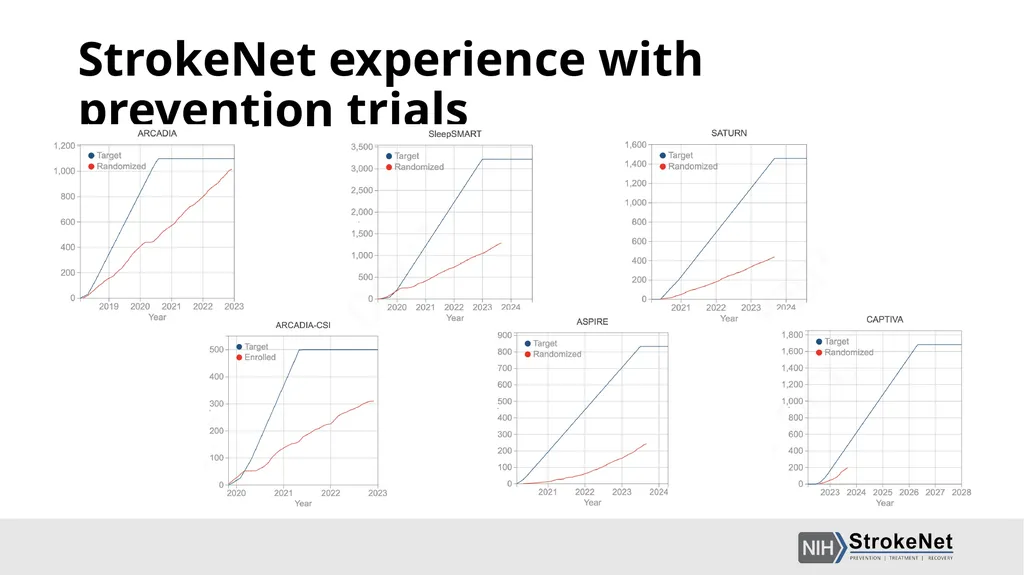
slide2. StrokeNet experience with prevention trials<br>
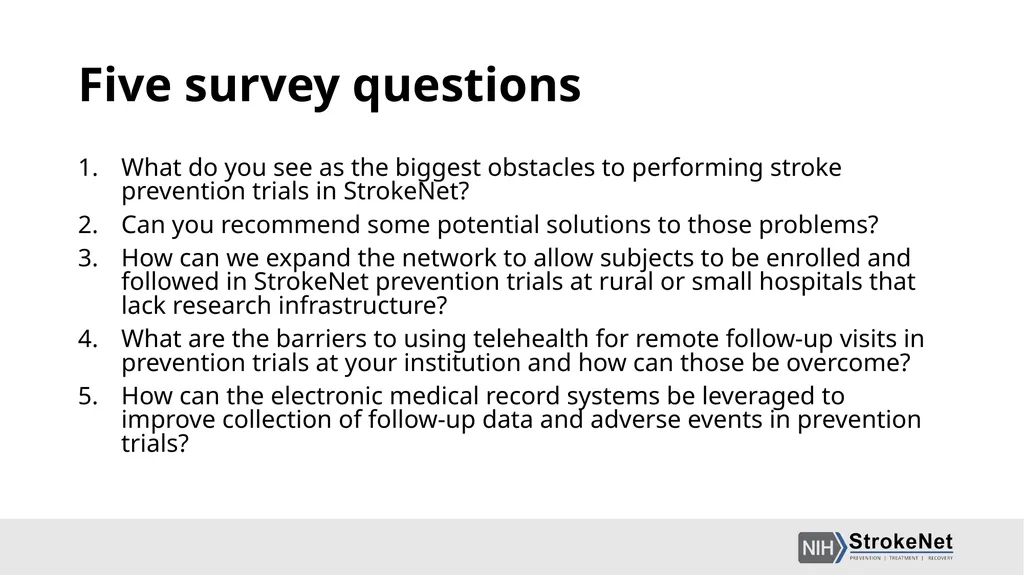
slide3. Five survey questions What do you see as the biggest obstacles to performing stroke prevention trials in StrokeNet?
Can you recommend some potential solutions to those problems?
How can we expand the network to allow subjects to be enrolled and followed in StrokeNet prevention trials at rural or small hospitals that lack research infrastructure?
What are the barriers to using telehealth for remote follow-up visits in prevention trials at your institution and how can those be overcome?
How can the electronic medical record systems be leveraged to improve collection of follow-up data and adverse events in prevention trials?<br>
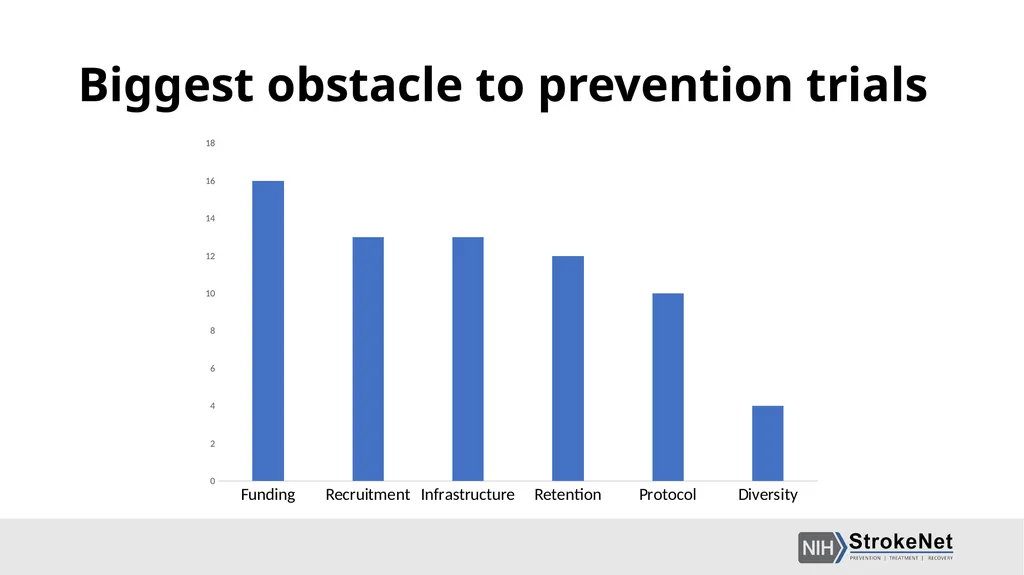
slide4. Biggest obstacle to prevention trials<br>
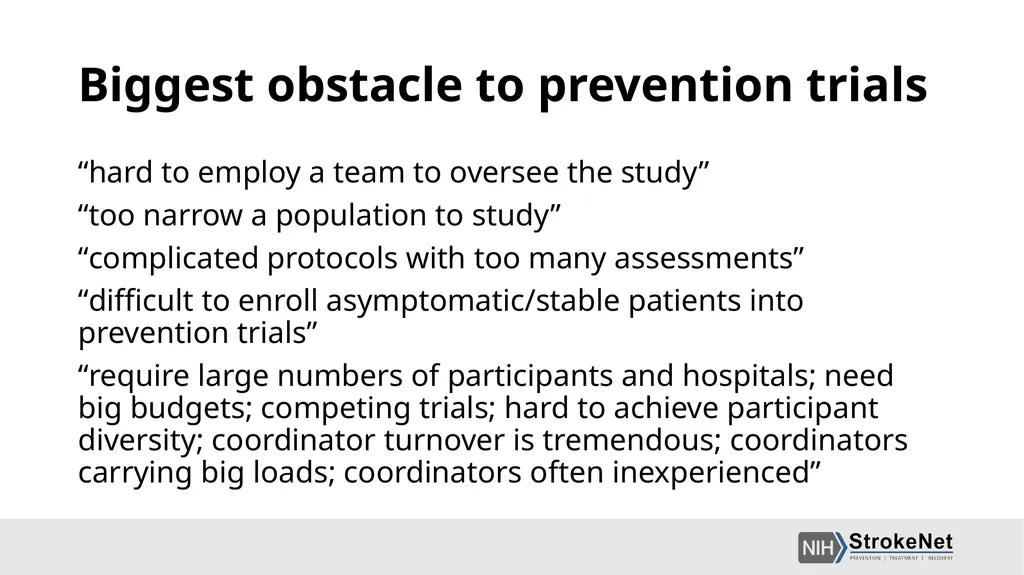
slide5. Biggest obstacle to prevention trials “hard to employ a team to oversee the study”
“too narrow a population to study”
“complicated protocols with too many assessments”
“difficult to enroll asymptomatic/stable patients into prevention trials”
“require large numbers of participants and hospitals; need big budgets; competing trials; hard to achieve participant diversity; coordinator turnover is tremendous; coordinators carrying big loads; coordinators often inexperienced”<br>
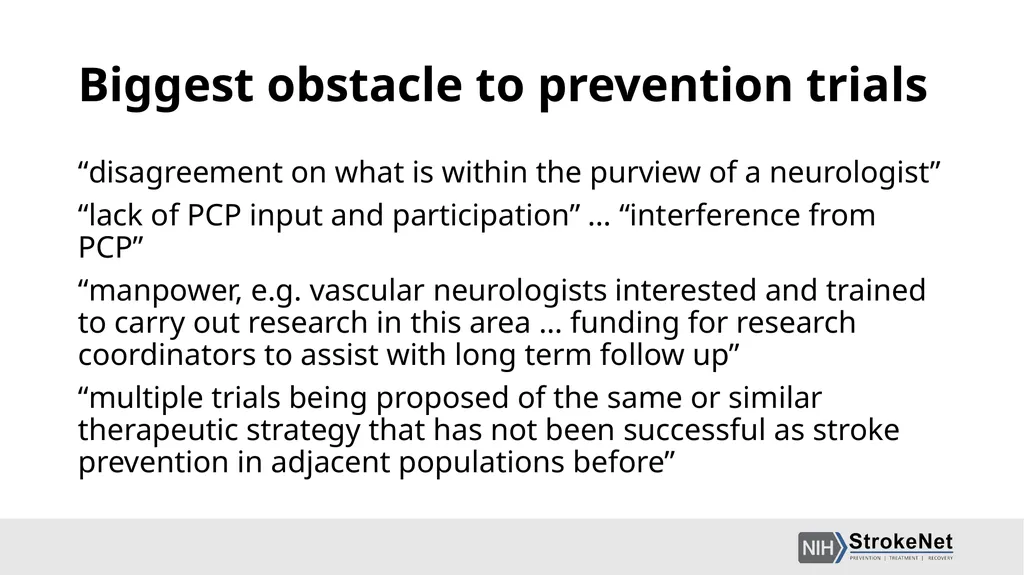
slide6. Biggest obstacle to prevention trials “disagreement on what is within the purview of a neurologist”
“lack of PCP input and participation” … “interference from PCP”
“manpower, e.g. vascular neurologists interested and trained to carry out research in this area … funding for research coordinators to assist with long term follow up”
“multiple trials being proposed of the same or similar therapeutic strategy that has not been successful as stroke prevention in adjacent populations before”<br>
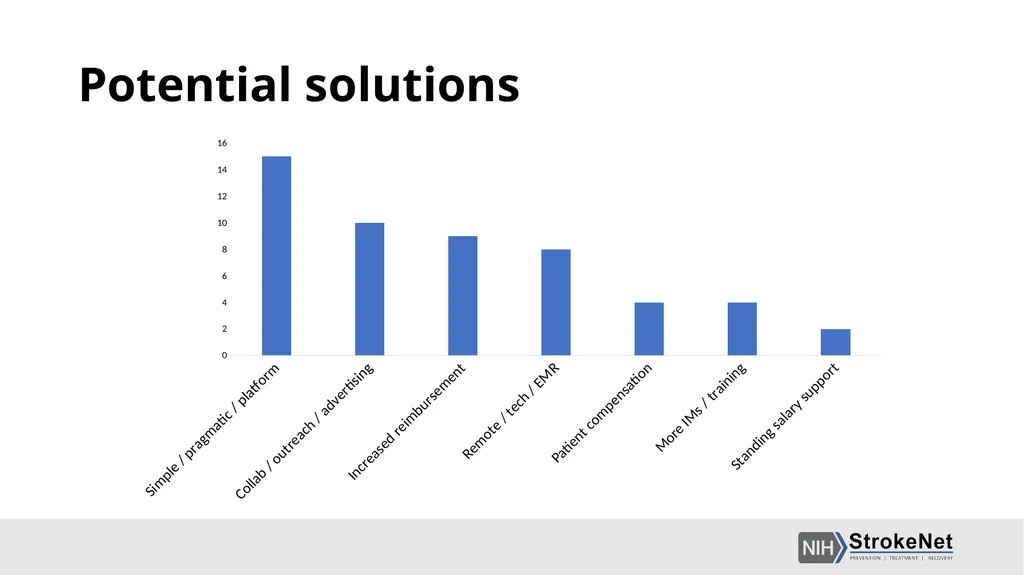
slide7. Potential solutions<br>
slide8. Potential solutions “each RCC should have a van that can go to remote area to collect data … this van should be part of institution space that IRB can approve it”
“devise studies that follow standard of care work up as much as possible”
“need review panels that will approve pragmatic trials”
“internalize NIH review of StrokeNet trials to selected leaders within StrokeNet so that the network decides what trials to perform, how they should be designed, and for how much”<br>
slide9. Potential solutions “engagement with public health and implementation science colleagues doing similar research in related fields”
“more diversity in what constitutes a trial”
“perhaps collaborative efforts with primary care organizations or societies may help”
“StrokeNet could help evolve the job description of stroke neurology to focus on the post-stroke period”
“distribution of resources needs to be re-evaluated”
“go global”<br>
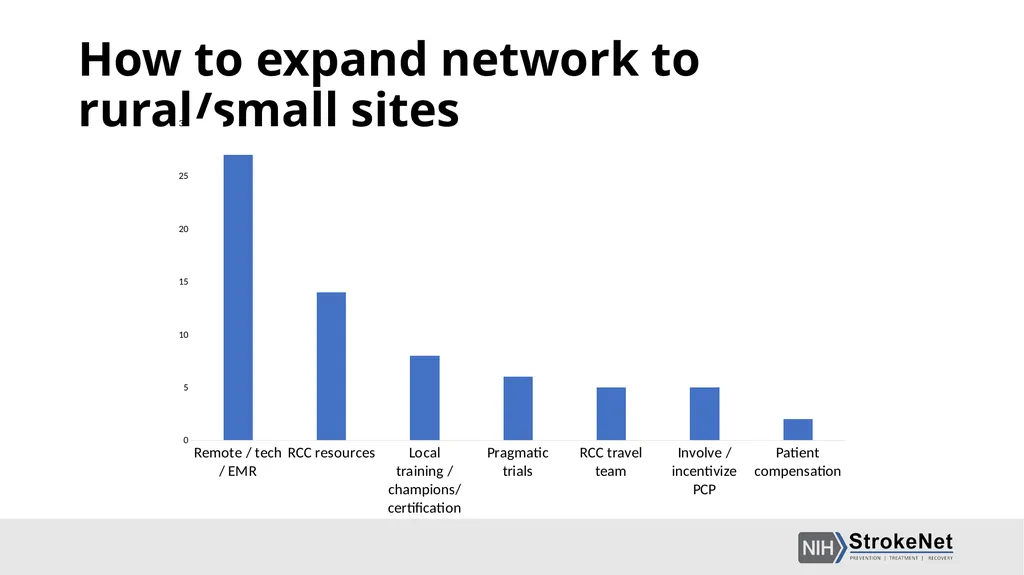
slide10. How to expand network to rural/small sites<br>
slide11. How to expand network to rural/small sites “more financial support to provide human subject research training … Stroke-Net research certification for the clinical personnel on those sites … close RCC supervision of site performance”
“infrastructure for centralized consenting”
“mobile lab companies/mobile research groups”<br>
slide12. How to expand network to rural/small sites “Stroke Mobile which houses a research team to come and visit perhaps once a month”
“traveling research coordinator between sites”
“24x7 research team that can talk to patient remotely and enrolling the patients”
“create a pool of travel coordinators at each RCC”<br>
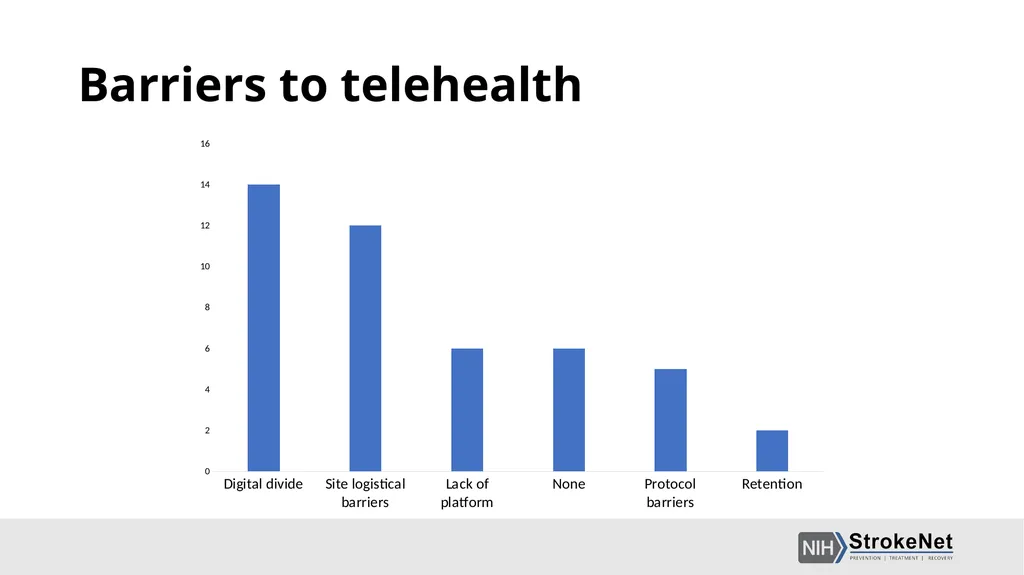
slide13. Barriers to telehealth<br>
slide14. Barriers to telehealth “CRCs are unable to schedule and notate visits within the EMR. Therefore, our CRCs do not have access to a HIPAA compliant platform for completing these types of visits.”
“trials often pay less for remove visits compared to in-person even though it's the same amount of work for our coordinators, sometimes more”
“language interpreter services”
“Most telemedicine networks heavily weighted towards first contact or early 24 hours. Post-stroke care and prevention would require an additional layer of providers separate from the clinical teams. “<br>
slide15. Barriers to telehealth “Multistate licensing.”
“Trials that exclude remote follow-up for unclear reasons … should not be allowed”
“Not all … patients have access to methods for doing telehealth visits … phone calls [make] it difficult to perform all follow up assessments such as the NIHSS”
“in-person requirements by some studies (pill counts, BP recording)"<br>
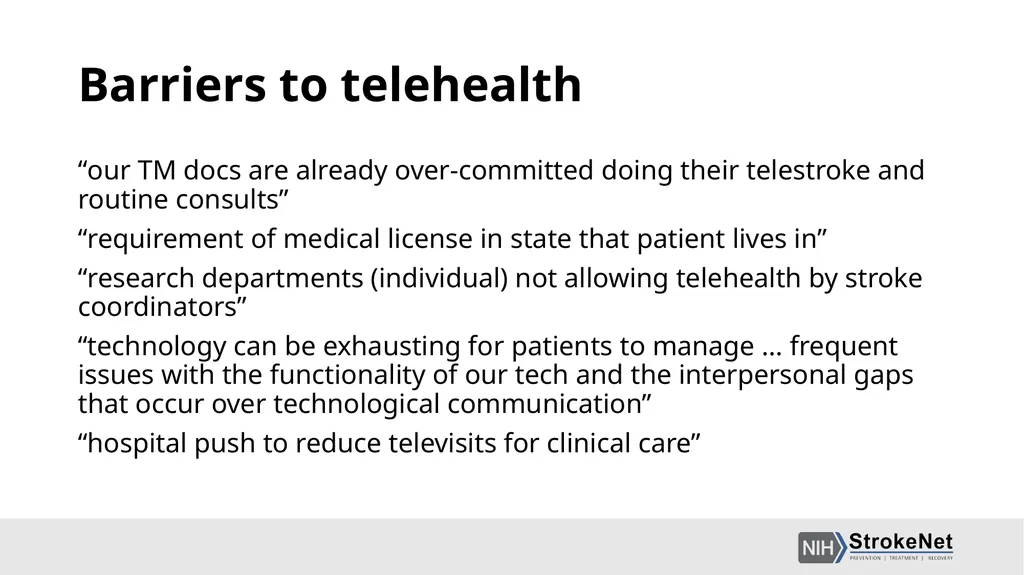
slide16. Barriers to telehealth “our TM docs are already over-committed doing their telestroke and routine consults”
“requirement of medical license in state that patient lives in”
“research departments (individual) not allowing telehealth by stroke coordinators”
“technology can be exhausting for patients to manage … frequent issues with the functionality of our tech and the interpersonal gaps that occur over technological communication”
“hospital push to reduce televisits for clinical care”<br>
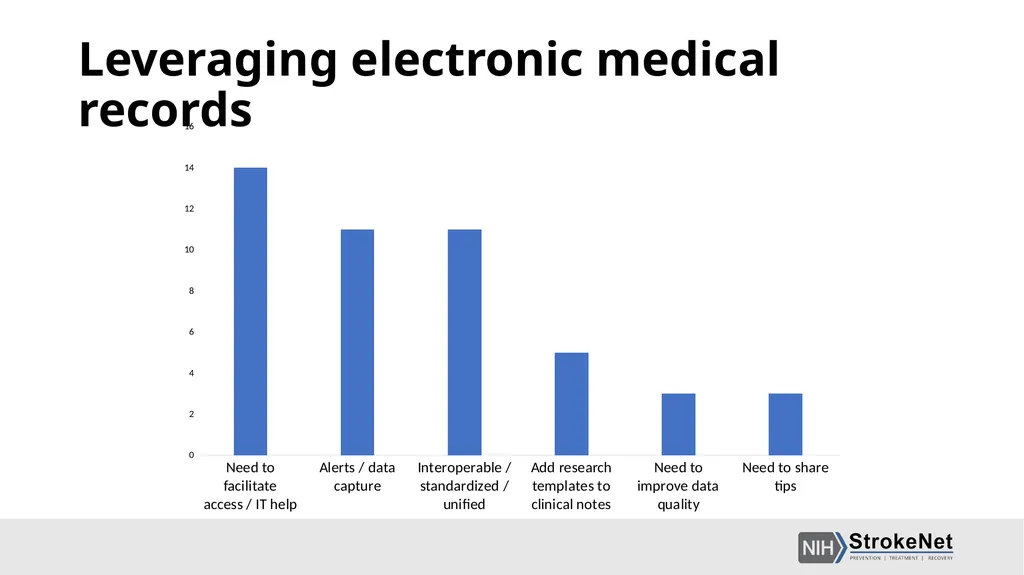
slide17. Leveraging electronic medical records<br>
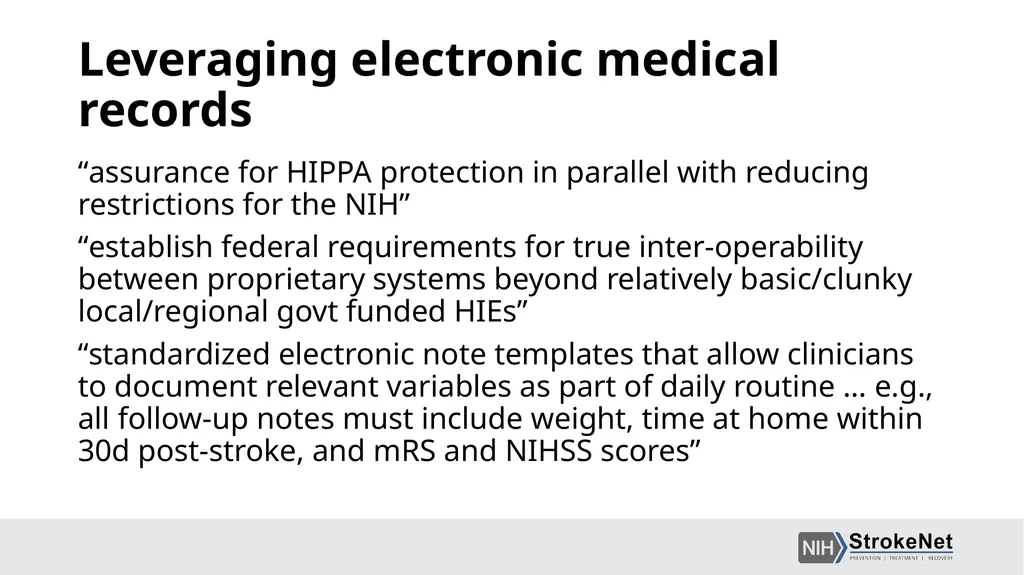
slide18. Leveraging electronic medical records “assurance for HIPPA protection in parallel with reducing restrictions for the NIH”
“establish federal requirements for true inter-operability between proprietary systems beyond relatively basic/clunky local/regional govt funded HIEs”
“standardized electronic note templates that allow clinicians to document relevant variables as part of daily routine … e.g., all follow-up notes must include weight, time at home within 30d post-stroke, and mRS and NIHSS scores”<br>
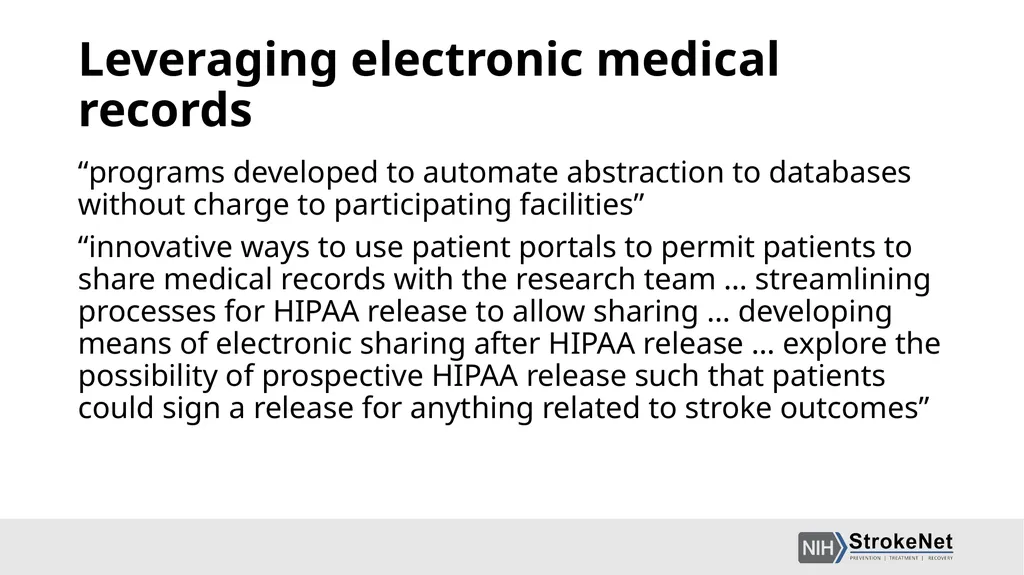
slide19. Leveraging electronic medical records “programs developed to automate abstraction to databases without charge to participating facilities”
“innovative ways to use patient portals to permit patients to share medical records with the research team … streamlining processes for HIPAA release to allow sharing … developing means of electronic sharing after HIPAA release … explore the possibility of prospective HIPAA release such that patients could sign a release for anything related to stroke outcomes”<br>
slide20. Leveraging electronic medical records “guide hospitals how to set up with programs like EPIC … they do not have the manpower to figure out and set up but if available probably would run report … would be the same everywhere”
“I worry about the accuracy and quality of the data collected”<br>
Co-Chair, NIH StrokeNet Prevention Working Group<br>
slide2. StrokeNet experience with prevention trials<br>
slide3. Five survey questions What do you see as the biggest obstacles to performing stroke prevention trials in StrokeNet?
Can you recommend some potential solutions to those problems?
How can we expand the network to allow subjects to be enrolled and followed in StrokeNet prevention trials at rural or small hospitals that lack research infrastructure?
What are the barriers to using telehealth for remote follow-up visits in prevention trials at your institution and how can those be overcome?
How can the electronic medical record systems be leveraged to improve collection of follow-up data and adverse events in prevention trials?<br>
slide4. Biggest obstacle to prevention trials<br>
slide5. Biggest obstacle to prevention trials “hard to employ a team to oversee the study”
“too narrow a population to study”
“complicated protocols with too many assessments”
“difficult to enroll asymptomatic/stable patients into prevention trials”
“require large numbers of participants and hospitals; need big budgets; competing trials; hard to achieve participant diversity; coordinator turnover is tremendous; coordinators carrying big loads; coordinators often inexperienced”<br>
slide6. Biggest obstacle to prevention trials “disagreement on what is within the purview of a neurologist”
“lack of PCP input and participation” … “interference from PCP”
“manpower, e.g. vascular neurologists interested and trained to carry out research in this area … funding for research coordinators to assist with long term follow up”
“multiple trials being proposed of the same or similar therapeutic strategy that has not been successful as stroke prevention in adjacent populations before”<br>
slide7. Potential solutions<br>
slide8. Potential solutions “each RCC should have a van that can go to remote area to collect data … this van should be part of institution space that IRB can approve it”
“devise studies that follow standard of care work up as much as possible”
“need review panels that will approve pragmatic trials”
“internalize NIH review of StrokeNet trials to selected leaders within StrokeNet so that the network decides what trials to perform, how they should be designed, and for how much”<br>
slide9. Potential solutions “engagement with public health and implementation science colleagues doing similar research in related fields”
“more diversity in what constitutes a trial”
“perhaps collaborative efforts with primary care organizations or societies may help”
“StrokeNet could help evolve the job description of stroke neurology to focus on the post-stroke period”
“distribution of resources needs to be re-evaluated”
“go global”<br>
slide10. How to expand network to rural/small sites<br>
slide11. How to expand network to rural/small sites “more financial support to provide human subject research training … Stroke-Net research certification for the clinical personnel on those sites … close RCC supervision of site performance”
“infrastructure for centralized consenting”
“mobile lab companies/mobile research groups”<br>
slide12. How to expand network to rural/small sites “Stroke Mobile which houses a research team to come and visit perhaps once a month”
“traveling research coordinator between sites”
“24x7 research team that can talk to patient remotely and enrolling the patients”
“create a pool of travel coordinators at each RCC”<br>
slide13. Barriers to telehealth<br>
slide14. Barriers to telehealth “CRCs are unable to schedule and notate visits within the EMR. Therefore, our CRCs do not have access to a HIPAA compliant platform for completing these types of visits.”
“trials often pay less for remove visits compared to in-person even though it's the same amount of work for our coordinators, sometimes more”
“language interpreter services”
“Most telemedicine networks heavily weighted towards first contact or early 24 hours. Post-stroke care and prevention would require an additional layer of providers separate from the clinical teams. “<br>
slide15. Barriers to telehealth “Multistate licensing.”
“Trials that exclude remote follow-up for unclear reasons … should not be allowed”
“Not all … patients have access to methods for doing telehealth visits … phone calls [make] it difficult to perform all follow up assessments such as the NIHSS”
“in-person requirements by some studies (pill counts, BP recording)"<br>
slide16. Barriers to telehealth “our TM docs are already over-committed doing their telestroke and routine consults”
“requirement of medical license in state that patient lives in”
“research departments (individual) not allowing telehealth by stroke coordinators”
“technology can be exhausting for patients to manage … frequent issues with the functionality of our tech and the interpersonal gaps that occur over technological communication”
“hospital push to reduce televisits for clinical care”<br>
slide17. Leveraging electronic medical records<br>
slide18. Leveraging electronic medical records “assurance for HIPPA protection in parallel with reducing restrictions for the NIH”
“establish federal requirements for true inter-operability between proprietary systems beyond relatively basic/clunky local/regional govt funded HIEs”
“standardized electronic note templates that allow clinicians to document relevant variables as part of daily routine … e.g., all follow-up notes must include weight, time at home within 30d post-stroke, and mRS and NIHSS scores”<br>
slide19. Leveraging electronic medical records “programs developed to automate abstraction to databases without charge to participating facilities”
“innovative ways to use patient portals to permit patients to share medical records with the research team … streamlining processes for HIPAA release to allow sharing … developing means of electronic sharing after HIPAA release … explore the possibility of prospective HIPAA release such that patients could sign a release for anything related to stroke outcomes”<br>
slide20. Leveraging electronic medical records “guide hospitals how to set up with programs like EPIC … they do not have the manpower to figure out and set up but if available probably would run report … would be the same everywhere”
“I worry about the accuracy and quality of the data collected”<br>