Principles of Blockchains Course: 598PV, Spring

Published  . 0 views
↓ Download
Principles of Blockchains Course: 598PV, Spring
1 / 1
Principles of Blockchains Course: 598PV, Spring - slide 1 of 25 Principles of Blockchains Course: 598PV, Spring - slide 2 of 25 Principles of Blockchains Course: 598PV, Spring - slide 3 of 25 Principles of Blockchains Course: 598PV, Spring - slide 4 of 25 Principles of Blockchains Course: 598PV, Spring - slide 5 of 25 Principles of Blockchains Course: 598PV, Spring - slide 6 of 25 Principles of Blockchains Course: 598PV, Spring - slide 7 of 25 Principles of Blockchains Course: 598PV, Spring - slide 8 of 25 Principles of Blockchains Course: 598PV, Spring - slide 9 of 25 Principles of Blockchains Course: 598PV, Spring - slide 10 of 25 Principles of Blockchains Course: 598PV, Spring - slide 11 of 25 Principles of Blockchains Course: 598PV, Spring - slide 12 of 25 Principles of Blockchains Course: 598PV, Spring - slide 13 of 25 Principles of Blockchains Course: 598PV, Spring - slide 14 of 25 Principles of Blockchains Course: 598PV, Spring - slide 15 of 25 Principles of Blockchains Course: 598PV, Spring - slide 16 of 25 Principles of Blockchains Course: 598PV, Spring - slide 17 of 25 Principles of Blockchains Course: 598PV, Spring - slide 18 of 25 Principles of Blockchains Course: 598PV, Spring - slide 19 of 25 Principles of Blockchains Course: 598PV, Spring - slide 20 of 25 Principles of Blockchains Course: 598PV, Spring - slide 21 of 25 Principles of Blockchains Course: 598PV, Spring - slide 22 of 25 Principles of Blockchains Course: 598PV, Spring - slide 23 of 25 Principles of Blockchains Course: 598PV, Spring - slide 24 of 25 Principles of Blockchains Course: 598PV, Spring - slide 25 of 25
Description: Principles of Blockchains Course: 598PV, Spring 2020. Instructor: Pramod Viswanath University of Illinois at Urbana-Champaign What are Blockchains? Blockchains are decentralized digital trust platforms Evolution of Trust Human success is

Related Topics

Download Presentation

"Principles of Blockchains Course: 598PV, Spring" is the property of its rightful owner. Permission is granted to download and print the materials on this website for personal, non-commercial use only, and to display it on your personal computer provided you do not modify the materials and that you retain all copyright notices contained in the materials. By downloading content from our website, you accept the terms of this agreement.

Presentation Transcript

slide1. Principles of Blockchains Course: 598PV, Spring 2020.

Instructor: Pramod Viswanath

University of Illinois at Urbana-Champaign<br>
slide2. What are Blockchains? Blockchains are decentralized digital trust platforms<br>
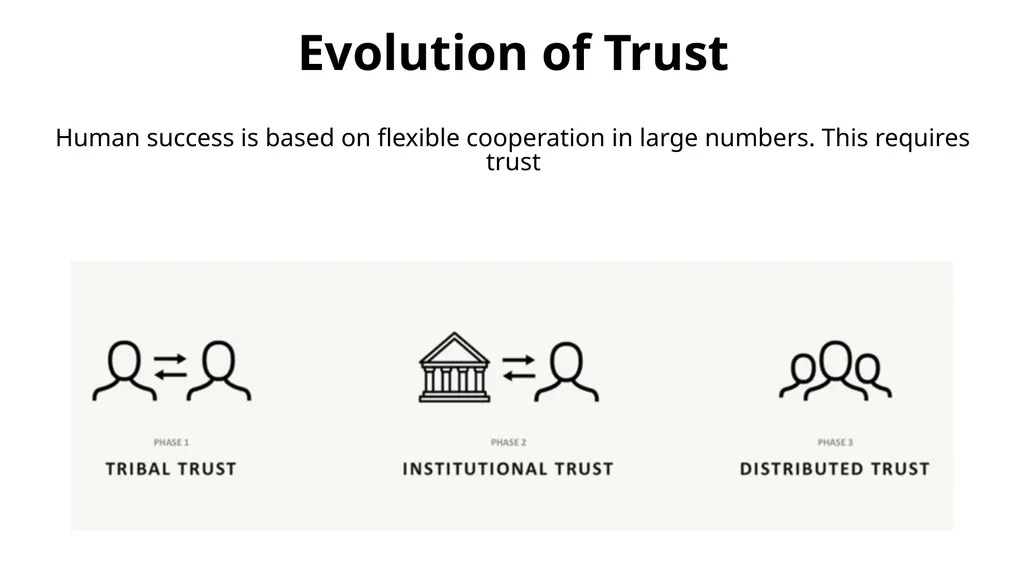
slide3. Evolution of Trust Human success is based on flexible cooperation in large numbers. This requires trust<br>
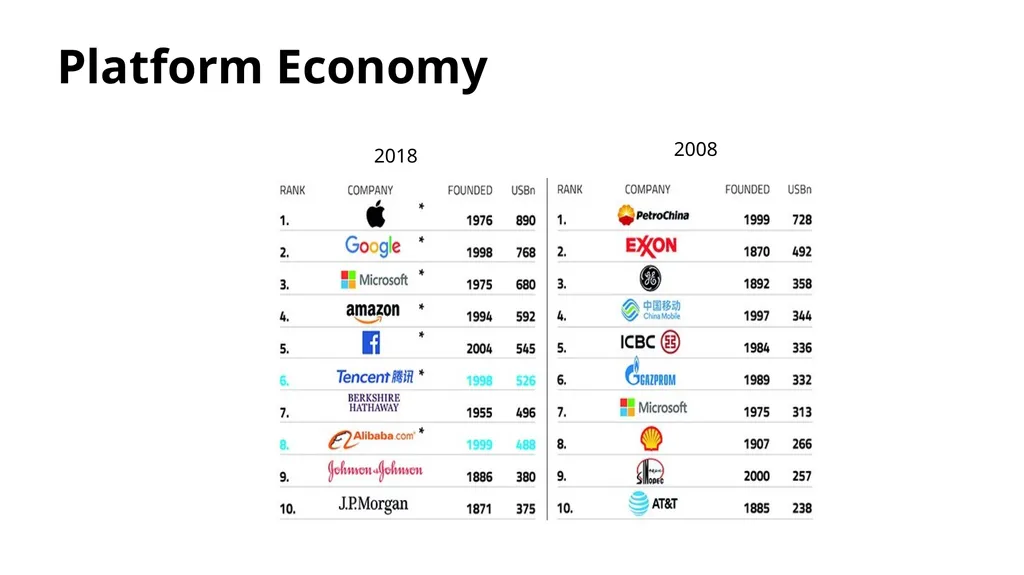
slide4. Platform Economy<br>
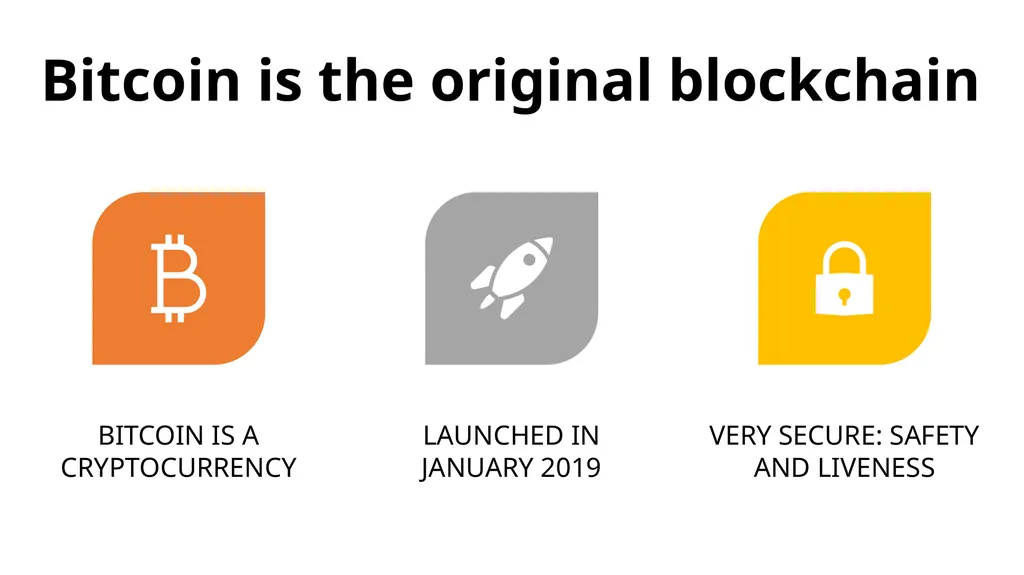
slide5. Bitcoin is the original blockchain<br>
slide6. Bitcoin Cryptocurrency
medium of exchange and store of value

Born during the 2008 Financial Crisis

Anonymous inventor
pseudonym: Satoshi Nakamoto<br>
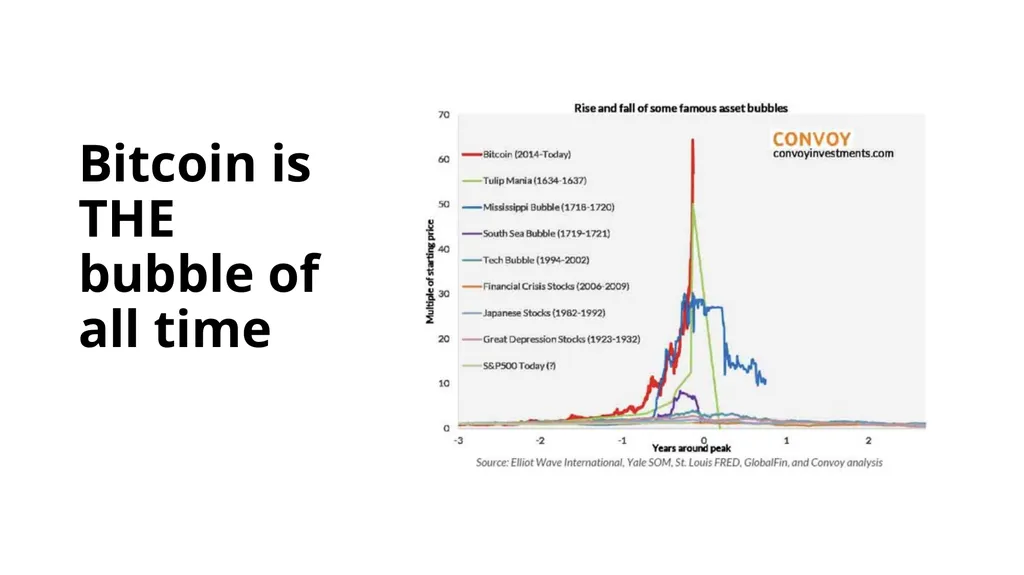
slide7. Bitcoin is THE bubble of all time<br>
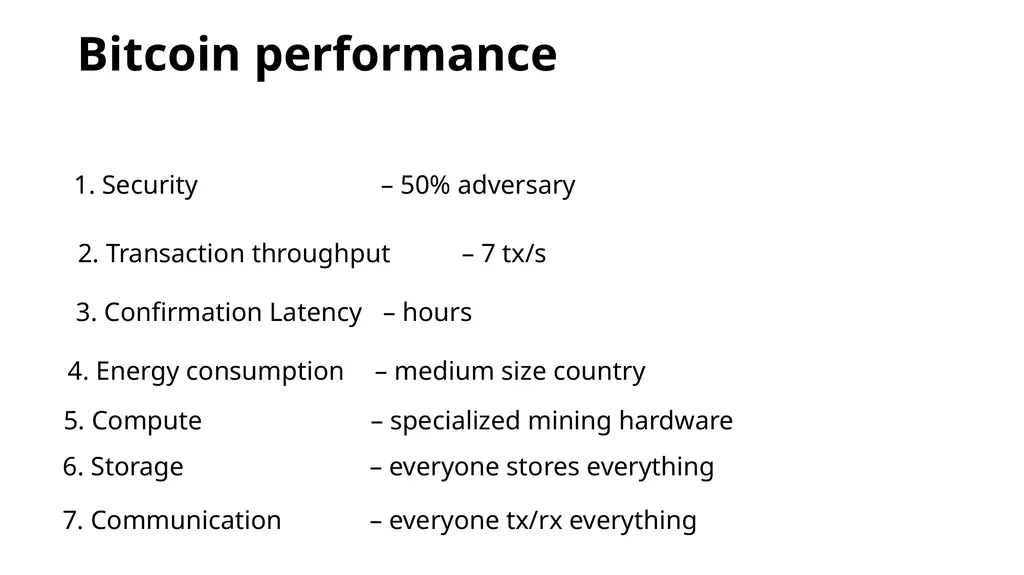
slide8. 1. Security – 50% adversary 2. Transaction throughput – 7 tx/s 3. Confirmation Latency – hours Bitcoin performance 4. Energy consumption – medium size country 5. Compute – specialized mining hardware 6. Storage – everyone stores everything 7. Communication – everyone tx/rx everything<br>
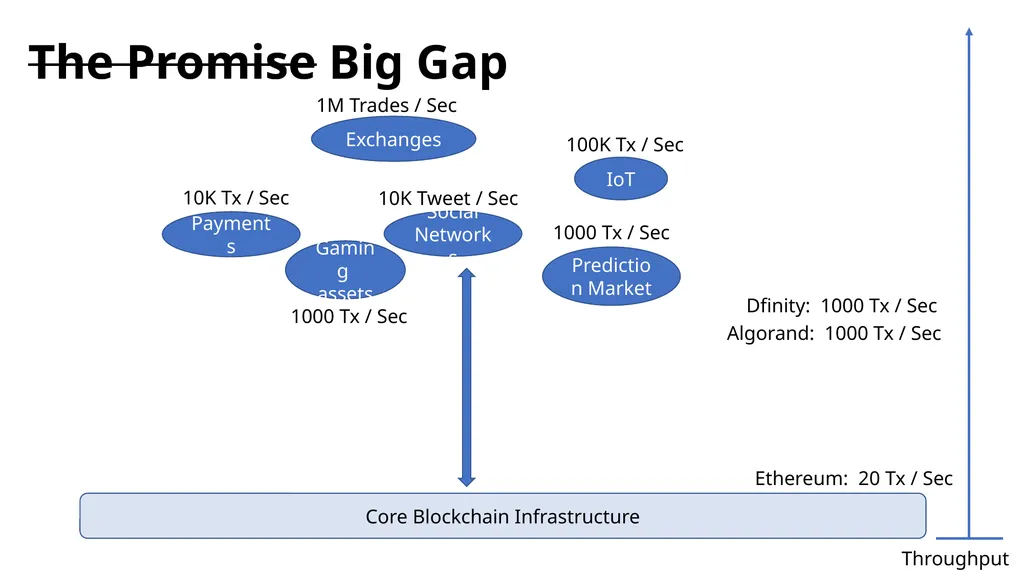
slide9. The Promise Core Blockchain Infrastructure Payments Exchanges Social Networks Prediction Market Gaming
assets IoT 10K Tx / Sec 1M Trades / Sec 10K Tweet / Sec 1000 Tx / Sec 1000 Tx / Sec 100K Tx / Sec Ethereum: 20 Tx / Sec Throughput Dfinity: 1000 Tx / Sec Algorand: 1000 Tx / Sec The Promise Big Gap<br>
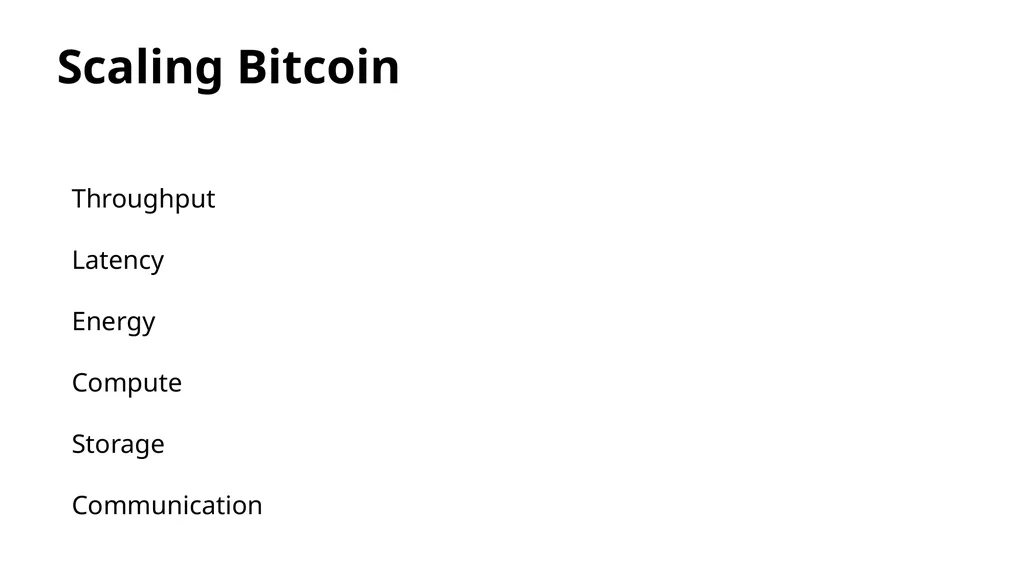
slide10. Scaling Bitcoin Throughput

Latency

Energy

Compute

Storage

Communication<br>
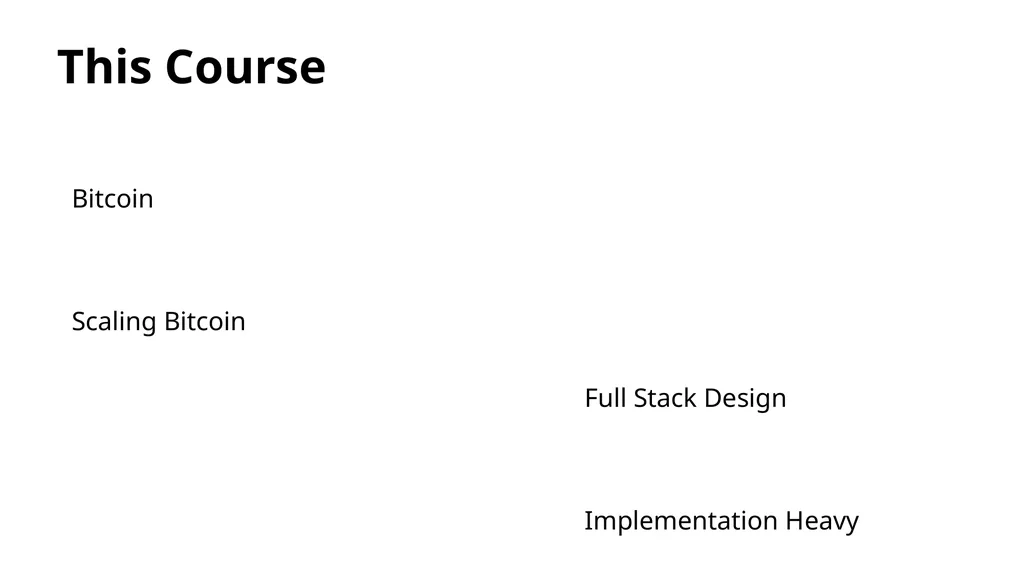
slide11. This Course Bitcoin

Scaling Bitcoin Full Stack Design

Implementation Heavy<br>
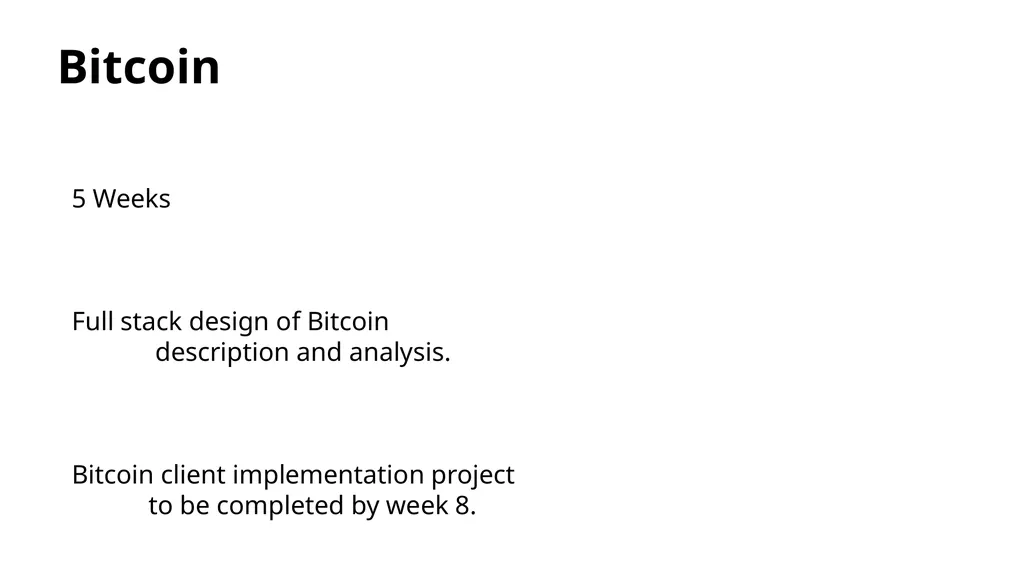
slide12. Bitcoin 5 Weeks

Full stack design of Bitcoin
description and analysis.

Bitcoin client implementation project
to be completed by week 8.<br>
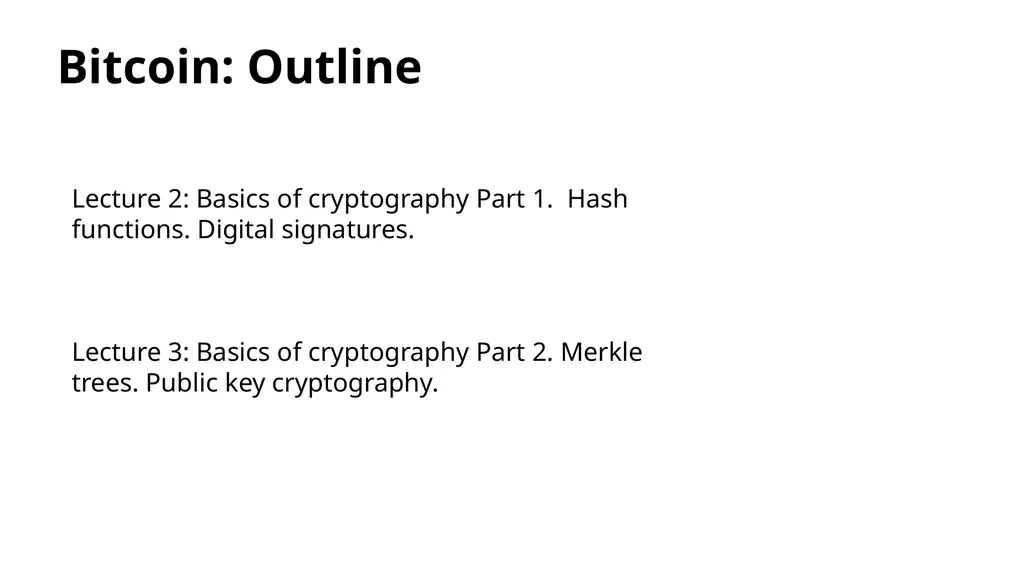
slide13. Bitcoin: Outline Lecture 2: Basics of cryptography Part 1. Hash functions. Digital signatures.

Lecture 3: Basics of cryptography Part 2. Merkle trees. Public key cryptography.<br>
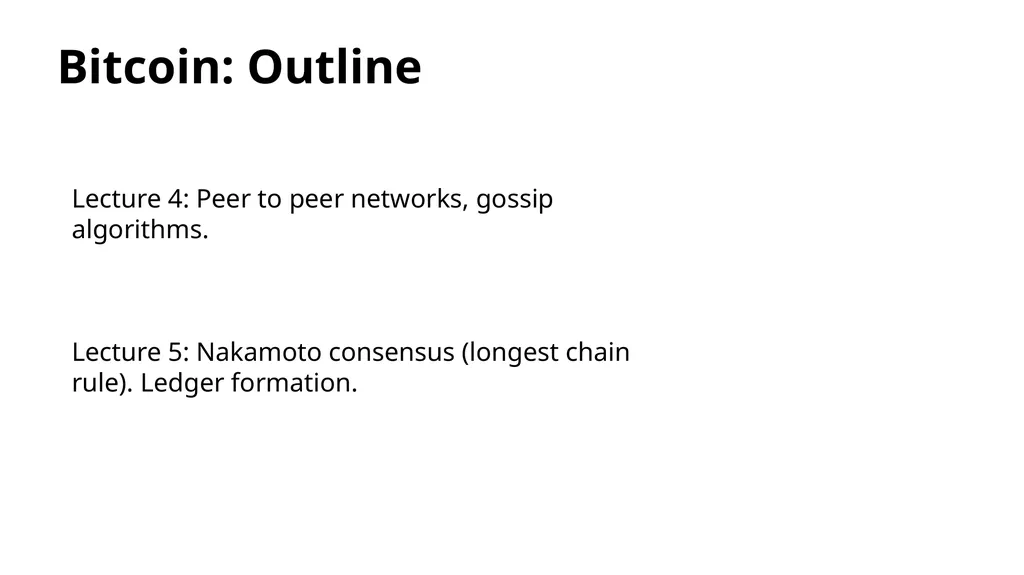
slide14. Bitcoin: Outline Lecture 4: Peer to peer networks, gossip algorithms.

Lecture 5: Nakamoto consensus (longest chain rule). Ledger formation.<br>
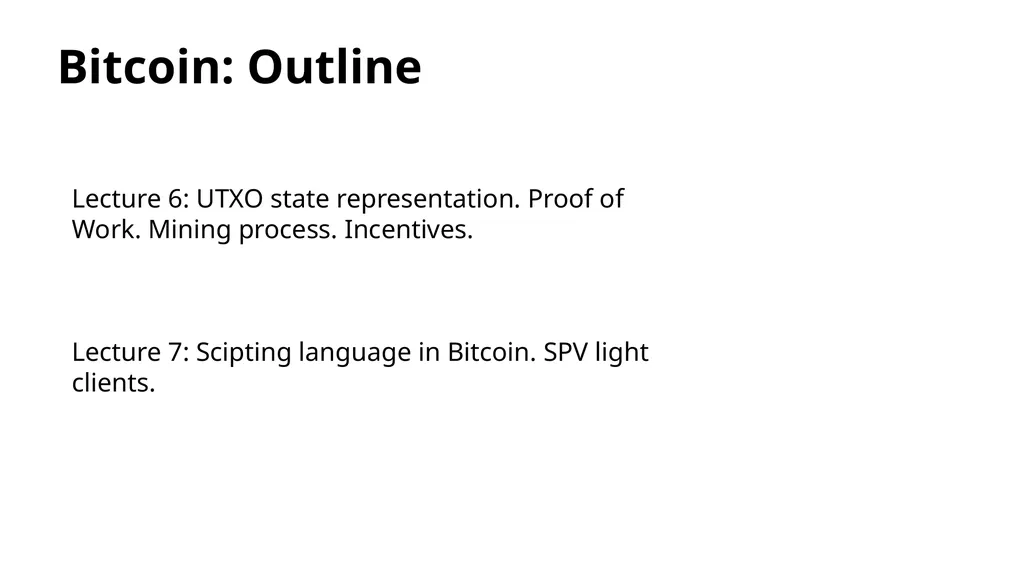
slide15. Bitcoin: Outline Lecture 6: UTXO state representation. Proof of Work. Mining process. Incentives.

Lecture 7: Scipting language in Bitcoin. SPV light clients.<br>
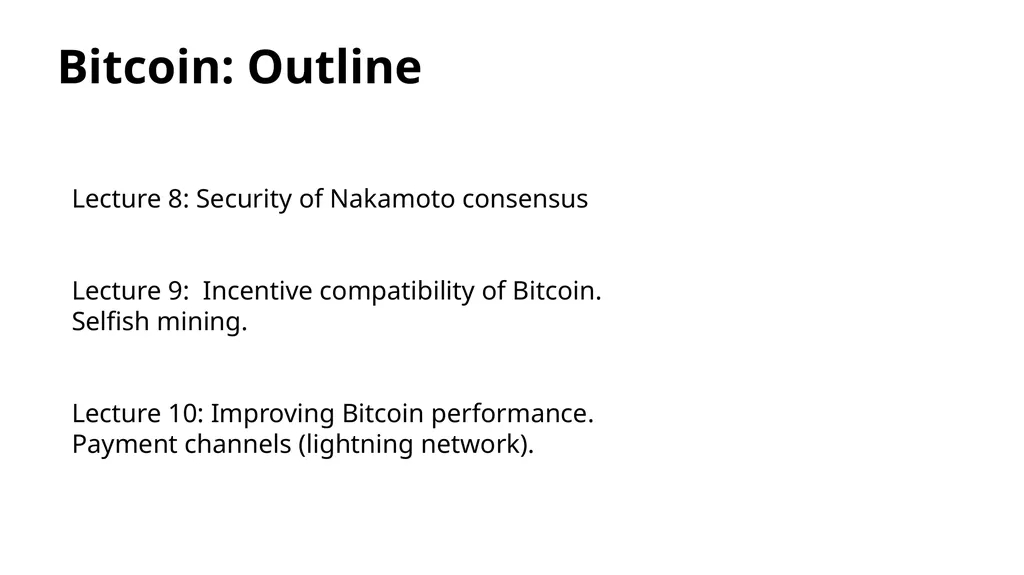
slide16. Bitcoin: Outline Lecture 8: Security of Nakamoto consensus

Lecture 9: Incentive compatibility of Bitcoin. Selfish mining.

Lecture 10: Improving Bitcoin performance. Payment channels (lightning network).<br>
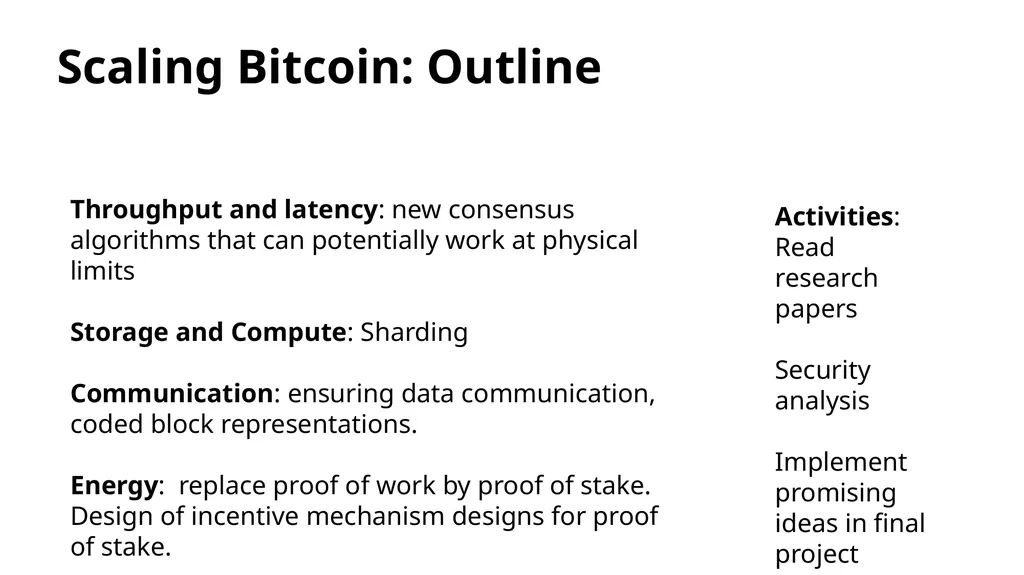
slide17. Scaling Bitcoin: Outline Throughput and latency: new consensus algorithms that can potentially work at physical limits

Storage and Compute: Sharding

Communication: ensuring data communication, coded block representations.

Energy: replace proof of work by proof of stake. Design of incentive mechanism designs for proof of stake. Activities:
Read research papers

Security analysis

Implement promising ideas in final project<br>
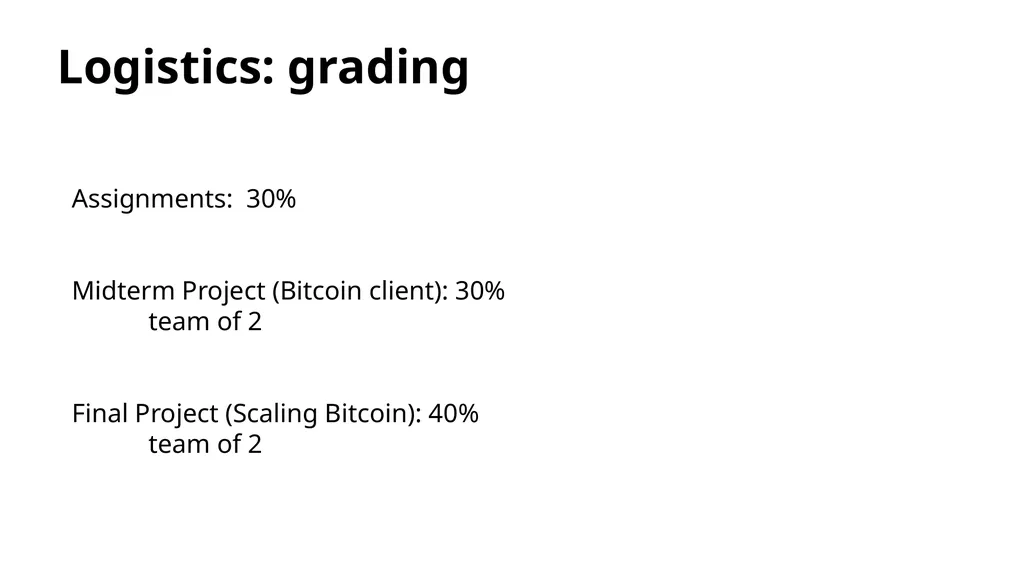
slide18. Logistics: grading Assignments: 30%

Midterm Project (Bitcoin client): 30%
team of 2

Final Project (Scaling Bitcoin): 40%
team of 2<br>
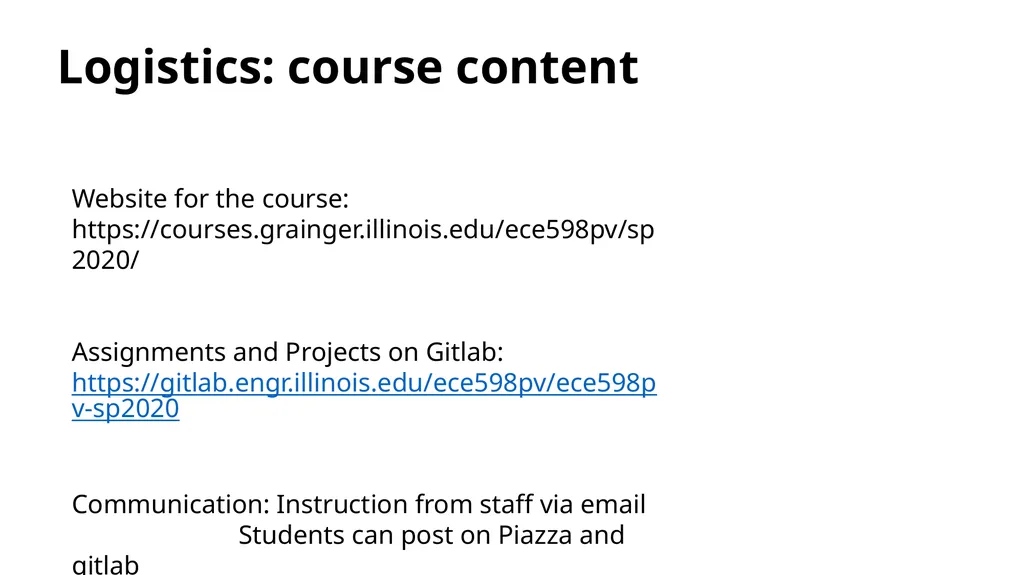
slide19. Logistics: course content Website for the course: https://courses.grainger.illinois.edu/ece598pv/sp2020/

Assignments and Projects on Gitlab:
https://gitlab.engr.illinois.edu/ece598pv/ece598pv-sp2020

Communication: Instruction from staff via email
Students can post on Piazza and gitlab<br>
slide20. Logistics: programming language Rust<br>
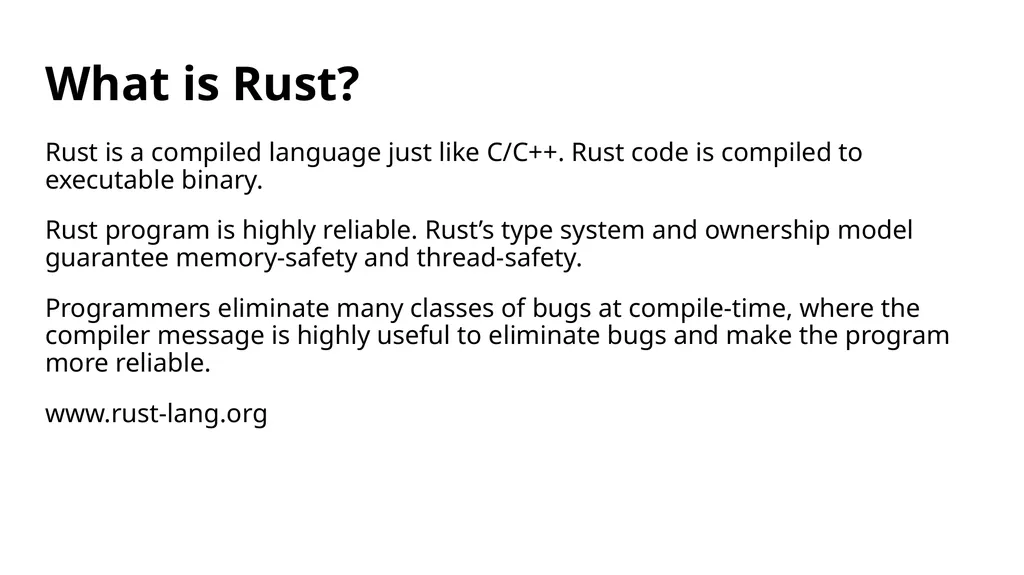
slide21. What is Rust? Rust is a compiled language just like C/C++. Rust code is compiled to executable binary.
Rust program is highly reliable. Rust’s type system and ownership model guarantee memory-safety and thread-safety.
Programmers eliminate many classes of bugs at compile-time, where the compiler message is highly useful to eliminate bugs and make the program more reliable.
www.rust-lang.org<br>
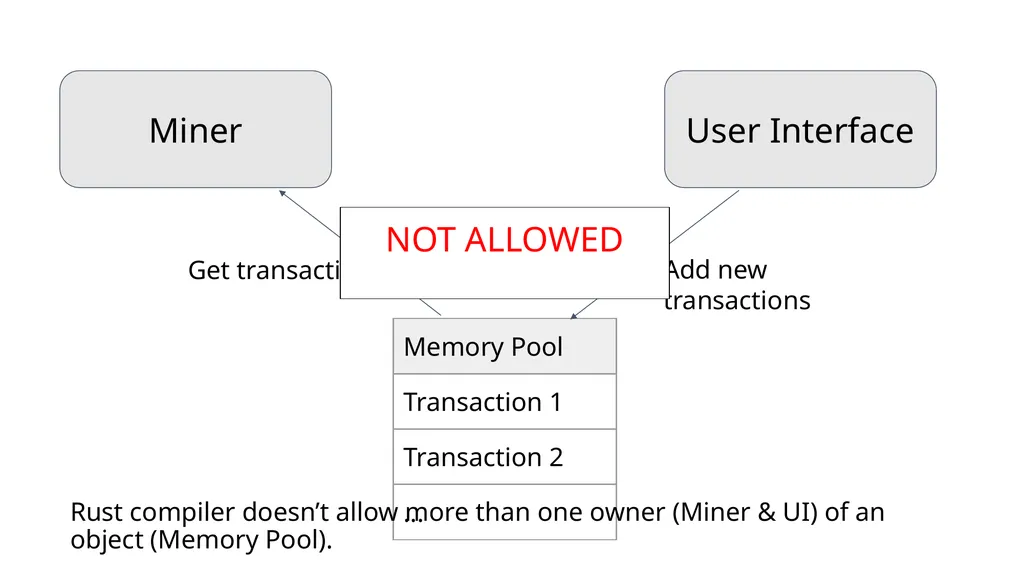
slide22. Miner User Interface Add new transactions Get transactions Rust compiler doesn’t allow more than one owner (Miner & UI) of an object (Memory Pool). NOT ALLOWED<br>
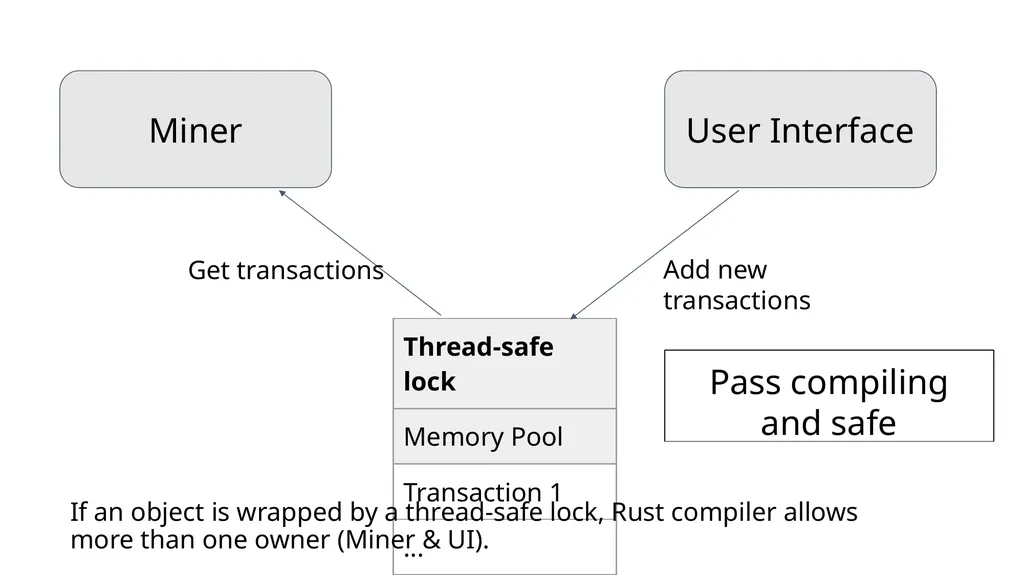
slide23. Miner User Interface Add new transactions Get transactions If an object is wrapped by a thread-safe lock, Rust compiler allows more than one owner (Miner & UI). Pass compiling
and safe<br>
slide24. Besides its reliability, Rust also provides good ... efficiency as C/C++,
network support as Go and Python,
functional-style programming as Scala,
community support as many other popular lanuages.<br>
slide25. Why is Rust chosen for blockchains? High reliability makes blockchains reliable and secure.
Good efficiency makes blockchains scalable.
Network support makes communication easy-to-code.
Influential projects are using Rust:<br>