04
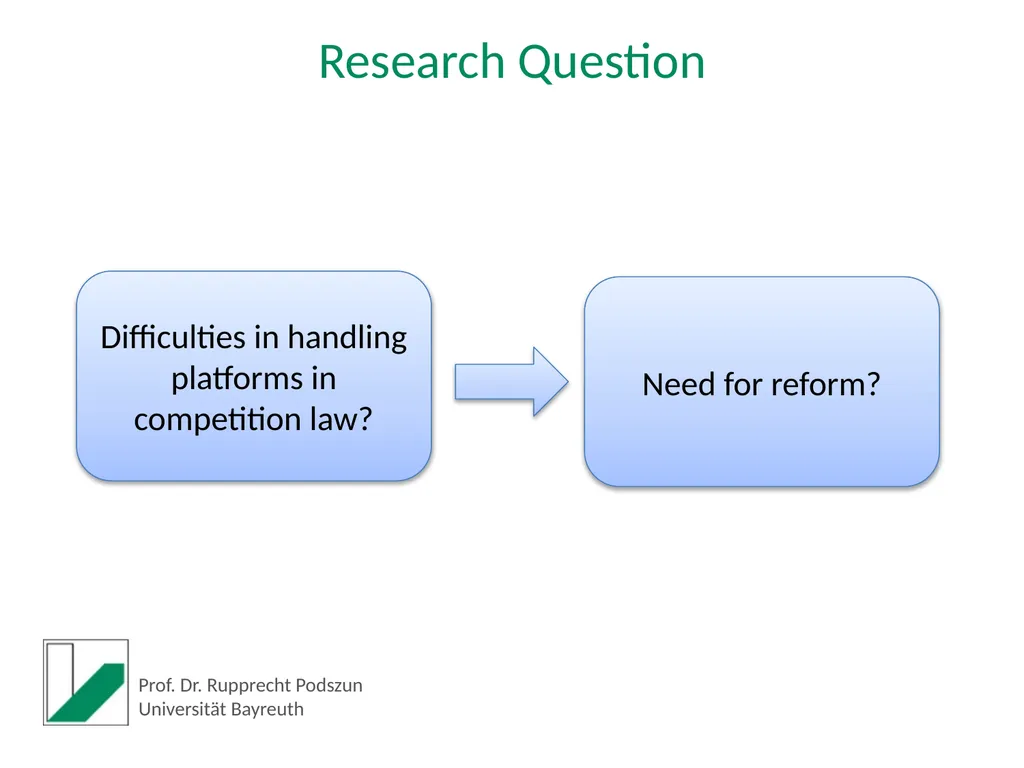
Research Question Textkörper Difficulties in handling platforms in competition law? Need for reform?<br>
06
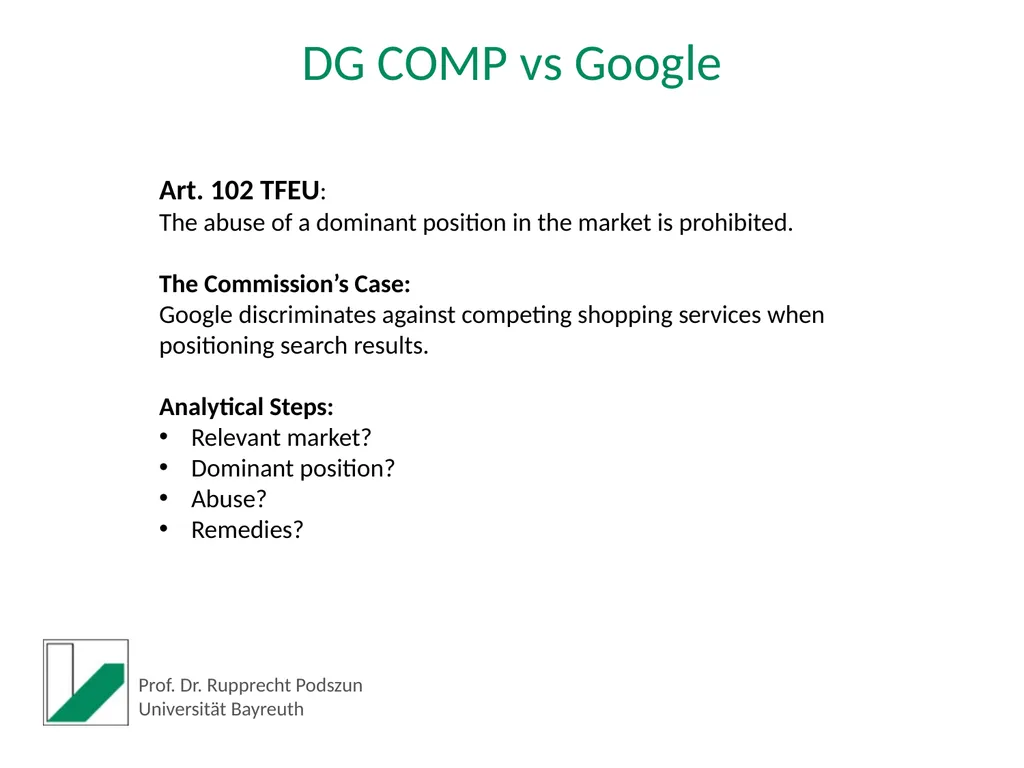
DG COMP vs Google Art. 102 TFEU:
The abuse of a dominant position in the market is prohibited.
The Commission’s Case:
Google discriminates against competing shopping services when positioning search results.
Analytical Steps:
Relevant market?
Dominant position?
Abuse?
Remedies?<br>
07
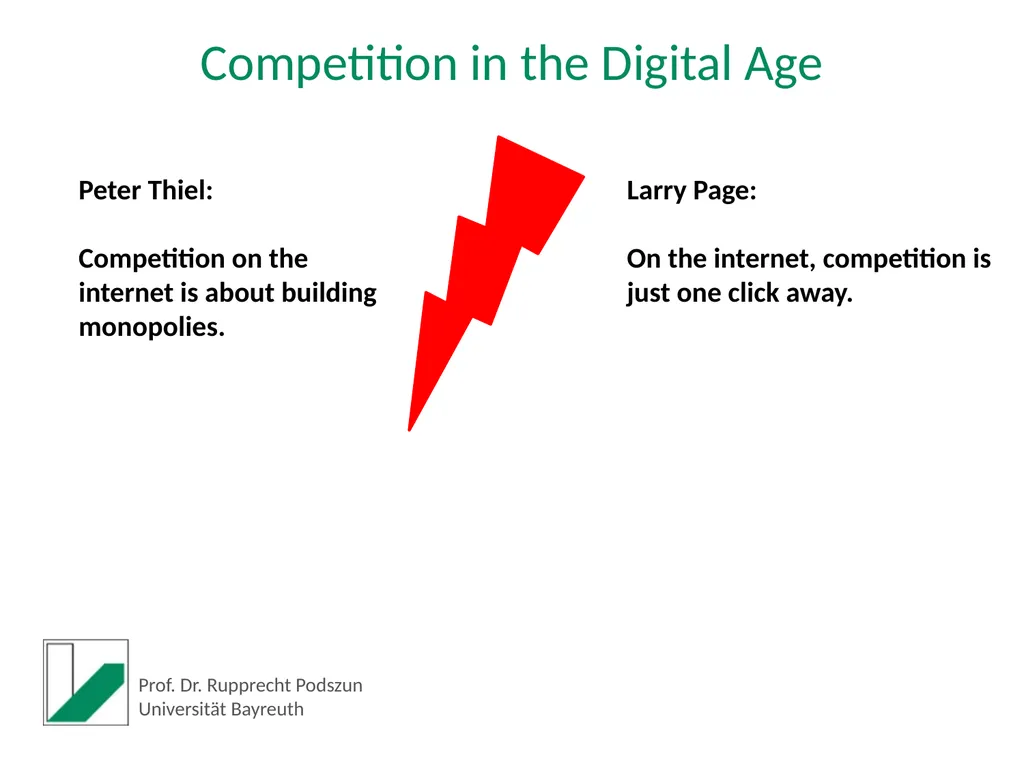
Competition in the Digital Age Peter Thiel:
Competition on the internet is about building monopolies. Larry Page:
On the internet, competition is just one click away.<br>
08
A. Research Question D. Competitive Analysis C. Market Definition B. Competition Law Basics E. Conclusion<br>
09
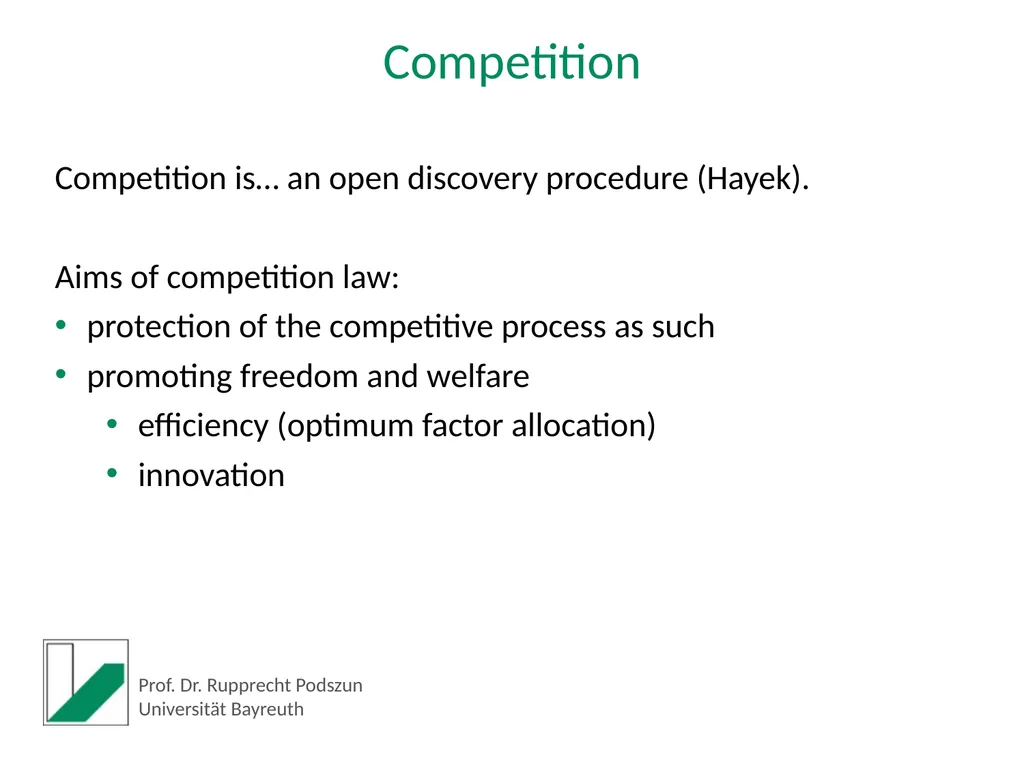
Competition Competition is… an open discovery procedure (Hayek).
Aims of competition law:
protection of the competitive process as such
promoting freedom and welfare
efficiency (optimum factor allocation)
innovation<br>
10
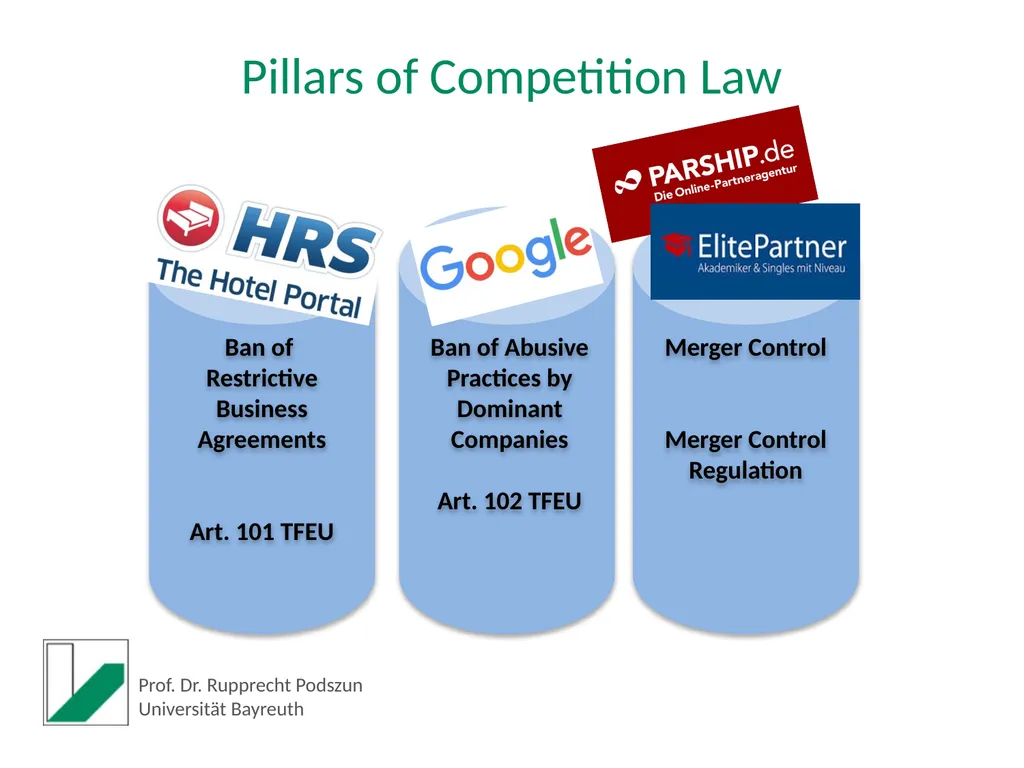
Pillars of Competition Law Ban of
Restrictive
Business
Agreements
Art. 101 TFEU Ban of Abusive Practices by Dominant Companies
Art. 102 TFEU Merger Control
Merger Control Regulation<br>
11
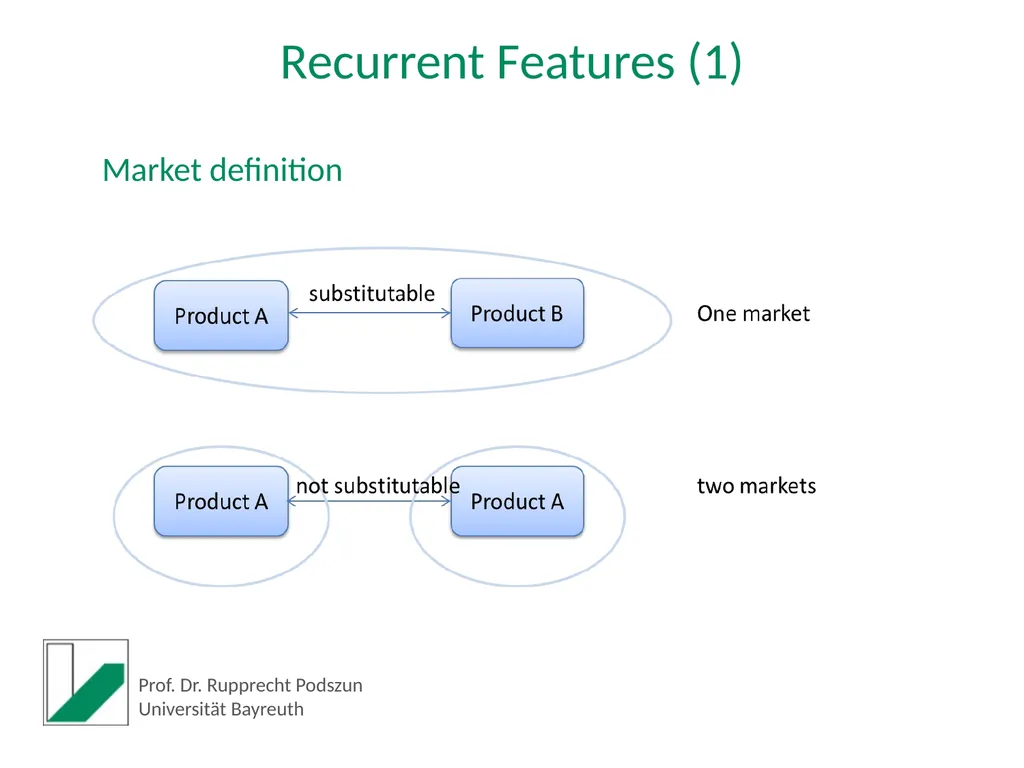
Recurrent Features (1) Market definition<br>
12
Recurrent Features (2) Counterfactual analysis of competition
What happens with competition if…?
Substantial indicators:
Market shares
Barriers to market entry
Contestability of markets
…<br>
13
A. Research Question D. Competitive Analysis C. Market Definition B. Competition Law Basics E. Conclusion<br>
15
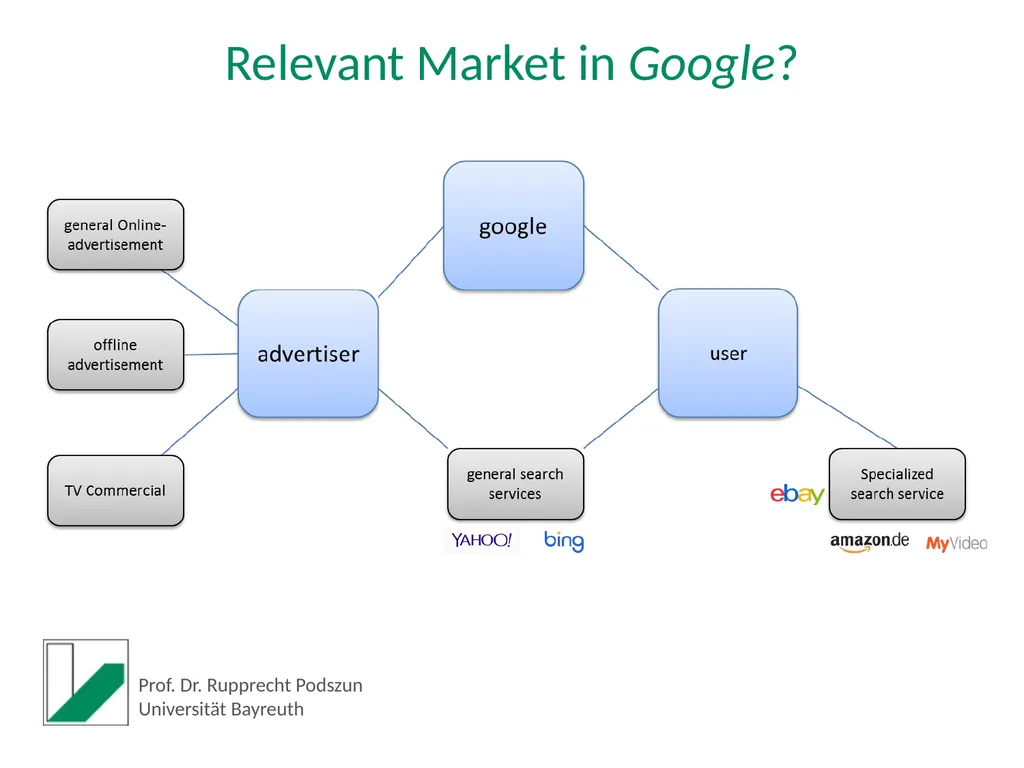
Relevant Market in Google?<br>
16
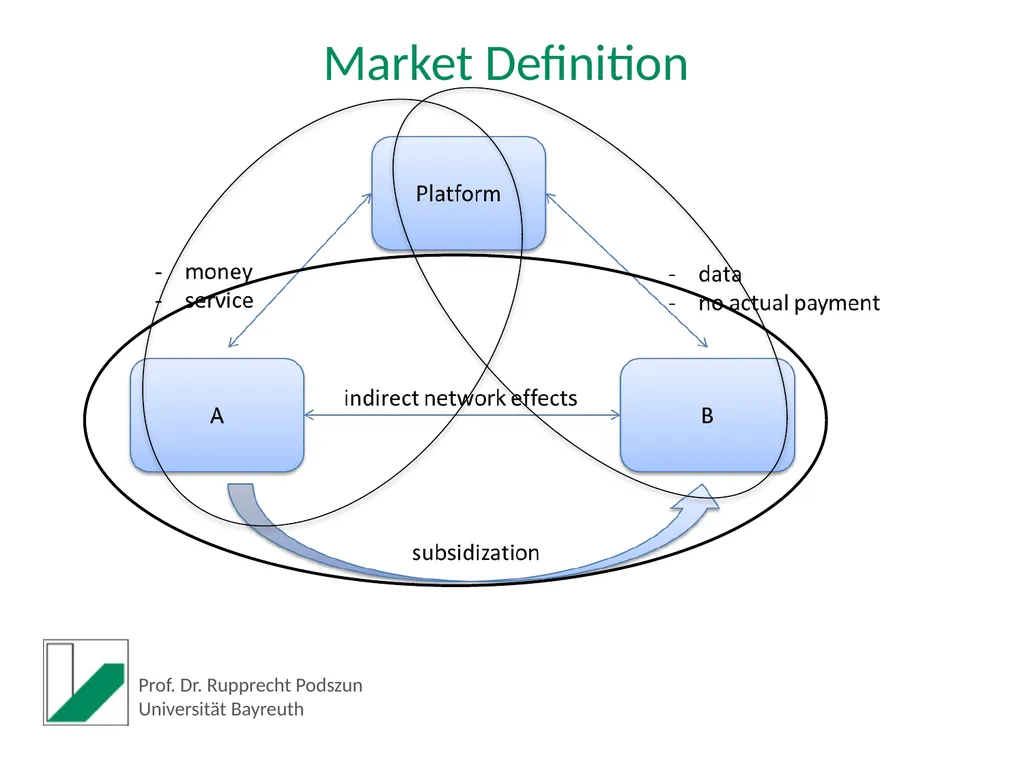
The problem of free Tools Lack of adequate tools for market definition
SSNIP-Test?
Convergence of products/services?
Dynamics of markets?
Changing behaviour of customers?<br>
17
New Approach? Refraining from market definition altogether
Pure effects-based analysis
(eg Markovits, Kaplow)
Market definition as full picture of economic circumstances for taking decisions
(Podszun, Antitrust Bull. (forthcoming))
Breaking up the path dependency of market analysis<br>
18
A. Research Question D. Competitive Analysis C. Market Definition B. Competition Law Basics E. Conclusion<br>
19
Traditional Approach market definition market shares market power
counterfactual analysis (prognosis!)
impediment of competition = reduction of consumer welfare<br>
20
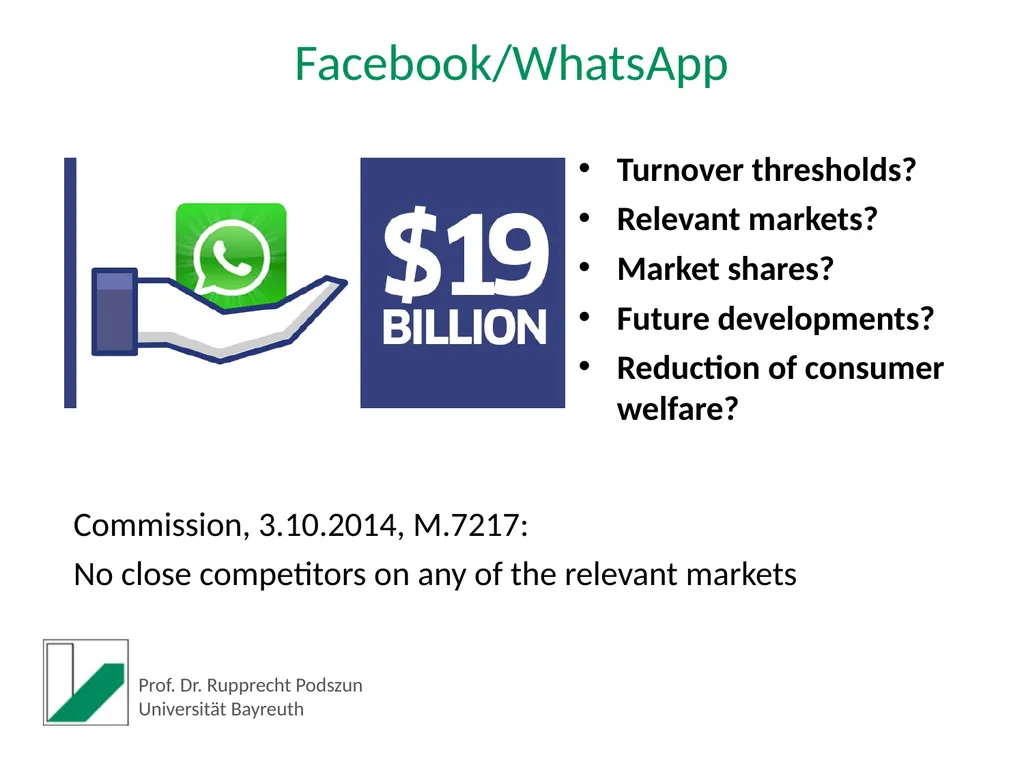
Facebook/WhatsApp Commission, 3.10.2014, M.7217:
No close competitors on any of the relevant markets Turnover thresholds?
Relevant markets?
Market shares?
Future developments?
Reduction of consumer welfare?<br>
21
Issues Measuring market power: free goods, network effects
Possibility of disruptive innovation
Contestability of markets / switching costs
Relevance of data
Innovation and consumer welfare
Remedy stage: intervention in dynamic markets and complex relationships The innovation
problem<br>
22
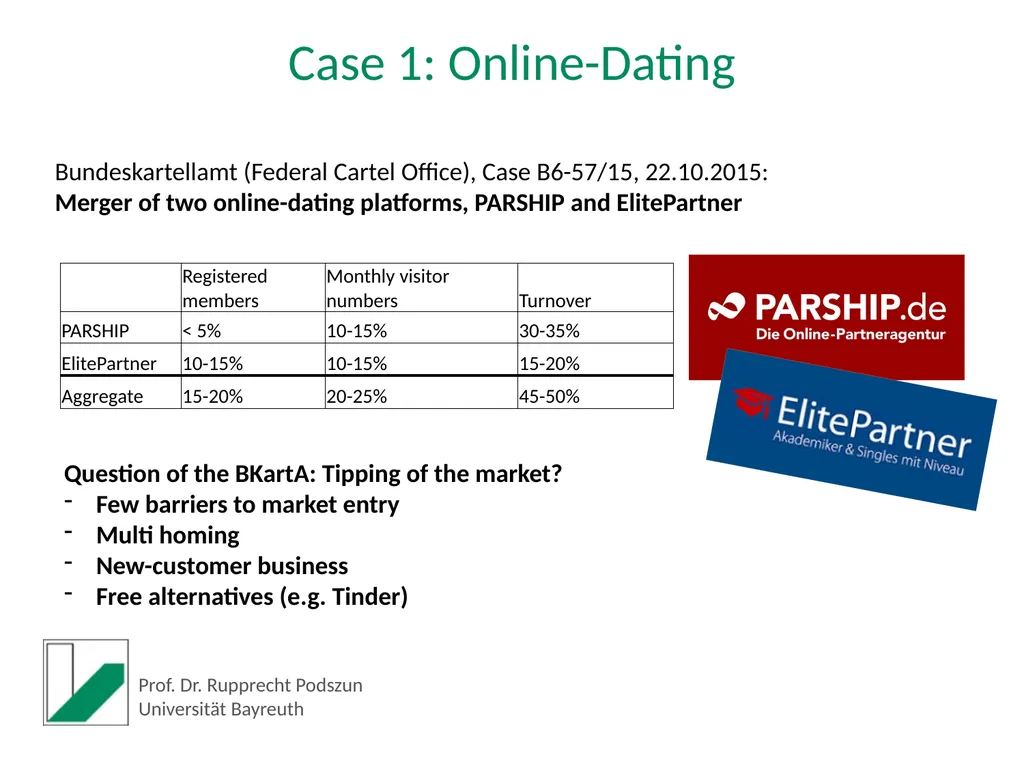
Case 1: Online-Dating Bundeskartellamt (Federal Cartel Office), Case B6-57/15, 22.10.2015:
Merger of two online-dating platforms, PARSHIP and ElitePartner Question of the BKartA: Tipping of the market?
Few barriers to market entry
Multi homing
New-customer business
Free alternatives (e.g. Tinder)<br>
23
Case 2: HRS Bundeskartellamt (FCO), Case B9-66/10, 20.12.2013:
HRS – Best price clauses
HRS obliges hotels to offer most favoured customer clause to HRS-customers: lowest room price, capacity, booking conditions.
Market: sale of hotel rooms via hotel portals in Germany
Restriction: no incentives left for HRS to offer lower commissions or to adopt new sales strategies; difficulty of market entry; no possibility for hotels to differentiate
Market share HRS: above 30 % (appreciable effect, no exemption via B.E.R.)
No overriding efficiencies<br>
24
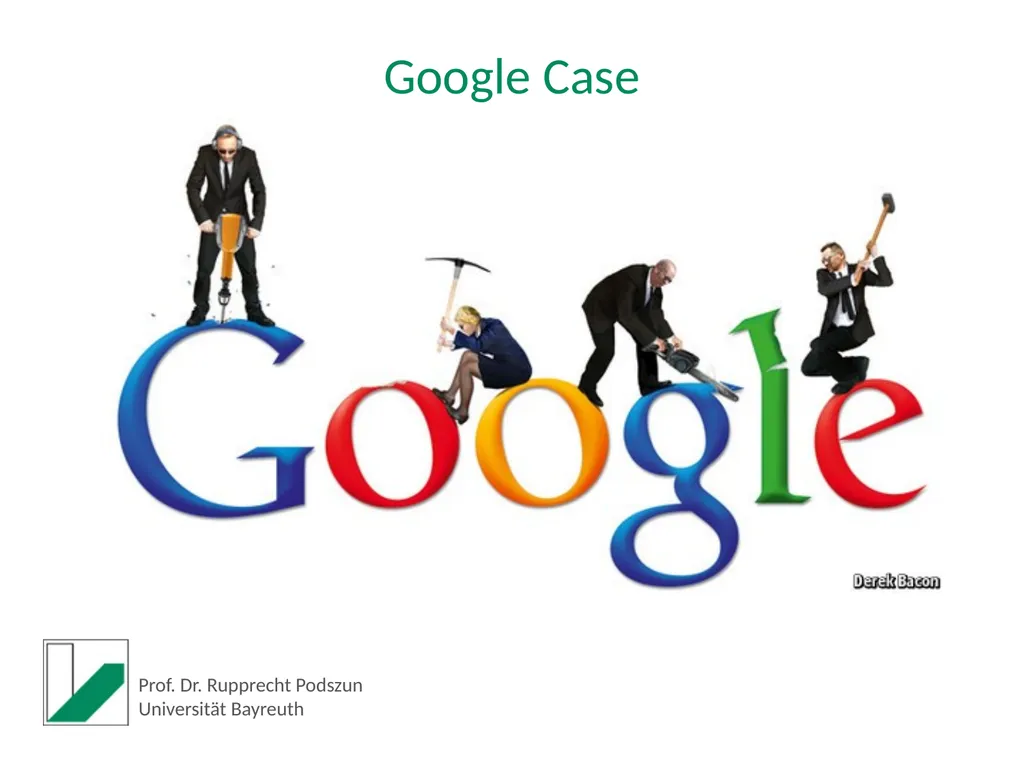
Case 3: Google Watch what happens, but:
The more compelling case is the Android case!<br>
25
A. Research Question D. Competitive Analysis C. Market Definition B. Competition Law Basics E. Conclusion<br>
26
Deficits Issues identified as problematic relate to
the problem of free (and data)
the innovation problem
bias of competition law in favour of static efficiencies<br>
27
Need for action? Consideration of dynamic efficiencies as much as allocative and productive efficiencies
No static rules for a dynamic digital economy
More technological approach<br>
28
Example 1: Market Power Are customers able to switch if there is a
small but significant decrease in quality (SSDQ-test)?
Parship/ElitePartner: yes
HRS: no
Google search: contested<br>
29
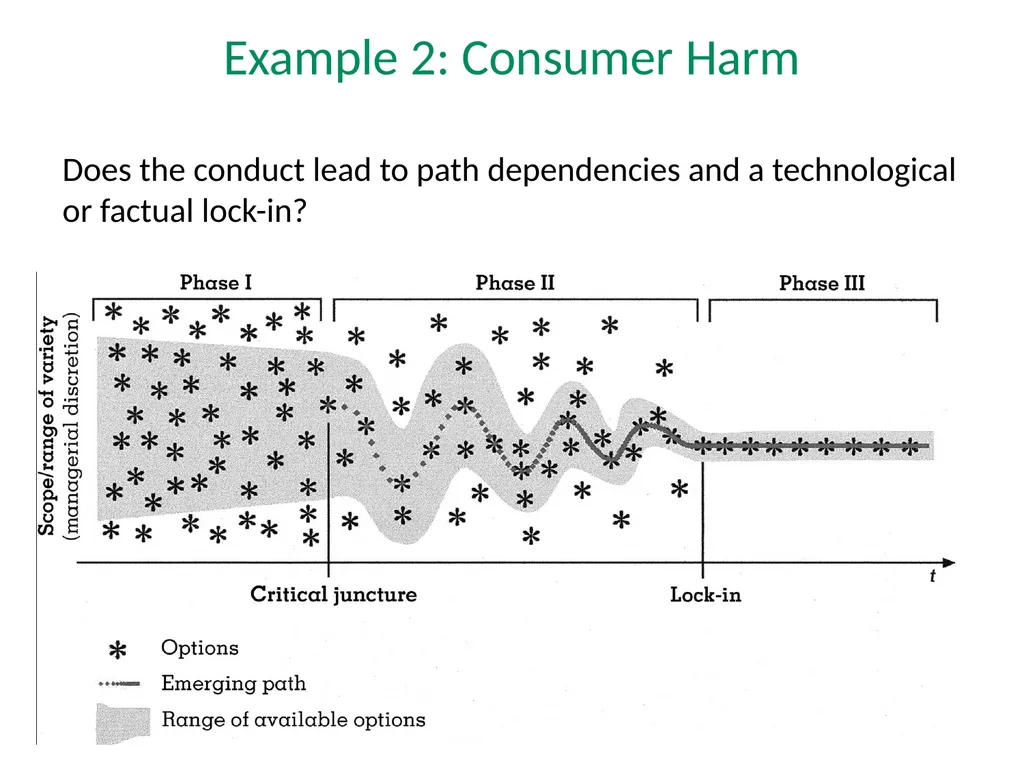
Example 2: Consumer Harm Does the conduct lead to path dependencies and a technological or factual lock-in?
Parship/ElitePartner: yes
HRS: no
Google search: contested<br>
30
Thank you!
LS-podszun (at) uni-bayreuth.de<br>
31
Infringement of Article 102 TFEU? Allegation:
Android is used as tying product to force google apps on mobile phone manufacturers. These manufacturers cannot decide to exclude some google apps before being shipped to customers.<br>
32
Contractual restrictions FCO case report B6-46/12, 26.11.2013 – Amazon Marketplace – price parity clause
The price parity clause in the contracts concluded between Amazon and retailers who use Amazon Marketplace obliged retailers to always offer their lowest price on Amazon Marketplace.
Amazon abandoned clause from contracts!<br>
33
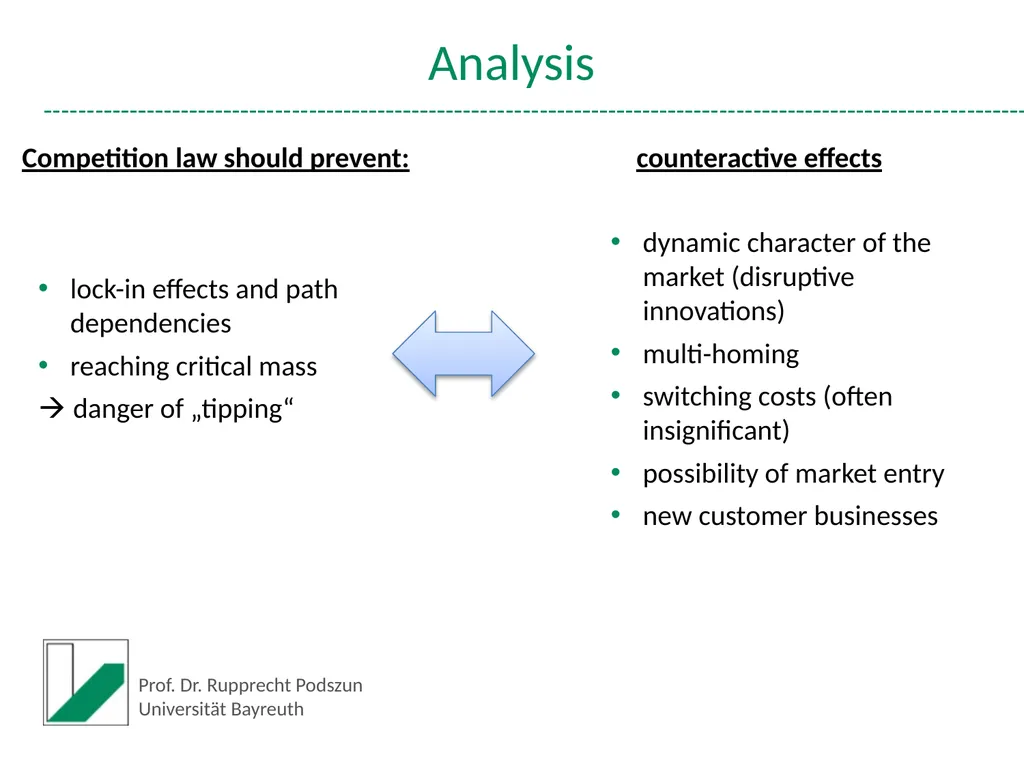
Analysis lock-in effects and path dependencies
reaching critical mass
danger of „tipping“ dynamic character of the market (disruptive innovations)
multi-homing
switching costs (often insignificant)
possibility of market entry
new customer businesses Competition law should prevent: counteractive effects<br>
34
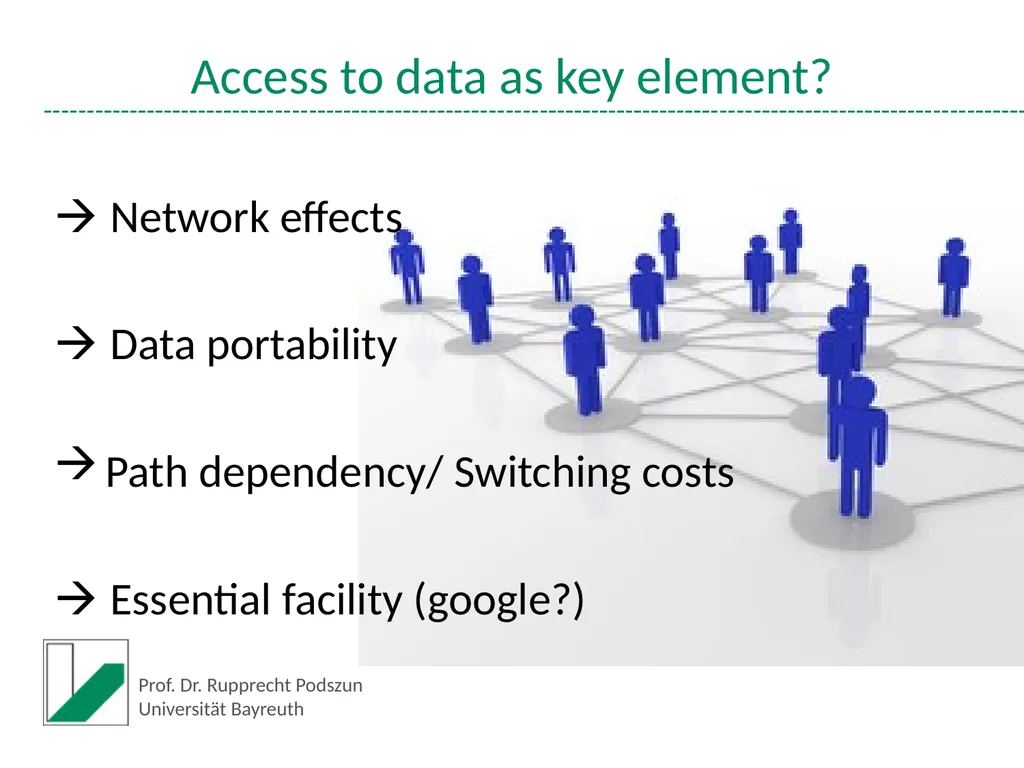
Network effects
Data portability
Path dependency/ Switching costs
Essential facility (google?) Access to data as key element?<br>