Progress and Challenges of Trade Facilitation in the Caribbean ECLACALADI REGIONAL TRADE FACILITATION SEMINAR Montevideo, Uruguay 27 NOVEMBER 2023 Michele Lowe CARICOM Secretariat PRESENTATION OUTLINE I: CARICOM TF Environment Snapshot of
Related Topics
Share
Embed code
Download this presentation From Below
"Progress and Challenges of Trade Facilitation in" is the property of its rightful owner. Permission is granted to
download and print the materials on this website for personal, non-commercial use only, and to display it
on your personal computer provided you do not modify the materials and that you retain all copyright
notices contained in the materials. By downloading content from our website, you accept the terms of this
agreement.
Presentation Transcript
01
Progress and Challenges of Trade Facilitation in the Caribbean ECLAC/ALADI REGIONAL TRADE FACILITATION SEMINAR
Montevideo, Uruguay 27 NOVEMBER 2023
Michele Lowe
CARICOM Secretariat<br>
02
PRESENTATION OUTLINE I: CARICOM TF Environment
Snapshot of TFA compliance
Drivers and Policy Imperatives
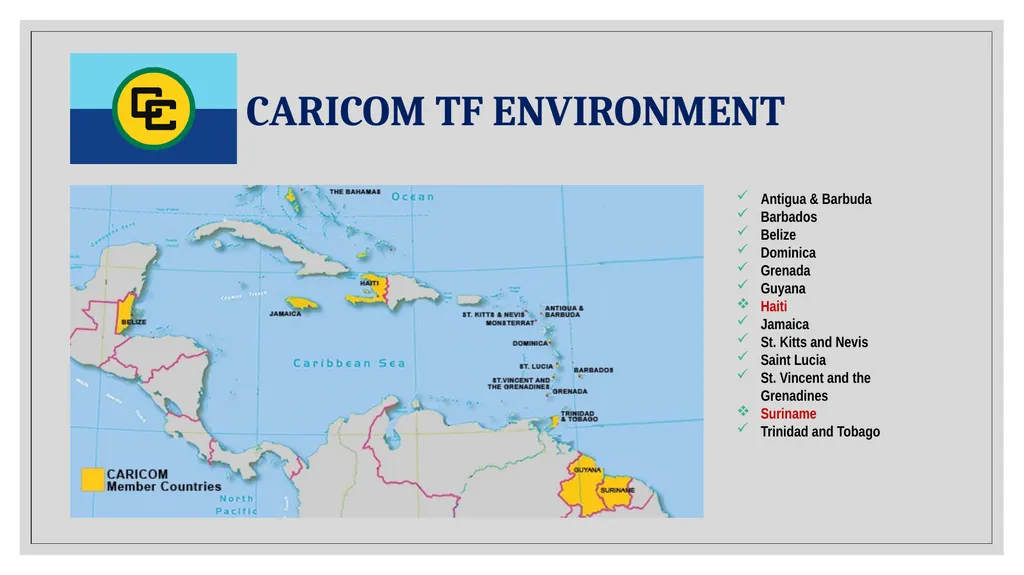
CARICOM TF ENVIRONMENT Antigua & Barbuda
Barbados
Belize
Dominica
Grenada
Guyana
Haiti
Jamaica
St. Kitts and Nevis
Saint Lucia
St. Vincent and the Grenadines
Suriname
Trinidad and Tobago<br>
04
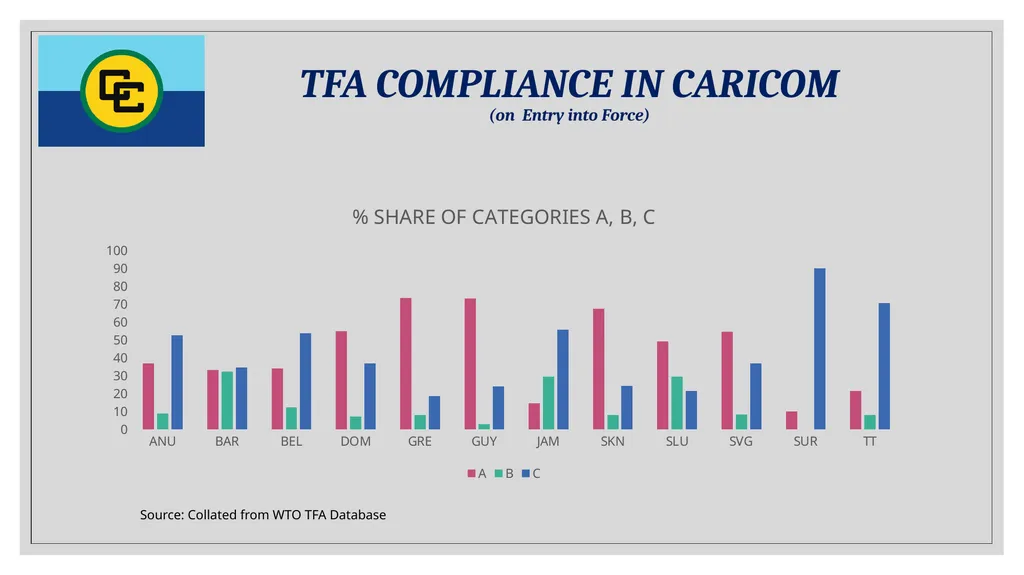
TFA COMPLIANCE IN CARICOM (on Entry into Force) Source: Collated from WTO TFA Database<br>
05
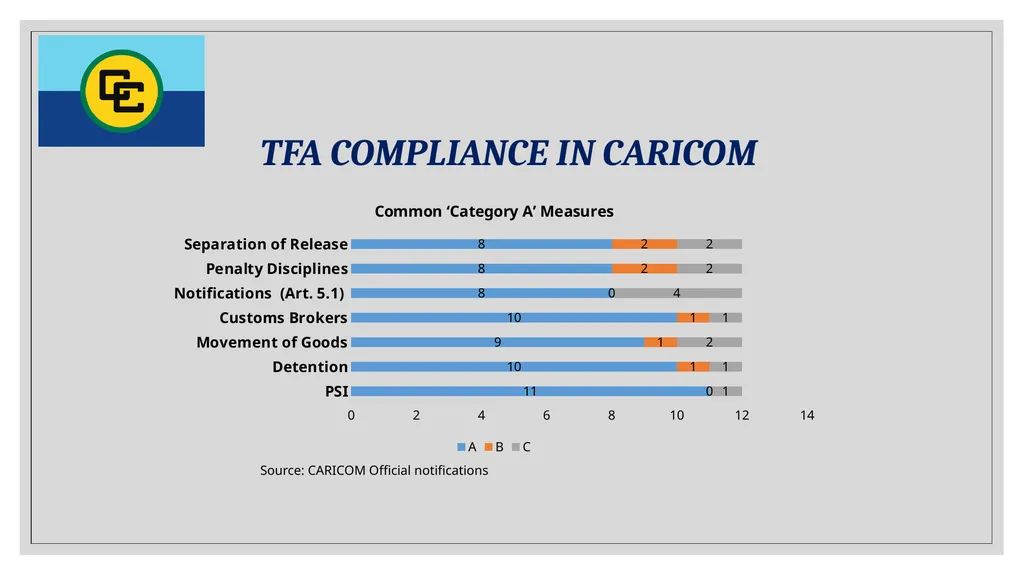
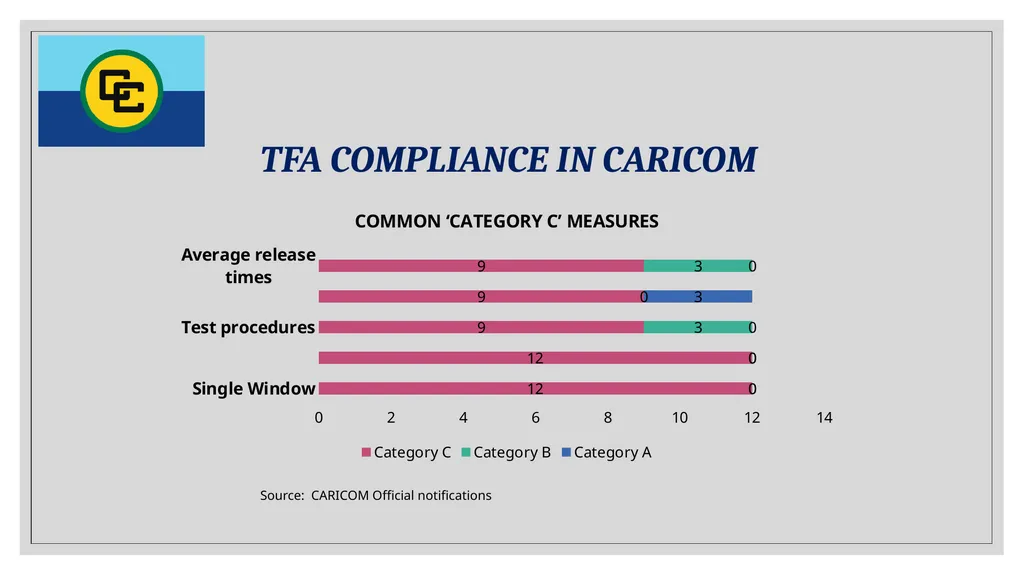
TFA COMPLIANCE IN CARICOM Source: CARICOM Official notifications<br>
06
TFA COMPLIANCE IN CARICOM Source: CARICOM Official notifications<br>
07
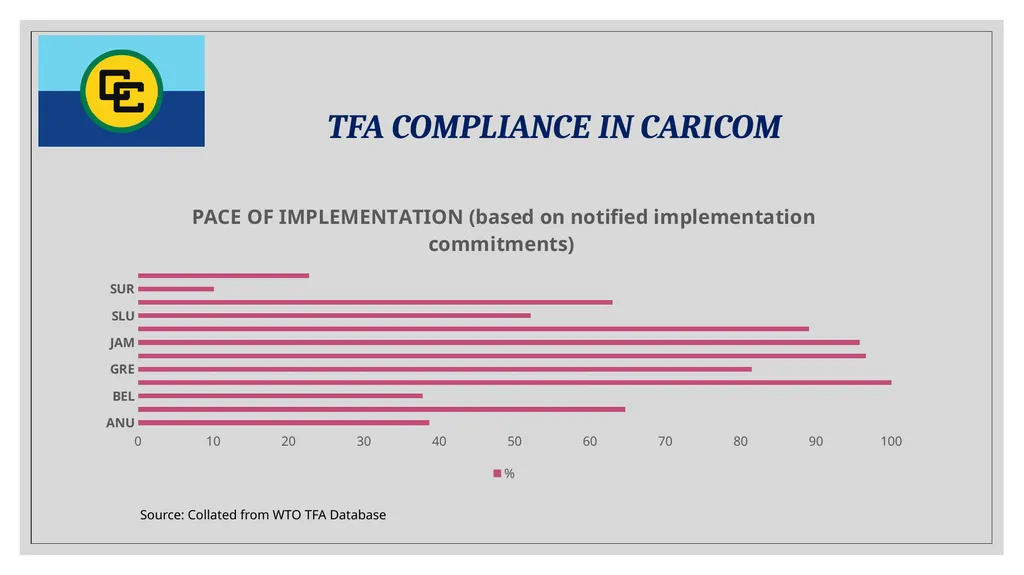
TFA COMPLIANCE IN CARICOM Source: Collated from WTO TFA Database<br>
08
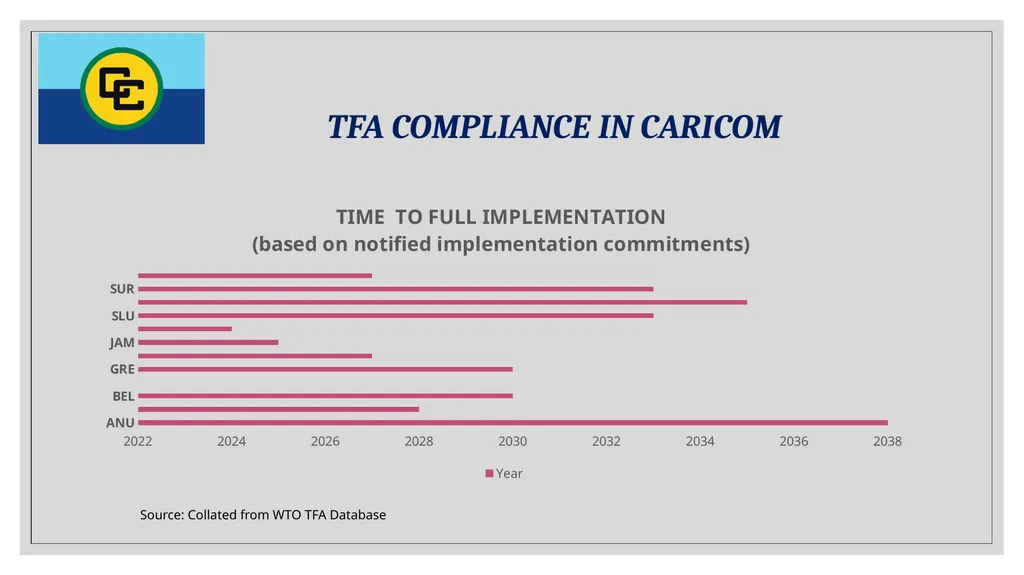
TFA COMPLIANCE IN CARICOM Source: Collated from WTO TFA Database<br>
09
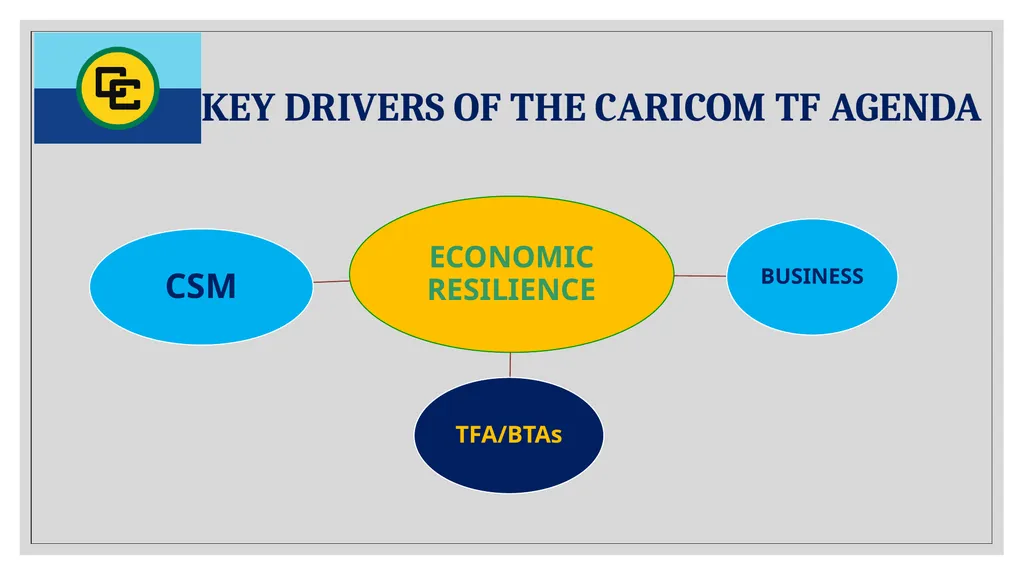
KEY DRIVERS OF THE CARICOM TF AGENDA<br>
10
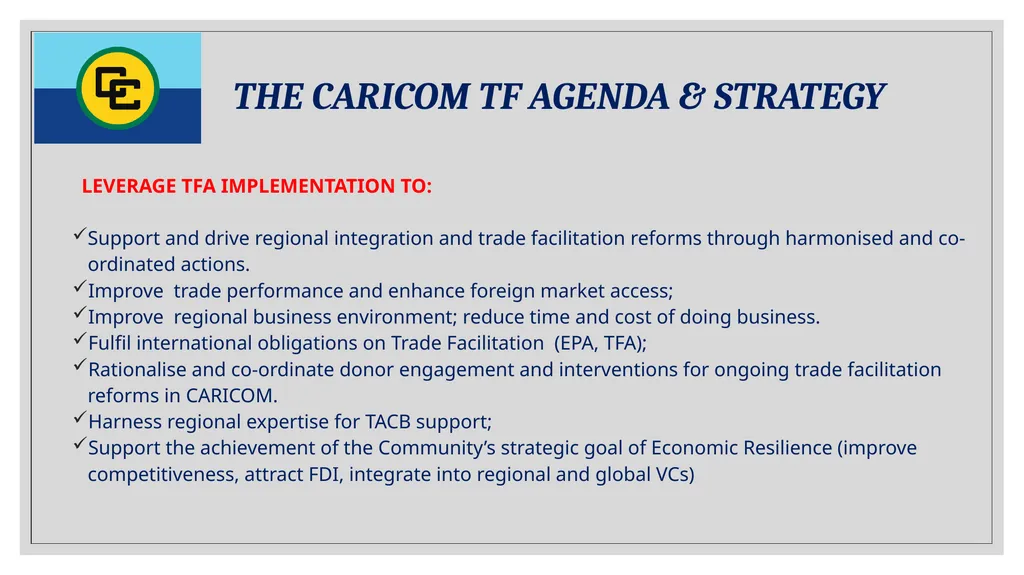
THE CARICOM TF AGENDA & STRATEGY LEVERAGE TFA IMPLEMENTATION TO:
Support and drive regional integration and trade facilitation reforms through harmonised and co-ordinated actions.
Improve trade performance and enhance foreign market access;
Improve regional business environment; reduce time and cost of doing business.
Fulfil international obligations on Trade Facilitation (EPA, TFA);
Rationalise and co-ordinate donor engagement and interventions for ongoing trade facilitation reforms in CARICOM.
Harness regional expertise for TACB support;
Support the achievement of the Community’s strategic goal of Economic Resilience (improve competitiveness, attract FDI, integrate into regional and global VCs)<br>
11
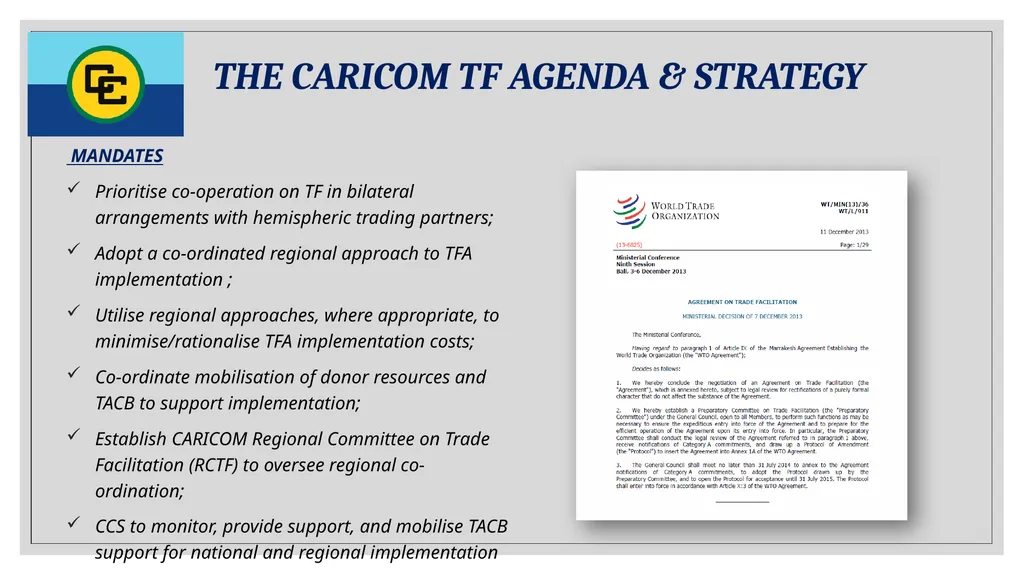
THE CARICOM TF AGENDA & STRATEGY MANDATES
Prioritise co-operation on TF in bilateral arrangements with hemispheric trading partners;
Adopt a co-ordinated regional approach to TFA implementation ;
Utilise regional approaches, where appropriate, to minimise/rationalise TFA implementation costs;
Co-ordinate mobilisation of donor resources and TACB to support implementation;
Establish CARICOM Regional Committee on Trade Facilitation (RCTF) to oversee regional co-ordination;
CCS to monitor, provide support, and mobilise TACB support for national and regional implementation<br>
12
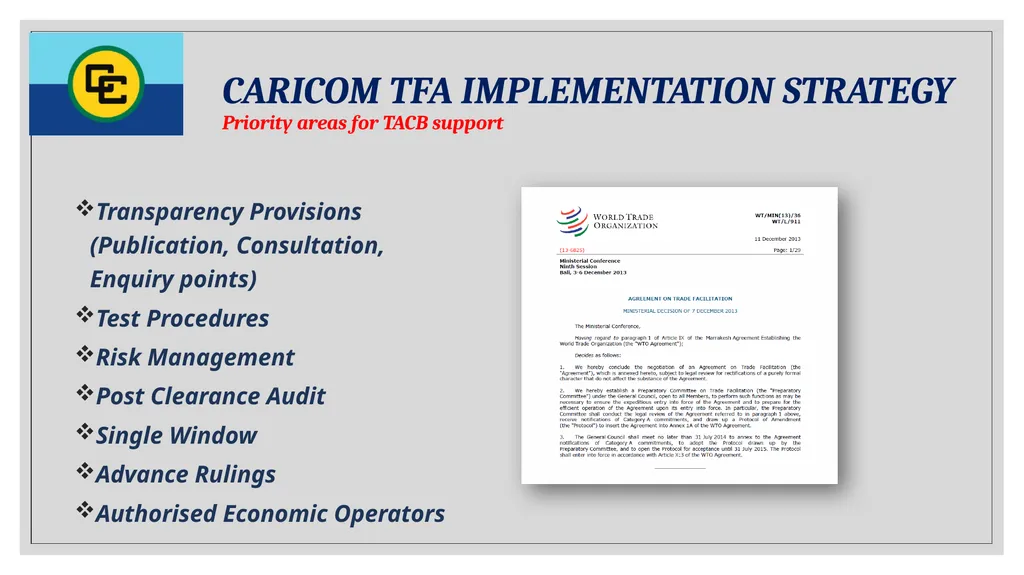
CARICOM TFA IMPLEMENTATION STRATEGY Priority areas for TACB support Transparency Provisions (Publication, Consultation, Enquiry points)
Test Procedures
Risk Management
Post Clearance Audit
Single Window
Advance Rulings
Authorised Economic Operators<br>
13
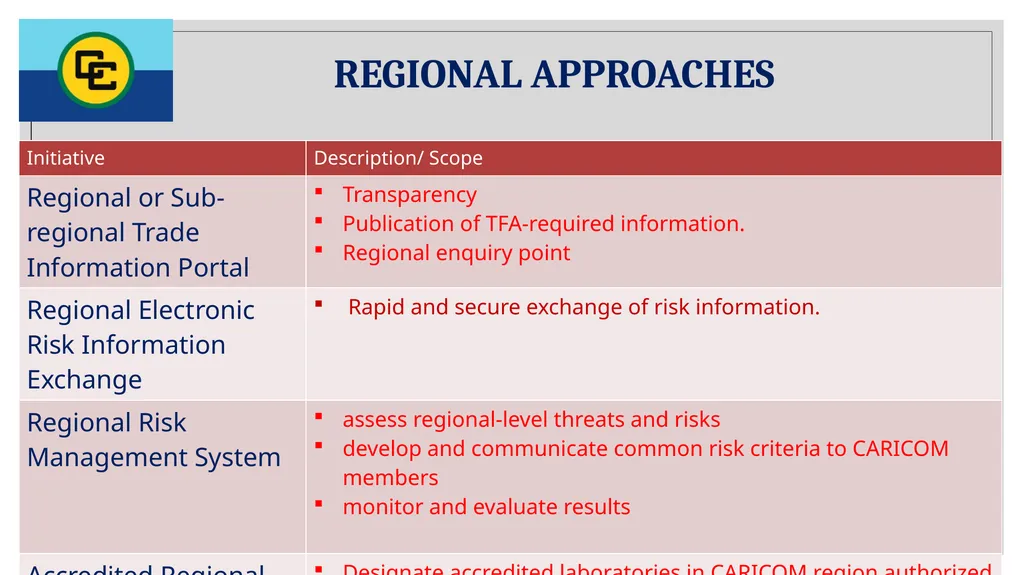
REGIONAL APPROACHES<br>
14
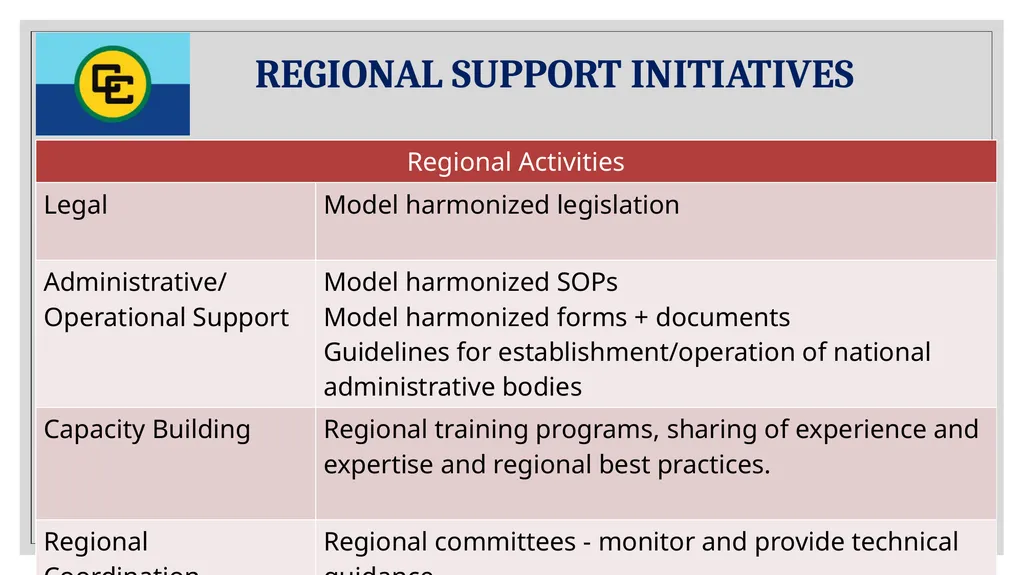
REGIONAL SUPPORT INITIATIVES<br>
15
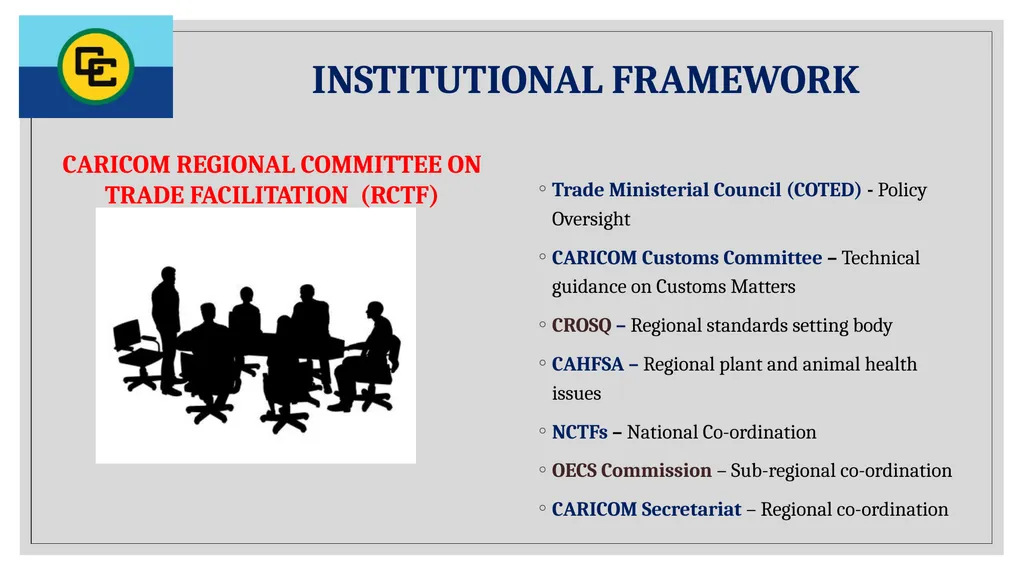
INSTITUTIONAL FRAMEWORK Trade Ministerial Council (COTED) - Policy Oversight
CARICOM Customs Committee – Technical guidance on Customs Matters
CROSQ – Regional standards setting body
CAHFSA – Regional plant and animal health issues
NCTFs – National Co-ordination
OECS Commission – Sub-regional co-ordination
CARICOM Secretariat – Regional co-ordination CARICOM REGIONAL COMMITTEE ON TRADE FACILITATION (RCTF)<br>
16
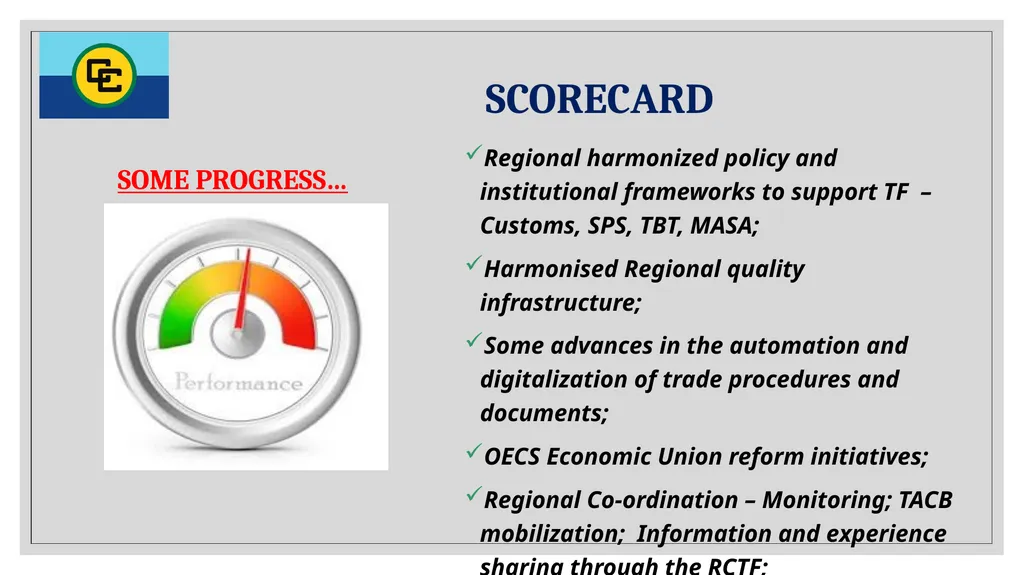
Regional harmonized policy and institutional frameworks to support TF – Customs, SPS, TBT, MASA;
Harmonised Regional quality infrastructure;
Some advances in the automation and digitalization of trade procedures and documents;
OECS Economic Union reform initiatives;
Regional Co-ordination – Monitoring; TACB mobilization; Information and experience sharing through the RCTF; SOME PROGRESS… SCORECARD<br>
17
Slow legislative reform process in Member States
Infrastructure investment (ICT, risk assessment including certification bodies and testing labs etc.)
Border Agency co-ordination
Regional Transportation infrastructure and connectivity;
CSM implementation gaps
Public-private dialogue and Private Sector engagement
National co-ordination and monitoring of commitments (NTFCs);
Donor engagement. SOME HEADWINDS….<br>